Samsung and Magic Leap Advance Waveguide Displays
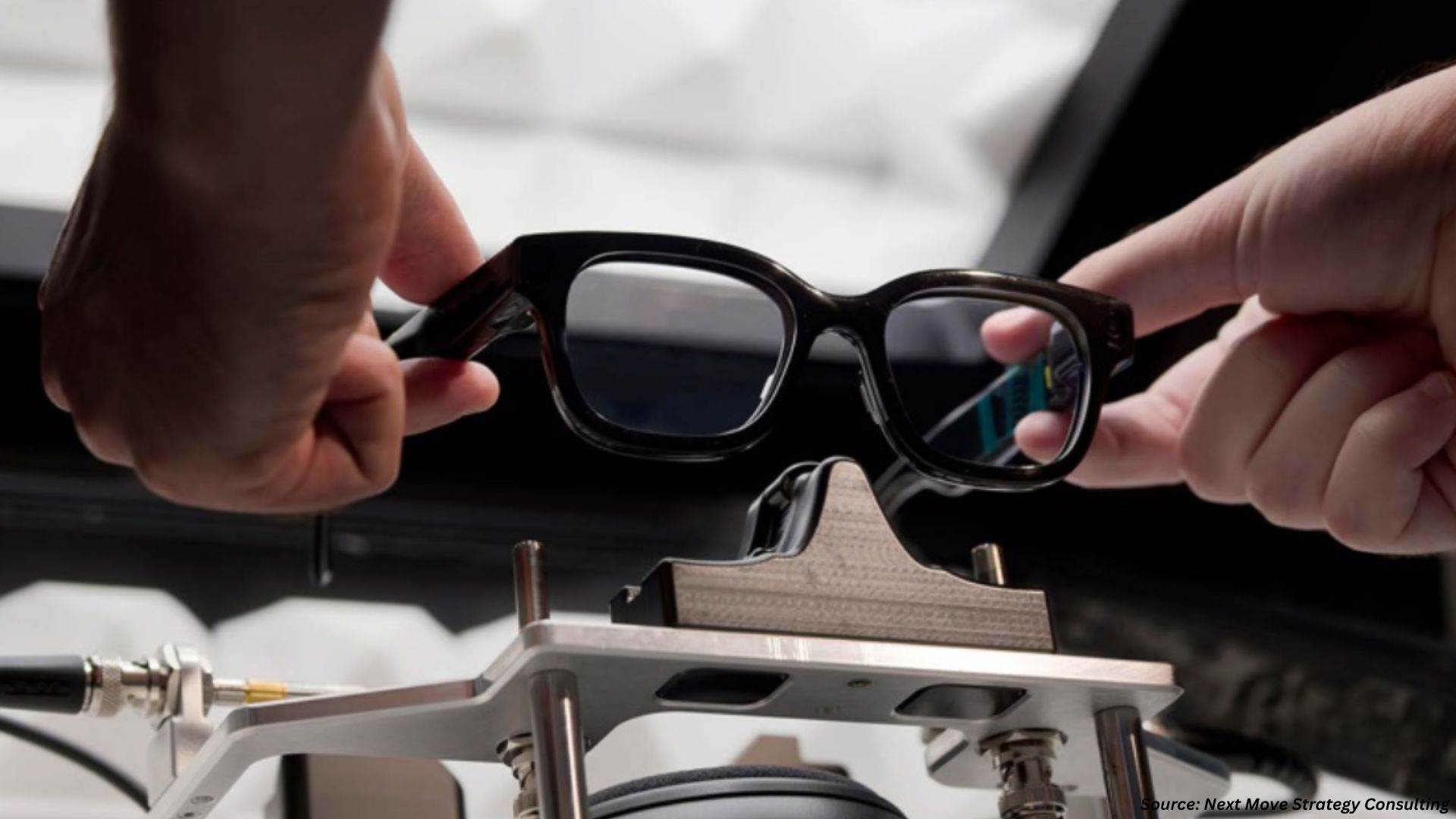
Waveguide Display Market Size to Hit USD 21.47 Billion by 2030 as Samsung and Magic Leap Accelerate AR Optics Race
The global Waveguide Display Market is witnessing renewed momentum after Samsung Display unveiled a next-generation smart glasses concept using OLED-powered waveguide optics, while Magic Leap signed a manufacturing agreement with Pegatron to scale augmented reality (AR) waveguide production for future wearable devices.
The developments are reshaping competition across the AR and mixed-reality ecosystem as technology firms accelerate efforts to commercialize lightweight smart glasses with high-resolution immersive displays. According to the latest proprietary analysis from Next Move Strategy Consulting, the global Waveguide Display Market size was valued at USD 10.43 billion in 2022 and is projected to reach USD 21.47 billion by 2030, expanding at a CAGR of 9.5% from 2023 to 2030.
Samsung Pushes OLED Waveguide Displays into Advanced AR Applications
At SID Display Week 2026, Samsung Display showcased a waveguide smart glasses concept integrating eMagin’s OLED microdisplays to project high-resolution visuals directly onto transparent lenses. The system demonstrated applications ranging from video streaming and real-time messaging to augmented nutritional analysis, highlighting the growing convergence between wearable computing and AI-assisted visualization.
The prototype featured 0.62-inch OLED microdisplays with 1,280×1,024 resolution, over 20,000 nits brightness, 99% color gamut coverage, and refresh rates reaching 85Hz. Industry observers noted that the display performance significantly exceeded current mainstream smart glasses capabilities, particularly in brightness and visual clarity.

According to Sikha Haritwal, Senior Research Analyst at Next Move Strategy Consulting, Samsung’s latest showcase reflects a broader shift toward high-performance optical systems optimized for next-generation spatial computing.
“Waveguide displays are rapidly becoming foundational to the future of wearable AR hardware. Samsung’s OLED-driven demonstration highlights how manufacturers are prioritizing lightweight optics, ultra-high brightness, and immersive visualization to improve mainstream adoption.”
NMSC researchers identified increasing investments in OLED-on-silicon displays and compact optical engines during the past six months, especially among consumer electronics firms pursuing enterprise and consumer AR deployments.
Magic Leap and Pegatron Scale Waveguide Manufacturing
Separately, Magic Leap announced a strategic agreement with Pegatron aimed at expanding high-volume production capabilities for AR waveguides.
The collaboration combines Magic Leap’s proprietary “jet and flash imprint lithography” (JFIL) process with Pegatron’s manufacturing infrastructure to improve scalability and production efficiency for smart glasses components. According to the companies, the JFIL approach enables precise single-step patterning for complex 3D optical structures while maintaining high-yield production capabilities.
Magic Leap stated that its waveguide platform was developed over more than a decade to address key barriers facing AR wearables, including miniaturization, power efficiency, optical precision, and lightweight device integration.
Jason Cheng, Vice Chairman at Pegatron, noted that combining component-level optical expertise with large-scale electronics manufacturing could accelerate commercialization timelines for enterprise and consumer AR devices.
Industry analysts believe scalable waveguide manufacturing remains one of the most critical challenges for the AR industry because optical waveguides require extremely precise fabrication processes and high-performance materials engineering.
Google and MicroLED Expansion Reinforce AR Ecosystem Momentum
The Pegatron partnership follows Magic Leap’s expanded collaboration with Google involving integration of microLED light engine technologies originally developed through Google’s acquisition of Raxium.
The companies recently demonstrated AR prototypes designed to merge advanced waveguide optics with microLED display systems to create lightweight all-day wearable smart glasses. Analysts say the integration could significantly improve brightness efficiency and battery optimization compared to earlier AR hardware generations.
According to the latest NMSC proprietary dataset, enterprise spending on spatial computing technologies increased substantially during the past two quarters, driven by rising demand across healthcare visualization, industrial automation, logistics, remote collaboration, and defense applications.
Recent Market Shifts Reshaping the Waveguide Display Industry
The waveguide display market has undergone significant structural changes over the past six months as technology companies intensify investments in AI-integrated wearable ecosystems.
Key market developments include:
-
Expansion of OLED microdisplay innovation for AR glasses
-
Scaling of commercial waveguide manufacturing partnerships
-
Increased adoption of microLED technologies
-
Growing enterprise demand for lightweight XR wearables
-
Rising investments in AI-powered spatial computing systems

NMSC analysts further identified increasing convergence between waveguide optics, AI interfaces, holographic visualization, and sensor-enabled wearable displays.
Regional Waveguide Display Market Outlook
|
Region |
Estimated CAGR (2023–2030) |
Primary Growth Driver |
|
North America |
10.2% |
Enterprise AR and defense applications |
|
Asia-Pacific |
11.4% |
Consumer electronics manufacturing growth |
|
Europe |
8.7% |
Industrial automation and XR integration |
|
Middle East & Africa |
7.1% |
Smart infrastructure investments |
Key Industry Participants and Strategic Focus
|
Company |
Strategic Focus |
|
Samsung Display |
OLED-powered waveguide smart glasses |
|
Magic Leap |
Waveguide optics and AR systems |
|
Pegatron |
High-volume AR manufacturing |
|
|
XR ecosystem and microLED integration |
|
Meta Platforms |
Consumer smart glasses expansion |
|
Apple |
Spatial computing ecosystem development |
Industry Outlook
The latest announcements from Samsung and Magic Leap indicate that the AR industry is moving from experimental prototypes toward scalable commercial manufacturing. Analysts believe waveguide displays are expected to become a critical enabling technology for the next generation of lightweight wearable computing devices.
According to NMSC researchers, the next phase of market competition will likely focus on improving manufacturing yields, reducing optical component costs, enhancing display brightness, and integrating AI-driven functionality into wearable ecosystems.

What CEOs and Investors Should Do Next
-
Prioritize investments in scalable AR optics manufacturing infrastructure
-
Expand partnerships with OLED and microLED component suppliers
-
Monitor enterprise demand trends in industrial and healthcare AR applications
-
Accelerate R&D initiatives focused on lightweight wearable form factors
-
Diversify supply chains for critical optical and semiconductor components
About Next Move Strategy Consulting:
Next Move Strategy Consulting is a premier market research and management consulting firm that has been committed to provide strategically analysed well documented latest research reports to its clients. The research industry is flooded with many firms to choose from, what makes NMSC different from the rest is its top-quality research and the obsession of turning data into knowledge by dissecting every bit of it and providing fact-based research recommendation that is supported by information collected from over 500 million websites, paid databases, industry journals and one on one consultations with industry experts across a diverse range of industry sectors. The high-quality customized research reports with actionable insights and excellent end-to-end customer service help our clients to take critical business decisions that enables them to move beyond time and have competitive edge in the industry.
We have been servicing over 1000 customers globally that includes 90% of the Fortune 500 companies over a decade. Our analysts are constantly tracking various high growth markets and identifying hidden opportunities in each sector or the industry. We provide one of the industry’s best quality syndicate as well as custom research reports across 10 different industry verticals. We are committed to deliver high quality research solutions in accordance to your business needs. Our industry standard delivery solutions that ranges from the pre consultation to after-sales services, provide an excellent client experience and ensure right strategic decision making for businesses.
For more information, please contact:
Next Move Strategy Consulting
5th Floor 867
Boylston St, STE 500,
Boston, MA 02116, U.S.
E-Mail: [email protected]
Direct: +1-217-650-7991
Website: www.nextmsc.com
About the Author
 Joydeep Dey
— Joydeep Dey is a content writer and analyst fueled by creativity, research, and continuous learning. He combines compelling storytelling with market insights to turn complex information into engaging, impactful content. Passionate about emerging trends, digital strategy, and innovation-driven communication, he believes curiosity and consistent growth are key to creating meaningful influence in every project.
Joydeep Dey
— Joydeep Dey is a content writer and analyst fueled by creativity, research, and continuous learning. He combines compelling storytelling with market insights to turn complex information into engaging, impactful content. Passionate about emerging trends, digital strategy, and innovation-driven communication, he believes curiosity and consistent growth are key to creating meaningful influence in every project.
About the Reviewer
 Sanyukta Deb
— Sanyukta Deb is Digital Marketing Team Lead at Next Move Strategy Consulting, where she has led content strategy and technical SEO for the firm's B2B market research publications for over 2 years. Her editorial process translates NextMSC's primary and secondary research — spanning technology, industrial, and consumer sectors — into commercial narratives, backed by search-intent, keyword, and competitive analysis. She brings 5 years of overall experience in digital marketing and content strategy.
Sanyukta Deb
— Sanyukta Deb is Digital Marketing Team Lead at Next Move Strategy Consulting, where she has led content strategy and technical SEO for the firm's B2B market research publications for over 2 years. Her editorial process translates NextMSC's primary and secondary research — spanning technology, industrial, and consumer sectors — into commercial narratives, backed by search-intent, keyword, and competitive analysis. She brings 5 years of overall experience in digital marketing and content strategy.















Add Comment