South Korea Agriculture Robots Market is expected to reach USD 2,527.78 million by 2035
Technological advancements and labor shortages in South Korea are driving up demand for the agriculture robots market during the forecast period.
South Korea Agriculture Robots Market was valued at USD 656.21 million in 2025 and is estimated to reach USD 823.41 million in 2026. The market is projected to reach USD 2,527.78 million by 2035, registering a CAGR of 13.27% during 2026–2035. In volume terms, the market accounted for 4 thousand units in 2025 and is expected to reach 6 thousand units in 2026, with shipments forecast to increase to 31 thousand units by 2035, reflecting a volume CAGR of 19.66%., according to new research by Next Move Strategy Consulting.
South Korea's agricultural industry has undergone considerable development from traditional agriculture to smart agriculture. The gross domestic product (GDP) from the agriculture, forestry, and fishery kept a steady level throughout the years and accounted for roughly 1.75% of the total GDP. The growth of automation technology in agriculture is driven by the increasing demand for food, due to the growing population and changing consumer preferences. This has put pressure on the agriculture industry to increase productivity and efficiency. For example, in August 2021, South Korea has localized a milking machine that uses a robot arm to autonomously extract milk, thus reducing burden off old dairy farmers. Thus, it is expected to create significant growth of the market within the country.
However, the substantial upfront expenses related to acquiring and adopting agriculture robots can present a notable obstacle. The initial investment needed to procure robotic equipment, incorporate it into existing farming practices, and train personnel can be financially challenging for numerous farmers, particularly those operating on a smaller scale or with limited resources.
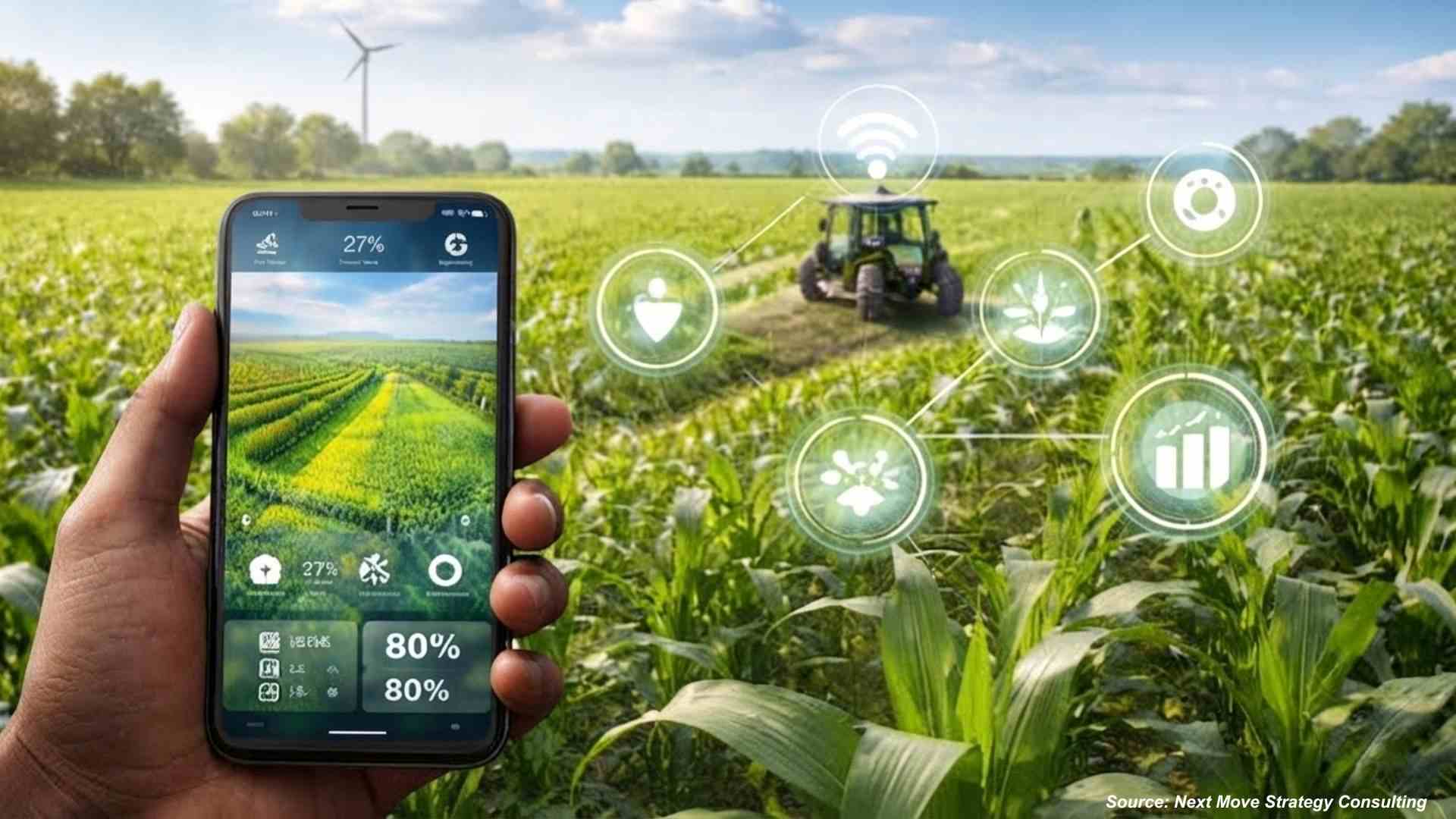
On the contrary, the agricultural industry in South Korea is poised to benefit from major technological advancements such as artificial intelligence (AI), machine learning, and robots. As technology continues to evolve, agricultural robots in South Korea may become more complex, intelligent, and capable of performing a wider range of tasks with greater accuracy and efficiency. These advancements are expected to create ample opportunities for the agricultural robots market in the country.
Request for a Sample PDF on the South Korea Agriculture Robots Market
According to the report, leading players in the South Korea agriculture robots market include Daedong Corporation, TYM Corporation, and LS Mtron Ltd., which leverage established agricultural equipment expertise. SZ DJI Technology Co., Ltd. and XAG Co., Ltd. lead in UAV-based agricultural solutions, while Kubota Corporation and CNH Industrial N.V. compete across field automation segments. Lely Industries N.V., DeLaval International AB, and GEA Group AG anchor dairy automation, with HADA Co., Ltd., GINT Co., Ltd., MetaFarmers Inc., M3sen Co., Ltd., and Daesung Hive Co., Ltd.
Key Insights from the South Korea Agriculture Robots Market Report:
-
The information related to key drivers, restraints, and opportunities and their impact on the South Korea agriculture robots market is provided in the report.
-
The value chain analysis in the market study provides a clear picture of the roles of each stakeholder.
-
The market share of players in the South Korea agriculture robots market is provided in the report along with their competitive analysis.
About the Author
 Mihul Sharma
— Mihul Sharma is Research Associate at Next Move Strategy Consulting, where he has covered technology, industrial, and healthcare markets for 3 years. His work applies structured business research, market analysis, and secondary-source review to assess market trends, competitive developments, and growth opportunities. He supports report development by fully synthesizing industry data, company information, and market signals into concise findings for strategy and investment-focused research teams.
Mihul Sharma
— Mihul Sharma is Research Associate at Next Move Strategy Consulting, where he has covered technology, industrial, and healthcare markets for 3 years. His work applies structured business research, market analysis, and secondary-source review to assess market trends, competitive developments, and growth opportunities. He supports report development by fully synthesizing industry data, company information, and market signals into concise findings for strategy and investment-focused research teams.
About the Reviewer
 Supradip Baul
— Supradip Baul is an accomplished business consultant and strategist with over a decade of rich experience in market intelligence, strategy, technology, and business transformation. His work has included rigorous qualitative and quantitative analysis across multiple industries, helping clients shape investment decisions and long-term roadmaps. Earlier in his career, he was associated with Gartner, where he contributed to industry-leading reports and market share analyses. He has worked with leading global companies and holds an MBA with a dual specialization in Marketing and Finance.
Supradip Baul
— Supradip Baul is an accomplished business consultant and strategist with over a decade of rich experience in market intelligence, strategy, technology, and business transformation. His work has included rigorous qualitative and quantitative analysis across multiple industries, helping clients shape investment decisions and long-term roadmaps. Earlier in his career, he was associated with Gartner, where he contributed to industry-leading reports and market share analyses. He has worked with leading global companies and holds an MBA with a dual specialization in Marketing and Finance.
















Add Comment