AI Sepsis Detection Market, AI Sepsis Detection Market Size, AI Sepsis Detection Market Share, Sepsis Early Warning System, Host Response Diagnostics, Sepsis Biomarker Test, Clinical Decision Support Sepsis, AI Sepsis Detection Market Report, Sepsis Prediction Software, AI Sepsis Detection Market Trends, Ai Sepsis Detection Market Growth, Continuous Sepsis Monitoring
Industry: Healthcare | Publishing Date: July 13, 2026 | Last Updated: September 30, 2026 | No of Pages: N/A | No. of Tables: N/A | No. of Figures: N/A | Format: PDF | Report Code: HC5119
What Is the AI Sepsis Detection Market Size?
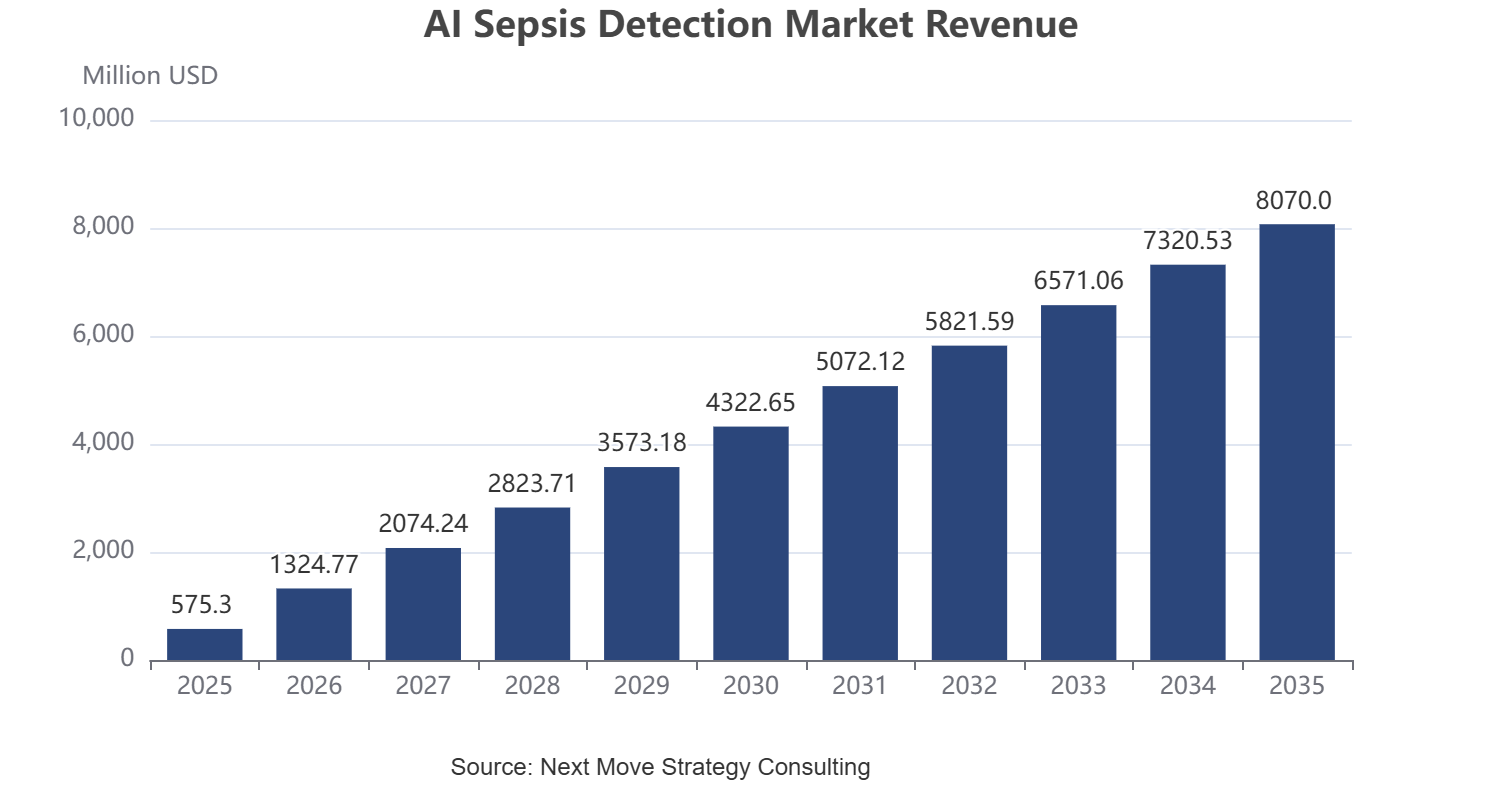
The global AI Sepsis Detection Market size was valued at USD 575.3 Million in 2025 and is estimated at USD 749.3 Million in 2026, forecast to reach USD 8.07 Billion by 2035, expanding at a 30.2% CAGR between 2026 and 2035. North America leads with approximately 41% share, while under offering, Clinical Software and Analytics dominates with approximately 49% share.
We observed that the growth is broad-based across every segmentation axis, with continuous AI monitoring platforms and host response diagnostic testing driving the dominant structural shifts through 2035.
|
Key Takeaways |
|
By Offering: Clinical Software and Analytics held the largest share of approximately 49% (USD 281.9 Million) in 2025; Diagnostic Tests is the fastest-growing sub-segment at 32.9% CAGR from 2026–2035. |
|
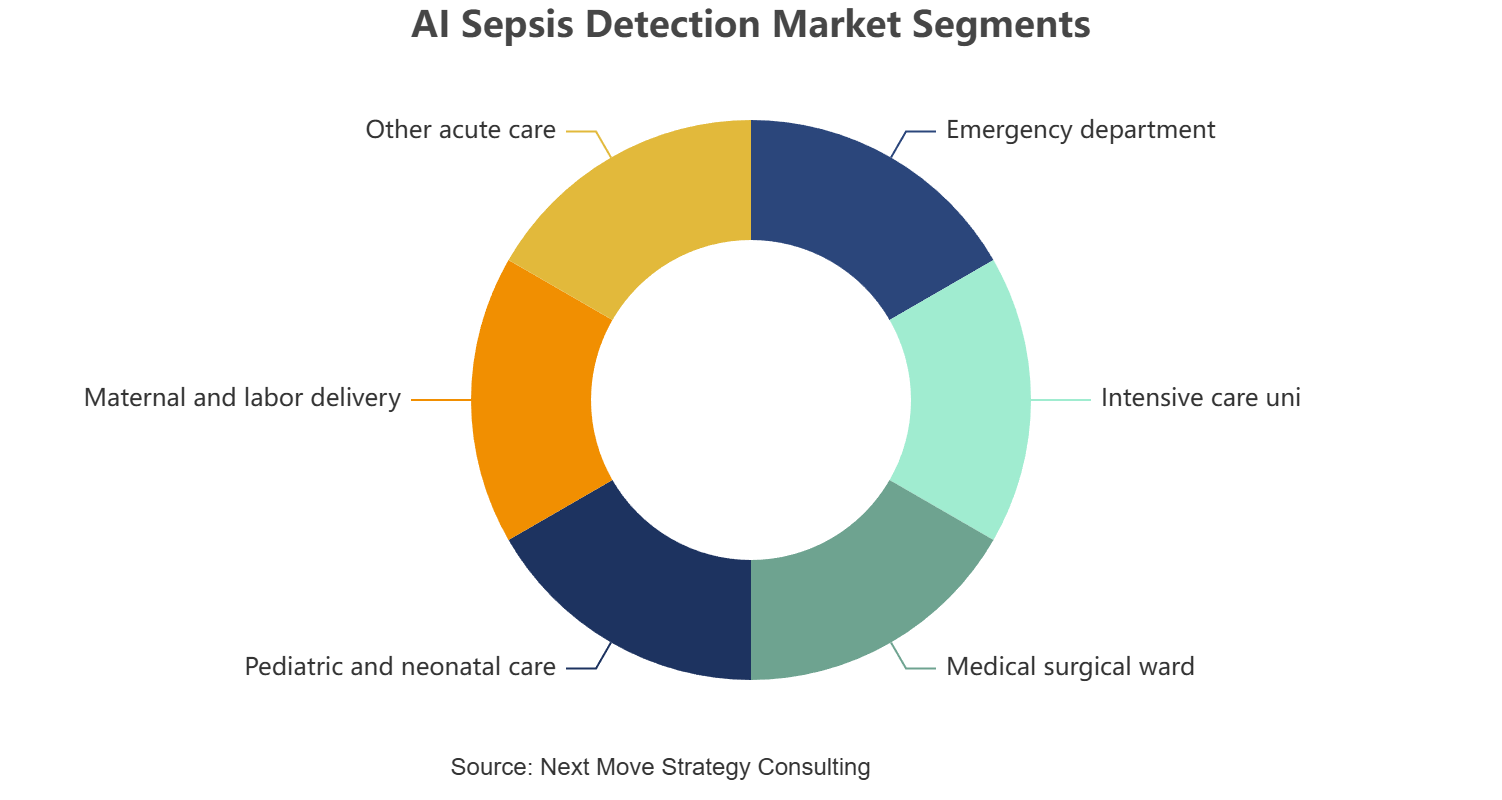
By Clinical Setting: Emergency Department held the largest share of approximately 34% (USD 195.6 Million) in 2025; Pediatric and Neonatal Care is the fastest-growing sub-segment at 33.2% CAGR from 2026–2035. |
|
By Detection Logic: Traditional Machine Learning held the largest share of approximately 36% (USD 207.1 Million) in 2025; Hybrid Continuous Monitoring is the fastest-growing sub-segment at 36.1% CAGR from 2026–2035. |
|
By Commercial Model: Subscription held the largest share of approximately 38% (USD 218.6 Million) in 2025; Per Test Consumable is the fastest-growing sub-segment at 34.2% CAGR from 2026–2035. |
|
By Distribution Channel: Direct Enterprise Sales held the largest share of approximately 47% (USD 270.4 Million) in 2025; Partner Co Sell is the fastest-growing sub-segment at 33.5% CAGR from 2026–2035. |
|
By Buyer Type: Health System held the largest share of approximately 42% (USD 241.6 Million) in 2025; Diagnostic Laboratory is the fastest-growing sub-segment at 32.5% CAGR from 2026–2035. |
|
Dominant Region: North America dominated with approximately 41% revenue share (USD 238.7 Million) in 2025. |
|
Fastest-Growing Region: Asia-Pacific is expected to register the highest CAGR of 34.1% during 2026–2035. |
|
Dominant Country: U.S. led with approximately USD 198.1 Million in 2025. |
|
Fastest-Growing Country: India is the fastest-growing country at approximately 37.0% CAGR from 2026–2035. |
Between 2026 and 2035, the AI Sepsis Detection Market is set to generate an absolute dollar opportunity of USD 7.32 Billion, positioning continuous AI monitoring and host response diagnostic platforms as a compelling area for capital allocation.
According to Next Move Strategy Consulting analysis, sustained FDA clearance momentum across host response diagnostics and continuous monitoring platforms is reshaping procurement criteria for health systems, as reimbursement pathway alignment increasingly determines vendor shortlisting across emergency department and intensive care deployments.
What Does the AI Sepsis Detection Market Encompass?
The market encompasses software, diagnostic tests, and implementation services that use machine learning, host response biomarkers, or biophysical cell analysis to identify sepsis risk earlier than conventional clinical judgment. Our assessment indicates that the scope spans EHR-native alert systems, standalone clinical AI platforms, molecular and biomarker diagnostic tests, and the professional services required to integrate these tools into emergency department, intensive care unit, and ward workflows across health systems, community hospitals, academic medical centers, diagnostic laboratories, and public sector hospitals worldwide.
The U.S. Food and Drug Administration's Breakthrough Device Designation and 510(k) and De Novo clearance pathways continue to shape market entry, while the Centers for Medicare & Medicaid Services' New Technology Add-on Payment program is emerging as a key reimbursement lever for continuous monitoring platforms. We observed that technology adoption is shifting from static, rule-based electronic health record alerts toward continuous, deep learning-based clinical intelligence that reasons across structured and unstructured patient data. Next Move Strategy Consulting's analysis indicates that this structural shift, combined with expanding host response diagnostic clearances, is redefining sourcing criteria across the AI Sepsis Detection Market.
|
Parameter |
Details |
|
Market Size in 2025 |
USD 575.3 Million |
|
Market Size in 2026 |
USD 749.3 Million |
|
Revenue Forecast in 2035 |
USD 8070.0 Million |
|
Growth Rate |
CAGR of 30.2% from 2026 to 2035 |
|
Analysis Period |
2025–2035 |
|
Base Year Considered |
2025 |
|
Forecast Period |
2026–2035 |
|
Market Size Estimation |
Revenue (USD Million/Billion) |
|
Companies Profiled |
20 |
|
Countries Covered |
33 |
|
Market Share |
Available for Top 10 Companies |
Key Emerging Trends
Based on research conducted by Next Move Strategy Consulting, we found that four structural trends are reshaping product development, clinical adoption, and stakeholder engagement across the market.
How Is Continuous AI Monitoring Redefining Sepsis Surveillance?
Continuous, always-on AI monitoring is replacing episodic, clinician-triggered sepsis screening across acute care settings. We observed that Bayesian Health's Targeted Real-Time Early Warning System received FDA 510(k) clearance in May 2026 as the first continuous AI sepsis monitor to reach market, flagging deterioration before clinical suspicion rather than after a clinician orders a test. Health systems including Cleveland Clinic have expanded deployment across multiple hospitals, reporting substantially fewer false alerts and earlier identification of at-risk patients.
Why Are Host Response Diagnostic Tests Gaining Regulatory Momentum?
Host response diagnostic tests that measure the body's immune reaction to infection, rather than relying solely on vital-sign thresholds, are gaining regulatory traction. Our findings suggest that Prenosis' Sepsis ImmunoScore, authorized by the FDA in April 2024 as the first AI diagnostic for sepsis, and Inflammatix's TriVerity test, cleared in January 2025 as a first-in-class molecular host response panel, are establishing a diagnostic category distinct from traditional biomarker assays.
How Is Alert Fatigue Reshaping Sepsis Model Design?
Alert fatigue linked to legacy rule-based systems is pushing developers toward models with materially lower false-positive rates. We found that a multicenter validation of the Epic Sepsis Model version 2, published in JAMA Network Open, reported improved discrimination alongside continued high alert burden and institutional variability, prompting vendors to redesign alerting thresholds and pursue local validation before broader rollout across health systems.
What Role Does Reimbursement Policy Play in Adoption?
Reimbursement clarity is emerging as a decisive adoption lever for AI-enabled sepsis tools. Our analysis shows that the Centers for Medicare & Medicaid Services' New Technology Add-on Payment pathway, which several FDA-cleared sepsis technologies are pursuing for the program beginning October 2026, is expected to reduce the financial uncertainty that has historically slowed hospital purchasing decisions for continuous monitoring and host response diagnostic platforms.
Pain Point Analysis of the AI Sepsis Detection Industry
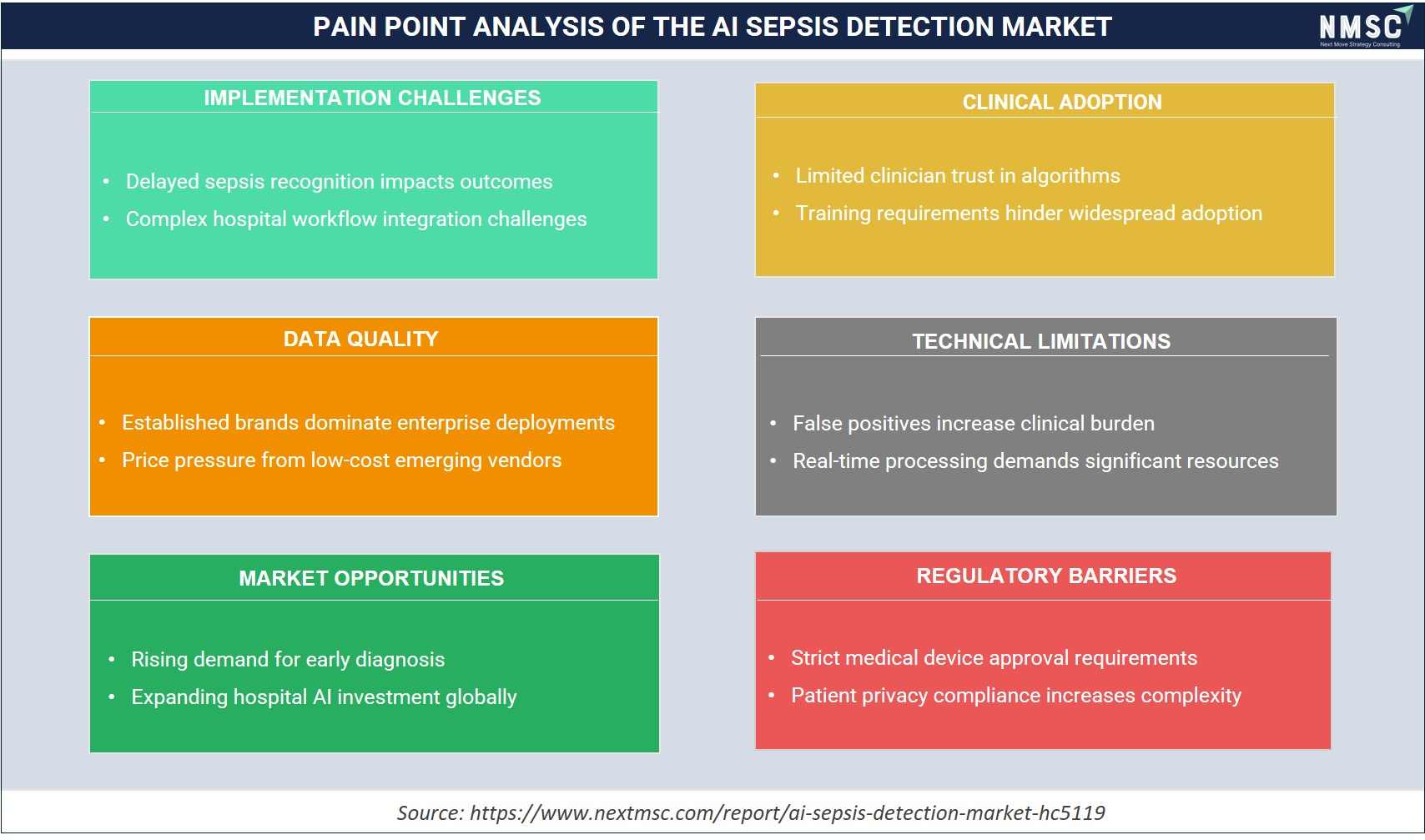
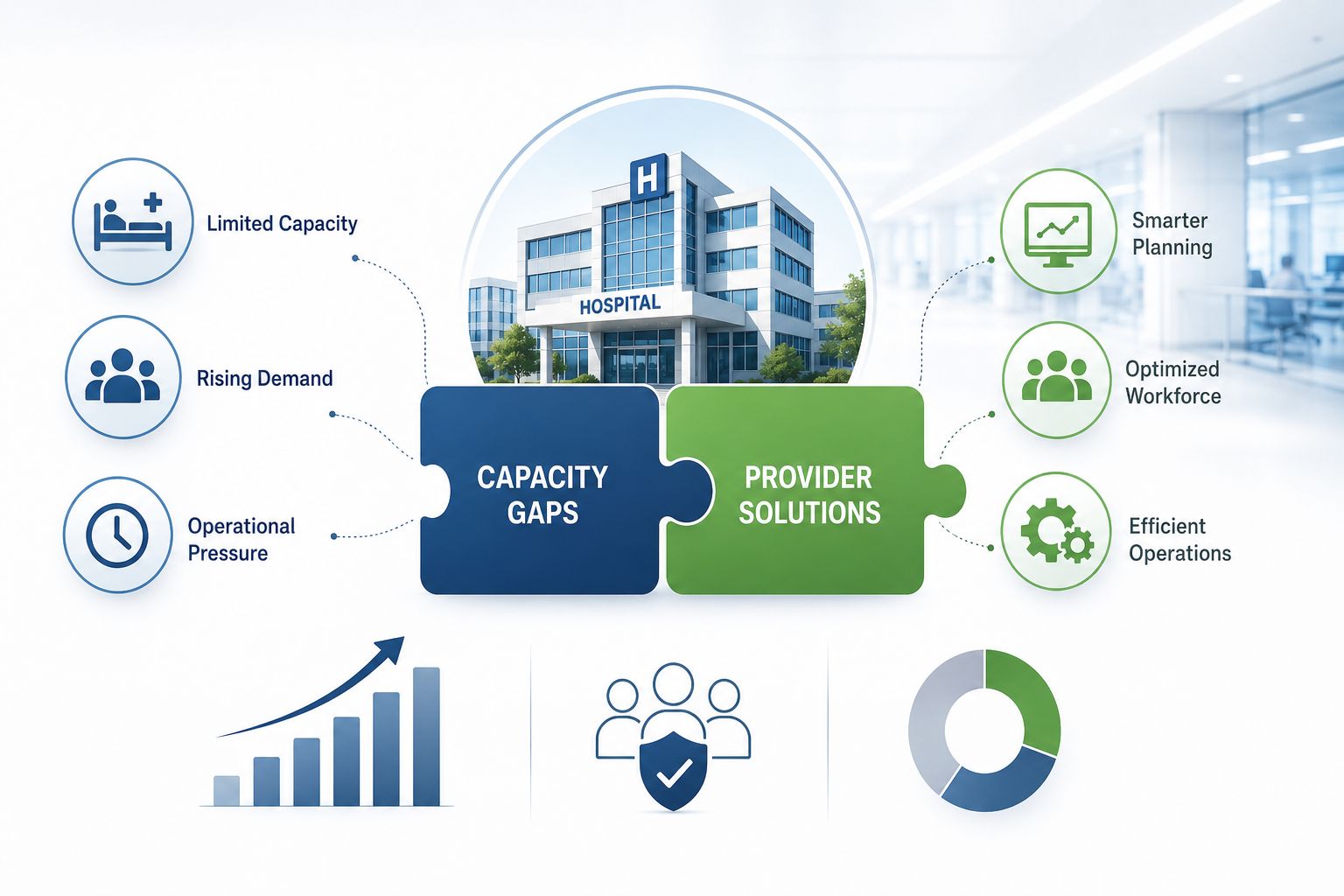
The infographic highlights the major pain points influencing the Market across implementation, clinical, technical, and regulatory dimensions. Key challenges include delayed sepsis recognition, complex hospital workflow integration, clinician trust, data quality, false positives, and stringent regulatory requirements. At the same time, growing demand for early diagnosis and increasing investments in hospital AI technologies present significant opportunities, supporting broader adoption and long-term market growth.
Growth Drivers and Restraints
Growth Catalyst and Risk Assessment Matrix
|
Factors |
Type |
(+/-) % Impact on CAGR |
Geographic Relevance |
Impact Timeline |
|
Rising global sepsis incidence and hospital mortality burden |
Driver |
+3.4% |
Global |
2026–2035 |
|
Expanding FDA Breakthrough Device Designation clearances for sepsis AI and diagnostics |
Driver |
+2.9% |
North America, Europe |
2026–2035 |
|
CMS New Technology Add-on Payment pathway for AI-enabled sepsis tools |
Driver |
+2.1% |
North America |
2026–2032 |
|
Rising EHR-integrated clinical decision support adoption in acute care |
Driver |
+2.6% |
Global |
2026–2035 |
|
Expansion of host response molecular and biophysical diagnostic testing |
Driver |
+2.3% |
North America, Europe, Asia-Pacific |
2026–2035 |
|
Growing hospital investment in continuous AI patient monitoring platforms |
Driver |
+1.8% |
Global |
2027–2035 |
|
Alert fatigue and low positive predictive value of legacy EHR sepsis models |
Restraint |
−1.6% |
Global |
2026–2035 |
|
Absence of a dedicated Medicare benefit category for AI-enabled SaaS diagnostics |
Restraint |
−1.2% |
North America |
2026–2030 |
|
Data interoperability and multi-site clinical validation burden |
Restraint |
−0.9% |
Global |
2026–2033 |
What Is the Primary Growth Driver of the AI Sepsis Detection Industry?
The rising global burden of sepsis is the primary driver of the Market. The U.S. Centers for Disease Control and Prevention estimates that sepsis contributes to at least 1.7 million adult hospitalizations and 350,000 deaths annually in the United States, while the World Health Organization attributes approximately 11 million deaths worldwide each year to the condition. We observed that this persistent mortality burden continues to anchor hospital investment in earlier detection technology across developed and emerging health systems alike.
How Is FDA Clearance Momentum Driving Market Growth?
Accelerating U.S. Food and Drug Administration clearances for sepsis-focused AI and diagnostic technologies are compressing adoption timelines across the AI Sepsis Detection Market. Breakthrough Device Designations granted to Bayesian Health, Inflammatix, and Prenosis have each converted into full marketing authorization within recent years. Our assessment indicates that this clearance momentum, combined with growing peer-reviewed validation, is lowering the due-diligence barrier that has historically slowed health system procurement of novel clinical AI tools.
What Is Restraining AI Sepsis Detection Market Expansion?
The absence of a dedicated Medicare benefit category for AI-enabled software as a service restrains predictable reimbursement across the market supply chain. Current guidance from the Centers for Medicare & Medicaid Services routes most qualifying technologies through the time-limited New Technology Add-on Payment pathway rather than a permanent benefit category. We found that this reimbursement uncertainty, combined with documented alert fatigue in legacy rule-based systems, continues to slow full-scale health system deployment.
Segmentation Analysis
Segment Sizing: By Offering
|
Segment |
2025 (USD) |
2035 (USD) |
CAGR% (2026–2035) |
|
Clinical Software and Analytics |
USD 281.9 Million |
USD 3.51 Billion |
28.7% |
|
Diagnostic Tests |
USD 189.8 Million |
USD 3.27 Billion |
32.9% |
|
Implementation and Services |
USD 103.6 Million |
USD 1.29 Billion |
28.7% |
|
Total |
USD 575.3 Million |
USD 8.07 Billion |
30.2% |
Which Offering Segment Dominates the AI Sepsis Detection Market?
Clinical Software and Analytics, encompassing EHR-native alerts, standalone clinical AI platforms, monitoring-integrated early warning tools, and triage decision support, led the AI Sepsis Detection Market with USD 281.9 Million in 2025, supported by broad installed EHR footprints across U.S. health systems. We observed that Diagnostic Tests are the fastest-growing offering, expanding at a 32.9% CAGR from 2026 to 2035, as host response molecular and biophysical tests convert recent FDA clearances into commercial adoption.
Segment Sizing: By Clinical Setting
|
Segment |
2025 (USD) |
2035 (USD) |
CAGR% (2026–2035) |
|
Emergency Department |
USD 195.6 Million |
USD 2.42 Billion |
28.6% |
|
Intensive Care Unit |
USD 166.8 Million |
USD 2.70 Billion |
32.1% |
|
Medical Surgical Ward |
USD 109.3 Million |
USD 1.41 Billion |
29.2% |
|
Pediatric and Neonatal Care |
USD 46.0 Million |
USD 807.0 Million |
33.2% |
|
Maternal and Labor Delivery |
USD 28.8 Million |
USD 443.9 Million |
31.5% |
|
Other Acute Care |
USD 28.8 Million |
USD 282.5 Million |
25.7% |
|
Total |
USD 575.3 Million |
USD 8.07 Billion |
30.2% |
Which Clinical Setting Leads AI Sepsis Detection Market Demand?
Emergency Department deployments remained the leading clinical setting within the market, valued at USD 195.6 Million in 2025, reflecting the concentration of host response diagnostic testing at the point of initial patient presentation. Our findings suggest that Pediatric and Neonatal Care is the fastest-growing clinical setting, registering a 33.2% CAGR from 2026 to 2035, as children's hospitals expand AI-based surveillance to address the World Health Organization's finding that nearly half of global sepsis cases occur in children.
Segment Sizing: By Detection Logic
|
Segment |
2025 (USD) |
2035 (USD) |
CAGR% (2026–2035) |
|
Traditional Machine Learning |
USD 207.1 Million |
USD 2.06 Billion |
25.8% |
|
Deep Learning |
USD 109.3 Million |
USD 2.22 Billion |
35.1% |
|
Rule Based Clinical Decision Support |
USD 92.0 Million |
USD 605.2 Million |
20.7% |
|
Host Response Biomarker |
USD 115.1 Million |
USD 2.06 Billion |
33.4% |
|
Hybrid Continuous Monitoring |
USD 51.8 Million |
USD 1.13 Billion |
36.1% |
|
Total |
USD 575.3 Million |
USD 8.07 Billion |
30.2% |
Which Detection Logic Approach Is Most Widely Deployed?
Traditional Machine Learning models remained the most widely deployed detection logic across the AI Sepsis Detection Market, reaching USD 207.1 Million in 2025 on the strength of long-established EHR-embedded scoring systems. Based on research conducted by Next Move Strategy Consulting, we found that Hybrid Continuous Monitoring is the fastest-growing detection logic at a 36.1% CAGR from 2026 to 2035, reflecting health systems' shift toward platforms that reason continuously across structured and unstructured patient data rather than triggering on episodic rule thresholds.
Growth Opportunities
Our analysis shows that three forward-looking opportunities stand out for stakeholders positioning within the AI Sepsis Detection Market over the 2026–2035 forecast period.
How Are Continuous Monitoring Platforms Creating Multi-Condition Whitespace for Health Systems?
Continuous AI monitoring platforms built for sepsis are extending into adjacent deterioration categories such as respiratory failure and cardiac events, creating a whitespace opportunity for health systems seeking a single surveillance layer. Vendors that broaden validated condition coverage beyond sepsis stand to capture recurring platform revenue from intensive care units and medical surgical wards seeking to consolidate multiple point solutions into one continuously reasoning system.
Why Does CMS Reimbursement Expansion Create Opportunity for Diagnostic Test Makers?
Pending Centers for Medicare & Medicaid Services New Technology Add-on Payment decisions create an opportunity for host response diagnostic test makers to unlock predictable emergency department adoption. Companies that secure add-on payment designation stand to capture recurring per-test consumable revenue as hospitals gain financial certainty to justify routine ordering of molecular and biophysical sepsis tests alongside standard blood culture workflows.
How Does Pediatric Sepsis Surveillance Represent an Underserved Opportunity?
Pediatric and neonatal sepsis surveillance remains comparatively underserved relative to adult-focused platforms, despite the World Health Organization attributing nearly half of global sepsis cases to children. Vendors that validate detection models specifically for pediatric physiology can secure long-term procurement relationships with children's hospitals and academic medical centers seeking to close this surveillance gap across neonatal and pediatric intensive care units.
Regulatory Framework Impacting the AI Sepsis Detection Industry
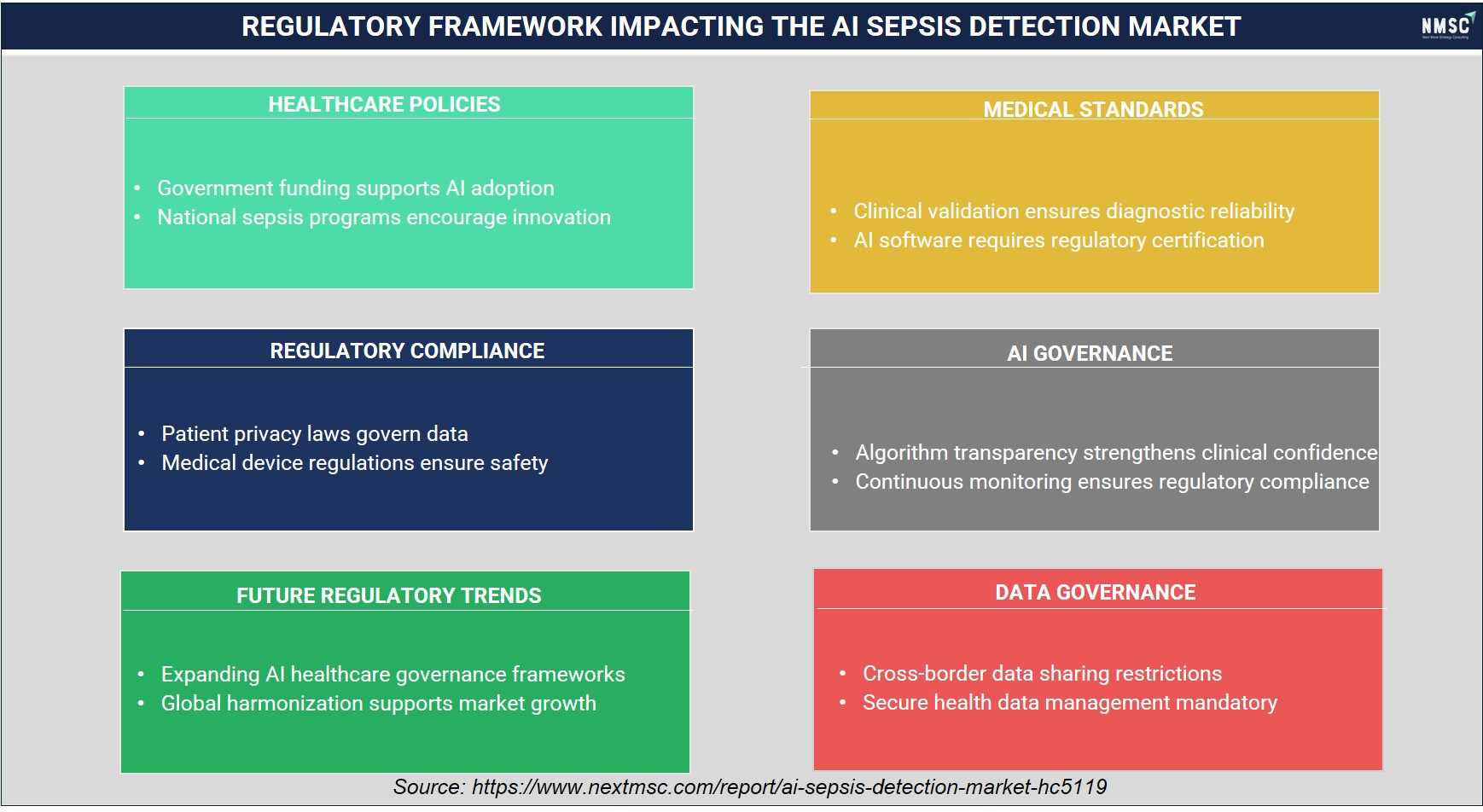
The infographic outlines the key regulatory frameworks shaping the AI Sepsis Detection Market. Government healthcare policies and national sepsis initiatives are encouraging AI adoption, while stringent medical standards and clinical validation requirements ensure diagnostic accuracy and patient safety. Compliance with privacy regulations, AI governance principles, and secure data management remains essential. Additionally, evolving global AI governance frameworks and regulatory harmonization are expected to support innovation, improve trust, and accelerate market growth.
Regional Outlook
Geographic Performance Snapshot
|
Region |
2025 (USD) |
2035 (USD) |
CAGR% (2026–2035) |
Key Driver |
|
North America |
USD 238.7 Million |
USD 2.95 Billion |
28.6% |
Concentration of FDA-cleared sepsis AI and diagnostic technologies and CMS reimbursement pathway development |
|
Europe |
USD 146.7 Million |
USD 1.82 Billion |
28.6% |
EU Medical Device Regulation compliance and expanding hospital digitization |
|
Asia-Pacific |
USD 117.9 Million |
USD 2.22 Billion |
34.1% |
Rapid hospital EHR digitization and expanding critical care infrastructure |
|
Middle East & Africa |
USD 40.3 Million |
USD 686.0 Million |
32.8% |
Vision 2030-linked hospital digitization and expanding critical care capacity |
|
Latin America |
USD 31.6 Million |
USD 403.5 Million |
29.0% |
Growing hospital accreditation standards and expanding private health system investment |
|
Total |
USD 575.3 Million |
USD 8.07 Billion |
30.2% |
— |
North America AI Sepsis Detection Market Outlook
North America leads the AI Sepsis Detection Market with the deepest concentration of FDA-cleared sepsis technologies and the most advanced hospital EHR infrastructure globally. We observed that the U.S. Food and Drug Administration's Breakthrough Device pathway and the Centers for Medicare & Medicaid Services' emerging New Technology Add-on Payment framework are jointly accelerating health system adoption. Technology adoption remains most advanced in this region, with continuous AI monitoring platforms increasingly deployed across large academic and community hospital networks.
Europe AI Sepsis Detection Market Outlook
Europe's market reflects a mature but compliance-intensive landscape shaped by the EU Medical Device Regulation and national health technology assessment processes. Our findings suggest that Germany, France, and the UK are advancing hospital digitization programs that support EHR-integrated sepsis alerting, while regulatory scrutiny of clinical AI validation evidence remains more rigorous than in North America. Technology adoption favors host response diagnostic testing within academic medical centers pursuing centralized procurement standards.
Asia-Pacific AI Sepsis Detection Market Outlook
Asia-Pacific is the fastest-growing AI Sepsis Detection Market region, propelled by rapid hospital EHR digitization across China, India, and Japan alongside expanding critical care infrastructure investment. We found that regulatory frameworks remain less harmonized than in Europe, giving health systems flexibility to pilot AI-enabled early warning tools more rapidly. Technology adoption is accelerating as regional health systems, supported by government digital health initiatives, expand intensive care and emergency department AI surveillance capacity.
Middle East & Africa AI Sepsis Detection Market Outlook
The Middle East & Africa’s market is expanding as Gulf Cooperation Council economies invest in hospital digitization tied to national healthcare modernization agendas. Our analysis shows that Saudi Arabia and the UAE are attracting critical care infrastructure investment supporting AI-enabled early warning deployment. Regulatory influence remains moderate, while technology adoption is gradually accelerating as regional health systems partner with global EHR and clinical AI vendors to expand acute care surveillance capacity.
Latin America AI Sepsis Detection Market Outlook
Latin America's market is supported by expanding private hospital accreditation standards and growing critical care investment in Brazil and Argentina. We observed that regulatory frameworks remain less stringent than in North America or Europe, though multinational health system operators are introducing EHR-integrated sepsis alerting to meet accreditation requirements. Technology adoption remains centered on rule-based and traditional machine learning tools, with competitive intensity increasing as global vendors expand regional partnerships.
U.S. AI Sepsis Detection Market
Based on our engagements, the U.S. AI Sepsis Detection Market was valued at approximately USD 198.1 Million in 2025 and is projected to reach USD 2.36 Billion by 2035, growing at a 28.1% CAGR. Demand is anchored by the deepest concentration of FDA-cleared sepsis technologies globally and mature EHR infrastructure across large health systems. Technology penetration favors continuous AI monitoring platforms, and competitive intensity remains high among incumbent EHR vendors and specialized diagnostic challengers.
Canada AI Sepsis Detection Market
Through our analysis, Canada's AI Sepsis Detection Market reached roughly USD 40.6 Million in 2025 and is forecast to hit USD 589.1 Million by 2035 at a 30.7% CAGR. Demand structure mirrors U.S. health system consumption patterns, while Health Canada medical device guidance shapes clearance pathways for imported AI diagnostic tools. Technology penetration is rising as provincial health authorities’ pilot EHR-integrated alerting, with competitive intensity moderate given reliance on cross-border technology supply from U.S.-based vendors.
UK AI Sepsis Detection Market
From our assessment, the UK market stood at about USD 49.9 Million in 2025, advancing toward USD 581.1 Million by 2035 at a 27.8% CAGR. Demand is driven by National Health Service digitization programs and growing emergency department adoption of host response diagnostic testing. Regulatory influence is significant under the Medicines and Healthcare products Regulatory Agency framework, technology penetration favors EHR-native alerting, and competitive intensity remains steady among domestic and multinational vendors.
Germany AI Sepsis Detection Market
According to evaluation, Germany's market was valued near USD 44.0 Million in 2025 and is set to reach USD 562.9 Million by 2035, expanding at a 29.0% CAGR. Demand structure benefits from a strong domestic hospital digitization program under Germany's hospital future framework. Germany's Medical Device Regulation compliance requirements drive regulatory influence, while technology penetration favors host response diagnostic testing among leading academic medical centers.
France AI Sepsis Detection Market
Based on our engagements, France's market reached approximately USD 52.8 Million in 2025, projected to climb to USD 671.8 Million by 2035 at a 29.0% CAGR. Demand is supported by France's centralized hospital procurement system, which shapes standardized adoption of EHR-integrated sepsis alerting. Regulatory influence from national health technology assessment requirements is notable, and competitive intensity remains high given concentrated procurement decisions across the public hospital network.
China AI Sepsis Detection Market
Through our analysis, China's market stood at roughly USD 42.4 Million in 2025 and is forecast to reach USD 743.4 Million by 2035, registering a 33.2% CAGR. Demand is fueled by expanding tertiary hospital digitization and government-led smart hospital initiatives. Regulatory influence is increasing gradually under National Medical Products Administration oversight, technology penetration is accelerating through domestic EHR modernization, and competitive intensity remains elevated among global and domestic AI vendors.
India AI Sepsis Detection Market
From our assessment, India's AI Sepsis Detection Market was valued at about USD 22.4 Million in 2025, projected to reach USD 521.5 Million by 2035 at a 37.0% CAGR, the fastest among covered countries. Demand structure is supported by rapid private hospital digitization and expanding critical care capacity across metropolitan health systems. Regulatory influence remains developing, technology penetration favors cloud-deployed clinical AI platforms, and competitive intensity is rising as global vendors expand regional partnerships.
Japan AI Sepsis Detection Market
According to evaluation, Japan's market was valued at approximately USD 24.8 Million in 2025 and is projected to reach USD 388.4 Million by 2035 at a 31.7% CAGR. Demand is supported by an aging population and government-backed hospital AI adoption initiatives under Japan's health digitization strategy. Regulatory influence from the Pharmaceuticals and Medical Devices Agency is significant, technology penetration favors EHR-integrated alerting, and competitive intensity remains moderate among domestic and multinational vendors.
South Korea AI Sepsis Detection Market
Based on our engagements, South Korea's market reached roughly USD 15.3 Million in 2025, forecast to reach USD 288.5 Million by 2035 at a 34.1% CAGR. Demand is driven by advanced hospital digital infrastructure and government-supported smart hospital programs. Regulatory influence from the Ministry of Food and Drug Safety shapes clearance timelines, technology penetration favors continuous monitoring platforms, and competitive intensity is increasing as domestic technology vendors expand clinical AI portfolios.
Australia AI Sepsis Detection Market
Through our analysis, Australia's AI Sepsis Detection Market was valued at about USD 13.0 Million in 2025, projected to reach USD 277.4 Million by 2035 at a 35.8% CAGR. Demand structure benefits from centralized public hospital procurement and national digital health record infrastructure. Regulatory influence from the Therapeutic Goods Administration is significant, technology penetration is accelerating through public hospital network rollouts, and competitive intensity remains moderate among established and emerging vendors.
UAE AI Sepsis Detection Market
From our assessment, the UAE's market was valued at approximately USD 13.7 Million in 2025 and is projected to reach USD 219.5 Million by 2035 at a 32.0% CAGR. Demand is supported by Vision-linked healthcare modernization investment and expanding private hospital digitization. Regulatory influence from national health authorities is moderate, technology penetration is rising through partnerships with global EHR vendors, and competitive intensity remains centered on a small number of regional distributors.
Saudi Arabia AI Sepsis Detection Market
According to evaluation, Saudi Arabia's market stood at roughly USD 15.3 Million in 2025, forecast to reach USD 253.8 Million by 2035 at a 32.4% CAGR. Demand is fueled by Vision 2030-linked hospital digitization and expanding critical care infrastructure investment. Regulatory influence from the Saudi Food and Drug Authority is increasing, technology penetration favors EHR-integrated alerting among newly built tertiary hospitals, and competitive intensity remains moderate among global vendors entering the market.
South Africa AI Sepsis Detection Market
Based on our engagements, South Africa's AI Sepsis Detection Market was valued near USD 11.3 Million in 2025, projected to reach USD 212.7 Million by 2035 at a 34.1% CAGR. Demand structure is supported by expanding private hospital networks and growing critical care investment in major metropolitan centers. Regulatory influence remains developing, technology penetration is modest but rising, and competitive intensity is centered on a small number of multinational distributors serving private health systems.
Brazil AI Sepsis Detection Market
Through our analysis, Brazil's market reached approximately USD 18.3 Million in 2025 and is forecast to reach USD 226.0 Million by 2035 at a 28.6% CAGR. Demand is supported by expanding private hospital accreditation standards and growing critical care investment across major metropolitan health systems. Regulatory influence from Brazil's national health regulatory agency is moderate, technology penetration favors rule-based and traditional machine learning tools, and competitive intensity is centered on regional distributors.
Argentina AI Sepsis Detection Market
From our assessment, Argentina's market was valued near USD 7.0 Million in 2025, projected to reach USD 96.8 Million by 2035 at a 30.1% CAGR. Demand structure is supported by steady private hospital investment despite macroeconomic volatility. Regulatory influence remains limited, technology penetration is modest, and competitive intensity is centered on a small number of regional distributors serving domestic health system buyers.
Competitive Landscape
We observed that the AI Sepsis Detection Market features a moderately fragmented competitive landscape, with diversified EHR and med-tech incumbents competing alongside specialized diagnostic and clinical AI challengers on clinical validation, regulatory clearance, and reimbursement positioning.
|
Key Takeaways |
Details |
|
Market Structure |
Moderately fragmented; established EHR and medical technology incumbents such as Epic Systems, Oracle, Philips, GE HealthCare, and Siemens Healthineers compete alongside specialized diagnostic and clinical AI challengers including Bayesian Health, Prenosis, Cytovale, and Inflammatix for host response testing and continuous monitoring share. |
|
Innovation Focus |
Continuous, deep learning-based patient monitoring, host response molecular and biophysical diagnostic testing, and reimbursement-pathway alignment through CMS New Technology Add-on Payment applications dominate current innovation pipelines across leading suppliers. |
|
M&A Activity |
Selective consolidation activity to date has centered on capital formation and health system partnership expansion rather than large-scale acquisitions, exemplified by Cytovale's USD 100 Million Series D raise and Bayesian Health's multi-hospital rollout with Cleveland Clinic. |
How Do Companies Compete in the AI Sepsis Detection Industry?
Companies compete primarily on regulatory clearance status, clinical validation depth, and EHR integration flexibility across the AI Sepsis Detection Market. Established EHR vendors such as Epic Systems and Oracle leverage broad installed hospital bases to embed sepsis alerting directly into existing clinical workflows, while specialized challengers such as Bayesian Health and Prenosis compete on differentiated FDA clearance status and peer-reviewed outcomes data to win discrete health system contracts.
Which Competitive Archetypes Dominate the AI Sepsis Detection Market?
Three archetypes dominate the AI Sepsis Detection Market: diversified EHR and medical technology incumbents offering embedded clinical decision support, specialized continuous monitoring and diagnostic challengers pursuing standalone FDA clearance, and enterprise analytics providers supplying underlying data infrastructure. Epic Systems and Oracle exemplify the embedded incumbent archetype, while Bayesian Health, Cytovale, and Inflammatix exemplify the specialized challenger archetype competing on clinical validation rather than installed base.
How Are Companies Differentiating Through Innovation in AI Sepsis Detection?
Innovation and differentiation strategy increasingly center on regulatory clearance breadth and reimbursement readiness. Bayesian Health's first-ever FDA clearance for continuous AI sepsis monitoring and Inflammatix's first-in-class TriVerity host response panel both establish new diagnostic categories rather than incremental improvements to existing tools. Our analysis shows that vendors unable to demonstrate multicenter peer-reviewed validation risk exclusion from health system request-for-proposal shortlists as procurement standards tighten.
What M&A and Expansion Activity Is Shaping the AI Sepsis Detection Market?
Capital formation and health system expansion, rather than large-scale mergers, continue to shape competitive positioning within the AI Sepsis Detection Market. Cytovale's USD 100 Million Series D financing and Bayesian Health's expanded multi-hospital rollout with Cleveland Clinic illustrate how specialized vendors are scaling commercial reach ahead of broader industry consolidation, while diversified incumbents pursue geographic expansion through existing enterprise sales channels.
Key Market Players
Our assessment indicates that the following 20 companies represent the validated competitive set actively shaping product innovation, regulatory clearance strategy, and reimbursement positioning within the global AI Sepsis Detection Market.
-
Epic Systems Corporation
-
Oracle Corporation
-
GE HealthCare Technologies Inc.
-
Siemens Healthineers AG
-
Medtronic plc
-
Medical Information Technology, Inc. (MEDITECH)
-
Wolters Kluwer N.V.
-
Masimo Corporation
-
SAS Institute Inc.
-
Altera Digital Health Inc.
-
Bayesian Health, Inc.
-
Prenosis, Inc.
-
Cytovale, Inc.
-
CLEW Medical Ltd.
-
Inflammatix, Inc.
-
Dascena, Inc.
-
Mednition, Inc.
-
SpassMed Inc.
Latest Developments
We found that recent developments within the AI Sepsis Detection Market are concentrated on FDA clearance milestones and expanding health system deployment, reflecting the industry's transition from pilot programs to broader clinical adoption.
|
Date |
Event |
|
May 2026 |
Bayesian Health announced that its AI Sepsis Flagging Device received FDA 510(k) clearance, becoming the first continuously monitoring AI sepsis detection system cleared by the FDA for real-time patient monitoring. |
|
September 2025 |
Cytovale announced accelerated demand for its FDA-cleared IntelliSep® rapid sepsis detection solution. The company expanded deployments across multiple U.S. health systems and stated that its USD 100 million Series D financing would support broader commercialization in 2025. |
|
April 2024 |
Prenosis entered a commercial distribution collaboration with Roche to commercialize Sepsis ImmunoScore™ through Roche's navify® Algorithm Suite, expanding hospital access to the FDA-authorized AI sepsis diagnostic platform. |
Expert Insights
 "The Sepsis ImmunoScore is the first FDA-authorized sepsis AI algorithm that functions by embedding in the EMR and is approved to aid providers in the identification and assessment of patients with sepsis."
— Nathan I. Shapiro, MD, MPH
Statement made during the announcement of the New England Journal of Medicine AI publication validating Sepsis ImmunoScore™, the first FDA-authorized AI tool for sepsis detection, highlighting the importance of AI integrated with Electronic Medical Records (EMRs) for improving early sepsis identification and clinical decision-making.
Market Interpretation
This statement highlights a significant advancement in the AI Sepsis Detection Market by demonstrating the shift from standalone predictive models to FDA-authorized AI solutions that integrate directly with Electronic Medical Records (EMRs). Native EMR integration enables real-time risk assessment within existing clinical workflows, improving clinician adoption and accelerating timely sepsis identification. The milestone also reflects increasing regulatory confidence in AI-enabled Software as a Medical Device (SaMD), supporting broader commercialization of clinically validated AI diagnostics across emergency departments and hospitals.
Investment Opportunities
What Capital Inflows Are Targeting the AI Sepsis Detection Market?
Capital inflows into the AI Sepsis Detection Market are increasingly directed toward continuous monitoring platforms and host response diagnostic commercialization. Venture financing continues to fund clinical validation and go-to-market expansion, as seen in Cytovale's USD 100 Million Series D round completed in early 2025. We observed that investors increasingly favor companies demonstrating FDA clearance and peer-reviewed outcomes data, viewing regulatory milestones as a proxy for long-term health system contract retention.
How Is Infrastructure Investment Supporting AI Sepsis Detection Deployment?
Infrastructure investment is expanding hospital EHR integration capacity and cloud computing infrastructure to support real-time clinical AI reasoning across large patient populations. Our findings suggest that health systems are investing in data interoperability and clinical informatics teams to support multi-site validation, supporting the precision required for continuous monitoring platforms to reason reliably across diverse hospital data environments.
What ESG Considerations Are Shaping AI Sepsis Detection Investment Decisions?
Environmental, social, and governance considerations shape investment decisions across the AI Sepsis Detection Market primarily through the social and governance dimensions, given the technology's direct bearing on patient safety and health equity. The World Health Organization's finding that a large share of global sepsis cases occur in low-resource settings continues to inform investor and philanthropic interest in extending validated detection technology beyond high-income health systems. We found that investors increasingly favor vendors with documented algorithmic bias testing across diverse patient populations.
Key Benefits for Stakeholders
How Does This Report Benefit Enterprise and Industry Leaders?
Enterprise and industry leaders gain access to validated segmentation, competitive benchmarking, and regional demand forecasts that support sourcing and product-portfolio decisions across the AI Sepsis Detection Market. Our analysis shows that detailed clinical-setting, detection-logic, and commercial-model breakdowns help procurement teams align technology specifications with reimbursement and clinical validation requirements while identifying underserved application segments for portfolio expansion.
How Does This Report Benefit Investors and Financial Analysts?
Investors and financial analysts benefit from consistent, single-point market size and CAGR estimates that support valuation and capital-allocation decisions across the AI Sepsis Detection Market supply chain. We observed that the report's regional and segment-level growth differentials help identify which vendors are best positioned to capture above-market growth in continuous monitoring and host response diagnostic categories through 2035.
How Does This Report Benefit Technology Vendors and Product Teams?
Technology vendors and product teams gain insight into emerging clearance pathways, reimbursement mechanics, and clinical validation requirements that are reshaping the AI Sepsis Detection Market. Our findings suggest that this analysis helps product and regulatory teams prioritize development roadmaps around FDA clearance strategy and CMS reimbursement alignment, which are increasingly decisive in health system request-for-proposal processes.
Key Market Segments
By Offering
-
Clinical software and analytics
-
EHR native sepsis alert
-
Standalone clinical AI platform
-
Monitoring integrated early warning
-
Triage decision support
-
-
Diagnostic tests
-
Host response molecular test
-
Biomarker assay
-
Biophysical test
-
Other diagnostic test
-
-
Implementation and services
-
Model build and integration
-
Managed surveillance and optimization
-
Professional services
-
By Clinical Setting
-
Emergency department
-
Intensive care unit
-
Medical surgical ward
-
Pediatric and neonatal care
-
Maternal and labor delivery
-
Other acute care
By Detection Logic
-
Traditional machine learning
-
Deep learning
-
Rule based clinical decision support
-
Host response biomarker
-
Hybrid continuous monitoring
By Commercial Model
-
Subscription
-
Per bed license
-
Per test consumable
-
Professional services fee
-
Maintenance and support contract
By Distribution Channel
-
Direct enterprise sales
-
EHR OEM and marketplace
-
Diagnostic distributor
-
Partner co sell
By Buyer Type
-
Health system
-
Community hospital
-
Academic medical center
-
Diagnostic laboratory
-
Public sector hospital
By Region
-
North America: U.S., Canada, Mexico.
-
Europe: UK, Germany, France, Italy, Spain, Sweden, Denmark, Finland, Netherlands, Rest of Europe.
-
Asia-Pacific: China, India, Japan, South Korea, Taiwan, Indonesia, Vietnam, Australia, Philippines, Malaysia, Rest of APAC.
-
Middle East & Africa: Saudi Arabia, UAE, Egypt, Israel, Turkey, Nigeria, South Africa, Rest of MEA.
-
Latin America: Brazil, Argentina, Chile, Colombia, Rest of LATAM.
Conclusion and Recommendations
What Is the Long-Term Outlook for the AI Sepsis Detection Market?
The long-term outlook for the AI Sepsis Detection Market remains strongly positive, with global revenue projected to expand more than thirteen-fold from USD 575.3 Million in 2025 to USD 8.07 Billion by 2035 at a 30.2% CAGR. We observed that sustained sepsis mortality burden, accelerating FDA clearance momentum, and maturing CMS reimbursement pathways will continue underpinning demand across emergency department, intensive care, and ward deployments through the forecast period.
What Strategic Positioning Should AI Sepsis Detection Market Vendors Pursue?
Vendors should prioritize continuous monitoring architectures while pursuing FDA Breakthrough Device Designation and CMS New Technology Add-on Payment qualification to secure long-term health system contracts. Our assessment indicates that companies investing early in multicenter peer-reviewed validation and reimbursement pathway alignment will be best positioned to capture premium pricing within the AI Sepsis Detection Market.
How Attractive Is the AI Sepsis Detection Market for New Investment?
The AI Sepsis Detection Market presents an attractive investment case, supported by a USD 7.32 Billion absolute dollar opportunity between 2026 and 2035 and above-average growth in Asia-Pacific and diagnostic test categories. We found that investment attractiveness is highest for vendors combining FDA clearance credentials with scaled health system deployment, positioning them to serve both cost-sensitive community hospitals and premium academic medical center segments simultaneously.
What Market Shifts and Key Risks Should Stakeholders Monitor?
Stakeholders should monitor reimbursement policy uncertainty, alert fatigue from legacy rule-based systems, and multi-site clinical validation requirements as key risks to the AI Sepsis Detection Market. Our analysis shows that vendors unable to demonstrate low false-positive rates in peer-reviewed, multicenter studies risk losing health system trust to competitors with stronger validation evidence, particularly as institutions increasingly require local performance verification before deployment.
What Are the Key Growth Pathways for the AI Sepsis Detection Market?
Key growth pathways include expanding continuous monitoring beyond sepsis into adjacent deterioration categories, scaling host response diagnostic testing through CMS reimbursement qualification, and deepening penetration into pediatric and neonatal care settings. Next Move Strategy Consulting's analysis indicates that vendors pursuing these pathways while maintaining EHR integration simplicity will be best positioned to capture the AI Sepsis Detection Market's projected growth through 2035.
About the Author
 Liza Phukan
— Liza Phukan is Research Associate at Next Move Strategy Consulting, where she has covered emerging industries and market research across sectors for 3.5 years. Her work includes analyzing industry developments, validating market data, and developing structured business content from research findings. She uses secondary research and data-validation practices to turn complex market information into clear decision-useful market analysis for business audiences and support report development and B2B.
Liza Phukan
— Liza Phukan is Research Associate at Next Move Strategy Consulting, where she has covered emerging industries and market research across sectors for 3.5 years. Her work includes analyzing industry developments, validating market data, and developing structured business content from research findings. She uses secondary research and data-validation practices to turn complex market information into clear decision-useful market analysis for business audiences and support report development and B2B.
About the Reviewer
 Supradip Baul
— Supradip Baul is an accomplished business consultant and strategist with over a decade of rich experience in market intelligence, strategy, technology, and business transformation. His work has included rigorous qualitative and quantitative analysis across multiple industries, helping clients shape investment decisions and long-term roadmaps. Earlier in his career, he was associated with Gartner, where he contributed to industry-leading reports and market share analyses. He has worked with leading global companies and holds an MBA with a dual specialization in Marketing and Finance.
Supradip Baul
— Supradip Baul is an accomplished business consultant and strategist with over a decade of rich experience in market intelligence, strategy, technology, and business transformation. His work has included rigorous qualitative and quantitative analysis across multiple industries, helping clients shape investment decisions and long-term roadmaps. Earlier in his career, he was associated with Gartner, where he contributed to industry-leading reports and market share analyses. He has worked with leading global companies and holds an MBA with a dual specialization in Marketing and Finance.
At Next Move Strategy Consulting, we understand that insightful market research is the cornerstone of successful business decisions. That's why we employ a robust and multifaceted approach, combining various methodologies to deliver the most accurate and actionable data for our clients.

Research Landscape
We navigate the world of research with two primary approaches:
Qualitative Approach
Our qualitative research methodologies involve immersive techniques such as in-depth interviews, focus groups, and observational studies. By engaging directly with individuals and stakeholders, we uncover valuable insights that quantitative data alone may overlook.

Quantitative Research
In tandem with qualitative methodologies, NMSC leverages the power of Quantitative Research to provide a robust foundation of numerical insights. Through systematic data collection and analysis, we quantify patterns, preferences, and market trends, offering a comprehensive view of the business landscape.
Our quantitative research approach employs diverse tools, including surveys, experiments, and statistical modelling. These methodologies enable us to gather data from a large and representative sample, ensuring the statistical significance of our findings. By employing structured questionnaires and standardized data collection methods, we guarantee the reliability and validity of the information we present to our clients.
Quantitative research is particularly effective in measuring the prevalence of trends, assessing market size, and gauging the impact of various factors on consumer behavior. The numerical precision attained through this approach equips our clients with actionable insights, facilitating data-driven decision-making and strategy formulation.


Our Specialized Toolbox for Industry-Specific Market Research
We deploy a specialized arsenal of techniques tailored to meet your unique requirements. Here's a glimpse into our comprehensive toolbox:

Information Procurement
The stage entails acquiring market data or relevant information through various sources and methodologies.


Market Research Approach
We utilize both top-down and bottom-up approaches in market research analysis to achieve a comprehensive understanding of the market dynamics, leveraging the broad perspective of industry trends and macroeconomic factors alongside detailed insights from specific segments and individual companies.

Porters Five Forces Analysis
We conduct Porter's Five Forces analysis to evaluate the competitive landscape of an industry, providing us with insights into factors that affect profitability and strategic positioning.

SWOT Analysis

Forecasting
We utilize a forecasting model to predict future consumption by considering parameters like population, economics, regulations, market competition, drivers, constraints, technology, and pricing. We also employ statistical techniques such as multilinear regression, exponential smoothing, moving average, ARIMA, and Monte Carlo simulations for accurate predictions. In econometric forecasting, we analyzed short-term and long-term event impacts, attributing values based on regulatory frameworks, economic factors, and market events.





 Speak to Our Analyst