AI Therapy Bot Market Size, Share, Trends and Growth Analysis, By Revenue Model (Direct Consumer Solutions, Employer Solutions, Payer Solutions, Provider Solutions, Regulated Therapeutic Solutions, and Platform Revenue), By Therapeutic Modality, By Technology Architecture, By Clinical Use Case, By Deployment Model(Cloud-based, On-premise and Hybrid), By End User(Individuals, Employees, and Others), and Region — Industry Report and Forecast, 2026–2035
Industry: Healthcare | Publishing Date: July 23, 2026 | Last Updated: September 30, 2026 | No of Pages: N/A | No. of Tables: N/A | No. of Figures: N/A | Format: PDF | Report Code: HC5357
What Is the AI Therapy Bot Market Size?
The global AI Therapy Bot Market size was valued at USD 1.28 billion in 2025 and is estimated at USD 1.58 billion in 2026, forecast to reach USD 11.35 billion by 2035, expanding at a 24.5% CAGR between 2026 and 2035. North America leads with approximately 39% share, while Direct Consumer Solutions dominates all other revenue models with approximately 34% share.
We observed that adoption is accelerating fastest in employer-sponsored and regulated therapeutic channels, where reimbursement pathways and workforce mental wellness budgets are expanding the addressable buyer base beyond direct-to-consumer subscriptions.
|
Parameters |
Details |
|
Market Size in 2025 |
USD 1.28 Billion |
|
Market Size in 2026 |
USD 1.58 Billion |
|
Revenue Forecast in 2035 |
USD 11.35 Billion |
|
Growth Rate |
CAGR of 24.5% from 2026 to 2035 |
|
Analysis Period |
2025–2035 |
|
Base Year Considered |
2025 |
|
Forecast Period |
2026–2035 |
|
Market Size Estimation |
Revenue (USD Billion) |
|
Companies Profiled |
15 |
|
Countries Covered |
33 |
|
Market Share |
Available for Top 10 Companies |
AI Therapy Bot Market Overview
What Does the AI Therapy Bot Market Encompass?
The AI therapy bot market encompasses conversational artificial intelligence platforms that deliver structured therapeutic interaction, psychological assessment, and behavioral support through text or voice interfaces, spanning consumer wellness applications through regulated prescription digital therapeutics. Our assessment indicates that scope includes generative, rule-based, and hybrid AI architectures deployed across cloud, on-premises, and hybrid environments serving individuals, employers, payers, healthcare providers, government organizations, and educational institutions.
Regulatory oversight from bodies such as the U.S. Food and Drug Administration for software as a medical device pathway, and evolving data-privacy frameworks under HIPAA and the EU General Data Protection Regulation, shape clinical validation and deployment requirements. We observed that technology adoption is shifting rapidly toward generative AI architectures capable of more naturalistic dialogue, while Next Move Strategy Consulting's analysis indicates that reimbursement pathway development is increasingly determining which platforms scale beyond pilot deployments.
|
Key Takeaways |
|
By Revenue Model: Direct Consumer Solutions held the largest share of approximately 34% (USD 0.43 Billion) in 2025; Regulated Therapeutic Solutions is the fastest-growing sub-segment at 28.7% CAGR from 2026–2035. |
|
By Therapeutic Modality: Cognitive Behavioral Therapy held the largest share of approximately 38% (USD 0.49 Billion) in 2025; Acceptance Commitment Therapy is the fastest-growing sub-segment at 27.1% CAGR from 2026–2035. |
|
By Technology Architecture: Generative AI Platforms held the largest share of approximately 46% (USD 0.59 Billion) in 2025; Hybrid AI Platforms is the fastest-growing sub-segment at 28.3% CAGR from 2026–2035. |
|
By Clinical Use Case: Anxiety Management held the largest share of approximately 24% (USD 0.31 Billion) in 2025; Crisis Management is the fastest-growing sub-segment at 29.8% CAGR from 2026–2035. |
|
By Deployment Model: Cloud-Based held the largest share of approximately 71% (USD 0.91 Billion) in 2025; Hybrid is the fastest-growing sub-segment at 27.6% CAGR from 2026–2035. |
|
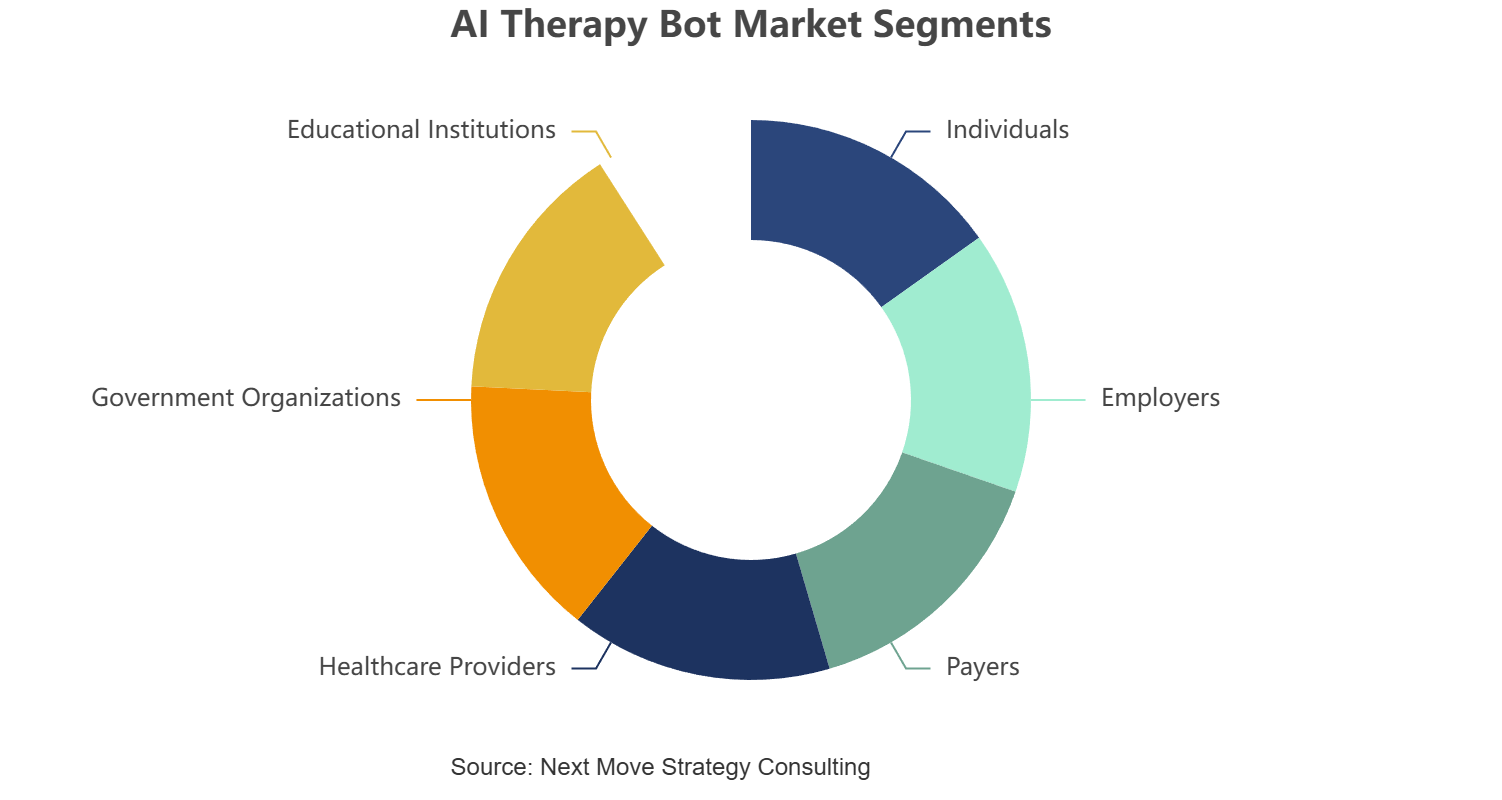
By End User: Individuals held the largest share of approximately 41% (USD 0.53 Billion) in 2025; Employers is the fastest-growing sub-segment at 29.4% CAGR from 2026–2035. |
|
Dominant Region: North America dominated with approximately 39% revenue share (USD 0.50 Billion) in 2025. |
|
Fastest-Growing Region: Asia-Pacific is expected to register the highest CAGR of 26.9% during 2026–2035. |
|
Dominant Country: U.S. led with approximately USD 0.41 Billion in 2025. |
|
Fastest-Growing Country: India is the fastest-growing country at approximately 29.5% CAGR from 2026–2035. |
Market Opportunity: The AI therapy bot market is expected to create an absolute dollar opportunity of USD 9.77 billion between 2026 and 2035, presenting significant investment potential across direct-to-consumer, employer, payer, and regulated therapeutic channels.
According to Next Move Strategy Consulting analysis, employer-sponsored behavioral health benefits are becoming a primary distribution channel as companies expand workforce mental wellness budgets alongside broader mental health technology adoption, a shift that favors vendors with enterprise-grade clinical oversight over consumer-only chat applications.
Key Emerging Trends
Our findings suggest that four structural trends are reshaping how AI therapy bots are designed, regulated, and adopted across the forecast period.
How Is Generative AI Transforming Conversational Therapy Support?
Generative AI architectures are replacing scripted, rule-based dialogue trees with adaptive conversation capable of responding to nuanced emotional expression. We observed that this transformation improves engagement retention for consumer users while raising new clinical-safety validation requirements. Woebot Health has continued refining its structured, clinically grounded conversational design specifically to balance generative flexibility against safety guardrails required for mental health applications.
Why Are Employers Expanding Behavioral Health Benefit Access?
Employers are increasingly embedding AI therapy bots within broader employee assistance and workforce mental wellness programs to address rising workplace stress claims. Our analysis shows that this employer channel is expanding faster than direct consumer subscriptions as companies seek measurable utilization data tied to benefits spending. Spring Health has expanded enterprise behavioral health platform partnerships, reflecting this employer-channel momentum.
How Is Regulatory Clarity Shaping Prescription Digital Therapeutics?
Regulatory pathways for software as a medical device are gradually clarifying reimbursement and clinical-validation requirements for prescription digital therapeutics targeting anxiety and depression. We found that this clarity is a prerequisite for payer-channel scale, since health plans require validated clinical evidence before covering AI-delivered therapeutic interventions. Woebot Health has pursued FDA engagement for regulated product pathways, illustrating this shift toward clinically validated deployment.
What Role Does Voice AI Play in Expanding Access?
Voice AI platforms are expanding access for users who prefer spoken interaction over text-based chat, particularly among older adults and users in lower-literacy markets. Based on research conducted by Next Move Strategy Consulting, we found that voice-based delivery is gaining traction within telehealth-integrated deployment models. Wysa Ltd. has expanded voice-enabled support features, reflecting broader accessibility-driven product development across the category.
Strategic Framework of the AI Therapy Bot Market
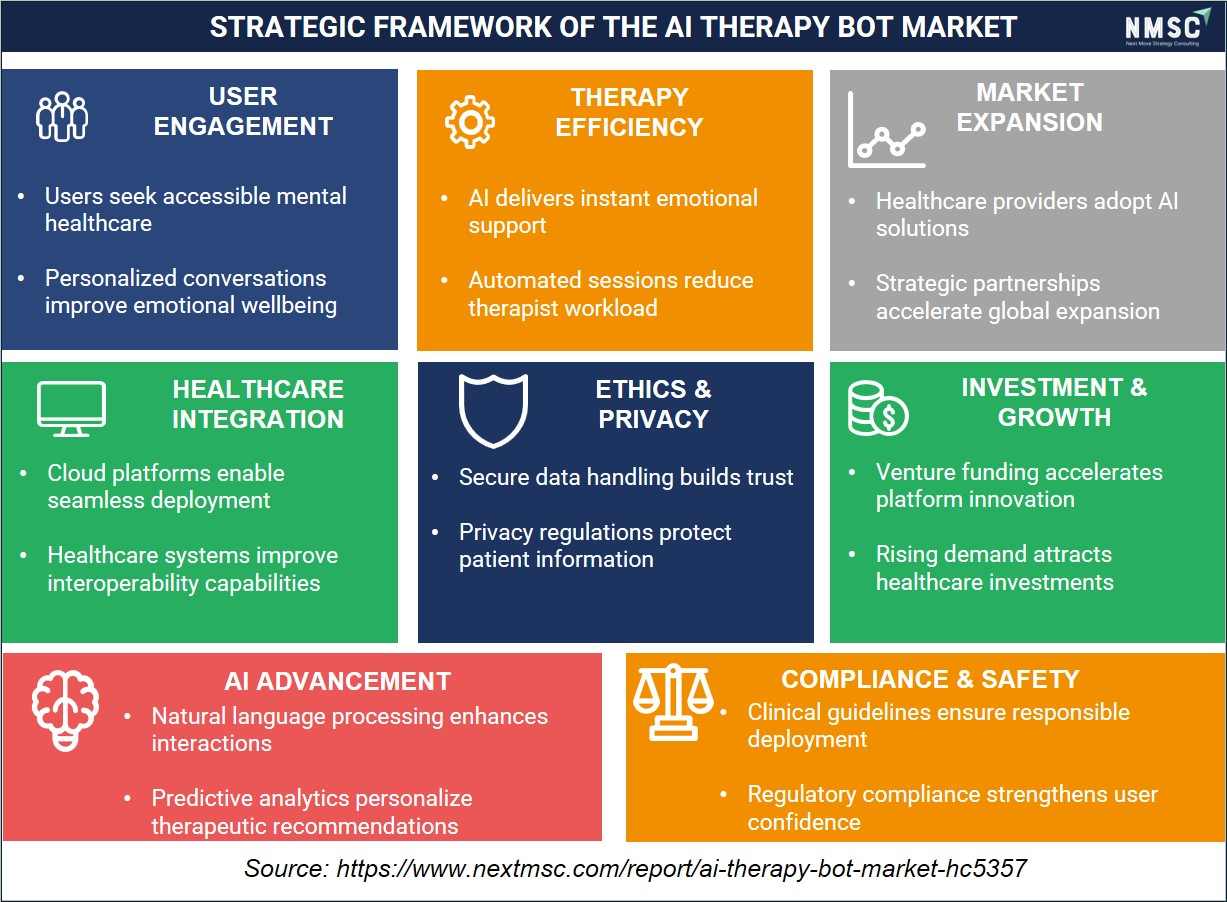
Our analysis indicates that market growth is driven by rising user engagement, AI-powered therapy efficiency, healthcare integration, and increasing investment in digital mental health solutions. Advances in natural language processing, predictive analytics, privacy protection, regulatory compliance, and strategic healthcare partnerships strengthen platform adoption while supporting scalable, secure, and personalized mental wellness services.
Growth Drivers & Restraints
|
Factors |
Type |
(+/−) % Impact on CAGR |
Geographic Relevance |
Impact Timeline |
|
Rising global prevalence of anxiety and depression |
Driver |
+6.2% |
Global |
2026–2035 |
|
Expanding employer-sponsored behavioral health benefits |
Driver |
+4.8% |
North America, Europe |
2026–2035 |
|
Growing payer reimbursement for digital therapeutics |
Driver |
+3.9% |
North America, Europe |
2026–2035 |
|
Shortage of licensed mental health professionals |
Driver |
+3.1% |
Global |
2026–2035 |
|
Advances in generative AI conversational quality |
Driver |
+2.6% |
Global |
2026–2032 |
|
Expanding smartphone and internet penetration in emerging markets |
Driver |
+2.0% |
Asia-Pacific, Latin America, MEA |
2026–2035 |
|
Data privacy and clinical-safety regulatory uncertainty |
Restraint |
−2.4% |
Global |
2026–2031 |
|
Limited clinical evidence for long-term efficacy |
Restraint |
−1.8% |
North America, Europe |
2026–2033 |
|
User trust and stigma barriers around AI-delivered therapy |
Restraint |
−1.3% |
Global |
2026–2035 |
What Is the Primary Growth Driver?
The primary growth driver is the rising global prevalence of anxiety and depression alongside a persistent shortage of licensed mental health professionals. The World Health Organization continues to report substantial global treatment gaps for common mental health conditions, sustaining demand for scalable, always-available conversational support that supplements constrained clinical capacity across both developed and emerging markets.
How Is Employer Investment Driving the Market Growth?
Expanding employer-sponsored behavioral health benefits are driving structural demand as companies integrate AI therapy bots within broader wellness apps and employee assistance program ecosystems. Employer adoption offers vendors predictable, enterprise-scale contracts that reduce reliance on volatile direct-to-consumer subscription churn, reinforcing this channel's outsized contribution to overall market CAGR through 2035.
What Is Restraining the AI Therapy Bot Market?
The primary restraint is data privacy and clinical-safety regulatory uncertainty, which slows enterprise and payer procurement decisions pending clearer compliance frameworks. Industry-derived estimates suggest that health plans and government health programs require extended clinical-validation review cycles before covering AI-delivered therapeutic interventions, extending sales cycles and constraining near-term revenue recognition despite strong underlying demand.
Segmentation Analysis
Segment Sizing: By Revenue Model
|
Segment |
2025 (USD Billion) |
2035 (USD Billion) |
CAGR% (2026–2035) |
|
Direct Consumer Solutions |
0.43 |
3.80 |
24.3% |
|
Employer Solutions |
0.17 |
1.36 |
23.1% |
|
Payer Solutions |
0.17 |
1.29 |
22.5% |
|
Provider Solutions |
0.17 |
1.28 |
22.4% |
|
Regulated Therapeutic Solutions |
0.17 |
2.12 |
28.7% |
|
Platform Revenue |
0.17 |
1.49 |
24.2% |
|
Total |
1.28 |
11.35 |
24.5% |
Which Revenue Model Sub-Segment Leads the Market?
Direct Consumer Solutions led the revenue model axis with approximately 34% share (USD 0.43 Billion) in 2025, reflecting broad accessibility and established user familiarity relative to other sub-segments. Our assessment indicates that Regulated Therapeutic Solutions is the fastest-growing sub-segment at 28.7% CAGR from 2026–2035, driven by expanding institutional adoption and rising clinical-validation confidence that favors this category over legacy delivery formats.
Segment Sizing: By Clinical Use Case
|
Segment |
2025 (USD Billion) |
2035 (USD Billion) |
CAGR% (2026–2035) |
|
Anxiety Management |
0.31 |
2.67 |
24.0% |
|
Depression Management |
0.11 |
0.83 |
22.4% |
|
Stress Management |
0.11 |
1.00 |
24.7% |
|
Emotional Support |
0.11 |
0.85 |
22.7% |
|
Behavioral Change Support |
0.11 |
0.85 |
22.7% |
|
Psychological Assessment |
0.11 |
0.96 |
24.2% |
|
Therapy Support |
0.10 |
0.82 |
23.4% |
|
Relapse Prevention |
0.10 |
0.83 |
23.6% |
|
Crisis Management |
0.11 |
1.49 |
29.8% |
|
Mental Health Research |
0.11 |
1.05 |
25.3% |
|
Total |
1.28 |
11.35 |
24.5% |
Which Clinical Use Case Sub-Segment Leads the AI Therapy Bot Market?
Anxiety Management led the clinical use case axis with approximately 24% share (USD 0.31 Billion) in 2025, reflecting broad accessibility and established user familiarity relative to other sub-segments. Our assessment indicates that Crisis Management is the fastest-growing sub-segment at 29.8% CAGR from 2026–2035, driven by expanding institutional adoption and rising clinical-validation confidence that favors this category over legacy delivery formats.
Segment Sizing: By End User
|
Segment |
2025 (USD Billion) |
2035 (USD Billion) |
CAGR% (2026–2035) |
|
Individuals |
0.53 |
4.29 |
23.3% |
|
Employers |
0.15 |
1.97 |
29.4% |
|
Payers |
0.15 |
1.28 |
23.9% |
|
Healthcare Providers |
0.15 |
1.37 |
24.8% |
|
Government Organizations |
0.15 |
1.20 |
23.1% |
|
Educational Institutions |
0.15 |
1.24 |
23.5% |
|
Total |
1.28 |
11.35 |
24.5% |
Which End User Sub-Segment Leads the AI Therapy Bot Market?
Individuals led the end user axis with approximately 41% share (USD 0.52 Billion) in 2025, reflecting broad accessibility and established user familiarity relative to other sub-segments. Our assessment indicates that Employers is the fastest-growing sub-segment at 29.4% CAGR from 2026–2035, driven by expanding institutional adoption and rising clinical-validation confidence that favors this category over legacy delivery formats.
Growth Opportunities
Our analysis shows three forward-looking whitespace opportunities emerging across the AI therapy bot value chain.
Can Payer Reimbursement Pathways Unlock Scaled Adoption?
Expanding payer reimbursement frameworks for validated digital therapeutics can unlock scaled adoption among commercial health plans and managed care organizations, benefiting vendors with completed clinical-validation studies positioned ahead of reimbursement policy formalization.
Can Telehealth Integration Expand Provider-Channel Demand?
Deeper integration between AI therapy bots and telemedicine platforms can expand provider-channel demand by embedding bot-delivered support within existing virtual care workflows, benefiting hospitals, mental health clinics, and telehealth providers seeking to extend clinician capacity.
Can Emerging-Market Smartphone Penetration Expand the Addressable Base?
Rising smartphone and internet penetration across Asia-Pacific, Latin America, and the Middle East & Africa can expand the addressable consumer base for low-cost, scalable AI therapy bot subscriptions, benefiting vendors with localized language support and freemium conversion models suited to price-sensitive emerging markets.
Regional Outlook
|
Region |
2025 (USD Billion) |
2035 (USD Billion) |
CAGR% (2026–2035) |
Key Driver |
|
North America |
0.50 |
4.31 |
24.0% |
Employer and payer channel expansion |
|
Europe |
0.32 |
2.61 |
23.4% |
Regulatory clarity for digital therapeutics |
|
Asia-Pacific |
0.30 |
3.24 |
26.9% |
Smartphone penetration and provider shortage |
|
Middle East & Africa |
0.09 |
0.68 |
22.4% |
Government digital health investment |
|
Latin America |
0.07 |
0.51 |
22.0% |
Expanding telehealth infrastructure |
|
Total |
1.28 |
11.35 |
24.5% |
|
North America AI Therapy Bot Market Outlook
North America represents the most mature market, anchored by extensive employer-sponsored behavioral health benefits and an established venture-funded vendor base. We observed that Food and Drug Administration engagement on software as a medical device pathways is gradually clarifying regulatory expectations for regulated therapeutic products. Strong technology adoption and dense competitive intensity support continued premium platform investment, with strategic outlook favoring payer-channel expansion through 2035.
Europe AI Therapy Bot Market Outlook
Europe's market reflects steady growth supported by national health system pilots and General Data Protection Regulation-aligned data-privacy standards that shape vendor product design. Our analysis shows Germany and the UK anchor regional demand through structured digital health reimbursement frameworks. Technology adoption trends favor clinically validated platforms, while strategic outlook points to gradual, compliance-driven scale rather than rapid consumer-led expansion.
Asia-Pacific AI Therapy Bot Market Outlook
Asia-Pacific combines the fastest smartphone penetration growth with a significant mental health professional shortage, positioning the region as the fastest-growing market. We found that China, Japan, South Korea, and India anchor regional demand through expanding digital health infrastructure. Regulatory environments remain less standardized than in North America, and strategic outlook favors continued double-digit growth driven by underlying access constraints in traditional care.
Middle East & Africa AI Therapy Bot Market Outlook
The Middle East & Africa market is shaped primarily by government-backed digital health investment programs addressing limited traditional mental health infrastructure. Based on research conducted by Next Move Strategy Consulting, we found that Saudi Arabia and the UAE anchor regional demand through national digital health strategies, while South Africa contributes through expanding private telehealth adoption. Strategic outlook favors gradual, government-investment-linked growth through the forecast period.
Latin America AI Therapy Bot Market Outlook
Latin America represents an emerging market where expanding telehealth infrastructure and rising smartphone penetration drive incremental adoption. Our assessment indicates that Brazil anchors regional activity through growing digital health investment, while Argentina contributes through expanding private-sector telehealth adoption. Regulatory frameworks remain less formalized than in mature regions, and strategic outlook favors steady, infrastructure-linked growth through 2035.
U.S. AI Therapy Bot Market
Based on our estimates, U.S. generated approximately USD 0.41 billion in 2025 and is projected to reach USD 3.53 billion by 2035, expanding at a 24.0% CAGR from 2026–2035. Demand structure is anchored by employer and payer channel procurement, with high technology adoption, active Food and Drug Administration regulatory engagement, dense competitive intensity, and a strategic outlook favoring continued regulated-product investment.
Canada AI Therapy Bot Market
The market in Canada was valued at approximately USD 0.07 billion in 2025 and is projected to reach USD 0.60 billion by 2035, expanding at a 24.0% CAGR from 2026–2035. Demand structure centers on provincial health-system pilots and employer benefits procurement, with moderate technology adoption, stable regulatory influence, limited domestic competitive intensity, and a strategic outlook of steady, incremental growth.
UK AI Therapy Bot Market
As per our estimate, UK generated approximately USD 0.08 billion in 2025 and is projected to reach USD 0.63 billion by 2035, expanding at a 22.9% CAGR from 2026–2035. Demand reflects National Health Service-linked digital health pilots and employer benefits expansion, moderate-to-high technology penetration, established regulatory oversight, and a strategic outlook of stable, compliance-driven growth.
Germany AI Therapy Bot Market
According to our analysis, Germany generated approximately USD 0.07 billion in 2025 and is projected to reach USD 0.57 billion by 2035, expanding at a 23.3% CAGR from 2026–2035. Demand structure is anchored by statutory health insurance digital health application pathways, high technology adoption, strict data-privacy regulatory influence, and a strategic outlook favoring continued reimbursement-linked investment.
France AI Therapy Bot Market
Based on our estimates, France generated approximately USD 0.05 billion in 2025 and is projected to reach USD 0.39 billion by 2035, expanding at a 22.8% CAGR from 2026–2035. Demand reflects gradual national health-system digital pilots, moderate technology adoption, meaningful regulatory influence from European compliance frameworks, and a strategic outlook of steady, policy-linked growth.
China AI Therapy Bot Market
The market in China was valued at approximately USD 0.11 billion in 2025 and is projected to reach USD 1.23 billion by 2035, expanding at a 27.3% CAGR from 2026–2035. Demand structure is anchored by large-scale digital health infrastructure investment and acute mental health professional shortages, very high technology adoption, government-supported regulatory influence, and a strategic outlook of sustained high growth.
India AI Therapy Bot Market
As per our estimate, India generated approximately USD 0.04 billion in 2025 and is projected to reach USD 0.53 billion by 2035, expanding at a 29.5% CAGR from 2026–2035. Demand reflects rapidly expanding smartphone penetration and a significant treatment gap in traditional mental health care, rising technology adoption, evolving regulatory frameworks, and a strategic outlook of the fastest regional growth trajectory.
Japan AI Therapy Bot Market
According to our analysis, Japan generated approximately USD 0.06 billion in 2025 and is projected to reach USD 0.55 billion by 2035, expanding at a 24.8% CAGR from 2026–2035. Demand structure is anchored by an aging population and workplace mental wellness mandates, high technology adoption, stable regulatory influence, and a strategic outlook of steady, innovation-led growth.
South Korea AI Therapy Bot Market
Based on our estimates, South Korea generated approximately USD 0.04 billion in 2025 and is projected to reach USD 0.42 billion by 2035, expanding at a 26.5% CAGR from 2026–2035. Demand reflects concentrated digital health investment and high smartphone penetration, high technology adoption, supportive regulatory influence, and a strategic outlook of above-average regional growth.
Australia AI Therapy Bot Market
The market in Australia was valued at approximately USD 0.02 billion in 2025 and is projected to reach USD 0.19 billion by 2035, expanding at a 25.2% CAGR from 2026–2035. Demand structure centers on telehealth-integrated mental health programs, moderate technology adoption, stable regulatory influence, and a strategic outlook of steady, infrastructure-linked growth.
UAE AI Therapy Bot Market
As per our estimate, UAE generated approximately USD 0.02 billion in 2025 and is projected to reach USD 0.16 billion by 2035, expanding at a 23.1% CAGR from 2026–2035. Demand reflects government-backed digital health strategy investment, rising technology adoption, supportive regulatory influence, and a strategic outlook of steady, investment-driven growth.
Saudi Arabia AI Therapy Bot Market
According to our analysis, Saudi Arabia generated approximately USD 0.03 billion in 2025 and is projected to reach USD 0.22 billion by 2035, expanding at a 22.0% CAGR from 2026–2035. Demand structure is anchored by national digital health transformation programs, rising technology adoption, government-directed regulatory influence, and a strategic outlook favoring continued public-investment-linked growth.
South Africa AI Therapy Bot Market
Based on our estimates, South Africa generated approximately USD 0.01 billion in 2025 and is projected to reach USD 0.09 billion by 2035, expanding at a 24.6% CAGR from 2026–2035. Demand reflects gradual private telehealth-sector adoption, moderate technology adoption, developing regulatory frameworks, and a strategic outlook of steady, infrastructure-linked growth.
Brazil AI Therapy Bot Market
The market in Brazil was valued at approximately USD 0.04 billion in 2025 and is projected to reach USD 0.30 billion by 2035, expanding at a 22.3% CAGR from 2026–2035. Demand structure is anchored by expanding private digital health investment, moderate technology adoption, developing regulatory frameworks, and a strategic outlook of steady, telehealth-driven growth.
Argentina AI Therapy Bot Market
As per our estimate, Argentina generated approximately USD 0.01 billion in 2025 and is projected to reach USD 0.09 billion by 2035, expanding at a 24.6% CAGR from 2026–2035. Demand reflects gradual private-sector telehealth adoption, moderate technology penetration, developing regulatory frameworks, and a strategic outlook of steady, incremental growth.
Consumer Behavior Analysis of the AI Therapy Bot Market
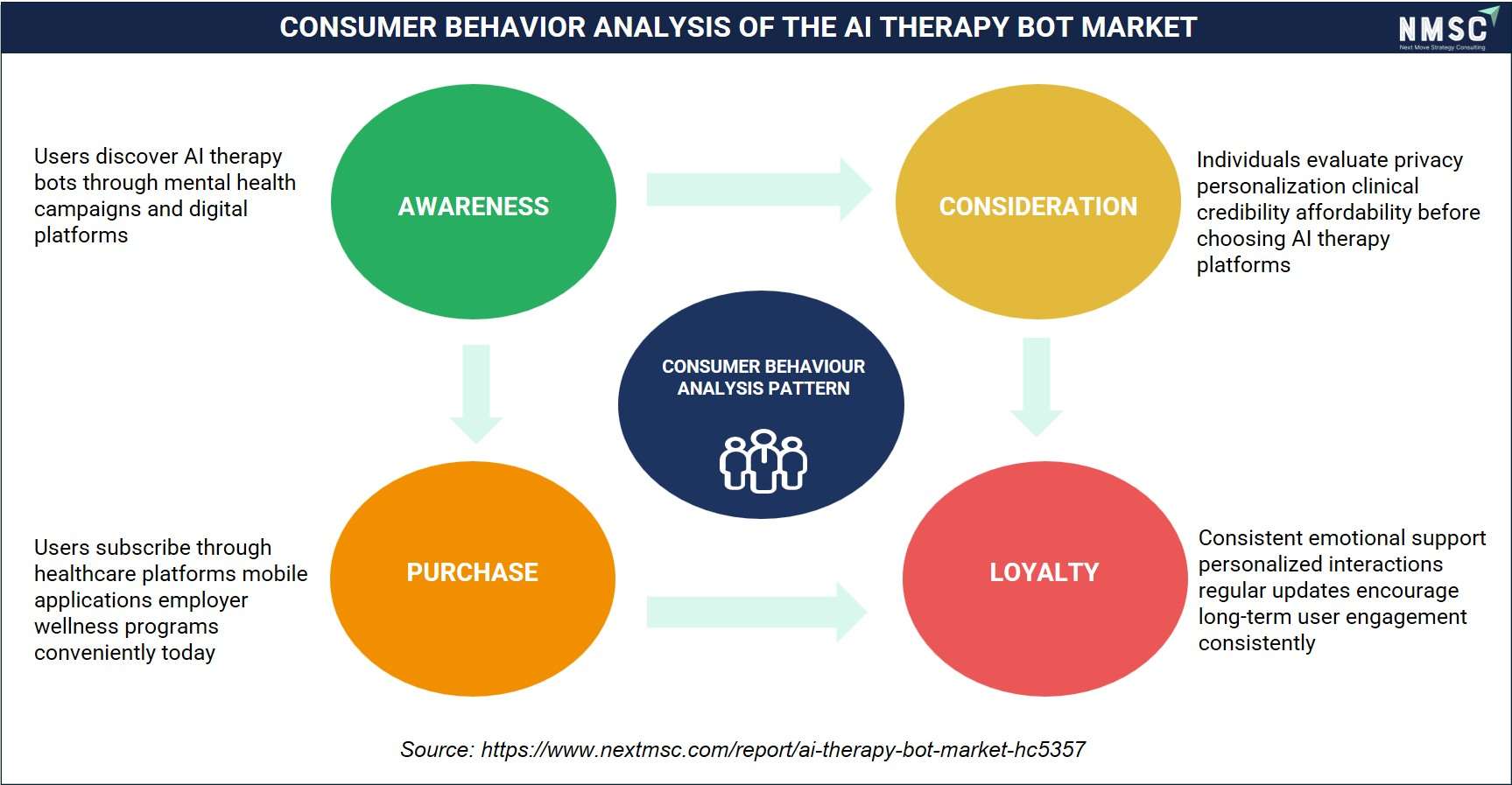
Our findings suggest that users typically discover AI therapy bots through digital health platforms, awareness campaigns, and healthcare providers before evaluating privacy, personalization, clinical credibility, affordability, and ease of use. Purchase decisions are influenced by accessibility and healthcare partnerships, while continuous emotional support, personalized interactions, and regular feature updates promote long-term user engagement and retention.
Competitive Landscape
We observed that the competitive landscape remains fragmented, with venture-funded digital-first specialists competing alongside enterprise-focused behavioral health platforms.
|
Dimension |
Assessment |
|
Market Structure |
Fragmented, with no single vendor holding dominant share across all revenue models and use cases |
|
Innovation Focus |
Generative AI dialogue quality, clinical-safety guardrails, and reimbursement-pathway validation |
|
M&A Activity |
Selective acquisitions targeting clinical-content libraries and enterprise distribution channels |
How Do Companies Compete in the AI Therapy Bot Market?
Companies compete primarily on clinical credibility, conversational quality, and distribution-channel access rather than price alone. Our findings suggest that vendors differentiate through proprietary therapeutic-content libraries and clinical-advisory partnerships that support enterprise and payer procurement, while consumer-focused entrants compete through user-experience design and freemium conversion optimization.
Which Competitive Archetypes Dominate the AI Therapy Bot Market?
Two archetypes dominate: enterprise-focused behavioral health platforms offering employer and payer-channel distribution, and consumer-first conversational applications built around direct-to-consumer subscription models. We found that enterprise-focused players such as Spring Health and Lyra Health dominate through employer contract scale, while consumer-first entrants such as Wysa and Youper compete through app-store visibility and engagement-driven retention.
What Innovation and Differentiation Strategies Are Companies Pursuing?
Companies are prioritizing generative AI dialogue refinement, clinical-safety guardrail development, and integration with broader natural language processing capabilities to differentiate on conversational quality. Our analysis shows this strategy extends platform relevance across both consumer and regulated therapeutic use cases without requiring separate technology stacks.
What M&A Activity Is Shaping the Competitive Landscape?
M&A activity has concentrated on selective acquisitions of clinical-content libraries and enterprise distribution capabilities rather than large-scale consolidation among leading vendors. Next Move Strategy Consulting's analysis indicates that this approach reflects a still-maturing market where organic product development and channel partnership expansion remain the primary growth levers through the forecast period.
Key Market Players
Our assessment indicates that the following companies represent the validated competitive set profiled in this report, ranked by overall market presence and portfolio breadth.
-
Talkspace, Inc.
-
Spring Health, Inc.
-
Headspace Health, Inc.
-
Modern Health, Inc.
-
Wysa Ltd.
-
Limbic Limited
-
Marigold Health, Inc.
-
Kintsugi Mindful Wellness, Inc.
-
Youper, Inc.
-
Replika AI, LLC
-
X2AI, Inc.
-
Elomia Health, Inc.
-
Aitherapy, Inc.
Latest Developments
We observed the following recent developments reflecting active product and capability investment across leading vendors.
|
Date |
Event |
|
June 2026 |
Headspace rolled out a major new voice mode feature for Ebb, its empathetic AI companion, allowing members to talk out loud and engage in real-time personalized voice conversations to process emotions and reflect. |
|
October 2025 |
Talkspace acquired Wisdo Health, integrating an AI-powered social health and peer-support platform to provide 24/7 moderated communities and peer connections aimed at reducing loneliness and improving clinical outcomes. |
|
October 2025 |
Spring Health partnered with clinical, academic, and technology leaders to launch VERA-MH (Validation of Ethical and Responsible AI in Mental Health), the industry's first open-source automated evaluation framework designed to benchmark safety, clinical efficacy, and suicide risk handling in mental health chatbots. |
Expert Insights

“To some extent, building an AI therapist is like developing a drug, in the sense that we are building a new technology as opposed to repackaging an existing one.”
— Chris Aeberli, CEO, Sonia (AI therapy startup)
Statement made in the context of developing AI-driven therapy systems and the need for rigorous validation and innovation in mental health technologies.
Market Interpretation
This quote provides a highly strategic perspective on the AI Therapy Bot Market, emphasizing that AI-based mental health solutions are not merely incremental digital tools but represent entirely new technological paradigms. By comparing AI therapy development to drug creation, the statement underscores the necessity for clinical validation, safety, and efficacy, which are critical factors shaping the market. Unlike conventional chatbots, AI therapy systems must demonstrate measurable therapeutic outcomes, adhere to ethical standards, and gain user trust.
Investment Opportunities
How Are Capital Inflows Shaping the AI Therapy Bot Market?
Capital inflows are increasingly directed toward regulated therapeutic product development and enterprise distribution capability rather than pure consumer-app growth. Industry-derived estimates suggest that venture investment in clinically validated digital mental health platforms has grown meaningfully as investors seek defensible reimbursement pathways, reflecting a broader capital-allocation shift toward regulated, higher-barrier business models.
What Infrastructure Investment Supports Market Growth?
Government-backed digital health infrastructure programs and expanding cloud computing capacity are creating durable infrastructure-linked demand for scalable AI therapy bot deployment, with national digital health strategies in the United States, European Union, and several Asia-Pacific economies directly supporting platform infrastructure expansion.
How Do ESG Considerations Factor into Investment Decisions?
Environmental, Social, and Governance considerations increasingly influence procurement, with buyers favoring vendors demonstrating responsible data-privacy practices and equitable access design for underserved populations. Our assessment indicates that transparent clinical-safety reporting and accessibility-focused product design are gaining procurement preference among enterprise and government buyers applying formal ESG screening criteria.
Key Benefits for Stakeholders
How Does This Report Benefit Industry Leaders?
Industry leaders gain access to validated segmentation, competitive benchmarking, and regional demand analysis that support product roadmap prioritization and channel-investment decisions. Our analysis shows that this level of granularity helps enterprise buyers and platform vendors align procurement and development investment with the fastest-growing revenue models and clinical use cases identified throughout this report.
How Does This Report Benefit Investors and Financial Analysts?
Investors and financial analysts benefit from consolidated market sizing, CAGR forecasts, and competitive-landscape assessment that support valuation and capital-allocation decisions. We found that the report's regional and segment-level breakdowns help identify where structural growth is most durable, supporting more informed comparison across digital mental health investment opportunities.
How Does This Report Benefit Technology Vendors and Product Teams?
Technology vendors and product teams benefit from detailed segmentation across revenue model, therapeutic modality, and technology architecture that clarifies where product development investment aligns with the fastest-growing demand pockets. Our assessment indicates that this analysis supports more precise roadmap sequencing for regulated-product and enterprise-distribution investments through 2035.
Key Market Segments
By Revenue Model
-
Direct Consumer Solutions
-
Monthly Subscription Revenue
-
Annual Subscription Revenue
-
Freemium Conversion Revenue
-
In-App Purchase Revenue
-
-
Employer Solutions
-
Employee Assistance Programs
-
Workforce Mental Wellness Programs
-
Enterprise Behavioural Health Platforms
-
Blended Care Programs
-
-
Payer Solutions
-
Commercial Health Plans
-
Government Health Programs
-
Managed Care Organizations
-
Value-Based Care Programs
-
-
Provider Solutions
-
Hospitals
-
Mental Health Clinics
-
Primary Care Networks
-
Telehealth Providers
-
-
Regulated Therapeutic Solutions
-
Prescription Digital Therapeutics
-
Software As A Medical Device
-
Reimbursable Therapeutic Programs
-
-
Platform Revenue
-
API Licensing
-
White Label Licensing
-
Implementation Services
-
Analytics Services
-
By Therapeutic Modality
-
Cognitive Behavioral Therapy
-
Acceptance Commitment Therapy
-
Dialectical Behavior Therapy
-
Mindfulness Therapy
-
Positive Psychology
-
Humanistic Therapy
-
Psychodynamic Therapy
-
Integrative Therapy
-
Other Therapeutic Modalities
By Technology Architecture
-
Generative AI Platforms
-
Rule-Based Platforms
-
Hybrid AI Platforms
-
Voice AI Platforms
By Clinical Use Case
-
Anxiety Management
-
Depression Management
-
Stress Management
-
Emotional Support
-
Behavioral Change Support
-
Psychological Assessment
-
Therapy Support
-
Relapse Prevention
-
Crisis Management
-
Mental Health Research
By Deployment Model
-
Cloud-Based
-
On-Premises
-
Hybrid
By End User
-
Individuals
-
Employers
-
Payers
-
Healthcare Providers
-
Government Organizations
-
Educational Institutions
By Region
-
North America: U.S., Canada, Mexico.
-
Europe: UK, Germany, France, Italy, Spain, Sweden, Denmark, Finland, Netherlands, Rest of Europe.
-
Asia-Pacific: China, India, Japan, South Korea, Taiwan, Indonesia, Vietnam, Australia, Philippines, Malaysia, Rest of APAC.
-
Middle East & Africa: Saudi Arabia, UAE, Egypt, Israel, Turkey, Nigeria, South Africa, Rest of MEA.
-
Latin America: Brazil, Argentina, Chile, Colombia, Rest of LATAM.
Conclusion & Recommendations
What Is the Long-Term Outlook for the AI Therapy Bot Market?
The long-term outlook remains highly favorable, with the market projected to grow from USD 1.58 billion in 2026 to USD 11.35 billion by 2035 at a 24.5% CAGR. We observed that persistent mental health professional shortages, expanding employer benefits, and maturing regulatory pathways collectively underpin durable, structural demand rather than a short-term pandemic-driven upswing.
What Strategic Positioning Should Vendors Pursue?
Vendors should prioritize clinical-safety validation and blended care architectures that pair AI-delivered support with clinician oversight. Our assessment indicates that companies pairing conversational AI capability with credible clinical partnerships are best positioned to defend enterprise and payer contracts as buyers apply increasingly rigorous procurement standards.
How Attractive Is the Market for New Investment?
Investment attractiveness remains high given the absolute dollar opportunity of USD 9.77 billion between 2026 and 2035, concentrated in regulated therapeutic solutions, employer, and crisis-management use cases. We found that these pockets offer above-market CAGR relative to the 24.5% overall market rate, appealing to investors seeking exposure to structural, reimbursement-linked growth.
What Market Shifts and Key Risks Should Stakeholders Monitor?
Stakeholders should monitor data privacy and clinical-safety regulatory uncertainty, which could slow enterprise and payer procurement cycles despite strong underlying demand. Our analysis shows that limited long-term efficacy evidence and persistent user trust barriers represent additional risks that could constrain adoption pace in more conservative institutional buying environments.
What Are the Primary Growth Pathways Through 2035?
Primary growth pathways include scaling payer reimbursement for regulated therapeutic products, deepening employer-channel distribution, and expanding software as a service delivery models that integrate AI therapy bots within broader telehealth and workforce wellness ecosystems, each representing durable, channel-linked demand through the forecast period.
About the Author
 Saista Faiyaz
— Saista Faiyaz is Research Associate at Next Move Strategy Consulting, where she has covered consumer markets and healthcare technologies for 3 years. Her work includes primary interview review, secondary-source validation, market sizing, and structured analysis of company and industry data. She supports research by comparing evidence across sources, organizing findings into market narratives, and documenting assumptions used in analysis. Her scope includes cross-market benchmarking, and reports.
Saista Faiyaz
— Saista Faiyaz is Research Associate at Next Move Strategy Consulting, where she has covered consumer markets and healthcare technologies for 3 years. Her work includes primary interview review, secondary-source validation, market sizing, and structured analysis of company and industry data. She supports research by comparing evidence across sources, organizing findings into market narratives, and documenting assumptions used in analysis. Her scope includes cross-market benchmarking, and reports.
About the Reviewer
 Supradip Baul
— Supradip Baul is an accomplished business consultant and strategist with over a decade of rich experience in market intelligence, strategy, technology, and business transformation. His work has included rigorous qualitative and quantitative analysis across multiple industries, helping clients shape investment decisions and long-term roadmaps. Earlier in his career, he was associated with Gartner, where he contributed to industry-leading reports and market share analyses. He has worked with leading global companies and holds an MBA with a dual specialization in Marketing and Finance.
Supradip Baul
— Supradip Baul is an accomplished business consultant and strategist with over a decade of rich experience in market intelligence, strategy, technology, and business transformation. His work has included rigorous qualitative and quantitative analysis across multiple industries, helping clients shape investment decisions and long-term roadmaps. Earlier in his career, he was associated with Gartner, where he contributed to industry-leading reports and market share analyses. He has worked with leading global companies and holds an MBA with a dual specialization in Marketing and Finance.
At Next Move Strategy Consulting, we understand that insightful market research is the cornerstone of successful business decisions. That's why we employ a robust and multifaceted approach, combining various methodologies to deliver the most accurate and actionable data for our clients.

Research Landscape
We navigate the world of research with two primary approaches:
Qualitative Approach
Our qualitative research methodologies involve immersive techniques such as in-depth interviews, focus groups, and observational studies. By engaging directly with individuals and stakeholders, we uncover valuable insights that quantitative data alone may overlook.

Quantitative Research
In tandem with qualitative methodologies, NMSC leverages the power of Quantitative Research to provide a robust foundation of numerical insights. Through systematic data collection and analysis, we quantify patterns, preferences, and market trends, offering a comprehensive view of the business landscape.
Our quantitative research approach employs diverse tools, including surveys, experiments, and statistical modelling. These methodologies enable us to gather data from a large and representative sample, ensuring the statistical significance of our findings. By employing structured questionnaires and standardized data collection methods, we guarantee the reliability and validity of the information we present to our clients.
Quantitative research is particularly effective in measuring the prevalence of trends, assessing market size, and gauging the impact of various factors on consumer behavior. The numerical precision attained through this approach equips our clients with actionable insights, facilitating data-driven decision-making and strategy formulation.


Our Specialized Toolbox for Industry-Specific Market Research
We deploy a specialized arsenal of techniques tailored to meet your unique requirements. Here's a glimpse into our comprehensive toolbox:

Information Procurement
The stage entails acquiring market data or relevant information through various sources and methodologies.


Market Research Approach
We utilize both top-down and bottom-up approaches in market research analysis to achieve a comprehensive understanding of the market dynamics, leveraging the broad perspective of industry trends and macroeconomic factors alongside detailed insights from specific segments and individual companies.

Porters Five Forces Analysis
We conduct Porter's Five Forces analysis to evaluate the competitive landscape of an industry, providing us with insights into factors that affect profitability and strategic positioning.

SWOT Analysis

Forecasting
We utilize a forecasting model to predict future consumption by considering parameters like population, economics, regulations, market competition, drivers, constraints, technology, and pricing. We also employ statistical techniques such as multilinear regression, exponential smoothing, moving average, ARIMA, and Monte Carlo simulations for accurate predictions. In econometric forecasting, we analyzed short-term and long-term event impacts, attributing values based on regulatory frameworks, economic factors, and market events.





 Speak to Our Analyst