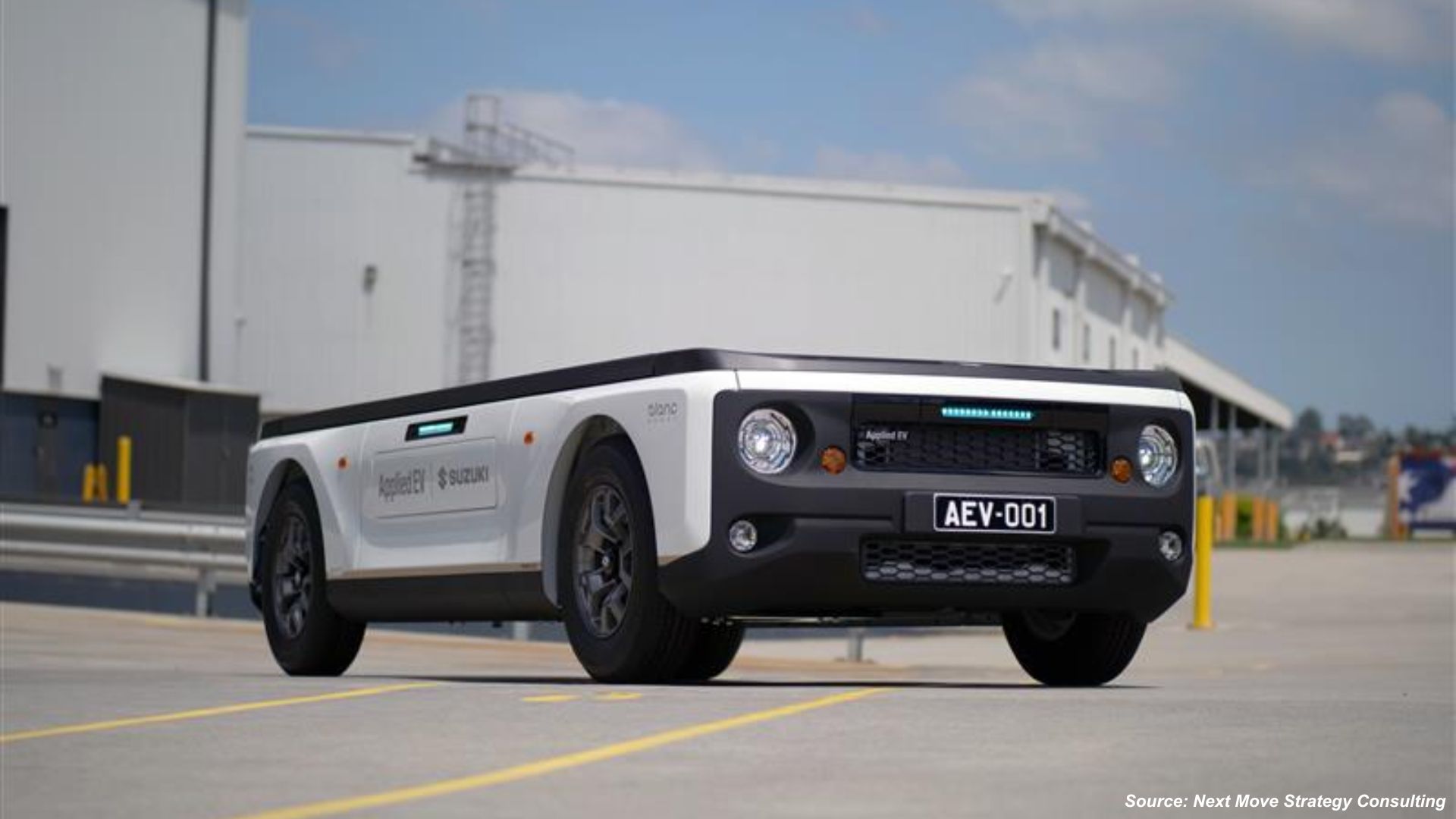
Australia ATV and UTV Market By Vehicle Type (All-Terrain Vehicles, and UTVs / SxS), By Propulsion Type (Internal-Combustion Engine, and Electrified), By Power Output (Low, Medium, and High), By Drivetrain (2-Wheel Drive, and 4-Wheel Drive), By Autonomy Level (Conventional, and Others), By Primary Application (Recreation & Tourism, and Others), By End-User Segment (Individual Consumers, and Others), By Price Tier (Economy, and Others) – Opportunity Analysis and Industry Forecast, 2024–2030
Industry: Automotive & Transportation | Latest Edition: December 23, 2025 | No of Pages: 144 | No. of Tables: 128 | No. of Figures: 73 | Format: PDF | Report Code: AT788
Market Definition
Australia ATV and UTV Market was valued at USD 554.96 million in 2023, and is predicted to reach USD 980.12 million by 2030, with a CAGR of 7.7% from 2023 to 2030.
All-Terrain Vehicle (ATV) is a motorized off-road vehicle designed for recreational and utility purposes. Its compact size, low-pressure tires, and handlebar steering characterize it. ATVs are designed to traverse various terrains, including dirt trails, mud, sand, and rocky surfaces. They have powerful engines and rugged suspension systems to provide excellent traction, maneuverability, and stability in challenging environments.
ATVs usually have a four-wheel drive system, allowing them to simultaneously deliver power to all wheels for enhanced off-road performance. ATVs are primarily used for recreational activities such as off-roading and trail riding; they are also utilized in various industries for utility purposes such as agriculture, forestry, search and rescue operations, and maintenance of remote areas.
Utility Task Vehicle (UTV) is a multipurpose off-road vehicle for work and recreation. UTVs are larger and more robust than traditional ATVs as they feature a cabin-like structure with side-by-side seating for two or more occupants, offering increased passenger capacity and cargo-carrying capabilities.
UTVs are renowned for their versatility and ruggedness. They have sturdy frames, powerful engines, and advanced suspension systems to handle demanding terrains and heavy loads. Some renowned brands that offer these kinds of UTVs in the market include Polaris Inc, Yamaha, Kawasaki, Arctic Cat, John Deere, Honda, Textron Off-Road, and others.
These vehicles are widely used in various industries and sectors, including agriculture, construction, landscaping, recreation, and public services. Their utility features include the ability to haul and tow heavy loads with ample cargo space for transporting equipment and materials.
Thus, both ATVs and UTVs are popular off-road vehicles with distinct characteristics. ATVs excel in agility, speed, and maneuverability for single riders, while UTVs prioritize passenger capacity, cargo versatility, and comfort for multi-passenger & utility applications.
Expansion of National EV Charging and Regional Energy Infrastructure Enabling Off-road Electrification
Australia’s federal commitment to extending electric vehicle (EV) charging and regional energy infrastructure is emerging as a significant growth catalyst for the country’s ATV and UTV market. The federal government’s AUD 40 million initiative to expand public charging access—including fast and kerbside stations across urban, regional, and remote communities—forms a vital foundation for electric and hybrid off-road vehicle deployment. Additionally, Infrastructure Australia’s National Highway Electric Vehicle Fast-Charging project aims to place charging stations “on or in proximity to the national highway network,” strengthening connectivity across rural and agricultural zones. This systematic build-out of charging and clean energy infrastructure boosts confidence among rural operators, farmers, and recreational users that electric ATVs and UTVs can be reliably supported outside metropolitan areas. Consequently, manufacturers are increasingly aligning their portfolios toward electric off-road models, leveraging this infrastructure momentum to address both agricultural and recreational demand in regional Australia.
Regulatory and Technological Transition Driving Electrified Off-road Mobility
The Australian government’s policy focus on low-emission and energy-efficient vehicles is indirectly accelerating technological adoption in the off-road vehicle segment. The introduction of the New Vehicle Efficiency Standard (NVES) and the National Electric Vehicle Strategy (NEVS) marks a nationwide push toward cleaner, electrified transport solutions. These regulatory frameworks are promoting the development and supply of electric drivetrains, battery systems, and advanced control technologies, which are increasingly being adapted by off-road vehicle manufacturers. As electric mobility technologies mature and scale across passenger and commercial vehicles, the spillover effects—such as improved battery durability, faster charging, and digital connectivity—are enhancing the performance and feasibility of electric ATVs and UTVs. This convergence of policy-driven innovation and technological advancement is broadening the Australian off-road market’s shift toward sustainable, high-performance electric models, aligning with national goals for decarbonized transport and rural productivity.
Stringent Safety Regulations and Compliance Costs Limiting Market Expansion
The Australian ATV and UTV market faces growth constraints due to strict national safety regulations and compliance obligations imposed on manufacturers and operators. Under the Australian Competition and Consumer Commission’s Consumer Goods (Quad Bikes) Safety Standard 2019, all new general-use quad bikes sold since October 2021 must meet minimum stability requirements and be fitted with an operator protection device (OPD) to prevent rollover injuries. These mandates, while essential for user safety, increase manufacturing and testing costs, especially for smaller importers and niche brands. Additionally, workplace safety regulations and conditional vehicle registration schemes restrict ATV and UTV usage on public roads and require operators to complete safety training, use helmets, and adhere to passenger and age restrictions. Collectively, these compliance and operational requirements raise the cost of ownership and limit the flexibility of use, thereby slowing wider adoption—particularly among agricultural and recreational users.
Electrified Support Vehicles for Mining, Forestry, and Remote Industrial Operations
Australia’s off-road vehicle market is entering a new phase of opportunity as regional and industrial sectors increasingly adopt electric and hybrid support vehicles. The federal government’s ongoing initiatives—such as funding under the Australian Renewable Energy Agency (ARENA) to support electrification in mining and heavy transport—demonstrate a nationwide commitment to reducing emissions across resource-intensive industries. This momentum is extending to smaller off-road platforms like ATVs and UTVs, which play vital roles in mining, forestry, construction, and remote logistics operations. As industrial fleets prioritize lower emissions, durability, and operational efficiency, manufacturers and distributors of ATVs and UTVs have a strong opportunity to introduce rugged, electrified models suited for harsh terrain and remote deployment. Backed by national sustainability targets and clean energy funding frameworks, the shift toward electric off-road utility vehicles is expected to emerge as a major growth avenue in the coming years.
Competitive Landscape
The Australia ATV and UTV industry includes several market players such Polaris Inc., Bombardier Recreational Products Inc. (BRP), Yamaha Motor Co., Ltd., Honda Motor Co., Ltd., Kawasaki Heavy Industries Ltd., CFMOTO, Kubota Corporation, Deere & Company, Kwang Yang Motor Co., Ltd. (KYMCO), Textron Inc., ARGO, LINHAI, AODES Australia, Segway Powersports, and HISUN Motors Co., Ltd..
Key Benefits
-
The Australia ATV and UTV market report provides a quantitative analysis of the current market and estimations through 2024-2030 that assists in identifying the prevailing market opportunities to capitalize on.
-
The study comprises a deep dive analysis of the market trend including the current and future trends for depicting the prevalent investment pockets in the market.
-
The information related to key drivers, restraints, and opportunities and their impact on the market is provided in the report.
-
The competitive analysis of the market players along with their market share in the Australia ATV and UTV market.
-
The SWOT analysis and Porter’s Five Forces model are elaborated in the study.
-
Value chain analysis in the market study provides a clear picture of the stakeholders’ roles.
Australia ATV and UTV Market Key Segments
By Vehicle Type
-
All-Terrain Vehicles (ATVs)
-
Utility Task Vehicles / Side-by-Sides (UTVs / SxS)
By Propulsion Type
-
Internal-Combustion Engine (ICE)
-
2-Stroke Gasoline
-
4-Stroke Gasoline
-
Diesel
-
-
Electrified
-
Battery Electric Vehicle (BEV)
-
Hybrid Electric Vehicle (HEV)
-
Fuel-Cell Electric Vehicle (FCEV)
-
By Power Output
-
Low (<400 cc or <20 kW)
-
Medium (400–800 cc or 20–40 kW)
-
High (>800 cc or >40 kW)
By Drivetrain
-
2-Wheel Drive
-
4-Wheel Drive
By Autonomy Level
-
Conventional
-
Semi-Autonomous
-
Fully Autonomous
By Primary Application
-
Recreation & Tourism
-
Agriculture & Forestry
-
Construction & Industrial
-
Government, Law-Enforcement & Defense
-
Turf & Grounds Management
By End-User Segment
-
Individual Consumers
-
Commercial Enterprises
-
Government Agencies
-
Rental Fleets & Tour Operators
By Price Tier
-
Economy (<$10K)
-
Mid-Range ($10K–$20K)
-
Premium (>$20K)
Key Players
-
Polaris Inc.
-
Bombardier Recreational Products Inc. (BRP)
-
Yamaha Motor Co., Ltd.
-
Honda Motor Co., Ltd.
-
Kawasaki Heavy Industries Ltd.
-
CFMOTO
-
Kubota Corporation
-
Deere & Company
-
Kwang Yang Motor Co., Ltd. (KYMCO)
-
Textron Inc.
-
ARGO
-
LINHAI
-
AODES Australia
-
Segway Powersports
-
HISUN Motors Co., Ltd.
Report Scope and Segmentation
|
Parameters |
Details |
|
Market Size in 2023 |
USD 554.96 Million |
|
Revenue Forecast in 2030 |
USD 980.12 Million |
|
Growth Rate |
CAGR of 7.7% from 2024 to 2030 |
|
Analysis Period |
2023–2030 |
|
Base Year Considered |
2023 |
|
Forecast Period |
2024–2030 |
|
Market Size Estimation |
Million (USD) |
|
Growth Factors |
Expansion of National EV Charging and Regional Energy Infrastructure Enabling Off-road Electrification. Regulatory and Technological Transition Driving Electrified Off-road Mobility. |
|
Companies Profiled |
15 |
|
Market Share |
Available for 10 companies |
|
Customization Scope |
Free customization (equivalent up to 80 working hours of analysts) after purchase. Addition or alteration to country, regional, and segment scope. |
|
Pricing and Purchase Options |
Avail customized purchase options to meet your exact research needs. |


About the Author
 Jayanta Das
— Jayanta Das is Senior Analyst at Next Move Strategy Consulting, where he has spent 4.5 years covering the firm's full industry taxonomy — spanning aerospace and defense, healthcare, BFSI, energy and power, semiconductors, and beyond — rather than one specialization. His work follows NextMSC's research model, combining data mining, analytics, and secondary research to build market sizing and forecasts behind NextMSC's 2,000-plus research reports, trusted by more than 3,000 organizations globally.
Jayanta Das
— Jayanta Das is Senior Analyst at Next Move Strategy Consulting, where he has spent 4.5 years covering the firm's full industry taxonomy — spanning aerospace and defense, healthcare, BFSI, energy and power, semiconductors, and beyond — rather than one specialization. His work follows NextMSC's research model, combining data mining, analytics, and secondary research to build market sizing and forecasts behind NextMSC's 2,000-plus research reports, trusted by more than 3,000 organizations globally.
About the Reviewer
 Supradip Baul
— Supradip Baul is an accomplished business consultant and strategist with over a decade of rich experience in market intelligence, strategy, technology, and business transformation. His work has included rigorous qualitative and quantitative analysis across multiple industries, helping clients shape investment decisions and long-term roadmaps. Earlier in his career, he was associated with Gartner, where he contributed to industry-leading reports and market share analyses. He has worked with leading global companies and holds an MBA with a dual specialization in Marketing and Finance.
Supradip Baul
— Supradip Baul is an accomplished business consultant and strategist with over a decade of rich experience in market intelligence, strategy, technology, and business transformation. His work has included rigorous qualitative and quantitative analysis across multiple industries, helping clients shape investment decisions and long-term roadmaps. Earlier in his career, he was associated with Gartner, where he contributed to industry-leading reports and market share analyses. He has worked with leading global companies and holds an MBA with a dual specialization in Marketing and Finance.
At Next Move Strategy Consulting, we understand that insightful market research is the cornerstone of successful business decisions. That's why we employ a robust and multifaceted approach, combining various methodologies to deliver the most accurate and actionable data for our clients.

Research Landscape
We navigate the world of research with two primary approaches:
Qualitative Approach
Our qualitative research methodologies involve immersive techniques such as in-depth interviews, focus groups, and observational studies. By engaging directly with individuals and stakeholders, we uncover valuable insights that quantitative data alone may overlook.

Quantitative Research
In tandem with qualitative methodologies, NMSC leverages the power of Quantitative Research to provide a robust foundation of numerical insights. Through systematic data collection and analysis, we quantify patterns, preferences, and market trends, offering a comprehensive view of the business landscape.
Our quantitative research approach employs diverse tools, including surveys, experiments, and statistical modelling. These methodologies enable us to gather data from a large and representative sample, ensuring the statistical significance of our findings. By employing structured questionnaires and standardized data collection methods, we guarantee the reliability and validity of the information we present to our clients.
Quantitative research is particularly effective in measuring the prevalence of trends, assessing market size, and gauging the impact of various factors on consumer behavior. The numerical precision attained through this approach equips our clients with actionable insights, facilitating data-driven decision-making and strategy formulation.


Our Specialized Toolbox for Industry-Specific Market Research
We deploy a specialized arsenal of techniques tailored to meet your unique requirements. Here's a glimpse into our comprehensive toolbox:

Information Procurement
The stage entails acquiring market data or relevant information through various sources and methodologies.


Market Research Approach
We utilize both top-down and bottom-up approaches in market research analysis to achieve a comprehensive understanding of the market dynamics, leveraging the broad perspective of industry trends and macroeconomic factors alongside detailed insights from specific segments and individual companies.

Porters Five Forces Analysis
We conduct Porter's Five Forces analysis to evaluate the competitive landscape of an industry, providing us with insights into factors that affect profitability and strategic positioning.

SWOT Analysis

Forecasting
We utilize a forecasting model to predict future consumption by considering parameters like population, economics, regulations, market competition, drivers, constraints, technology, and pricing. We also employ statistical techniques such as multilinear regression, exponential smoothing, moving average, ARIMA, and Monte Carlo simulations for accurate predictions. In econometric forecasting, we analyzed short-term and long-term event impacts, attributing values based on regulatory frameworks, economic factors, and market events.





 Speak to Our Analyst