Cruise Tourism Market By Cruise Type (Ocean Cruises, River Cruises, and Others), Cruise Duration (1–3 nights, 4–7 nights, and Others), By Booking & Sales Channel (Online and Offline Channels), By Accommodation Type (Interior Cabins, Oceanview Cabins, Private Residence Cabins, and Others), By Customer Demographics (Leisure Travelers, Family & Multi-Generational Travelers, and Others), By Pricing Structure (Fixed Pricing, Bundled Pricing, and Others), – Global Analysis & Forecast, 2025–2035
Industry: Retail and Consumer | Publishing Date: October 17, 2026 | Last Updated: October 17, 2026 | No of Pages: N/A | No. of Tables: N/A | No. of Figures: N/A | Format: PDF | Report Code: RC4514
Industry Outlook
The global Cruise Tourism Market size was valued at USD 155.26 billion in 2025 and is expected to reach USD 167.85 billion by 2026. Looking ahead, the industry is projected to expand significantly, reaching USD 338.63 billion by 2035, registering a CAGR of 8.11% from 2026 to 2035.
Cruise Tourism Market Size & Forecast
|
Parameters |
Details |
|
Market Size in 2026 |
USD 167.85 Billion |
|
Revenue Forecast in 2035 |
USD 338.63 Billion |
|
Growth Rate |
CAGR of 8.11% from 2026 to 2035 |
|
Analysis Period |
2025–2035 |
|
Base Year Considered |
2025 |
|
Forecast Period |
2026–2035 |
|
Market Size Estimation |
Billion (USD) |
|
Companies Profiled |
20 |
|
Countries Covered |
33 |
|
Market Share |
Available for 10 companies |
The global cruise tourism market represents a mature and diversified segment within the broader travel and leisure industry, integrating transportation, accommodation, entertainment, and destination experiences into a unified service offering. Based on our industry assessments, we analysed that cruise tourism caters to a broad spectrum of travel use cases, including leisure vacations, luxury travel, and themed experiences such as culinary, wellness, and cultural cruises. Moreover, cruise operators increasingly differentiate their offerings through itinerary design, enhanced onboard amenities, and strategic destination partnerships, thereby positioning cruise products as immersive lifestyle and experiential travel platforms rather than conventional transportation-based services.
Our market evaluation further identifies that the cruise tourism market is poised for continued evolution, driven by trends such as premiumisation, sustainability initiatives, and digital transformation across the end-to-end passenger journey. This growth is further supported by the expansion of regional cruise markets, investments in environmentally responsible and fuel-efficient fleets, and the integration of digital engagement platforms to personalise customer interactions and enhance both onboard and pre-travel experiences. Overall, these developments are expected to strengthen long-term market resilience, broaden customer reach, and reinforce cruise tourism as a key pillar of the global travel and leisure economy.
The chart below illustrates the ocean-going cruise passenger trends and forecasts, highlighting the sharp decline during the COVID-19 pandemic and the subsequent recovery trajectory. NMSC analysis indicates that rising passenger volumes drive demand for larger fleets, high-capacity ships, and expanded itineraries. These trends directly influence operational planning, fleet investment, and route strategy, providing cruise operators with critical insights into market growth and capacity optimisation in the ocean-going segment.

What are the Key Cruise Tourism Industry Trends?
How Is Regional Cruise Expansion Driving the Cruise Tourism Market?
NMSC’s evaluation indicates that the expansion of regional and short-duration cruises is broadening market participation among first-time cruisers, young professionals, and budget-conscious travellers. By offering smaller itineraries and emerging regional ports, operators can penetrate previously underserved destinations while simultaneously optimising fleet utilisation and operational efficiency. Furthermore, regional expansion encourages flexible scheduling, lowers barriers to entry, and enables tailored local partnerships, thereby creating opportunities to attract diverse customer demographics. Ultimately, these shorter, accessible cruises act as gateways for new passenger segments, fostering long-term loyalty, strengthening market resilience, and supporting the overall growth of cruise tourism beyond traditional high-demand routes.
How Is Onboard Technological Innovation Redefining Passenger Experience?
The integration of smart cabins, contactless check-in and payment systems, AI-driven itinerary planning, and immersive entertainment solutions is redefining cruise experiences. Such technological innovations enhance convenience, personalise passenger interactions, and increase onboard engagement, which directly influences satisfaction and repeat bookings. Our assessment shows that investments in technology also provide opportunities for ancillary revenue through upselling premium services, targeted promotions, and enhanced loyalty programs. Furthermore, technologically advanced cruises improve operational efficiency, enable data-driven decision-making, and reinforce the perception of cruises as modern, experience-driven leisure platforms, strengthening their appeal across digitally savvy demographics globally.
How Is Health and Safety Protocol Evolution Influencing Consumer Confidence?
Evolving health and safety standards have become central to passenger decision-making, particularly in a post-pandemic environment. Through our interviews with operations teams, we found that transparent protocols, advanced sanitation systems, and rigorous crew training not only mitigate onboard risks but also enhance passenger trust and perceived value. As a result, cruises adopting visible and enforceable health measures experience higher booking confidence, repeat visitation, and positive word-of-mouth. Although these measures require strategic investment in technology, crew management, and infrastructure, they deliver long-term benefits by stabilising occupancy rates, attracting cautious traveller segments, and reinforcing cruise tourism’s position as a safe, premium, and reliable leisure option in the global travel ecosystem.
What Are the Key Market Drivers, Breakthroughs, And Investment Opportunities That Will Shape the Cruise Tourism Industry in the Next Decade?
Growth Catalyst & Risk Assessment Matrix
|
Drivers/Trends/Restraint |
(+/-) % Impact on the CAGR Forecast |
Geographic Relevance |
Impact Timeline |
|
Rising global tourism demand driving experiential and leisure travel |
+1.23% |
Global; strongest in North America, Europe, and Asia-Pacific |
Short to medium term (≤ 3 years) |
|
Increasing disposable income, enabling premium and luxury cruise experiences |
+0.83% |
North America, Europe, Asia-Pacific |
Short to medium term (≤ 3 years) |
|
Digital transformation and technological integration (AI itinerary planning, mobile-based services, personalised engagement) |
+0.76% |
Global; strongest in North America, Europe, and Asia-Pacific |
Medium to long term (2–5 years) |
|
Regulatory compliance challenges (maritime safety, environmental standards, port-specific rules) |
-0.53% |
Global; particularly Europe, North America, and emerging cruise regions |
Medium term (2–4 years) |
|
High operational costs (fuel, labour, port fees, maintenance) |
-0.61% |
Global; higher impact in North America and Europe |
Short to medium term (≤ 3 years) |
Our market assessment identified that the cruise tourism market has experienced steady growth, driven by rising global tourism demand and increasing disposable incomes, which are expanding access to leisure travel. Travellers increasingly prioritise immersive itineraries and destination-focused experiences, prompting operators to invest in fleet expansion, diversified routes, and integrated offerings that combine accommodation, dining, entertainment, and shore excursions. At the same time, broader access to regional cruises and shorter itineraries has attracted first-time cruisers, young professionals, and budget-conscious travellers. However, high operational costs, complex regulatory requirements, and infrastructure limitations continue to constrain growth, particularly for smaller operators. We noticed that leveraging digital platforms for personalised engagement and AI-driven services presents strong opportunities to enhance customer experiences, generate ancillary revenue, and support sustained long-term market growth.
Growth Drivers:
How is Rising Global Tourism Accelerating the Cruise Tourism Market Demand?
NMSC’s analysis indicates that rising global tourism demand is a primary engine driving cruise market growth. As a result, as international travel becomes increasingly accessible, a broader spectrum of consumers seeks leisure experiences that combine convenience, comfort, and exploration. Consequently, travellers are actively prioritising immersive itineraries and destination-centric cruises over conventional travel modes. In response to this trend, this growing consumer interest encourages operators to expand route networks, enhance onboard services, and create differentiated experiences such as culinary, wellness, and cultural themes, thereby strengthening market penetration and establishing cruise tourism as a preferred leisure option worldwide.
How Is Increasing Disposable Income Driving the Cruise Tourism Market Expansion?
The rise in disposable incomes, particularly among middle- and upper-income segments in North America, Europe, and the Asia-Pacific region, is significantly enhancing cruise tourism demand. Based on our interviews with investor insights, we found that consumers with higher spending power are more willing to invest in premium and luxury cruise experiences, including longer itineraries, suite-class accommodations, and personalised onboard services. This economic empowerment not only boosts ticket sales but also incentivises operators to introduce value-added services, digital engagement platforms, and bespoke experiences, ultimately increasing revenue per passenger and supporting sustainable market growth.

Growth Inhibitors:
How Do High Operational Costs and Regulatory Compliance Challenges Limit Cruise Tourism Market Growth?
Based on our assessment, we analysed that fuel expenses, labour costs, port fees, and maintenance expenditures directly affect cruise operators’ profitability. Moreover, adherence to international maritime safety and environmental regulations adds further capital and operating commitments. For instance, stringent emission standards, waste management obligations, and port-specific regulations increase fleet upgrade requirements and may limit ship access to certain destinations. Collectively, these factors represent ongoing operational and regulatory challenges that influence market strategies, investment planning, and competitive positioning, especially for smaller operators and emerging cruise regions.
Growth Opportunities:
How Can Sustainable and Smart Cruise Innovations Expand Cruise Tourism Market Potential?
Sustainable and smart cruise innovations represent a critical opportunity to enhance long-term competitiveness and regulatory alignment within the cruise tourism market. We observed that integrating environmentally advanced technologies, such as LNG-powered vessels, hybrid propulsion systems, and energy-efficient ship designs, enables operators to significantly reduce emissions while meeting evolving global sustainability standards. In parallel, the adoption of smart technologies, including AI-enabled energy management, IoT-based predictive maintenance, and contactless onboard systems, is improving operational efficiency and passenger convenience. Evidence suggests that combining sustainability with digital intelligence not only strengthens brand positioning among environmentally conscious travelers but also reduces operating costs, enhances compliance readiness, and unlocks new growth avenues, positioning cruise tourism as a future-ready and responsible travel segment.
Ecosystem Analysis of the Cruise Tourism Market:
The ecosystem analysis infographic illustrates the comprehensive interactions between travelers, operators, ports, booking channels, onboard services, and regulatory frameworks in the cruise tourism market.
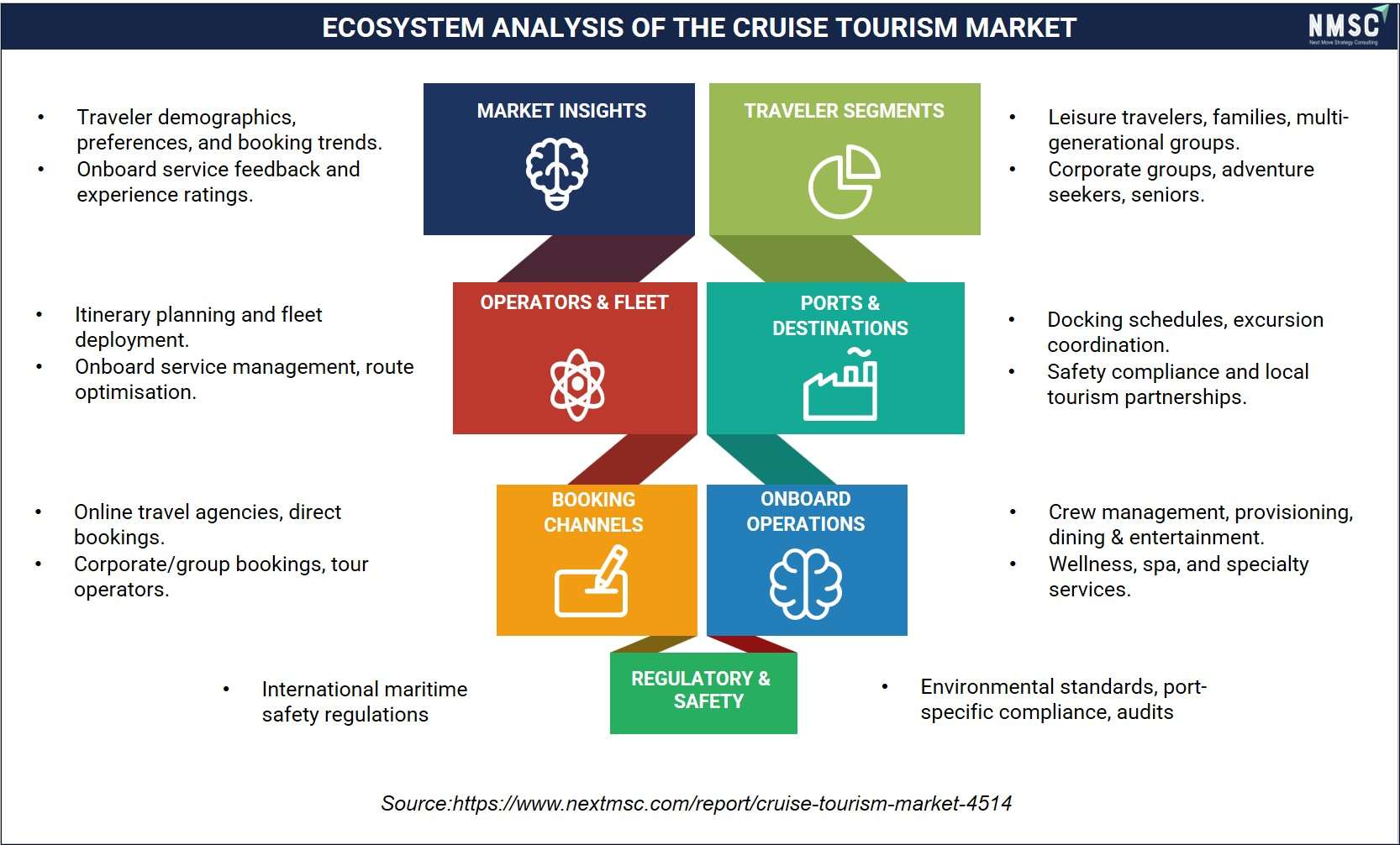
NMSC’s analysis indicates that the cruise tourism ecosystem is shaped by interconnected stakeholders influencing operational efficiency, customer satisfaction, and market growth. Market insights and traveler segmentation provide clarity on passenger preferences and booking trends, guiding itinerary planning and fleet deployment. Ports and destination partners ensure smooth docking, excursion management, and compliance with local regulations, while booking channels optimize sales and distribution strategies. Further, onboard operations, including crew management, dining, entertainment, and wellness services, directly impact passenger experience, and lastly regulatory adherence and safety compliance safeguard operations, fostering trust and supporting sustainable market expansion.
How Cruise Tourism Market Segmented in This Report, And What Are the Key Insights from the Segmentation Analysis?
Market Highlights & Strategic Insights – Cruise Tourism Market:
|
Segments |
Key Takeaways |
|
Cruise Type |
Ocean cruises dominate the global market due to large fleet size, extensive global itineraries, and mass-market appeal. Expedition Cruises show the highest CAGR, driven by demand for experiential, adventure, and destination-intensive travel. Further, river cruises grow steadily, especially in Europe, while short-sea cruises and luxury yacht cruises remain niche but attract premium travelers seeking curated, boutique experiences. |
|
Cruise Duration |
4-7 nights dominate as they balance affordability, vacation time, and itinerary variety. 8-14 nights and long-haul cruises like 15-30 nights show the highest CAGR, supported by retirees, remote workers, and travelers seeking immersive, multi-destination experiences. Short cruises remain popular for weekend getaways, while 30+ night cruises cater to ultra-premium and adventure-focused segments |
|
Passenger Capacity |
500–2,500 passengers dominate, offering a balance of ships >4,000 excel in entertainment and mass-market appeal, while <500 and expedition vessels capture high-growth niche segments focused on adventure, luxury, and immersive experiences. |
|
Booking & Sales Channel |
Offline channels, led by traditional travel agencies and tour operators, currently dominate due to bundled planning, trust, and group bookings, on the other hand, online channels, including cruise-line websites and OTAs, show the highest CAGR, driven by digital adoption, loyalty programs, and convenience for tech-savvy travelers. |
|
Accommodation Type |
Balcony cabins and suites dominate passenger preference, offering scenic views and premium amenities. Oceanview and interior cabins remain widely used for value-conscious travellers, while, private residence cabins and ultra-luxury suites show the highest CAGR, reflecting growing demand for exclusivity, space, and bespoke onboard experiences. |
|
Customer Demographics |
Leisure travelers dominate the market, followed by families and multi-generational groups. Senior travelers and corporate travelers drive growth in extended and long-haul cruises, while group & community travelers and other niche segments present targeted opportunities for operators to expand reach. |
By Cruise Type Insights
Which Cruise Types Drive Cruise Tourism Market Growth?
Based on the cruise type, the cruise tourism market is segmented into ocean cruises, river cruises, expedition cruises, short-sea cruises, and luxury yacht cruises.
Across the cruise tourism market in 2025-2026, our analysis indicates that ocean cruises remain the dominant segment due to their scale, global reach, and ability to serve diverse traveler preferences, from family vacations to long‑haul itineraries that span multiple regions. River cruises, while smaller in overall passenger share, deliver culturally immersive experiences that resonate with senior and experiential travelers, marking them as stable and enduring contributors. Expedition cruises show rapid growth momentum, reflecting a shift toward adventure‑oriented and destination‑intensive travel. Short‑sea cruises are rising in popularity by offering accessible, flexible options for short‑break travelers, and luxury yacht cruises continue to cater to high‑end clientele seeking exclusivity and bespoke service. Collectively, these sub‑segments illustrate the breadth of cruise offerings and the market’s capacity to adapt to evolving consumer demands.

By Accommodation Type Insights
How Is Accommodation Type Shaping the Cruise Tourism Market in 2025?
On the basis of accommodation type, the cruise tourism market is segmented into interior, ocean view, balcony, suite, and private residence cabins.
Our analysis indicates that accommodation type significantly influences traveler choice, spending behaviour, and itinerary planning. Balcony cabins have emerged as the most sought‑after category due to their blend of privacy, sea views, and reasonable premium pricing, making them the preferred option for many leisure and family cruisers. Interior cabins continue to attract cost‑sensitive segments and short‑haul travelers, while oceanview cabins maintain steady demand as a comfortable mid‑tier alternative. Suite accommodations demonstrate strong premium growth from affluent passengers, and private residence cabins define the ultra‑luxury frontier, catering to bespoke expectations and personalised services. Taken together, these accommodation types enable cruise operators to optimise revenue through diversified cabin portfolios that balance affordability, comfort, and exclusivity.
By Customer Demographic Insights
How Are Customer Demographics Influencing the Cruise Tourism Market?
On the basis of customer demographic, the cruise tourism market is segmented into leisure travelers, family & multi-generational travelers, group & community travelers, corporate travelers, senior travelers, and others.
Our market evaluation indicates that leisure travelers and families remain the core pillars of cruise tourism demand, driving fleet deployment, itinerary design, and cabin configuration strategies. Senior travelers and corporate groups provide stable, high-value revenue, particularly in premium and extended segments. Group & community travelers and niche other segments, while smaller, offer targeted growth opportunities for specialised itineraries, themed experiences, and off-season occupancy management. Collectively, understanding demographic preferences enables cruise operators to strategically align offerings, optimise revenue, and strengthen brand loyalty across diverse passenger segments.
Regional Outlook
Geographic Performance Snapshot:
|
Geography |
Key Takeaways |
|
North America |
North America is the most mature cruise tourism market, driven by high passenger penetration, strong brand loyalty, and continuous fleet expansion by major cruise lines. Demand is supported by premium, luxury, and family-oriented cruises, advanced port infrastructure, and high adoption of onboard digital services. |
|
Europe |
Growth in Europe is shaped by diverse itineraries and strong regional demand for cultural, river, and expedition cruises. Stringent environmental regulations and port sustainability requirements drive adoption of cleaner fuels, shore power, and emission-reduction technologies. |
|
Asia‑Pacific |
Asia-Pacific is the fastest-growing cruise tourism market due to rising middle-class populations, increasing disposable incomes, and expanding homeport infrastructure. Strong growth in short-duration, family-oriented, and entertainment-focused cruises, particularly in China, Japan, Singapore, South Korea, and Australia. |
|
Latin America |
The Latin American cruise market is an emerging growth region, driven by expanding regional tourism, rising disposable incomes, and improving port infrastructure. Value-oriented offerings and targeted marketing to local passengers are helping cruise lines improve market penetration and attract new demographics in this high-potential region |
|
Middle East & Africa |
MEA is developing the cruise tourism market driven by government-led tourism initiatives, luxury travel demand, and strategic port investments. The Middle East leads growth with premium and luxury cruises, while Africa remains niche, focused on expedition and coastal routes. Regulatory alignment and port readiness continue to evolve across the region |
Cruise Tourism Market in North America
Based on our analysis of the 2025 State of the Cruise Industry report, we found that the North America remains the world’s most mature and dominant cruise tourism region, projected to account for a significant portion of the expected 37.7 million global cruise passengers in 2025. The United States and Canada together benefit from extensive port infrastructure, high disposable incomes, and a strong cultural affinity for cruise vacations, with the Caribbean, Alaska, and Pacific Coast itineraries drawing diverse demographics. Strategic investments in fleet modernisation, themed itineraries, and digital passenger engagement platforms enhance the region’s competitive edge. Moreover, widespread adoption of value‑added services and loyalty programmes supports sustained demand. The presence of major operators such as Carnival, Royal Caribbean, and Norwegian further anchors regional growth, while targeted regional marketing and economic contributions to local tourism ecosystems underscore North America’s continued leadership in cruise tourism.
Cruise Tourism Market in the United States
In the United States, our primary research confirms that cruise tourism is characterised by high maturity and robust infrastructure, underpinned by a deeply entrenched cruising culture and expansive departure hubs such as PortMiami, Port Canaveral, and Seattle. The U.S. market led global passenger volumes in 2025, driven by strong interest in Caribbean, Alaska, and Pacific itineraries, which appeal to both domestic travellers and international visitors. Furthermore, the U.S. cruise lines continue to innovate in onboard experiences, premium cabins, and digital guest services to capture repeat and new cruisers. Economic impact studies show that cruising significantly supports local jobs and peripheral tourism sectors, with high seasonal variability shaping deployment strategies. As cruise lines continue to launch new ships and optimise itineraries, U.S. cruise tourism demonstrates resilience and capacity for long‑term expansion.
Cruise Tourism Market in Canada
Our assessment suggests that Canada, while smaller than its southern neighbour, plays a significant role in North America’s cruise ecosystem by serving as both a source and destination market. Canadian cruise passengers frequently embark on regional itineraries in the Pacific Northwest, Atlantic Canada, and the Great Lakes. According to the latest industry data, these segments benefit from growing interest in scenic and experiential voyages, especially among mid‑life and senior travellers seeking nature‑centric cruises. Based on our discussions with cruise operators, we observed that enhancements to Canadian port facilities and collaboration with cross‑border itineraries have improved deployment flexibility and regional seasonality. Although Canada’s passenger numbers are more modest relative to the United States, its strategic positioning and evolving cruise infrastructure support sustained relevance within the North American market.
Cruise Tourism Market in Europe
NMSC’s analysis indicates that Europe remains a high‑value and mature cruise tourism region, with Europe’s source passenger numbers rising modestly and broad participation across multiple key markets. The Mediterranean, Northern Europe, and Baltic itineraries are particularly popular, reflecting cultural diversity and short‑haul cruising preferences. Operators in Europe increasingly optimise itineraries to leverage historic and natural attractions while responding to regulatory pressures on overtourism in key cities. Strong regional infrastructure and coordinated coastal tourism partnerships enhance European cruise demand, even as environmental and port capacity considerations shape strategic deployment decisions.
Cruise Tourism Market in the United Kingdom
The UK cruise tourism market shows that it remains a significant European source, with passenger interest concentrated in North Sea, Mediterranean, and Atlantic cruises. In particular, UK cruisers exhibit a strong propensity for themed and value-based itineraries, while port hubs anchor the region’s deployment strategies. Furthermore, based on our discussions with UK terminal operators, we found that efforts to diversify route options and enhance onboard service experiences are supporting the UK’s competitive position, even as economic dynamics and comparative pricing continue to influence traveller choices. Overall, these evolving strategies indicate that the UK market is well-positioned to sustain steady demand while adapting to shifting consumer preferences and cost sensitivities.
Cruise Tourism Market in Germany
Germany’s cruise demand is distinguished by a strong preference for Northern European and Baltic itineraries, with departure hubs supporting both short‑haul and extended voyages. NMSC’s analysis indicates that German travellers increasingly seek cultural immersion, premium service standards, and experiential onboard programming, a trend reinforced by growing disposable incomes and proximity to diverse European ports. Ongoing investment in sustainable vessel deployment and enhanced digital passenger engagement are key differentiators in the German market. Despite modest growth relative to larger markets like Italy and Spain, Germany’s mature infrastructure and rising themed cruise adoption ensure it remains central to Europe’s cruise tourism landscape.
Cruise Tourism Market in France
Our regional assessment shows that France continues to contribute meaningfully to European cruise volumes, with French cruisers engaging in Mediterranean and Western European itineraries at increasing rates. According to European port and tourism data, France benefited from a robust cross‑border tourism performance, reflecting broader leisure travel growth. However, evolving destination management strategies are reshaping the French cruise ecosystem. For example, several French Riviera cities, including Cannes, have recently introduced new limits on large cruise ship arrivals and passenger disembarkations to better balance economic benefits with environmental and community impacts, a move that has been noted by industry stakeholders as emblematic of the region’s over tourism response. French operators are therefore adapting by promoting smaller vessels, diversifying port calls beyond traditional hubs, and investing in sustainable tourism practices to maintain long‑term viability and destination appeal.
Cruise Tourism Market in Italy
Italy remains one of Europe’s most active cruise tourism markets, buoyed by its strategic location along the Mediterranean and extensive coastal heritage. Italy’s major homeports underpin strong outbound and inbound cruise activity, attracting both European and intercontinental passengers. NMSC’s evaluation indicates that Italian cruisers increasingly combine cultural exploration with maritime leisure, driving demand for multi‑destination Mediterranean routes. Moreover, Italy benefits from integrated tourism experiences that extend beyond the port, reinforcing broader regional tourism spill‑over effects as travellers stay longer for land‑based visits. While Mediterranean itineraries continue to dominate, our discussions with itinerary planners show a rising interest in themed sailings, such as culinary and wine‑centred journeys, reflecting evolving consumer preferences. Italy’s cruise infrastructure and cultural appeal position it as a resilient and high‑value market in the wider European cruise ecosystem.
Cruise Tourism Market in Spain
Our regional evaluation indicates that Spain remains a key European centre for cruise tourism, underpinned by major hubs that together handle millions of cruise passengers annually. Data from tourist arrivals shows that Spain continues to lead in overall tourism demand, which reinforces cruise penetration across both Mediterranean and Atlantic itineraries. However, rapidly growing passenger volumes have triggered local responses to over-tourism, prompting plans to reduce terminal capacity and manage cruise arrivals more strategically. Spanish cruise strategy increasingly emphasises extending passenger stays into overnight tourism, diversifying port calls to lesser‑visited coastal cities, and advancing sustainability initiatives to offset environmental and community concerns, thereby strengthening market resilience in a highly competitive Mediterranean environment.
Cruise Tourism Market in the Nordics
In the Nordics, comprising Sweden, Norway, Denmark, and Finland, our assessment indicates that cruise tourism market is characterised by strong niche demand for scenic, nature‑based voyages such as fjord cruises and Arctic explorations. Northern European cruise jurisdictions attract both regional and international travellers seeking premium experiential journeys beyond traditional warm‑weather itineraries. Our market evaluation suggests that the combination of well‑developed port facilities in Norway and Denmark, specialised expedition offerings, differentiates the Nordic cruise segment within Europe’s broader market. Operators highlighted the appeal of smaller vessels capable of accessing remote ports and integrating environmental learning into shore excursions, which aligns with high‑value leisure travel trends. The Nordics’ emphasis on sustainability and outdoor experiences continues to drive its position as a unique, high‑growth segment of European cruising.
Cruise Tourism Market in the Asia-Pacific
Asia‑Pacific emerges as one of the fastest‑growing global cruise regions, with passenger volumes expanding due to new homeports, rising middle‑class participation, and aggressive infrastructure development across China, Japan, and Australia. Our discussions with port authorities confirm that port upgrades, visa facilitation, and targeted itineraries are expanding both domestic and inbound cruise activity, especially in mainland China, where cruise calls have grown significantly year‑on‑year. Asia‑Pacific’s cruise dynamics reflect broader tourism growth in the region, with operators increasingly tailoring offerings to local preferences and leveraging proximity to high‑density populations to foster sustained long‑term expansion beyond traditional source markets.
Cruise Tourism Market in China
We analysed that China has transformed into a pivotal cruise market within Asia‑Pacific, with resumed cruise operations and expanding terminal capacity driving considerable growth in 2025. Local port data indicate significant increases in cruise calls, with key homeports such as Shanghai’s Wusongkou reporting double‑digit rises in deployments. Visa‑free policies for selected nationalities and streamlined terminal operations have further supported inbound cruise tourism, catalysing both domestic and international demand. Further, China’s strategic investments in modern cruise infrastructure and supportive regulatory environments are expected to sustain this trajectory, positioning it as a core driver of Asia‑Pacific cruise growth and broader global deployment strategies.
Cruise Tourism Market in Japan
In Japan, cruise tourism continues to rebound strongly, supported by expanding port infrastructure and growing interest among both domestic and international travellers. According to industry projections, Japan remains a major Asia‑Pacific cruise node, with strong demand for culturally rich itineraries and seasonal deployments. Based on our conversations with tourism bodies, we found that Japanese homeports are central to strategic itinerary planning, while culturally themed experiences and shorter regional routes appeal to local leisure travellers. Japan’s growing cruise engagement reflects broader tourism momentum and highlights opportunities to deepen domestic cruising participation alongside international deployments.
Cruise Tourism Market in India
Our evaluation indicates that India’s cruise tourism market remains in a nascent but progressively expanding stage, underpinned by government initiatives to develop coastal cruise infrastructure and promote maritime leisure travel within national tourism agendas. Although Indian passenger volumes are still modest relative to mature markets, emerging initiatives, such as enhanced terminal facilities and integrated coastal itinerary development, suggest growing medium‑term potential. The importance of global marketing and connectivity enhancements to attract both domestic and international cruise traffic indicates that India’s position in the Asia‑Pacific cruise landscape strengthens as infrastructure and destination offerings mature.
Cruise Tourism Market in South Korea
In South Korea, cruise tourism is steadily advancing with increasing regional deployments and investments in terminal expansion at major ports. Current market analysis indicates a rising awareness of cruise travel among local travellers, supported by cultural preferences and proximity to broader East Asian itineraries. Further, collaborative marketing initiatives and partnerships with international cruise lines are helping to improve South Korea’s presence on Asia‑Pacific cruise maps, while themed and short‑duration cruises appeal to younger traveller segments seeking accessible leisure options.
Cruise Tourism Market in Taiwan
Based on our assessment of Taiwan’s cruise tourism market, we observed that Taiwan’s cruise sector is gradually recovering and integrating into wider Asia-Pacific itineraries. Taiwan’s strategic geographic location and expanding partnerships with regional operators are strengthening its role as a feeder market and a deployment point for East Asian cruises. Our further engagement with local tourism entities highlights the potential for incremental growth as regional demand accelerates and Taiwan enhances its cruise infrastructure and service offerings. Overall, these developments indicate that Taiwan is steadily positioning itself as a key node in regional cruise networks, with growing relevance in Asia-Pacific cruise deployment strategies.
Cruise Tourism Market in Indonesia
Indonesia is gaining traction as an emerging cruise destination within Southeast Asia, driven by growing interest in itineraries that combine the country’s island diversity with cultural experiences, alongside expanding port infrastructure that is attracting global operators. As a result, as cruise lines explore extended Southeast Asian routes, Indonesia’s geographic appeal and tourism growth indicate longer-term potential for the country to become a more substantive cruise hub.
Cruise Tourism Market in Australia
Our regional review identifies that Australia remains a significant cruise source and destination market, with cruise tourism re‑establishing strong momentum following the pandemic. According to Cruise Lines International Association (CLIA) Australasia, 2025, we observed that in 2024, Australia was the world’s fourth‑largest cruise source market, with over 1.32 million passengers choosing ocean cruises, underscoring robust local engagement and high market penetration. Operators and port authorities point to strong demand for South Pacific and Great Barrier Reef itineraries, as well as increasing participation in shorter, eight‑day cruises that appeal to both families and working‑age travellers. Ongoing investments in port infrastructure and strategic marketing further enhance Australia’s cruise tourism profile, positioning it for continued growth in the Asia‑Pacific landscape.
Cruise Tourism Market in Latin America
Our regional analysis indicates that expanding middle-class populations, improved port infrastructure, and government tourism promotion initiatives are supporting incremental growth. In this context, operators in Latin America are increasingly deploying value-oriented and short-haul cruises that appeal to both regional passengers and international markets. At the same time, targeted marketing and seasonal deployment strategies are helping deepen market penetration, thereby enabling operators to navigate demand fluctuations, despite wider economic and infrastructure challenges. Overall, these combined efforts are gradually strengthening the region’s positioning within the global cruise tourism landscape.
Cruise Tourism Market in the Middle East & Africa
Our evaluation shows that the Middle East & Africa region remains smaller relative to other cruise markets but is gaining prominence due to the strategic development of luxury cruise itineraries and elevated port infrastructure in hubs such as Dubai and Abu Dhabi. Based on our interviews with regional tourism officials, we found that investments in luxury terminals, Red Sea itinerary development, and tourism diversification strategies are driving incremental growth. Notably, Abu Dhabi was recently recognised as the World’s Best Cruise Destination for 2025, reflecting the success of destination branding and infrastructure enhancements that combine city culture with maritime leisure experiences.
Consumer Behaviour Analysis of the Cruise Tourism Market
This chart illustrates the consumer decision-making journey in cruise tourism, highlighting how awareness, consideration, purchase, and loyalty stages collectively shape market demand, revenue growth, and long-term customer retention.
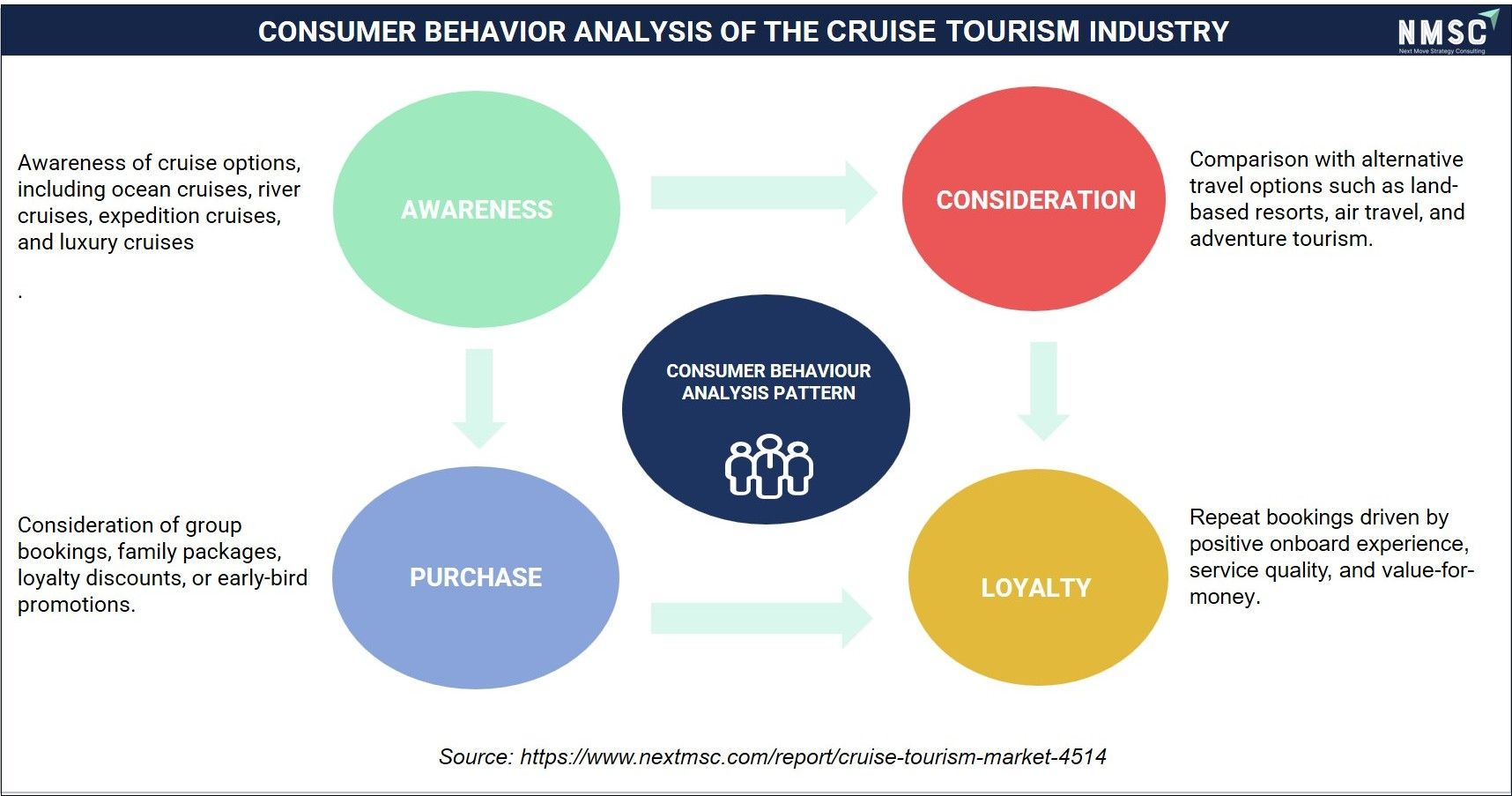
The chart demonstrates a structured consumer behaviour pattern that significantly influences the cruise tourism market. We noticed that at the awareness stage, consumers learn about various cruise options such as ocean, river, expedition, and luxury cruises, expanding the potential customer base. During the consideration phase, travellers compare cruises with alternative travel options like land-based resorts and air travel, which drives cruise companies to differentiate through pricing, onboard experiences, and itinerary uniqueness. Further, in the purchase stage, factors such as group packages, family deals, loyalty discounts, and early-bird promotions directly impact booking volumes and revenue generation. Finally, the loyalty stage highlights repeat bookings driven by positive onboard experiences, service quality, and value-for-money, which strengthens customer retention and lifetime value. Overall, this behavioural framework influences cruise operators’ marketing strategies, product design, pricing models, and customer engagement initiatives, thereby shaping market growth and competitive dynamics in the global cruise tourism industry.
Competitive Landscape
Competitive Dynamics & M&A Landscape:
|
Key Takeaways |
|
The cruise tourism market features a mix of dominant global operators such as Carnival Corporation & plc, Royal Caribbean Group, Norwegian Cruise Line Holdings Ltd, MSC Cruises S.A, and Disney Cruise Line, alongside highly specialised and niche-focused providers including Viking Cruises, Hurtigruten, PONANT, SeaDream Yacht Club, Virgin Cruises, Windstar Cruises, and Scenic Cruises International GmbH, which cater to premium, expedition, small-ship, luxury, and sustainability-driven travel experiences. |
|
Companies are pursuing a strategic blend of fleet expansion with modern, eco-efficient ships, luxury and differentiated onboard experiences, digital and connected services (mobile apps, smart cabin technology), geographic expansion into emerging cruise markets (Asia-Pacific, Mediterranean, Northern Europe), and customised itinerary offerings (expedition, adventure, cultural immersion, river cruises) to enhance brand value, improve passenger satisfaction, and align with evolving consumer preferences and regulatory expectations around sustainability, health, and safety. |
|
Recent M&A and investment activity includes fleet modernization with LNG-powered and hybrid vessels, acquisitions of niche cruise lines or minority stakes in regional operators, strategic partnerships with local tourism boards, and investments in sustainable and health-conscious onboard infrastructure, aimed at expanding market share, accelerating eco-friendly and experiential cruise offerings, and strengthening positions in high-growth segments such as luxury, expedition, and river cruising. |
Which Companies Dominate the Cruise Tourism Market and How Do They Compete?
Based on our industry analysis, we observed that Carnival Corporation & plc, Royal Caribbean Group, Norwegian Cruise Line Holdings Ltd, MSC Cruises S.A, Disney, and Virgin Cruises are among the leading competitors shaping the current cruise tourism landscape. Carnival and Royal Caribbean continue to dominate in scale, network breadth, and fleet size, leveraging their global operations to capture both leisure and premium segments. Our review of 2025 industry performance shows cruise passenger volumes growing worldwide to an expected 37.7 million in 2025 as reported by Cruise Lines International Association (CLIA), reflecting sustained demand and strong forward bookings across major lines. MSC Cruises has achieved notable growth in future cruise bookings, signalling strong consumer confidence and demand pull for diverse itineraries across regions. These top players continue investing in fleet expansion, digital passenger engagement, and unique experience offerings to outperform competitors within both contemporary and premium travel segments.
Market Dominated by Cruise Tourism Giants and Specialists
Our market evaluation indicates that global giants such as Carnival, Royal Caribbean, and MSC hold significant competitive leverage, while niche specialists like Viking Cruises or Virgin Voyages capture premium and experiential travel segments through differentiated value propositions. Royal Caribbean’s Icon‑class vessels, including Star of the Seas entering service in 2025, exemplify how scale and capital investment facilitate market leadership and brand visibility. At the same time, Virgin Voyages is expanding its Brilliant Lady adult‑oriented offerings to new homeports such as Quebec City in late 2025, reinforcing its distinct positioning focused on adults‑only experiential cruising. Niche luxury and expedition players also intensify competition, for example, small ship operators and ultra‑luxury brands emphasise bespoke voyages and exclusive experiences, challenging conventional operators to innovate.
Innovation and Adaptability Drive Market Success
Innovation and adaptability are increasingly decisive for competitive success in the cruise tourism market, where digital enhancements and novel onboard experiences matter greatly. In 2025-2026, contextual industry trends show accelerated adoption of immersive service design and experience hubs at key events like Seatrade Cruise Global 2026, where the debut of the Wellness Oasis highlights how wellness programming and guest journey innovation are gaining priority within cruise strategy. Likewise, lines such as Virgin Voyages have entered an experience era with Brilliant Lady, emphasising curated spaces and social design to differentiate customer value. We found that operators are also leveraging data and AI‑driven retail and personalisation tools that enhance inventory management and passenger engagement across voyages, another dimension of technological innovation shaping competitive differentiation.
Market Players to Opt for Merger & Acquisition Strategies to Expand Their Presence
Based on our research, we observe that companies are focusing on fleet growth, strategic partnerships, and commercial alliances to broaden market presence and operational reach. For example, extended collaborations between the Cruise Lines International Association (CLIA) and partners such as Emirates and the Florida-Caribbean Cruise Association (FCCA) enhance connectivity, industry coordination, and market visibility. Notably, these are primarily smaller specialty or technology-focused partnerships aimed at service enhancement, rather than large-scale corporate takeovers. Overall, this trend indicates that competitive expansion in 2025–2026 is driven more by alliance-building and co-marketing initiatives than by traditional M&A consolidation.
List of Key Cruise Tourism Companies
-
Carnival Corporation & plc
-
Royal Caribbean Group.
-
Norwegian Cruise Line Holdings Ltd
-
Disney
-
Hurtigruten
-
Virgin Cruises Intermediate Limited
-
PONANT
-
SeaDream Yacht Club
-
American Cruise Lines
-
Fred. Olsen Cruise Lines
-
Margaritaville At Sea
-
Celestyal Cruises
-
Phoenix Reisen GmbH
-
Saga
-
Windstar Cruises
-
Scenic Cruises International GmbH
-
AmaWaterways
-
CroisiEurope
What are the Latest Key Industry Developments?
-
July 2025 - Royal Caribbean completed the acquisition of Promociones Turisticas Mahahual, including the Port of Costa Maya and nearby properties, to develop its private destination portfolio.
-
April 2025 - Royal Caribbean reinforced its leadership position through sustained fleet expansion and capacity growth plans, maintaining its status as the largest cruise brand by passenger capacity.
-
April 2025 - MSC Cruises inaugurated MSC World America, its largest World Class ship, with Caribbean deployments from PortMiami in 2025, significantly expanding the line’s capacity and appeal in the North American market and signaling robust fleet growth aligned with rising global demand.
Expert Insight
 "Cruising continues to be one of the most dynamic and resilient sectors in tourism, growing in line with strong demand for cruise holidays, particularly among younger generations and new-to-cruise travelers,”
- Bud Darr, President and CEO of CLIA
Statement made during a 2026 industry discussion on beauty retail dynamics and omnichannel consumer behaviour.
Market Interpretation
The comment highlights the sustained growth and broad appeal of cruise tourism across multiple demographics, including millennials, first-time cruisers, and experiential travelers. Based on our market evaluation, we analysed that rising disposable incomes, expanding regional itineraries, and investment in premium and themed experiences are driving consumer adoption. Operators that strategically combine immersive onboard services, flexible itinerary planning, and digital engagement platforms are better positioned to capture new passenger segments, strengthen brand loyalty, and expand market penetration. This trend underscores the importance of innovation, differentiated offerings, and customer-centric strategies in maintaining competitive advantage within the global cruise tourism market share.
SWOT Analysis of the Global Cruise Tourism Market:
This chart highlights the key strengths, weaknesses, opportunities, and threats shaping the cruise tourism market, providing a strategic overview of internal and external market dynamics.
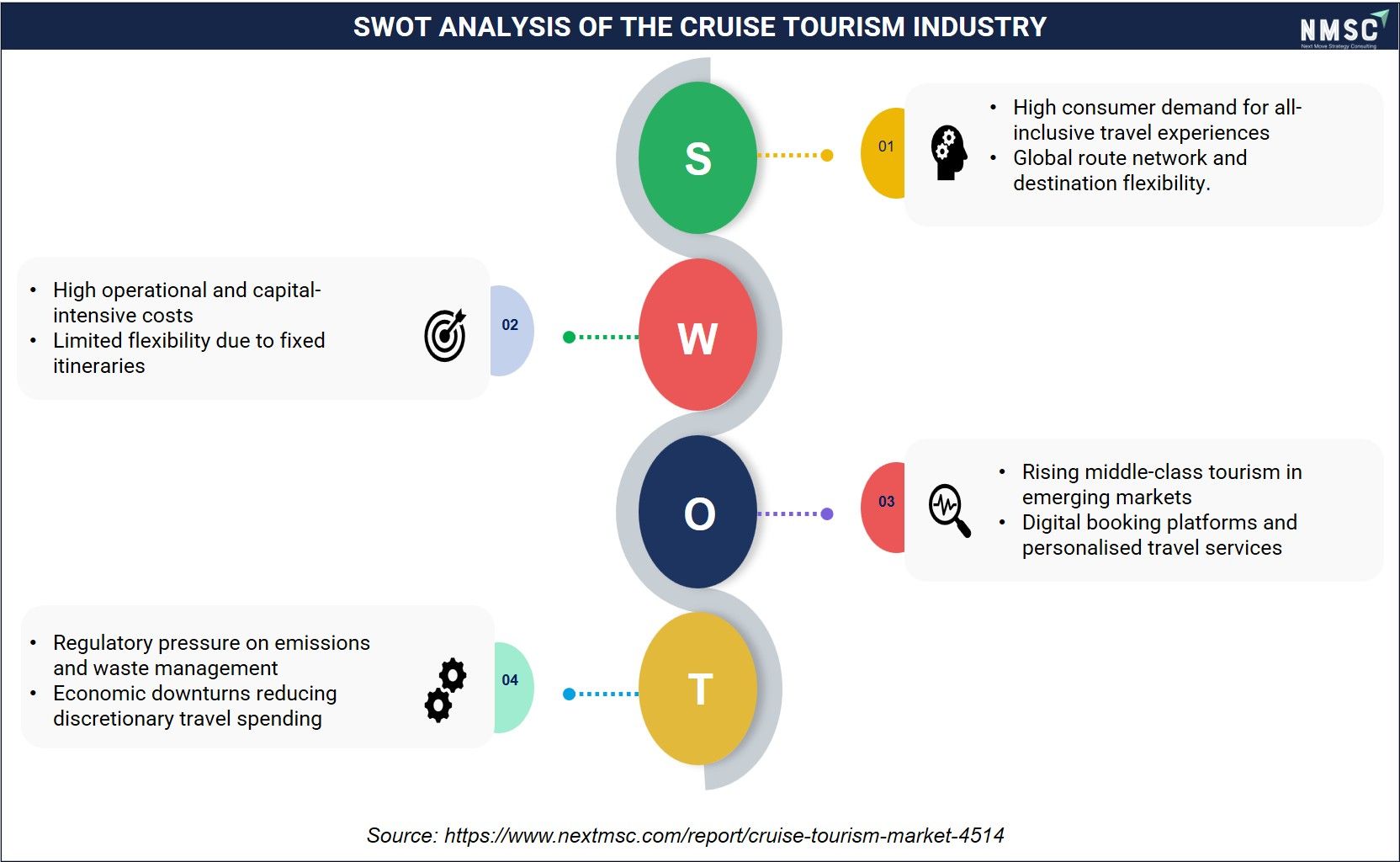
The SWOT framework indicates that the cruise tourism market benefits from strong demand for all-inclusive travel experiences and a globally diversified route network, which enhances destination accessibility and consumer appeal. Based on our industry insights, we observed that the industry also faces structural challenges, including high capital and operational costs and limited itinerary flexibility, which constrain profitability and operational responsiveness. Our analysis further identified emerging opportunities from expanding middle-class tourism in developing economies and the growing adoption of digital booking and personalised travel platforms, which are improving customer acquisition and travel experience delivery. However, the market remains exposed to regulatory pressures related to emissions and waste management, as well as macroeconomic downturns that reduce discretionary travel spending. Overall, these dynamics highlight the need for cruise operators to adopt sustainable operational practices and resilient business strategies to mitigate risks and support long-term market growth.
What Are the Key Factors Influencing Investment Analysis & Opportunities in the Cruise Tourism Market?
Investment analysis in the cruise tourism market has increasingly been influenced by a shift in capital allocation toward premiumization, experiential travel offerings, and digital-enabled customer platforms, rather than purely expanding mass-market fleet capacity. Based on our evaluation of recent fleet investments, we observed that investors favour cruise operators with strong yield management, diversified itinerary portfolios, and premium onboard service models that enhance revenue per passenger and margin stability. Companies demonstrating scalable loyalty programs, robust ancillary revenue strategies, and strong destination partnerships continue to attract higher investor confidence and valuation premiums.
We also identified growing investment focus on sustainability-led fleet renewal, smart ship technologies, and port infrastructure development, driven by regulatory pressures and evolving consumer expectations for responsible tourism. Investments in LNG-powered vessels, shore power systems, waste treatment technologies, and digital passenger experience platforms are increasingly prioritised by both financial and strategic investors. From our perspective, the most compelling opportunities lie in cruise operators and ecosystem stakeholders that combine differentiated travel experiences, strong ESG frameworks, and data-driven personalisation capabilities, positioning them to capture long-term growth and strengthen competitive advantage in the global cruise tourism market.
Key Benefits for Stakeholders:
Next Move Strategy Consulting (NMSC) presents a comprehensive analysis of the cruise tourism market trends, covering historical trends from 2020 through 2025 and offering detailed forecasts through 2035. Our study examines the market at regional and country levels, providing quantitative projections and insights into key growth drivers, challenges, and investment opportunities across all major cruise tourism segments.
From our perspective, the cruise tourism industry delivers significant value across a wide range of stakeholders by creating interconnected benefits throughout the travel ecosystem. Investors gain from high-yield tourism assets, recurring onboard revenue streams, and rising demand for premium travel, which support long-term profitability. Cruise operators leverage these trends to diversify itineraries, enhance passenger yield, and strengthen brand loyalty through experiential offerings and digital engagement platforms.
Port authorities and destination governments further benefit from increased tourism inflows, which drive infrastructure development and generate local economic spill-overs across hospitality, retail, and transportation sectors. At the same time, travel agencies, hospitality partners, and technology providers gain from these developments by participating in ecosystem-driven partnerships, leveraging digital booking platforms, and integrating ancillary services that complement the growing cruise market. By connecting experiential travel innovation with infrastructure investment and sustainability initiatives, the cruise tourism market creates sustained value for all stakeholders while supporting long-term growth, regional development, and attractive investment returns.
|
Parameters |
Details |
|
Customization Scope |
Free customization (equivalent to up to 80 analyst-working hours) after purchase. Addition or alteration to country, regional & segment scope. |
|
Pricing and Purchase Options |
Avail customized purchase options to meet your exact research needs. |
|
Approach |
In-depth primary and secondary research; proprietary databases; rigorous quality control and validation measures. |
|
Analytical Tools |
Porter's Five Forces, SWOT, value chain, and Harvey ball analysis to assess competitive intensity, stakeholder roles, and relative impact of key factors. |
Cruise Tourism Market Key Segments
By Cruise Type
-
Ocean Cruises
-
Mainline Ocean Cruises
-
Premium & Luxury Ocean Cruises
-
-
River Cruises
-
European Rivers
-
Asian Rivers
-
North American Rivers
-
-
Expedition Cruises
-
Polar Expeditions
-
Wildlife & Nature Expeditions
-
Remote & Adventure Expeditions
-
-
Short-Sea Cruises
-
Domestic Coastal Cruises
-
Regional Coastal Cruises
-
-
Luxury Yacht Cruises
-
Private Yacht Charters
-
Boutique Luxury Yachts
-
Ultra-Luxury Ocean Yachts
-
By Cruise Duration
-
1–3 nights
-
4–7 nights
-
8–14 nights
-
15–30 nights
-
30+ nights
By Passenger Capacity
-
<500 Passengers
-
500-2,500 Passengers
-
2,500-4,000 Passengers
-
>4,000 Passengers
By Booking & Sales Channel
-
Online Channels
-
Direct Online Booking
-
Online Travel Agencies
-
Corporate Online Platforms
-
-
Offline Channels
-
Travel Agencies
-
Tour Operators & Wholesalers
-
Corporate & Group Booking
-
By Accommodation Type
-
Interior Cabins
-
Oceanview Cabins
-
Balcony Cabins
-
Suite Accommodations
-
Private Residence Cabins
By Travel Purpose
-
Leisure & Vacation
-
Adventure & Exploration
-
Cultural & Educational
-
Wellness & Spa
-
Medical Cruises
-
Culinary & Wine
-
Celebration & Event Cruises
-
Business & Incentive Cruises
-
Others
By Customer Demographics
-
Leisure Travelers
-
Family & Multi-Generational Travelers
-
Group & Community Travelers
-
Corporate Travelers
-
Senior Travelers
-
Others
By Pricing Model
-
Fixed Pricing
-
Dynamic Pricing
-
Bundled Pricing
-
Loyalty Pricing
Geographical Breakdown
-
North America: U.S., Canada, and Mexico.
-
Europe: UK, Germany, France, Italy, Spain, Sweden, Denmark, Finland, the Netherlands, and the rest of Europe.
-
Asia Pacific: China, India, Japan, South Korea, Taiwan, Indonesia, Vietnam, Australia, Philippines, Malaysia and the rest of APAC.
-
Middle East & Africa (MEA): Saudi Arabia, UAE, Egypt, Israel, Turkey, Nigeria, South Africa, and the rest of MEA.
-
Latin America: Brazil, Argentina, Chile, Colombia, and the rest of LATAM.
Conclusion & Recommendations
Based on our comprehensive market assessment, we found that the cruise tourism sector is navigating a period of measured expansion, characterised by evolving consumer preferences, premiumisation, and digital transformation. Leading operators are leveraging fleet modernisation, experiential itineraries, and sustainability initiatives to differentiate their offerings, while niche and expedition players are capitalising on personalised, small-ship experiences to capture high-value segments. We observe that competitive advantage increasingly stems from the ability to integrate immersive travel experiences, advanced onboard technologies, and flexible itinerary planning, rather than solely relying on scale or brand recognition. Looking ahead, we expect the market to continue expanding regionally, with Asia-Pacific, Latin America, and emerging Middle Eastern hubs offering strong growth potential, provided operators remain agile in adapting to regulatory, environmental, and consumer-driven dynamics.
Executives should prioritise strategic investments in digital engagement, customer personalisation, and sustainable operations to strengthen market positioning and long-term resilience. Investors can focus on operators demonstrating innovation in experience-led offerings and regional expansion strategies that align with emerging leisure trends. Regulators, in turn, can facilitate market growth by supporting infrastructure development, streamlining port operations, and balancing environmental safeguards with tourism promotion. By acting on these insights, all stakeholders can ensure the cruise tourism market evolves in a sustainable, competitive, and value-driven manner, fostering resilience against operational and market uncertainties.


About the Author
 Mayurima Roy
— Mayurima Roy is Research Analyst at Next Move Strategy Consulting, where she has spent 4 years working across the firm's full industry coverage rather than a single fixed vertical. Her work centers on structured research, ongoing trend tracking, competitive assessment, and insight-led content development, translating complex market data into clear, decision-ready narratives that support informed client decision-making across diverse global industries, market sectors, and world regions every day.
Mayurima Roy
— Mayurima Roy is Research Analyst at Next Move Strategy Consulting, where she has spent 4 years working across the firm's full industry coverage rather than a single fixed vertical. Her work centers on structured research, ongoing trend tracking, competitive assessment, and insight-led content development, translating complex market data into clear, decision-ready narratives that support informed client decision-making across diverse global industries, market sectors, and world regions every day.
About the Reviewer
 Supradip Baul
— Supradip Baul is an accomplished business consultant and strategist with over a decade of rich experience in market intelligence, strategy, technology, and business transformation. His work has included rigorous qualitative and quantitative analysis across multiple industries, helping clients shape investment decisions and long-term roadmaps. Earlier in his career, he was associated with Gartner, where he contributed to industry-leading reports and market share analyses. He has worked with leading global companies and holds an MBA with a dual specialization in Marketing and Finance.
Supradip Baul
— Supradip Baul is an accomplished business consultant and strategist with over a decade of rich experience in market intelligence, strategy, technology, and business transformation. His work has included rigorous qualitative and quantitative analysis across multiple industries, helping clients shape investment decisions and long-term roadmaps. Earlier in his career, he was associated with Gartner, where he contributed to industry-leading reports and market share analyses. He has worked with leading global companies and holds an MBA with a dual specialization in Marketing and Finance.
At Next Move Strategy Consulting, we understand that insightful market research is the cornerstone of successful business decisions. That's why we employ a robust and multifaceted approach, combining various methodologies to deliver the most accurate and actionable data for our clients.

Research Landscape
We navigate the world of research with two primary approaches:
Qualitative Approach
Our qualitative research methodologies involve immersive techniques such as in-depth interviews, focus groups, and observational studies. By engaging directly with individuals and stakeholders, we uncover valuable insights that quantitative data alone may overlook.

Quantitative Research
In tandem with qualitative methodologies, NMSC leverages the power of Quantitative Research to provide a robust foundation of numerical insights. Through systematic data collection and analysis, we quantify patterns, preferences, and market trends, offering a comprehensive view of the business landscape.
Our quantitative research approach employs diverse tools, including surveys, experiments, and statistical modelling. These methodologies enable us to gather data from a large and representative sample, ensuring the statistical significance of our findings. By employing structured questionnaires and standardized data collection methods, we guarantee the reliability and validity of the information we present to our clients.
Quantitative research is particularly effective in measuring the prevalence of trends, assessing market size, and gauging the impact of various factors on consumer behavior. The numerical precision attained through this approach equips our clients with actionable insights, facilitating data-driven decision-making and strategy formulation.


Our Specialized Toolbox for Industry-Specific Market Research
We deploy a specialized arsenal of techniques tailored to meet your unique requirements. Here's a glimpse into our comprehensive toolbox:

Information Procurement
The stage entails acquiring market data or relevant information through various sources and methodologies.


Market Research Approach
We utilize both top-down and bottom-up approaches in market research analysis to achieve a comprehensive understanding of the market dynamics, leveraging the broad perspective of industry trends and macroeconomic factors alongside detailed insights from specific segments and individual companies.

Porters Five Forces Analysis
We conduct Porter's Five Forces analysis to evaluate the competitive landscape of an industry, providing us with insights into factors that affect profitability and strategic positioning.

SWOT Analysis

Forecasting
We utilize a forecasting model to predict future consumption by considering parameters like population, economics, regulations, market competition, drivers, constraints, technology, and pricing. We also employ statistical techniques such as multilinear regression, exponential smoothing, moving average, ARIMA, and Monte Carlo simulations for accurate predictions. In econometric forecasting, we analyzed short-term and long-term event impacts, attributing values based on regulatory frameworks, economic factors, and market events.





 Speak to Our Analyst