Eye Care Market By Offering (Vision Care Products, and Others), By Indication (Refractive Errors, Cataract, Glaucoma, and Others), By Buyer Type (Individual Consumer, Eye Care Professional, and Others), By Age Group (Pediatric, Adult, and Geriatric), and By Distribution Channel (Direct Sales, Retail Distribution, and Online Distribution) – Global Opportunity Analysis and Industry Forecast, 2025–2035
Industry: Healthcare | Publishing Date: March 20, 2026 | Last Updated: September 15, 2026 | No of Pages: N/A | No. of Tables: N/A | No. of Figures: N/A | Format: PDF | Report Code: HC4304
Industry Outlook
The global Eye Care Market size was valued at USD 102.44 billion in 2025 and is expected to reach USD 109.53 billion by 2026. Looking ahead, the industry is projected to expand significantly, reaching USD 200.02 billion by 2035, registering a CAGR of 6.92% from 2026 to 2035.
Eye Care Industry Size & Forecast
|
Parameters |
Details |
|
Market Size in 2026 |
USD 109.53 Billion |
|
Revenue Forecast in 2035 |
USD 200.02 Billion |
|
Growth Rate |
CAGR of 6.92% from 2026 to 2035 |
|
Analysis Period |
2025–2030 |
|
Base Year Considered |
2025 |
|
Forecast Period |
2026–2035 |
|
Market Size Estimation |
Billion (USD) |
|
Companies Profiled |
20 |
|
Countries Covered |
33 |
|
Market Share |
Available for 10 companies |
According to NMSC’s primary research, we found that the global eye care market is undergoing sustained expansion, supported by demographic ageing, rising screen exposure, increasing myopia prevalence, and growing awareness of preventive vision health. We observed that healthcare providers increasingly prioritise diagnostic precision and early disease detection, while consumers seek personalised, convenient, and premium vision correction solutions. Technological advancement is emerging as a defining competitive differentiator. Digital diagnostics and AI-assisted screening tools are being integrated into fundus cameras, OCT systems, and retinal imaging platforms to enable real-time image analysis, automated disease flagging, and clinical decision support. Rather than replacing ophthalmologists and optometrists, these technologies augment practitioner capabilities, reduce diagnostic variability, and enhance early detection of glaucoma, diabetic retinopathy, and macular degeneration.
However, this digital transition places greater emphasis on regulatory compliance, algorithm transparency, cybersecurity safeguards, and structured clinical validation. We further observed that connected care platforms and standardized data interfaces are becoming foundational components of modern ophthalmic practice. Multi-site hospital groups and ambulatory eye clinic networks increasingly demand interoperability between diagnostic imaging systems, surgical planning software, electronic medical records, and tele-ophthalmology platforms. Furthermore, seamless data exchange reduces manual entry errors, lowers integration costs, and accelerates the deployment of new devices and software modules. As a result, open digital ecosystems are now viewed as strategic enablers of scalable, patient-centric vision care services delivery rather than optional IT enhancements.
From our observations, eye care market growth is reinforced by organized optical retail expansion, omnichannel distribution models, telehealth-enabled service delivery, and subscription-based contact lens platforms that enhance consumer accessibility. At the same time, regulatory stringency, reimbursement variability, and high capital costs for advanced ophthalmic equipment continue to moderate adoption in price-sensitive markets. Regionally, North America and Europe lead in digital diagnostics adoption, premium lens penetration, and regulatory governance, while Asia-Pacific demonstrates the fastest growth due to high myopia prevalence, expanding healthcare infrastructure, and rising disposable incomes. Overall, the market increasingly rewards organizations that combine clinical credibility, interoperable digital infrastructure, AI-enabled diagnostics, premium product portfolios, and regulatory alignment. Providers and manufacturers that successfully integrate preventive screening models, connected care ecosystems, and scalable production capabilities are best positioned to achieve long-term competitiveness, operational resilience, and sustained global growth.
What Are the Key Trends in the Eye Care Industry?
How Is Digital Diagnostics and AI-Assisted Screening Becoming a Strategic Priority in the Market?
We have observed that the eye care market is increasingly integrating AI-assisted diagnostics technology that support ophthalmologists and optometrists rather than replacing them. These tools enable real-time image analysis, automated detection of potential eye diseases, and enhanced clinical decision-support, helping clinicians improve diagnostic accuracy and efficiency. Furthermore, AI algorithms embedded in fundus cameras and OCT platforms are becoming more tightly coupled with electronic medical record (EMR) systems, helping reduce diagnostic variability and improve early detection of conditions such as glaucoma and diabetic retinopathy. However, this transition places greater emphasis on clinical validation, regulatory compliance, and algorithm transparency. As a result, providers and device manufacturers are investing in interoperable diagnostic ecosystems that enhance screening throughput while maintaining practitioner oversight and patient trust.
What Role Are Connected Care Platforms and Standardized Data Interfaces Playing in the Industry?
From our interviews with hospital IT teams and ambulatory eye clinic administrators, we found that connected care platforms and standardized data interfaces have moved from optional enhancements to foundational components in modern ophthalmic practice. Organizations operating across multi-site networks increasingly demand interoperability between diagnostic imaging systems, surgical planning software, practice management tools, and tele-ophthalmology platforms so that patient data flows seamlessly without redundant manual entry. Furthermore, our observations highlight that standardized interfaces reduce integration complexity and long-term IT maintenance costs, enabling faster deployment of new devices and software modules. However, fragmentation in data formats and regulatory standards still presents challenges across regions. As a result, open and interoperable digital infrastructures are now viewed as strategic enablers of scalable, patient-centric ophthalmic healthcare servicesdelivery rather than simple technical conveniences.
How Is Real-Time Imaging Integration Enhancing Clinical Accuracy and Surgical Precision?
According to NMSC’s analysis of recent ophthalmic technology deployments, we identified that the eye care market is increasingly leveraging real-time integration of multimodal imaging data, including OCT, corneal topography, biometry, and intraoperative guidance systems, to achieve greater procedural accuracy. Real-time data fusion enables more precise intraocular lens (IOL) calculations, improved refractive surgery planning, and tighter alignment between pre-operative assessments and intraoperative execution. Furthermore, by synchronizing diagnostic and surgical data streams, systems dynamically adjust parameters during procedures, reducing variability and enhancing visual outcomes. However, the growing volume and complexity of high-resolution imaging data place significant demands on storage infrastructure and processing speed. As a result, next-generation ophthalmic platforms are incorporating edge-processing capabilities to preserve real-time responsiveness while maintaining clinical reliability and data integrity.
Consumer Behavior Analysis of the Eye Care Industry:
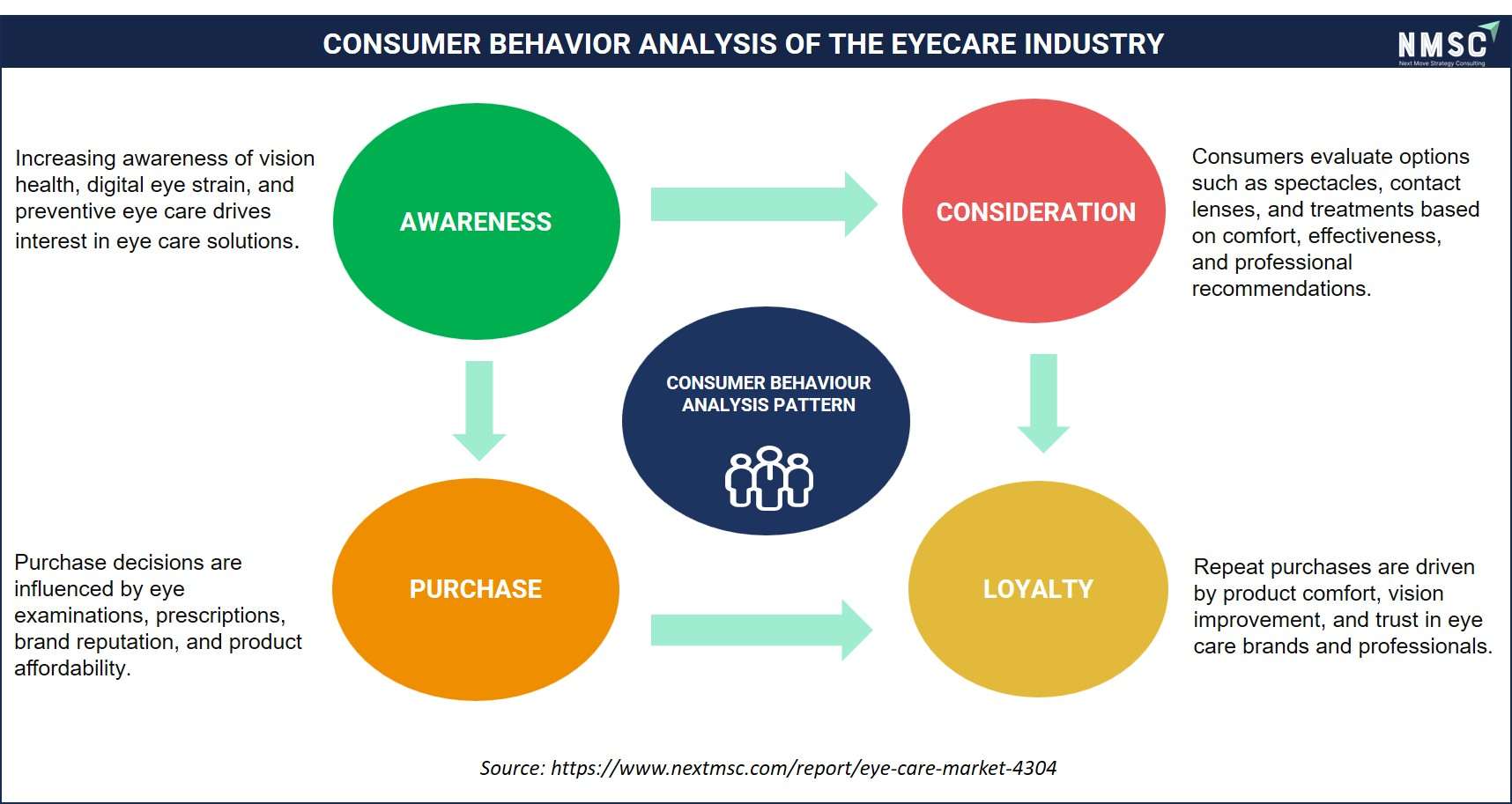
Our assessment of consumer behaviour in the eye care market highlights clear patterns across the awareness, consideration, purchase, and loyalty stages. Based on our analysis of consumer interactions and digital behaviour indicators, we observed that the awareness stage is primarily driven by growing recognition of vision health, increasing digital eye strain, and the importance of preventive eye care. These factors are encouraging consumers to explore available eye care solutions and engage with vision correction and treatment options. During the consideration phase, consumers tend to evaluate alternatives such as spectacles, contact lenses, and other treatment options by assessing factors including comfort, effectiveness, and recommendations from ophthalmologists or optometrists. This stage reflects a more informed decision-making process, where professional guidance and product suitability play a critical role. Our market evaluation further indicates that purchase decisions are strongly influenced by eye examinations, prescription requirements, brand reputation, and product affordability. Consumers rely on trusted eye care providers and recognized brands when selecting vision care products. Finally, loyalty in the market is reinforced through positive product experiences, improved vision outcomes, and sustained trust in eye care professionals and brands. Consistent product performance and reliable service encourage repeat purchases and long-term consumer relationships, supporting continued engagement in the evolving optical healthcare ecosystem.
What are the key market drivers, breakthroughs, and investment opportunities that will shape the Eye Care industry in the next decade?
Growth Catalyst & Risk Assessment Matrix
|
Drivers/Trends/Restraints |
(+/-) % Impact On CAGR Forecast |
Geographic Relevance |
Impact Timeline |
|
The rising prevalence of vision disorders is driven by an ageing population and increased screen exposure. |
+1.1% |
Global, strongest in Asia Pacific and Europe |
Medium to long term, 3 to 6 years |
|
Growing adoption of digital eye exams, teleophthalmology, and remote diagnostics |
+0.7% |
North America and Europe, with rapid uptake in India and China |
Short to medium term, 1 to 3 years |
|
Increasing penetration of premium lenses and advanced coatings, including blue light and anti-fatigue solutions |
+0.6% |
North America, Europe, urban Asia Pacific |
Medium term 2 to 4 years |
|
Expansion of organised optical retail chains and omnichannel eyewear distribution |
+0.5% |
Asia Pacific Middle East Latin America |
Short to medium term, 1 to 3 years |
|
High cost of advanced eye care devices and limited reimbursement coverage restrict accessibility in price-sensitive markets |
-0.4% |
Emerging Asia, Latin America, Africa, parts of Eastern Europe |
Medium term, 2 to 5 years |
The global eye care market is advancing on the back of strong demographic and structural healthcare shifts. Our assessment indicates that population ageing and rising life expectancy are directly increasing the prevalence of presbyopia, cataracts, and glaucoma, creating sustained demand for geriatric-focused care pathways and advanced therapeutic interventions. In parallel, expanding adoption of teleophthalmology and remote diagnostics is improving access, strengthening screening coverage, and enhancing patient follow-up adherence across diverse care settings. Moreover, growing consumer preference for premium and refractive vision correction is elevating procedural volumes and revenue intensity within private ophthalmology networks. However, stringent regulatory requirements and extensive clinical validation processes continue to lengthen innovation cycles and elevate entry barriers. Overall, organisations integrating preventive screening models, digital infrastructure, and strong regulatory governance are best positioned to capture long-term, evidence-driven growth in the evolving market.
Growth Drivers:
How Is the Ageing Population Driving Eye Care Market Growth?
We assessed the impact of the ageing global population on the market and observed that demographic shifts are emerging as a critical long-term growth driver. Specifically, our analysis of demographic and public health data revealed that increasing life expectancy is directly linked to a higher prevalence of age-related ocular conditions, including presbyopia, cataracts, and glaucoma. According to World Health Organization in 2026, around 2.2 billion individuals, live with some form of vision impairment, ranging from mild visual disturbances to complete blindness. Building on these insights, our engagement with eyecare providers indicated that this demographic trend is creating sustained opportunities for targeted geriatric care pathways, innovation in advanced therapeutic solutions, and collaboration with public health initiatives to expand access to vision care.
In parallel, our field observation shows that providers implementing preventive care models within routine screening programs consistently capture larger market shares while enhancing patient outcomes over time. Consequently, we conclude that organisations leveraging data-driven strategies and aligning with evidence-based public health frameworks are optimally positioned to address this critical societal need, reinforce clinical credibility, and establish themselves as authoritative leaders in the evolving global eye care market.
How is Digital and Remote Healthcare Adoption Transforming Patient Access in the Market?
We assessed the adoption of digital and remote healthcare solutions within the market and observed that teleophthalmology and remote diagnostics are significantly expanding access beyond traditional clinical settings. Specifically, our evaluations and industry engagement revealed that these solutions enable remote consultations, routine screenings, and continuous patient monitoring, thereby addressing gaps in care delivery. In parallel, our operational insights demonstrate that the adoption of digital capabilities extends beyond convenience. It enhances clinical throughput, reinforces patient adherence to follow-up care, and ensures more consistent and high-quality data capture. Moreover, our analysis highlights that strategically integrating secure telehealth platforms with existing clinical services, alongside training clinicians in virtual engagement, has led to measurable increases in utilisation rates. Additionally, our observations shows that collaborations with insurers and government agencies to secure reimbursement for remote care have been critical in driving broader adoption across markets. Consequently, we conclude that organisations prioritising seamless, data-secure digital experiences while maintaining high clinical standards are best positioned to meet rising demand for hybrid and remote eyecare delivery models.
Growth Inhibitors:
How Are Regulatory Stringency and Clinical Validation Requirements Limiting the Market Growth?
Regulatory stringency and extensive clinical validation requirements remain key restraints in the eye care market, particularly for innovative diagnostics, drug-device combinations, and AI-enabled screening tools. In our discussions with ophthalmic device manufacturers and regulatory consultants, we found that obtaining approvals for new surgical platforms, intraocular lenses, and digital diagnostic algorithms requires multi-phase clinical trials, real-world evidence generation, and region-specific compliance documentation. Moreover, evolving data privacy regulations and post-market surveillance obligations increase both time-to-market and lifecycle management costs. Our research also indicates that smaller innovators struggle with the financial and operational burden of meeting international standards across multiple jurisdictions. In several cases, delayed approvals have disrupted commercialization timelines and investor returns. Consequently, market entry barriers remain high despite strong technological innovation. Companies with established regulatory expertise, strong clinical partnerships, and structured evidence-generation strategies are better positioned to navigate approval pathways and sustain competitive advantage.
Growth Opportunity:
How Are the Rising Demand for Premium and Refractive Vision Correction Creating Opportunities for the Eye Care Market?
The rising demand for premium vision correction solutions is creating substantial growth opportunities in the eye care market, particularly within urban and middle-income populations. Increasing screen exposure, lifestyle-driven myopia progression, and higher patient awareness are driving demand for advanced refractive procedures and personalized vision solutions. Moreover, growing consumer willingness to pay for spectacle independence is accelerating adoption of premium intraocular lenses (IOLs), toric implants, multifocal technologies, and laser-based refractive surgeries. Based on our assessment of private ophthalmology center expansions and surgical volume trends, we observe that clinics offering advanced diagnostic imaging, customized surgical planning, and premium lens portfolios achieve higher revenue per procedure and stronger patient retention. Furthermore, technological advancements in biometry accuracy and femtosecond laser platforms are improving surgical predictability and visual outcomes. However, penetration remains uneven across emerging markets due to affordability constraints. This demand gap presents a compelling opportunity for manufacturers developing cost-optimized premium technologies and flexible financing models tailored to aspirational patient segments.
Pain Point Analysis of the Eye Care Industry:
We conducted a comprehensive pain point analysis to identify the key challenges affecting growth, adoption, and service delivery across the eyecare industry.
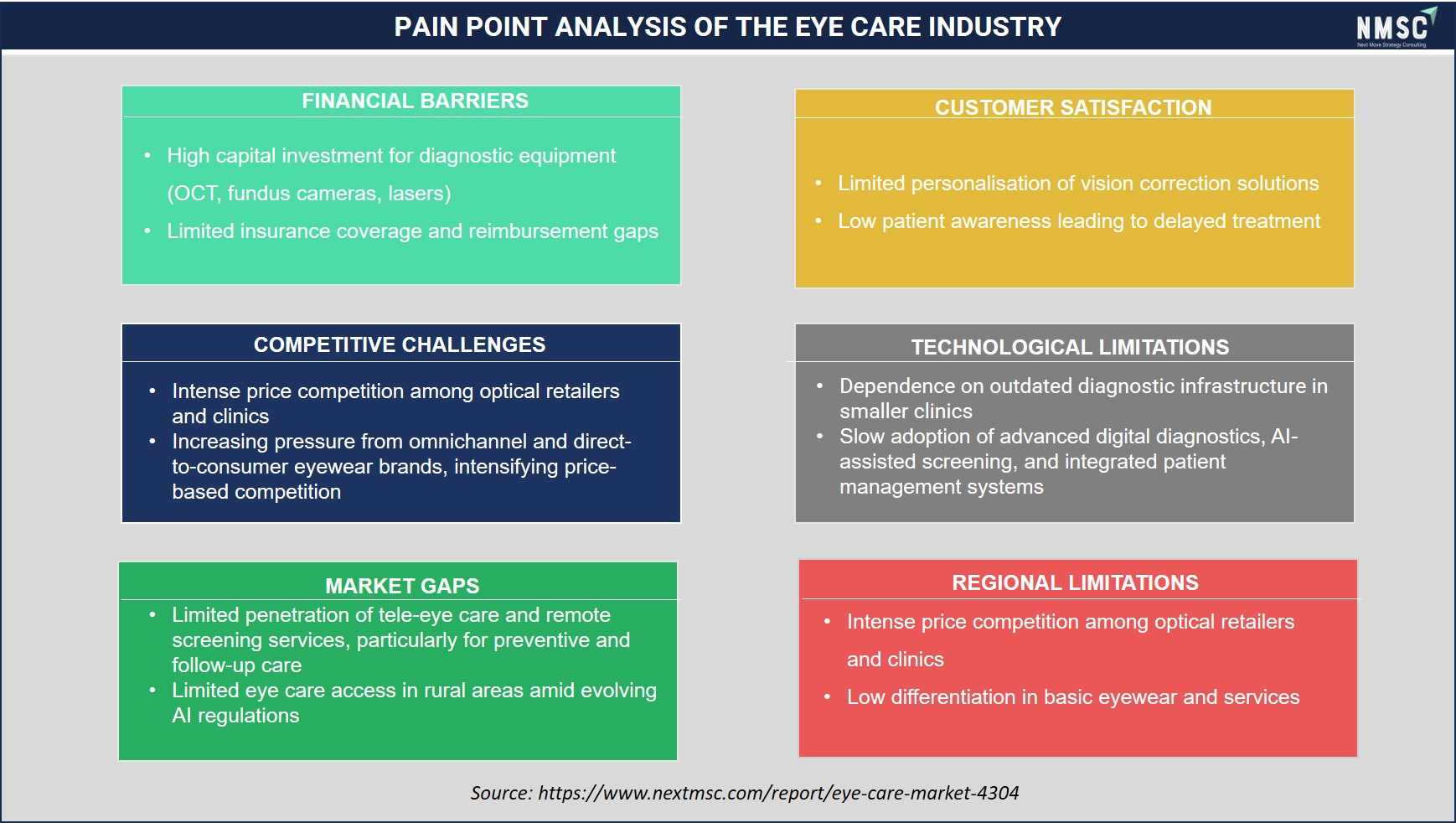
Based on our analysis of the eye care industry, we noticed that several structural and operational challenges have influenced market performance and adoption. Specifically, our research indicates that financial barriers remain a key constraint, as providers face high capital requirements for advanced diagnostic and surgical equipment, while patients contend with limited insurance coverage and reimbursement restrictions. In addition, our findings highlight that limited personalisation of vision correction solutions and low awareness of preventive eye care contribute to delayed diagnosis and treatment, further constraining market growth.
Furthermore, intense price competition among optical retailers and eye clinics has compressed profit margins and made differentiation more difficult. We also observed that many smaller clinics continue to rely on outdated diagnostic equipment, limiting their capacity to deliver advanced eye care services, while individuals in rural and semi-urban regions face persistent barriers to accessing quality care. Together, these factors create a fragmented market structure, elevate operating costs, and slow overall growth within the global eye care ecosystem.
How Is the Eye Care Market Segmented in This Report, And What Are the Key Insights from the Segmentation Analysis?
Market Highlights & Strategic Insights – Eye Care Market:
|
Segments |
Key Takeaways |
|
Eye Care Products |
Vision correction products led the eye care market in 2025. eye care supplements & advanced ophthalmic pharmaceuticals are expected to register the fastest CAGRs through 2035 due to a preventive health focus, chronic disease management and increased awareness. |
|
Eye Care Equipment |
Diagnostic equipment dominated revenue, while Vision rehabilitation equipment is forecast to experience rising demand for AI and minimally invasive technologies, fuelling a higher CAGR. |
|
Eye Care Services |
Primary clinical services hold the largest revenue due to a broad patient base and routine care delivery, Tele eye care & post-treatment rehabilitation services, fastest growth as virtual care expands accessibility and chronic care follow-up increases. |
|
Distribution Channel |
Retail distribution is the dominant channel for prescription and fitting services. Online eye care retail is the fastest-growing segment driven by convenience, subscription models & e-commerce penetration. |
|
End User |
Individual consumers have the largest share due to routine and corrective purchases. Healthcare providers & institutional buyers are the fastest-growing because of increased facility investments, screening programs & ageing population needs. |
By Product Type Insights
Are Vision Care Products Driving the Eye Care Market Growth in 2025?
Based on product type, the eye care market is segmented into vision care products, ophthalmic pharmaceuticals and eye care supplements.
Our analysis indicates that vision care products continue to dominate the market, driven by the widespread global prevalence of refractive errors and the essential role of corrective lenses and related solutions in addressing fundamental vision impairment. Moreover, drawing on global health statistics and clinical prevalence data, we noticed that this segment accounts for the largest share of eye care market demand, as it directly targets the most commonly diagnosed and universally recognised eye conditions. At the same time, our evaluation highlights the growing importance of ophthalmic pharmaceuticals, which play a complementary role by managing progressive ocular diseases and supporting long-term patient outcomes. Taken together, we found that these segments, as interconnected components of a cohesive eye care ecosystem, are corrective products that restore functional vision, pharmaceuticals manage disease progression, supplements support preventive eye health, and diagnostic and therapeutic devices strengthen clinical accuracy. Consequently, grounded in clinical evidence, practitioner trust, and evolving patient expectations, we conclude that this integrated ecosystem continues to drive sustainable growth and shape the future trajectory of the global eye care market.
By Patient Demographics Insights
How Different Patient Segments Perform in the Market in 2025?
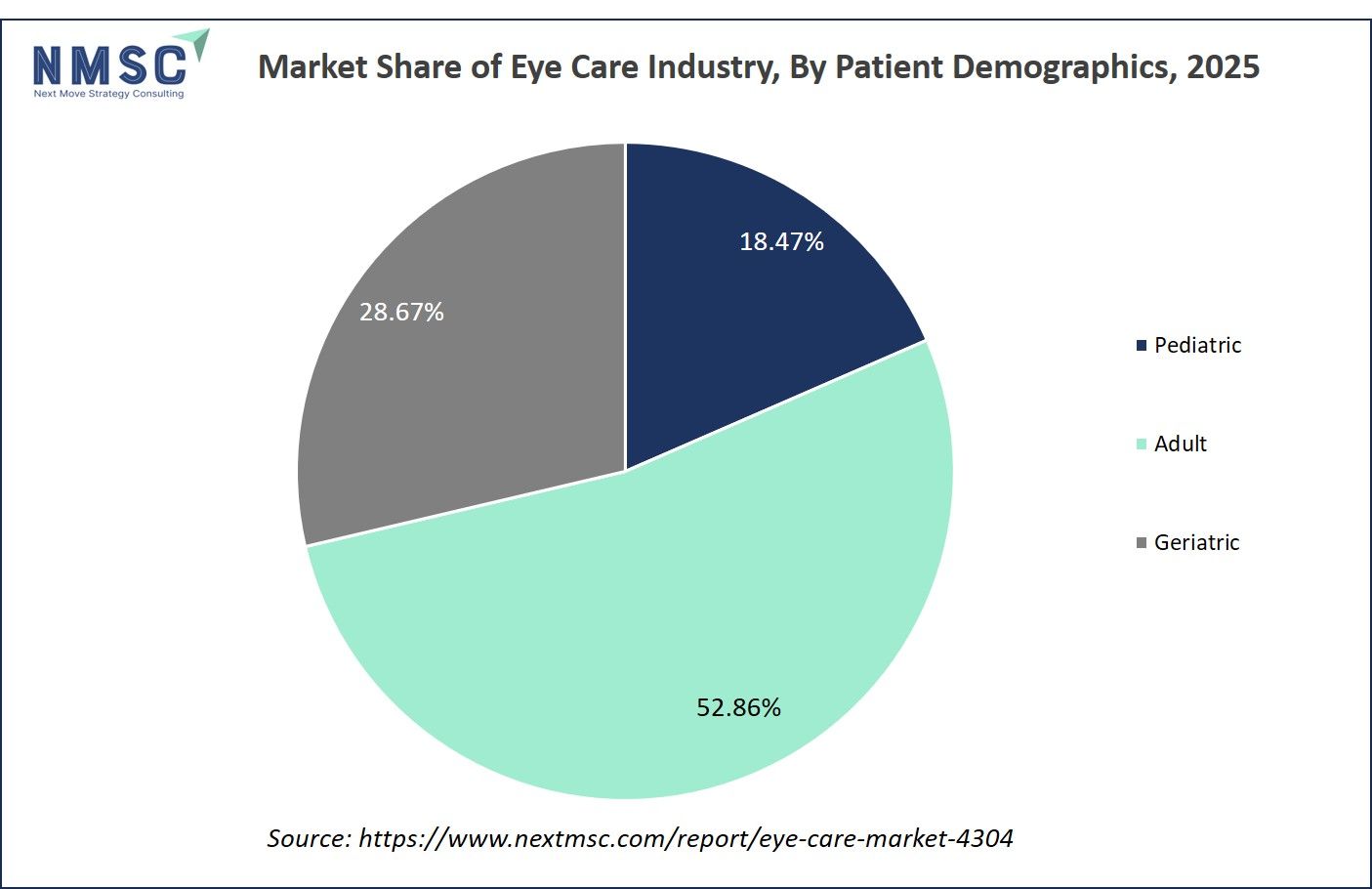
Based on patient demographics, the eye care market is segmented into pediatric, adult, and geriatric populations.
Based on disease prevalence and care utilization patterns, we assessed that the adult segment continues to capture the largest market share in 2025. This dominance is supported by high demand for refractive correction, digital eye strain management, contact lenses, dry eye treatment, and elective vision correction procedures. The adult population represents the most economically active group, driving both prescription and discretionary spending across diagnostic, surgical, and retail vision care services. The geriatric segment demonstrates strong and steadily expanding performance, driven by the rising prevalence of age-related ocular disorders such as cataract, glaucoma, age-related macular degeneration, and diabetic retinopathy. As a result, the geriatric population remains the fastest-growing demand base for advanced surgical and chronic care solutions. The pediatric segment, while smaller in overall revenue contribution, is witnessing gradual expansion due to increasing awareness of early vision screening, rising myopia prevalence, and school-based eye health initiatives. Growing parental focus on early intervention and preventive care is supporting demand for corrective lenses, amblyopia treatment, and myopia control solutions. Overall, demographic-driven demand reflects evolving healthcare priorities, where adult patients sustain volume across routine and corrective care, geriatric patients drive clinical and surgical intensity, and pediatric care supports long-term preventive and early-intervention strategies.
By Distribution Channel Insights
How Different Channels Perform in the Market in 2025?
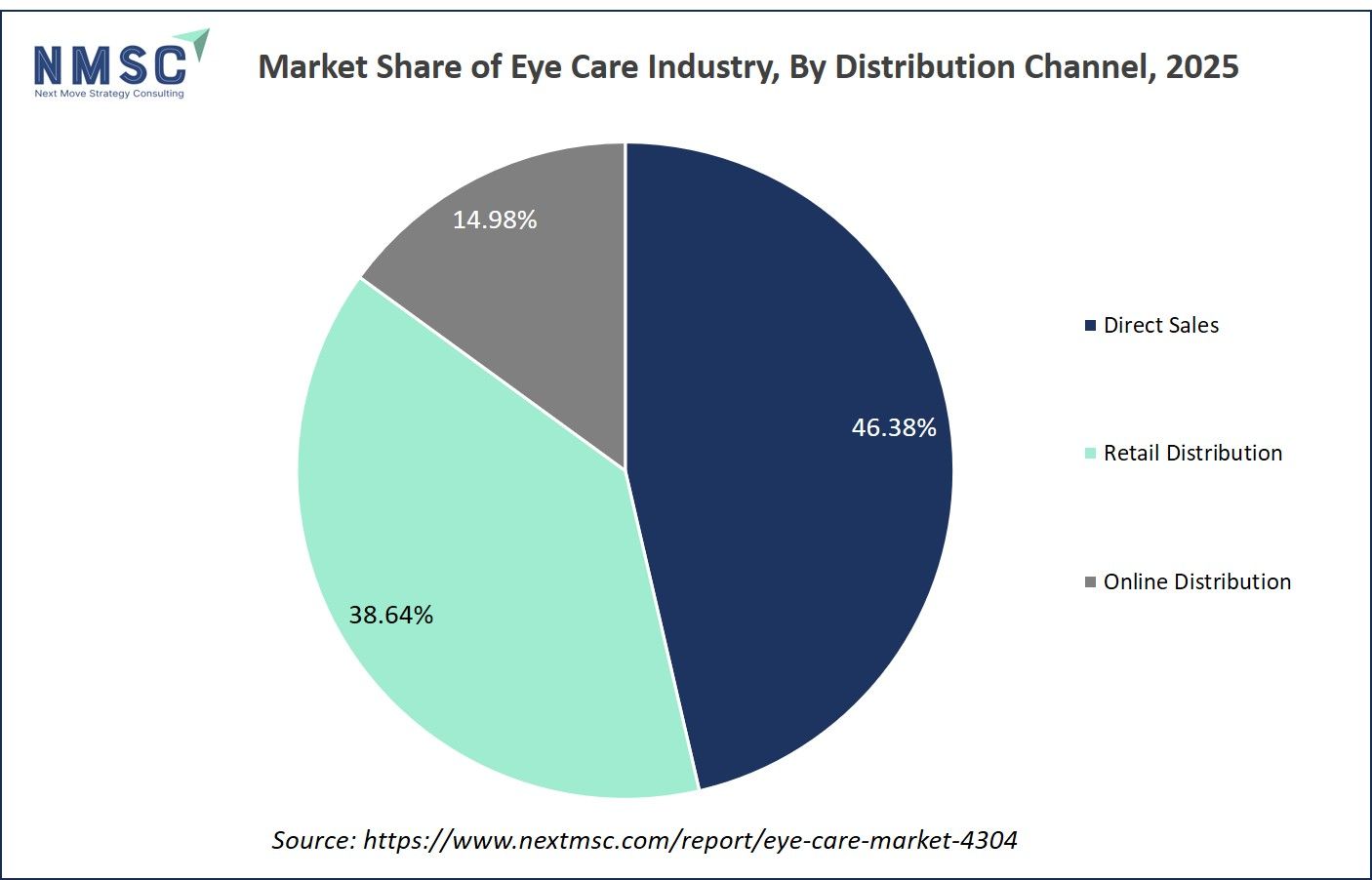
Based on distribution channel, the eye care market is segmented into direct sales, retail distribution, and online distribution.
In 2025, we found that direct sales continue to hold a substantial share, particularly for high-value ophthalmic equipment, surgical devices, and institutional-grade consumables. Hospitals, specialty eye clinics, and ambulatory centers primarily procure through manufacturer contracts and authorized distributors, ensuring regulatory compliance and after-sales service support. Moreover, retail distribution remains a key revenue contributor, driven by optical chains and pharmacy networks supplying spectacles, contact lenses, and over-the-counter eye drops. Meanwhile, online distribution is the fastest-growing channel, supported by e-commerce penetration, subscription-based contact lens models, digital prescriptions, and growing consumer preference for convenience and price transparency.
Regional Outlook
Geographic Performance Snapshot:
|
Geography |
Key Takeaways |
|
North America |
Strong demand for advanced vision correction, preventive Eye Care, and evidence-based solutions supported by digital diagnostics, premium eyewear adoption, and mature omnichannel retail and reimbursement systems. |
|
Europe |
High regulatory and clinical standards combined with ageing demographics drive steady growth in sustainable, precision-driven ophthalmic devices, pharmaceuticals, and surgical eye care services. |
|
Asia‑Pacific |
Largest and fastest-growing eye care market due to high myopia prevalence, large patient populations, expanding access to affordable vision care, and strong manufacturing hubs in China and India. |
|
Latin America |
Growing demand for basic and speciality Eye Care supported by urbanisation and public health initiatives, with optical retail and cataract surgery leading growth despite uneven infrastructure. |
|
Middle East & Africa |
Emerging eye care demand is driven by rising awareness and chronic disease burden, with strong potential for mobile and tele-ophthalmology solutions. |
The eye care market is geographically studied across North America, Europe, Asia Pacific, Middle East & Africa, and Latin America and each region is further studied across countries.
Eye Care Market in North America
We assessed the North American eye care market and observed that it remains the largest and most developed region globally. Our analysis indicates that this leadership is supported by robust healthcare systems, high awareness of eye health, and an increasing emphasis on preventive care. In addition, our research highlights that easy access to eyecare products and services through clinics, pharmacies, specialists, and online platforms has driven the adoption of both basic solutions, such as glasses and contact lenses, and advanced technologies, including tele-ophthalmology and AI-enabled diagnostics. Furthermore, our observations show that higher income levels, combined with widespread digital device usage, have contributed to a rise in screen-related eye problems, sustaining strong demand for eyecare services. Consequently, with ongoing investment in innovation and healthcare infrastructure, we conclude that North America continues to grow while delivering more advanced and integrated eyecare solutions than many other global markets.
Eye Care Market in the United States
Based on our evaluation, we found that the U.S. eye care market has long acted as a central driver of regional growth and innovation. Specifically, our analysis shows that its well-established healthcare system, comprehensive insurance coverage, and early adoption of emerging technologies, including minimally invasive procedures and AI-enabled diagnostics, have created a highly dynamic environment. Moreover, major players consistently invest in research and development, advancing both cutting-edge instruments and patient access through telehealth and direct-to-consumer channels. In parallel, our assessment highlights that demographic trends, particularly an ageing population, continue to drive demand for interventions and regular vision care services. Taken together, our findings suggest that the U.S. eyecare ecosystem, characterised by high product penetration and strong clinical infrastructure, serves as a bellwether for global innovation and best practices in eye health.
Eye Care Market in Canada
Based on our research, we noticed that Canada’s market is experiencing steady growth and complements the larger U.S. market within North America. Our analysis indicates that although the market is smaller in size, expansion is primarily driven by an ageing population and rising awareness of preventive eye care. In addition, we noticed that more Canadians are prioritising regular eye examinations, which has increased demand for glasses, contact lenses, and early diagnostic services, supported by public health programs and a broad network of optometry clinics. Furthermore, growth of online eyewear sales and tele-optometry services has enhanced accessibility and convenience, particularly for populations in rural or underserved areas. Taken together, our findings suggest that Canada’s eye care market maintains a balanced mix of preventive care and the increasing adoption of digital technologies, positioning it as an integral component of the broader North American eyecare landscape.
Eye Care Market in Europe
Europe’s eye care market is shaped by strong healthcare systems, established preventive care practices, and an ageing population that supports sustained demand. Our analysis indicates growing adoption of a wide spectrum of eyecare products and services, ranging from prescription glasses and contact lenses to advanced surgical treatments, as age-related conditions and screen-related eye strain become more prevalent. In addition, our research shows that in many European countries, regular eye checkups, corrective eyewear, and advanced diagnostic services are reimbursed through national health systems, improving accessibility and encouraging wider adoption. Furthermore, based on our primary research, we noticed that Europe effectively integrates mature public health frameworks with emerging digital optometry solutions, including tele-optometry and AI-enabled screening tools, which together expand patient reach and support continued market growth across both Western and emerging Eastern European countries.
Eye Care Market in the United Kingdom
Our analysis of the UK eye care market reveals a dynamic environment shaped by the interplay between public coverage and private-sector innovation. Specifically, the National Health Service (NHS) provides broad access to basic eye examinations and essential corrective solutions, particularly for children and seniors, thereby reinforcing preventive care and early detection. At the same time, our evaluation highlights that a strong private sector drives technological adoption and premium services, including advanced lens technologies and digital refraction tools. In parallel, our research indicates that evolving consumer preferences, such as online eye exams and premium optical products, further support market growth. Taken together, our findings suggest that the UK’s combination of public accessibility and private responsiveness strengthens care delivery, positioning the country as a leading European market for comprehensive eye care services.
Eye Care Market in Germany
Based on our assessment, Germany’s market plays a pivotal role in Europe’s vision health landscape, supported by a highly developed healthcare system. Our analysis shows that comprehensive health insurance coverage enables widespread access to regular eye check-ups, diagnostics, and vision correction services, facilitating rapid adoption of new technologies. Furthermore, our research highlights that Germany is at the forefront of advanced eye treatments and precision diagnostics, with minimally invasive surgeries and AI-enabled retinal screening improving patient outcomes. In addition, we observed that a robust industry ecosystem comprising well-known manufacturers, an extensive optometrist network, and supportive insurance reimbursement ensures seamless access to both routine exams and complex interventions. Consequently, our findings indicate that these factors collectively drive strong local demand and position Germany as a leader in quality, innovation, and technological advancement within the European eye care market.
Eye Care Market in France
In France, our evaluation indicates that the eye care market is strongly influenced by universal healthcare integration and comprehensive public reimbursement policies. Our analysis shows that these frameworks support one of the largest vision care markets in Europe, with expanded corrective lens coverage for seniors and individuals with chronic visual conditions. Moreover, our research highlights that a high density of licensed opticians and strong consumer awareness ensures widespread access, while partnerships with major optical brands promote innovation in both functional and lifestyle eyewear. In parallel, our assessment indicates that this integrated approach, combining universal access, a solid clinical and retail base, and collaborations across pharma technology and healthcare providers, consistently drives demand for prescription glasses, advanced lenses, and therapeutic products such as artificial tears and dry-eye treatments. Taken together, our observations suggest that these factors have reinforced the resilience and sustained growth of France’s eye care market, even amid broader economic fluctuations.
Eye Care Market in Italy
Our research into the Italian market reveals a unique combination of cultural heritage, fashion influence, and clinical demand driving growth. Specifically, we observed that Italy’s global reputation for premium eyewear, anchored by brands such as Luxottica, fosters strong domestic demand for both functional and fashion-oriented eyewear, even as clinical needs increase with an ageing population. In addition, our evaluation indicates that the interplay of high aesthetic expectations for premium frames and essential vision correction solutions supports frequent replacement cycles and sustained revenue growth. Furthermore, our analysis shows that this fusion of style and health awareness enhances consumer engagement, with northern urban centres offering advanced optical services and rural areas gradually expanding access through digital optometry and private care. Taken together, our findings suggest that Italy contributes a distinct cultural dimension to Europe’s eye care market, balancing clinical needs with fashion-forward consumer preferences to sustain strong growth.
Eye Care Market in Spain
In Spain, our analysis indicates a steadily growing eye care market shaped by demographic shifts, lifestyle changes, and evolving consumer preferences. Our research shows that the country’s ageing population has increased the prevalence of age-related conditions such as cataracts, glaucoma, and macular degeneration, fuelling demand for both corrective eyewear and clinical services, including vision screenings and surgeries. At the same time, we evaluated that lifestyle trends, including extended screen time and changing work patterns, contribute to rising incidences of digital eye strain, myopia among younger populations, and heightened interest in preventive solutions such as blue-light filtering lenses and protective eyewear. In parallel, our evaluation highlights that these dynamics are reflected in consumer behaviours, with Spaniards increasingly purchasing eye care products online, adopting proactive eye health measures, and showing growing demand for speciality optics featuring UV protection and other value-added functions.
Eye Care Market in the Nordics
In the Nordic region, encompassing Sweden, Denmark, Norway, and Finland, our assessment indicates a stable yet slower-growing eye care market shaped by strong public healthcare systems, high consumer awareness of vision health, and a cultural affinity for digital and lifestyle-oriented eyewear. Our analysis shows that consumer spending balances functional vision needs with lifestyle preferences, with public coverage ensuring basic access while premium and fashionable eyewear adoption drives retail growth. Furthermore, we evaluated that screen-related eye strain, high disposable incomes, and widespread digital health adoption continue to fuel demand for both corrective lenses and preventive products, supported by awareness campaigns and routine eye examinations. Taken together, our findings suggest that, although growth is more moderate compared to Asia, the Nordics’ mature market structure and sophisticated retail networks make the region a consistently reliable segment for eye care investment and innovation.
Eye Care Market in the Asia-Pacific
In the Asia-Pacific region, our analysis indicates that it represents the fastest-growing global eye care market, driven by a combination of demographic, technological, and structural factors. Specifically, our research shows that rapidly rising myopia prevalence, increasing digital device usage, and ageing populations are key growth drivers across the region. We observed that high myopia rates, particularly in countries such as China, continue to sustain long-term demand for corrective lenses and pediatric eye care solutions, while ageing demographics are fuelling demand for cataract surgery, glaucoma screening, and multifocal lens products. Furthermore, our evaluation highlights that emerging markets such as India and Indonesia are witnessing improved access due to expanding healthcare infrastructure and growing awareness, whereas developed markets such as Japan, South Korea, and Australia demonstrate high per-capita consumption of premium eye care products. Overall, the combination of large addressable populations and rising healthcare spending positions Asia-Pacific for strong growth in both volume and value.
Eye Care Market in China
Within the Asia-Pacific region, our assessment shows that China represents a particularly significant eye care market, driven by its large population base and rapidly growing eye health needs. From our observation, the high prevalence of myopia, especially among urban youth, combined with government public health initiatives and expanding insurance coverage, has significantly improved access to eye care services. In addition, our research indicates that China’s large market scale supports both strong underlying demand and faster adoption of innovative solutions such as digital diagnostics, telehealth platforms, and school-based vision screening programs. Moreover, we noticed that ongoing urbanisation and rising disposable incomes continue to fuel increased spending on vision correction products, ranging from affordable eyewear to advanced intraocular lenses, reinforcing China’s leadership position in regional market growth.
Eye Care Market in Japan
In Japan, our analysis reveals a mature eye care market underpinned by a highly developed healthcare system and a large ageing population that consistently drives demand for corrective and therapeutic eye solutions. Based on our evaluation, market growth is steadier compared with emerging Asian economies; however, per-capita consumption of premium eye care products and services remains high, supported by robust insurance coverage and strong clinical infrastructure for advanced diagnostics and surgical care. Our research further highlights that Japan’s demographic trends, particularly its sizeable elderly population, translate into sustained demand for cataract surgery, glaucoma management, and multifocal lens solutions. In addition, well-established clinics and optometric networks facilitate rapid adoption of advanced procedures, positioning Japan as a stable and strategically important market for premium eyecare technologies within the Asia-Pacific region.
Eye Care Market in India
In India, our analysis indicates that it is one of the fastest-growing eye care markets globally, driven by expanding healthcare access, rising middle-class awareness, and increasing prevalence of refractive errors such as myopia and cataracts. We assessed that this growth is supported by national health initiatives, improving rural outreach, and broader adoption of both basic and advanced eye care solutions. Furthermore, our evaluation shows that rising smartphone and digital device usage has increased digital eye strain across age groups, fuelling demand for corrective lenses, protective eyewear, and regular eye examinations. While consumer price sensitivity continues to keep a significant portion of demand focused on affordable solutions, we have also observed rising adoption of premium products as incomes and urban health awareness grow. Overall, India’s eye care market exemplifies how public health initiatives and expanding provider infrastructure drive strong and sustained demand in emerging economies.
Eye Care Market in South Korea
In South Korea, our analysis indicates a highly engaged and technologically advanced eye care market, characterised by one of the world’s highest myopia prevalence rates, particularly among adults, which continues to drive strong demand for corrective eyewear and speciality contact lenses. Based on our evaluation, we found that the country’s modern healthcare infrastructure has enabled widespread adoption of preventive care practices and advanced vision correction procedures. Furthermore, we observed that South Korea’s tech-savvy population has accelerated the uptake of digital diagnostics, AI-enabled screening tools, and personalised eye care solutions.
Eye Care Market in Taiwan
In Taiwan, our assessment highlights that comprehensive public health initiatives, including nationwide school-based vision screening programs, awareness campaigns, and policies promoting timely corrective interventions, are instrumental in managing population-level eye health. These measures not only drive consistent demand for comprehensive eye care services and advanced contact lens solutions but also encourage strong parental engagement and adherence to treatment plans. In addition, our research indicates that Taiwan’s combination of robust clinical infrastructure, technologically advanced optometry networks, and proactive governmental support has fostered rapid innovation adoption, including speciality lenses for myopia control and digital monitoring tools.
Eye Care Market in Indonesia
In Indonesia, our analysis reveals an emerging yet steadily expanding eye care market, driven by rising national awareness of visual health and increasing digital device usage. Based on our evaluation, we found that growing recognition of eye strain and vision-related conditions has fuelled demand for both corrective and preventive solutions, with urban middle-class populations showing particularly strong engagement. Moreover, we analysed that rising disposable incomes have supported greater adoption of eye care services and protective eyewear, while the proliferation of digital lifestyles has accelerated routine vision care behaviours. Overall, Indonesia reflects a broader Southeast Asian growth pattern, where increasing awareness, lifestyle shifts, and expanding purchasing power collectively underpin sustained expansion in the eye care sector.
Eye Care Market in Australia
In Australia, our analysis indicates a mature, high per-capita eye care market within the Asia-Pacific region, supported by advanced healthcare systems and comprehensive insurance coverage. Based on our observations, the market is characterised by widespread adoption of premium eye care products, alongside early integration of digital health technologies such as tele-optometry platforms and advanced diagnostic tools. Furthermore, we observed that the country’s structural healthcare stability, combined with strong consumer awareness and consistent commitment to vision health, sustains steady demand for both preventive and corrective solutions.
Eye Care Market in Latin America
In Latin America, our assessment highlights that the eye care market growth has been driven by expanding middle-class populations, rising healthcare expenditure, and progressive regulatory reforms across key economies. The emergence of tele-ophthalmology services and increasing optical retail penetration have further supported eye care market expansion by improving accessibility and convenience. At the same time, we analysed that economic disparities across countries continue to constrain uniform adoption and access to advanced eye care services. Nevertheless, our analysis indicates that the expansion of optical retail chains and growing awareness of preventive eye care have steadily enhanced service availability and stimulated demand across the region.
Eye Care Market in the Middle East & Africa
In the Middle East and Africa, we noticed that eye care growth has been particularly concentrated in the GCC countries, including the UAE and Saudi Arabia, as well as in South Africa. Based on our evaluation, we witnessed that this growth has been underpinned by significant government investment in healthcare infrastructure, coupled with the development of medical tourism initiatives that attract patients seeking premium and specialised eye care services. Additionally, rising awareness among urban populations, increasing disposable incomes, and improved insurance coverage have driven demand for both preventive and corrective eye care services. While access and adoption remain uneven in some rural or lower-income areas, the combination of public-sector initiatives, private-sector specialisation, and medical tourism has positioned the Middle East and Africa as an emerging yet strategically important region for premium eye care delivery and clinical innovation.
Competitive Landscape
Competitive Dynamics & M&A Landscape:
|
Key Takeaways |
|
The eye care market is led by a combination of large, diversified global players such as Alcon, EssilorLuxottica, Johnson & Johnson Vision Care, Bausch + Lomb, and Carl Zeiss Meditec alongside specialised companies including STAAR Surgical, Santen Pharmaceutical, Laboratoires Théa, ophtec, and niche diagnostic manufacturers. |
|
Competitive dynamics are driven by global scale, vertically integrated business models, strong clinical credibility, and sustained R&D investment, while focused specialists strengthen market depth by targeting high-growth niches such as implantable lenses, ophthalmic pharmaceuticals, and precision surgical solutions. |
|
Innovation acts as a key differentiator, with companies advancing digital diagnostics, smart and connected eyewear, next-generation intraocular lenses, and minimally invasive surgical platforms to improve outcomes and move beyond traditional vision correction |
Which Companies Dominate the Eye Care Industry and How Do They Compete?
Based on our analysis of the eye care industry, we consistently observed a core group of multinational leaders, including Alcon, Johnson & Johnson Vision Care, EssilorLuxottica, Bausch + Lomb, CooperVision, Carl Zeiss Meditec, HOYA Corporation, Topcon Corporation, NIDEK Co., Ltd., Santen Pharmaceutical, Laboratoires Théa, STAAR Surgical, and ophtec. From our research, we evaluated that these companies competed across global distribution networks, diversified product portfolios, clinical trust, and R&D intensity, covering contact lenses, surgical devices, intraocular lenses, diagnostics, and optical products. Moreover, Alcon held the largest share in ophthalmic devices, while Johnson & Johnson Vision and Carl Zeiss Meditec ranked highly in innovative diagnostics and surgical systems. Mid-stream specialists, such as STAAR Surgical and Santen, focused on niche segments, which, in our assessment, contributed to competitive depth. Based on NMSC’s primary research, Alcon, Carl Zeiss Meditec, Johnson & Johnson Vision, and Bausch + Lomb consistently occupied the top tiers of global eye care competition.
Market Dominated by Eye Care Giants and Specialists
We observed that the eye care market is characterised by a balanced mix of diversified global leaders and specialised niche players, each strengthening competition and innovation across the ecosystem. From our analysis, companies such as EssilorLuxottica and Alcon leveraged vertically integrated operations, extensive distribution networks, and broad product portfolios to maintain global leadership while sustaining strong R&D investment. At the same time, Johnson & Johnson Vision and Bausch + Lomb reinforced their positions in contact lenses and ophthalmic pharmaceuticals through clinical credibility and practitioner relationships, while Carl Zeiss Meditec, Topcon, and NIDEK led in diagnostic and surgical technologies driven by precision engineering and clinical adoption. In parallel, niche innovators such as STAAR Surgical and Santen captured high-growth and underserved segments by addressing specific clinical needs with specialised solutions. Overall, we found that this coexistence of diversified giants and focused specialists fostered a highly competitive, innovation-driven landscape, accelerating technological advancement and expanding product and service offerings across the eye care market.
Innovation and Adaptability Drive Market Success
We noticed that innovation and adaptability consistently shaped leadership dynamics in the eye care market trends, as companies strategically aligned product development with evolving clinical and consumer needs. From our analysis, we found that Alcon strengthened its leadership in ophthalmic devices by advancing surgical platforms and next-generation intraocular lenses, thereby reinforcing its position across surgical and therapeutic applications. At the same time, Johnson & Johnson Vision broadened its portfolio with next-generation contact lenses and diagnostic tools, reducing dependence on conventional corrective solutions while enhancing clinical relevance. We also noticed that CooperVision and Bausch + Lomb leveraged advances in material science to improve lens comfort, oxygen permeability, and ocular health outcomes, reinforcing their competitiveness in the contact lens segment. In parallel, EssilorLuxottica expanded into smart eyewear and digital vision solutions, integrating technology with traditional vision correction to capture emerging consumer demand. Moreover, diagnostic technology leaders such as Carl Zeiss Meditec, Topcon, and NIDEK continued to advance high-precision imaging and laser platforms, supporting improved clinical decision-making and treatment accuracy.
Market Players to Opt for Merger & Acquisition Strategies to Expand Their Presence
Our research indicates that mergers and acquisitions are emerging as a key expansion strategy within the eye care market, enabling companies to broaden clinical capabilities, strengthen product portfolios, and enhance geographic reach. Leading ophthalmic device manufacturers, vision care companies, and healthcare providers are increasingly acquiring specialised firms focused on cataract surgery technologies, refractive solutions, glaucoma management devices, retinal imaging systems, and premium intraocular lenses (IOLs). These transactions help expand integrated eye care offerings spanning diagnostics, surgical intervention, and post-operative care.
Additionally, acquisitions support the integration of digital ophthalmology platforms, teleophthalmology services, AI-based diagnostic tools, and electronic health record connectivity, improving clinical workflow efficiency and patient management. Companies are also leveraging M&A to scale ambulatory surgical center networks, specialty eye hospitals, and optical retail chains, thereby strengthening distribution channels and recurring revenue streams. By consolidating complementary technologies and service capabilities, market participants reduce operational fragmentation, accelerate innovation cycles, and reinforce their competitive positioning in an increasingly technology-driven and patient-centric eye care landscape.
List of Key Eye Care Companies
-
EssilorLuxottica S.A.
-
Alcon Inc.
-
Regeneron Pharmaceuticals, Inc.
-
F. Hoffmann-La Roche Ltd
-
Bayer AG
-
Johnson & Johnson Vision Care, Inc.
-
AbbVie Inc.
-
Bausch + Lomb Corporation
-
CooperVision, Inc.
-
HOYA Corporation
-
Carl Zeiss Meditec AG
-
Santen Pharmaceutical Co., Ltd.
-
Laboratoires Théa S.A.S.
-
Menicon Co., Ltd.
-
Topcon Corporation
-
BVI Medical, Inc.
-
Glaukos Corporation
-
STAAR Surgical Company
-
NIDEK Co., Ltd.
-
Rayner Group
What Are the Latest Key Industry Developments?
-
June 2025 - Johnson & Johnson launched First and Only Daily Disposable Multifocal Toric Contact Lens ACUVUE OASYS MAX 1-Day MULTIFOCAL for ASTIGMATISM.
-
June 2025 - HOYA rolled out MiYOSMART Coating STX and reported clinical evidence on myopia management, while France approved reimbursement for its MiYOSMART lenses, boosting pediatric eye care access.
-
May 2025 - EssilorLuxottica acquired Optegra, a network of 70+ ophthalmic clinics across the UK, Czech Republic, Poland, Slovakia, and the Netherlands, marking a strategic shift from eyewear into comprehensive medical eye care services and advanced diagnostics.
SWOT Analysis of the Eyecare Industry:
This SWOT analysis outlines the key internal strengths and weaknesses of the eyecare industry while highlighting external opportunities and threats shaping its long-term growth trajectory.
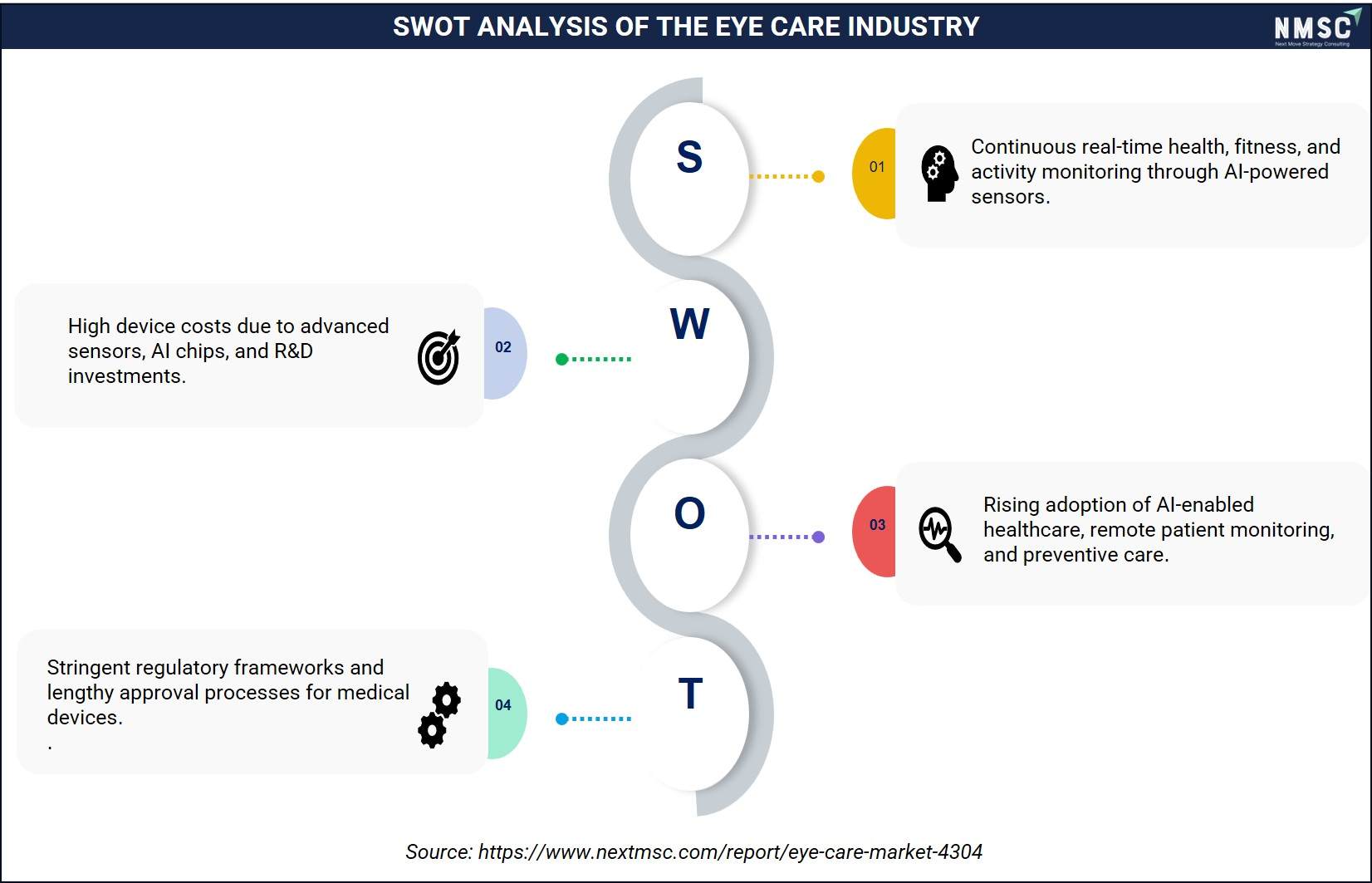
The eye care market is structurally supported by an expanding ageing population and the rising prevalence of vision-related disorders, which together sustain consistent demand for diagnostic, corrective, and therapeutic interventions. Continuous advancements in ophthalmic technologies and improving clinical outcomes have strengthened patient trust, thereby reinforcing long-term market stability and adoption. However, we observed that the high capital costs associated with advanced diagnostic systems and surgical procedures remain a notable internal constraint, particularly limiting accessibility for smaller providers and price-sensitive regions.
At the same time, our research suggests that the increasing adoption of AI-enabled diagnostics, tele-ophthalmology platforms, and digital eye health solutions represents a significant growth opportunity, as these technologies enhance early detection, expand remote care delivery, and improve clinical efficiency across care settings. Conversely, we identified that stringent regulatory frameworks and prolonged approval timelines for medical devices continue to pose a critical challenge, as they slow innovation cycles, increase compliance burdens, and raise barriers for new market entrants. Overall, our findings indicate that balancing technological innovation with regulatory and cost constraints will be central to sustaining competitive growth in the eye care market.
What Are the Key Factors Influencing Investment Analysis & Opportunities In the Eye Care Market?
Our analysis indicates that innovation intensity, early technology adoption, and persistent unmet clinical needs are the primary factors shaping investment decisions in the eye care market. Based on our evaluation, we found that investors are increasingly prioritising companies that demonstrate clear clinical differentiation alongside scalable commercial models, particularly in advanced diagnostics, AI-driven imaging, myopia management solutions, and minimally invasive surgical technologies. Furthermore, we evaluated a strategic shift away from commoditised vision correction products toward higher-value, technology-enabled solutions that offer superior margins and recurring revenue streams through software platforms, service models, and ongoing patient engagement. In addition, cross-border investment activity has expanded, with investors targeting regions characterised by ageing populations and strengthening healthcare infrastructure, thereby creating attractive opportunities for both early-stage capital deployment and long-term strategic partnerships.
At the same time, our observations suggest that investment interest is increasingly extending beyond traditional optical manufacturers into adjacent sectors such as digital health, tele-ophthalmology, and remote monitoring platforms. From NMSC’s primary research, we found that strategic investors and corporate venture arms are actively backing companies that improve remote screening capabilities, address access gaps in underserved populations, and enhance treatment adherence and clinical outcomes. Moreover, company valuations are becoming closely linked to clinical validation and regulatory milestones, with firms demonstrating robust safety data and clear regulatory pathways commanding premium investor interest.
Key Benefits for Stakeholders:
Next Move Strategy Consulting (NMSC) presents a comprehensive analysis of the eye care market, covering historical trends from 2020 through 2025 and offering detailed forecasts through 2035. Our study examines the market at regional and country levels, providing quantitative projections and insights into key growth drivers, challenges, and investment opportunities across all major eye care segments.
From our observations, the market demonstrated resilience, supported by non-discretionary demand, recurring revenue models, and long-term demographic trends that fostered predictable growth and portfolio stability. We analysed that innovation-led companies created opportunities for value expansion through differentiated products, services, and integrated care models. For the users, that is including patients, clinicians, and healthcare systems, we noticed that the industry improved quality of life by enabling early diagnosis, effective vision correction, and long-term eye health management, while gradually expanding access through digital platforms and decentralised care. As affordability, convenience, and personalisation increased, trust and engagement deepened, reinforcing sustained demand. Overall, our assessment shows that the alignment of financial durability with tangible social and health outcomes made the eye care industry particularly attractive for stakeholders seeking both economic and societal value.
|
Parameters |
Details |
|
Customization Scope |
Free customization (equivalent to up to 80 analyst-working hours) after purchase. Addition or alteration to country, regional & segment scope. |
|
Pricing and Purchase Options |
Avail customized purchase options to meet your exact research needs. |
|
Approach |
In-depth primary and secondary research; proprietary databases; rigorous quality control and validation measures. |
|
Analytical Tools |
Porter's Five Forces, SWOT, value chain, and Harvey ball analysis to assess competitive intensity, stakeholder roles, and relative impact of key factors. |
Key Market Segments
By Offering
-
Vision Care Products
-
Spectacle Lenses
-
Single Vision
-
Progressive
-
Bifocal
-
Specialty
-
Other Spectacle Lenses
-
-
Spectacle Frames
-
Contact Lenses
-
Daily Disposable
-
Frequent Replacement
-
Conventional
-
Specialty
-
Other Contact Lenses
-
-
Contact Lens Care
-
Multipurpose Solutions
-
Hydrogen Peroxide
-
Saline
-
Rewetting Drops
-
Other Lens Care
-
-
OTC Ocular Health
-
Artificial Tears
-
Allergy Drops
-
Redness Relief
-
Eyelid Cleansers
-
Other OTC Ocular Health
-
-
-
Ophthalmic Pharmaceuticals (Rx)
-
Dry Eye Disease Therapies
-
Glaucoma Medications
-
Anti-VEGF Agents
-
Mydriatics and Cycloplegics
-
Anti-Infective and Inflammatory Drugs
-
Other Ophthalmic Pharmaceuticals
-
-
Ophthalmic Devices
-
Cataract Devices
-
Intraocular Lenses
-
Surgical Consumables
-
Surgical Equipment
-
Other Cataract Devices
-
-
Refractive Surgery Devices
-
Laser Systems
-
Phakic IOLs
-
Planning Systems
-
Other Refractive Devices
-
-
Glaucoma Surgery Devices
-
MIGS Implants
-
Drainage Devices
-
Laser Systems
-
Other Glaucoma Devices
-
-
Retina Surgery Devices
-
Vitrectomy Systems
-
Instruments
-
Tamponade and Adjuncts
-
Other Retina Devices
-
-
Diagnostics
-
OCT Systems
-
Fundus Cameras
-
Biometers
-
Tonometers
-
Topographers
-
Visual Function Testers
-
AI Diagnostic Software
-
Other Diagnostics
-
-
Lens Processing Equipment
-
Edgers
-
Blockers
-
Tracers
-
Lab Accessories
-
Other Lab Equipment
-
-
By Indication
-
Refractive Errors
-
Cataract
-
Glaucoma
-
Retinal Disorders
-
Ocular Surface Disease
-
Infection and Inflammation
-
Corneal Disease
-
Other Indications
By Buyer Type
-
Individual Consumer
-
Eye Care Professional
-
Hospital
-
Ambulatory Surgery Center
-
Optical Retailer
-
Distributor
-
Institutional Buyer
By Age Group
-
Pediatric
-
Adult
-
Geriatric
By Distribution Channel
-
Direct Sales
-
Retail Distribution
-
Retail Pharmacies
-
Optical Retail Chains
-
-
Online Distribution
-
Manufacturer Websites
-
Third-party Marketplaces
-
Tele-optometry Platforms
-
Geographical Breakdown
-
North America: U.S., Canada, and Mexico.
-
Europe: UK, Germany, France, Italy, Spain, Sweden, Denmark, Finland, the Netherlands, and rest of Europe.
-
Asia Pacific: China, India, Japan, South Korea, Taiwan, Indonesia, Vietnam, Australia, Philippines, Malaysia and rest of APAC.
-
Middle East & Africa (MEA): Saudi Arabia, UAE, Egypt, Israel, Turkey, Nigeria, South Africa, and rest of MEA.
-
Latin America: Brazil, Argentina, Chile, Colombia, and rest of LATAM.
Conclusion & Recommendations
Our report equips healthcare providers, medical device manufacturers, investors, and strategic advisors to act decisively amid the structural transformation shaping the eye care market. By combining data-driven market intelligence with established healthcare strategy frameworks, we at Next Move Strategy Consulting (NMSC) position this study as a practical decision-support resource for navigating evolving ophthalmic technologies, clinical delivery models, and patient engagement ecosystems. Our analysis indicates that the market is set for sustained expansion, driven by aging demographics, rising prevalence of refractive errors and chronic ocular diseases, and growing demand for precision diagnostics and minimally invasive surgical interventions. Furthermore, the integration of digital ophthalmology platforms, AI-assisted diagnostics, premium intraocular lenses (IOLs), and connected care solutions is redefining provider competitiveness and long-term patient trust.
From our perspective, executives and investors maximize value by prioritizing high-impact segments such as cataract and refractive surgery solutions, glaucoma management devices, retinal imaging systems, specialty pharmaceuticals, and teleophthalmology-enabled care delivery. Continuous investment in R&D, clinical validation, regulatory compliance, and digital interoperability strengthens differentiation as technology adoption accelerates. Strategic expansion into high-growth regions across Asia-Pacific and other emerging healthcare markets offers access to expanding patient pools and improving reimbursement frameworks. At the same time, measurable clinical outcomes, surgical precision, patient safety, and scalable service models enhance institutional credibility. When aligned with long-term healthcare objectives, innovation in eye care delivers sustainable clinical value, improved patient quality of life, and resilient growth across the global ophthalmology ecosystem.
Expert Insights:
 “Our continued growth speaks to the breadth and depth of our portfolio and is driven by a mix of hero products and a steady stream of new introductions around the world.”
Brent Saunders, Chairman and CEO


About the Author
 Mayurima Roy
— Mayurima Roy is Research Analyst at Next Move Strategy Consulting, where she has spent 4 years working across the firm's full industry coverage rather than a single fixed vertical. Her work centers on structured research, ongoing trend tracking, competitive assessment, and insight-led content development, translating complex market data into clear, decision-ready narratives that support informed client decision-making across diverse global industries, market sectors, and world regions every day.
Mayurima Roy
— Mayurima Roy is Research Analyst at Next Move Strategy Consulting, where she has spent 4 years working across the firm's full industry coverage rather than a single fixed vertical. Her work centers on structured research, ongoing trend tracking, competitive assessment, and insight-led content development, translating complex market data into clear, decision-ready narratives that support informed client decision-making across diverse global industries, market sectors, and world regions every day.
About the Reviewer
 Supradip Baul
— Supradip Baul is an accomplished business consultant and strategist with over a decade of rich experience in market intelligence, strategy, technology, and business transformation. His work has included rigorous qualitative and quantitative analysis across multiple industries, helping clients shape investment decisions and long-term roadmaps. Earlier in his career, he was associated with Gartner, where he contributed to industry-leading reports and market share analyses. He has worked with leading global companies and holds an MBA with a dual specialization in Marketing and Finance.
Supradip Baul
— Supradip Baul is an accomplished business consultant and strategist with over a decade of rich experience in market intelligence, strategy, technology, and business transformation. His work has included rigorous qualitative and quantitative analysis across multiple industries, helping clients shape investment decisions and long-term roadmaps. Earlier in his career, he was associated with Gartner, where he contributed to industry-leading reports and market share analyses. He has worked with leading global companies and holds an MBA with a dual specialization in Marketing and Finance.
At Next Move Strategy Consulting, we understand that insightful market research is the cornerstone of successful business decisions. That's why we employ a robust and multifaceted approach, combining various methodologies to deliver the most accurate and actionable data for our clients.

Research Landscape
We navigate the world of research with two primary approaches:
Qualitative Approach
Our qualitative research methodologies involve immersive techniques such as in-depth interviews, focus groups, and observational studies. By engaging directly with individuals and stakeholders, we uncover valuable insights that quantitative data alone may overlook.

Quantitative Research
In tandem with qualitative methodologies, NMSC leverages the power of Quantitative Research to provide a robust foundation of numerical insights. Through systematic data collection and analysis, we quantify patterns, preferences, and market trends, offering a comprehensive view of the business landscape.
Our quantitative research approach employs diverse tools, including surveys, experiments, and statistical modelling. These methodologies enable us to gather data from a large and representative sample, ensuring the statistical significance of our findings. By employing structured questionnaires and standardized data collection methods, we guarantee the reliability and validity of the information we present to our clients.
Quantitative research is particularly effective in measuring the prevalence of trends, assessing market size, and gauging the impact of various factors on consumer behavior. The numerical precision attained through this approach equips our clients with actionable insights, facilitating data-driven decision-making and strategy formulation.


Our Specialized Toolbox for Industry-Specific Market Research
We deploy a specialized arsenal of techniques tailored to meet your unique requirements. Here's a glimpse into our comprehensive toolbox:

Information Procurement
The stage entails acquiring market data or relevant information through various sources and methodologies.


Market Research Approach
We utilize both top-down and bottom-up approaches in market research analysis to achieve a comprehensive understanding of the market dynamics, leveraging the broad perspective of industry trends and macroeconomic factors alongside detailed insights from specific segments and individual companies.

Porters Five Forces Analysis
We conduct Porter's Five Forces analysis to evaluate the competitive landscape of an industry, providing us with insights into factors that affect profitability and strategic positioning.

SWOT Analysis

Forecasting
We utilize a forecasting model to predict future consumption by considering parameters like population, economics, regulations, market competition, drivers, constraints, technology, and pricing. We also employ statistical techniques such as multilinear regression, exponential smoothing, moving average, ARIMA, and Monte Carlo simulations for accurate predictions. In econometric forecasting, we analyzed short-term and long-term event impacts, attributing values based on regulatory frameworks, economic factors, and market events.





 Speak to Our Analyst