Medical Incubator Market By Type (Conventional Incubators, Transport Incubators, Hybrid Incubators, Intensive Care Incubators), By Application (Preterm Care, Low Birth Weight Care, Neonatal Intensive Care Unit Support, Baby Transshipment, Baby Fostering), By End User (Hospitals, Specialized Neonatal Care Centers, Ambulance and Emergency Services) – Global Analysis & Forecast, 2025–2030
Industry: Healthcare | Publishing Date: June 9, 2026 | Last Updated: October 16, 2026 | No of Pages: N/A | No. of Tables: N/A | No. of Figures: N/A | Format: PDF | Report Code: HC3869
Industry Outlook
The global Medical Incubator Market size was valued at USD 1343.1 million in 2024, and is expected to be valued at USD 1447.9 million by the end of 2025. The industry is projected to grow, hitting USD 2107.8 million by 2030, with a CAGR of 7.8% between 2025 and 2030.
The medical incubator industry is experiencing rapid transformation driven by the growing emphasis on improving neonatal care and reducing infant mortality worldwide. As hospitals and neonatal units seek reliable, effective thermal-care solutions, manufacturers are focusing on developing incubators that ensure clinical safety, precise temperature control, and infection prevention. This shift encourages the creation of products that align with healthcare priorities, demonstrate measurable clinical benefits, and meet the evolving needs of both high- and low-resource healthcare settings. By positioning incubators as essential tools for supporting newborn survival, companies enhance adoption in hospitals, government programs, and large-scale healthcare initiatives, strengthening their competitive presence in the market.
Simultaneously, the integration of digital health and AI technologies is reshaping the market. Modern incubators increasingly offer real-time monitoring, predictive alerts, and seamless integration with hospital information systems, enabling clinicians to track infant vitals and intervene proactively. This trend encourages manufacturers to invest in interoperable, clinically validated devices with transparent algorithms that support efficient workflows and improve patient outcomes. Incubators that combine advanced monitoring, data management, and operational efficiency are well-positioned to differentiate themselves, broaden market applications, and drive long-term growth.
What Are the Key Trends in the Medical Incubator Industry?
How Are Low-Cost and Portable Incubators Reshaping Access to Neonatal Care?
Donors, healthcare organizations, and innovation-driven research groups are increasingly focusing on affordable and portable infant incubators designed for low-resource and remote healthcare settings. This trend reflects the broader push to make neonatal care more inclusive and accessible beyond large hospitals. Recent field studies and pilot programs have demonstrated that compact, energy-efficient incubators and transport warmers significantly improve infant stabilization and survival rates in areas lacking advanced infrastructure. As the market evolves, manufacturers are recognizing the need to balance high-end technological innovation with practical affordability. A clear opportunity lies in developing dual product lines, premium smart incubators for advanced facilities and rugged, easy-to-maintain models for community or mobile healthcare units. Companies that incorporate modular design, rechargeable power options, and localized maintenance support will gain a competitive edge, as these features directly address reliability and sustainability challenges in emerging markets. Pairing devices with training and technical assistance programs further enhance brand credibility and foster long-term adoption, aligning profitability with global healthcare impact.
How Is Kangaroo Mother Care Changing the Role of Medical Incubators in Neonatal Units?
The growing emphasis by the World Health Organization (WHO) on Kangaroo Mother Care (KMC) continuous skin-to-skin contact for preterm and low-birthweight infants is reshaping the dynamics of the global market. This evolving approach is driving manufacturers to reimagine incubators not just as isolated medical devices, but as integral components of a family-centered neonatal care ecosystem. Market trends now highlight rising demand for hybrid incubator models that support both traditional thermal regulation and direct parental interaction. Hospitals are seeking solutions that blend advanced monitoring technologies with ergonomic, accessible designs to facilitate safe KMC practices while maintaining infant stability. Consequently, companies in the market are focusing on innovations such as side-access panels, adjustable platforms, and modular configurations to align with WHO’s guidance on “zero separation” neonatal care. This transformation is expanding growth opportunities, as healthcare providers increasingly prioritize incubators that enhance bonding, comfort, and long-term developmental outcomes alongside clinical performance.
What Are the Key Market Drivers, Breakthroughs, and Investment Opportunities That Will Shape the Medical Incubator Industry in the Next Decade?
The global market is experiencing rapid growth, driven by the increasing emphasis on improving neonatal care and ensuring the survival of preterm and critically ill infants. Healthcare providers are seeking reliable, safe, and effective incubators that deliver precise thermal regulation, infection control, and continuous monitoring, making these devices essential in modern neonatal care. Manufacturers are focusing on developing products that align with clinical best practices, demonstrate measurable benefits, and meet evolving healthcare priorities. This trend is encouraging innovation in incubator design, enabling hospitals and neonatal units to adopt solutions that improve workflow efficiency, support clinical decision-making, and enhance overall patient outcomes.
At the same time, the market is being shaped by the integration of digital health and AI technologies, along with a growing demand for durable, serviceable, and modular incubators suitable for low-resource settings. Modern incubators now offer real-time monitoring, predictive alerts, and seamless integration with hospital systems, enabling proactive care and improved data management. Manufacturers are responding by creating innovative, maintainable, and user-friendly devices that cater to diverse healthcare environments, from high-tech urban hospitals to resource-constrained facilities. These developments are broadening market applications, supporting long-term adoption, and reinforcing the potential for sustained growth in the market.
Growth Drivers:
What Market Strength Comes from Persistent High Neonatal Need and WHO Prioritisation?
Global newborn mortality continues to be a significant driver for the market, with approximately 2.3 million infants dying within the first 28 days of life according to the latest WHO estimates. This high mortality rate sustains strong demand for reliable thermal-care solutions across both high- and low-income regions. WHO’s priority-device guidelines influence purchasing decisions, encouraging healthcare providers to adopt incubators that ensure clinical safety, infection control, and consistent thermal regulation. For manufacturers, this underscores the importance of aligning product development with public-health priorities and demonstrating measurable clinical benefits. Incubators positioned as effective tools for improving newborn survival, backed by evidence and WHO-compliant features, are more likely to gain acceptance in government procurement programs, multilateral projects, and large-scale healthcare initiatives, driving medical incubator market growth and long-term adoption.
How Is Digital Health and AI Transforming Incubator Functionality and Hospital Demand?
The rise of digital health and AI integration is transforming the medical incubator market, as healthcare providers increasingly seek devices that go beyond basic thermal regulation. Modern incubators with real-time monitoring, predictive alerts, and secure data-sharing capabilities are becoming highly valued, allowing hospitals to track infant vitals, identify risks early, and integrate seamlessly with electronic health records and quality-improvement systems. For manufacturers, this trend highlights the need to invest in standardized, interoperable interfaces, clinically validated analytics, and transparent algorithms to build trust with clinicians and meet regulatory requirements. Incubators that combine advanced monitoring with robust data management not only improve patient outcomes but also position vendors to access premium procurement channels that prioritize efficiency, workflow integration, and measurable clinical impact, driving market differentiation and growth.
Growth Inhibitors:
What Are the Key Challenges Posed by Equipment Non-Functionality in the Market?
A major challenge constraining the growth of the medical incubator market, especially in low- and middle-income countries (LMICs), is the widespread non-functionality of medical equipment within healthcare facilities. Reports from the World Bank indicate that 50–80% of medical devices in these regions are non-operational, primarily due to poor maintenance practices, limited availability of spare parts, and a shortage of trained technical personnel capable of repairing and servicing complex medical equipment. This issue directly affects neonatal care, as non-functional incubators fail to provide reliable thermal regulation and monitoring for preterm and low-birthweight infants, reducing their effectiveness and undermining trust in technology-driven solutions. For manufacturers, this highlights the need to develop durable, serviceable, and locally maintainable incubator models, along with comprehensive training programs for healthcare staff. Addressing these structural challenges is essential to expand market adoption, ensure consistent device performance, and ultimately improve neonatal survival rates in resource-constrained settings.
How Does the Demand for Modular, Low-Resource Incubators Create an Opportunity in the Market?
A promising opportunity in the medical incubator market lies in the development of modular, serviceable incubators designed specifically for low-resource and underserved healthcare settings. According to the World Health Organization (WHO), there is a critical need for innovative, safe, effective, and affordable health technologies that function reliably in challenging environments. WHO’s Compendium of Innovative Health Technologies identifies such devices as essential for expanding access to quality neonatal care. For the market, this indicates strong potential for manufacturers to introduce incubators that combine durability, affordability, and ease of maintenance, addressing gaps in neonatal care infrastructure while meeting global health priorities. By delivering cost-effective, high-impact solutions, companies both expand their market reach and contribute to improved neonatal outcomes in resource-constrained regions.
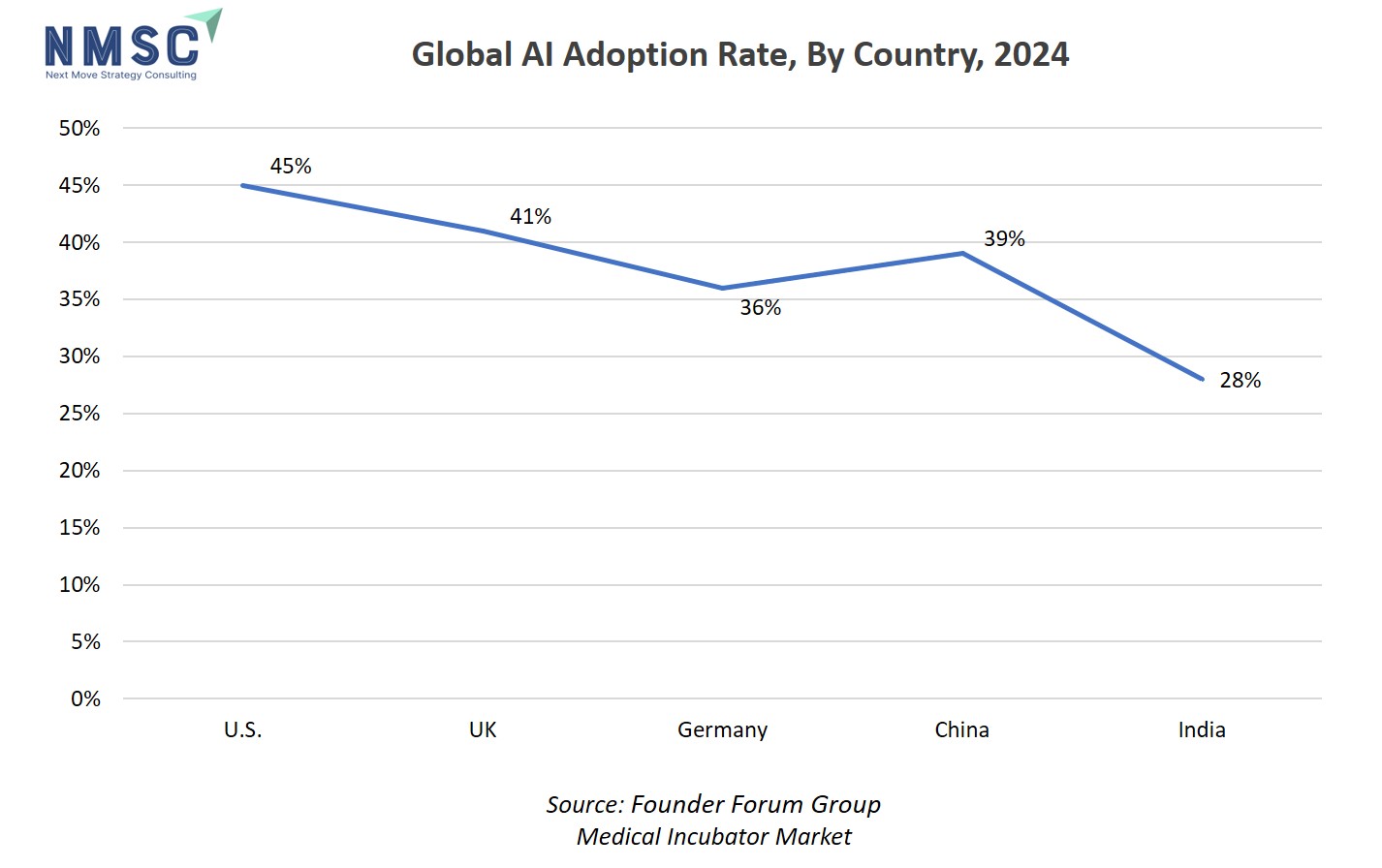
Based on the chart, the United States leads in AI adoption with a rate of 45%, followed by the UK (41%), China (39%), Germany (36%), and India (28%). This trend directly influences the market, indicating which countries are most prepared for growth in advanced neonatal technologies. Higher AI adoption rates in the U.S. and UK suggest more developed healthcare ecosystems capable of integrating intelligent incubators with real-time monitoring, predictive alerts, and data analytics, likely enabling faster regulatory approvals, greater clinician acceptance, and more rapid deployment. In contrast, countries with lower adoption rates see slower integration and a more fragmented market entry for AI-enabled incubator solutions.
How Is the Medical Incubator Industry Segmented in This Report, and What Are the Key Insights from Segmentation Analysis?
By Product Type Insights
How Is the Medical Incubator Market Shaped by Product Type?
Based on product type, the medical incubator market segments are divided into conventional incubators, transport incubators and others.
Conventional incubators are standard neonatal care units designed to provide a controlled thermal environment for newborns, especially premature and low birth weight infants. They maintain consistent temperature and humidity levels to support infant growth and prevent complications related to hypothermia. These incubators typically include basic monitoring features and be used in hospitals and specialized neonatal care centers for routine neonatal care.
By Application Insights
Which Application Is Emerging as the Most Flexible in the Medical Incubator Industry?
Based on application, the market is segmented into preterm care, low birth weight care and others.
Preterm care refers to the use of neonatal incubators for infants born before completing the full gestation period, typically under 37 weeks. These incubators create a stable and controlled environment that mimics the conditions of the womb, helping premature babies regulate their body temperature and support vital physiological functions. They aid in minimizing external stress, preventing infections, and promoting healthy growth during the critical early stages of development.
By End User Insights
How Is the Medical Incubator Market Shaped by End-User Industry Segmentation?
Based on end user, the market is segmented into hospitals and others.
Hospitals represent the primary end users of neonatal intensive care equipments, as they provide comprehensive neonatal care within maternity and pediatric departments. These facilities utilize incubators to support premature and low birth weight infants, ensuring optimal temperature, humidity, and oxygen levels for recovery and growth. Hospitals typically operate a range of incubator types, from conventional to intensive care units, to meet varying levels of neonatal health needs.
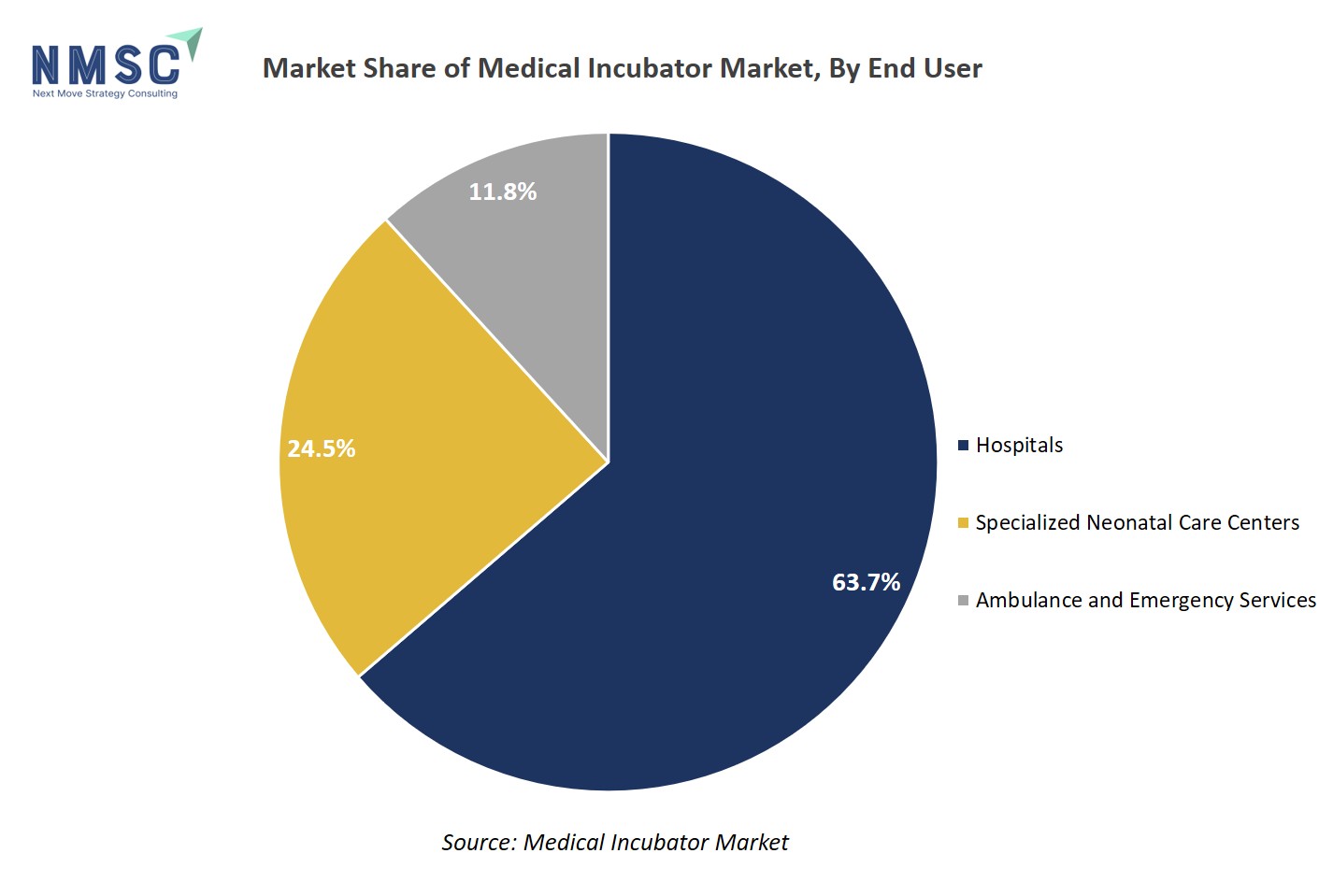
The chart represents the market share distribution of the Medical Incubator Market by End User, showing that hospitals account for the largest share due to their extensive use of incubators in neonatal and maternity units. Specialized neonatal care centers hold a significant portion, reflecting their focus on advanced infant care and continuous monitoring. Ambulance and emergency services contribute a smaller share, indicating the growing adoption of transport incubators for safe transfer of newborns between medical facilities.
Regional Outlook
The market is geographically studied across North America, Europe, Asia Pacific, Latin America and the Middle East & Africa and each region is further studied across countries.
Medical Incubator Market in North America
The North American market is gaining momentum due to the increasing adoption of advanced neonatal technologies in hospitals and neonatal care units. Healthcare providers are integrating incubators with features such as real-time monitoring, smart alarms, and improved temperature and humidity control to enhance infant care and support clinical decision-making. This technological evolution encourages manufacturers to innovate, offering interoperable and user-friendly incubators that meet the rising expectations of modern NICUs. The focus on enhanced patient safety, efficiency, and outcome-based care is fueling market growth, as hospitals seek solutions that combine reliability with advanced functionality. This trend underscores the importance of continuous product innovation to capture market share and address the evolving needs of healthcare providers in North America.
Medical Incubator Market in the United States
The slight increase in the preterm birth rate in the United States, from 10.38% in 2023 to 10.41% in 2024, is acting as a key driver for the U.S. medical incubator market. This upward trend highlights the growing demand for specialized neonatal care solutions to support the increasing number of preterm and low-birthweight infants. Hospitals and neonatal units are investing in advanced incubators that provide reliable thermal regulation, continuous monitoring, and enhanced safety features to improve clinical outcomes. For manufacturers, this creates opportunities to develop innovative, technologically advanced incubators that meet the evolving needs of NICUs, ensuring both infant safety and operational efficiency. As a result, the rising preterm birth rate directly contributes to market growth and product innovation in the U.S. healthcare sector.
Medical Incubator Market in Canada
The Canadian medical incubator market is being propelled by an increasing emphasis on improving neonatal care quality and outcomes. Hospitals and neonatal units are prioritizing the adoption of advanced incubators that provide precise thermal regulation, continuous monitoring, and robust infection-control features to ensure optimal care for preterm and critically ill infants. This focus on elevating neonatal services is driving demand for innovative, reliable, and user-friendly incubator solutions that integrate smoothly into NICU workflows and support clinical decision-making. For manufacturers, the market offers opportunities to develop and supply cutting-edge devices that align with evolving healthcare standards, helping facilities improve infant survival rates while strengthening their position in a growing and technology-driven market.
Medical Incubator Market in Europe
The European market is experiencing growth driven by the rising adoption of smart and connected healthcare technologies in neonatal care. Neonatal intensive care units (NICUs) are increasingly deploying incubators integrated with digital monitoring, real-time data analytics, and remote connectivity, enabling clinicians to track infant vital signs and make timely, informed decisions. This technological shift is encouraging manufacturers to produce advanced, interoperable incubators that seamlessly connect with hospital information systems and electronic health records. By offering enhanced monitoring, streamlined NICU workflows, and improved clinical outcomes, these connected incubators are not only meeting the evolving needs of European healthcare facilities but also driving market expansion and innovation across the region.
Medical Incubator Market in the United Kingdom
The medical incubator market in the United Kingdom is being propelled by the government’s emphasis on reducing neonatal mortality rates. With England recording 1.4 neonatal deaths per 1,000 live births in 2023 and targeting a reduction to 1.0 by 2025, the demand for advanced neonatal care technologies is rising. This has prompted hospitals and NICUs to invest in modern incubators equipped with precise thermal control, continuous monitoring, and enhanced safety features, ensuring better care for preterm and critically ill infants. For the market, this translates into growing opportunities for manufacturers to deliver innovative, reliable, and high-performance incubators that meet clinical needs, support national health goals, and drive the adoption of cutting-edge neonatal care solutions across the UK.
Medical Incubator Market in Germany
The German medical incubator market is being shaped by the country’s strong focus on infection prevention and patient safety within neonatal care. Neonatal units and hospitals are increasingly adopting incubators with enhanced hygiene features, including optimized airflow, easily sanitized surfaces, and advanced sterilization capabilities, to minimize infection risks. This emphasis on safer clinical environments is driving manufacturers to develop innovative, infection-control–focused incubator solutions that comply with national healthcare standards. By aligning product development with Germany’s infection prevention priorities, companies support healthcare providers in delivering higher-quality neonatal care, creating clear growth opportunities within the German market.
Medical Incubator Market in France
A key driver for the medical incubator market in France is the country’s strong focus on improving neonatal healthcare infrastructure and patient outcomes. French healthcare providers are increasingly adopting advanced medical technologies, including state-of-the-art incubators, to enhance the quality of care for preterm and high-risk infants. Government initiatives, coupled with a growing emphasis on early intervention and specialized neonatal services, are encouraging hospitals and neonatal centers to invest in modern, efficient, and technologically integrated incubators. This focus on improving neonatal survival rates and patient safety is fueling demand and driving market growth in France.
Medical Incubator Market in Spain
The medical incubator market in Spain is being driven by the country’s focus on expanding and modernizing neonatal intensive care units (NICUs). As hospitals invest in advanced incubators offering precise temperature control, continuous monitoring, and enhanced safety features, demand for innovative neonatal care solutions is increasing. This push to upgrade NICU infrastructure encourages manufacturers to introduce reliable, user-friendly, and technologically advanced incubators tailored to the needs of Spanish healthcare providers. By supporting these national healthcare initiatives, companies enhance neonatal care outcomes while capitalizing on growth opportunities within Spain’s market.
Medical Incubator Market in Asia Pacific
The Asia Pacific medical incubator market is experiencing growth due to rising government healthcare investments and public health programs focused on enhancing maternal and neonatal care. Across the region, national initiatives aim to upgrade neonatal facilities, expand access to underserved and rural areas, and improve infant survival outcomes, driving the need for modern, reliable, and easily maintainable incubators. This creates opportunities for manufacturers to develop innovative incubator solutions that comply with public health standards and perform effectively in diverse clinical environments. By supporting these government-led healthcare priorities, companies tap into significant market growth while contributing to improved neonatal care across Asia Pacific.
Medical Incubator Market in China
The medical incubator market in China is being propelled by the country’s strong emphasis on enhancing maternal and neonatal healthcare. With ongoing initiatives to improve treatments for mothers and newborns, hospitals and neonatal units are increasingly investing in advanced incubators that provide precise thermal regulation, continuous monitoring, and reliable support for preterm and critically ill infants. This focus on elevating the quality of maternal and neonatal care encourages manufacturers to develop innovative, user-friendly, and safe incubator solutions that meet the evolving needs of Chinese healthcare facilities. By aligning with national healthcare priorities, companies tap into growing market opportunities while contributing to improved outcomes for mothers and newborns across China.
Medical Incubator Market in Japan
The medical incubator market in Japan is being driven by the country’s focus on integrating robotics and automation into neonatal care. Neonatal units and hospitals are adopting technologies that enhance precision, minimize human error, and enable more effective monitoring of preterm and critically ill infants. This trend is encouraging manufacturers to develop intelligent, automated incubators that streamline clinical workflows, ensure consistent care, and improve patient safety. By aligning product development with Japan’s emphasis on advanced and efficient neonatal healthcare, companies tap into distinct growth opportunities while supporting higher clinical standards and operational efficiency across the Japanese market.
Medical Incubator Market in India
The medical incubator market in India is being driven by the country’s intensified focus on enhancing neonatal healthcare. With the government prioritizing improvements in maternal and child health, hospitals and healthcare facilities are increasingly investing in advanced incubators that provide precise thermal control, continuous monitoring, and enhanced safety for preterm and critically ill infants. This push to modernize neonatal care infrastructure is creating opportunities for manufacturers to offer innovative, reliable, and high-quality incubator solutions that align with India’s healthcare objectives, fueling growth in the national market while supporting better neonatal outcomes across the country.
Medical Incubator Market in South Korea
In South Korea, the medical incubator market is being fueled by the growing adoption of telemedicine and remote monitoring technologies in neonatal care. Hospitals and neonatal units are integrating incubators with systems that allow remote tracking of vital signs and early detection of complications, enabling clinicians to provide timely interventions. This trend encourages manufacturers to develop connected, smart incubators that support telehealth initiatives, improve workflow efficiency, and enhance patient safety. By aligning product innovation with South Korea’s push for technology-driven and accessible neonatal care, companies capture new growth opportunities while advancing the quality and reach of neonatal healthcare services.
Medical Incubator Market in Australia
The market in Australia is being driven by the country’s focus on strengthening neonatal care in rural and regional areas. Hospitals and healthcare facilities are increasingly seeking portable, reliable, and user-friendly incubators to ensure that preterm and critically ill infants receive high-quality care, even in resource-limited settings. This push to expand access to advanced neonatal care is encouraging manufacturers to develop adaptable and innovative incubator solutions suitable for both urban and remote healthcare centers. By aligning with Australia’s commitment to equitable neonatal healthcare, companies tap into significant market growth opportunities while supporting improved outcomes for newborns nationwide.
Medical Incubator Market in Latin America
The medical incubator market in Latin America is being driven by the region’s growing adoption of digital health technologies in maternal and neonatal care. In 2024, countries including Argentina, Bolivia, Colombia, the Dominican Republic, Ecuador, Guyana, Honduras, Paraguay, and Peru conducted a multi-country assessment highlighting how ICT integration is transforming healthcare delivery. As hospitals and neonatal units increasingly incorporate digital monitoring and communication tools, there is rising demand for modern incubators that are compatible with these technologies, providing precise thermal control, continuous monitoring, and enhanced safety. This trend encourages manufacturers to develop innovative, tech-enabled incubator solutions, aligning with regional digital health initiatives while improving neonatal outcomes and creating significant growth opportunities in the Latin American market.
Medical Incubator Market in the Middle East & Africa
The medical incubator market in the Middle East and Africa is being driven by the region’s focus on expanding access to quality neonatal care, particularly in underserved and remote areas. Healthcare facilities are increasingly seeking portable, durable, and reliable incubators that function effectively in a variety of clinical environments, including those with limited infrastructure. This demand is encouraging manufacturers to develop cost-effective, adaptable, and easy-to-maintain incubator solutions tailored to the needs of hospitals and neonatal units across the region. By supporting the goal of equitable neonatal care, companies unlock significant growth opportunities while improving outcomes for preterm and critically ill infants throughout the Middle East and Africa.
Competitive Landscape
Who Are the Leading Companies in the Medical Incubator Market and How Are They Competing?
The global medical incubator market competition is driven by a combination of long-established medical device leaders and agile, innovation-focused specialists. Companies such as Drägerwerk AG & Co. KGaA (Dräger), GE Healthcare Technologies Inc., Atom Medical Co., Ltd., and Fanem S.A. dominate the market through extensive global distribution networks, established brand recognition, and a broad portfolio of neonatal care solutions. They focus on delivering high-quality, reliable, and technologically advanced incubators, ensuring consistent performance and safety for neonatal patients. Their emphasis on regulatory compliance, product durability, and comprehensive customer support allows them to maintain strong positions in hospitals, specialized neonatal care centers, and emergency medical facilities, meeting the growing demand for advanced neonatal care solutions worldwide.
Meanwhile, smaller, specialized, and innovation-driven companies like International Biomedical, Inc., Ningbo David Medical Device Co., Ltd., Comen Medical, Bistos Co., Ltd., BPL Medical Technologies, Neotech Medical Systems, Heal Force Co., Ltd., Phoenix Medical Systems Pvt. Ltd., Cobams S.r.l., LEEX Medical, and MEDICOR Zrt focus on niche offerings and flexible, technology-enabled solutions. These companies emphasize user-friendly designs, portability, energy efficiency, and integration with modern monitoring systems. Their agility in developing customizable features, adopting new medical technologies, and catering to emerging markets exerts competitive pressure on larger players, driving the market toward more specialized, patient-focused, and innovative medical incubator solutions.
Market Dominated by Medical Incubator Giants and Specialists
The market is increasingly shaped by a mix of established industry leaders and specialized innovators. Companies like Drägerwerk AG & Co. KGaA (Dräger), GE Healthcare Technologies Inc., Atom Medical Co., Ltd., and Fanem S.A. dominate the landscape by offering comprehensive neonatal care solutions with advanced incubators that ensure reliability, safety, and consistent performance across hospitals and specialized care centers. These leaders leverage extensive distribution networks, brand reputation, and standardized support services to maintain high-quality experiences for healthcare providers and patients. Meanwhile, specialized and agile players such as International Biomedical, Inc., Ningbo David Medical Device Co., Ltd., Comen Medical, Bistos Co., Ltd., BPL Medical Technologies, Neotech Medical Systems, Heal Force Co., Ltd., Phoenix Medical Systems Pvt. Ltd., Cobams S.r.l., LEEX Medical, and MEDICOR Zrt focus on niche innovations, portable and energy-efficient designs, customizable features, and integration with modern monitoring technologies. Together, these companies are driving innovation, creating competitive differentiation, and advancing the market by addressing evolving healthcare needs and the growing demand for technologically sophisticated neonatal care solutions.
Market Players to Opt for Expansion Strategies to Expand their Presence
In the medical incubator market, expansion is becoming essential for expanding capabilities and accelerating adoption. For instance, GE Healthcare Technologies Inc. announced a USD 153.6 million investment in a new state-of-the-art facility at its Cork site in Ireland. This strategic expansion is designed to increase production capacity and cater to growing global demand for advanced medical technologies, including contrast media. Such initiatives reflect a broader trend among leading companies to invest in infrastructure, enhance manufacturing capabilities, and secure a competitive edge in the evolving healthcare market, ensuring they deliver innovative solutions to a wider range of healthcare providers worldwide.
List of Key Medical Incubator Companies
-
Atom Medical Co., Ltd.
-
Fanem S.A.
-
International Biomedical, Inc.
-
Ningbo David Medical Device Co., Ltd.
-
Comen
-
Bistos Co., Ltd.
-
BPL Medical Technologies
-
Neotech Medical Systems
-
Heal Force Co., Ltd.
-
Phoenix Medical Systems Pvt. Ltd.
-
Cobams S.r.l.
-
LEEX Medical
-
MEDICOR Zrt
What Are The Latest Key Industry Developments?
Companies such as Drägerwerk AG & Co. KGaA (Dräger), GE Healthcare Technologies Inc., Atom Medical Co., Ltd., Fanem S.A., International Biomedical, Inc., Ningbo David Medical Device Co., Ltd., Comen Medical (Comen Healthcare), Bistos Co., Ltd., BPL Medical Technologies / BPL Atom, Neotech Medical Systems (Nice / Neotech), Heal Force Co., Ltd., Phoenix Medical Systems Pvt. Ltd., Cobams S.r.l. (COBAMS), LEEX Medical (LEEX Medical Co., Ltd.), and MEDICOR Zrt are driving growth in the market by continuously innovating and expanding their product offerings. These companies focus on delivering reliable, technologically advanced incubators that enhance patient safety, monitoring, and comfort while complying with healthcare standards. Additionally, agile and specialized players are introducing portable, energy-efficient, and digitally integrated incubators. Through expanding distribution networks, entering new markets, forming strategic partnerships, and investing in research and development, these companies are broadening access to advanced neonatal care, improving clinical outcomes, and fueling overall market growth.
What Are The Key Factors Influencing Investment Analysis & Opportunities In The Market?
The medical incubator market is witnessing increasing investment activity, driven by the rising demand for advanced neonatal care solutions. Funding trends show that investors are increasingly attracted to companies integrating cutting-edge technologies, such as AI, IoT, and smart monitoring systems, into their incubator offerings. Both venture capital and private equity players are exploring opportunities in this sector, recognizing the potential for innovation to improve patient outcomes and operational efficiency in hospitals and neonatal care centers.
Valuations in the market are steadily growing, reflecting confidence in long-term growth and technological advancement. Key investment hotspots include regions with well-established healthcare infrastructure and emerging markets experiencing increased healthcare expenditure and demand for neonatal care. Market players are leveraging these opportunities to expand production capacities, enter new geographies, and form strategic partnerships, positioning themselves to capture a larger share of the evolving medical incubator market.
Key Benefits for Stakeholders:
Next Move Strategy Consulting (NMSC) presents a comprehensive analysis of the market, covering historical trends from 2020 through 2024 and offering detailed forecasts through 2030. Our study examines the market at global, regional, and country levels, providing quantitative projections and insights into key growth drivers, challenges, and investment opportunities across all major medical incubator market segments.
Report Scope:
|
Parameters |
Details |
|
Market Size in 2025 |
USD 1447.9 Million |
|
Revenue Forecast in 2030 |
USD 2107.8 Million |
|
Growth Rate |
CAGR of 7.8% from 2025 to 2030 |
|
Analysis Period |
2024–2030 |
|
Base Year Considered |
2024 |
|
Forecast Period |
2025–2030 |
|
Market Size Estimation |
Billion (USD) |
|
Growth Factors |
|
|
Countries Covered |
33 |
|
Companies Profiled |
15 |
|
Market Share |
Available for 10 companies |
|
Customization Scope |
Free customization (equivalent up to 80 analyst-working hours) after purchase. Addition or alteration to country, regional & segment scope. |
|
Pricing and Purchase Options |
Avail customized purchase options to meet your exact research needs. |
|
Approach |
In-depth primary and secondary research; proprietary databases; rigorous quality control and validation measures. |
|
Analytical Tools |
Porter's Five Forces, SWOT, value chain, and Harvey ball analysis to assess competitive intensity, stakeholder roles, and relative impact of key factors. |
Key Market Segments
By Product Type
-
Conventional Incubators
-
Transport Incubators
-
Hybrid Incubators
-
Intensive Care Incubators
By Application
-
Preterm Care
-
Low Birth Weight Care
-
Neonatal Intensive Care Unit Support
-
Baby Transshipment
-
Baby Fostering
By End User
-
Hospitals
-
Specialized Neonatal Care Centers
-
Ambulance and Emergency Services
Geographical Breakdown
-
North America: U.S., Canada, and Mexico.
-
Europe: U.K., Germany, France, Italy, Spain, Sweden, Denmark, Finland, Netherlands, and rest of Europe.
-
Asia Pacific: China, India, Japan, South Korea, Taiwan, Indonesia, Vietnam, Australia, Philippines, Malaysia and rest of APAC.
-
Middle East & Africa (MEA): Saudi Arabia, UAE, Egypt, Israel, Turkey, Nigeria, South Africa, and rest of MEA.
-
Latin America: Brazil, Argentina, Chile, Colombia, and rest of LATAM.
Conclusion & Recommendations
Our report equips stakeholders, industry participants, investors, policy-makers, and consultants with actionable intelligence to capitalize on market transformative potential. By combining robust data-driven analysis with strategic frameworks, NMSC’s medical incubator market report serves as an indispensable resource for navigating the evolving landscape.


About the Author
 Mayurima Roy
— Mayurima Roy is Research Analyst at Next Move Strategy Consulting, where she has spent 4 years working across the firm's full industry coverage rather than a single fixed vertical. Her work centers on structured research, ongoing trend tracking, competitive assessment, and insight-led content development, translating complex market data into clear, decision-ready narratives that support informed client decision-making across diverse global industries, market sectors, and world regions every day.
Mayurima Roy
— Mayurima Roy is Research Analyst at Next Move Strategy Consulting, where she has spent 4 years working across the firm's full industry coverage rather than a single fixed vertical. Her work centers on structured research, ongoing trend tracking, competitive assessment, and insight-led content development, translating complex market data into clear, decision-ready narratives that support informed client decision-making across diverse global industries, market sectors, and world regions every day.
About the Reviewer
 Supradip Baul
— Supradip Baul is an accomplished business consultant and strategist with over a decade of rich experience in market intelligence, strategy, technology, and business transformation. His work has included rigorous qualitative and quantitative analysis across multiple industries, helping clients shape investment decisions and long-term roadmaps. Earlier in his career, he was associated with Gartner, where he contributed to industry-leading reports and market share analyses. He has worked with leading global companies and holds an MBA with a dual specialization in Marketing and Finance.
Supradip Baul
— Supradip Baul is an accomplished business consultant and strategist with over a decade of rich experience in market intelligence, strategy, technology, and business transformation. His work has included rigorous qualitative and quantitative analysis across multiple industries, helping clients shape investment decisions and long-term roadmaps. Earlier in his career, he was associated with Gartner, where he contributed to industry-leading reports and market share analyses. He has worked with leading global companies and holds an MBA with a dual specialization in Marketing and Finance.
At Next Move Strategy Consulting, we understand that insightful market research is the cornerstone of successful business decisions. That's why we employ a robust and multifaceted approach, combining various methodologies to deliver the most accurate and actionable data for our clients.

Research Landscape
We navigate the world of research with two primary approaches:
Qualitative Approach
Our qualitative research methodologies involve immersive techniques such as in-depth interviews, focus groups, and observational studies. By engaging directly with individuals and stakeholders, we uncover valuable insights that quantitative data alone may overlook.

Quantitative Research
In tandem with qualitative methodologies, NMSC leverages the power of Quantitative Research to provide a robust foundation of numerical insights. Through systematic data collection and analysis, we quantify patterns, preferences, and market trends, offering a comprehensive view of the business landscape.
Our quantitative research approach employs diverse tools, including surveys, experiments, and statistical modelling. These methodologies enable us to gather data from a large and representative sample, ensuring the statistical significance of our findings. By employing structured questionnaires and standardized data collection methods, we guarantee the reliability and validity of the information we present to our clients.
Quantitative research is particularly effective in measuring the prevalence of trends, assessing market size, and gauging the impact of various factors on consumer behavior. The numerical precision attained through this approach equips our clients with actionable insights, facilitating data-driven decision-making and strategy formulation.


Our Specialized Toolbox for Industry-Specific Market Research
We deploy a specialized arsenal of techniques tailored to meet your unique requirements. Here's a glimpse into our comprehensive toolbox:

Information Procurement
The stage entails acquiring market data or relevant information through various sources and methodologies.


Market Research Approach
We utilize both top-down and bottom-up approaches in market research analysis to achieve a comprehensive understanding of the market dynamics, leveraging the broad perspective of industry trends and macroeconomic factors alongside detailed insights from specific segments and individual companies.

Porters Five Forces Analysis
We conduct Porter's Five Forces analysis to evaluate the competitive landscape of an industry, providing us with insights into factors that affect profitability and strategic positioning.

SWOT Analysis

Forecasting
We utilize a forecasting model to predict future consumption by considering parameters like population, economics, regulations, market competition, drivers, constraints, technology, and pricing. We also employ statistical techniques such as multilinear regression, exponential smoothing, moving average, ARIMA, and Monte Carlo simulations for accurate predictions. In econometric forecasting, we analyzed short-term and long-term event impacts, attributing values based on regulatory frameworks, economic factors, and market events.





 Speak to Our Analyst