Next Generation Sequencing Market By Product Type (Instruments and Consumables and Reagents), By Technology (Sequencing by Synthesis, Ion Semiconductor Sequencing, Single Molecule Real-Time Sequencing, and Nanopore Sequencing, and Others), By Workflow (Pre-Sequencing, Sequencing, and Post-Sequencing), By Application (Research, Clinical, Pharmaceutical and Biotechnology, and Others), and By End-User – Global Analysis & Forecast, 2025–2030
Industry: Healthcare | Publishing Date: June 2, 2026 | Last Updated: October 16, 2026 | No of Pages: N/A | No. of Tables: N/A | No. of Figures: N/A | Format: PDF | Report Code: HC3759
Industry Outlook
The global Next Generation Sequencing Market size was valued at USD 13.16 billion in 2024 and is expected to reach USD 15.61 billion by 2025. Looking ahead, the industry is projected to expand significantly, reaching USD 36.63 billion by 2030, registering a CAGR of 18.6% from 2025 to 2030.
The market has evolved into a cornerstone of modern genomics, transforming the way genetic information is decoded and analysed. Today, NGS technologies are widely used across academic research, clinical diagnostics, pharmaceutical development, and agricultural genomics.
Their ability to deliver rapid, high-throughput sequencing with exceptional accuracy has made them indispensable for applications such as whole genome and exome sequencing, transcriptomics, metagenomics, and personalized medicine. Continuous advancements in sequencing chemistry, automation, and bioinformatics have expanded accessibility, driving broader adoption in clinical and translational research settings.
Looking ahead, the next generation sequencing market is poised for substantial growth as innovation accelerates in areas such as long-read sequencing, single-cell genomics, and spatial transcriptomics. Integration with artificial intelligence and cloud-based data analytics is expected to further enhance interpretation accuracy and scalability. The technology’s expanding role in precision medicine, infectious disease surveillance, and oncology diagnostics underscores its transformative potential.
Moreover, declining sequencing costs and the development of portable, real-time sequencers are opening new frontiers in decentralized testing and population-scale genomics, positioning NGS as a vital enabler of future healthcare and life science breakthroughs.
What are the Key Trends in the Next Generation Sequencing Market?
How is next generation sequencing data growth driving AI-powered genomic analysis?
Genomic data repositories continue to swell, where public sequence databases roughly double in size every couple of years, creating an enormous pool of reads and metadata for secondary analysis. That rapid growth makes manual interpretation impossible at scale and pushes labs toward machine learning and deep-learning tools that spot patterns, predict variant impact, and prioritise findings fast.
Recent reviews show deep-learning methods are increasingly applied across single-cell, spatial and bulk sequencing tasks, improving classification and feature extraction where classical methods struggle. For companies, they invest in cloud-native analytics and curated training datasets, and package AI as a validated, explainable layer on top of existing pipelines so customers trust outputs.
Vendors that pair sequencers with turnkey, regulatory-minded AI workflows including model performance metrics and audit trails lower customer friction and accelerate uptake, especially for clinical or translational customers who need reproducible, interpretable results rather than black-box predictions.
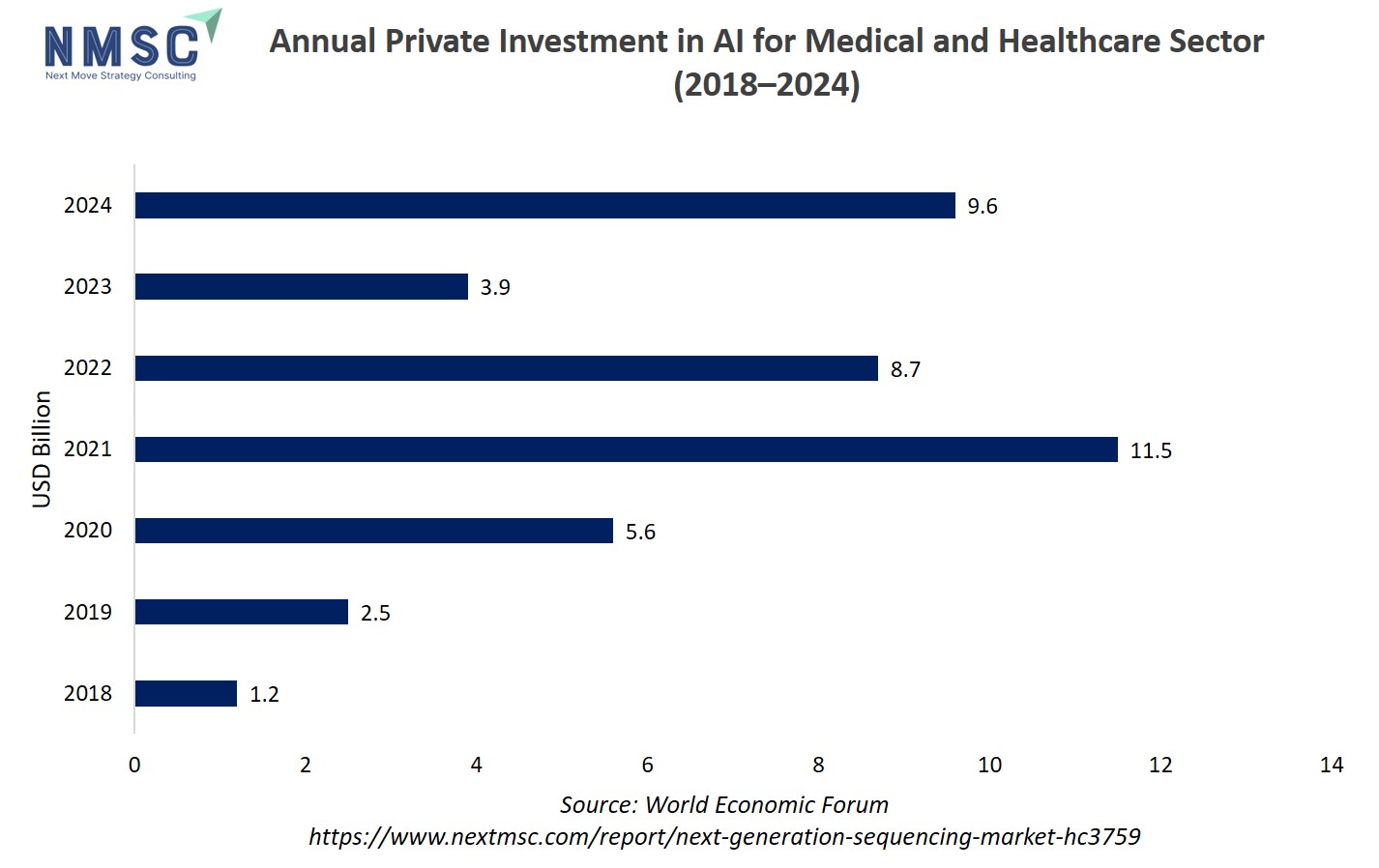
Rising annual private investment in AI for the medical and healthcare sector is significantly boosting the next generation sequencing market growth. As AI becomes integral to genomic data analysis, private funding accelerates the development of advanced algorithms for faster variant detection, clinical interpretation, and predictive modeling. These investments help overcome one of NGS’s biggest bottlenecks, data complexity, by making analysis more automated, accurate, and scalable.
Enhanced AI-driven bioinformatics tools allow clinicians and researchers to extract actionable insights from large genomic datasets, improving diagnostic efficiency and personalized treatment planning. Ultimately, increased AI investment fosters innovation, reduces turnaround time, and supports the broader adoption of NGS across clinical and population-scale genomics, driving sustained market growth.
How are portable and real-time sequencers changing outbreak response and clinical workflows?
Portable, streaming platforms that sequence in real time are shifting genomics from a central-lab service to an on-site decision tool. Field and hospital pilots have shown nanopore-style devices identify pathogens and lineages within hours, enabling rapid infection-control actions and faster targeted therapy. The ability to generate sequence data continuously and analyse it as it arrives changes workflow design. Labs triage samples for rapid sequencing, run deeper follow-ups if needed, and feed results immediately into public-health databases.
For manufacturers and service providers, they simplify end-to-end workflows and provide on-device or edge analytics that meet clinical validation needs. Partnerships with hospitals and public-health bodies to co-validate protocols shorten procurement cycles and demonstrate cost-benefit in real operational settings, a major selling point for procurement committees
How will Long-Read and Hybrid Sequencing Improve Complex Clinical Diagnoses?
Long-read technologies are proving that they resolve structural variants, repeat expansions, phased haplotypes and methylation patterns in a single run, features that short reads miss or require multiple assays to detect. Recent studies comparing technologies show long-read HiFi data substantially improves detection of medically relevant complex variants, making it attractive for clinical genomics programs that face unresolved cases.
Diagnostic labs replace several orthogonal tests with one comprehensive sequencing workflow, reducing turnaround and cumulative cost per diagnostic question. Companies therefore focus on validated hybrid workflows, bundled library kits, and clear clinical use-cases where replacement of multiple tests is plausible. Providing validated reference datasets, interpretation pipelines tuned for structural variants, and payer-facing value models markedly increase adoption among clinical labs.
How are Single-Cell and Spatial Multi-Omics Opening Premium Translational and Agricultural Use Cases?
Single-cell and spatial sequencing have moved from boutique research projects to commercial platforms that reveal cellular heterogeneity, tissue architecture and cell–cell interactions, capabilities now being deployed in oncology, immunology, and plant breeding. Reviews of commercialization show a maturing ecosystem of instruments, kits and software that together enable more reproducible single-cell and spatial experiments.
This trend creates two practical opportunities, first, offering integrated hardware with reagent and analytics bundles that lower technical entry barriers for translational teams, and second, developing validated application templates that demonstrate actionable outputs for end users. Companies that provide training datasets, pre-built pipelines, and clear experimental SOPs capture early budget from pharma translational units and advanced agricultural R&D groups that need high-resolution biology without years of method development
What are the Key Market Drivers, Breakthroughs, and Investment Opportunities that will Shape the Next Generation Sequencing Market in the Next Decade?
The next generation sequencing market today sits at the intersection of mature short-read platforms and rapidly advancing long-read and real-time technologies. Falling sequencing costs and higher throughput have moved NGS from niche research labs into routine clinical, public-health, and industrial workflows, expanding use cases from oncology and rare-disease diagnostics to pathogen surveillance and agricultural genomics.
The declining cost trajectory is well documented and underpins much of this broader adoption.
Breakthroughs in chemistry, library preparation, automation and streaming analytics are enabling faster turnaround and more comprehensive assays, while regulators and clinical bodies work to define validation and use standards for diagnostic applications. These advances and clearer regulatory frameworks are widening clinical uptake and public-health deployment.
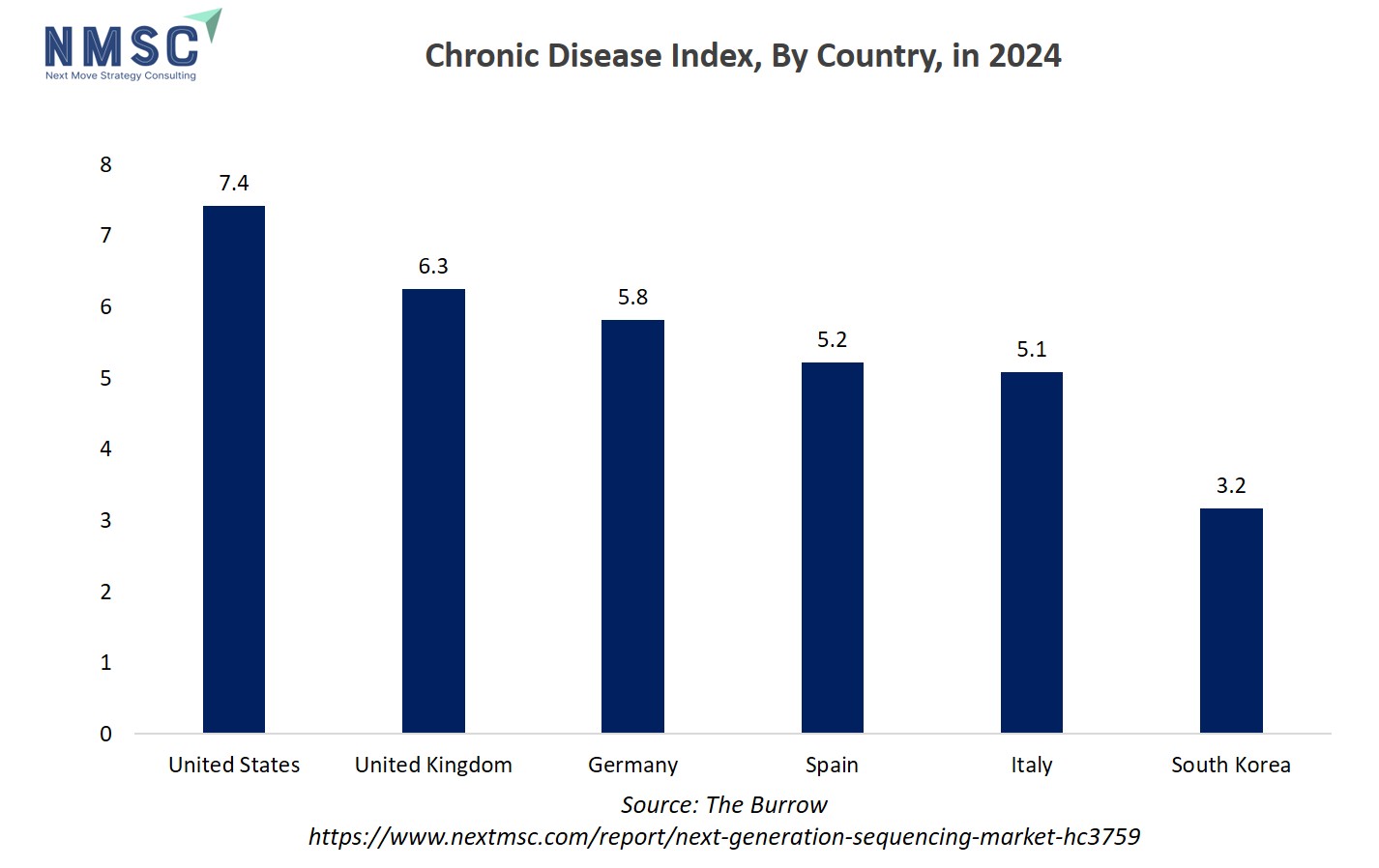
Also, the growing prevalence of chronic diseases such as cancer, cardiovascular disorders, and diabetes is a major driver of the next generation sequencing market demand. As these conditions have genetic components, NGS enables early detection, risk assessment, and targeted treatment by identifying mutations and biomarkers linked to disease progression. The increasing global burden of chronic illnesses has pushed healthcare systems toward precision medicine, where NGS plays a key role in tailoring therapies to individual genetic profiles.
Moreover, pharmaceutical and biotech companies use NGS in drug discovery to develop more effective and personalized treatments. This rising reliance on genomic insights to manage and prevent chronic diseases continues to expand clinical adoption, research funding, and commercial opportunities within the next generation sequencing market trends.
Growth Drivers:
Could continued reductions in sequencing cost and increases in throughput accelerate clinical and population-scale genomics adoption?
Lower cost per genome and higher throughput remain primary growth drivers for the next generation sequencing market adoption, as sequencing becomes cheaper and faster, more healthcare systems, public-health labs, and researchers afford population-scale studies, routine tumor profiling, and newborn screening programs.
The cost dataset shows dramatic long-term declines in cost per genome, which has shifted sequencing from an expensive specialty test to a practical tool for many labs; that economic shift directly lowers barriers to broader clinical use. Reduced per-sample cost also enables multiplexing, larger cohorts, and longitudinal sampling, increasing the value of genomics in drug development, epidemiology and precision medicine.
Operationally, higher throughput instruments and automated library prep reduce per-sample labour and turnaround time, further improving unit economics and fuelling demand across research, clinical diagnostics and public-health surveillance.
Could advances in long-read and real-time sequencing change diagnostic and surveillance use cases?
Long-read and real-time sequencing technologies are extending NGS applications beyond what short reads can easily resolve, enabling full structural-variant detection, improved genome assemblies, direct RNA sequencing, and ultra-rapid pathogen surveillance. Platforms that stream data in real time allow on-the-fly analysis and decision-making during outbreaks or clinical procedures; high-capacity long-read instruments now aim to produce terabases per run, making them suitable for large projects as well as complex diagnostic assays.
These capabilities are lowering technical barriers for applications that previously required multiple orthogonal tests. As workflows mature, hybrid strategies and improved chemistry deliver more complete genomic answers, expanding NGS’s role in clinical genomics, infectious-disease response, and complex trait research.
Growth Inhibitors:
Could regulatory uncertainty and analytical/clinical validation needs slow clinical NGS adoption?
Regulation and validation remain major challenges for the wider clinical use of targeted sequencing panels. To make NGS a routine diagnostic tool, every test and data analysis process must meet strict accuracy and reliability standards. Although regulators have issued guidance, NGS systems vary greatly in their chemistry, data pipelines, and interpretation methods, making standardization difficult.
Proving that a test consistently detects all types of genetic variations requires extensive validation and constant quality checks, which increases time and cost. In addition, better frameworks for data sharing and result comparison are still needed to build trust and gain reimbursement support. Clearer, globally aligned regulations and reliable reference materials could make compliance easier and speed up clinical adoption.
Could investments in single-cell, spatial, and multi-omics sequencing platforms create high-value growth opportunities?
Emerging investment opportunities lie in platforms and workflows that enable single-cell, spatially resolved, and multi-omics measurements, areas that translate raw sequencing capability into deeper biological and clinical insights. Single-cell and spatial approaches let researchers deconvolute cellular heterogeneity in tumors, immune responses, and development; linking these readouts to transcriptomes, epigenomes and proteomes increases the actionable signal for drug discovery and personalized therapy.
As instruments, reagents, and computational tools for single-cell and spatial assays become more automated and cost-efficient, demand from pharma, translational labs, and clinical research grow. Strategic investments that bundle hardware, sample-prep kits, and turnkey analytics capture value by offering end-to-end solutions for these complex assays, positioning firms to benefit from rising demand for high-resolution biology in both research and clinical translational pipelines.
How is the Next Generation Sequencing Market Report Segmented, and What are the Key Insights from the Segmentation Analysis?
By Product Type Insights
Are instruments or consumables & reagents dominating the NGS market in 2025?
Based on product type, the market is segmented into instruments and consumables and reagents.
Consumables and reagents dominate the market economics because the installed base of sequencers makes ongoing run-consumables the steady, high-frequency revenue that outpaces one-time instrument sales. Instruments are crucial to create capacity and to introduce new capabilities, but most lifecycle value accrues in repeat purchases of kits, flow cells and sample-prep reagents tied to run volume.
That dynamic means companies prioritise strategies that grow installed base while simultaneously designing differentiated consumables like validated chemistries, locked workflows, subscription models to capture recurring margin. This combination, selling a compelling instrument and then converting customers into long-term consumable users, is the structural reason consumables lead the market.
By Technology Insights
Which next generation sequencing technologies are shaping the market in 2025?
On the basis of technology, the market is segmented into sequencing by synthesis, ion semiconductor sequencing, single molecule real-time sequencing, nanopore sequencing, targeted resequencing, whole genome sequencing, whole exome sequencing, and rna sequencing.
Sequencing by synthesis continues to dominate due to its proven accuracy, scalability, and integration into both research and clinical workflows. However, long-read platforms like SMRT and nanopore sequencing are gaining strong traction for complex variant detection and real-time applications. As costs decline and accuracy improves, a hybrid ecosystem combining short- and long-read technologies define the next phase of rare disease diagnostics innovation and industry growth.
On the other hand, targeted resequencing focuses on specific genomic regions of interest, such as known disease-associated genes, offering cost-effective and high-depth coverage. It is widely used in oncology, pharmacogenomics, and inherited disorder screening. The approach reduces data load while maintaining high accuracy, making it practical for clinical labs.
By Workflow Insights
How are workflow stages driving efficiency and innovation in the next generation sequencing market?
On the basis of workflow, the sector is segmented into pre-sequencing, sequencing, and post-sequencing.
The sequencing phase dominates the market due to its central role and ongoing technological advancements, while pre- and post-sequencing stages are gaining momentum through automation and data analytics innovation. The future of NGS workflows lies in complete end-to-end integration, from sample to insight enabling faster turnaround, higher reproducibility, and lower operational costs across clinical and research environments.
The pre-sequencing stage encompasses sample collection, nucleic acid extraction, library preparation, and target enrichment, processes that are critical for ensuring sequencing accuracy and reproducibility. Innovations in automation and microfluidics have significantly streamlined this stage, reducing manual intervention and turnaround time. On the other hand, the sequencing phase forms the core of the NGS workflow and involves decoding DNA or RNA fragments using various platforms such as sequencing by synthesis, nanopore sequencing, or single-molecule real-time sequencing. Continuous innovations have made this process faster, more cost-effective, and highly accurate.
By Application Insights
Which application segments are powering growth in the next generation sequencing market?
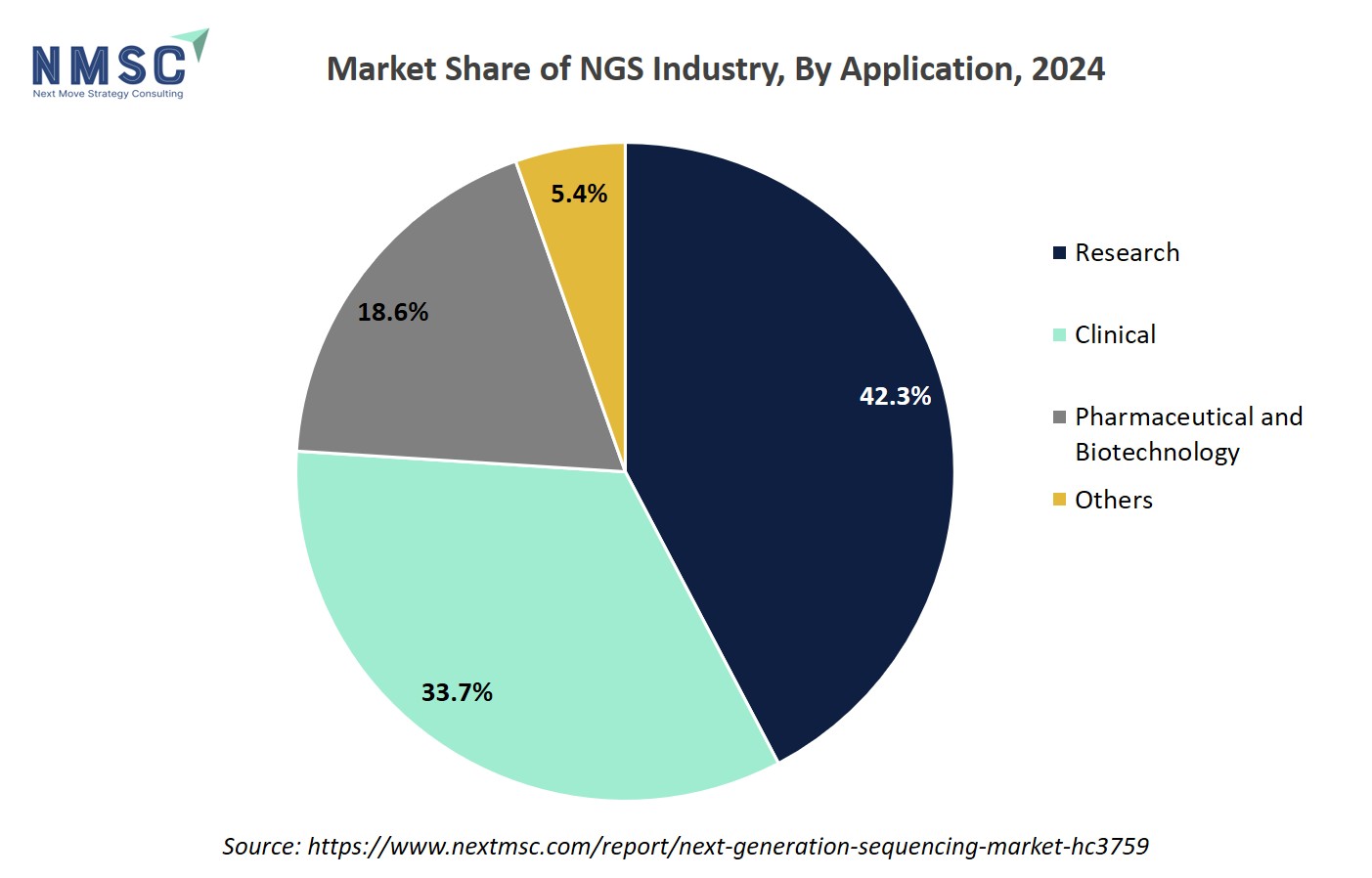
On the basis of application, the market is segmented into research, clinical, pharmaceutical and biotechnology, and others.
The research segment currently dominates the industry due to its broad scientific applications and institutional funding support, while the clinical and pharmaceutical sectors are expanding rapidly as genomics becomes integral to diagnostics and drug discovery. As adoption broadens into agriculture, environment, and forensics, the market is shifting toward a multi-disciplinary model, creating diverse revenue streams for technology providers and expanding the overall ecosystem of next-generation sequencing.
By End-User Insights
Which end users are driving demand in the next generation sequencing market?
On the basis of end-user, the market is segmented into academic and research institutions, hospitals and clinical laboratories, pharmaceutical and biotechnology companies, government and public health agencies, contract research organisations, and agriculture and animal health companies.
Among all end-user segments, academic and research institutions currently dominate due to their foundational role in advancing genomic science, while hospitals, clinical labs, and pharma-biotech companies are driving the next wave of growth through precision medicine and translational research. Government programs and CRO partnerships further amplify adoption, and the expansion into agriculture and animal health highlights the broadening scope of NGS beyond healthcare. This diverse end-user ecosystem ensures sustained innovation, cross-sector collaboration, and long-term market expansion.
Regional Outlook
The next generation sequencing market share is geographically studied across North America, Europe, Asia Pacific, Middle East & Africa, and Latin America and each region is further studied across countries.
Next Generation Sequencing Market in North America
North America leads global NGS adoption because of deep public-health genomics investments, dense research infrastructure, and strong private-sector R&D. The United States and Canada anchor the region. The U.S. combines federal research programs, major academic medical centers and wide clinical uptake, while Canada is rapidly scaling national population genomics initiatives.
Public-health labs in the region also expanded routine sequencing capacity after COVID-19, making pathogen genomics a sustainable use case. That infrastructure creates predictable demand for both instruments and consumables, and it attracts analytics and cloud providers who want to package end-to-end solutions for hospitals, pharma and surveillance labs.
Next Generation Sequencing Market in the United States
The U.S. market is driven by large public programs, well-funded academic medical centers, and an active diagnostics and biopharma ecosystem that uses NGS for research, clinical testing and drug development. Major initiatives like the All of Us Research Program demonstrate both scale and demand for genomic data, All of Us reports hundreds of thousands of participants and large biosample collections, which feed research and clinical tool development.
The CDC’s Advanced Molecular Detection program further institutionalized sequencing in public-health labs, creating long-term procurement and service opportunities. For vendors, the U.S. market rewards validated clinical workflows, regulatory readiness and strong payer value propositions.
Next Generation Sequencing Market in Canada
Canada’s market is accelerating thanks to coordinated national investments to build population-level genomic datasets and commercialization pathways. Genome Canada and recent national initiatives are funding large cohort sequencing and data infrastructure projects that aim to deliver >100,000 genomes and improve diversity in reference data.
This public funding catalyses instrument buying, drives consumables demand, and creates a market for secure cloud analytics and AI tools tailored to Canadian privacy rules. Companies that partner with provincial genome centers and offer Canada-friendly data governance find an easier path to scale.
Next Generation Sequencing Market in Europe
Europe’s landscape is shaped by pan-European coordination plus strong national genomic medicine strategies. The EU-level push to federate genomic data and the establishment of national programs are driving investment in both sequencing capacity and secure data infrastructure.
Regulatory and data-sharing safeguards are important in many countries, so vendors that offer compliant, federated analytics and plug-and-play clinical workflows are at an advantage. Europe’s approach prioritises public-health use cases, research consortia and cross-border data access, creating steady institutional demand rather than rapid consumer uptake.
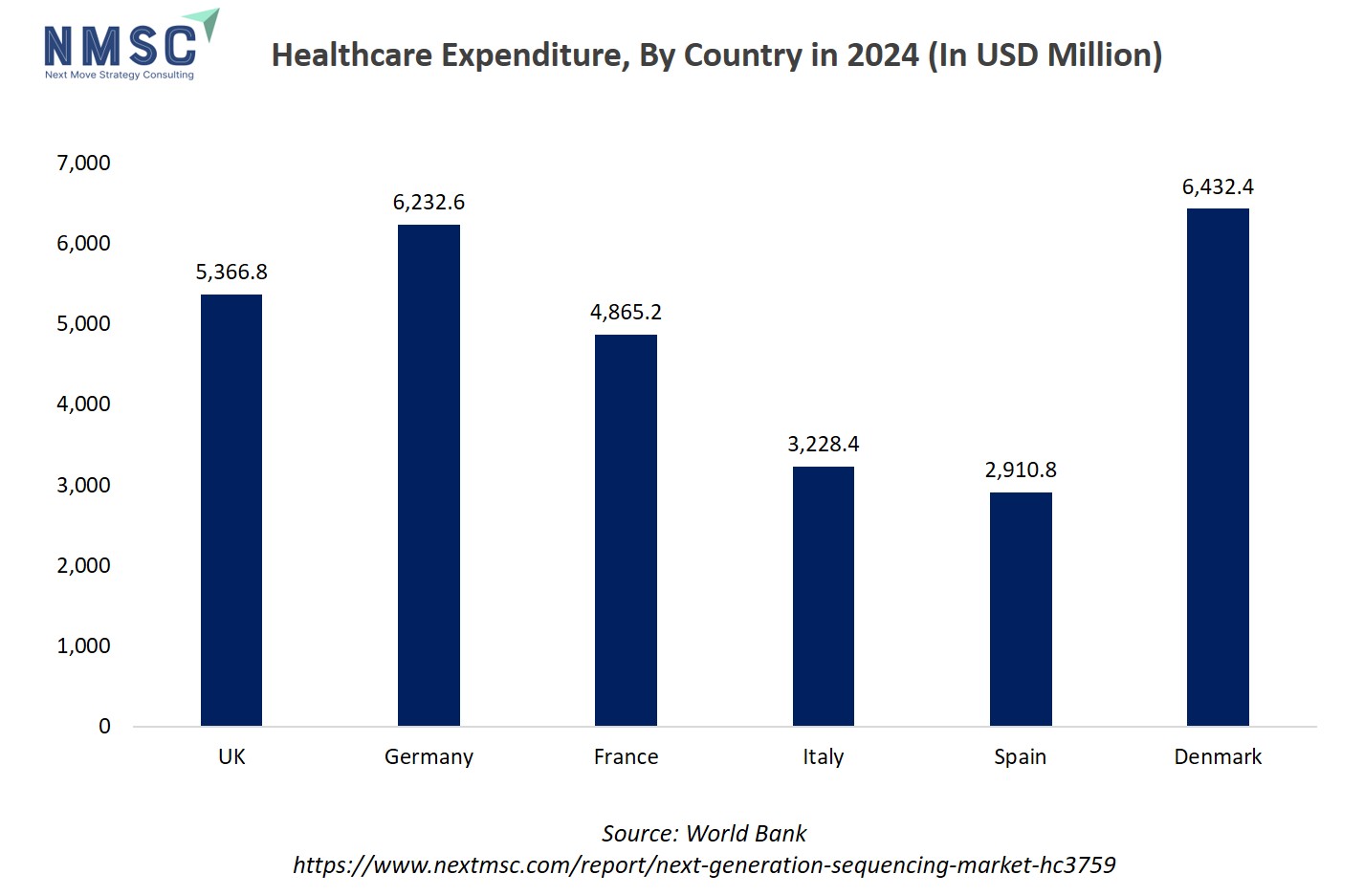
Also, rising healthcare expenditure directly supports the growth of the next generation sequencing market by enabling greater investment in advanced diagnostic technologies and precision medicine initiatives. In high-income regions like Europe, strong public and private healthcare spending allows hospitals, research institutes, and diagnostic labs to adopt NGS-based testing for cancer, rare diseases, and infectious diseases.
Meanwhile, emerging economies in Asia-Pacific and the Middle East are increasing healthcare budgets to strengthen genomics infrastructure and clinical innovation. As countries allocate more resources toward personalized medicine, digital health, and national genomic programs, NGS adoption accelerates due to better reimbursement models, improved laboratory capacity, and growing awareness among clinicians. Consequently, higher healthcare expenditure fuels demand for sequencing platforms, reagents, and bioinformatics tools, driving overall market growth.
Next Generation Sequencing Market in the United Kingdom
The UK is a leader in integrating genomics into healthcare through the NHS Genomic Medicine Service and Genomics England. The NHS reports large volumes of genomic testing and national programs such as newborn sequencing pilots and cancer genomics projects that provide predictable, large-scale purchasing opportunities for instruments, reagents and validated interpretation pipelines. The UK policy environment and strong academic partnerships make it a prime market for clinical validation pilots and payer-facing evidence packages that prove clinical utility.
Next Generation Sequencing Market in Germany
Germany’s genomDE national strategy and strong healthcare infrastructure are pushing genomic medicine into routine care for rare diseases and oncology. Federal funding for data infrastructure, the German Human Genome-Phenome Archive and pilot sequencing projects create a stable demand base for high-throughput instruments and secure bioinformatics systems. Germany’s emphasis on interoperability and regulatory rigor means vendors prioritise data protection, certification and health-economics evidence to win public hospital and insurance coverage tenders.
Next Generation Sequencing Market in France
France is investing in national genomic medicine initiatives and contributing to pan-European reference databases, with public research institutes and hospitals expanding clinical sequencing programs. National projects that link sequencing to cancer registries and prevention strategies are increasing routine testing volumes and creating demand for validated panels and interpretation tools. Because France balances centralized strategy with regional healthcare delivery, vendors that demonstrate regional deployment models and local language support find faster uptake among hospital networks and public labs.
Next Generation Sequencing Market in Italy
Italy’s genomic activity is growing through national genomic strategy efforts and regional projects that support rare-disease diagnosis and public-health surveillance. Italy participates in Europe’s broader genomics initiatives that create opportunities for cross-border research and reference dataset building.
Because the Italian health system is regionally organised, companies work with regional health authorities and academic hubs to pilot clinical workflows, then scale via national programs and European collaborations. Investment in clinician training and standardized SOPs helps overcome regional variability.
Next Generation Sequencing Market in Spain
Spain combines strong public research institutions with national commitments to contribute to large European genomic catalogues. Recent announcements show Spain’s participation in Europe-wide projects to create reference cohorts and expand clinical sequencing, which increase demand for high-throughput sequencing and standardized bioinformatics. For vendors, partnering with national genomic centers and offering validated newborn or oncology panels tailored for Spanish clinical pathways is a practical route to capture public-sector budgets.
Next Generation Sequencing Market in the Nordics
The Nordic countries like Denmark, Sweden, Finland, Norway are notable for strong registries, integrated health data and national genome initiatives such as. Regional collaborations like the Nordic Alliance for Clinical Genomics foster harmonised clinical deployment. These conditions accelerate high-quality population and translational studies that need sustained sequencing capacity and advanced analytics. Vendors that enable federated data access, privacy-preserving analytics, and easy integration with national health registries benefit most here.
Next Generation Sequencing Market in the Asia-Pacific
Asia-Pacific is a diverse but rapidly expanding the market driven by national sequencing centres, large population genomics programs, strong domestic manufacturers, and public-health surveillance investments. Countries like China and India are running high-volume population projects and building national data centers; Japan and South Korea sustain advanced clinical and industrial genomics ecosystems. Market growth is driven by demand for clinical diagnostics, agriculture genomics and pathogen surveillance, and local manufacturing plus lower per-sample costs make adoption faster in some countries. Regional scale and government backing create attractive opportunities for both instrument makers and local service providers.
Next Generation Sequencing Market in China
China has enormous sequencing capacity, large domestic players, and extensive public-health and research sequencing programs; its labs contributed heavily to pandemic sequencing and to pathogen genomics research. China’s scale and vertically integrated ecosystem accelerate both high-throughput projects and commercialization of domestic sequencing technologies. For international vendors, China presents a large but complex market that rewards local partnerships, compliance with data localisation policies, and solutions tuned to high-volume workflows.
Next Generation Sequencing Market in Japan
Japan has long-standing genomics capability in research and diagnostics, strong public and private R&D investment, and national research institutes that push high-quality sequencing projects. Japan’s emphasis on precision medicine and industrial biotech sustains demand for both instruments and specialized assays. Given high regulatory standards and focus on clinical validation, vendors need localized regulatory strategies and collaborations with established medical centres to scale clinical offerings.
Next Generation Sequencing Market in India
India’s genomics ecosystem is expanding rapidly via national projects such as GenomeIndia and government support for national data repositories. These initiatives are increasing domestic sequencing activity in research, public health and population genomics, and create demand for instruments, consumables and secure cloud/data-sharing platforms. India’s market favors cost-efficient workflows and strong local service partners; vendors that offer affordable, validated kits and build capacity-building partnerships with local institutions capture substantial market share as national programs scale.
Next Generation Sequencing Market in South Korea
South Korea’s advanced biotech sector, strong hospital networks and government support for rare-disease and cancer genomics position it as a high-value clinical market. Public and private investments in sequencing for diagnostics, pharmacogenomics and translational research are growing; South Korea’s regulatory focus on clinical validation makes it an attractive market for vendors who demonstrate assay performance and provide local clinical support. Collaborative pilots between hospitals and genomic startups are common entry points.
Next Generation Sequencing Market in Taiwan
Taiwan combines strong biomedical R&D, government encouragement of biotech innovation, and hospital networks that support clinical sequencing for cancer and hereditary conditions. The country’s emphasis on data security and interoperability means vendors offer compliant solutions and strong local technical support. Taiwan’s compact healthcare system enables focused, high-impact pilots that are scaled nationally if outcomes demonstrate clinical or economic benefit.
Next Generation Sequencing Market in Indonesia
Indonesia and other Southeast Asian markets are building sequencing capacity mainly through public-health investments and regional partnerships; efforts accelerated during the pandemic and continue via regional training and capacity programmes. Countries in the region rely on a mix of portable sequencers for field surveillance and central labs for higher-throughput work. Vendors that combine robust field kits, simple workflows, and training programs gain traction as governments strengthen surveillance and agricultural genomics capacity across archipelagic geographies.
Next Generation Sequencing Market in Australia
Australia has coordinated national genomics efforts and high clinical adoption in hospitals for rare diseases and cancer. National collaborations and translational programs have built clinician familiarity with sequencing workflows and interpretation tools, which supports recurring demand for both consumables and interpretation services. Australia’s national research networks and investment in genomic medicine make it a strong market for validated clinical products and integrated analytics platforms.
Next Generation Sequencing Market in Latin America
Latin America’s NGS adoption varies by country but public-health sequencing networks and research consortia expanded dramatically during COVID-19, creating a foundation for sustained genomics use in pathogen surveillance, clinical research and agriculture. Brazil and regional surveillance networks produce substantial sequence volumes and are building local bioinformatics capacity. Funding and infrastructure gaps remain in parts of the region, so many governments and labs lean on international partnerships and regional reference centres; vendors that offer capacity-building, affordable assays and cloud analytics find receptive partners.
Next Generation Sequencing Market in the Middle East & Africa
The Middle East is investing in precision medicine hubs and national genomics plans in a handful of countries, while Africa has made important recent strides through continental initiatives to expand sequencing capacity for outbreak detection and AMR surveillance. Africa’s investments focus on building sustainable lab networks, workforce training and data systems; these efforts tend to prioritise portable/field sequencing for surveillance plus regional reference labs for heavier throughput. Vendors with affordable, rugged instruments and strong training partnerships and those who engage in multi-country public-private projects play a critical role in scaling genomics across the region.
Competitive Landscape
Which Companies Dominate the Next Generation Sequencing Market and How do they Compete?
The next generation sequencing industry is led by a mix of broad-life-science giants and focused sequencing specialists. Illumina and Thermo Fisher battle on scale, installed base and integrated workflows, while BGI/MGI and Oxford Nanopore compete on alternative chemistries and throughput/portability. PacBio and Singular Genomics push long-read and new short-read options, and niche players like Element Biosciences and GenapSys target cost-sensitive benchtop customers with differentiated instruments.
Service labs like Eurofins, Genewiz, Macrogen compete on turnaround and assay breadth, converting demand into recurring consumables sales. Companies differentiate by platform accuracy, run-cost economics, clinical validation and bundled analytics.
Market Dominated by Next Generation Sequencing Giants and Specialists
Competition has polarized into giants that sell end-to-end ecosystems and specialists that focus on one technical edge. Giants leverage installed bases to lock in consumables and enterprise analytics; specialists win on unique capabilities such as ultra-long reads, rapid field sequencing or single-cell prep.
This creates regional niche fights, where large hospital systems and national programs favor established vendors for scale and service, while research labs and translational teams’ trial new players for novel assays. The pattern rewards hybrid strategies, where they maintain a dependable core platform while integrating or partnering for cutting-edge capabilities.
Innovation and Adaptability Drive Market Success
Leaders are investing heavily in chemistry, automation, and analytics to stay relevant. Element Biosciences raised significant capital to commercialize lower-cost AVITI systems and expand multi-omics offerings. Oxford Nanopore’s partnerships and continuous base-calling improvements push real-time clinical and field use.
PacBio iterates on throughput and multi-omic capabilities for clinical use, while Thermo Fisher bundles sequencing with clinical lab services and software. The practical playbook is clear, where couple hardware updates with validated consumables and trusted analytics to shorten clinical adoption cycles and protect recurring revenue.
Market Players to Opt for Merger & Acquisition Strategies to Expand Their Presence
Mergers and acquisitions remain central to growth and capability building. Large firms buy complementary tech or services to accelerate market reach and fill portfolio gaps, such as Thermo Fisher’s ongoing acquisition strategy and Agilent’s purchase of Avida Biomed to broaden assay offerings show this trend. Illumina’s prior high-profile attempt to acquire Grail drew regulatory scrutiny, illustrating antitrust risks in consolidating platform and test capabilities. For smaller innovators, being acquisition targets validate technology and speed global scaling, while acquirers gain immediate access to niche markets and IP.
Key Players
-
Thermo Fisher Scientific Inc.
-
BGI Group
-
F. Hoffmann-La Roche Ltd
-
Element Biosciences
-
eurofins
-
Oxford Nanopore Technologies plc.
-
pacbio
-
10x Genomics
-
GeneMind Biosciences Co., Ltd.
-
Macrogen, Inc
-
genewiz
-
Singular Genomics Systems, Inc
-
CD Genomics
What are the Latest Key Industry Developments?
-
February 2025- F. Hoffmann La Roche Ltd unveils its new Sequencing by Expansion (SBX) NGS technology, promising ultra-rapid, high-throughput sequencing that revolutionize clinical and translational workflows by reducing time from sample to genome dramatically.
-
November 2024- Oxford Nanopore Technologies plc. announces collaboration with the UK’s NHS at up to 30 sites to deploy rapid NGS-based pathogen screening for future pandemic preparedness, embedding real-time sequencing into national healthcare workflows.
-
October 2024- Illumina introduces the MiSeq i100 Series benchtop sequencers, simplified and more affordable systems aimed at smaller labs with room-temperature kit storage and same-day sample-to-analysis, expanding the addressable NGS market beyond large core facilities.
-
July 2024- Thermo Fisher Scientific Inc. partners with the U.S. National Cancer Institute (NCI) for the myeloMATCH precision-medicine trial using its NGS technology to accelerate genetic biomarker testing for AML/MDS, underscoring growing integration of NGS into oncology diagnostics.
What are the Key Factors Influencing Investment Analysis & Opportunities in the Next Generation Sequencing Market?
Investment in the next generation sequencing market landscape is increasingly shaped by advancements in precision medicine, expanding clinical applications, and the shift toward decentralized sequencing solutions. Investors are particularly drawn to companies developing faster, portable, and lower-cost sequencing systems, as well as bioinformatics platforms that simplify data interpretation and integration into clinical workflows.
Strategic funding continues to flow toward firms leveraging NGS for oncology, rare disease diagnostics, and infectious disease surveillance, areas with high translational value and reimbursement potential. The valuation landscape favors agile innovators offering scalable technology and recurring revenue models through consumables and cloud-based analytics.
Emerging investment hotspots include Asia-Pacific, where government-backed genomics initiatives and lower operational costs support rapid infrastructure growth, and North America, where partnerships between healthcare systems and sequencing providers are expanding clinical adoption. Overall, the investment outlook remains optimistic as high-throughput sequencing moves closer to mainstream medical and industrial use.
Key Benefits for Stakeholders:
Next Move Strategy Consulting (NMSC) presents a comprehensive analysis of the Next Generation Sequencing Market, covering historical trends from 2020 through 2024 and offering detailed forecasts through 2030. Our study examines the market at regional and country levels, providing quantitative projections and insights into key growth drivers, challenges, and investment opportunities across all major market segments.
The market creates value for a wide range of stakeholders by combining innovation, scalability, and societal impact. Investors benefit from strong long-term growth potential driven by expanding clinical adoption, recurring consumable revenues, and continuous technological upgrades that sustain profitability. Customers, including researchers, clinicians, and biotech firms, gain access to faster, more accurate, and cost-effective genomic insights that enable breakthroughs in diagnostics, drug discovery, and personalized medicine.
Public health agencies and governments also benefit as NGS supports national genomic surveillance and precision healthcare initiatives, improving disease prevention and treatment outcomes. Together, these advantages foster a robust ecosystem where scientific progress and financial opportunity advance in parallel.
Report Scope
|
Parameters |
Details |
|
Market Size in 2025 |
USD 15.61 Billion |
|
Revenue Forecast in 2030 |
USD 36.63 Billion |
|
Growth Rate |
CAGR of 18.6% from 2025 to 2030 |
|
Analysis Period |
2024–2030 |
|
Base Year Considered |
2024 |
|
Forecast Period |
2025–2030 |
|
Market Size Estimation |
Billion (USD) |
|
Growth Factors |
|
|
Companies Profiled |
15 |
|
Countries Covered |
33 |
|
Market Share |
Available for 10 companies |
|
Customization Scope |
Free customization (equivalent to up to 80 analyst-working hours) after purchase. Addition or alteration to country, regional & segment scope. |
|
Pricing and Purchase Options |
Avail customized purchase options to meet your exact research needs. |
|
Approach |
In-depth primary and secondary research; proprietary databases; rigorous quality control and validation measures. |
|
Analytical Tools |
Porter's Five Forces, SWOT, value chain, and Harvey ball analysis to assess competitive intensity, stakeholder roles, and relative impact of key factors. |
Next Generation Sequencing Market Key Segments
By Product Type
-
Instruments
-
Benchtop systems
-
Mid throughput systems
-
High throughput systems
-
Long read systems
-
-
Consumables and Reagents
-
Library preparation kits
-
Sequencing reagents
-
Flow cells and chips
-
Sample preparation consumables
-
By Technology
-
Sequencing by synthesis
-
Ion semiconductor sequencing
-
Single molecule real time sequencing
-
Nanopore sequencing
-
Targeted resequencing
-
Whole genome sequencing
-
Whole exome sequencing
-
RNA sequencing
By Workflow
-
Pre-Sequencing
-
Sequencing
-
Post-Sequencing
By Application
-
Research
-
Genomics research
-
Functional genomics
-
Agricultural and animal genomics
-
-
Clinical
-
Oncology
-
Infectious diseases
-
Reproductive health
-
Rare genetic disorders
-
-
Pharmaceutical and Biotechnology
-
Drug discovery
-
Biomarker discovery
-
Companion diagnostics
-
-
Others
By End-User
-
Academic and Research Institutions
-
Hospitals and Clinical Laboratories
-
Pharmaceutical and Biotechnology Companies
-
Government and Public Health Agencies
-
Contract Research Organisations
-
Agriculture and Animal Health Companies
Geographical Breakdown
-
North America: U.S., Canada, and Mexico.
-
Europe: U.K., Germany, France, Italy, Spain, Sweden, Denmark, Finland, Netherlands, and rest of Europe.
-
Asia Pacific: China, India, Japan, South Korea, Taiwan, Indonesia, Vietnam, Australia, Philippines, Malaysia and rest of APAC.
-
Middle East & Africa (MEA): Saudi Arabia, UAE, Egypt, Israel, Turkey, Nigeria, South Africa, and rest of MEA.
-
Latin America: Brazil, Argentina, Chile, Colombia, and rest of LATAM.
Conclusion & Recommendations
Our report equips stakeholders, industry participants, investors, and consultants with actionable intelligence to capitalize on the transformative next generation sequencing market potential. By combining robust data-driven analysis with strategic frameworks, NMSC’s Market Report serves as an indispensable resource for navigating the evolving landscape.
The industry stands at the intersection of technology, medicine, and data science, poised for sustained expansion as genomics becomes integral to healthcare, research, and industry. Advances in sequencing speed, accuracy, and affordability continue to lower barriers to entry, while growing clinical applications, particularly in oncology, infectious disease, and rare genetic disorders are driving mainstream adoption. Strategic collaborations, regulatory clarity, and investments in bioinformatics are crucial in unlocking the full potential of NGS as a cornerstone of precision medicine and large-scale population genomics.
Executives and investors focus on aligning with companies that demonstrate strong innovation pipelines, validated clinical use cases, and scalable business models built on recurring consumables and data analytics. Strategic partnerships with healthcare providers, AI-driven bioinformatics firms, and government-led genomic programs help capture future growth. Early positioning in emerging markets and continued R&D investments ensure long-term leadership in this rapidly evolving industry.


About the Author
 Mayurima Roy
— Mayurima Roy is Research Analyst at Next Move Strategy Consulting, where she has spent 4 years working across the firm's full industry coverage rather than a single fixed vertical. Her work centers on structured research, ongoing trend tracking, competitive assessment, and insight-led content development, translating complex market data into clear, decision-ready narratives that support informed client decision-making across diverse global industries, market sectors, and world regions every day.
Mayurima Roy
— Mayurima Roy is Research Analyst at Next Move Strategy Consulting, where she has spent 4 years working across the firm's full industry coverage rather than a single fixed vertical. Her work centers on structured research, ongoing trend tracking, competitive assessment, and insight-led content development, translating complex market data into clear, decision-ready narratives that support informed client decision-making across diverse global industries, market sectors, and world regions every day.
About the Reviewer
 Supradip Baul
— Supradip Baul is an accomplished business consultant and strategist with over a decade of rich experience in market intelligence, strategy, technology, and business transformation. His work has included rigorous qualitative and quantitative analysis across multiple industries, helping clients shape investment decisions and long-term roadmaps. Earlier in his career, he was associated with Gartner, where he contributed to industry-leading reports and market share analyses. He has worked with leading global companies and holds an MBA with a dual specialization in Marketing and Finance.
Supradip Baul
— Supradip Baul is an accomplished business consultant and strategist with over a decade of rich experience in market intelligence, strategy, technology, and business transformation. His work has included rigorous qualitative and quantitative analysis across multiple industries, helping clients shape investment decisions and long-term roadmaps. Earlier in his career, he was associated with Gartner, where he contributed to industry-leading reports and market share analyses. He has worked with leading global companies and holds an MBA with a dual specialization in Marketing and Finance.
At Next Move Strategy Consulting, we understand that insightful market research is the cornerstone of successful business decisions. That's why we employ a robust and multifaceted approach, combining various methodologies to deliver the most accurate and actionable data for our clients.

Research Landscape
We navigate the world of research with two primary approaches:
Qualitative Approach
Our qualitative research methodologies involve immersive techniques such as in-depth interviews, focus groups, and observational studies. By engaging directly with individuals and stakeholders, we uncover valuable insights that quantitative data alone may overlook.

Quantitative Research
In tandem with qualitative methodologies, NMSC leverages the power of Quantitative Research to provide a robust foundation of numerical insights. Through systematic data collection and analysis, we quantify patterns, preferences, and market trends, offering a comprehensive view of the business landscape.
Our quantitative research approach employs diverse tools, including surveys, experiments, and statistical modelling. These methodologies enable us to gather data from a large and representative sample, ensuring the statistical significance of our findings. By employing structured questionnaires and standardized data collection methods, we guarantee the reliability and validity of the information we present to our clients.
Quantitative research is particularly effective in measuring the prevalence of trends, assessing market size, and gauging the impact of various factors on consumer behavior. The numerical precision attained through this approach equips our clients with actionable insights, facilitating data-driven decision-making and strategy formulation.


Our Specialized Toolbox for Industry-Specific Market Research
We deploy a specialized arsenal of techniques tailored to meet your unique requirements. Here's a glimpse into our comprehensive toolbox:

Information Procurement
The stage entails acquiring market data or relevant information through various sources and methodologies.


Market Research Approach
We utilize both top-down and bottom-up approaches in market research analysis to achieve a comprehensive understanding of the market dynamics, leveraging the broad perspective of industry trends and macroeconomic factors alongside detailed insights from specific segments and individual companies.

Porters Five Forces Analysis
We conduct Porter's Five Forces analysis to evaluate the competitive landscape of an industry, providing us with insights into factors that affect profitability and strategic positioning.

SWOT Analysis

Forecasting
We utilize a forecasting model to predict future consumption by considering parameters like population, economics, regulations, market competition, drivers, constraints, technology, and pricing. We also employ statistical techniques such as multilinear regression, exponential smoothing, moving average, ARIMA, and Monte Carlo simulations for accurate predictions. In econometric forecasting, we analyzed short-term and long-term event impacts, attributing values based on regulatory frameworks, economic factors, and market events.





 Speak to Our Analyst