Nigeria Propylene Market By Grade (Polymer, Chemical, Refinery, and Other Grades), By Production Route (Steam Cracking, FCC, PDH, Metathesis, MTO, CTO, and Others), By Derivative (Polypropylene, Propylene Oxide, Cumene, Acrylonitrile, Oxo Alcohols, Isopropanol, Acrylic Acid & Acrylates, and Others), By Sales Model (Merchant, Captive, and Tolling), and By Application (Packaging, Automotive, Building & Others) – Opportunity Analysis and Industry Forecast, 2025–2035
Industry: Materials and Chemical | Latest Edition: August 5, 2026 | No of Pages: 306 | No. of Tables: 172 | No. of Figures: 162 | Format: PDF | Report Code: MC5588
Nigeria Propylene Market Size & Forecast 2025–2035
|
Parameters |
Details |
|
Market Size in 2025 |
USD 791.31 Million |
|
Market Size in 2026 |
USD 810.77 Million |
|
Revenue Forecast in 2035 |
USD 925.63 Million |
|
Growth Rate (Revenue) |
CAGR of 1.48% from 2026 to 2035 |
|
Market Volume in 2025 |
690 Kilo Tons |
|
Market Volume in 2026 |
728 Kilo Tons |
|
Volume Forecast in 2035 |
991 Kilo Tons |
|
Growth Rate (Volume) |
CAGR of 3.49% from 2026 to 2035 |
|
Analysis Period |
2025–2035 |
|
Base Year Considered |
2025 |
|
Forecast Period |
2026–2035 |
|
Market Size Estimation |
Million (USD) |
|
Companies Profiled |
10 |
|
Market Share |
Available for 10 Companies |
Industry Outlook
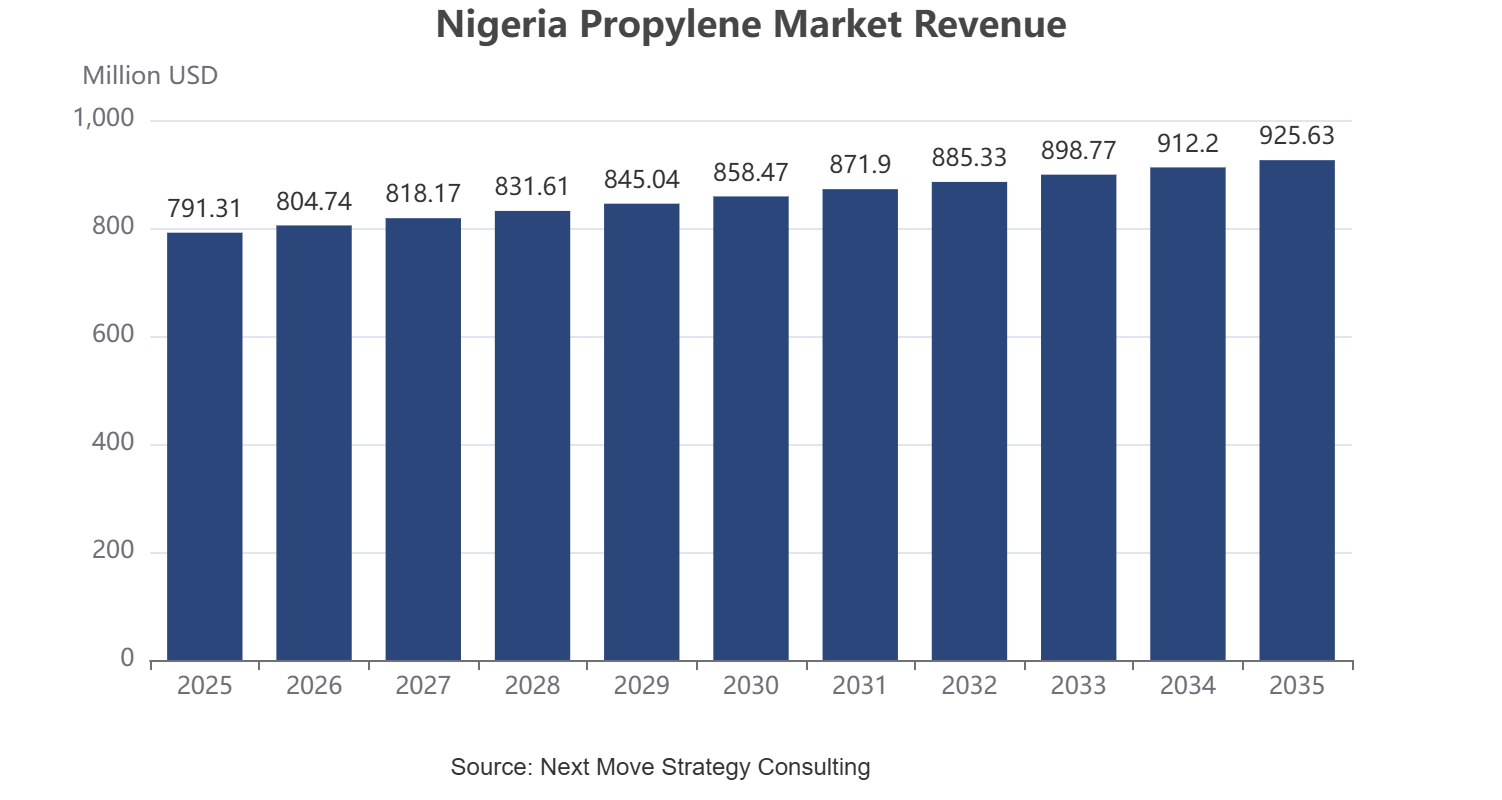
The Nigeria Propylene Market size was valued at USD 791.31 million in 2025 and reached USD 810.77 million by 2026. Looking ahead, the industry is projected to grow steadily, reaching USD 925.63 million by 2035, registering a CAGR of 1.48% from 2026 to 2035. In terms of volume, the market recorded 690 kilo tons in 2025, with forecasts indicating growth to 728 kilo tons by 2026 and further to 991 kilo tons by 2035, reflecting a CAGR of 3.49% over the same period.
What Are the Key Market Drivers, Restraints, and Opportunities Shaping the Nigeria Propylene Market?
|
Drivers / Trends / Restraints / Opportunities |
(+/–) % Impact on CAGR Forecast |
Geographic Relevance |
Impact Timeline |
|
Rising urbanisation and consumer goods demand are driving market growth by increasing packaging material consumption |
+1.2% |
National |
Short to medium term (1–5 years) |
|
Expansion of refining and petrochemical investments is driving market growth by improving domestic propylene production potential |
+1.0% |
National |
Medium term (2–6 years) |
|
Growing government policy support and industrial development incentives are driving market growth by improving the investment climate for petrochemical manufacturing |
+0.9% |
National |
Medium to long term (3–7 years) |
|
Inadequate industrial infrastructure and supply chain inefficiencies are restraining market expansion |
–0.8% |
National |
Short to medium term (1–5 years) |
|
Development of domestic plastics and packaging industries is creating opportunities for market growth |
+0.7% |
National |
Long term (4–10 years) |
Through our market assessment, we observed that the Nigeria Propylene Market is witnessing gradual growth driven by rising urbanization, expansion of domestic refining capacity, and increasing demand for packaging and consumer goods. Development of the domestic chemicals industry is creating new downstream opportunities across multiple application segments. However, inadequate infrastructure and supply chain inefficiencies continue to constrain market expansion. Long-term growth prospects remain positive as domestic petrochemical investment initiatives gain traction and downstream industries develop.
Growth Driver:
How Is Rising Urbanisation and Consumer Goods Demand Driving the Nigeria Propylene Market Growth?
Through our market assessment, we observed that rapid urbanisation across Nigeria is significantly increasing the consumption of packaged goods, consumer products, and construction materials. As urban populations expand, demand for polypropylene-based packaging, household appliances, and personal care products is intensifying, thereby driving propylene consumption. Growing retail and e-commerce sectors are further amplifying packaging material requirements. Rising disposable incomes and expanding middle-class demographics are also contributing to increased consumption of propylene-derived products across domestic markets throughout Nigeria.
How Is Expansion of Refining and Petrochemical Investments Fueling the Nigeria Propylene Market?
Based on our market evaluation, expansion of oil refining and petrochemical investment activities is substantially enhancing domestic propylene production potential in Nigeria. New refinery developments, including large-scale integrated complexes, are providing additional co-production of propylene through fluid catalytic cracking operations. Increasing investment in downstream petrochemical facilities is also contributing to capacity development for propylene processing and derivative manufacturing. These developments are expected to reduce import dependency and strengthen the overall domestic propylene supply ecosystem over the forecast period.
How Is Government Policy Support and Industrial Development Driving Propylene Market Expansion in Nigeria?
Based on research conducted by NMSC, increasing government-led initiatives to promote industrial development and diversify the Nigerian economy away from crude oil exports are creating favourable conditions for petrochemical sector investment. Policy frameworks aimed at local content development, special economic zones, and investment incentives are encouraging the establishment of propylene-based manufacturing operations. Regulatory support for downstream chemical industries is attracting both domestic and foreign investment, contributing to capacity development and supporting the long-term sustainability of the Nigeria Propylene Market.
Growth Inhibitor:
How Are Inadequate Industrial Infrastructure and Supply Chain Inefficiencies Restraining Nigeria Propylene Market Growth?
Inadequate industrial infrastructure and supply chain inefficiencies continue to significantly restrain the expansion of the Nigeria Propylene Market by limiting the operational capacity and reliability of propylene production, distribution, and processing activities. Deficiencies in logistics networks, port handling capacities, and transportation infrastructure increase the cost of raw material procurement and finished product distribution. Furthermore, unreliable utility supply, including power generation constraints, raises operational costs for petrochemical facilities. These systemic infrastructure gaps reduce overall market competitiveness and deter large-scale investment in domestic propylene production and derivative manufacturing operations.
Growth Opportunity:
How Is Development of Domestic Plastics and Packaging Industries Creating Growth Opportunities in the Nigeria Propylene Market?
Through NMSC's assessment, we found that the rapid development of domestic plastics and packaging manufacturing industries is creating substantial growth opportunities for the Nigeria Propylene Market. Rising consumer demand for packaged food products, household goods, and industrial packaging materials is incentivizing investment in polypropylene and other propylene derivative production. Nigeria's large and growing population base presents a significant downstream consumption opportunity, encouraging the establishment of new propylene processing facilities. Expanding formal retail channels and regional trade partnerships are further amplifying demand for domestically produced propylene-based packaging and consumer materials.
Ecosystem Analysis of the Nigeria Propylene Market
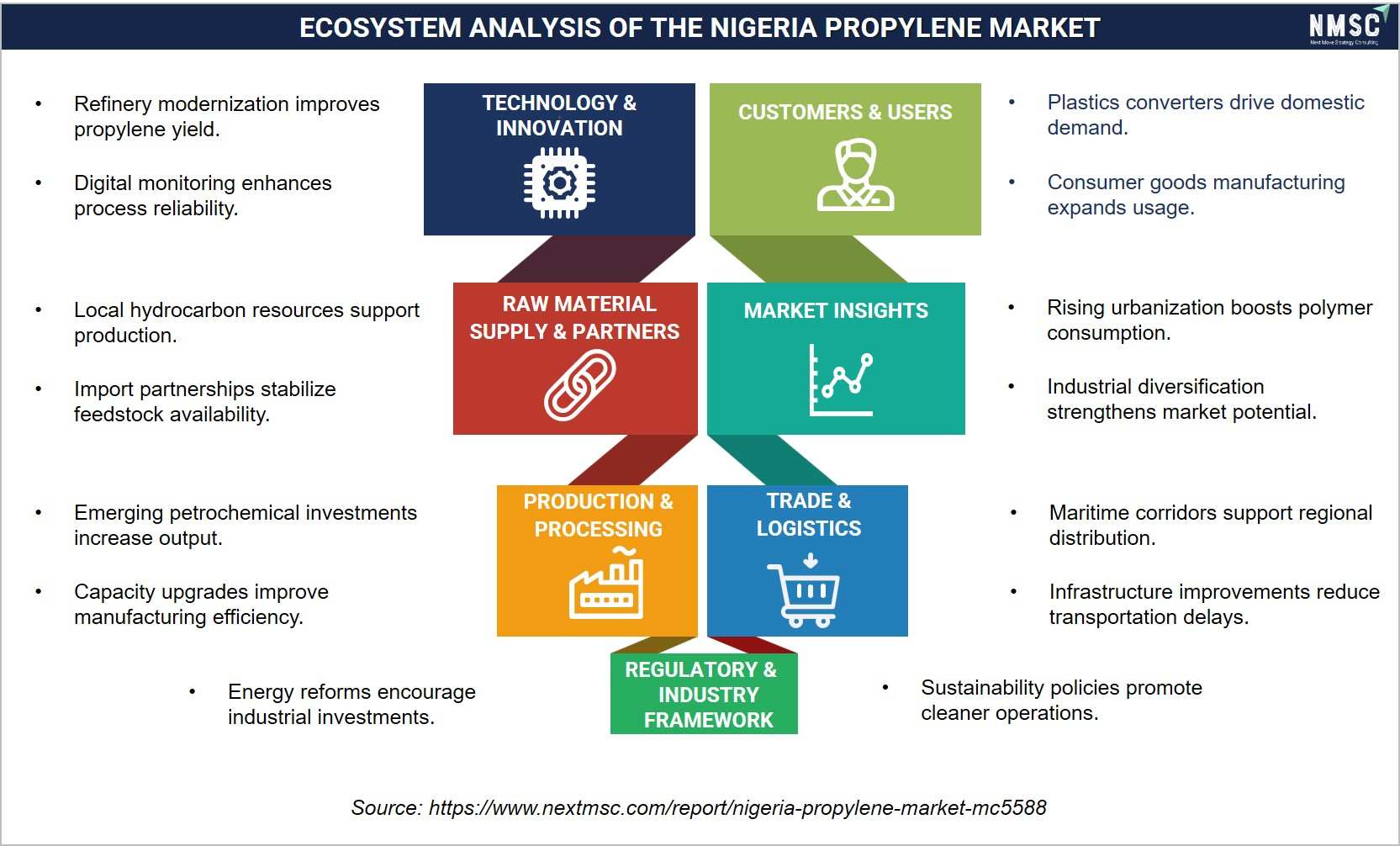
The ecosystem of the Nigeria propylene market is supported by interconnected activities across raw material sourcing, production, logistics, technology, and end-use industries. Feedstock suppliers and refinery operators play a crucial role in ensuring propylene availability, while advancements in processing technologies improve operational efficiency. Demand is primarily driven by plastics converters and consumer goods manufacturers. Trade infrastructure and regulatory frameworks further influence market development, supporting the growth of Nigeria's downstream petrochemical and manufacturing sectors
How Is the Nigeria Propylene Market Segmented, and What Are the Key Insights from the Segmentation Analysis?
By Grade Insights
Is Grade Segmentation Influencing Product Utilization Across the Nigeria Propylene Market?
Based on grade, the market is segmented into polymer grade, chemical grade, refinery grade, and other grades.
Based on our analysis, we observed that grade selection across the Nigeria propylene market is influenced by downstream application requirements, purity specifications, and end-use industry demand. Polymer-grade propylene is the most widely sought due to its applicability in polypropylene production for packaging, consumer goods, and construction materials. Chemical-grade propylene supports the manufacturing of intermediates including propylene oxide and acrylonitrile. Refinery-grade propylene is primarily utilized within domestic refinery and petrochemical operations. Evolving downstream demand patterns are also supporting interest in other specialty propylene grades.
By Derivative Insights
Is Derivative Segmentation Driving Demand Patterns Across the Nigeria Propylene Market?
Based on derivative, the market is segmented into polypropylene, propylene oxide, cumene, acrylonitrile, oxo alcohols, isopropanol, acrylic acid and acrylates, and other derivatives.
Based on our analysis, derivative demand across the Nigeria propylene market is primarily driven by the growing consumption of plastics, chemicals, and industrial materials. Polypropylene represents the largest derivative segment due to its extensive application in packaging, consumer goods, automotive components, and construction materials. Propylene oxide, cumene, and acrylonitrile support the production of polyurethanes, phenol, acetone, acrylic fibers, and engineering plastics used across multiple industries. Additionally, derivatives such as oxo alcohols, isopropanol, and acrylic acid continue to witness steady demand from coatings, adhesives, pharmaceutical, sanitizer, and specialty chemical applications, contributing to the overall expansion of Nigeria's downstream petrochemical value chain.
Key Segments
By Grade
-
Polymer Grade
-
Chemical Grade
-
Refinery Grade
-
Other Grade
By Production Route
-
Steam Cracking
-
Fluid Catalytic Cracking (FCC)
-
Propane Dehydrogenation (PDH)
-
Metathesis
-
Methanol to Olefins (MTO)
-
Coal to Olefins (CTO)
-
Other Routes
By Derivative
-
Polypropylene
-
Homo PP
-
Copolymer PP
-
Random
-
Block
-
-
-
Propylene Oxide
-
Polyether Polyols
-
Propylene Glycol
-
Glycol Ethers
-
-
Cumene
-
Phenol
-
Acetone
-
-
Acrylonitrile
-
Acrylic Fibers
-
ABS
-
Nitrile Rubber
-
-
Oxo Alcohols
-
n-Butanol
-
Isobutanol
-
2-Ethylhexanol
-
-
Isopropanol
-
Solvents
-
Pharma
-
Sanitizers
-
-
Acrylic Acid and Acrylates
-
SAP
-
Coatings
-
Adhesives
-
-
Other Derivatives
By Sales Model
-
Merchant
-
Captive
-
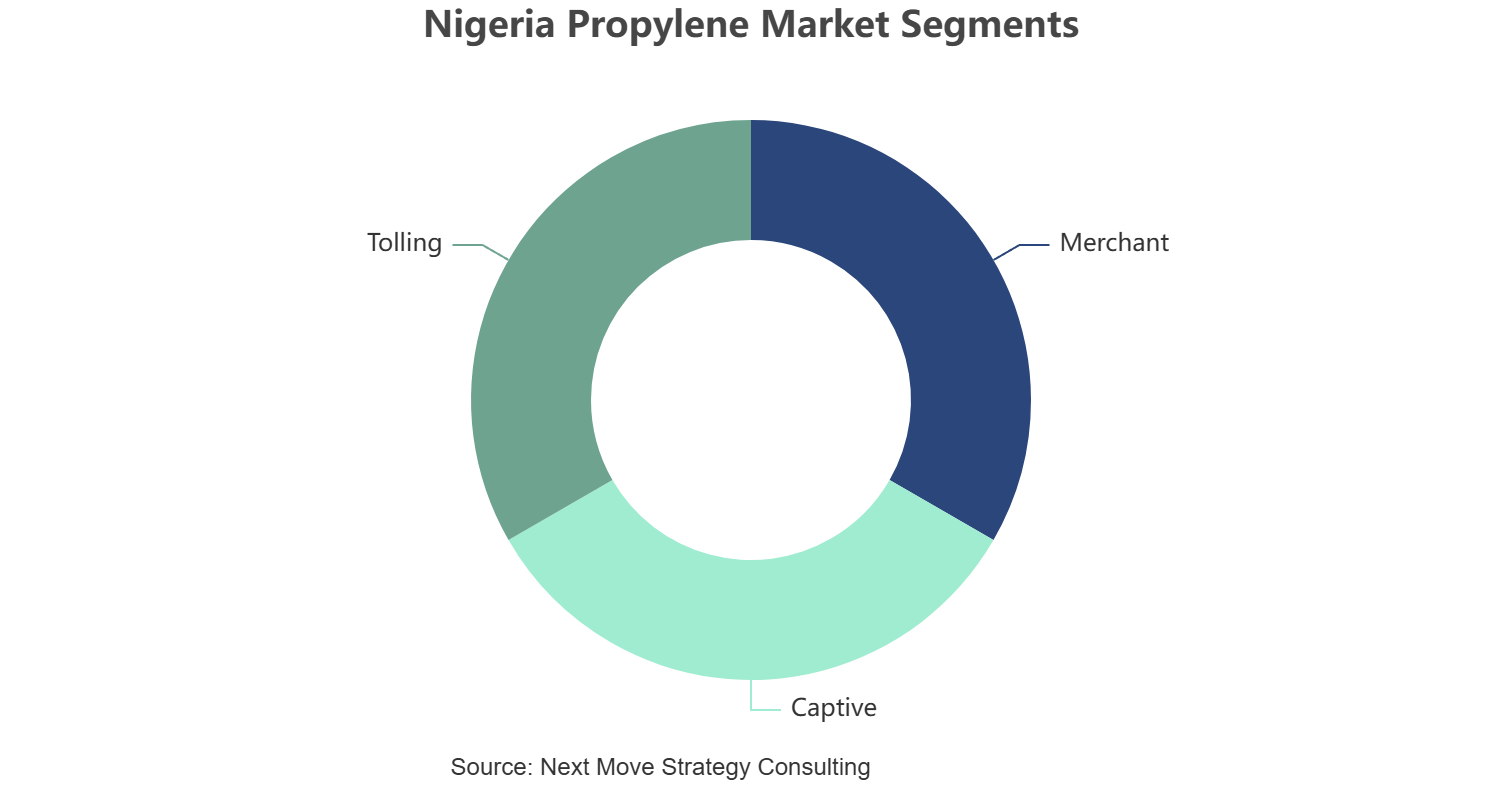
Tolling
By Application
-
Packaging
-
Rigid Packaging
-
Flexible Packaging
-
-
Automotive
-
Interior Components
-
Exterior Components
-
Under-the-hood Parts
-
-
Building & Construction
-
Insulation
-
Pipes & Fittings
-
Architectural Coatings
-
-
Textiles and Fibers
-
Apparel Fibers
-
Industrial Fibers
-
-
Consumer Products
-
Appliances
-
Household Goods
-
Personal Care
-
-
Healthcare
-
Medical Plastics
-
Disinfectants
-
Pharma Solvents
-
-
Electronics
-
Electronic Components
-
Equipment Housings
-
-
Industrial Applications
-
Industrial Solvents
-
Lubricants
-
Industrial Coatings and Adhesives
-
Other Industrial End‑Uses
-
-
Other Applications
Price Point Analysis of the Nigeria Propylene Market
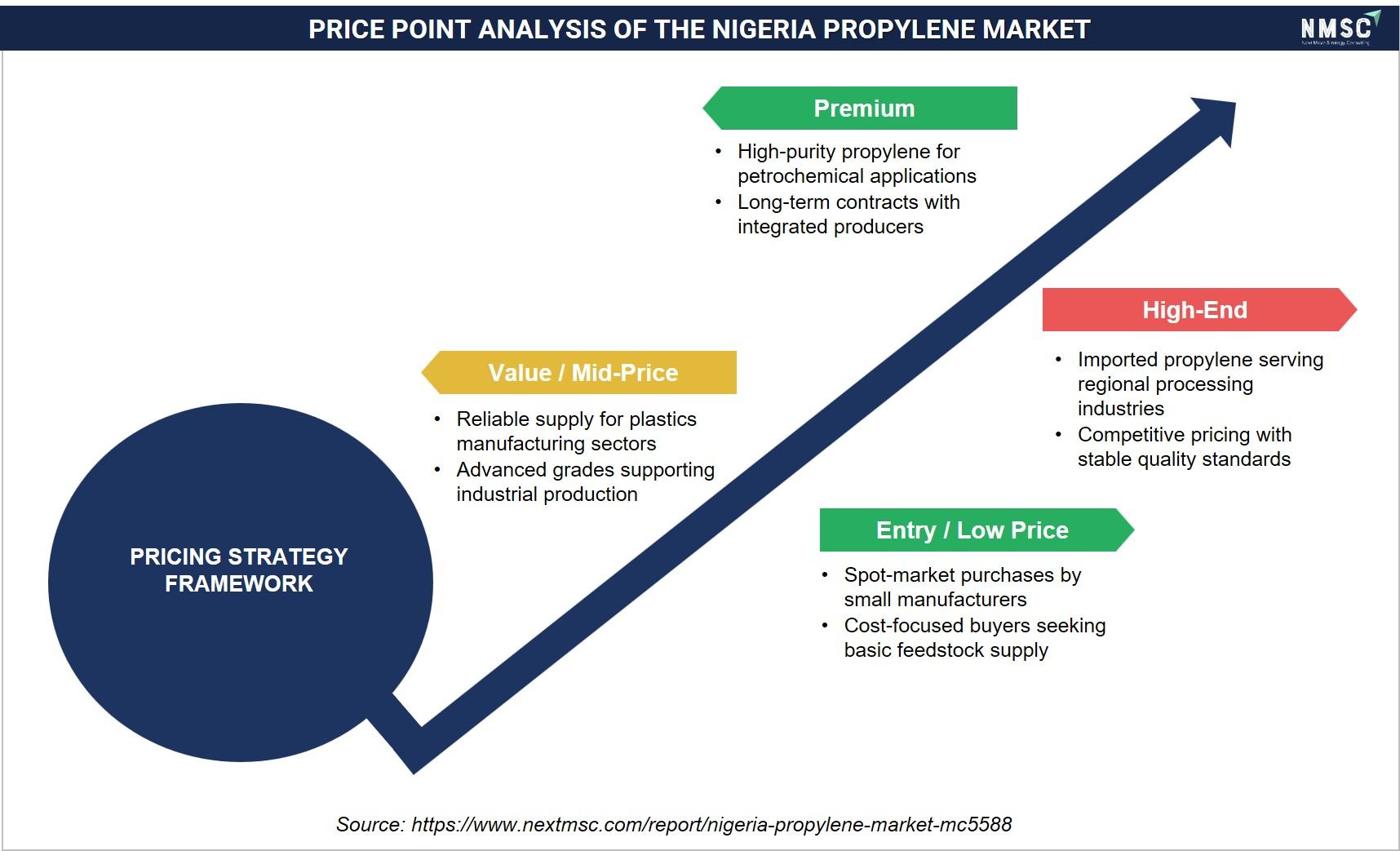
The Nigeria propylene market exhibits a multi-tier pricing structure shaped by product quality, supply reliability, and procurement strategies. Entry-level pricing is largely associated with spot-market purchases and cost-sensitive buyers seeking basic feedstock supply. Mid-price segments cater to industrial manufacturers requiring consistent availability and enhanced product specifications. Premium pricing is typically linked to high-purity propylene grades, long-term supply agreements, and specialized petrochemical applications, while imported material often serves high-end processing industries with stringent quality requirements.
Competitive Landscape
The Nigeria Propylene Market is characterized by a developing competitive structure, comprising refinery operators, petrochemical producers, downstream chemical manufacturers, and specialty industrial companies. Market dynamics are shaped by expanding domestic refining capacity, rising demand for propylene-based derivatives in packaging, consumer goods, and industrial applications, and increasing investments in petrochemical infrastructure development. Participants in this market are strengthening their operational positions through capacity investments, supply chain development, and partnerships with international technology and chemical companies to support long-term competitiveness within the evolving Nigerian petrochemical landscape.
Strategic Developments:
-
March 2025 – Dangote Petroleum Refinery commenced commercial production at its polypropylene facility in Lagos, with an annual production capacity of approximately 830,000 metric tons, making it the largest polypropylene plant in Africa and significantly strengthening Nigeria's propylene-based petrochemical value chain.
Key Players of the Nigeria Propylene Market
-
Mobil Producing Nigeria Unlimited
-
Dow Industrial Chemical Products Nigeria Limited
-
Shell Petroleum Development Company of Nigeria Limited
-
TotalEnergies Marketing Nigeria Plc
-
Dangote Petroleum Refinery
-
Indorama Eleme Petrochemicals Limited
-
Fine Chemicals Nigeria Limited
-
Epoxy Oilserv Nigeria Limited
-
Benichem Petrochemicals Nigeria Limited
-
Addax Petroleum Development (Nigeria) Limited
NMSC's analysis indicates that competitive dynamics in the Nigeria Propylene Market are increasingly shaped by refinery capacity utilization, downstream investment strategies, and supply chain development. Key companies operating within this market include Mobil Producing Nigeria Unlimited, Dow Industrial Chemical Products Nigeria Limited, Shell Petroleum Development Company of Nigeria Limited, TotalEnergies Marketing Nigeria Plc, Dangote Petroleum Refinery, Indorama Eleme Petrochemicals Limited, Fine Chemicals Nigeria Limited, Epoxy Oilserv Nigeria Limited, Benichem Petrochemicals Nigeria Limited, and Addax Petroleum Development (Nigeria) Limited, each contributing to market capacity and downstream chemical production.
Key Benefits for Stakeholders
Next Move Strategy Consulting (NMSC) presents a comprehensive analysis of the Nigeria Propylene Market, covering historical developments from 2020 to 2025 and providing forecasts through 2035. Our study evaluates market performance at the national level, delivering quantitative outlooks alongside qualitative insights into propylene production trends, feedstock dynamics, refinery capacity expansions, derivative demand growth, and emerging investment opportunities. Investors benefit from identifying key growth sectors in domestic petrochemical processing, while propylene producers, refinery operators, and downstream manufacturers benefit from detailed market assessments.
Additionally, packaging manufacturers, automotive component producers, construction material suppliers, consumer goods companies, healthcare industry participants, and industrial sector operators benefit from granular demand forecasts and segment-level analysis. The research provides actionable insights into competitive dynamics, production route evolution, and derivative consumption trends, enabling stakeholders to formulate informed investment strategies. Government agencies and policy planning organizations also benefit from sector-level analysis supporting the development of industrial frameworks and economic diversification strategies within Nigeria's growing petrochemical sector.
|
Parameters |
Details |
|
Customization Scope |
Free customization (equivalent to up to 80 analyst-working hours) after purchase. |
|
Pricing and Purchase Options |
Avail customized purchase options to meet your exact research needs. |
|
Approach |
In-depth primary and secondary research; proprietary databases; rigorous quality control and validation measures. |
|
Analytical Tools |
Porter's Five Forces, SWOT, value chain, and Harvey ball analysis to assess competitive intensity, stakeholder roles, and relative impact of key factors. |
Conclusion
The Nigeria Propylene Market is positioned for steady growth over the 2026–2035 forecast period, supported by rising urbanization, expanding domestic refining and petrochemical investments, and growing government policy support for industrial development. Development of domestic plastics and packaging industries is expected to drive downstream propylene demand across multiple application segments. Infrastructure improvements and increased foreign investment will be critical to unlocking the market's full potential. Competitive dynamics among key producers will continue to evolve as refinery capacity expands and derivative manufacturing capabilities strengthen across Nigeria's developing petrochemical landscape.
About the Author
 Saista Faiyaz
— Saista Faiyaz is Research Associate at Next Move Strategy Consulting, where she has covered consumer markets and healthcare technologies for 3 years. Her work includes primary interview review, secondary-source validation, market sizing, and structured analysis of company and industry data. She supports research by comparing evidence across sources, organizing findings into market narratives, and documenting assumptions used in analysis. Her scope includes cross-market benchmarking, and reports.
Saista Faiyaz
— Saista Faiyaz is Research Associate at Next Move Strategy Consulting, where she has covered consumer markets and healthcare technologies for 3 years. Her work includes primary interview review, secondary-source validation, market sizing, and structured analysis of company and industry data. She supports research by comparing evidence across sources, organizing findings into market narratives, and documenting assumptions used in analysis. Her scope includes cross-market benchmarking, and reports.
About the Reviewer
 Supradip Baul
— Supradip Baul is an accomplished business consultant and strategist with over a decade of rich experience in market intelligence, strategy, technology, and business transformation. His work has included rigorous qualitative and quantitative analysis across multiple industries, helping clients shape investment decisions and long-term roadmaps. Earlier in his career, he was associated with Gartner, where he contributed to industry-leading reports and market share analyses. He has worked with leading global companies and holds an MBA with a dual specialization in Marketing and Finance.
Supradip Baul
— Supradip Baul is an accomplished business consultant and strategist with over a decade of rich experience in market intelligence, strategy, technology, and business transformation. His work has included rigorous qualitative and quantitative analysis across multiple industries, helping clients shape investment decisions and long-term roadmaps. Earlier in his career, he was associated with Gartner, where he contributed to industry-leading reports and market share analyses. He has worked with leading global companies and holds an MBA with a dual specialization in Marketing and Finance.
At Next Move Strategy Consulting, we understand that insightful market research is the cornerstone of successful business decisions. That's why we employ a robust and multifaceted approach, combining various methodologies to deliver the most accurate and actionable data for our clients.

Research Landscape
We navigate the world of research with two primary approaches:
Qualitative Approach
Our qualitative research methodologies involve immersive techniques such as in-depth interviews, focus groups, and observational studies. By engaging directly with individuals and stakeholders, we uncover valuable insights that quantitative data alone may overlook.

Quantitative Research
In tandem with qualitative methodologies, NMSC leverages the power of Quantitative Research to provide a robust foundation of numerical insights. Through systematic data collection and analysis, we quantify patterns, preferences, and market trends, offering a comprehensive view of the business landscape.
Our quantitative research approach employs diverse tools, including surveys, experiments, and statistical modelling. These methodologies enable us to gather data from a large and representative sample, ensuring the statistical significance of our findings. By employing structured questionnaires and standardized data collection methods, we guarantee the reliability and validity of the information we present to our clients.
Quantitative research is particularly effective in measuring the prevalence of trends, assessing market size, and gauging the impact of various factors on consumer behavior. The numerical precision attained through this approach equips our clients with actionable insights, facilitating data-driven decision-making and strategy formulation.


Our Specialized Toolbox for Industry-Specific Market Research
We deploy a specialized arsenal of techniques tailored to meet your unique requirements. Here's a glimpse into our comprehensive toolbox:

Information Procurement
The stage entails acquiring market data or relevant information through various sources and methodologies.


Market Research Approach
We utilize both top-down and bottom-up approaches in market research analysis to achieve a comprehensive understanding of the market dynamics, leveraging the broad perspective of industry trends and macroeconomic factors alongside detailed insights from specific segments and individual companies.

Porters Five Forces Analysis
We conduct Porter's Five Forces analysis to evaluate the competitive landscape of an industry, providing us with insights into factors that affect profitability and strategic positioning.

SWOT Analysis

Forecasting
We utilize a forecasting model to predict future consumption by considering parameters like population, economics, regulations, market competition, drivers, constraints, technology, and pricing. We also employ statistical techniques such as multilinear regression, exponential smoothing, moving average, ARIMA, and Monte Carlo simulations for accurate predictions. In econometric forecasting, we analyzed short-term and long-term event impacts, attributing values based on regulatory frameworks, economic factors, and market events.





 Speak to Our Analyst