Passenger Elevator Market By Product Type (Traction Elevators, Hydraulic Elevators, and Others), By Load Capacity (Low Capacity ≤ 1000 kg, Medium Capacity 1001–2000 kg, and High Capacity > 2000 kg), By Speed (Low Speed ≤ 1.0 m/s, Medium Speed 1.1–2.5 m/s, and Others), By Door Type (Automatic and Manual), By Sales Channel (Direct OEM Sales, Dealer Channel, and Shared Ownership Models), By Application (Residential, Commercial, Others) – Global Analysis & Forecast, 2025–2035
Industry: Construction & Manufacturing | Publishing Date: August 24, 2026 | Last Updated: October 16, 2026 | No of Pages: N/A | No. of Tables: N/A | No. of Figures: N/A | Format: PDF | Report Code: CM4193
Industry Outlook
The global Passenger Elevator Market size was valued at USD 70.36 billion in 2025, and is expected to be valued at USD 76.41 billion by the end of 2026. The industry is projected to grow, hitting USD 141.39 billion by 2035, with a CAGR of 7.23% between 2026 and 2035.
Passenger Elevator Industry Size & Forecast
|
Parameters |
Details |
|
Market Size in 2026 |
USD 76.41 Billion |
|
Revenue Forecast in 2035 |
USD 141.39 Billion |
|
Growth Rate |
CAGR of 7.23% from 2026 to 2035 |
|
Analysis Period |
2025–2035 |
|
Base Year Considered |
2025 |
|
Forecast Period |
2026–2035 |
|
Market Size Estimation |
Billion (USD) |
|
Companies Profiled |
20 |
|
Countries Covered |
33 |
|
Market Share |
Available for 10 companies |
Based on NMSC’s primary research, the global passenger elevator market is experiencing sustained growth, driven by rapid urbanization, rising construction of high-rise residential and commercial buildings, and increasing modernization of ageing elevator infrastructure. Technological advancements, including AI-enabled destination control systems, smart dispatch algorithms, predictive maintenance, and IoT connectivity, are materially improving traffic efficiency, ride availability, safety, and lifecycle performance. Our evaluations of installed elevator systems across offices, residential towers, hospitals, and transit hubs indicate that intelligent group control and software-defined architectures significantly reduce waiting times, optimize passenger flow, and support phased modernization. New installations account for a major share of demand, while modernization and service revenues are becoming increasingly strategic for OEMs.
Moreover, through assessments of deployments across North America, Europe, and Asia-Pacific, we observed that market adoption is shaped by regulatory frameworks, building density, and lifecycle cost considerations. Asia-Pacific leads global demand, supported by large-scale urban development and smart city initiatives, while Europe and North America are driven by replacement, energy efficiency upgrades, and strict safety compliance. Competition is led by global OEMs such as Otis Elevator Company, KONE Corporation, Schindler, Mitsubishi Electric Corporation, and Hitachi, Ltd., alongside strong regional players competing on cost efficiency and localized solutions. Ongoing investments in digital platforms, predictive maintenance, and modernization solutions continue to strengthen long-term market stability and growth prospects.
What Are the Key Trends in the Passenger Elevator Industry?
How Is AI-Driven Intelligence Transforming Operational Efficiency in Passenger Elevators?
Based on our evaluation of installed passenger elevator systems across commercial offices, residential towers, hospitals, and transit hubs, we observed that AI-driven intelligence materially improved traffic handling efficiency, ride availability, and system reliability. Our primary interviews with elevator OEMs indicated that AI-enabled destination control systems (DCS) and adaptive dispatch algorithms reduced average waiting times and peak-hour congestion. Further, machine-learning models dynamically adjusted car assignments based on passenger flow patterns, time-of-day usage, and historical demand, outperforming conventional rule-based group control. However, the limited explainability of AI decisions and regulatory scrutiny in safety-critical environments remained key constraints to broader adoption.
How Is Customization and Aesthetic Differentiation Becoming a Competitive Trend?
From our market review, we observed that cabin customization and aesthetic differentiation are emerging as significant competitive trends in the market particularly in premium residential, commercial, and hospitality developments where elevators increasingly contribute to overall building design and user experience. Developers and building owners are increasingly looking beyond basic functionality, seeking elevators that contribute to the overall appeal and branding of their properties. Key elements driving this trend include premium finishes such as high-quality metals, glass panels, and designer lighting, digital displays and touchless interfaces that enhance convenience and hygiene; and branding integration where elevators reflect a building’s identity or corporate aesthetics.
Our further interviews with property managers and design consultants, we identified that such aesthetic upgrades not only improve passenger perception but also increase tenant satisfaction and property valuation. Moreover, manufacturers are responding with modular and flexible cabin designs that allow customization without significantly increasing lead times or costs. This trend is expected to accelerate as buildings increasingly prioritize unique experiences and as smart, connected elevator technologies enable seamless integration of personalized design elements alongside functional improvements. Nevertheless, retrofitting legacy elevators into modern group control architectures posed integration and cost challenges.
How Is the Shift Toward Energy-Efficient and Sustainable Elevators Influencing Market Adoption?
Our assessment shows that energy efficiency has become a key decision factor in passenger elevator selection, driven by rising electricity costs and green building mandates. Regenerative drives, lightweight materials, and standby power-saving modes are increasingly being adopted in both new installations and modernization projects. Based on our interviews with developers, we found that elevators contributing to LEED and other green certifications are preferred in premium residential and commercial projects. Additionally, performance benchmarking indicates that modern energy-efficient elevator systems reduce power consumption significantly compared to legacy models, strengthening their value proposition in long-term building operations.
SWOT Analysis of the Passenger Elevator Industry
The passenger elevator market is influenced by a combination of structural strengths, operational challenges, emerging growth opportunities, and external threats, reflecting its close linkage to urban development, technology adoption, and regulatory environments.
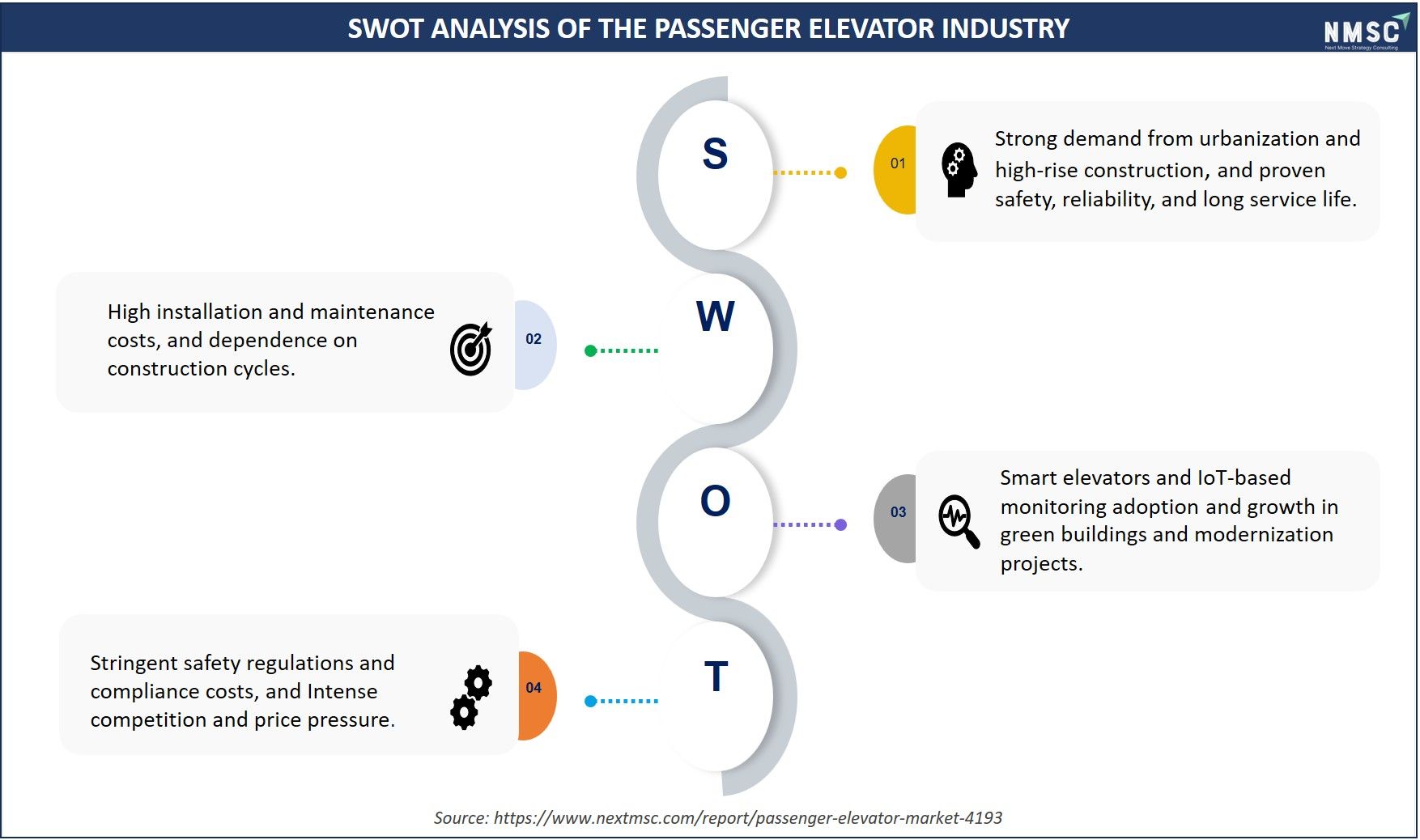
The image presents a SWOT analysis of the passenger elevator industry. Strengths highlight strong demand driven by urbanization and high-rise construction, supported by proven safety, reliability, and long service life. Weaknesses emphasize high installation and maintenance costs and reliance on construction cycles. Opportunities focus on smart elevators, IoT-based monitoring, green buildings, and modernization projects. Threats include stringent safety regulations, rising compliance costs, intense competition, and pricing pressure affecting market profitability.
What Are the Key Market Drivers, Breakthroughs, And Investment Opportunities That Will Shape the Passenger Elevator Industry in the Next Decade?
Growth Catalyst & Risk Assessment Matrix
|
Drivers/Trends/ Restraints |
(+/-) % Impact on CAGR Forecast |
Geographic Relevance |
Impact Timeline |
|
Rapid urbanization and rising construction of high-rise residential, commercial, and mixed-use buildings |
+1.2% |
Asia Pacific (China, India, Southeast Asia) core, steady demand in Middle East & Europe |
Short to medium term (1–3 years) |
|
Adoption of intelligent elevator systems (AI-enabled destination control, smart dispatch, predictive maintenance) |
+0.9% |
Global, strongest in North America, Europe, Japan, South Korea. |
Medium term (2–4 years) |
|
Growing modernization and replacement of aging elevator infrastructure |
+1.0% |
Europe, North America, Japan; emerging retrofit demand in China |
Short to medium term (1–3 years) |
|
Increasing focus on energy efficiency, green buildings, and regulatory compliance (regenerative drives, smart controls) |
+0.8% |
Europe and North America lead, accelerating adoption in APAC |
Medium term (2–4 years) |
|
High upfront installation costs and complex regulatory approvals limiting adoption in cost-sensitive projects |
–0.7% |
Global, particularly impacts SMEs and residential developers in APAC, Latin America |
Medium term (2–4 years) |
Based on our analysis of global construction trends and technology adoption, we observed that the market is experiencing sustained growth, supported by structural and technology-led drivers. Our primary research with real estate developers and elevator OEMs indicated that rapid urbanization and increased high-rise construction across residential, commercial, and mixed-use developments are directly driving demand for high-speed, high-capacity passenger elevators. In parallel, our evaluation of installed systems and OEMs showed that AI-enabled destination control, predictive maintenance, and smart connectivity features are improving traffic efficiency, reliability, and lifecycle performance.
However, high upfront costs and regulatory complexity continue to constrain adoption in price-sensitive segments. Despite these restraints, modernization of ageing elevator infrastructure remains a strong opportunity, supporting recurring revenues and long-term market stability.
Growth Drivers:
How Are Rapid Urbanization & High-Rise Construction Accelerating the Adoption of Passenger Elevators?
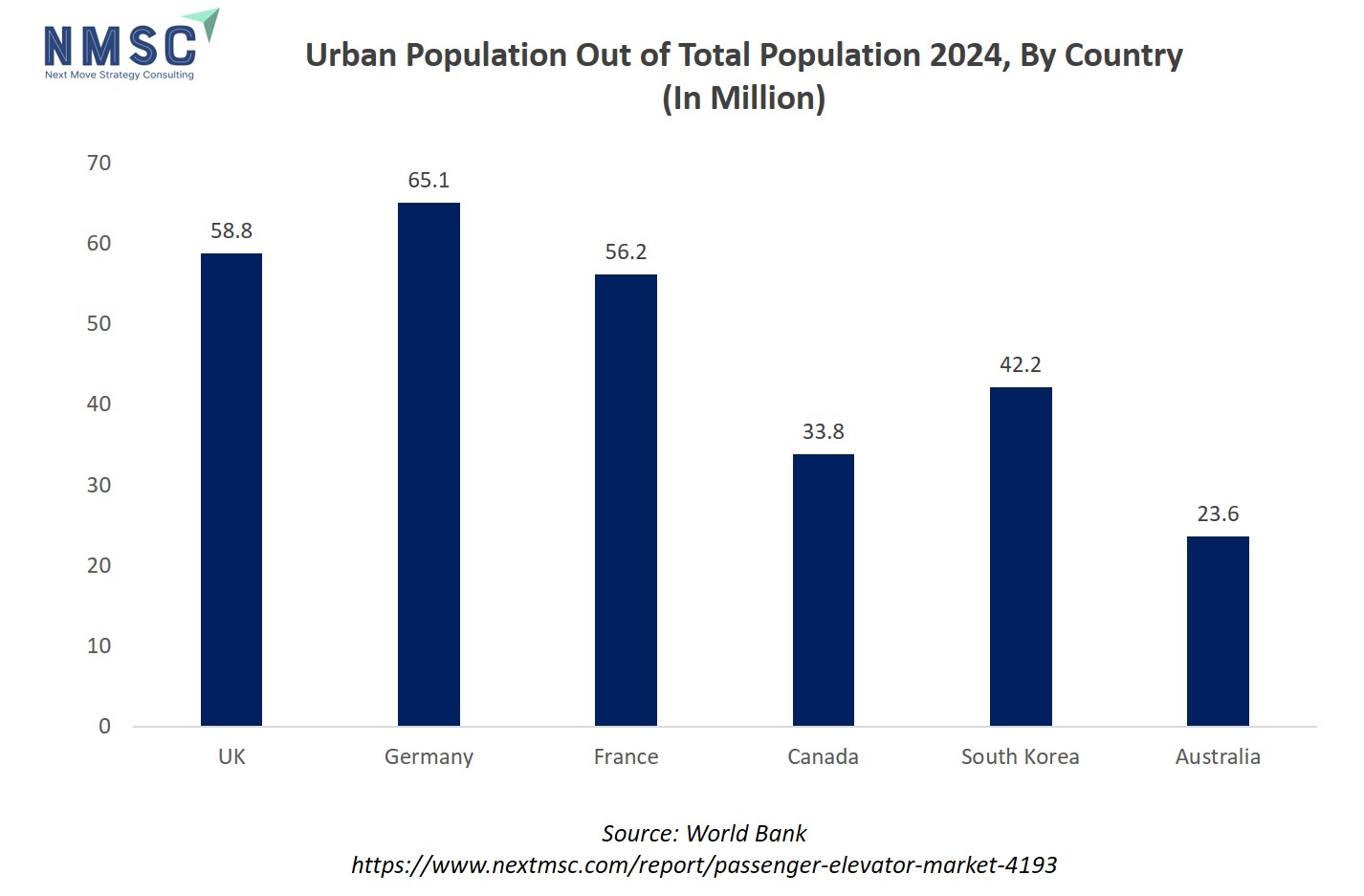
Based on our analysis of global construction activity and urban development patterns, we identified rapid urbanization and the increasing prevalence of high-rise buildings as a primary growth driver for the passenger elevator market. Our primary research with real estate developers and urban planners indicated that population concentration in metropolitan areas is accelerating vertical construction across residential, commercial, and mixed-use developments. This shift directly increases demand for passenger elevators with higher speed, capacity, and advanced traffic management capabilities.
Based on our analysis of elevator installations, we observed that the Asia Pacific, particularly China, India, and Southeast Asia, accounted for the majority of new high-rise additions, while mature markets such as North America and Europe showed steady demand through premium office towers and urban regeneration projects. Therefore, modern high-rise developments increasingly specify intelligent, energy-efficient, and digitally connected elevator systems to meet occupant density, safety, and sustainability requirements.
How Are Technological Advancements & Smart Features Driving the Market Growth?
Based on our evaluation of installed passenger elevator systems, we identified technological advancements and smart features as a critical driver of the passenger elevator market growth. Our primary research involving elevator manufacturers indicated that intelligent technologies, such as AI-enabled destination control systems, real-time traffic analytics, touchless controls, and predictive maintenance, are increasingly specified as standard requirements in new developments and modernization projects.
Further, smart elevator systems improved passenger flow efficiency, reduced waiting and travel times, and enhanced system availability through condition-based maintenance. Digitally connected elevators enabled remote monitoring, faster fault diagnosis, and lower lifecycle operating costs compared to conventional systems. Additionally, integration with building management systems (BMS), access control, and IoT platforms positioned elevators as core components of smart building ecosystems rather than standalone assets.
Growth Inhibitor:
How Are High Upfront Capital Costs And Regulatory Complexity Limiting the Market Growth?
Based on our assessment of passenger elevator installation and modernization projects, we identified high upfront capital expenditure and regulatory complexity as a key restraint limiting market adoption. Our discussions with real estate developers and building owners revealed that the cost of elevator equipment, installation, shaft construction, and compliance with stringent safety and accessibility regulations significantly increases total project budgets. This constraint is particularly pronounced in cost-sensitive residential projects and emerging markets, where developers prioritize basic functionality over advanced features. Moreover, our review of regulatory approval timelines, which include the time required to secure design clearances, safety certifications, and final operating permits from local authorities, showed that region-specific codes and certification processes delay project execution. These extended and sometimes unpredictable approval periods increase financing and holding costs, elevate project risk, and ultimately slow elevator adoption despite strong underlying demand.
Growth Opportunity:
How Is the Modernization of Ageing Elevator Infrastructure Creating Opportunities for the Market?
From our market evaluations analysis, we identified elevator modernization and replacement as a major growth opportunity in the passenger elevator market trends. Our primary research with maintenance providers and facility managers indicated that a large installed base of ageing elevators in Europe, North America, and Japan requires upgrades to meet current safety, energy efficiency, and accessibility standards. Our analysis of modernization projects showed that replacing control systems, drives, and cabins delivered improved performance and energy savings at a lower cost and shorter downtime, rather than full elevator replacement.
Regulatory Framework Impacting the Passenger Elevator Industry
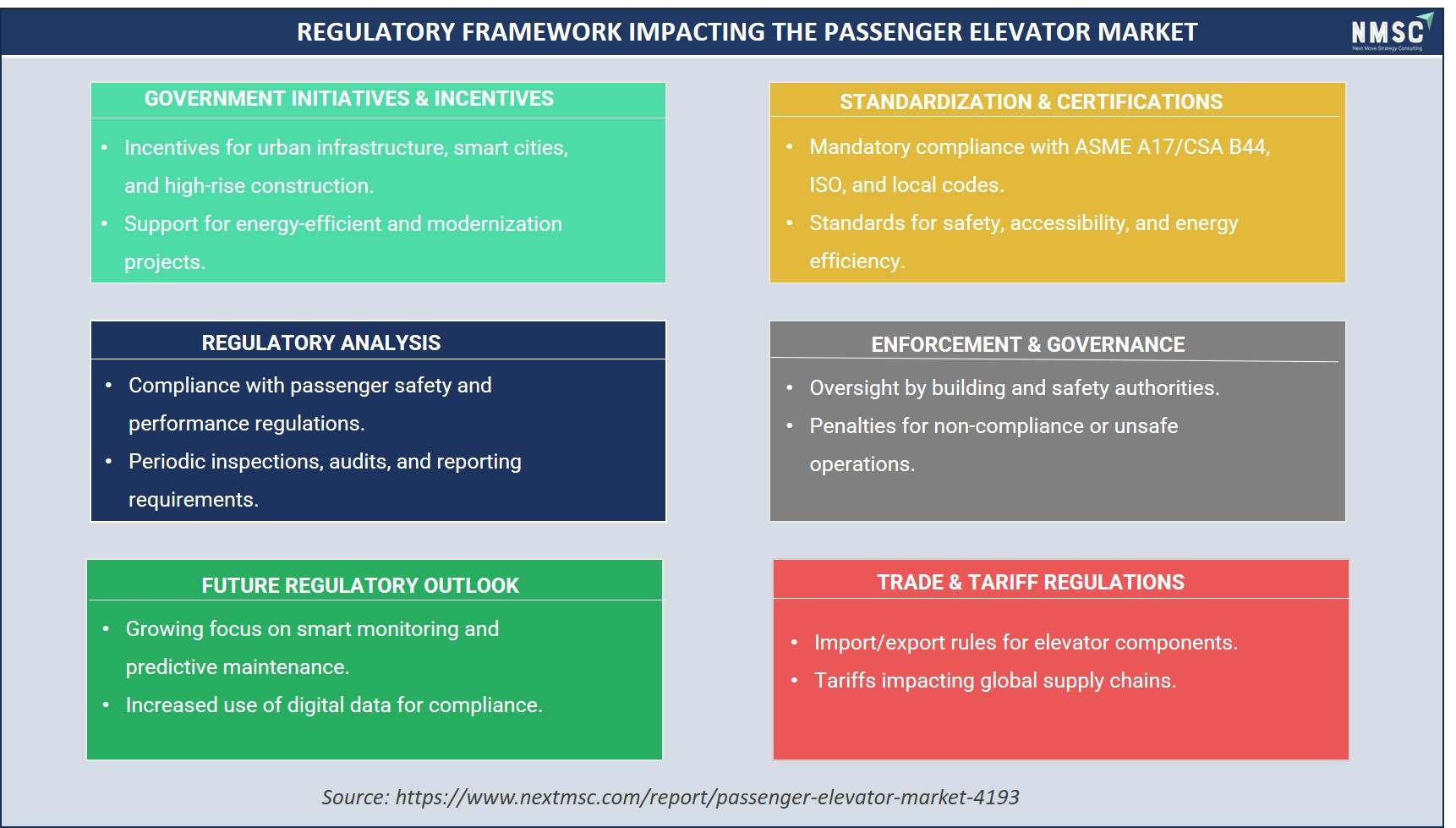
The passenger elevator market share is strongly shaped by regulatory frameworks that govern safety, performance, energy efficiency, and cross-border trade, directly influencing product design, deployment, and modernization activities worldwide.

The image outlines key regulatory dimensions impacting the market, highlighting government initiatives supporting urban infrastructure, smart cities, and energy-efficient upgrades. Additionally, increasing digitalization is driving the adoption of connected elevator systems aligned with smart-building frameworks. Standardization and certifications emphasize mandatory safety compliance, while connectivity enables remote monitoring and digital reporting. Moreover, regulatory enforcement focuses on inspections and audits, with future trends pointing toward digital compliance, predictive maintenance, and evolving trade and tariff regulations affecting global supply chains.
How Is the Passenger Elevator Industry Segmented in This Report, And What Are the Key Insights from the Segmentation Analysis?
Market Highlights & Strategic Insights – Passenger Elevator Market:
|
Segments |
Key Takeaways |
|
Technology |
Traction elevators accounted for the largest share of the market, driven by their widespread use in residential and commercial buildings due to energy efficiency and suitability for mid- to high-rise applications. Hydraulic and non-conventional elevators are seeing selective growth, supported by demand in low- to mid-rise buildings and niche applications such as premium residences, retrofits, and space-constrained environments. |
|
Load Capacity |
Medium Capacity (1001–2000 kg) held the largest share, meeting the needs of most commercial and residential buildings. High Capacity (>2000 kg) is growing, driven by demand from hospitals, hotels, and public transportation hubs. |
|
Speed |
Medium Speed (1.1–2.5 m/s) led the market, balancing efficiency and cost for mid-rise applications. High Speed (2.6-6.0 m/s) is projected to grow fastest, supported by increasing high-rise construction and premium commercial projects. |
|
Control & Interface |
Conventional push-button and touchscreen systems accounted for the majority share, supported by their reliability, regulatory acceptance, and widespread deployment across residential and commercial buildings. Advanced interfaces, including mobile app control, biometric integration, and voice-controlled UIs, are gaining traction in premium and smart-building projects, driven by convenience, security, and touchless operation trends. |
|
Door Opening Mechanism |
Centre-opening doors held the largest share of the passenger elevator market, driven by their efficient space utilization and suitability for high-traffic residential and commercial buildings. Side-opening and telescopic doors are witnessing steady adoption in space-constrained and retrofit projects, where flexibility in shaft and entrance design is required. |
|
Door Operator Technology |
AC VVVF door operators accounted for the larger share of the passenger elevator market, supported by smoother operation, higher energy efficiency, and lower maintenance requirements. DC door operators continue to see demand in cost-sensitive and retrofit applications, where simpler control systems remain viable. |
|
Service Lifecycle |
New Installations accounted for the largest share, fueled by global urbanization and construction activity. Modernization is expected to dominate in mature markets, driven by energy efficiency upgrades, safety regulations, and smart elevator retrofits. |
|
Deck Type |
Single Deck systems dominated due to wider applicability and lower cost. Double Deck elevators are growing in high-traffic commercial and high-rise buildings to optimize passenger flow and space efficiency. |
|
Designation Control |
Conventional systems led the market. Smart elevators are rapidly expanding with IoT integration, AI-based dispatching, touchless controls, and predictive maintenance, poised to dominate in the future. |
|
Door Type |
Automatic doors dominated, especially in commercial and public buildings. Manual doors remain niche, primarily in heritage buildings or low-budget installations. |
|
Pricing Tier |
The mid-range segment held the largest share of the passenger elevator market, as it balances cost, performance, and compliance requirements across residential and commercial buildings. The economy and premium segments are experiencing targeted growth, with economy elevators favoured in cost-sensitive projects and premium systems gaining traction in high-end residential, commercial, and hospitality developments. |
|
Sales Channel |
Direct OEM Sales led the market, especially for large projects and modernization contracts. Dealer Channels remain strong in residential and smaller commercial segments. Shared Ownership Models are emerging in mixed-use and premium residential sectors. |
|
Application |
Residential (Mid-Rise) dominated, supported by urban housing demand. Commercial (High-Rise Office Buildings) and Mixed-Use Developments are expected to lead future growth, alongside healthcare due to aging infrastructure and accessibility requirements. |
By Technology Insights
Which Technologies Are Driving Growth in the Passenger Elevator Market Demand in 2025?
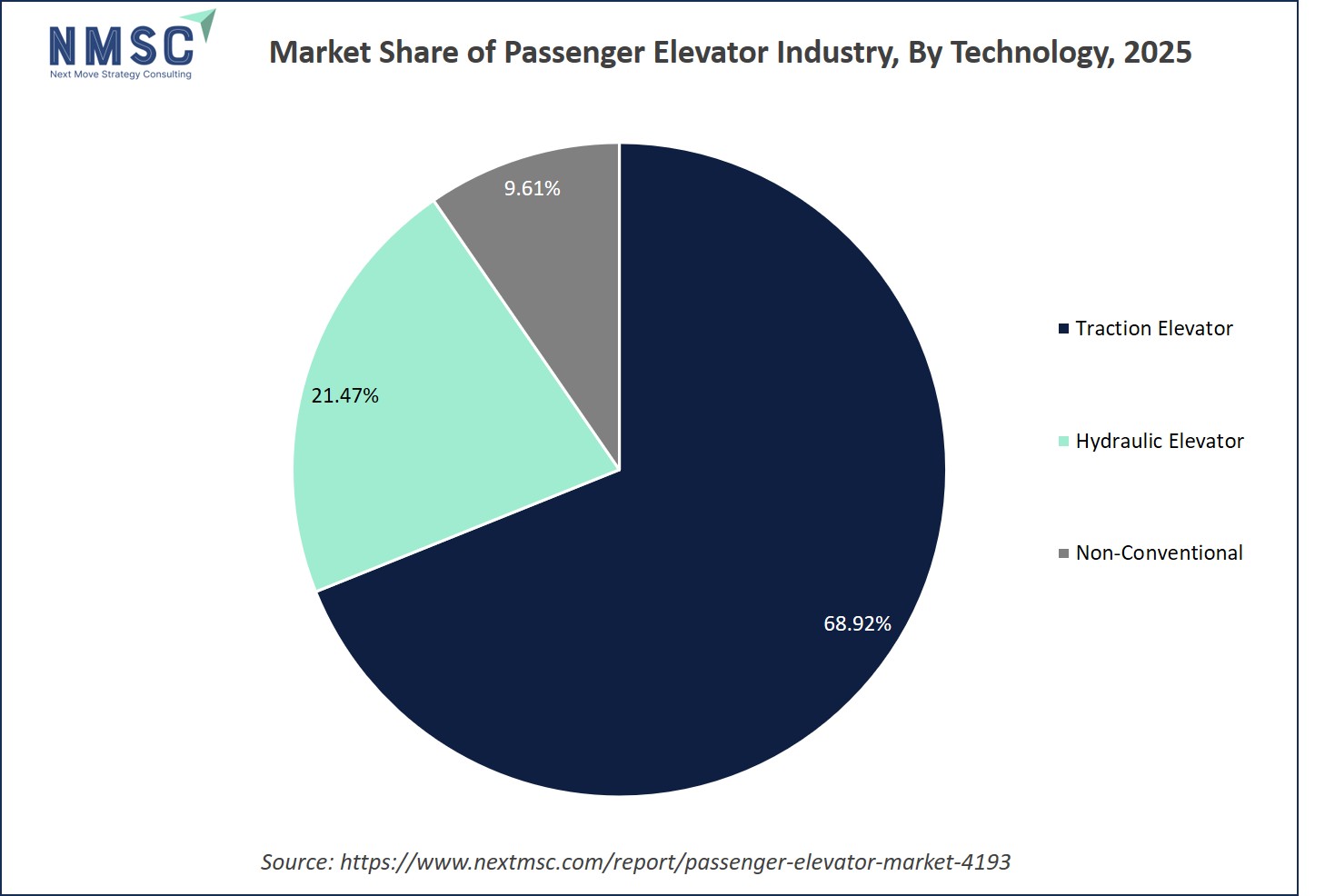
Based on our technology-level analysis of passenger elevator installations, the market is segmented into traction elevators, hydraulic elevators, and non-conventional elevator systems.
From our assessment of active projects, we observed that traction elevators accounted for the largest share of market growth, driven by their energy efficiency, higher travel speeds, and suitability for mid- to high-rise residential and commercial buildings. Hydraulic elevators maintained steady demand in low-rise applications, particularly in hospitals, institutional facilities, and smaller commercial buildings, where load-handling capability and cost effectiveness remain key advantages. However, non-conventional elevators, including pneumatic and customized systems, recorded gradual growth, supported by niche adoption in premium residential developments, architectural retrofits, and space-constrained projects where design flexibility and minimal structural requirements are prioritized.
By Load Capacity Insights
Which Load Capacity Segments Drive Growth in the Passenger Elevator Industry in 2025?
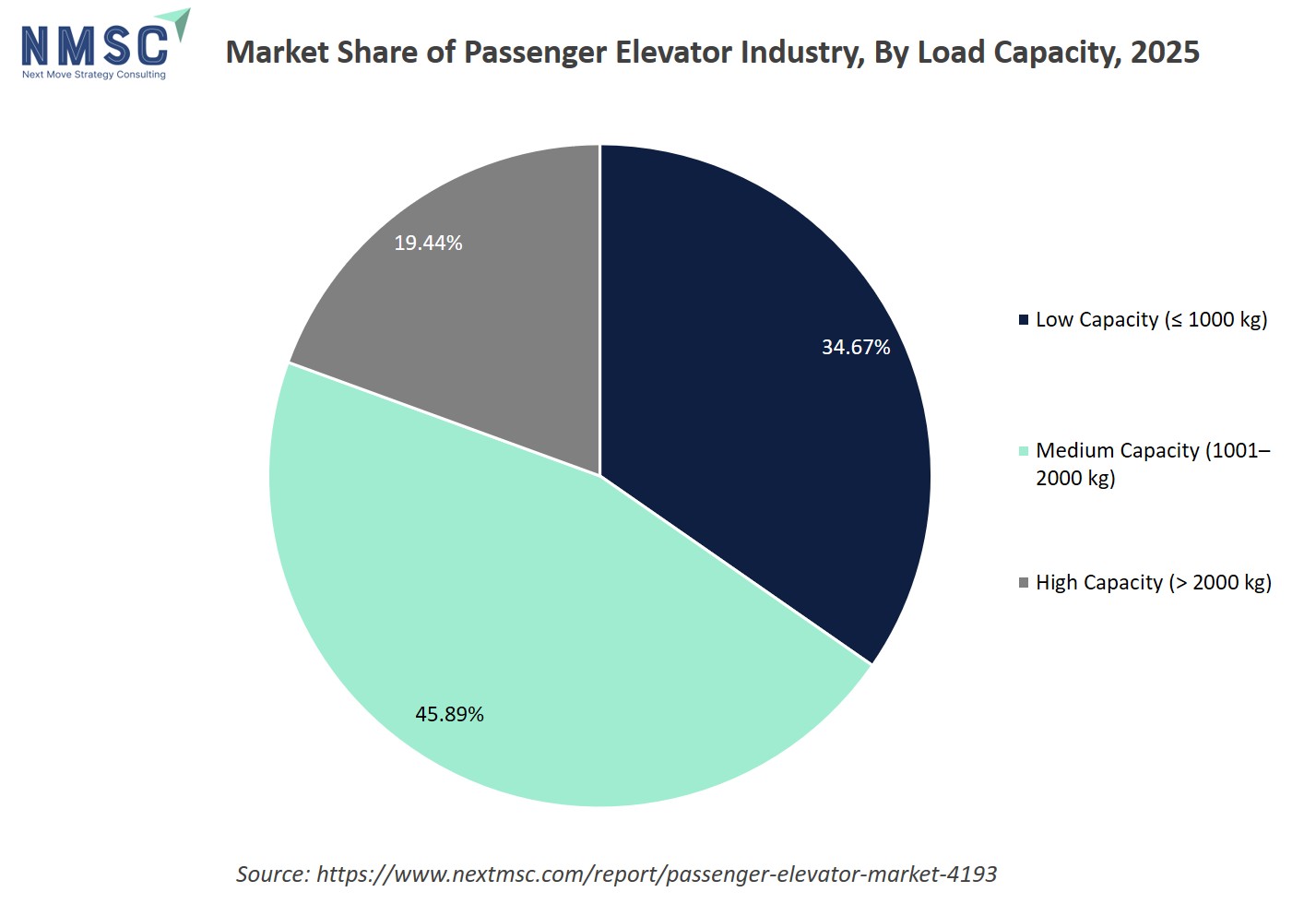
Based on our load-capacity-based assessment of Passenger Elevator installations, the market is segmented into low capacity (≤ 1000 kg), medium capacity (1001–2000 kg), and high capacity (> 2000 kg) elevators.
Our analysis indicates that medium-capacity elevators led market growth, driven by strong demand from mid-rise residential complexes, commercial offices, and mixed-use developments where balanced passenger handling and cost efficiency are critical. Low-capacity elevators recorded steady adoption in low-rise residential buildings, boutique hotels, and small commercial spaces, supported by affordability and compact design requirements. Moreover, high-capacity elevators witnessed selective but increasing deployment in high-rise towers, transit hubs, hospitals, and large commercial facilities, where high passenger throughput and operational reliability are essential, contributing incrementally to overall market expansion.
By Application Insights
How Do Different Application Segments Contribute to the Passenger Elevator Industry in 2025?
Based on our application-level evaluation of Passenger Elevator installations, the market is segmented into residential, commercial, industrial, and institutional applications.
Our assessment indicates that the residential segment dominated market growth, supported by rapid urbanization, rising high-rise housing construction, and government-backed affordable housing initiatives across major cities. The commercial segment followed closely, driven by sustained investments in office buildings, shopping malls, hotels, and mixed-use developments requiring efficient vertical mobility solutions. Institutional applications, including hospitals, educational campuses, and government buildings, recorded steady demand due to stringent accessibility standards and the need for reliable, high-traffic elevator systems. Industrial applications contributed a comparatively smaller share, with deployments primarily focused on administrative blocks and specialized facilities where passenger movement is required alongside operational efficiency.
Regional Outlook:
Geographic Performance Snapshot:
|
Regions |
Key Takeaways |
|
North America |
North America represented a significant share of the market in 2025, supported by steady commercial construction, urban redevelopment, and a large installed base of ageing elevators requiring modernization. Early adoption of intelligent elevator technologies, stringent safety standards, and strong demand from premium office buildings, hospitals, and residential towers continued to drive market growth, particularly through modernization and service contracts. |
|
Europe |
Europe held a substantial portion of the market in 2025, driven by dense urbanization, strict regulatory frameworks, and a high concentration of legacy elevator systems. Growth was supported by modernization initiatives focused on energy efficiency, accessibility compliance, and smart building integration across residential and public infrastructure, especially in Western Europe and the Nordics. |
|
Asia-Pacific |
Asia-Pacific dominated the market in 2025, reflecting rapid urbanization, large-scale high-rise construction, and infrastructure expansion across China, India, Japan, and Southeast Asia. Strong government investment in smart cities and transit-oriented developments, combined with rising residential and commercial construction, sustained high demand for new elevator installations and advanced traffic management systems. |
|
Middle East & Africa (MEA) |
The Middle East & Africa market experienced steady growth, driven by large-scale real estate developments, smart city projects, and infrastructure investments in the Gulf Cooperation Council (GCC) countries. High-rise residential towers, hospitality projects, and commercial complexes in the UAE and Saudi Arabia supported demand for high-speed and premium passenger elevator systems, while urban development in Africa contributed to long-term growth potential. |
|
Latin America (LATAM) |
Latin America accounted for a growing share of the market, supported by urban population growth, residential construction, and gradual modernization of building infrastructure. Demand was concentrated in Brazil, Mexico, and Chile, where rising investments in multi-family housing and commercial real estate increased adoption of cost-efficient passenger elevator solutions and aftermarket services. |
The passenger elevator market is geographically studied across North America, Europe, Asia Pacific, the Middle East & Africa (MEA), and Latin America (LATAM), and each region is further studied across countries.
Passenger Elevator Market in North America
North America represents a mature and innovation-driven market, characterized by strong construction standards, advanced digital infrastructure, and a large installed base of elevators requiring ongoing modernization. Based on our regional assessments and interviews with building owners and OEMs, we observed that demand is sustained by urban redevelopment, high-rise residential construction, and stringent safety and accessibility regulations. The region shows strong adoption of intelligent elevator systems, destination control, and predictive maintenance platforms, with service and modernization revenues increasingly shaping long-term market value.
Passenger Elevator Market in the United States
The United States remains the most influential market in North America, supported by continuous investment in commercial offices, residential towers, healthcare facilities, and mixed-use developments. Our primary research with elevator service providers indicated that modernization of ageing infrastructure is a key demand driver, alongside new installations in urban centres. Regulatory emphasis on safety, accessibility, and energy efficiency has accelerated adoption of smart controls, regenerative drives, and digitally connected elevator systems. The market, therefore, continues to shift toward service-led and software-enabled revenue models.
Passenger Elevator Market in Canada
In Canada, the market demonstrates stable and structurally consistent growth, driven by urban residential development and public infrastructure investment. Our analysis showed strong demand for reliable, energy-efficient elevator systems in multi-family housing, healthcare facilities, and commercial buildings. Compared with the U.S., Canadian buyers place greater emphasis on durability, compliance, and long-term service agreements, supporting predictable aftermarket revenues for OEMs and service providers.
Passenger Elevator Market in Europe
Europe represents a regulation-intensive and modernisation-focused passenger elevator market. Based on our evaluation of regional construction and installed elevator bases, we noticed that demand is largely driven by the replacement and upgrading of legacy systems to meet evolving safety, accessibility, and sustainability standards. Adoption patterns vary across regions, with Western and Northern Europe emphasizing energy efficiency and digital connectivity, while Southern Europe shows stronger demand for cost-efficient modernization solutions. Strict compliance requirements increase entry barriers but enhance long-term vendor retention and service revenue stability.
Passenger Elevator Market in the United Kingdom
The UK passenger elevator market is shaped by urban regeneration projects, residential high-rise construction, and extensive modernization requirements. Our research indicated increasing demand for smart elevator systems in office buildings, hospitals, and transport-adjacent developments. Buyers prioritize lifecycle support, regulatory compliance, and digital monitoring capabilities. Despite construction cost pressures, the market continues to transition toward intelligent and service-centric elevator solutions.
Passenger Elevator Market in Germany
Germany exhibits a disciplined, engineering-led passenger elevator market, driven by high technical standards and a strong emphasis on reliability and safety. Our engagements with OEMs and building operators revealed that German customers prioritize certified systems, energy efficiency, and long-term service performance. Demand is further supported by both new construction and systematic modernization of existing elevators, particularly in commercial and public infrastructure.
Passenger Elevator Market in France
France shows steady growth in the passenger elevator market, supported by residential construction, urban density, and public infrastructure upgrades. Our market assessments highlighted rising adoption of energy-efficient and digitally connected elevator systems, particularly in healthcare, retail, and multi-family residential buildings. Also, regulatory alignment with EU safety and sustainability directives continues to influence purchasing decisions and product specifications.
Passenger Elevator Market in Italy
Italy’s passenger elevator market is predominantly shaped by modernization and retrofit demand, reflecting the country’s ageing residential and commercial building stock. Our analysis indicates that building owners increasingly prioritize control system upgrades, cabin refurbishments, and the integration of energy-efficient drives and components to extend elevator lifecycles while meeting updated safety and accessibility regulations. Full system replacements remain limited due to high costs and structural constraints in older buildings. Government-backed renovation and energy-efficiency incentives continue to support gradual market expansion, while the market remains heavily dependent on local service providers and integrators for installation, maintenance, and compliance management.
Passenger Elevator Market in Spain
In Spain, passenger elevator demand is gaining momentum, supported by urban residential construction, tourism-driven real estate development, and rising energy costs. Our research shows a growing preference for cost-efficient, space-optimized, and easy-to-install elevator solutions, particularly in mid-rise residential and mixed-use buildings. Moreover, modernization activity is also increasing, with a strong focus on regulatory compliance, energy savings, and reliability upgrades in existing installations. Market Demand is concentrated in major urban centres, where developers and building owners seek balanced solutions that combine affordability, performance, and long-term operating efficiency.
Passenger Elevator Market in the Nordics
The Nordic countries, including Sweden, Norway, Denmark, Finland, and Iceland, represent advanced, quality-focused passenger elevator markets characterized by high digital maturity, strong regulatory oversight, and leading sustainability standards. Based on our observations and regional assessments, we identified that buyers in these markets prioritize energy efficiency, system reliability, safety compliance, and long-term lifecycle performance. Adoption of smart monitoring, predictive maintenance, and environmentally optimized elevator designs is widespread, supported by strong penetration of green building certifications and smart building initiatives. These factors enable premium positioning for elevator OEMs and service providers that offer advanced digital capabilities, energy-efficient technologies, and robust local service networks.
Passenger Elevator Market in the Asia-Pacific
Asia-Pacific remains the largest and fastest-evolving passenger elevator market, driven by rapid urbanization, population density, and sustained high-rise construction. Our analysis identified strong demand across residential, commercial, and transit-oriented developments. Adoption patterns vary by country, with China emphasizing scale and cost efficiency, Japan prioritizing precision and reliability, South Korea leading smart elevator adoption, and Southeast Asia showing rising demand in urban residential projects. Government infrastructure initiatives and local manufacturing capabilities continue to accelerate market expansion.
Passenger Elevator Market in China
China represents the largest and most scale-driven passenger elevator market in Asia-Pacific, supported by rapid urbanization, dense population centres, and sustained high-rise residential and commercial construction. Based on our research, China functions as both a volume and cost leader, enabled by strong domestic elevator OEMs, localized manufacturing, and integrated supply chains. Government-backed infrastructure programs and smart city initiatives continue to accelerate installation of passenger elevators with advanced control systems and energy-efficient designs. For international vendors, successful participation requires localized production, compliance with national standards, and integration with domestic building and digital ecosystems.
Passenger Elevator Market in Japan
Japan’s passenger elevator industry demonstrates stable, structurally driven growth, underpinned by an ageing population, high safety expectations, and stringent building standards. As a result, demand remains strong for highly reliable and precision-engineered elevator systems across residential towers, healthcare facilities, and transit-oriented developments. Our field observations indicate that buyers place greater emphasis on system uptime, ride comfort, seismic resilience, and long-term service support rather than aggressive cost optimization. Consequently, brand reputation, regulatory certification, and strong local maintenance networks play a decisive role in purchasing decisions, favouring premium OEMs with an established domestic presence.
Passenger Elevator Market in India
India represents a fast-growing sector, driven by rapid urban expansion, increasing high-rise residential construction, and infrastructure development across Tier I and Tier II cities. Based on our market assessments, we found that demand is concentrated in residential complexes, commercial offices, and mixed-use developments. Buyers increasingly seek cost-efficient, reliable elevator solutions with basic smart features and scalable service support. Government initiatives promoting urban housing and smart cities continue to support market expansion, while vendors offering modular designs, competitive pricing, and strong local service networks achieve faster adoption.
Passenger Elevator Market in South Korea
South Korea is an advanced adopter of passenger elevator technologies, driven by high digital readiness and early uptake of smart building solutions. Our observations indicate strong demand for intelligent elevator systems featuring destination control, predictive maintenance, and integrated building connectivity. Moreover, dense urban development and premium residential construction are supporting demand for high-speed, design-focused elevators. Consequently, vendors that partner closely with local construction firms and smart-building developers are better positioned to capture value in this technology-forward market.
Passenger Elevator Market in Taiwan
Taiwan’s passenger elevator market is characterized by strong technology adoption, supported by a mature construction sector and a sustained emphasis on building safety and operational reliability. Our market assessment showed that demand is increasingly oriented toward energy-efficient elevator systems equipped with digital monitoring capabilities and integration with building management systems, reflecting a broader focus on lifecycle performance and operational transparency.
Buyers place high importance on system interoperability, long-term reliability, and the availability of local technical support to ensure consistent performance over the asset lifecycle. In this context, pilot installations within commercial and high-value residential developments are commonly used to validate system performance and integration compatibility before wider deployment, reinforcing a measured but technology-forward adoption approach.
Passenger Elevator Market in Indonesia
Indonesia’s market is at an early yet accelerating stage, driven by rapid urbanization, expanding metropolitan areas, and rising demand for vertical housing. Our regional analysis indicated that adoption is concentrated in major cities, where mid- to high-rise residential and commercial developments require cost-effective and space-efficient elevator solutions. Moreover, affordability, ease of installation, and service availability strongly influence purchasing decisions. Consequently, vendors that collaborate closely with local developers and contractors are better positioned to achieve faster market entry and sustained growth.
Passenger Elevator Market in Australia
Based on our research, we found that Australia’s passenger elevator market is shaped by ongoing urban redevelopment, a steady pipeline of high-rise residential projects, and stringent safety and accessibility regulations. Within this environment, buyers place strong emphasis on system reliability, energy efficiency, and long-term maintenance performance over the asset lifecycle. High labour costs and rigorous compliance requirements further support the adoption of digitally monitored elevator systems and structured service contracts that reduce manual intervention and operational risk. As a result, purchasers increasingly favour OEMs and service providers that can deliver comprehensive lifecycle support, regulatory expertise, and dependable long-term service coverage.
Passenger Elevator Market in Latin America
Latin America represents a developing yet steadily expanding passenger elevator market, supported by urban population growth, residential construction activity, and ongoing modernization of existing buildings. Our analysis indicated that demand remains concentrated in large metropolitan areas, with a growing focus on mid-rise residential and commercial projects. Moreover, our market assessments showed that price sensitivity remains high, making cost-efficient elevator systems and phased modernization strategies more attractive to developers and building owners. Consequently, local partnerships, financing flexibility, and strong after-sales support serve as critical factors for achieving sustainable market growth.
Passenger Elevator Market in the Middle East & Africa
The Middle East is a high-value market, driven by large-scale real estate developments, smart city projects, and premium commercial and residential construction. Our research highlighted strong demand for high-speed, design-focused, and technologically advanced elevator systems, particularly in Gulf countries. In contrast, Africa remains an emerging market, characterised by lower penetration but rising urban development. Demand in Africa is centred on durable; cost-effective elevators suited to developing infrastructure. Vendors applying region-specific strategies, premium solutions in the Middle East and scalable, service-oriented models in Africa, are best positioned for long-term growth.
Competitive Landscape
Competitive Dynamics & M&A Landscape:
|
Key Takeaways |
|
The global passenger elevator market features a combination of established multinational OEMs and strong regional manufacturers. Leaders such as Otis, KONE, Schindler, Mitsubishi Electric, Hitachi, TK Elevator, and TOSHIBA maintain dominance through global scale, advanced engineering, and extensive service networks. Meanwhile, regional players, including HYUNDAI Elevator, Fujitec, Orona, KLEEMANN, CANNY Elevator, SJEC, Guangzhou Guangri, Dongnan Elevator, SHANGHAI SIGMA Elevator, Safe Elevator (Zhejiang), FUJI Elevator, Joylive Elevator, and IFE Elevators, compete through cost efficiency, localized solutions, and strong domestic partnerships. |
|
From our assessment of vendor strategies, companies increasingly prioritized smart, connected elevator platforms, energy-efficient designs, and digital service solutions such as predictive maintenance, remote monitoring, and lifecycle management. Integration of IoT, AI-based diagnostics, and modular system architectures emerged as critical competitive differentiators, particularly for high-rise residential buildings, commercial complexes, and transit-oriented developments. |
|
Recent merger, acquisition, and partnership activity in the passenger elevator market reflected a strategic shift toward expanding service portfolios, digital capabilities, and regional reach rather than purely increasing manufacturing capacity. Leading players focused on strengthening modernization businesses, acquiring software and service competencies, and forming local partnerships to improve aftersales coverage. This approach supported recurring service revenues, improved customer retention, and reinforced long-term competitiveness across both mature and emerging markets. |
Which Companies Dominate the Passenger Elevator Industry and How Do They Compete?
Based on our market assessments, the Passenger Elevator industry is led by globally established OEMs alongside well-entrenched regional manufacturers. Multinational leaders such as Otis Elevator Company, KONE Corporation, Schindler, Mitsubishi Electric Corporation, Hitachi, Ltd., TK Elevator, and TOSHIBA Corporation consistently dominate large-scale new installations, modernization, and service contracts. Their leadership is supported by proven engineering reliability, compliance with international safety standards, digital elevator management platforms, and extensive global maintenance networks, key decision factors for high-rise residential, commercial, and infrastructure projects.
In parallel, regional and domestic manufacturers, including Hyundai Elevator, Fujitec, Orona, Kleemann, Canny Elevator, SJEC, Guangzhou Guangri, Dongnan Elevator, SHANGHAI SIGMA Elevator, Safe Elevator (Zhejiang), Fuji Elevator, Joylive Elevator, and IFE Elevators, compete effectively through localized manufacturing, cost competitiveness, customized specifications, and strong relationships with local developers and public authorities. Across both tiers, competition is primarily driven by safety performance, lifecycle service capability, regulatory compliance, and the ability to support long-term asset reliability at scale.
Market Dominated by Passenger Elevator Giants and Specialists
From our market analysis, we observed that the Passenger Elevator competitive landscape is shaped by a combination of global OEM leaders and strong regional specialists. Multinational companies such as Otis Elevator Company, KONE Corporation, Schindler, Mitsubishi Electric Corporation, Hitachi, Ltd., TK Elevator, and TOSHIBA Corporation lead the market through advanced elevator technologies, digital monitoring platforms, rigorous safety certifications, and large-scale service capabilities. These players are frequently selected for high-rise residential, commercial, and infrastructure projects where long-term reliability, compliance, and lifecycle support are critical.
At the same time, regional and domestic manufacturers, including HYUNDAI Elevator, Fujitec, Orona, and IFE Elevators, gain traction by offering cost-efficient solutions, localized customization, and faster project execution. These companies are preferred in mid-rise buildings and public-sector developments where adaptability to local codes and responsive after-sales service are key. Together, global leaders set industry benchmarks, while regional specialists accelerate adoption through flexibility and market-specific expertise, reinforcing sustained growth across the passenger elevator market.
Innovation and Adaptability Drive Market Success
Based on our evaluation of new installations and pilot deployments across residential, commercial, and infrastructure buildings, we observed that innovation remains a key determinant of competitive advantage in the passenger elevator market. Leading manufacturers continue to advance digital control systems, predictive maintenance, energy-efficient drives, destination control, and IoT-enabled monitoring to improve ride quality, safety, and uptime.
Our discussions with building owners and facility managers indicate that suppliers investing in modular elevator platforms, software-driven upgrades, and data-enabled service models are better positioned to adapt to varying building heights, traffic patterns, and regulatory requirements. These capabilities reflect strong engineering expertise and deep integration with building management systems, supporting long-term operational reliability.
Market Players to Opt for Merger & Acquisition Strategies to Expand Their Presence
Our research shows that mergers, acquisitions, and strategic partnerships are increasingly used to strengthen market position in the Passenger Elevator industry. Rather than pursuing scale alone, companies are targeting capabilities in digital services, smart building integration, remote diagnostics, and modernization technologies. These strategies enable faster innovation cycles, improved lifecycle services, and stronger compliance with evolving safety and sustainability standards. From an end-user perspective, consolidation has helped reduce maintenance complexity, enhance service consistency, and improve total cost of ownership. As competition intensifies, such strategic moves continue to reshape the market by reinforcing technology depth, service reach, and execution credibility.
Strategic Framework for the Passenger Elevator Market
The passenger elevator market is evolving through a strategic interplay of user expectations, operational efficiency, digitalization, and regulatory compliance, shaping how manufacturers and service providers compete and create long-term value.
The image outlines a strategic framework for the passenger elevator market by connecting the core factors shaping industry dynamics. It highlights how consumer demand for comfort, reliability, and smart, low-noise systems drives adoption, while operational efficiency and supply chain integration support optimized manufacturing and certified sourcing. In response, manufacturers are increasingly focused on smart, connected, and modular platforms enabled by data analytics. Simultaneously, sustainability and ESG priorities emphasize energy-efficient drives and lifecycle compliance. From a financial standpoint, high upfront investments are balanced by long-term service revenues, while digital transformation and safety compliance further strengthen the market through predictive maintenance, remote monitoring, and strict regulatory adherence.
List of Key Passenger Elevator Companies
-
Schindler
-
Mitsubishi Electric Corporation
-
Hitachi, Ltd.
-
HYUNDAIELEVATOR CO., LTD.
-
Dongnan Elevator Co.,Ltd.
-
CANNY ELEVATOR CO., LTD.
-
SJEC.
-
Guangzhou Guangri Elevator Industry Co., Ltd.
-
KLEEMANN
-
Fujitec Co. Ltd.
-
TOSHIBA CORPORATION
-
Orona
-
TK Elevator
-
Joylive Elevator Co., Ltd.
-
IFE ELEVATORS CO., LTD.
-
FUJI Elevator Co., Ltd.
-
Safe Elevator (Zhejiang) Co., Ltd.
-
SHANGHAI SIGMA ELEVATOR CO., LTD.
What are the Latest Key Industry Developments?
-
September 2025 - Otis introduced the Arise MOD Prime and MOD Plus modernization solutions to help owners upgrade existing elevators in phases, improving safety, performance, and energy efficiency.
-
August 2025 - KONE partnered with United Elevators to strengthen its footprint in the Egyptian market. The collaboration aims to expand the delivery of advanced mobility solutions and enhance service coverage across residential, commercial, and infrastructure projects.
What are the Key Factors Influencing Investment Analysis & Opportunities in the Passenger Elevator Market?
Investment analysis in the passenger elevator market has increasingly shifted toward companies with strong software capabilities and service-led business models rather than equipment-only manufacturers. Based on our review of recent capital deployments, mergers and acquisitions, and strategic partnerships, we observed that investors favour elevator OEMs and technology providers generating recurring revenues through maintenance contracts, modernization services, digital monitoring platforms, and predictive maintenance solutions. Companies demonstrating a large installed base, high service attach rates, and long-term customer contracts consistently achieved stronger valuation multiples.
Our analysis further showed growing investor interest in intelligent elevator technologies, including AI-enabled traffic management, destination control systems, energy optimization, and remote diagnostics. Strategic investments by real estate developers, infrastructure funds, and building technology firms increasingly outweighed purely financial investments, reflecting a focus on lifecycle value and ecosystem integration. For investors, the most attractive opportunities emerged in companies combining proven installation scale, software-driven differentiation, regulatory compliance expertise, and extensible digital platforms that support long-term growth and margin expansion.
Key Benefits for Stakeholders:
Next Move Strategy Consulting (NMSC) delivers a comprehensive and evidence-based analysis of the passenger elevator market trends, covering historical developments from 2020 to 2025 and providing forward-looking forecasts through 2035. Our study evaluates the market across global, regional, and country-level dimensions, combining quantitative market sizing with qualitative insights into key growth drivers, regulatory influences, technology advancements, and investment trends across all major passenger elevator segments.
From our analysis, the passenger elevator industry creates measurable value for a broad range of stakeholders. Investors benefit from stable, recurring revenue streams driven by long-term maintenance contracts, modernization programs, and software-enabled service offerings. Building owners and facility managers gain improved operational reliability, energy efficiency, and passenger experience through intelligent elevator systems. Elevator OEMs, service providers, and technology partners benefit from predictable aftermarket revenues, digital upgrades, and long-term customer relationships, supporting sustained profitability and resilient market growth.
|
Parameters |
Details |
|
Customization Scope |
Free customization (equivalent to up to 80 analyst-working hours) after purchase. Addition or alteration to country, regional & segment scope. |
|
Pricing and Purchase Options |
Avail customized purchase options to meet your exact research needs. |
|
Approach |
In-depth primary and secondary research; proprietary databases; rigorous quality control and validation measures. |
|
Analytical Tools |
Porter's Five Forces, SWOT, value chain, and Harvey ball analysis to assess competitive intensity, stakeholder roles, and relative impact of key factors. |
Key Market Segments
By Technology
-
Traction Elevator
-
Machine Room Traction
-
Machine Roomless Traction
-
-
Hydraulic Elevator
-
Conventional Hydraulic
-
Roped Hydraulic
-
Eco-Hydraulic
-
-
Non-Conventional
-
Rope-less Systems
-
Vacuum Lifts
-
Cable-Free Magnetic Levitation
-
By Deck Type
-
Single Deck
-
Double Deck
By Load Capacity
-
Low Capacity (≤ 1000 kg)
-
Medium Capacity (1001–2000 kg)
-
High Capacity (> 2000 kg)
By Speed
-
Low Speed (≤ 1.0 m/s)
-
Medium Speed (1.1–2.5 m/s)
-
High Speed (2.6–6.0 m/s)
-
Ultra-high (>6.0 m/s)
By Service Lifecycle
-
New Installation
-
Maintenance
-
Modernization
-
Partial Modernization
-
Controller Replacement
-
Door System Upgrade
-
Drive System Upgrade
-
Safety Component Upgrade
-
-
Full Elevator Replacement
-
By Designation Control
-
Smart
-
Destination Control System
-
Group Control System
-
Remote Monitoring Enabled Control
-
-
Conventional
By Control & Interface
-
Conventional Control
-
Touchscreen
-
Mobile App Control
-
Biometric Control Integrated
-
Voice-controlled UI
By Door Opening Mechanism
-
Center Opening
-
Side Opening
-
Telescopic Opening
By Operator Drive
-
AC VVVF Door Operator
-
DC Door Operator
-
Electro-Mechanical
By Door Type
-
Automatic
-
Manual
By Pricing Tier
-
Economy Segment
-
Mid-Range Segment
-
Premium Segment
By Sales
-
Direct OEM Sales
-
Dealer Channel
-
Shared Ownership Models
By Application
-
Residential
-
Low Rise Up To 10 Floors
-
Mid Rise Up To 11-30 Floors
-
High Rise Above 30 Floors
-
Villa and Individual Home
-
-
Commercial
-
Airport
-
Hotel & Hospitality
-
Stadiums
-
Leisure and Education
-
Marine & Port Facilities
-
Multiuse Buildings
-
Retail & Shopping Centers
-
Public Transportation Hubs
-
Office Buildings
-
Low Rise Up To 10 Floors
-
Mid Rise Up To 11-30 Floors
-
High Rise Above 30 Floors
-
-
-
Industrial
-
Factories
-
Warehouses
-
Logistics Centers
-
-
Institutional
-
Healthcare
-
Education
-
Government buildings
-
Geographical Breakdown
-
North America: U.S., Canada, and Mexico.
-
Europe: UK, Germany, France, Italy, Spain, Sweden, Denmark, Finland, the Netherlands, and the Rest of Europe.
-
Asia Pacific: China, India, Japan, South Korea, Taiwan, Indonesia, Vietnam, Australia, Philippines, Malaysia and the rest of APAC.
-
Middle East & Africa (MEA): Saudi Arabia, UAE, Egypt, Israel, Turkey, Nigeria, South Africa, and the rest of MEA.
-
Latin America: Brazil, Argentina, Chile, Colombia, and the rest of LATAM.
Conclusion & Recommendations
This report provides stakeholders, industry participants, investors, and advisors with evidence-based insights to navigate the ongoing structural evolution of the passenger elevator market. By integrating quantitative market analysis with primary research and proven strategic frameworks, NMSC’s Passenger Elevator Market Report serves as a decision-support tool for understanding long-term demand dynamics and competitive positioning. Our findings indicate that the market is poised for sustained expansion, supported by rapid urbanization, continued high-rise construction, and increasing demand for safe, efficient, and intelligent vertical mobility solutions.
Strategically, our analysis highlights the growing importance of software-driven elevator platforms, AI-enabled traffic management, predictive maintenance, and seamless integration with smart building ecosystems. OEMs and service providers that prioritize modular system architectures, digital upgrades, and lifecycle service models demonstrated stronger customer retention and recurring revenue visibility. For executives and investors, value creation increasingly depends on targeted investments in modernization, energy-efficient technologies, and expansion into high-growth regions such as Asia-Pacific and the Middle East. Emphasis on reliability, regulatory compliance, and measurable performance outcomes will be critical in building long-term credibility and sustaining market leadership.


About the Author
 Tushmi Dutta
— Tushmi Dutta is a focused researcher specializing in detailed analysis and insight-driven research across diverse business landscapes. She supports strategic initiatives through structured data interpretation, thorough validation, and clear communication of findings that aid informed decision-making. With a strong interest in writing, she enjoys presenting research insights in an engaging and accessible manner. Beyond work, she enjoys traveling, reading, painting, and continuously learning new skills that contribute to her creative and professional growth.
Tushmi Dutta
— Tushmi Dutta is a focused researcher specializing in detailed analysis and insight-driven research across diverse business landscapes. She supports strategic initiatives through structured data interpretation, thorough validation, and clear communication of findings that aid informed decision-making. With a strong interest in writing, she enjoys presenting research insights in an engaging and accessible manner. Beyond work, she enjoys traveling, reading, painting, and continuously learning new skills that contribute to her creative and professional growth.
About the Reviewer
 Supradip Baul
— Supradip Baul is an accomplished business consultant and strategist with over a decade of rich experience in market intelligence, strategy, technology, and business transformation. His work has included rigorous qualitative and quantitative analysis across multiple industries, helping clients shape investment decisions and long-term roadmaps. Earlier in his career, he was associated with Gartner, where he contributed to industry-leading reports and market share analyses. He has worked with leading global companies and holds an MBA with a dual specialization in Marketing and Finance.
Supradip Baul
— Supradip Baul is an accomplished business consultant and strategist with over a decade of rich experience in market intelligence, strategy, technology, and business transformation. His work has included rigorous qualitative and quantitative analysis across multiple industries, helping clients shape investment decisions and long-term roadmaps. Earlier in his career, he was associated with Gartner, where he contributed to industry-leading reports and market share analyses. He has worked with leading global companies and holds an MBA with a dual specialization in Marketing and Finance.
At Next Move Strategy Consulting, we understand that insightful market research is the cornerstone of successful business decisions. That's why we employ a robust and multifaceted approach, combining various methodologies to deliver the most accurate and actionable data for our clients.

Research Landscape
We navigate the world of research with two primary approaches:
Qualitative Approach
Our qualitative research methodologies involve immersive techniques such as in-depth interviews, focus groups, and observational studies. By engaging directly with individuals and stakeholders, we uncover valuable insights that quantitative data alone may overlook.

Quantitative Research
In tandem with qualitative methodologies, NMSC leverages the power of Quantitative Research to provide a robust foundation of numerical insights. Through systematic data collection and analysis, we quantify patterns, preferences, and market trends, offering a comprehensive view of the business landscape.
Our quantitative research approach employs diverse tools, including surveys, experiments, and statistical modelling. These methodologies enable us to gather data from a large and representative sample, ensuring the statistical significance of our findings. By employing structured questionnaires and standardized data collection methods, we guarantee the reliability and validity of the information we present to our clients.
Quantitative research is particularly effective in measuring the prevalence of trends, assessing market size, and gauging the impact of various factors on consumer behavior. The numerical precision attained through this approach equips our clients with actionable insights, facilitating data-driven decision-making and strategy formulation.


Our Specialized Toolbox for Industry-Specific Market Research
We deploy a specialized arsenal of techniques tailored to meet your unique requirements. Here's a glimpse into our comprehensive toolbox:

Information Procurement
The stage entails acquiring market data or relevant information through various sources and methodologies.


Market Research Approach
We utilize both top-down and bottom-up approaches in market research analysis to achieve a comprehensive understanding of the market dynamics, leveraging the broad perspective of industry trends and macroeconomic factors alongside detailed insights from specific segments and individual companies.

Porters Five Forces Analysis
We conduct Porter's Five Forces analysis to evaluate the competitive landscape of an industry, providing us with insights into factors that affect profitability and strategic positioning.

SWOT Analysis

Forecasting
We utilize a forecasting model to predict future consumption by considering parameters like population, economics, regulations, market competition, drivers, constraints, technology, and pricing. We also employ statistical techniques such as multilinear regression, exponential smoothing, moving average, ARIMA, and Monte Carlo simulations for accurate predictions. In econometric forecasting, we analyzed short-term and long-term event impacts, attributing values based on regulatory frameworks, economic factors, and market events.





 Speak to Our Analyst