Singapore Industrial Robotics Market By Robot Type (Articulated Robots, SCARA Robots, Cartesian and Gantry Robots, AMRs, AGVs, Others), By Offering (Hardware, Software, Services), By Application (Handling, Welding and Soldering, Others), By Mounting Type (Floor Mounted, Wall-Mounted, Others), By Mobility (Stationary Robots, Mobile Robots), By Payload Capacity (Low Payload Up to 20 kg, Others), By End User (Automotive Industry, Others) – Opportunity Analysis and Industry Forecast, 2025–2030
Industry: Semiconductor & Electronics | Latest Edition: May 4, 2026 | No of Pages: 271 | No. of Tables: 144 | No. of Figures: 130 | Format: PDF | Report Code: SE3729
Industry Outlook
The Singapore Industrial Robotics Market size was valued at USD 508.7 million in 2024 and is expected to reach USD 606.9 million by 2025. Looking ahead, the industry is projected to expand significantly, reaching USD 1150.8 million by 2030, registering a CAGR of 13.6% from 2025 to 2030. In terms of volume, the sector recorded 7 thousand units in 2024, with forecasts indicating growth to 8 thousand units by 2025 and further to 15 thousand units by 2030, reflecting a CAGR of 13.3% over the same period.
The industrial robotics market in Singapore is experiencing strong growth, driven by increasing investments in automation, government support for Industry 4.0 initiatives, and the integration of advanced technologies such as AI and IoT. Manufacturers across sectors like electronics, automotive, machinery, and food processing are adopting industrial robots to optimize production, improve efficiency, and enable data-driven decision-making.
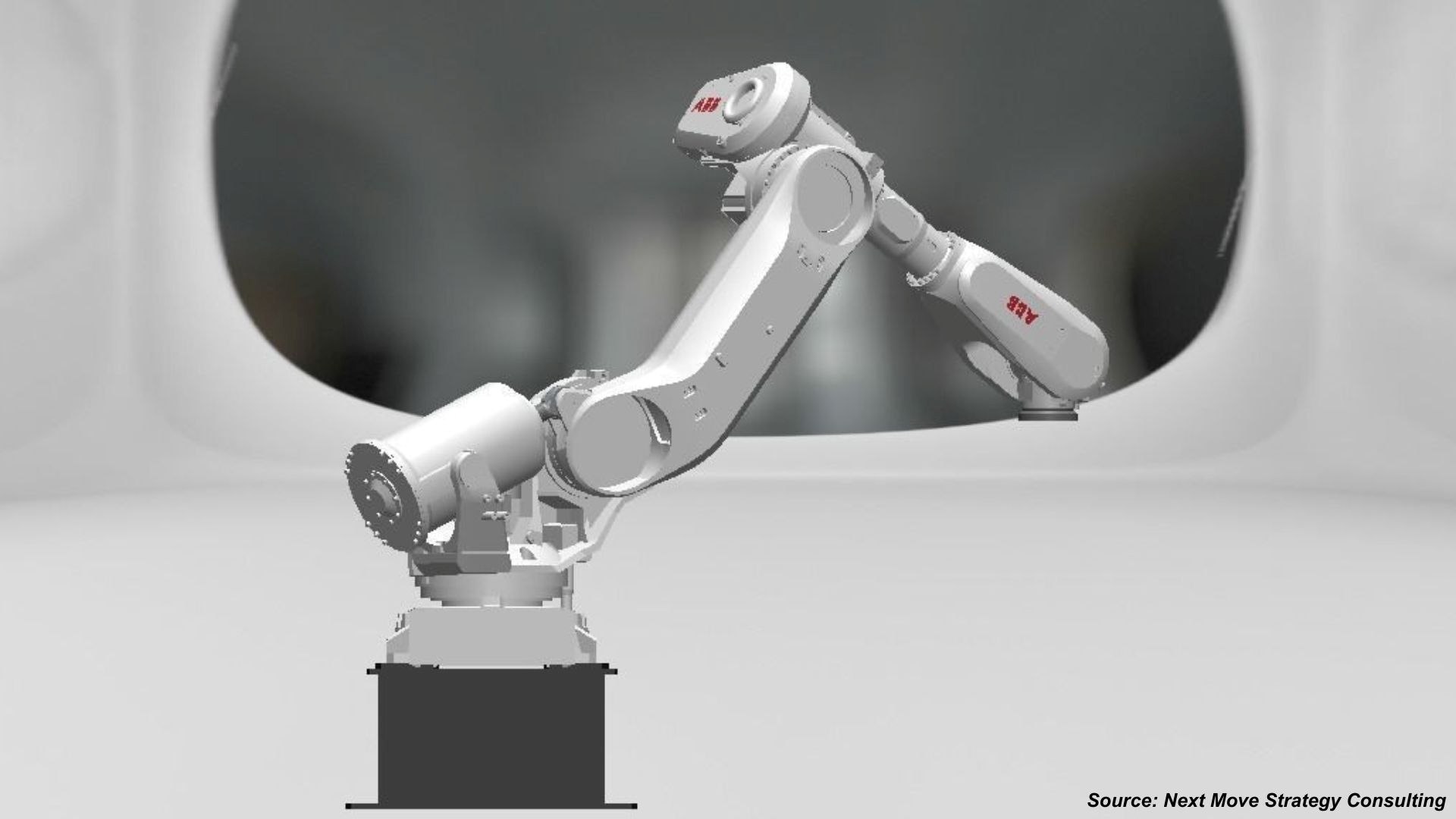
IoT-enabled robotics further enhance operational productivity through real-time monitoring and predictive maintenance, while government programs and funding schemes lower adoption barriers, particularly for SMEs. Despite this momentum, high implementation costs, maintenance challenges, and integration complexities with existing systems remain key restraints. Overall, these factors position articulated robotics as a critical enabler of Singapore’s transition toward smart manufacturing and global competitiveness.
Rising Automation Investments Driving Growth in Singapore’s Manufacturing Sector
The Singapore industrial robotics market trends is being driven by the nation’s increasing investments in automation and smart manufacturing technologies. As manufacturers expand their operations, there is a rising demand for industrial robots to optimize production processes, improve efficiency, and maintain high-quality output across sectors such as electronics, automotive, machinery, and food processing.
The integration of advanced technologies like AI, IoT, and collaborative robotics enables real-time monitoring, predictive maintenance, and data-driven decision-making, helping manufacturers reduce downtime and operational costs. This focus on automation and technological innovation is positioning industrial robotics as a key enabler of Singapore’s transition toward Industry 4.0 and enhanced global manufacturing competitiveness.
Government Support and Industry 4.0 Initiatives are Fueling Manufacturing Automation
The Singapore industrial robotics market demand is being strongly driven by government support and national initiatives promoting Industry 4.0 adoption. Programs such as the Smart Industry Readiness Index (SIRI) and funding schemes for automation encourage manufacturers to integrate advanced robotics, AI, and IoT technologies into their operations.
These initiatives help reduce investment barriers, facilitate technology adoption among SMEs, and foster innovation in sectors like electronics, automotive, and food processing. By enabling real-time monitoring, predictive maintenance, and data-driven production optimization, government-backed efforts are accelerating the deployment of industrial robots and reinforcing Singapore’s position as a global hub for smart manufacturing.
High Implementation Costs and Maintenance Challenges are Limiting Automation Adoption
The Singapore industrial robotics market growth is restrained by high implementation costs and ongoing maintenance challenges. Advanced robotic systems, including collaborative robots and AI-enabled solutions, require substantial upfront investment, which can be prohibitive for small and medium-sized enterprises (SMEs).
Additionally, maintaining and updating these systems demands specialized technical expertise, increasing operational expenses. The complexity of integrating robots into existing production lines and ensuring compatibility with legacy equipment further limits adoption. These financial and technical barriers can slow deployment, restricting market scalability even as demand for automation continues to rise across Singapore’s manufacturing sector.
IoT Integration Creating Future Opportunities in Singapore Industrial Robotics Market Share
The increasing adoption of Internet of Things (IoT) technology is set to create significant future opportunities in the market. IoT-enabled robotic systems facilitate real-time monitoring, predictive maintenance, and intelligent process optimization, enabling manufacturers to streamline production processes and reduce downtime.
By harnessing insights from connected sensors and advanced analytics, companies can enhance operational efficiency, improve flexibility, and lower costs. This interconnected approach to manufacturing opens doors for broader adoption of advanced robotics solutions across sectors such as electronics, precision engineering, pharmaceuticals, and logistics, strengthening Singapore’s position as a hub for smart, high-tech manufacturing.
Competitive Landscape
The Singapore industrial robotics industry is highly competitive, led by major players such as FANUC Singapore Pte. Ltd., ABB Robotics, YASKAWA Asia Pacific Pte. Ltd., KUKA Pte. Ltd., Universal Robots Pte. Ltd., Mitsubishi Electric Asia Pte. Ltd., Omron Electronics Pte. Ltd., Epson Singapore Pte. Ltd, Kawasaki Heavy Industries, Nachi Singapore Pte. Ltd, SIASUN Sci‑Tech Pte. Ltd., SESTO Robotics Pte. Ltd., PBA Systems Pte. Ltd., Panasonic Factory Solutions Asia Pacific Pte. Ltd., Yamaha Robotics Solutions Asia Pte. Ltd., Panasonic Factory Solutions Asia Pacific Pte. Ltd., Yamaha Robotics Solutions Asia Pte. Ltd.
These companies are driving technological innovation by introducing AI- and IoT-enabled robotic solutions, including collaborative robots (cobots) and autonomous mobile robots (AMRs). Their advancements are accelerating automation adoption across key Singaporean industries, such as electronics, automotive, machinery, and food processing, improving production efficiency, operational agility, and enhancing the country’s competitiveness in smart manufacturing and Industry 4.0 initiatives.
Singapore Industrial Robotics Market Key Segments
By Robot Type
-
Articulated Robots
-
SCARA Robots
-
Cartesian and Gantry Robots
-
Delta Robots
-
Collaborative Robots
-
Autonomous Mobile Robots (AMRs)
-
Automated Guided Vehicles (AGVs)
-
Other Robots
By Offering
-
Hardware
-
Robot Arms
-
Controllers
-
End Effectors and Grippers
-
Sensors and Vision Systems
-
-
Software
-
Control and Programming Software
-
Simulation and Offline Programming Software
-
Fleet Management Software
-
-
Services
-
System Integration and Installation
-
Maintenance and Support
-
Training and Consulting
-
By Application
-
Handling
-
Pick and Place
-
Machine Tending
-
Palletizing and Depalletizing
-
-
Welding and Soldering
-
Assembly and Disassembly
-
Dispensing
-
Painting
-
Adhesive and Sealant Application
-
-
Processing
-
Cutting and Machining
-
Grinding and Polishing
-
-
Cleanroom Operations
-
Inspection and Quality Control
-
Packaging and Labeling
-
Intralogistics and Transport
By Mounting Type
-
Floor Mounted
-
Wall-Mounted
-
Ceiling Mounted
-
Rail Mounted
By Mobility
-
Stationary Robots
-
Mobile Robots
By Payload Capacity
-
Low Payload Up to 20 kg
-
Medium Payload 20 kg to 100 kg
-
High Payload 100 kg to 500 kg
-
Heavy Duty Payload Over 500 kg
By End User
-
Automotive Industry
-
Electrical and Electronics Industry
-
Metals and Machinery Industry
-
Food and Beverages Industry
-
Pharmaceuticals and Medical Devices Industry
-
Plastics Rubber and Chemicals Industry
-
Logistics and Warehousing
-
Other Industries
Key Players
-
FANUC Singapore Pte. Ltd.
-
ABB Robotics
-
YASKAWA Asia Pacific Pte. Ltd.
-
KUKA Pte. Ltd.
-
Universal Robots Pte. Ltd.
-
Mitsubishi Electric Asia Pte. Ltd.
-
Omron Electronics Pte. Ltd.
-
Epson Singapore Pte. Ltd.
-
Kawasaki Heavy Industries
-
Nachi Singapore Pte. Ltd
-
SIASUN Sci‑Tech Pte. Ltd.
-
SESTO Robotics Pte. Ltd.
-
PBA Systems Pte. Ltd.
-
Panasonic Factory Solutions Asia Pacific Pte. Ltd.
-
Yamaha Robotics Solutions Asia Pte. Ltd.
Report Scope and Segmentation
|
Parameters |
Details |
|
Market Size in 2025 |
USD 606.9 Million |
|
Revenue Forecast in 2030 |
USD 1150.8 Million |
|
Growth Rate |
CAGR of 13.6% from 2025 to 2030 |
|
Market Volume in 2025 |
8 thousand units |
|
Volume Forecast in 2030 |
15 thousand units |
|
Growth Rate |
CAGR of 13.3% from 2025 to 2030 |
|
Analysis Period |
2024–2030 |
|
Base Year Considered |
2024 |
|
Forecast Period |
2025–2030 |
|
Market Size Estimation |
Million (USD) |
|
Growth Factors |
|
|
Companies Profiled |
15 |
|
Market Share |
Available for 10 companies |
|
Customization Scope |
Free customization (equivalent up to 80 working hours of analysts) after purchase. Addition or alteration to country, regional, and segment scope. |
|
Pricing and Purchase Options |
Avail customized purchase options to meet your exact research needs. |


About the Author
 Mayurima Roy
— Mayurima Roy is Research Analyst at Next Move Strategy Consulting, where she has spent 4 years working across the firm's full industry coverage rather than a single fixed vertical. Her work centers on structured research, ongoing trend tracking, competitive assessment, and insight-led content development, translating complex market data into clear, decision-ready narratives that support informed client decision-making across diverse global industries, market sectors, and world regions every day.
Mayurima Roy
— Mayurima Roy is Research Analyst at Next Move Strategy Consulting, where she has spent 4 years working across the firm's full industry coverage rather than a single fixed vertical. Her work centers on structured research, ongoing trend tracking, competitive assessment, and insight-led content development, translating complex market data into clear, decision-ready narratives that support informed client decision-making across diverse global industries, market sectors, and world regions every day.
About the Reviewer
 Supradip Baul
— Supradip Baul is an accomplished business consultant and strategist with over a decade of rich experience in market intelligence, strategy, technology, and business transformation. His work has included rigorous qualitative and quantitative analysis across multiple industries, helping clients shape investment decisions and long-term roadmaps. Earlier in his career, he was associated with Gartner, where he contributed to industry-leading reports and market share analyses. He has worked with leading global companies and holds an MBA with a dual specialization in Marketing and Finance.
Supradip Baul
— Supradip Baul is an accomplished business consultant and strategist with over a decade of rich experience in market intelligence, strategy, technology, and business transformation. His work has included rigorous qualitative and quantitative analysis across multiple industries, helping clients shape investment decisions and long-term roadmaps. Earlier in his career, he was associated with Gartner, where he contributed to industry-leading reports and market share analyses. He has worked with leading global companies and holds an MBA with a dual specialization in Marketing and Finance.
At Next Move Strategy Consulting, we understand that insightful market research is the cornerstone of successful business decisions. That's why we employ a robust and multifaceted approach, combining various methodologies to deliver the most accurate and actionable data for our clients.

Research Landscape
We navigate the world of research with two primary approaches:
Qualitative Approach
Our qualitative research methodologies involve immersive techniques such as in-depth interviews, focus groups, and observational studies. By engaging directly with individuals and stakeholders, we uncover valuable insights that quantitative data alone may overlook.

Quantitative Research
In tandem with qualitative methodologies, NMSC leverages the power of Quantitative Research to provide a robust foundation of numerical insights. Through systematic data collection and analysis, we quantify patterns, preferences, and market trends, offering a comprehensive view of the business landscape.
Our quantitative research approach employs diverse tools, including surveys, experiments, and statistical modelling. These methodologies enable us to gather data from a large and representative sample, ensuring the statistical significance of our findings. By employing structured questionnaires and standardized data collection methods, we guarantee the reliability and validity of the information we present to our clients.
Quantitative research is particularly effective in measuring the prevalence of trends, assessing market size, and gauging the impact of various factors on consumer behavior. The numerical precision attained through this approach equips our clients with actionable insights, facilitating data-driven decision-making and strategy formulation.


Our Specialized Toolbox for Industry-Specific Market Research
We deploy a specialized arsenal of techniques tailored to meet your unique requirements. Here's a glimpse into our comprehensive toolbox:

Information Procurement
The stage entails acquiring market data or relevant information through various sources and methodologies.


Market Research Approach
We utilize both top-down and bottom-up approaches in market research analysis to achieve a comprehensive understanding of the market dynamics, leveraging the broad perspective of industry trends and macroeconomic factors alongside detailed insights from specific segments and individual companies.

Porters Five Forces Analysis
We conduct Porter's Five Forces analysis to evaluate the competitive landscape of an industry, providing us with insights into factors that affect profitability and strategic positioning.

SWOT Analysis

Forecasting
We utilize a forecasting model to predict future consumption by considering parameters like population, economics, regulations, market competition, drivers, constraints, technology, and pricing. We also employ statistical techniques such as multilinear regression, exponential smoothing, moving average, ARIMA, and Monte Carlo simulations for accurate predictions. In econometric forecasting, we analyzed short-term and long-term event impacts, attributing values based on regulatory frameworks, economic factors, and market events.





 Speak to Our Analyst