How Is Cloud Robotics Reshaping Intelligent Automation?

Cloud Robotics Market is rapidly changing the way intelligent machines operate across industries. Instead of functioning as isolated systems, modern robots are increasingly connected to cloud-based artificial intelligence (AI) platforms that allow them to process data, learn from simulations, and collaborate across networks in real time. This shift is helping manufacturers, healthcare providers, and logistics companies improve operational efficiency while accelerating automation.
Recent announcements from NVIDIA and the partnership between HIVE Digital Technologies and AMC Robotics highlight how cloud-connected robotics ecosystems are moving beyond experimental development and entering practical industrial applications.
As robotics systems become more autonomous, cloud robotics is emerging as a foundational technology that supports scalable computing, real-time analytics, and AI-driven decision-making.
Why Is Cloud Robotics Becoming Central to Physical AI?
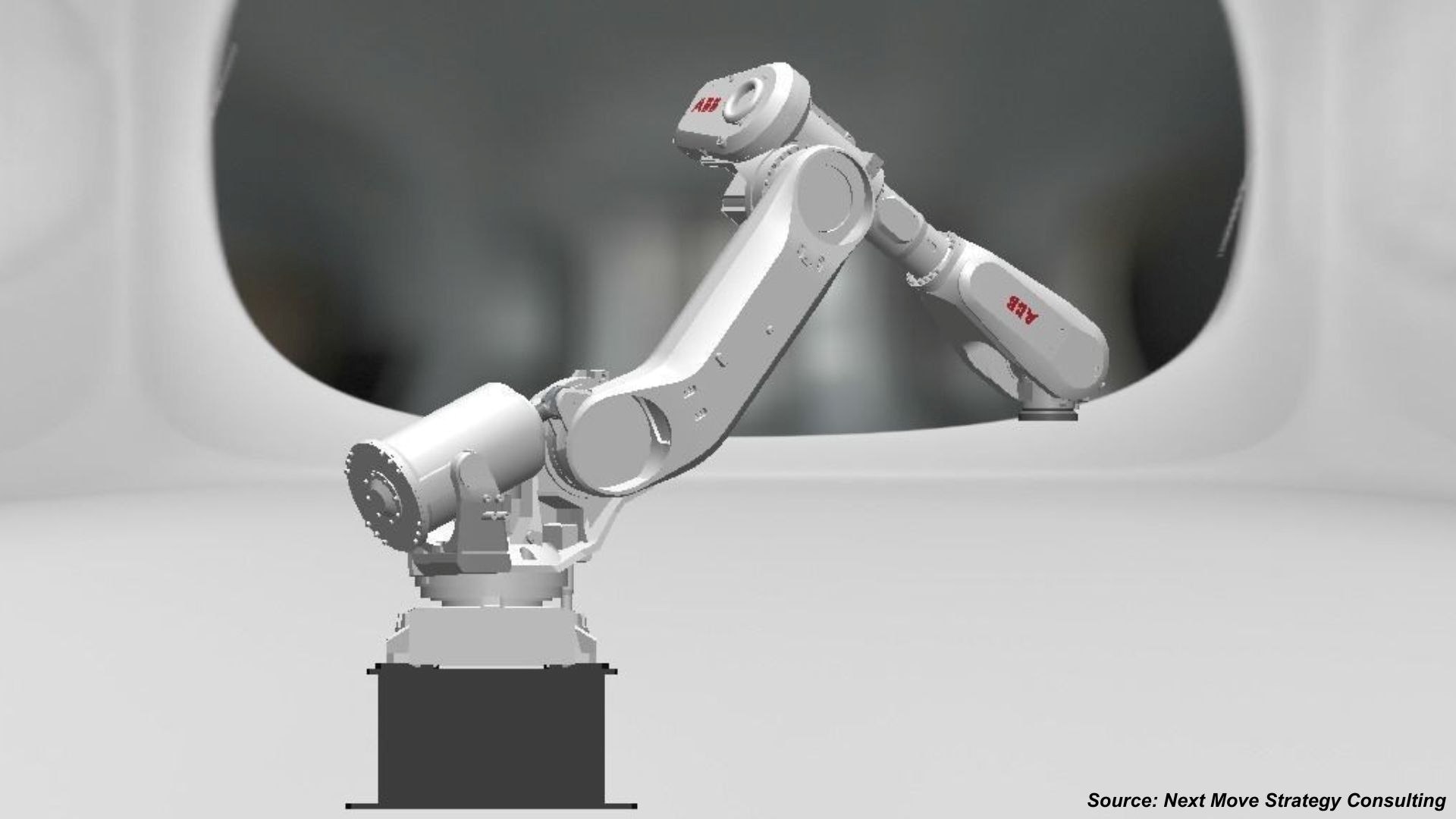
According to NVIDIA Newsroom, major robotics companies including ABB Robotics, FANUC, KUKA, Universal Robots, and YASKAWA are integrating NVIDIA Isaac simulation frameworks and Omniverse digital twin technologies into their operations. These platforms help companies create physically accurate virtual environments where robotic systems can be trained, tested, and optimized before deployment.
This approach significantly reduces operational risks and improves deployment efficiency. Rather than relying only on physical testing, organizations can now validate complex robotic workflows through simulation. NVIDIA also introduced new Cosmos world models and Isaac GR00T foundation models to support generalized robotic intelligence capable of adapting to different environments and tasks.
The company emphasized that future robotics systems will require humanlike reasoning and autonomous decision-making capabilities. Cloud robotics makes this possible by giving robots access to shared intelligence models, centralized computing resources, and large-scale simulation environments.
|
Cloud Robotics Capability |
Operational Benefit |
|
Digital twin simulation |
Faster testing and validation |
|
Shared AI learning |
Improved adaptability |
|
Cloud-based computing |
Enhanced processing scalability |
|
Edge AI integration |
Faster real-time responses |
How Are Infrastructure Partnerships Accelerating Robotics Innovation?
The growing complexity of autonomous robotics systems is increasing demand for advanced computing infrastructure. In March 2026, HIVE Digital Technologies partnered with AMC Robotics to strengthen AI robotics infrastructure and support the development of autonomous robotic platforms.
According to TheStreet Report on HIVE and AMC Robotics Partnership, AMC Robotics is using HIVE’s GPU cloud infrastructure to develop and test its robotics portfolio, including the Kyro™ quadruped robot. The system is designed to conduct security monitoring, thermal inspections, and autonomous navigation in complex environments.
Robots such as Kyro™ process large amounts of real-time visual and environmental data, requiring substantial computing power for navigation and decision-making. HIVE’s BUZZ GPU cloud infrastructure provides the scalable computing environment necessary to support these operations.
The partnership also focuses on improving AI efficiency, expanding robotics data processing capabilities, and enabling faster deployment of intelligent robotic systems into real-world applications.
Cloud Robotics Applications by Industry Share
The pie chart highlights the distribution of cloud robotics applications across major industries, showing how connected robotic systems are being adopted in diverse operational environments. Industrial robotics holds the largest share at 30%, reflecting the growing use of cloud-connected automation in manufacturing, assembly lines, and production monitoring. Companies are increasingly integrating AI-driven robotics with cloud infrastructure to improve operational efficiency, predictive maintenance, and real-time analytics.
Healthcare and medical robotics account for 20% of the share, driven by rising adoption of robotic-assisted surgeries, rehabilitation systems, and AI-powered healthcare automation. Cloud connectivity enables medical robots to process large volumes of data, improve precision, and support remote diagnostics and monitoring.
Agricultural robotics represents 15% of the market, highlighting the increasing use of automated farming equipment, crop monitoring systems, and precision agriculture technologies. Cloud robotics helps farmers optimize productivity through data-driven insights and remote operational management.
Logistics and delivery robotics contribute 12%, supported by growing demand for warehouse automation, autonomous delivery systems, and supply chain optimization. Social and service robotics account for 10%, reflecting the use of intelligent robots in customer service, hospitality, and personal assistance applications.
Military and defense robotics hold an 8% share due to rising investments in autonomous surveillance, security monitoring, and unmanned robotic systems. Rehabilitation robotics makes up the remaining 5%, driven by advancements in robotic therapy and assistive healthcare technologies.
Overall, the chart demonstrates that cloud robotics is expanding beyond manufacturing and becoming an essential technology across healthcare, agriculture, logistics, defense, and service industries.

How Dew, Fog, and Cloud Computing Strengthen Cloud Robotics Architecture
This image illustrates the layered architecture of cloud robotics using Dew Computing, Fog Computing, and Cloud Computing. The diagram explains how robotic systems process and exchange data across multiple computing layers to improve operational efficiency, reduce latency, and support real-time decision-making.
At the bottom layer, the “DEW” section represents robots and local edge devices that perform immediate processing close to the physical environment. The Dew Node directly interacts with the robot, enabling fast responses without depending entirely on centralized cloud systems.
The “FOG” layer acts as an intermediary processing system between local devices and the cloud. Fog Nodes help manage data traffic, reduce network congestion, and process time-sensitive tasks before sending information to the cloud infrastructure.
The “CLOUD” section represents centralized cloud computing resources that provide large-scale data storage, advanced analytics, artificial intelligence processing, and long-term learning capabilities. The request-and-response arrows highlight continuous communication between fog nodes and the cloud platform.
The image also demonstrates a publish-subscribe communication model, where data and updates are shared efficiently across connected systems through a master control layer.

How Cloud Robotics Connects Multiple Industries Through Intelligent Automation
This image illustrates the growing ecosystem of cloud robotics, where different types of robots are connected through a centralized cloud platform called “Robot Cloud.” The visual highlights how cloud computing enables robots across industries to share data, process information in real time, and improve operational efficiency through connected intelligence.
The diagram showcases various robotic applications including industrial robots, medical robots, social robots, agricultural robots, delivery robots, servant robots, rehabilitation robots, and military robots. Each robotic system is linked to the cloud network, symbolizing how cloud infrastructure supports communication, remote monitoring, AI-driven decision-making, and continuous learning.
The image emphasizes that cloud robotics is not limited to one sector. Instead, it acts as a unified technology framework that enables automation across manufacturing, healthcare, agriculture, logistics, defense, and service industries.

Major Trends Shaping the Present of Cloud Robotics
One of the most important trends in cloud robotics is the growing use of digital twins. Manufacturers are increasingly building virtual replicas of production lines to simulate robotic operations before physical implementation. This approach improves accuracy while reducing deployment costs and operational disruptions.
Another major trend is the development of humanoid robotics. Companies such as Agility, Figure, and Boston Dynamics are using NVIDIA Isaac simulation technologies to accelerate humanoid robot training and validation. These systems rely heavily on cloud-connected AI models to improve mobility, dexterity, and autonomous decision-making.
Cloud-to-edge integration is also gaining momentum. Modern robotics systems increasingly combine centralized cloud intelligence with localized edge processing, enabling faster response times while maintaining scalable AI capabilities.
In addition, open-source robotics ecosystems are expanding rapidly. NVIDIA’s collaboration with Hugging Face to integrate Isaac and GR00T technologies into the LeRobot framework reflects a broader industry movement toward collaborative AI development.
Leading Companies Advancing Cloud Robotics Innovation
The cloud robotics industry is supported by a diverse ecosystem of technology providers, robotics manufacturers, AI infrastructure companies, and automation specialists. Key market participants include Amazon Web Services, Inc., Google Cloud Platform, Microsoft Corporation, C2RO Cloud Robotics Inc., KUKA AG, CloudMinds, V3 Smart Technologies, Rapyuta Robotics, Ortelio Ltd., Aethon, InOrbit, Formant, OTTO Motors by Clearpath Robotics, Locus Robotics, Zebra Technologies, Brain Corp, ABB Ltd., Fanuc Corporation, and Universal Robots. These companies are actively contributing to the advancement of cloud-connected robotics through AI integration, autonomous systems development, industrial automation, and scalable robotics infrastructure solutions.

What Challenges Could Affect Cloud Robotics Adoption?
Despite strong momentum, cloud robotics still faces several operational and technological challenges. Advanced robotics systems require large-scale GPU infrastructure, which can significantly increase deployment costs. Cybersecurity also remains a major concern because connected robots continuously exchange operational data through cloud networks.
In highly regulated industries such as healthcare, safety validation and compliance requirements are particularly demanding. NVIDIA noted that companies including CMR Surgical and Medtronic are using secure simulation environments to validate robotic systems before clinical deployment.
Latency management is another critical factor. Certain industrial and healthcare applications require near-instantaneous responses, making reliable edge computing integration essential for maintaining operational safety and efficiency.
Next Steps
Organizations planning to invest in cloud robotics should focus on strengthening AI infrastructure capabilities, expanding simulation-based testing environments, and integrating edge AI technologies for faster decision-making. Businesses should also prioritize cybersecurity frameworks and workforce training to support the growing adoption of intelligent robotic systems.
-
Invest in cloud-native robotics simulation and digital twin platforms to improve testing and deployment efficiency.
-
Strengthen AI infrastructure capabilities through scalable GPU cloud computing and edge AI integration.
-
Implement robust cybersecurity frameworks to protect connected robotic systems and operational data.
-
Expand workforce training programs focused on AI-enabled robotics operations and automation management.
-
Explore strategic partnerships with AI and cloud infrastructure providers to accelerate robotics innovation and deployment.
Final Thoughts
Cloud robotics is redefining how intelligent machines are trained, managed, and deployed across industries. Developments from NVIDIA and the HIVE-AMC Robotics partnership demonstrate that the future of robotics will depend heavily on scalable cloud infrastructure, AI-driven simulation, and shared intelligence ecosystems.
As automation continues expanding across manufacturing, logistics, healthcare, and infrastructure operations, cloud robotics is expected to become a key driver of intelligent industrial transformation.
About the Author
 Tania Dey
— Tania Dey is a content writer specializing in transformation-led, insight-driven storytelling. She develops research-backed, high-impact content aligned with evolving business priorities, digital behavior, and audience expectations. Her work helps organizations sharpen value propositions, strengthen visibility, and communicate strategic intent with clarity and precision. Grounded in data-informed storytelling, she brings a strong focus on relevance, consistency, and measurable digital impact across platforms.
Tania Dey
— Tania Dey is a content writer specializing in transformation-led, insight-driven storytelling. She develops research-backed, high-impact content aligned with evolving business priorities, digital behavior, and audience expectations. Her work helps organizations sharpen value propositions, strengthen visibility, and communicate strategic intent with clarity and precision. Grounded in data-informed storytelling, she brings a strong focus on relevance, consistency, and measurable digital impact across platforms.
About the Reviewer
 Sanyukta Deb
— Sanyukta Deb is Digital Marketing Team Lead at Next Move Strategy Consulting, where she has led content strategy and technical SEO for the firm's B2B market research publications for over 2 years. Her editorial process translates NextMSC's primary and secondary research — spanning technology, industrial, and consumer sectors — into commercial narratives, backed by search-intent, keyword, and competitive analysis. She brings 5 years of overall experience in digital marketing and content strategy.
Sanyukta Deb
— Sanyukta Deb is Digital Marketing Team Lead at Next Move Strategy Consulting, where she has led content strategy and technical SEO for the firm's B2B market research publications for over 2 years. Her editorial process translates NextMSC's primary and secondary research — spanning technology, industrial, and consumer sectors — into commercial narratives, backed by search-intent, keyword, and competitive analysis. She brings 5 years of overall experience in digital marketing and content strategy.
















Add Comment