Soft Robotic Grippers Market By Product Type (Parallel , Angular, Universal, Finger Type, and Others), By Component (Soft Actuators, Soft Sensors, Control Systems, and Others), By Actuation Technology (Pneumatic, Electric, Hydraulic Actuation, and Others), By Material Type (Silicone Elastomers, Rubber Materials, and Others), By Application (Pick and Place Operations, Assembly Tasks, Packaging Applications, and Others) & By End-User – Global Analysis & Forecast, 2025–2030
Industry: Semiconductor & Electronics | Publishing Date: December 2, 2025 | Last Updated: December 23, 2025 | No of Pages: N/A | No. of Tables: N/A | No. of Figures: N/A | Format: PDF | Report Code: SE3756
Industry Outlook
The global Soft Robotic Grippers Market size was valued at USD 1.33 billion in 2024, and is expected to be valued at USD 1.60 billion by the end of 2025. The industry is projected to grow, hitting USD 4.02 billion by 2030, with a CAGR of 20.3% between 2025 and 2030.
The market has evolved from experimental prototypes to integral components in modern automation systems. These grippers are designed to handle delicate and irregularly shaped objects, making them ideal for tasks in industries such as food processing, logistics, electronics, and healthcare. Their adaptability allows them to safely manipulate fragile items like baked goods, sensors, and pharmaceuticals. The integration of artificial intelligence and machine learning has further enhanced their capabilities, enabling real-time adjustments and improving efficiency in dynamic environments.
Looking ahead, the future of soft robotic grippers appears promising, with significant growth anticipated across various sectors. Advancements in materials science and AI are expected to drive innovations, leading to grippers with enhanced strength, precision, and versatility. Emerging applications in elder care, assistive robotics, and agriculture present new avenues for deployment. As industries continue to embrace automation, the demand for adaptable and efficient gripper solutions is poised to rise, positioning soft robotic grippers as a cornerstone of next-generation robotic systems.
Also, the technological readiness Index directly impacts the growth of the soft robotic grippers market. Countries with higher technological readiness, those scoring well on infrastructure, digital skills, and innovation, can more swiftly adopt and integrate advanced robotic solutions like soft grippers across industries, leading to faster market expansion and higher commercial uptake. In contrast, countries with lower readiness face challenges such as infrastructure limitations and workforce skill gaps, which can slow down adoption rates and restrict market growth until these barriers are addressed. Therefore, the technological readiness of a country is a key determinant of how quickly and broadly soft robotic grippers can penetrate industrial, logistics, and food automation sectors.

The index in the above chart measures each country's capacity to adopt and utilize advanced technologies, reflecting factors like infrastructure, digital skills, and innovation environment. Higher technology readiness seen in countries such as China and Japan provides a strong foundation for the rapid development and integration of emerging fields like soft robotic grippers. These nations are likely to experience faster market growth, increased investment, and accelerated commercialization for soft robotic grippers.
What Are the Key Trends in the Soft Robotic Grippers Market?
How Are AI-Enhanced Soft Robotic Grippers Revolutionizing Automation?
AI integration is significantly enhancing the capabilities of soft robotic grippers, enabling them to perform complex tasks with greater precision and adaptability. These AI-driven systems can learn from their environment, making real-time adjustments to handle a variety of objects, from delicate fruits to intricate electronic components. This adaptability is particularly beneficial in industries like food processing, logistics, and electronics manufacturing, where the nature of tasks can vary widely. For instance, in the food industry, soft robotic grippers equipped with AI can adjust their grip strength and approach based on the softness or fragility of the item, reducing the risk of damage. Companies looking to stay competitive invest in AI technologies to enhance the versatility and efficiency of their robotic systems, ensuring they can meet the evolving demands of modern automation.
What Role Does Material Innovation Play in Advancing Soft Robotic Grippers?
Advancements in materials science are pivotal in the development of soft robotic grippers, leading to more durable, flexible, and efficient systems. The use of materials like elastomers, gels, and food-grade silicones allows these grippers to handle delicate items without causing damage, which is crucial in industries such as food processing and healthcare. Moreover, the incorporation of self-healing materials and recyclable components is aligning the industry with sustainability goals, reducing waste and extending the lifespan of robotic systems. For example, soft grippers made from self-healing materials can recover from minor damages autonomously, minimizing downtime and maintenance costs. Manufacturers prioritize the adoption of these advanced materials to improve the performance and sustainability of their robotic grippers, meeting both operational and environmental standards.
How Are Modular and Customizable Designs Shaping the Future of Soft Robotic Grippers?
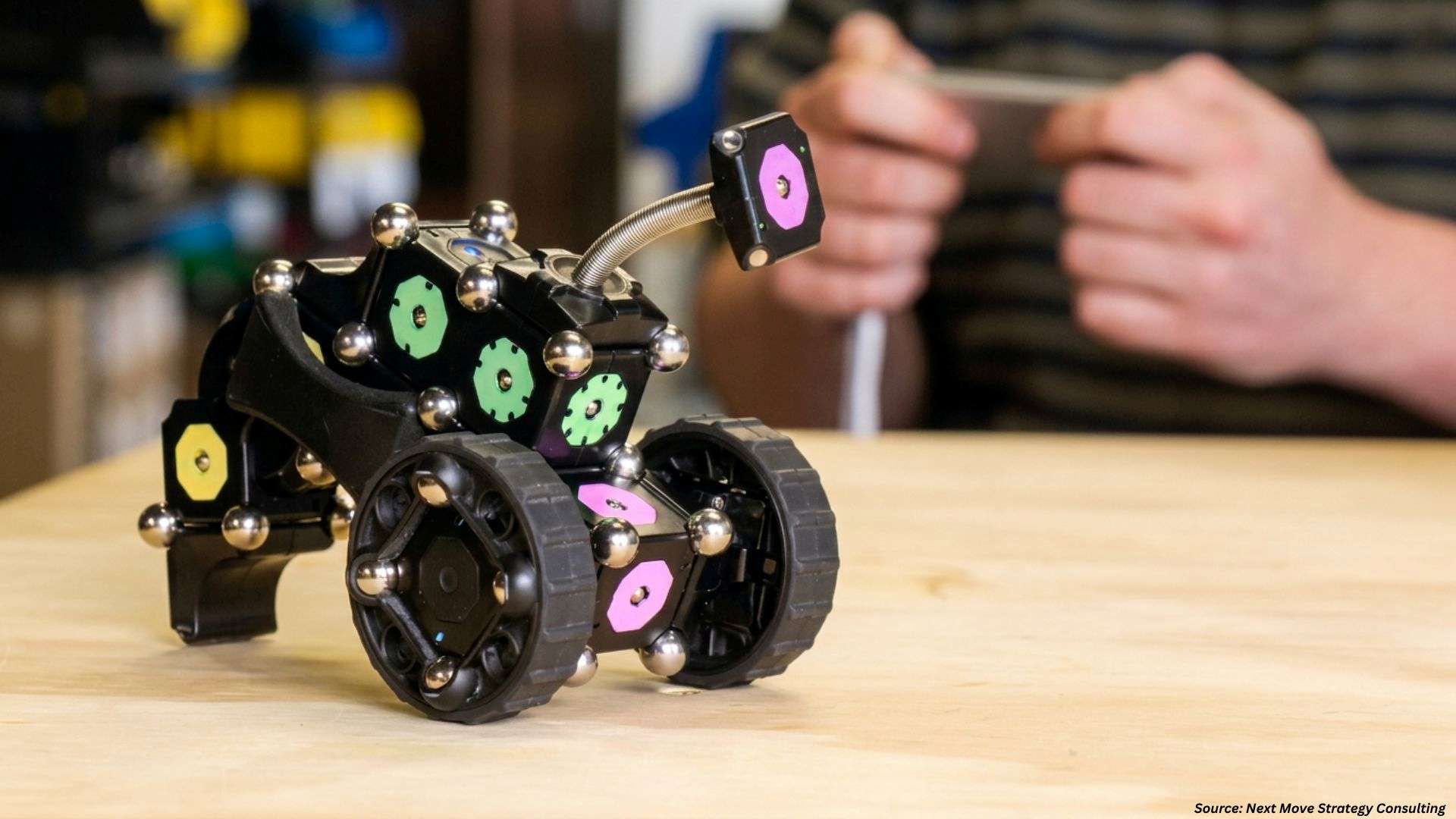
The trend towards modularity and customization in soft robotic grippers is enabling businesses to tailor solutions to their specific operational needs. Modular designs allow for easy adaptation and upgrading of components, facilitating maintenance and scalability. For instance, in the logistics sector, companies modify their gripper systems to handle different package sizes and weights, improving efficiency and reducing the need for multiple specialized machines. Customization also extends to the integration of various sensors and actuators, enhancing the gripper's ability to perform specialized tasks. To capitalize on this trend, companies invest in research and development to create adaptable gripper systems that can be easily customized to meet the diverse requirements of their operations.
What Impact Is the Integration of Soft Robotic Grippers Having on Collaborative Robotics?
The integration of soft robotic grippers into collaborative robotics (cobots) is fostering safer and more efficient human-robot interactions. Unlike traditional rigid grippers, soft grippers can safely interact with humans and delicate objects, making them ideal for environments where human workers are present. In sectors like healthcare, soft grippers are used in assistive devices to aid individuals with mobility challenges, while in manufacturing, they collaborate with human workers to assemble complex products. This synergy between humans and robots is enhancing productivity and safety in various industries. Companies focus on developing soft gripper technologies that prioritize safety and adaptability, ensuring seamless integration into collaborative work environments.
What Are the Key Market Drivers, Breakthroughs, and Investment Opportunities That Will Shape the Soft Robotic Grippers Market in the Next Decade?
The soft robotic grippers market is experiencing significant growth, propelled by advancements in automation and robotics. These innovations are enhancing the efficiency and adaptability of manufacturing, logistics, and healthcare operations. However, the industry faces challenges such as integration complexities and cost considerations. Despite these hurdles, emerging opportunities in sustainable materials and collaborative robotics are paving the way for future developments.
Also, increasing health expenditure strongly drives the growth of the soft robotics technology market by boosting investments in advanced medical technologies and enabling healthcare providers to adopt automation in surgery, rehabilitation, diagnostics, and patient care. Higher healthcare spending allows hospitals and clinics to procure innovative robotic systems that improve patient outcomes, surgical precision, efficiency, and safety while meeting demands of aging populations and rising chronic disease prevalence. As soft robotic grippers offer adaptability and gentle handling necessary for minimally invasive procedures, increased financial backing in healthcare accelerates their adoption across various medical applications and supports continued research and development in this sector.

Growth Drivers:
What Role Does Automation in Manufacturing and Logistics Play in Driving Soft Robotic Grippers Market Growth?
The increasing adoption of automation in manufacturing, logistics, and healthcare is a major growth driver for pneumatic soft actuators. These grippers improve operational efficiency by handling delicate or irregularly shaped items that traditional robotic arms struggle with. Their flexibility reduces product damage and enhances throughput, making them indispensable in sectors like food processing and electronics assembly. Companies that integrate soft grippers into their automation workflows optimize labour allocation and operational precision while maintaining safety standards. The ongoing shift toward automated, adaptive systems ensures that demand for versatile soft robotic grippers will continue to rise in modern industrial environments.
How Is the Integration of AI Enhancing the Capabilities of the Soft Robotic Grippers Market?
Artificial intelligence is transforming soft robotic grippers by enabling them to adapt in real time to varying objects and conditions. AI-powered grippers can adjust grip strength, orientation, and movement patterns for delicate or irregular items, significantly improving task accuracy and efficiency. This capability is particularly valuable in sectors such as healthcare, where precision is critical, and logistics, where diverse packaging types are handled. Companies leveraging AI-enabled grippers achieve faster, safer, and more reliable operations, while also gaining the flexibility to respond to dynamic production requirements. AI adoption is therefore accelerating the evolution and practical applications of soft robotic systems.

The chart illustrates the AI adoption rates across major global economies in 2024, with the U.S. leading at 45%, followed by the UK, China, Germany, and India. The data suggests that nations with higher AI adoption, such as the U.S. and UK, are better positioned to drive innovation in advanced automation fields, including the development and deployment of bio-inspired robotic grippers. Elevated AI adoption accelerates integration in manufacturing and logistics, allowing for greater deployment of intelligent systems that rely on soft robotics for adaptable, sensitive handling. Conversely, countries with lower AI adoption rates, like India, may experience delayed acceleration in soft robotics markets due to slower digital transformation and limited AI infrastructure development, impacting their global competitiveness in this segment.
Growth Inhibitors:
Why Do High Development and Material Costs Restrain Soft Robotic Grippers Market Growth?
One of the key restraints in the soft robotic grippers market is the high cost associated with research, development, and advanced materials. These grippers often require specialized elastomers, sensors, and actuators that can withstand repeated deformation while maintaining precision and durability. Developing such components demands significant investment in prototyping, testing, and material optimization. Moreover, integrating these systems with existing robotic frameworks often involves customization, further increasing expenses. As a result, small and medium-sized enterprises find it challenging to justify the high initial investment, slowing the pace of widespread adoption across cost-sensitive industries.
How Are Advances in Biocompatible and Food-Grade Materials Expanding Soft Robotic Grippers Market Opportunities?
The development of biocompatible and food-grade materials presents a major opportunity for the soft robotic grippers market. These materials enable safer interaction with delicate or sensitive items, opening new applications in healthcare, biopharmaceuticals, and food processing. Soft grippers made from non-toxic, hygienic, and easily sterilizable materials can handle medical instruments, assist in minimally invasive surgeries, or manage fresh produce without contamination risks. This innovation not only broadens the scope of automation in regulated industries but also aligns with global trends toward sustainability and safety. As industries increasingly seek gentle, contamination-free handling solutions, companies focusing on material innovation gain a competitive advantage and drive future market growth.
How Is the Soft Robotic Grippers Market Segmented in This Report, and What Are the Key Insights from the Segmentation Analysis?
By Product Type Insights
Which Product Type Dominates the Soft Robotic Grippers Market in 2024?
Based product type, the soft robotic grippers market is segmented into parallel, angular, universal, finger type, soft grippers, vacuum gripper, collaborative grippers, traditional grippers, custom application specific, and others.
Parallel grippers are the workhorses of industrial automation, designed to grasp objects with symmetrical, linear motion. Their simple yet effective mechanism makes them ideal for repetitive pick-and-place operations in high-speed manufacturing lines. They excel where consistency and precision are critical, such as electronics assembly or packaging. Angular grippers open and close through a pivoting motion, allowing them to handle objects of varying shapes and sizes more securely than linear grippers. Their design is particularly suited to applications where items have irregular geometries or require precise alignment. These grippers are favored in automotive and heavy machinery sectors, where robust gripping and reliable positioning are essential.
Modeled after the human hand, finger-type grippers offer multiple points of contact, delivering high dexterity and nuanced control. These grippers are especially useful in applications requiring delicate handling, such as laboratory automation, medical device assembly, or food handling. Their multi-finger design allows them to conform to complex geometries, enabling precise manipulation of irregular or fragile objects.
Vacuum grippers rely on suction to lift and transport objects, providing a fast and efficient solution for flat or smooth surfaces. They are highly valued in sectors such as electronics, glass, and packaging, where speed and precision are paramount. Recent developments in sensor integration allow vacuum grippers to detect load changes and maintain stable handling of diverse surfaces. Collaborative grippers are engineered to operate safely alongside human workers, making human-robot collaboration feasible and productive. Equipped with force sensors and intelligent control systems, they can detect human presence and adjust their actions to prevent injury. This capability is crucial in industries like assembly, logistics, and healthcare, where robots and humans share tasks.
By Component Insights
Which Key Components Are Shaping the Future of the Soft Robotic Grippers Market?
Based on component, the soft robotic grippers market is segmented into soft actuators, soft sensors, control systems, power sources, and structural components.
Soft actuators form the heart of soft robotic grippers, converting energy into motion while maintaining flexibility and compliance. Made from materials like silicone, elastomers, and smart polymers, they allow grippers to conform to the shape of objects and handle delicate items without damage. Continuous advancements in pneumatic, hydraulic, and electroactive actuators are enhancing precision, response time, and force control.
Soft sensors provide tactile feedback, force measurement, and object detection, enabling grippers to interact intelligently with their environment. Embedded in soft materials, these sensors measure pressure, strain, and touch without compromising flexibility. Innovations in stretchable electronics and bio-inspired sensing technologies have expanded their accuracy and durability. Soft sensors allow grippers to adapt to diverse object geometries in real-time, enhancing efficiency in tasks that require precision and minimizing errors in industries such as logistics, electronics, and medical device assembly. Power sources supply energy to actuators and control systems, directly influencing gripper performance, endurance, and mobility. Innovations in compact, efficient pneumatic, hydraulic, and battery-based systems are enabling longer operation times and higher actuation forces. Optimized power sources allow soft grippers to be deployed in both stationary and mobile robotic platforms, supporting continuous production lines and flexible automation setups.
By Actuation Technology Insights
Which Actuation Technologies are Powering the Soft Robotic Grippers Market?
Based on actuation technology, the soft robotic grippers market is segmented into pneumatic actuation, electric actuation, hydraulic actuation, shape memory actuation, and hybrid actuation systems.
Pneumatic actuation is the most commonly used technology in soft robotic grippers, relying on compressed air to drive flexible motion. Its simplicity, reliability, and smooth operation make it ideal for applications requiring gentle handling, such as food processing or medical device manipulation. Pneumatic systems allow for high compliance, enabling grippers to conform to various object shapes. Electric actuation uses motors or servos to generate precise movement in grippers, offering superior control over speed, force, and positioning. This technology is particularly suited for applications requiring accuracy, repeatability, and integration with automated control systems. Electric actuation allows for easy programming and adaptation, making it attractive for electronics assembly, laboratory automation, and delicate packaging tasks.
Hydraulic actuation employs pressurized fluids to drive movement, delivering high force and smooth motion even in heavy-duty applications. This method is ideal for handling larger or heavier objects where precision and strength are critical, such as automotive manufacturing or industrial material handling. Hydraulic systems provide fine force modulation, enabling delicate manipulation without damage. Shape memory actuation leverages materials that change shape in response to stimuli such as heat, electricity, or magnetic fields. This enables grippers to perform complex, adaptive movements without traditional mechanical components. Shape memory actuation is particularly valuable in applications requiring lightweight, compact, or highly flexible solutions, such as minimally invasive surgery or wearable robotics.
Hybrid actuation systems combine two or more actuation technologies, integrating the strengths of each to deliver enhanced performance, adaptability, and versatility. For instance, combining pneumatic and electric actuation allows grippers to achieve both high force and precise control, suitable for complex industrial and research applications. Hybrid systems are increasingly being explored to tackle tasks that single actuation methods cannot address, such as manipulating objects of varying fragility and shape in dynamic environments.
By Material Type Insights
Which Material Types are Driving Innovation in Soft Robotic Grippers Market?
Based on material type, the soft robotic grippers market is segmented into silicone elastomers, rubber materials, thermoplastic elastomers, hydrogels, shape memory materials, and composite materials.
Silicone elastomers are among the most widely used materials in soft robotic grippers due to their flexibility, biocompatibility, and durability. They can conform to irregular shapes without exerting excessive force, making them ideal for delicate handling in medical devices or fragile product packaging. Silicone’s chemical resistance and stability over temperature variations further enhance its appeal. Rubber materials offer elasticity, resilience, and robustness, allowing soft grippers to withstand repetitive movements and moderate mechanical stress. Their natural flexibility enables efficient handling of irregular or textured objects in industrial and logistics applications. Rubber-based grippers are also valued for their cost-effectiveness and ease of fabrication, making them suitable for large-scale deployments.
Thermoplastic elastomers combine the elasticity of rubber with the processability of plastics, offering both flexibility and durability. TPEs allow for easy manufacturing of grippers with complex geometries while maintaining adaptive properties for delicate or irregular objects. Their recyclable and lightweight nature aligns with sustainability goals, particularly in industries like food processing and consumer electronics. Composite materials integrate multiple constituents, combining flexibility, strength, and functionality in a single structure. They allow soft robotic grippers to achieve high load-bearing capacity while maintaining adaptability for delicate handling. Composites can incorporate conductive, magnetic, or responsive elements, enabling multifunctional capabilities such as sensing or actuation within the same material. Their use is growing in industrial, biomedical, and research applications, where a balance of robustness and precision is required to handle complex or fragile objects reliably.

By Payload Capacity Insights
How Does Payload Capacity Influence the Soft Robotic Grippers Market?
Based on payload capacity, the soft robotic grippers market is segmented into light, medium, and heavy.
Light payload grippers are designed to handle small, delicate, or fragile objects with precision and care. They are ideal for applications in healthcare, laboratory automation, electronics assembly, and food handling. Their lightweight construction, often using soft materials like silicone or hydrogels, allows for high dexterity and gentle interaction with sensitive items.
Medium payload grippers bridge the gap between delicate handling and higher-strength applications. They are capable of managing moderately sized objects, such as packaged goods, automotive components, or consumer electronics, without compromising flexibility. These grippers often combine soft and rigid materials or employ hybrid actuation systems to balance strength and adaptability. Heavy payload grippers are engineered to lift and manipulate large or robust objects, often found in automotive, aerospace, and industrial machinery applications. They prioritize strength and durability while integrating adaptive or compliant features to prevent damage to handled items. Innovations in hydraulic actuation, reinforced composites, and modular designs allow heavy payload grippers to maintain both power and precision.
By Application Insights
Which Applications are Shaping the Future of Soft Robotic Grippers Market in 2024?
Based on application, the soft robotic grippers market is segmented into pick and place operations, assembly tasks, packaging applications, handling fragile objects, material handling, machine tending, and others.
Pick and place operations are one of the most common applications for soft robotic grippers, particularly in logistics, warehousing, and assembly lines. These grippers efficiently move objects of varying shapes, sizes, and fragility without causing damage. Soft materials and compliant designs allow for safe handling of delicate or irregular items, while sensor integration improves speed and accuracy. Their flexibility reduces the need for multiple gripper types, making pick and place tasks more efficient and adaptable to dynamic production environments. In assembly tasks, soft robotic grippers are used to manipulate components with precision and care. Industries such as electronics, automotive, and consumer goods benefit from their ability to handle small or intricate parts without causing deformation or damage. Advances in tactile sensing and adaptive actuation allow grippers to align and insert components accurately, even when tolerances are tight. This capability improves production efficiency while reducing errors and scrap, particularly in complex or high-mix assembly lines.
Material handling involves moving and positioning items of different shapes, sizes, and weights in industrial and warehouse settings. Soft robotic grippers in this application enhance safety, precision, and throughput, especially when dealing with irregular or delicate objects. Their adaptability allows them to reduce the need for manual intervention while increasing process efficiency. By integrating into automated material handling systems, soft grippers help optimize logistics, reduce labor costs, and support dynamic production workflows.
Machine tending applications involve loading and unloading parts into machines such as CNC machines, injection molding units, or assembly systems. Soft robotic grippers provide the dexterity to handle parts carefully while maintaining productivity. Their compliance reduces the risk of damaging components during transfer and ensures precise alignment with machinery. These capabilities make soft grippers suitable for semi-automated or fully automated machine tending processes, improving safety and operational efficiency in manufacturing environments.
By End-User Insights
Which End-Users are Driving the Demand in the Soft Robotic Grippers Market?
The end-user segmentation includes healthcare, food and beverage, automotive, logistics and warehousing, advanced manufacturing and electronics, aerospace and defense, research and academia, and others.
In healthcare, soft robotic grippers are applied in surgical assistance, rehabilitation devices, and laboratory automation. Their gentle, compliant design ensures safe interaction with patients and delicate medical instruments. Grippers enable precise handling of lab samples, prosthetics, and bio-materials, reducing the risk of contamination or damage. Integration with AI and sensor systems allows for adaptive control, making them essential in applications requiring high precision, reliability, and repeatability, ultimately improving patient outcomes and operational efficiency.
The food and beverage industry utilizes soft robotic grippers for handling fragile products like fruits, baked goods, and confectionery items. Their flexibility and compliant design minimize product damage, contamination, and waste. Soft grippers are integrated into sorting, packaging, and palletizing processes, enhancing throughput and hygiene compliance. Logistics and warehousing applications leverage soft robotic grippers for picking, sorting, and packaging a variety of goods. Their adaptability to objects of differing shapes, sizes, and fragility reduces the need for multiple gripper types. Integration with automated storage and retrieval systems, conveyors, and AI-driven sorting solutions increases operational efficiency, reduces errors, and enhances throughput.
Soft robotic grippers play a critical role in electronics and advanced manufacturing, handling delicate components such as circuit boards, sensors, and micro-devices. Their precision, compliance, and multi-finger designs enable careful manipulation in assembly, inspection, and testing tasks. By integrating soft materials, sensors, and adaptive control systems, grippers reduce the risk of product damage, improve quality assurance, and support high-mix, low-volume production processes typical of advanced manufacturing environments.
Regional Outlook
The soft robotic grippers market is geographically studied across North America, Europe, the Middle East & Africa, and Asia Pacific, and each region is further studied across countries.
Soft Robotic Grippers Market in North America
North America has firmly established itself as a significant player in the soft robotic grippers market, driven by technological advancements and a robust industrial base. This growth is propelled by sectors such as e-commerce, healthcare, and high-tech manufacturing, particularly in states like California and Texas, where automation infrastructure is concentrated. The integration of artificial intelligence (AI) and machine learning into soft robotic grippers enhances their adaptability and precision, making them ideal for applications requiring delicate handling. The emphasis on Industry 4.0 and smart manufacturing further accelerates the adoption of these technologies, positioning North America as a hub for innovation in soft robotics.
Soft Robotic Grippers Market in United States
The United States stands at the forefront of soft robotic gripper adoption, owing to substantial investments in industrial automation and smart manufacturing. The U.S. market is witnessing stable growth, with significant applications in logistics, pharmaceuticals, and electronics. The country's focus on AI and machine learning integration into robotic systems enhances the versatility and efficiency of soft grippers, enabling them to perform complex tasks with precision. Additionally, the push towards Industry 4.0 and the increasing demand for collaborative robots (cobots) in various industries drive the growth of the soft robotic grippers market. These factors collectively contribute to the United States' leadership in the global soft robotics landscape.
Soft Robotic Grippers Market in Canada
Canada's soft robotic gripper market is experiencing growth, driven by advancements in automation and robotics across diverse industries. The country's focus on innovation and technological development supports the adoption of soft robotics in sectors such as manufacturing, healthcare, and logistics. While specific market share data for Canada is limited, the trend towards automation and the integration of AI into robotic systems suggest a positive trajectory for the soft robotic grippers market in the region. As industries continue to seek efficient and adaptable solutions, Canada's investment in soft robotics positions it for future growth in this sector.
Soft Robotic Grippers Market in Europe
Europe is witnessing a steady rise in the adoption of soft robotic grippers. Countries like Germany, France, and the United Kingdom are leading the charge, driven by their strong manufacturing sectors and emphasis on sustainable automation. The European Union's support for green technologies and workplace safety regulations further bolsters the demand for soft robotics in industries such as food processing, logistics, and healthcare. The integration of AI and machine learning into soft grippers enhances their adaptability and efficiency, aligning with Europe's focus on innovation and technological advancement in automation.
Soft Robotic Grippers Market in United Kingdom
The United Kingdom is experiencing an uptick in the adoption of soft robotic grippers, fueled by advancements in automation and robotics across various industries. The country's focus on innovation and technological development supports the integration of soft robotics in sectors such as manufacturing, logistics, and healthcare. The emphasis on AI and machine learning enhances the adaptability and efficiency of soft grippers, enabling them to perform complex tasks with precision. As industries continue to seek efficient and flexible automation solutions, the United Kingdom's investment in soft robotics positions it for growth in the global market.
Soft Robotic Grippers Market in Germany
Germany's soft robotic gripper market is experiencing significant growth. This surge is attributed to the country's advanced industrial automation and strong robotics adoption, particularly in the automotive, electronics, and pharmaceutical industries. The demand for precise handling of fragile and irregularly shaped components drives the need for soft grippers. Additionally, research institutions and manufacturing companies are investing in materials innovation to improve gripper flexibility, durability, and performance. Germany's commitment to Industry 4.0 and sustainable manufacturing practices positions it as a leader in the European soft robotics market.
Soft Robotic Grippers Market in France
France is witnessing a growing adoption of soft robotic grippers, driven by its emphasis on advanced manufacturing and automation technologies. The country's strong industrial base, particularly in sectors like aerospace, automotive, and pharmaceuticals, creates a demand for precise and adaptable robotic solutions. The integration of AI and machine learning into soft grippers enhances their capabilities, enabling them to handle delicate and irregularly shaped components with precision. France's commitment to innovation and technological advancement supports the growth of the soft robotic gripper market, positioning it as a key player in the European landscape.
Soft Robotic Grippers Market in Spain
Spain is gradually embracing soft robotic grippers, particularly in industries such as agriculture, food processing, and logistics. The country's focus on automation and technological development supports the integration of soft robotics to improve efficiency and precision in handling delicate items. The adoption of AI and machine learning into soft grippers enhances their adaptability, enabling them to perform complex tasks with greater accuracy. As Spain continues to invest in automation technologies, the soft robotic gripper market is expected to experience steady growth, contributing to the broader European market.
Soft Robotic Grippers Market in Italy
Italy's soft robotic gripper market is evolving, driven by the country's strong manufacturing heritage and focus on automation technologies. The demand for precise and adaptable robotic solutions in sectors like automotive, food processing, and packaging fuels the adoption of soft grippers. The integration of AI and machine learning into these systems enhances their capabilities, allowing for efficient handling of delicate and irregularly shaped components. Italy's commitment to innovation and technological advancement supports the growth of the soft robotic gripper market, positioning it as a significant contributor to the European landscape.
Soft Robotic Grippers Market in Asia Pacific
The Asia-Pacific region leads the global soft robotic grippers market. This dominance is driven by rapid industrialization, significant investments in automation, and the presence of major manufacturing hubs in countries such as China, Japan, and South Korea. The integration of AI and machine learning into soft grippers enhances their adaptability and precision, making them ideal for applications requiring delicate handling. The region's focus on technological advancement and innovation supports the growth of the soft robotic gripper market, positioning it as a key player in the global landscape.
Soft Robotic Grippers Market in China
China is rapidly advancing in the soft robotic gripper market, fueled by its strong manufacturing base and emphasis on automation technologies. The country's significant investments in robotics and AI research drive the development of advanced soft grippers capable of handling delicate and irregularly shaped components. The integration of AI and machine learning into these systems enhances their adaptability and efficiency, enabling them to perform complex tasks with precision. China's focus on innovation and technological development supports the growth of the soft robotic gripper market, positioning it as a leader in the Asia-Pacific region.
Soft Robotic Grippers Market in Japan
Japan's soft robotic gripper market is experiencing growth, driven by its strong industrial sectors and emphasis on automation technologies. The country's focus on innovation and technological advancement supports the integration of soft robotics in sectors such as manufacturing, logistics, and healthcare. The adoption of AI and machine learning enhances the capabilities of soft grippers, enabling them to handle delicate and irregularly shaped components with precision. Japan's commitment to sustainable automation and robotics positions it as a significant contributor to the Asia-Pacific soft robotics market.
Soft Robotic Grippers Market in India
India's soft robotic gripper market is emerging, driven by the country's growing industrial base and focus on automation technologies. The demand for precise and adaptable robotic solutions in sectors like manufacturing, logistics, and agriculture fuels the adoption of soft grippers. The integration of AI and machine learning into these systems enhances their capabilities, allowing for efficient handling of delicate and irregularly shaped components. As India continues to invest in automation and robotics, the soft robotic gripper market is expected to experience steady growth, contributing to the broader Asia-Pacific market.
Soft Robotic Grippers Market in South Korea
South Korea is witnessing significant growth in the soft robotic gripper market, driven by its advanced manufacturing sectors and emphasis on automation technologies. The country's focus on innovation and technological development supports the integration of soft robotics in industries such as electronics, automotive, and logistics. The adoption of AI and machine learning enhances the capabilities of soft grippers, enabling them to handle delicate and irregularly shaped components with precision. South Korea's commitment to Industry 4.0 and smart manufacturing positions it as a leader in the Asia-Pacific soft robotics market.
Soft Robotic Grippers Market in Taiwan
Taiwan's soft robotic gripper market is evolving, driven by its strong semiconductor and electronics industries. The demand for precise and adaptable robotic solutions in these sectors fuels the adoption of soft grippers. The integration of AI and machine learning into these systems enhances their capabilities, allowing for efficient handling of delicate and irregularly shaped components. Taiwan's focus on innovation and technological advancement supports the growth of the soft robotic gripper market, positioning it as a significant contributor to the Asia-Pacific landscape.
Soft Robotic Grippers Market in Australia
Australia's soft robotic gripper market is experiencing steady growth, driven by advancements in automation and robotics across sectors such as mining, agriculture, and logistics. The country's focus on innovation and technological development supports the integration of soft robotics to improve efficiency and precision in handling delicate items. The adoption of AI and machine learning into soft grippers enhances their capabilities, enabling them to perform complex tasks with greater accuracy. As industries continue to seek efficient and flexible automation solutions, Australia's investment in soft robotics positions it for growth in the Asia-Pacific market.
Soft Robotic Grippers Market in Latin America
Latin America's soft robotic gripper market is emerging, with countries like Brazil and Mexico showing interest in automation technologies. The region's industrial sectors, including manufacturing and logistics, create a demand for precise and adaptable robotic solutions. The integration of AI and machine learning into soft grippers enhances their capabilities, allowing for efficient handling of delicate and irregularly shaped components. As Latin American countries continue to invest in automation and robotics, the soft robotic gripper market is expected to experience gradual growth, contributing to the global market.
Soft Robotic Grippers Market in Middle East & Africa
The Middle East and Africa (MEA) region is gradually emerging in the soft robotic grippers market, driven by increasing automation initiatives in sectors such as oil and gas, mining, and logistics. Countries like the United Arab Emirates, Saudi Arabia, and South Africa are beginning to explore robotics solutions to enhance operational efficiency, reduce labor costs, and improve precision in handling complex tasks. The adoption of AI-enabled soft grippers, though still limited, is gaining traction for applications that require delicate or adaptive manipulation. As governments and private enterprises in MEA continue investing in smart manufacturing and industrial automation, the soft robotic grippers market is poised for steady growth, gradually contributing to the region’s technological advancement.
Competitive Landscape
What are the Top Companies in Soft Robotic Grippers Market and How they are Competing Against One Another?
The soft robotic grippers market is characterized by a diverse array of companies, each bringing unique strengths to the table. Leading players include Soft Robotics Inc., renowned for its advanced gripper systems tailored for delicate handling in industries like food processing and logistics. OnRobot, a Danish company, offers modular gripper solutions compatible with various robotic arms, emphasizing flexibility and ease of integration. Festo, a German automation specialist, combines pneumatic technologies with soft robotics to create adaptive grippers suitable for dynamic manufacturing environments. These companies compete by focusing on innovation, customization, and integration capabilities, striving to meet the evolving demands of automation across sectors.
Market Dominated by Major Players and Specialists
The competition within the soft robotic grippers market is shaped by a blend of industry giants and specialized innovators. Established companies like Festo and OnRobot leverage their extensive experience in automation to offer comprehensive gripper solutions, often integrating them with existing robotic systems. In contrast, specialized firms such as Soft Robotics Inc. focus on niche applications, developing grippers optimized for specific tasks like handling fragile food items or complex assembly processes. This dynamic creates a competitive landscape where large-scale providers offer broad solutions, while specialists cater to targeted needs, driving innovation and diversity in the market.
Innovation and Adaptability Drive Market Success
Companies are investing heavily in research and development to enhance the adaptability and functionality of their products. For instance, Soft Robotics Inc. has developed grippers that mimic the dexterity of the human hand, allowing for the handling of a wide variety of objects without the need for reprogramming. Similarly, OnRobot has introduced modular gripper systems that can be easily swapped and customized, offering flexibility for different tasks and industries. These innovations enable companies to address the diverse and evolving needs of their clients, positioning them as leaders in the competitive landscape.
Market Players to Opt for Merger & Acquisition Strategies to Expand their Presence
Strategic mergers and acquisitions (M&A) are becoming increasingly prevalent in the soft robotic grippers market as companies seek to enhance their technological capabilities and market reach. A notable example is Schmalz, a German automation company, which acquired the mGrip product family from Soft Robotics Inc. in August 2024. This acquisition allowed Schmalz to expand its portfolio of adaptive grippers and strengthen its position in the North American market. Such M&A activities are indicative of a trend where companies aim to consolidate resources, integrate innovative technologies, and broaden their customer base to stay competitive in the rapidly evolving automation industry.
List of Key Soft Robotic Grippers Companies
-
Festo Corporation
-
SCHUNK SE & Co. KG
-
Piab AB
-
Robotiq
-
NITTA Corporation
-
Schmalz
-
SMC Corporation
-
Effecto Group S.p.A.
-
Ubiros
-
Gimatic Srl
-
Soft Robot Tech Co.,Ltd.
-
Soft Robotics Gripper
-
SoftGripping GmbH
What Are the Latest Key Industry Developments?
-
February 2025 – Robotiq expanded the compatibility of its Hand-E adaptive gripper to include major collaborative robot brands such as Universal Robots, FANUC, Doosan, Omron, and Techman. This move simplifies deployment and boosts efficiency for manufacturers facing labor shortages and increasing production demands.
-
August 2025 - Schmalz, a German automation company, expanded its gripper portfolio by acquiring the mGrip product family from Soft Robotics Inc. This acquisition includes all finger gripper configurations, patents, and associated know-how, enhancing Schmalz's position in the food product handling sector.
-
April 2025 - At Automate 2024, OnRobot introduced the VGP30, its highest-payload vacuum gripper capable of lifting up to 30 kg. This development addresses the growing demand for robust grippers in heavy-duty applications, expanding OnRobot's reach in industrial automation.
-
March 2025 - Piab introduced the piSOFTGRIP, a vacuum-based soft gripper designed for collaborative robots. This gripper can handle sensitive and lightweight objects with odd geometries, enhancing safety and efficiency in automated handling tasks.
-
March 2024 – SCHUNK launched its 2D Grasping Kit, which won the HERMES AWARD for its innovation. The kit simplifies AI-supported handling processes for unsorted parts, making it easier to implement intelligent automation solutions in various industries.
What Are the Key Factors Influencing Investment Analysis & Opportunities in the Soft Robotic Grippers Market?
The soft robotic grippers market demand is witnessing growing interest from investors due to the rising demand for automation across industries such as food processing, logistics, healthcare, and electronics. Investment hotspots are emerging in regions with strong manufacturing ecosystems and rapid industrialization, particularly in Asia-Pacific, North America, and parts of Europe. Companies and startups developing advanced materials, modular grippers, and AI-integrated solutions are attracting funding, as investors recognize the potential for scalable, versatile, and adaptive automation technologies. The emphasis on innovation, flexibility, and sustainability is further driving investor confidence in this sector.
Strategic partnerships, mergers, and acquisitions are shaping the competitive landscape of the soft robotic grippers market trends. Companies are leveraging these moves to expand their technological capabilities, enter new regions, and integrate complementary solutions into their portfolios. Additionally, startups focusing on niche applications, such as delicate object handling or collaborative robotics, are increasingly securing venture funding, signaling investor confidence in specialized solutions. Overall, the combination of technological innovation, strategic collaboration, and expanding industrial applications is creating numerous investment opportunities for stakeholders in the soft robotics ecosystem.
Key Benefits for Stakeholders:
Next Move Strategy Consulting (NMSC) presents a comprehensive analysis of the global soft robotic grippers market, covering historical trends from 2020 through 2024 and offering detailed forecasts through 2030. Our study examines the market at global, regional, and country levels, providing quantitative projections and insights into key growth drivers, challenges, and investment opportunities across all major Soft Robotic Grippers segments.
The soft robotic grippers market offers significant benefits to a diverse set of stakeholders, including investors, customers, and technology developers. Investors gain from the sector’s rapid growth and innovation-driven expansion, capturing opportunities in startups, R&D ventures, and strategic partnerships that promise high returns. Customers, particularly in manufacturing, logistics, healthcare, and food processing, benefit from enhanced operational efficiency, reduced product damage, and greater automation flexibility, enabling cost savings and improved productivity. Technology providers and system integrators also profit by offering specialized solutions, fostering long-term client relationships, and expanding into emerging markets. Overall, the ecosystem creates a mutually reinforcing cycle of innovation, adoption, and financial growth across stakeholders.
Report Scope
|
Parameters |
Details |
|
Market Size in 2025 |
USD 1.60 Billion |
|
Revenue Forecast in 2030 |
USD 4.02 Billion |
|
Growth Rate |
CAGR of 20.3% from 2025 to 2030 |
|
Analysis Period |
2024–2030 |
|
Base Year Considered |
2024 |
|
Forecast Period |
2025–2030 |
|
Market Size Estimation |
Billion (USD) |
|
Growth Factors |
|
|
Countries Covered |
33 |
|
Companies Profiled |
15 |
|
Market Share |
Available for 10 companies |
|
Customization Scope |
Free customization (equivalent up to 80 analyst-working hours) after purchase. Addition or alteration to country, regional & segment scope. |
|
Pricing and Purchase Options |
Avail customized purchase options to meet your exact research needs. |
|
Approach |
In-depth primary and secondary research; proprietary databases; rigorous quality control and validation measures. |
|
Analytical Tools |
Porter's Five Forces, SWOT, value chain, and Harvey ball analysis to assess competitive intensity, stakeholder roles, and relative impact of key factors. |
Key Market Segments
By Product Type
-
Parallel
-
Angular
-
Universal
-
Finger Type
-
Soft Grippers
-
Vacuum Gripper
-
Collaborative Grippers
-
Traditional Grippers
-
Custom application specific
-
Others
By Component
-
Soft Actuators
-
Soft Sensors
-
Control Systems
-
Power Sources
-
Structural Components
By Actuation Technology
-
Pneumatic Actuation
-
Electric Actuation
-
Hydraulic Actuation
-
Shape Memory Actuation
-
Hybrid Actuation Systems
By Material Type
-
Silicone Elastomers
-
Rubber Materials
-
Thermoplastic Elastomers
-
Hydrogels
-
Shape Memory Materials
-
Composite Materials
By Payload Capacity
-
Light
-
Medium
-
Heavy
By Application
-
Pick and Place Operations
-
Assembly Tasks
-
Packaging Applications
-
Handling Fragile Objects
-
Material Handling
-
Machine Tending
-
Others
By End-User
-
Healthcare
-
Food and Beverage
-
Automotive
-
Logistics and Warehousing
-
Advanced Manufacturing and Electronics
-
Aerospace and Defense
-
Research and Academia
-
Others
Geographical Breakdown
-
North America: U.S., Canada, and Mexico.
-
Europe: U.K., Germany, France, Italy, Spain, Sweden, Denmark, Finland, Netherlands, and rest of Europe.
-
Asia Pacific: China, India, Japan, South Korea, Taiwan, Indonesia, Vietnam, Australia, Philippines, Malaysia and rest of APAC.
-
Middle East & Africa (MEA): Saudi Arabia, UAE, Egypt, Israel, Turkey, Nigeria, South Africa, and rest of MEA.
-
Latin America: Brazil, Argentina, Chile, Colombia, and rest of LATAM
Conclusion & Recommendations
Our report equips stakeholders, recyclers, manufacturers, policymakers, investors, and sustainability consultants with actionable intelligence to harness the growing potential of the global soft robotic grippers market. By combining credible government-backed data, regional insights, and strategic analysis across key growth drivers, from closed-loop production and energy savings to policy innovation and cross-sector collaboration, NMSC’s report serves as an indispensable resource for navigating the evolving circular economy landscape and accelerating sustainable recovery efforts worldwide.
The soft robotic grippers market is poised for sustained growth, driven by technological innovation, expanding industrial applications, and increasing automation demands. Strategic takeaways highlight the importance of investing in adaptable, AI-enabled, and material-optimized solutions, while leveraging mergers, acquisitions, and partnerships to expand market reach. Companies that focus on customization, operational efficiency, and integration capabilities are likely to maintain a competitive edge. Looking ahead, the market is expected to see broader adoption across industries, fueled by advancements in soft materials, hybrid actuation, and intelligent control systems. Stakeholders who align their strategies with these trends will be well-positioned to capitalize on emerging opportunities and shape the next generation of automation solutions.


About the Author
 Mayurima Roy
— Mayurima Roy is Research Analyst at Next Move Strategy Consulting, where she has spent 4 years working across the firm's full industry coverage rather than a single fixed vertical. Her work centers on structured research, ongoing trend tracking, competitive assessment, and insight-led content development, translating complex market data into clear, decision-ready narratives that support informed client decision-making across diverse global industries, market sectors, and world regions every day.
Mayurima Roy
— Mayurima Roy is Research Analyst at Next Move Strategy Consulting, where she has spent 4 years working across the firm's full industry coverage rather than a single fixed vertical. Her work centers on structured research, ongoing trend tracking, competitive assessment, and insight-led content development, translating complex market data into clear, decision-ready narratives that support informed client decision-making across diverse global industries, market sectors, and world regions every day.
About the Reviewer
 Supradip Baul
— Supradip Baul is an accomplished business consultant and strategist with over a decade of rich experience in market intelligence, strategy, technology, and business transformation. His work has included rigorous qualitative and quantitative analysis across multiple industries, helping clients shape investment decisions and long-term roadmaps. Earlier in his career, he was associated with Gartner, where he contributed to industry-leading reports and market share analyses. He has worked with leading global companies and holds an MBA with a dual specialization in Marketing and Finance.
Supradip Baul
— Supradip Baul is an accomplished business consultant and strategist with over a decade of rich experience in market intelligence, strategy, technology, and business transformation. His work has included rigorous qualitative and quantitative analysis across multiple industries, helping clients shape investment decisions and long-term roadmaps. Earlier in his career, he was associated with Gartner, where he contributed to industry-leading reports and market share analyses. He has worked with leading global companies and holds an MBA with a dual specialization in Marketing and Finance.
At Next Move Strategy Consulting, we understand that insightful market research is the cornerstone of successful business decisions. That's why we employ a robust and multifaceted approach, combining various methodologies to deliver the most accurate and actionable data for our clients.

Research Landscape
We navigate the world of research with two primary approaches:
Qualitative Approach
Our qualitative research methodologies involve immersive techniques such as in-depth interviews, focus groups, and observational studies. By engaging directly with individuals and stakeholders, we uncover valuable insights that quantitative data alone may overlook.

Quantitative Research
In tandem with qualitative methodologies, NMSC leverages the power of Quantitative Research to provide a robust foundation of numerical insights. Through systematic data collection and analysis, we quantify patterns, preferences, and market trends, offering a comprehensive view of the business landscape.
Our quantitative research approach employs diverse tools, including surveys, experiments, and statistical modelling. These methodologies enable us to gather data from a large and representative sample, ensuring the statistical significance of our findings. By employing structured questionnaires and standardized data collection methods, we guarantee the reliability and validity of the information we present to our clients.
Quantitative research is particularly effective in measuring the prevalence of trends, assessing market size, and gauging the impact of various factors on consumer behavior. The numerical precision attained through this approach equips our clients with actionable insights, facilitating data-driven decision-making and strategy formulation.


Our Specialized Toolbox for Industry-Specific Market Research
We deploy a specialized arsenal of techniques tailored to meet your unique requirements. Here's a glimpse into our comprehensive toolbox:

Information Procurement
The stage entails acquiring market data or relevant information through various sources and methodologies.


Market Research Approach
We utilize both top-down and bottom-up approaches in market research analysis to achieve a comprehensive understanding of the market dynamics, leveraging the broad perspective of industry trends and macroeconomic factors alongside detailed insights from specific segments and individual companies.

Porters Five Forces Analysis
We conduct Porter's Five Forces analysis to evaluate the competitive landscape of an industry, providing us with insights into factors that affect profitability and strategic positioning.

SWOT Analysis

Forecasting
We utilize a forecasting model to predict future consumption by considering parameters like population, economics, regulations, market competition, drivers, constraints, technology, and pricing. We also employ statistical techniques such as multilinear regression, exponential smoothing, moving average, ARIMA, and Monte Carlo simulations for accurate predictions. In econometric forecasting, we analyzed short-term and long-term event impacts, attributing values based on regulatory frameworks, economic factors, and market events.





 Speak to Our Analyst