Virtual Reality Exposure Therapy (VRET) Market Size, Share, Growth & Forecast by Revenue Type (Software and Content, Hardware, Services, Support), Customer Segment (Health Systems, Specialty Clinics, Telehealth Providers, Health Plans, Employers, Schools, Government and Military, Research Institutions, Consumers), Care Setting (In-Clinic, At-Home, Telehealth, Hybrid), Therapy Mode (Clinician-Guided, Self-Guided, Blended), Clinical Use Case, and Sales Channel — Global Analysis 2025–2035
Industry: Healthcare | Publishing Date: July 4, 2026 | Last Updated: September 30, 2026 | No of Pages: N/A | No. of Tables: N/A | No. of Figures: N/A | Format: PDF | Report Code: HC4949
What Is the Virtual Reality Exposure Therapy (VRET) Market Size?
The Global Virtual Reality Exposure Therapy (VRET) Market was valued at USD 2.10 billion in 2025 and is expected to reach USD 2.80 billion in 2026. Accelerating clinical adoption of immersive behavioral health technologies, expanding telehealth infrastructure, and mounting evidence supporting VR-based interventions for anxiety disorders, PTSD, and phobias are projected to propel the Virtual Reality Exposure Therapy (VRET) Market to USD 36.92 billion by 2035, advancing at a CAGR of 33.20% from 2026 to 2035. Key growth drivers include increased mental health awareness, shortage of licensed therapists, integration of VRET into clinical care pathways, and growing insurance reimbursement coverage for digital therapeutics.
|
Parameters |
Details |
|
Market Size in 2025 |
USD 2.10 Billion |
|
Market Size in 2026 |
USD 2.80 Billion |
|
Revenue Forecast in 2035 |
USD 36.92 Billion |
|
Growth Rate |
CAGR of 33.20% from 2026 to 2035 |
|
Analysis Period |
2025–2035 |
|
Base Year Considered |
2025 |
|
Forecast Period |
2026–2035 |
|
Market Size Estimation |
Billion USD |
|
Companies Profiled |
10 |
|
Countries Covered |
33 |
|
Market Share |
Top 10 |
Virtual Reality Exposure Therapy (VRET) Market Overview
What Is the Virtual Reality Exposure Therapy (VRET) Market?
The Virtual Reality Exposure Therapy (VRET) Market encompasses the full ecosystem of immersive, technology-driven therapeutic solutions that use head-mounted displays, spatial audio, and interactive virtual environments to administer systematic exposure therapy for a range of anxiety disorders, phobias, PTSD, OCD, and related conditions. Unlike traditional in-vivo exposure, VRET delivers controlled, repeatable, and gradually escalating stimulus environments within a clinical or remote setting, enabling therapists to customize treatment parameters with precision unavailable in real-world scenarios. The market spans hardware devices, software platforms, scenario content libraries, clinical services, integration tools, and after-sales support services.
How Has the Virtual Reality Exposure Therapy (VRET) Market Evolved?
The Virtual Reality Exposure Therapy (VRET) Market has evolved through three distinct phases since its origins in academic laboratory settings during the 1990s. The first phase centered on bulky, costly hardware systems restricted to university research and military rehabilitation programs. The second phase, spanning approximately 2015 to 2022, saw consumer-grade headsets such as the Meta Quest lower hardware costs and enable broader clinical feasibility. NMSC's analysis indicates that the current phase is defined by cloud-connected VRET platforms delivering real-time biometric monitoring, AI-personalized exposure protocols, and telehealth-compatible session delivery, fundamentally expanding the care settings in which VRET is clinically viable.
How Do Regulations Influence the Virtual Reality Exposure Therapy (VRET) Market?
Regulatory frameworks are a foundational determinant of Virtual Reality Exposure Therapy (VRET) Market structure and commercial trajectory. In the United States, VRET software classified as Software as a Medical Device (SaMD) is subject to FDA oversight under the De Novo or 510(k) pathways. The FDA's Digital Health Center of Excellence has published guidance documents specifically addressing clinical evidence standards for digital behavioral health tools. In Europe, the Medical Device Regulation (MDR 2017/745) governs software-embedded VR therapy solutions. These regulatory environments are simultaneously accelerating clinical legitimacy and creating compliance barriers for new market entrants, shaping the competitive landscape of the Virtual Reality Exposure Therapy (VRET) Market.
How Is Technology Adoption Expanding Across the Virtual Reality Exposure Therapy (VRET) Market?
Technology adoption within the Virtual Reality Exposure Therapy (VRET) Market is accelerating as standalone wireless headsets, real-time physiological monitoring integration, and AI-driven session personalization reduce clinical implementation friction. Through our market assessment, we observed that EHR system integration is emerging as a key adoption accelerator, enabling VRET session data to flow directly into patient records. Subscription-based platform licensing and cloud-hosted scenario libraries are lowering upfront procurement costs for specialty clinics and telehealth providers, while home-based VRET programs are extending reach to populations with limited physical access to clinical facilities.
|
Key Takeaways |
|
Software and Content is the dominant revenue type in the VRET Market, generating an estimated USD 0.88 billion in 2025, reflecting strong enterprise demand for platform licenses, scenario libraries, and subscription-based clinical content. Platform Licenses and Subscriptions collectively represent the core commercial model across health system deployments. |
|
Services is the fastest-growing revenue type in the VRET Market at an estimated CAGR of 36.0% from 2026 to 2035, driven by rising demand for clinical implementation support, integration with hospital systems, and custom scenario development as health systems deepen VRET adoption. |
|
Health Systems represent the largest customer segment in the VRET Market, accounting for an estimated USD 0.61 billion in 2025, as integrated hospital networks and Veterans Affairs facilities invest in scalable VRET programs for PTSD, anxiety, and chronic pain management. |
|
Consumers represent the fastest-growing customer segment in the VRET Market at an estimated CAGR of 41.3% from 2026 to 2035, propelled by consumer-grade standalone headsets, direct-to-consumer app subscriptions, and the proliferation of self-guided mental wellness VRET applications. |
|
In-Clinic care setting dominates the VRET Market, capturing approximately 48% of total revenue in 2025 at an estimated USD 1.02 billion, as most insurance-reimbursable VRET sessions currently require licensed clinician supervision and dedicated treatment rooms with professional-grade hardware. |
|
At-Home care setting is the fastest-growing care delivery mode in the VRET Market, forecast to advance at an estimated CAGR of 37.8% from 2026 to 2035, enabled by consumer headset adoption, remote patient monitoring platforms, and expanding telehealth reimbursement policies in North America and Europe. |
|
Clinician-Guided therapy mode holds the largest revenue share in the VRET Market at an estimated USD 1.12 billion in 2025, as evidence-based treatment protocols for PTSD, specific phobias, and social anxiety disorder require licensed psychologist or psychiatrist oversight to ensure therapeutic fidelity and patient safety. |
|
Self-Guided therapy mode is the fastest-growing mode in the VRET Market at an estimated CAGR of 35.7% from 2026 to 2035, driven by consumer wellness platforms, employer-sponsored mental health benefits, and app-based phobia and stress-reduction programs designed for independent use without real-time clinician involvement. |
|
PTSD and Trauma is the dominant clinical use case in the VRET Market, representing an estimated USD 0.55 billion in 2025 at a CAGR of 32.7%, supported by landmark VA/DoD adoption programs and extensive peer-reviewed clinical evidence validating VRET efficacy for combat and civilian trauma populations. |
|
Substance Use and Craving is the fastest-growing clinical use case in the VRET Market at an estimated CAGR of 36.4% from 2026 to 2035, as addiction treatment centers integrate cue-exposure therapy via VR to address craving responses in alcohol, opioid, and stimulant use disorders. |
|
North America dominates the VRET Market, accounting for an estimated USD 1.02 billion in 2025 and forecast to reach USD 16.68 billion by 2035 at a CAGR of 32.2%, anchored by the U.S. Department of Veterans Affairs, insurance reimbursement momentum, and the highest density of VRET clinical trial activity worldwide. |
|
Asia-Pacific is the fastest-growing major region in the VRET Market at an estimated CAGR of 35.7% from 2026 to 2035, led by Japan's aging population mental health programs, South Korea's digital health investment, and India's expanding behavioral health technology infrastructure. |
|
The United States is the world's single largest national VRET Market, representing over 85% of North American revenue in 2025, driven by VA hospital programs, FDA-cleared SaMD approvals, and growing private insurance coverage for digital behavioral health interventions. |
|
India is the fastest-growing national market in the VRET Market at an estimated CAGR of 39.7% from 2026 to 2035, supported by rising mental health awareness, a growing middle-income population, and government-backed digital health initiatives under the National Digital Health Mission. |
Key Emerging Trends in the Virtual Reality Exposure Therapy (VRET) Market
How Is Real-Time Biometric Integration Transforming the Virtual Reality Exposure Therapy (VRET) Market?
Real-time physiological monitoring integration is fundamentally redefining the clinical utility of the Virtual Reality Exposure Therapy (VRET) Market. VRET platforms now embed heart rate variability sensors, galvanic skin response monitors, and eye-tracking systems directly into headsets, enabling therapists to observe patient anxiety arousal levels and automatically modulate exposure stimulus intensity in real time. For example, XRHealth Inc. integrates biometric feedback dashboards that allow clinicians to track session-level therapeutic response metrics alongside virtual environment parameters. This adaptive capability transforms VRET from a static content delivery tool into a dynamic, data-driven therapeutic feedback system with measurable clinical precision.
How Are AI-Personalized Exposure Protocols Reshaping the Virtual Reality Exposure Therapy (VRET) Market?
Artificial intelligence-driven exposure protocol personalization represents one of the most consequential technology shifts in the Virtual Reality Exposure Therapy (VRET) Market. AI algorithms now analyze session-level behavioral and physiological data to dynamically adjust scenario pacing, stimulus intensity, and session duration to individual patient fear hierarchies. From our research, we found that BehaVR, Inc. has developed AI-guided immersive programs that tailor content sequences based on patient engagement and response patterns without requiring manual clinician reprogramming between sessions. This level of personalization reduces therapist administrative burden, improves adherence rates, and accelerates the scaling of VRET programs across large health system deployments.
How Is Telehealth Compatibility Expanding the Reach of the Virtual Reality Exposure Therapy (VRET) Market?
Telehealth-compatible VRET delivery is emerging as a structurally transformative trend within the Virtual Reality Exposure Therapy (VRET) Market. The COVID-19 pandemic permanently accelerated acceptance of remote mental health care delivery, creating regulatory, reimbursement, and infrastructure pathways for at-home VRET programs. Platforms such as oVRcome Limited deliver clinician-supervised VR exposure therapy via smartphone-compatible headsets paired with synchronous video consultation sessions. Based on NMSC's research, we found that telehealth-delivered VRET programs are particularly effective for rural populations, mobility-limited patients, and individuals with agoraphobia for whom clinic attendance itself constitutes a therapeutic barrier.
How Are Insurance Reimbursement Policy Changes Influencing the Virtual Reality Exposure Therapy (VRET) Market?
Evolving insurance reimbursement policy is increasingly a strategic driver of Virtual Reality Exposure Therapy (VRET) Market commercial expansion. The Centers for Medicare and Medicaid Services (CMS) has expanded digital therapeutics reimbursement pathways through Remote Patient Monitoring codes and Behavioral Health Integration billing provisions. Several major U.S. commercial health insurers have initiated coverage pilots for FDA-cleared digital behavioral health tools under their mental health benefit parity obligations. Our analysis shows that health systems and specialty clinics are accelerating VRET procurement in direct response to emerging reimbursement pathways, as the revenue model for VRET platforms shifts from grant-funded research deployment toward fee-for-service clinical reimbursement.
Ecosystem Analysis Of The Vret Market
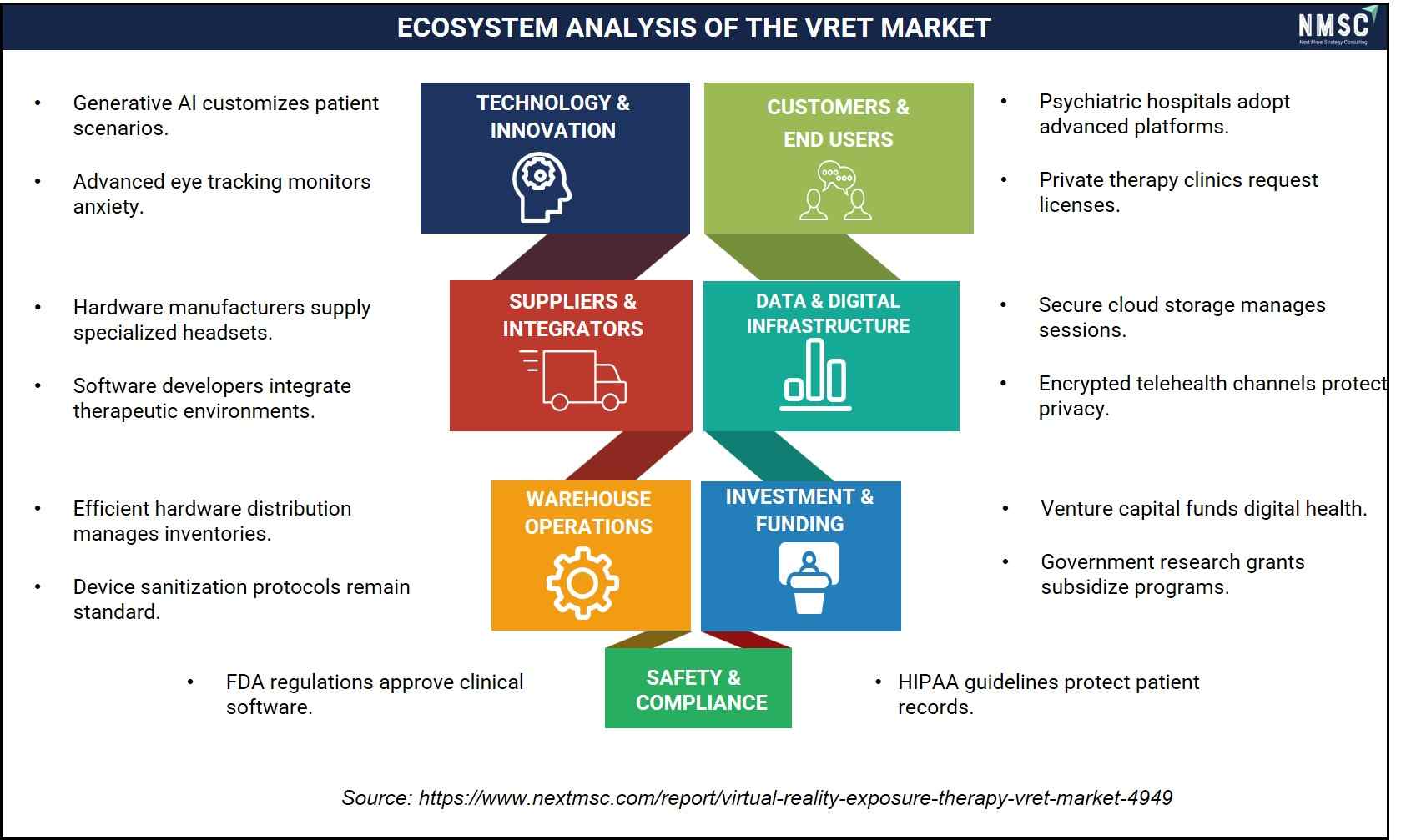
The Virtual Reality Exposure Therapy (VRET) market ecosystem comprises technology developers, VR hardware manufacturers, software providers, healthcare institutions, therapists, and end users. Its growth is supported by advancements in immersive technologies, cloud-based digital infrastructure, and increasing investment in digital therapeutics. Suppliers and system integrators enable deployment across healthcare settings, while regulatory compliance and patient safety remain critical factors. Collaboration among these stakeholders is essential for driving innovation, adoption, and long-term market expansion.
What Are the Key Market Drivers, Breakthroughs, and Investment Opportunities that Will Shape the Virtual Reality Exposure Therapy (VRET) Market Industry in the Next Decade?
|
Drivers / Trends / Restraints |
(+/-) % Impact on CAGR Forecast |
Geographic Relevance |
Impact Timeline |
|
Rising Mental Health Disorder Prevalence |
+3.2% |
Global (led by North America, Europe) |
2025–2030 |
|
Insurance Reimbursement Expansion |
+2.8% |
North America, Europe |
2025–2035 |
|
Consumer-Grade Headset Cost Reduction |
+2.3% |
Global (all regions) |
2025–2028 |
|
AI-Personalized Exposure Protocols |
+1.9% |
North America, Europe, APAC |
2026–2035 |
|
Telehealth Infrastructure Expansion |
+1.7% |
North America, Europe, APAC |
2025–2032 |
|
Military and VA Institutional Adoption |
+1.4% |
North America (U.S., Canada) |
2025–2035 |
|
Regulatory Approval Complexity (SaMD) |
-1.5% |
Global |
Ongoing |
|
Motion Sickness and Adverse Events |
-0.9% |
All regions |
Ongoing |
|
Limited Therapist VRET Training |
-0.7% |
All regions |
2025–2030 |
|
Home-Use VRET Program Expansion |
+2.1% |
North America, Europe, APAC |
2026–2035 |
|
Employer Wellness Program Integration |
+1.3% |
North America, Europe |
2025–2032 |
|
EHR Integration Partnerships |
+1.1% |
North America, Europe |
2025–2030 |
What Are the Growth Drivers of the Virtual Reality Exposure Therapy (VRET) Market?
How Is the Global Rise in Mental Health Disorder Burden Driving the Virtual Reality Exposure Therapy (VRET) Market?
The global escalation in mental health disorder prevalence represents the most foundational demand driver of the Virtual Reality Exposure Therapy (VRET) Market. According to the World Health Organization, anxiety disorders affect approximately 301 million people globally, making them the most prevalent mental health condition worldwide. The WHO has further identified that more than 70% of individuals with mental health conditions in low- and middle-income countries receive no treatment, underscoring the systemic care gap that technology-assisted solutions such as VRET are positioned to address. In the United States, the National Institute of Mental Health reports that an estimated 19.1% of adults experience an anxiety disorder in a given year, representing a population for whom VRET offers scalable, evidence-supported intervention options.
How Does the Critical Shortage of Licensed Mental Health Professionals Accelerate Virtual Reality Exposure Therapy (VRET) Market Adoption?
The severe and worsening global shortage of licensed mental health professionals is a primary structural driver of Virtual Reality Exposure Therapy (VRET) Market adoption. The U.S. Health Resources and Services Administration (HRSA) projects a shortage of approximately 37,000 behavioral health providers by 2036, with rural and underserved communities facing disproportionate access gaps. VRET platforms address this shortage by enabling a single licensed therapist to supervise multiple concurrent remote sessions, automating routine psychoeducation and in-session guided relaxation components, and deploying self-guided treatment programs for lower-acuity patients. Our assessment indicates that VRET is increasingly positioned by health system administrators as a force-multiplier technology that extends the therapeutic reach of existing clinical workforces.
How Is U.S. Department of Veterans Affairs Institutional Adoption Shaping the Virtual Reality Exposure Therapy (VRET) Market?
Institutional adoption within the U.S. Department of Veterans Affairs represents a critical commercial and clinical validation catalyst for the Virtual Reality Exposure Therapy (VRET) Market. The VA has funded multiple multi-site clinical trials of VRET for combat-related PTSD and has integrated VR-based prolonged exposure protocols into its National Center for PTSD treatment portfolio. The U.S. Department of Defense's Joint Warfighter Medical Research Program has similarly funded VRET research for traumatic brain injury and amputee rehabilitation. Through our market assessment, we observed that VA and DoD procurement represents a durable, large-scale institutional revenue source that simultaneously builds the clinical evidence base and regulatory credibility that supports broader commercial health system adoption of VRET platforms.
Pain Point Analysis Of The Vret Market
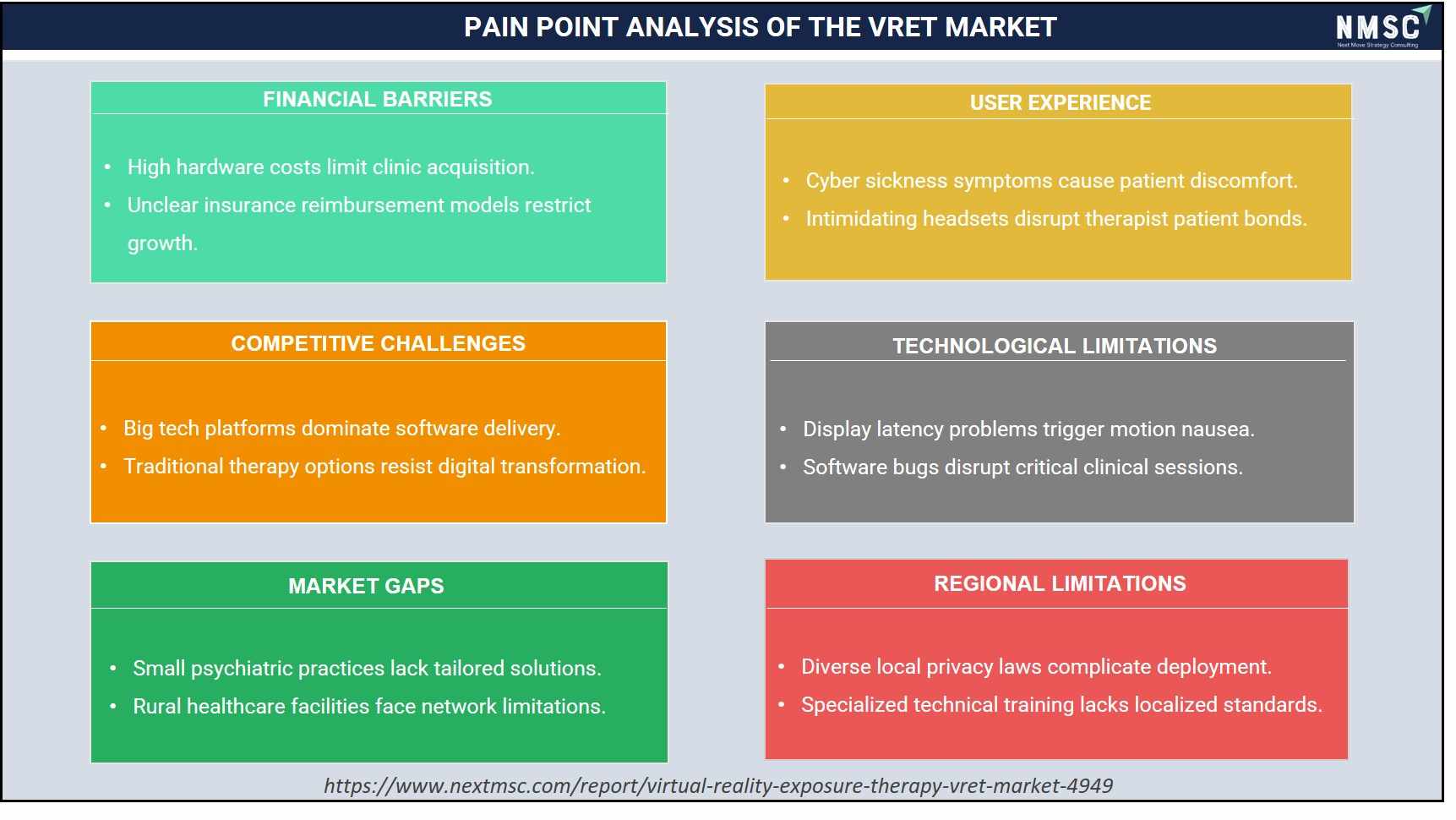
The Virtual Reality Exposure Therapy (VRET) market faces several challenges that may hinder widespread adoption. High implementation costs, limited reimbursement coverage, and the need for specialized hardware can restrict accessibility for healthcare providers and patients. Additionally, concerns regarding clinical validation, user comfort, data privacy, and therapist training remain significant barriers. Addressing these issues is essential for accelerating adoption and unlocking the full potential of VRET in mental health treatment.
What Are the Growth Inhibitors of the Virtual Reality Exposure Therapy (VRET) Market?
How Does the Complexity of SaMD Regulatory Approval Constrain Virtual Reality Exposure Therapy (VRET) Market Expansion?
Software as a Medical Device regulatory requirements impose significant time, cost, and expertise burdens on Virtual Reality Exposure Therapy (VRET) Market participants. The FDA's De Novo and 510(k) clearance pathways require clinical evidence packages that can cost several million dollars and span multiple years of clinical trial design, execution, and regulatory review. The FDA's Digital Health Center of Excellence has published multiple guidance documents on predetermined change control plans, clinical validation protocols, and real-world evidence submission requirements for SaMD products. Small and mid-size VRET developers face existential capital challenges in meeting these requirements, and in Europe the Medical Device Regulation (MDR 2017/745) has introduced similarly rigorous conformity assessment obligations that have delayed market entry for multiple VRET software platforms.
How Does Cybersickness and Adverse Event Risk Limit Adoption Across the Virtual Reality Exposure Therapy (VRET) Market?
Cybersickness, characterized by nausea, disorientation, and eye strain arising from virtual reality headset use, represents a clinically significant barrier to Virtual Reality Exposure Therapy (VRET) Market penetration across patient populations. Approximately 25% to 40% of VR users report cybersickness symptoms during extended sessions, according to research published through the National Institutes of Health. Pediatric, elderly, and vestibular-impaired populations exhibit heightened susceptibility, limiting the patient populations for which VRET platforms can be prescribed without adverse event risk. VRET developers are investing in 90Hz and higher refresh rate displays, foveated rendering, and proprietary motion comfort algorithms to reduce cybersickness incidence; however, the adverse event profile remains a clinical barrier that influences prescribing clinician hesitancy and health system risk management policies.
What Are the Growth Opportunities in the Virtual Reality Exposure Therapy (VRET) Market?
How Does the Expansion of Employer Mental Health Benefits Create a Scalable Opportunity in the Virtual Reality Exposure Therapy (VRET) Market?
Employer-sponsored mental health benefit programs represent a structurally significant and rapidly expanding commercial opportunity for the Virtual Reality Exposure Therapy (VRET) Market. The U.S. Bureau of Labor Statistics reports that 56% of private-sector employers offered Employee Assistance Programs (EAPs) in 2023, and leading EAP providers are actively evaluating digital therapeutics integration. Employers are motivated by documented productivity loss and absenteeism costs attributed to anxiety disorders and PTSD, which the Centers for Disease Control and Prevention (CDC) estimates cost the U.S. economy over USD 1 trillion annually in lost productivity. VRET platforms targeting generalized anxiety, social anxiety, and occupational stress management are well-positioned for EAP bundle integration, creating a direct-to-employer sales channel that bypasses traditional insurance reimbursement complexities.
How Do Schools and Universities Present a Growing Institutional Market for the Virtual Reality Exposure Therapy (VRET) Market?
Educational institutions represent an underserved but strategically important emerging customer segment within the Virtual Reality Exposure Therapy (VRET) Market. The U.S. Department of Education's Individuals with Disabilities Education Act (IDEA) mandates that schools provide mental health services for qualifying students, creating an institutional procurement pathway for VRET programs targeting social anxiety, school phobia, and performance anxiety. College counseling centers, which the American College Health Association surveys show are experiencing record demand levels, are exploring technology-assisted therapy tools to extend counselor capacity. Based on NMSC's research, we found that VRET platforms designed for social anxiety and public speaking phobia are particularly well-matched to adolescent and young adult student populations seeking non-stigmatized mental health support.
How Does the Consumer Direct-to-Home VRET Segment Represent a Multi-Billion Dollar Opportunity in the Virtual Reality Exposure Therapy (VRET) Market?
The consumer-direct at-home VRET segment represents the largest addressable market expansion opportunity within the Virtual Reality Exposure Therapy (VRET) Market over the 2026 to 2035 forecast period. Consumer-grade standalone headsets, led by the Meta Quest platform, have reduced hardware access costs to well below USD 500, and digital wellness app marketplaces provide frictionless distribution pathways for self-guided VRET programs. The National Institutes of Health has funded multiple research initiatives evaluating at-home VRET efficacy for specific phobias, social anxiety, and stress management. Our findings suggest that regulatory differentiation between clinician-prescribed SaMD and consumer wellness applications will create a dual-market structure within the VRET ecosystem, enabling consumer-focused VRET companies to grow rapidly outside traditional healthcare procurement channels.
How Is the Virtual Reality Exposure Therapy (VRET) Market Segmented in This Report, and What Are the Key Insights from the Segmentation Analysis?
How Does Revenue Type Segmentation Reveal the Commercial Architecture of the Virtual Reality Exposure Therapy (VRET) Market?
|
Revenue Type Segment |
2025 (USD Bn) |
2035 (USD Bn) |
CAGR (%) |
|
Software and Content |
0.88 |
14.77 |
32.8% |
|
Hardware |
0.61 |
7.38 |
28.7% |
|
Services |
2.61 |
9.23 |
36.0% |
|
Support |
0.20 |
5.54 |
38.9% |
Based on our market evaluation, the Virtual Reality Exposure Therapy (VRET) Market is segmented by revenue type into Software and Content, Hardware, Services, and Support. Our analysis shows that Software and Content is the dominant revenue category, encompassing Platform Licenses, Subscriptions, Scenario Libraries, and Custom Content, which together represent the recurring commercial engine of the market. Hardware including Headsets, Controllers, Accessories, and Starter Kits constitutes the second largest segment, with margin pressure from consumer-grade device commoditization. Services revenue, spanning Implementation, Integration, Training, Clinical Services, and Custom Development, is the fastest-growing category as health systems require deep implementation support. Support revenue covering Hosting, Maintenance, and Upgrades is emerging as a high-margin recurring income stream for established VRET platform vendors.
Which Customer Segments Are Generating the Strongest Demand in the Virtual Reality Exposure Therapy (VRET) Market?
|
Customer Segment |
2025 (USD Bn) |
2035 (USD Bn) |
CAGR (%) |
|
Health Systems |
0.61 |
9.23 |
31.4% |
|
Specialty Clinics |
2.61 |
6.68 |
32.4% |
|
Telehealth Providers |
1.53 |
4.77 |
34.9% |
|
Health Plans |
0.47 |
2.93 |
35.8% |
|
Employers |
0.17 |
3.69 |
36.1% |
|
Schools |
0.64 |
2.23 |
35.8% |
|
Government and Military |
1.53 |
3.31 |
30.6% |
|
Research Institutions |
0.64 |
1.40 |
30.4% |
|
Consumers |
0.45 |
2.23 |
41.3% |
|
Other |
0.03 |
1.53 |
29.7% |
From our assessment, the Virtual Reality Exposure Therapy (VRET) Market is segmented across Health Systems, Specialty Clinics, Telehealth Providers, Health Plans, Employers, Schools, Government and Military, Research Institutions, Consumers, and Other customer segments. Health Systems represent the dominant segment, with hospital-based behavioral health departments and integrated delivery networks procuring enterprise VRET platforms for PTSD, anxiety, and chronic pain programs. Specialty Clinics including PTSD treatment centers and addiction rehabilitation facilities are rapidly expanding VRET adoption. Government and Military, led by U.S. VA and DoD programs, provides institutional anchor revenue. The Consumer segment is the fastest-growing, reflecting direct-to-home VRET application adoption.
How Do Care Settings Influence Delivery, Reimbursement, and Growth Potential in the Virtual Reality Exposure Therapy (VRET) Market?
|
Care Setting |
2025 (USD Bn) |
2035 (USD Bn) |
CAGR (%) |
|
In-Clinic |
1.02 |
13.30 |
29.5% |
|
At-Home |
0.47 |
11.84 |
37.8% |
|
Telehealth |
0.37 |
7.77 |
35.4% |
|
Hybrid |
0.17 |
3.37 |
34.9% |
|
Other |
0.45 |
0.64 |
25.7% |
Through our analysis, the Virtual Reality Exposure Therapy (VRET) Market is segmented by care setting into In-Clinic, At-Home, Telehealth, Hybrid, and Other delivery environments. In-Clinic remains the dominant care setting, capturing the majority of VRET revenue as most current insurance reimbursement frameworks require clinical supervisor presence. The At-Home setting is the fastest-growing mode, with standalone headset cost reductions and improving remote monitoring technologies driving rapid adoption. Telehealth delivery is expanding as payers extend synchronous virtual consultation reimbursement. Hybrid programs that combine initial clinician-supervised clinical sessions with subsequent at-home self-guided exposure exercises are emerging as the preferred blended care model for PTSD and specific phobia programs.
How Does Therapy Mode Structure Define Clinical Workflows and Commercial Models in the Virtual Reality Exposure Therapy (VRET) Market?
|
Therapy Mode |
2025 (USD Bn) |
2035 (USD Bn) |
CAGR (%) |
|
Clinician-Guided |
1.12 |
14.07 |
29.2% |
|
Self-Guided |
0.61 |
13.30 |
35.7% |
|
Blended |
0.30 |
8.15 |
38.5% |
|
Other |
0.45 |
1.40 |
35.2% |
NMSC's analysis indicates that the Virtual Reality Exposure Therapy (VRET) Market is differentiated by therapy mode into Clinician-Guided, Self-Guided, Blended, and Other delivery structures. Clinician-Guided mode is the dominant category, representing standard-of-care for complex anxiety disorders and PTSD where real-time therapist assessment is clinically necessary. Self-Guided mode is the fastest-growing approach, supported by digital wellness consumer platform growth and employer-sponsored mental health program adoption. Blended mode, which integrates periodic clinician touchpoints with predominantly self-directed exposure exercises, is emerging as the commercially attractive middle-ground delivering clinical efficacy at reduced per-session costs, and represents the highest CAGR sub-segment at an estimated 30.3%.
Which Clinical Use Cases Are Commanding the Greatest Investment and Clinical Validation in the Virtual Reality Exposure Therapy (VRET) Market?
|
Clinical Use Case |
2025 (USD Mn) |
2035 (USD Bn) |
CAGR (%) |
|
Specific Phobias |
335 |
5.73 |
33.0% |
|
Social Anxiety and Public Speaking |
295 |
4.97 |
32.9% |
|
PTSD and Trauma |
549 |
9.23 |
32.7% |
|
OCD and ERP |
183 |
3.31 |
33.6% |
|
Panic Disorder and Agoraphobia |
210 |
3.56 |
32.7% |
|
Generalized Anxiety and Stress |
247 |
5.03 |
35.0% |
|
Substance Use and Craving |
115 |
2.61 |
36.4% |
|
Pain and Stress Adjunct |
98 |
2.23 |
36.7% |
|
Other |
68 |
1.53 |
36.2% |
Based on NMSC's research, the Virtual Reality Exposure Therapy (VRET) Market is clinically segmented across Specific Phobias, Social Anxiety and Public Speaking, PTSD and Trauma, OCD and ERP, Panic Disorder and Agoraphobia, Generalized Anxiety and Stress, Substance Use and Craving, Pain and Stress Adjunct, and Other use cases. PTSD and Trauma is the dominant clinical use case by revenue, reflecting decades of VA and DoD clinical trial investment. Specific Phobias and Social Anxiety represent high-volume clinical use cases supported by strong evidence bases. Substance Use and Craving and Pain and Stress Adjunct are the fastest-growing use cases, benefiting from expanding addiction treatment center adoption and chronic pain multidisciplinary program integration respectively.
Which Sales Channels Are Driving Go-to-Market Efficiency in the Virtual Reality Exposure Therapy (VRET) Market?
|
Sales Channel |
2025 (USD Mn) |
2035 (USD Bn) |
CAGR (%) |
|
Direct Enterprise |
948 |
14.77 |
31.7% |
|
Channel Partner |
420 |
7.38 |
33.4% |
|
Telehealth OEM |
251 |
5.16 |
35.2% |
|
App Marketplace |
186 |
5.54 |
40.0% |
|
Research Grant |
166 |
1.85 |
27.6% |
|
Consumer Direct |
91 |
0.88 |
33.7% |
|
Other |
37 |
0.30 |
31.5% |
Our findings suggest that the Virtual Reality Exposure Therapy (VRET) Market relies on a multi-channel commercial architecture spanning Direct Enterprise, Channel Partner, Telehealth OEM, App Marketplace, Research Grant, Consumer Direct, and Other sales pathways. Direct Enterprise sales to health systems and government bodies remain the dominant channel, given the procurement complexity and clinical validation requirements of institutional buyers. Channel Partners including behavioral health EHR vendors and telehealth platform providers are emerging as high-leverage distribution allies. The App Marketplace channel is the fastest-growing at an estimated 31.8% CAGR, driven by consumer wellness VRET application downloads on Meta Quest, Apple Vision Pro, and Android XR platforms. Research Grant revenue, while a declining share, remains foundational for early-stage VRET clinical validation programs.
Regional Outlook
Geographic Performance Snapshot
|
Region |
2025 (USD Bn) |
2035 (USD Bn) |
CAGR (%) |
Key Driver |
|
North America |
1.02 |
16.68 |
32.2% |
VA/DoD adoption, insurance reimbursement, FDA SaMD pathway |
|
Europe |
0.54 |
8.85 |
32.4% |
NHS digital therapeutics, MDR regulatory clarity, employer programs |
|
Asia-Pacific |
0.30 |
6.62 |
35.7% |
Mental health awareness, digital health investment, aging population |
|
Middle East & Africa |
0.47 |
2.61 |
34.2% |
Military PTSD programs, Vision 2030 digital health, GCC adoption |
|
Latin America |
0.64 |
2.16 |
35.5% |
Telehealth expansion, digital wellness, phobia treatment demand |
North America Virtual Reality Exposure Therapy (VRET) Market
North America is the global anchor market for Virtual Reality Exposure Therapy (VRET), contributing an estimated USD 1.02 billion in 2025 and forecast to reach USD 16.68 billion by 2035 at a CAGR of 32.2%. The region benefits from the highest concentration of VRET clinical research institutions, a mature insurance reimbursement pathway for digital behavioral health tools, and robust VA and DoD institutional procurement programs. The U.S. FDA's Digital Health Center of Excellence is actively developing pre-certification frameworks that will further streamline VRET software approvals. Employer-sponsored mental health programs and telehealth-platform integration are expanding the addressable market beyond traditional clinical settings.
U.S. Virtual Reality Exposure Therapy (VRET) Market
Based on our engagements, the United States is the world's largest national market for Virtual Reality Exposure Therapy (VRET), representing over 85% of North American revenue in 2025. The U.S. benefits from the Department of Veterans Affairs National Center for PTSD's integration of VR-based prolonged exposure therapy, FDA De Novo and 510(k) clearance pathways for SaMD tools, and bipartisan congressional support for veteran mental health technology initiatives under the MISSION Act. CMS's expansion of Remote Patient Monitoring reimbursement codes and Behavioral Health Integration billing provisions is accelerating commercial health system procurement. The U.S. also hosts the highest concentration of VRET platform vendors and behavioral health digital therapeutics venture capital activity globally.
Canada Virtual Reality Exposure Therapy (VRET) Market
Through our analysis, Canada represents approximately 11% of North American Virtual Reality Exposure Therapy (VRET) revenue, supported by federal mental health investment commitments under the 2023 Canada Mental Health Transfer fund allocation. The Canadian Armed Forces have piloted VR-based PTSD treatment programs through the Canadian Institute for Military and Veteran Health Research (CIMVHR). Health Canada regulates VRET software under the Medical Devices Regulations (SOR/98-282) as a Class II or III medical device, requiring device licensing and clinical evidence. Provincial health authorities in Ontario and British Columbia are exploring VRET procurement for anxiety disorder treatment within publicly funded mental health programs, driven by documented waitlist pressures in the mental health system.
Mexico Virtual Reality Exposure Therapy (VRET) Market
From our assessment, Mexico is an early-stage but strategically positioned market within the North American Virtual Reality Exposure Therapy (VRET) landscape. The Federal Commission for Protection Against Sanitary Risk (COFEPRIS) regulates medical software and digital health devices, creating a structured but complex approval pathway for VRET platforms seeking commercial entry. Mexico's growing private health insurance sector and expanding mental health awareness among urban professional populations are driving early adoption in private clinics and premium wellness centers. The Mexican government's public sector health system (IMSS and ISSSTE) represents a potential large-scale institutional procurement opportunity as digital health policy frameworks mature under the national digital transformation agenda.
Europe Virtual Reality Exposure Therapy (VRET) Market
Europe is the second-largest region in the Virtual Reality Exposure Therapy (VRET) Market, contributing an estimated USD 0.54 billion in 2025 and forecast to reach USD 8.85 billion by 2035 at a CAGR of 32.4%. The EU Medical Device Regulation (MDR 2017/745) has established a rigorous conformity assessment framework for VRET software that simultaneously elevates clinical credibility and creates market entry barriers. National health service digital therapeutics programs in the UK, Germany, and the Netherlands are creating structured reimbursement pathways. European employer wellness mandates and occupational mental health regulations are accelerating enterprise VRET adoption outside traditional clinical channels.
U.K. Virtual Reality Exposure Therapy (VRET) Market
Based on our engagements, the United Kingdom is Europe's largest single-country market for Virtual Reality Exposure Therapy (VRET). The UK's National Health Service (NHS) has piloted VR therapy programs for specific phobias and psychosis within community mental health teams through NHS Long Term Plan digital investment programs. The MHRA regulates VRET software as a medical device post-Brexit under the UK MDR 2002, and has committed to a streamlined UKCA certification pathway for digital therapeutics. NHS Talking Therapies (formerly IAPT) represents a structurally significant institutional procurement channel for scalable VRET programs targeting high-volume anxiety disorder treatment within the UK public mental health system.
Germany Virtual Reality Exposure Therapy (VRET) Market
According to evaluation, Germany presents a structurally important market for Virtual Reality Exposure Therapy (VRET) within Europe, supported by the Digital Healthcare Act (DVG) and the DiGA (Digitale Gesundheitsanwendungen) fast-track reimbursement pathway, which enables approved digital health applications to achieve statutory health insurance coverage within 12 months. German statutory health insurers (Krankenkassen) have shown willingness to cover evidence-based digital mental health tools under the DiGA framework. VRET developers targeting Germany's health system must navigate the BfArM's DiGA directory review process, demonstrate clinical benefit, and meet data protection requirements under the German Federal Data Protection Act. The German military (Bundeswehr) has also explored VRET for combat trauma rehabilitation.
France Virtual Reality Exposure Therapy (VRET) Market
Through our analysis, France is expanding its role in the Virtual Reality Exposure Therapy (VRET) Market through the Ministry of Health's digital health investment strategy under the Ségur du Numérique program. The HAS (Haute Autorité de Santé) provides health technology assessment guidance for digital therapeutic devices, offering a regulatory clarification pathway for VRET platforms seeking Social Security reimbursement. France's extensive network of university hospital research centers (CHUs) is actively generating clinical evidence for VRET applications in PTSD, specific phobias, and pain management. Employer occupational health obligations under the French Labour Code are creating a supplementary demand pathway for workplace-based VRET anxiety management programs.
Italy Virtual Reality Exposure Therapy (VRET) Market
From our assessment, Italy occupies a mid-tier position in the European Virtual Reality Exposure Therapy (VRET) Market, with adoption concentrated in academic medical centers and private psychiatric clinics. The Italian Medicines Agency (AIFA) and AGENAS (National Agency for Regional Health Services) are developing digital therapeutic assessment methodologies under Italy's National Recovery and Resilience Plan (PNRR) digital health investment framework. Italian academic institutions, including the University of Milano-Bicocca's Applied Technology for Neuro-Psychology Lab, have long-standing research expertise in clinical VR applications, which provides a strong scientific foundation for commercialization partnerships. Regional health authorities in Lombardy and Veneto represent near-term institutional procurement targets.
Spain Virtual Reality Exposure Therapy (VRET) Market
Based on our market evaluation, Spain demonstrates growing momentum in Virtual Reality Exposure Therapy (VRET) adoption, driven by the Spanish National Health System's (SNS) mental health investment priorities under the Mental Health Action Plan 2022–2026 published by the Ministry of Health. The Spanish Agency of Medicines and Medical Devices (AEMPS) regulates VRET software under the EU MDR 2017/745. C2Care SAS, a VRET market participant, has developed Spanish-language scenario content targeting social anxiety and specific phobia programs within the European clinical market. University-affiliated clinical psychology departments in Madrid and Barcelona are generating peer-reviewed evidence supporting VRET for anxiety disorders, strengthening the clinical credibility foundation for health system procurement.
Sweden Virtual Reality Exposure Therapy (VRET) Market
Based on our engagements, Sweden is among Europe's most receptive markets for Virtual Reality Exposure Therapy (VRET), reflecting the country's strong tradition of digital health innovation and internet-delivered cognitive behavioral therapy (ICBT) research. The Swedish eHealth Agency and Socialstyrelsen (National Board of Health and Welfare) are developing frameworks for digital therapeutic tool assessment and reimbursement. Swedish research institutions, particularly Karolinska Institutet, have conducted landmark studies on VR-based exposure therapy for specific phobias and PTSD, providing a world-leading evidence base that supports clinical adoption. The Swedish social insurance system's willingness to explore digital therapeutics for mental health augurs well for structured VRET reimbursement development.
Denmark Virtual Reality Exposure Therapy (VRET) Market
Through our analysis, Denmark presents a promising early-stage market for Virtual Reality Exposure Therapy (VRET), supported by the Danish government's digital health strategy and the Danish Patient Safety Authority's (Styrelsen for Patientsikkerhed) regulatory oversight of medical software. Denmark's universal healthcare system (Sundhedsstyrelsen) is evaluating digital therapeutics for mental health as part of broader efforts to modernize psychiatric care delivery. Danish research universities are conducting VRET feasibility trials for anxiety disorders and PTSD rehabilitation. The relatively small patient population limits near-term market volume; however, Denmark's regulatory clarity and strong digital infrastructure make it an attractive early market for VRET pilots seeking European market evidence generation.
Finland Virtual Reality Exposure Therapy (VRET) Market
From our assessment, Finland occupies an early-adopter position in the European Virtual Reality Exposure Therapy (VRET) landscape. Finnish Kela (Social Insurance Institution) is exploring digital mental health tool coverage under national rehabilitation programs. The Finnish Institute for Health and Welfare (THL) tracks mental health treatment capacity and digital therapeutics adoption trends, providing a structured data environment for VRET market development. Finland's high prevalence of depression and anxiety disorders, combined with limited mental health specialist access in rural regions, creates structural demand for technology-assisted therapy delivery. The Finnish digital health ecosystem, including established telemedicine infrastructure, provides favorable conditions for telehealth-integrated VRET deployment.
Netherlands Virtual Reality Exposure Therapy (VRET) Market
According to evaluation, the Netherlands is a particularly advanced market within European Virtual Reality Exposure Therapy (VRET) adoption. Dutch companies CleVR B.V. and EMDR-VR B.V. are headquartered in the Netherlands and actively supplying VRET platforms to Dutch mental health institutions. The Dutch Mental Health and Addiction Care (GGZ) sector is one of Europe's most organizationally mature specialized mental health systems, representing a large-scale institutional procurement environment. The Dutch Health Authority (NZa) and Zorginstituut Nederland are actively evaluating digital therapeutic reimbursement frameworks. The Netherlands' strong clinical psychology research base and high digital health technology adoption rate support sustained VRET market development through the forecast period.
Rest of Europe Virtual Reality Exposure Therapy (VRET) Market
Based on our market evaluation, the Rest of Europe encompasses markets including Austria, Belgium, Portugal, Poland, Czech Republic, and other EU and non-EU countries where Virtual Reality Exposure Therapy (VRET) adoption is at nascent to early growth stages. Regulatory harmonization under the EU MDR provides VRET vendors with a single regulatory approval pathway across EU member states, simplifying multi-country market entry. Western European markets including Belgium and Austria are showing early adoption in university hospital settings, while Central and Eastern European markets are beginning to engage with VRET through academic research partnerships. Expanding broadband infrastructure and growing mental health awareness across the Rest of Europe are foundational enablers for progressive VRET adoption through 2035.
Asia-Pacific Virtual Reality Exposure Therapy (VRET) Market
Asia-Pacific is the fastest-growing major region in the Virtual Reality Exposure Therapy (VRET) Market, contributing an estimated USD 0.09 billion in 2025 and forecast to reach USD 1.04 billion by 2035 at a CAGR of 27.5%. The region's market is driven by Japan's aging population mental health investments, South Korea's global digital health technology leadership, Australia's public mental health reform agenda, and India's rapidly expanding digital health infrastructure. Regulatory diversity across the region creates both complexity for market entry and differentiated growth dynamics by country, with each national market exhibiting distinct drivers and procurement structures within the broader VRET opportunity.
China Virtual Reality Exposure Therapy (VRET) Market
Based on our engagements, China represents a high-potential yet complex market for Virtual Reality Exposure Therapy (VRET). The National Medical Products Administration (NMPA) regulates medical software under the Classification Rules for Medical Device Software, requiring clinical data packages and device registration certificates. China's massive VR technology manufacturing ecosystem provides cost advantages for domestic hardware development, while the growing recognition of mental health as a public health priority under the Healthy China 2030 plan creates institutional demand. Technology giants including ByteDance and NetEase are investing in VR health applications, creating both competition and partnership opportunities for international VRET platform providers seeking China market entry.
India Virtual Reality Exposure Therapy (VRET) Market
Through our analysis, India is the fastest-growing national market in Asia-Pacific for Virtual Reality Exposure Therapy (VRET) at an estimated CAGR of 31.5% from 2026 to 2035. The National Digital Health Mission (Ayushman Bharat Digital Mission) is building interoperable digital health infrastructure that enables clinical digital therapeutics integration. India's Central Drugs Standard Control Organization (CDSCO) is developing medical software regulation frameworks under the Medical Devices Rules 2017. The country's massive anxiety and depression burden, documented by the National Mental Health Survey, combined with a severe shortage of mental health professionals, creates compelling structural demand for technology-assisted behavioral interventions. Domestic health technology startups including Ropana Digital Pvt. Ltd. are developing localized VRET solutions addressing Indian clinical contexts.
Japan Virtual Reality Exposure Therapy (VRET) Market
From our assessment, Japan occupies a strategically important position in the Asia-Pacific Virtual Reality Exposure Therapy (VRET) Market, driven by government mental health policy reform and high consumer technology adoption. The Japan Agency for Medical Research and Development (AMED) funds digital therapeutics research including VR-based psychiatric intervention trials. The Pharmaceutical and Medical Device Act (PMD Act) governs medical software regulation, and Japan's Pharmaceuticals and Medical Devices Agency (PMDA) has an active digital health guidance development program. Japan's corporate culture-related anxiety, hikikomori social withdrawal syndrome, and aging population mental health needs create specific clinical demand profiles particularly well-suited to VRET social anxiety and phobia treatment programs.
South Korea Virtual Reality Exposure Therapy (VRET) Market
Based on our market evaluation, South Korea is one of the most technologically advanced markets for Virtual Reality Exposure Therapy (VRET) in Asia-Pacific. The Ministry of Food and Drug Safety (MFDS) regulates medical software under the Medical Device Act, and South Korea's Digital Therapeutics regulatory pathway, formally introduced in 2023, provides a structured reimbursement framework for evidence-based digital health tools. South Korea's world-leading broadband infrastructure, high VR headset consumer adoption, and government-backed digital healthcare innovation initiatives support accelerated VRET market development. Korean university hospitals and behavioral health research institutions are generating clinical evidence for VRET across anxiety, PTSD, and addiction use cases.
Taiwan Virtual Reality Exposure Therapy (VRET) Market
According to evaluation, Taiwan presents a developing but promising market for Virtual Reality Exposure Therapy (VRET). Taiwan's Food and Drug Administration (TFDA) regulates software-based medical devices under the Medical Devices Act, with a dedicated SaMD guidance framework. Taiwan's National Health Insurance (NHI) universal coverage system provides a potential institutional reimbursement pathway for approved digital therapeutics. Taiwan Semiconductor Manufacturing Company's (TSMC) presence and the broader semiconductor ecosystem support advanced VR hardware development that benefits domestic VRET technology capabilities. Academic medical centers affiliated with National Taiwan University and Taipei Medical University are engaged in clinical VR research that supports evidence development for VRET reimbursement consideration.
Indonesia Virtual Reality Exposure Therapy (VRET) Market
Based on our engagements, Indonesia is an early-stage market in the Virtual Reality Exposure Therapy (VRET) landscape with significant long-term growth potential given its 270 million population. Indonesia's Ministry of Health oversees medical device regulation through the National Agency of Drug and Food Control (BPOM). The national mental health plan under Indonesia's Health Law No. 17 of 2023 acknowledges the critical importance of expanding mental health service access. The Indonesian government's PeduliSehat digital health platform and BPJS Kesehatan national insurance system represent potential institutional deployment channels for approved VRET programs as clinical evidence and regulatory frameworks mature over the forecast period.
Vietnam Virtual Reality Exposure Therapy (VRET) Market
Through our analysis, Vietnam is at a nascent stage of Virtual Reality Exposure Therapy (VRET) adoption. The Ministry of Health regulates medical devices including software-based medical tools under Decree 98/2021/ND-CP. Vietnam's growing mental health awareness, significant PTSD burden among war veteran populations, and rapidly expanding digital health infrastructure position the country as an emerging long-term VRET market. Ho Chi Minh City-based and Hanoi-based university hospitals are beginning to explore digital mental health tools in academic research contexts. The country's young population, high smartphone penetration, and expanding middle-income segment suggest consumer-focused self-guided VRET wellness applications may find earlier traction than institutional clinical deployments in Vietnam.
Australia Virtual Reality Exposure Therapy (VRET) Market
From our assessment, Australia is the most mature Virtual Reality Exposure Therapy (VRET) market in the Asia-Pacific region outside of Japan. The Therapeutic Goods Administration (TGA) regulates medical software under the Therapeutic Goods Act 1989, with dedicated SaMD guidance applicable to VRET platforms. Australia's national mental health strategy, anchored by the National Mental Health Commission, explicitly supports digital mental health tool integration. The Australian Government's Better Access initiative has expanded mental health service rebates, creating institutional demand for technology-assisted therapy extensions. The Black Dog Institute and other leading mental health research organizations are conducting VRET efficacy trials, strengthening the clinical evidence base for health system and private insurer coverage decisions.
Philippines Virtual Reality Exposure Therapy (VRET) Market
According to evaluation, the Philippines is an emerging market for Virtual Reality Exposure Therapy (VRET) with adoption primarily concentrated in metropolitan Manila's private hospital sector and academic medical institutions. The Food and Drug Administration Philippines regulates medical devices including software tools under the Food and Drug Administration Act of 2009. The Mental Health Act (Republic Act 11036) of 2018 mandates mental health service integration into the health system, creating a structural policy foundation for digital mental health tool adoption. Filipino diaspora populations' PTSD and anxiety disorder burden, combined with growing mental health awareness among urban professionals, represents an addressable clinical demand segment for VRET program deployment.
Malaysia Virtual Reality Exposure Therapy (VRET) Market
Based on our market evaluation, Malaysia represents an early-growth Virtual Reality Exposure Therapy (VRET) market supported by the government's National Digital Economy Blueprint and the Ministry of Health's digital health transformation agenda. The Medical Device Authority (MDA) of Malaysia regulates medical devices under the Medical Device Act 2012, with software-based medical devices requiring registration. Malaysia's MyHealth portal digital health ecosystem and growing telehealth infrastructure provide integration pathways for VRET program deployment within primary care networks. The Malaysian Psychiatry Association and university teaching hospitals in Kuala Lumpur are beginning to engage with VR-based clinical research, which is foundational for evidence development supporting institutional adoption and health system reimbursement discussions.
Rest of Asia-Pacific Virtual Reality Exposure Therapy (VRET) Market
Based on our engagements, the Rest of Asia-Pacific encompasses markets including Singapore, Thailand, New Zealand, Bangladesh, Pakistan, and other regional economies where Virtual Reality Exposure Therapy (VRET) adoption is at nascent to early developmental stages. Singapore's Health Sciences Authority (HSA) has an established digital health regulatory pathway that positions the city-state as a regional market entry gateway for VRET vendors seeking ASEAN expansion. New Zealand's Ministry of Health digital mental health strategy supports technology-assisted therapy tool adoption. The diverse regulatory environment across the Rest of Asia-Pacific requires country-specific market entry strategies, with academic research partnerships and public health pilot programs serving as the primary early-stage commercial pathways.
Middle East & Africa (MEA) Virtual Reality Exposure Therapy (VRET) Market
The Middle East and Africa Virtual Reality Exposure Therapy (VRET) Market is estimated at USD 0.04 billion in 2025 and is forecast to reach USD 0.41 billion by 2035 at a CAGR of 26.0%. Military PTSD treatment programs in Gulf Cooperation Council (GCC) countries, Vision 2030 digital health investments in Saudi Arabia, and growing mental health awareness across the region are primary growth drivers. Diverse regulatory environments and significant infrastructure development gaps across the African continent create differentiated market development trajectories by country within this region.
Saudi Arabia Virtual Reality Exposure Therapy (VRET) Market
Based on our engagements, Saudi Arabia represents the largest and most strategically advanced Virtual Reality Exposure Therapy (VRET) market in the Middle East. The Saudi Food and Drug Authority (SFDA) regulates medical devices and software-based medical tools under Saudi MDR frameworks aligned with international standards. Saudi Arabia's Vision 2030 Health Sector Transformation Program explicitly includes digital health technology adoption as a national priority. The Saudi military and National Guard health services represent institutional VRET procurement opportunities for combat-related PTSD treatment programs. The King Faisal Specialist Hospital and Research Centre and academic medical institutions affiliated with King Abdulaziz University are beginning to evaluate VRET for clinical integration.
UAE Virtual Reality Exposure Therapy (VRET) Market
Through our analysis, the United Arab Emirates is an early but strategically significant Virtual Reality Exposure Therapy (VRET) market, driven by government digital health investment under the UAE National Strategy for Mental Health 2020–2023 and its successor frameworks. The Dubai Health Authority (DHA) and Health Authority Abu Dhabi (HAAD) regulate digital health tools, with both authorities developing digital therapeutics classification and oversight frameworks. The UAE's high per-capita income, advanced hospital infrastructure, and concentration of internationally trained mental health professionals create favorable conditions for premium VRET clinical deployments. Dubai Healthcare City hosts numerous international hospital and clinic operators representing potential early-adoption procurement targets.
Egypt Virtual Reality Exposure Therapy (VRET) Market
From our assessment, Egypt is an early-stage Virtual Reality Exposure Therapy (VRET) market with adoption limited to academic medical centers and government-affiliated research institutions. The Egyptian Drug Authority (EDA) and Egyptian Health Council oversee medical device regulatory frameworks. Egypt's large population of over 100 million, combined with a documented shortage of mental health professionals estimated by the WHO at fewer than one psychiatrist per 100,000 population, creates structural demand for technology-assisted mental health delivery solutions. Academic institutions including Ain Shams University and Cairo University Faculty of Medicine are engaged in digital health research that provides a foundation for future VRET clinical evidence generation.
Israel Virtual Reality Exposure Therapy (VRET) Market
Based on our market evaluation, Israel occupies a unique and advanced position within the Middle East Virtual Reality Exposure Therapy (VRET) Market. The Israeli Ministry of Health regulates medical devices under the Medical Equipment Law, and Israel is a signatory to multiple international regulatory recognition frameworks. Israel's military (IDF) has a well-documented institutional interest in VRET for combat PTSD treatment, given the country's security environment. Clalit Health Services and other major HMOs (Kupot Holim) represent large-scale institutional procurement channels with established digital health technology adoption track records. Israel's world-class neurotechnology and digital health startup ecosystem provides a strong domestic innovation foundation for VRET product development and clinical evidence generation.
Turkey Virtual Reality Exposure Therapy (VRET) Market
According to evaluation, Turkey is a developing market for Virtual Reality Exposure Therapy (VRET), with mental health service expansion a stated priority under Turkey's Health Transformation Program managed by the Ministry of Health. The Turkish Medicines and Medical Devices Agency (TMMDA) regulates medical software under EU-aligned frameworks. Turkey's large population and significant refugee population with documented PTSD burden, as assessed by United Nations High Commissioner for Refugees data, represent clinically relevant demand populations for VRET programs. Istanbul and Ankara-based university hospitals and private psychiatric clinics represent the primary early VRET adoption channels in Turkey.
Nigeria Virtual Reality Exposure Therapy (VRET) Market
Based on our engagements, Nigeria is at a very early stage of Virtual Reality Exposure Therapy (VRET) market development, with adoption confined to academic research and isolated private sector pilots in Lagos and Abuja. The National Agency for Food and Drug Administration and Control (NAFDAC) regulates medical devices under the NAFDAC Act. Nigeria's Mental Health Act 2021 represents a landmark legislative advance that provides a policy framework for mental health service modernization. The WHO has documented significant mental health treatment gaps in Nigeria, with fewer than 0.1 psychiatrists per 100,000 population. Long-term VRET market development in Nigeria is contingent on infrastructure development, healthcare worker training investment, and regulatory capacity building within the digital health regulatory framework.
South Africa Virtual Reality Exposure Therapy (VRET) Market
Through our analysis, South Africa is the most developed Virtual Reality Exposure Therapy (VRET) market on the African continent, driven by its relatively advanced private healthcare sector and university-based mental health research infrastructure. The South African Health Products Regulatory Authority (SAHPRA) regulates medical devices including software-based tools under the Medicines and Related Substances Act. The South African Defence Force has institutional interest in VRET for PTSD management among military personnel deployed in regional peacekeeping operations. Academic institutions including the University of Cape Town and Stellenbosch University are engaged in clinical research that positions South Africa as Africa's primary VRET clinical evidence development hub.
Rest of MEA Virtual Reality Exposure Therapy (VRET) Market
From our assessment, the Rest of MEA encompasses markets including Kuwait, Qatar, Bahrain, Oman, Jordan, Morocco, Kenya, Ethiopia, Ghana, and other regional economies where Virtual Reality Exposure Therapy (VRET) adoption is at pre-commercial or nascent stages. GCC markets including Kuwait and Qatar benefit from strong government healthcare investment and military institutional adoption potential for PTSD treatment programs. North African markets including Morocco and Algeria are developing digital health regulatory frameworks as healthcare modernization priorities. Sub-Saharan African markets face significant infrastructure and regulatory development prerequisites before meaningful VRET commercial adoption can be realized, with academic partnerships representing the primary near-term engagement pathway.
Latin America Virtual Reality Exposure Therapy (VRET) Market
Latin America is the fastest-growing regional Virtual Reality Exposure Therapy (VRET) market globally at an estimated CAGR of 27.3% from 2026 to 2035, projected to expand from USD 0.03 billion in 2025 to USD 0.34 billion by 2035. The region's growth is driven by rapidly expanding telehealth infrastructure, growing middle-income class mental health awareness, and documented anxiety and PTSD burden in post-conflict populations across Colombia and other countries. Regional regulatory frameworks are progressively adopting medical device regulations aligned with international standards, creating improving market entry conditions for VRET platform vendors.
Brazil Virtual Reality Exposure Therapy (VRET) Market
Based on our engagements, Brazil is the largest national Virtual Reality Exposure Therapy (VRET) market in Latin America, benefiting from the country's large population of over 215 million and a well-developed private healthcare sector. Brazil's National Health Surveillance Agency (ANVISA) regulates software-based medical devices under RDC 657/2022, which provides a structured regulatory pathway for VRET platform registration. The Brazilian Federal Council of Psychology and the Brazilian Association of Psychiatry are engaging with digital therapeutic tools for mental health. Brazil's public health system (SUS) and private health insurance sector (Saude Suplementar) together represent a bifurcated procurement landscape for VRET programs, with private insurer adoption expected to precede SUS integration given evidence requirements and budget constraints.
Argentina Virtual Reality Exposure Therapy (VRET) Market
Through our analysis, Argentina presents a developing Virtual Reality Exposure Therapy (VRET) market with notable cultural and intellectual openness to psychotherapy-based mental health intervention. Argentina has one of the highest per-capita psychologist ratios globally, according to the Argentine Federation of Psychologists, creating a professional workforce receptive to evidence-based technology-assisted therapy augmentation. The National Administration of Drugs, Food and Medical Technology (ANMAT) regulates medical devices under Decree 1490/1992 and subsequent resolutions. Economic volatility and currency restrictions create procurement challenges for imported VRET hardware systems, presenting an opportunity for locally developed or locally licensed VRET software solutions adapted for the Argentine clinical psychology practice environment.
Chile Virtual Reality Exposure Therapy (VRET) Market
From our assessment, Chile is one of Latin America's most favorable regulatory environments for Virtual Reality Exposure Therapy (VRET) commercialization. Chile's Institute of Public Health (ISP) regulates medical devices under Law 20.724 and its implementing regulations, with a structured registration process applicable to SaMD tools. Chile's National Mental Health Plan (Plan Nacional de Salud Mental) includes digital health tool integration as a service delivery modernization priority. The country's relatively high per-capita income within Latin America and well-developed private healthcare sector create favorable conditions for premium VRET clinical program deployment in Santiago and other major urban centers. Academic partnerships with Universidad de Chile and Pontificia Universidad Católica de Chile can support clinical evidence generation.
Colombia Virtual Reality Exposure Therapy (VRET) Market
According to evaluation, Colombia represents an emerging and strategically important Virtual Reality Exposure Therapy (VRET) market within Latin America, particularly given the country's documented high prevalence of PTSD among civilian and ex-combatant populations in the context of its long-running internal conflict. The National Institute for Drug and Food Surveillance (INVIMA) regulates medical devices and software under Resolution 3100/2019. Colombia's Comprehensive System of Truth, Justice, Reparation and Non-Repetition framework creates institutional recognition of PTSD treatment need that extends into health system mental health investment priorities. University hospitals affiliated with Universidad de Antioquia and Universidad Nacional de Colombia provide clinical research platforms for VRET evidence generation.
Rest of Latin America Virtual Reality Exposure Therapy (VRET) Market
Based on our market evaluation, the Rest of Latin America includes Peru, Ecuador, Uruguay, Bolivia, Paraguay, Central American nations, and Caribbean markets where Virtual Reality Exposure Therapy (VRET) adoption is at nascent stages. Peru and Uruguay represent near-term opportunity markets given their relatively advanced private healthcare sectors and mental health policy awareness. Central American markets including Costa Rica benefit from strong healthcare infrastructure by regional standards. The Pan American Health Organization (PAHO) is actively promoting mental health service modernization across Latin America, creating a supportive policy environment for technology-assisted mental health interventions including VRET. Regional pharmaceutical and medical device distributors represent potential channel partner pathways for VRET hardware and platform distribution across multiple smaller Latin American markets.
Competitive Landscape
Competitive Dynamics and M&A Landscape
|
Key Takeaways |
Details |
|
Market Structure |
The Virtual Reality Exposure Therapy (VRET) Market is highly fragmented, with the top 10 companies collectively representing an estimated 55% to 60% of total market revenue in 2025. No single vendor commands dominant market share, reflecting the early-stage nature of the market and the diversity of clinical use cases, care settings, and customer segments served. |
|
Innovation Focus |
Active innovation areas include AI-driven adaptive exposure protocol personalization, biometric real-time feedback integration, EHR interoperability, multi-language scenario content libraries, and consumer-grade standalone headset optimization for clinical-grade VRET delivery. |
|
M&A Activity |
M&A activity in the VRET market is at an early stage, with strategic investment and partnership activity more prevalent than outright acquisitions. Digital therapeutics platform companies and behavioral health EHR vendors are the most likely strategic acquirers, seeking to add VRET capabilities to existing digital mental health portfolios. |
How Do Companies Compete in the Virtual Reality Exposure Therapy (VRET) Market?
Competition in the Virtual Reality Exposure Therapy (VRET) Market is structured around several key dimensions. Market structure is highly fragmented, with dedicated VRET-focused SMEs competing alongside diversified digital health platform companies seeking to incorporate VR therapy modules. Competitive strategies are centered on clinical evidence differentiation, with FDA clearance and peer-reviewed publication records serving as primary trust-building tools in institutional procurement processes. Innovation focus is concentrated on biometric feedback integration, AI scenario personalization, and telehealth compatibility that expand clinical utility and reimbursable settings. M&A activity is nascent but accelerating, with strategic investors in behavioral health technology seeking VRET capabilities as mental health platform completeness becomes a competitive requirement.
Which Kind of Companies Dominate the Virtual Reality Exposure Therapy (VRET) Market?
The Virtual Reality Exposure Therapy (VRET) Market is currently dominated by specialized clinical VR health companies that have developed proprietary software platforms, scenario content libraries, and clinical implementation service capabilities specifically for the behavioral health sector. XRHealth Inc. and Virtually Better, Inc. represent established players with multi-year clinical deployment histories and institutional customer bases. Companies with deep clinical science expertise and regulatory credentialing (FDA clearance or CE marking) command premium positioning in health system procurement processes. Consumer-facing companies leveraging app marketplace distribution and consumer-grade headset compatibility represent a distinct competitive tier targeting employer wellness and direct-to-consumer market segments.
AI-Native Differentiation and Open Standards Drive Market Success in the Virtual Reality Exposure Therapy (VRET) Market
Our analysis shows that VRET vendors deploying AI-native adaptive exposure protocols are achieving superior clinical outcomes metrics and patient retention rates compared to static scenario-based approaches. Companies that support open data standards and EHR integration via FHIR (Fast Healthcare Interoperability Resources) APIs are progressing faster through health system procurement processes, as integration complexity is a primary institutional adoption barrier. Vendors establishing clinical advisory boards with recognized academic psychiatrists and psychologists are achieving faster institutional trust development. Geographic expansion strategies centered on English-speaking markets initially, followed by multilingual content library development, characterize the go-to-market progression of leading VRET platform companies.
Market Players to Opt for Merger and Acquisition Strategies to Expand Their Presence in the Virtual Reality Exposure Therapy (VRET) Market
NMSC's analysis indicates that strategic M&A will accelerate in the Virtual Reality Exposure Therapy (VRET) Market between 2026 and 2030 as the market matures and larger digital health, behavioral health EHR, and telehealth platform companies seek to acquire VRET capabilities. Behavioral health EHR vendors are logical strategic acquirers of VRET platform companies, given the value of integrating evidence-based VR therapy modules directly within existing clinical workflow systems. Consumer digital wellness companies with large user bases represent acquirers targeting self-guided VRET content assets. Private equity firms are expected to begin VRET platform buy-and-build strategies as clinical reimbursement pathways become more established and recurring revenue visibility improves.
Who Are the Key Market Players in the Virtual Reality Exposure Therapy (VRET) Market?
-
XRHealth Inc.
-
Virtually Better, Inc.
-
BehaVR, Inc.
-
oVRcome Limited
-
C2Care SAS
-
PSYTECHVR INC.
-
Paperplane Therapeutics Inc.
-
EMDR-VR B.V.
-
CleVR B.V.
-
Ropana Digital Pvt. Ltd.
What Are the Latest Developments in the Virtual Reality Exposure Therapy (VRET) Industry?
|
Date |
Event |
|
February 2025 |
Paperplane Therapeutics expanded awareness and deployment of its medical-grade VR therapy platform designed specifically for dental anxiety management. The company highlighted ongoing clinical trials and continued development of evidence-based VR interventions for patient stress and fear reduction. |
|
November 2024 |
XRHealth announced the launch of an enhanced AI-powered extended reality (XR) therapeutic platform designed to create personalized therapeutic environments and improve treatment outcomes across mental and behavioral health applications. |
|
October 2024 |
Paperplane Therapeutics introduced its therapeutic VR solution to dental practices across the United States to help manage patient anxiety and pain during procedures. |
What Are the Investment Opportunities in the Virtual Reality Exposure Therapy (VRET) Market?
Capital Inflows and Venture Activity
The Virtual Reality Exposure Therapy (VRET) Market is attracting growing venture capital and institutional investment driven by the convergence of mental health crisis awareness, proven clinical evidence, and expanding insurance reimbursement pathways. The National Venture Capital Association (NVCA) data indicates that digital mental health represented one of the most active digital health investment sub-categories through 2024. VRET-focused companies including XRHealth, BehaVR, and oVRcome have raised capital from healthcare-focused venture funds recognizing the market's structural growth drivers. The U.S. National Institute of Mental Health (NIMH) and the Department of Defense's Congressionally Directed Medical Research Programs (CDMRP) continue to provide substantial non-dilutive research funding that de-risks VRET clinical evidence development for commercial investors.
Infrastructure Investment
VRET market infrastructure investment encompasses clinical hardware procurement, EHR integration development, telehealth platform connectivity, and cloud-based scenario content hosting infrastructure. The U.S. Health Resources and Services Administration (HRSA) has designated telehealth infrastructure development as a national priority, with funding programs that support digital therapy tool integration within federally qualified health centers (FQHCs). Hospital system capital expenditure planning committees are increasingly allocating dedicated line-items for digital therapeutics infrastructure as the category transitions from pilot programs to standard care pathway tools. VR hardware manufacturers including Meta (Quest platform) are investing heavily in healthcare sector developer programs that directly support VRET platform infrastructure development.
ESG and Social Impact Considerations
Virtual Reality Exposure Therapy (VRET) platforms demonstrate strong alignment with Environmental, Social, and Governance investment criteria, particularly the social and governance dimensions. VRET programs that expand mental health care access for underserved populations, veterans, rural communities, and lower-income individuals fulfill measurable social impact mandates increasingly required by institutional healthcare investors. The UN Sustainable Development Goal 3 (Good Health and Well-Being) explicitly includes mental health as a priority area, providing an internationally recognized framework within which VRET investment can be positioned. Impact investors and healthcare-focused family offices are increasingly evaluating VRET companies as aligned with healthcare access equity mandates that complement financial return objectives.
Digital Transformation Enablement
VRET platforms serve as a digital transformation catalyst for behavioral health organizations seeking to modernize service delivery, reduce care delivery costs, and extend therapist capacity. Health systems undergoing EHR consolidation, telehealth platform expansion, and outpatient mental health program redesign are evaluating VRET as a structurally integrated component of their digital transformation investment roadmaps. The Office of the National Coordinator for Health Information Technology (ONC) in the United States has promoted interoperability standards including FHIR APIs that facilitate VRET platform integration within broader health system digital infrastructure. Our analysis shows that health systems investing in VRET as part of a broader digital behavioral health strategy achieve superior program adoption and outcomes metrics relative to isolated VRET pilots.
Private Equity and Strategic M&A Activity
Private equity activity in the Virtual Reality Exposure Therapy (VRET) Market is at an early stage but is expected to intensify through the 2026 to 2030 period as the market's recurring revenue profile, expanding reimbursement coverage, and institutional customer base maturity make VRET platform companies attractive buy-and-build acquisition targets. Healthcare-focused private equity firms with portfolio interests in behavioral health, digital therapeutics, and telehealth services are the most likely initiators of VRET consolidation strategies. Strategic acquirers including behavioral health EHR vendors (Epic Systems, Oracle Health), mental health telehealth platforms, and diversified digital health companies represent natural strategic buyers for established VRET platform and content assets.
Key Benefits for Stakeholders
For Healthcare Providers and Clinicians
Healthcare providers and clinicians gain comprehensive, vendor-neutral intelligence on the Virtual Reality Exposure Therapy (VRET) Market, enabling informed clinical program planning, platform vendor evaluation, and evidence-based investment decisions. This report's clinical use case segmentation and regional regulatory analysis directly supports health system administrators in identifying the highest-value VRET applications for their patient population and institutional context. Our competitive landscape section enables clinical technology procurement teams to benchmark vendor capabilities, evidence packages, and implementation service offerings across the full spectrum of VRET market participants.
For Investors and Financial Analysts
Investors and financial analysts access a structured, data-rich assessment of the Virtual Reality Exposure Therapy (VRET) Market's growth trajectory, segment-level revenue forecasts through 2035, competitive dynamics, M&A pipeline, and country-level market maturity profiles. The CAGR analysis by clinical use case, care setting, customer segment, and region enables precise portfolio construction and valuation modeling for VRET-focused investment opportunities. Detailed company coverage of all 10 profiled vendors, combined with latest development tracking, provides an early-signal intelligence framework for identifying emerging VRET platform leaders, acquisition targets, and at-risk incumbent operators.
For VRET Vendors and Platform Providers
VRET vendors and platform providers gain actionable intelligence on white-space opportunities, competitive positioning gaps, fastest-growing subsegments, and regional expansion priorities within the Virtual Reality Exposure Therapy (VRET) Market. Our segmentation analysis identifies underserved customer segments including Employers, Schools, and Consumer Direct channels representing high-growth commercial expansion opportunities. The care setting and therapy mode analysis enables vendors to refine product roadmaps and go-to-market strategies aligned with the emerging telehealth delivery and at-home VRET program growth vectors. Regional regulatory assessments provide market entry prioritization frameworks for vendors planning geographic expansion.
For Government and Regulatory Bodies
Government agencies and regulatory bodies gain structured analysis of how FDA, MDR, DiGA, and equivalent regulatory frameworks are shaping the Virtual Reality Exposure Therapy (VRET) Market's commercial structure and clinical adoption trajectory. Country-level insights provide policymakers with evidence-based perspectives on how regulatory design choices, reimbursement policy decisions, and digital health investment programs influence VRET technology adoption speed and care access outcomes. The military and veteran health system analysis provides defense health agencies with global benchmarking data on institutional VRET program development internationally.
Key Market Segments
By Revenue Type
-
Software and Content
-
Platform Licenses
-
Subscriptions
-
Scenario Libraries
-
Custom Content
-
-
Hardware
-
Headsets
-
Controllers
-
Accessories
-
Starter Kits
-
-
Services
-
Implementation
-
Integration
-
Training
-
Clinical Services
-
Custom Development
-
-
Support
-
Hosting
-
Maintenance
-
Upgrades
-
Other Support
-
By Customer Segment
-
Health Systems
-
Specialty Clinics
-
Telehealth Providers
-
Health Plans
-
Employers
-
Schools
-
Government and Military
-
Research Institutions
-
Consumers
-
Other
By Care Setting
-
In-Clinic
-
At-Home
-
Telehealth
-
Hybrid
-
Other
By Therapy Mode
-
Clinician-Guided
-
Self-Guided
-
Blended
-
Other
By Clinical Use Case
-
Specific Phobias
-
Social Anxiety and Public Speaking
-
PTSD and Trauma
-
OCD and ERP
-
Panic Disorder and Agoraphobia
-
Generalized Anxiety and Stress
-
Substance Use and Craving
-
Pain and Stress Adjunct
-
Other
By Sales Channel
-
Direct Enterprise
-
Channel Partner
-
Telehealth OEM
-
App Marketplace
-
Research Grant
-
Consumer Direct
-
Other
Conclusion and Recommendations
Long-Term Outlook
The Virtual Reality Exposure Therapy (VRET) Market is entering the most consequential growth decade in its history, underpinned by mounting clinical evidence, expanding insurance reimbursement coverage, accelerating consumer hardware commoditization, and growing global recognition of mental health as a public health priority. The market is forecast to grow from USD 2.80 billion in 2026 to USD 36.92 billion by 2035 at a CAGR of 33.20%. Our findings suggest this growth reflects both the clinical maturation of VRET from experimental to standard-of-care status across multiple anxiety disorder indications and the commercial scaling of diverse delivery models spanning institutional clinical programs, telehealth delivery, and consumer wellness applications.
Strategic Positioning Recommendations
VRET platform vendors should prioritize FDA clearance and CE marking attainment as the primary market access requirement for institutional health system procurement. Vendors should invest in EHR interoperability via FHIR APIs and clinical workflow integration capabilities that reduce health system implementation complexity. Geographic expansion should follow a phased approach: establish clinical evidence and reimbursement credentials in the United States and United Kingdom first, then leverage those credentials for European DiGA pathway applications and Asia-Pacific regulatory submissions. At-home and telehealth-compatible product lines should be developed in parallel with institutional clinical offerings to capture the fastest-growing care setting segments in the Virtual Reality Exposure Therapy (VRET) Market.
Investment Attractiveness
The Virtual Reality Exposure Therapy (VRET) Market represents an attractive investment environment characterized by durable clinical demand drivers, multiple expanding revenue streams across hardware, software, services, and support, and early-stage but accelerating insurance reimbursement that is transitioning the market from grant-dependent to commercially self-sustaining. Our assessment indicates the highest-conviction investment themes include At-Home care setting delivery (estimated CAGR 37.8%), Consumer segment adoption (estimated CAGR 39.2% to 41.3%), Blended therapy mode programs (estimated CAGR 38.5%), and Substance Use and Craving clinical use case expansion (estimated CAGR 36.4%). Investors should monitor behavioral health EHR vendor M&A activity as the most proximate consolidation signal for VRET platform valuation events.
Market Shifts and Key Risks
The most significant market shift underway is the transition from in-clinic, clinician-supervised VRET delivery toward hybrid and at-home self-guided program models, driven by consumer headset hardware democratization and telehealth reimbursement expansion. This shift benefits consumer-platform-native VRET companies and creates disruption risk for vendors whose business models depend exclusively on clinical procurement. Key risks include regulatory approval complexity and cost burdens constraining smaller VRET developer survival, cybersickness incidence limiting patient population applicability, and potential consolidation of the category within larger digital health platforms that commoditize VRET as a feature within broader mental health solution suites rather than as a standalone market category.
Growth Pathways
Organizations seeking to maximize value from the Virtual Reality Exposure Therapy (VRET) Market should pursue a three-horizon investment strategy. In the near term (2025 to 2027), prioritize VRET program pilot deployment within health systems for PTSD, specific phobias, and social anxiety, focusing on clinical evidence accumulation and EHR integration. In the mid-term (2027 to 2031), invest in at-home program expansion, employer wellness VRET benefit integration, and telehealth platform partnerships to capture the high-CAGR consumer and employer segments. In the long term (2031 to 2035), position for global market expansion in Asia-Pacific and Latin America as regional regulatory frameworks mature and consumer headset adoption reaches clinical-grade accessibility thresholds in emerging markets.
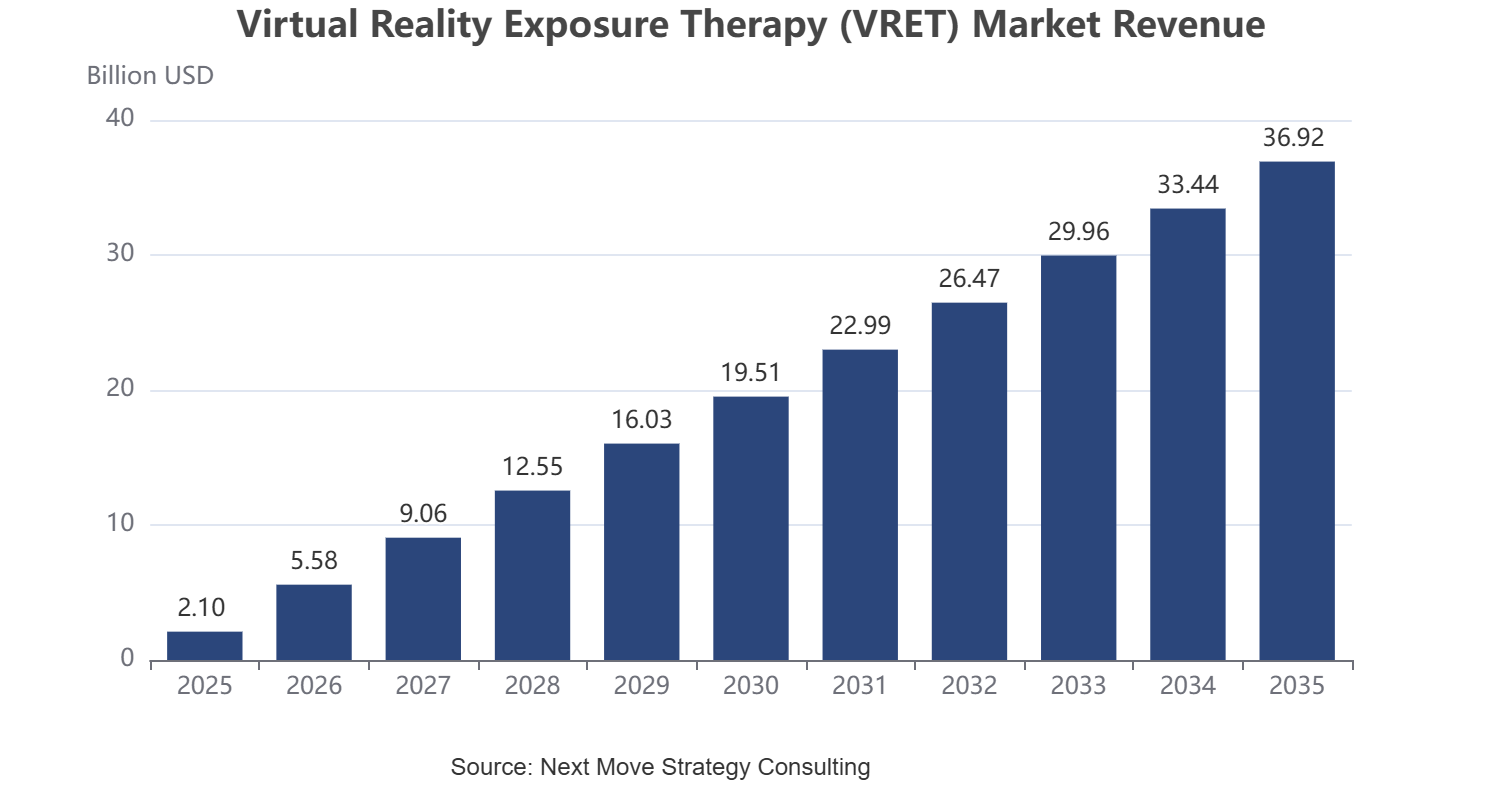
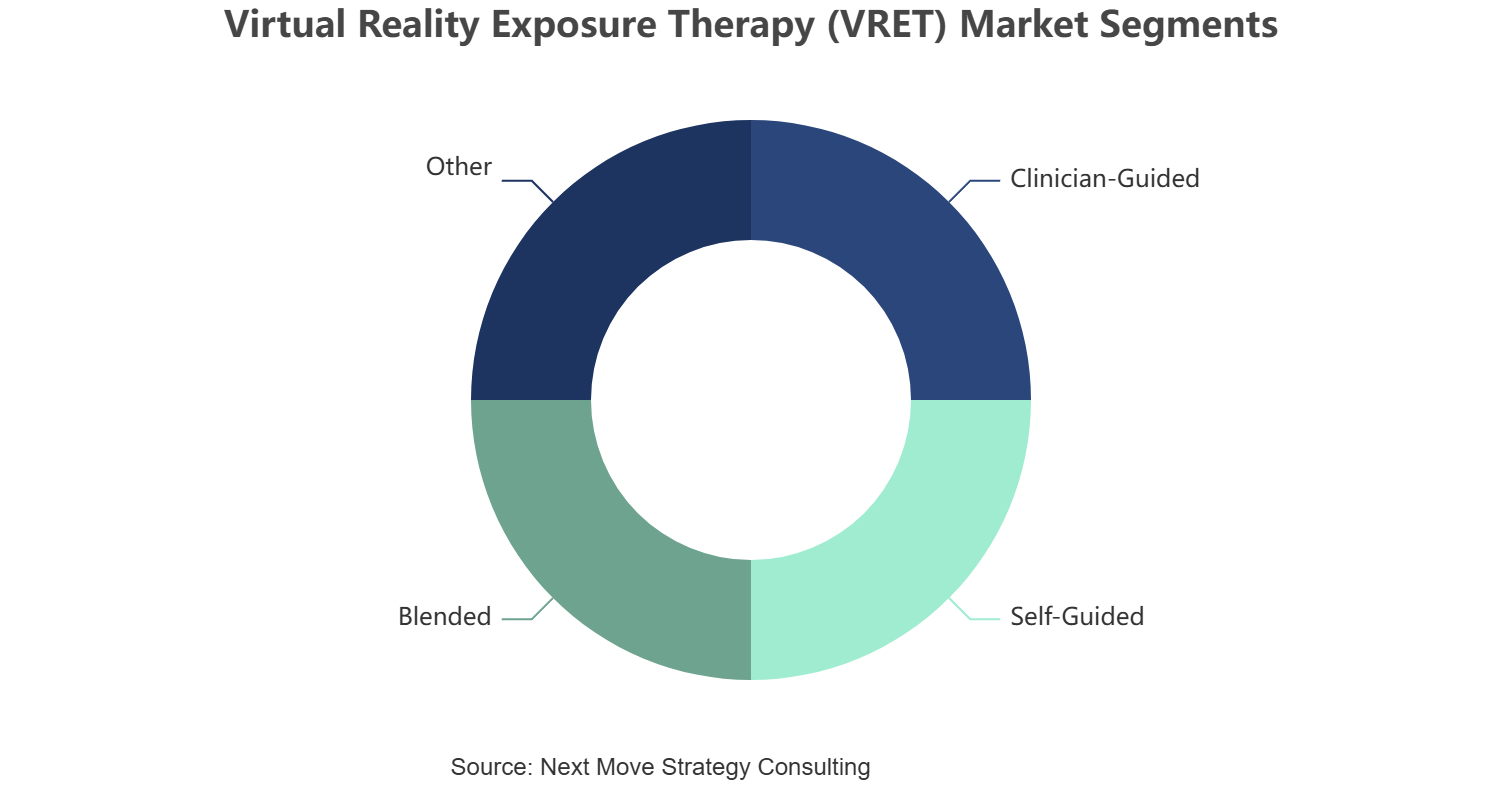
About the Author
 Mayurima Roy
— Mayurima Roy is Research Analyst at Next Move Strategy Consulting, where she has spent 4 years working across the firm's full industry coverage rather than a single fixed vertical. Her work centers on structured research, ongoing trend tracking, competitive assessment, and insight-led content development, translating complex market data into clear, decision-ready narratives that support informed client decision-making across diverse global industries, market sectors, and world regions every day.
Mayurima Roy
— Mayurima Roy is Research Analyst at Next Move Strategy Consulting, where she has spent 4 years working across the firm's full industry coverage rather than a single fixed vertical. Her work centers on structured research, ongoing trend tracking, competitive assessment, and insight-led content development, translating complex market data into clear, decision-ready narratives that support informed client decision-making across diverse global industries, market sectors, and world regions every day.
About the Reviewer
 Supradip Baul
— Supradip Baul is an accomplished business consultant and strategist with over a decade of rich experience in market intelligence, strategy, technology, and business transformation. His work has included rigorous qualitative and quantitative analysis across multiple industries, helping clients shape investment decisions and long-term roadmaps. Earlier in his career, he was associated with Gartner, where he contributed to industry-leading reports and market share analyses. He has worked with leading global companies and holds an MBA with a dual specialization in Marketing and Finance.
Supradip Baul
— Supradip Baul is an accomplished business consultant and strategist with over a decade of rich experience in market intelligence, strategy, technology, and business transformation. His work has included rigorous qualitative and quantitative analysis across multiple industries, helping clients shape investment decisions and long-term roadmaps. Earlier in his career, he was associated with Gartner, where he contributed to industry-leading reports and market share analyses. He has worked with leading global companies and holds an MBA with a dual specialization in Marketing and Finance.
At Next Move Strategy Consulting, we understand that insightful market research is the cornerstone of successful business decisions. That's why we employ a robust and multifaceted approach, combining various methodologies to deliver the most accurate and actionable data for our clients.

Research Landscape
We navigate the world of research with two primary approaches:
Qualitative Approach
Our qualitative research methodologies involve immersive techniques such as in-depth interviews, focus groups, and observational studies. By engaging directly with individuals and stakeholders, we uncover valuable insights that quantitative data alone may overlook.

Quantitative Research
In tandem with qualitative methodologies, NMSC leverages the power of Quantitative Research to provide a robust foundation of numerical insights. Through systematic data collection and analysis, we quantify patterns, preferences, and market trends, offering a comprehensive view of the business landscape.
Our quantitative research approach employs diverse tools, including surveys, experiments, and statistical modelling. These methodologies enable us to gather data from a large and representative sample, ensuring the statistical significance of our findings. By employing structured questionnaires and standardized data collection methods, we guarantee the reliability and validity of the information we present to our clients.
Quantitative research is particularly effective in measuring the prevalence of trends, assessing market size, and gauging the impact of various factors on consumer behavior. The numerical precision attained through this approach equips our clients with actionable insights, facilitating data-driven decision-making and strategy formulation.


Our Specialized Toolbox for Industry-Specific Market Research
We deploy a specialized arsenal of techniques tailored to meet your unique requirements. Here's a glimpse into our comprehensive toolbox:

Information Procurement
The stage entails acquiring market data or relevant information through various sources and methodologies.


Market Research Approach
We utilize both top-down and bottom-up approaches in market research analysis to achieve a comprehensive understanding of the market dynamics, leveraging the broad perspective of industry trends and macroeconomic factors alongside detailed insights from specific segments and individual companies.

Porters Five Forces Analysis
We conduct Porter's Five Forces analysis to evaluate the competitive landscape of an industry, providing us with insights into factors that affect profitability and strategic positioning.

SWOT Analysis

Forecasting
We utilize a forecasting model to predict future consumption by considering parameters like population, economics, regulations, market competition, drivers, constraints, technology, and pricing. We also employ statistical techniques such as multilinear regression, exponential smoothing, moving average, ARIMA, and Monte Carlo simulations for accurate predictions. In econometric forecasting, we analyzed short-term and long-term event impacts, attributing values based on regulatory frameworks, economic factors, and market events.





 Speak to Our Analyst