Clinical Supply Market Size, Share, Growth Trends and Segmentation Analysis, By Clinical Supply Services (Manufacturing, Packaging and Labelling, Comparator and Ancillary Supply, Storage, Distribution, Supply Chain Management, Supply Technology, Supply Consulting), By Trial Phase, By Molecule Type, By Temperature Requirement, By Therapeutic Area, By Sponsor Type, By Delivery Model, and By Region - Industry Report and Forecast, 2026-2035
Industry: Healthcare | Publishing Date: July 17, 2026 | Last Updated: September 30, 2026 | No of Pages: N/A | No. of Tables: N/A | No. of Figures: N/A | Format: PDF | Report Code: HC5203
What Is the Clinical Supply Market Size?
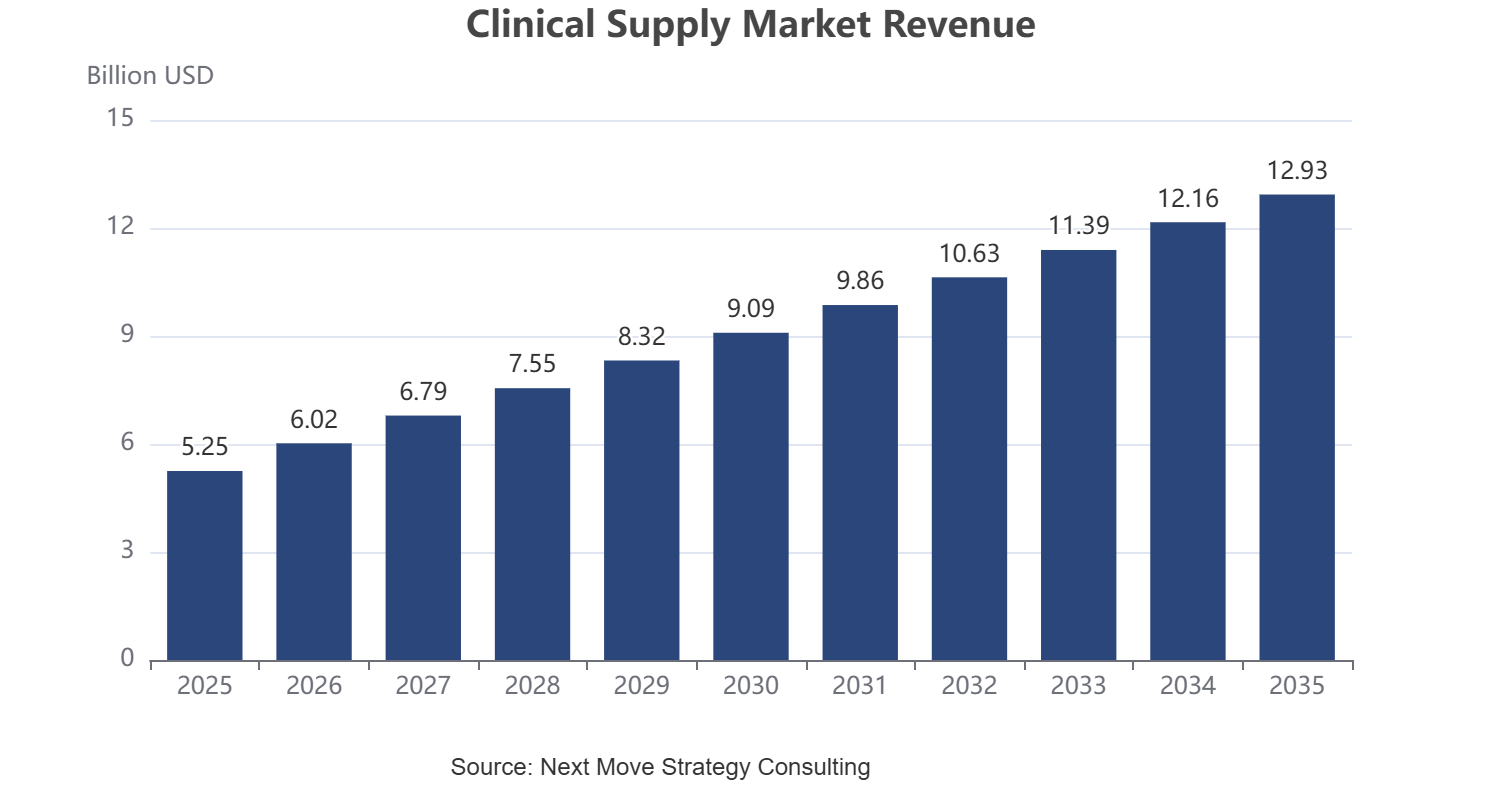
The global Clinical Supply Market size was valued at USD 5.25 billion in 2025 and is estimated at USD 5.75 billion in 2026, forecast to reach USD 12.93 billion by 2035, expanding at a 9.43% CAGR between 2026 and 2035. North America leads with approximately 44% share, while Clinical Manufacturing Services dominates all other service categories with approximately 26% share.
We observed that growth is broad-based across every segmentation axis, with cell and gene therapy manufacturing and decentralized trial adoption driving the dominant structural shifts through 2035.
|
Key Takeaways |
|
By Clinical Supply Services: Clinical Manufacturing Services held the largest share of approximately 26% (USD 1.37 Billion) in 2025; Clinical Supply Technology Services is the fastest-growing sub-segment at 15.1% CAGR from 2026-2035. |
|
By Trial Phase: Phase III held the largest share of approximately 41% (USD 2.15 Billion) in 2025; Investigator-Initiated Studies is the fastest-growing sub-segment at 13.2% CAGR from 2026-2035. |
|
By Molecule Type: Small Molecules held the largest share of approximately 42% (USD 2.20 Billion) in 2025; Gene Therapies is the fastest-growing sub-segment at 15.1% CAGR from 2026-2035. |
|
By Temperature Requirement: Controlled Room Temperature held the largest share of approximately 38% (USD 2.00 Billion) in 2025; Ultra-Low Temperature is the fastest-growing sub-segment at 16.4% CAGR from 2026-2035. |
|
By Therapeutic Area: Oncology held the largest share of approximately 31% (USD 1.63 Billion) in 2025; Rare Diseases is the fastest-growing sub-segment at 16.2% CAGR from 2026-2035. |
|
By Sponsor Type: Large Pharmaceutical Companies held the largest share of approximately 46% (USD 2.42 Billion) in 2025; Virtual Biotechnology Companies is the fastest-growing sub-segment at 17.3% CAGR from 2026-2035. |
|
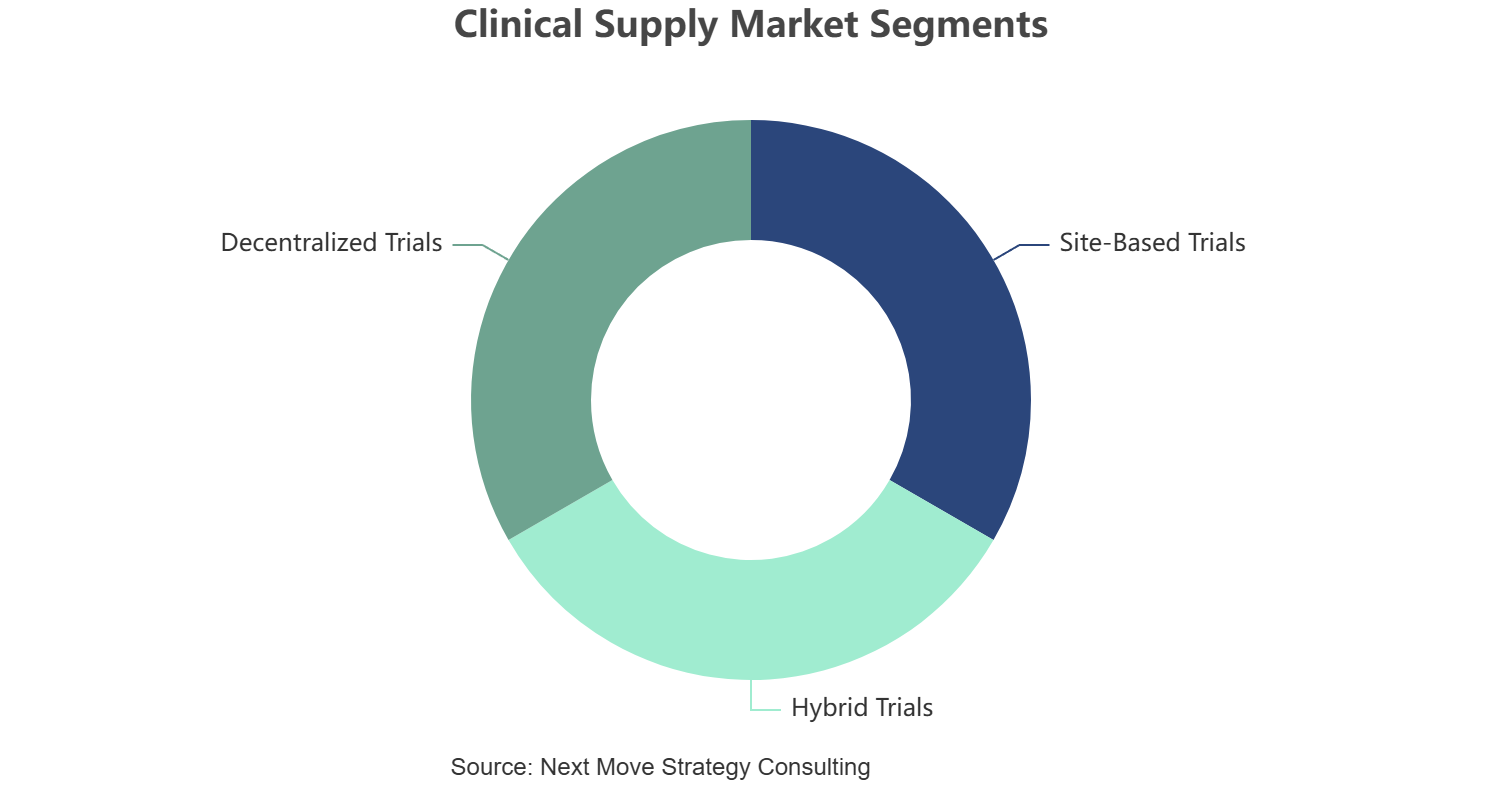
By Delivery Model: Site-Based Trials held the largest share of approximately 62% (USD 3.25 Billion) in 2025; Decentralized Trials is the fastest-growing sub-segment at 16.6% CAGR from 2026-2035. |
|
Dominant Region: North America dominated with approximately 44% revenue share (USD 2.31 Billion) in 2025. |
|
Fastest-Growing Region: Asia-Pacific is expected to register the highest CAGR of 12.2% during 2026-2035. |
|
Dominant Country: U.S. led with approximately USD 1.46 Billion in 2025. |
|
Fastest-Growing Country: India is the fastest-growing country at approximately 17.0% CAGR from 2026-2035. |
Market Opportunity: The Clinical Supply Market is expected to create an absolute dollar opportunity of USD 7.18 billion between 2026 and 2035, presenting significant investment potential across cell and gene therapy manufacturing, cold chain distribution, and decentralized trial supply infrastructure.
According to Next Move Strategy Consulting analysis, sponsors are increasingly consolidating comparator sourcing and clinical distribution with fewer, technology-enabled providers to reduce protocol amendment turnaround time, a shift that favors integrated full-service providers over single-function specialists as trial complexity intensifies through 2035.
What does the Clinical Supply Market Encompass?
The Clinical Supply Market encompasses manufacturing, packaging and labelling, comparator and ancillary sourcing, storage, distribution, supply chain management, technology, and consulting services that support investigational product delivery across clinical trials. We observed that the scope spans small molecules, biologics, cell therapies, gene therapies, and vaccines handled for sponsors ranging from large pharmaceutical companies to virtual biotechnology firms, evolving from manual, paper-driven logistics into digitally orchestrated, interactive response technology-enabled supply networks.
Regulatory frameworks such as the U.S. Food and Drug Administration's Good Manufacturing Practice requirements and the European Medicines Agency's clinical trial regulation shape blinding, labelling, and serialization obligations across trial phases. Our assessment indicates that technology adoption is shifting toward real-time inventory visibility and predictive demand forecasting platforms, with providers increasingly bundling qualified person services and regulatory consulting into core offerings to support decentralized and hybrid trial designs.
|
Parameter |
Details |
|
Market Size in 2025 |
USD 5.25 Billion |
|
Market Size in 2026 |
USD 5.75 Billion |
|
Revenue Forecast in 2035 |
USD 12.93 Billion |
|
Growth Rate |
CAGR of 9.43% from 2026 to 2035 |
|
Analysis Period |
2025-2035 |
|
Base Year Considered |
2025 |
|
Forecast Period |
2026-2035 |
|
Market Size Estimation |
Revenue (USD Billion) |
|
Companies Profiled |
20 |
|
Countries Covered |
38 |
|
Market Share |
Available for Top 10 Companies |
Key Emerging Trends
Based on research conducted by Next Move Strategy Consulting, we found that four structural trends are reshaping service design, technology adoption, and stakeholder engagement across the industry.
How Is Cell and Gene Therapy Manufacturing Reshaping Clinical Supply Networks?
Cell and gene therapy programs require ultra-low temperature handling and abbreviated shelf-life logistics that differ fundamentally from small molecule supply chains. We observed that Lonza Group AG has expanded dedicated gene therapy manufacturing suites to support patient-specific batch scheduling, reducing time-to-clinic for sponsors managing autologous cell therapy trials with narrow dosing windows.
Why Is Decentralized Trial Supply Gaining Momentum in the Clinical Supply Market?
Decentralized and hybrid trial designs are shifting investigational product delivery from site depots toward direct-to-patient distribution models. We found that Marken Limited has scaled direct-to-patient logistics capability across multiple regions, positioning decentralized supply as a structural alternative to site-based distribution for sponsors prioritizing patient retention and reduced site burden.
How Are Digital Forecasting Platforms Reshaping Clinical Supply Chain Management?
Digital forecasting platforms are compressing demand planning cycles for randomized and adaptive trial designs. During our market evaluation, we noticed that clinical trial management system integration with interactive response technology is improving supply chain visibility, with Signant Health Holdings, Inc. expanding predictive analytics capability to reduce overage waste for complex randomization protocols.
What Role Is Serialization Playing in Global Distribution Compliance?
Serialization and track-and-trace requirements are becoming mandatory across an expanding number of jurisdictions, requiring clinical supply providers to embed compliance capability directly into packaging workflows. Our findings suggest that PCI Pharma Services and Almac Group Limited have expanded serialization platform capacity to support multi-country trials, positioning compliance-grade labelling as a differentiator for sponsors running global Phase III programs.
Growth Drivers and Restraints
Growth Catalyst and Risk Assessment Matrix
|
Factors |
Type |
(+/-) % Impact on CAGR |
Geographic Relevance |
Impact Timeline |
|
Rising complexity of cell and gene therapy trials |
Driver |
+2.6% |
Global |
2026-2035 |
|
Growing sponsor demand for decentralized trial supply |
Driver |
+2.1% |
North America, Europe |
2026-2035 |
|
Expansion of biotechnology clinical pipelines |
Driver |
+1.8% |
North America, Asia-Pacific |
2026-2033 |
|
Rising clinical trial activity in Asia-Pacific |
Driver |
+2.0% |
Asia-Pacific |
2026-2035 |
|
Growth of rare disease and orphan drug development |
Driver |
+1.3% |
Global |
2026-2032 |
|
Cold chain infrastructure capacity constraints |
Restraint |
-1.2% |
Middle East & Africa, Latin America |
2026-2030 |
|
Rising regulatory complexity across multi-country trials |
Restraint |
-1.4% |
Global |
2026-2035 |
|
Comparator drug sourcing and availability constraints |
Restraint |
-0.9% |
Global |
2026-2031 |
|
Budget constraints among virtual biotechnology sponsors |
Restraint |
-0.8% |
North America, Europe |
2026-2029 |
What Is the Primary Growth Driver for the Clinical Supply Market?
The primary growth driver is rising complexity of cell and gene therapy trials, which require specialized manufacturing, ultra-low temperature storage, and abbreviated logistics windows unavailable through conventional supply chains. We observed that the U.S. Food and Drug Administration has approved a growing number of cell and gene therapy products since 2024, reinforcing demand for providers capable of supporting patient-specific, time-sensitive investigational product delivery.
How Is Biotechnology Pipeline Expansion Driving Market Growth?
Biotechnology pipeline expansion is driving market growth as emerging sponsors increasingly outsource clinical supply functions rather than build internal infrastructure. Based on research conducted by NMSC, we found that virtual biotechnology companies increasingly rely on life sciences business process outsourcing providers for end-to-end supply management, a shift expanding the addressable market for full-service clinical supply consulting and technology services beyond traditional manufacturing support.
What Is Restraining the Clinical Supply Market?
Rising regulatory complexity across multi-country trials restrains operational efficiency, as sponsors must navigate differing labelling, serialization, and import documentation requirements simultaneously. The European Medicines Agency's clinical trial regulation has introduced harmonized but demanding transparency requirements since its implementation, complicating supply timelines for smaller sponsors. Our analysis shows that providers with limited regulatory consulting capability face particular exposure compared with globally diversified full-service competitors.
Segmentation Analysis
Segment Sizing: By Clinical Supply Services
|
Segment |
2025 (USD) |
2035 (USD) |
CAGR% (2026-2035) |
|
Clinical Manufacturing Services |
USD 1.37 Billion |
USD 3.11 Billion |
8.4% |
|
Clinical Packaging and Labelling Services |
USD 1.05 Billion |
USD 2.33 Billion |
8.2% |
|
Comparator and Ancillary Supply Services |
USD 0.63 Billion |
USD 1.42 Billion |
8.3% |
|
Clinical Storage Services |
USD 0.53 Billion |
USD 1.16 Billion |
8.2% |
|
Clinical Distribution Services |
USD 0.73 Billion |
USD 1.81 Billion |
9.3% |
|
Clinical Supply Chain Management Services |
USD 0.47 Billion |
USD 1.29 Billion |
10.6% |
|
Clinical Supply Technology Services |
USD 0.26 Billion |
USD 1.03 Billion |
15.1% |
|
Clinical Supply Consulting Services |
USD 0.21 Billion |
USD 0.78 Billion |
14.5% |
|
Total |
USD 5.25 Billion |
USD 12.93 Billion |
9.43% |
Which Clinical Supply Service Dominates the Market?
Clinical Manufacturing Services dominates the service axis, contributing USD 1.37 billion in 2025 and projected to reach USD 3.11 billion by 2035. We found that small molecule and biologics manufacturing remain the largest revenue contributors as sponsors integrate pharmaceutical API and formulation capabilities directly with clinical manufacturing partners, while Clinical Supply Technology Services grows fastest as digital forecasting adoption accelerates.
Segment Sizing: By Trial Phase
|
Segment |
2025 (USD) |
2035 (USD) |
CAGR% (2026-2035) |
|
Phase I |
USD 0.73 Billion |
USD 1.94 Billion |
10.2% |
|
Phase II |
USD 1.42 Billion |
USD 3.36 Billion |
9.0% |
|
Phase III |
USD 2.15 Billion |
USD 5.04 Billion |
8.8% |
|
Phase IV |
USD 0.53 Billion |
USD 1.42 Billion |
10.7% |
|
Bioequivalence Studies |
USD 0.26 Billion |
USD 0.65 Billion |
9.4% |
|
Investigator-Initiated Studies |
USD 0.16 Billion |
USD 0.52 Billion |
13.2% |
|
Total |
USD 5.25 Billion |
USD 12.93 Billion |
9.43% |
Which Trial Phase Is Growing Fastest?
Phase III remains the largest trial phase at USD 2.15 billion in 2025, while Investigator-Initiated Studies is the fastest-growing at a 13.2% CAGR through 2035. Our findings suggest that expanding contract research organization partnerships with academic and research institutions are enabling investigator-initiated programs to access professional-grade supply infrastructure previously reserved for sponsor-led trials.
Segment Sizing: By Molecule Type
|
Segment |
2025 (USD) |
2035 (USD) |
CAGR% (2026-2035) |
|
Small Molecules |
USD 2.20 Billion |
USD 4.27 Billion |
6.5% |
|
Biologics |
USD 1.42 Billion |
USD 3.75 Billion |
10.3% |
|
Cell Therapies |
USD 0.47 Billion |
USD 1.68 Billion |
13.9% |
|
Gene Therapies |
USD 0.37 Billion |
USD 1.42 Billion |
15.1% |
|
Vaccines |
USD 0.53 Billion |
USD 1.16 Billion |
8.2% |
|
Combination Products |
USD 0.26 Billion |
USD 0.65 Billion |
9.4% |
|
Total |
USD 5.25 Billion |
USD 12.93 Billion |
9.43% |
Why Do Gene Therapies Grow Fastest Among Molecule Types?
Small Molecules lead with USD 2.20 billion in 2025, reflecting the broad base of established chemical entities still in active clinical development. We observed that Gene Therapies is the fastest-growing molecule category at a 15.1% CAGR through 2035, as an expanding pipeline of approved and investigational gene therapy products requires specialized ultra-low temperature manufacturing and distribution infrastructure unavailable through conventional small molecule networks.
Growth Opportunities
Beyond the core drivers outlined above, three forward-looking whitespace opportunities stand out for stakeholders positioning within the clinical supply market over the 2026-2035 forecast period.
Can Cryogenic Distribution Networks Unlock Value for Cell Therapy Sponsors?
Cryogenic distribution networks present a whitespace opportunity for cell therapy sponsors requiring uninterrupted sub-zero chain of custody from manufacturing to patient administration. Providers that expand dedicated cryogenic storage and distribution capability stand to capture recurring contract volume as autologous and allogeneic cell therapy programs scale from early-phase to registrational trials.
Where Does Virtual Biotechnology Outsourcing Create New Clinical Supply Market Demand?
Virtual biotechnology companies without internal supply chain infrastructure represent an underpenetrated opportunity for full-service providers offering integrated manufacturing, packaging, and distribution under a single contract. Providers such as Myonex, Inc. and Ancillare, LP that bundle comparator sourcing with supply chain management can secure long-term contracts with lean sponsor organizations prioritizing single-vendor simplicity.
How Can Direct-to-Patient Platforms Benefit Decentralized Trial Sponsors?
Direct-to-patient distribution platforms create a mechanism to serve decentralized trial sponsors who lack traditional site-based depot networks, reducing product delivery timelines from days to hours. This channel benefits rare disease and oncology sponsors by improving patient retention, directly supporting the 16.6% CAGR projected for the drug delivery devices-compatible Decentralized Trials delivery model through 2035.
Strategic Framework Analysis of the Clinical Supply Market
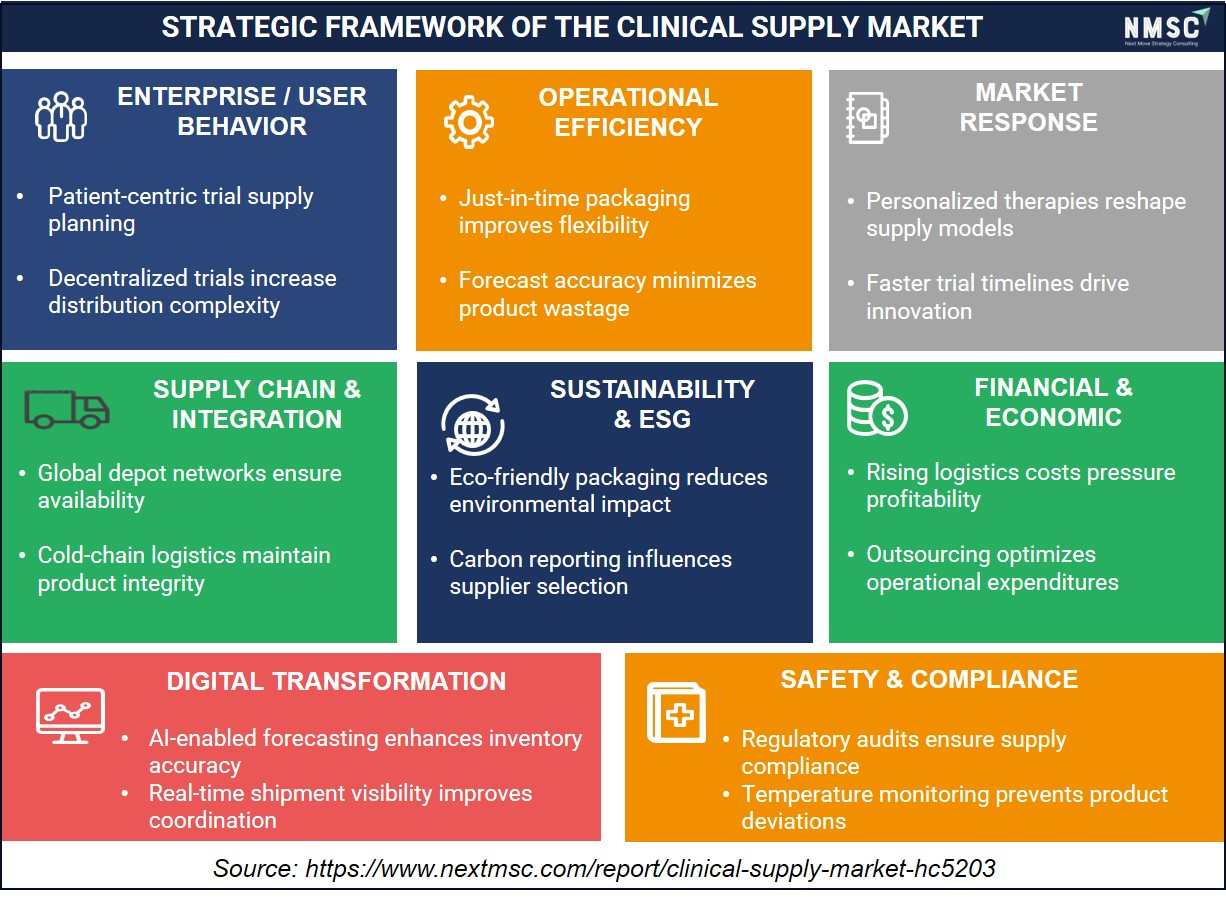
The above infographic presents a strategic framework of the clinical supply market, where patient-centric planning and decentralized trials are reshaping traditional distribution models. To address these complexities, global depot networks and cold-chain logistics are being leveraged to maintain product integrity and ensure timely availability. At the same time, just-in-time packaging and improved forecast accuracy are helping minimize waste, while personalized therapies continue to drive innovation across the supply chain. Despite these advancements, rising logistics costs remain a challenge, though AI-enabled forecasting and real-time visibility are enhancing coordination and decision-making. Looking ahead, we observed that regulatory audits and temperature monitoring will continue to play a critical role in ensuring compliance and product quality throughout the clinical supply process.
Regional Outlook
|
Region |
2025 (USD) |
2035 (USD) |
CAGR% (2026-2035) |
Key Driver |
|
North America |
USD 2.31 Billion |
USD 5.17 Billion |
8.3% |
Concentration of biotechnology clinical pipelines |
|
Europe |
USD 1.52 Billion |
USD 3.49 Billion |
8.5% |
EMA clinical trial regulation harmonization |
|
Asia-Pacific |
USD 1.05 Billion |
USD 3.23 Billion |
12.2% |
Rising clinical trial activity and cost efficiency |
|
Middle East & Africa |
USD 0.21 Billion |
USD 0.65 Billion |
12.2% |
Expanding clinical trial infrastructure investment |
|
Latin America |
USD 0.16 Billion |
USD 0.39 Billion |
9.7% |
Growing multi-country trial participation |
|
Total |
USD 5.25 Billion |
USD 12.93 Billion |
9.43% |
|
North America
North America remains the most mature clinical supply market, anchored by dense concentration of biotechnology clinical pipelines and headquarters presence for providers such as Thermo Fisher Scientific Inc. and Catalent, Inc. We observed that U.S. Food and Drug Administration Good Manufacturing Practice oversight sustains demand for compliant, technology-enabled supply partners. Technology adoption remains advanced, with interactive response technology widely deployed across large sponsor organizations.
Europe
Europe's market reflects a mature, regulation-intensive landscape shaped by the European Medicines Agency's clinical trial regulation, which harmonizes transparency and labelling requirements across member states. Our findings suggest that sponsors across Germany, France, and the UK increasingly rely on regional depot networks to streamline multi-country distribution. Technology adoption favors serialization platforms, supported by providers investing in cold chain infrastructure.
Asia-Pacific
Asia-Pacific is the fastest-growing clinical supply market region, propelled by rising clinical trial activity in China and India and favorable cost efficiency for sponsors. We found that regulatory frameworks remain less harmonized than in Europe, giving providers flexibility to scale manufacturing and distribution services rapidly. Technology adoption is accelerating as regional providers expand digital forecasting capacity to serve global sponsor demand.
Middle East & Africa
Middle East & Africa is expanding as regional governments invest in clinical trial infrastructure tied to healthcare diversification programs. Our analysis shows that Saudi Arabia and the UAE are attracting clinical supply investment linked to regional trial site expansion. Regulatory influence remains moderate, while technology adoption is gradually shifting toward digital tracking as regional hubs align with global trial conduct standards.
Latin America
Latin America's market is supported by growing multi-country trial participation in Brazil and Argentina and expanding sponsor interest in cost-efficient patient recruitment. We observed that regulatory frameworks are less stringent than in North America or Europe, though multinational providers operating locally are introducing decentralized distribution options. Technology adoption remains centered on site-based distribution, with competitive intensity increasing as regional distributors partner with global supply networks.
U.S.
Based on our estimates, the U.S. Clinical Supply Market was valued at approximately USD 1.46 billion in 2025 and is projected to reach USD 3.05 billion by 2035, growing at a 7.5% CAGR. Demand is anchored by a mature biotechnology and large pharmaceutical sponsor base, with high interactive response technology adoption and strong competitive intensity among domestic and global providers. Technology penetration favors digital forecasting platforms, and strategic outlook favors continued cell and gene therapy manufacturing capacity expansion.
Canada
The market in Canada reached roughly USD 0.51 billion in 2025 and is forecast to hit USD 1.29 billion by 2035 at a 9.7% CAGR. Demand structure mirrors U.S. biotechnology trial patterns, while Health Canada regulatory guidance shapes clinical trial application and import compliance. Technology penetration is rising as sponsors request integrated supply chain visibility, with competitive intensity moderate given reliance on cross-border capacity from U.S.-based providers.
UK
The market in the UK Clinical Supply Market stood at about USD 0.41 billion in 2025, advancing toward USD 0.91 billion by 2035 at an 8.1% CAGR. Demand is driven by established biotechnology and academic sponsors navigating post-Brexit import documentation requirements. Regulatory influence is significant, technology penetration favors digital labelling systems, and competitive intensity remains steady among domestic and European providers serving UK trial sites.
Germany
Germany's market was valued near USD 0.36 billion in 2025 and is set to reach USD 0.84 billion by 2035, expanding at an 8.6% CAGR. Demand structure benefits from a strong domestic biotechnology and pharmaceutical manufacturing base. Germany's alignment with EMA clinical trial regulation drives regulatory influence, while technology penetration favors serialization platforms among leading providers headquartered domestically.
France
As per our estimate, France's market reached approximately USD 0.26 billion in 2025, projected to climb to USD 0.59 billion by 2035 at an 8.6% CAGR. Demand is supported by France's prominent immunology and oncology research base, which shapes comparator sourcing and blinding service adoption. Regulatory influence from French clinical trial modernization is notable, and competitive intensity remains high given the concentration of providers headquartered domestically.
China
The Clinical Supply Market in China stood at roughly USD 0.34 billion in 2025 and is forecast to reach USD 0.94 billion by 2035, registering a 10.9% CAGR. Demand is fueled by expanding domestic biotechnology clinical pipelines and a dense base of regional supply providers. Regulatory influence is increasing gradually, technology penetration is accelerating through digital tracking upgrades, and competitive intensity remains elevated among global providers expanding local manufacturing capacity.
India
According to our analysis, India's market was valued at about USD 0.17 billion in 2025, projected to reach USD 0.74 billion by 2035 at a 17.0% CAGR, the fastest among covered countries. Demand structure reflects rising clinical trial activity and expanding contract research capacity. Regulatory influence remains developing, while technology penetration is rising quickly as multinational providers localize supply infrastructure to serve India's growing trial base.
Japan
Japan's market reached close to USD 0.20 billion in 2025 and is expected to hit USD 0.48 billion by 2035, growing at a 9.1% CAGR. Demand is supported by Japan's advanced pharmaceutical research base, led by domestic providers coordinating closely with global manufacturing partners. Regulatory influence is well established, technology penetration is advanced, and competitive intensity remains high among long-standing domestic and multinational providers.
South Korea
Based on our estimates, South Korea's Clinical Supply Market stood at approximately USD 0.13 billion in 2025, forecast to reach USD 0.42 billion by 2035 at a 13.0% CAGR. Demand structure benefits from the country's expanding biotechnology and biosimilar research base. Technology penetration is high, with domestic providers supplying integrated clinical supply services, and competitive intensity remains pronounced amid rapid trial pipeline expansion.
Australia
The clinical supply market in Australia reached about USD 0.08 billion in 2025 and is projected to reach USD 0.23 billion by 2035, expanding at an 11.0% CAGR. Demand is supported by a well-established early-phase clinical trial ecosystem and favorable government research and development tax incentives. Regulatory influence stems from the Therapeutic Goods Administration's clinical trial notification scheme, while technology penetration favors digital tracking platforms amid moderate competitive intensity.
UAE
The market in the UAE market was valued near USD 0.07 billion in 2025, projected to reach USD 0.20 billion by 2035 at a 12.4% CAGR. Demand structure is shaped by the UAE's role as a regional clinical trial and re-export hub. Regulatory influence remains moderate, technology penetration is improving through digital customs clearance, and competitive intensity is rising as providers expand Gulf market coverage.
Saudi Arabia
Saudi Arabia's market reached roughly USD 0.06 billion in 2025 and is expected to hit USD 0.19 billion by 2035, growing at a 13.7% CAGR. Demand is driven by Vision 2030-linked healthcare infrastructure investment and rising clinical trial site activity. Regulatory influence is developing under Saudi Food and Drug Authority modernization guidelines, and technology penetration is advancing as domestic providers scale supply capacity.
South Africa
As per our estimate, South Africa's Clinical Supply Market stood at about USD 0.04 billion in 2025, forecast to reach USD 0.10 billion by 2035 at a 10.7% CAGR. Demand structure reflects a developing clinical trial base serving regional Southern African infectious disease research. Regulatory influence remains moderate, technology penetration is gradually improving, and competitive intensity is limited given reliance on established international supply networks.
Brazil
The market in Brazil reached approximately USD 0.07 billion in 2025 and is projected to reach USD 0.16 billion by 2035, registering an 8.0% CAGR. Demand is underpinned by Brazil's large domestic patient population and expanding multi-country trial participation. Regulatory influence stems from Brazilian health regulatory modernization initiatives, technology penetration favors site-based distribution, and competitive intensity remains moderate among regional providers.
Argentina
According to our analysis, Argentina's Clinical Supply Market was valued near USD 0.04 billion in 2025, projected to reach USD 0.09 billion by 2035 at a 9.4% CAGR. Demand structure is supported by steady clinical trial participation despite macroeconomic volatility. Regulatory influence remains limited, technology penetration is modest, and competitive intensity is centered on a small number of regional distributors serving domestic trial sites.
Competitive Landscape
We observed that the clinical supply market features a moderately consolidated competitive landscape, with global full-service providers competing alongside specialized regional companies on service breadth, cold chain capability, and pricing flexibility.
|
Dimension |
Description |
|
Market Structure |
Moderately consolidated; the top companies profiled in this report collectively account for a significant share of global clinical supply revenue, while numerous regional providers serve country-specific comparator sourcing and distribution demand |
|
Innovation Focus |
Interactive response technology, cold chain and cryogenic distribution expansion, and predictive demand forecasting dominate current innovation pipelines across leading providers |
|
M&A Activity |
Selective consolidation through capability acquisitions, exemplified by Catalent, Inc.'s continued integration of acquired clinical manufacturing and packaging platforms to broaden global service coverage |
How Do Companies Compete in the Clinical Supply Market?
Companies compete primarily on service breadth, cold chain and cryogenic distribution capability, and pricing flexibility across sponsor tiers. We observed that global players such as Thermo Fisher Scientific Inc. and Catalent, Inc. leverage broad end-to-end service portfolios to serve multinational pharmaceutical sponsors, while specialized providers compete on cost efficiency and rapid turnaround for smaller biotechnology sponsors.
Which Competitive Archetypes Dominate the Clinical Supply Market?
Two archetypes dominate the market: diversified full-service providers offering integrated manufacturing, packaging, and distribution under a single contract, and specialized comparator and logistics providers focused on high-complexity, cold chain-sensitive shipments. Almac Group Limited exemplifies the diversified archetype through integrated manufacturing-to-distribution capability, while Biocair International Ltd. exemplifies the specialized cold chain logistics archetype.
How Are Companies Differentiating Through Innovation?
Innovation and differentiation strategy increasingly center on digital supply chain visibility and blockchain in healthcare pilot programs for chain-of-custody verification. PCI Pharma Services and Sharp Services LLC have both expanded serialization and tracking capability to secure enterprise contracts, while providers unable to demonstrate compliance-grade traceability risk exclusion from sponsor shortlists.
What M&A and Expansion Activity Is Shaping the Clinical Supply Market?
Mergers, acquisitions, and geographic expansion continue to consolidate clinical supply capabilities within the industry. Catalent, Inc.'s ongoing integration of acquired manufacturing and packaging platforms broadened its global service coverage, while Marken Limited's continued investment in direct-to-patient logistics infrastructure illustrates how diversified groups pursue geographic expansion and service breadth across sponsor tiers.
Key Market Players
We observed that the following twenty companies represent the core competitive set shaping service innovation, geographic expansion, and pricing strategy across the Clinical Supply Market.
-
Catalent, Inc.
-
Almac Group Limited
-
PCI Pharma Services
-
Parexel International Corporation
-
ICON plc
-
Clinigen Group plc
-
Cencora, Inc.
-
Lonza Group AG
-
Piramal Pharma Limited
-
Sharp Services LLC
-
Marken Limited
-
Movianto International B.V.
-
Myonex, Inc.
-
Biocair International Ltd.
-
Ancillare, LP
-
Siegfried Holding AG
-
Bilcare Limited
-
Signant Health Holdings, Inc.
Latest Developments
From 2025 onward, industry developments in the Clinical Supply Market have primarily centered on strengthening clinical trial supply chain capabilities through investments in packaging, labeling, comparator sourcing, cold-chain logistics, storage, and global distribution. Companies have also focused on enhancing operational efficiency and supply continuity to support increasingly complex, multinational, and decentralized clinical trials.
Expert Insights
 “As the number of biological products in clinical development continues to grow, it is important that Almac can offer both the capability and capacity that clients will require in the future.”
- Dr. Robert Dunlop, President and Managing Director, Almac Clinical Services
Statement made during Almac Group's announcement of its expanded cold chain capabilities to support the growing demand for biologics in clinical development.
Market Interpretation
The statement highlights the increasing demand for specialized clinical supply services as the pipeline of biologics and advanced therapies continues to expand. Growing clinical trial complexity is driving investments in cold chain logistics, packaging, labeling, storage, and distribution capabilities to ensure product integrity and regulatory compliance. As biopharmaceutical companies advance temperature-sensitive therapies through clinical development, scalable and flexible clinical supply infrastructure is becoming a critical factor supporting global trial execution.
Supply Chain Analysis of the Clinical Supply Market
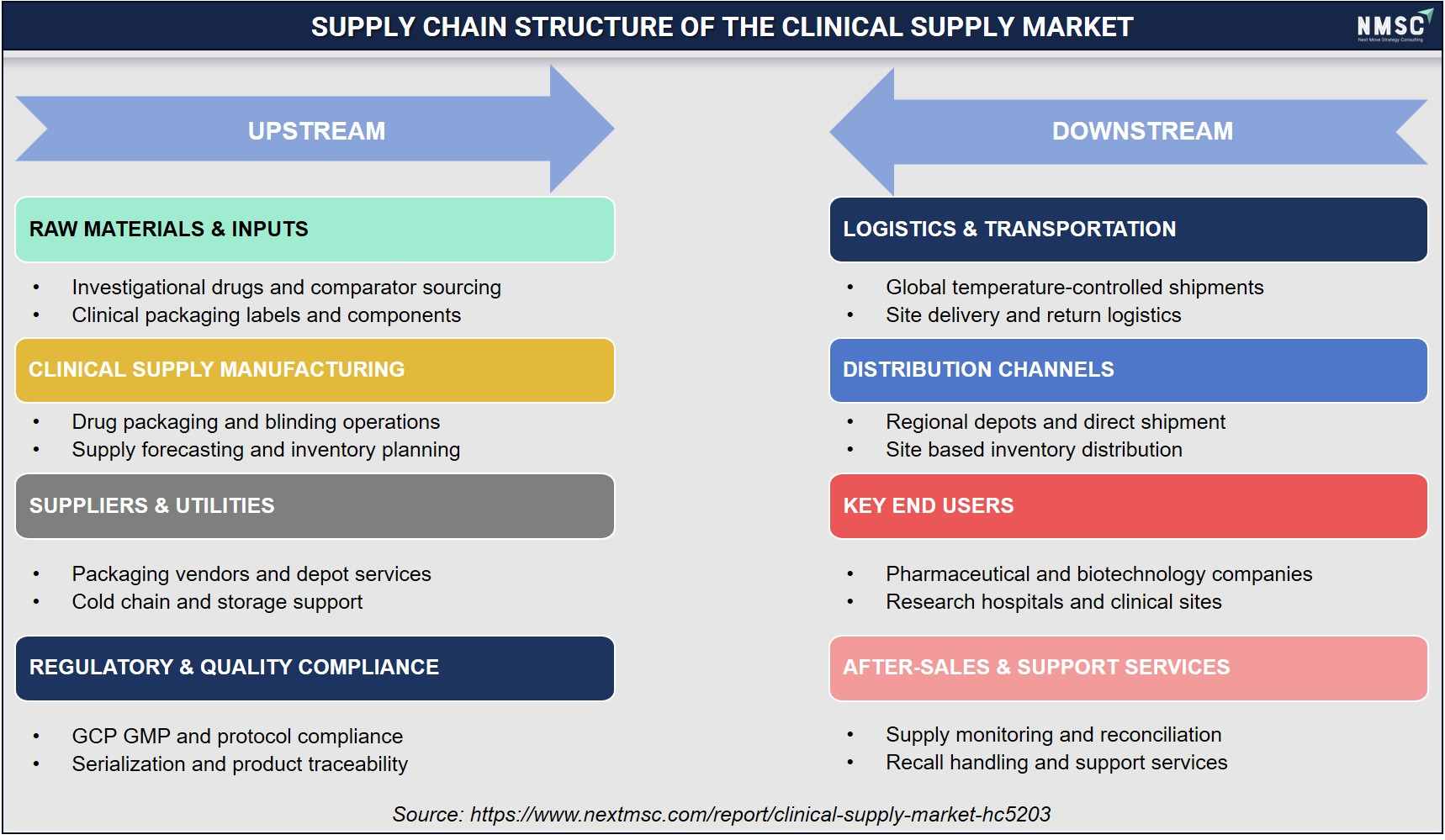
The above infographic presents the supply chain structure of the clinical supply market, segmented into upstream and downstream activities. Upstream begins with investigational drugs, comparators, and packaging components, which move into drug packaging, blinding operations, and supply forecasting. Packaging vendors and cold chain providers support manufacturing, while compliance with GCP, GMP, and serialization requirements ensures quality and traceability. Moving downstream, temperature-controlled logistics and regional depots enable global site delivery to pharmaceutical companies, research hospitals, and clinical sites. Looking ahead, we observed that supply monitoring, reconciliation, and recall handling services collectively ensure operational reliability and regulatory adherence across the market.
Investment Opportunities
Where Are Capital Inflows Concentrated in the Clinical Supply Market?
Capital inflows are concentrated in cell and gene therapy manufacturing capacity and digital supply chain visibility platform providers, with strategic acquirers targeting firms offering proprietary cold chain and forecasting technology. Our analysis shows that established providers are increasingly funding internal cryogenic infrastructure development, reflecting confidence in the segment's 9.43% CAGR through 2035 as a durable, fundamentals-supported growth trajectory.
How Significant Is Infrastructure Investment Supporting Market Growth?
Infrastructure investment supporting ultra-low temperature and pharmaceutical glass packaging capacity underpins the market's Cell Therapies and Gene Therapies growth, projected at a 13.9% and 15.1% CAGR respectively through 2035. We observed that cryogenic storage capacity expansion across North America and Europe is directly enabling faster adoption of advanced therapy clinical supply services.
What ESG Considerations Are Shaping Investment Decisions?
Environmental, Social, and Governance considerations increasingly factor into sponsor and provider decisions, as consolidated cold chain logistics directly reduce energy consumption compared with fragmented, multi-vendor distribution. Our assessment indicates that investors favor providers demonstrating measurable emissions reduction from optimized route planning and packaging waste minimization, aligning clinical supply adoption with broader corporate sustainability reporting requirements.
Key Benefits for Stakeholders
How Does This Report Benefit Enterprise and Industry Leaders?
Enterprise and industry leaders gain access to segment-level revenue forecasts across service, trial phase, and molecule type axes, enabling informed prioritization of supply chain procurement and vendor selection decisions. Our analysis shows that benchmarking against the 9.43% market CAGR through 2035 helps clinical operations leaders justify budget allocation relative to peers, while regional data supports depot and distribution network design decisions.
How Does This Report Benefit Investors and Financial Analysts?
Investors and financial analysts benefit from reconciled market sizing across twenty companies and thirty-eight countries, supporting due diligence on competitive positioning and growth trajectory. NMSC's analysis indicates that the report's segment-level CAGR data, including the 15.1% growth rate for Clinical Supply Technology Services, helps identify underappreciated growth pockets ahead of broader market recognition.
How Does This Report Benefit Technology Vendors and Product Teams?
Technology vendors and product teams gain visibility into which services and molecule types are growing fastest, directly informing product roadmap and go-to-market prioritization. Our findings suggest that the report's competitive landscape and latest developments sections help product teams benchmark feature investment against direct competitors, reducing the risk of misallocating development spend toward slower-growing segments.
Key Market Segments
By Clinical Supply Services
-
Clinical Manufacturing Services
-
Small Molecule Clinical Manufacturing
-
Biologics Clinical Manufacturing
-
Cell Therapy Clinical Manufacturing
-
Gene Therapy Clinical Manufacturing
-
Vaccine Clinical Manufacturing
-
Placebo Manufacturing
-
Over-Encapsulation Services
-
Ancillary Kit Assembly
-
-
Clinical Packaging and Labelling Services
-
Primary Packaging
-
Secondary Packaging
-
Blinding Services
-
Labelling Services
-
Repackaging Services
-
Relabelling Services
-
Serialization Services
-
-
Comparator and Ancillary Supply Services
-
Comparator Sourcing
-
Reference Product Sourcing
-
Rescue Medication Sourcing
-
Ancillary Material Sourcing
-
-
Clinical Storage Services
-
Ambient Storage
-
Controlled Room Temperature Storage
-
Refrigerated Storage
-
Frozen Storage
-
Ultra-Low Temperature Storage
-
Cryogenic Storage
-
Controlled Substance Storage
-
-
Clinical Distribution Services
-
Depot Services
-
Site Distribution
-
Direct to Patient Distribution
-
Direct to Site Distribution
-
International Distribution
-
Returns Management
-
Destruction Services
-
-
Clinical Supply Chain Management Services
-
Demand Forecasting
-
Inventory Management
-
Supply Planning
-
Randomization and Trial Supply Management
-
Risk Management
-
Regulatory Compliance Management
-
Project Management
-
-
Clinical Supply Technology Services
-
Interactive Response Technology
-
Supply Chain Visibility Platforms
-
Inventory Tracking Platforms
-
Serialization Platforms
-
Clinical Supply Analytics
-
-
Clinical Supply Consulting Services
-
Supply Strategy Consulting
-
Regulatory Consulting
-
Qualified Person Services
-
Study Start-Up Support
-
Supply Network Design
-
By Trial Phase
-
Phase I
-
Phase II
-
Phase III
-
Phase IV
-
Bioequivalence Studies
-
Investigator-Initiated Studies
By Molecule Type
-
Small Molecules
-
Biologics
-
Cell Therapies
-
Gene Therapies
-
Vaccines
-
Combination Products
By Temperature Requirement
-
Ambient
-
Controlled Room Temperature
-
Refrigerated
-
Frozen
-
Ultra-Low Temperature
-
Cryogenic
By Therapeutic Area
-
Oncology
-
Infectious Diseases
-
Neurology
-
Cardiovascular Diseases
-
Immunology
-
Rare Diseases
-
Metabolic Disorders
-
Respiratory Diseases
-
Gastrointestinal Diseases
-
Other Therapeutic Areas
By Sponsor Type
-
Large Pharmaceutical Companies
-
Mid-Sized Pharmaceutical Companies
-
Biotechnology Companies
-
Virtual Biotechnology Companies
-
Academic and Research Institutions
-
Government Organizations
By Delivery Model
-
Site-Based Trials
-
Hybrid Trials
-
Decentralized Trials
By Region
-
North America: U.S., Canada, Mexico
-
Europe: UK, Germany, France, Italy, Spain, Sweden, Denmark, Finland, Netherlands, Rest of Europe
-
Asia-Pacific: China, India, Japan, South Korea, Taiwan, Indonesia, Vietnam, Australia, Philippines, Malaysia, Rest of APAC
-
Middle East & Africa: Saudi Arabia, UAE, Egypt, Israel, Turkey, Nigeria, South Africa, Rest of MEA
-
Latin America: Brazil, Argentina, Chile, Colombia, Rest of LATAM
Conclusion and Recommendations
What Is the Long-Term Outlook for the Clinical Supply Market?
The long-term outlook for the market remains positive, with global revenue projected to expand from USD 5.75 billion in 2026 to USD 12.93 billion by 2035 at a 9.43% CAGR. We observed that sustained cell and gene therapy pipeline growth, decentralized trial adoption, and biotechnology outsourcing demand will continue underpinning growth across sponsor tiers through the forecast period.
What Strategic Positioning Should Providers Pursue?
Providers should prioritize cold chain and cryogenic distribution capability while pursuing digital forecasting platform expansion to secure long-term sponsor contracts. Our assessment indicates that mid-sized providers without advanced therapy manufacturing capability face competitive disadvantage, making strategic alliances with specialized cell and gene therapy manufacturers an increasingly important positioning lever heading into the later years of the forecast period.
How Attractive Is the Clinical Supply Market for New Investment?
The clinical supply industry presents an attractive investment case, supported by a USD 7.18 billion absolute dollar opportunity between 2026 and 2035 and above-average growth in Asia-Pacific and Gene Therapies categories. We found that investment attractiveness is highest for providers combining advanced therapy manufacturing credentials with scaled distribution capacity, positioning them to serve both established and emerging sponsor segments.
What Market Shifts and Key Risks Should Stakeholders Monitor?
Stakeholders should monitor rising regulatory complexity, cold chain infrastructure constraints, and comparator sourcing availability as key factors shaping the clinical supply market. Our analysis shows that providers unable to adapt to multi-country serialization and labelling specifications risk losing contract share to competitors with certified compliance-grade capabilities, particularly within Europe's increasingly regulated trial environment.
What Are the Key Growth Pathways for the Clinical Supply Market?
Key growth pathways include expanding Clinical Supply Technology and Consulting Services portfolios, scaling cell and gene therapy manufacturing capacity, and deepening penetration into decentralized trial and rare disease channels. Next Move Strategy Consulting's analysis indicates that providers pursuing these pathways while maintaining cost competitiveness in standard small molecule supply categories will be best positioned to capture the market's projected growth through 2035.
About the Author
 Mayurima Roy
— Mayurima Roy is Research Analyst at Next Move Strategy Consulting, where she has spent 4 years working across the firm's full industry coverage rather than a single fixed vertical. Her work centers on structured research, ongoing trend tracking, competitive assessment, and insight-led content development, translating complex market data into clear, decision-ready narratives that support informed client decision-making across diverse global industries, market sectors, and world regions every day.
Mayurima Roy
— Mayurima Roy is Research Analyst at Next Move Strategy Consulting, where she has spent 4 years working across the firm's full industry coverage rather than a single fixed vertical. Her work centers on structured research, ongoing trend tracking, competitive assessment, and insight-led content development, translating complex market data into clear, decision-ready narratives that support informed client decision-making across diverse global industries, market sectors, and world regions every day.
About the Reviewer
 Supradip Baul
— Supradip Baul is an accomplished business consultant and strategist with over a decade of rich experience in market intelligence, strategy, technology, and business transformation. His work has included rigorous qualitative and quantitative analysis across multiple industries, helping clients shape investment decisions and long-term roadmaps. Earlier in his career, he was associated with Gartner, where he contributed to industry-leading reports and market share analyses. He has worked with leading global companies and holds an MBA with a dual specialization in Marketing and Finance.
Supradip Baul
— Supradip Baul is an accomplished business consultant and strategist with over a decade of rich experience in market intelligence, strategy, technology, and business transformation. His work has included rigorous qualitative and quantitative analysis across multiple industries, helping clients shape investment decisions and long-term roadmaps. Earlier in his career, he was associated with Gartner, where he contributed to industry-leading reports and market share analyses. He has worked with leading global companies and holds an MBA with a dual specialization in Marketing and Finance.
At Next Move Strategy Consulting, we understand that insightful market research is the cornerstone of successful business decisions. That's why we employ a robust and multifaceted approach, combining various methodologies to deliver the most accurate and actionable data for our clients.

Research Landscape
We navigate the world of research with two primary approaches:
Qualitative Approach
Our qualitative research methodologies involve immersive techniques such as in-depth interviews, focus groups, and observational studies. By engaging directly with individuals and stakeholders, we uncover valuable insights that quantitative data alone may overlook.

Quantitative Research
In tandem with qualitative methodologies, NMSC leverages the power of Quantitative Research to provide a robust foundation of numerical insights. Through systematic data collection and analysis, we quantify patterns, preferences, and market trends, offering a comprehensive view of the business landscape.
Our quantitative research approach employs diverse tools, including surveys, experiments, and statistical modelling. These methodologies enable us to gather data from a large and representative sample, ensuring the statistical significance of our findings. By employing structured questionnaires and standardized data collection methods, we guarantee the reliability and validity of the information we present to our clients.
Quantitative research is particularly effective in measuring the prevalence of trends, assessing market size, and gauging the impact of various factors on consumer behavior. The numerical precision attained through this approach equips our clients with actionable insights, facilitating data-driven decision-making and strategy formulation.


Our Specialized Toolbox for Industry-Specific Market Research
We deploy a specialized arsenal of techniques tailored to meet your unique requirements. Here's a glimpse into our comprehensive toolbox:

Information Procurement
The stage entails acquiring market data or relevant information through various sources and methodologies.


Market Research Approach
We utilize both top-down and bottom-up approaches in market research analysis to achieve a comprehensive understanding of the market dynamics, leveraging the broad perspective of industry trends and macroeconomic factors alongside detailed insights from specific segments and individual companies.

Porters Five Forces Analysis
We conduct Porter's Five Forces analysis to evaluate the competitive landscape of an industry, providing us with insights into factors that affect profitability and strategic positioning.

SWOT Analysis

Forecasting
We utilize a forecasting model to predict future consumption by considering parameters like population, economics, regulations, market competition, drivers, constraints, technology, and pricing. We also employ statistical techniques such as multilinear regression, exponential smoothing, moving average, ARIMA, and Monte Carlo simulations for accurate predictions. In econometric forecasting, we analyzed short-term and long-term event impacts, attributing values based on regulatory frameworks, economic factors, and market events.





 Speak to Our Analyst