Clinical Trial Supply Market Size, Share, Growth & Forecast by Service Type (Clinical Supply Planning and Management, Sourcing, Clinical Manufacturing, Clinical Packaging, Clinical Labelling, Storage and Depot Services, Distribution and Logistics, Returns and Destruction, Technology, Regulatory and Quality Services), Product Type, Clinical Trial Phase, Temperature Requirement, Delivery Model, and End User — Global Analysis 2025–2035
Industry: Healthcare | Publishing Date: July 13, 2026 | Last Updated: September 30, 2026 | No of Pages: N/A | No. of Tables: N/A | No. of Figures: N/A | Format: PDF | Report Code: HC5111
What Is the Clinical Trial Supply Market Size?
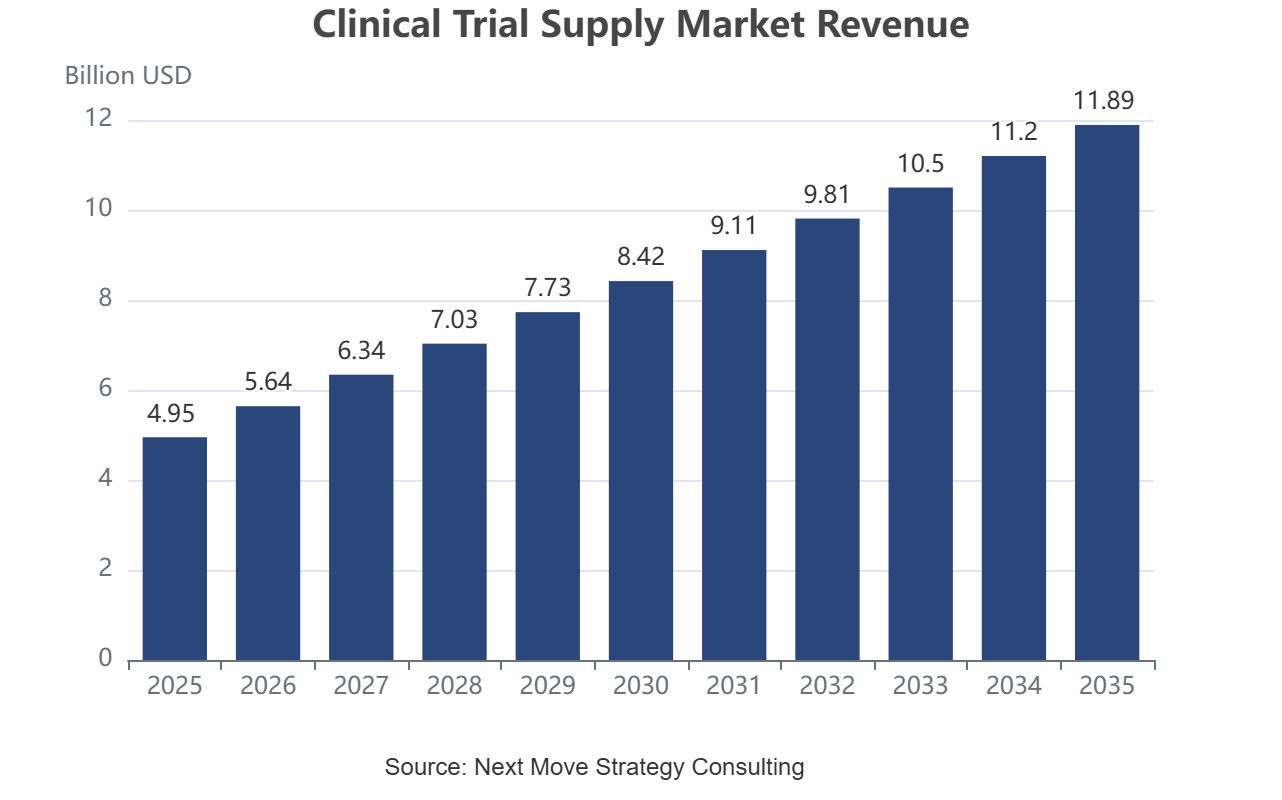
The Clinical Trial Supply Market encompasses services, products, logistics, and technologies required to plan, manufacture, package, label, store, and distribute investigational medicinal products across global clinical trial networks. The market was valued at USD 4.95 billion in 2025 and is projected to reach USD 11.89 billion by 2035, growing at a CAGR of 9.16% from 2026 to 2035. Core growth drivers include the rising global clinical trial volume, the expansion of biologics and advanced therapy medicinal product pipelines requiring complex cold-chain infrastructure, the rapid adoption of decentralized and hybrid trial delivery models, and the digitalization of supply chain technologies through RTSM and real-time inventory visibility platforms.
|
Parameters |
Details |
|
Market Size in 2025 |
USD 4.95 Billion |
|
Market Size in 2026 |
USD 5.40 Billion |
|
Revenue Forecast in 2035 |
USD 11.89 Billion |
|
Growth Rate |
CAGR of 9.16% from 2026 to 2035 |
|
Analysis Period |
2025–2035 |
|
Base Year Considered |
2025 |
|
Forecast Period |
2026–2035 |
|
Market Size Estimation |
Revenue (USD Billion) |
|
Companies Profiled |
20 |
|
Countries Covered |
38 |
|
Market Share |
Available for Top 10 Companies |
Clinical Trial Supply Market Overview
What Is the Clinical Trial Supply Market?
The Clinical Trial Supply Market encompasses the integrated ecosystem of services, products, and technologies that support the planning, manufacturing, packaging, labelling, storage, and distribution of investigational medicinal products and ancillary materials used in clinical research. The market spans the complete supply chain lifecycle, from comparator sourcing and clinical manufacturing through cold-chain logistics and regulatory release, serving pharmaceutical companies, biotechnology firms, contract research organizations, and academic institutions conducting Phase I through Phase IV trials globally.
How Has the Clinical Trial Supply Market Structure Evolved?
NMSC's analysis indicates that the market has undergone structural consolidation over the past decade, with large contract logistics organizations building integrated, end-to-end clinical supply platforms through organic capacity expansion and strategic acquisitions. The market has transitioned from fragmented, transactional sponsor-logistics relationships toward long-term integrated partnership models. Simultaneously, the emergence of decentralized and hybrid trial designs has compelled providers to build direct-to-patient distribution capabilities alongside traditional depot-to-site networks, fundamentally reshaping service portfolio requirements.
What Regulatory Environment Governs the Clinical Trial Supply Market?
Based on our market evaluation, we noticed that regulatory requirements governing clinical trial supply operations are intensifying across all major markets. The European Union's Good Distribution Practice guidelines, U.S. FDA 21 CFR Part 211 manufacturing standards, and ICH GCP R3 provisions collectively establish the baseline compliance framework. Temperature deviation reporting, qualified person release requirements, and country-specific import and export licensing create a complex regulatory overlay that requires clinical supply providers to maintain jurisdiction-specific expertise and validated cold-chain processes across all operating geographies.
How Is Technology Adoption Transforming the Clinical Trial Supply Market?
From our research, we found that technology adoption is reshaping supply chain operations throughout the Clinical Trial Supply Market. Interactive Response Technology, Randomization, and Trial Supply Management platforms are increasingly integrated with inventory management software, enabling real-time demand forecasting and automated kit resupply at investigational sites. Temperature monitoring technologies provide continuous chain-of-custody data from manufacturer to patient, while predictive analytics tools allow supply managers to anticipate shortfalls and optimize manufacturing-to-site lead times, reducing protocol deviation risk and investigational product waste across global trial networks.
Ecosystem Analysis of the Clinical Trial Supply Industry
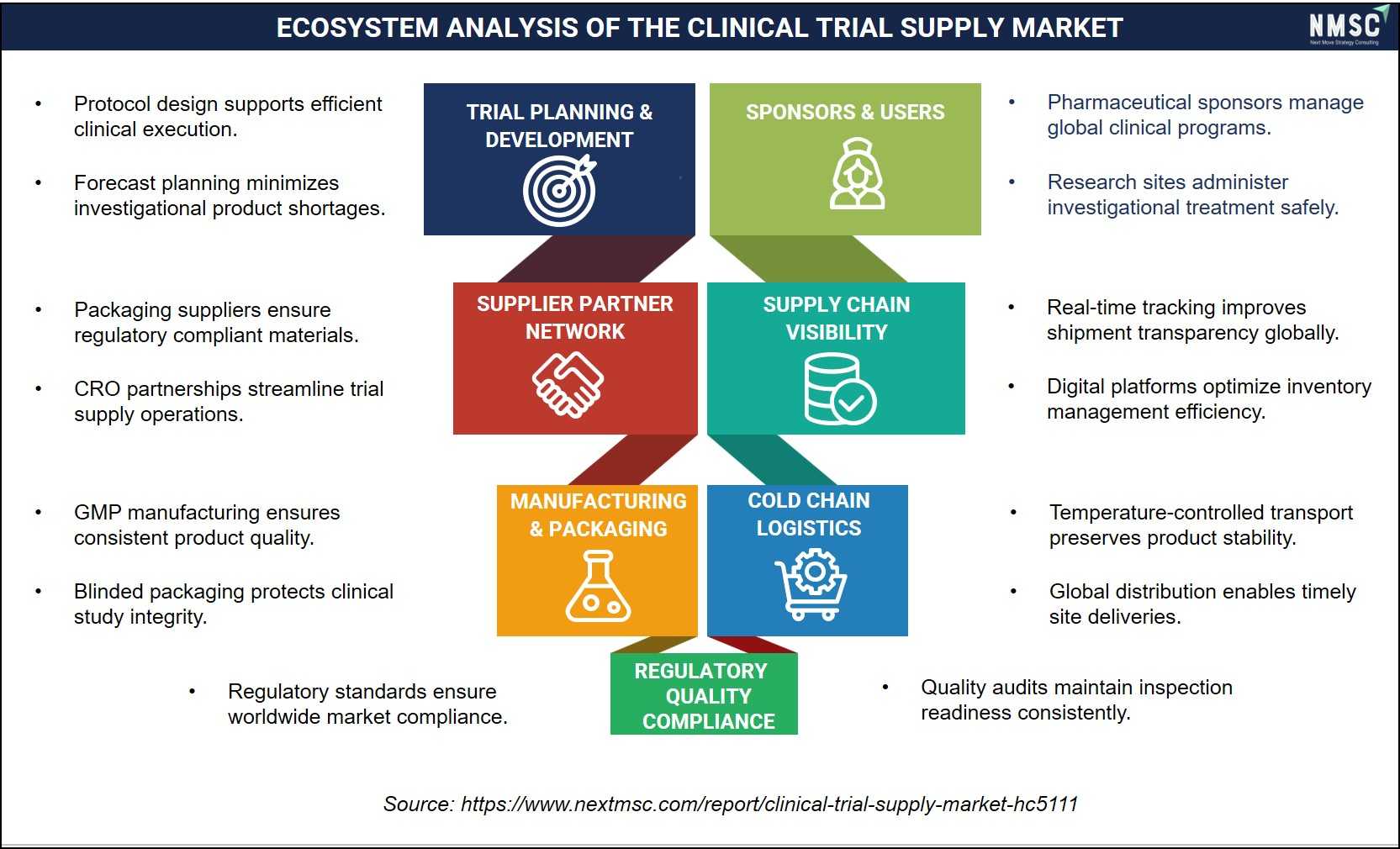
The above ecosystem analysis maps the key components, such as trial planning and development, sponsors and users, supplier partner network, supply chain visibility, manufacturing and packaging, cold chain logistics, and regulatory quality compliance, shaping the clinical trial supply market. From our analysis, we observed that cold chain logistics and regulatory quality compliance are emerging as the most critical interdependent pillars, as the rising complexity of biologic and personalized therapies demands seamless temperature-controlled distribution alongside rigorous documentation to meet global regulatory standards and maintain patient safety.
|
Key Takeaways |
|
By service type, Distribution and Logistics held the largest share of the Clinical Trial Supply Market at USD 1.09 billion in 2025 and is projected to reach USD 2.59 billion by 2035, driven by expanding multi-regional clinical trials and increasing direct-to-patient delivery. Technology services are the fastest-growing segment, expanding at a CAGR of 13.6% from 2026 to 2035 due to rapid digitalization of clinical supply chain operations. |
|
By product type, Small Molecule Investigational Products accounted for the largest revenue at USD 1.73 billion in 2025, supported by high clinical trial volumes across major therapeutic areas. Advanced Therapy Medicinal Products are the fastest-growing product segment, registering a CAGR of 13.5% from 2026 to 2035, driven by increasing cell and gene therapy clinical trials. |
|
By storage condition, refrigerated (2°C–8°C) products led the market with USD 1.73 billion in 2025 due to the growing use of biologics requiring cold-chain logistics. Cryogenic storage and distribution is the fastest-growing segment, registering a CAGR of 15.1% from 2026 to 2035, driven by expanding cell and gene therapy programs. |
|
By delivery model, Site-Based Trials generated the highest revenue at USD 2.87 billion in 2025, supported by the continued prevalence of large, multi-center clinical studies. Decentralized Trials are the fastest-growing delivery model, expanding at a CAGR of 13.1% from 2026 to 2035 as remote monitoring and direct-to-patient supply become more widely adopted. |
|
By end user, Pharmaceutical Companies held the largest share at USD 2.08 billion in 2025, reflecting their role as the primary sponsors of global clinical trials. Government and Public Health Organizations are the fastest-growing end-user segment, registering a CAGR of 13.5% during 2026–2035, supported by increasing investments in vaccine development and public health research. |
|
North America held the largest regional share of the Clinical Trial Supply Market at USD 1.88 billion in 2025 and is projected to reach USD 3.30 billion by 2035, supported by its mature clinical research ecosystem, advanced cold-chain infrastructure, and high clinical trial activity. |
|
Asia-Pacific is expected to be the fastest-growing region, expanding from USD 1.09 billion in 2025 to USD 3.00 billion by 2035 at a CAGR of 11.9%, driven by rising clinical trial activity, regulatory harmonization, and expanding pharmaceutical manufacturing capacity. |
|
The United States dominated the Clinical Trial Supply Market in 2025, generating USD 1.42 billion and is projected to reach USD 3.30 billion by 2035, supported by its large clinical research base, strong CRO presence, and advanced supply chain infrastructure. |
|
India is projected to be the fastest-growing country, expanding from USD 0.14 billion in 2025 to USD 0.47 billion by 2035 at a CAGR of 12.8%, driven by growing GMP manufacturing capacity, regulatory reforms, and increasing outsourcing of global clinical trials. |
Key Emerging Trends
How Is the Decentralized Clinical Trial Model Transforming Supply Chain Requirements?
Decentralized clinical trial adoption is the most consequential structural shift in the Clinical Trial Supply Market, redirecting supply flows from depot-to-site models toward direct-to-patient and site-to-patient delivery architectures. Sponsors, including major pharmaceutical companies and CROs, have implemented home delivery and home nursing visit programs that require last-mile cold-chain capability, real-time temperature monitoring, and medication return logistics previously outside the scope of traditional clinical supply operations. The U.S. FDA and European Medicines Agency have both issued guidance supporting decentralized trial elements, providing the regulatory foundation for continued adoption of this delivery model through 2035.
How Are Advanced Therapy Medicinal Products Reshaping Cold-Chain Infrastructure?
The rapid expansion of cell therapy, gene therapy, and RNA therapy clinical programs is requiring the Clinical Trial Supply Market to invest at scale in cryogenic storage, liquid nitrogen shipping, and autologous product logistics capabilities that were previously niche. Providers such as Thermo Fisher Scientific and Marken have built specialized ATMP logistics networks to manage the vein-to-vein chain-of-custody requirements of autologous CAR-T and other patient-specific therapies. The escalating number of ATMP investigational new drug applications filed with the FDA since 2023 is creating a sustained investment cycle in ultra-low-temperature infrastructure that will continue to differentiate supply chain providers through 2035.
How Is Digital Technology Integration Redefining Clinical Supply Chain Efficiency?
Through our market assessment, we observed that the integration of artificial intelligence-driven demand forecasting, real-time inventory visibility platforms, and blockchain-enabled chain-of-custody tracking is systematically reducing investigational product waste and supply shortage risk across the Clinical Trial Supply Market. RTSM and IRT providers, including Suvoda and 4G Clinical, are expanding their platform capabilities to cover end-to-end supply chain orchestration, moving beyond randomization and drug dispensation into predictive resupply and multi-depot inventory optimization. These platforms are becoming the data backbone of modern clinical supply operations, enabling sponsors to reduce kit overage by measurable percentages while maintaining protocol continuity.
What Are the Key Market Drivers, Breakthroughs, and Investment Opportunities that will Shape the Clinical Trial Supply Industry in the Next Decade?
|
Driver / Trend / Restraint |
+/- % Impact on CAGR Forecast |
Geographic Relevance |
Impact Timeline |
|
Driver: Rising Global Clinical Trial Activity Increasing Demand for End-to-End Clinical Trial Supply Services |
+3.0% |
Global |
2025–2035 |
|
Driver: Growing Biologics and Advanced Therapy Medicinal Product (ATMP) Pipelines Driving Specialized Cold Chain and Logistics Requirements |
+2.5% |
North America, Europe, Asia-Pacific |
2025–2035 |
|
Restraint: Regulatory Complexity and Cross-Border Compliance Requirements Increasing Supply Chain Costs |
−1.5% |
Global (particularly Europe, Asia-Pacific, Latin America, and the Middle East) |
Ongoing |
|
Opportunity: Geographic Expansion of Clinical Research Across Asia-Pacific Creating New Regional Supply Network Opportunities |
+2.0% |
Asia-Pacific (particularly China, India, and South Korea) |
2026–2035 |
What Are the Growth Drivers of the Clinical Trial Supply Market?
What Is Driving Demand Growth in the Clinical Trial Supply Market?
Based on NMSC's research, we found that the single most significant growth driver in the Clinical Trial Supply Market is the sustained increase in global clinical trial activity, driven by pharmaceutical and biotechnology innovation pipelines expanding across oncology, rare diseases, immunology, and infectious diseases. The U.S. National Institutes of Health ClinicalTrials.gov registry documents a growing number of registered interventional studies annually, reflecting the broad-based increase in trial starts that is generating corresponding demand for investigational product supply services. Greater protocol complexity, including adaptive trial designs and basket and umbrella studies, is expanding the per-trial supply chain scope and revenue per engagement.
How Are Biologics and ATMPs Accelerating Market Expansion?
The rapid shift in pharmaceutical R&D investment toward biologics, monoclonal antibodies, and advanced therapy medicinal products is structurally elevating the complexity and cost of clinical trial supply operations. Biologics require continuous temperature-controlled distribution from manufacturer to patient, specialized packaging, qualified-person release, and GDP-compliant cold-chain documentation. ATMPs, including cell and gene therapies, add autologous logistics, identity traceability, and cryogenic handling requirements that command significant supply chain premiums over small-molecule programs. Based on our market evaluation, we noticed that ATMP trials at the FDA and EMA have grown sharply since 2022, creating a sustained structural tailwind for specialized supply providers.
What Are the Growth Inhibitors of the Clinical Trial Supply Market?
How Does Regulatory Complexity Constrain Clinical Trial Supply Market Growth?
Regulatory divergence across major clinical trial jurisdictions represents a significant structural cost driver that moderates the net CAGR of the market. Country-specific import and export licensing, serialization requirements, batch release procedures, and translation and labeling obligations create a multi-layered compliance overhead for sponsors conducting multinational studies across Europe, Asia-Pacific, the Middle East, and Latin America. The World Health Organization and regional regulatory agencies continue to develop harmonized frameworks, but divergence between national regulations in large markets, including China, Brazil, and India, creates persistent compliance friction that increases supply costs and extends distribution lead times.
What Are the Growth Opportunities of the Clinical Trial Supply Industry?
How Does Geographic Expansion Create Opportunities in the Clinical Trial Supply Market?
The geographic expansion of clinical research activity into Asia-Pacific markets, particularly China, India, and South Korea, is creating significant opportunity for clinical supply providers with established in-country depot, regulatory, and distribution capabilities. China's National Medical Products Administration has streamlined clinical trial approval processes, enabling faster IND-equivalent approvals that are accelerating the country's integration into multinational trial programs. India's growing GMP manufacturing base and clinical research organization ecosystem are similarly attracting increased trial outsourcing from global sponsors, creating demand for local and regional clinical supply depot capacity. Our assessment indicates that providers with regional Asia-Pacific infrastructure are positioned to capture disproportionate market share through 2035.
How Is the Clinical Trial Supply Industry Segmented, and What Are the Key Insights from the Segmentation Analysis?
Which Service Type Dominates the Clinical Trial Supply Market and Why?
|
Service Type |
2025 (USD Billion) |
2035 (USD Billion) |
CAGR % (2026–2035) |
|
Clinical Supply Planning and Management |
0.40 |
0.89 |
8.3% |
|
Sourcing |
0.59 |
1.27 |
8.0% |
|
Clinical Manufacturing |
0.74 |
1.80 |
9.3% |
|
Clinical Packaging |
0.50 |
1.12 |
8.4% |
|
Clinical Labeling |
0.35 |
0.76 |
8.1% |
|
Storage and Depot Services |
0.45 |
1.02 |
8.5% |
|
Distribution and Logistics |
1.09 |
2.59 |
9.0% |
|
Returns and Destruction |
0.20 |
0.41 |
7.4% |
|
Technology |
0.35 |
1.10 |
13.6% |
|
Regulatory and Quality Services |
0.28 |
0.93 |
12.7% |
|
Total |
4.95 |
11.89 |
9.16% |
The By Service Type segmentation captures the functional scope of the market across ten distinct service categories, from strategic supply planning through physical logistics and regulatory compliance. Based on our market evaluation, we noticed that Distribution and Logistics holds the dominant position, generating USD 1.09 billion in 2025 and projected to reach USD 2.59 billion by 2035, reflecting the foundational role of physical product movement in every clinical trial program regardless of phase, therapeutic area, or delivery model. Technology is the fastest-growing service type at a CAGR of 13.6% from 2026 to 2035, driven by accelerating demand for RTSM platforms, real-time inventory visibility, and AI-enabled forecasting software that reduce waste, prevent protocol deviations, and lower total supply chain cost per trial.
Which Product Type Leads the Clinical Trial Supply Market and Which Is Growing Fastest?
|
Product Type |
2025 (USD Billion) |
2035 (USD Billion) |
CAGR % (2026–2035) |
|
Small Molecule Investigational Products |
1.73 |
3.86 |
8.3% |
|
Biologics |
1.39 |
3.62 |
10.0% |
|
Advanced Therapy Medicinal Products |
0.40 |
1.42 |
13.5% |
|
Comparator Products |
0.59 |
1.26 |
7.9% |
|
Placebos |
0.30 |
0.63 |
7.7% |
|
Ancillary Supplies |
0.35 |
0.74 |
7.8% |
|
Clinical Trial Devices |
0.19 |
0.36 |
6.6% |
|
Total |
4.95 |
11.89 |
9.16% |
The By Product Type axis segments the market by the nature of the investigational materials being managed, each requiring distinct manufacturing, storage, and distribution capabilities. Small Molecule Investigational Products remain the dominant segment at USD 1.73 billion in 2025, underpinned by the high volume of oral solid dosage form and injectable product trials across oncology, cardiovascular, and CNS indications. Advanced Therapy Medicinal Products is the fastest-growing segment at a CAGR of 13.5% from 2026 to 2035, advancing from USD 0.40 billion in 2025 to USD 1.42 billion by 2035, as the ATMP clinical pipeline expands and supply providers build specialized cryogenic and chain-of-identity logistics capabilities to serve cell therapy and gene therapy programs globally.
Which End User Segment Dominates and Which Is Growing Fastest in the Clinical Trial Supply Market?
|
End User |
2025 (USD Billion) |
2035 (USD Billion) |
CAGR % (2026–2035) |
|
Pharmaceutical Companies |
2.08 |
4.62 |
8.3% |
|
Biotechnology Companies |
1.39 |
3.57 |
11.0% |
|
Biotechnology Companies |
1.39 |
3.57 |
11.0% |
|
Medical Device Companies |
0.40 |
0.83 |
7.6% |
|
Contract Research Organizations |
0.69 |
1.80 |
11.2% |
|
Academic Research Institutes |
0.25 |
0.57 |
8.6% |
|
Government and Public Health Organizations |
0.14 |
0.50 |
13.5% |
|
Total |
4.95 |
11.89 |
9.16% |
Pharmaceutical Companies remain the dominant end-user segment in the market at USD 2.08 billion in 2025, projected to reach USD 4.62 billion by 2035, reflecting their position as primary clinical supply budget holders across large-volume Phase II and Phase III programs. Government and Public Health Organizations is the fastest-growing end-user segment at a CAGR of 13.5% from 2026 to 2035, advancing from USD 0.14 billion in 2025 to USD 0.50 billion by 2035, driven by expanded public sector investment in pandemic preparedness, vaccine development clinical programs, and infectious disease trial infrastructure supported by government health agencies and multilateral development organizations.
Regional Outlook
|
Region |
2025 (USD Billion) |
2035 (USD Billion) |
CAGR % (2026–2035) |
Key Driver |
|
North America |
1.88 |
4.40 |
8.9% |
High clinical trial density and mature cold-chain depot infrastructure |
|
Europe |
1.39 |
3.22 |
8.8% |
Stringent GDP regulation driving quality differentiation and ATMP trial growth |
|
Asia-Pacific |
1.09 |
3.00 |
11.9% |
Expanding trial outsourcing, China and India regulatory reform, APAC biologics pipelines |
|
Middle East & Africa |
0.29 |
0.67 |
8.7% |
Increasing sponsor site diversification and GCP harmonization initiatives |
|
Latin America |
0.30 |
0.60 |
7.2% |
Brazil and Argentina trial growth supported by ANVISA and ANMAT regulatory capacity |
North America
North America is the dominant region in the Clinical Trial Supply Market, generating USD 1.88 billion in 2025 and projected to reach USD 4.40 billion by 2035 at a CAGR of 8.9%. The region benefits from the highest global concentration of active investigational new drug applications, an extensive network of GDP-certified clinical supply depots, and FDA regulatory leadership that sets the international compliance baseline. The United States and Canada together account for the substantial majority of regional revenue, supported by mature CRO ecosystems, large Phase III program volumes, and rapidly expanding ATMP and biologics trial activity requiring specialized cold-chain infrastructure.
United States
Through our analysis, the United States is the single largest national market in the market at USD 1.42 billion in 2025, projected to reach USD 3.30 billion by 2035 at a CAGR of 8.8%. The country hosts the highest global density of Phase II and Phase III investigational programs across oncology, immunology, and rare disease indications, supported by the FDA's established IND framework and its growing ATMP manufacturing and supply guidance. Demand for decentralized trial supply capabilities, direct-to-patient distribution, and cryogenic logistics for CAR-T and gene therapy programs is concentrated in U.S. sponsor and CRO networks, making the market a primary strategic target for leading clinical supply providers.
Canada
From our assessment, Canada contributes USD 0.27 billion to the Clinical Trial Supply Market in 2025, expected to grow to USD 0.63 billion by 2035 at a CAGR of 8.8%. Health Canada's progressive clinical trial regulation and the country's strong academic research hospital network in Toronto, Montreal, and Vancouver generate consistent demand for clinical supply services. Canada serves as both an independent trial market and an ancillary geographic scope within multinational North American studies, requiring GDP-certified depot capacity and country-specific labeling compliance. The growing Canadian biotechnology sector is expanding Phase I and Phase II first-in-human study activity, adding clinical manufacturing and packaging service demand.
Europe
Europe is the second-largest region in the Clinical Trial Supply Market at USD 1.39 billion in 2025, projected to reach USD 3.22 billion by 2035 at a CAGR of 8.8%. The EU GDP regulatory framework, EMA Clinical Trial Regulation (EU) No 536/2014 implementation, and stringent cold-chain qualification requirements collectively drive a premium quality market where compliance expertise and validated temperature-controlled logistics are fundamental competitive requirements. The United Kingdom, Germany, and France account for the largest shares of European clinical supply spend, while Scandinavia and the Netherlands host specialized regulatory and ATMP-focused supply hubs serving cross-border EU trial networks.
United Kingdom
Based on our engagements, the United Kingdom contributes USD 0.24 billion to the Clinical Trial Supply Market in 2025, expected to grow to USD 0.57 billion by 2035 at a CAGR of 9.0%. The MHRA's post-Brexit regulatory independence has created distinct labelling, importation, and qualified person release requirements that differentiate UK supply chain operations from EU-territory programs. The country's strong academic-industry clinical research infrastructure, centered on NHS research networks and major university teaching hospitals, sustains consistent Phase I through Phase III supply and demand. The UK's growing cell and gene therapy research sector, anchored by NHSBT and academic cell therapy centers, is expanding cryogenic supply requirements.
Germany
Through our analysis, Germany represents USD 0.22 billion in 2025, projected to reach USD 0.53 billion by 2035 at a CAGR of 9.2%. Germany's dense network of university hospitals, Fraunhofer institutes, and pharmaceutical manufacturer headquarters creates both sponsor demand and sophisticated supply chain infrastructure. The Paul-Ehrlich-Institut and BfArM regulatory frameworks impose rigorous clinical supply quality standards, sustaining a premium market for GDP-certified, qualified person-supported distribution services. Germany's strength in biopharmaceutical manufacturing and ATMP development through the Cluster for Individual Immunotherapy creates growing demand for specialized clinical supply services for cell and gene therapy trials.
France
From our assessment, France generates USD 0.18 billion in 2025, projected to grow to USD 0.41 billion by 2035 at a CAGR of 8.6%. ANSM oversight and CTIS (Clinical Trial Information System) harmonization requirements create a standardized but regulated operating environment for clinical supply providers. France's strong oncology and rare disease trial activity at major academic medical centers including Institut Curie and Paris hospitals, sustains consistent investigational product supply demand. The French government's France 2030 investment plan, which includes significant biopharmaceutical manufacturing capacity expansion, is expected to increase domestic ATMP trial activity and corresponding clinical supply service requirements through the forecast period.
Asia-Pacific
Asia-Pacific is the fastest-growing region in the Clinical Trial Supply Market, advancing from USD 1.09 billion in 2025 to USD 3.00 billion by 2035 at a CAGR of 11.9%. The region's growth is driven by China's accelerating integration into global trial programs, India's expanding CRO and GMP manufacturing ecosystem, and regulatory harmonization across the ICH E6(R3) framework that is simplifying multinational trial extension into APAC geographies. Japan and South Korea maintain mature, high-compliance clinical research markets, while Southeast Asian markets including Indonesia, Vietnam, and the Philippines are emerging as cost-competitive site locations for Phase III enrollment expansion.
China
From our assessment, China represents USD 0.22 billion in 2025, projected to reach USD 0.66 billion by 2035 at a CAGR of 11.6%. NMPA regulatory modernization and the alignment of China's clinical trial acceptance with ICH standards have accelerated the integration of Chinese investigational sites into multinational programs, generating demand for import-qualified cold-chain depot services, NMPA-compliant labeling in Simplified Chinese, and qualified person-equivalent regulatory support. China's own large domestic pharmaceutical and biotechnology innovation pipeline is additionally driving demand for clinical supply services in support of China-originating IND submissions targeting both domestic NMPA and concurrent U.S. and EU regulatory approval.
India
According to our evaluation, India generates USD 0.14 billion in 2025, expected to reach USD 0.47 billion by 2035 at a CAGR of 12.8%, making it the fastest-growing national market globally. CDSCO regulatory reform under the New Drugs and Clinical Trials Rules 2019 has streamlined trial application and approval timelines, reducing barriers to India's participation in multinational Phase II and Phase III programs. India's large addressable patient population across oncology, diabetes, and infectious disease indications, combined with its extensive GMP active pharmaceutical ingredient manufacturing base, creates both supply demand and domestic manufacturing capability for investigational product sourcing.
Japan
Based on our engagements, Japan represents USD 0.18 billion in 2025, projected to reach USD 0.45 billion by 2035 at a CAGR of 9.6%. PMDA regulatory oversight creates a high-compliance, documentation-intensive operating environment that requires specialized Japan-specific clinical supply expertise including Japanese-language labeling, PMDA-aligned quality systems, and import-qualified GDP-certified depot infrastructure in Tokyo and Osaka. Japan's advanced pharmaceutical manufacturing sector and growing regenerative medicine and cell therapy program activity are creating demand for specialized ATMP logistics capabilities. Japanese academic and hospital research networks sustain consistent Phase I and early Phase II clinical supply demand across major therapeutic areas.
South Korea
Through our analysis, South Korea contributes USD 0.10 billion in 2025, expected to grow to USD 0.27 billion by 2035 at a CAGR of 10.4%. MFDS regulatory modernization and South Korea's high clinical trial participation rate relative to population size make it an efficient Phase II and Phase III enrollment location for multinational sponsors. The country's biopharmaceutical manufacturing sector, anchored by Samsung Biologics and Celltrion biosimilar production capabilities, sustains domestic investigational product manufacturing activity that generates clinical supply packaging and labeling demand. Seoul's international logistics infrastructure supports temperature-controlled clinical trial material importation and regional distribution.
Middle East & Africa
The Middle East & Africa region contributes USD 0.29 billion in 2025, projected to grow to USD 0.67 billion by 2035 at a CAGR of 8.7%. Regional growth is driven by sponsor site diversification strategies seeking underrepresented patient populations, GCP harmonization efforts by the Gulf Cooperation Council, and increasing private hospital research investment in Saudi Arabia and the UAE. Africa represents an emerging frontier for infectious disease and vaccine clinical supply demand, with South Africa and Nigeria leading regional site activity. Cold-chain infrastructure limitations and variable regulatory capacity across African markets create logistics complexity that sustains demand for specialized distribution providers with regional expertise.
Saudi Arabia
Through our analysis, Saudi Arabia represents USD 0.06 billion in 2025, projected to reach USD 0.15 billion by 2035 at a CAGR of 9.6%. SFDA regulatory expansion and Saudi Vision 2030 health sector diversification investment are driving rapid growth in clinical research infrastructure, including GDP-certified clinical supply depot development in Riyadh and Jeddah. The country's growing pharmaceutical manufacturing ambition and extensive private hospital network are translating into increasing investigational product import and distribution demand. Saudi Arabia's high rates of metabolic, cardiovascular, and oncology disease burden create attractive Phase II and Phase III patient populations for sponsor programs targeting the Gulf region.
United Arab Emirates
From our assessment, the UAE contributes USD 0.05 billion in 2025, expected to grow to USD 0.12 billion by 2035 at a CAGR of 9.2%. MOHAP and Dubai Health Authority regulatory frameworks support clinical trial conduct across hospital networks in Dubai and Abu Dhabi. The UAE's free zone infrastructure, including Dubai Healthcare City, provides a strategic platform for clinical supply depot operations serving Gulf Cooperation Council distribution networks. Dubai's international air cargo infrastructure through Dubai International Airport supports temperature-controlled pharmaceutical logistics, making the UAE a preferred regional distribution hub for investigational products entering Middle Eastern trial markets.
South Africa
According to our evaluation, South Africa represents USD 0.03 billion in 2025, projected to reach USD 0.07 billion by 2035 at a CAGR of 8.8%. SAHPRA regulatory oversight and South Africa's established academic hospital research network across Johannesburg, Cape Town, and Durban make it the most mature clinical research market on the African continent. South Africa's significant HIV, tuberculosis, and oncology disease burden and its established GCP-trained investigator population attract international Phase II and Phase III programs across infectious disease and oncology indications. GDP-certified cold-chain infrastructure in major metropolitan centers supports biologics and vaccine investigational product management.
Latin America
Latin America contributes USD 0.30 billion in 2025, projected to grow to USD 0.60 billion by 2035 at a CAGR of 7.2%. Brazil and Argentina anchor regional clinical supply demand, supported by their established pharmaceutical manufacturing sectors, active GCP-trained investigator networks, and evolving regulatory frameworks. The region's large patient populations across oncology, cardiovascular, and infectious disease indications offer Phase III enrollment advantages that attract multinational sponsor programs. Regulatory approval timelines and import complexity for investigational products, particularly in Brazil, remain the primary constraints on more rapid Latin American integration into global clinical supply networks.
Brazil
Through our analysis, Brazil is the dominant Latin American market at USD 0.14 billion in 2025, projected to reach USD 0.28 billion by 2035 at a CAGR of 7.2%. ANVISA regulatory oversight provides the institutional framework for clinical trial conduct, although investigational product import approval timelines represent a persistent logistical challenge for multinational sponsors. GDP-certified depot infrastructure in São Paulo and Rio de Janeiro supports investigational product storage and distribution. Brazil's large oncology, cardiovascular, and diabetes patient populations attract significant Phase III program investment, and the country's growing domestic CRO capacity is expanding its role as a full-service Latin American clinical supply hub.
Argentina
From our assessment, Argentina represents USD 0.05 billion in 2025, expected to grow to USD 0.10 billion by 2035 at a CAGR of 7.2%. ANMAT regulatory oversight and Argentina's established academic hospital research network in Buenos Aires create a productive Phase II and Phase III clinical trial environment. The country's qualified medical investigators and cost-competitive site infrastructure make it an attractive optional scope addition for sponsors expanding Phase III programs into Latin America. Investigational product import regulation and currency volatility create operational complexity for clinical supply providers, but Argentina's patient recruitment performance and research quality sustain its position as a core Latin American trial market.
Competitive Landscape
|
Category |
Key Takeaways |
|
Market Structure |
The Clinical Trial Supply Market is moderately consolidated, with a small number of large integrated providers competing alongside specialized niche operators in cold-chain logistics, ATMP supply, and technology platforms. The top 10 providers account for an estimated majority of revenue. |
|
Innovation Focus |
End-to-end digital supply chain orchestration, direct-to-patient distribution capability, cryogenic and ATMP-specific logistics, and AI-driven demand forecasting are the primary innovation themes driving competitive differentiation. |
|
M&A Activity |
Strategic acquisitions targeting ATMP logistics capabilities, RTSM technology platforms, and geographic coverage expansion in Asia-Pacific and Latin America are the dominant M&A themes driving market consolidation through 2035. |
How Do Companies Compete in the Clinical Trial Supply Industry?
Competition in the market is primarily defined by service integration depth, geographic depot footprint, cold-chain qualification breadth, regulatory expertise, and technology platform capability. Large integrated providers compete on the basis of end-to-end service coverage, offering sponsors a single point of accountability across clinical manufacturing, packaging, labeling, storage, distribution, and regulatory release. Differentiation is also driven by specialized capabilities in high-growth service categories: ATMP cryogenic logistics, direct-to-patient distribution networks, and RTSM platform integration. Our analysis shows that sponsors increasingly prefer providers able to demonstrate validated chain-of-custody documentation, real-time temperature monitoring, and GDP compliance across all trial geographies.
Which Competitive Archetypes Dominate the Clinical Trial Supply Industry?
Three primary competitive archetypes characterize the Clinical Trial Supply Market. Integrated end-to-end providers, including Thermo Fisher Scientific and Almac Group, offer comprehensive clinical supply services from manufacturing through distribution, competing on full-service scope and global depot coverage. Specialized logistics-focused providers, including World Courier, Marken, and Biocair, compete on cold-chain expertise, ATMP supply capability, and direct-to-patient delivery, prioritizing supply chain precision over manufacturing breadth. Technology platform providers, including Suvoda, 4G Clinical, and Endpoint Clinical, compete on RTSM and interactive response technology capability, providing the data and automation backbone for clinical supply orchestration and randomization management.
What Innovation and Differentiation Strategies Are Shaping the Market?
Based on research conducted by NMSC, we found that the most consequential innovation strategy in the Clinical Trial Supply Market is the development of end-to-end digital supply chain orchestration platforms that integrate RTSM, inventory management, temperature monitoring, and logistics tracking into a single sponsor-facing interface. Providers investing in AI-driven demand forecasting and predictive resupply algorithms are differentiating on waste reduction and protocol adherence metrics. A second innovation axis is ATMP-specific supply chain engineering, including chain-of-identity traceability systems, liquid nitrogen shipper design, and apheresis collection logistics capabilities that support autologous cell therapy programs from patient collection through investigational product return.
How Is M&A Activity Reshaping the Clinical Trial Supply Market?
Merger and acquisition activity is driven by three strategic rationales: geographic coverage expansion, capability acquisition in ATMP and cold-chain logistics, and technology platform consolidation. Larger clinical supply organizations and private equity-backed platforms have pursued acquisitions targeting specialist ATMP logistics providers, regional depot operators in Asia-Pacific, and RTSM software companies to build an integrated service capability that organic development timelines cannot match. The convergence of clinical logistics and supply technology through M&A is reshaping the competitive landscape, reducing the number of standalone RTSM providers and creating integrated supply-plus-technology platforms that are more difficult for smaller competitors to replicate.
Key Market Players of the Clinical Trial Supply Industry
-
DHL Group
-
Almac Group Limited
-
PCI Pharma Services
-
Sharp Services, LLC
-
World Courier Group, Inc.
-
Marken Limited
-
Catalent, Inc.
-
Parexel International Corporation
-
Syneos Health, Inc.
-
Movianto International B.V.
-
Biocair International Ltd.
-
Myonex, Inc.
-
Clinigen Group plc
-
Bilcare Limited
-
KLIFO A/S
-
Suvoda LLC
-
4G Clinical LLC
-
Endpoint Clinical L.P.
What are the Latest Developments in the Clinical Trial Supply Industry?
|
Date |
Event |
|
July 2025 |
Almac Group expanded its global clinical trial supply operations through continued investment in packaging, labeling, and cold-chain logistics infrastructure to support increasingly complex multinational clinical trials involving biologics and personalized medicines. |
Supply Chain Analysis of the Clinical Trial Supply Market
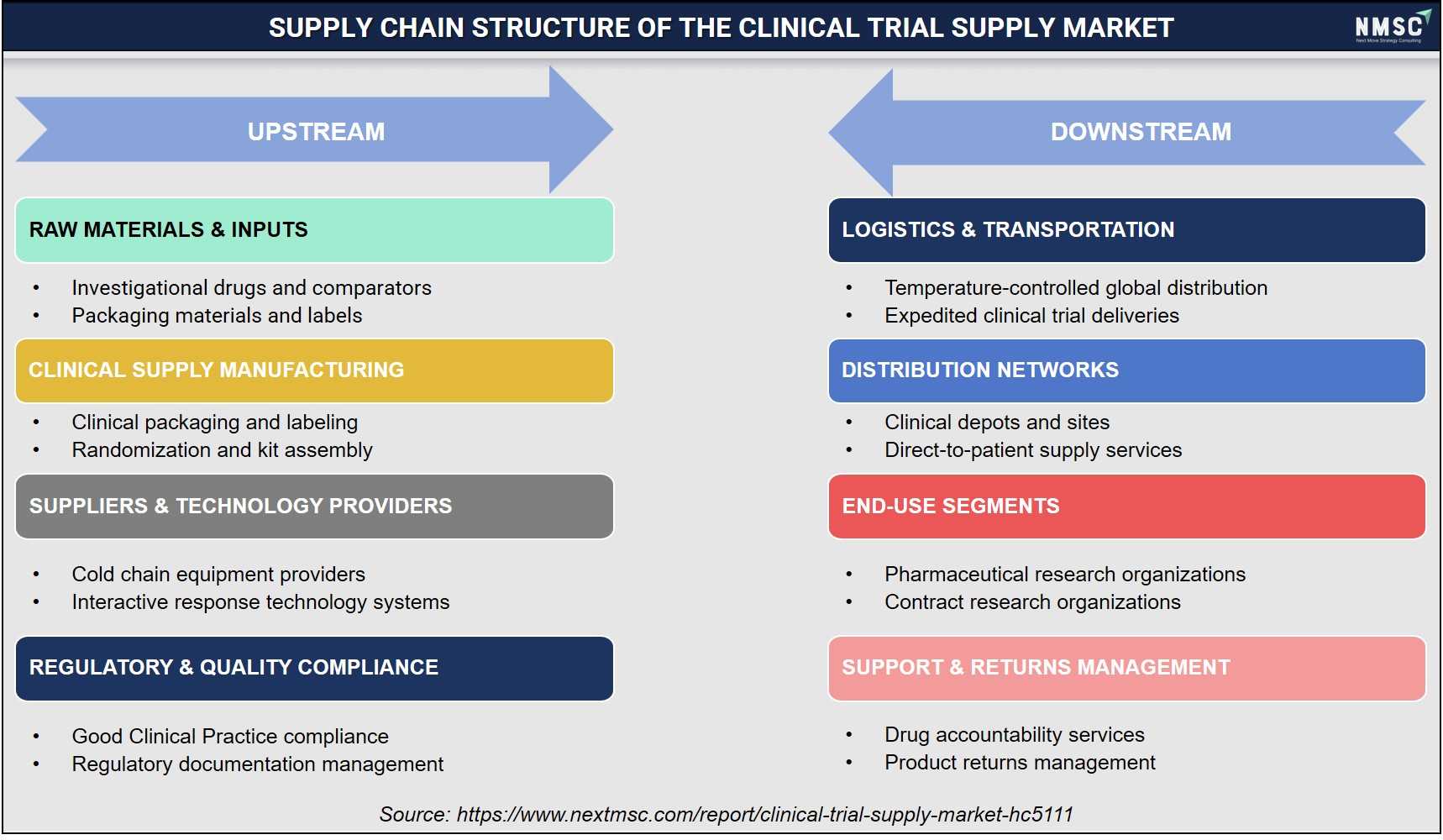
The above supply chain structure maps the key stages, such as upstream raw materials and inputs, clinical supply manufacturing, suppliers and technology providers, regulatory and quality compliance, logistics and transportation, distribution networks, end-use segments, and support and returns management, shaping the clinical trial supply market. We observed from our analysis that regulatory and quality compliance is no longer confined to upstream activities but extends across the entire downstream logistics and distribution network, as temperature-sensitive shipments and direct-to-patient deliveries demand real-time documentation and audit readiness at every touchpoint to ensure trial integrity and patient safety.
What Are the Investment Opportunities in the Clinical Trial Supply Industry?
The Clinical Trial Supply Market is attracting strong investment driven by rising demand for integrated clinical supply services, advanced cold-chain logistics, and technology-enabled supply chain orchestration platforms supporting increasingly complex global clinical trials. Private equity and strategic investors continue to fund end-to-end clinical supply providers, while infrastructure investments in cryogenic storage, direct-to-patient distribution networks, and GDP-compliant regional depots are expanding global operational capacity. At the same time, ESG priorities are shaping investment decisions, with growing emphasis on sustainable cold-chain operations, reusable packaging, emissions reporting, and quality governance. These trends, together with accelerating adoption of AI-powered forecasting, real-time inventory visibility, blockchain-enabled traceability, and strategic acquisitions of specialized logistics and technology providers, are creating compelling long-term investment opportunities across the Clinical Trial Supply Market.
Key Benefits for Stakeholders
The Clinical Trial Supply Market report delivers actionable insights for pharmaceutical and biotechnology supply chain leaders, investors, financial analysts, technology vendors, and service providers by offering comprehensive market sizing, long-term forecasts, competitive benchmarking, and demand analysis through 2035. It supports strategic outsourcing, investment evaluation, product portfolio planning, and geographic expansion by analyzing service types, product categories, clinical trial phases, temperature requirements, delivery models, end-user segments, and regional market dynamics. Country-level intelligence across 33 countries, competitive landscape assessment, emerging technology trends, and detailed segmentation enable informed decision-making, partner selection, resource allocation, product innovation, and sustainable growth across the evolving clinical trial supply ecosystem.
Key Market Segments
By Service Type
-
Clinical Supply Planning and Management
-
Supply Strategy
-
Demand Forecasting
-
Inventory Planning
-
Risk Management
-
-
Sourcing
-
Comparator Sourcing
-
Reference Product Sourcing
-
Ancillary Sourcing
-
Rescue Medication Sourcing
-
-
Clinical Manufacturing
-
Investigational Product Manufacturing
-
Placebo Manufacturing
-
Over Encapsulation
-
Blinding
-
-
Clinical Packaging
-
Primary Packaging
-
Secondary Packaging
-
Kit Assembly
-
Repackaging
-
-
Clinical Labeling
-
Single Country Labeling
-
Multi Country Labeling
-
Relabeling
-
Translation Management
-
-
Storage and Depot Services
-
Ambient Storage
-
Refrigerated Storage
-
Frozen Storage
-
Ultra Low Temperature Storage
-
Cryogenic Storage
-
-
Distribution and Logistics
-
Depot to Site Distribution
-
Depot to Depot Distribution
-
Direct to Patient Distribution
-
Site to Patient Distribution
-
Returns Logistics
-
-
Returns and Destruction
-
Product Returns
-
Drug Accountability
-
Reconciliation
-
Destruction
-
-
Technology
-
RTSM
-
IRT
-
Forecasting Software
-
Inventory Visibility
-
Temperature Monitoring
-
-
Regulatory and Quality Services
-
Qualified Person Release
-
Import and Export Support
-
Regulatory Compliance
-
Quality Assurance
-
By Product Type
-
Small Molecule Investigational Products
-
Oral Solid Dosage Forms
-
Oral Liquid Dosage Forms
-
Injectable Products
-
Topical Products
-
Inhalation Products
-
-
Biologics
-
Monoclonal Antibodies
-
Recombinant Proteins
-
Vaccines
-
Biosimilars
-
-
Advanced Therapy Medicinal Products
-
Cell Therapies
-
Gene Therapies
-
RNA Therapies
-
Tissue Engineered Products
-
-
Comparator Products
-
Branded Comparators
-
Generic Comparators
-
-
Placebos
-
Oral Placebos
-
Injectable Placebos
-
Device Matched Placebos
-
-
Ancillary Supplies
-
Sample Collection Kits
-
Laboratory Consumables
-
Administration Supplies
-
Patient Materials
-
-
Clinical Trial Devices
-
Drug Device Combination Products
-
Diagnostic Devices
-
Wearable Devices
-
Monitoring Devices
-
By Clinical Trial Phase
-
Phase I
-
Phase II
-
Phase III
-
Phase IV
By Temperature Requirement
-
Ambient
-
Refrigerated
-
Frozen
-
Ultra Low Frozen
-
Cryogenic
By Delivery Model
-
Site Based Trials
-
Decentralized Trials
-
Hybrid Trials
By End User
-
Pharmaceutical Companies
-
Biotechnology Companies
-
Medical Device Companies
-
Contract Research Organizations
-
Academic Research Institutes
-
Government and Public Health Organizations
By Region
-
North America: U.S., Canada, Mexico
-
Europe: UK, Germany, France, Italy, Spain, Sweden, Denmark, Finland, Netherlands, Rest of Europe
-
Asia-Pacific: China, India, Japan, South Korea, Taiwan, Indonesia, Vietnam,Australia, Philippines, Malaysia, Rest of APAC
-
Middle East & Africa: Saudi Arabia, UAE, Egypt, Israel, Turkey, Nigeria, South Africa, Rest of MEA
-
Latin America: Brazil, Argentina, Chile, Colombia, Rest of LATAM
Conclusion & Recommendations
The Clinical Trial Supply Market is expected to experience sustained growth through 2035, driven by expanding biologics and advanced therapy clinical pipelines, increasing adoption of decentralized clinical trials, growing digitalization of supply chain operations, and rising pharmaceutical R&D investments across emerging markets. Clinical supply providers should prioritize investments in ATMP and cryogenic logistics, direct-to-patient distribution capabilities, integrated digital supply chain technologies, and regional expansion to strengthen their competitive position. Organizations can maximize long-term value by adopting phased supply chain modernization strategies that advance from conventional clinical logistics to technology-enabled, patient-centric, and temperature-controlled distribution models, enabling resilient, compliant, and scalable global clinical trial operations.
About the Author
 Mayurima Roy
— Mayurima Roy is Research Analyst at Next Move Strategy Consulting, where she has spent 4 years working across the firm's full industry coverage rather than a single fixed vertical. Her work centers on structured research, ongoing trend tracking, competitive assessment, and insight-led content development, translating complex market data into clear, decision-ready narratives that support informed client decision-making across diverse global industries, market sectors, and world regions every day.
Mayurima Roy
— Mayurima Roy is Research Analyst at Next Move Strategy Consulting, where she has spent 4 years working across the firm's full industry coverage rather than a single fixed vertical. Her work centers on structured research, ongoing trend tracking, competitive assessment, and insight-led content development, translating complex market data into clear, decision-ready narratives that support informed client decision-making across diverse global industries, market sectors, and world regions every day.
About the Reviewer
 Supradip Baul
— Supradip Baul is an accomplished business consultant and strategist with over a decade of rich experience in market intelligence, strategy, technology, and business transformation. His work has included rigorous qualitative and quantitative analysis across multiple industries, helping clients shape investment decisions and long-term roadmaps. Earlier in his career, he was associated with Gartner, where he contributed to industry-leading reports and market share analyses. He has worked with leading global companies and holds an MBA with a dual specialization in Marketing and Finance.
Supradip Baul
— Supradip Baul is an accomplished business consultant and strategist with over a decade of rich experience in market intelligence, strategy, technology, and business transformation. His work has included rigorous qualitative and quantitative analysis across multiple industries, helping clients shape investment decisions and long-term roadmaps. Earlier in his career, he was associated with Gartner, where he contributed to industry-leading reports and market share analyses. He has worked with leading global companies and holds an MBA with a dual specialization in Marketing and Finance.
At Next Move Strategy Consulting, we understand that insightful market research is the cornerstone of successful business decisions. That's why we employ a robust and multifaceted approach, combining various methodologies to deliver the most accurate and actionable data for our clients.

Research Landscape
We navigate the world of research with two primary approaches:
Qualitative Approach
Our qualitative research methodologies involve immersive techniques such as in-depth interviews, focus groups, and observational studies. By engaging directly with individuals and stakeholders, we uncover valuable insights that quantitative data alone may overlook.

Quantitative Research
In tandem with qualitative methodologies, NMSC leverages the power of Quantitative Research to provide a robust foundation of numerical insights. Through systematic data collection and analysis, we quantify patterns, preferences, and market trends, offering a comprehensive view of the business landscape.
Our quantitative research approach employs diverse tools, including surveys, experiments, and statistical modelling. These methodologies enable us to gather data from a large and representative sample, ensuring the statistical significance of our findings. By employing structured questionnaires and standardized data collection methods, we guarantee the reliability and validity of the information we present to our clients.
Quantitative research is particularly effective in measuring the prevalence of trends, assessing market size, and gauging the impact of various factors on consumer behavior. The numerical precision attained through this approach equips our clients with actionable insights, facilitating data-driven decision-making and strategy formulation.


Our Specialized Toolbox for Industry-Specific Market Research
We deploy a specialized arsenal of techniques tailored to meet your unique requirements. Here's a glimpse into our comprehensive toolbox:

Information Procurement
The stage entails acquiring market data or relevant information through various sources and methodologies.


Market Research Approach
We utilize both top-down and bottom-up approaches in market research analysis to achieve a comprehensive understanding of the market dynamics, leveraging the broad perspective of industry trends and macroeconomic factors alongside detailed insights from specific segments and individual companies.

Porters Five Forces Analysis
We conduct Porter's Five Forces analysis to evaluate the competitive landscape of an industry, providing us with insights into factors that affect profitability and strategic positioning.

SWOT Analysis

Forecasting
We utilize a forecasting model to predict future consumption by considering parameters like population, economics, regulations, market competition, drivers, constraints, technology, and pricing. We also employ statistical techniques such as multilinear regression, exponential smoothing, moving average, ARIMA, and Monte Carlo simulations for accurate predictions. In econometric forecasting, we analyzed short-term and long-term event impacts, attributing values based on regulatory frameworks, economic factors, and market events.





 Speak to Our Analyst