Are Smart Hydrogels the Future of Wound Healing?
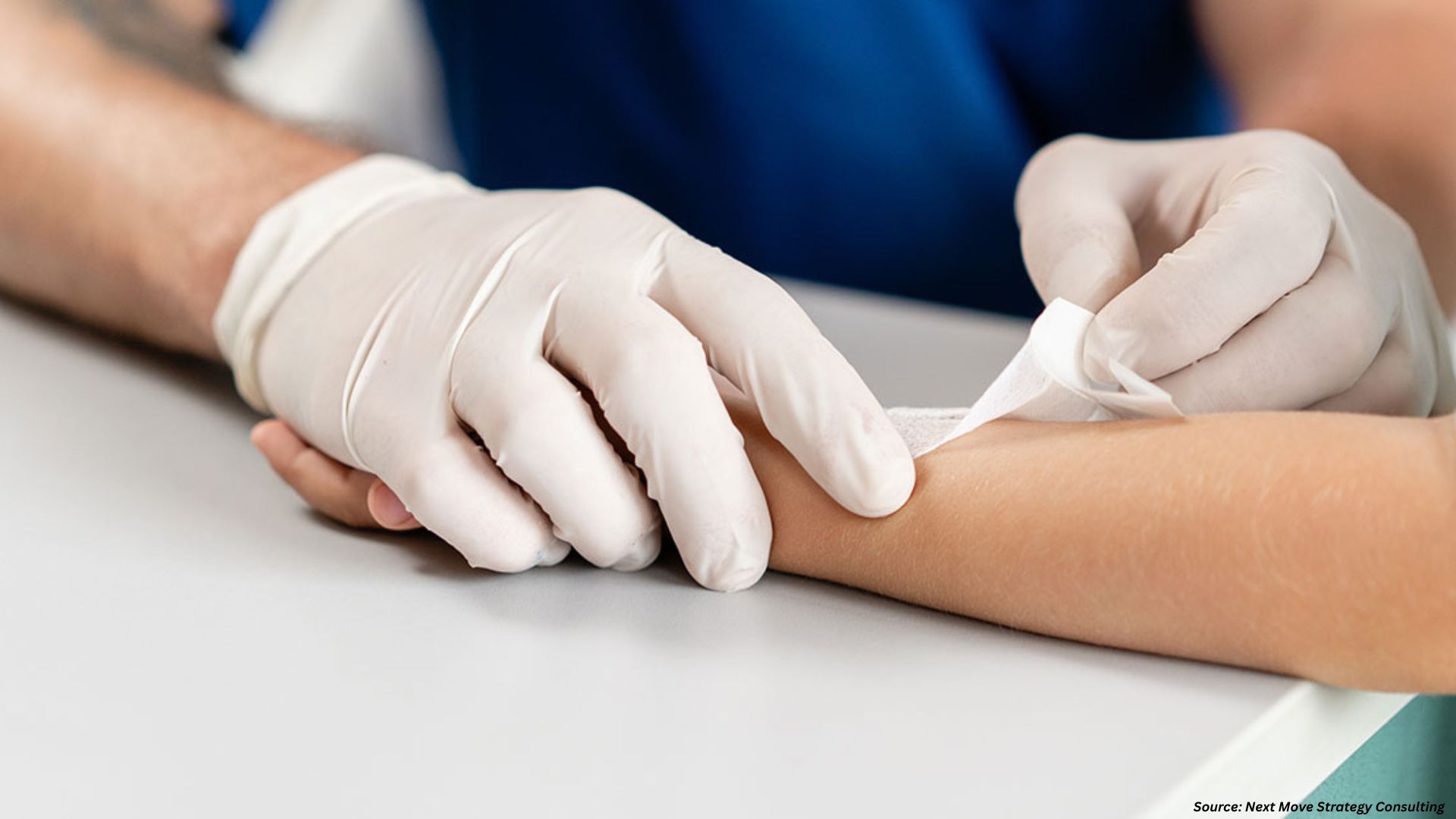
Wound care is undergoing a quiet revolution. What was once a passive process of covering injuries with moisture-retentive materials is now evolving into a digitally enabled, intelligent healing ecosystem. In 2025, two major scientific developments have demonstrated that hydrogel-based dressings can monitor wounds in real time, analyze healing patterns using artificial intelligence, and even assist recovery through antimicrobial and cooling properties. These advancements signal a turning point in modern wound management.
How AI-Powered Hydrogels Are Changing Chronic Wound Care
Chronic wounds such as diabetic ulcers, pressure ulcers, and articular wounds remain persistent clinical challenges. In September 2025, researchers from China Medical University and Northeastern University presented AI-integrated conductive hydrogel dressings capable of intelligent wound monitoring. These advanced dressings continuously track physiological parameters including temperature, pH, glucose concentration, pressure, and even pain-related signals. Instead of relying solely on periodic clinical inspection, the system gathers ongoing data from the wound environment. The integration of machine learning algorithms such as Convolutional Neural Networks, k-Nearest Neighbor, and Artificial Neural Networks enables predictive modeling of wound healing stages. The reported accuracy reaches up to 96%, allowing early infection detection and improved treatment guidance.
Can Conductive Hydrogels Improve Emergency Burn Care?
Burn injuries, particularly those related to fireworks and high-temperature exposure, require immediate intervention. In 2025, a multifunctional conductive organohydrogel sensor (P-EPL/CT) was developed using a physicochemical dual cross-linking approach to support emergency cooling and wound healing. The hydrogel integrates poly(vinyl alcohol), catechol-coupled chitosan, tannic acid, eggshell membrane, lysozyme, and 4am-PEG-MAL. The structural design combines physical hydrogen bonding with chemical cross-linking to create both rigid and soft network systems. A ternary solvent system consisting of ionic liquids, ethylene glycol, and water provides freeze resistance and electrical conductivity. Animal model testing on fireworks-related burns demonstrated effective cooling performance and wound recovery support. The hydrogel also exhibits antimicrobial properties due to the incorporation of polyphenols and lysozyme.
The Lifecycle of Advanced Wound Management Systems
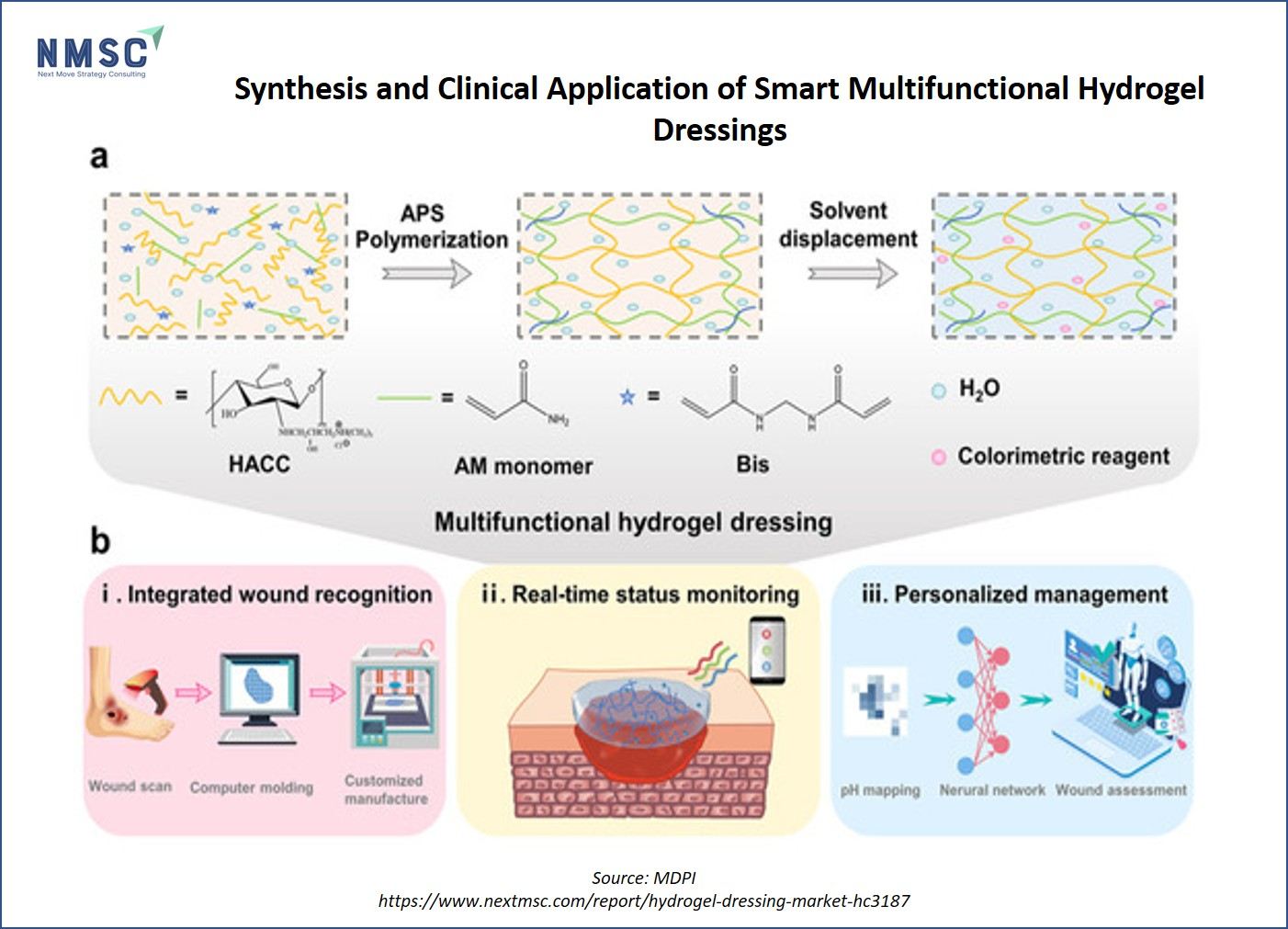
This graphic illustrates the transition of a hydrogel dressing from its chemical synthesis to its practical application in personalized medicine. The process is divided into two primary phases:
Chemical Synthesis and Structural Assembly The top section details the creation of the hydrogel through three distinct stages:
-
Initial Mixture: The process begins with a combination of HACC (Hydroxypropyltrimethyl ammonium chloride chitosan), AM (Acrylamide) monomer, and Bis (N,N'-Methylenebisacrylamide) as a crosslinker.
-
APS Polymerization: The addition of APS (Ammonium Persulfate) triggers polymerization, creating a networked structure that traps water molecules and colorimetric reagents.
-
Solvent Displacement: A final displacement step stabilizes the hydrogel, resulting in a flexible, porous material capable of sensing environmental changes.
Multifunctional Clinical Implementation The bottom section demonstrates how this "smart" material integrates with digital health technologies:
-
Integrated Wound Recognition: A digital scan of the wound site is processed through computer molding to create a customized dressing that fits the patient's specific wound geometry.
-
Real-time Status Monitoring: The hydrogel acts as a sensor, detecting biochemical changes (like pH or temperature) and transmitting that data to a mobile device for constant observation.
-
Personalized Management: The data, such as pH mapping, is analyzed via neural networks to provide an automated, accurate wound assessment for long-term care.
What Is Driving This New Generation of Hydrogels?
The 2025 innovations share a common scientific foundation: advanced conductive materials combined with sensing technology. Materials such as carbon nanotubes, graphene, MXenes, and conductive polymers enhance electrical performance while maintaining flexibility. Eggshell membrane contributes collagen-rich bioactivity, and tannic acid provides antioxidant and antimicrobial benefits. At the systems level, artificial intelligence converts sensor signals into actionable clinical insights. However, researchers also note challenges including material degradation, signal stability, and the generalizability of AI models. Clinical translation and algorithm optimization remain essential next steps.
Comprehensive Framework of Advanced Hydrogel Engineering for Clinical Wound Management
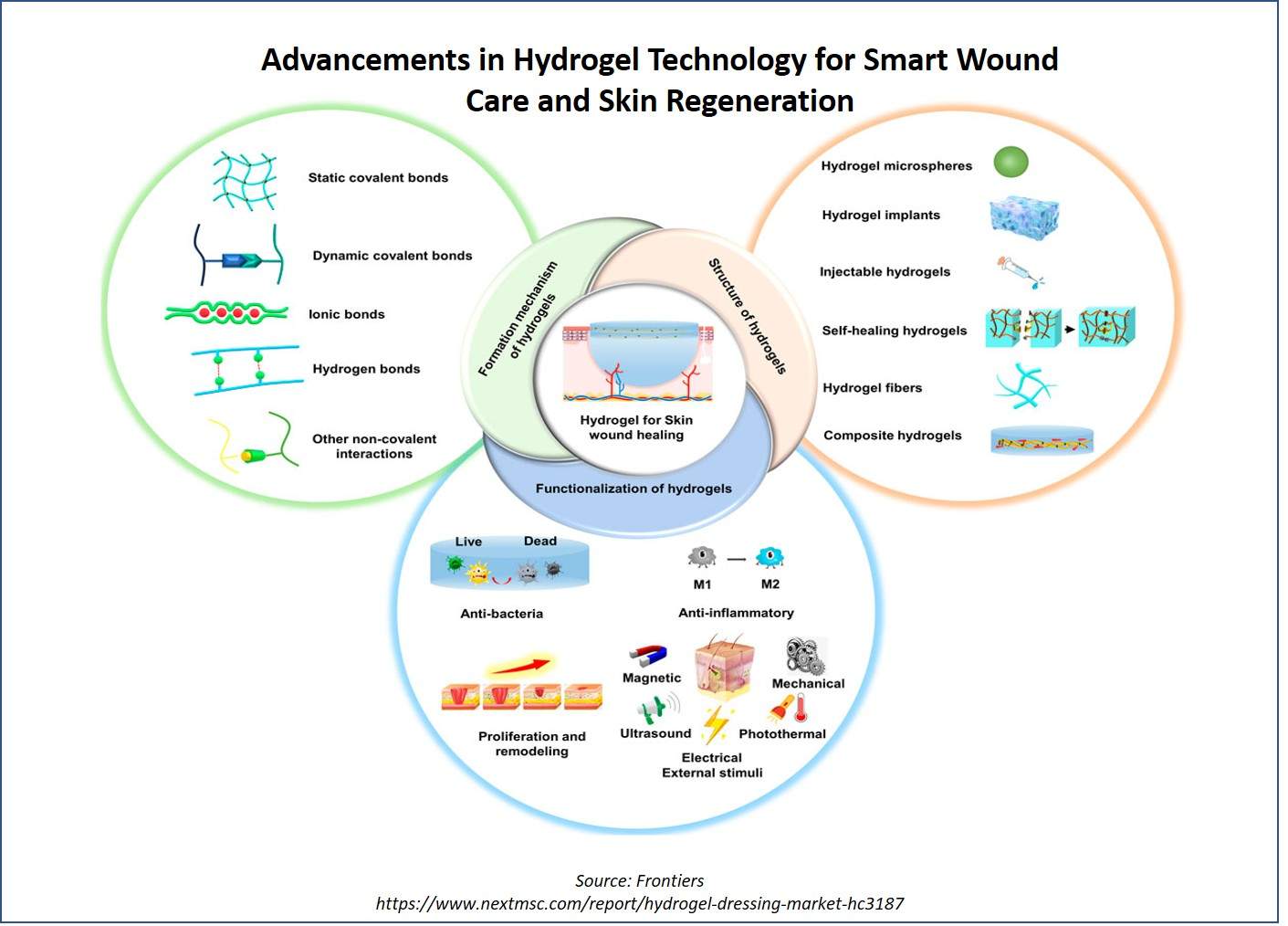
The provided visual data outlines a sophisticated ecosystem of hydrogel development, categorized by the fundamental chemical mechanisms, physical structures, and biological functionalities that enable modern wound healing solutions. The initial phase of development focuses on the formation mechanisms, where polymer networks are stabilized through a variety of bonding strategies including static and dynamic covalent bonds, ionic interactions, and hydrogen bonding to ensure structural integrity and adaptability. These chemical foundations allow for the creation of diverse physical forms such as injectable hydrogels, microspheres, and self-healing scaffolds, which are specifically designed to mimic the extracellular matrix and provide a physical barrier for damaged tissue. The functionalization of these materials introduces "smart" capabilities that actively participate in the healing process by providing anti-bacterial protection, modulating anti-inflammatory responses, and promoting cellular proliferation and remodeling. Furthermore, the integration of external stimuli such as magnetic, electrical, or ultrasonic triggers allows for precise control over drug delivery and tissue stimulation. In a clinical context, this technology translates into a seamless multifunctional workflow where wound recognition through digital scanning and computer molding leads to a customized manufacturing process. Once applied, these smart dressings provide real-time status monitoring by transmitting physiological data to mobile devices, while neural network analysis of pH mapping ensures personalized management and accurate assessment of the wound’s healing trajectory.
Strategy Consulting View: Where Does the Opportunity Lie?
From a strategic perspective, the transition toward intelligent hydrogel systems represents an early-stage commercialization opportunity rather than a mature market shift. Differentiation will increasingly depend on integrated sensing and analytics rather than moisture retention alone. Traditional hydrogel formats may face commoditization without added digital functionality. Partnerships between biomaterials scientists, artificial intelligence developers, and medical device manufacturers will accelerate clinical adoption. Multidisciplinary integration is becoming a competitive advantage. Remote healthcare expansion creates alignment with intelligent dressings. Real-time monitoring supports telemedicine, chronic disease management, and aging population care models.
Key Players Shaping the Hydrogel Dressing Industry
Several prominent companies are driving innovation and growth in the hydrogel dressing market. Leading players include Smith & Nephew Plc, 3M Company, Mölnlycke Health Care AB, ConvaTec Group PLC, Coloplast A/S, Essity AB, B. Braun Melsungen AG, Paul Hartmann AG, Cardinal Health, Inc., Medline Industries, LP, Lohmann & Rauscher GmbH & Co. KG, Integra LifeSciences Holdings Corporation, Hollister Incorporated, Laboratoires Urgo, Advanced Medical Solutions Group Plc, DeRoyal Industries, Inc., DermaRite Industries, LLC, Gentell LLC, Winner Medical Co., Ltd., and Scapa Healthcare among others.
These companies continue to adopt strategies such as new product launches, technological innovation, and market expansion to maintain their competitive position and reinforce their presence in the hydrogel dressing market.
Conclusion: Are Intelligent Dressings the New Standard?
The 2025 research developments clearly demonstrate that hydrogel technology is moving into an intelligent era. AI-powered systems capable of 96% predictive accuracy are redefining chronic wound monitoring. Multifunctional conductive hydrogels are improving burn treatment through cooling, antimicrobial action, and sensing integration. These innovations mark the convergence of advanced biomaterials, artificial intelligence, and wearable sensing technology, creating a new standard for patient-centered care. As clinical validation and integration with telemedicine progress, smart hydrogel dressings are poised to become essential tools in both acute and chronic wound management.
Key Takeaways:
-
Real-time monitoring enables proactive and personalized care.
-
Multifunctional dressings improve healing outcomes and reduce infection risk.
-
AI and conductive materials are shaping the next generation of wound care solutions.
The Hydrogel Dressing Market is no longer just about covering wounds it is about understanding and actively managing healing.
Strategic Insights: The Future of Hydrogel Dressings
From a strategic perspective, the hydrogel dressing market is evolving toward intelligent, multifunctional solutions that combine advanced materials, real-time monitoring, and AI-driven insights. Companies in this space may benefit from focusing on integrating sensor and predictive analytics capabilities, ensuring robust clinical validation and regulatory compliance, and exploring applications in remote and telehealth care. Additionally, developing dressings with multifunctional features, such as antimicrobial activity, cooling properties, and flexible sensing, can enhance product differentiation. Collaboration across biomaterials, digital health, and medical device sectors may further support innovation and accelerate adoption. Overall, the market is moving toward solutions that provide both therapeutic support and actionable clinical data, creating opportunities for patient-centered care and improved wound management outcomes.
Next Steps: Strategic Actions for Smart Hydrogel Advancement
-
Advance Clinical Validation – Conduct robust trials to ensure material stability, AI accuracy, and regulatory compliance.
-
Enhance AI and Sensor Integration – Develop multi-modal monitoring with predictive analytics for personalized wound care.
-
Expand Remote Care Compatibility – Design dressings that support telemedicine and chronic disease management for real-time monitoring.
-
Focus on Multifunctional Innovation – Combine antimicrobial, cooling, and flexible sensing capabilities to create differentiated solutions.
About the Author
 Sanyukta Deb
— Sanyukta Deb is Digital Marketing Team Lead at Next Move Strategy Consulting, where she has led content strategy and technical SEO for the firm's B2B market research publications for over 2 years. Her editorial process translates NextMSC's primary and secondary research — spanning technology, industrial, and consumer sectors — into commercial narratives, backed by search-intent, keyword, and competitive analysis. She brings 5 years of overall experience in digital marketing and content strategy.
Sanyukta Deb
— Sanyukta Deb is Digital Marketing Team Lead at Next Move Strategy Consulting, where she has led content strategy and technical SEO for the firm's B2B market research publications for over 2 years. Her editorial process translates NextMSC's primary and secondary research — spanning technology, industrial, and consumer sectors — into commercial narratives, backed by search-intent, keyword, and competitive analysis. She brings 5 years of overall experience in digital marketing and content strategy.
About the Reviewer
 Debashree Dey
— Debashree Dey is Assistant Manager at Next Move Strategy Consulting, where she supports cross-vertical market content and communications across diverse industries for 6 years. Her professional background includes senior content writing, communications, and published manuscript authorship, with experience developing audience-focused business narratives and maintaining clear, consistent messaging. Her role supports research-led content development and editorial quality across NextMSC publications.
Debashree Dey
— Debashree Dey is Assistant Manager at Next Move Strategy Consulting, where she supports cross-vertical market content and communications across diverse industries for 6 years. Her professional background includes senior content writing, communications, and published manuscript authorship, with experience developing audience-focused business narratives and maintaining clear, consistent messaging. Her role supports research-led content development and editorial quality across NextMSC publications.















Add Comment