Artificial Intelligence (AI) Robots Market: Innovation Shaping Intelligent Automation
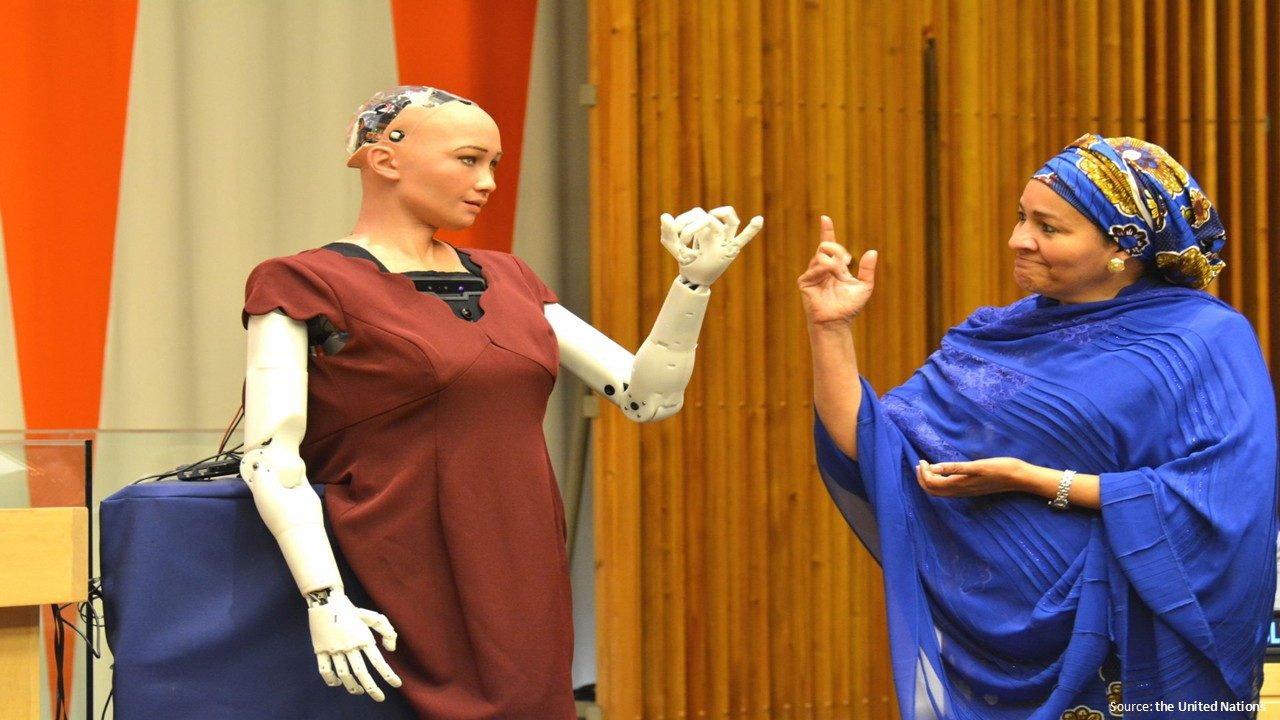
The Artificial Intelligence (AI) robot market is entering a transformative phase as new humanoid robots and advanced AI processing technologies redefine automation capabilities. Organizations are focusing on improving machine intelligence, real-time decision-making, and physical interaction capabilities. Recent developments during 2025–2026 highlight how robotics is moving beyond traditional automation toward collaborative, adaptive, and autonomous systems.
AI Robots Market Growth Driven by Humanoid Robotics Innovation
The Artificial Intelligence robot market is gaining strong momentum with the introduction of advanced humanoid robots capable of human-like interaction and task execution. One major development occurred in 2025 when Shanghai introduced a new humanoid robot named Moya, designed to improve service sector automation and human-robot collaboration.
Moya demonstrates significant advancements in robotics engineering by integrating high-level mobility, communication capabilities, and emotional interaction simulation. The robot can perform customer service tasks and provide interactive support through natural conversations and gestures, demonstrating how AI robots are moving closer to real human-like engagement.
Additionally, Moya features enhanced motion control and perception technologies that allow it to navigate dynamic environments effectively. These advancements reflect how robotics developers are focusing on improving machine autonomy and adaptability in complex settings.
Key Takeaways
-
Humanoid robots are improving human-machine collaboration.
-
Emotional interaction simulation is expanding service sector applications.
-
Autonomous navigation technologies are increasing deployment efficiency.
AI Robots Market Advancements Through Edge AI Processing
Another major trend shaping the Artificial Intelligence robot market is the integration of edge AI processing technologies. In 2026, Axelera AI introduced specialized edge chips designed to support robotics and battlefield automation, emphasizing localized data processing.
These chips enable robots to process data directly within the device rather than relying on cloud computing. This approach significantly reduces latency, enhances response speed, and improves operational security in real-time decision-making scenarios.
Axelera AI is also focusing on developing high-performance computing capabilities tailored specifically for robotics systems. The company aims to strengthen Europe's semiconductor ecosystem while enabling advanced robotics applications such as autonomous surveillance, industrial automation, and defense robotics.
Key Takeaways
-
Edge AI chips reduce reliance on cloud infrastructure.
-
Faster processing improves real-time robotic responses.
-
Enhanced security supports defense and surveillance applications.
AI Robots Market Use Cases Expanding Across Industries
The Artificial Intelligence robot market is expanding into multiple sectors due to technological improvements in humanoid robotics and AI processing chips. Service industries are increasingly deploying robots like Moya to enhance customer interaction and operational efficiency. Defense and security sectors are also investing in advanced robotics supported by edge AI to strengthen surveillance and battlefield operations.
The convergence of humanoid design and advanced AI processors allows robots to perform complex tasks that require adaptability and rapid decision-making. These developments highlight the growing versatility of AI robots in dynamic environments.
Industry Adoption Table
|
Industry Sector |
AI Robot Application |
Key Technology Driver |
|
Service Industry |
Customer interaction and assistance |
Humanoid robotics |
|
Defense |
Autonomous surveillance and battlefield support |
Edge AI chips |
|
Industrial Automation |
Real-time monitoring and process optimization |
Advanced AI processing |
Key Takeaways
-
Service sectors are adopting humanoid robotics for customer engagement.
-
Defense applications are expanding through edge AI-enabled automation.
-
Industrial automation is improving through real-time AI processing.
AI Robots Market Technology Convergence Creating New Opportunities
The Artificial Intelligence robot market is witnessing strong growth due to the convergence of robotics engineering and semiconductor innovation. Humanoid robots require sophisticated processing systems to support perception, communication, and movement capabilities. Edge AI chips provide the computational power necessary for these complex functions while ensuring efficiency and reliability.
This convergence is enabling robotics manufacturers to create systems capable of performing specialized tasks in unpredictable environments. The combination of mechanical design, machine learning algorithms, and AI processors is driving next-generation robotic development.
Key Takeaways
-
AI processors are strengthening robotic cognitive capabilities.
-
Integrated robotics systems are expanding automation potential.
-
Semiconductor innovation is supporting scalable robotic deployment.
AI Robots Market Outlook
The Artificial Intelligence robot market is positioned for sustained growth as technological breakthroughs continue to enhance robot intelligence, adaptability, and autonomy. Companies are prioritizing real-time processing capabilities and human-like interaction to expand robotics adoption across industries.
With humanoid robots improving customer engagement and edge AI chips strengthening performance efficiency, the market is expected to witness accelerated innovation cycles during the next phase of automation transformation.
Key Takeaways
-
Robotics systems are becoming more interactive and autonomous.
-
Edge computing is improving operational efficiency.
-
Multi-industry adoption is expanding market growth potential.
Leading Key Players for Artificial Intelligence (AI) Robot Market
Various market players operating in the AI robot industry include IBM, Intel, Microsoft, NVIDIA, Softbank, ABB Ltd., FANUC, Kuka AG, Xilinx, and Hanson Robotics, among others. These companies are adopting strategies such as partnerships, joint ventures, and product launches across different regions to maintain their market presence.
For instance, in July 2022, Starship Technologies collaborated with Bedford Borough Council in England to deliver groceries using AI robots. The initiative served approximately 45,000 residents across 20,000 households in Bedford.
In October 2020, NVIDIA launched an entry-level AI and robotics developer kit called Jetson Nano 2GB priced at USD 59. The kit included free online training and certification for students, educators, and robotics enthusiasts. It offered a scalable platform for developing AI applications and supported multiple AI models and frameworks.
Additionally, in September 2022, NetDragon Websoft integrated an AI-based humanoid robot named Tang Yu into its operations. The robot was designed to manage organizational and operational functions while improving the company’s risk management efficiency.
Next Move Strategy Consulting (NMSC) Viewpoint
Next Move Strategy Consulting observes that the Artificial Intelligence (AI) Robot Market is moving toward intelligence-led automation driven by humanoid robotics and edge AI processing. Innovations such as the Moya humanoid robot highlight the growing focus on human-like interaction in service environments, while advances in edge AI chips are strengthening real-time decision-making and operational reliability in robotics systems.
Next Steps
-
Businesses should evaluate robotics integration opportunities to improve operational efficiency.
-
Technology developers should focus on combining AI hardware and software capabilities.
-
Organizations should invest in edge AI solutions to enhance real-time automation performance.
-
Industries should prioritize workforce training to support robotic collaboration.
-
Stakeholders should monitor humanoid robotics advancements to identify new service opportunities.
About the Author
 Prakhyat Chowdhury
— Prakhyat Chowdhury is a results-driven Market Analyst and data strategist specializing in business intelligence, trend forecasting, and performance-focused market growth. His competitive intelligence frameworks, and data-driven insights enhances strategic planning, operational efficiency, and organizational authority. Known for strong communication, analytical thinking, and multilingual proficiency, he delivers rigorous, objective-led solutions that support scalable business outcomes across industries with professionalism. He consistently aligns quantitative and qualitative analysis with global business goals.
Prakhyat Chowdhury
— Prakhyat Chowdhury is a results-driven Market Analyst and data strategist specializing in business intelligence, trend forecasting, and performance-focused market growth. His competitive intelligence frameworks, and data-driven insights enhances strategic planning, operational efficiency, and organizational authority. Known for strong communication, analytical thinking, and multilingual proficiency, he delivers rigorous, objective-led solutions that support scalable business outcomes across industries with professionalism. He consistently aligns quantitative and qualitative analysis with global business goals.
About the Reviewer
 Sanyukta Deb
— Sanyukta Deb is Digital Marketing Team Lead at Next Move Strategy Consulting, where she has led content strategy and technical SEO for the firm's B2B market research publications for over 2 years. Her editorial process translates NextMSC's primary and secondary research — spanning technology, industrial, and consumer sectors — into commercial narratives, backed by search-intent, keyword, and competitive analysis. She brings 5 years of overall experience in digital marketing and content strategy.
Sanyukta Deb
— Sanyukta Deb is Digital Marketing Team Lead at Next Move Strategy Consulting, where she has led content strategy and technical SEO for the firm's B2B market research publications for over 2 years. Her editorial process translates NextMSC's primary and secondary research — spanning technology, industrial, and consumer sectors — into commercial narratives, backed by search-intent, keyword, and competitive analysis. She brings 5 years of overall experience in digital marketing and content strategy.

















Add Comment