Cooling Equipment: Efficiency, Innovation, and Infrastructure Shift
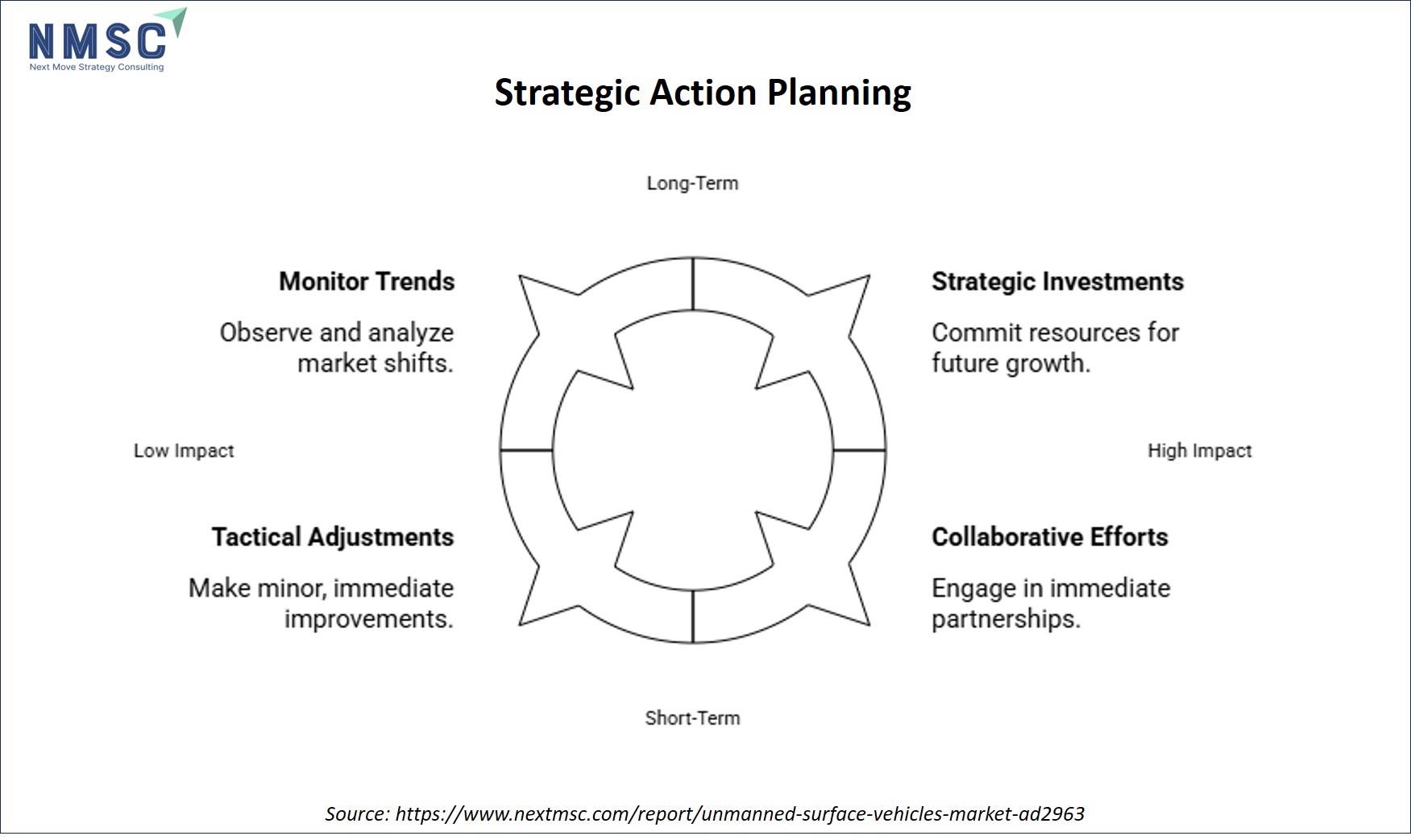
Cooling equipment is becoming a core pillar of modern infrastructure. From high-performance computing environments to residential developments, the way heat is managed is directly shaping operational efficiency, sustainability, and system design. Recent industry discussions highlight two major directions: advanced cooling for AI-driven data centers and centralized cooling systems in urban housing projects.
1. Cooling Equipment in the AI Era: Efficiency Under Scrutiny
The rapid expansion of AI infrastructure has significantly increased demand for high-density cooling systems. Advanced GPUs generate extreme heat loads, requiring specialized thermal management solutions.
A recent industry discussion highlighted concerns around the efficiency of cooling systems used for next-generation AI hardware, particularly in large-scale deployments. A Microsoft cooling design for Blackwell GPUs was publicly described by an NVIDIA employee as potentially “wasteful,” sparking debate on cooling efficiency in high-performance computing environments.
Microsoft responded to the criticism, defending its system design approach, emphasizing engineering trade-offs in managing thermal loads at scale.
Analysis from Next Move Strategy Consulting indicates that the debate reflects a broader industry shift where cooling equipment is no longer just about temperature control but also about energy optimization in AI-scale computing environments.
2. Data Center Cooling Systems: Engineering Trade-offs at Scale
Modern data centers rely heavily on advanced cooling equipment to maintain operational stability. As workloads intensify, especially in AI and machine learning clusters, cooling systems must balance performance, energy use, and spatial constraints.
The Microsoft–NVIDIA discussion highlights a key industry challenge: cooling efficiency versus infrastructure scalability. While liquid cooling and advanced airflow designs improve performance, they also introduce complexity in deployment and maintenance.
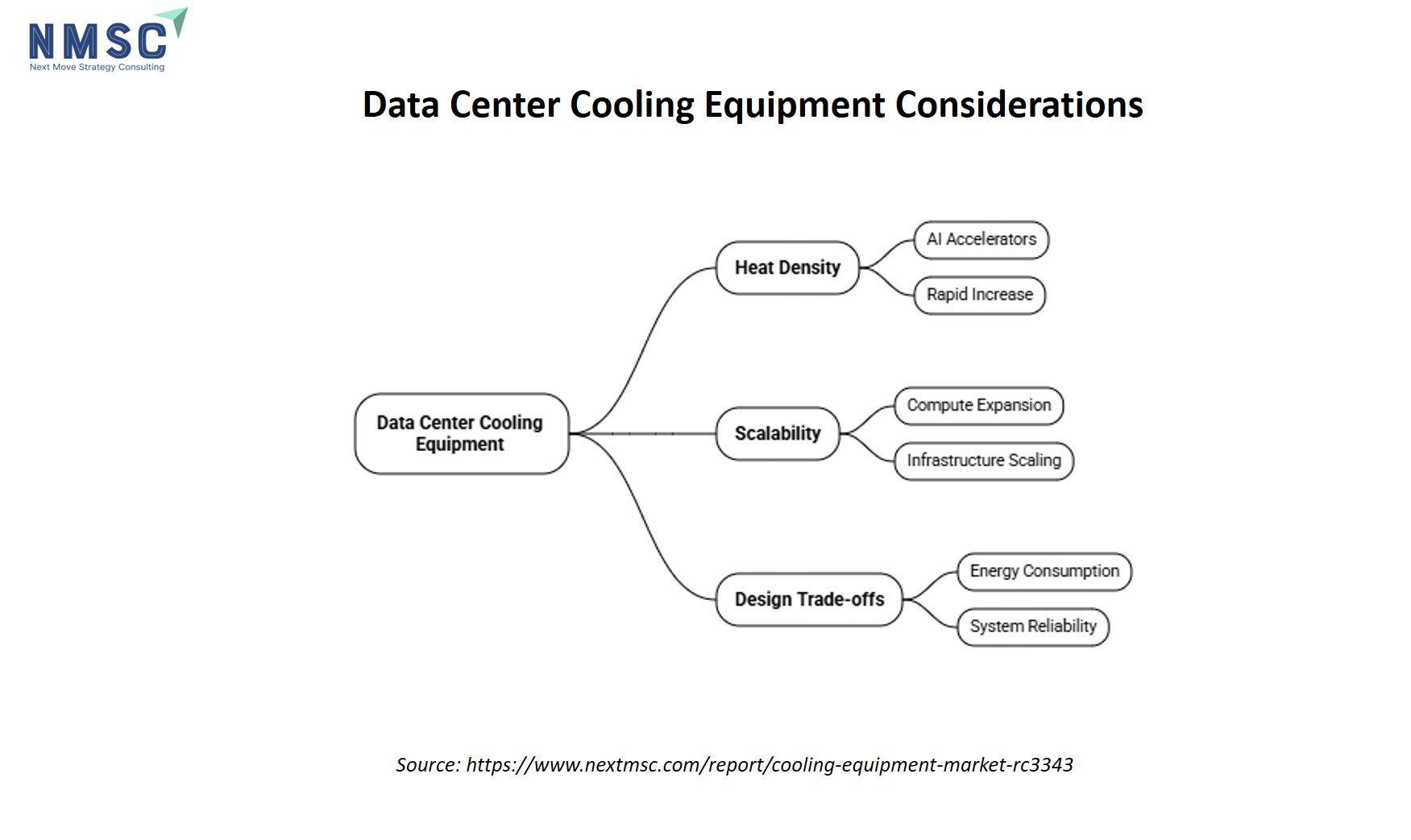
Key Considerations in Data Center Cooling Equipment
-
Heat density from AI accelerators is increasing rapidly
-
Cooling infrastructure must scale alongside compute expansion
-
Design trade-offs affect energy consumption and system reliability
Insights from Next Move Strategy Consulting suggest that cooling systems in AI data centers are evolving into strategic infrastructure assets, influencing both capital expenditure and long-term operational efficiency.
3. Centralized Cooling Systems in Urban Infrastructure
Cooling equipment is also transforming residential infrastructure through centralized cooling models. Instead of individual air-conditioning units, entire housing developments are increasingly adopting shared cooling systems to improve efficiency and reduce environmental impact.
In Singapore, Keppel secured a contract to implement a centralized cooling system across nine Build-To-Order (BTO) housing projects in Tengah.
This development highlights a growing shift toward district-level cooling infrastructure in urban planning.
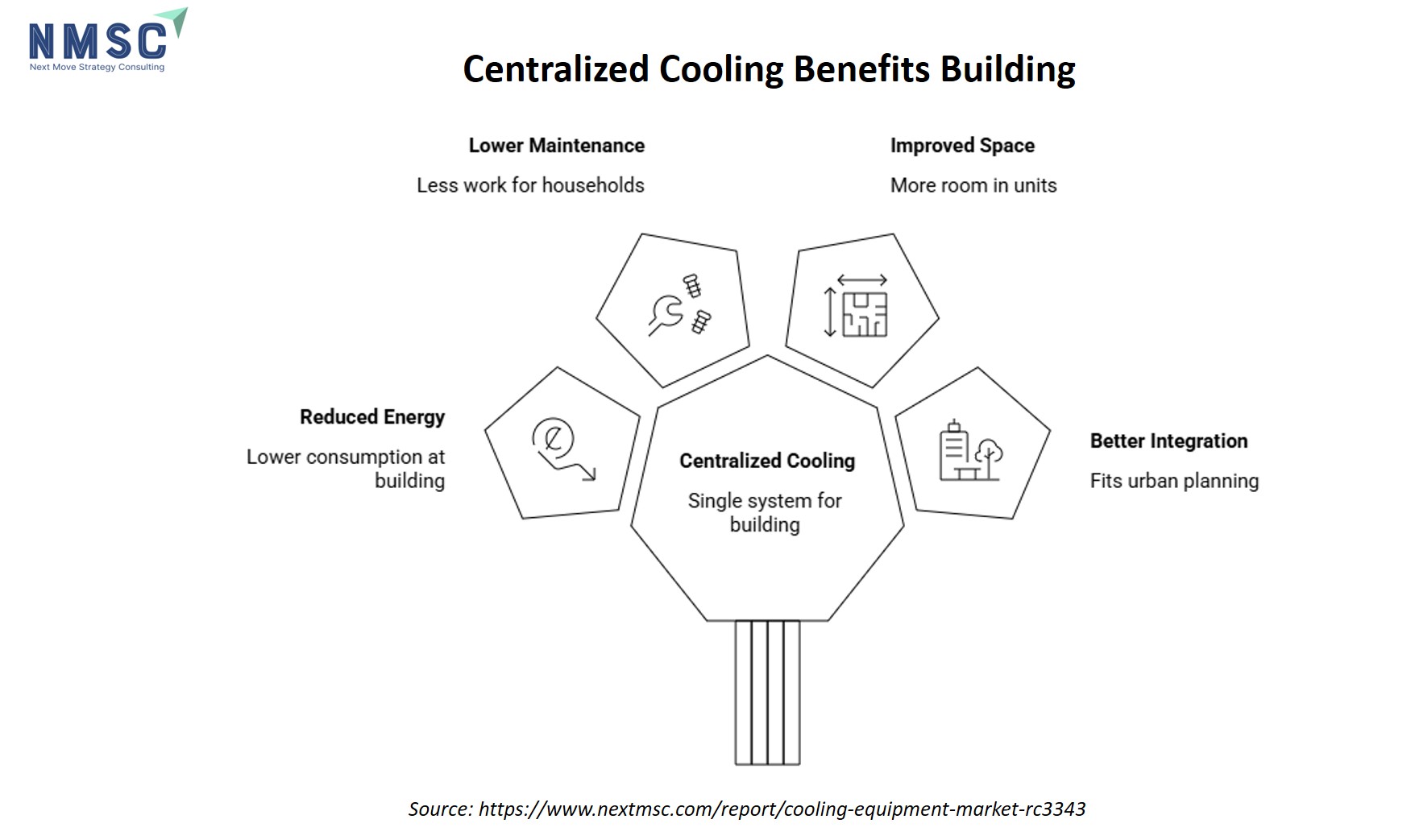
Benefits of Centralized Cooling Equipment
-
Reduced energy consumption at the building level
-
Lower maintenance requirements for individual households
-
Improved space efficiency in residential units
-
Better integration with sustainable urban planning models
Our observations at Next Move Strategy Consulting indicate that centralized cooling systems represent a long-term shift toward infrastructure-led sustainability in urban housing design.
4. Comparative View: Data Centers vs Urban Cooling Systems
Cooling equipment is evolving in two parallel directions—high-performance industrial cooling and large-scale residential cooling networks.
|
Aspect |
Data Center Cooling |
Centralized Residential Cooling |
|
Primary Use |
AI and computing infrastructure |
Housing and urban buildings |
|
Complexity |
Very high thermal loads |
Moderate, distributed load |
|
Design Focus |
Performance and efficiency balance |
Energy optimization and comfort |
|
Scalability |
Rapid, technology-driven |
Planned urban expansion |
This comparison shows how cooling systems are adapting to very different operational demands while sharing the same core objective: efficient heat management.
Analysis from Next Move Strategy Consulting indicates that convergence between industrial and urban cooling strategies may lead to hybrid technologies in the future, especially in smart city ecosystems.
5. Industry Implications of Cooling Equipment Evolution
Cooling equipment is no longer a background utility. It is becoming a critical design factor influencing infrastructure decisions across sectors.
Key Industry Impacts
-
Increased investment in advanced thermal management technologies
-
Greater focus on energy-efficient cooling architectures
-
Integration of cooling systems into early-stage infrastructure planning
-
Rising importance of system-level efficiency over component-level performance
According to Next Move Strategy Consulting
The developments observed in both AI infrastructure cooling debates and centralized residential systems indicate a structural transformation in how cooling equipment is engineered and deployed. Cooling is shifting from a support function to a strategic infrastructure layer influencing cost, sustainability, and performance outcomes across industries.
Next Steps: Key Takeaways for Stakeholders
-
Evaluate cooling systems as a core infrastructure investment, not a secondary utility
-
Prioritize energy efficiency in both data center and building-level cooling design
-
Monitor emerging centralized cooling models for urban development projects
-
Reassess thermal management strategies in high-density computing environments
-
Align cooling infrastructure planning with long-term sustainability goals
Cooling equipment is entering a new phase where its role extends beyond temperature control into energy strategy, infrastructure planning, and system optimization. The evolution seen in both AI-driven cooling debates and centralized residential systems signals a broader transformation in how heat management is engineered across industries.
About the Author
 Sanyukta Deb
— Sanyukta Deb is Digital Marketing Team Lead at Next Move Strategy Consulting, where she has led content strategy and technical SEO for the firm's B2B market research publications for over 2 years. Her editorial process translates NextMSC's primary and secondary research — spanning technology, industrial, and consumer sectors — into commercial narratives, backed by search-intent, keyword, and competitive analysis. She brings 5 years of overall experience in digital marketing and content strategy.
Sanyukta Deb
— Sanyukta Deb is Digital Marketing Team Lead at Next Move Strategy Consulting, where she has led content strategy and technical SEO for the firm's B2B market research publications for over 2 years. Her editorial process translates NextMSC's primary and secondary research — spanning technology, industrial, and consumer sectors — into commercial narratives, backed by search-intent, keyword, and competitive analysis. She brings 5 years of overall experience in digital marketing and content strategy.
About the Reviewer
 Debashree Dey
— Debashree Dey is Assistant Manager at Next Move Strategy Consulting, where she supports cross-vertical market content and communications across diverse industries for 6 years. Her professional background includes senior content writing, communications, and published manuscript authorship, with experience developing audience-focused business narratives and maintaining clear, consistent messaging. Her role supports research-led content development and editorial quality across NextMSC publications.
Debashree Dey
— Debashree Dey is Assistant Manager at Next Move Strategy Consulting, where she supports cross-vertical market content and communications across diverse industries for 6 years. Her professional background includes senior content writing, communications, and published manuscript authorship, with experience developing audience-focused business narratives and maintaining clear, consistent messaging. Her role supports research-led content development and editorial quality across NextMSC publications.

















Add Comment