What Does the Air Freshener Market Look Like in 2026, Statistics, Trends & Forecasts?

The global Air freshener market is undergoing a structural transformation. What was once a commodity category defined by aerosol sprays and impulse purchases has evolved into a sophisticated, multi-segment industry spanning smart connected devices, natural and organic formulations, subscription-based refill ecosystems, and premium wellness-oriented fragrance experiences. For C-level executives, institutional investors, and procurement leaders, this evolution represents a durable, high-value growth opportunity that extends well beyond conventional consumer goods.
According to Next Move Strategy Consulting (NMSC), the global air freshener market was valued at USD 18.02 billion in 2025 and is projected to reach USD 40.78 billion by 2035, growing at a CAGR of 8.51% from 2026 to 2035. The market's expansion is underpinned by rising urbanization, growing consumer spending on home wellness products, the accelerating shift toward natural and organic formulations, and the emergence of connected fragrance delivery technologies across residential, commercial, and automotive end-use segments.
Key Trends Reshaping the Air Freshener Market in 2026
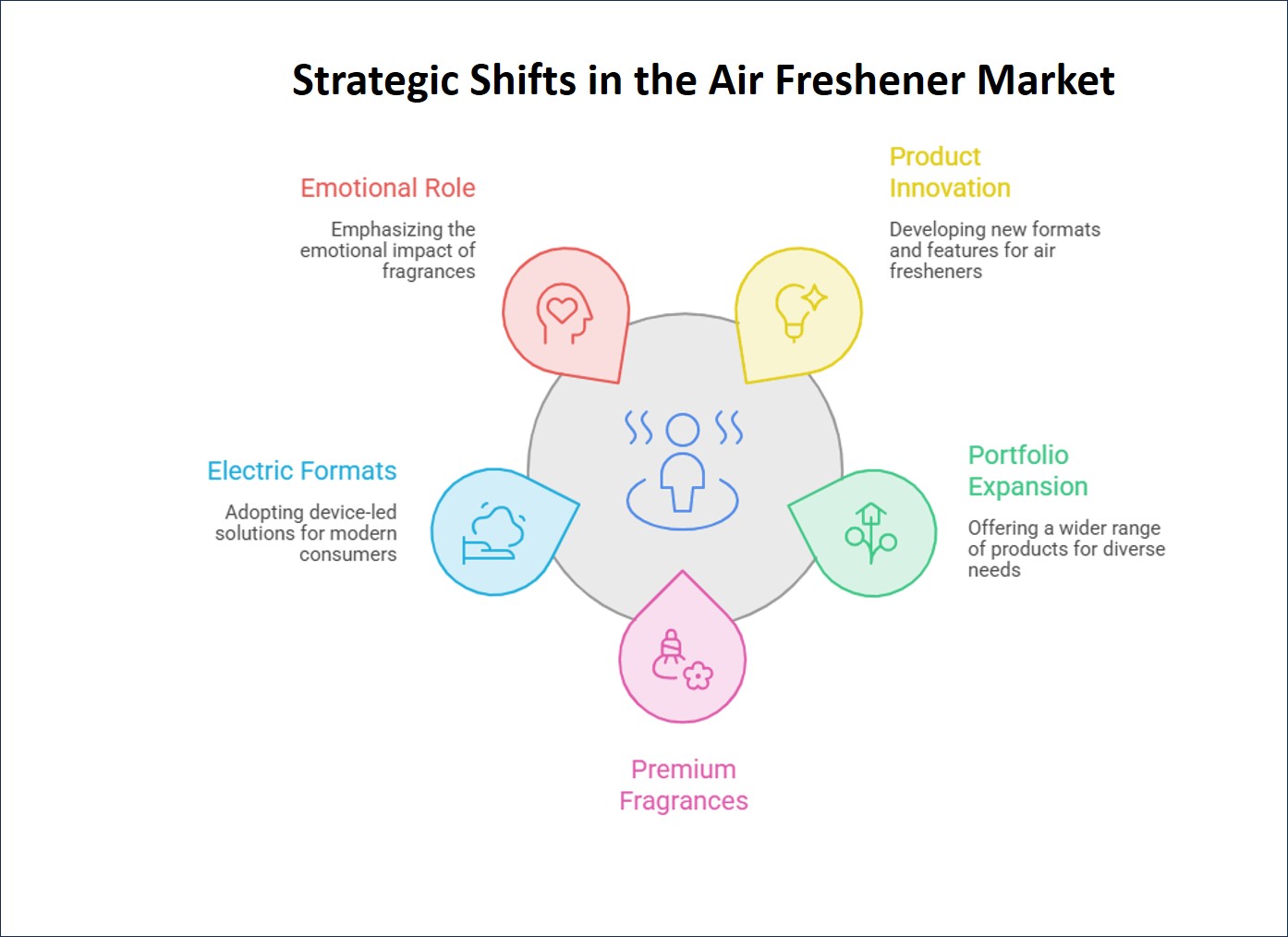
Premiumization and Wellness Positioning: From Odor Control to Ambience
One of the most influential strategic shifts in the air freshener market is the repositioning of products from functional odor-control solutions to elements of a broader home wellness and ambience experience. This evolution is increasingly reflected in product innovation and portfolio expansion strategies across major manufacturers.
Leading brands have expanded beyond traditional formats by introducing solutions designed to address specialized household use cases while supporting recurring consumption through refill-based ecosystems. At the same time, premium fragrance collections and sensory-focused offerings are being introduced to elevate the consumer experience and position air care products within the lifestyle and wellness category.
NMSC Strategic Perspective:
NMSC identifies premiumization and wellness positioning as a major structural force reshaping the competitive landscape of the air freshener market. The transition from aerosol-dominated products toward electric diffusers, ultrasonic technologies, and refillable fragrance systems is shifting value creation from one-time purchases toward recurring revenue models that improve customer retention and strengthen long-term consumer engagement.
Natural and Organic Formulations: The Fastest Growing Product Category
Consumer demand for plant-derived fragrances, biodegradable refills, and recyclable packaging is transforming formulation strategies across the air freshener industry. Growing awareness surrounding indoor air quality and environmental responsibility is encouraging manufacturers to develop cleaner, allergen-conscious, and more transparent product offerings.
Health and environmental concerns continue to influence purchasing decisions, increasing demand for formulations designed to support improved indoor environments while reducing dependence on traditional chemical-heavy alternatives.
Manufacturers are increasingly expanding portfolios with biodegradable refill systems and essential oil-based alternatives to respond to changing preferences while creating opportunities across sourcing, packaging, and regulatory functions.
E Commerce and Subscription Models: Redefining Distribution
Digital commerce is becoming one of the most transformative distribution channels within the air freshener market. Growth in this segment is increasingly supported by subscription-based refill ecosystems and recurring purchasing behavior associated with electric and diffuser formats.
The expansion of direct-to-consumer platforms is allowing brands to strengthen customer relationships, improve purchasing convenience, and establish recurring revenue streams through automated replenishment models.
Broader shifts in consumer buying behavior continue to reinforce this transition, enabling manufacturers to expand digital shelf presence, introduce bundled offerings, and leverage consumer feedback to guide fragrance development and product innovation.
Urbanization and Automotive Growth: Structural Demand Foundations
Long-term market expansion continues to be supported by macroeconomic and demographic trends that reinforce demand across residential, commercial, and mobility-related applications.
Ongoing urbanization is contributing to sustained growth in household formation and commercial infrastructure development, creating favorable conditions for air freshener adoption across both mature and emerging markets.
At the same time, continued expansion in global vehicle ownership and production supports consistent demand for automotive air care products. This trend is encouraging manufacturers to develop specialized solutions that align with changing consumer expectations around convenience, personalization, and in-vehicle experiences.
Industry Impact Analysis
VOC Regulations: Accelerating the Shift Away from Aerosols
One of the most influential regulatory forces shaping the air freshener market is the enforcement of Volatile Organic Compound emission standards across major economies. Environmental authorities continue to strengthen requirements governing consumer product formulations and emissions. These regulatory developments are accelerating the transition toward water-based, non-aerosol, and electrically powered fragrance solutions. Manufacturers are increasingly investing in reformulation strategies, testing capabilities, and compliance frameworks to meet evolving environmental expectations.While these requirements encourage innovation and cleaner product development, they also introduce additional operational complexity and cost considerations for manufacturers operating across multiple regulatory environments.
Raw Material Price Volatility: A Persistent Margin Pressure
The air freshener industry remains exposed to fluctuations in the cost of fragrance ingredients, packaging materials, and other manufacturing inputs influenced by broader commodity market conditions. Price variability continues to place pressure on manufacturer margins and may influence pricing strategies, procurement decisions, and purchasing behavior across value-oriented product categories. Organizations are increasingly focusing on sourcing diversification, supply chain resilience, and operational efficiency to manage cost volatility while maintaining competitiveness.
Europe Leads; Asia Pacific Grows Fastest
Europe continues to maintain a leading position within the air freshener market due to established retail infrastructure, strong consumer preference for premium fragrance experiences, and a highly developed regulatory environment.
At the same time, Asia Pacific is emerging as the fastest expanding region, supported by urbanization, rising disposable income levels, and increasing consumer interest in home wellness and lifestyle-oriented products.
The combination of demographic growth, evolving consumption patterns, and expanding retail access is expected to strengthen the region’s long-term contribution to market development.
Pros and Cons of Recent Market Developments
|
Development |
Pros |
Cons |
|
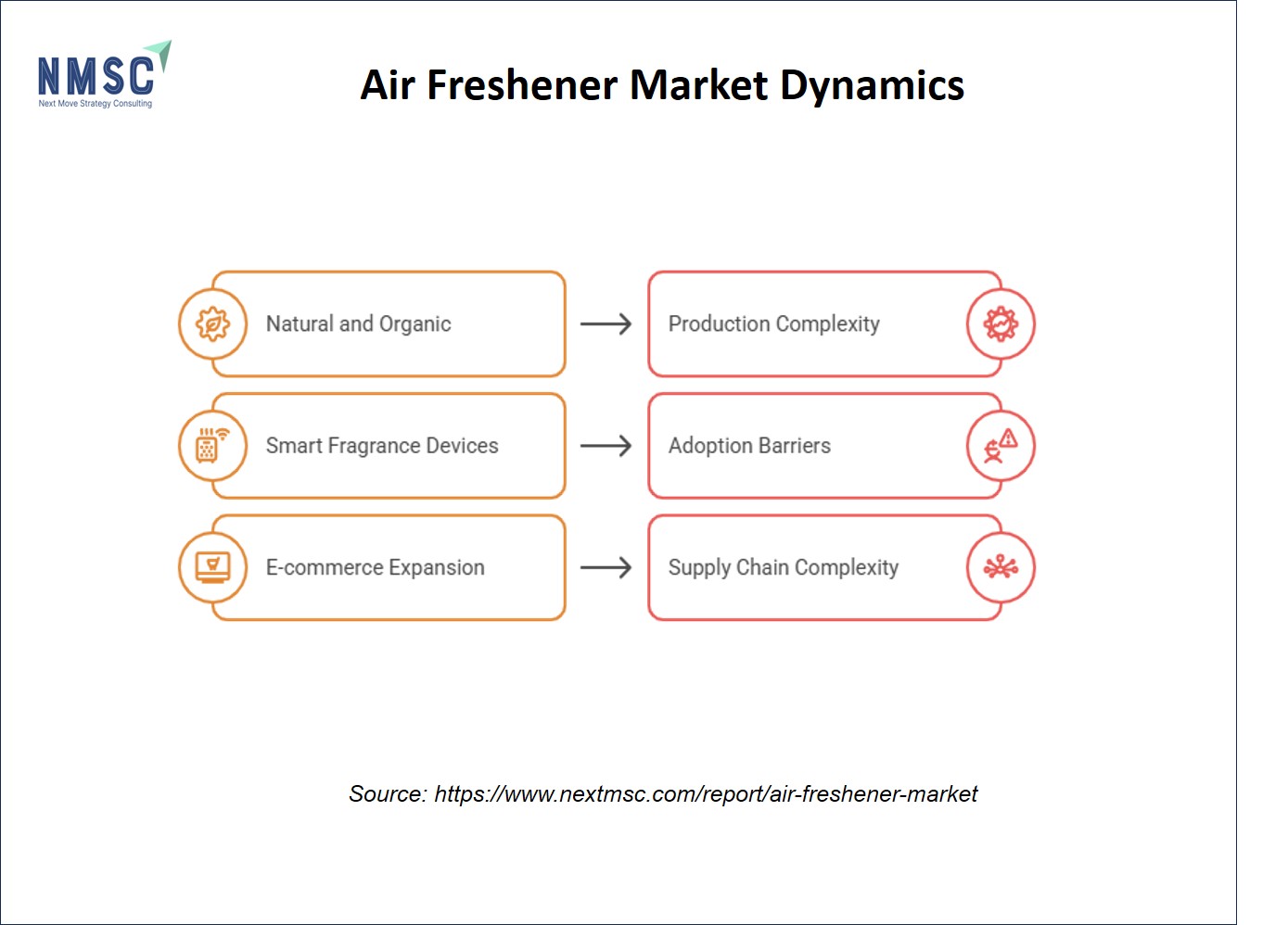
Natural & Organic Formulation Shift (11.1% CAGR) |
Captures premium pricing; aligns with EU ecolabel and allergen regulations; strengthens brand trust and ESG credentials |
Higher ingredient and production costs; shorter shelf life in some climates; complex multi-jurisdiction certification requirements |
|
Smart & Connected Fragrance Devices |
Generates recurring refill revenue; strengthens customer retention; opens smart-home integration opportunities |
Requires app ecosystem investment; cybersecurity exposure in connected devices; higher upfront consumer cost limits mass-market adoption |
Competitive Landscape
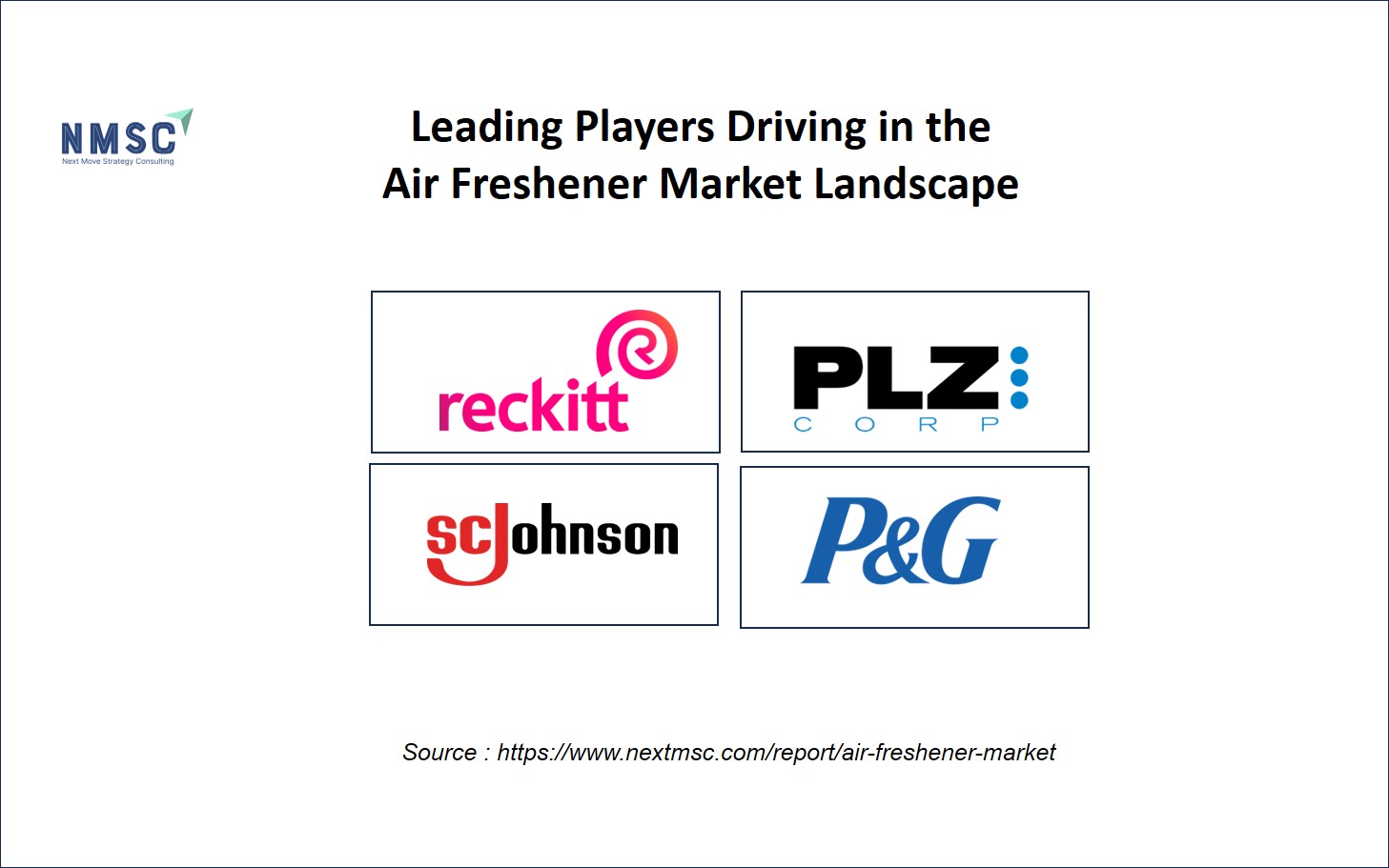
The air freshener market consists of three major groups of participants. Global consumer goods companies including S. C. Johnson, Reckitt, Procter & Gamble, Newell Brands, Kao, Church & Dwight, Henkel, Clorox, and Godrej Consumer Products maintain competitive strength through established brands and broad distribution capabilities. Contract manufacturers such as PLZ Corp and McBride plc support market growth through private-label manufacturing, while premium and niche players including Pura Scents, Vectair Systems, Car-Freshner, Farcent, Kobayashi Pharmaceutical, Bolsius, Millefiori Milano, Dr. Marcus, and Gr. Sarantis differentiate through specialized fragrances, automotive air care offerings, commercial applications, and smart fragrance solutions.
Next Steps for Stakeholders
For C-level executives, institutional investors, and senior procurement leaders evaluating the air freshener market, the following actions are strategically material in 2026:
-
Accelerate Natural and Organic Portfolio Development: With natural and organic formulations growing at 11.1% CAGR and EU allergen regulations tightening, manufacturers and brand owners that do not have a credible clean-label product roadmap risk structural competitive disadvantage by 2028. Investment in plant-derived ingredient sourcing and ecolabel certification should be treated as a strategic priority.
-
Build Subscription-Based Refill Infrastructure: The online channel's 13.5% CAGR growth is being driven primarily by recurring refill models for electric and diffuser formats. Organizations that invest in direct-to-consumer digital storefronts, subscription management platforms, and refill cartridge logistics now will capture disproportionate share of this channel's growth.
-
Evaluate Asia-Pacific Market Entry and Expansion: Given the region's 9.7% CAGR trajectory, rising urban household formation, and the demonstrated success of Godrej's ultra-affordable electric freshener strategy in India, institutional investors should evaluate exposure to Asia-Pacific air freshener assets particularly in India, China, Vietnam, and Southeast Asia.
Conclusion
The air freshener market in 2026 is a category in structural transformation. The convergence of wellness-driven premiumization, natural formulation demand, smart connected technology, e-commerce expansion, and Asia-Pacific urbanization is driving a growth trajectory that NMSC projects will take the market from USD 18.02 billion in 2025 to USD 40.78 billion by 2035. The evidence is concrete: P&G's Febreze launched a new device-and-refill innovation in April 2026; Godrej democratized electric fresheners in India at USD 1.6 in September 2025; and the UN's 2025 World Urbanization Prospects confirms that 58% of the global population now lives in urban areas—a structural demand foundation that will sustain the air freshener market for decades.
About the Author
 Sanyukta Deb
— Sanyukta Deb is Digital Marketing Team Lead at Next Move Strategy Consulting, where she has led content strategy and technical SEO for the firm's B2B market research publications for over 2 years. Her editorial process translates NextMSC's primary and secondary research — spanning technology, industrial, and consumer sectors — into commercial narratives, backed by search-intent, keyword, and competitive analysis. She brings 5 years of overall experience in digital marketing and content strategy.
Sanyukta Deb
— Sanyukta Deb is Digital Marketing Team Lead at Next Move Strategy Consulting, where she has led content strategy and technical SEO for the firm's B2B market research publications for over 2 years. Her editorial process translates NextMSC's primary and secondary research — spanning technology, industrial, and consumer sectors — into commercial narratives, backed by search-intent, keyword, and competitive analysis. She brings 5 years of overall experience in digital marketing and content strategy.
About the Reviewer
 Debashree Dey
— Debashree Dey is Assistant Manager at Next Move Strategy Consulting, where she supports cross-vertical market content and communications across diverse industries for 6 years. Her professional background includes senior content writing, communications, and published manuscript authorship, with experience developing audience-focused business narratives and maintaining clear, consistent messaging. Her role supports research-led content development and editorial quality across NextMSC publications.
Debashree Dey
— Debashree Dey is Assistant Manager at Next Move Strategy Consulting, where she supports cross-vertical market content and communications across diverse industries for 6 years. Her professional background includes senior content writing, communications, and published manuscript authorship, with experience developing audience-focused business narratives and maintaining clear, consistent messaging. Her role supports research-led content development and editorial quality across NextMSC publications.

















Add Comment