Gene Therapy in 2026: Breakthroughs, Challenges, and What Lies Ahead

Gene therapy is rapidly evolving from experimental science into a transformative medical approach. By targeting diseases at the genetic level, it offers the potential to treat, manage, or even cure conditions previously considered untreatable. Recent developments in 2026 highlight both remarkable progress and critical limitations that continue to shape the future of this field.
Gene Therapy Breakthrough: Destroying Brain Tumours
One of the most promising developments in 2026 comes from a study demonstrating a novel gene therapy capable of destroying brain tumours in mouse models. The therapy works by delivering genetic material that activates the immune system and directly targets tumour cells.
Key highlights:
-
The therapy successfully eliminated tumours in preclinical mouse models
-
It combines immune activation with targeted genetic intervention
-
The approach aims to overcome limitations of traditional treatments such as chemotherapy and radiation
Insights from Next Move Strategy Consulting indicate that this development reflects a clear transition toward precision-driven oncology, where treatments are designed at the genetic level to improve targeting accuracy and therapeutic outcomes. Such approaches have the potential to reduce dependence on invasive procedures; however, scalability and successful human clinical validation remain critical challenges before these therapies can achieve widespread commercial adoption.
Understanding Cell and Gene Therapy Integration
Gene therapy is increasingly being developed alongside cell therapy, forming a combined approach known as cell and gene therapy (CGT). This integrated method modifies genetic material within cells and then reintroduces them into patients.
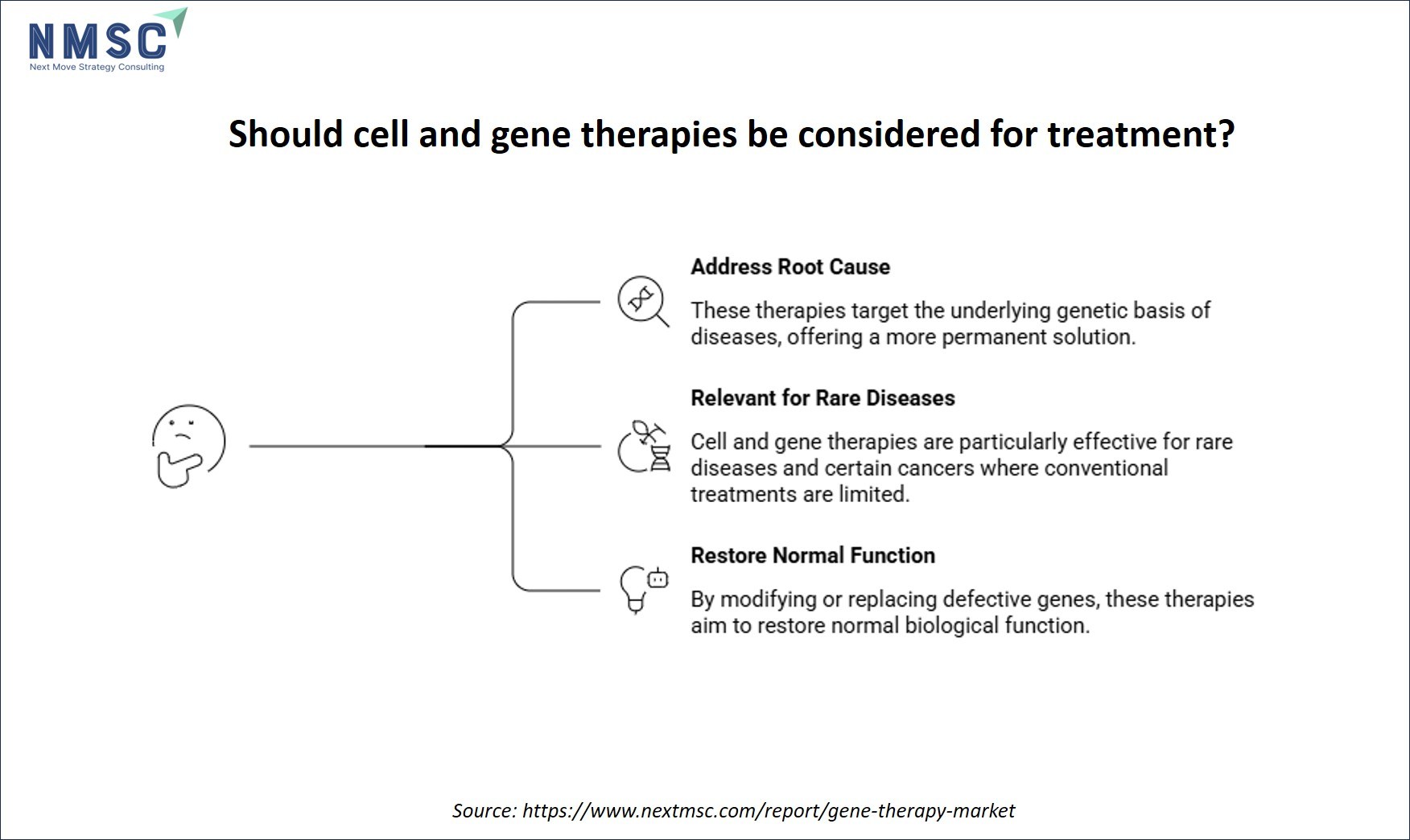
According to Bayer:
-
Cell and gene therapies aim to address diseases at their root cause
-
These therapies are particularly relevant for rare diseases and certain cancers
-
The approach involves modifying or replacing defective genes to restore normal function
Key Benefits of CGT
|
Benefit |
Explanation |
|
Root-cause treatment |
Targets genetic defects directly |
|
Long-term impact |
Potential for durable or one-time treatments |
|
Personalized medicine |
Tailored to individual genetic profiles |
Insights from Next Move Strategy Consulting indicate that the convergence of cell and gene therapy reflects a broader shift toward personalized healthcare, where treatments are increasingly tailored to individual patient profiles. While the therapeutic potential remains substantial, manufacturing complexity and evolving regulatory pathways are expected to play a critical role in determining adoption rates across global markets.
Gene Therapy Challenges: Vision Gains in nAMD
Despite its promise, gene therapy is not without limitations. A 2026 review focusing on neovascular age-related macular degeneration (nAMD) revealed that while gene therapy shows promise, it has not yet achieved meaningful improvements in vision outcomes.
Key findings:
-
Gene therapy demonstrated biological activity but limited functional vision improvement
-
Expectations for transformative outcomes have not yet been met
-
Further refinement is required in delivery mechanisms and therapeutic targets
Our observations at Next Move Strategy Consulting indicate that the gap between biological success and clinical outcomes represents a critical challenge in gene therapy development. While early-stage results remain encouraging, the ability to translate these advancements into measurable patient benefits will be a key factor influencing investor confidence and shaping future regulatory scrutiny.
Gene Therapy Market Trends in 2026
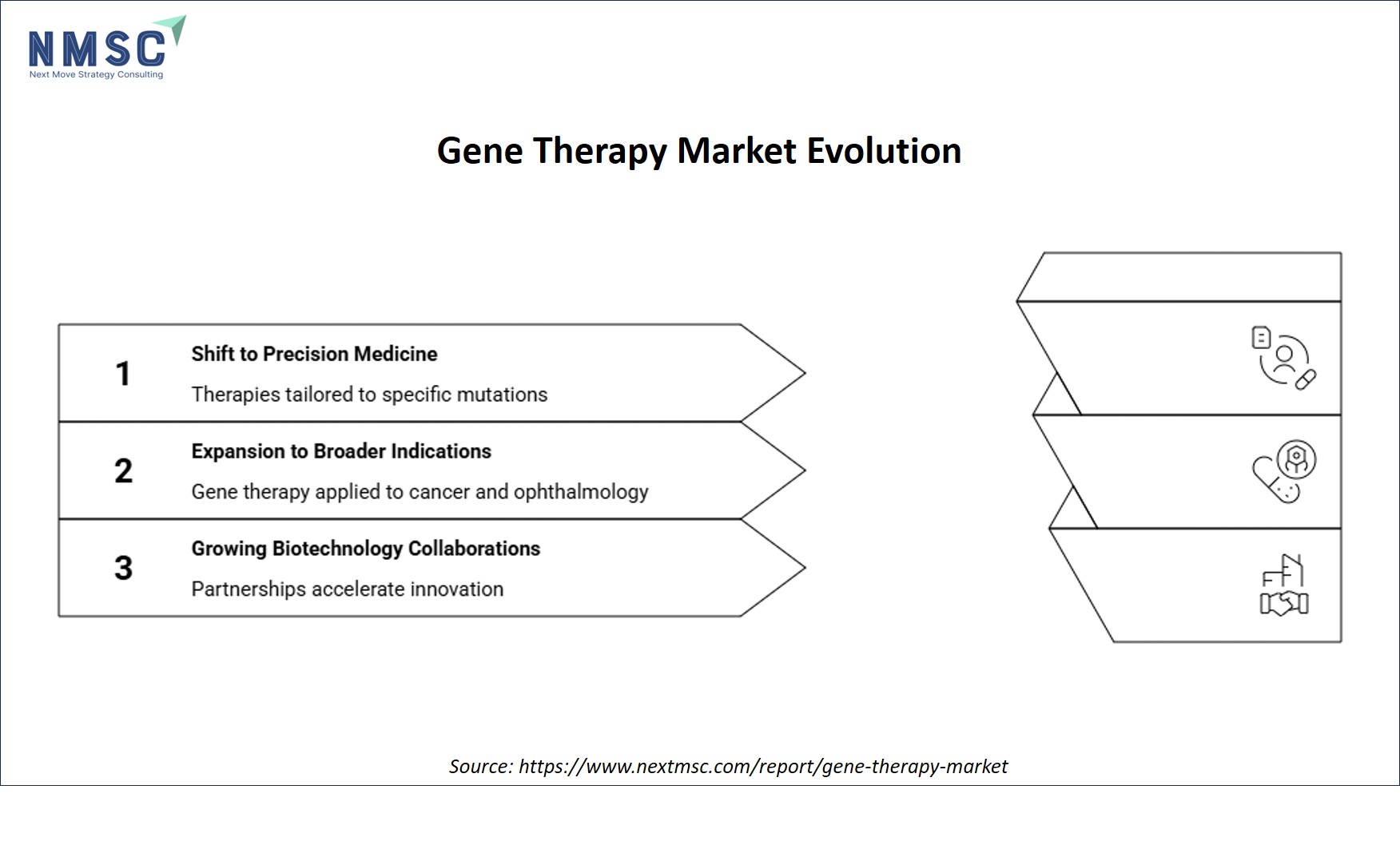
Several trends are shaping the trajectory of gene therapy:
-
Shift Toward Precision Medicine: Therapies are increasingly designed for specific genetic mutations, improving targeting accuracy.
-
Expansion Beyond Rare Diseases: While initially focused on rare conditions, gene therapy is now being explored for broader indications such as cancer and ophthalmology.
-
Growing Role of Biotechnology Collaborations: Partnerships between pharmaceutical companies and research institutions are accelerating innovation.
Analysis from Next Move Strategy Consulting suggests that the market is steadily moving beyond niche applications toward broader therapeutic areas. However, factors such as high treatment costs, infrastructure limitations, and evolving reimbursement models are expected to play a decisive role in shaping the pace and scale of long-term market expansion.
According to Next Move Strategy Consulting: Industry Impact
The latest developments in gene therapy are expected to have a multi-dimensional impact on the healthcare industry:
-
Innovation Acceleration: Breakthroughs such as tumour-targeting therapies will drive research investments
-
Clinical Expectations Reset: Mixed outcomes, particularly in ophthalmology, will lead to more cautious optimism
-
Regulatory Evolution: Authorities may introduce stricter evaluation frameworks to ensure efficacy and safety
-
Market Differentiation: Companies demonstrating real-world clinical benefits will gain competitive advantage
Our assessment indicates that the industry is entering a phase where proof of clinical value will matter more than early-stage promise.
Key Takeaways: Opportunities vs Challenges
Opportunities
-
Targeted treatment at the genetic level
-
Potential for long-lasting or one-time therapies
-
Expanding applications across multiple diseases
Challenges
-
Limited clinical outcome consistency
-
High development and manufacturing costs
-
Regulatory and scalability hurdles
Balancing innovation with practicality will define the next phase of gene therapy. While the scientific foundation is strong, commercial success will depend on demonstrating consistent patient outcomes and achieving cost efficiency.
Next Steps: Actionable Insights
-
Focus on Clinical Validation: Companies should prioritize late-stage trials that demonstrate measurable patient benefits.
-
Invest in Delivery Technologies: Improving how therapies are delivered will enhance effectiveness and reduce variability.
-
Strengthen Partnerships: Collaboration between biotech firms and healthcare providers can accelerate innovation.
-
Address Cost Barriers: Developing scalable manufacturing processes will be essential for broader adoption.
-
Monitor Regulatory Trends: Staying aligned with evolving guidelines will ensure smoother market entry.
Conclusion
Gene therapy in 2026 stands at a critical juncture. Breakthroughs in cancer treatment highlight its transformative potential, while challenges in areas like vision restoration underscore the complexity of translating science into real-world outcomes. As research advances and industry stakeholders refine their strategies, gene therapy is poised to play a central role in the future of medicine—provided it can bridge the gap between promise and performance.
About the Author
 Sanyukta Deb
— Sanyukta Deb is Digital Marketing Team Lead at Next Move Strategy Consulting, where she has led content strategy and technical SEO for the firm's B2B market research publications for over 2 years. Her editorial process translates NextMSC's primary and secondary research — spanning technology, industrial, and consumer sectors — into commercial narratives, backed by search-intent, keyword, and competitive analysis. She brings 5 years of overall experience in digital marketing and content strategy.
Sanyukta Deb
— Sanyukta Deb is Digital Marketing Team Lead at Next Move Strategy Consulting, where she has led content strategy and technical SEO for the firm's B2B market research publications for over 2 years. Her editorial process translates NextMSC's primary and secondary research — spanning technology, industrial, and consumer sectors — into commercial narratives, backed by search-intent, keyword, and competitive analysis. She brings 5 years of overall experience in digital marketing and content strategy.
About the Reviewer
 Debashree Dey
— Debashree Dey is Assistant Manager at Next Move Strategy Consulting, where she supports cross-vertical market content and communications across diverse industries for 6 years. Her professional background includes senior content writing, communications, and published manuscript authorship, with experience developing audience-focused business narratives and maintaining clear, consistent messaging. Her role supports research-led content development and editorial quality across NextMSC publications.
Debashree Dey
— Debashree Dey is Assistant Manager at Next Move Strategy Consulting, where she supports cross-vertical market content and communications across diverse industries for 6 years. Her professional background includes senior content writing, communications, and published manuscript authorship, with experience developing audience-focused business narratives and maintaining clear, consistent messaging. Her role supports research-led content development and editorial quality across NextMSC publications.

















Add Comment