How Are Connected Fleet Technologies Transforming Transportation?
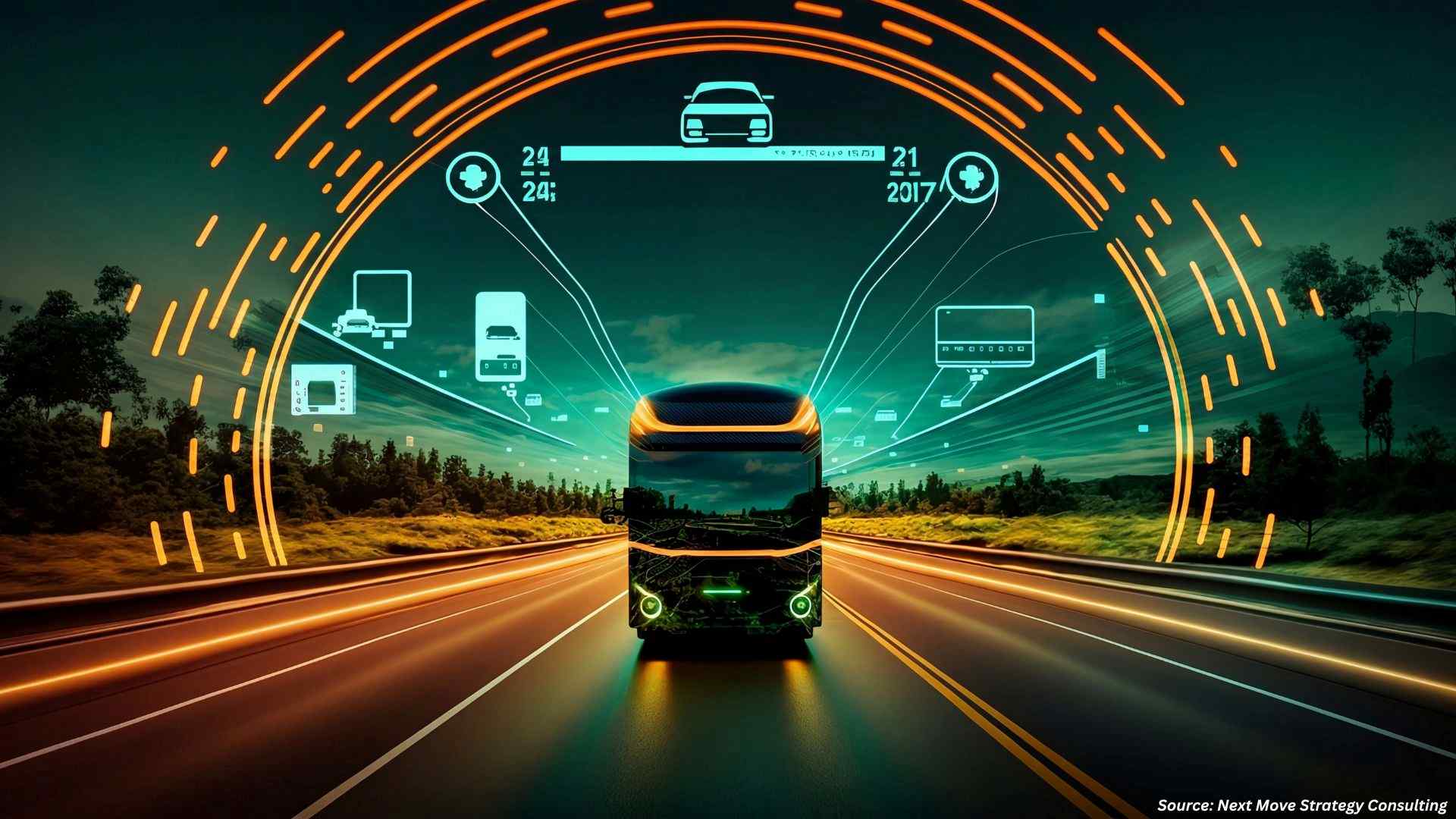
The Commercial Vehicle Telematics Market is entering a new era driven by connectivity, artificial intelligence (AI), and data-led fleet management. Fleet operators are increasingly adopting telematics systems to improve route planning, monitor vehicle health, reduce operational costs, and strengthen driver safety. At the same time, vehicle manufacturers and mobility technology providers are investing heavily in connected ecosystems that support real-time decision-making and smarter transportation networks.
Why Is AI Becoming Central to Fleet Intelligence?
The company’s platform combines data from smartphones, connected vehicles, dashcams, and Internet of Things (IoT) devices to generate real-time driving insights. This enables insurers and fleet operators to identify risky driving patterns faster and improve road safety measures. CMT stated that its platform is active across 25 countries and trusted by 21 of the top 25 United States auto insurers.
The increasing use of AI in telematics reflects a broader industry shift toward predictive and preventive fleet management. Instead of responding to accidents or maintenance failures after they occur, operators are now using real-time analytics to reduce risks before they escalate.

AI-Driven Capabilities in Modern Fleet Systems
|
Technology Function |
Operational Impact |
|
Real-time risk assessment |
Improves driver monitoring |
|
Crash detection systems |
Accelerates emergency response |
|
Predictive analytics |
Supports preventive maintenance |
|
Connected sensor integration |
Enhances fleet visibility |
|
Driver behavior analysis |
Helps reduce insurance costs |
CMT also reported that its platform has helped prevent more than 100,000 crashes globally while supporting 55 million drivers through 140 safety programs worldwide.
Commercial Vehicle Telematics Industry Focus Distribution
The pie chart highlights the major operational priorities shaping the commercial vehicle telematics industry. AI-based risk assessment holds the largest share at 28%, reflecting the growing importance of real-time driver monitoring, predictive analytics, and crash prevention technologies in fleet management.
Fleet connectivity accounts for 24% of the distribution, showing how transportation companies are increasingly investing in connected vehicle ecosystems to improve operational visibility and route efficiency. Driver safety represents 20%, emphasizing the industry’s focus on reducing accidents and improving compliance through telematics-enabled monitoring systems.
Predictive maintenance contributes 18%, as fleet operators continue adopting data-driven maintenance strategies to minimize downtime and optimize vehicle performance. Sustainable mobility holds 10% of the share, driven by the increasing adoption of electric, LNG, and hydrogen-powered commercial vehicles supported by connected telematics solutions.
Overall, the chart demonstrates how AI integration, connectivity, and operational efficiency are becoming central to modern commercial fleet strategies.

How Is Digital Connectivity Improving Commercial Vehicles?
The commercial vehicle industry is also accelerating its digital transformation initiatives. In July 2025, Ashok Leyland outlined its strategy to become one of the world’s top 10 commercial vehicle manufacturers.
The company emphasized that digitalization is becoming increasingly important for fleet management as operators demand better visibility into vehicle performance, fuel efficiency, and maintenance schedules. Connected systems are expected to help fleet operators make quicker operational decisions while reducing downtime.
Ashok Leyland also highlighted its focus on electric, LNG, and hydrogen-powered commercial vehicles. The integration of telematics into these next-generation vehicles is expected to support more intelligent energy management and optimized route planning.
Key Areas of Commercial Vehicle Transformation
|
Focus Area |
Strategic Objective |
|
Advanced telematics integration |
Better fleet monitoring |
|
Connectivity solutions |
Improved operational efficiency |
|
Alternative propulsion systems |
Sustainable transportation |
|
Digital fleet management |
Faster data-driven decisions |
|
International expansion |
Wider connected mobility adoption |
What Major Trends Are Shaping Fleet Technologies?
One of the most important trends in telematics is the growing use of AI for real-time driver risk assessment. Advanced systems can now analyze driving behavior instantly and provide actionable insights that help reduce accidents and operational costs.
Another significant trend is the integration of multi-source data systems. Modern telematics platforms combine information from connected vehicles, smartphones, dashcams, and IoT sensors to create a unified operational view. This allows fleet operators to monitor performance more accurately and improve decision-making.
Sustainability is also influencing the direction of fleet technologies. Manufacturers are increasing investments in electric and alternative-fuel commercial vehicles, while connected telematics systems are helping monitor efficiency and vehicle utilization.
In addition, global expansion strategies from commercial vehicle manufacturers are accelerating the adoption of smart mobility technologies across emerging transportation markets.
Visual Overview of Connected Fleet Technologies

Leading Companies Strengthening Competitive Positioning
Key companies operating across the commercial vehicle telematics industry include Geotab Inc., Samsara Inc., Verizon Connect Inc., Powerfleet Inc., Omnitracs LLC, Motive Technologies Inc., Teletrac Navman Inc., Webfleet Solutions B.V., Lytx Inc., CalAmp Corp., Zonar Systems Inc., Platform Science Inc., Microlise Ltd., ORBCOMM Inc., and GPS Trackit LLC. These companies are actively focusing on partnerships, connectivity innovation, and digital fleet management strategies to strengthen their market presence and maintain competitive advantage.

Next Steps for Fleet Operators
Fleet operators should evaluate AI-enabled telematics platforms that support real-time monitoring and predictive analytics. Companies can also strengthen operational efficiency by integrating connected vehicle systems that improve fleet visibility and maintenance planning.
As sustainability goals continue influencing transportation strategies, organizations may benefit from investing in digitally connected electric or alternative-fuel commercial vehicles. Strategic partnerships with mobility technology providers can further support long-term fleet modernization initiatives.
-
Evaluate AI-powered telematics platforms for real-time fleet monitoring.
-
Integrate connected vehicle systems to improve operational visibility.
-
Invest in predictive maintenance tools to reduce vehicle downtime.
-
Explore electric, LNG, and hydrogen-powered commercial vehicle solutions.
-
Build technology partnerships to strengthen long-term fleet efficiency.
Conclusion
Telematics is becoming a foundational technology across commercial transportation. AI-powered analytics, connected vehicle ecosystems, and digital fleet management platforms are helping operators improve safety, reduce operational inefficiencies, and strengthen long-term sustainability strategies.
As investments in connected mobility continue to expand, fleet technologies are expected to play a central role in shaping smarter and more efficient transportation networks worldwide.
About the Author
 Tania Dey is a content writer specializing in transformation-led, insight-driven storytelling. She develops research-backed, high-impact content aligned with evolving business priorities, digital behavior, and audience expectations. Her work helps organizations sharpen value propositions, strengthen visibility, and communicate strategic intent with clarity and precision. Grounded in data-informed storytelling, she brings a strong focus on relevance, consistency, and measurable digital impact across platforms.
About the Reviewer
 Sanyukta Deb is a senior content writer and content analyst with expertise in content strategy, audience engagement, and research-driven storytelling. With a strong leadership approach and strategic mindset, she drives content initiatives that strengthen brand communication and audience connection. She combines creativity with analytical insight to develop impactful, value-led content while mentoring collaborative efforts across teams to ensure consistent, meaningful engagement and long-term brand growth across digital platforms.












Add Comment