How Cyber Defense Is Transforming National Security?

Cyber threats have become a critical concern for defense organizations as military systems, communications networks, and operational platforms increasingly rely on digital technologies. Protecting these assets requires advanced cyber defense strategies capable of detecting threats, preventing breaches, and maintaining operational continuity. Governments and technology providers are strengthening cyber capabilities through partnerships, policy reforms, and investment in resilient security frameworks. Recent developments indicate that defense cybersecurity is evolving through collaboration between public institutions and private technology providers. These efforts are helping nations build stronger digital protection systems while ensuring interoperability with allied networks.
Why Defense Cybersecurity Market Partnerships Are Driving Innovation?
Strategic acquisitions and partnerships are expanding cyber defense capabilities and enabling organizations to strengthen their security offerings across regions. A recent example is the merger between Stefanini Group and Cyber Smart Defense, which enhances cybersecurity capabilities in Europe.
Stefanini Group initiated a merger to acquire 100% of Cyber Smart Defense’s Romanian operations, strengthening its cybersecurity delivery capabilities and expanding service coverage across the European region. The partnership builds on collaboration that began in 2020 and supports continued investment in cyber resilience and risk mitigation solutions.
The company has acquired more than 40 organizations and has structured its global portfolio into seven business units, including a dedicated cybersecurity division that focuses on threat prevention and risk management. Industry observations indicate that partnerships and acquisitions are strengthening cyber defense capabilities by expanding expertise, improving threat visibility, and supporting the deployment of integrated security solutions across defense-related networks.
Driving Global Cyber Resilience through Strategic Infrastructure Reform
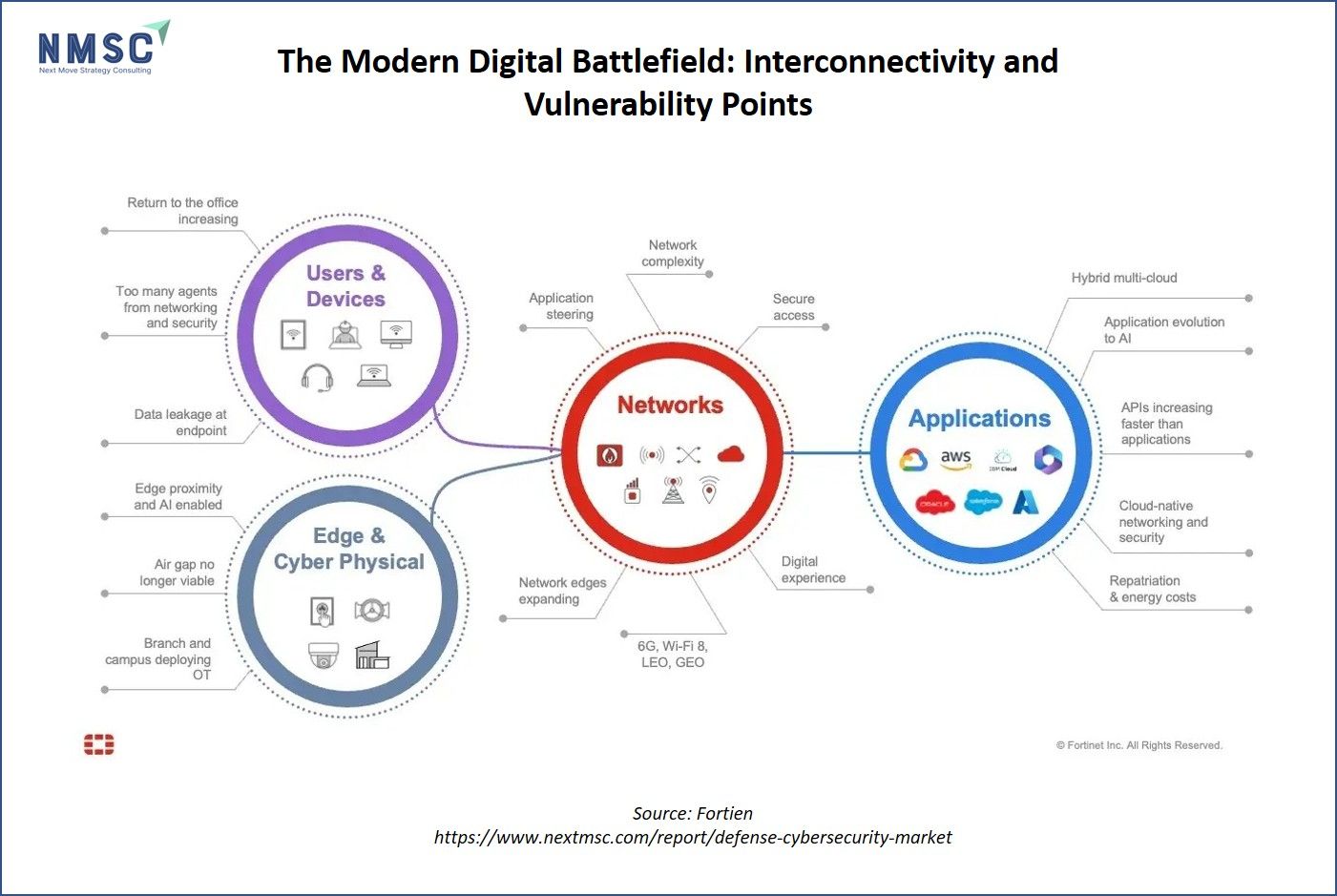
The defense cybersecurity market is currently undergoing a significant structural transformation as global technology leaders and industry coalitions work to bridge the gap between antiquated bureaucratic processes and the rapid innovation of sophisticated threat actors. A primary challenge facing the sector is the reliance on outdated Foreign Military Sales (FMS) and Foreign Military Financing (FMF) frameworks, which were not originally designed to accommodate the fast-moving, sustainable, and interoperable nature of modern digital resilience. To address these resource asymmetries and the breakdown of traditional security perimeters such as the loss of viable "air gaps" in cyber-physical systems firms like the Stefanini Group are initiating strategic mergers, such as the 100% acquisition of Cyber Smart Defense’s Romanian operations in 2025, to offer end-to-end delivery models that better understand and mitigate risk. Simultaneously, the formation of the Strategic Cybersecurity Coalition (SCC) by major players like Google Cloud and Dell Technologies highlights a collective push to modernize U.S. international assistance, ensuring that allied nations can adopt U.S. cybersecurity solutions at a pace commensurate with emerging threats. As network complexity increases through the expansion of 6G, Wi-Fi 7, and LEO satellite edges, the market is shifting toward AI-powered portfolios and co-creative approaches to maintain a global operational advantage.
A Landscape of Persistent Friction
-
The defense cybersecurity market is currently restricted by bureaucratic and technical "bottlenecks" that prevent rapid response to modern threats.
-
Administrative Lag: Fragmented FMS data and outdated funding models delay critical security aid to allied nations.
-
Technical Debt: Legacy hardware from the 1990s complicates the rollout of end-to-end encryption and zero-trust models.
-
Human Capital: A severe shortage of specialized, security-cleared talent hinders the growth of managed security services.
How Defense Cybersecurity Market Initiatives Are Strengthening Global Security?
International cooperation is becoming increasingly important in strengthening cyber defense across allied nations. Governments and technology providers are working together to modernize cybersecurity assistance programs and improve digital resilience.
The Strategic Cybersecurity Coalition (SCC) was formed by six technology companies to modernize United States international cybersecurity assistance programs and strengthen global cyber defense capabilities. The coalition includes Carahsoft, Dell Technologies, Forescout Technologies, Google Cloud, Trellix, and Velos.
The initiative focuses on reforming foreign military sales and foreign military financing processes so that cybersecurity solutions can be delivered more effectively to allied nations. These reforms aim to enhance collective defense and improve operational security across interconnected defense networks.The coalition also seeks to strengthen digital resilience across global networks by promoting sustainable and interoperable cybersecurity solutions that can respond effectively to evolving cyber threats.
Navigating the 2025 Cyber-Physical Frontier: Challenges and Innovation
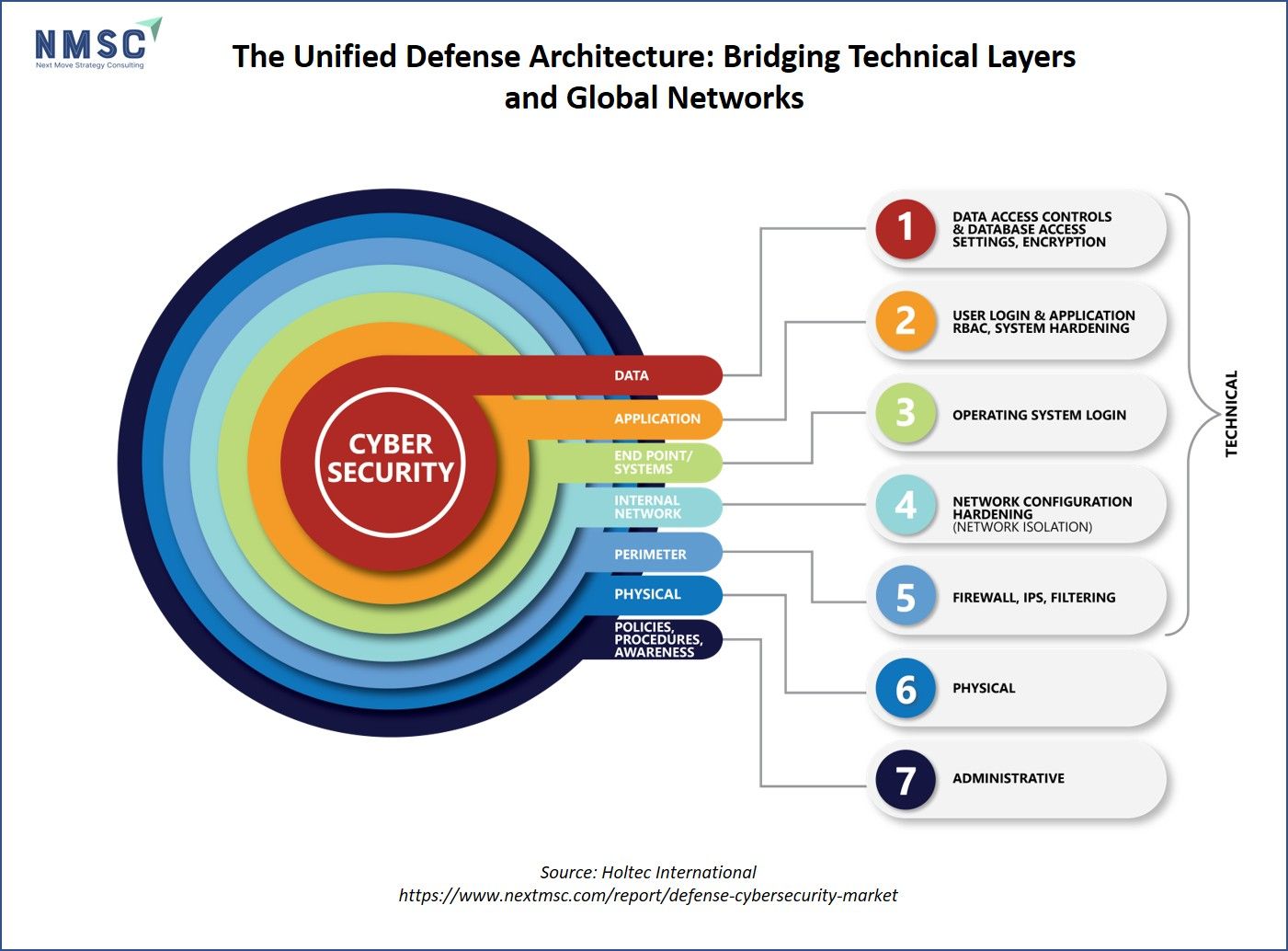
The 2025 cyber-physical frontier is defined by a rapid expansion of network edges including 6G, Wi-Fi 7, and LEO/GEO satellite connections that has rendered traditional "air gaps" no longer viable for protecting sensitive defense infrastructure. As branch and campus deployments increasingly integrate operational technology (OT), the defense cybersecurity market faces intensified "resource asymmetries" from sophisticated threat actors who innovate at a faster pace than antiquated government procurement cycles. To maintain an operational advantage, industry-led initiatives like the Strategic Cybersecurity Coalition (SCC) founded by leaders such as Google Cloud and Dell Technologies are advocating for the modernization of Foreign Military Sales (FMS) to deliver interoperable, cloud-native security solutions to allied nations. Simultaneously, global firms like the Stefanini Group are utilizing a "co-creative approach" and strategic acquisitions, such as the 100% takeover of Cyber Smart Defense, to build a world-class ecosystem capable of managing the complex evolution of AI-driven applications and hybrid multi-cloud environments. This transformation requires a shift toward end-to-end delivery models that prioritize data access controls and network configuration hardening to secure the diverse array of users and devices returning to the modern digital battlefield.
What Challenges Does the Defense Cybersecurity Market Face?
Despite continued progress, several challenges affect the implementation of cyber defense strategies. Sophisticated threat actors continue to evolve rapidly and exploit resource gaps between nations, making coordinated cybersecurity efforts essential.
Rapidly advancing cyber threats require governments to build stronger digital resilience across global networks through sustainable and interoperable cybersecurity solutions. Legacy procurement and funding processes also slow the deployment of cybersecurity technologies, highlighting the need for modernization and policy reform to support faster implementation.
Antiquated Procurement and Funding Models
One of the most significant barriers to an effective global defense is the "Foreign Military Sales (FMS) Data Dilemma." Current systems for tracking and financing international defense aid are often fragmented across multiple disconnected databases.
-
Data Inaccuracy: A Department of Defense (DOD) audit found that agencies failed to accurately record receipt of foreign partner letters in nearly 90% of sampled cases.
-
Bureaucratic Latency: The current FMS process relies on consensus rather than directive authority, leading to delays that prevent the "commensurate pace" needed to fight digital threats.
The AI-Driven "Resource Asymmetry"
Adversaries are now using generative AI to lower the entry barrier for cyberattacks. This has led to a 35% increase in intrusion attempts targeting strategic defense infrastructures in 2024 alone.
-
Evasive Techniques: Threat actors use AI to create polymorphic malware that bypasses traditional antivirus tools and "deepfake" audio to compromise leadership.
-
The Preparedness Gap: By 2025, nearly 75% of organizations reported a rise in cyber risks, yet only 30% of security professionals feel "very prepared" to defend against high-level threats like ransomware.
Fragmented Legacy Systems
Militaries are currently managing "weapon systems built in the 1990s" that cannot handle modern encryption without significant performance trade-offs.
-
The Integration Struggle: Replacing these systems spans decades, forcing contractors to build "wrapper solutions" that retrofit zero-trust principles onto outdated source code.
-
Interoperability Issues: Each service branch often maintains platform-specific protocols, making it difficult to establish a unified global cyber defense.
The Specialized Talent Shortage
As defense cybersecurity moves toward hybrid profiles combining technical cyber skills with sector-specific military knowledge the talent gap has reached a critical point.
-
The Skills Gap: Gartner reports that the shortage of cybersecurity specialists remains a top barrier to digital transformation in 2025.
-
Classified Project Delays: The lengthy "Authority-to-Operate" (ATO) and security-clearing processes further delay the deployment of skilled personnel to mission-critical projects.
Key Players Shaping the Defense Cybersecurity Industry
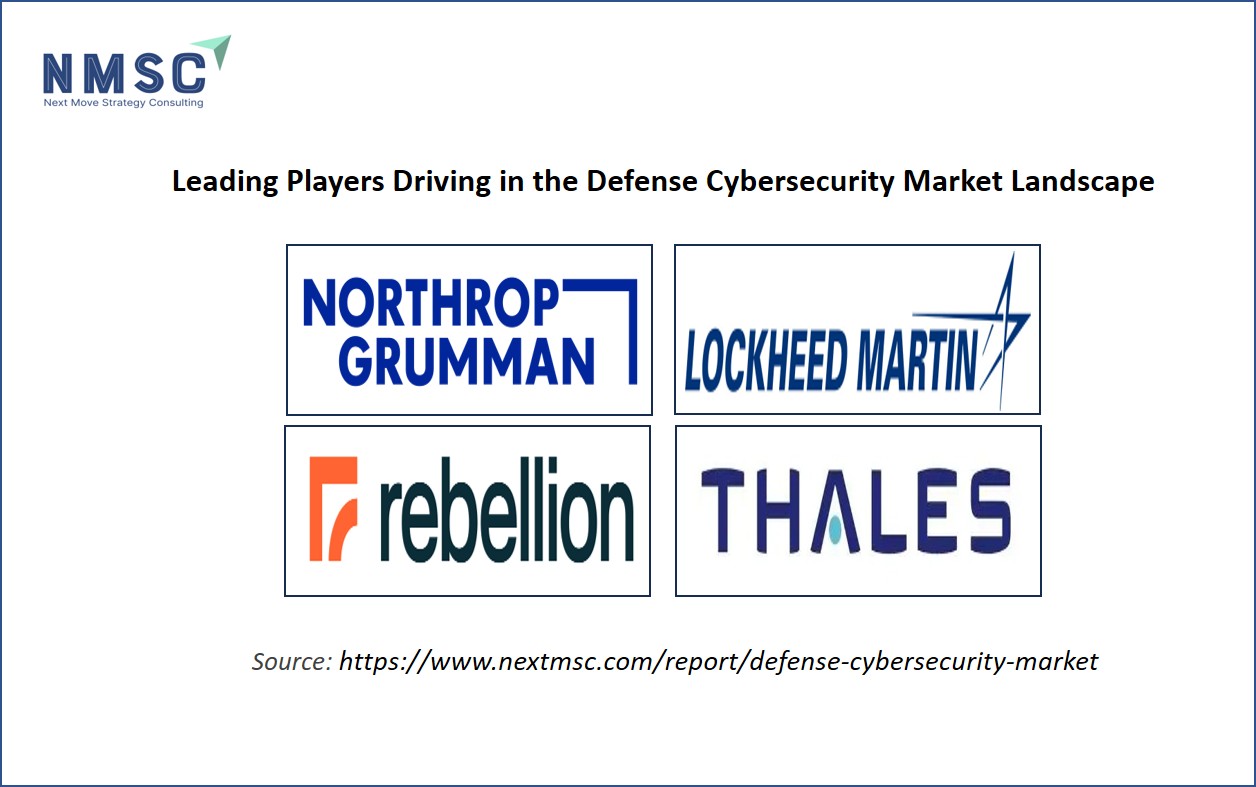
The defense cybersecurity industry includes several major companies such as Booz Allen Hamilton Inc., Lockheed Martin Corporation, Northrop Grumman Corporation, Rebellion Defense, Inc., Thales Group, Leidos Holdings, Inc., L3Harris Technologies, Inc., BAE Systems plc, CACI International Inc., and ManTech International Corporation, among others. These organizations are actively pursuing strategies such as product innovation and strategic partnerships to strengthen their technological capabilities and sustain their competitive positions within the industry.
Defense Cybersecurity Market Ecosystem Overview
The cyber defense ecosystem continues to evolve through technology investments and policy-driven initiatives. Industry expansion through acquisitions is strengthening cybersecurity capabilities, while government-supported coalitions are improving collective defense preparedness. Policy reforms are enabling faster deployment of cybersecurity solutions, and rising threat complexity is increasing the need for resilient defense systems. The cyber defense ecosystem is developing through coordinated industry and government initiatives. The ecosystem is becoming more interconnected. Collaboration is enabling growth. Resilience remains the primary objective.
Next Steps
-
Strengthen Strategic Cybersecurity Partnerships: Organizations should collaborate with trusted cybersecurity providers and technology partners to improve protection capabilities and share threat intelligence across defense networks.
-
Modernize Cyber Defense Infrastructure: Defense agencies should upgrade legacy systems with interoperable cybersecurity solutions to improve resilience and support secure communication with allied networks.
-
Enhance Cyber Resilience Planning: Institutions should implement continuous monitoring and risk mitigation frameworks to identify threats early and maintain operational security.
-
Align with Global Cybersecurity Initiatives: Organizations should participate in international cybersecurity programs and policy initiatives to support coordinated defense strategies and improve collective security.
Final Conclusion
Cyber defense is becoming a defining element of national security as digital systems continue to support defense operations worldwide. Strategic acquisitions and international coalitions demonstrate how collaboration is strengthening cyber resilience and enabling more secure defense environments. Organizations that invest in modernization and cooperative security frameworks will be better positioned to address future cyber threats.
About the Author
 Sanyukta Deb
— Sanyukta Deb is Digital Marketing Team Lead at Next Move Strategy Consulting, where she has led content strategy and technical SEO for the firm's B2B market research publications for over 2 years. Her editorial process translates NextMSC's primary and secondary research — spanning technology, industrial, and consumer sectors — into commercial narratives, backed by search-intent, keyword, and competitive analysis. She brings 5 years of overall experience in digital marketing and content strategy.
Sanyukta Deb
— Sanyukta Deb is Digital Marketing Team Lead at Next Move Strategy Consulting, where she has led content strategy and technical SEO for the firm's B2B market research publications for over 2 years. Her editorial process translates NextMSC's primary and secondary research — spanning technology, industrial, and consumer sectors — into commercial narratives, backed by search-intent, keyword, and competitive analysis. She brings 5 years of overall experience in digital marketing and content strategy.
About the Reviewer
 Debashree Dey
— Debashree Dey is Assistant Manager at Next Move Strategy Consulting, where she supports cross-vertical market content and communications across diverse industries for 6 years. Her professional background includes senior content writing, communications, and published manuscript authorship, with experience developing audience-focused business narratives and maintaining clear, consistent messaging. Her role supports research-led content development and editorial quality across NextMSC publications.
Debashree Dey
— Debashree Dey is Assistant Manager at Next Move Strategy Consulting, where she supports cross-vertical market content and communications across diverse industries for 6 years. Her professional background includes senior content writing, communications, and published manuscript authorship, with experience developing audience-focused business narratives and maintaining clear, consistent messaging. Her role supports research-led content development and editorial quality across NextMSC publications.


















Add Comment