How Global and Domestic Solution Providers Are Driving Innovation, Sustainability, and Operational Efficiency in the Intralogistics Software Market?
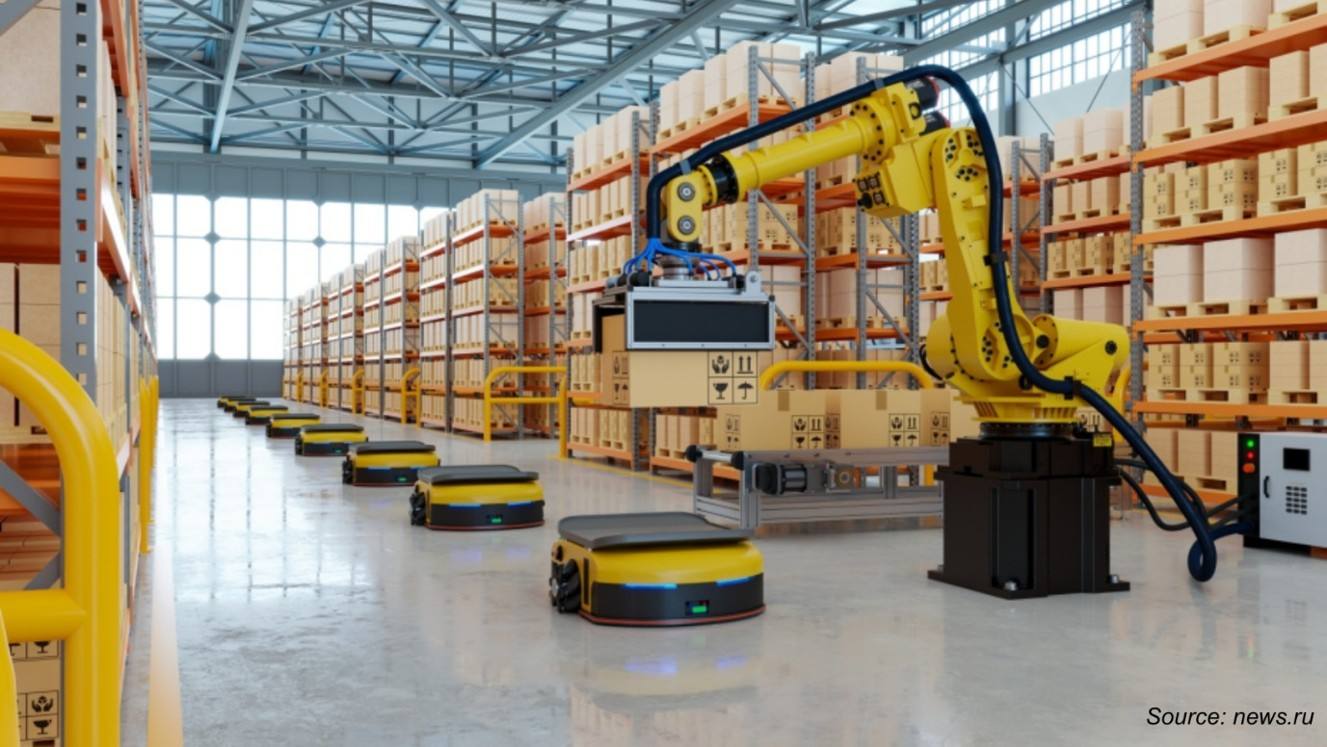
As per NMSC analysis, the Intralogistics Software Market size was valued at USD 11.30 billion in 2025, and is expected to be valued at USD 13.22 billion by the end of 2026. The industry is projected to grow, hitting USD 49.12 billion by 2035, with a CAGR of 15.83% between 2026 and 2035. Investment momentum across warehouse digitalisation, robotics coordination, and real-time visibility platforms is increasingly supporting growth in the intralogistics software market, alongside rising operational demand for traceable, data-driven, and performance-optimised material handling. Based on our observations, we found that the adoption of AI-enabled orchestration engines, predictive analytics modules, digital twin modelling, and interoperable control layers is reshaping how enterprises manage inventory flows, asset utilisation, and downstream fulfilment coordination. Concurrently, intensifying requirements for faster throughput, labour optimisation, and scalable automation across e-commerce, manufacturing, and distribution environments are opening new avenues for software-centric value creation. Our assessment indicates that ongoing advances in platform integration, standards-based interoperability, and analytics-guided decision support are positioning the intralogistics software ecosystem to become more resilient, adaptive, and strategically aligned with evolving supply chain complexity in the years ahead.
Want Insights on the Intralogistics Software Market? Access a FREE Sample Instantly
Intralogistics Software Market Overview
From our discussions with solution providers and warehouse operators, we observe that the intralogistics software market is undergoing structural evolution driven by automation expansion, data-centric decision frameworks, and supply chain modernization. Growing demand for real-time visibility, adaptive throughput management, and scalable fulfilment across e-commerce, manufacturing, and distribution environments is encouraging organizations to adopt orchestration platforms, AI-enabled analytics, and interoperable control architectures. At the same time, operational cost pressures, labour constraints, and resilience priorities are accelerating investment in platform integration, predictive optimisation, and process transparency across both large enterprise deployments and specialised facilities. We further observe that the transition toward connected logistics ecosystems is expanding market accessibility and strengthening operational resilience. Moreover, workflow synchronisation, digital twin simulation, and performance monitoring tools are enabling enterprises to improve utilisation rates, ensure execution consistency, and maintain compliance with service expectations. These advancements support planning confidence and execution reliability while reinforcing the sector’s movement toward intelligent, software-coordinated material handling environments.
Leading participants shaping the intralogistics software landscape include DEMATIC, Vanderlande Industries B.V., KNAPP AG, SSI SCHAEFER, Daifuku Co., Ltd., TGW LOGISTICS, Bastian Solutions, LLC, Jungheinrich AG, BEUMER Group, AutoStore, Kardex, Mecalux, S.A., KUKA AG, SAP SE, Korber AG, Murata Machinery, Ltd., FORTNA Inc., System Logistics S.p.A., and Fives Group. From our market interactions, we found that these organizations strengthen competitiveness through orchestration innovation, robotics integration, software modularity, and application-focused platform development. By enhancing execution precision, scalability alignment, and workflow customization, they address evolving technical requirements across fulfilment and production ecosystems.
Our observations further indicate that these industry participants are guiding the intralogistics software sector toward its next phase of development, where interoperability, predictive optimisation, and automation-centric intelligence become central to strategic positioning. Therefore, this progression reflects applied sector familiarity and methodological rigour, demonstrating how software-led intralogistics solutions are increasingly aligned with long-term efficiency, resilience readiness, and competitiveness across modern supply chain environments.

Highlights of Jungheinrich AG

From our discussions with warehouse operators and procurement specialists across intralogistics software deployment environments, we observe that Jungheinrich AG plays a strategic role in enabling software-coordinated material handling and automation execution. Industry participants frequently emphasise the importance of system reliability, interoperability, and lifecycle support capabilities, areas where the company’s integrated approach to warehouse management software, automation control, and equipment connectivity supports operational planning and execution continuity. These practitioner interactions indicate that access to solutions backed by technical validation, performance documentation, and implementation expertise strengthens enterprise confidence in scaling fulfilment, manufacturing, and distribution workflows while supporting long-term efficiency objectives.
Through continued market evaluation, we further observed that the company’s positioning has been reinforced by expansion initiatives aligned with evolving automation demand. In January 2025, Jungheinrich completed the acquisition of Storage Solutions, a U.S.-based provider of racking and warehouse automation solutions, strengthening its presence in a high-growth automation market and advancing its Strategy 2025+ objectives. Stakeholders highlight that this step enhances integration depth between software orchestration and physical infrastructure, improving deployment flexibility and execution visibility for multinational operators. Moreover, our assessment suggests that the organisation’s emphasis on scalable architecture design, collaborative client engagement, and operational traceability contributes to improved workflow predictability and system transparency. By combining domain expertise with expansion-driven capability enhancement, Jungheinrich continues to influence execution resilience, technology alignment, and sustained trust across the evolving intralogistics software ecosystem.
Highlights of Dematic

Based on our interviews with procurement specialists across intralogistics software deployment environments, we observe that Dematic maintains a strong presence by enabling software-coordinated warehouse execution, robotics orchestration, and goods-flow optimisation across retail, manufacturing, and e-commerce fulfilment settings. Its operational emphasis on scalable warehouse management platforms, system interoperability, and performance-validated automation integration aligns with increasing enterprise focus on execution reliability and throughput predictability. Access to solutions designed for real-time task coordination and adaptive workflow management allows downstream operators to align operational planning with data-driven performance monitoring, strengthening deployment confidence in sectors prioritising resilience and responsiveness.
Moreover, our analysis indicate that Dematic’s market relevance is reinforced by collaboration-driven ecosystem expansion and technology integration initiatives. In January 2026, the company entered a European integration partnership with Hai Robotics to combine its automation capabilities with autonomous mobile robot solutions, supporting more flexible and scalable warehouse robotics coordination and expanding goods-to-picker execution options for regional operators. Stakeholders frequently identify integration flexibility, orchestration depth, and deployment advisory support as differentiating factors when selecting solution partners. Consequently, our research suggests that Dematic’s emphasis on interoperability-centred innovation, partnership enablement, and execution transparency contributes to operational continuity, scalability alignment, and process efficiency, reinforcing its role within the evolving intralogistics software ecosystem.
Highlights of Midea Group Co., Ltd.

Headquartered in China, Midea Group has established an expanding role within the intralogistics software market through its integrated focus on automation technologies, robotics capabilities, and digital warehouse coordination solutions. Leveraging its industrial automation portfolio and technology ecosystem, the company supports logistics operators and manufacturers with software-enabled execution environments that enhance material-handling precision and throughput visibility. Its strategic emphasis on scalable system design, interoperability, and resource-efficient automation deployment enables organizations to align operational performance with evolving efficiency and reliability expectations. Through ongoing investment in robotics innovation, platform development, and integration expertise, Midea contributes to strengthening the resilience and adaptability of modern intralogistics execution ecosystems.
Based on our market observations, we found that the company’s positioning is reinforced by its focus on technology integration, deployment scalability, and infrastructure compatibility. Initiatives centred on intelligent robotics coordination, system connectivity, and solution standardisation demonstrate commitment to operational continuity and optimisation across warehouse environments. Furthermore, insights validated through industry engagements suggest that Midea’s emphasis on automation reliability, process enhancement, and collaborative ecosystem development supports competitiveness in increasingly complex fulfilment settings. By combining engineering expertise, digital innovation, and operational discipline, Midea Group continues to play a meaningful role in enabling dependable, future-oriented intralogistics software adoption across global logistics and distribution landscapes.
Highlights of Honeywell International Inc.

Grounded in reviewed corporate disclosures gathered across warehouse automation ecosystems, we found that Honeywell demonstrates an established presence within the intralogistics software market through its specialised focus on digital execution platforms, automation integration, and data-enabled operational visibility. Operating across global logistics and distribution environments, the company delivers software-driven orchestration tools that support material-flow coordination, workforce allocation, and process optimisation for manufacturing, retail, and e-commerce fulfilment settings. Its operational approach centres on system interoperability, analytics-enabled decision support, and lifecycle-conscious infrastructure design, enabling customers to meet throughput reliability targets while aligning with evolving efficiency and sustainability expectations. Continued investments in platform capability expansion, workflow optimisation, and solution integration contribute to strengthening responsiveness and reliability within the broader intralogistics software ecosystem.
Based on our observations and validated industry developments, we assessed that the company’s market positioning is further reinforced by recent strategic initiatives enhancing automation connectivity and scalability. In March 2025, Honeywell introduced a cloud-based Warehouse Execution Software platform designed to provide real-time operational data visibility, AI-enabled insights, and flexible orchestration across distribution networks. Additionally, in May 2025, the company entered a partnership with Teradyne Robotics to deploy autonomous mobile robots and collaborative robotic solutions integrated with its Momentum WES, supporting intelligent material transport and scalable warehouse automation across the Americas and Europe. These developments indicate a continued focus on deployment adaptability, performance transparency, and integration depth. Therefore, by combining digital engineering expertise, structured innovation governance, and ecosystem collaboration, Honeywell contributes to advancing operational predictability, scalability, and long-term resilience within modern intralogistics software environments.
Highlights of Daifuku Co Ltd.

Within the intralogistics software market, insights gathered through our discussions with warehouse operators and procurement specialists indicate that Daifuku Co., Ltd. plays a functional role in supporting operational continuity through its automation- and software-centric solutions portfolio. Industry participants consistently emphasise the need for reliable execution visibility, adaptable throughput capacity, and coordinated material-flow control, requirements shaped by dynamic fulfilment cycles across manufacturing, retail, and distribution environments. Our analysis further suggests that Daifuku’s platform-oriented orchestration and warehouse control capabilities assist customers in maintaining process stability, reducing execution uncertainty, and improving short-term operational planning across increasingly complex logistics settings.
Our observations within the global automation ecosystem further indicates that the company’s positioning is reinforced by structured attention to integration governance, lifecycle system monitoring, and coordinated deployment execution, factors gaining importance under rising performance accountability and compliance expectations. Therefore, from our assessment, Daifuku’s emphasis on execution transparency, interoperability alignment, and service responsiveness contributes to workflow continuity and efficiency across the intralogistics software value chain, supporting stability within evolving digital logistics environments.
Summary of Intralogistics Software Market
The intralogistics software market is advancing through a phase of measured transformation driven by expanding digitalisation agendas, infrastructure scaling, and increasingly complex fulfilment requirements across manufacturing, retail, e-commerce, and distribution settings. Based on our analytical reviews, we observe that enterprises are placing stronger emphasis on real-time operational visibility, coordinated automation execution, and analytics-led decision frameworks to sustain productivity and efficiency outcomes. Legacy warehouse management practices are progressively being complemented by orchestration platforms, AI-enabled forecasting, and integrated execution environments that strengthen traceability, asset utilisation, and cost discipline. As deployment requirements become more performance-specific, vendors and adopters are prioritising modular system architectures, cross-platform interoperability, and dependable execution continuity to sustain competitive differentiation.
From our ecosystem-level evaluations, we further noticed that procurement stakeholders increasingly value platform resilience, measurable performance transparency, and responsive lifecycle support when selecting solution partners. The market therefore reflects a balance between technological advancement and operational practicality, with organisations aligning software innovation, automation convergence, and process modernisation to evolving compliance and customer expectations. As data maturity, optimisation capabilities, and interconnected execution models deepen across logistics environments, intralogistics software is positioned to evolve into a more resilient, intelligence-centric coordination layer, reinforcing its strategic importance within next-generation industrial and distribution operations.
About the Author
 Tushmi Dutta
— Tushmi Dutta is a focused researcher specializing in detailed analysis and insight-driven research across diverse business landscapes. She supports strategic initiatives through structured data interpretation, thorough validation, and clear communication of findings that aid informed decision-making. With a strong interest in writing, she enjoys presenting research insights in an engaging and accessible manner. Beyond work, she enjoys traveling, reading, painting, and continuously learning new skills that contribute to her creative and professional growth.
Tushmi Dutta
— Tushmi Dutta is a focused researcher specializing in detailed analysis and insight-driven research across diverse business landscapes. She supports strategic initiatives through structured data interpretation, thorough validation, and clear communication of findings that aid informed decision-making. With a strong interest in writing, she enjoys presenting research insights in an engaging and accessible manner. Beyond work, she enjoys traveling, reading, painting, and continuously learning new skills that contribute to her creative and professional growth.
About the Reviewer
 Sikha Haritwal
— Sikha Haritwal is an assistant manager with strong expertise in market research, data analysis, and cross-functional coordination. She plays a key role in leading complex research initiatives, strengthening analytical rigor, and enabling data-driven decision-making across teams. Known for her leadership mindset and structured problem-solving approach, she supports process improvement, enhances operational efficiency, and contributes to building scalable frameworks that drive long-term strategic outcomes and organizational effectiveness.
Sikha Haritwal
— Sikha Haritwal is an assistant manager with strong expertise in market research, data analysis, and cross-functional coordination. She plays a key role in leading complex research initiatives, strengthening analytical rigor, and enabling data-driven decision-making across teams. Known for her leadership mindset and structured problem-solving approach, she supports process improvement, enhances operational efficiency, and contributes to building scalable frameworks that drive long-term strategic outcomes and organizational effectiveness.

















Add Comment