How Top Companies Innovate & Transform the Global Battery Market
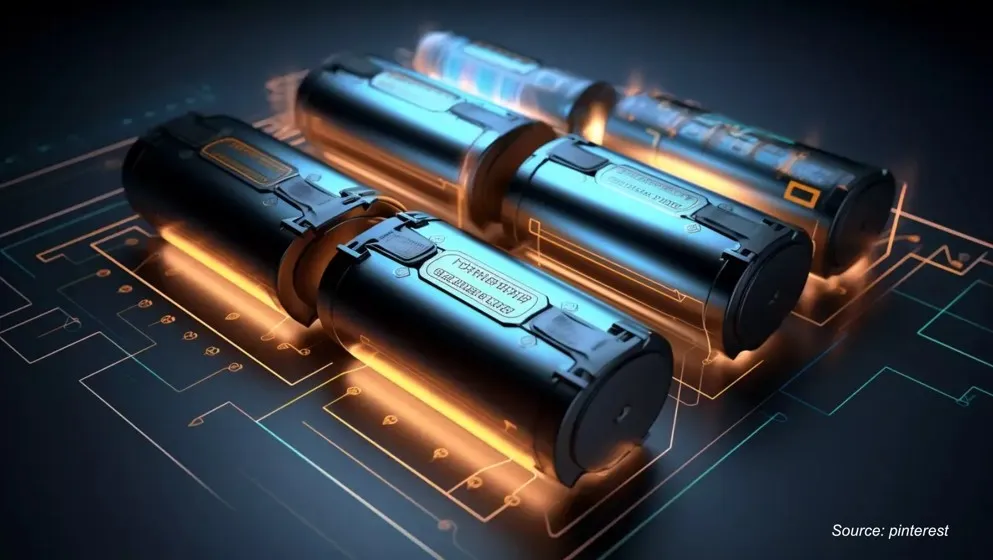
As per NMSC analysis, The Battery Market size was valued at USD 266.02 billion in 2025 and is expected to be valued at USD 347.35 billion by the end of 2026. The industry is projected to grow, hitting USD 1647.13 billion by 2035, with a CAGR of 18.88% between 2026 and 2035. In terms of volume, the market recorded 5 billion units in 2025, with forecasts indicating growth to 7 billion units by 2026 and further to 54 billion units by 2035, reflecting a CAGR of 25.54% over the same period.
The global battery market is witnessing significant transformation, rapid electrification, increasing renewable energy integration, and continuous technological advancements are fundamentally reshaping industry dynamics. Based on our evaluation of current developments, we observed that battery systems are evolving from conventional energy storage solutions into intelligent, high-performance components supporting mobility, grid stability, and portable electronics. The integration of advanced technologies, including battery management systems, artificial intelligence, and data-driven optimisation tools, is enhancing performance efficiency, safety, and lifecycle management.
Moreover, through our interaction with battery manufacturers and energy solution providers, we identified that the growing demand for high-density, fast-charging, and long-life batteries is accelerating innovation across chemistries such as lithium-ion, solid-state, and sodium-ion. In addition, increasing focus on sustainability and circular economy practices is driving investments in recycling technologies and second-life battery applications. This transformation is not only improving operational efficiency but also enabling batteries to function as critical enablers of clean energy ecosystems, thereby supporting the global transition toward decarbonisation and energy resilience.
Battery Market Overview
The battery market is evolving rapidly as industries transition toward electrified and energy-efficient systems. Based on our assessment, we found that batteries are playing a central role across electric mobility, renewable energy storage, and consumer electronics, where performance reliability and cost efficiency are becoming key priorities. Increasing energy demand, coupled with the shift toward low-carbon solutions, is significantly accelerating the adoption of advanced battery technologies. At the same time, through our analysis of market trends, we noticed that the growing complexity of energy systems and rising demand for uninterrupted power supply are further strengthening the need for efficient storage solutions. Moreover, supportive regulatory initiatives and investments in clean energy infrastructure continue reinforcing market expansion across both developed and emerging economies. As a result, batteries are increasingly being positioned as essential components within modern energy ecosystems, enabling seamless integration of renewable sources and improving overall system efficiency.
Furthermore, technological innovation is redefining the operational landscape of the battery market, where continuous advancements in battery chemistries and digital integration are significantly enhancing performance capabilities. Through our engagement with technology developers and system integrators, we found that the adoption of advanced battery management systems, predictive analytics, and real-time monitoring solutions is improving efficiency, safety, and operational control. In addition, developments in next-generation technologies, including solid-state batteries and fast-charging solutions, are addressing key limitations related to energy density, charging time, and lifecycle performance. Simultaneously, increasing integration of digital intelligence is enabling predictive maintenance and optimised energy usage across applications. These advancements, combined with the growing emphasis on sustainability and cost optimisation, are positioning batteries as intelligent and adaptable solutions within evolving energy networks.
Leading companies such as CATL, LG Energy Solution, Panasonic Holdings Corporation, Samsung SDI Co., Ltd., BYD Company Ltd., SK On, Tesla, Northvolt AB, and Envision AESC Group are at the forefront of transforming the battery market through continuous innovation and strategic expansion. Our analysis indicates that these companies are increasingly focusing on scaling production capacity, advancing battery chemistries, and strengthening digital capabilities to enhance performance and cost efficiency. Moreover, through our interaction with manufacturers and technology providers, we identified that investments in automation, supply chain integration, and advanced manufacturing processes are enabling improved operational efficiency and faster time-to-market. Additionally, collaborations across mobility and energy ecosystems are supporting the development of integrated and application-specific battery solutions. These efforts are collectively redefining the competitive landscape, where companies are not only improving battery performance but also enabling smarter, more sustainable, and interconnected energy systems worldwide.

For an In-depth Analysis of the Battery Industry, Try a FREE Sample
Highlights of Contemporary Amperex Technology Co., Limited (CATL)

CATL is a China-based battery manufacturing company headquartered in Ningde, Fujian Province, China, and is widely recognised as one of the world’s largest producers of lithium-ion batteries for electric vehicles and energy storage systems. The company specialises in battery cell manufacturing, battery management technologies, energy storage solutions, and advanced battery material integration, serving automotive OEMs, renewable energy operators, and industrial customers across global markets. CATL’s operations are closely connected to the global battery market, where rising electric vehicle adoption, energy transition initiatives, and growing grid-scale storage deployment continue driving long-term demand for advanced battery technologies and scalable manufacturing capabilities.
Our analysis indicates that in 2025, CATL continued strengthening its technology leadership through strategic product innovation and global supply chain expansion. In April 2025, the company launched its sodium-ion battery brand “Naxtra” alongside a second-generation fast-charging EV battery platform designed to improve charging efficiency and diversify battery chemistry applications across electric mobility markets. Additionally, in July 2025, CATL signed a framework agreement with BASF for cathode active material supply to support international expansion and sustainable battery value chain development. These developments align with broader battery market trends emphasizing battery diversification, supply chain localization, and next-generation energy storage technologies. Such strategic initiatives are likely to strengthen CATL’s competitive positioning while supporting its long-term expansion across global EV and energy storage markets.
Highlights of BYD Company Ltd.
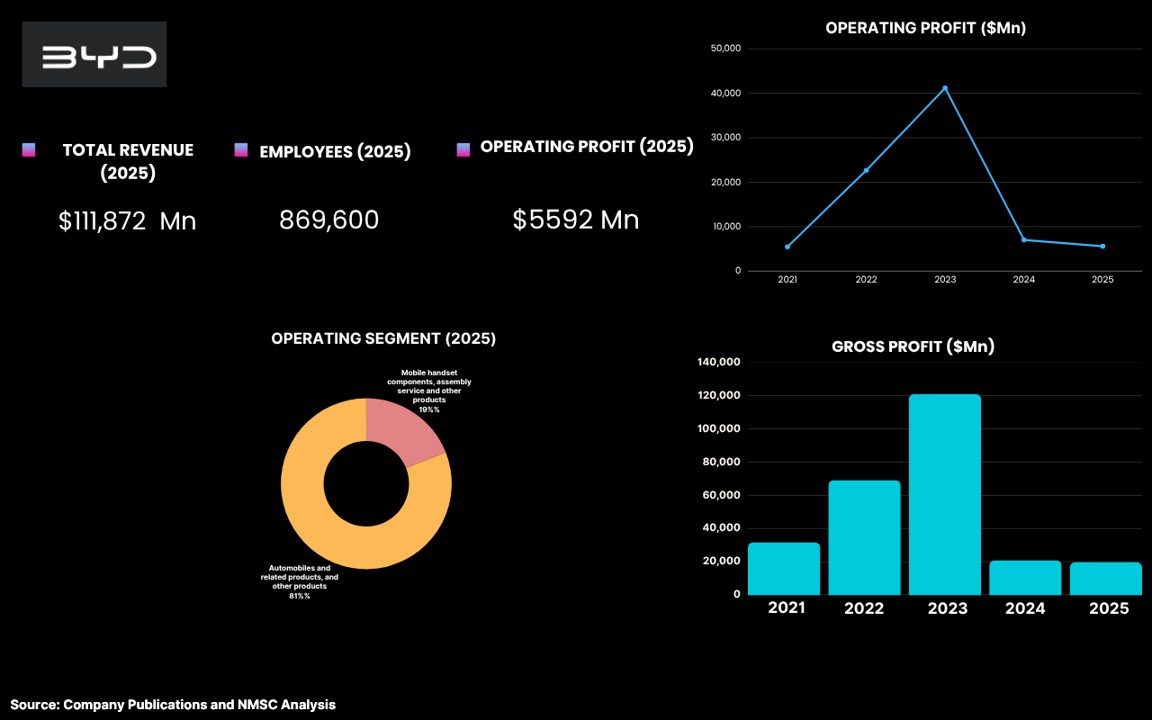
BYD Company Ltd. is a Chinese multinational technology and manufacturing company headquartered in Shenzhen, China, with operations spanning electric vehicles, rechargeable batteries, energy storage systems, and semiconductor technologies. The company is recognised globally for its vertically integrated electric mobility ecosystem, including battery production, EV manufacturing, and renewable energy solutions. BYD’s business operations are strongly influenced by developments within the global battery market, where increasing electrification, battery innovation, and renewable energy integration continue accelerating demand for high-performance and cost-efficient battery technologies.
Our findings suggest that BYD continues maintaining a strong market presence through its integrated battery manufacturing capabilities and expanding electric mobility ecosystem across global markets. The company remains focused on strengthening production scalability, battery safety technologies, and energy-efficient vehicle platforms to support rising demand for sustainable transportation and advanced energy storage applications. These developments align with broader battery market trends emphasizing vertically integrated manufacturing, electrification growth, and long-term battery supply chain optimization across the global clean energy ecosystem.
Highlights of LG Energy Solution Ltd.

LG Energy Solution is a South Korea-based battery manufacturer headquartered in Seoul, South Korea, specialising in lithium-ion batteries for electric vehicles, energy storage systems, consumer electronics, and advanced mobility applications. The company supplies battery technologies to major automotive manufacturers and energy infrastructure providers across North America, Europe, and Asia-Pacific. LG Energy Solution’s growth strategy remains closely tied to the global battery market, where accelerating EV adoption, grid-scale energy storage investments, and battery supply chain localization continue shaping long-term industry demand and competitive dynamics.
Our assessment indicates that in January 2025, LG Energy Solution signed an exclusive long-term agreement with Aptera Motors to supply approximately 4.4 GWh of 2170 cylindrical battery cells between 2025 and 2031, supporting the development of next-generation solar electric vehicles. The agreement strengthened the company’s position in advanced cylindrical battery technologies while expanding its participation in emerging sustainable mobility applications. These developments align with broader battery market trends emphasizing high-efficiency battery systems, strategic OEM partnerships, and advanced transportation electrification. Such initiatives are likely to support LG Energy Solution’s long-term competitiveness across global EV battery supply networks.
Highlights of Samsung SDI Co., Ltd.

Samsung SDI Co., Ltd. is a South Korean battery and electronic materials manufacturer headquartered in Yongin, South Korea, specialising in lithium-ion batteries for electric vehicles, energy storage systems, information technology devices, and advanced industrial applications. The company is recognised for its premium battery technologies, high-density cell architectures, and advanced prismatic battery solutions serving global automotive and energy customers. Samsung SDI’s operations are closely linked to developments across the global battery market, where rising demand for next-generation mobility, artificial intelligence infrastructure, and renewable energy storage continue accelerating innovation and manufacturing investments.
Our evaluation suggests that in 2026, Samsung SDI strengthened its premium battery portfolio through major automotive partnerships and next-generation product innovation initiatives. In April 2026, the company secured its first multi-year agreement with Mercedes-Benz to supply high-nickel NCM batteries for future electric SUV and coupe models. Additionally, in March 2026, Samsung SDI introduced its new prismatic battery brand “PrismStack” at the InterBattery 2026 exhibition, positioning the technology as a flagship platform for AI-driven infrastructure and advanced e-mobility applications. These developments align with broader battery market trends emphasizing premium EV battery performance, high-density energy storage solutions, and next-generation battery architecture innovation. Continued investments in advanced cell technologies are likely to reinforce Samsung SDI’s strategic position within the evolving global battery ecosystem.
Highlights of Tesla, Inc.

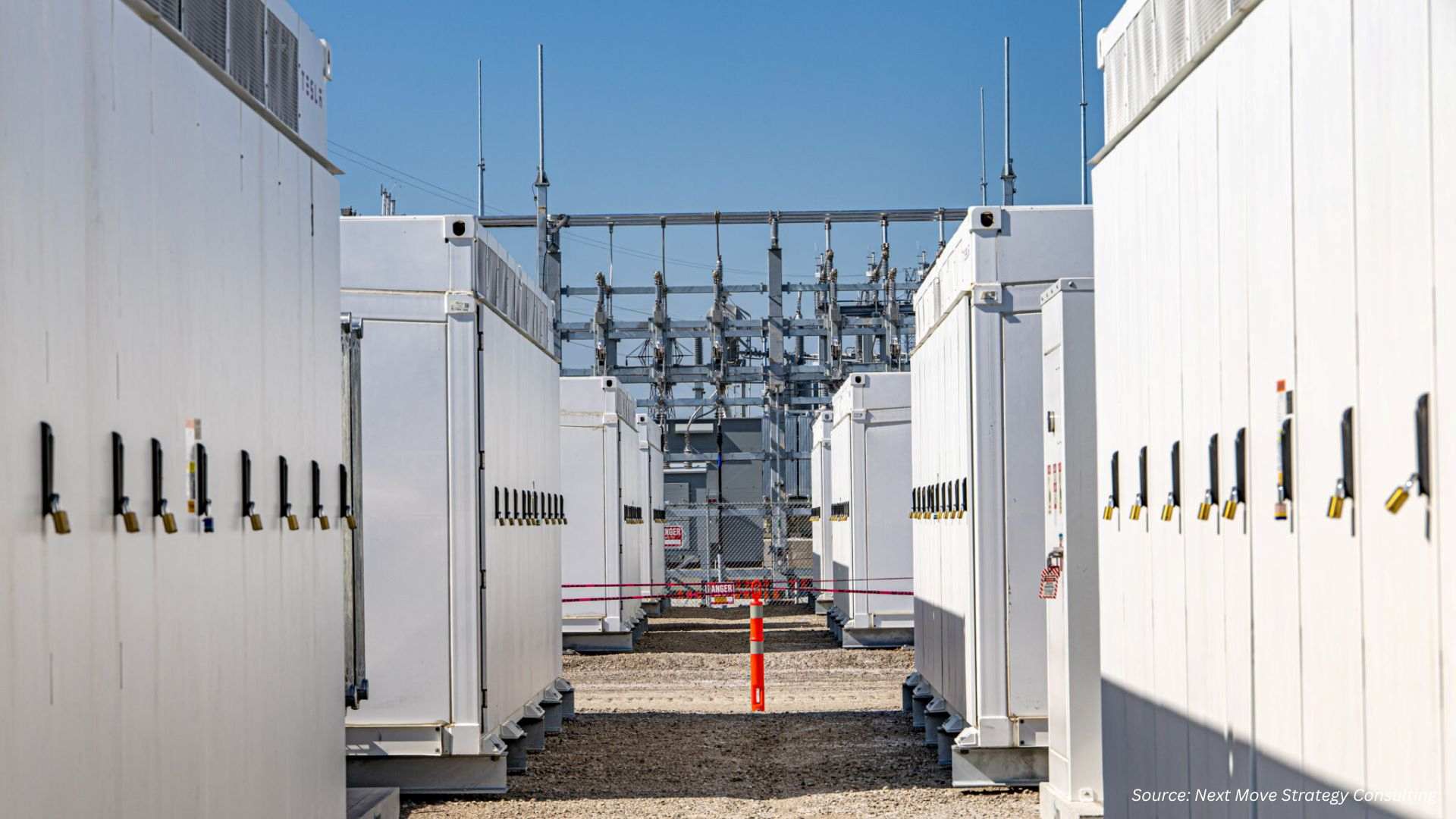
Tesla is a United States-based electric vehicle and energy technology company headquartered in Austin, Texas, specialising in electric vehicles, battery energy storage systems, solar energy solutions, and advanced battery technologies. The company operates across integrated mobility and renewable energy ecosystems, with battery innovation serving as a central component of its long-term business strategy. Tesla’s activities are strongly influenced by developments within the global battery market, where increasing renewable energy integration, electric mobility expansion, and large-scale energy storage deployment continue driving demand for advanced battery systems and manufacturing scalability.
Our research indicates that in September 2025, Tesla launched its Megapack 3 and Megablock utility-scale battery systems during the RE+ conference, strengthening its position within the global grid-scale energy storage market. The new battery platforms featured higher energy density, simplified deployment systems, integrated silicon carbide inverters, and improved operational efficiency designed to support renewable energy integration and utility-scale storage applications. These developments align with broader battery market trends emphasizing grid modernization, renewable power stabilization, and scalable long-duration energy storage infrastructure. Such initiatives are likely to strengthen Tesla’s strategic positioning across global energy storage and advanced battery technology markets.
Summary of Battery Market
The battery market is rapidly expanding due to increasing electrification, renewable energy integration, and rising demand for energy-efficient technologies across automotive, consumer electronics, and energy storage applications. Advancements in battery chemistries, fast-charging technologies, and intelligent battery management systems are significantly improving performance, safety, and operational efficiency. Moreover, we noticed that investments in manufacturing expansion, supply chain localization, and sustainable recycling initiatives are strengthening long-term market resilience. Strategic partnerships, next-generation battery innovations, and supportive clean energy policies are further accelerating industry growth, positioning batteries as critical components within future mobility and smart energy ecosystems worldwide.
About the Author
 Saista Faiyaz
— Saista Faiyaz is Research Associate at Next Move Strategy Consulting, where she has covered consumer markets and healthcare technologies for 3 years. Her work includes primary interview review, secondary-source validation, market sizing, and structured analysis of company and industry data. She supports research by comparing evidence across sources, organizing findings into market narratives, and documenting assumptions used in analysis. Her scope includes cross-market benchmarking, and reports.
Saista Faiyaz
— Saista Faiyaz is Research Associate at Next Move Strategy Consulting, where she has covered consumer markets and healthcare technologies for 3 years. Her work includes primary interview review, secondary-source validation, market sizing, and structured analysis of company and industry data. She supports research by comparing evidence across sources, organizing findings into market narratives, and documenting assumptions used in analysis. Her scope includes cross-market benchmarking, and reports.
About the Reviewer
 Supradip Baul
— Supradip Baul is an accomplished business consultant and strategist with over a decade of rich experience in market intelligence, strategy, technology, and business transformation. His work has included rigorous qualitative and quantitative analysis across multiple industries, helping clients shape investment decisions and long-term roadmaps. Earlier in his career, he was associated with Gartner, where he contributed to industry-leading reports and market share analyses. He has worked with leading global companies and holds an MBA with a dual specialization in Marketing and Finance.
Supradip Baul
— Supradip Baul is an accomplished business consultant and strategist with over a decade of rich experience in market intelligence, strategy, technology, and business transformation. His work has included rigorous qualitative and quantitative analysis across multiple industries, helping clients shape investment decisions and long-term roadmaps. Earlier in his career, he was associated with Gartner, where he contributed to industry-leading reports and market share analyses. He has worked with leading global companies and holds an MBA with a dual specialization in Marketing and Finance.















Add Comment