Is the Zinc Sulphate Market Evolving in 2025?

Have you wondered why the zinc sulphate market feels like it's on the cusp of a quiet revolution? As a vital compound in fertilizers, pharmaceuticals, and industrial applications, zinc sulphate plays a foundational role in global supply chains. Yet, with supply chain pressures and innovation demands intensifying, recent moves by key players signal potential shifts.
In this blog, we dive into two pivotal developments from 2024 and 2025 that could redefine market trajectories. Drawing from credible industry announcements, we'll unpack their implications—because understanding these isn't just insightful; it's essential for staying ahead.
According to Next Move Strategy Consulting, the global Zinc Sulphate Market size was valued at USD 2.14 billion in 2024, with an estimation of USD 2.30 billion in 2025 and is predicted to reach USD 3.25 billion by 2030 with a CAGR of 7.2%. Let's explore what questions these updates raise for producers, buyers, and investors alike.
What Strategic Moves are Korea Zinc Making in Sulphate Technologies?
Korea Zinc, a global leader in non-ferrous metals, has long been synonymous with zinc production. But what happens when their expertise spills into adjacent sulphate compounds? In a landmark announcement, the South Korean government elevated the company's proprietary nickel sulphate manufacturing technology to "national strategic technology" status. This designation, announced on January 17, 2025, came after rigorous evaluations by the Ministry of Trade, Industry and Energy and the Ministry of Economy and Finance.
Why does this matter for zinc sulphate? Korea Zinc's integrated operations mean advancements in sulphate processing often cross-pollinate. The technology targets metal compounds for cathodes in secondary batteries, reducing reliance on Chinese imports and bolstering South Korea's battery supply chain. While focused on nickel, this could streamline zinc sulphate production efficiencies, given shared refining pathways.
Consider the timeline: Korea Zinc pursued this recognition since 2023, culminating in benefits like tax deductions on income or corporate tax from 2026 onward. Their all-in-one nickel refinery, with an investment surpassing 500 billion won (approximately $342.9 million), is set for full operations then, potentially saving up to 90 billion won in costs. Earlier, in November 2024, they secured designations for high-nickel precursor tech, underscoring a pattern of sulphate innovation.
A company representative highlighted resilience amid challenges: “Despite having to fend off the M&A attempt... we have been working tirelessly to maintain the company’s global number one position.” This grit could inspire similar protections for zinc sulphate tech.
How Might this Reshape Zinc Sulphate Supply Chains?
In analytical terms, this development enhances Korea Zinc's competitive edge in sulphate derivatives. The national strategic status enables fiscal incentives that lower production costs, which may trickle down to zinc sulphate pricing. Analysts at Next Move Strategy Consulting observe that such designations often accelerate R&D investment by 15-20% in related compounds, based on historical precedents in South Korea's metals sector—though specific zinc sulphate data remains proprietary.
From a market research lens, this bolsters supply chain resilience. With global zinc demand projected to rise due to agricultural and EV applications, diversified sulphate tech reduces geopolitical risks. However, it also intensifies competition for raw zinc feedstocks.
Strategic Innovations Adopted by Key Players
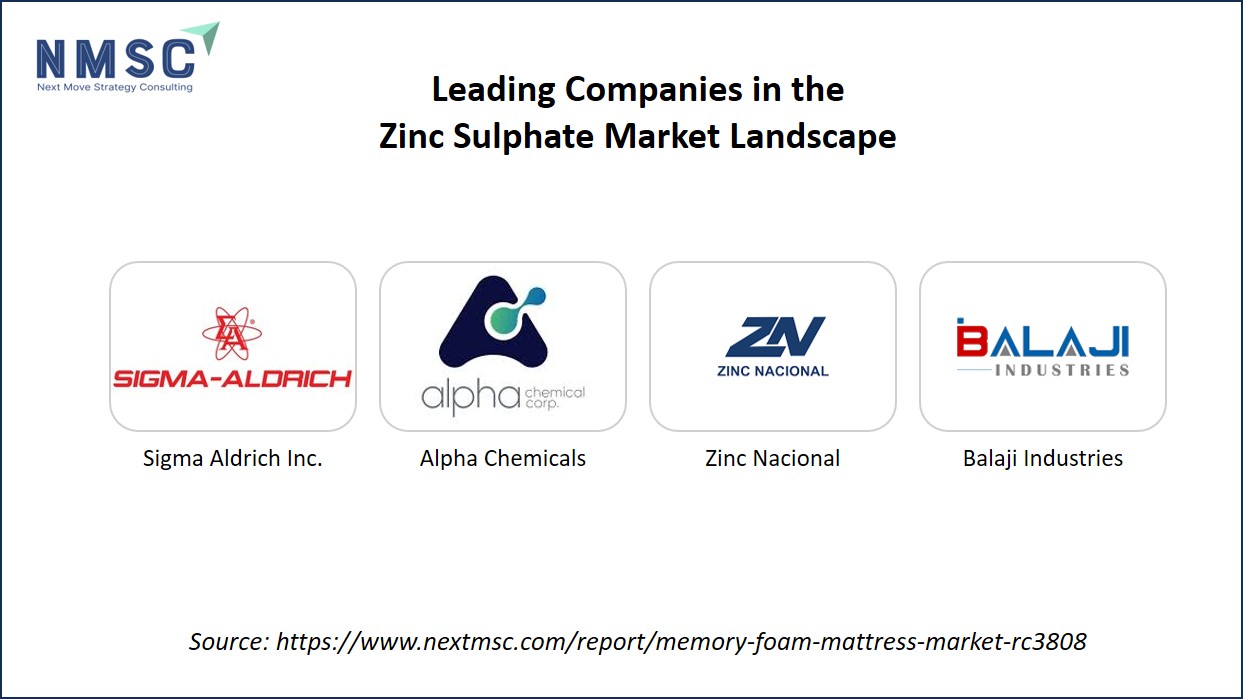
The zinc sulphate industry is witnessing growth driven by a mix of strategies across leading companies. Agro-focused players like Balaji Industries, Sulfozyme Agro, Ravi Chem, and Tianjin Topfert are expanding by addressing soil micronutrient deficiencies and building strong farmer networks.
Notable companies include:
-
Rech Chemical Co. Ltd
-
Alpha Chemicals
-
Zinc Nacional
-
Ravi Chem Industries
-
Balaji Industries
-
Tianjin Topfert Agrochemical Co.
-
Old Bridge Chemical, Inc
-
China Bohigh
-
Changsha Haolin Chemicals Co. Ltd
-
Sulfozyme Agro India Pvt. Ltd
What Pharmaceutical Innovations are Boosting Zinc Sulphate Demand?
Shifting gears to healthcare—where zinc sulphate shines as a nutrient—have you considered how injectables are fueling market growth? Piramal Pharma's Critical Care division made waves with a targeted launch in the U.S. generic injectables space. On January 17, 2024, they introduced a new 10mg/10mL (1 mg/mL) concentration of Zinc Sulfate for Injection USP.
This isn't just another product; it's tailored for precision. Zinc sulfate serves as a trace element in parenteral nutrition for adult and pediatric patients when oral or enteral feeding isn't viable. The 1 mg/mL strength is particularly recommended for children under 26 pounds, addressing a niche in neonatal care where dosing accuracy is paramount.
Piramal now offers three strengths: 30mg/10mL (3mg/mL), 25mg/5mL (5mg/mL), and the newcomer. This expands their portfolio, building on 2023 launches like Pantoprazole Sodium and Doxycycline for Injection. In the U.S., where parenteral nutrition demand grows with chronic illness rates, this move taps into a market valued for its stability.
For clarity, here's a quick comparison table of the strengths:
|
Strength |
Concentration |
Primary Use Case |
|
30mg/10mL |
3 mg/mL |
Adult parenteral nutrition |
|
25mg/5mL |
5 mg/mL |
General trace element supply |
|
10mg/10mL (New) |
1 mg/mL |
Pediatric patients <26 lbs |
An accompanying image could be a product vial infographic, showing dosage scales for pediatric vs. adult use.
Why is this Launch a Game-Changer for Zinc Sulphate in Pharma?
Analytically, this expansion signals rising pharma-grade zinc sulphate needs. Parenteral nutrition markets, especially in North America, prioritize low-concentration options to minimize overdose risks in vulnerable populations. At Next Move Strategy Consulting, we estimate such launches could lift U.S. zinc sulphate imports by 5-8% annually through 2025, driven by regulatory approvals and hospital adoptions—though exact figures await Q1 2025 reports.
The impact? It diversifies end-use beyond agriculture (which dominates 70% of zinc sulphate volume) into high-margin healthcare. Yet, it demands stricter purity standards, potentially pressuring suppliers to invest in GMP-compliant production.
How Are These Developments Impacting the Zinc Sulphate Market Overall?
As a market research firm, Next Move Strategy Consulting sees these announcements as interconnected threads in the zinc sulphate tapestry. Korea Zinc's strategic designation fortifies upstream production, potentially lowering costs and securing supplies amid EV battery booms—indirectly benefiting zinc sulphate via shared infrastructure. Meanwhile, Piramal's pharma push highlights downstream demand spikes, particularly in North America, where healthcare spending fuels yearly growth in trace element injectables.
Together, they mitigate risks: The former counters supply vulnerabilities (e.g., from China dependencies), while the latter opens premium segments. However, stakeholders must watch for integration challenges, like scaling pediatric formulations globally.
This duo doesn't just report news; it reveals opportunities for sustainable sourcing and innovation-led growth.
Next Steps: Actionable Takeaways for Zinc Sulphate Stakeholders
Ready to act? Here are 3-5 practical steps to leverage these insights:
-
Monitor Refinery Milestones: Track Korea Zinc's 2026 operations for early pricing signals in sulphate compounds—set alerts via industry trackers.
-
Evaluate Pharma Partnerships: If in supply chains, explore certifications for low-concentration zinc sulphate to align with U.S. injectable demands.
-
Diversify End-Use Strategies: Balance agricultural volumes with healthcare pilots; conduct a quick portfolio audit to identify growth in nutrition apps.
-
Assess Geopolitical Buffers: Review contracts for South Korean sourcing to capitalize on tax-incentivized efficiencies.
-
Engage in R&D Collaboration: Partner with firms like Piramal for custom formulations, targeting pediatric markets for 2025 launches.
By acting now, you position your operations not just to react, but to lead in the evolving zinc sulphate market.
About the Author
 Sanyukta Deb
— Sanyukta Deb is Digital Marketing Team Lead at Next Move Strategy Consulting, where she has led content strategy and technical SEO for the firm's B2B market research publications for over 2 years. Her editorial process translates NextMSC's primary and secondary research — spanning technology, industrial, and consumer sectors — into commercial narratives, backed by search-intent, keyword, and competitive analysis. She brings 5 years of overall experience in digital marketing and content strategy.
Sanyukta Deb
— Sanyukta Deb is Digital Marketing Team Lead at Next Move Strategy Consulting, where she has led content strategy and technical SEO for the firm's B2B market research publications for over 2 years. Her editorial process translates NextMSC's primary and secondary research — spanning technology, industrial, and consumer sectors — into commercial narratives, backed by search-intent, keyword, and competitive analysis. She brings 5 years of overall experience in digital marketing and content strategy.
About the Reviewer
 Debashree Dey
— Debashree Dey is Assistant Manager at Next Move Strategy Consulting, where she supports cross-vertical market content and communications across diverse industries for 6 years. Her professional background includes senior content writing, communications, and published manuscript authorship, with experience developing audience-focused business narratives and maintaining clear, consistent messaging. Her role supports research-led content development and editorial quality across NextMSC publications.
Debashree Dey
— Debashree Dey is Assistant Manager at Next Move Strategy Consulting, where she supports cross-vertical market content and communications across diverse industries for 6 years. Her professional background includes senior content writing, communications, and published manuscript authorship, with experience developing audience-focused business narratives and maintaining clear, consistent messaging. Her role supports research-led content development and editorial quality across NextMSC publications.


















Add Comment