What Is Driving the Future of Aquaculture in 2026?
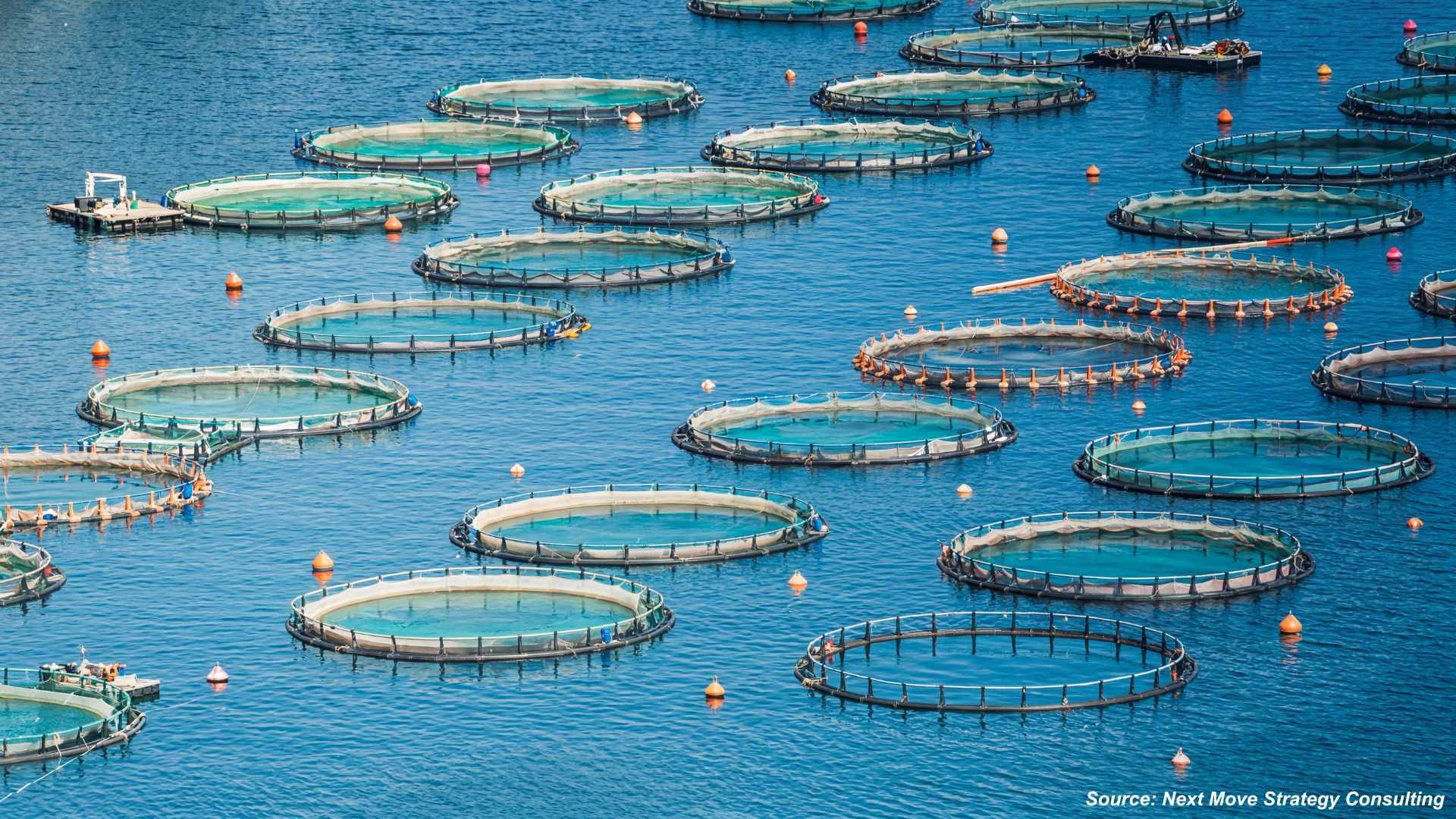
Aquaculture Market is entering a pivotal phase as governments, seafood producers, researchers, and investors balance food security goals with environmental and regulatory priorities. Major developments highlighted both the opportunities and challenges facing the sector worldwide.
On one side, global seafood producers such as Mowi are expanding operations in regions that offer regulatory certainty and growth-friendly frameworks. On the other, policy uncertainty continues to affect investment decisions in some markets, particularly British Columbia, Canada. Simultaneously, organizations such as Nestlé are investing in research initiatives designed to make aquaculture more sustainable and scalable through innovative production methods.
For investors, supply chain leaders, and corporate strategists, understanding these developments is critical because aquaculture plays an increasingly important role in global food systems, marine resource management, and long-term seafood supply security.
How Is Regulatory Certainty Shaping Aquaculture Growth?
One of the most significant trends emerging in 2025 is the growing importance of regulatory stability.
According to Mowi's latest annual report, the company continues to expand in Chile, Scotland, and Iceland, where supportive frameworks enable long-term planning and investment. The company expects Chile production volumes to increase from 78,000 gutted weight tonnes (GWT) in 2025 to 82,000 GWT in 2026 and 95,000 GWT by 2029.
Scotland is also positioned for growth, supported by investments in post-smolt facilities, broodstock capacity, and newly licensed farming sites. Meanwhile, Iceland continues to benefit from favorable conditions, with projected production rising from 15,000 GWT in 2025 to 25,000 GWT by 2029.
In contrast, Mowi describes its British Columbia operations as having "highly uncertain future prospects" due to Canada's planned transition away from marine salmon farming in the region by 2029.

How Are Sustainability Innovations Transforming Aquaculture?
Another major trend shaping aquaculture is the pursuit of more sustainable production systems.
Nestlé announced research collaborations in New Zealand and the United Kingdom focused on Integrated Multi-Trophic Aquaculture (IMTA). This approach farms multiple aquatic species together so that waste generated by one species becomes a resource for another.
The concept creates a natural recycling process that can help maintain water quality while supporting ecosystem balance.
Research projects currently examine:
-
Seaweed and shellfish interactions
-
Biodiversity impacts
-
Water quality improvements
-
Productivity optimization
-
Environmental monitoring
According to Nestlé's research teams and partners, IMTA may contribute to sustainable food production while supporting marine ecosystem restoration and carbon sequestration efforts.

Why Is IMTA Gaining Industry Attention?
Traditional aquaculture systems often focus on single-species production. IMTA introduces diversification, which may help improve environmental performance and income stability.
For food companies and seafood supply chains, such innovations may support sustainability objectives while maintaining production efficiency.

Leading Companies Operating in the Aquaculture Industry
The aquaculture industry is characterized by intense competition, with several established companies driving innovation, production capacity, and global market expansion. Key participants in the sector include Mowi ASA, Cermaq Group AS, Cooke Aquaculture Inc., Grupo Farallon Aquaculture, Alpha Group Ltd, Nireus Aquaculture S.A., Huon Aquaculture, Maruha Nichiro Corporation, Lerøy Seafood Group ASA, Cargill, Incorporated, P/F Bakkafrost, Nissui Corporation, Tassal Group Limited, Stolt-Nielsen Limited, and SalMar ASA. These companies continue to strengthen their market positions through production expansion, technological advancements, sustainability initiatives, and strategic partnerships across global aquaculture value chains.

Industry Impact Analysis
The current aquaculture landscape presents a combination of growth opportunities and operational challenges.
Global seafood demand remains strong, and Mowi reported record harvest volumes of 558,870 tonnes and record revenues of €5.73 billion during 2025. The company expects total harvest volumes to reach 605,000 tonnes in 2026.
At the same time, environmental conditions remain an operational risk. Mowi reported that unusually warm seawater temperatures and low oxygen levels affected salmon production in Canada East during 2025, resulting in higher mortality rates.
For stakeholders, this demonstrates that future competitiveness will depend on both regulatory frameworks and environmental resilience.
Future Outlook
The future of aquaculture appears increasingly linked to two interconnected themes: regulatory confidence and sustainability innovation.
Companies operating in supportive jurisdictions are positioned to pursue production growth, while research initiatives such as IMTA may help address environmental concerns and strengthen long-term food system resilience.
Industry participants will likely continue evaluating how new production approaches can improve ecosystem outcomes while maintaining commercial viability.
Next Steps
For investors and industry leaders, several priorities stand out:
-
Monitor regulatory developments in major aquaculture regions.
-
Evaluate sustainability-focused production technologies.
-
Assess climate resilience within supply chains.
-
Track commercialization progress of IMTA research initiatives.
-
Incorporate policy risk into long-term investment planning.
Conclusion
Aquaculture is becoming increasingly important to global food production and seafood supply security. The industry's current trajectory demonstrates that growth is no longer driven solely by production capacity. Regulatory certainty, environmental stewardship, and innovation are emerging as equally important competitive factors.
The experiences of Mowi across different operating regions and Nestlé's investment in integrated multi-trophic aquaculture research illustrate how the sector is evolving. Organizations that successfully align growth strategies with sustainability objectives and stable operating environments will likely be better positioned to navigate the next phase of aquaculture development.
About the Author
 Tania Dey
— Tania Dey is a content writer specializing in transformation-led, insight-driven storytelling. She develops research-backed, high-impact content aligned with evolving business priorities, digital behavior, and audience expectations. Her work helps organizations sharpen value propositions, strengthen visibility, and communicate strategic intent with clarity and precision. Grounded in data-informed storytelling, she brings a strong focus on relevance, consistency, and measurable digital impact across platforms.
Tania Dey
— Tania Dey is a content writer specializing in transformation-led, insight-driven storytelling. She develops research-backed, high-impact content aligned with evolving business priorities, digital behavior, and audience expectations. Her work helps organizations sharpen value propositions, strengthen visibility, and communicate strategic intent with clarity and precision. Grounded in data-informed storytelling, she brings a strong focus on relevance, consistency, and measurable digital impact across platforms.
About the Reviewer
 Sanyukta Deb
— Sanyukta Deb is Digital Marketing Team Lead at Next Move Strategy Consulting, where she has led content strategy and technical SEO for the firm's B2B market research publications for over 2 years. Her editorial process translates NextMSC's primary and secondary research — spanning technology, industrial, and consumer sectors — into commercial narratives, backed by search-intent, keyword, and competitive analysis. She brings 5 years of overall experience in digital marketing and content strategy.
Sanyukta Deb
— Sanyukta Deb is Digital Marketing Team Lead at Next Move Strategy Consulting, where she has led content strategy and technical SEO for the firm's B2B market research publications for over 2 years. Her editorial process translates NextMSC's primary and secondary research — spanning technology, industrial, and consumer sectors — into commercial narratives, backed by search-intent, keyword, and competitive analysis. She brings 5 years of overall experience in digital marketing and content strategy.


















Add Comment