What’s Driving the Elevator Safety Equipment Market in 2025?
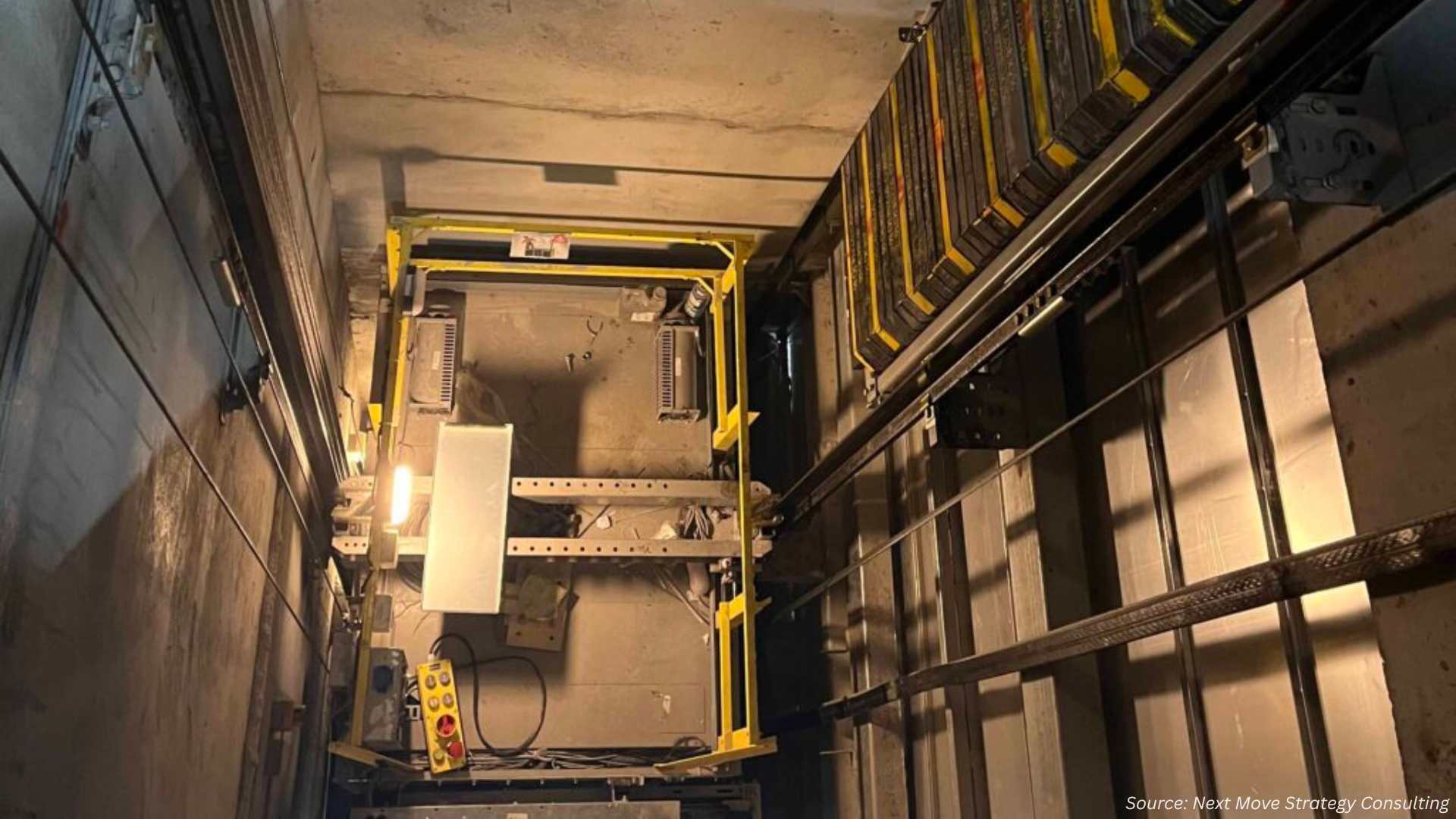
Imagine stepping into an elevator that not only takes you to your floor but also anticipates potential risks before they occur. In the fast-paced world of urban development, the elevator safety equipment market is experiencing a renaissance fueled by technological advancements and stricter regulations. As buildings reach new heights, ensuring passenger safety has become paramount.
This blog explores the latest developments shaping this essential sector, drawing from credible industry announcements from 2024 and 2025. We will explore innovations, regulatory shifts, and their ripple effects—all while keeping you engaged with questions that mirror your curiosities.
At Next Move Strategy Consulting, we see the elevator safety equipment market not just as a niche but as a cornerstone of sustainable urban infrastructure. With global urbanization accelerating, demand for reliable safety systems is surging, projected to align with broader vertical transportation growth. The global Elevator Safety Equipment Market size is expected to reach USD 9.95 billion by the end of 2025. The industry is projected to grow, hitting USD 15.38 billion by 2030, with a CAGR of 9.1%.
Why Is Elevator Safety Becoming Non-Negotiable in High-Rise Designs?
High-rises dominate skylines, but with great height comes greater responsibility. What happens when an elevator detects an anomaly mid-ride? Modern systems now integrate advanced sensors to prevent disasters, turning potential hazards into seamless safeguards.
In 2024, industry leaders emphasized sensor technology as a game-changer. For instance, elevators equipped with sensors that monitor overloading, unusual movements, or malfunctions provide real-time alerts, minimizing risks in densely populated structures. This aligns with the broader push for preventive maintenance, where early detection reduces downtime by up to 50% through smart, machine learning-enabled IoT solutions.
Consider the earthquake-prone regions: Hitachi's 2024 order for 56 elevators included an emergency operation system that halts the cab on the nearest floor during seismic events, showcasing geo-specific safety adaptations. These features are no longer luxuries; they have become expectations in both commercial and residential projects.
Key Conclusive Insights:
-
Sensor integration is enhancing proactive risk management in elevators.
-
Specialized systems, like earthquake responders, address regional vulnerabilities.
-
Overall, these advancements are reducing incident rates while boosting system reliability.
Elevator safety equipment is evolving from reactive fixes to predictive systems, ensuring smoother and safer vertical journeys for millions.
What are the Top Companies in Elevator Safety Equipment Market?
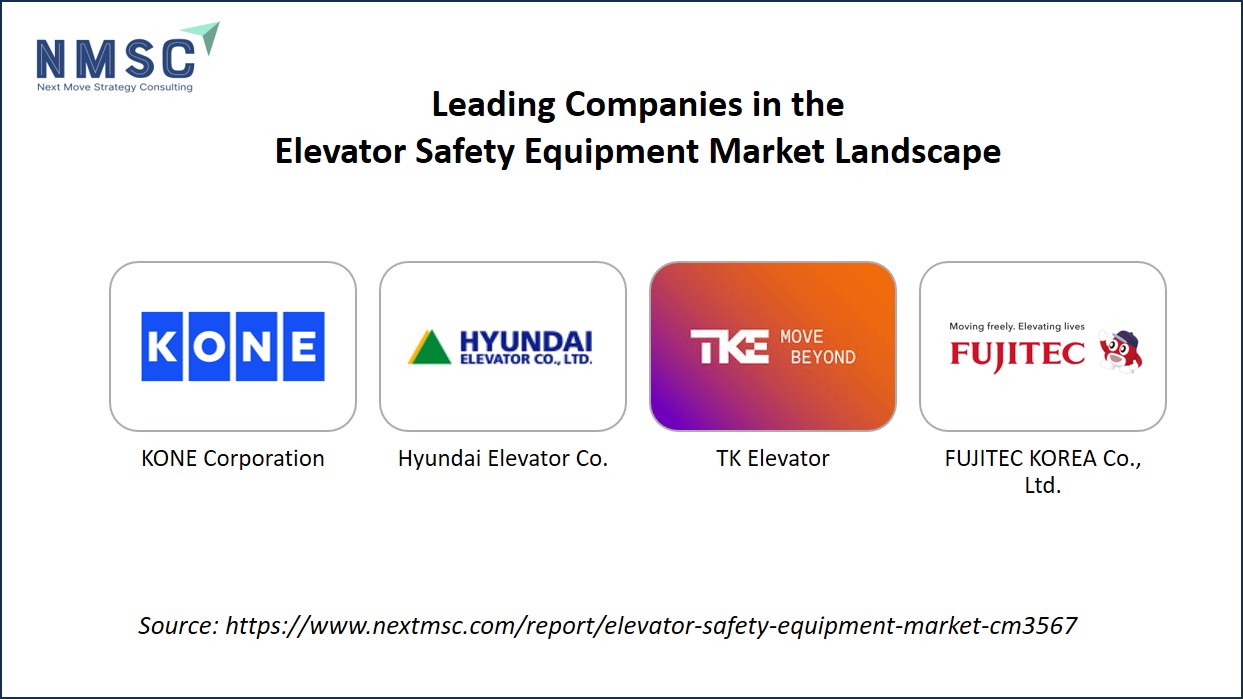
Leading players in the elevator safety equipment market, including Hyundai Elevator Co., Ltd., Otis Elevator Company, TK Elevator, Mitsubishi Elevator (Mitsubishi Electric — KMEC), FUJITEC KOREA Co., Ltd., Schindler Group, Toshiba Elevator and Building Systems, KONE Corporation, Hitachi, Xinda Elevator, Sautter Lift Components GmbH (SLC), McDonough Elevator, Adams Elevator Equipment Company, Quad City Safety, and Panda Elevator Parts, are competing through product innovation, technological upgrades, and strategic partnerships.
What New Launches are Revolutionizing Elevator Controls and Safety?
Ever wondered if upgrading an old elevator could feel like installing a smart home system? Recent product unveilings suggest yes, blending efficiency with enhanced protection.
KONE India unveiled its SMART I-series models at an industry event in December 2024, prioritizing unmatched safety alongside sustainability. These models incorporate enhanced safety features for smoother rides and energy savings, ideal for space-constrained urban installs. Similarly, TK Elevator's designs optimize power, speed, and safety via advanced engineering, while Otis's Gen3 platform delivers quiet, durable performance with built-in safety protocols that outperform traditional systems in efficiency and reliability.
A standout in March 2025 was Mitsubishi Electric Building Solutions' launch of a new control renewal menu for overseas elevators made by competitors. The system uses an auto-tuning control panel designed to reuse existing traction machines, reducing both renewal costs and downtime while upgrading elevators to modern control standards. Targeted at regions like North America, Europe, and ASEAN, it promotes partial renewals over full replacements, directly bolstering safety through optimized performance and reduced failure risks.
|
Launch |
Key Safety Feature |
Target Regions |
|
Kone SMART Series |
Enhanced ride safety & sensors |
India & Global |
|
Otis Gen3 |
Durability & anomaly detection |
Global |
|
Mitsubishi Renewal Menu |
Auto-tuning for reliability |
Americas, Europe, ASEAN |
Key Conclusive Insights:
-
Launches focus on modular upgrades for cost-effective safety enhancements.
-
Auto-tuning and sensor tech minimize operational risks.
-
These innovations support a shift toward greener, safer building ecosystems.
2025 launches are democratizing advanced safety, making high-tech protections accessible even for legacy systems.
How are 2025 Regulations Reshaping the Elevator Safety Landscape?
In the elevator sector, new rules are doing the latter, mandating upgrades that elevate standards worldwide. India's IS 17900 is expected to become mandatory for manufacturers by late December 2025, aligned with ISO 8100, introducing protections against unintended car movement and ascending over-speed, plus reinforced doors—all boosting passenger security at a compliance cost. Fujitec, a key player, is ready with modernization packages to help existing systems meet these norms without full overhauls.
This regulatory wave aligns with the broader market momentum: Fujitec reported strong modernization and new installation demand in 2024, with industry analyses indicating continued growth momentum heading into 2025, driven by safety-focused upgrades. Meanwhile, large-scale supplies like Otis's 169 elevators for Hyderabad projects in October 2025 underscore how regulations fuel procurement in luxury residentials.
Key Conclusive Insights:
-
IS 17900 mandates will drive market growth in compliant regions.
-
Modernization options mitigate cost hikes from new safety requirements.
-
Regulations are harmonizing global standards, benefiting equipment suppliers.
How is Mitsubishi’s Renewal Menu Impacting the Global Elevator Safety Equipment Market?
As a market research firm at Next Move Strategy Consulting, we analyze how pivotal news like Mitsubishi's March 2025 launch ripples through the elevator safety equipment market. This control renewal menu, enabling seamless upgrades for non-Mitsubishi elevators overseas, addresses a critical pain point: aging infrastructure in diverse markets. By reusing components, it lowers renewal barriers, potentially accelerating adoption of safety-centric controls like auto-tuning panels that enhance system stability and reduce emergency downtimes.
The impact? We project an uptick in retrofit demand across targeted regions—including the Americas, Europe, the Middle East, and ASEAN— where building owners are facing rising modernization and compliance requirements. This fosters sustainability—cutting power use and waste—while integrating with smart services like remote monitoring, amplifying the market for ancillary safety gear such as sensors and emergency brakes.
Unlike full replacements, this modular approach democratizes access, benefits mid-tier buildings, and spurs competition that drives innovation in safety equipment. Ultimately, it positions the market for resilient growth, with Mitsubishi’s long-term renewal expansion strategy signals a broader industry shift toward proactive safety investments.
This development adds tangible value: building managers gain ROI through extended asset life, while manufacturers see expanded service revenues— a win-win in an era of regulatory scrutiny.
Next Steps: Actionable Takeaways for Stakeholders
Ready to elevate your strategy? Here are practical steps shaped by 2025 trends:
-
Explore Modular Renewals: Partner with providers like Mitsubishi for cost-saving retrofits, targeting efficiency gains in safety performance.
-
Invest in Sensor Tech: Integrate AI-driven diagnostics to boost availability, focusing on high-traffic installations.
-
Monitor Regional Growth: Track YoY expansions in Asia-Pacific; prioritize suppliers with global portfolios for scalable safety solutions.
-
Sustainability Audit: Evaluate renewal options for emission reductions, aligning with ESG goals in urban projects.
About the Author
 Sanyukta Deb
— Sanyukta Deb is Digital Marketing Team Lead at Next Move Strategy Consulting, where she has led content strategy and technical SEO for the firm's B2B market research publications for over 2 years. Her editorial process translates NextMSC's primary and secondary research — spanning technology, industrial, and consumer sectors — into commercial narratives, backed by search-intent, keyword, and competitive analysis. She brings 5 years of overall experience in digital marketing and content strategy.
Sanyukta Deb
— Sanyukta Deb is Digital Marketing Team Lead at Next Move Strategy Consulting, where she has led content strategy and technical SEO for the firm's B2B market research publications for over 2 years. Her editorial process translates NextMSC's primary and secondary research — spanning technology, industrial, and consumer sectors — into commercial narratives, backed by search-intent, keyword, and competitive analysis. She brings 5 years of overall experience in digital marketing and content strategy.
About the Reviewer
 Debashree Dey
— Debashree Dey is Assistant Manager at Next Move Strategy Consulting, where she supports cross-vertical market content and communications across diverse industries for 6 years. Her professional background includes senior content writing, communications, and published manuscript authorship, with experience developing audience-focused business narratives and maintaining clear, consistent messaging. Her role supports research-led content development and editorial quality across NextMSC publications.
Debashree Dey
— Debashree Dey is Assistant Manager at Next Move Strategy Consulting, where she supports cross-vertical market content and communications across diverse industries for 6 years. Her professional background includes senior content writing, communications, and published manuscript authorship, with experience developing audience-focused business narratives and maintaining clear, consistent messaging. Her role supports research-led content development and editorial quality across NextMSC publications.















Add Comment