Air Defense Market: US Grants Ukraine Patriot License
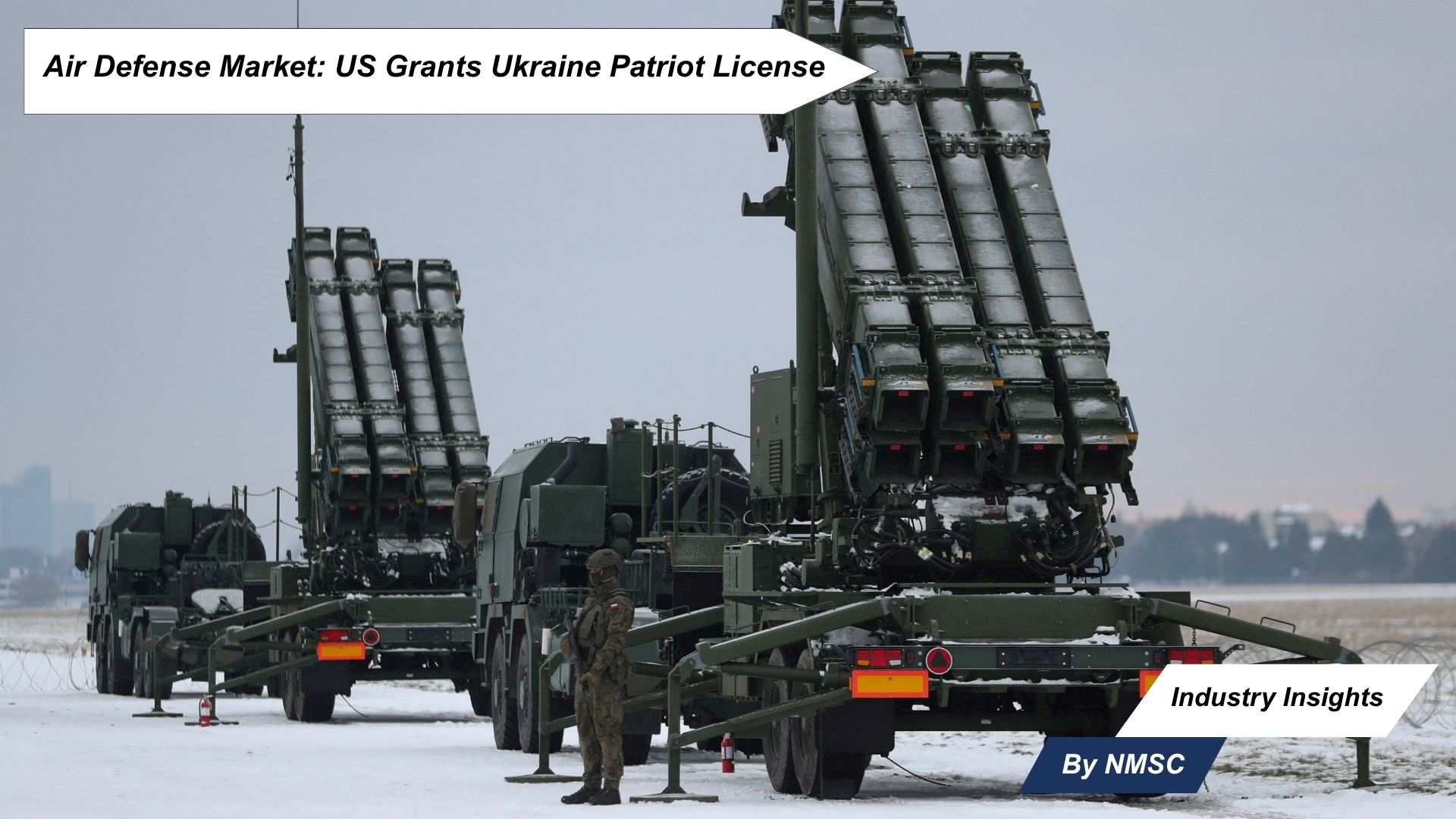
US Grants Ukraine License to Produce Patriot Interceptors Amid Global Air Defense Supply Shortage
WASHINGTON, U.S. — July 12, 2026 — The United States has agreed to grant Ukraine a license to domestically manufacture Patriot air defense missile interceptors, a decision announced by President Donald Trump at the NATO Summit in Ankara, Türkiye, and detailed in a National Public Radio interview with defense analyst Seth Jones of the Center for Strategic and International Studies (CSIS). The move addresses an acute shortage of interceptors for the Patriot system, one of the few platforms capable of shooting down ballistic missiles, at a moment when Russian strikes on Kyiv have increasingly evaded Ukrainian air defenses.
A Rare License Amid a Global Interceptor Shortage
According to Jones, the licensing arrangement is unusual: Japan is currently the only country with a full license to build the Patriot system, while Germany produces an older variant. Extending that right to Ukraine reflects both a strategic and symbolic shift in Washington's approach to supporting Kyiv's air defenses.
The license alone does not guarantee rapid production. Jones said building a functioning Patriot system domestically requires securing components such as solid rocket motors, seekers, and radar systems from a global supply chain involving dozens, if not hundreds, of companies. The U.S. State Department must also determine which sensitive components it will approve for transfer, given concerns that certain technology could eventually reach Russian or Chinese hands. Analysts estimate the process could take a year or more before Ukraine fields its own Patriot production.
Key Highlights
-
President Trump announced at the NATO Summit in Ankara that the U.S. will license Ukraine to domestically produce Patriot missile interceptors, one of only a handful of such licenses ever granted.
-
The U.S. Department of Defense produces only about 600 PAC-3 interceptors annually, a supply constraint that intensified after recent U.S. operations against Iranian missile and air defense targets depleted stockpiles further.
-
CSIS analysts estimate that full-scale Ukrainian production could take a year or more, given the complexity of sourcing solid rocket motors, seekers, and radar components from a global supplier network.
-
Ukraine currently fields Patriot batteries supplied by the United States, Germany, and a coalition of European allies, though interceptor shortages have left recent Russian ballistic missile barrages partially unintercepted.
Analyst Insight
According to analysts at Next Move Strategy Consulting, the global Air Defense System Market is projected to reach USD 62.23 billion by 2030, expanding at a CAGR of 5.2% from 2024 to 2030. NMSC attributes this growth primarily to rising geopolitical tensions and regional conflicts that are pushing governments to expand both battlefield deployment and domestic production capacity — a dynamic reflected directly in Washington's decision to extend Patriot production rights to Kyiv.
Industry Outlook
With interceptor production capacity increasingly viewed as a strategic bottleneck, the air defense system market is likely to see continued diversification of manufacturing across allied nations. Key global players — including RTX Corporation (Raytheon), Lockheed Martin Corporation, and Northrop Grumman Corporation — remain central to the Patriot supply chain, even as governments explore co-production agreements to reduce reliance on a small number of manufacturing hubs. Whether Ukraine's new license translates into fielded systems will depend largely on how quickly sensitive component transfers are approved and how supply chains for radar and rocket-motor components are secured.
Source: NPR — All Things Considered
Prepared By: Rocktim Gogoi
About the Author
 Sanyukta Deb
— Sanyukta Deb is Digital Marketing Team Lead at Next Move Strategy Consulting, where she has led content strategy and technical SEO for the firm's B2B market research publications for over 2 years. Her editorial process translates NextMSC's primary and secondary research — spanning technology, industrial, and consumer sectors — into commercial narratives, backed by search-intent, keyword, and competitive analysis. She brings 5 years of overall experience in digital marketing and content strategy.
Sanyukta Deb
— Sanyukta Deb is Digital Marketing Team Lead at Next Move Strategy Consulting, where she has led content strategy and technical SEO for the firm's B2B market research publications for over 2 years. Her editorial process translates NextMSC's primary and secondary research — spanning technology, industrial, and consumer sectors — into commercial narratives, backed by search-intent, keyword, and competitive analysis. She brings 5 years of overall experience in digital marketing and content strategy.
About the Reviewer
 Debashree Dey
— Debashree Dey is Assistant Manager at Next Move Strategy Consulting, where she supports cross-vertical market content and communications across diverse industries for 6 years. Her professional background includes senior content writing, communications, and published manuscript authorship, with experience developing audience-focused business narratives and maintaining clear, consistent messaging. Her role supports research-led content development and editorial quality across NextMSC publications.
Debashree Dey
— Debashree Dey is Assistant Manager at Next Move Strategy Consulting, where she supports cross-vertical market content and communications across diverse industries for 6 years. Her professional background includes senior content writing, communications, and published manuscript authorship, with experience developing audience-focused business narratives and maintaining clear, consistent messaging. Her role supports research-led content development and editorial quality across NextMSC publications.
















Add Comment