AstraZeneca $600M Deal Signals Biotech Equipment Growth
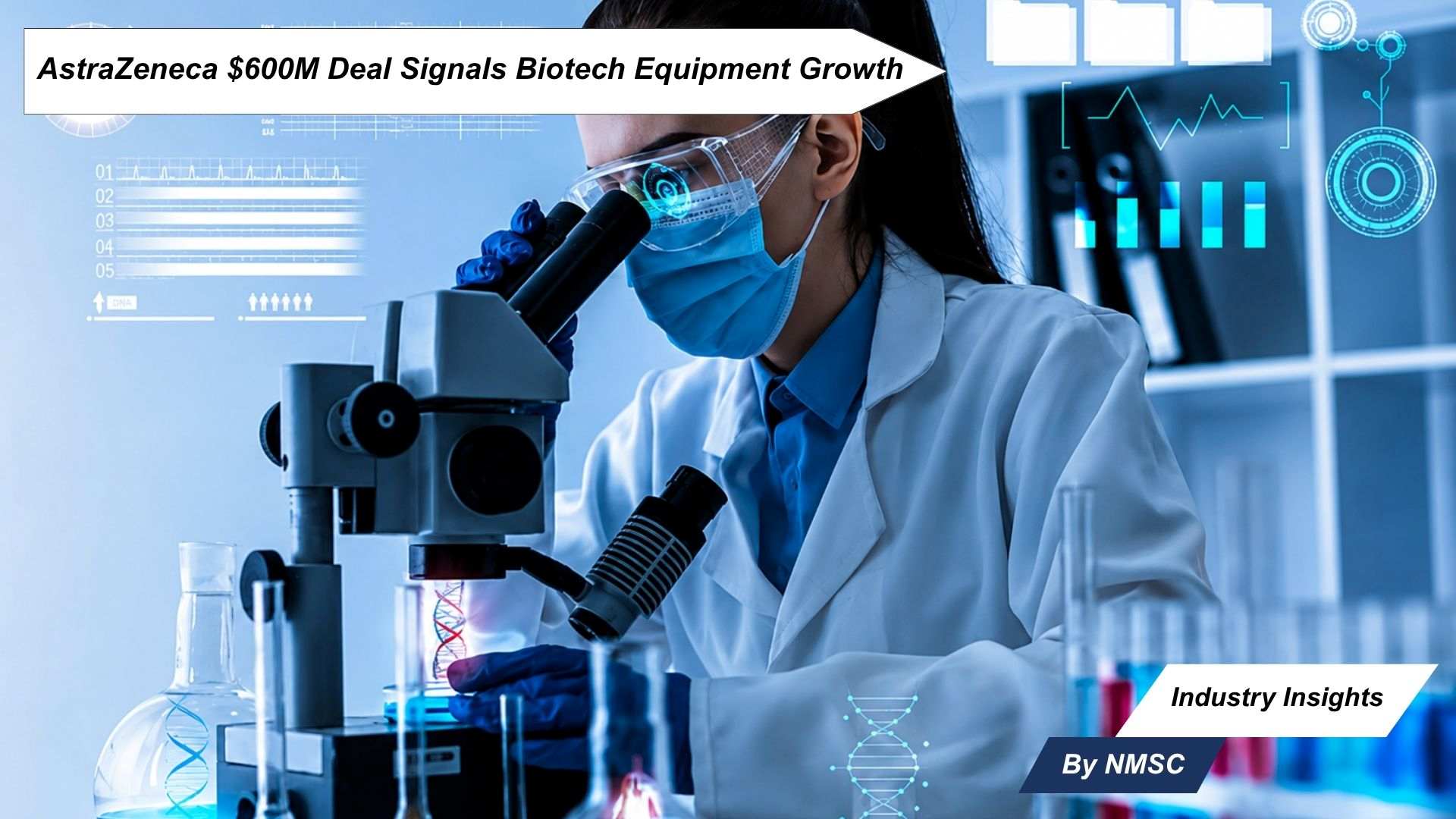
AstraZeneca Pays $600M Upfront for Dizal Lung Cancer Drug, Lifting Biotech Equipment Demand
SHANGHAI, China — July 14, 2026 — AstraZeneca has agreed to pay $600 million upfront to China's Dizal Pharmaceutical for global rights to Sunvozertinib, a targeted lung cancer treatment, in a landmark deal that reinforces the accelerating investment in biotechnology-driven drug development and signals sustained demand growth for the global Biotechnology Equipment sector.
Main Development
The agreement, announced Tuesday, grants AstraZeneca full global development and commercialization rights to Sunvozertinib — also marketed as Zegfrovy — which is already approved in both the United States and China for locally advanced or metastatic non-small cell lung cancer (NSCLC) in adults carrying a rare genetic mutation.
Shares in Dizal Pharmaceutical surged 20% on the Shanghai Stock Exchange following the announcement. Under the terms of the agreement, Dizal is also eligible to receive up to $900 million in additional payments tied to clinical development, regulatory, and commercial sales milestones, bringing the total potential deal value to $1.5 billion.
Non-small cell lung cancer accounts for approximately 77% of all lung cancer cases globally, according to the American Cancer Society, making it one of the most consequential targets for biotechnology-based therapeutic development.
A late-stage multinational clinical trial involving 324 patients demonstrated that Sunvozertinib achieved a median progression-free survival of 10.3 months, compared with 7.5 months for patients receiving standard chemotherapy — a clinically meaningful improvement that supported the drug's regulatory approvals.
"With this agreement, we will bring a differentiated, oral targeted treatment to these patients with limited options across the globe," said Dave Fredrickson, Executive Vice President at AstraZeneca, in a statement.
The transaction reflects a broader industry trend in which major pharmaceutical companies are deepening their investment in biotechnology-based precision therapies. Such investment directly drives demand for advanced biotechnology equipment — including laboratory automation instruments, genomic sequencing platforms, cell culture systems, and in-vitro diagnostic (IVD) instruments — used throughout the drug discovery, development, and manufacturing pipeline.
Key Highlights:
-
AstraZeneca to pay $600 million upfront for global rights to Sunvozertinib (Zegfrovy) from Dizal Pharmaceutical
-
Dizal Pharmaceutical shares rose 20% on the Shanghai Stock Exchange following the announcement
-
Dizal eligible to receive up to $900 million in additional milestone payments, bringing total deal value to $1.5 billion
-
Sunvozertinib demonstrated a median progression-free survival of 10.3 months vs. 7.5 months for chemotherapy in a 324-patient Phase III trial
-
Non-small cell lung cancer represents approximately 77% of all lung cancer cases globally, underscoring the scale of the addressable market
Analyst Insight:
According to analysts at Next Move Strategy Consulting, the global Biotechnology Equipment Market is projected to reach USD 121.81 billion by 2030, expanding at a compound annual growth rate (CAGR) of 13.2% from 2023 to 2030. NMSC analysts note that high-value pharmaceutical licensing transactions — such as the AstraZeneca-Dizal agreement — are a direct indicator of sustained capital deployment into biotechnology-driven drug development pipelines, which in turn generates downstream demand for laboratory automation instruments, life science consumables, IVD instruments, and clinical-grade bioprocessing equipment. The growing emphasis on targeted oncology therapies is expected to be a key demand driver for biotechnology equipment manufacturers and suppliers through the end of the decade.
Industry Outlook:
As global pharmaceutical companies continue to prioritize precision oncology and targeted biologics, the demand for sophisticated biotechnology equipment is expected to remain robust across research, clinical, and manufacturing settings. North America currently holds the largest share of the global biotechnology equipment market, supported by a high concentration of leading industry players and strong institutional research funding. Asia-Pacific — particularly China, India, and Japan — is projected to demonstrate steady growth, driven by expanding biotechnology infrastructure, government-backed life sciences initiatives, and increasing cross-border licensing activity of the kind exemplified by the AstraZeneca-Dizal transaction. Key market participants include Abbott, Agilent Technologies, Becton Dickinson, Bio-Rad Laboratories, BioMerieux SA, and Sartorius Stedim Biotech, among others.
Source: Reuters
Prepared By: Rocktim Gogoi
About the Author
 Sanyukta Deb
— Sanyukta Deb is Digital Marketing Team Lead at Next Move Strategy Consulting, where she has led content strategy and technical SEO for the firm's B2B market research publications for over 2 years. Her editorial process translates NextMSC's primary and secondary research — spanning technology, industrial, and consumer sectors — into commercial narratives, backed by search-intent, keyword, and competitive analysis. She brings 5 years of overall experience in digital marketing and content strategy.
Sanyukta Deb
— Sanyukta Deb is Digital Marketing Team Lead at Next Move Strategy Consulting, where she has led content strategy and technical SEO for the firm's B2B market research publications for over 2 years. Her editorial process translates NextMSC's primary and secondary research — spanning technology, industrial, and consumer sectors — into commercial narratives, backed by search-intent, keyword, and competitive analysis. She brings 5 years of overall experience in digital marketing and content strategy.
About the Reviewer
 Debashree Dey
— Debashree Dey is Assistant Manager at Next Move Strategy Consulting, where she supports cross-vertical market content and communications across diverse industries for 6 years. Her professional background includes senior content writing, communications, and published manuscript authorship, with experience developing audience-focused business narratives and maintaining clear, consistent messaging. Her role supports research-led content development and editorial quality across NextMSC publications.
Debashree Dey
— Debashree Dey is Assistant Manager at Next Move Strategy Consulting, where she supports cross-vertical market content and communications across diverse industries for 6 years. Her professional background includes senior content writing, communications, and published manuscript authorship, with experience developing audience-focused business narratives and maintaining clear, consistent messaging. Her role supports research-led content development and editorial quality across NextMSC publications.

















Add Comment