Can Supersonic Tech and Indigenous Fighters Reshape Aerospace in 2026?
Lede
Recent developments such as Starfighters Space securing $40 million to scale air-launch operations and South Korea preparing to deploy its first KF-21 Boramae fighter jets, alongside the growing importance of the Over-The-Air Testing Market in validating advanced communication and radar systems, illustrate how innovation, cost control, and strategic autonomy are converging in 2026. These developments matter because they point to a broader transformation in how aerospace systems are designed and deployed, moving away from rigid infrastructure toward more flexible, connected, and sovereign capabilities.
Starfighters Advances Air-Launch Strategy with $40M Funding
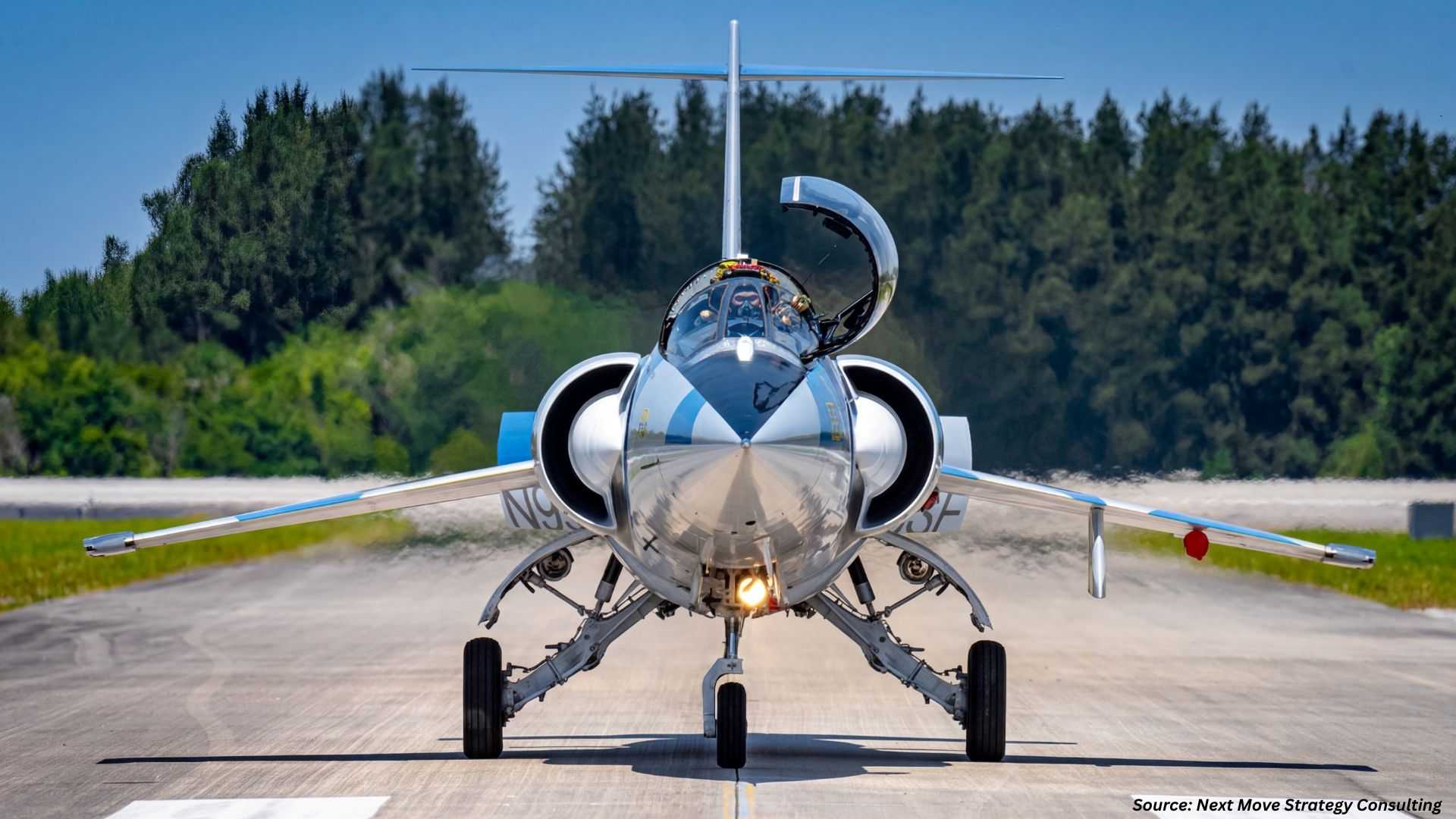
I note that Starfighters Space has secured $40 million in funding as it transitions into a publicly traded aerospace company, with plans to expand its air-launch satellite operations and hypersonic testing programs. The company is building its strategy around the use of modified F-104 supersonic jets, enabling a two-stage launch model where satellites are deployed from high altitude rather than traditional ground-based systems.
This approach introduces operational flexibility, allowing launches from conventional runways while reducing dependence on fixed launch sites. I see this as particularly relevant in a market increasingly constrained by congestion at traditional launch ranges. At Next Move Strategy Consulting, we observe that such flexibility can significantly improve mission scheduling efficiency and reduce turnaround times for small satellite deployments.
At the same time, the model reflects lessons learned from earlier air-launch attempts. Unlike previous ventures that relied heavily on a single revenue stream, Starfighters is positioning itself across multiple segments, including hypersonic testing, aerospace research, and pilot training. Our analysis indicates that this diversification may mitigate financial risks that have historically challenged similar ventures.

Starfighters Operational Model Overview
|
Parameter |
Starfighters Approach |
Traditional Launch Model |
|
Launch Platform |
Supersonic aircraft |
Ground-based rockets |
|
Operational Flexibility |
High |
Limited |
|
Infrastructure Needs |
Minimal |
Extensive |
|
Revenue Model |
Multi-stream |
Primarily launch-focused |
|
Cost Efficiency |
Moderate to high |
High cost baseline |
Global Fighter Aircraft Market Demand Split in 2026
This chart represents global fighter aircraft demand segmentation in 2026. I find that 4.5-generation fighters dominate with 40% share, as they provide a strong balance between affordability and advanced combat capability. Aircraft like the KF-21 are central to this category’s growth.
Fifth-generation fighters hold 30%, primarily driven by advanced air forces seeking stealth and network-centric warfare capabilities, although high acquisition and maintenance costs limit wider adoption.
Upgraded legacy aircraft account for 20%, reflecting ongoing modernization efforts in countries extending the service life of existing fleets. The remaining 10% belongs to next-generation experimental platforms, which remain in early development stages but are critical for long-term strategic air dominance.
At Next Move Strategy Consulting, we observe that this distribution reflects a transitional phase in global air combat strategy, where cost efficiency is becoming as important as technological superiority.

KF-21 Boramae Transitions to Frontline Service in 2026
I find that South Korea is approaching a major milestone with the KF-21 Boramae, as the first operational aircraft are scheduled for delivery in 2026. Developed by Korea Aerospace Industries, the KF-21 represents the country’s first domestically produced supersonic fighter and a critical step toward reducing reliance on foreign defence systems.
The program has progressed steadily, with thousands of flight test sorties validating avionics, radar systems, and overall performance. Production began in 2024, and the aircraft is expected to achieve full operational capability by 2028. I note that the KF-21 is classified as a 4.5-generation fighter, combining advanced radar and avionics with a cost structure that is significantly lower than fifth-generation platforms.

KF-21 Program Snapshot
|
Parameter |
Details |
|
Development Start |
Early 2010s |
|
First Flight |
2022 |
|
Production Start |
2024 |
|
Initial Delivery |
2026 |
|
Full Operational Status |
2028 |
|
Planned Fleet Size |
~120 aircraft |
Market Analysis: Evolving Aerospace and Defence Landscape
I see the aerospace sector evolving along two parallel tracks: private-sector innovation in space access and government-led modernization of defence aviation. These trends are interconnected and are reshaping the competitive landscape.
Flexible launch systems are gaining traction as companies seek alternatives to traditional rocket launches. Air-launch platforms, in particular, are emerging as a viable option for small satellite deployment due to their adaptability and lower infrastructure requirements. At Next Move Strategy Consulting, we note that this segment is likely to expand steadily as demand for rapid and customized launch services increases.
At the same time, indigenous fighter programs are becoming a priority for many nations. The KF-21 exemplifies this trend, reflecting a broader push toward domestic capability development. Countries are increasingly investing in local manufacturing and system integration to strengthen national security and reduce external dependencies.
Cost optimization is another defining factor. The demand for mid-tier fighter aircraft is rising, as many air forces seek to modernize fleets without incurring the high costs associated with fifth-generation platforms. This shift is creating opportunities for new entrants and reshaping traditional supplier dynamics.
Key Aerospace Trends (2025–2026)
|
Trend |
Strategic Impact |
Industry Implication |
|
Air-launch systems |
Increased flexibility |
New business models |
|
Indigenous fighter programs |
Strategic autonomy |
Reduced import dependency |
|
Mid-tier aircraft demand |
Cost optimization |
Expanded global competition |
|
Dual-use aerospace platforms |
Multi-function capabilities |
Revenue diversification |
Aerospace Investment Priorities in 2026
This chart highlights how aerospace investment is being distributed across key innovation areas in 2026. I observe that air-launch and space access systems lead at 30%, reflecting growing demand for flexible and cost-efficient satellite deployment methods.
Fighter jet development follows at 25%, driven by national defense modernization programs and the push for indigenous platforms such as next-generation multirole aircraft. Over-The-Air Testing accounts for 20%, underscoring its rising importance in validating increasingly complex avionics, radar, and communication systems in real operational environments.
At Next Move Strategy Consulting, we note that hypersonic research, while still emerging, holds a strategic 15% share due to its long-term defense implications. Pilot training and simulation represent 10%, supported by digitalization trends that reduce training cost and improve mission readiness.

Long-Term Market Impact and NMSC Perspective
I assess that these developments are not isolated events but indicators of a deeper structural transformation in the aerospace ecosystem. The convergence of flexible launch systems and indigenous defence programs is reshaping both commercial and military aviation.
At Next Move Strategy Consulting, we believe that air-launch platforms could gradually disrupt segments of the small satellite launch industry, particularly if operators succeed in lowering operational costs and increasing launch frequency. The ability to deploy payloads on demand from multiple locations introduces a level of agility that traditional systems struggle to match.
In parallel, the KF-21 program strengthens South Korea’s position as a global defence exporter. I observe that its entry into service will likely intensify competition in the mid-tier fighter segment, influencing procurement strategies across emerging markets.
We also notice a growing divide in innovation models. Private companies are driving experimentation and flexibility in space access, while governments continue to dominate high-value defence programs. This dual dynamic is expected to define the aerospace industry’s trajectory over the next decade.
What to Do Next
I recommend that aerospace companies focus on developing adaptable and multi-role platforms that can serve both commercial and defence applications. Investors should closely monitor firms that combine innovation with diversified revenue streams, as these are better positioned to manage market volatility.
Defence organizations may benefit from prioritizing cost-effective modernization strategies, particularly in the mid-tier aircraft segment. Governments, meanwhile, should continue supporting domestic research and development initiatives to strengthen long-term strategic autonomy.
Conclusion
I conclude that the aerospace sector is undergoing a fundamental transformation driven by innovation, cost efficiency, and the pursuit of sovereignty. Starfighters’ air-launch model and the KF-21 fighter program represent two distinct yet complementary approaches to addressing these challenges.
At Next Move Strategy Consulting, we see these developments as early signals of a broader shift that will redefine how both space access and air combat capabilities evolve in the coming years.
About Next Move Strategy Consulting:
Next Move Strategy Consulting is a premier market research and management consulting firm that has been committed to provide strategically analysed well documented latest research reports to its clients. The research industry is flooded with many firms to choose from, what makes NMSC different from the rest is its top-quality research and the obsession of turning data into knowledge by dissecting every bit of it and providing fact-based research recommendation that is supported by information collected from over 500 million websites, paid databases, industry journals and one on one consultations with industry experts across a diverse range of industry sectors. The high-quality customized research reports with actionable insights and excellent end-to-end customer service help our clients to take critical business decisions that enables them to move beyond time and have competitive edge in the industry.
We have been servicing over 1000 customers globally that includes 90% of the Fortune 500 companies over a decade. Our analysts are constantly tracking various high growth markets and identifying hidden opportunities in each sector or the industry. We provide one of the industry’s best quality syndicate as well as custom research reports across 10 different industry verticals. We are committed to deliver high quality research solutions in accordance to your business needs. Our industry standard delivery solutions that ranges from the pre consultation to after-sales services, provide an excellent client experience and ensure right strategic decision making for businesses.
For more information, please contact:
Next Move Strategy Consulting
5th Floor 867
Boylston St, STE 500,
Boston, MA 02116, U.S.
E-Mail: [email protected]
Direct: +1-217-650-7991
Website: www.nextmsc.com
About the Author
 Sanyukta Deb
— Sanyukta Deb is Digital Marketing Team Lead at Next Move Strategy Consulting, where she has led content strategy and technical SEO for the firm's B2B market research publications for over 2 years. Her editorial process translates NextMSC's primary and secondary research — spanning technology, industrial, and consumer sectors — into commercial narratives, backed by search-intent, keyword, and competitive analysis. She brings 5 years of overall experience in digital marketing and content strategy.
Sanyukta Deb
— Sanyukta Deb is Digital Marketing Team Lead at Next Move Strategy Consulting, where she has led content strategy and technical SEO for the firm's B2B market research publications for over 2 years. Her editorial process translates NextMSC's primary and secondary research — spanning technology, industrial, and consumer sectors — into commercial narratives, backed by search-intent, keyword, and competitive analysis. She brings 5 years of overall experience in digital marketing and content strategy.
About the Reviewer
 Debashree Dey
— Debashree Dey is Assistant Manager at Next Move Strategy Consulting, where she supports cross-vertical market content and communications across diverse industries for 6 years. Her professional background includes senior content writing, communications, and published manuscript authorship, with experience developing audience-focused business narratives and maintaining clear, consistent messaging. Her role supports research-led content development and editorial quality across NextMSC publications.
Debashree Dey
— Debashree Dey is Assistant Manager at Next Move Strategy Consulting, where she supports cross-vertical market content and communications across diverse industries for 6 years. Her professional background includes senior content writing, communications, and published manuscript authorship, with experience developing audience-focused business narratives and maintaining clear, consistent messaging. Her role supports research-led content development and editorial quality across NextMSC publications.
















Add Comment