UK Construction Endures Historic 12-Month Contraction
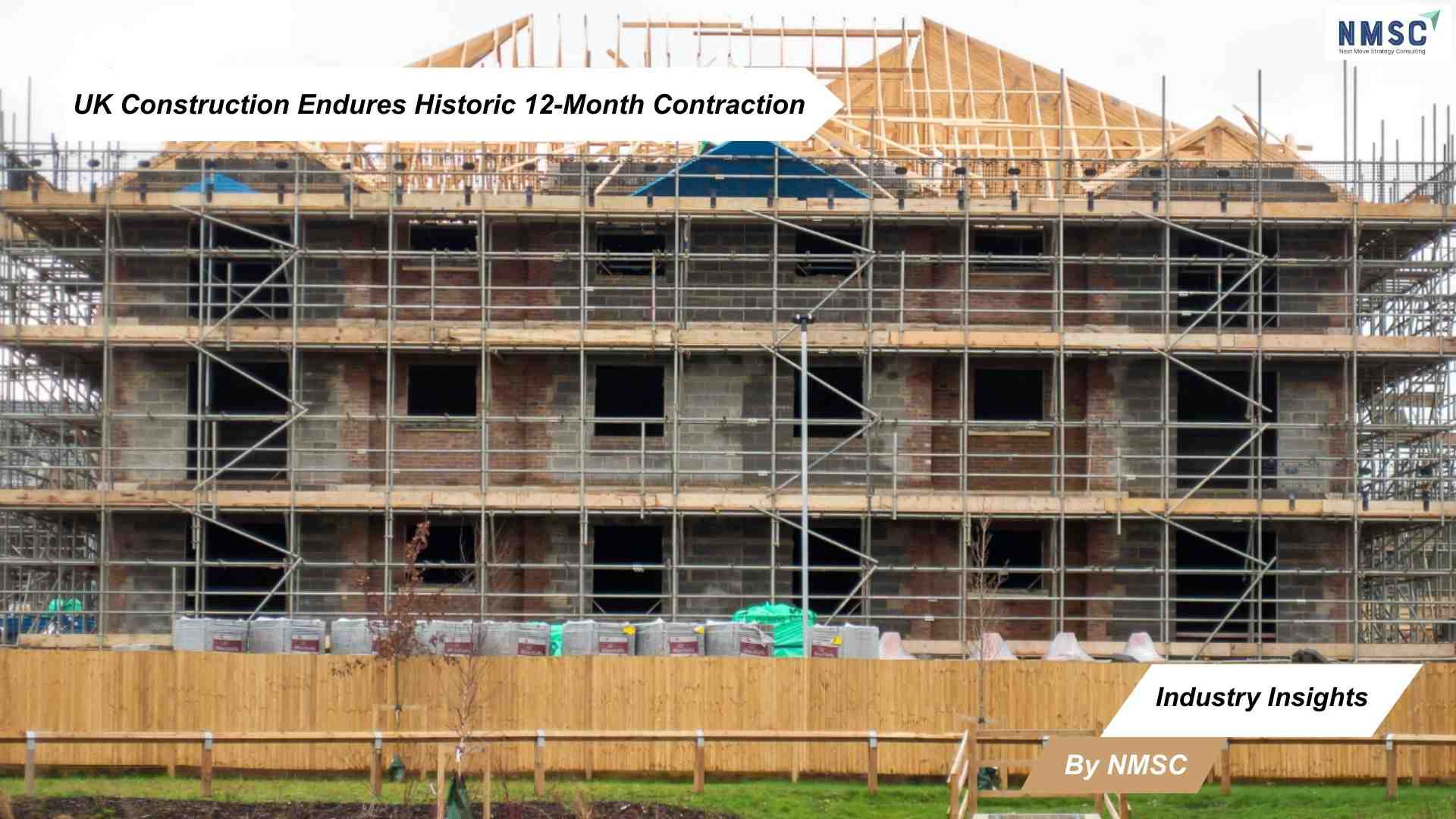
Industry Analysis from Next Move Strategy Consulting
Britain's construction industry is confronting its most prolonged period of decline since the 2007-09 global financial crisis, with output shrinking for twelve consecutive months through December. The latest industry data reveals a sector grappling with persistent demand weakness and fragile client confidence, even as some businesses express cautious optimism for the year ahead.
A Sector-Wide Contraction
The S&P Global/CIPS Purchasing Managers’ Index (PMI) for construction recorded a headline reading of 40.1 in December, remaining near November's five-and-a-half-year low of 39.4. This figure fell short of economists' predictions of 42.5 and marks the longest unbroken decline in activity in nearly two decades.
Housebuilding in Deepest Slump Since Pandemic
The residential construction sector has been hit particularly hard, with its activity subindex plunging to 33.5—the lowest reading since May 2020, when nationwide pandemic lockdowns forced building sites to close. This severe contraction presents a significant challenge to the government's housing targets, as Housing Secretary Steve Reed recently acknowledged the need for a sharp increase in housebuilding to meet Labour's pledge of constructing 1.5 million new homes in England over five years. Industry experts predict this ambitious target will be missed.
Commercial construction also deteriorated significantly, falling at its fastest pace in over five-and-a-half years with an index reading of 42. Civil engineering remained the weakest sector at 32.9, although its rate of decline showed some easing compared to previous months.
Cautious Optimism Amidst Fundamental Challenges
Despite the bleak current conditions, December's survey revealed a notable uptick in business confidence for the coming year, reaching its highest level since July. Approximately 37% of construction firms forecast rising output levels over the next twelve months, compared to 20% predicting further decline. This improved sentiment is attributed to expectations of lower borrowing costs, the resolution of budget uncertainty following Chancellor Rachel Reeves's November statement, rising infrastructure spending commitments, and weaker inflationary pressures.
The data also showed that declines in new orders and employment slowed in December compared to November, offering glimmers of stabilization. The broader all-sector PMI, which includes services and manufacturing, edged up to 50.4, indicating slight expansion across the UK economy overall.
Economic Realities Dampen Recovery Prospects
However, economic analysts caution that underlying fundamentals may constrain any meaningful recovery. Elliott Jordan-Doak, Senior UK Economist at Pantheon Macroeconomics, stated: "We expect the construction PMI itself to remain subdued in the coming months, given how entrenched negative sentiment appears to be within the sector."
Jordan-Doak highlighted several persistent headwinds: "The budget's prioritisation of higher welfare spending rather than investment will come as a disappointment to many builders, and the boost to activity from falling interest rates will be modest this year." He further noted that the proposed "mansion tax"—a high-value council tax surcharge on properties worth over £2 million set to begin in April 2028—"will exert further downward pressure on the housing market."
Consequently, Pantheon Macroeconomics forecasts "only modest growth in construction sector activity in 2026, with risks tilted to the downside."
According to Next Move Strategy Consulting
The protracted downturn in UK construction signals a period of significant market consolidation and strategic realignment. While improved business sentiment suggests the industry may be approaching an inflection point, the fundamental challenges of weak demand, policy uncertainty, and structural constraints in housing suggest any recovery will be gradual and uneven.
This environment will likely accelerate several key industry trends: increased competitive pressure on smaller firms, greater emphasis on operational efficiency and cost management, and strategic shifts toward infrastructure and renovation projects that may be less sensitive to interest rate fluctuations. Companies that successfully navigate this period will be those demonstrating financial resilience, operational flexibility, and strategic diversification across construction segments.
Navigating a Challenging Recovery Path
The UK construction sector finds itself at a critical juncture, having endured its longest downturn since the global financial crisis. While tentative signs of stabilization and improved business confidence offer hope, the path to recovery appears constrained by economic realities, policy decisions, and persistent weaknesses in key market segments.
The coming months will test the sector's resilience as it balances cautious optimism against the tangible challenges of fragile demand, employment reductions, and uncertain policy impacts. The industry's ability to adapt to these conditions while positioning for eventual recovery will determine its trajectory through 2026 and beyond.
Source: www.theguardian.com
Prepared by: Next Move Strategy Consulting
About the Author
 Sanyukta Deb
— Sanyukta Deb is Digital Marketing Team Lead at Next Move Strategy Consulting, where she has led content strategy and technical SEO for the firm's B2B market research publications for over 2 years. Her editorial process translates NextMSC's primary and secondary research — spanning technology, industrial, and consumer sectors — into commercial narratives, backed by search-intent, keyword, and competitive analysis. She brings 5 years of overall experience in digital marketing and content strategy.
Sanyukta Deb
— Sanyukta Deb is Digital Marketing Team Lead at Next Move Strategy Consulting, where she has led content strategy and technical SEO for the firm's B2B market research publications for over 2 years. Her editorial process translates NextMSC's primary and secondary research — spanning technology, industrial, and consumer sectors — into commercial narratives, backed by search-intent, keyword, and competitive analysis. She brings 5 years of overall experience in digital marketing and content strategy.
About the Reviewer
 Debashree Dey
— Debashree Dey is Assistant Manager at Next Move Strategy Consulting, where she supports cross-vertical market content and communications across diverse industries for 6 years. Her professional background includes senior content writing, communications, and published manuscript authorship, with experience developing audience-focused business narratives and maintaining clear, consistent messaging. Her role supports research-led content development and editorial quality across NextMSC publications.
Debashree Dey
— Debashree Dey is Assistant Manager at Next Move Strategy Consulting, where she supports cross-vertical market content and communications across diverse industries for 6 years. Her professional background includes senior content writing, communications, and published manuscript authorship, with experience developing audience-focused business narratives and maintaining clear, consistent messaging. Her role supports research-led content development and editorial quality across NextMSC publications.


















Add Comment