AI Personalized Nutrition Platform Market Size, Share, Growth & Forecast by Offering (Consumer Nutrition Platforms, Professional Nutrition Platforms, Enterprise Nutrition Platforms, Personalized Nutrition Programs, Nutrition Coaching Services, Enterprise Nutrition Services, Platform Licensing and API Services, Nutrition Commerce Revenue), Personalization Data Source, Customer Type, Clinical and Wellness Focus, Revenue Model, Deployment Model, and Distribution Channel — 2026–2035
Industry: Healthcare | Publishing Date: July 11, 2026 | Last Updated: September 30, 2026 | No of Pages: N/A | No. of Tables: N/A | No. of Figures: N/A | Format: PDF | Report Code: HC5092
What Is the AI Personalized Nutrition Platform Market Size?
The global AI Personalized Nutrition Platform Market was valued at USD 1.68 billion in 2025 and is expected to reach USD 2.05 billion in 2026. Expanding prevalence of chronic metabolic conditions, accelerating wearable device adoption, and rapid advances in genomics and microbiome science are projected to propel market revenue to USD 15.35 billion by 2035, advancing at a CAGR of 24.95% from 2026 to 2035. Key growth drivers include the integration of continuous glucose monitoring data into AI nutrition engines, growing employer wellness investment, and increasing health plan reimbursement pathways for AI-guided dietitian services.
|
Parameter |
Details |
|
Market Size in 2025 |
USD 1.68 Billion |
|
Market Size in 2026 |
USD 2.05 Billion |
|
Revenue Forecast in 2035 |
USD 15.35 Billion |
|
Growth Rate |
CAGR of 24.95% from 2026 to 2035 |
|
Analysis Period |
2025–2035 |
|
Base Year Considered |
2025 |
|
Forecast Period |
2026–2035 |
|
Market Size Estimation |
Billion (USD) |
|
Companies Profiled |
20 |
|
Countries Covered |
33 |
|
Market Share |
Top 10 |
AI Personalized Nutrition Platform Market Overview
What Is the AI Personalized Nutrition Platform Market?
The AI Personalized Nutrition Platform Market encompasses technology platforms that apply artificial intelligence, machine learning, and multi-omics data science to deliver individualized dietary guidance, coaching services, and nutrition program management. These platforms synthesize inputs from questionnaires, genetic sequencing, gut microbiome profiling, continuous glucose monitoring, and wearable biometrics to generate real-time, evidence-grounded nutrition recommendations. The market serves individual consumers, employers, healthcare providers, health insurance organizations, and pharmaceutical companies, operating across direct-to-consumer, enterprise, clinical, and research verticals.
How Has the AI Personalized Nutrition Platform Market Evolved?
The AI Personalized Nutrition Platform Market has advanced through three structural phases. The first phase comprised static dietary questionnaire tools and basic calorie-tracking applications. The second phase introduced genomics-based nutrition programs and microbiome sequencing that provided biological personalization beyond self-reported data. NMSC's analysis indicates that the current phase is defined by AI-native platforms capable of integrating multi-omics data, real-time CGM glucose response, and wearable biosignals into continuous, adaptive nutrition coaching engines that update recommendations dynamically across individual health trajectories.
How Do Regulations Influence the AI Personalized Nutrition Platform Market?
Regulatory developments are reshaping the structural boundaries of the AI Personalized Nutrition Platform Market. The U.S. Food and Drug Administration's Digital Health Innovation Action Plan governs platform classifications, while the 21st Century Cures Act promotes interoperability between nutrition platforms and electronic health records. In Europe, the General Data Protection Regulation and the European Health Data Space framework govern biometric and genomic data processing. Germany's Digital Health Applications program enables prescription reimbursement for qualified nutrition apps, creating a regulatory-commercial pathway that other European markets are evaluating for adoption.
How Is Technology Adoption Expanding Across the AI Personalized Nutrition Platform Market?
Technology adoption across the AI Personalized Nutrition Platform Market is accelerating as platform costs decline and multi-omics science becomes more commercially accessible. From our research, we found that the convergence of AI nutrition engines with consumer CGM devices, real-time biomarker analysis, and large language model-powered coaching interfaces is lowering the scientific and logistical barriers to high-precision personalization. Cloud-based deployments dominate adoption, enabling rapid feature iteration, cross-device synchronization, and scalable API integration with electronic health record systems and employer wellness platforms.
|
Key Takeaways |
|
By offering, Consumer Nutrition Platforms held the largest share at USD 1.02 billion in 2025. Personalized Nutrition Programs, specifically Continuous Glucose Monitoring-Based and Multi-Omics Programs, represent the fastest-growing sub-segment at a combined CAGR exceeding 25% from 2026 to 2035, driven by rising clinical evidence and falling CGM hardware costs. |
|
Nutrition Commerce Revenue, including supplement referral and marketplace commission models, is the fastest-growing sub-segment under the offering dimension at a CAGR of 26.5% from 2026 to 2035, as platforms monetize behavioral data to generate precision supplement and grocery recommendations. |
|
By personalization data source, Questionnaire Data generated USD 1.10 billion in 2025, maintaining the largest share. Multi-Omics Data is the fastest-growing source segment at a CAGR of 25.3% from 2026 to 2035, reflecting advances in liquid biopsy, proteomics, and metabolomics integration. |
|
Continuous Glucose Monitoring Data is the second-fastest-growing personalization data source in the AI Personalized Nutrition Platform Market at a CAGR of 25.2%, as CGM devices become accessible to non-diabetic wellness consumers through partnerships with Levels Health, NutriSense, and January AI. |
|
By customer type, Individual Consumers generated USD 1.68 billion in 2025, commanding the dominant share. Government and Public Health Organizations represent the fastest-growing customer segment at a CAGR of 24.5%, as national obesity and metabolic disease prevention programs adopt AI nutrition platforms. |
|
Health Insurance Organizations are the second-fastest-growing customer type in the AI Personalized Nutrition Platform Market at a CAGR of 22.5%, as payers integrate precision nutrition into value-based care programs for diabetes, prediabetes, and cardiovascular risk management. |
|
By clinical focus, General Wellness led at USD 0.98 billion in 2025. Clinical Nutrition Support is the fastest-growing focus area at a CAGR of 24.5%, driven by hospital system integration, enteral nutrition management, and therapeutic dietary guidance for oncology and post-surgical recovery. |
|
Healthy Aging and Longevity is the second-fastest-growing clinical focus at a CAGR of 24.4%, reflecting consumer interest in epigenetic nutrition, longevity supplementation, and metabolic age optimization programs. |
|
By revenue model, Subscription Revenue was the largest at USD 1.52 billion in 2025. Licensing Revenue is the fastest-growing revenue stream in the AI Personalized Nutrition Platform Market at a CAGR of 24.2%, as platform vendors commercialize their AI models through white-label and API licensing to food companies and health systems. |
|
By deployment, Cloud-Based Platforms led at USD 2.66 billion in 2025. Hybrid Platforms represent the fastest-growing deployment model at a CAGR of 24.4%, particularly within enterprise health systems and pharmaceutical research deployments that require data sovereignty alongside cloud analytics capability. |
|
By distribution channel, Direct-to-Consumer held the largest share at USD 1.52 billion in 2025. Partner Channel is the fastest-growing distribution channel at a CAGR of 26.5%, reflecting strategic alliances between AI nutrition platforms and food retailers, insurance companies, and technology ecosystems. |
|
North America held the largest regional share in the AI Personalized Nutrition Platform Market at USD 1.52 billion in 2025, projected to reach USD 10.74 billion by 2035 at a CAGR of 21.7%, supported by the world's highest employer wellness spending, widespread CGM adoption, and a highly developed digital health ecosystem. |
|
Latin America is the fastest-growing region in the AI Personalized Nutrition Platform Market at a CAGR of 26.0% from 2026 to 2035, driven by rising obesity and diabetes prevalence, expanding digital health infrastructure, growing health insurance penetration, and increasing consumer adoption of AI-enabled wellness solutions. |
|
The United States is the single largest country market in the AI Personalized Nutrition Platform Market, underpinned by the presence of leading AI nutrition platform providers, strong digital health investment activity, advanced healthcare infrastructure, and expanding employer-sponsored wellness programs. |
|
India is the fastest-growing national market within Asia-Pacific in the AI Personalized Nutrition Platform Market at a CAGR of 27.0%, propelled by the Ayushman Bharat Digital Mission, a large diabetic and prediabetic population, rapid smartphone adoption, and increasing demand for AI-powered personalized nutrition and preventive healthcare solutions. |
Key Emerging Trends in the AI Personalized Nutrition Platform Market
How Is Continuous Glucose Monitoring Integration Transforming the AI Personalized Nutrition Platform Market?
Continuous glucose monitoring integration is fundamentally redefining precision in the AI Personalized Nutrition Platform Market. Platforms such as Levels Health, NutriSense, and January AI now pair FDA-cleared CGM hardware with proprietary AI models that predict individual postprandial glucose responses to specific foods. Our analysis shows that January AI demonstrated over 90% glucose prediction accuracy compared to direct CGM readings, enabling preemptive dietary guidance. This trend is expanding beyond diabetic populations into the general wellness market, compelling every major AI nutrition platform to develop CGM data ingestion capabilities to remain commercially relevant.
How Is Multi-Omics Science Reshaping Personalization Depth in the AI Personalized Nutrition Platform Market?
Multi-omics integration, combining genomics, gut microbiome, transcriptomics, proteomics, and metabolomics, is elevating the biological precision of AI personalized nutrition programs. Based on our market evaluation, we noticed that Viome Life Sciences' Full Body Intelligence test synthesizes RNA-based gut, oral, and blood biomarker analysis to generate food and supplement scores unique to each individual's biological state. This multi-layered approach addresses limitations of single-data-source models and commands a significant premium in the market. Pharmaceutical companies are increasingly partnering with multi-omics nutrition platforms to validate dietary biomarkers as surrogate clinical endpoints.
What Role Is Employer Wellness Investment Playing in Accelerating the AI Personalized Nutrition Platform Market Demand?
Employer wellness program expansion is emerging as one of the most structurally significant demand channels for the AI Personalized Nutrition Platform Market growth. Through our assessment, we observed that enterprises are integrating AI nutrition platforms into health benefit packages to address metabolic syndrome, reduce healthcare claims costs, and improve workforce productivity. The U.S. Bureau of Labor Statistics confirms that employer-sponsored wellness programs are expanding in scope, with nutrition counseling becoming a core offering. Foodsmart's national employer contracts represent a direct commercial manifestation of this trend, generating enterprise contract revenue that diversifies platform monetization beyond direct-to-consumer subscriptions.
How Is AI-Driven Coaching Evolving Beyond Dietary Guidance in the AI Personalized Nutrition Platform Market?
AI-driven nutrition coaching is evolving from static dietary recommendation engines into dynamic behavioral change platforms that integrate sleep, stress, activity, and mental health data alongside nutritional inputs. Our findings suggest that hybrid coaching models, combining AI-generated recommendations with human registered dietitian oversight, are achieving superior adherence rates compared to fully automated systems. Culina Health and Fay Nutrition are operationalizing this model by connecting insurance-covered dietitian sessions with AI-powered food intake tracking. This convergence of behavioral science, registered dietitian expertise, and AI analytics is creating a premium coaching segment with materially higher lifetime value per user.
What Are the Key Market Drivers, Breakthroughs, and Investment Opportunities that Will Shape the AI Personalized Nutrition Platform Market in the Next Decade?
|
Drivers / Trends / Restraints |
(+/-) % Impact on CAGR Forecast |
Geographic Relevance |
Impact Timeline |
|
Rising Prevalence of Chronic Metabolic Diseases |
+2.6% |
Global (APAC, North America, MEA) |
2025–2035 |
|
Surge in Wearable & CGM Device Adoption |
+1.8% |
North America, Europe, APAC |
2025–2030 |
|
Employer Wellness Program Expansion |
+1.4% |
North America, Europe, APAC |
2025–2032 |
|
Genomics & Microbiome Science Democratization |
+1.6% |
North America, Europe, APAC |
2026–2035 |
|
AI/ML Platform Maturity & Cost Reduction |
+1.2% |
Global |
2025–2030 |
|
Integration with Healthcare Provider Systems |
+1.0% |
North America, Europe, Australia |
2026–2035 |
|
Data Privacy and Biometric Regulation Complexity |
-1.4% |
Europe, APAC, North America |
Ongoing |
|
Consumer Skepticism and Low Adherence Rates |
-0.8% |
All regions |
Ongoing |
|
Fragmented Reimbursement and Insurance Coverage |
-0.6% |
North America, Europe |
2025–2030 |
|
Multi-Omics Data Monetization Opportunities |
+2.0% |
Global |
2027–2035 |
|
Health Insurance & Pharmaceutical Channel Growth |
+1.1% |
North America, Europe |
2026–2035 |
What Are the Growth Drivers of the AI Personalized Nutrition Platform Market?
How Is the Rising Global Burden of Chronic Metabolic Disease Driving the AI Personalized Nutrition Platform Market?
The escalating global prevalence of metabolic conditions is the most powerful structural driver of the AI Personalized Nutrition Platform Market. The International Diabetes Federation reports that over 537 million adults worldwide live with diabetes, with an estimated 541 million in the prediabetes stage requiring preventive nutritional intervention. The World Health Organization estimates that over 650 million adults globally are obese, with dietary modification representing a first-line therapeutic strategy. These epidemiological realities create a massive and underserved addressable market for AI-powered nutrition platforms that can deliver clinical-grade dietary guidance at population scale and at a fraction of traditional registered dietitian costs.
How Is Wearable Device and CGM Proliferation Creating Structural Demand for the AI Personalized Nutrition Platform Market?
The consumer adoption of wearable biosensing devices, including continuous glucose monitors, smartwatches with heart rate variability sensors, and sleep trackers, is generating unprecedented real-time biological datasets that AI nutrition platforms are uniquely positioned to interpret. From our research, we found that CGM adoption among non-diabetic wellness consumers has grown substantially as devices from Abbott, Dexcom, and new entrants become available without prescription in multiple markets. This data proliferation creates a structural dependency on AI nutrition engines capable of translating raw biometric streams into actionable dietary guidance, directly expanding the total addressable market demand of the AI Personalized Nutrition Platform Market.
How Is the Integration of AI Nutrition Platforms with Clinical and Insurance Systems Unlocking New Revenue Streams?
The integration of AI personalized nutrition platforms into clinical electronic health record systems and health insurance reimbursement frameworks is creating a structurally new commercial pathway that fundamentally expands market reach. The U.S. Centers for Medicare and Medicaid Services' value-based care programs incentivize preventive nutritional intervention for high-risk metabolic patients, creating a reimbursement rationale for AI platform integration into clinical practice. Our assessment indicates that Germany's DiGA framework, which enables prescription reimbursement for validated digital health applications including nutrition apps, represents a global regulatory model that will progressively expand platform revenue through healthcare payer channels.
What Are the Growth Inhibitors of the AI Personalized Nutrition Platform Market?
How Do Data Privacy Regulations and Biometric Data Sensitivity Constrain the AI Personalized Nutrition Platform Market?
The collection and processing of genomic sequences, gut microbiome profiles, continuous glucose data, and behavioral biometrics place AI nutrition platforms at the intersection of some of the world's most sensitive regulatory frameworks. The General Data Protection Regulation designates genetic and health data as special categories requiring explicit consent and heightened security controls. The U.S. Department of Health and Human Services enforces HIPAA protections over health information processed in clinical or insurance contexts. NMSC's analysis indicates that the compliance overhead associated with multi-jurisdiction biometric data governance materially extends platform development timelines, complicates international expansion strategies, and increases the cost of data architecture for emerging platform operators.
How Does Consumer Skepticism and Low Adherence Limit Growth Potential in the AI Personalized Nutrition Platform Market?
Consumer skepticism toward AI-generated health recommendations and low long-term dietary adherence rates represent persistent behavioral inhibitors for the AI Personalized Nutrition Platform Market expansion. The National Institutes of Health All of Us Research Program highlights the complexity of translating precision health insights into sustained individual behavioral change, noting that personalized recommendations alone are insufficient without robust behavioral support systems. Platform operators relying solely on algorithm-generated recommendations without human dietitian reinforcement report significantly higher churn rates, which compresses lifetime customer value and undermines the unit economics of subscription-based business models across the market.
What Are the Growth Opportunities in the AI Personalized Nutrition Platform Market?
How Does the Pharmaceutical Industry's Precision Nutrition Strategy Create Opportunities in the AI Personalized Nutrition Platform Market?
Pharmaceutical and life sciences companies are increasingly partnering with AI personalized nutrition platforms to validate dietary interventions as complementary therapies and to identify precision nutritional biomarkers as surrogate clinical endpoints. The National Academy of Medicine has published frameworks supporting nutrition as an integral component of precision medicine, elevating AI nutrition platforms from consumer wellness tools to potential clinical research instruments. Our market assessment observes that pharmaceutical partnerships generate enterprise contract revenue at materially higher values than consumer subscriptions, and provide AI nutrition platforms with scientifically validated outcome data that strengthens clinical positioning and regulatory credibility.
How Does the Expansion of National Digital Health Infrastructure in Emerging Markets Represent a Strategic Opportunity for the AI Personalized Nutrition Platform Market?
Government-directed digital health infrastructure programs in India, the UAE, Saudi Arabia, and Brazil are creating national health data ecosystems that AI personalized nutrition platforms can integrate with to reach underserved but large metabolic disease populations at scale. India's Ayushman Bharat Digital Mission, overseen by the National Health Authority, is establishing a unified health record infrastructure that facilitates personalized dietary intervention for a population carrying over 77 million diagnosed diabetics. The Saudi Vision 2030 digital health transformation is directing sovereign capital toward AI health platforms. These government ecosystems represent structurally privileged market entry pathways for platform vendors who achieve regulatory certification within national digital health architectures.
How Does the White-Label and API Licensing Model Create a Scalable Expansion Pathway in the AI Personalized Nutrition Platform Market?
White-label platform licensing and AI API services represent one of the highest-margin and most scalable expansion opportunities in the AI Personalized Nutrition Platform Market, enabling food companies, retail pharmacy chains, and health insurance organizations to deploy branded personalized nutrition experiences without proprietary AI development investment. Based on NMSC's research, we found that food and nutrition companies are actively seeking AI personalization infrastructure to differentiate product portfolios and build direct consumer relationships through nutrition intelligence services. The U.S. Department of Agriculture's commitment to personalized dietary guidance within the Dietary Guidelines for Americans further legitimizes the scientific foundation upon which commercial API licensing models are built.
Ecosystem Analysis of the AI Personalized Nutrition Platform Market
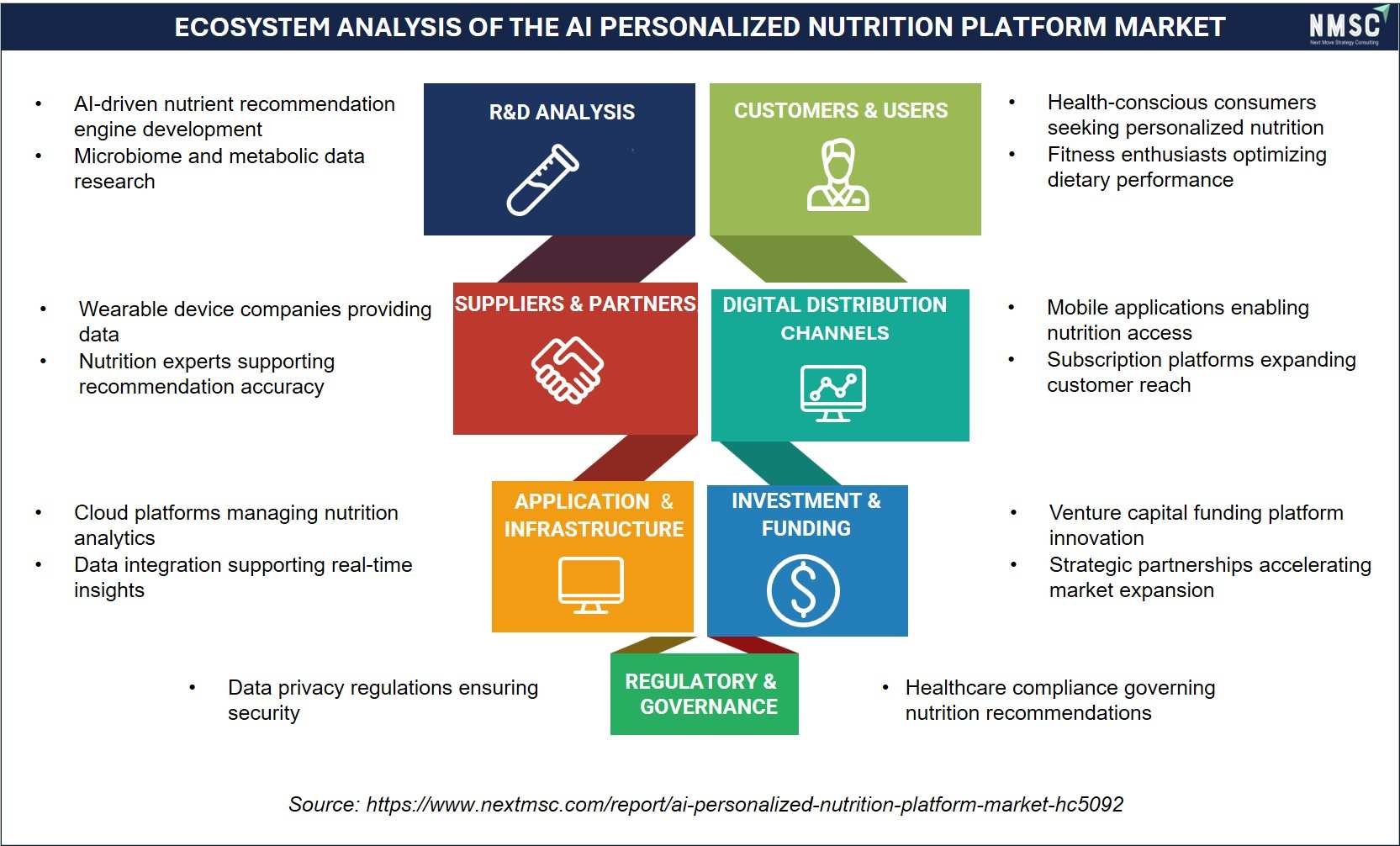
NMSC’s analysis indicates that the AI Personalized Nutrition Platform market is supported by an ecosystem integrating advanced analytics, wearable technologies, digital distribution channels, and regulatory oversight. Our assessment finds that growing consumer demand for personalized health solutions, coupled with continuous innovation in microbiome and metabolic research, is accelerating adoption. Furthermore, strategic investments, data integration capabilities, and privacy compliance strengthen market development.
How Is the AI Personalized Nutrition Platform Market Segmented in This Report, and What Are the Key Insights from the Segmentation Analysis?
How Does the Offering Segmentation Reveal the Commercial Architecture of the AI Personalized Nutrition Platform Market?
|
Segment |
2025 (USD Bn) |
2035 (USD Bn) |
CAGR (%) |
|
Consumer Nutrition Platforms |
1.02 |
7.4 |
21.9% |
|
Professional Nutrition Platforms |
0.58 |
4.32 |
24.95% |
|
Enterprise Nutrition Platforms |
0.71 |
5.18 |
22.0% |
|
Food & Nutrition Industry Platforms |
0.19 |
1.36 |
21.7% |
|
Personalized Nutrition Programs |
0.68 |
5.22 |
22.6% |
|
Nutrition Coaching Services |
0.29 |
2.28 |
23.0% |
|
Enterprise Nutrition Services |
0.18 |
1.38 |
22.5% |
|
Platform Licensing & API Services |
0.08 |
0.72 |
24.5% |
|
Nutrition Commerce Revenue |
0.07 |
0.74 |
26.5% |
Based on our analysis, the AI Personalized Nutrition Platform Market share is segmented by offering into Consumer Nutrition Platforms, Professional Nutrition Platforms, Enterprise Nutrition Platforms, Food and Nutrition Industry Platforms, Personalized Nutrition Programs, Nutrition Coaching Services, Enterprise Nutrition Services, Platform Licensing and API Services, and Nutrition Commerce Revenue. Consumer Nutrition Platforms currently dominate, led by mobile nutrition applications that benefit from mass-market distribution and low acquisition costs. Personalized Nutrition Programs, encompassing genomics-based, microbiome-based, and CGM-based programs, are the fastest-growing structured offering category. Platform Licensing and API Services, while the smallest segment today, are accelerating at a CAGR of 24.5% as AI nutrition intelligence becomes an embedded capability within food and health enterprise ecosystems.
How Do Personalization Data Sources Define Clinical Differentiation in the AI Personalized Nutrition Platform Market?
|
Segment |
2025 (USD Bn) |
2035 (USD Bn) |
CAGR (%) |
|
Questionnaire Data |
1.1 |
7.22 |
20.8% |
|
Dietary Intake Data |
0.46 |
3.04 |
20.9% |
|
Lifestyle Data |
0.38 |
2.52 |
20.9% |
|
Wearable Device Data |
0.42 |
3.34 |
23.2% |
|
Genetic Data |
0.52 |
3.96 |
22.5% |
|
Microbiome Data |
0.38 |
3.02 |
23.0% |
|
Biomarker Data |
0.28 |
2.28 |
23.4% |
|
CGM Data |
0.22 |
2.08 |
25.2% |
|
Multi-Omics Data |
0.12 |
1.14 |
25.3% |
|
Multi-Source Data |
0.3 |
2.42 |
23.1% |
Through NMSC's assessment, we found that the AI Personalized Nutrition Platform Market is segmented by personalization data source into Questionnaire Data, Dietary Intake Data, Lifestyle Data, Wearable Device Data, Genetic Data, Microbiome Data, Biomarker Data, Continuous Glucose Monitoring Data, Multi-Omics Data, and Multi-Source Data. Questionnaire Data remains the dominant source due to its low cost and broad applicability across consumer platforms. Genetic and Microbiome Data sources are capturing increasing market share as platform providers leverage falling sequencing costs. CGM and Multi-Omics Data represent the highest-growth sources, reflecting the shift toward dynamic, real-time biological personalization that questionnaire models cannot deliver.
Which Customer Types Are Reshaping Revenue Dynamics in the AI Personalized Nutrition Platform Market?
|
Segment |
2025 (USD Bn) |
2035 (USD Bn) |
CAGR (%) |
|
Individual Consumers |
1.68 |
12.26 |
22.1% |
|
Employers |
0.68 |
4.98 |
22.0% |
|
Healthcare Providers |
0.52 |
3.86 |
22.3% |
|
Health Insurance Organizations |
0.38 |
2.88 |
22.5% |
|
Pharma & Life Sciences |
0.24 |
1.84 |
22.7% |
|
Food & Nutrition Companies |
0.16 |
1.22 |
24.95% |
|
Research Organizations |
0.08 |
0.62 |
22.8% |
|
Government & Public Health |
0.06 |
0.54 |
24.5% |
Our assessment indicates that the AI Personalized Nutrition Platform Market is segmented by customer type into Individual Consumers, Employers, Healthcare Providers, Health Insurance Organizations, Pharmaceutical and Life Sciences Companies, Food and Nutrition Companies, Research Organizations, and Government and Public Health Organizations. Individual Consumers dominate total revenue, but institutional customer types are growing faster. Employers represent the second-largest customer segment, integrating AI nutrition platforms into workforce wellness programs to manage healthcare cost inflation. Government and Public Health Organizations are the fastest-growing customer type, as national metabolic disease prevention strategies increasingly incorporate AI nutrition platforms into population health management frameworks.
How Does Clinical Focus Segmentation Illuminate Therapeutic Demand Concentrations in the AI Personalized Nutrition Platform Market?
|
Segment |
2025 (USD Bn) |
2035 (USD Bn) |
CAGR (%) |
|
General Wellness |
0.98 |
6.84 |
21.4% |
|
Weight Management |
0.68 |
4.96 |
22.0% |
|
Metabolic Health |
0.62 |
5.08 |
23.3% |
|
Digestive Health |
0.34 |
2.72 |
23.1% |
|
Cardiovascular Health |
0.28 |
2.18 |
22.7% |
|
Sports Performance |
0.32 |
2.58 |
23.1% |
|
Women's Health |
0.22 |
1.78 |
23.3% |
|
Healthy Aging & Longevity |
0.18 |
1.58 |
24.4% |
|
Immune Health |
0.1 |
0.84 |
23.8% |
|
Clinical Nutrition Support |
0.08 |
0.72 |
24.5% |
Based on our market evaluation, we noticed that the AI Personalized Nutrition Platform Market is segmented by clinical and wellness focus into General Wellness, Weight Management, Metabolic Health, Digestive Health, Cardiovascular Health, Sports Performance, Women's Health, Healthy Aging and Longevity, Immune Health, and Clinical Nutrition Support. General Wellness leads by market size, reflecting broad consumer demand for health optimization. Metabolic Health, encompassing diabetes, prediabetes, obesity, and dyslipidemia management, is the second-largest focus area and carries the most significant clinical evidence base driving payer reimbursement. Clinical Nutrition Support is the fastest-growing focus at a CAGR of 24.5%, led by hospital system integration and therapeutic dietary applications in oncology and post-surgical care pathways.
How Do Revenue Model Choices Reflect Commercial Maturity in the AI Personalized Nutrition Platform Market?
|
Segment |
2025 (USD Bn) |
2035 (USD Bn) |
CAGR (%) |
|
Subscription Revenue |
1.52 |
10.92 |
21.8% |
|
Program Enrollment Revenue |
0.76 |
5.68 |
22.3% |
|
Coaching Revenue |
0.46 |
3.58 |
23.0% |
|
Enterprise Contract Revenue |
0.62 |
4.88 |
23.0% |
|
Licensing Revenue |
0.16 |
1.38 |
24.2% |
|
Implementation & Integration Revenue |
0.14 |
1.14 |
23.2% |
|
Commission Revenue |
0.14 |
1.02 |
22.2% |
In our observation, the AI Personalized Nutrition Platform Market is segmented by revenue model into Subscription Revenue, Program Enrollment Revenue, Coaching Revenue, Enterprise Contract Revenue, Licensing Revenue, Implementation and Integration Revenue, and Commission Revenue. Subscription Revenue is the largest model, favored for its predictable recurring revenue profile and alignment with consumer digital service expectations. Enterprise Contract Revenue is the second-largest segment, reflecting institutional adoption by employers and health systems. Licensing Revenue is the fastest-growing model at a CAGR of 24.2%, as AI nutrition platforms increasingly commercialize their proprietary algorithms and data assets through API licensing and white-label agreements with food, insurance, and healthcare enterprises.
How Does Deployment Architecture Shape Enterprise Adoption Patterns in the AI Personalized Nutrition Platform Market?
|
Segment |
2025 (USD Bn) |
2035 (USD Bn) |
CAGR (%) |
|
Cloud-Based Platforms |
2.66 |
19.82 |
22.3% |
|
On-Premise Platforms |
0.56 |
3.62 |
20.5% |
|
Hybrid Platforms |
0.58 |
5.16 |
24.4% |
Our findings suggest that the AI Personalized Nutrition Platform Market is segmented by deployment model into Cloud-Based Platforms, On-Premise Platforms, and Hybrid Platforms. Cloud-Based Platforms dominate with USD 2.66 billion in 2025, enabling rapid feature deployment, cross-device data synchronization, and scalable AI model training without capital infrastructure investment. On-Premise Platforms maintain relevance within highly regulated healthcare and pharmaceutical environments requiring complete data sovereignty. Hybrid Platforms are the fastest-growing deployment model at a CAGR of 24.4%, reflecting the needs of health systems and payers that must balance cloud analytics capability with on-premise data residency obligations.
How Are Distribution Channels Evolving to Drive Reach and Revenue in the AI Personalized Nutrition Platform Market?
|
Segment |
2025 (USD Bn) |
2035 (USD Bn) |
CAGR (%) |
|
Direct-to-Consumer |
1.52 |
10.84 |
21.7% |
|
Direct Enterprise Sales |
0.76 |
5.72 |
24.95% |
|
Healthcare Provider Channel |
0.46 |
3.52 |
22.5% |
|
Employer Channel |
0.42 |
3.18 |
24.95% |
|
Health Insurance Channel |
0.28 |
2.18 |
22.8% |
|
Pharma & Life Sciences Channel |
0.16 |
1.28 |
23.1% |
|
Food & Nutrition Industry Channel |
0.1 |
0.82 |
23.4% |
|
Partner Channel |
0.1 |
1.06 |
26.5% |
Based on NMSC's research, we found that the AI Personalized Nutrition Platform Market is segmented by distribution channel into Direct-to-Consumer, Direct Enterprise Sales, Healthcare Provider Channel, Employer Channel, Health Insurance Channel, Pharmaceutical and Life Sciences Channel, Food and Nutrition Industry Channel, and Partner Channel. Direct-to-Consumer is the largest channel, capitalizing on mobile app stores and social media acquisition. Direct Enterprise Sales is the second-largest channel, enabling customized platform configurations for employer and health system clients. Partner Channel is the fastest-growing distribution pathway at a CAGR of 26.5%, driven by co-marketing alliances between AI nutrition platforms and food retailers, insurance ecosystems, and device manufacturers including CGM hardware companies.
Regional Outlook
Regional Analysis and Geographic Performance Snapshot
|
Region |
2025 (USD Bn) |
2035 (USD Bn) |
CAGR (%) |
Key Driver |
|
North America |
1.52 |
10.74 |
21.7% |
Employer wellness, CGM adoption, digital health ecosystem |
|
Europe |
0.84 |
5.82 |
21.2% |
GDPR compliance, NHS integration, genomics programs |
|
Asia-Pacific |
0.98 |
7.68 |
23.0% |
Mobile-first markets, large diabetic population, health apps |
|
Middle East & Africa |
0.22 |
1.96 |
24.5% |
Vision 2030, UAE AI strategy, government wellness |
|
Latin America |
0.24 |
2.4 |
26.0% |
Fintech-health convergence, obesity management demand |
North America AI Personalized Nutrition Platform Market
North America holds the largest AI Personalized Nutrition Platform Market share, accounting for USD 1.52 billion in 2025 and forecast to reach USD 10.74 billion by 2035 at a CAGR of 21.7%. The region's leadership is anchored by the world's highest employer wellness spending, the deepest digital health venture capital ecosystem, and a regulatory environment that is progressively accommodating nutrition platform integration into clinical and insurance workflows. The convergence of CGM device accessibility, genomics-based program adoption, and health insurance reimbursement pathways for dietitian services is driving broad-based platform adoption across consumer, enterprise, and clinical market segments.
U.S. AI Personalized Nutrition Platform Market
Based on our engagements across the U.S. digital health ecosystem, the United States dominates the AI Personalized Nutrition Platform Market within North America, generating the majority of regional revenue in 2025. The U.S. market is anchored by headquartering of leading platforms including ZOE, Noom, HealthifyMe's U.S. operations, NutriSense, Levels Health, InsideTracker, and January AI. The U.S. Food and Drug Administration's progressive stance toward software-based wellness tools, combined with CMS value-based care incentives for preventive nutrition, creates a structurally supportive commercial environment. Employer wellness adoption is particularly robust, with major corporations integrating AI nutrition into health benefit packages to manage metabolic disease claims.
Canada AI Personalized Nutrition Platform Market
Through our analysis, Canada demonstrates strong AI Personalized Nutrition Platform Market adoption, anchored by a universal healthcare system that is progressively incorporating digital nutrition tools into chronic disease management pathways. Canadian regulatory oversight under Health Canada governs digital wellness applications, while provincial digital health strategies are promoting nutrition platform integration with provincial health records. Employer wellness investment in Canada mirrors U.S. trends, with large corporations deploying AI nutrition platforms as supplemental health benefits. The country's multicultural dietary landscape creates unique demand for culturally adaptive AI nutrition recommendations that leading platforms are actively developing.
Mexico AI Personalized Nutrition Platform Market
From our assessment, Mexico is the fastest-growing market within North America for AI personalized nutrition platforms, supported by one of Latin America's highest rates of obesity and diabetes and an expanding digital health infrastructure. The Mexican government's public health programs targeting metabolic disease create an institutional demand channel for AI nutrition platforms. Mexico's growing middle class and smartphone penetration support consumer platform adoption. Regulatory oversight falls under COFEPRIS, which is adapting its digital health framework to accommodate nutrition application classification and safety oversight as the market matures.
Europe AI Personalized Nutrition Platform Market
Europe is the second-largest region in the AI Personalized Nutrition Platform Market, contributing USD 0.84 billion in 2025 and forecast to reach USD 5.82 billion by 2035 at a CAGR of 21.2%. Germany's DiGA digital health reimbursement framework, NHS England's digital health integration program, and the European Health Data Space regulation are the three most consequential regulatory developments shaping market growth. GDPR's strict governance of genetic and health data is simultaneously increasing compliance costs for platform operators and building consumer trust that is critical for biometric data collection consent across European consumer markets.
U.K. AI Personalized Nutrition Platform Market
Based on our engagements, the United Kingdom represents the largest individual country market for AI personalized nutrition platforms in Europe. ZOE Limited, headquartered in London, has established the UK as a global center for microbiome and CGM-based nutrition science and commercialization. NHS England's digital health integration initiatives are creating clinical adoption pathways for validated nutrition platforms. Post-Brexit regulatory flexibility has enabled faster digital health application approval timelines compared to the EU framework, providing a competitive advantage for UK-headquartered nutrition platform developers targeting global market expansion.
Germany AI Personalized Nutrition Platform Market
Through our analysis, Germany's AI Personalized Nutrition Platform Market benefits from the DiGA digital health applications reimbursement pathway overseen by the Federal Institute for Drugs and Medical Devices, which creates a prescription reimbursement model for validated nutrition applications. German consumer appetite for evidence-based health tools and strong statutory health insurance coverage create favorable commercial conditions. German enterprises are also significant buyers of employer nutrition wellness programs. The Federal Ministry of Health's digital health strategy prioritizes preventive nutrition as a key intervention for chronic disease cost reduction across the German healthcare system.
France AI Personalized Nutrition Platform Market
From our assessment, France represents a growing AI Personalized Nutrition Platform Market, supported by France 2030's digital health investment programs and CNIL's robust data protection enforcement that builds consumer confidence in biometric data platforms. French statutory health insurance reimbursement discussions for digital health nutrition tools are progressing, with regulatory frameworks modeled on Germany's DiGA approach under active consideration. Major French food companies and pharmaceutical groups are evaluating white-label AI nutrition partnerships, reflecting growing corporate appetite for precision nutrition capabilities that differentiate product and therapy portfolios.
Italy AI Personalized Nutrition Platform Market
According to evaluation, Italy's AI Personalized Nutrition Platform Market is developing steadily, supported by Italy's Mediterranean dietary tradition creating cultural receptivity to precision nutritional guidance. The Italian National Health Service is exploring digital nutrition tool integration for chronic disease management under national recovery and resilience plan healthcare digitization programs. Italian pharmaceutical companies are active evaluators of AI nutrition platform partnerships for metabolic disease management. The Garante data protection authority enforces GDPR compliance governing biometric and health data collected by nutrition platforms operating in the Italian market.
Spain AI Personalized Nutrition Platform Market
Based on our market evaluation, Spain's AI Personalized Nutrition Platform Market is growing at an accelerating pace, driven by high rates of obesity and cardiovascular disease that create broad clinical demand for preventive nutritional interventions. The Spanish National Health System is incorporating digital health tools into primary care pathways under the Estrategia para el Abordaje de la Cronicidad national program. Spanish insurers and employers are beginning to integrate AI nutrition platforms into wellness benefit packages. The Agencia Española de Protección de Datos enforces GDPR governance over health and biometric data processed by nutrition platform operators.
Sweden AI Personalized Nutrition Platform Market
Through our analysis, Sweden demonstrates high per-capita adoption of AI personalized nutrition platforms, consistent with its position as one of Europe's most advanced digital health economies. Swedish healthcare system integration with digital nutrition tools is supported by the National Board of Health and Welfare's digital health strategy. Swedish employers are among the most progressive in Europe at integrating nutrition wellness into occupational health programs. The IMY data protection authority's active GDPR enforcement creates a compliance-forward operating environment that premium AI nutrition platform operators leverage as a trust-building competitive advantage.
Denmark AI Personalized Nutrition Platform Market
Based on our engagements, Denmark maintains a highly digitized healthcare infrastructure that facilitates AI Personalized Nutrition Platform Market adoption across both consumer and clinical segments. Denmark's position in the top tier of the EU Digital Economy and Society Index reflects enterprise and government digital health maturity. Danish pharmaceutical and food companies are evaluating precision nutrition partnerships as part of broader digital health innovation strategies. The Danish Data Protection Agency enforces robust GDPR compliance standards over biometric and genetic data collected by nutrition platform operators in the Danish market.
Finland AI Personalized Nutrition Platform Market
From our assessment, Finland's AI Personalized Nutrition Platform Market is characterized by high technology adoption rates and a government-backed digital health strategy that explicitly prioritizes preventive nutrition. Finland's MyData initiative, recognized internationally as a model for human-centric personal health data governance, creates a trust infrastructure conducive to consumer consent for biometric data collection by AI nutrition platforms. Finnish healthcare system integration with digital nutrition tools is progressing through Kanta, the national health information infrastructure. Finnish life sciences and food industry companies are active evaluators of AI nutrition white-label partnerships.
Netherlands AI Personalized Nutrition Platform Market
According to evaluation, the Netherlands represents a commercially attractive AI Personalized Nutrition Platform Market, supported by a highly educated health-conscious consumer base, strong employer wellness investment, and the Dutch government's National Prevention Agreement that prioritizes dietary behavior change at population scale. Dutch healthcare insurers are exploring AI nutrition platform integration into disease management programs for diabetes and cardiovascular conditions. The Autoriteit Persoonsgegevens enforces GDPR compliance over health and genetic data, establishing the data governance standards that nutrition platform operators must meet to achieve market credibility.
Rest of Europe AI Personalized Nutrition Platform Market
Based on our market evaluation, the Rest of Europe, comprising Poland, Belgium, Switzerland, Austria, Portugal, the Czech Republic, and other European nations, collectively represents a meaningful and growing component of the European AI Personalized Nutrition Platform Market. Switzerland hosts major pharmaceutical companies including Nestlé Health Science that are active precision nutrition investors. Poland and Czech Republic are emerging consumer markets for AI nutrition mobile applications. Belgium, home to European Union institutions, is exploring digital nutrition integration within EU public health initiatives, including the European Health Data Space's nutrition data interoperability provisions.
Asia-Pacific AI Personalized Nutrition Platform Market
Asia-Pacific is the fastest-growing major region in the AI Personalized Nutrition Platform Market at a CAGR of 23.0%, advancing from USD 0.98 billion in 2025 to USD 7.68 billion by 2035. The region's growth is driven by the world's largest diabetic and prediabetic populations concentrated in India and China, mobile-first digital health adoption in Southeast Asia, and government-led digital health infrastructure programs in India, Australia, Japan, and South Korea. HealthifyMe's presence in India and Southeast Asia illustrates how AI nutrition platforms are scaling in emerging markets through freemium mobile models backed by AI coaching monetization.
China AI Personalized Nutrition Platform Market
Based on our engagements, China represents the largest single national market for AI personalized nutrition platforms in Asia-Pacific, underpinned by an estimated 140 million diabetes patients, high rates of metabolic syndrome in urban populations, and a government nutrition policy framework overseen by the National Health Commission. China's extensive digital health ecosystem, built on Alibaba Health, WeChat Health, and Ping An Health, provides distribution infrastructure for AI nutrition platform integration. Regulatory oversight for AI-powered health platforms follows the National Medical Products Administration and Cyberspace Administration of China data governance framework governing health application data collection and use.
India AI Personalized Nutrition Platform Market
Through our analysis, India is the fastest-growing national market within the Asia-Pacific AI Personalized Nutrition Platform Market, advancing at a CAGR of 27.0%. The Ayushman Bharat Digital Mission, overseen by the National Health Authority, is establishing a unified health record infrastructure that enables AI nutrition platform integration with clinical workflows. India carries over 77 million diagnosed diabetics, representing the world's second-largest diabetic population requiring precision dietary management. HealthifyMe, headquartered in Bangalore, is the most prominent domestic AI nutrition platform, scaling AI-powered calorie tracking and coaching services across India's rapidly expanding smartphone user base.
Japan AI Personalized Nutrition Platform Market
From our assessment, Japan's AI Personalized Nutrition Platform Market is supported by an aging population with high rates of metabolic syndrome and a government health strategy, Health Japan 21, that explicitly targets dietary behavior improvement and obesity reduction. The Ministry of Health, Labour and Welfare oversees digital health application guidance. Japan's advanced food technology sector and strong consumer interest in functional foods and precision health create natural demand for AI nutrition platforms. Japanese enterprises are active buyers of employer wellness nutrition programs, reflecting the country's strong occupational health investment culture.
South Korea AI Personalized Nutrition Platform Market
According to evaluation, South Korea demonstrates high technology adoption capacity for AI personalized nutrition platforms, supported by world-class broadband infrastructure, a progressive digital health regulatory environment, and the Korean Ministry of Health and Welfare's digital health promotion strategy. South Korea's large pharmaceutical and biotechnology sector creates institutional demand for AI nutrition platforms as clinical research and patient management tools. The Personal Information Protection Act governs health and biometric data governance for nutrition platform operators. Samsung and LG's wearable health device ecosystems create natural data integration pathways for Korean AI nutrition platform operators.
Taiwan AI Personalized Nutrition Platform Market
Based on our market evaluation, Taiwan's AI Personalized Nutrition Platform Market is growing steadily, supported by high consumer health literacy, a developed medical system, and a significant technology sector that generates demand for enterprise wellness nutrition programs. Taiwan's National Health Insurance Administration is exploring digital nutrition integration into chronic disease management programs for the country's aging population. The government's digital health innovation strategy is creating a favorable regulatory and investment environment for AI nutrition platform development and commercialization within the Taiwanese healthcare ecosystem.
Indonesia AI Personalized Nutrition Platform Market
Through our analysis, Indonesia is among the fastest-growing AI Personalized Nutrition Platform Markets in Southeast Asia, driven by a population exceeding 270 million, rapidly expanding smartphone penetration, and a government-backed digital health transformation program under the Ministry of Health. Indonesia carries one of Southeast Asia's highest diabetes burdens, creating urgent demand for accessible AI nutrition intervention tools. The Personal Data Protection Law enacted in 2022 establishes health data governance standards. HealthifyMe's Southeast Asian expansion is targeting Indonesia as a priority growth market alongside its core Indian operations.
Vietnam AI Personalized Nutrition Platform Market
Based on our engagements, Vietnam represents an emerging high-growth market for AI personalized nutrition platforms, supported by rapid economic development, a young and health-conscious urban population, and the government's National Digital Transformation Program. Vietnam's rising rates of metabolic disease driven by dietary westernization are creating urgent demand for preventive nutrition tools. Mobile-first AI nutrition applications are gaining traction through Vietnam's dominant smartphone usage patterns. The Ministry of Health oversees digital health application governance, with the Cybersecurity Law and Decree on Personal Data Protection establishing the data governance framework for nutrition platform operations.
Australia AI Personalized Nutrition Platform Market
From our assessment, Australia represents the most mature AI Personalized Nutrition Platform Market in Asia-Pacific outside Northeast Asia, supported by strong consumer health literacy, a progressive regulatory environment under the Therapeutic Goods Administration for digital health tools, and the Australian Digital Health Agency's National Digital Health Strategy. Australia's My Health Record infrastructure facilitates nutrition platform integration with electronic health records. The country's high rates of obesity and metabolic syndrome create strong consumer and clinical demand. Australian private health insurers are evaluating AI nutrition platform partnerships for chronic disease management benefit programs.
Philippines AI Personalized Nutrition Platform Market
According to evaluation, the Philippines is developing as an AI Personalized Nutrition Platform Market, supported by rapid growth in digital health application usage, high smartphone penetration in urban centers, and the government's universal health coverage expansion program under the Universal Health Care Act. The Food and Drug Administration Philippines governs health application classifications. Rising rates of diabetes and obesity are creating consumer and public health demand for AI nutrition tools. The growing middle class and health-conscious urban population in Metro Manila represent the primary near-term consumer market for AI personalized nutrition platform adoption.
Malaysia AI Personalized Nutrition Platform Market
Based on our market evaluation, Malaysia's AI Personalized Nutrition Platform Market benefits from a digitally literate population, government commitment to digital health under the MyDigital strategy, and high rates of obesity and diabetes creating strong preventive nutrition demand. The Ministry of Health's National Strategic Plan for Non-Communicable Diseases supports AI nutrition platform integration into primary care pathways. Malaysia's Personal Data Protection Act governs health and biometric data collection standards. Corporate wellness investment among Malaysian multinationals is creating enterprise-grade demand for AI nutrition employer programs.
Rest of Asia-Pacific AI Personalized Nutrition Platform Market
Through our analysis, the Rest of Asia-Pacific, comprising Thailand, Singapore, Bangladesh, Sri Lanka, New Zealand, and smaller Pacific markets, collectively represents a growing component of the regional AI Personalized Nutrition Platform Market. Singapore, despite its small population, serves as a regional headquarters hub for AI nutrition platform operators targeting Southeast Asia, supported by the Health Sciences Authority's progressive digital health regulatory framework and the Monetary Authority of Singapore's insurtech innovation environment. Thailand's PDPA and national AI strategy are driving enterprise health technology adoption. New Zealand's digital health strategy mirrors Australia's, creating a coordinated trans-Tasman nutrition platform market.
Middle East and Africa AI Personalized Nutrition Platform Market
The Middle East and Africa region is the second-fastest-growing market globally in the AI Personalized Nutrition Platform Market at a CAGR of 24.5%, advancing from USD 0.22 billion in 2025 to USD 1.96 billion by 2035. Saudi Arabia and UAE are the primary growth engines, driven by sovereign Vision programs directing capital toward AI health platforms and addressing some of the world's highest rates of obesity and diabetes. Bioniq's Gulf Cooperation Council expansion represents a direct commercial manifestation of the premium AI nutrition opportunity in the region. Government-directed population wellness programs are creating structured institutional demand alongside consumer market growth.
Saudi Arabia AI Personalized Nutrition Platform Market
Based on our engagements, Saudi Arabia is the largest AI Personalized Nutrition Platform Market in the Middle East and Africa, driven by Vision 2030's digital health transformation agenda and some of the world's highest rates of obesity and Type 2 diabetes. The Saudi Authority for Data and Artificial Intelligence oversees AI health application governance, while the Ministry of Health's digital health strategy prioritizes precision nutrition as a preventive intervention. Saudi National Guard Health Affairs and other health authorities are evaluating AI nutrition platform procurement for population health management programs targeting the Kingdom's metabolic disease burden.
UAE AI Personalized Nutrition Platform Market
Through our analysis, the UAE is the second-largest AI Personalized Nutrition Platform Market in the MEA region, powered by the UAE National AI Strategy 2031 and the UAE Ministry of Health and Prevention's digital health transformation agenda. Dubai Health Authority and Abu Dhabi Health Services Company are active evaluators of AI nutrition platform integration for chronic disease management. The UAE's young, health-conscious expatriate population and premium wellness consumer market create strong direct-to-consumer demand. Bioniq's Gulf operations are headquartered in the UAE, reflecting the region's strategic importance as a hub for premium AI personalized nutrition commercialization.
Egypt AI Personalized Nutrition Platform Market
From our assessment, Egypt is an emerging AI Personalized Nutrition Platform Market, supported by a population of over 106 million, high rates of metabolic disease, and the government's digital health transformation program under the Universal Health Insurance Law. Egypt's Ministry of Health and Population is exploring digital nutrition tool integration into non-communicable disease management pathways. The National Telecommunication Regulatory Authority oversees digital health data governance. Egypt's growing middle class and increasing smartphone penetration are creating early consumer market conditions for AI nutrition platform adoption across urban population centers.
Israel AI Personalized Nutrition Platform Market
According to evaluation, Israel occupies a strategically significant position in the AI Personalized Nutrition Platform Market as both a technology developer and a mature consumer market. Israeli deep-tech and life sciences innovation ecosystems have produced multiple precision nutrition startups. DayTwo, an Israeli company pioneering microbiome-based glucose prediction for personalized nutrition, demonstrates the country's R&D leadership. Israel's universal healthcare system and digitized health records create a receptive clinical integration environment. Israeli health insurers including Maccabi Healthcare Services have integrated digital nutrition tools into their digital health offerings.
Turkey AI Personalized Nutrition Platform Market
Based on our market evaluation, Turkey's AI Personalized Nutrition Platform Market is developing with the support of the National Artificial Intelligence Strategy 2021–2025 and rising consumer health awareness. High rates of obesity and metabolic syndrome in Turkey's urban population create strong clinical demand for AI nutrition interventions. The Turkish Ministry of Health is digitizing primary care pathways, creating infrastructure for nutrition platform integration with national health records. Consumer mobile health application adoption is growing rapidly, with AI nutrition apps gaining traction among Turkey's young, smartphone-connected urban demographic.
Nigeria AI Personalized Nutrition Platform Market
Through our analysis, Nigeria represents the largest AI Personalized Nutrition Platform Market opportunity in Sub-Saharan Africa, supported by a population exceeding 220 million, rapidly growing digital health infrastructure, and increasing rates of non-communicable disease related to dietary transition. The Nigeria Data Protection Act 2023 establishes data governance standards for health application operators. Lagos-based health technology startups are beginning to develop locally adapted AI nutrition applications addressing Nigerian dietary patterns and culturally specific food behaviors. The Nigerian government's health digitization agenda is creating early institutional demand for nutrition platform procurement.
South Africa AI Personalized Nutrition Platform Market
Based on our engagements, South Africa is the most mature AI Personalized Nutrition Platform Market in Sub-Saharan Africa, supported by a well-developed private healthcare sector, high consumer health technology awareness among the urban middle class, and the Protection of Personal Information Act governing health data governance. South African health insurers, including Discovery Health, are globally recognized innovators in behavior-driven health incentive programs that create natural integration pathways for AI nutrition platforms. The country's dual burden of both communicable and non-communicable diseases creates complex but substantial nutritional intervention demand.
Rest of MEA AI Personalized Nutrition Platform Market
From our assessment, the Rest of Middle East and Africa, encompassing Qatar, Kuwait, Bahrain, Oman, Jordan, Morocco, Kenya, Ghana, and other nations, collectively represents a growing component of the regional AI Personalized Nutrition Platform Market. GCC countries outside Saudi Arabia and UAE are implementing national health digitization programs modeled on Vision 2030. Kenya is Sub-Saharan Africa's most dynamic digital health innovation hub after Nigeria, with mobile health application penetration creating foundations for AI nutrition platform growth. Morocco serves as a North African gateway for European AI nutrition platform operators targeting the broader Arabic-speaking consumer market.
Latin America AI Personalized Nutrition Platform Market
Latin America is the fastest-growing region in the AI Personalized Nutrition Platform Market at a CAGR of 26.0% from 2026 to 2035, advancing from USD 0.24 billion in 2025 to USD 2.40 billion by 2035. Brazil and Mexico collectively account for approximately 70% of regional revenue. The region's extraordinary growth reflects the intersection of some of the world's highest obesity rates, rapid digital health infrastructure development, and a young smartphone-connected population receptive to AI wellness applications. Growing health insurance market penetration and employer wellness investment in corporate hubs including São Paulo and Mexico City are creating institutional demand complementing strong direct-to-consumer adoption.
Brazil AI Personalized Nutrition Platform Market
Based on our engagements, Brazil is the largest AI Personalized Nutrition Platform Market in Latin America, supported by the world's fifth-largest population, high rates of obesity and diabetes, and a fast-growing digital health ecosystem. Brazil's Lei Geral de Proteção de Dados, enforced by the Autoridade Nacional de Proteção de Dados, establishes health and biometric data governance standards for nutrition platform operators. The Brazilian National Health System is exploring digital nutrition tool integration into preventive care programs. Brazil's large and active consumer wellness market, combined with strong smartphone adoption, creates favorable commercial conditions for consumer AI nutrition platform growth.
Argentina AI Personalized Nutrition Platform Market
Through our analysis, Argentina represents the second-largest AI Personalized Nutrition Platform Market in Latin America, with a well-educated urban population, strong technology talent base, and growing consumer health awareness supporting market development. Argentina's Personal Data Protection Law governs health data collected by nutrition platform operators. Buenos Aires hosts a concentrated ecosystem of health technology startups with several precision nutrition ventures in early commercial development. Argentine health insurers, known as Obras Sociales and Prepagas, are evaluating digital nutrition platform integration into chronic disease management programs as healthcare cost management strategies.
Chile AI Personalized Nutrition Platform Market
From our assessment, Chile represents a stable and growing AI Personalized Nutrition Platform Market, benefiting from the highest per-capita income in Latin America, strong digital infrastructure, and progressive public health policy including the world's pioneering front-of-pack food warning label legislation. Chile's new Data Protection Law provides a GDPR-aligned governance framework for health and biometric data. The Ministry of Health's nutritional surveillance programs create institutional awareness of dietary disease burden. Chilean private health insurers are beginning to evaluate AI nutrition platform partnerships for preventive health program integration.
Colombia AI Personalized Nutrition Platform Market
According to evaluation, Colombia is among the fastest-growing AI Personalized Nutrition Platform Markets in Latin America, supported by Bogotá's emergence as a regional technology hub and a government digitalization agenda under the Ministry of Information Technologies and Communications. Colombia's mandatory health insurance system creates a structural pathway for AI nutrition platform integration into health benefit packages. Colombia's Statutory Law on Personal Data Protection governs health information processed by nutrition platform operators. Growing corporate wellness investment among Colombian multinationals and large enterprises is creating institutional demand for AI employer nutrition programs.
Rest of Latin America AI Personalized Nutrition Platform Market
Based on our market evaluation, the Rest of Latin America, comprising Peru, Ecuador, Uruguay, Bolivia, Paraguay, Costa Rica, Panama, and Caribbean nations, collectively represents a growing segment of the regional AI Personalized Nutrition Platform Market. Uruguay demonstrates notably high digital health adoption relative to its small population. Costa Rica serves as a nearshore technology hub with growing health technology enterprise development. Panama's health system modernization creates early institutional demand. Peru and Ecuador are experiencing rapid smartphone adoption among health-conscious urban populations, creating nascent consumer AI nutrition platform markets.
Consumer Behaviour Analysis of the AI Personalized Nutrition Platform Market
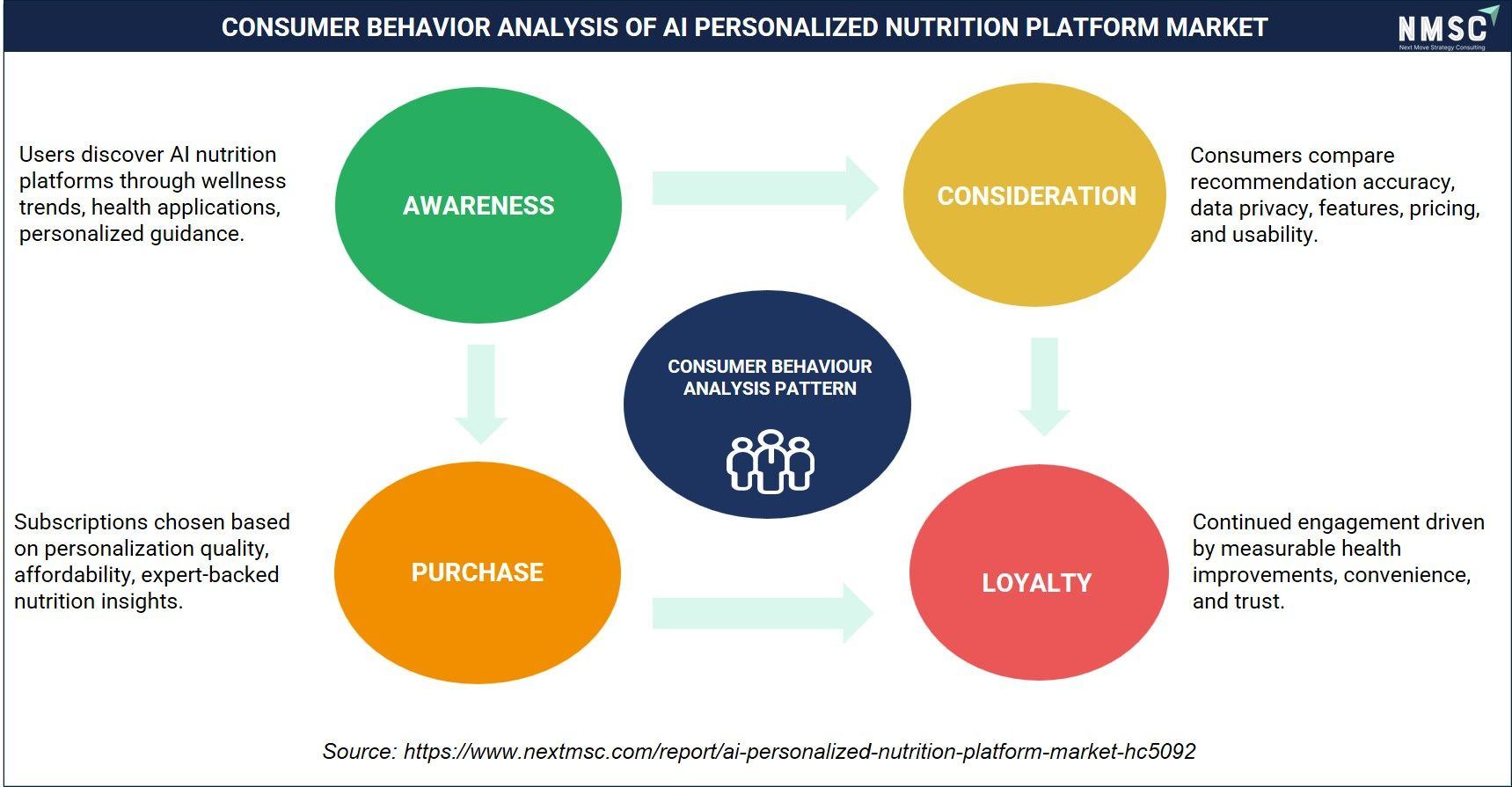
Our analysis indicates that consumers in the AI Personalized Nutrition Market progress through a structured decision-making journey comprising awareness, consideration, purchase, and loyalty stages. Initially, consumers discover platforms through wellness trends and health applications. Subsequently, they evaluate recommendation accuracy, privacy features, and pricing before subscribing. Furthermore, measurable health benefits, convenience, and trust support long-term engagement and customer retention.
Competitive Landscape
Competitive Dynamics and M&A Landscape
|
Market Structure |
The AI Personalized Nutrition Platform Market features competition among dedicated consumer AI nutrition platforms (ZOE, Noom, HealthifyMe, Lifesum), clinical precision nutrition specialists (DayTwo, InsideTracker, Viome), CGM-integrated metabolic platforms (Levels Health, NutriSense, January AI), and enterprise dietitian networks (Foodsmart, Culina Health, Fay Nutrition), each competing on distinct personalization depth, data source breadth, and clinical evidence quality. |
|
Innovation Focus |
Innovation is concentrated in multi-omics AI model development, real-time CGM data integration, LLM-powered personalized coaching interfaces, hybrid AI-human dietitian delivery models, and enterprise API platform capabilities enabling white-label deployment for food, insurance, and pharmaceutical industry customers. |
|
M&A Activity |
The AI Personalized Nutrition Platform Market is experiencing early-stage consolidation, with well-funded consumer platforms evaluating acquisitions of clinical precision nutrition specialists to strengthen scientific credibility. Food and pharmaceutical companies are the most active strategic acquirers, seeking to internalize AI nutrition capabilities that can differentiate product portfolios and generate direct consumer data relationships. |
|
Geographic Expansion |
North American platforms are prioritizing European expansion through regulatory compliance investments in GDPR and DiGA frameworks. UK-based ZOE's U.S. expansion and Indian HealthifyMe's Southeast Asian rollout illustrate cross-regional scaling strategies. GCC and UAE markets are attracting dedicated premium AI nutrition platform launches targeting high-income health-conscious consumer segments. |
|
Pricing Strategies |
Pricing ranges from freemium consumer mobile applications to premium multi-omics programs priced at several hundred to over one thousand dollars annually. Enterprise and health insurance contracts are structured as per-member-per-month arrangements. API licensing follows consumption-based pricing models aligned with the AI SaaS industry standard. |
How Do Companies Compete in the AI Personalized Nutrition Platform Market?
The AI Personalized Nutrition Platform Market is characterized by multi-tiered competition across personalization depth, data science rigor, coaching model quality, and enterprise integration capability. Consumer-facing platforms compete on user experience, app store visibility, and pricing accessibility, while clinical precision nutrition specialists compete on scientific evidence, biomarker data breadth, and clinical outcome validation. Enterprise platforms differentiate on employer benefits integration, EHR connectivity, and health plan contracting. Our analysis shows that key players combining multi-omics data science with hybrid AI-human coaching are capturing premium market positioning and demonstrating superior long-term retention metrics.
Which Kind of Companies Dominate the AI Personalized Nutrition Platform Market?
The AI Personalized Nutrition Platform Market is led by three primary categories of companies. Precision nutrition specialists such as ZOE Limited, Viome Life Sciences, Inc., DayTwo Ltd., January AI, Inc., and GenoPalate, Inc. leverage microbiome, genetic, and metabolic data to deliver tailored dietary recommendations. Digital health and wellness platforms including Noom, Inc., HealthifyMe Wellness Private Limited, Lifesum AB, and Foodsmart, Inc. combine AI-driven coaching with nutrition planning, while biomarker and health optimization providers such as InsideTracker, Inc., NutriSense, Inc., Levels Health, Inc., and Bioniq Health-Tech Solutions Ltd. focus on data-driven nutrition and wellness interventions.
AI-Driven Health Insights and Precision Recommendations Drive Market Success in the AI Personalized Nutrition Platform Market
Innovation across the AI Personalized Nutrition Platform Market is centered on predictive analytics, continuous health monitoring, microbiome intelligence, genomic profiling, and real-time metabolic tracking. Companies including Suggestic, Inc., Wellory, Inc., Fay Nutrition, Inc., NutriSense, Inc., and Levels Health, Inc. are embedding AI into nutrition planning to deliver highly personalized dietary guidance. Vendors that successfully integrate biomarker analysis, wearable-device data, and behavioral coaching into unified platforms are enhancing user engagement, improving health outcomes, and strengthening long-term customer retention.
Market Players to Pursue Strategic Partnerships and Platform Expansion Strategies in the AI Personalized Nutrition Platform Market
Strategic partnerships, platform integration, and capability expansion are reshaping competition within the AI Personalized Nutrition Platform Market. Leading providers such as Viome Life Sciences, Inc., ZOE Limited, Noom, Inc., Foodsmart, Inc., and HealthifyMe Wellness Private Limited are expanding through collaborations with healthcare providers, diagnostic laboratories, wearable technology companies, and corporate wellness programs. Market participants are also broadening their offerings across nutrition assessment, personalized supplementation, metabolic health management, and preventive care, positioning themselves to capitalize on growing consumer demand for data-driven health optimization solutions.
Who Are the Key Market Players in the AI Personalized Nutrition Platform Market?
-
ZOE Limited
-
Viome Life Sciences, Inc.
-
Noom, Inc.
-
Foodsmart, Inc.
-
HealthifyMe Wellness Private Limited
-
DayTwo Ltd.
-
NutriSense, Inc.
-
Levels Health, Inc.
-
InsideTracker, Inc.
-
January AI, Inc.
-
Suggestic, Inc.
-
Lifesum AB
-
Culina Health, Inc.
-
GenoPalate, Inc.
-
Wellory, Inc.
-
Bioniq Health-Tech Solutions Ltd.
-
Persona Nutrition, LLC
-
Baze Labs, Inc.
-
Fay Nutrition, Inc.
-
DNAfit Limited
What Are the Latest Developments in the AI Personalized Nutrition Platform Market Industry?
|
Date |
Event |
|
May 2026 |
GenoPalate Inc. announced a strategic partnership with telehealth provider Eden. The collaboration pairs Eden’s clinical access to GLP-1 medications with GenoPalate's nutrigenomics, biomarker tracking, and lifestyle coaching data to manage lean muscle retention and support long-term metabolic health outcomes. |
|
April 2026 |
Noom, Inc. completed its first major acquisition by buying Tailor Made Compounding, a licensed 503A compounding pharmacy. This buyout underpins Noom's strategy to expand past digital weight tracking into healthy aging, peptide therapies, and longevity medicine by directly managing its drug compounding supply chain. |
Expert Insights

“We’re using machine learning to understand how people respond to food, by analyzing massive datasets from our studies. These reveal how someone’s blood sugar is likely to respond, given their specific microbiome.”
— Francesco Asnicar, Scientific Collaborator, ZOE
Statement made during discussions of ZOE’s AI-driven nutrition research, highlighting the use of machine learning and microbiome data to predict individual metabolic responses to food.
Market Interpretation
This insight illustrates how AI is transforming nutrition recommendations through predictive analytics. Rather than relying solely on population-wide nutritional guidelines, modern personalized nutrition platforms increasingly leverage machine learning models trained on large-scale biological datasets to predict individual metabolic responses. This capability is becoming a key differentiator among AI-powered nutrition providers.
What Are the Investment Opportunities in the AI Personalized Nutrition Platform Market?
Capital Inflows and Venture Activity
The AI Personalized Nutrition Platform Market is attracting sustained venture capital investment across seed, growth, and late-stage financing rounds. The National Venture Capital Association confirms that digital health continues to represent one of the largest investment categories within the broader technology sector. Precision nutrition platforms with multi-omics data capabilities, clinically validated outcomes, and enterprise revenue models are commanding premium valuations. Strategic investors from pharmaceutical, food, and insurance industries are increasingly participating in financing rounds alongside traditional venture capital, reflecting the market's expanding commercial adjacencies.
Infrastructure Investments and Digital Health Integration
Infrastructure investment in the AI Personalized Nutrition Platform Market is concentrated in multi-omics laboratory processing capacity, AI model training compute infrastructure, EHR interoperability development, and regulatory compliance systems required for clinical and insurance channel market entry. Cloud infrastructure investment supports real-time biometric data processing at scale. API infrastructure enabling nutrition intelligence embedding within food company digital products, insurance member portals, and employer benefits platforms represents a high-return infrastructure investment category as the market expands beyond direct-to-consumer toward B2B2C distribution models.
ESG Considerations in AI Personalized Nutrition Platform Investment
ESG investment thesis alignment is strengthening for the AI Personalized Nutrition Platform Market as institutional investors recognize the population health impact of personalized dietary intervention at scale. AI nutrition platforms addressing food insecurity, equitable access to dietitian-level nutritional guidance, and metabolic disease burden in underserved communities qualify for social impact investment frameworks. Dietary carbon footprint optimization features, enabling platforms to guide users toward nutritionally equivalent lower-carbon food choices, are creating alignment with environmental investment mandates and positioning AI nutrition platforms within the growing sustainable health technology investment category.
PE and VC Activity and Digital Transformation Trends
Private equity and venture capital activity in the AI Personalized Nutrition Platform Market is accelerating consolidation around clinically validated platforms with demonstrated enterprise revenue traction. Digital transformation of food companies, health insurance providers, and pharmacy benefit managers is creating strategic acquisition demand for AI nutrition platform capabilities. Our assessment indicates that the highest-conviction investment themes include CGM-integrated metabolic platforms, multi-omics personalization science companies, employer wellness nutrition networks with documented health outcome data, and API-first nutrition intelligence infrastructure businesses serving food and health enterprise clients at scale.
Key Benefits for Stakeholders
For Investors and Venture Capital Firms
Investors and venture capital firms gain access to a comprehensive assessment of the AI Personalized Nutrition Platform Market, including detailed market sizing, segment-level revenue forecasts, CAGR analysis, and competitive intelligence across all major geographies. This intelligence supports informed capital allocation, portfolio diversification, and investment thesis development within the rapidly expanding precision health ecosystem. Detailed company benchmarking, funding landscape evaluation, and growth opportunity analysis provide an early-signal framework for identifying emerging market leaders, acquisition candidates, and high-growth investment opportunities across nutrition technology, digital therapeutics, and AI-driven healthcare platforms.
For Platform Vendors and Technology Companies
Platform vendors and technology companies gain actionable intelligence on competitive positioning, customer adoption trends, and high-growth opportunities within the AI Personalized Nutrition Platform Market. Detailed segmentation analysis across platform type, deployment model, data source, and end-user category supports product roadmap prioritization and resource allocation decisions. The competitive landscape assessment and regional opportunity analysis enable providers to optimize pricing strategies, strengthen differentiation, identify partnership opportunities, and refine go-to-market approaches across direct sales, healthcare partnerships, employer wellness programs, and digital distribution channels.
For Healthcare Providers and Health Systems
Healthcare providers and health systems gain a structured understanding of clinical adoption trends, regulatory requirements, and integration pathways shaping the AI Personalized Nutrition Platform Market. Analysis of electronic health record (EHR) integration capabilities, patient engagement models, and evidence-based nutrition interventions supports digital health strategy development and technology procurement decisions. Regional regulatory intelligence and clinical implementation insights enable healthcare organizations to evaluate platform suitability, improve preventive care initiatives, and enhance patient outcomes through personalized nutrition programs.
For Employers and HR Benefit Planners
Employers and HR benefit planners gain evidence-based intelligence on platform effectiveness, pricing structures, deployment models, and vendor selection criteria across the AI Personalized Nutrition Platform Market. This information supports informed employee wellness investment decisions and helps organizations evaluate the potential impact of personalized nutrition programs on workforce health, productivity, and healthcare cost management. Comparative vendor analysis and adoption trend assessments provide guidance for designing scalable wellness initiatives that align with organizational health and benefits objectives.
For Health Insurance Organizations
Health insurance organizations gain comprehensive insights into reimbursement pathways, clinical outcome evidence, and competitive vendor capabilities within the AI Personalized Nutrition Platform Market. The report evaluates how personalized nutrition interventions contribute to preventive care, chronic disease management, and value-based healthcare objectives. Analysis of payer-provider collaboration models, member engagement strategies, and emerging reimbursement frameworks enables insurers to design innovative benefit programs, improve health outcomes, and optimize healthcare expenditure through data-driven nutrition interventions.
For Food and Nutrition Companies
Food and nutrition companies gain strategic intelligence on white-label platform opportunities, API commercialization models, and emerging precision nutrition trends influencing consumer health engagement. The report identifies opportunities for integrating AI-powered nutrition recommendations into existing product portfolios, digital ecosystems, and consumer wellness programs. Competitive benchmarking and partnership landscape analysis support product differentiation, customer retention initiatives, and the development of personalized nutrition offerings that align with evolving consumer preferences and health objectives.
For Government and Public Health Agencies
Government agencies and public health organizations gain a structured analysis of the AI Personalized Nutrition Platform Market's role in supporting population health improvement and chronic disease prevention initiatives. Regulatory benchmarking across major markets provides policymakers with evidence-based perspectives on best practices for digital health governance, data privacy, and AI-enabled healthcare delivery. Market adoption trends, intervention effectiveness analysis, and regional implementation insights support the development of national digital health strategies, preventive healthcare programs, and long-term public health policies focused on addressing obesity, diabetes, cardiovascular disease, and other nutrition-related health challenges.
Key Market Segments
By Offering
-
Consumer Nutrition Platforms
-
Mobile Nutrition Applications
-
Web-Based Nutrition Platforms
-
Integrated Nutrition Ecosystems
-
-
Professional Nutrition Platforms
-
Dietitian Practice Platforms
-
Nutritionist Practice Platforms
-
Clinical Nutrition Platforms
-
-
Enterprise Nutrition Platforms
-
Employer Wellness Platforms
-
Health Plan Nutrition Platforms
-
Pharmaceutical Nutrition Platforms
-
-
Food and Nutrition Industry Platforms
-
White-Label Nutrition Platforms
-
-
Personalized Nutrition Programs
-
Questionnaire and Lifestyle-Based Programs
-
Genomics-Based Programs
-
Microbiome-Based Programs
-
Biomarker-Based Programs
-
Continuous Glucose Monitoring-Based Programs
-
Multi-Omics Programs
-
-
Nutrition Coaching Services
-
AI Coaching Services
-
Human Coaching Services
-
Hybrid Coaching Services
-
-
Enterprise Nutrition Services
-
Employer Nutrition Programs
-
Population Health Programs
-
Clinical Nutrition Programs
-
Research Nutrition Programs
-
-
Platform Licensing and API Services
-
Software Licensing
-
Analytics Licensing
-
API and Integration Services
-
White-Label Licensing
-
-
Nutrition Commerce Revenue
-
Supplement Referral Revenue
-
Grocery Referral Revenue
-
Meal Program Referral Revenue
-
Marketplace Commission Revenue
-
Sponsored Recommendation Revenue
-
By Personalization Data Source
-
Questionnaire Data
-
Dietary Intake Data
-
Lifestyle Data
-
Wearable Device Data
-
Genetic Data
-
Microbiome Data
-
Biomarker Data
-
Continuous Glucose Monitoring Data
-
Multi-Omics Data
-
Multi-Source Data
By Customer Type
-
Individual Consumers
-
Employers
-
Healthcare Providers
-
Health Insurance Organizations
-
Pharmaceutical and Life Sciences Companies
-
Food and Nutrition Companies
-
Research Organizations
-
Government and Public Health Organizations
By Clinical and Wellness Focus
-
General Wellness
-
Weight Management
-
Metabolic Health
-
Diabetes Management
-
Prediabetes Management
-
Obesity Management
-
Dyslipidemia Management
-
-
Digestive Health
-
Gut Health
-
Food Sensitivity Management
-
Irritable Bowel Syndrome Management
-
-
Cardiovascular Health
-
Sports Performance
-
Women's Health
-
Healthy Aging and Longevity
-
Immune Health
-
Clinical Nutrition Support
By Revenue Model
-
Subscription Revenue
-
Program Enrollment Revenue
-
Coaching Revenue
-
Enterprise Contract Revenue
-
Licensing Revenue
-
Implementation and Integration Revenue
-
Commission Revenue
By Deployment Model
-
Cloud-Based Platforms
-
On-Premise Platforms
-
Hybrid Platforms
By Distribution Channel
-
Direct-to-Consumer
-
Direct Enterprise Sales
-
Healthcare Provider Channel
-
Employer Channel
-
Health Insurance Channel
-
Pharmaceutical and Life Sciences Channel
-
Food and Nutrition Industry Channel
-
Partner Channel
By Region
-
North America: U.S., Canada, and Mexico.
-
Europe: UK, Germany, France, Italy, Spain, Sweden, Denmark, Finland, the Netherlands, and the rest of Europe.
-
Asia Pacific: China, India, Japan, South Korea, Taiwan, Indonesia, Vietnam, Australia, Philippines, Malaysia and the rest of APAC.
-
Middle East & Africa (MEA): Saudi Arabia, UAE, Egypt, Israel, Turkey, Nigeria, South Africa, and the rest of MEA.
-
Latin America: Brazil, Argentina, Chile, Colombia, and the rest of LATAM.
Conclusion and Recommendations
Long-Term Outlook
The AI Personalized Nutrition Platform Market is entering its most consequential growth decade, driven by the convergence of multi-omics science, real-time biometric data availability, AI model maturity, and expanding institutional reimbursement pathways. This AI Personalized Nutrition Platform Market report forecasts growth from USD 2.05 billion in 2026 to USD 15.35 billion by 2035, at a CAGR of 24.95%. Our analysis indicates this trajectory reflects both the scientific maturation of personalized nutrition as a clinically validated discipline and the growing institutional willingness of employers, health insurers, and healthcare systems to integrate AI nutrition platforms into preventive care and disease management programs.
Strategic Positioning Recommendations
Platform vendors should prioritize multi-omics and CGM data integration as the primary scientific differentiator, combined with hybrid AI-human coaching delivery models that drive adherence and clinical outcomes. Enterprise channel development through health insurance and employer wellness program integration is non-negotiable for platforms targeting the highest-value, highest-retention customer segments. API licensing and white-label platform infrastructure represent the highest-margin scalability pathway. Vendors without clinical outcome validation studies will face structural disadvantage in health insurance reimbursement and pharmaceutical partnership procurement processes throughout the forecast period.
Investment Attractiveness
The AI Personalized Nutrition Platform Market represents a structurally attractive investment environment given durable secular demand drivers, recurring subscription and enterprise contract revenue models, and the early-stage nature of institutional reimbursement pathway development that will unlock materially larger addressable markets over the forecast period. NMSC's assessment indicates the highest-conviction investment themes include multi-omics personalization platforms, CGM-integrated metabolic nutrition specialists, AI-human hybrid coaching networks with insurance reimbursement, and API-first nutrition intelligence infrastructure businesses. Latin America at 26.0% CAGR and MEA at 24.5% CAGR projection offers the most attractive geographic growth multiples for early-entry investors.
Market Shifts and Key Risks
The most significant market shift underway is the migration from consumer wellness applications toward clinically integrated precision nutrition services that operate within healthcare and insurance reimbursement frameworks. This shift benefits platforms with clinical outcome data, regulatory certifications, and EHR integration capabilities, at the expense of pure consumer wellness applications lacking scientific differentiation. Key risks include biometric data regulation escalation under GDPR enforcement and potential U.S. federal health data legislation, consumer skepticism limiting long-term adherence, and the entry of well-resourced pharmaceutical and food conglomerates into the direct-to-consumer nutrition platform market through strategic acquisitions.
Growth Pathways
Organizations seeking to maximize value from the AI Personalized Nutrition Platform Market should pursue a three-horizon strategy. In the near term from 2025 to 2027, platforms should prioritize CGM integration, clinical outcome data generation, and employer wellness channel development to establish the commercial and scientific credentials required for institutional market entry. In the mid-term from 2027 to 2031, investment should focus on health insurance reimbursement qualification, multi-omics platform enhancement, and API licensing commercialization to capture institutional market revenue. In the long term from 2031 to 2035, platform operators should position for pharmaceutical partnership integration and public health system contracts as AI nutrition science achieves mainstream clinical recognition.
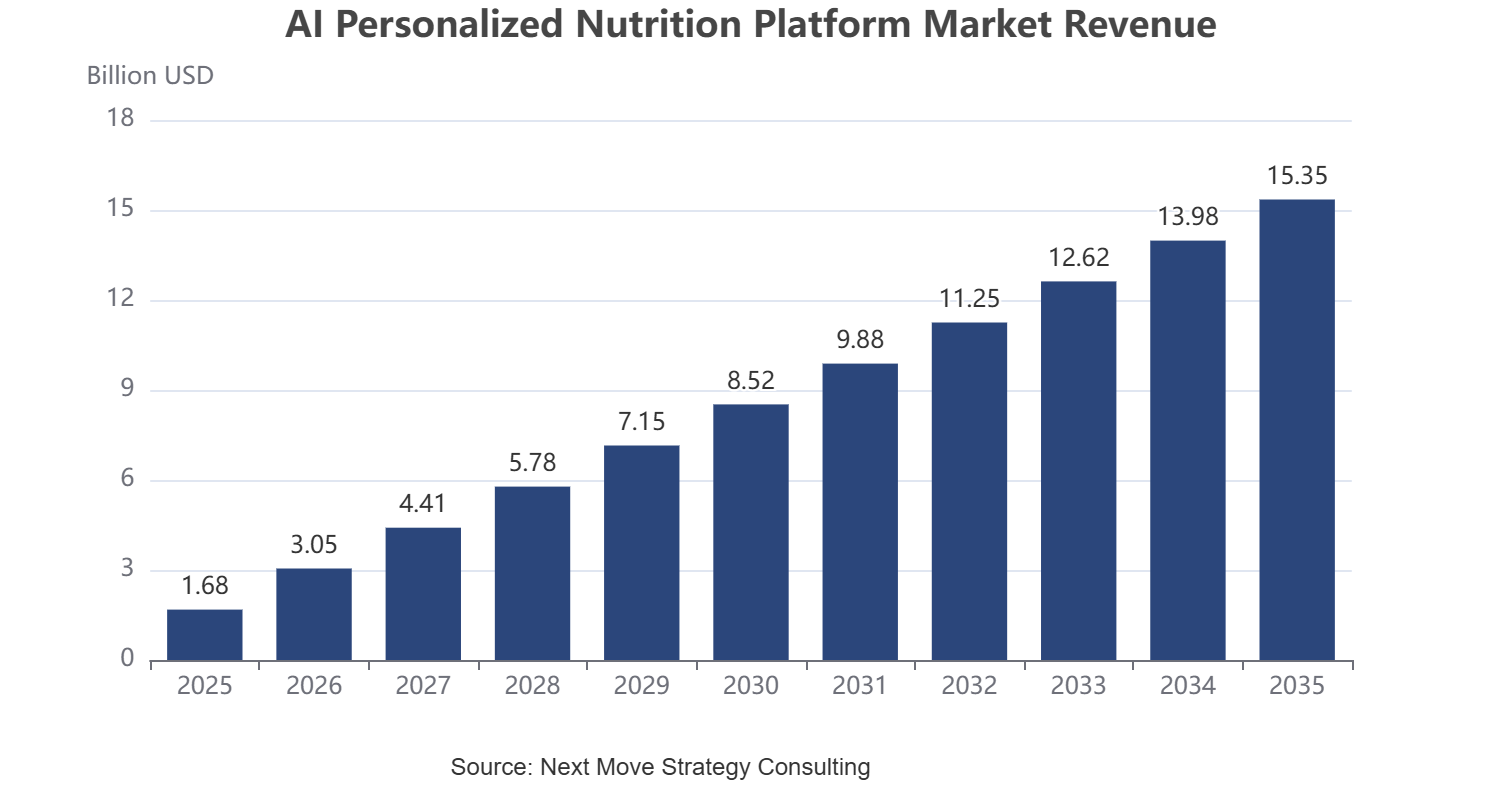
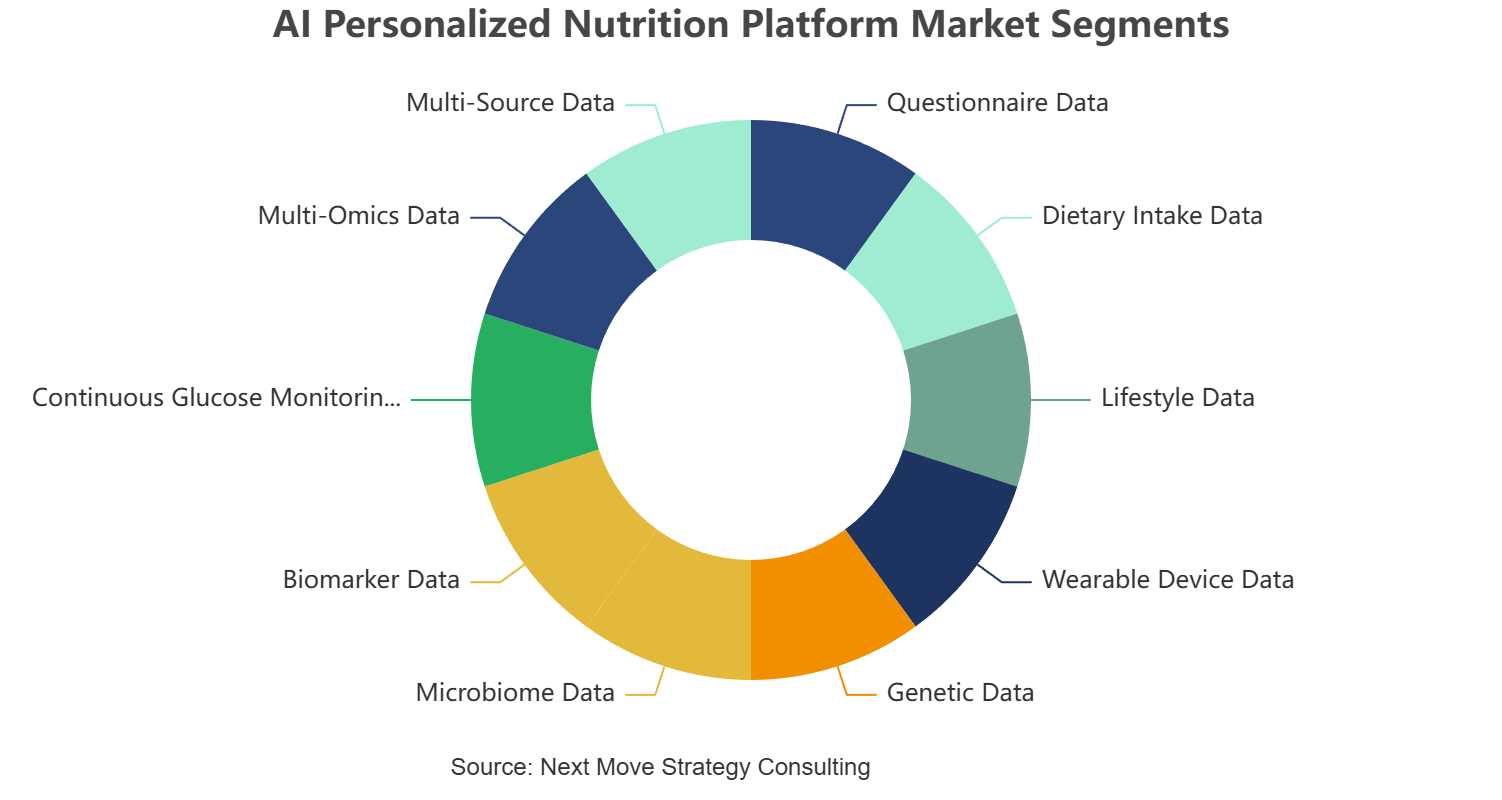
About the Author
 Saista Faiyaz
— Saista Faiyaz is Research Associate at Next Move Strategy Consulting, where she has covered consumer markets and healthcare technologies for 3 years. Her work includes primary interview review, secondary-source validation, market sizing, and structured analysis of company and industry data. She supports research by comparing evidence across sources, organizing findings into market narratives, and documenting assumptions used in analysis. Her scope includes cross-market benchmarking, and reports.
Saista Faiyaz
— Saista Faiyaz is Research Associate at Next Move Strategy Consulting, where she has covered consumer markets and healthcare technologies for 3 years. Her work includes primary interview review, secondary-source validation, market sizing, and structured analysis of company and industry data. She supports research by comparing evidence across sources, organizing findings into market narratives, and documenting assumptions used in analysis. Her scope includes cross-market benchmarking, and reports.
About the Reviewer
 Supradip Baul
— Supradip Baul is an accomplished business consultant and strategist with over a decade of rich experience in market intelligence, strategy, technology, and business transformation. His work has included rigorous qualitative and quantitative analysis across multiple industries, helping clients shape investment decisions and long-term roadmaps. Earlier in his career, he was associated with Gartner, where he contributed to industry-leading reports and market share analyses. He has worked with leading global companies and holds an MBA with a dual specialization in Marketing and Finance.
Supradip Baul
— Supradip Baul is an accomplished business consultant and strategist with over a decade of rich experience in market intelligence, strategy, technology, and business transformation. His work has included rigorous qualitative and quantitative analysis across multiple industries, helping clients shape investment decisions and long-term roadmaps. Earlier in his career, he was associated with Gartner, where he contributed to industry-leading reports and market share analyses. He has worked with leading global companies and holds an MBA with a dual specialization in Marketing and Finance.
At Next Move Strategy Consulting, we understand that insightful market research is the cornerstone of successful business decisions. That's why we employ a robust and multifaceted approach, combining various methodologies to deliver the most accurate and actionable data for our clients.

Research Landscape
We navigate the world of research with two primary approaches:
Qualitative Approach
Our qualitative research methodologies involve immersive techniques such as in-depth interviews, focus groups, and observational studies. By engaging directly with individuals and stakeholders, we uncover valuable insights that quantitative data alone may overlook.

Quantitative Research
In tandem with qualitative methodologies, NMSC leverages the power of Quantitative Research to provide a robust foundation of numerical insights. Through systematic data collection and analysis, we quantify patterns, preferences, and market trends, offering a comprehensive view of the business landscape.
Our quantitative research approach employs diverse tools, including surveys, experiments, and statistical modelling. These methodologies enable us to gather data from a large and representative sample, ensuring the statistical significance of our findings. By employing structured questionnaires and standardized data collection methods, we guarantee the reliability and validity of the information we present to our clients.
Quantitative research is particularly effective in measuring the prevalence of trends, assessing market size, and gauging the impact of various factors on consumer behavior. The numerical precision attained through this approach equips our clients with actionable insights, facilitating data-driven decision-making and strategy formulation.


Our Specialized Toolbox for Industry-Specific Market Research
We deploy a specialized arsenal of techniques tailored to meet your unique requirements. Here's a glimpse into our comprehensive toolbox:

Information Procurement
The stage entails acquiring market data or relevant information through various sources and methodologies.


Market Research Approach
We utilize both top-down and bottom-up approaches in market research analysis to achieve a comprehensive understanding of the market dynamics, leveraging the broad perspective of industry trends and macroeconomic factors alongside detailed insights from specific segments and individual companies.

Porters Five Forces Analysis
We conduct Porter's Five Forces analysis to evaluate the competitive landscape of an industry, providing us with insights into factors that affect profitability and strategic positioning.

SWOT Analysis

Forecasting
We utilize a forecasting model to predict future consumption by considering parameters like population, economics, regulations, market competition, drivers, constraints, technology, and pricing. We also employ statistical techniques such as multilinear regression, exponential smoothing, moving average, ARIMA, and Monte Carlo simulations for accurate predictions. In econometric forecasting, we analyzed short-term and long-term event impacts, attributing values based on regulatory frameworks, economic factors, and market events.





 Speak to Our Analyst