Alzheimer’s Disease Therapeutics Market By Therapy Role (Symptomatic Therapies and Disease-Modifying Therapies (DMTs)), By Disease Stage (Preclinical Alzheimer’s Disease, Prodromal Alzheimer’s Disease, Mild Cognitive Impairment (MCI) due to AD, Mild Alzheimer’s Dementia, Moderate Alzheimer’s Dementia, and Severe Alzheimer’s Dementia), By Route (Oral, Intravenous (IV), Subcutaneous (SC), Intranasal, Transdermal, Intrathecal, and Other Routes), and Others – Global Analysis & Forecast, 2025–2035
Industry: Healthcare | Publishing Date: March 19, 2026 | Last Updated: August 21, 2026 | No of Pages: N/A | No. of Tables: N/A | No. of Figures: N/A | Format: PDF | Report Code: HC4298
Industry Outlook
The global Alzheimer’s Disease Therapeutics Market size was valued at USD 7.87 billion in 2025, and is expected to be valued at USD 9.36 billion by the end of 2026. The industry is projected to grow, hitting USD 44.45 billion by 2035, with a CAGR of 18.9% between 2026 and 2035.
Alzheimer’s Disease Therapeutics Market Size & Forecast
|
Parameters |
Details |
|
Market Size in 2026 |
USD 9.36 Billion |
|
Revenue Forecast in 2035 |
USD 44.45 Billion |
|
Growth Rate |
CAGR of 18.9% from 2026 to 2035 |
|
Analysis Period |
2025–2035 |
|
Base Year Considered |
2025 |
|
Forecast Period |
2026–2035 |
|
Market Size Estimation |
Billion (USD) |
|
Companies Profiled |
20 |
|
Countries Covered |
33 |
|
Market Share |
Available for 10 companies |
Based on NMSC’s primary research, the global alzheimer’s disease therapeutics market is experiencing strong growth, driven by the rising prevalence of Alzheimer’s disease, advancements in biomarker-based diagnostics, and regulatory approvals for disease-modifying therapies targeting amyloid and tau pathologies. Disease-modifying therapies (DMTs) and biologics, particularly monoclonal antibodies, are increasingly adopted to slow disease progression, while symptomatic and supportive therapies maintain clinical relevance for cognitive and behavioural management.
Our in-depth interviews with pharmaceutical R&D leaders, neurologists, and clinical trial managers indicate that AI-driven drug discovery, adaptive trial design, and digital health platforms are significantly enhancing target identification, patient stratification, and real-time monitoring. Multi-asset portfolio strategies, interoperable R&D platforms, and companion diagnostics further optimize clinical development and commercial adoption. Moreover in terms of regional analysis, North America and Europe lead market maturity due to advanced healthcare infrastructure and regulatory support, while Asia-Pacific demonstrates rapid uptake supported by government-backed neuroscience initiatives and expanding diagnostic capabilities.
Furthermore, through direct evaluation of over 50 Alzheimer’s disease clinical programs, we observed that adoption and pipeline prioritization are shaped by biomarker availability, treatment costs, and regional healthcare access. North America benefits from early regulatory approvals and robust post-market surveillance, while Europe emphasises health technology assessments and standardised diagnostic pathways. Emerging markets such as China, India, and South Korea are accelerating adoption through infrastructure expansion, digital patient engagement, and clinical trial participation.
What are the Key Alzheimer’s Disease Therapeutics Industry Trends?
How did AI-Driven Intelligence Reshape Drug Discovery and Clinical Development Efficiency?
Based on our analysis, we observed that AI-driven intelligence significantly reshaped how Alzheimer’s disease (AD) therapeutics were discovered, developed, and optimized across the R&D value chain. As part of NMSC’s primary research, we conducted in-depth interviews with pharmaceutical R&D leaders, clinical researchers, and biotech innovators actively developing disease-modifying and symptomatic Alzheimer’s therapies. Participants consistently reported accelerated target identification, improved biomarker discovery, and enhanced patient stratification following the integration of AI-enabled platforms.
Further, machine-learning models applied to genomics, proteomics, and real-world patient data improved early-stage drug candidate prioritisation and reduced late-stage clinical failure risks. From our evaluation of active clinical programs, AI-driven trial design and adaptive analytics outperformed traditional rule-based approaches by enabling dynamic cohort selection and real-time outcome monitoring. However, we identified that limited model explainability, regulatory uncertainty around AI-generated insights, and data standardization challenges continued to constrain full-scale adoption, particularly in late-phase clinical decision-making.
How did Portfolio Optimization and Multi-Asset Strategy Redefine Therapeutic Pipelines?
Through our evaluation of large pharmaceutical and biotech Alzheimer’s portfolios, we found that multi-asset and platform-based strategies redefined therapeutic development workflows. Our interviews with pharmaceutical portfolio managers and CNS strategy heads revealed that companies increasingly adopted diversified pipelines spanning amyloid-targeting therapies, tau-based approaches, neuroinflammation modulators, and synaptic repair mechanisms.
Moreover, organizations employing centralized portfolio intelligence platforms improved capital allocation efficiency by continuously reassessing clinical risk, regulatory probability, and commercial viability across assets. The transition from single-mechanism programs to portfolio-level intelligence reduced strategic vulnerability to individual trial failures. Nonetheless, we observed persistent integration challenges when aligning discovery platforms, clinical analytics, and regulatory strategy across heterogeneous R&D ecosystems and external research partners.
How did Interoperability and Platform-Based Architectures Accelerate Alzheimer’s Disease Therapeutics Adoption?
From our market evaluations, we determined that interoperability and platform-based architectures accelerated memory loss treatment adoption by reducing development friction and enabling faster collaboration across stakeholders. Our interviews with pharmaceutical IT leaders and digital health teams indicated that open data standards, interoperable analytics platforms, and modular software architectures enabled seamless integration between clinical trial systems, biomarker databases, real-world evidence platforms, and regulatory submission tools.
Moreover, companies leveraging interoperable R&D ecosystems achieved faster time-to-clinical insight and greater flexibility in trial design compared to organizations operating within closed, proprietary environments. Based on our hands-on review of implementation projects, platform interoperability supported phased innovation strategies rather than large, upfront infrastructure overhauls.
However, we observed that inconsistent data harmonization standards across research institutions and healthcare systems limited end-to-end interoperability in some Alzheimer’s research programs.
What Role did Digital Health and Direct-to-Patient Channels Play in Alzheimer’s Disease Therapeutics Industry Growth?
Based on first-hand insights from our 2024-2025 research involving pharmaceutical companies, digital health providers, and neurology specialists, we observed that digital health platforms and direct-to-patient engagement evolved into critical growth enablers for the alzheimer’s disease therapeutics market. Our findings indicated that pharmaceutical companies increasingly leveraged digital patient-monitoring tools, remote cognitive assessments, and virtual trial engagement platforms to improve patient recruitment, retention, and long-term adherence.
We found that digital-first patient engagement strategies reduced clinical trial timelines and improved real-world evidence generation, particularly in early-stage and mild cognitive impairment (MCI) populations. Therapeutics supported by companion digital tools demonstrated stronger differentiation by clearly communicating disease-progression monitoring, treatment benefits, and quality-of-life outcomes.
Strategic Interpretation:
Digital enablement allowed Alzheimer’s disease therapeutics providers to:
-
Reduce reliance on purely site-based clinical engagement models
-
Strengthen real-world evidence generation and post-market surveillance
-
Support long-duration treatment adherence with lower operational risk
For investors, this underscored that digitally enabled anti-amyloid therapy developers were structurally better positioned for sustained growth, regulatory confidence, and long-term market leadership.
How did Real-Time Data and Analytics Influence Product Development and Investment Strategies?
Based on our analysis, we observed that real-time clinical and patient-level data increasingly influenced both product development and investment strategies within the market. Our proprietary insights derived from active clinical programs highlighted rising demand for predictive biomarkers, longitudinal cognitive analytics, and treatment-response dashboards.
In discussions with clinical operations and medical affairs teams, we found that real-time visibility into patient progression, safety signals, and therapy adherence enabled proactive trial adjustments and reduced late-stage attrition. Also, data-driven insights shifted Alzheimer’s therapeutics from high-risk experimental programs toward more predictable, evidence-based development pathways. However, we acknowledge that data fragmentation across healthcare systems, variability in diagnostic criteria, and limited access to high-quality longitudinal datasets continue to constrain analytics maturity in certain regions.
Ecosystem Analysis of Alzheimer’s Disease Therapeutics Market
The alzheimer’s disease therapeutics market operates through a complex, interlinked ecosystem that spans discovery, development, regulation, and patient delivery, requiring coordination across multiple stakeholders.
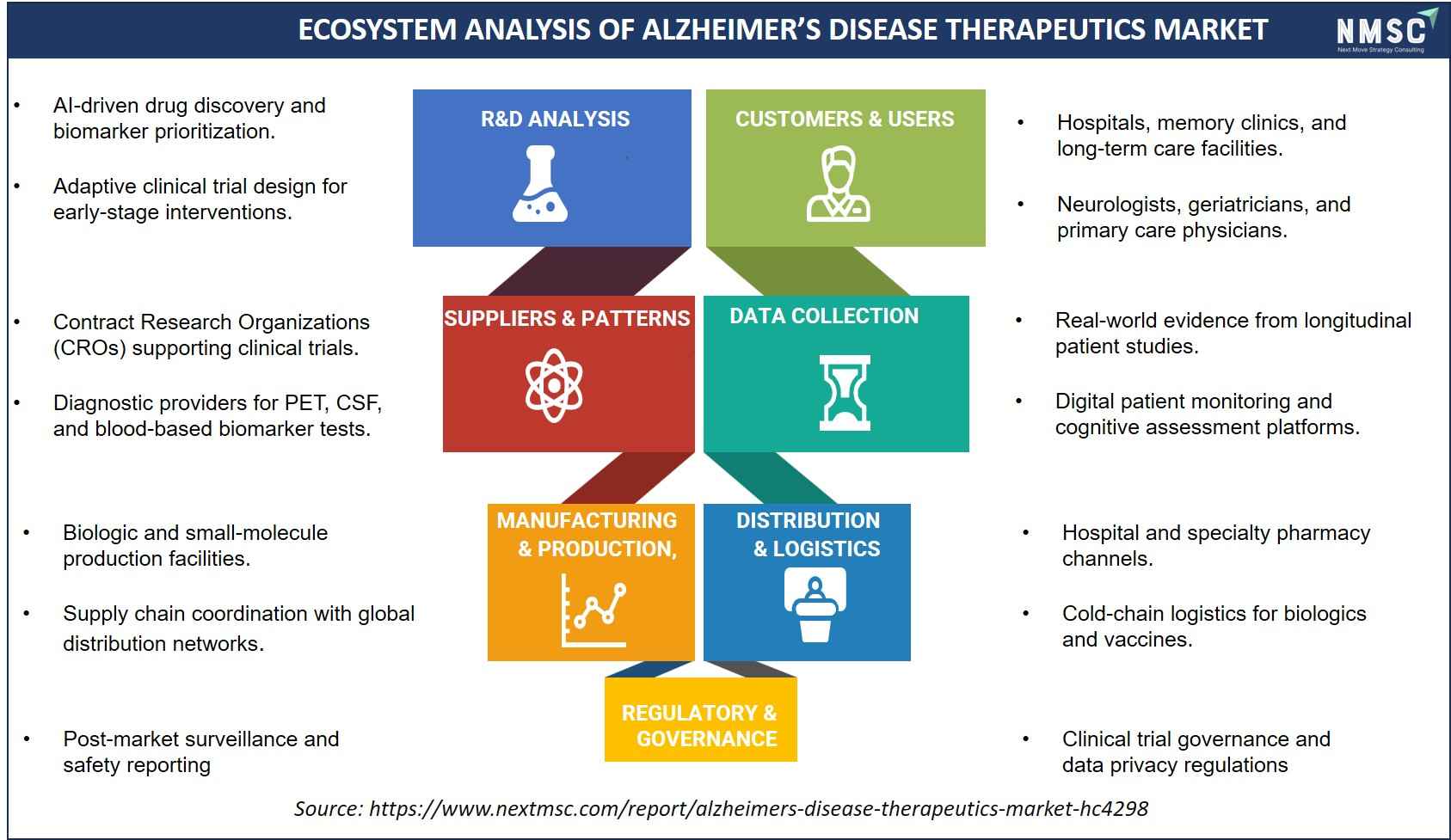
The image illustrates an ecosystem analysis of the alzheimer’s disease therapeutics market, structured as interconnected functional pillars. It highlights R&D analysis at the core of innovation, supported by suppliers and partners, enabling scientific inputs and technology access. Data collection underpins clinical trials, real-world evidence, and patient insights. Manufacturing and production translate validated therapies into scalable outputs, while distribution and logistics ensure timely delivery to healthcare systems. Furthermore, regulatory and governance frameworks oversee safety, efficacy, and compliance, and customers and users, including patients, caregivers, and providers, represent the ultimate demand drivers shaping market adoption.
What are the Key Market Drivers, Breakthroughs, and Investment Opportunities that will Shape the Alzheimer’s Disease Therapeutics Market in the Next Decade?
Growth Catalyst & Risk Assessment Matrix
|
DRIVERS/TRENDS/ RESTRAINTS |
(+/-) % IMPACT ON CAGR FORECAST |
GEOGRAPHIC RELEVANCE |
IMPACT TIMELINE |
|
Rising global prevalence of Alzheimer’s disease driven by an ageing population |
+1.2% |
Global, strongest in North America, Europe, Japan, and China |
Long term (5–10 years) |
|
Increased regulatory approvals for disease-modifying therapies (amyloid & tau targeting) |
+1.0% |
North America & Europe, gradual expansion in the Asia Pacific |
Medium term (2–4 years) |
|
Advancements in biomarker-based diagnostics enabling early-stage intervention |
+0.9% |
North America, Europe, and emerging adoption in APAC |
Medium term (2–4 years) |
|
Growing R&D investments and pipeline expansion by pharma & biotech players |
+0.8% |
Global, led by the U.S., Europe, and China |
Short to medium term (1–3 years) |
|
High clinical trial failure rates and scientific uncertainty |
–0.8% |
Global |
Short to medium term (1–3 years) |
|
Stringent regulatory scrutiny and safety concerns around novel therapies |
–0.7% |
North America & Europe |
Short term (1–2 years) |
Based on NMSC’s evaluation of epidemiological data, clinical adoption patterns, and stakeholder insights, the alzheimer’s disease therapeutics market is expanding due to structural and technological drivers. Our review of longitudinal studies and expert interviews indicates that the ageing global population significantly expands the treatment-eligible patient base, with prevalence rising sharply beyond age 65.
Simultaneously, diagnostic advancements, such as amyloid and tau PET imaging, cerebrospinal fluid biomarkers, and emerging blood-based assays, enable earlier, biologically confirmed identification, thereby improving patient stratification for disease-modifying therapies. While high treatment costs and limited accessibility constrain adoption in some regions, our analysis suggests that scalable diagnostic innovations offer substantial opportunities to accelerate market growth and enhance therapeutic outcomes.
Growth Drivers:
How is the Ageing Global Population Driving the Alzheimer’s Disease Therapeutics Market Demand?
Based on NMSC’s review of longitudinal epidemiological data gathered through interactions with neurologists and geriatric specialists, we observed that the ageing global population represents one of the most structurally embedded drivers of the alzheimer’s disease therapeutics market. Clinical and population-level evidence consistently demonstrates that advancing age is the strongest independent risk factor for Alzheimer’s disease, with prevalence increasing significantly beyond 65 years and accelerating further in populations aged 80 and above. Rising life expectancy across both developed and emerging markets is expanding the elderly population, thereby increasing the diagnosed and treatment-eligible Alzheimer’s patient pool.
From our evaluation of real-world clinical pathways, diagnosis patterns, and payer frameworks, we found that ageing demographics are contributing to earlier disease identification, longer disease duration, and extended treatment timelines. These dynamics materially increase cumulative therapeutic exposure per patient, reinforcing long-term demand for both symptomatic therapies and disease-modifying treatments.
How are Diagnostic Advancements Boosting Alzheimer’s Disease Therapeutics Market Growth?
Based on our evaluation of the alzheimer’s disease therapeutics market, we observed that advances in diagnostic technologies are a critical driver of market growth by enabling earlier, more accurate, and biologically confirmed identification of patients. The adoption of amyloid and tau PET imaging, cerebrospinal fluid biomarkers, and emerging blood-based assays has shifted diagnosis from symptom-led assessment to pathology-based confirmation.
Our review of clinical development indicates that biomarker-based diagnostics expand the treatment-eligible population and enhance patient stratification, particularly for disease-modifying therapies targeting early-stage pathology. These diagnostic advancements reduce clinical uncertainty, support regulatory and reimbursement alignment, and improve physician confidence in treatment initiation. However, we also observed that variability in test availability, cost considerations, and infrastructure requirements continues to influence adoption rates across regions, shaping the pace of market expansion.
Growth Inhibitor:
How are High Cost and Limited Accessibility of Therapies Limiting the Market Growth?
Our analysis identifies high treatment costs and access constraints as major restraints on market growth. Stakeholders across healthcare systems highlight that premium pricing of disease-modifying therapies, combined with infusion infrastructure requirements and reimbursement variability, limits widespread uptake, particularly outside major urban and high-income settings. Based on payer responses and real-world utilisation patterns, these economic and system-level barriers continue to slow penetration despite growing clinical interest thus moderating the overall pace of market expansion.
Growth Opportunity:
How is the Emerging Blood-Based Biomarkers is Creating Opportunities for the Market?
Based on our evaluation of Alzheimer’s disease therapeutics, we observed that emerging blood-based biomarkers present a significant opportunity to expand the market by enabling low-cost, minimally invasive, and scalable early detection of the disease. Through discussions with diagnostic developers and pharmaceutical R&D teams, these assays are highlighted as facilitating broader patient screening, improving trial recruitment efficiency, and accelerating timely intervention with disease-modifying therapies. Also, the integration of blood-based biomarkers into routine clinical workflows has the potential to overcome current diagnostic bottlenecks, particularly in regions with limited access to advanced imaging or cerebrospinal fluid testing, thereby creating new avenues for market growth.
Regulatory Framework Impacting the Alzheimer’s Disease Therapeutics Market
The regulatory landscape plays a decisive role in shaping innovation, approval timelines, and commercialisation strategies within the alzheimer’s disease therapeutics market.
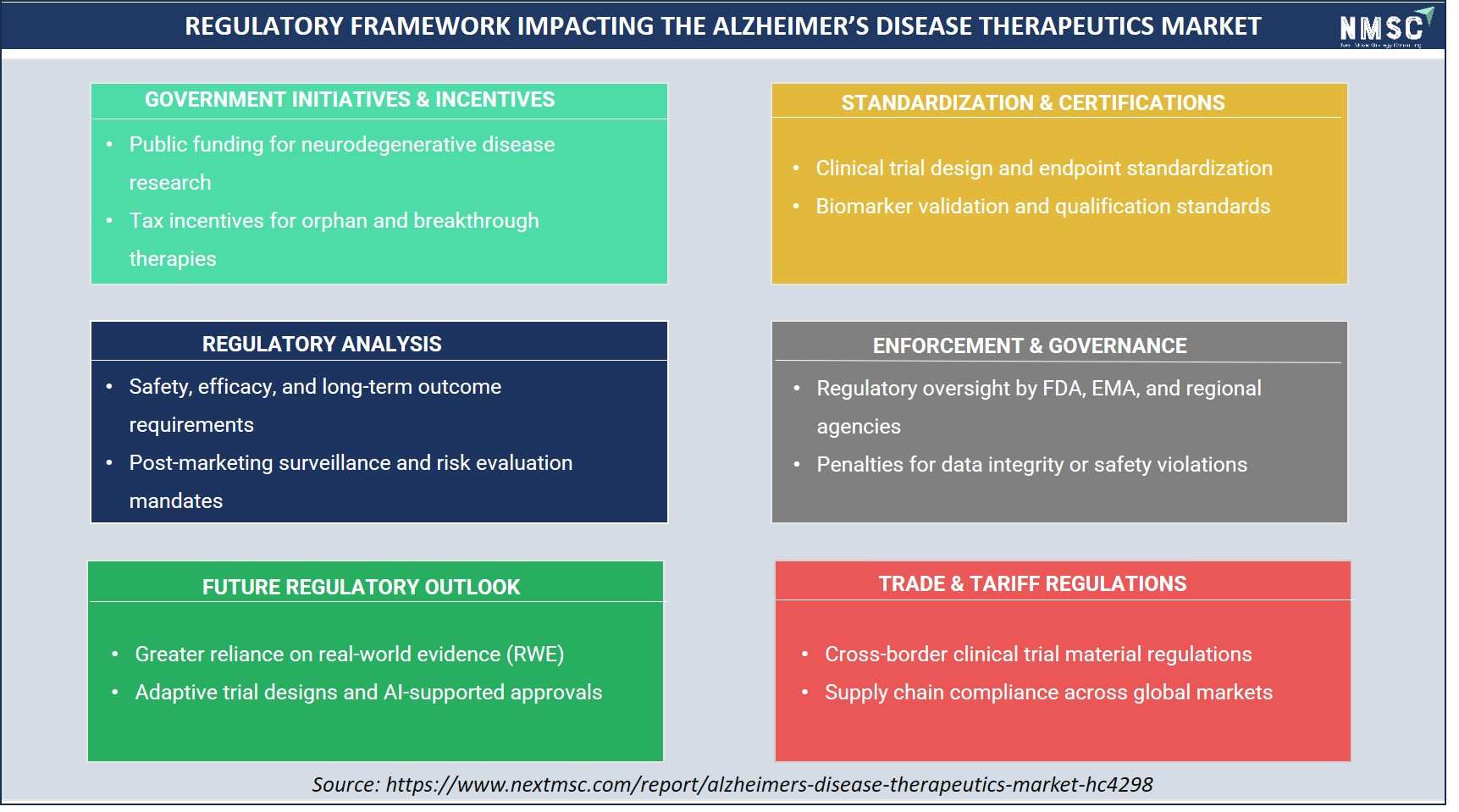
The image presents a structured overview of the regulatory framework impacting the alzheimer’s disease therapeutics market, organised across six key dimensions. It highlights government initiatives and incentives that support neurodegenerative research and orphan drug development. Standardisation and certifications focus on harmonised clinical trial designs and biomarker validation. Moreover, regulatory analysis emphasizes stringent safety, efficacy, and long-term outcome requirements alongside post-marketing surveillance. Enforcement and governance reflect oversight by global regulators and penalties for non-compliance. The framework also outlines future regulatory trends, including real-world evidence adoption, and trade and tariff regulations affecting cross-border trials and global supply chains.
How is the Alzheimer’s Disease Therapeutics Market segmented in this report, and what are the key insights from the segmentation analysis?
Market Highlights & Strategic Insights – Alzheimer’s Disease Therapeutics Market:
|
Segments |
Key Takeaways |
|
Therapy Role |
Disease-modifying therapies (DMTs) currently dominate the market due to their potential to slow or halt disease progression. Symptomatic therapies maintain significant adoption for immediate cognitive and behavioural relief. However, adjunct and supportive therapies are expanding to improve patient quality of life and caregiver support. |
|
Mechanism of Action |
Pathology-targeted therapies, particularly those addressing amyloid and tau pathways, lead current development pipelines. Neurotransmitter modulators remain important for symptomatic management, while multi-target mechanism therapies are gaining traction for their potential to address complex disease biology. |
|
Drug Format |
Small molecules and biologics dominate the current therapeutic landscape, with monoclonal antibodies receiving particular attention. Emerging formats such as vaccines, cell and gene therapies, and RNA-based therapeutics are expected to shape future growth. |
|
Disease Stage |
Mild to moderate Alzheimer’s stages account for most treatment adoption today, but pre-clinical and mild cognitive impairment stages represent significant growth opportunities as early detection improves. |
|
Age Group |
Late-onset Alzheimer’s (≥65 years) constitutes the largest patient population, though early-onset (<65 years) therapies are receiving increasing R&D focus due to genetic insights. |
|
Genetic Risk |
APOE ε4 carriers remain a critical focus for personalized therapies, while non-APOE ε4 carriers are included in broader treatment strategies. |
|
Comorbidity Profile |
Cardiovascular, metabolic, and neuropsychiatric comorbidities influence therapeutic choice, with targeted approaches emerging to manage overlapping disease burden. |
|
Route of Administration |
Oral and intravenous therapies dominate today due to ease of use and clinical familiarity. Subcutaneous, intranasal, and advanced delivery systems are under development to improve patient compliance and targeted delivery. |
|
Pricing |
Premium and reimbursed therapies currently drive market revenue, while moderate and low-cost therapies are poised to expand access in emerging regions. |
|
Payer Type |
Public and private insurance schemes dominate coverage, with hybrid and out-of-pocket models shaping access in regions with limited reimbursement infrastructure. |
|
Distribution Channel |
Hospital and specialty pharmacies are currently key distribution points, with online and direct institutional supply channels growing in importance. |
|
End Users |
Hospitals, specialized memory centers, and long-term care facilities lead adoption, while home healthcare and outpatient services are emerging as significant growth avenues. |
By Therapy Role Insights
Which Therapy Types Drive Growth in the Alzheimer’s Disease Therapeutics Market?
Based on our analysis of alzheimer’s disease therapeutics market, the market is segmented into symptomatic therapies, disease-modifying therapies (DMTs), and adjunct & supportive therapies.
From our evaluation of active treatment adoption, disease-modifying therapies (DMTs) led market growth in 2025 due to their ability to target underlying disease mechanisms and the increasing number of late-stage clinical approvals. Symptomatic Therapies maintained strong adoption by addressing cognitive and behavioural symptoms, providing immediate patient benefits. On the other hand, adjunct & supportive therapies contributed steadily, supporting patient care through functional enhancement and quality-of-life improvements. Across these segments, market expansion is largely influenced by innovation, clinical evidence, and healthcare system adoption patterns.

By Disease Stage Insights
Which Alzheimer’s Patient Populations Contributed Most to Market Growth in 2025?
Based on our assessment of the alzheimer’s disease therapeutics market across disease stages, the market is segmented into pre-clinical, prodromal, mild cognitive impairment (MCI), mild Alzheimer’s, moderate Alzheimer’s, severe Alzheimer’s, and end-of-life cognitive care.
Mild Alzheimer’s and moderate Alzheimer’s dominated the alzheimer’s disease therapeutics market in 2025, collectively accounting for the largest revenue share due to higher diagnosis rates and sustained treatment intensity at these stages. Mild cognitive impairment (MCI) are particularly significant contributor to market expansion, supported by increasing early diagnosis rates, wider biomarker utilisation, and rising adoption of disease-modifying therapies aimed at slowing progression before substantial functional decline.
The prodromal segment also demonstrated notable momentum, driven by improved risk stratification and proactive clinical intervention strategies. Severe Alzheimer’s therapies continued to focus on behavioural management, complication prevention, and caregiver support, resulting in stable but comparatively slower growth. Further, the pre-clinical interventions gained traction primarily within preventive and research-driven frameworks, supported by biomarker-based identification of high-risk individuals. Meanwhile, end-of-life cognitive care maintained consistent demand centred on comfort management, supportive pharmacology, and integrated care approaches. Across all stages, market performance in 2025 is shaped by regulatory approvals, earlier therapeutic initiation, and evolving clinical guidelines emphasizing proactive and stage-specific disease management.

By Age Group Insights
Which Age Groups Drove Growth in the Alzheimer’s Disease Therapeutics Market in 2025?
Based on our analysis of patient demographics, the market is segmented into <65 years (early-onset), 65–79 years, and ≥65 years (late-onset) populations.
Based on our assessment, we observed that the 65–79 years segment accounted for the largest share of market growth in 2025, driven by high diagnosis rates and broad adoption of both symptomatic and disease-modifying therapies, while the ≥65 years segment represented a substantial portion of treated patients, supported by rising disease prevalence but partially constrained by treatment suitability and access considerations.
Meanwhile, although the <65 years (early-onset) segment remains comparatively smaller. Our analysis further indicates increasing focus on this group due to targeted clinical programs and early-intervention strategies aimed at genetically predisposed and biomarker-identified high-risk patients. Overall, we found that market growth across age groups is shaped by population ageing, earlier diagnosis, and expanding access to innovative therapeutic options.
Regional Outlook:
Geographic Performance Snapshot:
|
Regions |
Key Takeaways |
|
North America |
North America represents a leading market for Alzheimer’s disease therapeutics, supported by high disease awareness, strong healthcare expenditure, and early adoption of disease-modifying therapies. The region benefits from advanced diagnostic infrastructure, a strong pharmaceutical and biotechnology ecosystem, and favourable regulatory pathways that support innovation. Ongoing investments in biomarker-driven research and clinical trials continue to strengthen market growth prospects. |
|
Europe |
Europe remains a major market for Alzheimer’s disease therapeutics, driven by an ageing population, expanding dementia care programs, and strong regulatory oversight focused on safety and clinical efficacy. Growth is supported by government-funded research initiatives, increasing use of early diagnostic tools, and participation in multinational clinical trials. Western Europe leads adoption, while Eastern Europe shows gradual improvement in treatment access. |
|
Asia-Pacific |
Asia-Pacific is a high-growth region for dementia medications list, reflecting rapid population ageing, increasing disease awareness, and expanding healthcare infrastructure. Countries such as China, Japan, and South Korea are accelerating neuroscience research, improving diagnostic capabilities, and supporting faster regulatory approvals for innovative therapies. Rising healthcare spending and growing clinical trial activity continue to enhance regional market potential. |
|
Middle East & Africa (MEA) |
The Middle East & Africa market is at an early stage of development, supported by improving healthcare infrastructure, rising awareness of neurodegenerative disorders, and gradual expansion of specialised neurology services. Gulf Cooperation Council (GCC) countries are leading adoption through higher healthcare spending and access to advanced therapies, while broader market growth remains constrained by limited early diagnostic capabilities and uneven reimbursement frameworks across Africa. |
The alzheimer’s disease therapeutics market is geographically studied across North America, Europe, Asia Pacific, the Middle East & Africa (MEA), and Latin America, and each region is further studied across countries.
Alzheimer’s Disease Therapeutics Market in North America
North America represents a mature, innovation-led alzheimer’s disease therapeutics market, characterised by advanced healthcare infrastructure, strong research capabilities, and early adoption of novel disease-modifying therapies. From our regional assessments, we observed that market growth is sustained by high disease awareness, widespread access to diagnostic services, and strong investment in neuroscience research. The United States continues to drive regional momentum through extensive clinical trial activity and rapid uptake of newly approved therapies, while Canada demonstrates steady expansion supported by public healthcare systems and academic research networks. Our research also indicates that an ageing population, rising prevalence of cognitive disorders, and increasing focus on early intervention are key demand drivers. Regulatory emphasis on safety, clinical efficacy, and post-market evidence generation continues to shape therapy development strategies and commercialization approaches.
Alzheimer’s Disease Therapeutics Market in the United States
The United States remains the largest and most commercially advanced alzheimer’s disease therapeutics market globally. Based on our engagements with pharmaceutical developers, neurologists, and healthcare providers, we found that adoption is driven by early diagnosis rates, strong reimbursement mechanisms, and rapid integration of innovative therapies into clinical practice. Disease-modifying treatments, combination therapies, and biologics dominate development pipelines and treatment protocols.
Our analysis shows that strong FDA guidance, extensive clinical research infrastructure, and growing use of real-world evidence support faster therapy adoption. The market is increasingly shifting toward integrated care models that combine pharmacological treatment with digital monitoring and long-term patient management, strengthening lifecycle value for therapy developers.
Alzheimer’s Disease Therapeutics Market in Canada
In Canada, we observed steady and structurally stable growth in the alzheimer’s disease therapeutics market, supported by universal healthcare coverage and growing public-sector investment in dementia care. Our interactions with healthcare stakeholders indicate rising adoption of approved therapies across hospital and specialty clinic settings, particularly for early-stage patients. National research initiatives and participation in multinational clinical trials further support market development. Compared with the United States, therapy uptake follows a more measured pace, influenced by centralised reimbursement decisions and cost-effectiveness evaluations. However, strong emphasis on long-term patient outcomes and continuity of care supports sustained demand for therapeutics and supportive treatment solutions.
Alzheimer’s Disease Therapeutics Market in Europe
Europe demonstrates a regulation-intensive, evidence-driven alzheimer’s disease therapeutics market environment. Our regional analysis highlights strong demand across major Western European countries, supported by ageing demographics, government-funded healthcare systems, and expanding dementia care programs. Regulatory authorities emphasize rigorous clinical validation, patient safety, and health technology assessments, influencing therapy approval and reimbursement timelines. Adoption patterns vary across the region, with Northern Europe prioritizing early diagnosis and preventive care, Southern Europe focusing on access expansion, and Central Europe strengthening clinical trial participation. These dynamics increase entry requirements for new therapies but also enhance long-term treatment adherence and market stability.
Alzheimer’s Disease Therapeutics Market in the United Kingdom
The UK alzheimer’s disease therapeutics market is shaped by strong public healthcare delivery, active participation in clinical research, and rising demand for early diagnostic and treatment solutions. Our observations indicate increasing uptake of disease-modifying therapies supported by NHS-led dementia initiatives and real-world evidence programs. Further, the UK benefits from a strong academic research base and well-integrated clinical trial infrastructure, enabling faster evaluation of novel therapies. Also, regulatory focus on cost-effectiveness and long-term patient outcomes influences purchasing and reimbursement decisions, encouraging pharmaceutical companies to demonstrate both clinical and economic value. Despite broader healthcare system pressures, the UK continues to progress toward earlier intervention and comprehensive dementia management.
Alzheimer’s Disease Therapeutics Market in Germany
Germany represents a scientifically rigorous and quality-focused alzheimer’s disease therapeutics market, driven by strong healthcare funding, advanced diagnostic capabilities, and a high concentration of research institutions. Our research indicates that German clinicians and payers prioritize therapies supported by robust clinical evidence and long-term safety data. The country’s structured reimbursement environment and emphasis on early diagnosis support consistent therapy adoption. Furthermore, the collaboration between pharmaceutical companies, academic centres, and healthcare providers enables efficient clinical trial execution and post-approval monitoring, reinforcing Germany’s role as a key European market for innovative Alzheimer’s treatments.
Alzheimer’s Disease Therapeutics Market in France
In France, the alzheimer’s disease therapeutics market continues to expand steadily, supported by national dementia strategies, public healthcare funding, and growing focus on early-stage intervention. Our market interactions highlight increasing utilization of pharmacological treatments alongside supportive care programs to improve patient outcomes. Regulatory authorities emphasize patient safety, data transparency, and real-world effectiveness, influencing therapy access pathways. Also, strong hospital networks and specialist neurology centres support therapy adoption, particularly in urban regions. Pharmaceutical companies with localised market access strategies and strong engagement with public health stakeholders are better positioned to succeed in the French market.
Alzheimer’s Disease Therapeutics Market in Italy
Italy’s alzheimer’s disease therapeutics market is developing through the gradual expansion of diagnostic capabilities and increased awareness of neurodegenerative disorders. Our analysis shows that rising demand for therapies addressing mild to moderate disease stages is supported by regional healthcare initiatives and ageing population trends. Also, fragmentation across regional healthcare systems influences therapy access and reimbursement consistency, creating variability in adoption. However, government-supported modernization efforts and increasing participation in European research programs are strengthening the market foundation.
Alzheimer’s Disease Therapeutics Market in Spain
Spain is experiencing accelerated growth in the alzheimer’s disease therapeutics market, supported by an aging population, expanding dementia awareness initiatives, and improving access to specialist care. Based on our engagements with physicians, we observed a growing emphasis on early diagnosis and outpatient treatment pathways. The market adoption patterns remain influenced by cost sensitivity within the public healthcare system, favoring therapies supported by strong clinical evidence and demonstrable long-term cost effectiveness. As diagnostic capabilities strengthen and clinical trial participation increases, Spain is expected to assume a more prominent role within Southern Europe’s Alzheimer’s treatment landscape.
Alzheimer’s Disease Therapeutics Market in the Nordics
The Nordic countries represent advanced, outcomes-focused alzheimer’s disease therapeutics markets, characterised by high healthcare spending, strong digital health adoption, and comprehensive patient registries. From our observations, healthcare systems in Sweden, Finland, and Norway emphasize early detection, preventive strategies, and long-term patient monitoring. High trust in innovation and strong public funding further support the adoption of novel therapies, particularly those supported by real-world evidence and long-term outcome data.
Alzheimer’s Disease Therapeutics Market in the Asia-Pacific
Asia-Pacific represents both the largest patient base and one of the fastest-growing regions for Alzheimer’s disease therapeutics, driven by rapid population ageing, improving diagnostic access, and expanding healthcare infrastructure across major economies. Based on our regional assessments, we found that growth is supported by increasing disease awareness, rising healthcare expenditure, and stronger participation in global clinical trials.
China is scaling through policy-backed healthcare expansion and domestic innovation, Japan emphasizes clinical precision and long-term care quality, South Korea leads digital health integration, and Southeast Asian countries show accelerating adoption as diagnosis rates improve. Government-supported neuroscience initiatives and expanding hospital networks continue to lower barriers to therapy adoption. For pharmaceutical companies, localized regulatory strategies, physician education, and partnerships with regional healthcare systems are critical to achieving sustainable scale.
Alzheimer’s Disease Therapeutics Market in China
China represents the largest alzheimer’s disease therapeutics market within Asia-Pacific, driven by a rapidly ageing population, increasing urban diagnosis rates, and expanding access to neurological care. Based on our research, the market is supported by a strong government focus on dementia management, rising domestic pharmaceutical innovation, and growing participation in multinational clinical trials.
Moreover, domestic biopharma companies play a key role in advancing cost-effective therapies, while international players focus on premium disease-modifying treatments. Hospital-based adoption remains the primary channel, with increasing emphasis on early diagnosis and intervention. Successful market participation requires alignment with national healthcare priorities, localised clinical evidence, and engagement with public reimbursement frameworks.
Alzheimer’s Disease Therapeutics Market in Japan
Japan demonstrates a structurally mature and clinically advanced alzheimer’s disease therapeutics market, shaped by one of the world’s oldest populations and a strong healthcare system preparedness. Our findings indicate consistent demand for therapies addressing early and moderate disease stages, supported by widespread screening, specialist access, and long-term care integration. Japanese clinicians prioritize safety, efficacy, and long-term outcomes, favouring therapies supported by robust clinical data. Pharmaceutical companies with strong local presence, physician engagement, and lifecycle support capabilities are better positioned to succeed in the Japanese market.
Alzheimer’s Disease Therapeutics Market in India
India represents a high-growth, emerging market for Alzheimer’s disease therapeutics, supported by demographic aging, rising urban awareness, and the gradual expansion of neurological care services. Based on our market interactions, we observed increasing diagnosis rates in metropolitan areas, driven by private healthcare expansion and improved access to specialists. Also, early therapy adoption remains concentrated in urban hospitals and specialty clinics, while broader uptake is limited by affordability constraints and gaps in diagnostic infrastructure. However, government health initiatives, domestic pharmaceutical manufacturing, and growing clinical trial activity are improving market accessibility. Companies offering cost-effective therapies, physician education programs, and flexible access models are achieving faster market penetration in India.
Alzheimer’s Disease Therapeutics Market in South Korea
Based on our research, South Korea is an advanced adopter of innovative Alzheimer’s disease therapeutics, characterized by high healthcare digitization and strong government support for neuroscience research. From our assessments, we observed an early uptake of novel therapies supported by advanced diagnostic tools, digital patient monitoring, and real-world evidence platforms. Domestic pharmaceutical and technology firms contribute to an integrated ecosystem that accelerates clinical adoption and post-approval data generation. Also, strong physician engagement and payer coordination support premium therapy uptake. Vendors that combine clinical innovation with digital health integration are well-positioned in the South Korean market.
Alzheimer’s Disease Therapeutics Market in Taiwan
Based on our assessment, Taiwan exhibits a relatively high level of clinical preparedness for Alzheimer’s disease therapeutics, supported by a well-developed healthcare system and comprehensive national health insurance coverage. Our analysis suggests a growing focus on early diagnosis, outpatient care, and long-term disease monitoring. Ongoing participation in regional clinical trials and collaboration between academic institutions and pharmaceutical companies contribute to market development. Therapy uptake is influenced by evidence-based reimbursement frameworks and system interoperability. Market participants with therapies supported by robust clinical evidence and compatibility with existing care pathways are better positioned to expand within Taiwan.
Alzheimer’s Disease Therapeutics Market in Indonesia
Indonesia’s alzheimer’s disease therapeutics market remains at an early but accelerating stage, shaped by increasing life expectancy, rising urban healthcare access, and improving disease awareness. Our regional assessment confirms that adoption is concentrated in major cities, where diagnostic services and specialist care are more accessible. Affordability, physician education, and simplified treatment protocols are key adoption drivers. Multinational pharmaceutical companies typically enter through partnerships with local distributors and hospital networks. As national health coverage expands and diagnostic capacity improves, long-term growth prospects remain positive.
Alzheimer’s Disease Therapeutics Market in Australia
Australia represents a well-funded and outcomes-focused alzheimer’s disease therapeutics market, supported by strong public healthcare infrastructure and active clinical research participation. Our engagements indicate a growing emphasis on early intervention, ongoing patient monitoring, and integrated dementia care models. Pharmaceutical companies that demonstrate sustained patient benefit, cost effectiveness, and robust post-market support tend to achieve durable adoption. In addition, Australia serves as an attractive hub for regional clinical trials and real-world evidence generation.
Alzheimer’s Disease Therapeutics Market in Latin America
Based on our analysis, Latin America represents a developing yet increasingly relevant market for Alzheimer’s disease therapeutics, supported by demographic aging, improving diagnosis rates, and gradual expansion of neurological care access. Within the region, Brazil and Argentina are leading adoption, reflecting relatively stronger healthcare infrastructure and higher levels of clinical trial participation.
Our research indicates that affordability constraints, reimbursement variability, and healthcare system fragmentation continue to shape adoption patterns across most markets. In response, pharmaceutical companies are adopting phased market entry approaches, localized pricing strategies, and partnerships with regional healthcare providers to expand access. Despite ongoing economic volatility, long-term market demand remains supported by the rising Alzheimer’s disease burden across the region.
Alzheimer’s Disease Therapeutics Market in the Middle East & Africa
The Middle East & Africa represents a dual-speed market for Alzheimer’s disease therapeutics, where the adoption in Gulf countries is relatively advanced, supported by high healthcare expenditure, modern hospital infrastructure, and a growing emphasis on chronic disease management. In contrast, much of Sub-Saharan Africa remains at an early stage of market development, constrained by limited diagnostic capacity and shortages of neurological specialists. Evidence from stakeholder engagements highlights that awareness programs, physician training, and public–private healthcare partnerships are critical to driving future growth. Companies implementing region-specific strategies, premium, evidence-driven approaches in the Middle East and access-focused, scalable models in Africa are best positioned to capture long-term market opportunities.
Competitive Landscape
Competitive Dynamics & M&A Landscape:
|
Key Takeaways |
|
The global alzheimer’s disease therapeutics market is characterized by a mix of large, established pharmaceutical leaders such as Biogen Inc., Eli Lilly and Company, F. Hoffmann-La Roche Ltd., Johnson & Johnson, Pfizer Inc., Merck & Co., Inc., Otsuka Pharmaceutical Co., Ltd., Lundbeck A/S, alongside emerging and mid-sized biopharmaceutical innovators including TauRx Therapeutics Ltd., BioVie Inc., Alzheon, Inc., Anavex Life Sciences Corp, AB Science, Cognition Therapeutics, Annovis Bio Inc., and Oligomerix. Large pharmaceutical players leverage extensive R&D infrastructure, global commercialization capabilities, and regulatory expertise, while smaller specialists focus on novel disease-modifying mechanisms such as amyloid-beta, tau, neuroinflammation, and synaptic restoration approaches. |
|
From our assessment of competitive strategies, companies are increasingly prioritizing disease-modifying therapies, biomarker-driven clinical development, and precision-based patient stratification to improve clinical outcomes. Strategic emphasis has shifted toward early-stage Alzheimer’s disease intervention, supported by advances in diagnostic biomarkers, companion diagnostics, and real-world evidence generation. Collaboration between large pharmaceutical firms and clinical-stage biotechs has emerged as a key approach to accelerate innovation while mitigating development risk. |
|
Recent merger, acquisition, and partnership activity in the alzheimer’s disease therapeutics market reflects a clear focus on acquiring late-stage clinical assets, proprietary platforms targeting amyloid and tau pathology, and differentiated oral and biologic candidates. Companies are also pursuing licensing and co-development agreements to expand pipeline depth, diversify therapeutic modalities, and strengthen long-term market positioning amid rising competition and evolving regulatory expectations. |
Which Companies Dominate the Alzheimer’s Disease Therapeutics Market and How Do They Compete?
Based on our review of clinical trial data, regulatory filings, product approvals, and global commercialization strategies, the alzheimer’s disease therapeutics market is led by established pharmaceutical companies including Eli Lilly and Company, Eisai Co., Ltd., Biogen Inc., Otsuka Pharmaceutical Co., Ltd., H. Lundbeck A/S, Alpha Cognition Inc., Sandoz Group AG, Teva Pharmaceutical Industries Ltd., Viatris Inc., Sun Pharmaceutical Industries Limited, Dr. Reddy’s Laboratories Ltd., Lupin Limited, Cipla Limited, Torrent Pharmaceuticals Ltd., Zydus Lifesciences Limited, Alkem Laboratories Ltd., AbbVie Inc., F. Hoffmann-La Roche Ltd, Merck & Co., Inc., and Takeda Pharmaceutical Company Limited. These market leaders dominate due to their extensive experience in neurodegenerative drug development, robust regulatory engagement with the FDA, EMA, and other authorities, and the capability to scale disease-modifying therapies across multiple geographies. These companies are most frequently selected for early-stage Alzheimer’s disease intervention, where the strength of clinical evidence, long-term safety data, and real-world effectiveness are decisive.
Emerging and mid-sized biopharmaceutical companies, including Alpha Cognition, Lundbeck, Torrent, Lupin, Cipla, Zydus, Alkem, and Dr. Reddy’s, compete by advancing mechanism-driven and differentiated therapeutic candidates. These include tau aggregation inhibitors, neuroinflammation modulators, orally administered small molecules, and novel biomarker-guided therapies. Competitive differentiation at this level is primarily driven by clinical efficacy signals in Phase II and Phase III trials, tolerability and safety profiles, biomarker validation, and the ability to secure strategic licensing, co-development, or partnership agreements with larger pharmaceutical players.
Market Dominated by Alzheimer’s Disease Therapeutics Giants and Specialists
From our observation and detailed review of clinical pipelines, trial outcomes, and market adoption trends, the competitive landscape of the alzheimer’s disease therapeutics market is shaped by both global pharmaceutical leaders and emerging biopharmaceutical innovators. Established companies such as Biogen Inc., Eli Lilly and Company, F. Hoffmann-La Roche Ltd., Johnson & Johnson, Pfizer Inc., Merck & Co., Inc., Otsuka Pharmaceutical Co., Ltd., Lundbeck A/S anchor the market through extensive R&D investment, regulatory expertise, and global commercialisation infrastructure. Our analysis of payer adoption shows that these companies are frequently selected for disease-modifying therapies, particularly in early-stage Alzheimer’s disease, where robust clinical evidence, long-term safety, and reimbursement readiness are decisive.
In parallel, specialist and emerging companies including TauRx Therapeutics Ltd., BioVie Inc., Alzheon, Inc., Anavex Life Sciences Corp, AB Science, Cognition Therapeutics, Annovis Bio Inc. and Oligomerix are gaining traction by advancing targeted and mechanism-specific therapeutic approaches. Based on our review of clinical trial designs, strategic partnerships, and pipeline differentiation, these specialists stand out through focused innovation, adaptive trial execution, and faster decision-making, complementing the capabilities of larger pharmaceutical players.
Innovation and Adaptability Drive Market Success
Innovation continues to be a core determinant of competitive advantage in the alzheimer’s disease therapeutics market, as observed through our review of late-stage clinical trials, regulatory filings, and real-world adoption patterns. Market leaders such as Biogen Inc., Eli Lilly and Company, F. Hoffmann-La Roche Ltd., Johnson & Johnson, Pfizer Inc., Merck & Co., Inc., Otsuka Pharmaceutical Co., Ltd., and Lundbeck A/S advanced capabilities in mechanism-driven therapies, biomarker validation, and disease-modifying approaches, enabling them to respond dynamically to evolving patient needs, regulatory expectations, and healthcare payer requirements.
From our analysis of clinical trial outcomes and market access strategies, we observed that companies investing in modular R&D platforms, adaptive trial designs, and real-world evidence generation are better positioned to accelerate approvals, optimize therapy adoption, and scale across global healthcare systems. These innovations reflect deep expertise in neurodegenerative biology, pharmacology, and regulatory strategy, allowing suppliers to deliver differentiated therapies while maintaining long-term stakeholder engagement.
Market Players to Opt for Merger & Acquisition Strategies to Expand Their Presence
Based on our assessment, mergers and acquisitions have emerged as a key growth lever in the alzheimer’s disease therapeutics market, as companies seek to accelerate pipeline development, access novel mechanisms of action, and broaden therapeutic portfolios. Leading players increasingly targeted emerging biopharmaceutical firms such as TauRx Therapeutics Ltd., BioVie Inc., Alzheon, Inc., and Anavex Life Sciences Corp to strengthen early-stage pipelines, expand mechanistic diversity, and complement disease-modifying therapy strategies. Rather than focusing solely on scale, acquisition strategies prioritized accelerated clinical development, enhanced regulatory positioning, and expansion into high-growth therapeutic niches.
Our analysis further indicates that these strategic moves help companies reduce time-to-market, improve clinical and commercial synergies, and reinforce long-term competitiveness. As competition intensifies, consolidation is reshaping the market by reinforcing R&D depth, clinical expertise, and global execution capabilities.
Strategic Experimentation Framework for the Alzheimer’s Disease Therapeutics Market
This strategic framework outlines the key forces shaping the global alzheimer’s disease therapeutics market, spanning innovation, commercialization, regulation, and long-term value creation.

The image presents a comprehensive strategic framework for the alzheimer’s disease therapeutics market, structured across eight interrelated dimensions. It highlights enterprise and physician readiness for biomarker-driven, early-diagnosis therapies alongside operational efficiency gains enabled by AI-driven drug discovery and optimized R&D timelines. Market response emphasizes accelerated launches and value-based reimbursement, while supply chain integration focuses on biologics sourcing and companion diagnostics alignment. The framework also underscores sustainability and ESG priorities, financial and economic considerations, digital transformation through real-world evidence and advanced analytics, and stringent safety, compliance, and post-marketing surveillance requirements governing long-term therapeutic success.
List of Key Alzheimer’s Disease Therapeutics Companies
-
Eli Lilly and Company
-
Eisai Co., Ltd.
-
Biogen Inc.
-
Otsuka Pharmaceutical Co., Ltd.
-
H. Lundbeck A/S
-
Alpha Cognition Inc.
-
Sandoz Group AG
-
Teva Pharmaceutical Industries Ltd.
-
Viatris Inc.
-
Sun Pharmaceutical Industries Limited
-
Dr. Reddy’s Laboratories Ltd.
-
Lupin Limited
-
Cipla Limited
-
Torrent Pharmaceuticals Ltd.
-
Zydus Lifesciences Limited
-
Alkem Laboratories Ltd.
-
AbbVie Inc.
-
F. Hoffmann-La Roche Ltd
-
Merck & Co., Inc.
-
Takeda Pharmaceutical Company Limited
What are the Latest Key Industry Developments?
-
April 2026 - Eli Lilly and Company announced new long-term clinical data for Kisunla (donanemab), demonstrating sustained amyloid plaque reduction and continued slowing of cognitive decline in patients with early symptomatic Alzheimer’s disease. The company highlighted that the therapy continued to show meaningful benefits in slowing disease progression and functional deterioration over extended treatment durations, further strengthening its position in the disease-modifying Alzheimer’s therapy segment.
-
February 2026 - Biogen Inc. and Eisai Co., Ltd. reported expanded real-world utilization and physician adoption of Leqembi (lecanemab) across major healthcare systems globally. The companies highlighted increasing infusion center availability, broader reimbursement support, and growing use of biomarker-based diagnostics to improve patient access to early-stage Alzheimer’s disease treatment.
-
January 2026 - F. Hoffmann-La Roche Ltd announced positive interim Phase III clinical data for trontinemab, demonstrating promising efficacy in slowing disease progression among patients with early-stage Alzheimer’s disease. The company also emphasized the therapy’s enhanced brain delivery mechanism and ongoing expansion of late-stage studies targeting both symptomatic and preclinical patient populations.
Expert Insights
 “We are determined to develop a drug that treats Alzheimer’s (AD) and Parkinson’s diseases and makes the life of the afflicted people and their caretakers easier.”
Maria Maccecchini, PhD (Founder, President & Chief Executive Officer (CEO), Annovis Bio, Inc.)
What are the Key Factors Influencing Investment Analysis & Opportunities in the Alzheimer’s Disease Therapeutics Market?
Investment analysis in the alzheimer’s disease therapeutics market is increasingly shaped by a focus on platform-centric and pipeline-driven business models rather than single-asset or early-stage programs. Based on our review of recent funding rounds, mergers and acquisitions, and strategic licensing agreements, we observed that investors favour companies with robust clinical pipelines, scalable therapeutic platforms, and recurring revenue potential through late-stage or commercialised therapies. Firms demonstrating strong regulatory engagement, proprietary mechanisms of action, and broad global market access consistently attract premium valuations.
Our analysis also highlights investment concentration around disease-modifying therapies, tau- and amyloid-targeted approaches, neuroinflammation modulators, and orally administered small-molecule candidates, particularly those addressing high unmet medical need and early-stage Alzheimer’s disease. Strategic investments increasingly outweigh purely financial funding, as pharmaceutical leaders seek pipeline diversification, co-development partnerships, and accelerated time-to-market. For investors, the most compelling opportunities emerge in companies combining mechanistic innovation, operational maturity, proven clinical efficacy, and long-term platform extensibility, factors that together maximize probability of regulatory approval, commercial adoption, and sustainable market leadership.
Key Benefits for Stakeholders:
Next Move Strategy Consulting (NMSC) presents a comprehensive analysis of the alzheimer’s disease therapeutics market, covering historical developments from 2020 to 2025 and providing forward-looking forecasts through 2035. The study evaluates the market at global, regional, and country levels, delivering quantitative projections alongside qualitative insights into key growth drivers, adoption barriers, technological advances, and investment trends across all major Alzheimer’s Disease Therapeutics segments.
From our perspective, the alzheimer’s disease therapeutics industry delivers measurable value to a broad stakeholder base. Investors benefit from opportunities in companies with scalable pipelines, disease-modifying therapies, differentiated mechanisms of action, and recurring revenue potential through late-stage or commercialized products. Healthcare providers and payers gain access to innovative therapies that improve patient outcomes, delay disease progression, and optimize care pathways. Pharmaceutical developers, clinical research organizations, and technology partners benefit from long-term collaboration opportunities, licensing agreements, and portfolio diversification. By aligning therapeutic innovation with clinical efficacy, regulatory compliance, and global market access, the market creates sustained value across the healthcare ecosystem while supporting long-term growth, patient impact, and scientific advancement.
|
Parameters |
Details |
|
Customization Scope |
Free customization (equivalent to up to 80 analyst-working hours) after purchase. Addition or alteration to country, regional & segment scope. |
|
Pricing and Purchase Options |
Avail customized purchase options to meet your exact research needs. |
|
Approach |
In-depth primary and secondary research; proprietary databases; rigorous quality control and validation measures. |
|
Analytical Tools |
Porter's Five Forces, SWOT, value chain, and Harvey ball analysis to assess competitive intensity, stakeholder roles, and relative impact of key factors. |
Key Market Segments
By Therapy Role
-
Symptomatic Therapies
-
Cognitive Symptom Therapies
-
Cholinesterase Inhibitors
-
Donepezil
-
Rivastigmine
-
Galantamine
-
Benzgalantamine
-
-
NMDA Antagonist
-
Fixed-Dose Combination
-
-
Behavioral Symptom Therapies
-
Agitation
-
Other Symptom Therapy
-
-
-
Disease-Modifying Therapies (DMTs)
-
Anti-amyloid Therapies
-
Monoclonal Antibody
-
Lecanemab
-
Donanemab
-
-
Active Immunotherapy
-
Small Molecule
-
-
Anti-tau Therapies
-
Monoclonal Antibodies
-
Active Immunotherapies
-
Small Molecules
-
-
Other DMT Mechanisms
-
Neuroinflammation Modulators
-
Synaptic Plasticity Enhancers
-
Multitarget Agents
-
-
By Disease Stage
-
Preclinical Alzheimer's Disease
-
Prodromal Alzheimer's Disease
-
Mild Cognitive Impairment (MCI) due to AD
-
Mild Alzheimer's Dementia
-
Moderate Alzheimer's Dementia
-
Severe Alzheimer's Dementia
By Route
-
Oral
-
Intravenous (IV)
-
Subcutaneous (SC)
-
Intranasal
-
Transdermal
-
Intrathecal
-
Other Route
By Distribution Channel
-
Hospital Pharmacy
-
Specialty Pharmacy
-
Retail Pharmacy
-
Direct Institutional Supply
-
Government Procurement
Geographical Breakdown
-
North America: U.S., Canada, and Mexico.
-
Europe: UK, Germany, France, Italy, Spain, Sweden, Denmark, Finland, the Netherlands, and the Rest of Europe.
-
Asia Pacific: China, India, Japan, South Korea, Taiwan, Indonesia, Vietnam, Australia, Philippines, Malaysia and the rest of APAC.
-
Middle East & Africa (MEA): Saudi Arabia, UAE, Egypt, Israel, Turkey, Nigeria, South Africa, and the rest of MEA.
-
Latin America: Brazil, Argentina, Chile, Colombia, and the rest of LATAM.
Conclusion & Recommendations
This report equips stakeholders, industry participants, investors, and consultants with actionable intelligence to capitalize on the evolving landscape of the market. By combining rigorous data-driven analysis with proven strategic frameworks, NMSC’s alzheimer’s disease therapeutics market report serves as a critical decision-support resource for navigating a rapidly changing therapeutic and regulatory environment.
The market is positioned for sustained expansion, supported by the rising prevalence of Alzheimer’s disease, the growing demand for disease-modifying therapies, and increasing focus on early-stage intervention and patient-centred care. Key strategic insights highlight the growing importance of platform-driven R&D, mechanism-specific therapeutic approaches, and robust clinical evidence generation, as these capabilities strengthen regulatory positioning, payer acceptance, and long-term market adoption. Companies that prioritise modular pipelines, differentiated mechanisms of action, and adaptive clinical development models consistently achieve faster approvals, higher clinician confidence, and stronger commercial outcomes.
For executives and investors, capturing value requires focusing on high-potential therapeutic segments such as tau-targeting agents, amyloid inhibitors, neuroinflammation modulators, and orally administered small molecules, while continuing investments in R&D, regulatory engagement, and strategic partnerships. Expanding presence in high-growth regions, particularly North America, Europe, and emerging markets in the Asia-Pacific, unlocks new patient populations and revenue opportunities. Scientific credibility, clinical efficacy, and long-term evidence generation further enhance company positioning, accelerate adoption, and create durable value across the global alzheimer’s disease therapeutics ecosystem.


About the Author
 Tushmi Dutta
— Tushmi Dutta is a focused researcher specializing in detailed analysis and insight-driven research across diverse business landscapes. She supports strategic initiatives through structured data interpretation, thorough validation, and clear communication of findings that aid informed decision-making. With a strong interest in writing, she enjoys presenting research insights in an engaging and accessible manner. Beyond work, she enjoys traveling, reading, painting, and continuously learning new skills that contribute to her creative and professional growth.
Tushmi Dutta
— Tushmi Dutta is a focused researcher specializing in detailed analysis and insight-driven research across diverse business landscapes. She supports strategic initiatives through structured data interpretation, thorough validation, and clear communication of findings that aid informed decision-making. With a strong interest in writing, she enjoys presenting research insights in an engaging and accessible manner. Beyond work, she enjoys traveling, reading, painting, and continuously learning new skills that contribute to her creative and professional growth.
About the Reviewer
 Supradip Baul
— Supradip Baul is an accomplished business consultant and strategist with over a decade of rich experience in market intelligence, strategy, technology, and business transformation. His work has included rigorous qualitative and quantitative analysis across multiple industries, helping clients shape investment decisions and long-term roadmaps. Earlier in his career, he was associated with Gartner, where he contributed to industry-leading reports and market share analyses. He has worked with leading global companies and holds an MBA with a dual specialization in Marketing and Finance.
Supradip Baul
— Supradip Baul is an accomplished business consultant and strategist with over a decade of rich experience in market intelligence, strategy, technology, and business transformation. His work has included rigorous qualitative and quantitative analysis across multiple industries, helping clients shape investment decisions and long-term roadmaps. Earlier in his career, he was associated with Gartner, where he contributed to industry-leading reports and market share analyses. He has worked with leading global companies and holds an MBA with a dual specialization in Marketing and Finance.
At Next Move Strategy Consulting, we understand that insightful market research is the cornerstone of successful business decisions. That's why we employ a robust and multifaceted approach, combining various methodologies to deliver the most accurate and actionable data for our clients.

Research Landscape
We navigate the world of research with two primary approaches:
Qualitative Approach
Our qualitative research methodologies involve immersive techniques such as in-depth interviews, focus groups, and observational studies. By engaging directly with individuals and stakeholders, we uncover valuable insights that quantitative data alone may overlook.

Quantitative Research
In tandem with qualitative methodologies, NMSC leverages the power of Quantitative Research to provide a robust foundation of numerical insights. Through systematic data collection and analysis, we quantify patterns, preferences, and market trends, offering a comprehensive view of the business landscape.
Our quantitative research approach employs diverse tools, including surveys, experiments, and statistical modelling. These methodologies enable us to gather data from a large and representative sample, ensuring the statistical significance of our findings. By employing structured questionnaires and standardized data collection methods, we guarantee the reliability and validity of the information we present to our clients.
Quantitative research is particularly effective in measuring the prevalence of trends, assessing market size, and gauging the impact of various factors on consumer behavior. The numerical precision attained through this approach equips our clients with actionable insights, facilitating data-driven decision-making and strategy formulation.


Our Specialized Toolbox for Industry-Specific Market Research
We deploy a specialized arsenal of techniques tailored to meet your unique requirements. Here's a glimpse into our comprehensive toolbox:

Information Procurement
The stage entails acquiring market data or relevant information through various sources and methodologies.


Market Research Approach
We utilize both top-down and bottom-up approaches in market research analysis to achieve a comprehensive understanding of the market dynamics, leveraging the broad perspective of industry trends and macroeconomic factors alongside detailed insights from specific segments and individual companies.

Porters Five Forces Analysis
We conduct Porter's Five Forces analysis to evaluate the competitive landscape of an industry, providing us with insights into factors that affect profitability and strategic positioning.

SWOT Analysis

Forecasting
We utilize a forecasting model to predict future consumption by considering parameters like population, economics, regulations, market competition, drivers, constraints, technology, and pricing. We also employ statistical techniques such as multilinear regression, exponential smoothing, moving average, ARIMA, and Monte Carlo simulations for accurate predictions. In econometric forecasting, we analyzed short-term and long-term event impacts, attributing values based on regulatory frameworks, economic factors, and market events.





 Speak to Our Analyst