Erectile Dysfunction (ED) Medications Market Size, Share, Growth Report — By Drug Class (PDE5 Inhibitors, Prostaglandin Analogs, Other Pharmacologic Agents), By Route of Administration, By Prescription Status, By Treatment Pattern, By Distribution Channel (Retail Pharmacy, Hospital Pharmacy, Online Pharmacy, Mail Order Pharmacy, and Government Procurement), By End User (Hospitals, Urology Clinics, Andrology Clinics, and Homecare), and By Region, Forecast to 2035
Industry: Healthcare | Publishing Date: July 29, 2026 | Last Updated: September 30, 2026 | No of Pages: N/A | No. of Tables: N/A | No. of Figures: N/A | Format: PDF | Report Code: HC5455
What Is the Erectile Dysfunction (ED) Medications Market Size?
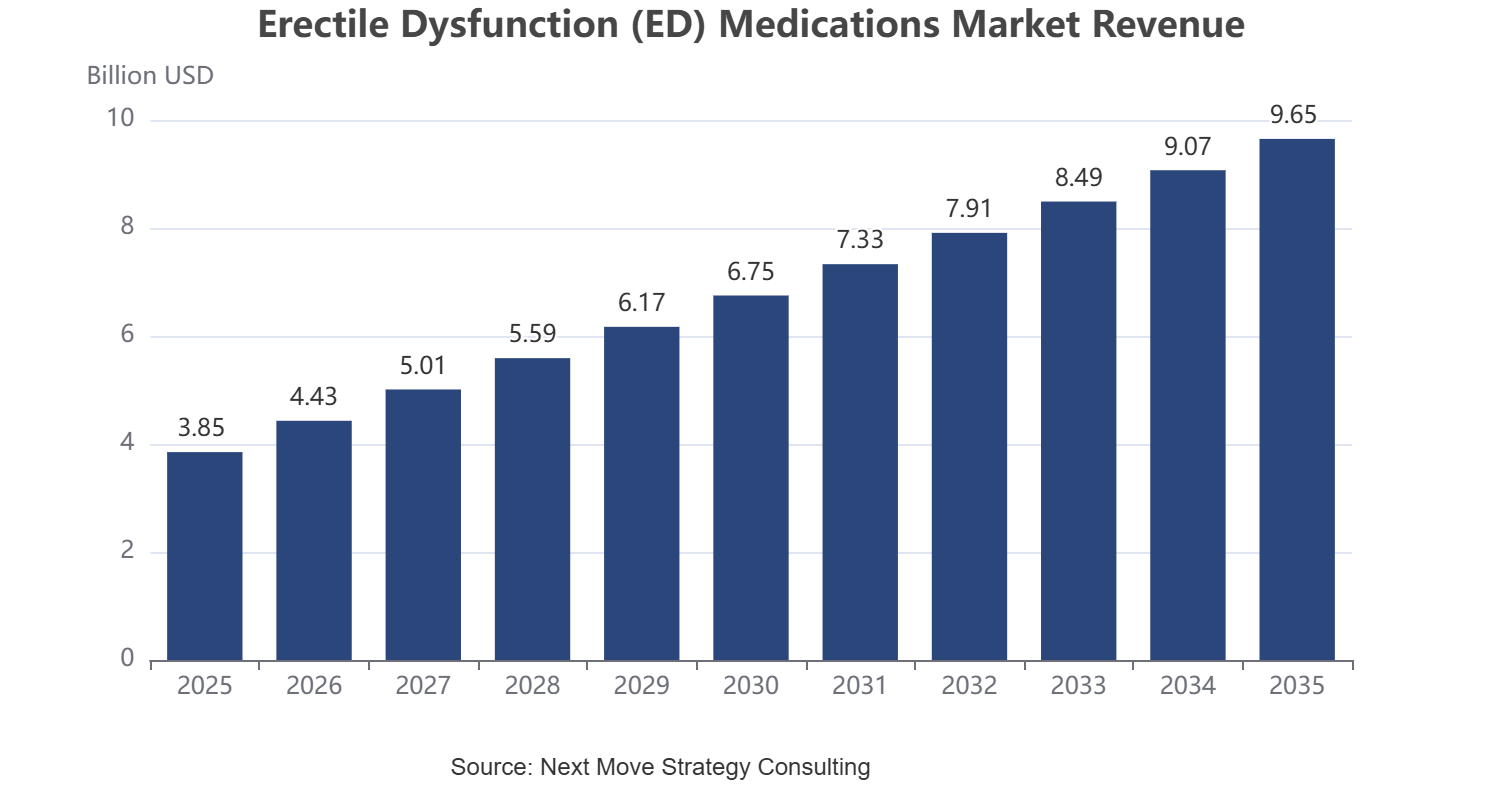
The global Erectile Dysfunction (ED) Medications Market size was valued at USD 3.85 Billion in 2025 and is estimated at USD 4.15 Billion in 2026, projected to reach USD 9.65 Billion by 2035, expanding at a CAGR of 9.8% between 2026 and 2035. North America leads with an estimated 39% revenue share, while Phosphodiesterase Type 5 Inhibitors dominate drug class demand with approximately 74% share in 2025.
|
Key Takeaways |
|
By Drug Class: Phosphodiesterase Type 5 Inhibitors held the largest share of approximately 74% (USD 2.85 Billion) in 2025; Other Pharmacologic Agents is the fastest-growing sub-segment at 13.0% CAGR from 2026–2035. |
|
By Route of Administration: Oral held the largest share of approximately 77% (USD 2.98 Billion) in 2025; Topical is the fastest-growing sub-segment at 11.4% CAGR from 2026–2035. |
|
By Prescription Status: Prescription held the largest share of approximately 82% (USD 3.16 Billion) in 2025; Over the Counter is the fastest-growing sub-segment at 12.6% CAGR from 2026–2035. |
|
By Treatment Pattern: On Demand Therapy held the largest share of approximately 72% (USD 2.79 Billion) in 2025; Daily Therapy is the fastest-growing sub-segment at 11.1% CAGR from 2026–2035. |
|
By Distribution Channel: Retail Pharmacy held the largest share of approximately 42% (USD 1.62 Billion) in 2025; Online Pharmacy is the fastest-growing sub-segment at 13.4% CAGR from 2026–2035. |
|
By End User: Homecare held the largest share of approximately 44% (USD 1.71 Billion) in 2025; Andrology Clinics is the fastest-growing sub-segment at 10.7% CAGR from 2026–2035. |
|
Dominant Region: North America dominated with approximately 39% revenue share (USD 1.50 Billion) in 2025. |
|
Fastest-Growing Region: Latin America is expected to register the highest CAGR of 13.0% during 2026–2035. |
|
Dominant Country: U.S. led with approximately USD 1.29 Billion in 2025. |
|
Fastest-Growing Country: Brazil is the fastest-growing country at approximately 13.9% CAGR from 2026–2035. |
Market Opportunity: The Erectile Dysfunction (ED) Medications Market is expected to create an absolute dollar opportunity of USD 5.50 Billion between 2026 and 2035, presenting significant investment potential across the telehealth-enabled distribution, generic manufacturing, and topical drug delivery innovation value chain.
According to Next Move Strategy Consulting analysis, growing insurance reimbursement clarity for on-demand oral therapies, combined with expanding online pharmacy penetration, is compressing the historical diagnosis-to-treatment gap, a dynamic not fully captured in headline market size, revenue figures alone.
What does the Erectile Dysfunction (ED) Medications Market Encompass?
The Erectile Dysfunction (ED) Medications Market report covers pharmacologic therapies formulated to treat erectile dysfunction, spanning Phosphodiesterase Type 5 Inhibitors, prostaglandin analogs, and adjunct pharmacotherapies delivered through oral, injectable, intraurethral, and topical routes. Our analysis shows that the market has evolved from injectable-first treatment paradigms toward oral, on-demand PDE5 inhibitor therapy, with generic entrants reshaping affordability since major patent expirations across sildenafil and tadalafil molecules.
Regulatory pathways administered by the U.S. Food and Drug Administration, the European Medicines Agency, and equivalent national bodies continue to shape prescription-to-OTC transitions, most visibly in over-the-counter sildenafil approvals. Technology adoption trends, including telehealth prescribing, digital pharmacy fulfillment, and app-based adherence tracking, are lowering diagnosis stigma and broadening the market report's addressable patient base across both developed and emerging economies.
|
Parameters |
Details |
|
Market Size in 2025 |
USD 3.85 Billion |
|
Market Size in 2026 |
USD 4.15 Billion |
|
Revenue Forecast in 2035 |
USD 9.65 Billion |
|
Growth Rate |
CAGR of 9.8% from 2026 to 2035 |
|
Analysis Period |
2025–2035 |
|
Base Year Considered |
2025 |
|
Forecast Period |
2026–2035 |
|
Market Size Estimation |
Revenue (USD Billion) |
|
Companies Profiled |
20 |
|
Countries Covered |
33 |
|
Market Share |
Available for 10 companies |
Key Emerging Trends
Next Move Strategy Consulting's analysis indicates that four structural trends are redefining how ED medications reach patients and how manufacturers differentiate.
How Is Telehealth Reshaping ED Medication Access?
Telehealth platforms are compressing the traditional consultation-to-prescription cycle for erectile dysfunction, allowing patients to obtain PDE5 inhibitor prescriptions without an in-person urology visit. This shift is transforming distribution economics, pushing volume toward online and mail order pharmacy channels. Hims & Hers and BlueChew have scaled subscription-based sildenafil and tadalafil chewables, demonstrating how digital-first models improve adherence, reduce stigma-related dropout, and expand access among younger, previously underdiagnosed patient cohorts.
Why Is Generic Erosion Accelerating Portfolio Diversification?
Patent expirations across sildenafil, tadalafil, and vardenafil have driven aggressive generic price competition, compressing branded revenue and pushing originators toward combination therapies, novel delivery formats, and OTC conversions. We observed that manufacturers including Viatris and Teva are prioritizing formulation innovation, such as orally disintegrating tablets and oral films, to defend margin as generic penetration deepens across mature markets like the U.S. and Western Europe.
How Is OTC Conversion Expanding the Consumer Health Segment?
Regulatory approval of over-the-counter sildenafil in the United Kingdom and subsequent regulatory interest elsewhere is establishing a consumer health pathway parallel to prescription channels. This trend is expanding retail pharmacy and online pharmacy volume, lowering the diagnosis threshold, and inviting consumer health companies alongside traditional pharmaceutical manufacturers into a market historically gated by prescription requirements.
What Role Does Combination and Novel Formulation Innovation Play?
Manufacturers are increasingly pursuing fixed-dose combinations and non-oral delivery formats, including topical and intraurethral options, to serve patients with contraindications to oral PDE5 inhibitors. This formulation diversification is broadening the addressable patient pool beyond first-line oral therapy, supporting incremental innovation cycles even as core molecule pricing continues to compress under generic pressure across the pharmaceutical value chain.
Porter's Five Forces Analysis of the Erectile Dysfunction (ED) Medications Market
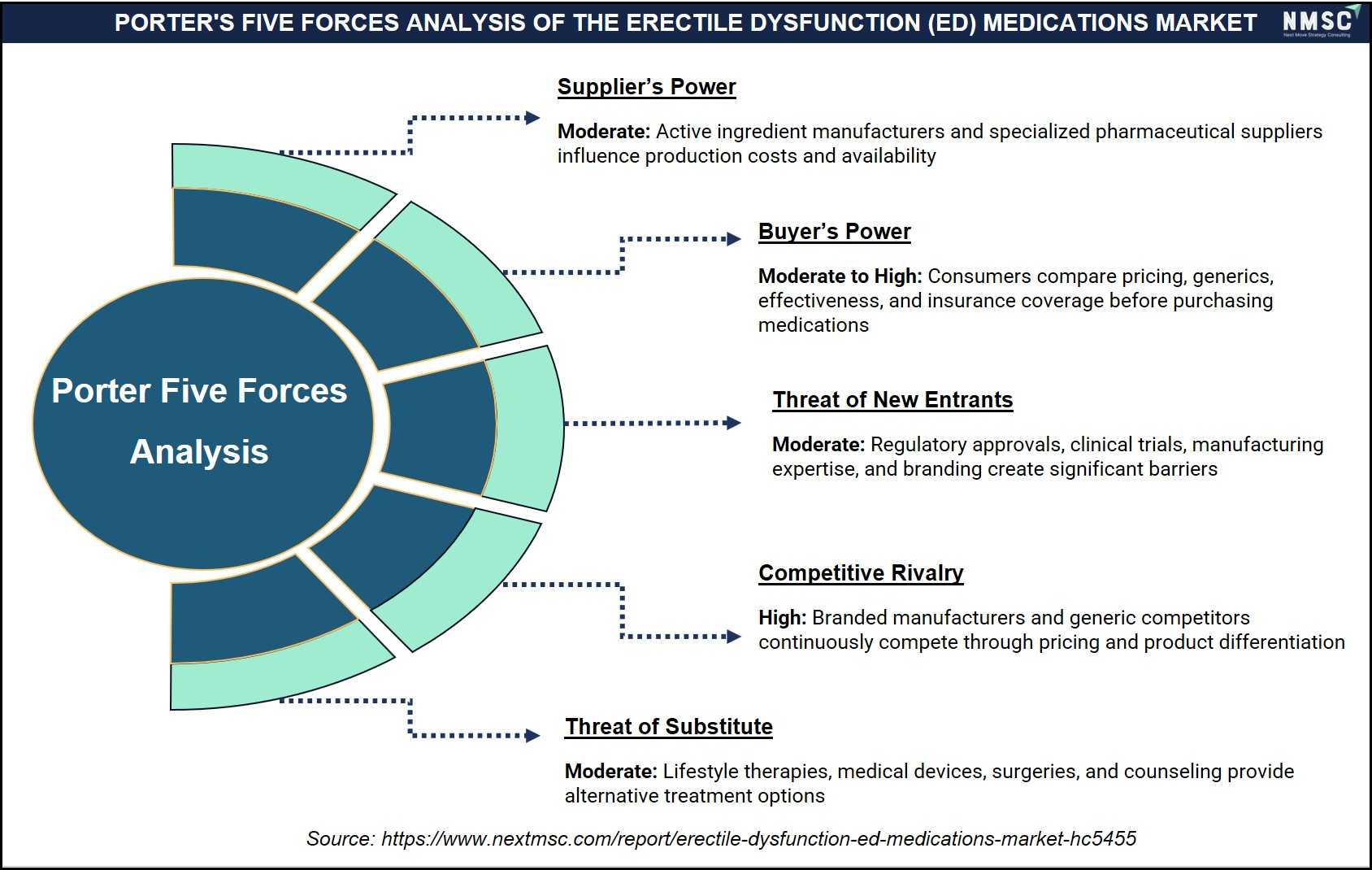
Based on our competitive assessment, we identified that supplier bargaining power, buyer bargaining power, competitive rivalry, the threat of substitutes, and the threat of new entrants collectively shape the erectile dysfunction (ED) medications market. Furthermore, our industry evaluation indicates that patent expirations, generic drug competition, physician prescribing preferences, regulatory approval requirements, pricing strategies, and expanding online pharmacy channels influence market competitiveness, encourage product differentiation, strengthen innovation, and support sustainable long-term market growth.
Growth Drivers & Restraints
|
Factors |
Type |
(+/-) % Impact on CAGR |
Geographic Relevance |
Impact Timeline |
|
Rising global prevalence of ED linked to diabetes and cardiovascular disease |
Driver |
+2.1% |
Global |
2026–2035 |
|
Expansion of telehealth prescribing and online pharmacy access |
Driver |
+1.8% |
North America, Europe |
2026–2032 |
|
Generic PDE5 inhibitor availability improving affordability |
Driver |
+1.6% |
Asia-Pacific, Latin America |
2026–2035 |
|
OTC regulatory conversion of sildenafil-class molecules |
Driver |
+1.2% |
Europe, North America |
2027–2035 |
|
Growing men's health awareness campaigns reducing stigma |
Driver |
+0.9% |
Global |
2026–2035 |
|
Persistent social stigma limiting diagnosis in conservative markets |
Restraint |
-1.4% |
Middle East & Africa, parts of Asia-Pacific |
2026–2035 |
|
Severe price erosion from unbranded generic competition |
Restraint |
-1.1% |
North America, Europe |
2026–2032 |
|
Reimbursement exclusions for lifestyle-classified medications |
Restraint |
-0.8% |
North America |
2026–2035 |
|
Counterfeit and unregulated online drug sales undermining trust |
Restraint |
-0.6% |
Asia-Pacific, Latin America |
2026–2033 |
What Is the Primary Growth Driver?
Rising global prevalence of erectile dysfunction, closely correlated with diabetes and cardiovascular disease, is the primary growth driver. The World Health Organization has linked cardiometabolic disease burden directly to ED incidence in adult men. Based on research conducted by Next Move Strategy Consulting, we found that this comorbidity linkage is expanding the diagnosed patient pool faster than population growth alone, directly supporting sustained oral PDE5 inhibitor demand through the forecast period.
How Is Telehealth Prescribing Driving the Market Growth?
Telehealth-enabled prescribing is lowering the consultation barrier that historically suppressed diagnosis rates. During our market evaluation, we noticed that digital health platforms in the U.S. have normalized discreet online consultation and direct-to-consumer delivery, converting previously undiagnosed men into active prescription holders. This channel expansion is disproportionately benefiting online and mail order pharmacy distribution relative to traditional retail dispensing.
What Is Restraining the Erectile Dysfunction (ED) Medications Market?
Persistent social stigma in conservative and lower-income regions continues to restrain diagnosis and treatment-seeking behavior, particularly across parts of the Middle East, Africa, and South Asia. Our assessment indicates that cultural reluctance to discuss sexual health with clinicians, compounded by limited urology and andrology clinic density outside major urban centers, is suppressing the addressable patient base well below actual prevalence estimates in these geographies.
Segmentation Analysis
Segment Sizing: By Drug Class
|
Segment |
2025 (USD Billion) |
2035 (USD Billion) |
CAGR% (2026–2035) |
|
Phosphodiesterase Type 5 Inhibitors |
2.85 |
6.65 |
9.6% |
|
Prostaglandin Analogs |
0.58 |
1.60 |
10.9% |
|
Other Pharmacologic Agents |
0.42 |
1.40 |
13.0% |
|
Total |
3.85 |
9.65 |
9.8% |
Which Drug Class Dominates the Market?
Phosphodiesterase Type 5 Inhibitors dominate with approximately 74% share in 2025, reaching USD 6.65 Billion by 2035, driven by sildenafil and tadalafil's established efficacy and prescriber familiarity. Other Pharmacologic Agents are the fastest-growing class at a 13.0% CAGR, as apomorphine, topical glyceryl trinitrate, and papaverine combination injections gain traction among patients with contraindications to oral PDE5 inhibitors, particularly in diabetic and post-prostatectomy populations across urology and andrology clinic settings. Prostaglandin Analogs follow closely at a 10.9% CAGR, led by alprostadil-based therapies.
Segment Sizing: By Route of Administration
|
Segment |
2025 (USD Billion) |
2035 (USD Billion) |
CAGR% (2026–2035) |
|
Oral |
2.98 |
6.95 |
9.6% |
|
Injectable |
0.46 |
1.15 |
10.5% |
|
Intraurethral |
0.21 |
0.51 |
10.1% |
|
Topical |
0.20 |
1.04 |
11.4% |
|
Total |
3.85 |
9.65 |
9.8% |
Which Route of Administration Leads Demand?
Oral formulations lead with USD 2.98 Billion in 2025, favored for convenience, discretion, and established on-demand dosing regimens. Topical delivery is the fastest-growing route at an 11.4% CAGR, reflecting early commercialization of glyceryl trinitrate-based topical therapies such as Futura Medical's MED3000, which offer rapid onset without systemic PDE5 inhibitor side effects, appealing to cardiovascular risk patients.
Segment Sizing: By Distribution Channel
|
Segment |
2025 (USD Billion) |
2035 (USD Billion) |
CAGR% (2026–2035) |
|
Retail Pharmacy |
1.62 |
3.61 |
9.1% |
|
Hospital Pharmacy |
0.85 |
1.83 |
8.6% |
|
Online Pharmacy |
0.81 |
2.68 |
13.4% |
|
Mail Order Pharmacy |
0.42 |
1.13 |
11.2% |
|
Government Procurement |
0.15 |
0.40 |
10.9% |
|
Total |
3.85 |
9.65 |
9.8% |
Which Distribution Channel Is Growing Fastest?
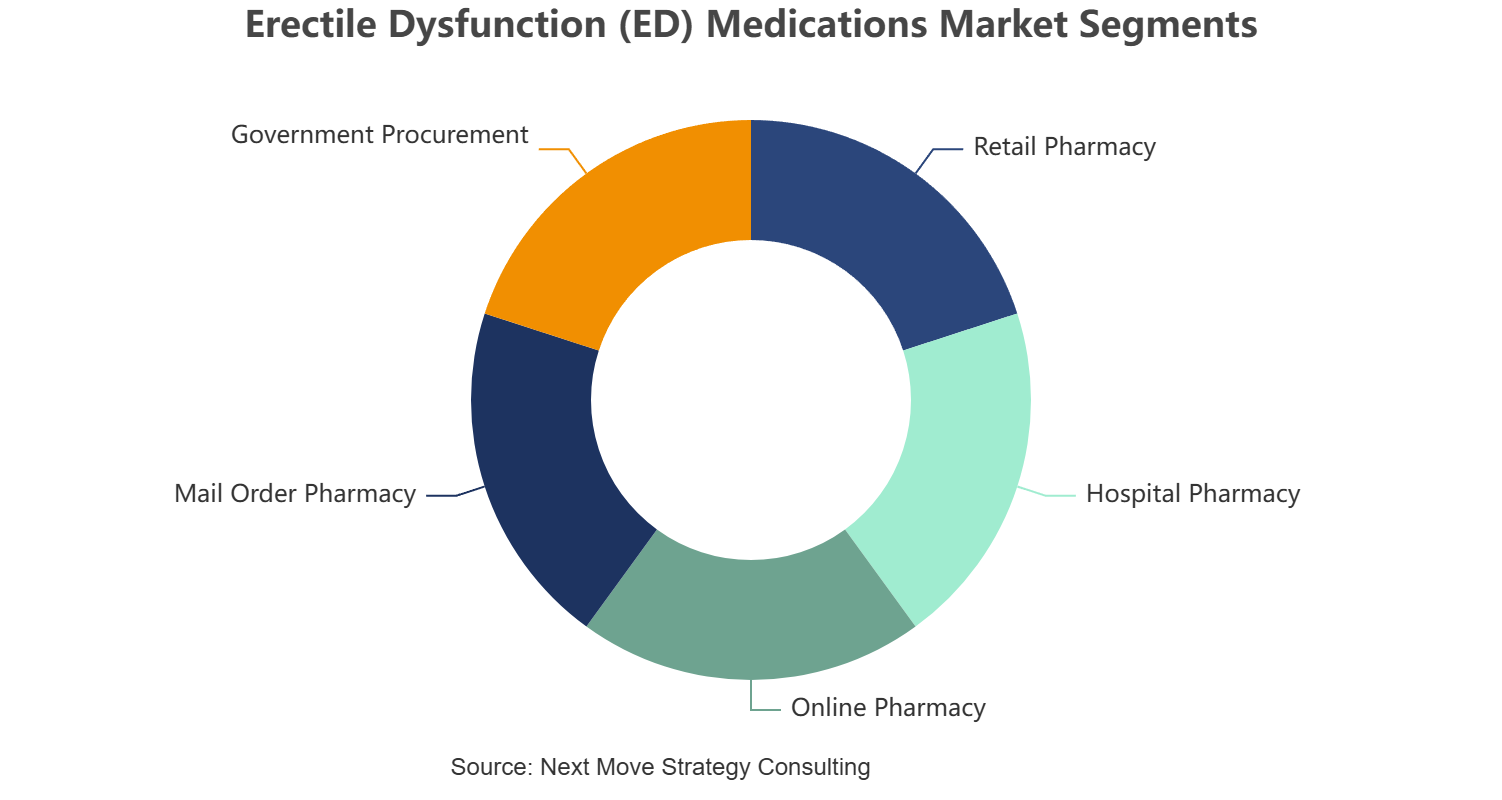
Retail Pharmacy retains the largest share at USD 1.62 Billion in 2025, supported by established prescriber referral pathways and immediate dispensing. Online Pharmacy is the fastest-growing channel at a 13.4% CAGR, propelled by telehealth-linked fulfillment models from digital health platforms that bundle consultation, prescription, and discreet home delivery into a single consumer journey, a distribution shift also visible across the broader telemedicine ecosystem.
Growth Opportunities
Our findings suggest three whitespace opportunities where targeted investment can outpace overall market growth.
Can Topical Non-Systemic Therapies Unlock Cardiovascular Risk Patients?
Topical glyceryl trinitrate formulations bypass systemic PDE5 inhibitor contraindications, opening treatment access for cardiovascular and nitrate-medicated patients previously excluded from oral therapy, positioning specialty formulation developers to capture this underserved clinical segment.
Can Andrology Clinic Networks Expand Diagnosed Patient Volume?
Dedicated andrology clinic expansion in Asia-Pacific and Latin America can convert latent, undiagnosed ED prevalence into treated patient volume, benefiting regional pharmaceutical distributors and hospital pharmacy networks positioned to supply these emerging specialty care pathways.
Can Daily-Dose Therapy Adoption Grow Recurring Revenue?
Daily therapy tadalafil formulations offer recurring, subscription-style revenue relative to on-demand dosing, benefiting manufacturers and online pharmacy platforms that can bundle adherence support and predictable refill cycles into direct-to-consumer subscription offerings.
Regional Outlook
|
Region |
2025 (USD Billion) |
2035 (USD Billion) |
CAGR% (2026–2035) |
Key Driver |
|
North America |
1.50 |
3.36 |
8.8% |
Telehealth prescribing expansion |
|
Europe |
0.96 |
2.13 |
8.5% |
OTC regulatory conversion |
|
Asia-Pacific |
0.89 |
2.62 |
11.8% |
Rising diagnosis and generic access |
|
Middle East & Africa |
0.29 |
0.79 |
10.8% |
Andrology clinic infrastructure growth |
|
Latin America |
0.21 |
0.75 |
13.0% |
Expanding retail pharmacy penetration |
|
Total |
3.85 |
9.65 |
9.8% |
|
North America Erectile Dysfunction (ED) Medications Market Outlook
North America remains the most mature market, anchored by established prescriber familiarity, strong telehealth infrastructure, and deep generic PDE5 inhibitor penetration. Our analysis shows that the region's regulatory clarity around direct-to-consumer digital prescribing continues to support premium adherence-focused product launches, even as insurance reimbursement gaps for lifestyle-classified medications persist as a structural constraint on prescription-channel growth.
Europe Erectile Dysfunction (ED) Medications Market Outlook
Europe is characterized by accelerating OTC conversion following the UK's regulatory approval of over-the-counter sildenafil, a model other national regulators are evaluating. We found that this shift is broadening retail pharmacy access while national health system procurement continues to anchor hospital pharmacy demand, particularly across Germany, France, and Italy's public healthcare distribution networks.
Asia-Pacific Erectile Dysfunction (ED) Medications Market Outlook
Asia-Pacific is the second-fastest-growing region, driven by rising diagnosis rates, expanding andrology clinic infrastructure, and strong domestic generic manufacturing capacity in India and China. Our assessment indicates that South Korea's distinct udenafil and mirodenafil molecule adoption reflects a regionally differentiated competitive landscape uncommon elsewhere, supporting sustained double-digit segment growth through 2035.
Middle East & Africa Erectile Dysfunction (ED) Medications Market Outlook
Middle East & Africa growth is constrained by social stigma but supported by rising private healthcare investment and urology clinic expansion in Gulf Cooperation Council states. We observed that UAE and Saudi Arabia are emerging as regional distribution hubs, while broader African markets remain underpenetrated relative to underlying prevalence, representing a long-term structural growth reserve.
Latin America Erectile Dysfunction (ED) Medications Market Outlook
Latin America shows the fastest regional CAGR from a smaller base, led by Brazil's expanding retail pharmacy footprint and generic drug affordability. Our findings suggest that growing private insurance penetration and urban healthcare access improvements across Argentina and Colombia are gradually narrowing the historical diagnosis gap relative to more mature markets.
U.S. Erectile Dysfunction (ED) Medications Market
Based on our estimates, the U.S. Erectile Dysfunction (ED) Medications Market was valued at approximately USD 1.29 Billion in 2025 and is projected to reach USD 2.86 Billion by 2035, at a CAGR of 8.6% (2026–2035). the U.S. market benefits from dense telehealth prescribing infrastructure, strong insurance-adjacent cash-pay adoption, and the highest concentration of branded and generic PDE5 inhibitor launches globally, with regulatory clarity from the FDA supporting continued direct-to-consumer digital distribution expansion through 2035.
Canada Erectile Dysfunction (ED) Medications Market
The market in the Canada Erectile Dysfunction (ED) Medications Market was valued at approximately USD 0.15 Billion in 2025 and is projected to reach USD 0.33 Billion by 2035, at a CAGR of 8.4% (2026–2035). Canada reflects steady public and private insurance coverage for select ED therapies, moderate telehealth adoption relative to the U.S., and consistent generic penetration, with growth supported by aging demographics and expanding online pharmacy access across urban provinces.
UK Erectile Dysfunction (ED) Medications Market
As per our estimate, the UK Erectile Dysfunction (ED) Medications Market was valued at approximately USD 0.19 Billion in 2025 and is projected to reach USD 0.44 Billion by 2035, at a CAGR of 9.0% (2026–2035). the UK leads Europe's OTC transition following regulatory approval of pharmacy-dispensed sildenafil without prescription, a structural shift expanding retail access, lowering diagnosis stigma, and positioning the UK as a reference model for other European regulators considering similar conversions.
Germany Erectile Dysfunction (ED) Medications Market
According to our analysis, the Germany Erectile Dysfunction (ED) Medications Market was valued at approximately USD 0.22 Billion in 2025 and is projected to reach USD 0.48 Billion by 2035, at a CAGR of 8.3% (2026–2035). Germany's statutory health insurance framework anchors hospital and retail pharmacy dispensing, with reimbursement limited to specific clinical indications, while private-pay demand for premium branded and combination therapies continues to expand among urology clinic patient populations.
France Erectile Dysfunction (ED) Medications Market
Based on our estimates, the France Erectile Dysfunction (ED) Medications Market was valued at approximately USD 0.16 Billion in 2025 and is projected to reach USD 0.35 Billion by 2035, at a CAGR of 8.1% (2026–2035). France shows steady generic PDE5 inhibitor adoption supported by national health insurance frameworks, with growth moderated by conservative prescribing patterns and lower telehealth penetration relative to Northern European peers, though online pharmacy usage is rising among younger patients.
China Erectile Dysfunction (ED) Medications Market
The market in the China Erectile Dysfunction (ED) Medications Market was valued at approximately USD 0.31 Billion in 2025 and is projected to reach USD 1.02 Billion by 2035, at a CAGR of 12.6% (2026–2035). China is expanding rapidly on the back of large-scale domestic generic manufacturing, rising urban diagnosis rates, and growing andrology clinic infrastructure, with online pharmacy platforms increasingly serving as a discreet, high-volume distribution channel for both branded and generic therapies.
India Erectile Dysfunction (ED) Medications Market
As per our estimate, the India Erectile Dysfunction (ED) Medications Market was valued at approximately USD 0.19 Billion in 2025 and is projected to reach USD 0.68 Billion by 2035, at a CAGR of 13.1% (2026–2035). India is the second-fastest-growing major country market after Brazil, driven by low-cost generic sildenafil and tadalafil production, expanding urology clinic access in tier-two cities, and rising awareness campaigns that are gradually reducing longstanding cultural stigma around ED diagnosis and treatment.
Japan Erectile Dysfunction (ED) Medications Market
According to our analysis, the Japan Erectile Dysfunction (ED) Medications Market was valued at approximately USD 0.18 Billion in 2025 and is projected to reach USD 0.38 Billion by 2035, at a CAGR of 7.8% (2026–2035). Japan shows comparatively moderate growth, reflecting an already mature prescription base, conservative regulatory approach to OTC conversion, and an aging male population that sustains steady baseline demand for established branded and generic oral therapies.
South Korea Erectile Dysfunction (ED) Medications Market
Based on our estimates, the South Korea Erectile Dysfunction (ED) Medications Market was valued at approximately USD 0.11 Billion in 2025 and is projected to reach USD 0.29 Billion by 2035, at a CAGR of 10.2% (2026–2035). South Korea's market is distinguished by strong domestic molecule innovation, including udenafil and mirodenafil, reflecting a differentiated competitive landscape supported by local pharmaceutical R&D investment and high consumer willingness to adopt novel branded formulations.
Australia Erectile Dysfunction (ED) Medications Market
The market in the Australia Erectile Dysfunction (ED) Medications Market was valued at approximately USD 0.09 Billion in 2025 and is projected to reach USD 0.20 Billion by 2035, at a CAGR of 8.5% (2026–2035). Australia benefits from stable healthcare infrastructure and steady telehealth adoption, with growth supported by an aging population and consistent generic PDE5 inhibitor availability through both retail and online pharmacy channels across metropolitan and regional areas.
UAE Erectile Dysfunction (ED) Medications Market
As per our estimate, the UAE Erectile Dysfunction (ED) Medications Market was valued at approximately USD 0.05 Billion in 2025 and is projected to reach USD 0.14 Billion by 2035, at a CAGR of 10.9% (2026–2035). the UAE is emerging as a regional distribution hub, supported by rising private healthcare investment, growing urology clinic density, and increasing medical tourism, positioning it as a strategic entry point for manufacturers targeting the broader Gulf Cooperation Council market.
Saudi Arabia Erectile Dysfunction (ED) Medications Market
According to our analysis, the Saudi Arabia Erectile Dysfunction (ED) Medications Market was valued at approximately USD 0.06 Billion in 2025 and is projected to reach USD 0.17 Billion by 2035, at a CAGR of 11.0% (2026–2035). Saudi Arabia shows accelerating growth tied to healthcare infrastructure expansion under national transformation initiatives, with government procurement and hospital pharmacy channels playing an outsized role relative to retail dispensing in overall market distribution.
South Africa Erectile Dysfunction (ED) Medications Market
Based on our estimates, the South Africa Erectile Dysfunction (ED) Medications Market was valued at approximately USD 0.04 Billion in 2025 and is projected to reach USD 0.10 Billion by 2035, at a CAGR of 9.6% (2026–2035). South Africa's market remains constrained by limited andrology clinic density outside major urban centers, though gradual private healthcare expansion and rising awareness campaigns are incrementally improving diagnosis and treatment access across the region.
Brazil Erectile Dysfunction (ED) Medications Market
The market in the Brazil Erectile Dysfunction (ED) Medications Market was valued at approximately USD 0.11 Billion in 2025 and is projected to reach USD 0.41 Billion by 2035, at a CAGR of 13.9% (2026–2035). Brazil is the fastest-growing major country market globally at a 13.9% CAGR, and leads Latin America on the back of an expanding retail pharmacy network, growing generic affordability, and rising private insurance penetration, with online pharmacy adoption accelerating fastest among urban patients seeking discreet purchasing options.
Argentina Erectile Dysfunction (ED) Medications Market
As per our estimate, the Argentina Erectile Dysfunction (ED) Medications Market was valued at approximately USD 0.04 Billion in 2025 and is projected to reach USD 0.13 Billion by 2035, at a CAGR of 12.2% (2026–2035). Argentina shows steady growth supported by improving urban healthcare access and generic drug affordability, though economic volatility continues to moderate private-pay demand relative to Brazil's larger and more diversified distribution infrastructure.
Price Point Analysis of the Erectile Dysfunction (ED) Medications Market
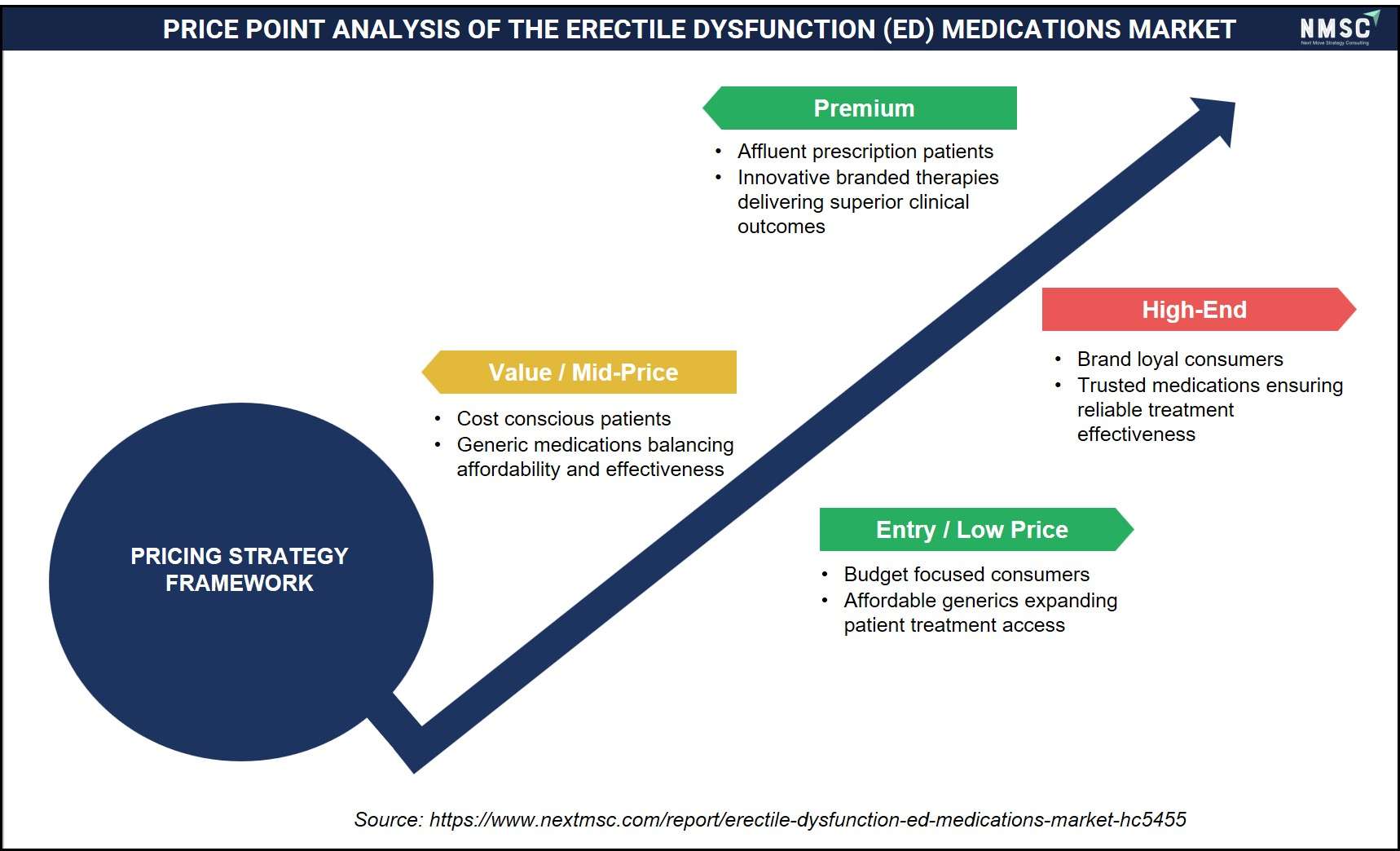
Based on our pricing assessment, we observed that the erectile dysfunction (ED) medications market spans entry-level, value or mid-price, premium, and high-end pricing segments to address diverse patient affordability and treatment preferences. Moreover, our market analysis indicates that generic medications dominate the entry-level and value segments through cost-effective accessibility, while branded formulations, novel therapies, and advanced delivery technologies command premium pricing by offering differentiated clinical benefits, brand recognition, and enhanced patient convenience.
Competitive Landscape
Our analysis shows that the Erectile Dysfunction (ED) Medications Market Industry is moderately consolidated among established generic pharmaceutical manufacturers, with differentiation increasingly built on formulation innovation and distribution reach rather than molecule novelty alone.
|
Dimension |
Assessment |
|
Market Structure |
Moderately consolidated; top 10 companies hold a majority revenue share, with fragmented generic competition at the regional level |
|
Innovation Focus |
Novel delivery formats (oral film, topical, ODT), combination therapies, and telehealth-integrated distribution |
|
M&A Activity |
Selective portfolio bolt-ons and generic manufacturing capacity expansion rather than large-scale consolidation |
How Do Companies Compete in This Industry?
Companies compete primarily on price and distribution reach for generic PDE5 inhibitors, while branded and specialty players differentiate through formulation innovation, prescriber relationships, and direct-to-consumer telehealth partnerships. Our findings suggest that manufacturing scale and regulatory approval breadth across multiple geographies remain decisive competitive advantages in this generics-heavy industry.
Which Competitive Archetypes Dominate the Market?
Large generic manufacturers such as Viatris, Teva, and Sandoz dominate through low-cost, high-volume production, while originator Pfizer retains branded Viagra equity through trusted physician relationships. Indian generics majors including Sun Pharma, Aurobindo, Cipla, and Dr. Reddy's compete on export-scale manufacturing, and specialty innovators like Futura Medical differentiate through novel non-oral delivery formats.
What Innovation and Differentiation Strategies Are Emerging?
Manufacturers are prioritizing patient-friendly formulations, including chewable tablets, oral films, and orally disintegrating tablets, alongside telehealth partnership models that bundle prescribing and fulfillment. Next Move Strategy Consulting's analysis indicates that regional molecule differentiation, such as South Korea's udenafil, represents a defensible innovation strategy against pure generic price competition.
What M&A Activity Is Shaping the Competitive Landscape?
M&A activity in the industry has been selective, concentrated on generic manufacturing capacity expansion and geographic distribution bolt-ons rather than large consolidation deals. We observed that mid-sized generics players continue to expand export registrations across Asia-Pacific, Latin America, and Middle East & Africa markets to capture rising regional generic demand.
Key Market Players
Our assessment indicates that the following companies represent the validated set of key participants shaping the Erectile Dysfunction (ED) Medications Market Industry, ranked by overall competitive relevance.
-
Pfizer Inc.
-
Eli Lilly and Company
-
Teva Pharmaceutical Industries Ltd.
-
Sandoz Group AG
-
Sun Pharmaceutical Industries Limited
-
Aurobindo Pharma Limited
-
Dr. Reddy's Laboratories Limited
-
Lupin Limited
-
Zydus Lifesciences Limited
-
Torrent Pharmaceuticals Limited
-
Hikma Pharmaceuticals PLC
-
Apotex Inc.
-
STADA Arzneimittel AG
-
Menarini Group
-
Ferring Pharmaceuticals
-
Dong-A ST Co., Ltd.
-
SK Chemicals Co., Ltd.
-
Futura Medical plc
Latest Developments
We found that recent developments in the industry reflect continued formulation innovation and generic portfolio expansion among leading manufacturers.
|
Date |
Event |
|
August 2025 |
Viatris Inc. launched its “EmpowerED for Life” campaign across multiple African markets (including South Africa, Kenya, and Nigeria) to destigmatize Erectile Dysfunction (ED), shift the narrative toward professional medical support, and combat the risks associated with unregulated treatments. |
|
September 2024 |
Viatris expanded its global footprint in patient-centric urology options by introducing PrViagra® ODF (sildenafil citrate orodispersible film) in Canada, offering a discrete oral dissolving film format designed to enhance convenience and privacy for individuals managing erectile dysfunction. |
Investment Opportunities
Where Are Capital Inflows Concentrating?
Capital inflows are concentrating in generic manufacturing capacity expansion across India and China, alongside growth-stage funding for telehealth platforms bundling ED prescribing with subscription fulfillment, reflecting investor confidence in distribution-channel disruption over molecule-level innovation.
What Infrastructure Investment Is Required?
Sustained growth requires continued investment in andrology and urology clinic infrastructure across Asia-Pacific, Latin America, and Middle East & Africa, alongside cold-chain and last-mile logistics capacity to support expanding online and mail order pharmacy distribution in previously underserved markets.
How Do ESG Considerations Factor Into Investment Decisions?
ESG-oriented investors are increasingly evaluating pharmaceutical manufacturers on responsible generic pricing practices and counterfeit-prevention supply chain controls, given the prevalence of unregulated online ED drug sales, alongside standard governance and environmental manufacturing disclosures relevant to the broader pharmaceutical sector.
Key Benefits for Stakeholders
How Does This Report Benefit Industry Leaders?
Industry leaders gain a validated segmentation framework, competitive benchmarking, and regional demand forecasts that support portfolio prioritization decisions across drug class, formulation, and distribution-channel investment, informed by Next Move Strategy Consulting's analysis of structural growth drivers through 2035.
How Does This Report Benefit Investors and Financial Analysts?
Investors and financial analysts gain access to reconciled market sizing, CAGR triangulation, and company-level competitive positioning that supports valuation modeling and capital allocation decisions across generic manufacturers, specialty formulation innovators, and digital health distribution platforms.
How Does This Report Benefit Technology and Distribution Platform Teams?
Telehealth and online pharmacy platform teams gain granular distribution-channel and regional adoption data that supports market entry sequencing, partnership prioritization, and product bundling strategy across the fastest-growing online and mail order pharmacy segments identified in this market report.
Key Market Segments
By Drug Class
-
Phosphodiesterase Type 5 Inhibitors
-
Sildenafil
-
Branded
-
Generic
-
-
Tadalafil
-
Branded
-
Generic
-
-
Vardenafil
-
Branded
-
Generic
-
-
Avanafil
-
Branded
-
Generic
-
-
Udenafil
-
Branded
-
Generic
-
-
Mirodenafil
-
Branded
-
Generic
-
-
Lodenafil
-
Branded
-
Generic
-
-
Other Phosphodiesterase Type 5 Inhibitors
-
Branded
-
Generic
-
-
-
Prostaglandin Analogs
-
Alprostadil
-
Branded
-
Generic
-
-
-
Other Pharmacologic Agents
-
Apomorphine
-
Topical Glyceryl Trinitrate
-
Papaverine Combination Injections
-
Other Approved Pharmacotherapies
-
By Route of Administration
-
Oral
-
Conventional Tablet
-
Orally Disintegrating Tablet
-
Oral Film
-
Oral Jelly
-
Chewable Tablet
-
Other Oral Formulations
-
-
Injectable
-
Intraurethral
-
Topical
By Prescription Status
-
Prescription
-
Over the Counter
By Treatment Pattern
-
On Demand Therapy
-
Daily Therapy
By Distribution Channel
-
Retail Pharmacy
-
Hospital Pharmacy
-
Online Pharmacy
-
Mail Order Pharmacy
-
Government Procurement
By End User
-
Hospitals
-
Urology Clinics
-
Andrology Clinics
-
Homecare
By Region
-
North America: U.S., Canada, Mexico
-
Europe: UK, Germany, France, Italy, Spain, Sweden, Denmark, Finland, Netherlands, Rest of Europe
-
Asia-Pacific: China, India, Japan, South Korea, Taiwan, Indonesia, Vietnam, Australia, Philippines, Malaysia, Rest of APAC
-
Middle East & Africa: Saudi Arabia, UAE, Egypt, Israel, Turkey, Nigeria, South Africa, Rest of MEA
-
Latin America: Brazil, Argentina, Chile, Colombia, Rest of LATAM
Conclusion & Recommendations
What Is the Long-Term Outlook?
The long-term outlook remains structurally positive, with the market projected to grow from USD 4.15 Billion in 2026 to USD 9.65 Billion by 2035. Our analysis shows that expanding telehealth infrastructure, rising diagnosis rates, and continued generic accessibility will sustain above-average pharmaceutical sector growth through the forecast period, even as pricing pressure persists across mature molecule classes.
What Strategic Positioning Should Companies Pursue?
Companies should prioritize formulation differentiation, telehealth distribution partnerships, and geographic expansion into underpenetrated Asia-Pacific and Latin America markets. We found that defending margin against generic erosion requires shifting competitive emphasis from molecule exclusivity toward patient experience, adherence support, and discreet digital fulfillment capabilities.
How Attractive Is the Market for New Investment?
Investment attractiveness is highest in topical and combination formulation innovation, telehealth-linked distribution platforms, and generic manufacturing capacity serving high-growth emerging markets. Our findings suggest that returns are increasingly determined by distribution-channel positioning rather than traditional molecule-level patent protection given the market's advanced generic maturity.
What Market Shifts and Key Risks Should Stakeholders Monitor?
Stakeholders should monitor continued OTC regulatory conversion, counterfeit online drug proliferation, and reimbursement policy shifts for lifestyle-classified medications. Next Move Strategy Consulting's analysis indicates that regulatory divergence across geographies on OTC status represents the single largest source of near-term forecast uncertainty for prescription-channel revenue.
What Are the Primary Growth Pathways?
Primary growth pathways include telehealth-enabled market expansion, novel non-oral formulation commercialization, and deepening penetration into underdiagnosed emerging markets through andrology clinic infrastructure investment. Our assessment indicates that companies combining distribution innovation with formulation diversification are best positioned to outperform the broader market's 9.8% CAGR through 2035.
About the Author
 Saista Faiyaz
— Saista Faiyaz is Research Associate at Next Move Strategy Consulting, where she has covered consumer markets and healthcare technologies for 3 years. Her work includes primary interview review, secondary-source validation, market sizing, and structured analysis of company and industry data. She supports research by comparing evidence across sources, organizing findings into market narratives, and documenting assumptions used in analysis. Her scope includes cross-market benchmarking, and reports.
Saista Faiyaz
— Saista Faiyaz is Research Associate at Next Move Strategy Consulting, where she has covered consumer markets and healthcare technologies for 3 years. Her work includes primary interview review, secondary-source validation, market sizing, and structured analysis of company and industry data. She supports research by comparing evidence across sources, organizing findings into market narratives, and documenting assumptions used in analysis. Her scope includes cross-market benchmarking, and reports.
About the Reviewer
 Supradip Baul
— Supradip Baul is an accomplished business consultant and strategist with over a decade of rich experience in market intelligence, strategy, technology, and business transformation. His work has included rigorous qualitative and quantitative analysis across multiple industries, helping clients shape investment decisions and long-term roadmaps. Earlier in his career, he was associated with Gartner, where he contributed to industry-leading reports and market share analyses. He has worked with leading global companies and holds an MBA with a dual specialization in Marketing and Finance.
Supradip Baul
— Supradip Baul is an accomplished business consultant and strategist with over a decade of rich experience in market intelligence, strategy, technology, and business transformation. His work has included rigorous qualitative and quantitative analysis across multiple industries, helping clients shape investment decisions and long-term roadmaps. Earlier in his career, he was associated with Gartner, where he contributed to industry-leading reports and market share analyses. He has worked with leading global companies and holds an MBA with a dual specialization in Marketing and Finance.
At Next Move Strategy Consulting, we understand that insightful market research is the cornerstone of successful business decisions. That's why we employ a robust and multifaceted approach, combining various methodologies to deliver the most accurate and actionable data for our clients.

Research Landscape
We navigate the world of research with two primary approaches:
Qualitative Approach
Our qualitative research methodologies involve immersive techniques such as in-depth interviews, focus groups, and observational studies. By engaging directly with individuals and stakeholders, we uncover valuable insights that quantitative data alone may overlook.

Quantitative Research
In tandem with qualitative methodologies, NMSC leverages the power of Quantitative Research to provide a robust foundation of numerical insights. Through systematic data collection and analysis, we quantify patterns, preferences, and market trends, offering a comprehensive view of the business landscape.
Our quantitative research approach employs diverse tools, including surveys, experiments, and statistical modelling. These methodologies enable us to gather data from a large and representative sample, ensuring the statistical significance of our findings. By employing structured questionnaires and standardized data collection methods, we guarantee the reliability and validity of the information we present to our clients.
Quantitative research is particularly effective in measuring the prevalence of trends, assessing market size, and gauging the impact of various factors on consumer behavior. The numerical precision attained through this approach equips our clients with actionable insights, facilitating data-driven decision-making and strategy formulation.


Our Specialized Toolbox for Industry-Specific Market Research
We deploy a specialized arsenal of techniques tailored to meet your unique requirements. Here's a glimpse into our comprehensive toolbox:

Information Procurement
The stage entails acquiring market data or relevant information through various sources and methodologies.


Market Research Approach
We utilize both top-down and bottom-up approaches in market research analysis to achieve a comprehensive understanding of the market dynamics, leveraging the broad perspective of industry trends and macroeconomic factors alongside detailed insights from specific segments and individual companies.

Porters Five Forces Analysis
We conduct Porter's Five Forces analysis to evaluate the competitive landscape of an industry, providing us with insights into factors that affect profitability and strategic positioning.

SWOT Analysis

Forecasting
We utilize a forecasting model to predict future consumption by considering parameters like population, economics, regulations, market competition, drivers, constraints, technology, and pricing. We also employ statistical techniques such as multilinear regression, exponential smoothing, moving average, ARIMA, and Monte Carlo simulations for accurate predictions. In econometric forecasting, we analyzed short-term and long-term event impacts, attributing values based on regulatory frameworks, economic factors, and market events.





 Speak to Our Analyst