Ammunition Market By Product Category (Small Arms Ammunition, Medium Caliber Ammunition, Large Caliber Ammunition, & Other Ammunitions), By Technology (Unguided Ammunition, Programmable Ammunition, Network-Enabled Ammunition, Precision Guided Ammunition), By Packaging Type (Bulk Military Packaging, Retail Commercial Packaging, & Linked Belted Ammunition), By End User (Military, Law Enforcement, & Civilian Commercial) – Global Analysis & Forecast, 2026–2035
Industry: Aerospace & Defense | Publishing Date: March 27, 2026 | Last Updated: September 11, 2026 | No of Pages: N/A | No. of Tables: N/A | No. of Figures: N/A | Format: PDF | Report Code: AD4354
Industry Outlook
The global Ammunition Market size was valued at USD 43.17 billion in 2025, and is expected to be valued at USD 46.04 billion by the end of 2026. The industry is projected to grow, hitting USD 82.18 billion by 2035, with a CAGR of 6.65% between 2026 and 2035.
Ammunition Market Size & Forecast
|
Parameters |
Details |
|
Market Size in 2026 |
USD 46.04 Billion |
|
Revenue Forecast in 2035 |
USD 82.18 Billion |
|
Growth Rate |
CAGR of 6.65% from 2026 to 2035 |
|
Analysis Period |
2025–2035 |
|
Base Year Considered |
2025 |
|
Forecast Period |
2026–2035 |
|
Market Size Estimation |
Billion (USD) |
|
Companies Profiled |
20 |
|
Countries Covered |
33 |
|
Market Share |
Available for 10 companies |
According to NMSC’s primary research, we found that the global ammunition market is experiencing robust expansion, fueled by defence modernisation programmes, geopolitical security concerns, and rising civilian participation in recreational shooting activities. We observed that military and law-enforcement stakeholders increasingly prioritise performance reliability, precision targeting, and operational efficiency, while civilian users seek specialised, safe, and environmentally compliant ammunition for hunting, sport shooting, and personal defence. Technological advancements in smart and precision-guided munitions are becoming key differentiators, with manufacturers integrating navigation systems, sensor fusion, and modular architectures to enhance accuracy and reduce collateral impact. Sustainability considerations are also influencing product development, as lead-free alloys, polymer casings, and responsible material sourcing gain importance among regulators and environmentally conscious users.
Moreover, industry participants are expanding domestic production capabilities and forming industrial partnerships to strengthen supply-chain resilience and reduce external dependency, particularly across Europe and the Asia-Pacific. Market growth is further supported by structured procurement networks, licensed retail distribution, and evolving digital ordering channels that improve accessibility across institutional and civilian segments. Our research shows that regulatory compliance, safety validation, and documentation transparency remain critical, particularly in tightly governed regions where licensing, environmental oversight, and export controls shape market entry. North America and Europe lead technological innovation and precision adoption, while Asia-Pacific demonstrates accelerated growth through modernization investments and local manufacturing initiatives. Overall, the market rewards suppliers that combine engineering innovation, sustainable material adoption, regulatory alignment, and production scalability, enabling long-term contract stability, operational trust, and sustained global competitiveness.
What Are the Key Trends in the Ammunition Industry?
How is the Rise of Smart & Precision Guided Ammunition Shaping the Market?
The rise of smart and precision‑guided small caliber ammunition is transforming the market as end users increasingly prioritise accuracy, reduced collateral impact, and enhanced operational performance. Our evaluation of defence procurement data and technology adoption studies indicates that military and security forces are not only considering traditional ballistic characteristics, but also embedded guidance, sensor fusion, and networked targeting capabilities. Manufacturers are responding by integrating advanced navigation systems, onboard processing units, and modular architectures that enable in‑flight course correction and real‑time feedback. Moreover, collaborative development with defence technology firms and rigorous field testing are gaining importance, especially in North America and Europe where strategic modernisation programmes are advancing. As a result, suppliers that combine guidance precision with credible performance validation and transparent capability communication are building stronger trust with institutional buyers, enhancing adoption in complex operational theatres, and capturing market share among technology‑driven defence end users.
Why is Self-Reliance and Domestic Production Expansion Becoming a Strategic Priority?
Self‑reliance and domestic production expansion have emerged as defining trends in the ammunition market as geopolitical dynamics and supply‑chain vulnerabilities increasingly influence procurement strategies. Our analysis of government policies and industry investment reports indicates that defence and commercial stakeholders are not only evaluating cost and capacity, but also the strategic value of localised manufacturing ecosystems. Governments are responding by incentivising domestic production through funding, industrial partnerships, and technology transfer initiatives that reduce dependence on foreign suppliers and strengthen national security.
Moreover, quality accreditation, workforce development, and resilient supply‑chain frameworks are gaining importance, especially in Europe and the Asia‑Pacific, where sovereign capability is a policy priority. As a result, manufacturers that align expansion plans with national industrial agendas and demonstrate robust production competencies are enhancing credibility, expanding long‑term contracts with defence agencies, and securing competitive advantage in a market increasingly shaped by supply security and strategic autonomy.
How is the Ammunition Market Demand for Eco‑Friendly & Lead‑Free Influencing Product Development?
Based on NMSC’s primary research, we found that demand for eco‑friendly and lead‑free ammunition is increasingly shaping product development in the market, as environmental responsibility and regulatory compliance emerge as key differentiators. Our review of environmental policy trends and user behaviour research indicates that hunters, sport shooters, and institutional buyers are not only evaluating performance and reliability, but also the ecological footprint of spent ammunition. Manufacturers are responding by reducing toxic components, exploring non‑lead alloys, and innovating with biodegradable and polymer‑based casings that minimise soil and water contamination.
Furthermore, independent environmental certifications, material disclosures, and sustainable production practices are gaining traction, particularly in Europe and North America, where regulatory oversight and conservation advocacy are more stringent. Therefore, brands that combine eco‑friendly credentials with credible evidence and clear communication are strengthening consumer trust, enhancing loyalty, and capturing share in sustainability‑focused market segments.
Ecosystem Analysis of the Ammunition Industry
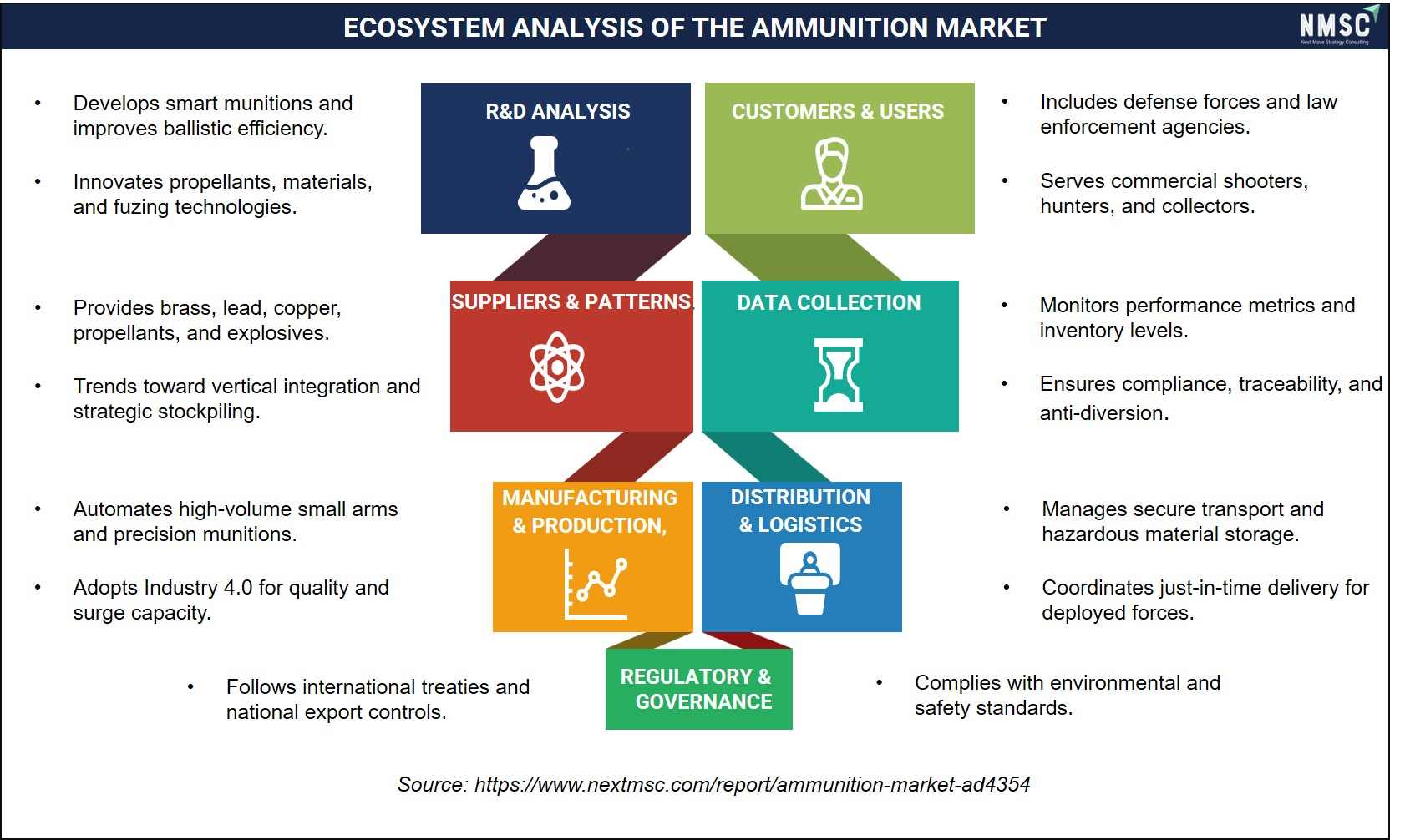
The image presents a detailed ecosystem analysis of the ammunition market, breaking it down into seven key components. We observed that R&D analysis, focusing on smart munitions and advanced propellants, followed by an overview of diverse customers, including defense forces and commercial shooters. Furthermore, it examines suppliers of critical raw materials like brass and lead, alongside evolving supply patterns. Additionally, the framework highlights data collection for compliance and inventory tracking, as well as modern manufacturing trends embracing Industry 4.0. Distribution and logistics manage secure transport and hazardous material storage. Nevertheless, all activities remain under strict regulatory and governance oversight, ensuring adherence to international arms controls and safety standards.
What Are the Key Market Drivers, Breakthroughs, And Investment Opportunities That Will Shape the Ammunition Industry in the Next Decade?
Growth Catalyst & Risk Assessment Matrix
|
DRIVERS/TRENDS/ RESTRAINTS |
(+/-) % IMPACT ON CAGR FORECAST |
GEOGRAPHIC RELEVANCE |
IMPACT TIMELINE |
|
Rising demand for advanced small arms and defense modernization programs |
+1.5% |
North America leads due to defense budgets, and Europe and Asia-Pacific show growing procurement |
Short to medium term (1–3 years) |
|
Innovations in ammunition types, such as smart munitions and precision-guided rounds |
+1.2% |
Global impact, strongest R&D in the U.S., Germany, and Israel |
Medium term (2–4 years) |
|
Expansion of e-commerce and retail distribution channels for civilian ammunition |
+0.9% |
North America dominates early adoption, with growing trends in Europe and Asia-Pacific |
Short to medium term (1–3 years) |
|
Increasing civilian and sport shooting participation, along with the demand for tactical training |
+0.8% |
Global adoption, with the highest growth in the U.S., Canada, and Australia |
Medium term (2–4 years) |
|
Regulatory restrictions, import/export policies, and environmental concerns are limiting ammunition production and sales |
−0.7% |
Regulatory pressure is most pronounced in Europe and heavily regulated markets |
Medium term (2–4 years) |
Based on research conducted by NMSC, we found that the global ammunition market is experiencing robust growth driven by both defence modernisation and rising civilian participation in recreational shooting. Geopolitical tensions are prompting governments to increase budgets for precision-guided and high-performance ammunition while investing in domestic production and technological upgrades to ensure supply chain resilience. Simultaneously, civilian demand is rising as hunters, sport shooters, and personal defence users seek reliable, specialised, and eco-friendly ammunition. However, stringent regulatory frameworks governing licensing, materials, and environmental compliance continue to challenge manufacturers, limiting innovation and market expansion. Nevertheless, opportunities are emerging through the adoption of smart and environmentally sustainable ammunition, enabling companies to differentiate products, enhance brand credibility, and capture growth across defense and civilian segments.
Growth Drivers:
How Are Geopolitical Tensions and Defence Modernisation Driving in Ammunition Market Growth?
Based on NMSC’s assessments, geopolitical tensions and defense modernization initiatives are key drivers shaping the ammunition market, as nations seek to enhance military readiness and strategic capabilities amid evolving security threats. Our analysis of defense procurement reports and policy updates indicates that governments are not only increasing budgets for munitions stockpiling but are also prioritising advanced ammunition systems, precision-guided rounds, and high-performance training supplies to maintain operational superiority. Moreover, modernization programmes are accelerating investments in research, domestic production, and technology integration to reduce reliance on foreign suppliers while ensuring supply chain resilience. Consequently, manufacturers that align product portfolios with national defence priorities, demonstrate technological expertise, and comply with strategic procurement standards are capturing significant market share and strengthening long-term contracts with military and law enforcement stakeholders.
How Are Civilian Ownership and Recreational Shooting Boosting Market Demand?
Civilian firearm ownership and the increasing popularity of recreational shooting are significant drivers of the ammunition market, as consumers participate more actively in hunting, sport shooting, and personal defense activities. Our analysis of consumer behaviour and sales data indicates that private users are not only seeking reliable performance and accuracy, but also specialised ammunition types such as target rounds, low-recoil loads, and eco-friendly options. Based on interviews with shooting range operators, we found that the expansion of shooting clubs, competitive events, and training programs is further boosting demand for high-quality, consistent ammunition products. Consequently, manufacturers that diversify offerings, maintain stringent quality standards, and provide clear safety and usage guidance are enhancing brand loyalty, capturing repeat purchases, and strengthening market share within civilian and recreational segments.
Growth Inhibitor:
How Are Stringent Regulatory Frameworks Limiting the Market Growth?
The ammunition market is significantly constrained by increasingly stringent regulatory frameworks that govern the production, distribution, and usage of ammunition across global markets. Our review of international policy updates and compliance reports indicates that manufacturers adhere to complex licensing procedures, material restrictions, and environmental regulations, particularly in North America and Europe, where oversight is more rigorous. Furthermore, these regulatory requirements involve detailed safety testing, documentation, and traceability measures, which increase operational costs and extend time-to-market for new products. High compliance burdens also limit innovation, as companies hesitate to develop advanced or unconventional ammunition types due to potential legal uncertainties. Therefore, firms that do not proactively align with evolving standards risk reduced market access, reputational damage, and slower growth. As a result, regulatory stringency remains a persistent challenge, influencing strategic decisions across both civilian and defense ammunition segments.
Growth Opportunity:
How Are the Adoption of Eco-Friendly and Smart Ammunition Creating Opportunities for the Market?
The market is witnessing strong growth opportunities driven by the rising adoption of eco-friendly and smart ammunition. Our analysis of consumer and defense procurement trends indicates that hunters, recreational shooters, and military buyers increasingly value products with reduced environmental impact, precision guidance, and enhanced performance. Based on interviews with defence procurement officials, we assessed that integrating biodegradable materials, lead-free alloys, and sensor-enabled rounds presents opportunities to capture new customer segments and differentiate offerings. Nevertheless, companies investing in sustainable and technologically advanced ammunition are poised to strengthen market share, enhance brand reputation, and drive long-term growth in both civilian and institutional segments.
Regulatory Framework Impacting the Ammunition Industry
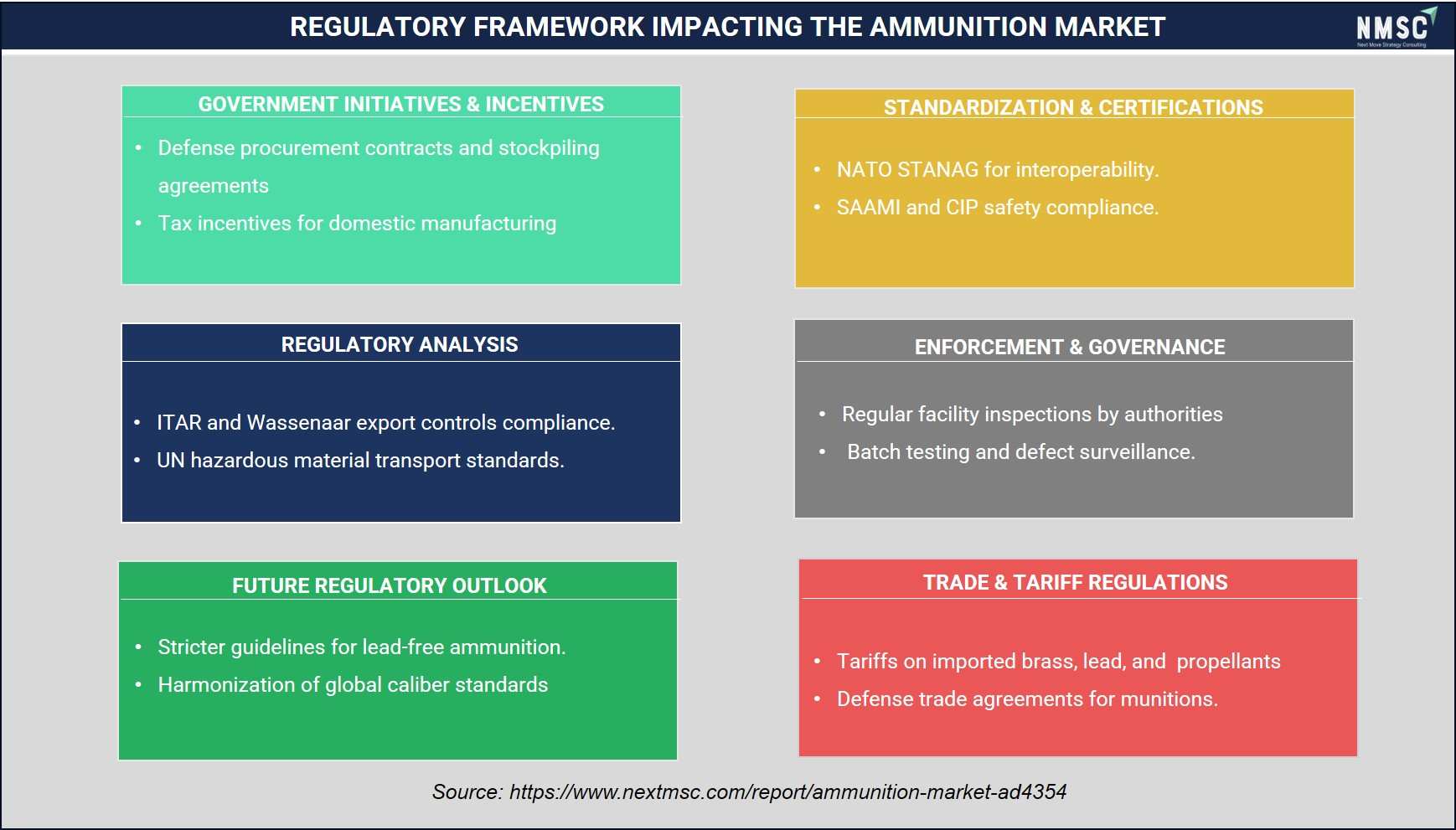
The image presents a comprehensive overview of the regulatory framework impacting the ammunition market. It highlights key government initiatives, such as defence procurement contracts and tax incentives for domestic manufacturing. Furthermore, it emphasizes the importance of standardization and certifications, including NATO STANAG for interoperability and SAAMI safety compliance. Additionally, we identified that the framework covers regulatory analysis of export controls like ITAR and Wassenaar, alongside UN hazardous material transport standards. Enforcement mechanisms, including regular facility inspections and batch testing, ensure strict governance. However, the future outlook points toward stricter lead-free ammunition guidelines and harmonized global standards. Moreover, trade and tariff regulations on raw materials like brass and lead continue to shape the competitive landscape.
How Is the Ammunition Industry Segmented in This Report, And What Are the Key Insights from the Segmentation Analysis?
Market Highlights & Strategic Insights – Ammunition Market:
|
Segments |
Key Takeaways |
|
Product Category |
Small Arms Ammunition dominates in volume due to high demand from military, law enforcement, and civilian markets. Medium and Large Caliber Ammunition are critical for ground vehicles and naval platforms. Artillery Ammunition remains a high-value segment, with renewed focus due to modern conventional warfare. Rocket and Grenade Ammunition segments are driven by the need for portable, high-impact firepower in asymmetric and urban combat scenarios. |
|
Technology |
Unguided Ammunition maintains high-volume usage for traditional operations. Programmable Ammunition, Network-Enabled Ammunition, and Precision Guided Ammunition are growing rapidly, fuelled by modernization initiatives and demand for accurate, technologically advanced battlefield capabilities. |
|
Functional Type |
Ball lead in volume for training and routine operations. Armor Piercing and High Explosive variants are essential for anti-material and anti-personnel roles. High Explosive Anti-Tank (HEAT) remains a key threat to armoured vehicles. Incendiary, Tracer, Smoke, and Illumination rounds provide critical tactical support. The Less Lethal segment is growing for law enforcement and peacekeeping missions. |
|
Material Composition |
Brass remains the most widely used material due to reliability and corrosion resistance. Steel, Aluminium, and Polymer components are increasingly adopted for cost-efficiency, lightweight designs, and specialized applications. |
By Product Category Insights
Which Product Categories Drive Market Growth in 2025?
Based on our analysis of the market, the industry is segmented into small arms ammunition, medium caliber ammunition, large caliber ammunition, mortar ammunition, artillery ammunition, rocket ammunition, grenade ammunition and other ammunition.
Based on our assessments, we found that small arms ammunition continues to dominate the market in 2025, supported by consistent procurement from defense forces, law enforcement agencies, and civilian shooting activities. These products benefit from high-volume consumption, regular training requirements, and established manufacturing capabilities, reinforcing their position as the primary revenue contributor. Moreover, medium and large caliber ammunition maintain steady demand through armoured platform deployment and operational readiness programs, ensuring stable institutional procurement cycles.
Also, artillery ammunition, mortar ammunition, and grenades are experiencing accelerated growth, fuelled by military modernisation initiatives, regional geopolitical tensions, and investment in advanced battlefield capabilities. Similarly, rockets & missiles are witnessing increased adoption due to precision-guided technologies and enhanced propulsion systems. Other niche segments, including other ammunition, are gradually contributing to market diversification, addressing specialized operational requirements. Overall, while small arms ammunition remains foundational for market stability, the growth momentum is increasingly driven by higher-caliber and technologically advanced munitions, aligning with evolving defense strategies and modern combat demands.
By Platform Insights
How Different Platforms Perform in the Market in 2025?
Based on platforms, the ammunition market is segmented into land-based, naval, and airborne platforms.
Based on deployment patterns, we identified that land-based advanced ammunition solutions continues to capture the largest share in 2025, supported by sustained demand from infantry operations, armoured units, and training activities. This segment benefits from high-volume usage and broad application across defense and law enforcement, positioning it as the primary contributor to overall consumption. Naval ammunition demonstrates steady performance, driven by maritime security initiatives, fleet modernization, and coastal defense programs that require reliable medium- and large-caliber munitions. Airborne ammunition, however, is witnessing accelerated growth as air forces prioritize precision engagement and rapid-response capabilities. Moreover, advancements in guided munitions and platform integration are strengthening operational effectiveness and procurement interest. Overall, diversified platform demand reflects strategic defense priorities, where land-based deployments sustain volume while naval and airborne segments support technological progression and capability expansion.

By Propellant Insights
Which Propellant Type Drive Market Growth in 2025?
Based on propellants, the ammunition market is segmented into smokeless powder, black powder, and rocket propellant.
Based on our assessments, we found that smokeless powder continues to account for the largest share in 2025, supported by widespread usage across small arms, medium, and large-caliber ammunition in defense, law enforcement, and civilian applications. This segment benefits from high-volume consumption, routine training exercises, and mature manufacturing capabilities, positioning it as the primary contributor to overall market revenue. Moreover, black powder demonstrates steady performance, driven by niche applications in historical reproductions, ceremonial munitions, and specialized civilian markets, maintaining a consistent but limited demand.
Rocket propellant, however, is witnessing accelerated growth as armed forces increasingly focus on precision-guided rockets, missiles, and extended-range platforms. Advances in propulsion technologies and integration with modern munitions systems are strengthening operational effectiveness and procurement interest in this segment. Overall, propellant-based demand reflects evolving defense priorities, where smokeless powder sustains market volume, black powder supports traditional and niche uses, and rocket propellant drives technological advancement and capability expansion.

Regional Outlook:
Geographic Performance Snapshot:
|
Regions |
Key Takeaways |
|
North America |
Growth is driven by high defense spending, ongoing modernization of military forces, and strong demand for small- and medium-calibre ammunition for law enforcement and civilian users. The presence of established ammunition manufacturers, advanced production technologies, and strategic stockpiling further support market expansion. |
|
Europe |
Expansion is fuelled by increasing defense budgets, NATO-led modernization programs, and rising demand for precision-guided and smart munitions. Countries like Germany, France, and the UK lead in advanced ammunition adoption, with domestic production and innovation in environmentally friendly ammunition boosting growth. |
|
Asia-Pacific |
Rapid military modernization, urbanization, and growing security concerns propel market adoption. Countries such as China, India, and Japan are witnessing increased procurement of advanced artillery, small arms, and smart ammunition. Rising local manufacturing capabilities and government contracts further drive growth. |
|
Middle East & Africa (MEA) |
Market growth is supported by regional conflicts, defense modernization programs, and increasing government investments in armed forces. Countries like Saudi Arabia, UAE, and Egypt are expanding stockpiles and investing in high-performance and smart munitions, driving steady demand. |
|
Latin America (LATAM) |
Market expansion is fuelled by modernization of military and law enforcement forces, rising internal security concerns, and adoption of imported and locally produced ammunition. Countries such as Brazil and Mexico show growing interest in small arms and medium-calibre ammunition to strengthen defense readiness and internal security. |
The ammunition market is geographically studied across North America, Europe, Asia Pacific, the Middle East & Africa and Latin America, and each region is further studied across countries.
Ammunition Market in North America
North America represents a mature, innovation-driven ammunition market, with adoption spanning retail distribution, e-commerce channels, and direct institutional procurement platforms. Our interviews with industry stakeholders, including product managers and regulatory consultants, found that buyers increasingly favour precision-engineered, lead-free, and specialized training ammunition, where first-party sales data show growing uptake across hunting, recreational shooting, and law-enforcement segments in both urban and rural regions. Our research highlights that performance reliability, product availability, and compliance assurance drive repeat purchases. Nevertheless, regulatory oversight on material composition, storage, and distribution continues to influence product launches. Vendors focusing on quality validation, transparent material disclosure, and safety education are gaining higher trust, reinforcing market penetration across the region.
Ammunition Market in the United States
The U.S. market is expanding due to strong civilian participation and institutional demand for performance-oriented ammunition products. Our interviews with retail managers indicate a preference for precision target rounds, hunting cartridges, and environmentally compliant lead-free variants in urban and suburban areas. Our analysis also reveals that direct-to-consumer channels, digital catalogues, and range-based distribution enhance accessibility and trial adoption. Moreover, awareness initiatives emphasising safety training and responsible handling practices are supporting demand expansion. However, regulatory compliance, including federal approvals and state-level distribution guidelines, remains critical. Vendors offering transparent product specifications, certified performance testing, and multi-channel availability are achieving stronger market share and sustaining competitive positioning.
Ammunition Market in Canada
Canada’s market demonstrates steady growth, especially within retail and regulated e-commerce segments, supporting hunting and recreational shooting. Our discussions with industry consultants reveal that adoption is driven by demand for reliable, environmentally compliant, and portable ammunition formats suited to outdoor usage conditions. Data from Canadian retail chains indicate the rising popularity of lead-free cartridges and standardized packaging options, particularly among conservation-minded users. Cloud-based inventory systems and subscription supply models further enhance accessibility and purchasing continuity. Nevertheless, the limited domestic manufacturing base and strict federal regulations constrain rapid expansion. Vendors emphasizing compliance, product safety documentation, and transparent labelling are gaining a competitive advantage. Moreover, education initiatives highlighting ecological responsibility are improving user acceptance.
Ammunition Market in Europe
Europe’s market is efficiency- and regulation-driven, with adoption varying across Northern, Central, and Southern regions. Our interviews with retail executives and compliance consultants show Northern Europe prioritizes environmental compliance and traceability, while Southern Europe favours flexible distribution and recreational accessibility. Our market assessment indicates that lead-free hunting ammunition, training cartridges, and precision sporting rounds are widely preferred across segments. Consumer safety and regulatory alignment remain top purchase criteria, particularly in countries with strict firearms legislation. Additionally, cross-border specialized distribution contributes to growth despite infrastructure variations. Vendors focusing on ethical sourcing, transparent material documentation, and multi-channel availability are gaining traction. Nevertheless, policy differences continue to moderate the adoption pace across regions.
Ammunition Market in the United Kingdom
Based on our primary research at NMSC, we observed that the UK market is expanding steadily, fueled by institutional procurement and controlled civilian sporting demand for compliant ammunition solutions. Our analysis shows strong adoption in regulated shooting clubs and hunting communities, particularly for precision target rounds and reduced-impact variants. We also noticed growing demand for scheduled supply agreements and standardized packaging formats supporting traceability. Further, regulatory oversight under national firearms legislation emphasizes accurate labelling, material transparency, and secure distribution. By focusing on compliance alignment, product verification, and safety education, vendors are achieving higher engagement and procurement continuity across professional and recreational user groups.
Ammunition Market in Germany
Based on our research, we found that Germany’s market is growing in a structured, innovation-driven manner, particularly across regulated sporting and institutional procurement sectors. Our analysis indicates strong buyer preference for certified precision cartridges, environmentally compliant projectiles, and standardized training rounds distributed through licensed retail and digital ordering channels. We noticed that compliance with EU directives and documentation transparency is critical to maintaining purchaser confidence. Vendors delivering high-quality engineering, secure logistics, and detailed specification labelling are securing a competitive edge. Moreover, urban consumers and organized shooting associations increasingly favour performance-consistent solutions aligned with responsible use and regulatory expectations.
Ammunition Market in France
We observed that France’s market is expanding, driven by institutional usage and regulated recreational shooting activities. Our analysis indicates rising adoption in sporting clubs and rural hunting sectors, with structured supply agreements and certified cartridge variants becoming increasingly common. We found that compliance with national firearms regulations, including traceability and packaging documentation, is critical for maintaining buyer confidence. Furthermore, our assessment indicates that vendors who focus on verified product testing, transparent communication, multi-channel licensed distribution, and safety awareness initiatives tend to achieve higher engagement and stronger brand credibility among regulated end users and institutional purchasers.
Ammunition Market in Italy
We noticed steady growth in Italy’s market, with adoption concentrated in hunting, sporting, and regulated retail sectors. Our analysis reveals strong demand for certified cartridges and specialized training rounds supported by licensed distribution networks and scheduled procurement arrangements. We also assessed that vendors ensuring compliance with national and EU firearms requirements, clear documentation, and secure logistics gain competitive advantage. Moreover, purchaser preference for reliability, portability, and traceable sourcing influences product selection patterns. Companies providing robust distribution support, safety communication, and multi-channel availability are positioned for sustained growth within structured and compliance-sensitive procurement environments.
Ammunition Market in Spain
We found that Spain’s market is expanding across regulated hunting and sporting sectors, fueled by demand for compliant and performance-consistent ammunition products. Our research highlights that certified cartridges and standardised packaging dominate buyer choice, with digital catalogues supporting accessibility through licensed distributors. We also observed that product safety documentation, material transparency, and regulatory compliance are critical purchasing considerations. Moreover, vendors offering multilingual documentation, clear labelling, and customer retention programmes achieve higher engagement and brand stability. Nevertheless, regional logistics differences and cost sensitivity create variable adoption rates, requiring operational efficiency and regulatory alignment for sustained market success.
Ammunition Market in the Nordics
The ammunition market in the Nordics, including Denmark, Finland, Iceland, Norway, and Sweden, is highly mature, supported by strong regulatory oversight and institutional trust in certified products. Our analysis shows extensive adoption of environmentally compliant hunting cartridges and precision sporting rounds across licensed retail networks and direct procurement platforms. Vendors providing transparent documentation, ethical sourcing validation, and lifecycle product support achieve higher adoption and loyalty. Moreover, consumer preference for environmentally responsible solutions aligns with regional policies emphasizing ecological stewardship and safety transparency. Structured compliance expectations continue to reinforce purchasing confidence and sustain long-term market stability.
Ammunition Market in the Asia-Pacific
Asia-Pacific is the fastest-growing market, driven by industrial capacity expansion, digital procurement systems, and rising participation in regulated shooting activities. Our interviews with distributors and compliance specialists show strong uptake in China, Japan, South Korea, and Southeast Asia, with differing priorities. China favours cost-efficient domestic production, Japan emphasises reliability certification, and South Korea prioritises technologically advanced performance solutions. Proprietary sales data indicate that urban institutional buyers increasingly adopt structured supply agreements and standardized cartridge formats. Government initiatives supporting domestic capability development further strengthen expansion. Moreover, companies providing compliant, secure, and scalable distribution across retail and institutional channels achieve sustained adoption.
Ammunition Market in China
Based on NMSC’s primary research, we found that China has emerged as a strategically significant ammunition market, driven by defense modernization initiatives and structured state oversight of arms production. We observed that demand is concentrated within military and law enforcement procurement programs, supported by domestic manufacturing capabilities and controlled distribution systems. Our analysis indicates that state-affiliated manufacturers prioritise precision engineering, supply chain security, and compliance with national defence standards. Moreover, investments in advanced munitions and localised production reduce dependency on foreign suppliers and strengthen strategic readiness. We found that reliability, technological integration, and regulatory alignment are central to supplier selection. Consequently, production scale, quality assurance, and adherence to national security frameworks remain the primary growth drivers in China’s ammunition market.
Ammunition Market in Japan
Through our market assessments, we found that Japan’s market is stable and tightly regulated, shaped by strict firearm control laws and limited civilian ownership. We observed that demand is largely driven by defense forces and authorised sporting segments operating under comprehensive compliance standards. Our research shows that domestic manufacturers maintain an advantage due to rigorous quality certifications and adherence to national safety regulations. In addition, procurement processes emphasize precision, reliability, and traceability to ensure operational readiness. We also noticed that innovation focuses on performance optimization within defined legal frameworks. Consequently, regulatory compliance, product consistency, and long-term institutional contracts define sustainable growth in Japan’s ammunition market.
Ammunition Market in India
India’s ammunition market is expanding steadily due to defense modernization, border security priorities, and increasing investments in domestic arms manufacturing. We observed rising procurement across military and paramilitary forces, particularly for small-caliber and specialised ammunition. Our analysis indicates that government-led Make in India initiatives encourage local production partnerships and technology transfers to strengthen self-reliance. Moreover, modernization programs are accelerating upgrades in manufacturing infrastructure and quality control systems. We also found that timely supply, certified safety standards, and cost efficiency significantly influence supplier selection. Consequently, domestic capacity expansion, regulatory alignment, and strategic defense investments are central to sustaining long-term growth in India’s ammunition market.
Ammunition Market in South Korea
South Korea represents a technologically advanced ammunition market, supported by strong defense spending and regional security considerations. Domestic manufacturers lead through precision production, research-driven development, and adherence to strict military specifications. Adoption is concentrated within armed forces modernisation programs and allied defence collaborations. Furthermore, investments in smart munitions and performance-enhanced rounds strengthen operational capabilities and export potential. Regulatory oversight and certified quality assurance frameworks reinforce international credibility and procurement trust. Based on our research, we observed that companies integrating advanced materials and automated production systems achieve deeper market penetration. Overall, growth reflects high defense readiness, export competitiveness, and sustained innovation in South Korea’s ammunition sector.
Ammunition Market in Taiwan
Taiwan exhibits consistent demand in the ammunition market, driven by national defense preparedness and strategic security priorities. Adoption is primarily concentrated within military procurement programs focused on stockpiling and modernization. Regulatory compliance, strict quality testing, and supply chain resilience strongly influence supplier partnerships. Moreover, localised production initiatives aim to reduce external dependency and strengthen defense autonomy. Pilot programs for advanced munitions testing also support gradual capability enhancement before full-scale deployment. Our interviews with defense analysts indicate that reliability, precision, and adherence to national standards are critical purchasing criteria. Overall, Taiwan’s market growth is shaped by security-driven investments, regulatory alignment, and operational reliability.
Ammunition Market in Indonesia
Indonesia’s ammunition market is at a developing yet strategically expanding stage, driven by military modernization and internal security requirements. Procurement growth is supported by investments in domestic production facilities and partnerships with global defense suppliers. Affordability, scalable manufacturing, and certified safety standards strongly influence purchasing decisions. Furthermore, phased production upgrades and technology integration help optimise quality and performance benchmarks. Based on our assessment, we observed that suppliers demonstrating consistent delivery timelines and compliance with national defense regulations achieve stronger institutional trust. Overall, growth in Indonesia is shaped by defense capacity building, regulatory adherence, and progressive industrial development.
Ammunition Market in Australia
Through our observations, we assessed that Australia’s ammunition market reflects steady demand from defense forces, law enforcement agencies, and regulated sporting communities. We found that procurement emphasizes certified safety standards, consistent ballistic performance, and secure supply chains. Our interviews with distributors indicate that domestic production capabilities are being strengthened to ensure strategic resilience. Moreover, modernisation initiatives focus on advanced training rounds and specialised ammunition for defence readiness. We also noticed that transparent regulatory compliance and environmental considerations increasingly shape procurement policies. Overall, safety certification, institutional contracts, and supply reliability remain the principal growth drivers in Australia’s ammunition market.
Ammunition Market in Latin America
Latin America’s ammunition market is expanding, particularly in Brazil and Argentina, driven by defense procurement and law enforcement modernization initiatives. Adoption is strongest through institutional purchasing programs, while regulated civilian sporting segments contribute moderate demand. Price sensitivity influences procurement strategies, with governments prioritising cost-effective yet reliable ammunition solutions. Furthermore, domestic manufacturing partnerships and phased modernisation plans support gradual capability enhancement. Based on our research, we found that suppliers offering certified quality standards and scalable production capacity achieve stronger engagement. Overall, growth is supported by regulatory compliance, public security investments, and improved operational reliability across regional markets.
Ammunition Market in the Middle East & Africa
Based on NMSC’s primary research, we found that the Middle East represents a high-value ammunition market, driven by substantial defence budgets and strategic security investments. Gulf countries demonstrate strong procurement for advanced and precision-guided munitions, supported by modernisation programs and long-term defense contracts. Our evaluation shows that reliability, certified performance standards, and supply chain security are central to vendor selection. In contrast, Africa’s market is emerging, with growth influenced by internal security needs and gradual defense capacity building. Moreover, partnerships with international manufacturers enhance technical expertise and production capabilities. Overall, aligning product reliability, regulatory compliance, and defense priorities drives sustainable expansion across these regions.
SWOT Analysis of the Ammunition Industry
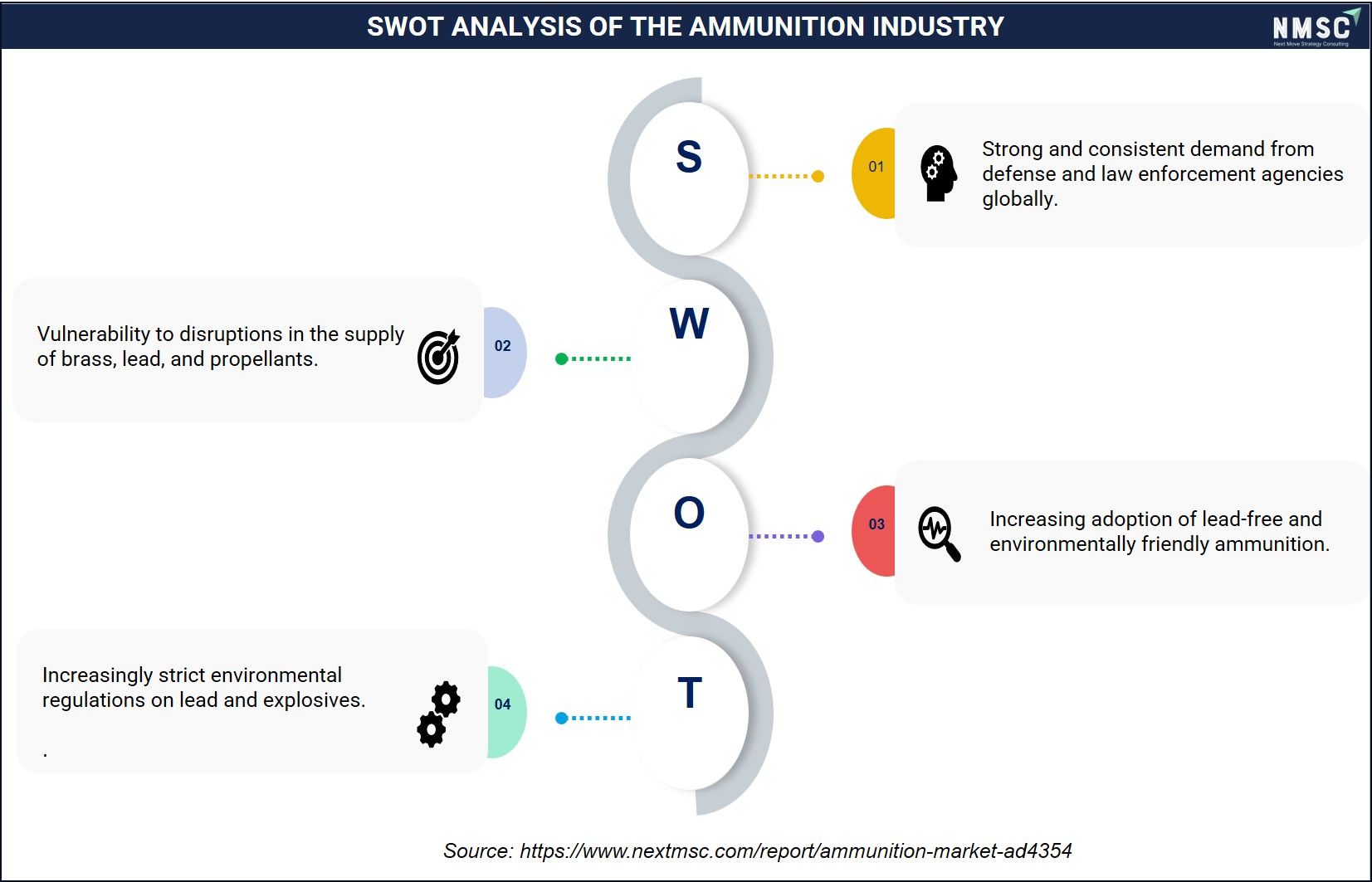
From the above image, we observed that the image presents a SWOT analysis of the ammunition industry, highlighting key internal and external factors affecting the market. It identifies a major weakness as vulnerability to disruptions in the supply of essential raw materials like brass, lead, and propellants. However, a significant opportunity lies in the increasing adoption of lead-free and environmentally friendly ammunition, driven by changing consumer preferences and regulatory pressures. Nevertheless, the industry faces a noticeable threat from increasingly strict environmental regulations on lead and explosives, which could reshape manufacturing practices and raise compliance costs across the global supply chain.
Competitive Landscape
Competitive Dynamics & M&A Landscape:
|
Key Takeaways |
|
The global ammunition market is shaped by a mix of established defense primes and specialized industrial manufacturers. The competitive landscape is dominated by large-scale defense contractors such as General Dynamics Corporation, Northrop Grumman, and BAE Systems, which leverage significant government contracts, advanced research capabilities, and vertically integrated supply chains. Alongside these industry giants, specialised and regional manufacturers like PPU (Prvi Partizan), CBC Global Ammunition, and Nammo AS play a critical role, focusing on specific calibers, commercial markets, and niche defense requirements. |
|
The leading incumbents maintain their edge through large-scale production, robust distribution networks, and deep-seated trust within military and law enforcement agencies. In contrast, emerging and specialist players like PPU, CBC, and Nammo differentiate themselves through agility, specialized manufacturing expertise, a focus on calibre variety, and the ability to serve both commercial sports shooting markets and specific defense contracts. Their strategies emphasize operational flexibility, adherence to high-quality and safety standards, and the capacity to scale production for diverse customer segments across the globe. |
|
Recent partnerships, mergers, and acquisitions in the sector indicate a strategic shift toward acquiring specialized production technologies, proprietary propellant formulations, diverse calibre portfolios, and regional market access. Rather than merely expanding raw production capacity, these strategic moves are designed to accelerate innovation in ballistics, enhance product differentiation (such as in smart ammunition or specialty rounds), and strengthen end-to-end supply chain security. This focus supports recurring revenue streams, builds customer loyalty in defense and commercial sectors, and ensures long-term competitiveness in the global ammunition market. |
Which Companies Dominate the Ammunition Industry and How do They Compete?
Based on our analysis, we found that the ammunition market is led by established defense manufacturers alongside specialized ammunition producers with strong technical expertise and global supply capabilities. Major industry participants such as General Dynamics Corporation, Northrop Grumman, BAE Systems, Nammo AS, CBC Global Ammunition, Poongsan Corporation, and Thales maintain strong market positions through advanced manufacturing capabilities, defense partnerships, regulatory compliance, and integrated supply networks supporting military and law-enforcement procurement. Our assessment indicates that these organizations are frequently selected for large-scale contracts where quality assurance, ballistic performance, and delivery reliability are decisive factors. Consequently, continuous investment in R&D, precision engineering, and production scalability reinforces their competitive positioning across global defense ecosystems.
Furthermore, specialised and regionally focused manufacturers also contribute to competitive dynamics by targeting niche segments and flexible production requirements. Companies such as Prvi Partizan and PPU strengthen their presence by offering diversified caliber portfolios, customized product lines, and cost-efficient manufacturing aligned with civilian, sporting, and institutional demand patterns. Our evaluation indicates that competition at this level is driven by product adaptability, export reach, and responsiveness to regional regulatory conditions. Furthermore, collaboration with distributors and defense suppliers enables these firms to enhance accessibility and maintain consistent order fulfilment. Overall, differentiation across the ammunition market increasingly depends on technological capability, supply chain resilience, compliance standards, and the ability to balance high-volume production with specialized customer requirements.
Market Dominated by Ammunition Giants and Specialists
Our research shows that the ammunition market is shaped by established global defense leaders alongside specialised ammunition producers with strong regional and export capabilities. Major players such as General Dynamics Corporation, Northrop Grumman, BAE Systems, Thales, and Nammo AS dominate the market through advanced manufacturing infrastructure, integrated defense systems expertise, and long-term government contracts. These companies set industry benchmarks for ballistic precision, regulatory compliance, supply chain security, and technological innovation, particularly in military-grade and precision-guided ammunition segments.
At the same time, specialised manufacturers, including CBC Global Ammunition, Poongsan Corporation, and PPU, strengthen competitive dynamics by offering diversified caliber portfolios, cost-efficient production, and strong export distribution networks. Their agility in addressing civilian, sporting, and institutional requirements enables them to capture niche and regional demand. Together, global defense primes and specialized producers accelerate market expansion by combining production reliability, compliance excellence, and continuous product advancement, reinforcing long-term stability and growth across the ammunition industry.
Innovation and Adaptability Drive Market Success
Our assessment of product development programs and export deployments indicates that innovation remains a critical driver of competitive advantage in the ammunition market. Leading manufacturers are enhancing their portfolios through precision-guided munitions, improved ballistic performance, lead-free and environmentally compliant materials, and smart ammunition technologies that integrate tracking and targeting capabilities. Moreover, investments in automated production lines, advanced testing infrastructure, and digital quality control systems enable companies to adapt efficiently to evolving military standards and regulatory requirements. Our evaluation from defense agencies and distributors suggests that firms prioritizing modular design, scalable manufacturing, and resilient supply chains are better positioned to expand across institutional and civilian segments. These advancements reflect deep technical expertise and operational agility, allowing suppliers to respond effectively to shifting security dynamics and sustain long-term contractual relationships.
Market Players to Opt for Merger & Acquisition Strategies to Expand their Presence
Our research indicates that mergers and acquisitions are a strategic growth pathway in the ammunition market, as companies seek accelerated access to advanced technologies, specialized manufacturing capabilities, and expanded geographic reach. Furthermore, acquisitions are increasingly aimed at strengthening vertical integration, securing raw material supply, and enhancing production capacity to meet rising defense and law enforcement demand. Rather than focusing solely on scale, transactions are structured to improve operational efficiency, consolidate R&D expertise, and optimize distribution networks across key regions such as North America, Europe, and Asia-Pacific. These strategic initiatives help reduce supply chain vulnerabilities, streamline compliance management, and improve long-term contract competitiveness. As a result, consolidation activities reinforce global positioning and support sustained growth in an increasingly regulated and security-driven market environment.
List of Key Ammunition Companies
-
General Dynamics Corporation
-
Northrop Grumman
-
BAE Systems
-
PPU
-
CBC Global Ammunition
-
Nammo AS
-
poongsan corporation
-
Thales
-
Fiocchi Munizioni
-
ARSENAL
-
Hanwha Group
-
FN Browning Group
-
Hornady
-
MESKO
-
NOSLER INC.
-
Olin Corporation
-
Denel PMP
-
RWS GmbH
What Are the Latest Key Industry Developments?
Based on our primary research and continuous monitoring of procurement patterns, defense modernization initiatives, and commercial shooting demand, we observed that companies including General Dynamics Corporation, Northrop Grumman, BAE Systems, Prvi Partizan (PPU), CBC Global Ammunition, Nammo AS, Poongsan Corporation, Thales, Fiocchi Munizioni, Arsenal AD, Rheinmetall AG, Hanwha Group, FN Browning Group, Hornady, MESKO SA, Nosler Inc., Elbit Systems Ltd., Olin Corporation, Denel PMP, and RWS GmbH are advancing the global ammunition market through capability-driven innovation and structured expansion strategies. Our engagement with procurement specialists, defense planners, and commercial distributors indicates sustained investment in precision-engineered small, medium, and large-caliber ammunition, enhanced propellant formulations, and manufacturing optimization designed to meet evolving operational, training, and sporting requirements.
Moreover, we found that strategic supply agreements, regulatory-aligned export and compliance initiatives, and distribution expansion across defense procurement networks, law-enforcement channels, and civilian retail ecosystems are improving product accessibility and reliability of supply. Evaluation of program disclosures and technical training initiatives further shows emphasis on performance validation, safety certification, and user education to reinforce adoption confidence. These coordinated efforts broaden product availability, strengthen institutional relationships, and support measured global adoption of ammunition solutions across military, security, and sporting environments.
What Are the Key Factors Influencing Investment Analysis & Opportunities in the Ammunition Market?
Investment analysis in the ammunition market is increasingly shaped by capability-driven, contract-oriented, and scalable production models rather than standalone product output. Based on our assessments of recent defense procurement cycles and industry collaborations, investors consistently favour companies with predictable revenue visibility derived from long-term government contracts, institutional supply agreements, and strategic export partnerships. Manufacturers demonstrating advanced engineering capabilities, vertically integrated production, and seamless coordination with logistics, compliance, and certification systems tend to achieve stronger valuations.
Moreover, our interviews with institutional investors and defense-sector analysts indicate that scalability across manufacturing, quality assurance, and supply chain resilience is a critical determinant of long-term investment appeal. Investment interest is also growing in technologies enabling production automation, traceability, and real-time inventory monitoring, as these address efficiency gaps and operational fragmentation. Strategic investments increasingly outweigh purely financial funding, with defense contractors and industrial partners seeking technological access and market positioning. From our observations, we found that the most attractive opportunities lie with ammunition companies combining performance innovation, regulatory adherence, and governance transparency while maintaining adaptable capacity aligned with evolving security requirements and procurement trends.
Key Benefits for Stakeholders:
Next Move Strategy Consulting (NMSC) provides a comprehensive assessment of the ammunition market trends, tracking trends from 2020 to 2025 and delivering forward-looking forecasts through 2035. The analysis evaluates the market across global, regional, and country levels, combining quantitative projections with qualitative insights on defense modernization, civilian demand patterns, regulatory frameworks, technological advancements, and investment flows. Furthermore, the study examines procurement cycles, supply chain resilience, and competitive positioning to provide a holistic industry perspective. This research is designed to support strategic decision-making by offering clear visibility into how evolving security priorities, compliance standards, and innovation trends are shaping production strategies and long-term growth opportunities across the ammunition ecosystem.
The ammunition market delivers measurable value to a wide range of stakeholders. Investors benefit from revenue stability supported by long-term government contracts, institutional procurement agreements, and export partnerships. Moreover, manufacturers and defense contractors gain operational efficiencies through production automation, quality assurance systems, and vertically integrated supply chains. Law enforcement agencies and defense institutions secure reliable access to certified, high-performance ammunition aligned with strategic readiness objectives. Technology providers and industrial partners obtain sustained engagement opportunities through modernization programs, advanced materials integration, and smart manufacturing solutions. By enabling scalable production capacity, regulatory compliance, and performance innovation, the ammunition market supports operational resilience, strategic preparedness, and sustainable industry expansion.
|
Parameters |
Details |
|
Customization Scope |
Free customization (equivalent to up to 80 analyst-working hours) after purchase. Addition or alteration to country, regional & segment scope. |
|
Pricing and Purchase Options |
Avail customized purchase options to meet your exact research needs. |
|
Approach |
In-depth primary and secondary research; proprietary databases; rigorous quality control and validation measures. |
|
Analytical Tools |
Porter's Five Forces, SWOT, value chain, and Harvey ball analysis to assess competitive intensity, stakeholder roles, and relative impact of key factors. |
Ammunition Market Market Key Segments
By Product Category
-
Small Arms Ammunition
-
Rimfire Cartridges
-
Centerfire Pistol Cartridges
-
Centerfire Rifle Cartridges
-
Heavy Machine Gun Cartridges
-
Shotgun Shells
-
-
Medium Caliber Ammunition
-
Automatic Cannon Rounds
-
Grenade Launcher Rounds
-
-
Large Caliber Ammunition
-
Tank Rounds
-
Naval Gun Rounds
-
-
Artillery Ammunition
-
Howitzer Shells
-
Field Gun Shells
-
-
Mortar Ammunition
-
Rocket Ammunition
-
Unguided Artillery Rockets
-
Shoulder-Fired Rockets
-
-
Grenade Ammunition
-
Hand Grenades
-
Rifle-Launched Grenades
-
-
Other Ammunition
By Technology Generation
-
Unguided Ammunition
-
Programmable Ammunition
-
Network-Enabled Ammunition
-
Precision Guided Ammunition
By Functional Type
-
Ball
-
Armor Piercing (AP)
-
High Explosive (HE)
-
High Explosive Anti-Tank (HEAT/HEAT-FS)
-
Incendiary
-
Tracer
-
Smoke
-
Illumination
-
Training (Inert)
-
Less Lethal
By Platform
-
Land Based
-
Infantry Weapons
-
Vehicle-Mounted
-
Towed Artillery
-
-
Naval
-
Airborne
By Material Composition
-
Brass
-
Steel
-
Aluminum
-
Polymer
By Propellant Type
-
Smokeless Powder
-
Black Powder
-
Rocket Propellant
By Packaging Type
-
Bulk Military Packaging
-
Retail Commercial Packaging
-
Linked Belted Ammunition
By End User
-
Military
-
Army
-
Navy
-
Air Force
-
Paramilitary
-
-
Law Enforcement
-
Civilian
-
Hunting
-
Sport Shooting
-
Personal Defense
-
Geographical Breakdown
-
North America: U.S., Canada, and Mexico.
-
Europe: UK, Germany, France, Italy, Spain, Sweden, Denmark, Finland, the Netherlands, and the Rest of Europe.
-
Asia Pacific: China, India, Japan, South Korea, Taiwan, Indonesia, Vietnam, Australia, Philippines, Malaysia and the rest of APAC.
-
Middle East & Africa (MEA): Saudi Arabia, UAE, Egypt, Israel, Turkey, Nigeria, South Africa, and the rest of MEA.
-
Latin America: Brazil, Argentina, Chile, Colombia, and the rest of LATAM.
Conclusion & Recommendations
Our report equips stakeholders, industry participants, investors, and advisors with actionable insights to navigate the evolving ammunition market.
By integrating data-driven assessments with structured strategic frameworks, Next Move Strategy Consulting (NMSC) positions this study as a practical decision-support resource for identifying high-potential opportunities and mitigating operational risk. Moreover, the ammunition market is expected to maintain steady expansion, supported by defense modernization programs, geopolitical uncertainty, and rising demand from law enforcement and civilian segments. Organizations emphasizing advanced manufacturing practices, rigorous quality assurance, regulatory alignment, and resilient sourcing networks are better positioned to strengthen credibility and sustain procurement relationships across institutional and commercial channels.
Executives and investors unlock value by prioritizing high-growth avenues such as precision ammunition development, materials innovation, production automation, and expansion into compliant export markets. Furthermore, sustained investment in R&D, testing infrastructure, and collaborative defense partnerships is essential for differentiation and technological leadership. Market opportunities across North America, Europe, and Asia-Pacific offer access to diversified demand pools driven by modernization initiatives and training requirements. However, maintaining consistent product reliability, transparent certification processes, and adherence to regulatory frameworks remains critical to reinforcing trust among buyers and authorities. When aligned with operational goals and evolving security priorities, strategic engagement in the ammunition market delivers resilience, competitive positioning, and long-term value creation.


About the Author
 Tushmi Dutta
— Tushmi Dutta is a focused researcher specializing in detailed analysis and insight-driven research across diverse business landscapes. She supports strategic initiatives through structured data interpretation, thorough validation, and clear communication of findings that aid informed decision-making. With a strong interest in writing, she enjoys presenting research insights in an engaging and accessible manner. Beyond work, she enjoys traveling, reading, painting, and continuously learning new skills that contribute to her creative and professional growth.
Tushmi Dutta
— Tushmi Dutta is a focused researcher specializing in detailed analysis and insight-driven research across diverse business landscapes. She supports strategic initiatives through structured data interpretation, thorough validation, and clear communication of findings that aid informed decision-making. With a strong interest in writing, she enjoys presenting research insights in an engaging and accessible manner. Beyond work, she enjoys traveling, reading, painting, and continuously learning new skills that contribute to her creative and professional growth.
About the Reviewer
 Supradip Baul
— Supradip Baul is an accomplished business consultant and strategist with over a decade of rich experience in market intelligence, strategy, technology, and business transformation. His work has included rigorous qualitative and quantitative analysis across multiple industries, helping clients shape investment decisions and long-term roadmaps. Earlier in his career, he was associated with Gartner, where he contributed to industry-leading reports and market share analyses. He has worked with leading global companies and holds an MBA with a dual specialization in Marketing and Finance.
Supradip Baul
— Supradip Baul is an accomplished business consultant and strategist with over a decade of rich experience in market intelligence, strategy, technology, and business transformation. His work has included rigorous qualitative and quantitative analysis across multiple industries, helping clients shape investment decisions and long-term roadmaps. Earlier in his career, he was associated with Gartner, where he contributed to industry-leading reports and market share analyses. He has worked with leading global companies and holds an MBA with a dual specialization in Marketing and Finance.
At Next Move Strategy Consulting, we understand that insightful market research is the cornerstone of successful business decisions. That's why we employ a robust and multifaceted approach, combining various methodologies to deliver the most accurate and actionable data for our clients.

Research Landscape
We navigate the world of research with two primary approaches:
Qualitative Approach
Our qualitative research methodologies involve immersive techniques such as in-depth interviews, focus groups, and observational studies. By engaging directly with individuals and stakeholders, we uncover valuable insights that quantitative data alone may overlook.

Quantitative Research
In tandem with qualitative methodologies, NMSC leverages the power of Quantitative Research to provide a robust foundation of numerical insights. Through systematic data collection and analysis, we quantify patterns, preferences, and market trends, offering a comprehensive view of the business landscape.
Our quantitative research approach employs diverse tools, including surveys, experiments, and statistical modelling. These methodologies enable us to gather data from a large and representative sample, ensuring the statistical significance of our findings. By employing structured questionnaires and standardized data collection methods, we guarantee the reliability and validity of the information we present to our clients.
Quantitative research is particularly effective in measuring the prevalence of trends, assessing market size, and gauging the impact of various factors on consumer behavior. The numerical precision attained through this approach equips our clients with actionable insights, facilitating data-driven decision-making and strategy formulation.


Our Specialized Toolbox for Industry-Specific Market Research
We deploy a specialized arsenal of techniques tailored to meet your unique requirements. Here's a glimpse into our comprehensive toolbox:

Information Procurement
The stage entails acquiring market data or relevant information through various sources and methodologies.


Market Research Approach
We utilize both top-down and bottom-up approaches in market research analysis to achieve a comprehensive understanding of the market dynamics, leveraging the broad perspective of industry trends and macroeconomic factors alongside detailed insights from specific segments and individual companies.

Porters Five Forces Analysis
We conduct Porter's Five Forces analysis to evaluate the competitive landscape of an industry, providing us with insights into factors that affect profitability and strategic positioning.

SWOT Analysis

Forecasting
We utilize a forecasting model to predict future consumption by considering parameters like population, economics, regulations, market competition, drivers, constraints, technology, and pricing. We also employ statistical techniques such as multilinear regression, exponential smoothing, moving average, ARIMA, and Monte Carlo simulations for accurate predictions. In econometric forecasting, we analyzed short-term and long-term event impacts, attributing values based on regulatory frameworks, economic factors, and market events.





 Speak to Our Analyst