Inflatable Military Decoy Market By Platform Simulated [{Land Platform Decoys (Armored Vehicle Decoys, and Others), Air Platform Decoys (Fixed-Wing, Rotary-Wing, and Others), Naval Platform Decoys, Missile System Decoys}, By Signature Type (Visual, Thermal Infrared, Radar, Multi-Signature), By Mobility (Static, Relocatable, Self-Propelled), By Operation Mode (Passive, Active, Hybrid), and By End User (Army, Air Force, Navy, Joint Forces) – Global Analysis & Forecast, 2025–2035
Industry: Aerospace & Defense | Publishing Date: June 5, 2026 | Last Updated: September 30, 2026 | No of Pages: N/A | No. of Tables: N/A | No. of Figures: N/A | Format: PDF | Report Code: AD4607
Industry Outlook
The global Inflatable Military Decoy Market size was valued at USD 579.8 Million in 2025 and is expected to be valued at USD 628.4 Million by the end of 2026. The industry is projected to grow, hitting USD 1471.9 Million by 2035, with a CAGR of 8.87% between 2026 and 2035.
Inflatable Military Decoy Market Size & Forecast
|
Parameters |
Details |
|
Market Size in 2026 |
USD 628.4 Million |
|
Revenue Forecast in 2035 |
USD 1471.9 Million |
|
Growth Rate |
CAGR of 8.87% from 2026 to 2035 |
|
Analysis Period |
2025–2035 |
|
Base Year Considered |
2025 |
|
Forecast Period |
2026–2035 |
|
Market Size Estimation |
Million (USD) |
|
Companies Profiled |
10 |
|
Countries Covered |
33 |
|
Market Share |
Available for 10 companies |
Based on NMSC’s primary research, we observed that the global inflatable military decoy market is witnessing steady growth, driven by increasing defense modernization programs, rising emphasis on electronic warfare and battlefield deception, and the need for cost-effective force protection solutions. Inflatable decoys replicating tanks, aircraft, missile systems, and radar units are increasingly deployed to mislead enemy surveillance systems, including satellites, drones, and radar. In particular, our in-depth interactions with defense procurement officials and military strategists indicate that advancements in material engineering, thermal signature simulation, and radar reflectivity are significantly enhancing decoy realism and operational effectiveness. As a result, hardware currently accounts for the largest share, while integrated simulation technologies and support services are emerging as key enablers.
Furthermore, through extensive assessment of defense procurement patterns across North America, Europe, and Asia-Pacific, we identified that adoption is shaped by evolving threat landscapes, asymmetric warfare strategies, and budget optimization priorities. For instance, North America leads in technological integration and deployment sophistication, while Europe emphasizes NATO-aligned defense strategies and multi-domain deception capabilities. Meanwhile, Asia-Pacific is witnessing rising adoption driven by increasing geopolitical tensions and military modernization initiatives. Key market participants, including INFLATECH s.r.o. compete through advanced signature replication, rapid deployment capabilities, and customizable decoy solutions. Additionally, recent developments in multi-spectral decoys and portable deployment systems, along with increasing focus on low-cost tactical deception, are strengthening adoption and enhancing operational flexibility for modern armed forces.
What Are the Key Trends in the Inflatable Military Decoy Market?
How Is Multi-Spectral Signature Emulation Enhancing Battlefield Deception Effectiveness?
Based on our analysis, we found that multi-spectral signature emulation is a defining trend strengthening the effectiveness of inflatable battlefield decoys in modern warfare. As part of our primary research, we observed that defense procurement officials prioritize decoys that replicate not only visual appearance but also thermal and radar signatures with high precision. In particular, the integration of advanced heating elements and radar-reflective coatings enables decoys to accurately mimic the infrared and radar cross-section profiles of high-value assets such as the M1 Abrams and HIMARS. Moreover, these capabilities ensure consistent visibility across multi-layered surveillance systems, including drones and satellite-based sensors. As a result, decoys deliver higher deception credibility and effectively divert enemy targeting systems. Consequently, the adoption of multi-spectral decoys is strengthening battlefield survivability and reinforcing their role as essential assets within advanced electronic warfare strategies.
How Are Autonomous Self-Propelled Decoys Transforming Tactical Deception Strategies?
Building on advancements in realism, autonomous self-propelled decoys are transforming tactical deception strategies by introducing controlled mobility into deployment operations. Based on our market evaluation, we observed that the integration of low-cost electric propulsion systems enables inflatable decoys to simulate realistic movement patterns, thereby enhancing battlefield authenticity. Furthermore, these decoys reposition autonomously or through remote control, replicating real-time maneuvers and operational behavior. As a result, enemy surveillance systems, particularly drone-based reconnaissance, face increased difficulty in distinguishing between real assets and decoys. In addition, dynamic movement disrupts enemy targeting cycles and leads to inefficient use of precision-guided munitions. This shift from static to mobile decoy systems is improving deployment flexibility and operational effectiveness. Consequently, autonomous decoys are strengthening deception strategies and enabling more agile and responsive battlefield operations.
How Is AI-Driven Rapid Deployment Strengthening Adaptive Deception Capabilities?
In addition to mobility and signature realism, AI-driven rapid deployment is strengthening the responsiveness of military deception systems. Based on our market evaluation, we observed that advanced decoys are equipped with sensor-enabled AI systems that detect enemy reconnaissance activities in real time. Subsequently, these systems activate signature-enhancing mechanisms, including internal heat pads, to increase visibility across infrared and targeting systems at critical moments. Moreover, this capability allows decoys to respond dynamically to evolving battlefield conditions, improving timing and effectiveness. As a result, decoys function as active components within deception strategies rather than passive installations. In parallel, automated activation reduces response delays and enhances coordination with broader defense systems. Consequently, AI-enabled decoys are advancing operational efficiency and strengthening their role in modern electronic and hybrid warfare environments.
Strategic Framework Impacting the Inflatable Military Decoy Industry
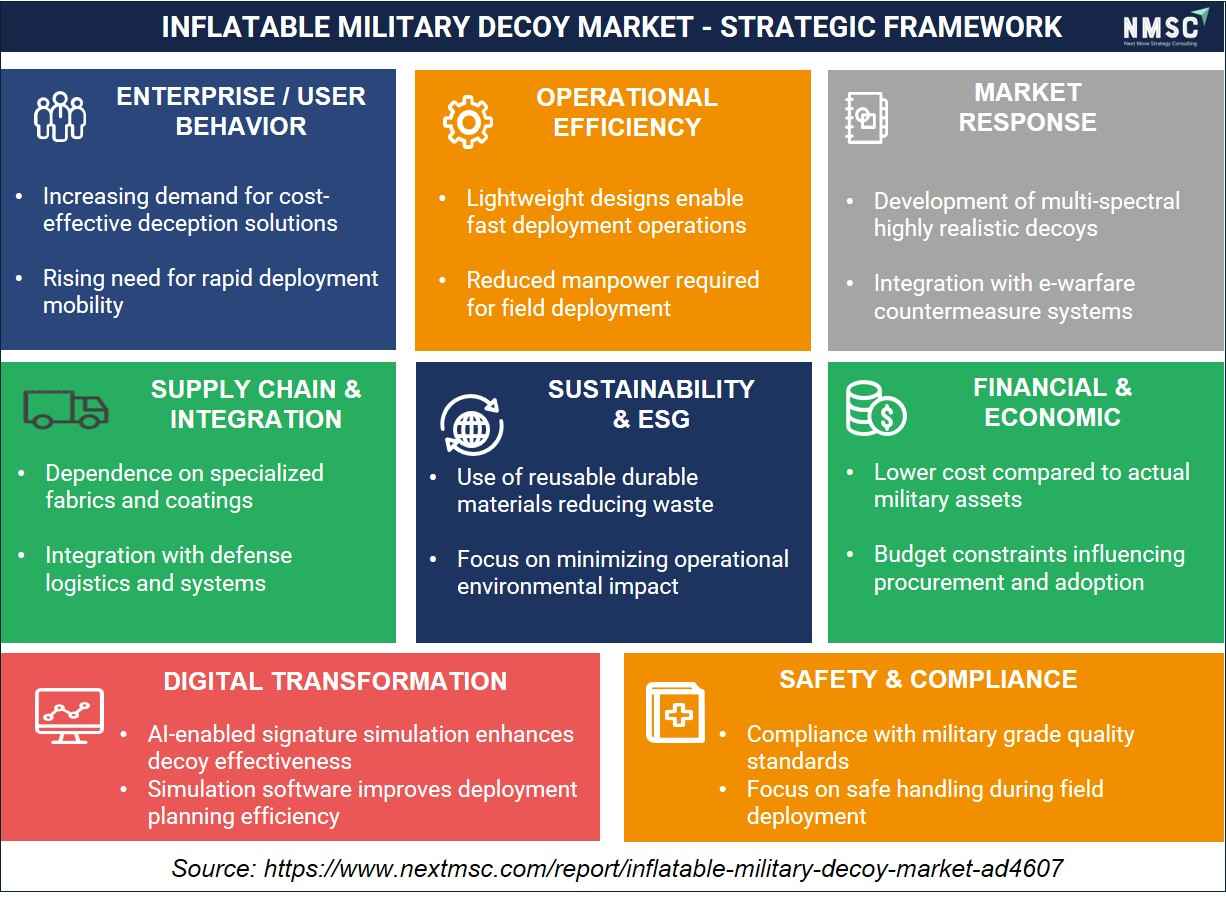
Based on our industry evaluation, we noticed that the radar signature decoys ecosystem is shaped by operational efficiency, cost optimization, and evolving defense requirements. Increasing demand for rapid deployment and lightweight systems drives adoption across military operations. Moreover, advancements in digital technologies, including AI-based signature simulation, enhance decoy effectiveness. At the same time, integration with defense logistics and supply chains supports scalable deployment. Financial constraints influence procurement decisions, while sustainability considerations encourage reusable materials. As compliance with military standards remains essential, the market continues evolving through innovation, efficiency, and strategic alignment with modern warfare needs.
What Are the Key Market Drivers, Breakthroughs, and Investment Opportunities That Will Shape the Inflatable Military Decoy Market in the Next Decade?
Growth Catalyst & Risk Assessment Matrix
|
Drivers / Trends / Restraints |
(+/–) % Impact on CAGR Forecast |
Geographic Relevance |
Impact Timeline |
|
Proliferation of low-cost loitering munitions driving demand for cost-efficient decoys |
+1.4% |
Europe (Ukraine conflict zone), North America, Middle East, Asia-Pacific |
Short to medium term (1–5 years) |
|
Shift toward large-scale conventional warfare and deception-at-scale strategies |
+1.2% |
North America, Europe (NATO countries), China, India |
Medium to long term (3–8 years) |
|
Advancements in multi-spectral signature emulation enhancing decoy effectiveness |
+1.0% |
North America, Europe, China, Israel |
Medium term (2–6 years) |
|
Increasing adoption of portable and rapid-deployment decoy systems by frontline units |
+0.8% |
Asia-Pacific, Europe, Middle East |
Short to medium term (1–4 years) |
|
Integration of AI-enabled responsive and adaptive decoy systems |
+0.7% |
North America, China, Israel, Europe |
Medium to long term (3–7 years) |
Based on our evaluation of global defense modernization and battlefield deception strategies, we noticed that the inflatable military decoy market share is experiencing steady growth, driven primarily by the increasing use of loitering munitions, rising emphasis on cost-efficient force protection, and the shift toward large-scale conventional warfare. Our interactions with defense procurement teams and military planners indicate that inflatable decoys are increasingly deployed as a strategic solution to mislead enemy surveillance and preserve high-value assets. Advancements in multi-spectral signature emulation, including thermal and radar simulation of platforms such as the M1 Abrams and HIMARS, have significantly enhanced decoy realism and operational effectiveness. However, our assessment identified that advancements in hyperspectral imaging and high-resolution surveillance systems are increasing the technical requirements for maintaining deception credibility. At the same time, the emergence of modular decoy systems and AI-enabled adaptive deployment is creating new growth opportunities by enabling scalable, flexible, and cost-efficient deception strategies across modern combat environments.
Growth Drivers:
How Is the Proliferation of Low-Cost Loitering Munitions Driving Inflatable Military Decoys Market Demand?
In our analysis, the rapid proliferation of low-cost loitering munitions is a primary driver accelerating demand for inflatable military decoys across modern combat environments. As part of our primary research, we observed that defense procurement officials are increasingly prioritising cost-effective countermeasures against suicide drones, which are widely deployed in asymmetric and conventional warfare scenarios. In particular, inflatable decoys serve as economically efficient targets, compelling adversaries to deploy high-cost precision-guided munitions against assets valued at a fraction of the cost. In June 2025, the Ministry of Defence concluded 13 emergency procurement contracts worth approximately USD 231 million, including loitering munitions with VTOL systems, to enhance operational readiness and counter-terrorism capability. This reflects accelerated adoption of low-cost precision strike systems across tactical deployments. Moreover, this cost asymmetry significantly disrupts enemy resource allocation and reduces the operational efficiency of drone-based strike systems. As a result, decoys are becoming integral to layered defense strategies aimed at preserving high-value military equipment. Consequently, the growing reliance on loitering munitions is directly strengthening the adoption of inflatable decoys as scalable and cost-efficient battlefield solutions.
How Is the Shift Toward Large-Scale Conventional Warfare Strengthening Deception Strategies?
In addition to evolving aerial threats, the global shift toward large-scale conventional warfare is reinforcing the strategic importance of inflatable military decoys. Based on our evaluation, we identified that increasing geopolitical tensions are driving military focus toward peer-to-peer conflict scenarios, where battlefield visibility and intelligence dominance are critical. Furthermore, armed forces are actively adopting deception at scale strategies, deploying extensive decoy formations to simulate large troop movements and asset concentrations. This approach enables the creation of realistic ghost regiments that mislead satellite surveillance and aerial reconnaissance systems. According to the North Atlantic Treaty Organization (NATO) in 2025, NATO European Allies and Canada increased their defence spending by approximately 20% compared with the previous year, reaching over USD 574 billion. Furthermore, NATO reported that member nations continued progressing toward the Alliance’s defence spending commitments, reflecting accelerated force modernization, stockpile expansion, and enhanced readiness for large-scale conventional warfare. As a result, adversaries face greater uncertainty in target identification and resource deployment. In parallel, large-scale decoy deployment enhances operational planning flexibility and strengthens defensive postures. Consequently, the transition toward high-intensity, conventional warfare is significantly amplifying the role of inflatable decoys in modern military strategy.
Growth Inhibitor:
How Are Advancements in Hyperspectral Imaging Constraining Decoy Effectiveness?
Based on our market evaluation, we found that advancements in hyperspectral imaging technologies are emerging as a significant restraint impacting the effectiveness of inflatable military decoy systems. These next-generation satellite and UAV sensors analyze material composition through high-resolution spectral data, enabling clear differentiation between synthetic materials such as PVC or fabric and actual armored structures. As a result, conventional inflatable decoys face reduced deception credibility, particularly in high-surveillance environments. Furthermore, this limitation increases performance requirements, necessitating more advanced materials and complex signature replication techniques, which raise development costs and deployment complexity. According to the National Aeronautics and Space Administration (NASA) 2025 Earth Science instrument archive, the GRC Hyperspectral Imager (HSI) captures imagery with 2.5 nm spectral resolution across the 400–900 nm range while achieving approximately 1 m spatial resolution, demonstrating that modern hyperspectral systems are increasingly capable of detecting fine material reflectance differences at tactically relevant scales. In addition, the gap between detection capabilities and decoy realism continues to widen across technologically advanced defense ecosystems. Consequently, the effectiveness of standard inflatable decoy systems is increasingly constrained, limiting their reliability in modern, sensor-intensive combat environments.
Growth Opportunity:
How Are Modular “Plug-and-Play” Decoy Kits Unlocking New Inflatable Military Decoy Market Opportunities?
Modular “plug-and-play” decoy kits are creating significant growth opportunities by enhancing flexibility and cost efficiency. Based on our market analysis, we found that defense forces are increasingly adopting modular systems that allow a single inflatable base structure to be reconfigured into multiple asset types using interchangeable overlays. According to the United States Department of Defense, the FY2025 defense budget includes USD 61.2 billion for airpower modernization, USD 48.1 billion for sea power, and USD 13.0 billion for land power, supporting procurement of survivability and deception-enabling battlefield technologies. Moreover, this modular approach reduces procurement costs while maximizing asset utilization across different mission scenarios. In addition, interchangeable configurations simplify logistics and enable faster deployment across diverse combat environments. This innovation is supporting scalable deception strategies without increasing operational complexity. Consequently, modular decoy systems are strengthening market expansion by delivering adaptable, efficient, and mission-ready solutions for modern defense forces.
Price Point Analysis of the Inflatable Military Decoy Industry
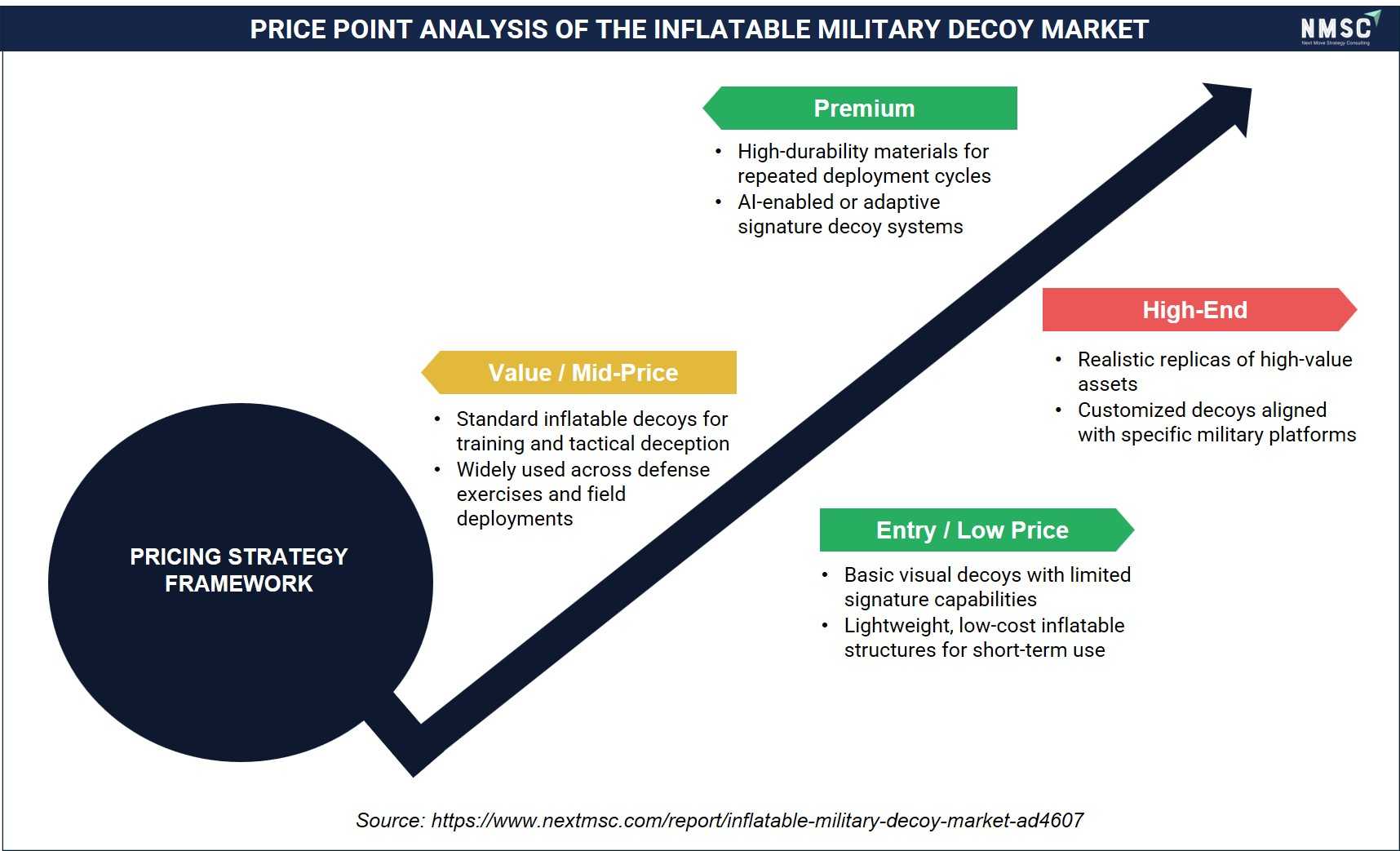
From our analysis of pricing dynamics, we identified that the inflatable military decoy market follows a value-driven structure based on realism, durability, and technological sophistication. Entry-level decoys offer basic visual deception at low cost, while mid-range solutions balance affordability with functional performance. Furthermore, high-end and premium segments incorporate advanced materials and multi-spectral capabilities, enhancing operational effectiveness. As a result, pricing increases with system complexity and deployment longevity. Defense forces prioritize cost-effective solutions while continuing to invest in advanced decoys to counter evolving threats.
How Is the Inflatable Military Decoy Market Segmented in This Report, And What Are the Key Insights from the Segmentation Analysis?
Market Highlights & Strategic Insights – Inflatable Military Decoy Market:
|
Segments |
Key Takeaways |
|
Platform Simulated |
Land platform decoys dominate the market, driven by extensive use of armored vehicles, artillery, and air defense system replicas in combat deception strategies. Air platform decoys are gaining traction due to increasing focus on aircraft survivability and airbase protection, while naval and missile decoys support specialized defense applications. |
|
Signature Type |
Multi-signature decoys lead adoption as modern warfare demands realistic replication across visual, thermal, and radar spectrums. Radar and thermal decoys remain critical for countering advanced surveillance systems, while visual decoys are widely used for basic battlefield deception. |
|
Mobility |
Static decoys account for a significant share due to ease of deployment and cost efficiency. However, relocatable and self-propelled decoys are gaining importance as militaries prioritize dynamic and adaptive deception capabilities in modern combat environments. |
|
Operation Mode |
Passive decoys dominate the market due to simplicity and lower cost, while active and hybrid decoys are increasingly adopted for advanced threat environments requiring enhanced signal emission and realism. |
|
Application |
Combat deception represents the largest application, driven by the need for target diversion, force misrepresentation, and asset protection. Training and simulation applications are expanding steadily as armed forces invest in realistic battlefield preparation and operational readiness programs. |
By Platform Simulated Insights
How Does Platform Simulated Shape the Inflatable Military Decoy Market Trends?
Based on our analysis of defense deployment strategies, we found that the market is segmented into land platform decoys, air platform decoys, naval platform decoys, missile system decoys, and others. From our evaluation of operational use cases, we found that these segments collectively support multi-domain deception across ground, air, and maritime environments.
From our assessment of deployment patterns, we found that land platform decoys account for the largest share, driven by extensive use of armored vehicle, artillery, and air defense replicas in battlefield deception and force protection strategies. Moreover, our interactions with defense analysts indicates that air platform decoys are gaining traction as air forces increasingly focus on survivability, dispersal tactics, and protection of high-value aircraft and infrastructure. In addition, naval and missile decoys support specialized but critical applications in strategic deterrence, particularly in high-risk and contested zones. As threat environments evolve, diversified platform deployment enhances operational flexibility, improves deception depth, and strengthens overall mission effectiveness.

By Signature Type Insights
How Does Signature Type Influence the Inflatable Military Decoy Market Growth?
Based on our evaluation of modern warfare requirements, we found that the market is segmented into visual, thermal infrared, radar, and multi-signature decoys. From our analysis, we found that these signature types define the effectiveness of decoys in replicating real military assets across different detection systems.
From our assessment of technology adoption, we found that multi-signature decoys account for a significant share, as they replicate visual, thermal, and radar characteristics simultaneously, enabling higher realism against advanced multi-sensor surveillance systems. Furthermore, our interactions with defense procurement teams indicate that radar and thermal decoys remain critical in countering radar-guided missiles and infrared-based targeting systems, particularly in high-intensity conflict scenarios. At the same time, visual decoys continue to be widely deployed for cost-effective deception in low-intensity and tactical operations. Consequently, increasing sophistication of detection technologies is driving demand for layered signature replication, thereby enhancing decoy effectiveness and survivability across modern battlefields.

By Application Insights
How Does Application Shape the Inflatable Military Decoy Market Demand?
Based on our application-level assessment, we identified that the market is segmented into combat deception and training and simulation. From our evaluation of defense strategies, we found that these applications collectively address both operational battlefield needs and preparedness requirements.
From our assessment of usage trends, we found that combat deception accounts for the largest share, driven by increasing need for target diversion, force misrepresentation, and protection of high-value military assets in evolving warfare scenarios. Moreover, our interactions with military planners indicate that decoys play a crucial role in disrupting enemy intelligence, surveillance, and reconnaissance systems, thereby reducing vulnerability of real assets. In addition, training and simulation applications are expanding steadily as armed forces invest in realistic, scenario-based exercises to enhance readiness and operational efficiency. As a result, the dual focus on tactical advantage and preparedness continues to strengthen the strategic importance of decoy deployment across defense operations.
Regional Outlook:
Geographic Performance Snapshot:
|
Region |
Key Takeaways |
|
North America |
A key market driven by high defense spending and advanced surveillance capabilities. Growth is supported by increasing deployment of deception strategies to counter drone and satellite-based reconnaissance. Integration of multi-spectral and AI-enabled decoys strengthens operational effectiveness. |
|
Europe |
A significant market supported by rising geopolitical tensions and NATO-aligned defense strategies. Demand is driven by battlefield deception needs and modernization of land systems. Adoption of rapid-deployment decoys strengthens regional capabilities. |
|
Asia-Pacific |
A major growth region driven by military modernization and rising defense budgets. Increasing security concerns and focus on cost-efficient deception strategies accelerate adoption. Portable and scalable decoy systems support deployment across diverse environments. |
|
Latin America |
An emerging market supported by defense modernization and border security needs. Growth is driven by adoption of cost-effective solutions and increasing training activities. Lightweight decoy systems support steady demand. |
|
Middle East & Africa |
A strategically important market driven by regional conflicts and high defense expenditure. Demand is supported by need for asset protection and scalable deception strategies. Adoption across operational and training environments sustains growth. |
The inflatable military decoy market is geographically studied across North America, Europe, Asia Pacific, Latin America and Middle East & Africa and each region is further studied across countries.
Inflatable Military Decoy Market in North America
North America’s inflatable military decoy market operates within a highly advanced defense ecosystem where modernization priorities and surveillance dominance directly influence deployment strategies. Based on our regional evaluation, we assessed that the increasing intensity of drone and satellite-based reconnaissance drives consistent adoption of deception systems across operational environments. Notably, inputs from defense procurement officials and military strategists indicate that demand is shifting toward multi-spectral decoys capable of replicating thermal and radar signatures with high accuracy. This is further supported by sustained investments in electronic warfare and force protection programs, which reinforce the need for scalable and rapidly deployable solutions. Advancements in material engineering and signature simulation continue to enhance realism. As a result, decoys in this region are increasingly positioned as strategic assets within integrated battlefield deception frameworks rather than standalone support tools.
Inflatable Military Decoy Market in the United States
The United States anchors the inflatable military decoy market through strong technological leadership and continuous defense investment cycles. Our comprehensive industry evaluation indicate increasing focus on countering precision-guided munitions and high-resolution surveillance systems accelerates adoption of advanced deception solutions. In practice, engagements with defense procurement teams and military planners reveal that demand centers on high-fidelity signature replication and rapid deployment capabilities to safeguard high-value assets. Alongside this, integration of AI-enabled responsiveness improves adaptability during dynamic combat scenarios. Continued investment in next-generation warfare systems further supports development of modular and scalable decoy platforms. This reinforces the country’s role as a key innovation hub where deployment scale is matched by continuous technological refinement.
Inflatable Military Decoy Market in Canada
Canada’s inflatable military decoy market develops through a steady, efficiency-driven approach aligned with national defense priorities. From our analysis, we identified that expanding surveillance infrastructure and increased emphasis on asset protection support consistent demand for deployable deception systems. At the same time, discussions with military planners and defense authorities suggest a clear preference for lightweight, portable decoys suited for remote and geographically diverse environments. Ongoing investments in defense readiness programs strengthen adoption across both training and tactical scenarios. Additionally, emphasis on durability and lifecycle performance supports preference for low-maintenance systems. This positions Canada as a market where reliability and operational practicality shape deployment decisions more than rapid scale expansion.
Inflatable Military Decoy Market in Europe
Based on our comprehensive evaluation of regional defense coordination and deployment patterns, we observed that Europe’s inflatable military decoy market strengthens as counter-surveillance and multi-domain deception become embedded within defense strategies. Increasing geopolitical pressure continues to accelerate adoption across coordinated programs. Meanwhile, inputs from defense procurement officials and military strategists indicate that interoperability with joint operations and alignment with NATO frameworks influence procurement decisions. Differences across countries remain evident, with varying levels of urgency and capability focus shaping deployment intensity. Rather than uniform growth, the region evolves through structured alignment of defense priorities, creating a market defined by coordination, interoperability, and strategic integration.
Inflatable Military Decoy Market in the United Kingdom
The United Kingdom’s inflatable military decoy market advances through targeted defense readiness initiatives and evolving operational requirements. From our observations, we identified that increased exposure to aerial surveillance and precision-guided threats drives adoption of deception systems. At the same time, feedback from defense procurement teams and military planners highlights a growing preference for rapidly deployable, high-realism decoys that enhance tactical flexibility. Integration of simulation technologies further strengthens effectiveness across training and operational use cases. Alignment with allied defense operations supports consistent deployment patterns. The market continues to evolve through capability-focused investments that directly enhance responsiveness and operational agility.
Inflatable Military Decoy Market in Germany
Germany’s inflatable military decoy market reflects a structured and engineering-driven adoption model supported by performance-oriented procurement standards. Based on our industry evaluation, we assessed that emphasis on precision, durability, and system reliability strengthens adoption across defense applications. In parallel, insights from military planners and defense authorities indicate that decoy systems must perform effectively under advanced sensing environments. Integration with broader defense infrastructure enhances deployment consistency and long-term value. Germany’s industrial strength supports customization and high-quality system development. This results in a market where adoption is closely tied to engineering excellence and long-term operational performance rather than rapid deployment volume.
Inflatable Military Decoy Market in France
Based on our comprehensive evaluation of national defense programs and deployment strategies, we observed that France’s inflatable military decoy market expands due to increasing emphasis on coordinated operations and asset protection. Moreover, rising integration of deception systems within training and tactical scenarios strengthens adoption across defense units. At the same time, defense procurement officials and military strategists indicate that systems combining operational realism with ease of deployment are gaining stronger preference in procurement decisions. Additionally, ongoing modernization initiatives support integration of decoys within structured military frameworks. As deployment continues to align with coordinated defense planning, France demonstrates a balanced market where operational efficiency and strategic integration jointly shape adoption patterns.
Inflatable Military Decoy Market in Italy
In our primary research of defense modernization trends and operational requirements, we identified that Italy’s inflatable military decoy market develops through increasing demand for flexible and cost-efficient deception systems. Furthermore, expanding use of decoys in training and field operations supports consistent adoption across defense activities. Meanwhile, defense procurement teams and military planners emphasize that modular design and ease of deployment remain critical factors influencing system selection. In addition, infrastructure variability across regions encourages preference for lightweight and adaptable solutions. As a result, Italy’s market evolves through practicality-driven deployment, where operational adaptability directly determines procurement and usage patterns.
Inflatable Military Decoy Market in Spain
In our evaluation of defense preparedness and operational complexity, we noticed that Spain’s inflatable military decoy market is strengthening due to increasing reliance on surveillance countermeasures and tactical deception strategies. Moreover, advancements in reconnaissance technologies drive demand for effective and scalable decoy solutions. At the same time, defense analysts indicate that rapid deployment and cost efficiency are key considerations shaping procurement decisions. Additionally, growing defense exercises reinforce adoption across multiple operational scenarios. As procurement decisions continue to balance performance with budget discipline, Spain reflects a market where operational effectiveness and budget discipline remain closely aligned.
Inflatable Military Decoy Market in the Nordics
Based on our observation of regional defense capabilities and deployment practices, we noticed that the Nordics’ inflatable military decoy market develops through a strong emphasis on operational efficiency and system reliability. Moreover, high technological maturity and advanced surveillance environments increase the need for precise and durable deception systems. At the same time, defense procurement officials and military strategists indicate that long-term performance consistency and minimal maintenance requirements are key factors influencing procurement decisions. In addition, integration with digitally advanced defense frameworks supports adoption across coordinated operations. As these priorities continue to shape deployment strategies, the Nordic region reflects a quality-driven market where reliability and lifecycle performance define system selection.
Inflatable Military Decoy Market in Asia-Pacific
From our comprehensive evaluation of regional defense expansion and deployment strategies, we observed that Asia-Pacific’s inflatable military decoy market grows due to increasing security tensions and rapid military modernization across multiple countries. Furthermore, diverse operational environments require flexible and scalable deception systems suited for varied terrains. At the same time, military planners and defense authorities indicate that adaptability and cost-efficiency remain critical for supporting large-scale and mission-specific deployment needs. Meanwhile, differences in national priorities create varied adoption patterns across the region. As these dynamics continue to evolve, Asia-Pacific emerges as a market shaped by both volume-driven expansion and strategic deployment flexibility.
Inflatable Military Decoy Market in China
Based on our evaluation of defense manufacturing capabilities and deployment scale, we identified that China’s inflatable military decoy market expands through strong domestic production and large-scale modernization programs. Moreover, rapid growth in surveillance infrastructure strengthens demand for cost-efficient deception systems deployed at scale. At the same time, defense procurement teams and military planners emphasize that high-volume production and operational efficiency remain central to procurement decisions. In addition, integration with domestic defense ecosystems enhances system compatibility and deployment speed. As manufacturing strength continues to support scalability, China reflects a market where deployment volume and cost optimization drive sustained adoption.
Inflatable Military Decoy Market in Japan
Through our evaluation of defense performance standards and operational frameworks, we noticed that Japan’s inflatable military decoy market advances through a structured and reliability-focused approach. Furthermore, increasing sophistication in detection technologies drives demand for high-accuracy decoy systems capable of consistent performance. At the same time, defense procurement officials and military strategists indicate that system stability, durability, and seamless integration with existing infrastructure are critical selection criteria. In contrast to rapid expansion markets, deployment remains measured and performance-driven. As emphasis on precision continues to shape procurement decisions, Japan’s market evolves through disciplined adoption centered on reliability and long-term operational assurance.
Inflatable Military Decoy Market in India
In our assessment of defense modernization initiatives and deployment requirements, we observed that India’s inflatable military decoy market expands due to increasing emphasis on border security and surveillance management. Moreover, rising investment in defense infrastructure strengthens demand for cost-efficient deception systems across diverse and high-altitude terrains. At the same time, military planners and defense authorities indicate that portability and rapid deployment capabilities significantly enhance operational flexibility in remote environments. In addition, expanding training exercises and simulation-based preparedness further reinforce adoption across defense units. As operational demands continue to intensify, India’s market reflects a deployment-driven approach where tactical necessity and terrain adaptability directly influence procurement and usage patterns.
Inflatable Military Decoy Market in South Korea
From our assessment of defense readiness and technological integration, we identified that South Korea’s inflatable military decoy market advances through increasing reliance on surveillance countermeasures and rapid-response capabilities. Furthermore, growing use of advanced sensing systems drives demand for high-precision deception solutions. Meanwhile, defense procurement officials and military strategists emphasize that real-time adaptability and rapid deployment remain essential for maintaining operational effectiveness. In parallel, continued investments in modern warfare technologies strengthen procurement activity. As defense strategies prioritize speed and accuracy, South Korea’s market develops through capability-focused adoption where performance requirements directly shape deployment decisions.
Inflatable Military Decoy Market in Taiwan
Through our assessment of regional security dynamics and defense preparedness strategies, we evaluated that Taiwan’s inflatable military decoy market strengthens due to increasing focus on deterrence and asset protection. Moreover, rising emphasis on asymmetric warfare capabilities supports adoption of scalable and deployable deception systems. At the same time, defense procurement officials and military strategists indicate that rapid deployment and high realism are critical for maintaining operational effectiveness under advanced surveillance conditions. In addition, integration with broader defense planning enhances the strategic role of decoy systems. As security priorities continue to intensify, Taiwan’s market evolves through readiness-driven deployment aligned with defensive and strategic objectives.
Inflatable Military Decoy Market in Indonesia
In our comprehensive evaluation of defense development and operational requirements, we identified that Indonesia’s inflatable military decoy market expands due to increasing focus on maritime security and distributed surveillance coverage. Moreover, ongoing investments in defense infrastructure strengthen demand for flexible and easily deployable deception systems across dispersed operational zones. At the same time, military planners and defense authorities emphasize that affordability and ease of transport remain critical factors influencing procurement decisions. In addition, expanding training activities and preparedness programs support gradual adoption across defense units. As deployment continues to align with practical operational needs, Indonesia’s market reflects a utility-driven approach where accessibility and adaptability shape adoption patterns.
Inflatable Military Decoy Market in Australia
Through our primary research of defense capability expansion and strategic planning frameworks, we observed that Australia’s inflatable military decoy market advances due to increasing emphasis on deterrence and force protection. Furthermore, rising investment in surveillance and reconnaissance systems strengthens the need for effective deception capabilities across operational environments. At the same time, defense procurement officials and military strategists indicate that reliability, rapid deployment, and terrain adaptability are key considerations in procurement decisions. In addition, integration with advanced defense technologies enhances coordination across defense operations. As modernization efforts continue, Australia’s market develops through structured deployment strategies aligned with long-term defense planning objectives.
Inflatable Military Decoy Market in Latin America
Based on our comprehensive evaluation of regional defense modernization and procurement trends, we identified that Latin America’s inflatable military decoy market develops in response to growing demand for cost-efficient and deployable defense solutions. Moreover, increasing emphasis on training readiness and tactical simulation strengthens the use of decoy systems across defense activities. At the same time, defense procurement teams and military planners indicate that affordability and ease of deployment significantly influence system selection. In addition, budget constraints continue to shape targeted rather than large-scale adoption patterns. As defense institutions expand operational capabilities, the region reflects a selective deployment model where efficiency and cost-effectiveness guide procurement behaviour.
Inflatable Military Decoy Market in the Middle East & Africa
In our observation of regional defense dynamics and operational environments, we noticed that the Middle East & Africa inflatable military decoy market strengthens due to ongoing conflicts and heightened security threats. Furthermore, increasing investment in defense modernization supports the adoption of scalable deception systems across both combat and training scenarios. At the same time, military planners and defense authorities emphasize that rapid deployment and operational readiness remain critical priorities in procurement decisions. In addition, varying levels of infrastructure development create diverse adoption patterns across the region. As demand continues to be shaped by both immediate operational needs and long-term capability building, the market evolves through a combination of urgency-driven and strategy-led deployment approaches.
SWOT Analysis of the Inflatable Military Decoy Industry
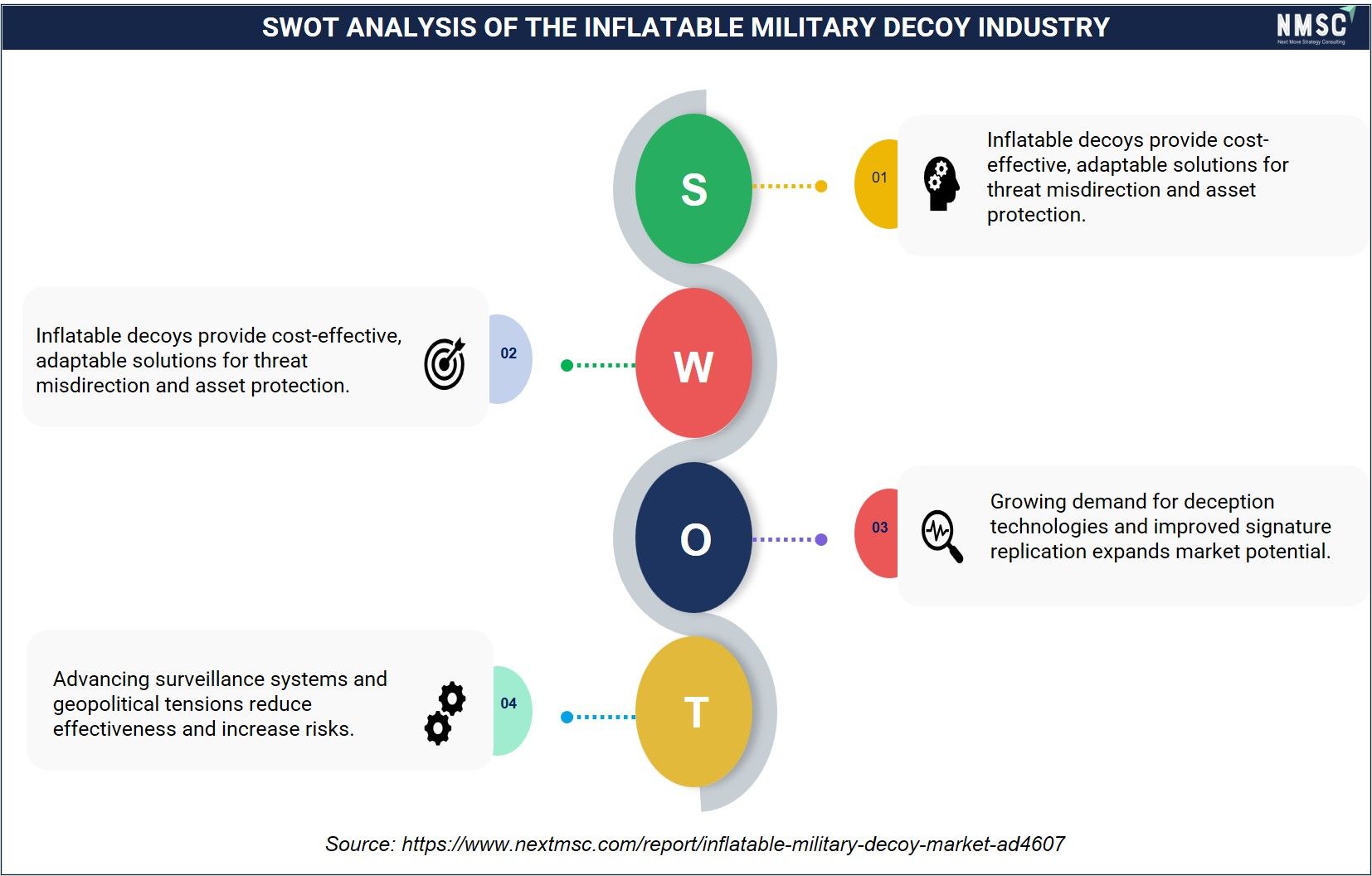
From our market analysis, we observed that inflatable military decoys provide strong cost-efficiency and adaptability across diverse operational environments. Moreover, their ability to misdirect threats enhances battlefield survivability and asset protection. However, limitations in realism under advanced sensing technologies impact effectiveness over time. At the same time, we identified that growing demand for deception systems and improvements in signature replication continue to expand market opportunities. As surveillance technologies evolve, managing effectiveness remains critical, while geopolitical tensions further shape deployment priorities and risk exposure.
Competitive Landscape
Competitive Dynamics & M&A Landscape:
|
Key Takeaways |
|
The global inflatable military decoy market is led by specialized manufacturers such as INFLATECH s.r.o., Airborne Industries Ltd., Magam Safety Ltd., and JSC SPE RUSBAL. Based on our analysis, we observed that these companies maintain strong positioning through high-fidelity decoy systems, multi-spectral signature replication, and rapid deployment capabilities. Their ability to replicate thermal, radar, and visual signatures enables effective battlefield deception and protection of high-value assets. |
|
From our evaluation, we identified that competition is driven by signature accuracy, material durability, deployment speed, and system adaptability. Companies are focusing on improving thermal and radar simulation, developing lightweight reusable materials, and offering modular designs for flexible deployment. These advancements enhance operational efficiency and strengthen decoy effectiveness in modern combat environments. |
|
Recent developments indicate a shift toward multi-spectral decoys, AI-enabled systems, and portable deployment solutions. Based on our assessment, we found that companies investing in advanced materials and adaptive technologies are strengthening their market position. As a result, innovation, flexibility, and alignment with evolving defense strategies continue to define long-term competitiveness. |
Which Companies Dominate the Inflatable Military Decoy Industry and How Do They Compete?
Through our market analysis, we observed that market is led by specialized defense-focused manufacturers rather than large commodity players. Companies such as INFLATECH s.r.o., Airborne Industries Ltd., Magam Safety Ltd., and JSC SPE RUSBAL dominate through expertise in high-fidelity decoy systems designed for battlefield deception. Moreover, these firms focus on replicating visual, infrared, and radar signatures of high-value military assets, enabling effective misdirection of enemy surveillance and targeting systems. Their competitive positioning is further strengthened by customization capabilities aligned with specific defense requirements. As a result, technological precision, operational reliability, and deployment flexibility remain the core factors defining leadership across the global inflatable military decoy market.
Market Dominated by Inflatable Military Decoy Giants and Specialists
In our evaluation, we identified that the competitive landscape is also shaped by regionally strong and cost-efficient manufacturers such as Altair Infrasec Pvt. Ltd., Shanghai Tianao Inflatable Products Co., Ltd., and Hangzhou Gauss Inflatable Tech Co., Ltd. These companies benefit from localized production, faster delivery timelines, and alignment with domestic defense procurement programs. At the same time, players like Shape Inflatables Manufacturing Inc. and Inert Products, LLC. focus on engineered inflatables and training decoys, expanding application scope beyond active combat scenarios. Moreover, regional proximity enables better responsiveness to urgent deployment requirements. As a result, while global leaders dominate advanced applications, regional manufacturers strengthen market accessibility through cost efficiency and operational agility.
Innovation and Adaptability Drive Market Success
Based on our industry evaluation, we observed that innovation in multi-spectral signature replication and advanced material engineering is central to competitive differentiation in the inflatable military decoy market. Companies are increasingly developing decoys capable of mimicking infrared, radar cross-section, and visual signatures to counter modern surveillance systems. Furthermore, advancements in lightweight yet durable fabrics improve portability, ease of deployment, and reuse across multiple missions. We identified that modular designs and rapid inflation mechanisms significantly enhance operational efficiency in dynamic battlefield conditions. As a result, continuous improvements in realism, adaptability, and system durability are critical for maintaining competitive advantage and ensuring effectiveness in evolving combat environments.
Market Players to Opt for Merger & Acquisition Strategies to Expand Their Presence
From our analysis, we found that long-term defense contracts, government collaborations, and strategic partnerships play a crucial role in shaping inflatable military decoy market growth. Companies are increasingly engaging with military organizations to secure recurring procurement agreements and participate in joint development initiatives. Moreover, our evaluation indicates that firms investing in localized manufacturing and regional partnerships gain improved access to high-growth defense markets. Participation in defense exhibitions, field trials, and operational demonstrations further strengthens product credibility and adoption. As a result, contract-driven expansion and strategic collaboration remain essential for sustaining revenue growth and reinforcing competitive positioning in the global market.
List of Key Inflatable Military Decoy Companies
-
INFLATECH s.r.o.
-
Airborne Industries Ltd.
-
Magam Safety Ltd.
-
JSC SPE RUSBAL
-
Altair Infrasec Pvt. Ltd.
-
Seawolf Marine Co., Ltd.
-
Inert Products, LLC.
-
Shape Inflatables Manufacturing Inc.
-
Shanghai Tianao Inflatable Products Co., Ltd.
-
Hangzhou Gauss Inflatable Tech Co., Ltd.
What Are the Latest Key Industry Developments?
Based on our analysis of recent competitive activities, we noticed that the inflatable military decoy market is witnessing notable advancements in product innovation, operational realism, and deployment flexibility. Leading manufacturers are increasingly focusing on the development of modular, multi-signature decoy systems capable of replicating visual, thermal, radar, and electronic signatures to address evolving battlefield requirements. At the same time, companies are expanding their customization capabilities to support a broader range of military platforms, including armored vehicles, missile systems, aircraft, and naval assets. Industry participants are also strengthening collaborations with defense agencies and system integrators to enhance interoperability with modern surveillance and electronic warfare environments. This ongoing shift toward high-fidelity, rapidly deployable, and mission-adaptive deception solutions is reshaping the competitive landscape and supporting long-term market expansion.
What Are the Key Factors Influencing Investment Analysis & Opportunities in the Inflatable Military Decoy Market?
Investment analysis in the inflatable military decoy market is increasingly shaped by a transition toward capability-driven and technology-integrated defense solutions rather than standalone decoy products. Based on our evaluation of procurement trends and deployment patterns, we noticed that capital allocation is directed toward vendors offering advanced multi-spectral signature emulation, rapid deployment systems, and adaptive decoy capabilities. In particular, defense procurement officials and prime contractors indicate that solutions delivering high signature accuracy, operational reliability, and scalable deployment remain consistently prioritized in funding and contract decisions. Moreover, companies that align product development with evolving battlefield requirements strengthen procurement confidence and secure long-term contract visibility. In addition, the growing emphasis on cost-efficient deception and survivability further reinforces investment preference toward technologically advanced and field-proven decoy systems.
Furthermore, investment concentration is increasing around multi-domain deception technologies, including thermal and radar signature replication for platforms such as the M1 Abrams and HIMARS, along with AI-enabled responsive decoy systems. In parallel, investment focus expands toward solutions that enhance operational flexibility, improve deployment speed, and optimize cost efficiency in high-intensity combat environments. From our analysis, we found vendors combining advanced material innovation, modular deployment capabilities, and proven field performance attract sustained investment interest and strengthen competitive positioning. Consequently, investment activity reinforces the shift toward scalable, high-performance decoy solutions that align with evolving defense priorities and long-term modernization strategies.
Key Benefits for Stakeholders:
Next Move Strategy Consulting (NMSC) presents a comprehensive analysis of the inflatable military decoy market, covering historical developments from 2020 to 2025 and providing forward-looking forecasts through 2035. Our study evaluates the market at global, regional, and country levels, delivering quantitative outlooks alongside qualitative insights into key growth drivers, operational constraints, technological advancements, and defense procurement trends across all major segments.
In our observation, the inflatable military decoy market delivers strategic value across a focused defense stakeholder base. Defense agencies benefit from cost-efficient force protection, enhanced battlefield deception, and optimized resource allocation by diverting high-value threats toward low-cost decoy assets. Military units gain improved survivability and operational flexibility through rapid deployment and scalable deception strategies across diverse combat environments. Meanwhile, system integrators and defense contractors, including INFLATECH s.r.o. benefit from long-term procurement contracts, technology upgrades, and increasing demand for advanced signature simulation capabilities. By aligning multi-spectral deception technologies with evolving warfare requirements, the market is strengthening operational effectiveness, enhancing defense readiness, and supporting sustained value creation across modern military ecosystems.
|
Parameters |
Details |
|
Customization Scope |
Free customization (equivalent to up to 80 analyst-working hours) after purchase. Addition or alteration to country, regional & segment scope. |
|
Pricing and Purchase Options |
Avail customized purchase options to meet your exact research needs. |
|
Approach |
In-depth primary and secondary research; proprietary databases; rigorous quality control and validation measures. |
|
Analytical Tools |
Porter's Five Forces, SWOT, value chain, and Harvey ball analysis to assess competitive intensity, stakeholder roles, and relative impact of key factors. |
Inflatable Military Decoy Market Key Segments
By Platform Simulated
-
Land Platform Decoys
-
Armored Vehicle Decoys
-
Main Battle Tank Decoys
-
Infantry Fighting Vehicle Decoys
-
Armored Personnel Carrier Decoys
-
-
Artillery System Decoys
-
Self-Propelled Artillery Decoys
-
Towed Artillery Decoys
-
Rocket Artillery Decoys
-
-
Air Defense System Decoys
-
Missile Launcher Decoys
-
Radar System Decoys
-
-
Support Vehicle Decoys
-
Logistics Vehicle Decoys
-
Command Vehicle Decoys
-
-
-
Air Platform Decoys
-
Fixed Wing Aircraft Decoys
-
Fighter Aircraft Decoys
-
Bomber Aircraft Decoys
-
Transport Aircraft Decoys
-
-
Rotary Wing Aircraft Decoys
-
Helicopter Decoys
-
Others
-
-
Unmanned Aerial System Decoys
-
-
Naval Platform Decoys
-
Surface Vessel Decoys
-
Submarine Decoys
-
-
Missile System Decoys
-
Ballistic Missile Decoys
-
Cruise Missile Decoys
-
-
Others
By Signature Type
-
Visual Signature Decoys
-
Thermal Infrared Signature Decoys
-
Radar Signature Decoys
-
Multi Signature Decoys
By Mobility
-
Static Decoys
-
Relocatable Decoys
-
Self-Propelled Decoys
By Operation Mode
-
Passive Decoys
-
Active Decoys
-
Hybrid Decoys
By Application
-
Combat Deception
-
Target Diversion
-
Force Misrepresentation
-
Surveillance Deception
-
Asset Protection
-
Training and Simulation
-
Field Training
-
Target Practice and Testing
-
Operational Readiness Training
By End User
-
Army
-
Air Force
-
Navy
-
Joint Forces
Geographical Breakdown
-
North America: U.S., Canada, and Mexico.
-
Europe: UK, Germany, France, Italy, Spain, Sweden, Denmark, Finland, the Netherlands, and the Rest of Europe.
-
Asia Pacific: China, India, Japan, South Korea, Taiwan, Indonesia, Vietnam, Australia, Philippines, Malaysia and the rest of APAC.
-
Middle East & Africa (MEA): Saudi Arabia, UAE, Egypt, Israel, Turkey, Nigeria, South Africa, and the rest of MEA.
-
Latin America: Brazil, Argentina, Chile, Colombia, and the rest of LATAM.
Conclusion & Recommendations
This report provides stakeholders, service providers, investors, and consultants with actionable insights to capitalise on the structural transformation underway in the market. By combining rigorous data-driven analysis with proven strategic frameworks, NMSC’s Inflatable Military Decoy Market Report serves as a critical decision-support resource for navigating an increasingly complex and technology-driven defense landscape. The market is positioned for steady expansion, supported by the growing use of loitering munitions, rising emphasis on cost-efficient battlefield deception, and the shift toward large-scale conventional warfare strategies. Key strategic insights highlight the increasing importance of multi-spectral signature emulation, AI-enabled adaptive response systems, and rapid deployment capabilities, as these advancements strengthen deception effectiveness and operational reliability. Vendors prioritizing advanced material engineering, signature accuracy, and modular deployment solutions are achieving stronger defense adoption and long-term contract visibility.
For defense agencies and industry stakeholders, capturing value requires focusing on high-impact applications such as multi-domain deception, asset protection, and large-scale tactical simulation, while continuing investments in advanced signature technologies, interoperability, and rapid deployment systems. Expanding presence in strategically significant regions, particularly North America, Europe, and Asia-Pacific, is unlocking new procurement opportunities. Furthermore, scalability, operational flexibility, and cost-efficiency are enhancing vendor credibility and accelerating adoption, establishing inflatable decoys as critical enablers within modern electronic and hybrid warfare ecosystems.


About the Author
 Saista Faiyaz
— Saista Faiyaz is Research Associate at Next Move Strategy Consulting, where she has covered consumer markets and healthcare technologies for 3 years. Her work includes primary interview review, secondary-source validation, market sizing, and structured analysis of company and industry data. She supports research by comparing evidence across sources, organizing findings into market narratives, and documenting assumptions used in analysis. Her scope includes cross-market benchmarking, and reports.
Saista Faiyaz
— Saista Faiyaz is Research Associate at Next Move Strategy Consulting, where she has covered consumer markets and healthcare technologies for 3 years. Her work includes primary interview review, secondary-source validation, market sizing, and structured analysis of company and industry data. She supports research by comparing evidence across sources, organizing findings into market narratives, and documenting assumptions used in analysis. Her scope includes cross-market benchmarking, and reports.
About the Reviewer
 Supradip Baul
— Supradip Baul is an accomplished business consultant and strategist with over a decade of rich experience in market intelligence, strategy, technology, and business transformation. His work has included rigorous qualitative and quantitative analysis across multiple industries, helping clients shape investment decisions and long-term roadmaps. Earlier in his career, he was associated with Gartner, where he contributed to industry-leading reports and market share analyses. He has worked with leading global companies and holds an MBA with a dual specialization in Marketing and Finance.
Supradip Baul
— Supradip Baul is an accomplished business consultant and strategist with over a decade of rich experience in market intelligence, strategy, technology, and business transformation. His work has included rigorous qualitative and quantitative analysis across multiple industries, helping clients shape investment decisions and long-term roadmaps. Earlier in his career, he was associated with Gartner, where he contributed to industry-leading reports and market share analyses. He has worked with leading global companies and holds an MBA with a dual specialization in Marketing and Finance.
At Next Move Strategy Consulting, we understand that insightful market research is the cornerstone of successful business decisions. That's why we employ a robust and multifaceted approach, combining various methodologies to deliver the most accurate and actionable data for our clients.

Research Landscape
We navigate the world of research with two primary approaches:
Qualitative Approach
Our qualitative research methodologies involve immersive techniques such as in-depth interviews, focus groups, and observational studies. By engaging directly with individuals and stakeholders, we uncover valuable insights that quantitative data alone may overlook.

Quantitative Research
In tandem with qualitative methodologies, NMSC leverages the power of Quantitative Research to provide a robust foundation of numerical insights. Through systematic data collection and analysis, we quantify patterns, preferences, and market trends, offering a comprehensive view of the business landscape.
Our quantitative research approach employs diverse tools, including surveys, experiments, and statistical modelling. These methodologies enable us to gather data from a large and representative sample, ensuring the statistical significance of our findings. By employing structured questionnaires and standardized data collection methods, we guarantee the reliability and validity of the information we present to our clients.
Quantitative research is particularly effective in measuring the prevalence of trends, assessing market size, and gauging the impact of various factors on consumer behavior. The numerical precision attained through this approach equips our clients with actionable insights, facilitating data-driven decision-making and strategy formulation.


Our Specialized Toolbox for Industry-Specific Market Research
We deploy a specialized arsenal of techniques tailored to meet your unique requirements. Here's a glimpse into our comprehensive toolbox:

Information Procurement
The stage entails acquiring market data or relevant information through various sources and methodologies.


Market Research Approach
We utilize both top-down and bottom-up approaches in market research analysis to achieve a comprehensive understanding of the market dynamics, leveraging the broad perspective of industry trends and macroeconomic factors alongside detailed insights from specific segments and individual companies.

Porters Five Forces Analysis
We conduct Porter's Five Forces analysis to evaluate the competitive landscape of an industry, providing us with insights into factors that affect profitability and strategic positioning.

SWOT Analysis

Forecasting
We utilize a forecasting model to predict future consumption by considering parameters like population, economics, regulations, market competition, drivers, constraints, technology, and pricing. We also employ statistical techniques such as multilinear regression, exponential smoothing, moving average, ARIMA, and Monte Carlo simulations for accurate predictions. In econometric forecasting, we analyzed short-term and long-term event impacts, attributing values based on regulatory frameworks, economic factors, and market events.





 Speak to Our Analyst