Asia-Pacific Agriculture Robots Market By Type (Unmanned Aerial Vehicles (UAVs), Milking Robots, Driverless Tractors, Automated Harvest Robots and Others), By Farming Type (Indoor Farming, Outdoor Farming and Indoor & Outdoor), and By Application (Aerial Monitoring & Scouting, Dairy & Livestock Automation, Field Operations, Harvest Management and Others): Opportunity Analysis & Industry Forecast, 2025–2035
Industry: Agriculture | Latest Edition: August 19, 2026 | No of Pages: 452 | No. of Tables: 202 | No. of Figures: 194 | Format: PDF | Report Code : AG631
Market Size & Forecast
|
Parameters |
Details |
|
Market Size in 2025 |
USD 8.67 Billion |
|
Market Size in 2026 |
USD 11.19 Billion |
|
Revenue Forecast in 2035 |
USD 45.78 Billion |
|
Growth Rate |
CAGR of 16.95% from 2026 to 2035 |
|
Market Volume in 2025 |
70 Thousand Units |
|
Market Volume in 2026 |
100 Thousand Units |
|
Volume Forecast in 2035 |
679 Thousand Units |
|
Growth Rate |
CAGR of 23.72% from 2026 to 2035 |
|
Analysis Period |
2025–2035 |
|
Base Year Considered |
2025 |
|
Forecast Period |
2026–2035 |
|
Market Size Estimation |
Billion (USD) |
|
Companies Profiled |
15 |
|
Market Share |
Available for 10 Companies |
Industry Outlook
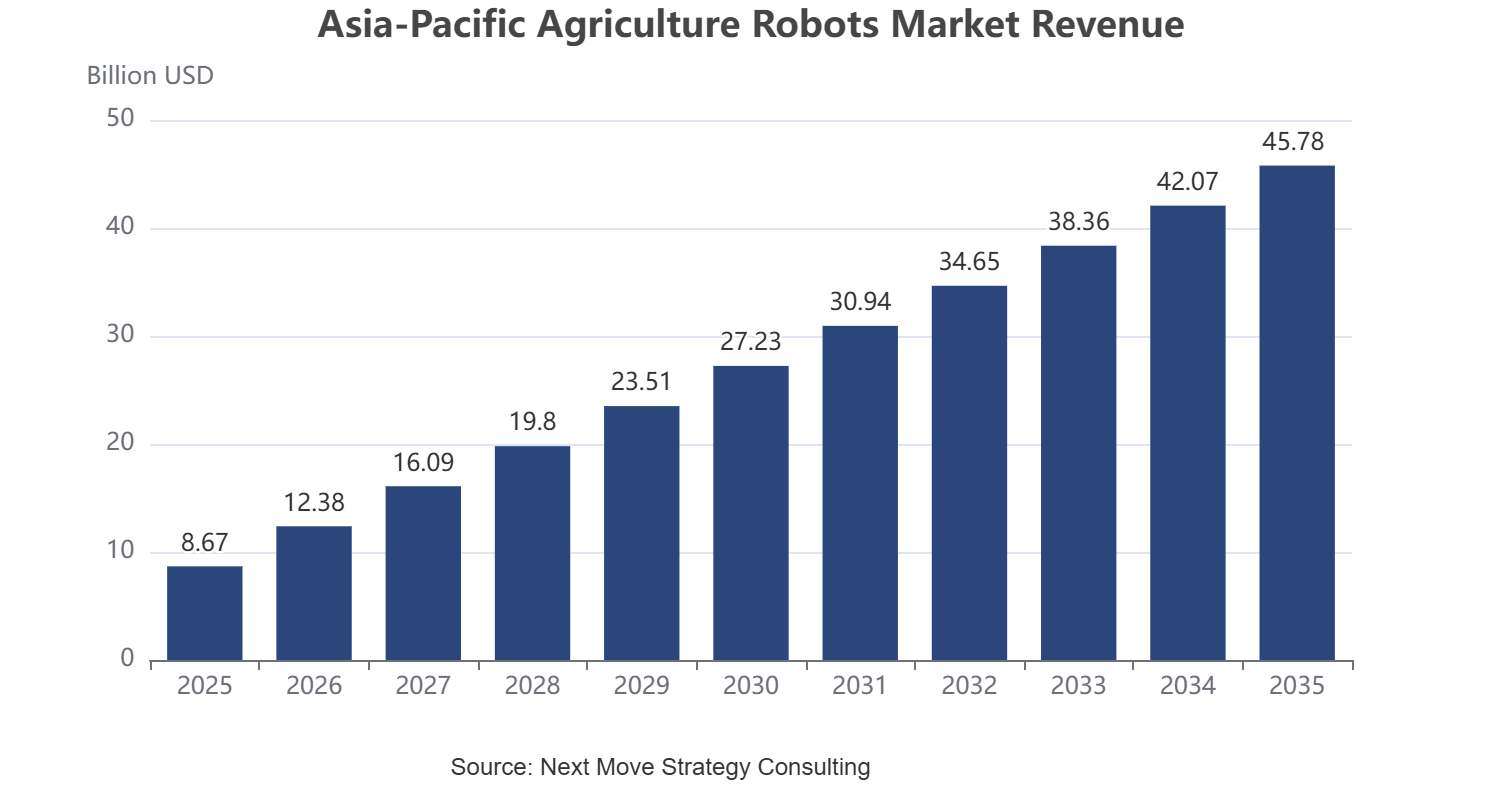
The Asia-Pacific Agriculture Robots Market was valued at USD 8.67 billion in 2025 and is estimated to reach USD 11.19 billion in 2026. The market is projected to reach USD 45.78 billion by 2035, registering a CAGR of 16.95% during 2026–2035. In volume terms, the market accounted for 70 thousand units in 2025 and is expected to reach 100 thousand units in 2026, with shipments forecast to increase to 679 thousand units by 2035, reflecting a volume CAGR of 23.72%. Growth is driven by widespread agricultural modernization programs, rising food demand from expanding populations, persistent rural labor shortages, and increasing adoption of precision farming and autonomous agricultural technologies across the region.
Ecosystem Analysis of the Asia-Pacific Agriculture Robots Market
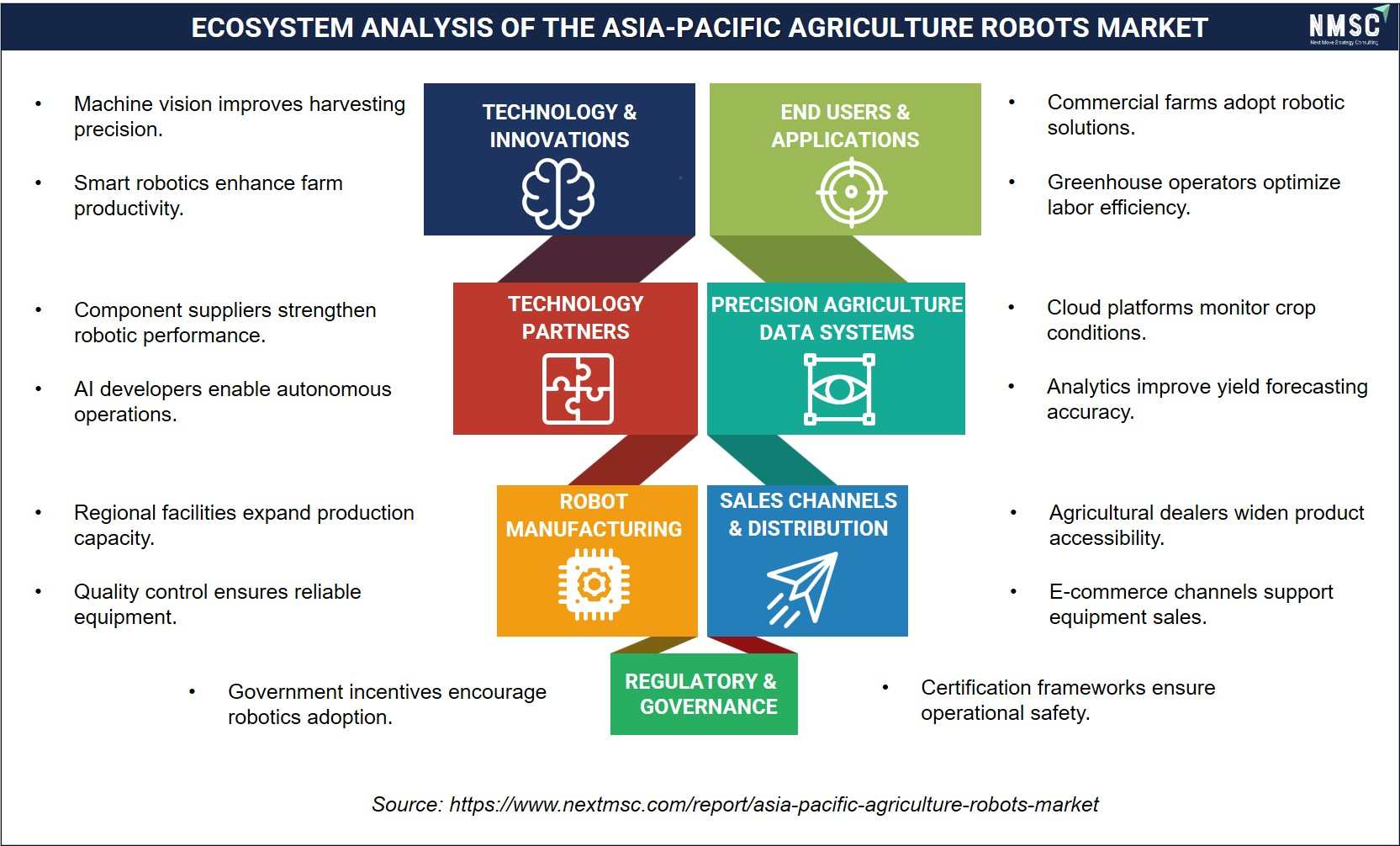
The Asia-Pacific Agriculture Robots Market ecosystem is supported by rapid advancements in AI, IoT, autonomous machinery, and precision agriculture technologies. Strong collaboration among technology providers, manufacturers, research institutions, and government agencies accelerates innovation, while expanding distribution networks improve market accessibility. Growing adoption across crop cultivation, horticulture, and livestock farming, supported by favorable agricultural modernization policies, continues to strengthen regional demand and long-term industry growth.
What Are the Key Growth Catalysts, Inhibitors, and Opportunities Shaping the Asia-Pacific Agriculture Robots Market?
Growth Catalyst & Risk Assessment Matrix
|
Drivers / Trends / Restraints |
(+/–) % Impact on CAGR Forecast |
Geographic Relevance |
Impact Timeline |
|
Rapid agricultural modernization programs are driving widespread adoption of farm automation technologies. |
+2.10% |
Asia Pacific |
Short to medium term (1–4 years) |
|
Rising food demand from expanding populations is increasing the need for productivity-enhancing robots. |
+1.90% |
Asia Pacific |
Medium term (2–5 years) |
|
Declining agricultural workforce availability is accelerating investment in robotic farming equipment. |
+2.00% |
Asia Pacific |
Medium to long term (3–7 years) |
|
High costs and limited awareness hinder adoption among smallholder farmers. |
-1.50% |
Asia Pacific |
Short to medium term (1–4 years) |
|
Affordable and scalable robotic solutions tailored for small farms offer major growth prospects. |
+1.80% |
Asia Pacific |
Medium term (2–5 years) |
The Asia-Pacific Agriculture Robots Market is shaped by a dynamic interplay of growth drivers, restraints, and opportunities that collectively define the competitive trajectory of the industry. Accelerating modernization programs, rising food demand from growing populations, and declining agricultural workforce availability are primary forces driving market expansion. However, high acquisition costs and limited smallholder awareness continue to constrain adoption at scale. Simultaneously, the emergence of affordable and scalable robotic solutions presents transformative market opportunities across the region’s diverse farming landscape.
Growth Driver
How Are Rapid Agricultural Modernization Programs Driving Widespread Adoption of Farm Automation Technologies across Asia Pacific?
Governments and agricultural agencies across Asia Pacific are implementing large-scale modernization initiatives that are fundamentally transforming traditional farming practices. National programs in China, Japan, India, and South Korea are allocating substantial budgets to promote precision agriculture, smart farming infrastructure, and robotic technology deployment. Based on our assessment, these policy-driven investments are accelerating technology adoption timelines and reducing barriers to entry for farm automation. Furthermore, the integration of robotics into national food security strategies is reinforcing sustained demand across the Asia-Pacific Agriculture Robots Market throughout the forecast period.
How Is Rising Food Demand from Expanding Populations Increasing the Need for Productivity-Enhancing Robots across Asia Pacific?
Asia Pacific is home to more than half the world’s population, and rising per capita incomes are driving significant increases in food consumption across the region. NMSC analysis indicates that conventional farming productivity levels are insufficient to meet projected demand trajectories without meaningful automation investment. Agricultural robots deliver measurable enhancements in crop yields, input efficiency, and harvest precision that directly address food security imperatives. Moreover, growing urban populations are reducing the rural agricultural workforce, making robotic productivity solutions increasingly indispensable for sustaining regional food supply chains throughout the forecast period.
How Is Declining Agricultural Workforce Availability Accelerating Investment in Robotic Farming Equipment across the Region?
Structural demographic shifts and rapid urbanization across Asia Pacific are eroding the availability of agricultural labor at an unprecedented rate. Countries including Japan, South Korea, and China are experiencing acute rural workforce contractions as younger generations migrate to urban employment sectors. Based on our assessment, farm operators facing persistent labor shortages are increasingly prioritizing robotic farming equipment as a strategic solution to sustain operational continuity. However, investment patterns vary significantly by market maturity, with developed economies in the region leading deployment while emerging markets build foundational automation capacity progressively.
Growth Inhibitor
How Do High Costs and Limited Awareness Hinder Adoption of Agricultural Robots among Smallholder Farmers across Asia Pacific?
Despite compelling operational benefits, the high acquisition cost of advanced agricultural robotic systems remains a formidable barrier to adoption, particularly among the smallholder farmers who constitute a significant proportion of Asia Pacific’s agricultural workforce. Limited financial access, insufficient credit facilities, and low awareness of available robotic solutions further compound adoption challenges. NMSC analysis indicates that smallholder farms with fragmented landholdings and narrow profit margins are especially constrained by capital expenditure thresholds. Furthermore, inadequate technical support infrastructure and limited digital literacy in rural areas continue to restrict meaningful market penetration across price-sensitive sub-regions.
Growth Opportunity
How Do Affordable and Scalable Robotic Solutions Tailored for Small Farms Offer Major Growth Prospects in the Asia-Pacific Market?
The development of affordable and scalable agricultural robotic solutions specifically designed for small and fragmented farming operations represents the most significant untapped growth opportunity in the Asia-Pacific market. Modular robotic platforms, subscription-based deployment models, and government-subsidized access programs are progressively lowering entry barriers for smallholder adoption. Based on our assessment, manufacturers that prioritize cost-optimized designs compatible with diverse Asian crop types and field geometries are positioned to capture substantial market share. Moreover, partnerships with agricultural cooperatives and rural finance institutions are expected to accelerate smallholder robotic adoption across emerging economies throughout the forecast period.
Which Country is Dominating the Asia-Pacific Agriculture Robots Market?
Our comprehensive market assessment indicates that China holds the dominant share in the Asia-Pacific Agriculture Robots Market, supported by its large-scale agricultural modernization initiatives, strong domestic robotics manufacturing ecosystem, and extensive government support for smart farming technologies. The country benefits from the presence of leading agricultural equipment and robotics manufacturers, advanced AI and precision agriculture capabilities, and substantial investments in autonomous farming solutions. Growing adoption of robotic harvesting, autonomous tractors, agricultural drones, precision spraying systems, and AI-powered crop monitoring technologies, coupled with increasing labor shortages and the rapid digitalization of agriculture, reinforces China's position as the leading market for agriculture robots in the Asia-Pacific region.
Which Country is Set to Witness the Fastest Growth?
Based on our review of agricultural mechanization trends and technology investments, India is positioned to witness the fastest growth in the Asia-Pacific Agriculture Robots Market. Rising labor shortages in agriculture, increasing government initiatives promoting precision farming and farm mechanization, and growing adoption of AI-enabled agricultural technologies are generating strong demand for agriculture robots. Expanding investments in agri-tech startups, precision irrigation, drone-based crop monitoring, and autonomous farming equipment, coupled with supportive government programs and increasing awareness of sustainable farming practices, are expected to accelerate market expansion. Continued investments in digital agriculture infrastructure and smart farming technologies are anticipated to further strengthen India's growth trajectory throughout the forecast period.
How Is the Asia-Pacific Agriculture Robots Market Segmented in This Report, and What Are the Key Insights from the Segmentation Analysis?
By Type
Which Robot Type Is Driving the Greatest Revenue Growth across the Asia-Pacific Agriculture Robots Market?
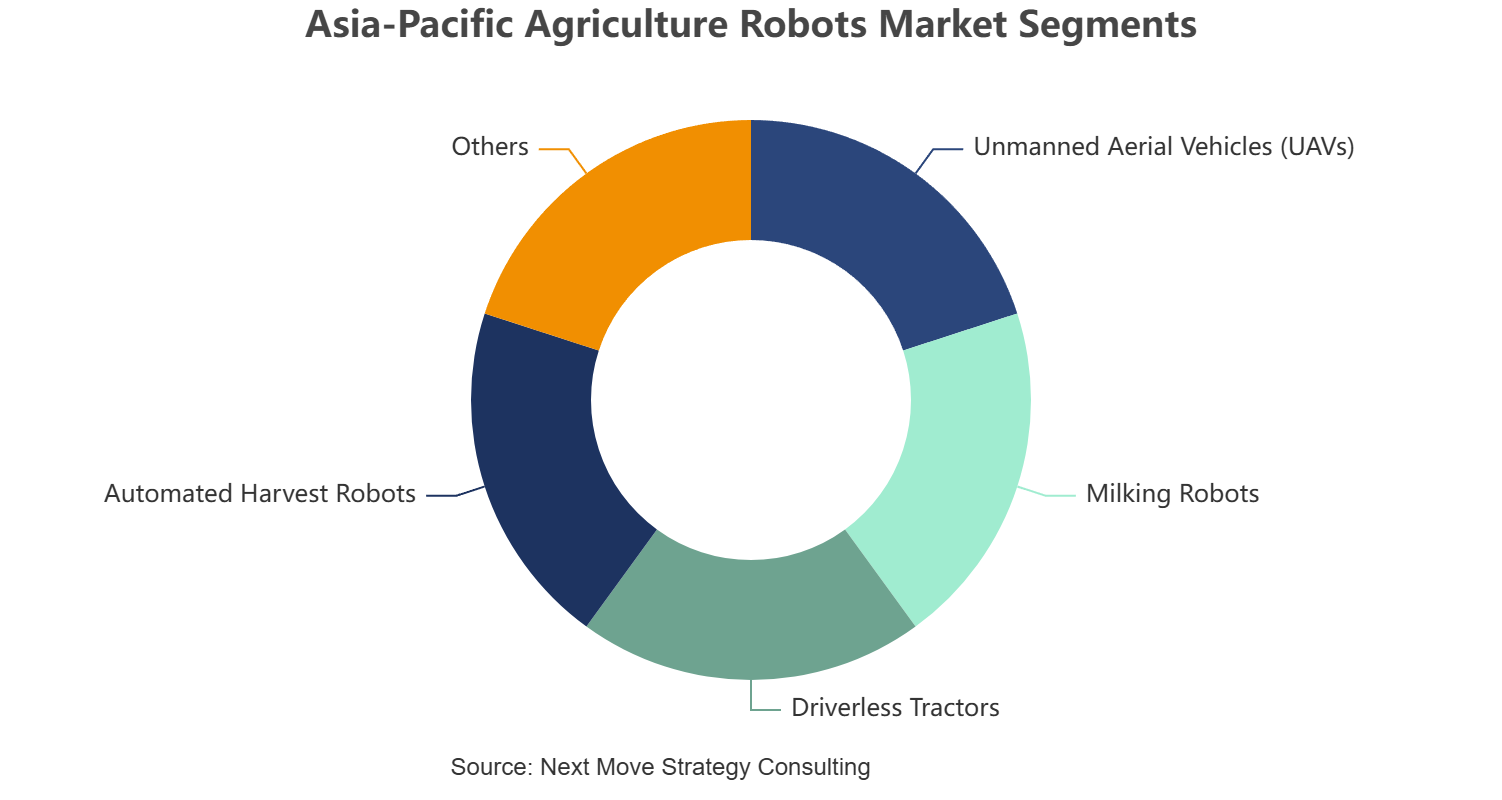
The Asia-Pacific Agriculture Robots Market by type is segmented into Unmanned Aerial Vehicles (UAVs), Milking Robots, Driverless Tractors, Automated Harvest Robots, and Others.
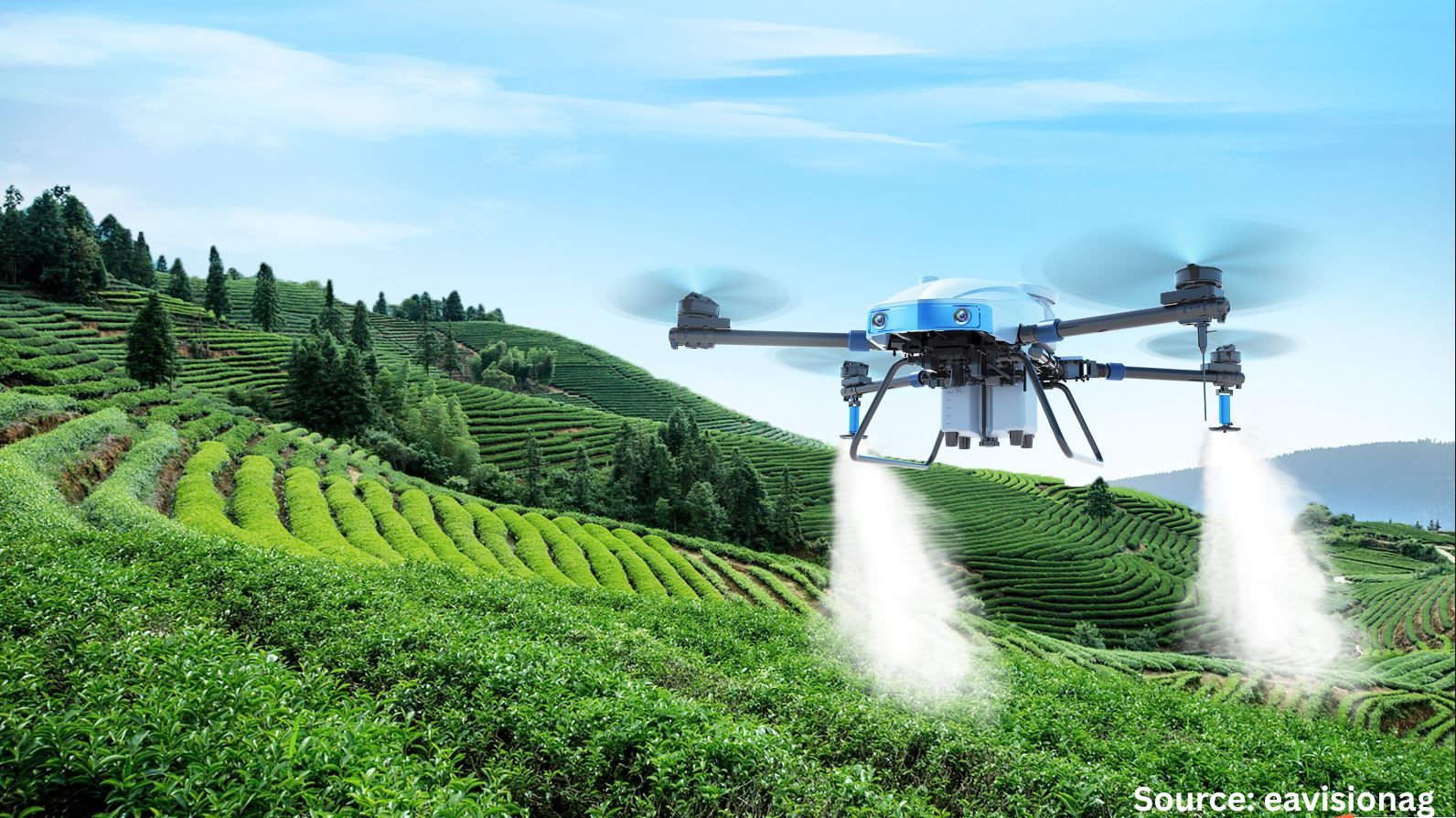
Among all robot types, Unmanned Aerial Vehicles (UAVs) are demonstrating the highest growth trajectory across Asia Pacific, driven by extensive adoption in crop monitoring, aerial spraying, and precision input application across large-scale paddy, sugarcane, and vegetable cultivation. Companies such as DJI and XAG have established dominant UAV positions across Chinese and Southeast Asian markets. Automated Harvest Robots are gaining rapid traction in labor-scarce Japan and South Korea, while Driverless Tractors sustain strong revenue contributions across Australia and India. Milking Robots continue to expand as dairy modernization accelerates throughout the region.
By Application
Which Application Segment Holds the Largest Share of the Asia-Pacific Agriculture Robots Market Revenue?
By application, the Asia-Pacific Agriculture Robots Market is segmented into Aerial Monitoring & Scouting, Dairy & Livestock Automation, Field Operations, Harvest Management, and Others.
Aerial Monitoring & Scouting represents the dominant application segment across Asia Pacific, encompassing crop protection, weed control, crop scouting, weather tracking, and inventory management activities that benefit substantially from UAV-enabled automation. Field Operations commands a strong revenue position through robotic plowing, seeding, field farming, and soil and irrigation management across the region’s diverse agricultural landscapes. Harvest Management is emerging as a high-priority investment segment as regional labor shortages intensify demand for automated collection systems. Dairy & Livestock Automation, including milking and dairy management, exhibits steady growth supported by expanding precision livestock technologies across developed Asia-Pacific economies.
Key Segments
By Type
-
Unmanned Aerial Vehicles (UAVs)
-
Milking Robots
-
Driverless Tractors
-
Automated Harvest Robots
-
Others
By Farming Type
-
Indoor Farming
-
Outdoor Farming
-
Indoor & Outdoor
By Application
-
Aerial Monitoring & Scouting
-
Crop Protection & Weed Control
-
Crop Scouting & Monitoring
-
Weather Tracking
-
Inventory Management
-
-
Dairy & Livestock Automation
-
Milking
-
Dairy Management
-
Shepherding and Herding
-
-
Field Operations
-
Plowing
-
Seeding
-
Field Farming
-
Soil & Irrigation Management
-
-
Harvest Management
-
Others
Competitive Landscape
The Asia-Pacific Agriculture Robots Market features a highly competitive landscape characterized by a mix of established multinational corporations, regional agri-tech innovators, and rapidly scaling domestic technology firms. Market participants are actively investing in research and development, strategic partnerships, and product diversification to strengthen competitive positioning across diverse sub-regional markets. The convergence of robotics, artificial intelligence, and precision agriculture is driving rapid product evolution, with companies competing on automation capabilities, cost efficiency, scalability, and compatibility with the varied crop types and farm structures prevalent across Asia Pacific.
Strategic Developments:
-
March 2025 - Kubota announced it will exhibit its Type: V and Type: S fully autonomous versatile platform robots at Expo 2025 Osaka, Kansai, showcasing next-generation autonomous agricultural robots designed for data-driven precision farming in Japan.
-
February 2025 - Garuda Aerospace partnered with HFCL to develop AI-enabled indigenous UAV technologies, including agricultural drone applications, under the Make in India initiative.
Key Players
-
Kubota Corporation
-
Yanmar Holdings Co., Ltd.
-
Shenzhen DJI Innovation Technology Co., Ltd. (DJI)
-
Guangzhou XAG Co., Ltd. (XAG)
-
Deere & Company
-
AGCO Corporation
-
Daedong Corporation
-
DeLaval Holding AB
-
Lely Industries N.V.
-
GEA Group AG
-
CNH Industrial N.V.
-
ISEKI & Co., Ltd.
-
AGRIST Inc.
-
Beijing AIForce Technology Co., Ltd.
-
Garuda Aerospace Private Limited
The competitive landscape includes leading global players such as Kubota Corporation, Yanmar Holdings Co., Ltd., and ISEKI & Co., Ltd., which anchor the market with broad agricultural machinery portfolios. Shenzhen DJI Innovation Technology Co., Ltd. (DJI) and Guangzhou XAG Co., Ltd. (XAG) dominate the UAV and aerial spraying segments across Asia Pacific. Deere & Company, AGCO Corporation, and CNH Industrial N.V. compete in advanced field automation and tractor platforms, while DeLaval Holding AB, Lely Industries N.V., and GEA Group AG lead dairy automation solutions. AGRIST Inc., Beijing AIForce Technology Co., Ltd., Daedong Corporation, and Garuda Aerospace Private Limited are expanding the regional competitive frontier through innovative and localized robotic farming platforms.
Supply Chain Structure of the Asia-Pacific Agriculture Robots Market
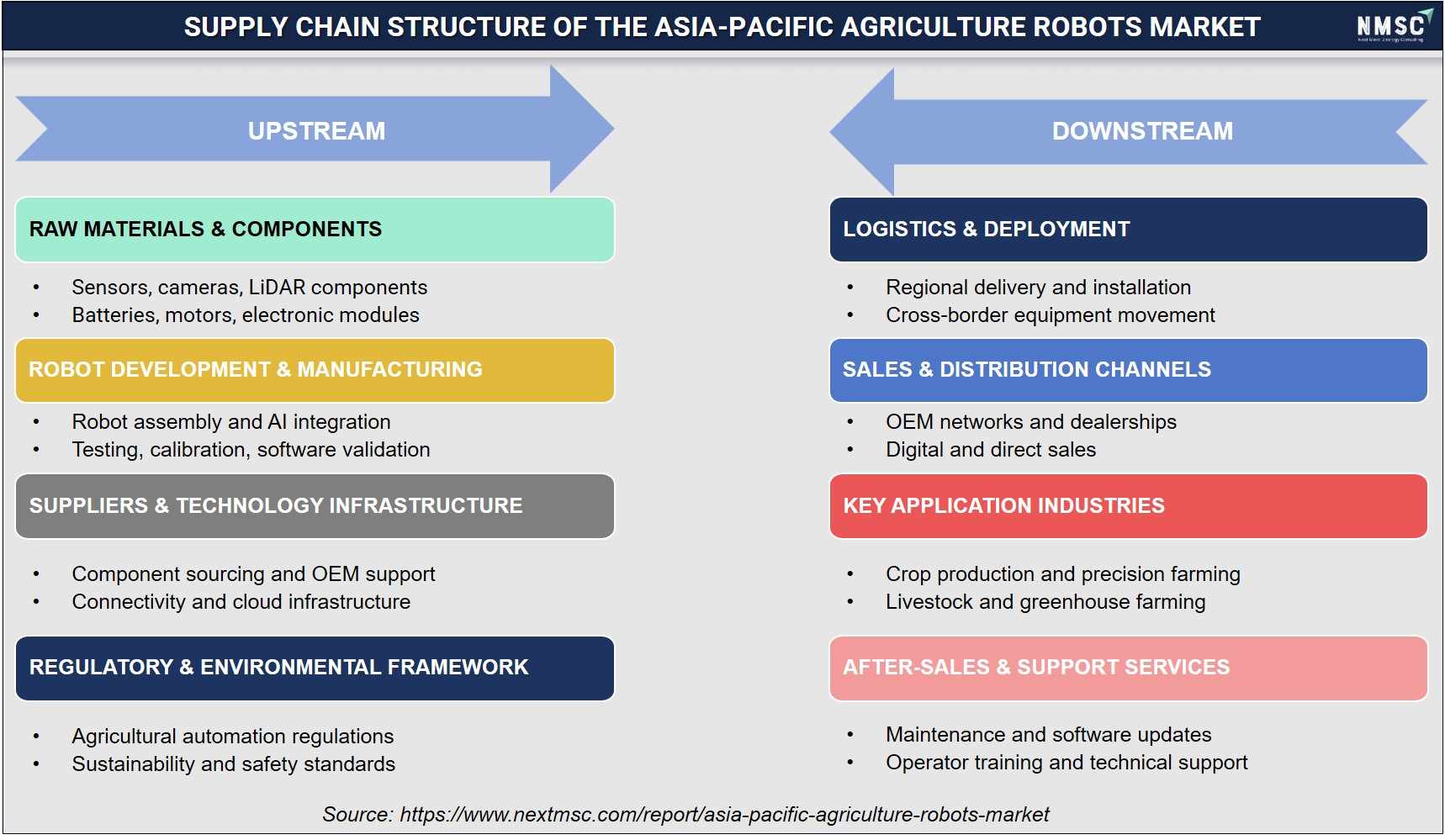
The Asia-Pacific Agriculture Robots Market supply chain spans component suppliers, robot manufacturers, technology providers, distributors, and end users across diverse agricultural economies. Advanced sensors, LiDAR, batteries, AI software, and cloud connectivity support robot production, while regional logistics and OEM dealer networks facilitate deployment. Strong after-sales services, software updates, and operator training, supported by evolving automation regulations and sustainability standards, enhance operational efficiency and market adoption.
Key Benefits for Stakeholders
This report provides stakeholders with a comprehensive and data-driven assessment of the Asia-Pacific Agriculture Robots Market, equipping decision-makers with actionable insights across the full value chain. Investors, technology developers, and agricultural enterprises gain a thorough understanding of current market dynamics, competitive positioning, and emerging growth opportunities. The report delivers granular segmentation analysis, enabling stakeholders to identify high-potential application areas and geographic sub-markets with precision. Rigorous quantitative forecasting supports strategic planning, capital allocation, and market entry decisions throughout the 2026–2035 forecast period.
Policymakers, agricultural agencies, and research institutions benefit from this report’s detailed examination of regulatory frameworks, technology adoption trends, and smallholder accessibility challenges shaping market development across Asia Pacific. The competitive landscape analysis provides benchmarking intelligence on leading players’ strategies, product portfolios, and regional expansion trajectories. Supply chain participants and component manufacturers can leverage segmentation insights to align their offerings with market demand patterns. Overall, this report serves as an essential strategic resource for any stakeholder seeking to understand, participate in, or shape the evolving Asia-Pacific Agriculture Robots Market.
Customisation Options
|
Parameters |
Details |
|
Customization Scope |
Free customization (equivalent to up to 80 analyst-working hours) after purchase. |
|
Pricing and Purchase Options |
Avail customized purchase options to meet your exact research needs. |
|
Approach |
In-depth primary and secondary research; proprietary databases; rigorous quality control and validation measures. |
|
Analytical Tools |
Porter's Five Forces, SWOT, value chain, and Harvey ball analysis to assess competitive intensity, stakeholder roles, and relative impact of key factors. |
Conclusion
The Asia-Pacific Agriculture Robots Market is positioned for sustained and robust expansion, projected to grow from USD 8.67 billion in 2025 to USD 45.78 billion by 2035 at a CAGR of 16.95%. Agricultural modernization programs, rising food demand, and declining workforce availability are the primary catalysts driving this growth trajectory across the region. Affordable and scalable robotic solutions tailored for smallholder farmers represent the most transformative near-term opportunity. The competitive landscape remains dynamic, with global technology leaders and regional innovators collectively advancing the frontier of farm automation throughout Asia Pacific.
About the Author
 Mihul Sharma is Research Associate at Next Move Strategy Consulting, where he has covered technology, industrial, and healthcare markets for 3 years. His work applies structured business research, market analysis, and secondary-source review to assess market trends, competitive developments, and growth opportunities. He supports report development by fully synthesizing industry data, company information, and market signals into concise findings for strategy and investment-focused research teams.
About the Reviewer
 Supradip Baul is an accomplished business consultant and strategist with over a decade of rich experience in market intelligence, strategy, technology, and business transformation. His work has included rigorous qualitative and quantitative analysis across multiple industries, helping clients shape investment decisions and long-term roadmaps. Earlier in his career, he was associated with Gartner, where he contributed to industry-leading reports and market share analyses. He has worked with leading global companies and holds an MBA with a dual specialization in Marketing and Finance.
At Next Move Strategy Consulting, we understand that insightful market research is the cornerstone of successful business decisions. That's why we employ a robust and multifaceted approach, combining various methodologies to deliver the most accurate and actionable data for our clients.

Research Landscape
We navigate the world of research with two primary approaches:
Qualitative Approach
Our qualitative research methodologies involve immersive techniques such as in-depth interviews, focus groups, and observational studies. By engaging directly with individuals and stakeholders, we uncover valuable insights that quantitative data alone may overlook.

Quantitative Research
In tandem with qualitative methodologies, NMSC leverages the power of Quantitative Research to provide a robust foundation of numerical insights. Through systematic data collection and analysis, we quantify patterns, preferences, and market trends, offering a comprehensive view of the business landscape.
Our quantitative research approach employs diverse tools, including surveys, experiments, and statistical modelling. These methodologies enable us to gather data from a large and representative sample, ensuring the statistical significance of our findings. By employing structured questionnaires and standardized data collection methods, we guarantee the reliability and validity of the information we present to our clients.
Quantitative research is particularly effective in measuring the prevalence of trends, assessing market size, and gauging the impact of various factors on consumer behavior. The numerical precision attained through this approach equips our clients with actionable insights, facilitating data-driven decision-making and strategy formulation.


Our Specialized Toolbox for Industry-Specific Market Research
We deploy a specialized arsenal of techniques tailored to meet your unique requirements. Here's a glimpse into our comprehensive toolbox:

Information Procurement
The stage entails acquiring market data or relevant information through various sources and methodologies.


Market Research Approach
We utilize both top-down and bottom-up approaches in market research analysis to achieve a comprehensive understanding of the market dynamics, leveraging the broad perspective of industry trends and macroeconomic factors alongside detailed insights from specific segments and individual companies.

Porters Five Forces Analysis
We conduct Porter's Five Forces analysis to evaluate the competitive landscape of an industry, providing us with insights into factors that affect profitability and strategic positioning.

SWOT Analysis

Forecasting
We utilize a forecasting model to predict future consumption by considering parameters like population, economics, regulations, market competition, drivers, constraints, technology, and pricing. We also employ statistical techniques such as multilinear regression, exponential smoothing, moving average, ARIMA, and Monte Carlo simulations for accurate predictions. In econometric forecasting, we analyzed short-term and long-term event impacts, attributing values based on regulatory frameworks, economic factors, and market events.





 Speak to Our Analyst