Bone Graft Harvesting System Market By Type (Manual, Powered, Cancellous Bone Harvesting, and Others), By Technology (Minimally Invasive Technique, Open Technique, and Others), By Sterility Model (Single-Use Disposable, Reusable Sterilizable, and Others), By Harvest Site (Iliac Crest, Femur And Tibia Intramedullary, and Others), By End-User (Hospitals, Ambulatory Surgical Centres, Orthopaedic Speciality Clinics, and Others) – Global Analysis & Forecast, 2025–2030
Industry: Healthcare | Publishing Date: June 10, 2026 | Last Updated: October 16, 2026 | No of Pages: N/A | No. of Tables: N/A | No. of Figures: N/A | Format: PDF | Report Code: HC3872
Industry Outlook
The global Bone Graft Harvesting System Market size was valued at USD 1.14 billion in 2024 and is expected to reach USD 1.22 billion by 2025. Looking ahead, the industry is projected to expand significantly, reaching USD 1.74 billion by 2030, registering a CAGR of 7.34% from 2025 to 2030.
The market represents a vital segment within the medical devices and equipment industry, focusing on tools and systems designed to collect autologous bone graft material during surgical procedures. These systems play a crucial role in orthopaedic, spinal, dental, and trauma surgeries by enabling effective bone regeneration and repair. Currently, the market stands as a mature yet steadily advancing field, supported by the growing need for minimally invasive surgical solutions and enhanced grafting outcomes. Surgeons and healthcare providers increasingly prefer harvesting systems that ensure precision, reduce donor site morbidity, and minimize procedural time, highlighting the ongoing shift toward technologically advanced and patient-friendly devices.
Looking ahead, the bone graft harvesting system market overview is poised for sustained innovation driven by advancements in regenerative medicine, biomaterial science, and automation in surgical techniques. The integration of improved ergonomic designs, compatibility with robotic-assisted surgery, and development of disposable systems are anticipated to broaden clinical adoption. With the rising prevalence of bone disorders and trauma injuries, alongside the growing emphasis on personalized treatment, the industry is expected to witness greater collaboration between medical device manufacturers and research institutions. This evolution points toward a future where bone graft harvesting becomes safer, faster, and more efficient, ultimately improving patient recovery and surgical success rates.
What Are the Key Trends in the Bone Graft Harvesting System Industry?
How is the Bone Graft Harvesting System Market Being Reshaped by the Rapid Adoption of Robotic and Navigation-Assisted Surgery?
Hospitals and surgical centres increasingly deploy robotic and navigation platforms in orthopaedics and spine, reshaping ancillary device needs as the orthopaedic device market grows rapidly and procedure volumes accelerate toward a multi-billion-dollar scale. Surgeons expect instruments to function seamlessly within tighter, robot-enabled workflows, including smaller footprints, instrument tracking, and sterile single-use interfaces. Harvesting-system manufacturers design instruments for interoperability with robot mounts and navigation and demonstrate clinical workflows where harvesting integrates into robotic cases without adding time. They run small pilot integrations with a single robotic platform to validate form-factor and sterile-interface requirements, then package validated robot-ready bundles for high-volume centres, reducing procurement friction and positioning the product as part of the hospital’s robotic investment rather than an extra cost.
The operational stock of industrial robots in a country serves as an indirect indicator of its technological advancement, automation infrastructure, and overall readiness to adopt sophisticated medical technologies, such as bone graft harvesting systems. In markets where industrial robotics are prevalent, healthcare facilities are often better equipped, and there is a higher likelihood of swift adoption of advanced surgical devices and minimally invasive procedures.
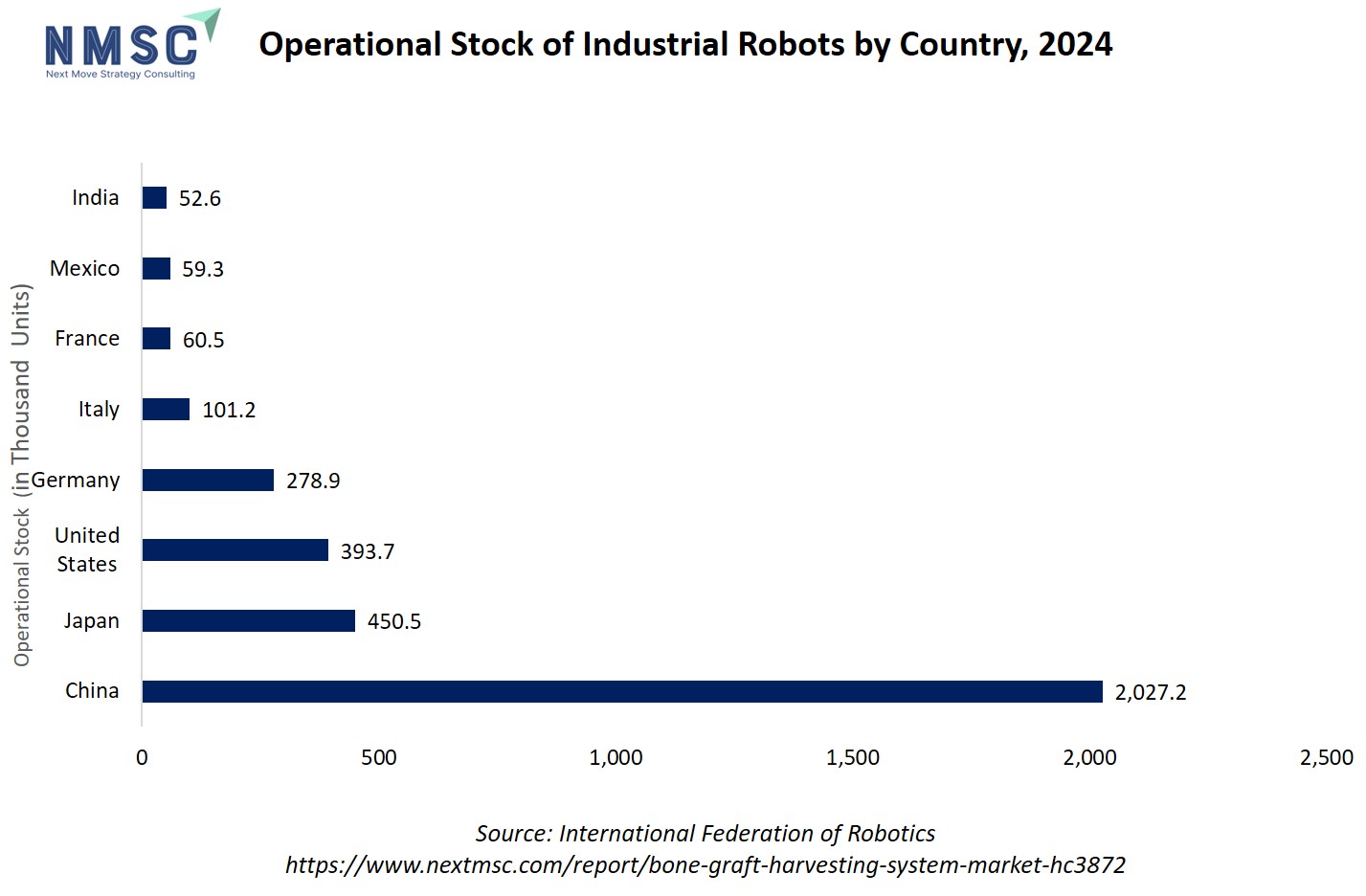
The above chart depicts the operational stock of industrial robots, highlighting significantly higher robot deployment in China, followed by Japan, the United States, and Germany, with much lower numbers in countries like India, Mexico, and France. The high presence of robots in leading economies reflects robust automation infrastructure, advanced technology readiness, and greater capacity to adopt and integrate complex equipment across industries. Such environments are more conducive to the rapid uptake of advanced medical systems, including bone graft harvesting technologies, as hospitals in these countries are likelier to invest in innovative surgical solutions, thus positively influencing market growth and technological adoption rates.
How Are Biomaterials and Graft Substitutes Changing the Bone Graft Harvesting System Market?
Recent reviews show rapid progress in bioactive polymers, ceramics and composite scaffolds that match many performance attributes of autograft while avoiding donor-site harvest. As synthetics gain clinical acceptance in a growing set of indications, demand for large-volume autologous harvests moderates, yet many surgeons still prefer autograft for its osteogenic cells and growth factors. This trend creates an important implication, where harvesting systems should not only be optimised for autograft collection but also for integrating and delivering hybrid constructs (autograft + substitute) and for processing small, high-quality grafts rather than bulk volumes. Companies act by co-developing delivery/processing kits with biomaterial partners and by supporting surgeon training, showing combined-use protocols; such activities help device makers remain relevant regardless of how fast substitutes penetrate specific indications.
How is the Shift Toward Disposable and Single-Use Surgical Devices Affecting Bone Graft Harvesting System Design and Procurement?
The market for disposable surgical devices and single-use instruments grew substantially, driven by infection-control priorities and efficiency demands. For harvesting systems, this creates tension. Single-use harvesters lower reprocessing burdens and infection risk but raise per-case costs and environmental concerns. The balanced response for manufacturers is to offer a modular portfolio and invest in life-cycle assessments and localised cost models for hospital procurement teams.
How are Demographic and Epidemiologic Shifts Continuing to Drive the Bone Graft Harvesting System Market?
Musculoskeletal disorders remain highly prevalent globally, and burden metrics have increased over recent decades, creating sustained volume for trauma, spine, dental and reconstruction procedures that use bone grafting. That baseline demand sustains the market even as surgical techniques evolve. However, ageing populations and rising elective procedure rates in many regions mean growth will be concentrated in centres that manage higher case volumes. For companies that argue for a two-track go-to-market, first, robust entry tools targeted at high-volume hospitals and spine centres, and second, lightweight, cost-sensitive offerings for emerging markets and ambulatory surgical centres. Prioritising clinical evidence in high-volume sites produces the strongest reference cases and supports broader diffusion.
What Are the Key Market Drivers, Breakthroughs, And Investment Opportunities That Will Shape the Bone Graft Harvesting System Market in the Next Decade?
Bone Graft Harvesting Systems remain a clinically essential niche within medical devices because autologous bone still represents the gold standard for osteogenesis in many orthopaedic, spine and craniofacial procedures. The market today is balanced between established harvesting tools and a wave of innovation, miniaturized harvesters, single-use interfaces, and processing kits designed for hybrid autograft with substitute strategies that seek to reduce donor-site morbidity and streamline workflows.
At the same time, macro drivers, such as ageing populations, rising elective and trauma procedures, and expanding robotic surgery programs, sustain baseline demand while changing where and how grafting occurs. Device firms therefore prove clinical advantage and economic value simultaneously, aligning product features with hospital procurement priorities and emerging clinical pathways
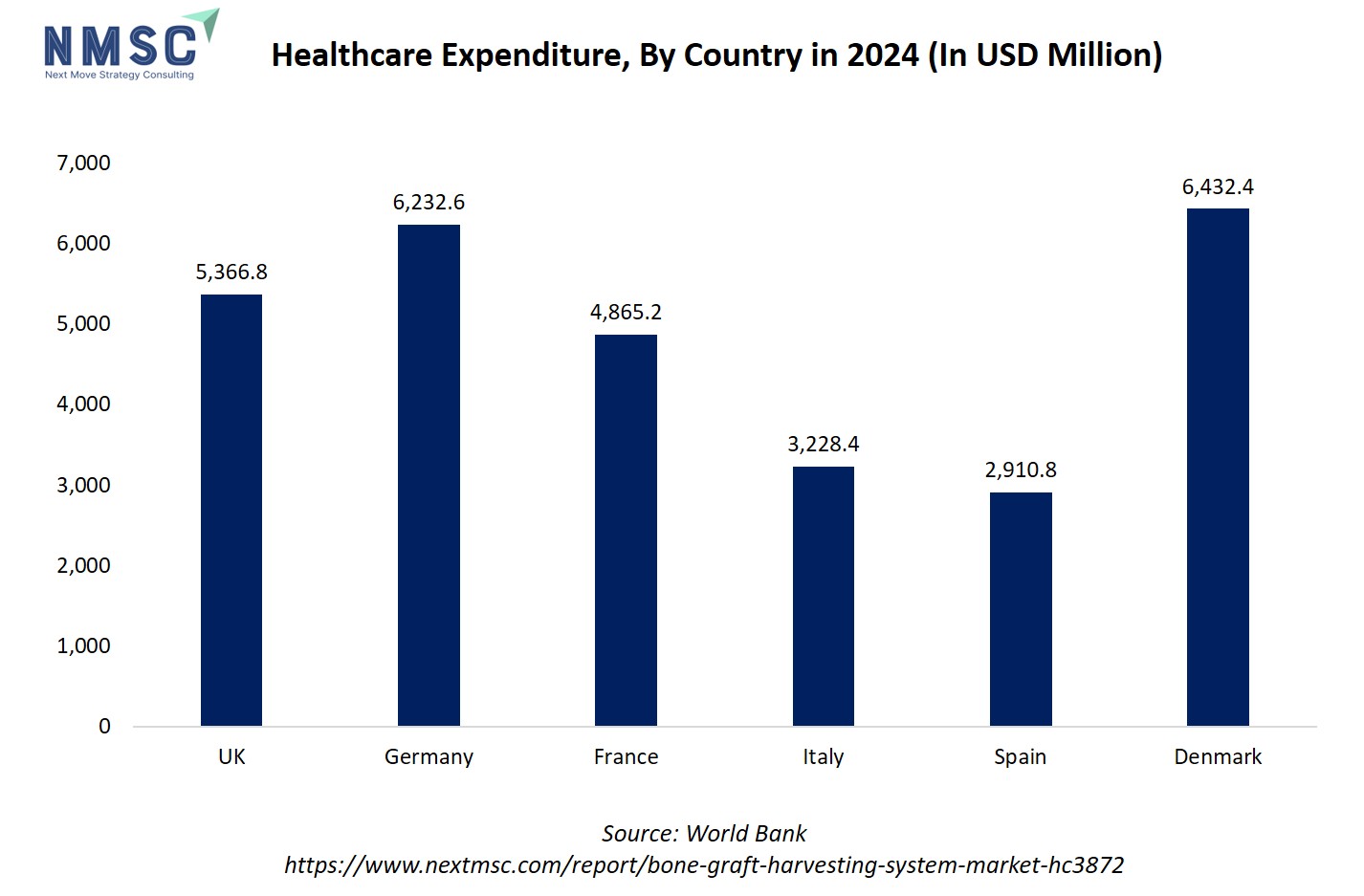
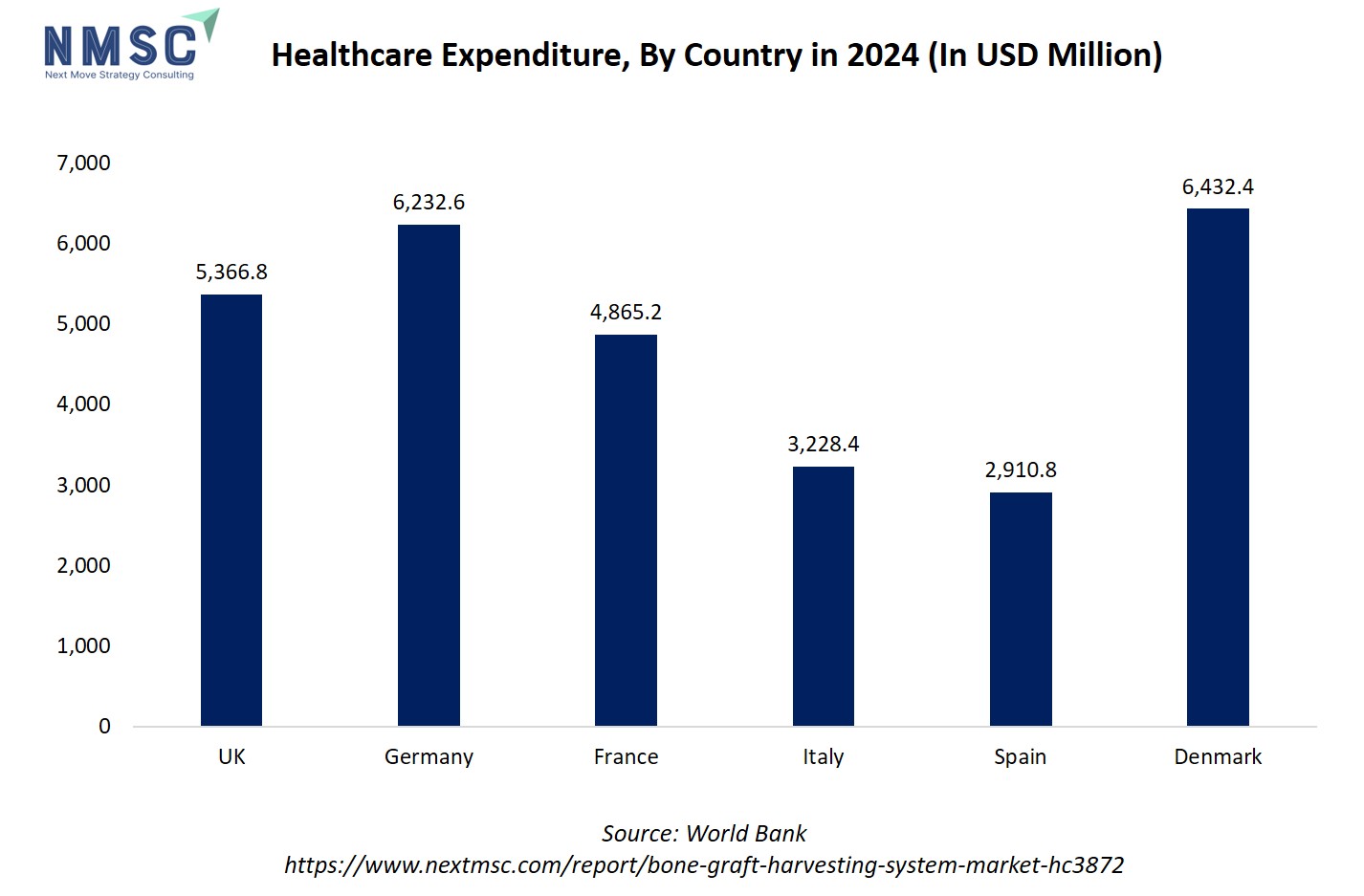
Moreover, rising healthcare expenditure is driving the growth of the bone graft harvesting system market demand by increasing the emphasis on advanced surgical care and the adoption of innovative medical technologies. As both governments and individuals allocate more funds to healthcare, there is an accelerated demand for efficient and minimally invasive bone graft harvesting device used in orthopaedic, spinal, and trauma surgeries. Enhanced spending also fosters advancements in technologies such as AI-driven tools and ergonomic, portable harvesting devices, enabling manufacturers to introduce premium and clinically validated solutions. As a result, regions experiencing growth in healthcare investments are witnessing faster adoption of state-of-the-art bone graft harvesting equipment, which is fueling overall market expansion and highlighting the system's pivotal role in modern, patient-centric surgical practice.
Growth Drivers:
How will Expanding Global Procedure Volumes and Ageing Populations Drive Growth for Bone Graft Harvesting Systems Market?
The increasing global burden of musculoskeletal disease and growing elderly populations translate to rising volumes of joint replacements, spinal fusions, and trauma reconstructions, procedures that commonly use bone grafts. Estimates studies through 2024 show large, persistent patient pools that maintain case volumes even amid changing material preferences. Practically, this steady clinical demand supports investments in both basic harvesting consumables for high-volume centres and premium, time-saving systems for speciality clinics. For companies, focusing on clinical validation and sales efforts on regional centres of excellence and high-volume hospitals where per-case economics justify premium devices, while offering cost-sensitive platforms for emerging markets and ambulatory centres. Demonstrating how devices reduce time, complication rates, or length of stay unlocks adoption in budget-constrained systems.
The chart illustrates the percentage of the elderly population as a share of the total population across selected countries in 2024, with Japan leading, followed by Italy, Germany, and France. A higher elderly population signals increased demand for orthopaedic surgeries, bone grafts, and related medical interventions due to age-associated conditions like osteoporosis and joint degeneration. Consequently, in countries with a larger elderly demographic, the market for autologous bone graft system experiences significant growth as healthcare providers invests in advanced solutions to meet the rising need for effective bone treatment and surgical care.
How will Integration with Minimally Invasive and Navigation Workflows Increase Adoption of Advanced Harvesters?
Minimally invasive approaches and navigation reduce tissue trauma and speed recovery, but they require instruments that work through smaller corridors and can be tracked or registered for precision. As navigation and minimally invasive spine/joint techniques expand, harvesting tools that are ergonomically compact, compatible with navigation probes, or that support precise small-volume collection become more attractive. Adoption therefore, favours harvesting systems optimised for constrained access and validated in minimally invasive surgery workflows. Companies, therefore, invest in adapting form-factors, provide interoperability with navigation systems, and run surgeon-led MIS case series showing equal graft quality with less morbidity.
Growth Inhibitors:
How do Cost and Reimbursement Dynamics Limit the Uptake of Premium Bone Graft Harvesting Systems Market?
Premium harvesting systems, those with robot-compatible interfaces, disposable sterile heads, or bundled processing kits, carry significantly higher per-procedure costs than traditional reusable instruments. Yet reimbursement structures rarely recognize or separately fund these advanced tools, pushing hospitals and payers to justify any additional expenditure through demonstrable short-term economic gains such as reduced operating time, fewer complications, or lower readmissions. Health-economic evaluations and evidence reviews indicate that procurement committees increasingly focus on total cost of ownership (TCO) and verified real-world savings when assessing new systems. To mitigate these barriers, manufacturers develop practical cost-effectiveness data demonstrating net value, introduce tiered product options suited to different budget levels, and prepare comprehensive value dossiers for hospital value-analysis teams. Early engagement with clinical advocates and procurement groups to tailor local cost models substantially improves adoption prospects.
Where does the Highest-Value Investment Opportunity Lie in Integrated Graft Handling Kits and Biomaterial Partnerships?
As surgeons increasingly adopt hybrid grafting techniques that combine autograft with biomaterial carriers or growth factors, a clear market opportunity is emerging for comprehensive solution kits that integrate compact harvesters, efficient processing tools, and biomaterial delivery systems. Recent PubMed literature from 2024 highlights strong clinical outcomes from these combined approaches, and surgeons are actively seeking systems that simplify operating room workflows while maintaining graft viability. To capitalise on this shift, companies partner directly with biomaterial developers to co-create products, conduct joint clinical pilots, and streamline regulatory approvals. They strengthen market position by investing in small-volume graft processing innovations, leading surgeon-led studies to demonstrate superior usability and outcomes, and building commercial bundles that emphasize faster procedures and better healing results.
How Bone Graft Harvesting System Market Segmented in This Report, And What Are the Key Insights from the Segmentation Analysis?
By Type Insights
Are Specific Harvesting Types Dominating the Bone Graft Harvesting System Market Share In 2025?
Based on type, the bone graft harvesting system market segmentation into manual harvesting systems, powered harvesting systems, cancellous bone harvesting, aspiration systems, and integrated kits.
Manual harvesting systems remain essential where simplicity and cost control matter. These tools are widely used in hospitals and clinics that perform high volumes of routine orthopaedic and dental procedures because they require minimal infrastructure and are easy to sterilize. Demand maps to regions with constrained budgets and to procedures that do not need advanced concentration or automation.
Powered harvesting systems show greater growth potential driven by rising rates of joint replacements and complex spine surgeries that benefit from faster graft collection and consistent graft quality. OECD data show high and growing hip and knee replacement rates across developed markets, which supports adoption of powered devices in high volume centers where time savings matter. Hospitals investing in operative efficiency favor powered units that integrate with OR workflows and reduce procedure variability, creating a premium segment for OEMs.
By Technology Insights
Is Technological Innovation Reshaping the Bone Graft Harvesting System Market In 2025?
On the basis of technology, the bone graft harvesting system market is segmented into minimally invasive technique, open technique, robotic compatible, navigation compatible, and automated collection and concentration.
Minimally invasive harvesting systems are gaining rapid adoption as surgeons prioritize reduced donor site pain, smaller incisions, and faster recovery. According to the U.S. National Institutes of Health (NIH), minimally invasive orthopaedic procedures are associated with lower complication rates and shorter hospital stays, driving strong clinical and economic incentives for hospitals to upgrade to such systems. Open bone graft harvesting remains relevant in trauma and reconstructive cases requiring larger graft volumes, where visualization and access are critical. Despite the shift toward minimally invasive procedures, open techniques are still common in developing regions and for extensive orthopaedic surgeries.
Robotic-compatible bone graft harvesters are emerging as a strategic frontier as hospitals adopt robotic-assisted orthopaedic systems for spine and joint procedures. The U.S. Food and Drug Administration (FDA) has cleared several robotic platforms in orthopaedics, which has encouraged OEMs to design compact, precise, and interoperable harvesting systems. This compatibility enables seamless integration with robotic arms and tracking tools, improving precision and efficiency.
Navigation-compatible systems enhance procedural accuracy by linking bone graft harvesting instruments with digital imaging and real-time tracking. These systems are especially valuable in spine and craniofacial surgeries, where precision is paramount. According to the National Library of Medicine, surgical navigation adoption is rising in complex orthopaedic interventions due to reduced intraoperative errors and improved graft placement outcomes.
By Sterility Model Insights
Is the Shift Toward Sterile Efficiency Defining the Bone Graft Harvesting System Market In 2025?
On the basis of the sterility model, the bone graft harvesting system market is segmented into single-use disposable, reusable sterilizable, and hybrid reusable with disposable components.
Single-use disposable minimally invasive bone graft tools are increasingly preferred due to their superior infection control, consistent performance, and reduced sterilization logistics. The WHO underscores the importance of single-use surgical devices in lowering cross-contamination and surgical site infections, particularly in high-volume orthopaedic centres. Their convenience and guaranteed sterility make them popular in hospitals focused on efficiency and compliance.
Reusable sterilizable systems maintain relevance in cost-sensitive markets and academic or public hospitals where equipment reuse is essential for operational efficiency. These systems are designed for multiple cycles of sterilization using autoclaves or low-temperature systems. According to the U.S. CDC, validated sterilization procedures ensure safe reuse of surgical tools, which keeps this segment viable in regions emphasizing cost control.
Hybrid systems combining reusable handles or drives with disposable graft collection kits are rapidly emerging as the most balanced model. They minimize waste while ensuring sterility at critical touchpoints. The U.S. FDA and European Medical Device Regulation frameworks increasingly encourage such designs to improve safety while reducing environmental impact. Hospitals adopting sustainable procurement practices find hybrids ideal for balancing cost-efficiency with infection prevention.
By Harvest site Insights
Are Harvest Site Preferences Driving the Bone Graft Harvesting System Market Growth In 2025?
On the basis of harvest site, the bone graft harvesting system market is segmented into iliac crest, femur and tibia intramedullary, calcaneus and ankle sites, distal radius and wrist sites, and others.
The iliac crest remains the most commonly used donor site for autologous bone grafts due to its high cancellous bone content and accessibility. According to the NIH, iliac crest harvesting provides optimal graft volume and quality for spine fusion and large joint procedures. Intramedullary sites in the femur and tibia are increasingly used in orthopaedic trauma and joint reconstruction for larger volume grafts. Data highlight rising femur and tibia fracture procedures, which drive demand for harvesters compatible with these sites. These devices enable efficient graft extraction while maintaining structural integrity, making them essential in high-volume trauma and arthroplasty centres.
The distal radius and wrist are utilized for autograft in hand and upper extremity surgeries. NIH and orthopaedic literature note that these sites provide sufficient cancellous bone for reconstructive procedures with lower donor site complications. Systems optimized for this area focus on precision, small footprint, and ease of sterile handling in confined surgical fields, supporting adoption in specialized clinics and ambulatory centres.
By Application Insights
Are Clinical Applications Shaping the Growth of the Bone Graft Harvesting System Market In 2025?
On the basis of application, the bone graft harvesting system market is segmented into spine, joint reconstruction and arthroplasty, trauma and extremities, foot and ankle, oral and maxillofacial surgery, and sports medicine and arthroscopy.
Spinal procedures, particularly fusions, are the largest application area for bone graft harvesting systems. The number of spinal fusion surgeries has steadily increased over the past decade due to degenerative disc disease and trauma. High-quality autograft remains the gold standard for fusion, driving demand for systems that provide consistent graft volume and minimize operative time. Joint replacement surgeries such as hip and knee arthroplasty are fueling the adoption of bone graft harvesting systems. Data shows increasing replacement rates globally due to osteoarthritis and aging populations. Harvesters provide autologous grafts to support bone integration and revision procedures, ensuring better implant stability.
Foot and ankle surgeries frequently use autologous bone grafts for small joint fusion and reconstructive procedures. Clinical guidelines emphasize the distal radius, calcaneus, and other small donor sites to reduce patient morbidity. Compact and minimally invasive harvesting systems are preferred, enabling outpatient procedures and shorter recovery times.
By End-User Insights
Are End-User Segments Driving Growth in the Bone Graft Harvesting System Market In 2025?
On the basis of end-user, the bone graft harvesting system market is segmented into hospitals, ambulatory surgical centres, orthopaedic speciality clinics, dental clinics and oral surgery centres, and academic and research hospitals.
Hospitals remain the primary end users of bone graft harvesting systems due to their high procedural volumes across spine, joint reconstruction, and trauma surgeries. Data shows a steady increase in inpatient orthopaedic procedures, creating demand for both manual and powered harvesters. Hospitals prioritise systems that improve workflow efficiency, reduce operative time, and integrate with advanced technologies like navigation and robotics, making them key drivers of market adoption and revenue.
On the other hand, ambulatory surgical centres are expanding their orthopaedic and outpatient surgery capabilities, driven by patient preference for shorter recovery times and cost efficiency. Outpatient procedures have grown steadily in the past years, increasing demand for compact, minimally invasive, and sterile single-use harvesting systems suitable for high turnover. These centres adopt devices that minimize space requirements and streamline operations while maintaining graft quality.
Regional Outlook
The bone graft harvesting system market is geographically studied across North America, Europe, Asia Pacific, Middle East & Africa, and Latin America and each region is further studied across countries.
Bone Graft Harvesting System Market in North America
North America stands as a dominant force in the bone graft harvesting system market share, accounting for a significant share due to its advanced healthcare infrastructure and high prevalence of orthopaedic surgeries. The region benefits from a robust presence of key market players and favourable reimbursement policies, which facilitate the adoption of innovative medical technologies. Additionally, the ageing population and increasing incidence of musculoskeletal disorders contribute to the rising demand for effective bone grafting solutions.
Bone Graft Harvesting System Market in the United States
The United States is at the forefront of the bone graft harvesting system market, driven by a combination of factors including a high volume of orthopaedic procedures, significant healthcare expenditure, and a strong emphasis on medical research and development. The country's healthcare system supports the widespread adoption of advanced surgical technologies, and the prevalence of conditions such as osteoarthritis and spinal disorders further fuels the demand for bone grafting procedures. The U.S. market's growth is also supported by favourable regulatory environments and reimbursement policies that encourage the use of autologous bone grafts.
Bone Graft Harvesting System Market in Canada
Canada's bone graft harvesting system market is characterized by a well-established healthcare system and a growing elderly population susceptible to orthopaedic conditions. The country's emphasis on healthcare accessibility and quality ensures that advanced surgical procedures, including bone grafting, are widely available. Provincial healthcare funding and initiatives aimed at improving surgical outcomes contribute to the adoption of innovative bone graft harvesting technologies. The Canadian market is also influenced by collaborations between healthcare providers and medical device manufacturers, fostering the integration of advanced solutions into clinical practice.
Bone Graft Harvesting System Market in Europe
Europe exhibits a diverse landscape in the bone graft harvesting system market, with variations in adoption rates and technological advancements across different countries. The region benefits from a strong healthcare infrastructure, high-quality medical education, and a rising geriatric population, all of which contribute to the demand for effective bone grafting solutions. Countries like Germany, France, and the UK are leading in the adoption of advanced surgical technologies, while southern and eastern European nations are gradually increasing their uptake. The European market is also influenced by stringent regulatory standards and a focus on patient safety, which drive the development and implementation of innovative bone graft harvesting systems.
Bone Graft Harvesting System Market in the United Kingdom
The United Kingdom's market is shaped by a publicly funded healthcare system that prioritizes cost-effective and efficient surgical procedures. The National Health Service plays a pivotal role in determining the adoption of medical technologies, including bone graft harvesting systems. The UK's ageing population and the prevalence of conditions such as osteoporosis and spinal disorders contribute to the demand for bone grafting procedures. Additionally, the country's commitment to medical research and innovation supports the integration of advanced surgical technologies into clinical practice.
Bone Graft Harvesting System Market in Germany
Germany's bone graft harvesting system market is characterized by a strong emphasis on medical technology innovation and high-quality healthcare services. The country's healthcare system supports the widespread adoption of advanced surgical procedures, and the prevalence of orthopaedic conditions among the aging population drives the demand for effective bone grafting solutions. Germany's robust medical device industry fosters the development and manufacturing of cutting-edge bone graft harvesting systems, positioning the country as a leader in the European market.
Bone Graft Harvesting System Market in France
France's market is influenced by a well-established healthcare system and a focus on patient-centred care. The country's ageing population and the increasing incidence of musculoskeletal disorders contribute to the rising demand for bone grafting procedures. France's healthcare policies support the adoption of innovative medical technologies, including bone graft harvesting systems, to improve surgical outcomes and patient recovery times. Collaborative efforts between healthcare providers and medical device manufacturers are enhancing the availability and integration of advanced bone graft harvesting solutions.
Bone Graft Harvesting System Market in Italy
Italy's bone graft harvesting system market is shaped by regional disparities in healthcare access and the adoption of advanced surgical technologies. The country's aging population and the prevalence of orthopaedic conditions drive the demand for effective bone grafting solutions. Italy's healthcare system is gradually integrating innovative medical technologies, including bone graft harvesting systems, to improve surgical outcomes and patient care. Government initiatives aimed at enhancing healthcare infrastructure and promoting medical research contribute to the market's growth.
Bone Graft Harvesting System Market in Spain
Spain's industry is characterised by a growing emphasis on minimally invasive surgical techniques and the adoption of advanced medical technologies. The country's ageing population and the increasing prevalence of musculoskeletal disorders contribute to the demand for effective bone grafting solutions. Spain's healthcare system supports the integration of innovative surgical procedures, including bone graft harvesting, to improve patient outcomes and reduce recovery times. Collaborative efforts between healthcare providers and medical device manufacturers are enhancing the availability of advanced bone graft harvesting systems.
Bone Graft Harvesting System Market in the Nordics
The Nordic countries, including Sweden, Denmark, Norway, and Finland, exhibit a high standard of healthcare services and a strong focus on patient safety and quality care. The aging population and the prevalence of orthopaedic conditions in these countries drive the demand for effective bone grafting solutions. The Nordic healthcare systems support the adoption of advanced surgical technologies, and there is a growing emphasis on minimally invasive procedures to improve patient outcomes. Collaborative research initiatives and government funding contribute to the development and integration of innovative bone graft harvesting systems in the region.
Bone Graft Harvesting System Market in the Asia-Pacific
The Asia-Pacific region is experiencing rapid growth in the bone graft harvesting system industry, driven by factors such as increasing healthcare expenditure, rising awareness about advanced treatment options, and a growing geriatric population. Countries like China, Japan, and India are at the forefront of this growth, with expanding healthcare infrastructures and a rising number of orthopaedic procedures. The region's market is also influenced by the increasing prevalence of musculoskeletal disorders and the adoption of minimally invasive surgical techniques.
Bone Graft Harvesting System Market in China
China's bone graft harvesting system market is expanding rapidly due to the country's large population, increasing healthcare investments, and a rising incidence of orthopaedic conditions. The government's focus on improving healthcare infrastructure and accessibility contributes to the adoption of advanced surgical technologies. China's aging population and the prevalence of conditions such as osteoarthritis and spinal disorders drive the demand for effective bone grafting solutions. The market is also influenced by the growing medical tourism industry and the increasing availability of specialized medical services.
Bone Graft Harvesting System Market in Japan
Japan's market is characterized by a high standard of healthcare services and a focus on technological innovation. The country's ageing population and the prevalence of musculoskeletal disorders contribute to the demand for effective bone grafting solutions. Japan's healthcare system supports the adoption of advanced surgical technologies, including bone graft harvesting systems, to improve patient outcomes and reduce recovery times. Government initiatives aimed at enhancing healthcare infrastructure and promoting medical research contribute to the market's growth.
Bone Graft Harvesting System Market in India
India's market is experiencing significant growth, driven by factors such as a large patient population, increasing healthcare expenditure, and a rising incidence of orthopaedic conditions. The country's healthcare system is gradually adopting advanced surgical technologies, including bone graft harvesting systems, to improve surgical outcomes and patient care. Government initiatives aimed at improving healthcare accessibility and quality contribute to the market's expansion.
Bone Graft Harvesting System Market in South Korea
South Korea's market is influenced by a combination of factors, including a well-established healthcare system, technological advancements, and a growing elderly population. The country's emphasis on medical research and innovation supports the adoption of advanced surgical technologies. South Korea's healthcare policies encourage the integration of innovative medical devices, including bone graft harvesting systems, to improve surgical outcomes and patient recovery times. The market is also influenced by the increasing prevalence of orthopaedic conditions and the demand for effective treatment solutions.
Bone Graft Harvesting System Market in Taiwan
Taiwan's market is characterized by a strong healthcare infrastructure and a focus on patient-centred care. The country's ageing population and the increasing incidence of musculoskeletal disorders contribute to the demand for effective bone grafting solutions. Taiwan's healthcare system supports the adoption of advanced surgical technologies, including bone graft harvesting systems, to improve surgical outcomes and patient care. Collaborative efforts between healthcare providers and medical device manufacturers are enhancing the availability and integration of advanced bone graft harvesting solutions in the country.
Bone Graft Harvesting System Market in Indonesia
Indonesia's market is emerging, driven by factors such as an expanding healthcare infrastructure, increasing awareness about advanced treatment options, and a growing patient population. The country's healthcare system is gradually adopting innovative medical technologies, including bone graft harvesting systems, to improve surgical outcomes and patient care. Government initiatives aimed at enhancing healthcare accessibility and quality contribute to the market's growth. The demand for effective bone grafting solutions is also influenced by the increasing prevalence of orthopaedic conditions and the need for specialized surgical procedures.
Bone Graft Harvesting System Market in Australia
Australia's bone graft harvesting system industry is characterized by a high standard of healthcare services and a focus on technological innovation. The country's ageing population and the prevalence of musculoskeletal disorders contribute to the demand for effective bone grafting solutions. Australia's healthcare system supports the adoption of advanced surgical technologies, including bone graft harvesting systems, to improve patient outcomes and reduce recovery times. Government initiatives aimed at enhancing healthcare infrastructure and promoting medical research contribute to the market's growth.
Bone Graft Harvesting System Market in Latin America
Latin America's bone graft harvesting system industry is experiencing gradual growth, influenced by factors such as increasing healthcare expenditure, rising awareness about advanced treatment options, and a growing geriatric population. Countries like Brazil and Mexico are at the forefront of this growth, with expanding healthcare infrastructures and a rising number of orthopaedic procedures. The region's market is also influenced by the increasing prevalence of musculoskeletal disorders and the adoption of minimally invasive surgical techniques. Collaborative efforts between healthcare providers and medical device manufacturers are enhancing the availability and integration of advanced bone graft harvesting systems in Latin America.
Bone Graft Harvesting System Market in the Middle East & Africa
The Middle East and Africa's market is developing, driven by factors such as improving healthcare infrastructures, increasing healthcare investments, and a rising incidence of orthopaedic conditions. Countries like Saudi Arabia and the United Arab Emirates are leading in the adoption of advanced medical technologies, including bone graft harvesting systems, to improve surgical outcomes and patient care. The region's market is also influenced by the growing medical tourism industry and the increasing availability of specialised medical services. Government initiatives aimed at enhancing healthcare accessibility and quality contribute to the market's growth.
Competitive Landscape
Which Companies Dominate the Bone Graft Harvesting System Industry and How do they Compete?
The bone graft harvesting system industry is led by major players such as Zimmer Biomet Holdings, Inc., Arthrex, Inc., DePuy Synthes, Globus Medical, Inc., and Acumed LLC. These companies compete by offering innovative products like Zimmer Biomet's Avitus Bone and Marrow Harvester, Arthrex's OsteoAuger system, and Globus Medical's Bone Graft Harvest System. They differentiate themselves through advanced features such as minimally invasive designs, ergonomic handles, and compatibility with robotic and navigation platforms. Additionally, companies like Paradigm BioDevices, Inc., Osteotec Ltd., and Integra LifeSciences focus on specific niches, providing specialised solutions to meet diverse surgical needs.
Market Dominated by Bone Graft Harvesting System Giants and Specialists
The bone graft harvesting system industry is characterised by a concentration of major players holding significant market share, with Acumed, Biomet, Arthrex, and Globus Medical. These giants dominate the market through extensive product portfolios, strong brand recognition, and global distribution networks. However, specialists like Paradigm BioDevices, Inc., Osteotec Ltd., and Integra LifeSciences carve out their niches by offering specialised products tailored to specific surgical procedures or anatomical regions. This dual structure, domination by large companies and specialization by smaller firms, shapes the competitive landscape across various states and niches, allowing for both broad market reach and targeted solutions.
Innovation and Adaptability Drive Market Success
Innovation is a key driver of success in the bone graft harvesting system industry. Companies are continually developing new technologies to enhance surgical outcomes and improve patient recovery times. For instance, Zimmer Biomet's acquisition of Monogram Technologies for USD 177 million in July 2025 aims to bolster its robotics portfolio, particularly in surgical robotics. Similarly, Arthrex's OsteoAuger system offers a unique approach to bone graft harvesting with its auger-style design, facilitating efficient tissue collection. These innovations demonstrate how companies are adapting to the evolving demands of the healthcare industry by integrating advanced technologies into their product offerings.
Market Players to Opt for Merger & Acquisition Strategies to Expand their Presence
Merger and acquisition (M&A) strategies are increasingly being employed by market players to expand their presence and capabilities. Zimmer Biomet's acquisition of Paragon 28 for approximately USD 1.1 billion in January 2025 is a prime example. This move aims to enhance Zimmer Biomet's range of orthopaedic surgical devices, particularly in the foot and ankle segment. Such strategic acquisitions allow companies to diversify their product portfolios, enter new markets, and leverage synergies to drive growth. As the market continues to evolve, M&A activities play a crucial role in shaping the competitive dynamics of the bone graft harvesting system industry.
List of Key Bone Graft Harvesting System Companies
-
Zimmer Biomet Holdings, Inc.
-
Arthrex, Inc.
-
Globus Medical, Inc.
-
Acumed LLC
-
Paradigm BioDevices, Inc.
-
Osteotec Ltd.
-
Integra LifeSciences
-
A. Titan Instruments
-
OsteoCentric Technologies
-
Stryker
-
Trinity Orthodevice
What Are the Latest Key Industry Developments?
-
July 2025- Zimmer Biomet announced the acquisition of Monogram Technologies, a robotics firm specializing in semi- and fully autonomous surgical products, for approximately USD 177 million. This strategic move aims to enhance Zimmer Biomet’s ROSA Robotics platform and expand its capabilities in robotic knee replacement procedures. The acquisition is expected to close later in 2025 and is anticipated to be accretive to earnings by 2028.
-
August 2024- Stryker announced the launch of the Pangea Plating System, indicated for the internal fixation and stabilization of bone fractures, osteotomies, and arthrodesis in normal and osteopenic bone. The system offers an evidence-based design for implant fit and aims to enhance plate fit and screw placement, elevating the plating market through anatomically contoured implants.
-
April 2024- Integra LifeSciences completed the acquisition of Acclarent, Inc., a move that expands its market presence and adds approximately USD 1 billion to its addressable market. This acquisition enhances Integra's capabilities in the ear, nose, and throat (ENT) segment, complementing its existing portfolio in surgical and regenerative care.
-
2024- Arthrex introduced the OsteoAuger Bone Graft Harvesting System, designed to provide surgeons with an efficient way to recover autogenous, morselized bone from various harvest sites. The system aims to enhance surgical outcomes by offering a sterile, single-use interface that integrates seamlessly into robotic and navigation workflows.
-
2024- Globus Medical's RETRIEVE Bone Graft Harvest System, a minimally invasive option for harvesting autogenous bone from the iliac crest, received FDA 510(k) clearance. This development positions Globus Medical to expand its product offerings in the bone graft harvesting segment, catering to the growing demand for efficient and less invasive surgical solutions.
What Are the Key Factors Influencing Investment Analysis & Opportunities in the Bone Graft Harvesting System Market?
The bone graft harvesting system market is experiencing a surge in investment activity, driven by the increasing demand for advanced orthopaedic solutions and minimally invasive procedures. Venture capital and private equity firms are actively funding startups and established companies that offer innovative technologies and products in this space. Strategic partnerships and collaborations between medical device manufacturers and research institutions are also on the rise, aiming to accelerate product development and market penetration. This influx of investment is fostering a competitive landscape where companies are striving to differentiate themselves through technological advancements and enhanced patient outcomes.
Investment hotspots within the bone graft harvesting system market include regions with a high prevalence of orthopaedic conditions and a strong healthcare infrastructure. North America, particularly the United States, remains a dominant market due to its advanced medical facilities and high demand for orthopaedic surgeries. Europe follows closely, with countries like Germany and the UK investing heavily in healthcare innovations. Emerging markets in Asia-Pacific, such as India and China, are gaining attention due to their large patient populations and expanding healthcare sectors. These regions present lucrative opportunities for investors seeking to capitalize on the growing need for effective bone graft harvesting solutions.
Key Benefits for Stakeholders:
Next Move Strategy Consulting (NMSC) presents a comprehensive analysis of the bone graft harvesting system market trends, covering historical trends from 2020 through 2024 and offering detailed forecasts through 2030. Our study examines the market at regional and country levels, providing quantitative projections and insights into key growth drivers, challenges, and investment opportunities across all major bone graft harvesting system segments.
Stakeholders across the bone graft harvesting system industry derive significant benefits from its growth and innovation. Investors gain opportunities for strong returns through funding cutting-edge technologies, strategic acquisitions, and high-demand products that address a rapidly expanding surgical market. Healthcare providers and hospitals benefit from advanced, efficient, and minimally invasive harvesting systems that streamline procedures, reduce operative time, and improve patient outcomes. Surgeons and clinical teams enjoy enhanced workflow integration with navigation and robotic platforms, increasing procedural precision. Patients ultimately benefit from faster recovery, reduced complications, and better surgical results. Collectively, this ecosystem fosters innovation, strengthens market competitiveness, and ensures value creation for all stakeholders involved.
Report Scope
|
Parameters |
Details |
|
Market Size in 2025 |
USD 1.22 Billion |
|
Revenue Forecast in 2030 |
USD 1.74 Billion |
|
Growth Rate |
CAGR of 7.34% from 2025 to 2030 |
|
Analysis Period |
2024–2030 |
|
Base Year Considered |
2024 |
|
Forecast Period |
2025–2030 |
|
Market Size Estimation |
Billion (USD) |
|
Growth Factors |
|
|
Companies Profiled |
13 |
|
Countries Covered |
33 |
|
Market Share |
Available for 10 companies |
|
Customization Scope |
Free customization (equivalent to up to 80 analyst-working hours) after purchase. Addition or alteration to country, regional & segment scope. |
|
Pricing and Purchase Options |
Avail customized purchase options to meet your exact research needs. |
|
Approach |
In-depth primary and secondary research; proprietary databases; rigorous quality control and validation measures. |
|
Analytical Tools |
Porter's Five Forces, SWOT, value chain, and Harvey ball analysis to assess competitive intensity, stakeholder roles, and relative impact of key factors. |
Key Market Segments
By Type
-
Manual Harvesting Systems
-
Powered Harvesting Systems
-
Cancellous Bone Harvesting
-
Aspiration systems
-
Integrated kits
By Technology
-
Minimally invasive technique
-
Open technique
-
Robotic compatible
-
Navigation compatible
-
Automated collection and concentration
By Sterility model
-
Single-use disposable
-
Reusable sterilizable
-
Hybrid reusable with disposable components
By Harvest site
-
Iliac crest
-
Femur and tibia intramedullary
-
Calcaneus and ankle sites
-
Distal radius and wrist sites
-
Others
By Application
-
Spine
-
Joint reconstruction and arthroplasty
-
Trauma and extremities
-
Foot and ankle
-
Oral and maxillofacial surgery
-
Sports medicine and arthroscopy
By End-User
-
Hospitals
-
Ambulatory surgical centres
-
Orthopaedic speciality clinics
-
Dental clinics and oral surgery centres
-
Academic and research hospitals
Geographical Breakdown
-
North America: U.S., Canada, and Mexico.
-
Europe: UK, Germany, France, Italy, Spain, Sweden, Denmark, Finland, Netherlands, and rest of Europe.
-
Asia Pacific: China, India, Japan, South Korea, Taiwan, Indonesia, Vietnam, Australia, Philippines, Malaysia and rest of APAC.
-
Middle East & Africa (MEA): Saudi Arabia, UAE, Egypt, Israel, Turkey, Nigeria, South Africa, and rest of MEA.
-
Latin America: Brazil, Argentina, Chile, Colombia, and rest of LATAM
Conclusion & Recommendations
Our report equips stakeholders, industry participants, investors, and consultants with actionable intelligence to capitalize on bone graft harvesting system’s transformative potential. By combining robust data-driven analysis with strategic frameworks, NMSC’s Bone Graft Harvesting System Market Report serves as an indispensable resource for navigating the evolving landscape.
The bone graft harvesting system market is evolving rapidly, driven by technological innovation, rising procedure volumes, and the integration of minimally invasive and robotic workflows. Key strategic takeaways highlight the importance of developing interoperable, robot-ready solutions, pursuing targeted mergers and acquisitions, and focusing on high-demand niches to maintain competitive advantage. Companies that adapt quickly to clinical needs and streamline surgical workflows are best positioned for sustained growth.
Executives and investors act on these insights by prioritising partnerships with innovative device manufacturers, monitoring emerging markets for expansion opportunities, and allocating capital toward companies that demonstrate adaptability, strong product pipelines, and the ability to integrate into advanced surgical ecosystems. Proactive engagement now secure leadership positions in a rapidly growing, high-value segment of orthopaedics.


About the Author
 Mayurima Roy
— Mayurima Roy is Research Analyst at Next Move Strategy Consulting, where she has spent 4 years working across the firm's full industry coverage rather than a single fixed vertical. Her work centers on structured research, ongoing trend tracking, competitive assessment, and insight-led content development, translating complex market data into clear, decision-ready narratives that support informed client decision-making across diverse global industries, market sectors, and world regions every day.
Mayurima Roy
— Mayurima Roy is Research Analyst at Next Move Strategy Consulting, where she has spent 4 years working across the firm's full industry coverage rather than a single fixed vertical. Her work centers on structured research, ongoing trend tracking, competitive assessment, and insight-led content development, translating complex market data into clear, decision-ready narratives that support informed client decision-making across diverse global industries, market sectors, and world regions every day.
About the Reviewer
 Supradip Baul
— Supradip Baul is an accomplished business consultant and strategist with over a decade of rich experience in market intelligence, strategy, technology, and business transformation. His work has included rigorous qualitative and quantitative analysis across multiple industries, helping clients shape investment decisions and long-term roadmaps. Earlier in his career, he was associated with Gartner, where he contributed to industry-leading reports and market share analyses. He has worked with leading global companies and holds an MBA with a dual specialization in Marketing and Finance.
Supradip Baul
— Supradip Baul is an accomplished business consultant and strategist with over a decade of rich experience in market intelligence, strategy, technology, and business transformation. His work has included rigorous qualitative and quantitative analysis across multiple industries, helping clients shape investment decisions and long-term roadmaps. Earlier in his career, he was associated with Gartner, where he contributed to industry-leading reports and market share analyses. He has worked with leading global companies and holds an MBA with a dual specialization in Marketing and Finance.
At Next Move Strategy Consulting, we understand that insightful market research is the cornerstone of successful business decisions. That's why we employ a robust and multifaceted approach, combining various methodologies to deliver the most accurate and actionable data for our clients.

Research Landscape
We navigate the world of research with two primary approaches:
Qualitative Approach
Our qualitative research methodologies involve immersive techniques such as in-depth interviews, focus groups, and observational studies. By engaging directly with individuals and stakeholders, we uncover valuable insights that quantitative data alone may overlook.

Quantitative Research
In tandem with qualitative methodologies, NMSC leverages the power of Quantitative Research to provide a robust foundation of numerical insights. Through systematic data collection and analysis, we quantify patterns, preferences, and market trends, offering a comprehensive view of the business landscape.
Our quantitative research approach employs diverse tools, including surveys, experiments, and statistical modelling. These methodologies enable us to gather data from a large and representative sample, ensuring the statistical significance of our findings. By employing structured questionnaires and standardized data collection methods, we guarantee the reliability and validity of the information we present to our clients.
Quantitative research is particularly effective in measuring the prevalence of trends, assessing market size, and gauging the impact of various factors on consumer behavior. The numerical precision attained through this approach equips our clients with actionable insights, facilitating data-driven decision-making and strategy formulation.


Our Specialized Toolbox for Industry-Specific Market Research
We deploy a specialized arsenal of techniques tailored to meet your unique requirements. Here's a glimpse into our comprehensive toolbox:

Information Procurement
The stage entails acquiring market data or relevant information through various sources and methodologies.


Market Research Approach
We utilize both top-down and bottom-up approaches in market research analysis to achieve a comprehensive understanding of the market dynamics, leveraging the broad perspective of industry trends and macroeconomic factors alongside detailed insights from specific segments and individual companies.

Porters Five Forces Analysis
We conduct Porter's Five Forces analysis to evaluate the competitive landscape of an industry, providing us with insights into factors that affect profitability and strategic positioning.

SWOT Analysis

Forecasting
We utilize a forecasting model to predict future consumption by considering parameters like population, economics, regulations, market competition, drivers, constraints, technology, and pricing. We also employ statistical techniques such as multilinear regression, exponential smoothing, moving average, ARIMA, and Monte Carlo simulations for accurate predictions. In econometric forecasting, we analyzed short-term and long-term event impacts, attributing values based on regulatory frameworks, economic factors, and market events.





 Speak to Our Analyst