Cannabis Infused Beverages Market By Cannabinoid Type (CBD Beverages, THC Beverages), By Product Type (Alcoholic Beverages, Non-Alcoholic Beverages), By Product Grade (Food Grade, Pharmaceutical Grade), By Formulation Technology (Oil-Based, Emulsified Water-Soluble), By Packaging Form (Ready-to-Drink Bottles & Cans, Concentrates & Syrups, Powdered Mixes), By Distribution Channel (Online, Offline), and By End User (Young Adults, Adults, Older Adults) – Global Analysis & Forecast, 2025–2030
Industry: Retail and Consumer | Publishing Date: June 15, 2026 | Last Updated: October 16, 2026 | No of Pages: N/A | No. of Tables: N/A | No. of Figures: N/A | Format: PDF | Report Code: RC3842
Industry Outlook
The global Cannabis Infused Beverages Market size was valued at USD 726.9 million in 2024 and is expected to reach USD 851.5 million by 2025. Looking ahead, the industry is projected to expand significantly, reaching USD 1879.0 million by 2030, registering a CAGR of 17.15% from 2025 to 2030.
The global cannabis infused beverages market growth is driven by rising consumer demand for functional, wellness-oriented, and lifestyle-enhancing drinks. Consumers are increasingly seeking beverages that provide relaxation, stress relief, improved sleep, and overall well-being, positioning both CBD- and THC-infused drinks as key offerings. Product innovation and diversification, including sparkling waters, teas, coffees, energy drinks, and ready-to-drink functional beverages, are expanding market reach and catering to diverse consumer preferences. Advances in formulation technologies such as nano emulsions and water-soluble cannabinoids are improving bioavailability, taste, and consistency, while the integration of functional ingredients like adaptogens, vitamins, and herbal extracts enhances product appeal. E-commerce and online retail channels are further accelerating market adoption by providing convenience, product visibility, and access to niche and premium brands, particularly in dominant e-commerce markets like China and the USA.
Regionally, North America leads the market with strong consumer acceptance, regulatory support, and advanced retail infrastructure, followed by Europe, where regulatory clarity, clean-label trends, and functional beverage innovation are driving growth in countries such as Germany, the UK, and France. Asia-Pacific is emerging as a fast-growing region due to rising disposable incomes, wellness awareness, and traditional herbal medicine integration, particularly in Japan, South Korea, and India. Household disposable income, urbanization, and evolving lifestyle trends are key demand drivers across markets. The competitive landscape is characterized by a mix of global giants, including Canopy Growth Corporation, Tilray Brands, and Aurora Cannabis, and niche specialists like FABLE, Recess, and Lagunitas (Hi-Fi Hops), with innovation, sustainability, and strategic M&A activity shaping market dynamics. These factors collectively position the cannabis infused beverages industry as a rapidly evolving, high-potential segment within the global functional and wellness beverage market.
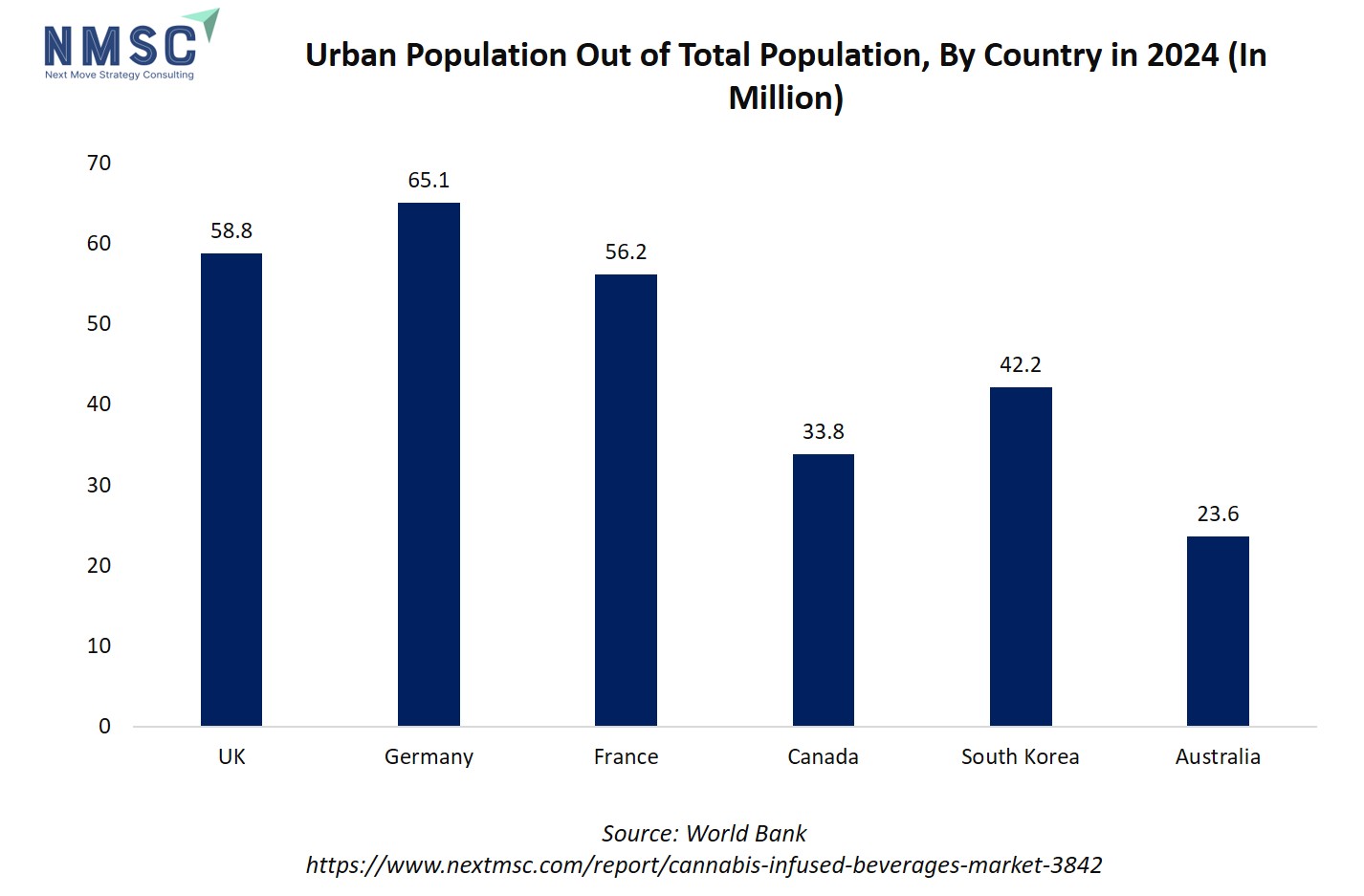
Rapid urbanization is fueling the growth of the market by creating dense consumer hubs with higher disposable incomes and greater exposure to lifestyle and wellness trends. Urban populations are more likely to adopt innovative beverage products, including cannabis-infused options, due to increased awareness, social acceptance, and access to modern retail outlets and e-commerce platforms. As cities expand and urban lifestyles evolve, the demand for convenient, functional, and premium beverages is expected to rise, positioning urban centers as key growth engines for the market.
What Are the Key Trends in the Cannabis Infused Beverages Industry?
How is the Cannabis Infused Beverages Market Embracing Functional Ingredients?
The market is increasingly incorporating functional ingredients to align with the growing demand for health-enhancing and wellness-focused products. Ingredients such as acerola juice, maitake mushrooms, and chlorella are being infused into cannabis beverages for their immunity-boosting and anti-inflammatory benefits. This integration allows brands to position their products not only as recreational or relaxation aids but also as part of a holistic wellness lifestyle. By promoting these functional benefits, companies appeal to a broader audience seeking beverages that deliver both pleasure and purpose.
What Role does E-Commerce Play in the Market's Growth?
E-commerce is playing a crucial role in accelerating the market growth by offering consumers easy and discreet access to a diverse range of products. The rapid expansion of online retail channels has enhanced product visibility, convenience, and global reach, key factors driving market adoption. This shift is particularly notable as consumers increasingly prefer purchasing cannabis-infused drinks online due to flexible delivery options and access to niche or premium brands.
Companies in the industry are heavily investing in user-friendly e-commerce platforms and digital marketing campaigns to strengthen their online presence and engage with tech-savvy consumers. Features such as transparent product descriptions, ingredient breakdowns, customer reviews, and personalized product recommendations are enhancing consumer trust and satisfaction. As regulations around online cannabis sales evolve, e-commerce is expected to remain a key driver of growth, enabling brands to expand their market footprint and connect with a broader, health-conscious audience.
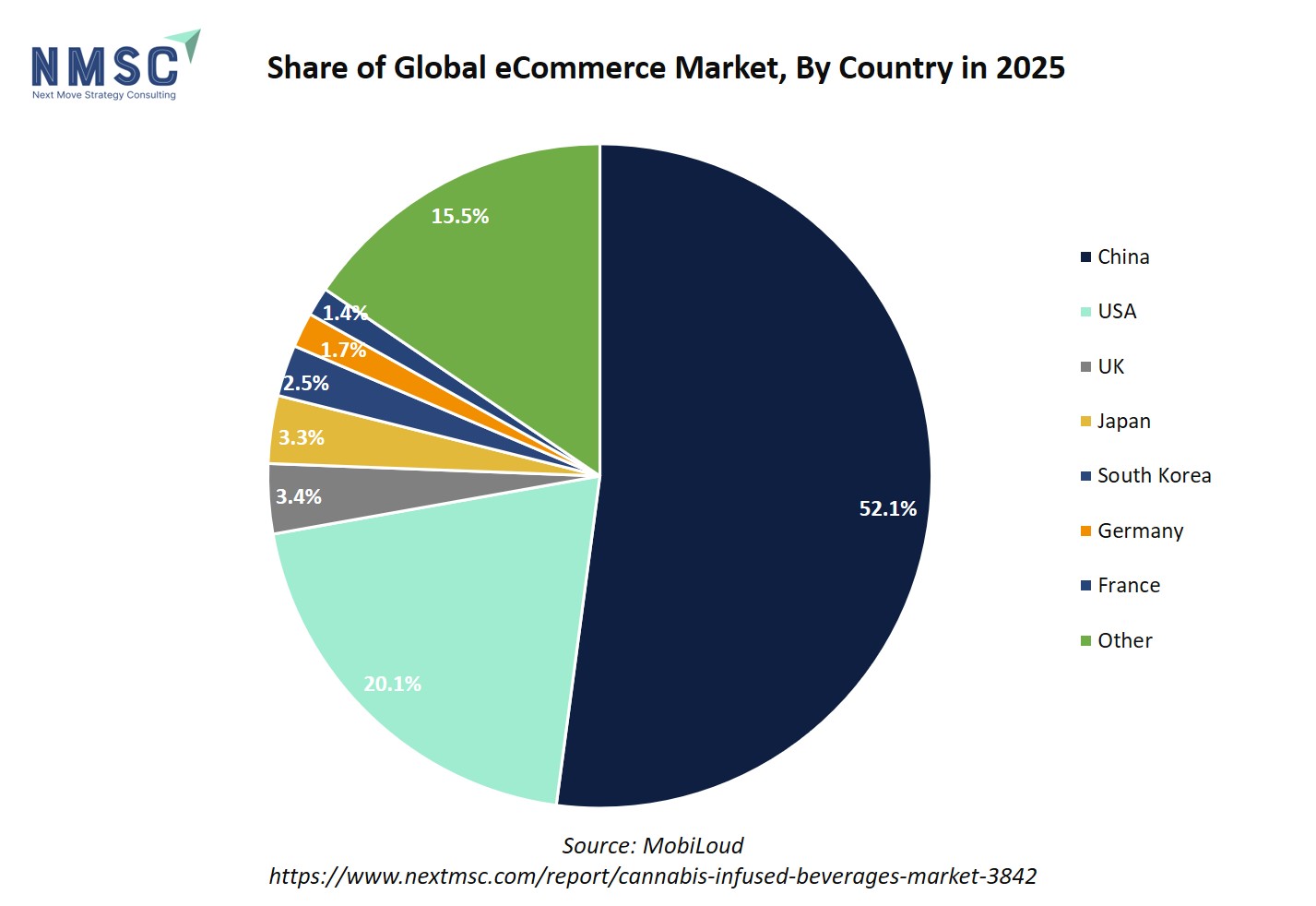
The chart illustrates the global eCommerce landscape in 2025, highlighting a highly concentrated market where China leads with a 52.1% share, followed by the USA at 20.1%, while other countries like the UK, Japan, and South Korea hold comparatively smaller portions. This strong dominance by China and the USA indicates that the growth of the cannabis infused beverages industry, an industry increasingly leveraging online retail channels for consumer access and brand visibility, will be largely shaped by regulatory frameworks, digital adoption trends, and evolving consumer preferences within these two major markets.
How are Cannabis Infused Beverages Extracts Transforming the Personal Care Industry?
Cannabis-infused extracts are making a significant impact on the personal care industry by offering natural, clean-label alternatives to synthetic ingredients. These extracts, rich in antioxidants, essential oils, and bioactive compounds, are increasingly featured in skincare, haircare, and cosmetic formulations due to their soothing, anti-inflammatory, and rejuvenating properties. This reflects a broader consumer shift toward sustainability, transparency, and multifunctionality in beauty and wellness products. By emphasizing the purity, origin, and efficacy of cannabis-derived ingredients, brands build stronger emotional connections, enhance brand credibility, and capture a larger share of the premium personal care segment.
What Are the Key Market Drivers, Breakthroughs, and Investment Opportunities That Will Shape the Cannabis-Infused Beverages Industry in the Next Decade?
The market is experiencing rapid growth, driven by rising consumer demand for functional and wellness-focused drinks and continuous product innovation. Consumers are increasingly seeking beverages that promote relaxation, stress relief, and overall well-being, with CBD- and THC-infused drinks aligning perfectly with this trend. Advances in formulation technologies, such as nanoemulsion and water-soluble cannabinoids, have enhanced product quality and bioavailability, while diversification into categories like sparkling waters, teas, and energy drinks is expanding market reach. However, the industry faces challenges from stringent and inconsistent regulatory frameworks that limit innovation and cross-border trade. Nonetheless, the growing focus on personalized wellness beverages presents strong opportunities for future market expansion.
Growth Drivers:
How is Rising Consumer Demand for Functional and Wellness Drinks Driving the Cannabis Infused Beverages Industry?
The growing consumer focus on health, wellness, and natural ingredients is a major driver of the market. Today’s consumers are increasingly seeking beverages that offer more than just refreshment, they want products that support relaxation, stress relief, improved sleep, and overall well-being. Cannabis-infused drinks, especially those containing CBD, align perfectly with this trend due to their perceived therapeutic benefits such as anxiety reduction and pain management.
Furthermore, the integration of functional ingredients like adaptogens, vitamins, and herbal extracts alongside cannabis compounds enhances the appeal of these beverages. This combination caters to the rising demand for multi-benefit drinks that promote both physical and mental wellness. As a result, manufacturers are formulating innovative product lines positioned as healthier, natural alternatives to traditional alcoholic and sugary beverages, driving strong market adoption among health-conscious consumers.
How are Product Innovation and Diversification Boosting the Market Demand?
Product innovation and diversification are key drivers fueling the growth of the market. As consumer preferences evolve, companies are developing a wide variety of products that cater to different tastes, potency levels, and lifestyle needs. Innovations in formulation technology, such as nanoemulsion and water-soluble cannabinoids, have improved the bioavailability, taste, and consistency of cannabis-infused beverages, making them more appealing and effective.
Manufacturers are also diversifying product offerings across categories such as sparkling waters, teas, coffees, energy drinks, and functional wellness beverages. This variety enables brands to target multiple consumer segments, from those seeking relaxation and stress relief to those interested in enhanced focus or fitness recovery. Additionally, the introduction of low-dose and alcohol-free cannabis drinks is attracting health-conscious consumers looking for alternatives to traditional alcoholic beverages. These advancements in formulation, flavor, and functionality are not only broadening market reach but also strengthening brand differentiation in an increasingly competitive landscape.
Growth Inhibitors:
What Stringent Regulatory Framework and Legal Uncertainty are Hindering the Growth of the Cannabis Infused Beverages Market?
One of the major restraints in the market is the complex and inconsistent regulatory landscape surrounding cannabis use and distribution. Regulations vary widely across countries, and even within regions of the same country, creating significant barriers for product formulation, marketing, and cross-border trade. Many markets still impose restrictions on THC content or prohibit the use of cannabis-derived ingredients altogether, limiting innovation and cannabis infused beverages market expansion. This lack of regulatory clarity also discourages investment and slows the entry of new players, thereby restraining overall market growth.
How Functional and Personalized Wellness Drink Creates Opportunities for Cannabis Infused Beverages Market?
An emerging opportunity in the market lies in developing functional and personalized wellness drinks that cater to specific consumer needs such as relaxation, sleep, focus, or recovery. With growing demand for health-oriented and low-dose cannabis products, brands appeal to wellness-conscious consumers by combining CBD or THC with functional ingredients like adaptogens, vitamins, and herbal extracts. This approach not only broadens the consumer base beyond recreational users but also positions cannabis beverages as mainstream wellness products. As regulatory acceptance and consumer education improve, functional and personalized formulations present a strong avenue for differentiation and long-term market growth.
How Is the Cannabis-Infused Beverages Market Segmented in This Report, and What Are the Key Insights From the Segmentation Analysis?
By Cannabinoid Type Insights
Is the Cannabis Infused Beverages Market Trends in 2025 Shaped by CBD and THC Products?
Based on cannabinoid type, the cannabis infused beverages market segments are divided into CBD Beverages (Non-psychoactive) and THC Beverages (Psychoactive).
CBD Beverages (Non-psychoactive) are rapidly gaining traction due to their perceived health and wellness benefits without the intoxicating effects associated with THC. Hemp-derived and synthetic CBD are commonly used in functional drinks such as teas, sparkling waters, smoothies, and wellness shots. Consumers are attracted to CBD beverages for stress relief, relaxation, improved sleep, and general wellness. Manufacturers are capitalizing on this trend by developing innovative formulations, including microdoses and blends with herbal extracts, vitamins, or adaptogens, catering to the growing demand for natural, functional, and non-psychoactive beverage options.
THC Beverages (Psychoactive) are primarily sought for recreational and therapeutic experiences, offering mild euphoria, relaxation, or mood enhancement. The market includes low-THC/microdose drinks, standard-THC beverages, and balanced THC-CBD blends to suit diverse consumer preferences. Low-THC and microdose options appeal to wellness-focused consumers who want controlled psychoactive effects, while standard THC beverages target recreational users. Producers focus on product safety, accurate dosing, and innovative delivery formats, such as ready-to-drink bottles and functional shots, to enhance user experience. The growing legalization and regulatory acceptance in various regions further bolster market adoption for THC-infused beverages.
By Product Type Insights
Are Alcoholic Cannabis Beverages Driving Innovation in the Market?
Based on product type, the market is segmented into Alcoholic Beverages and Non-Alcoholic Beverages.
Based on product type, Alcoholic Beverages in the cannabis-infused market include beer, wine, and ready-to-drink cocktails. These beverages combine the relaxing and psychoactive effects of THC or the wellness benefits of CBD with traditional alcoholic drinks. Consumers are increasingly seeking alternatives to conventional alcoholic products, opting for cannabis-infused options that provide a unique experience and functional benefits. Producers focus on flavor innovation, precise dosing, and premium packaging to appeal to adult consumers looking for novel, social, and lifestyle-oriented drinks. The rising trend of low-alcohol and microdose products further drives adoption in health-conscious and experimental consumer segments.
By Product Grade Insights
What are Food Grade Cannabis Beverages?
Based on product grade, the market is segmented into Food Grade and Pharmaceutical Grade.
Food-grade beverages are formulated for general consumption and comply with food safety standards. They include CBD or THC-infused teas, coffees, juices, smoothies, and ready-to-drink drinks. These products appeal to health-conscious consumers seeking natural, functional, and wellness-focused options. Manufacturers emphasize flavor, quality, and ingredient transparency.
By Formulation Technology Insights
Are Advanced Formulation Technologies Driving the Cannabis Infused Beverages Market?
Based on formulation technology, the market is segmented into Oil-Based, Emulsified Water-Soluble, and Nanoemulsion beverages.
Oil-based cannabis beverages use cannabinoids dissolved in oils such as MCT or hemp seed oil. These formulations are commonly incorporated into teas, coffees, and functional drinks. While easy to produce, oil-based beverages have slower absorption and require emulsification for uniform mixing in liquids. Manufacturers leverage this technology to create cost-effective and stable products for general wellness consumers.
Emulsified water-soluble beverages disperse cannabinoids in water, enhancing mixability and consistency in drinks. This formulation improves bioavailability compared to traditional oil-based products, making it ideal for ready-to-drink teas, sparkling waters, and functional wellness beverages. Brands adopt this technology to deliver more convenient, effective, and consumer-friendly cannabis beverages. Nanoemulsion technology breaks cannabinoids into tiny particles, enabling rapid absorption, improved bioavailability, and better taste. This advanced approach is widely used in functional shots, smoothies, and premium wellness drinks, providing fast-acting effects and consistent experiences. Companies utilize nanoemulsions to target health-conscious consumers seeking high-performance, scientifically formulated cannabis beverages.
By Packaging Form Insights
Are Packaging Innovations Shaping the Cannabis Infused Beverages Market?
Based on packaging form, the market is segmented into Ready-to-Drink Bottles and Cans, Concentrates and Syrups, and Powdered Mixes.
These pre-packaged beverages contain CBD or THC and are designed for immediate consumption. They include sparkling waters, teas, coffees, juices, and functional wellness drinks. The convenient format appeals to on-the-go consumers and is widely distributed through retail and online channels, supporting mass adoption.
Concentrates and syrups are highly potent liquid cannabis extracts that be added to beverages or used as mixers. They allow consumers to control dosage and customize their drinks, making them popular in-home use as well as bars and cafes. Manufacturers focus on potency, purity, and versatility in applications. Powdered mixes are dehydrated cannabis-infused formulations that be reconstituted with water or other liquids. They offer long shelf life, easy storage, and flexible dosing. Popular options include smoothie powders, functional shots, and herbal drink mixes, targeting wellness-focused consumers seeking convenient and customizable beverage solutions.
By Distribution Channel Insights
Is Distribution Strategy Key to Expanding the Cannabis Infused Beverages Market?
Based on distribution channel, the market is segmented into Online and Offline channels.
Online channels include e-commerce marketplaces and direct-to-consumer (D2C) platforms. These channels provide convenience, a wider product selection, and access to niche THC-infused drinks that not be available in physical stores. The growth of online sales is driven by consumer preference for home delivery, subscription models, and digital shopping experiences.
Offline channels include supermarkets and hypermarkets, convenience stores, specialty health and wellness stores, and licensed dispensaries. These physical retail formats allow consumers to examine products firsthand, ensure authenticity, and access ready-to-drink and premium cannabis-infused beverages. Offline distribution remains important for brand visibility, consumer trust, and catering to shoppers who prefer in-store purchases.
By End User Insights
Are Consumer Demographics Driving the Cannabis Infused Beverages Market?
Based on end user, the market is segmented into Young Adults, Adults, and Older Adults.
Young adults, typically aged 18–34, are early adopters of cannabis-infused beverages. They are drawn to functional drinks, sparkling waters, teas, coffees, and ready-to-drink cocktails that offer wellness, relaxation, or recreational benefits. This group values innovative flavors, trendy packaging, and convenience.
Adults, aged 35–54, consume cannabis beverages primarily for health, wellness, and lifestyle purposes. They prefer products that support relaxation, stress relief, focus, or recovery. Ready-to-drink and functional beverages with clear dosing, natural ingredients, and quality assurance are particularly appealing to this segment. Older adults, aged 55 and above, are mainly interested in the therapeutic benefits of cannabis beverages, such as pain management, improved sleep, and overall wellness. They tend to choose food-grade or pharmaceutical-grade products with trusted formulations, clear labeling, and reliable dosing for safe and effective consumption.
Regional Outlook
The cannabis infused beverages market share is geographically studied across North America, Europe, Asia Pacific, Middle East & Africa, and Latin America and each region is further studied across countries.
Cannabis Infused Beverages Market in North America
North America holds a leading position in the global market, driven by the rising acceptance of cannabis products and growing consumer demand for functional and wellness-oriented drinks. The region’s emphasis on natural, plant-based ingredients and clean-label formulations is propelling product innovation. Increasing legalization of cannabis across U.S. states and Canadian provinces, coupled with heightened awareness of CBD’s therapeutic benefits, is further accelerating market growth. Additionally, a strong distribution network, advanced product formulation technologies, and an expanding base of health-conscious consumers are fostering the development of innovative, premium CBD beverages across North America.
Cannabis Infused Beverages Market in the United States
The United States represents one of the most dynamic markets for Cannabis-Infused Beverages, driven by widespread legalization efforts and consumer demand for natural, functional, and alcohol-free alternatives. The increasing popularity of CBD-infused sparkling waters, teas, and wellness drinks reflects a cultural shift toward healthier consumption habits. Favorable state-level regulations, combined with robust R&D activities, are improving product quality, consistency, and safety. The U.S. market also benefits from an expanding retail and e-commerce infrastructure that enhances product accessibility. These factors, along with rising consumer interest in low-dose and functional cannabis beverages, are fueling strong market growth nationwide.
Cannabis Infused Beverages Market in Canada
Canada’s market is experiencing rapid expansion following nationwide legalization. The country’s strict regulatory standards ensure product safety and transparency, fostering consumer trust and confidence. Canadian consumers are increasingly opting for plant-based, low-dose, and alcohol-free cannabis beverages as part of a balanced lifestyle. The market is also benefiting from continuous product innovation, including the introduction of nanoemulsion-based beverages that offer faster onset and consistent effects. Supported by mature distribution channels and strong government oversight, Canada is emerging as a hub for premium, responsibly produced cannabis-infused drinks in North America.
Cannabis Infused Beverages Market in Europe
Europe’s market is witnessing steady growth, supported by progressive regulatory developments and increasing consumer acceptance of CBD-based products. Countries such as Germany, the UK, France, and Italy are leading adoption, driven by a growing preference for natural, functional, and low-THC beverages. The region’s focus on sustainability, quality assurance, and clean-label formulations aligns with consumer expectations and the EU’s broader health and environmental initiatives. Additionally, collaborations between food, beverage, and pharmaceutical companies are driving innovation in CBD-infused functional drinks, positioning Europe as an emerging hub for cannabis wellness beverages.
Cannabis Infused Beverages Market in the United Kingdom
The United Kingdom is witnessing growing interest in cannabis infused beverages as consumers increasingly seek natural and wellness-enhancing drink options. The market is driven by the rising popularity of CBD-based products and supportive regulatory developments that allow for wider product availability. Companies are introducing premium sparkling waters, teas, and adaptogenic blends infused with CBD to cater to health-conscious and younger demographics. The UK’s focus on clean-label products, sustainable sourcing, and transparent marketing practices further supports market expansion and consumer trust in cannabis-infused drink offerings.
Cannabis Infused Beverages Market in Germany
Germany is emerging as one of Europe’s key markets for Cannabis-Infused Beverages, supported by a well-established pharmaceutical and nutraceutical infrastructure. The country’s stringent regulations ensure high product quality, safety, and standardization, which boosts consumer confidence. Demand is growing for functional CBD beverages that offer relaxation, stress relief, and sleep benefits without psychoactive effects. As Germany moves toward broader cannabis legalization, opportunities for both CBD- and THC-infused beverage innovations are expanding, positioning the country as a central player in Europe’s evolving cannabis beverage sector.
Cannabis Infused Beverages Market in France
France’s market is growing steadily, fueled by increasing awareness of CBD’s health benefits and a strong preference for natural, organic, and premium beverage options. French consumers are embracing wellness-focused drinks that promote relaxation and balance, with CBD-infused teas, juices, and sparkling waters gaining popularity. Strict quality standards ensure safety and transparency, fostering consumer trust. As government attitudes toward cannabis-based wellness products continue to evolve, France is poised to become a significant market for high-quality, functional cannabis wellness drinks in Europe.
Cannabis Infused Beverages Market in Italy
Italy’s market reflects a growing consumer shift toward natural, plant-based, and wellness-oriented products. The country’s deep-rooted culture of herbal remedies and holistic health aligns well with the benefits of CBD-infused drinks. Italian consumers are increasingly adopting cannabis beverages as functional alternatives to traditional alcoholic drinks, integrating them into daily wellness routines. With rising acceptance, innovation in flavors, and a focus on premium ingredients, Italy is emerging as a promising market for artisanal and wellness-driven cannabis beverages in Europe.
Cannabis Infused Beverages Market in Spain
Spain’s market is experiencing notable growth, supported by increasing consumer interest in natural and functional drinks. The country’s progressive stance toward CBD, coupled with a vibrant beverage industry, is driving innovation in product formulations and flavors. Spanish consumers are showing growing acceptance of CBD-infused beverages as stress-relief and wellness solutions. Supportive retail frameworks and tourism-driven demand further contribute to market expansion, positioning Spain as one of the leading European destinations for cannabis beverage innovation.
Cannabis Infused Beverages Market in the Nordics
The Nordic countries, including Sweden, Denmark, Norway, and Finland, are witnessing growing demand for cannabis infused beverages driven by strong consumer values around sustainability, wellness, and transparency. Nordic consumers prefer clean-label, plant-based drinks that support mental clarity, recovery, and relaxation. Stringent quality regulations and an emphasis on ethical sourcing foster trust and innovation in the regional market. As CBD becomes more accepted across the region, the Nordics are emerging as a niche but influential market for premium, eco-conscious cannabis-infused beverage brands.
Cannabis Infused Beverages Market in the Asia-Pacific
The Asia-Pacific region is rapidly emerging as both a major producer and consumer of Cannabis-Infused Beverages. Rising disposable incomes, growing wellness awareness, and evolving attitudes toward cannabis are fueling market expansion. Countries such as Japan, South Korea, and Australia are witnessing increasing adoption of CBD-infused functional drinks, while India and China are key suppliers of herbal and adaptogenic ingredients used in formulations. The integration of cannabis with traditional wellness practices and herbal medicine is driving innovation, positioning Asia-Pacific as one of the fastest-growing regions in the global cannabis beverage landscape.
Cannabis Infused Beverages Market in China
China’s market is witnessing steady growth, driven by the country’s deep-rooted association with herbal and traditional medicine and a growing interest in natural wellness products. Consumers are increasingly adopting CBD-infused functional drinks for relaxation, stress relief, and overall health enhancement. Ongoing research and development efforts are improving product quality, safety, and consistency, fostering consumer trust. Although cannabis regulations remain restrictive, the rising acceptance of hemp-derived ingredients and expanding e-commerce channels are paving the way for gradual market adoption and innovation in China’s cannabis beverage sector.
Cannabis Infused Beverages Market in Japan
Japan’s market is evolving as consumer attitudes toward wellness and functional drinks shift toward natural and non-alcoholic options. Driven by an aging population and a strong cultural focus on health, CBD-infused teas, sparkling waters, and energy drinks are gaining traction. The market emphasizes product purity, safety, and innovation, supported by stringent regulatory standards. As public awareness of CBD’s therapeutic benefits increases and imports of hemp-based ingredients become more accepted, Japan is emerging as a promising market for premium, health-oriented cannabis beverages.
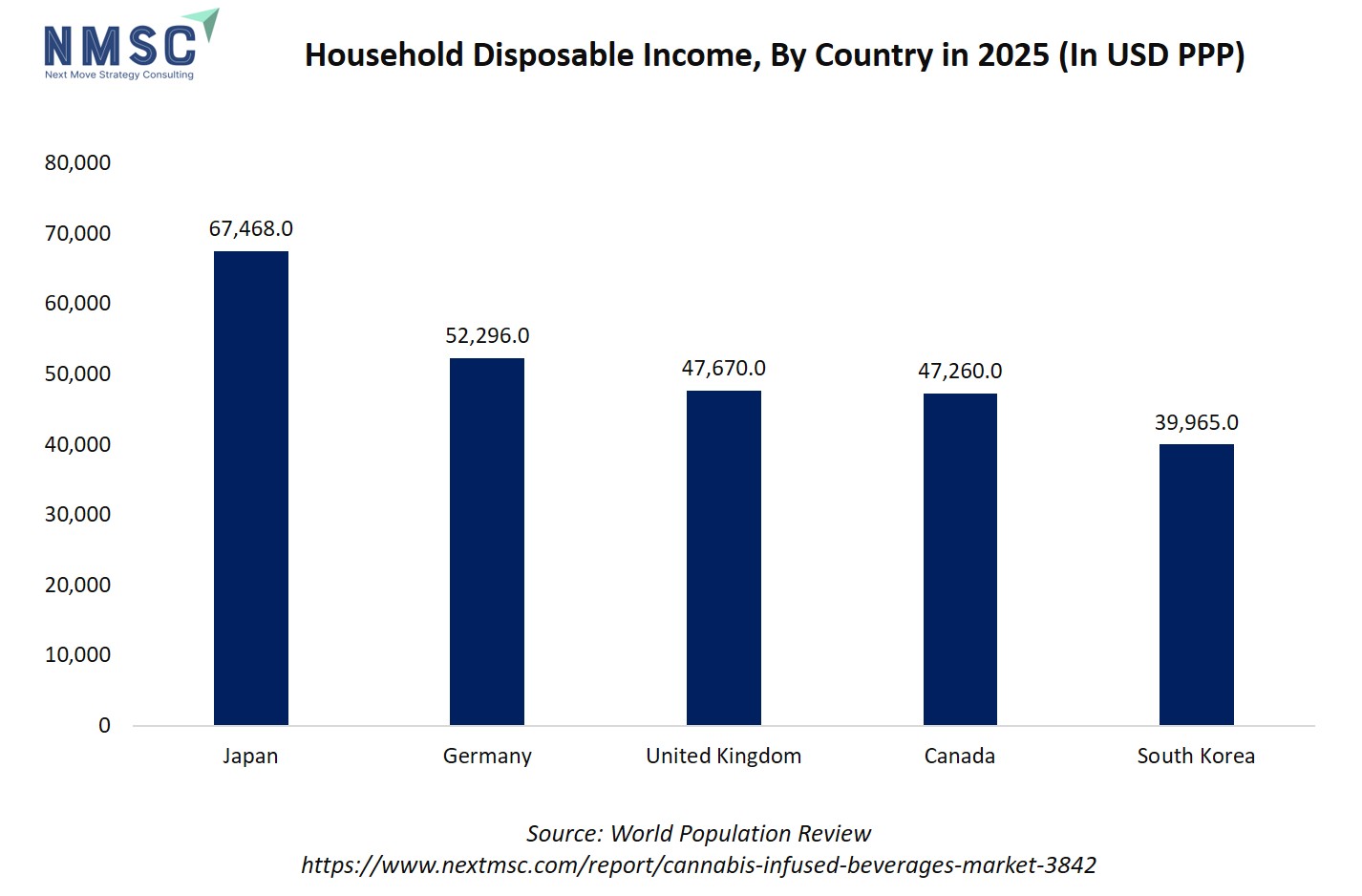
The chart titled Household Disposable Income, By Country in 2025 (In USD PPP) highlights the economic strength of major developed nations, which directly supports growth in the cannabis infused beverages market. Japan ($67,468) leads with the highest disposable income, followed by Germany ($52,296), the United Kingdom ($47,670), Canada ($47,260), and South Korea ($39,965). Higher disposable incomes in these countries indicate greater consumer spending power and a willingness to invest in premium lifestyle and wellness products, including cannabis-infused beverages. As consumers increasingly seek relaxation, functional benefits, and innovative beverage experiences, their financial capability enables them to explore high-value cannabis beverage options. This link between disposable income and evolving consumer preferences positions household income as a key driver of market growth.
Cannabis Infused Beverages Market in India
India’s cannabis infused beverages market is growing rapidly, fuelled by the country’s traditional Ayurvedic heritage and increasing consumer interest in plant-based wellness. With rising awareness of the potential benefits of CBD and hemp-infused drinks for relaxation, stress management, and recovery, demand is accelerating across urban populations. The availability of locally sourced natural ingredients and a supportive ecosystem for herbal product innovation further strengthen India’s market position. As regulatory clarity improves and acceptance of cannabis-based wellness products expands, India is poised to become a key player in the global cannabis-infused beverage landscape.
Cannabis Infused Beverages Market in South Korea
South Korea’s cannabis infused beverages market is gaining momentum due to increasing consumer demand for clean-label, plant-based, and functional drinks. Growing awareness of CBD’s potential health benefits and a cultural emphasis on wellness are fueling adoption, especially among younger consumers seeking alternatives to alcohol and energy drinks. The country’s strong retail infrastructure and commitment to product quality and safety are supporting market growth. As regulations surrounding hemp-derived CBD gradually ease, South Korea is expected to emerge as one of the leading cannabis beverage markets in East Asia.
Cannabis Infused Beverages Market in Taiwan
Taiwan’s cannabis infused beverages market is characterized by growing consumer interest in natural and functional drinks aimed at promoting relaxation, focus, and wellness. The island’s aging population and increasing awareness of CBD’s benefits are driving demand for safe and effective beverage options. Taiwan’s strict regulatory oversight ensures high product quality and transparency, while innovation in product formulation and packaging is attracting a younger, health-conscious audience. These factors collectively contribute to the steady growth of the cannabis-infused beverage sector in Taiwan.
Cannabis Infused Beverages Market in Indonesia
Indonesia’s cannabis infused beverages market is at an emerging stage, supported by the nation’s vast biodiversity and growing interest in natural wellness solutions. Although cannabis regulations remain strict, the potential for hemp-derived beverages is rising, particularly in wellness tourism and urban consumer markets. Increasing demand for functional drinks and herbal infusions, along with advancements in sustainable ingredient sourcing, are paving the way for future market development. As public perception evolves, Indonesia could become an important market in the Asia-Pacific cannabis beverage ecosystem.
Cannabis Infused Beverages Market in Australia
Australia’s cannabis infused beverages market is expanding steadily as consumer preferences shift toward healthier, plant-based, and alcohol-free alternatives. The legalization of low-THC hemp and CBD products, combined with a strong regulatory framework, is fostering trust and innovation. Australian brands are introducing CBD-infused teas, sparkling waters, and functional wellness drinks to meet the growing demand for relaxation and recovery beverages. Supported by a vibrant natural product industry and increasing retail availability, Australia is emerging as a key player in the Asia-Pacific cannabis beverage market.
Cannabis Infused Beverages Market in Latin America
In Latin America, the market is gaining traction due to the region’s deep-rooted culture of plant-based medicine and favourable climatic conditions for cannabis cultivation. Countries such as Brazil, Mexico, and Colombia are witnessing growing acceptance of CBD beverages as alternatives for relaxation and wellness. Increasing legalization efforts and rising consumer education are encouraging product innovation and investment. However, regulatory inconsistencies and infrastructure limitations remain challenges. Despite this, Latin America holds strong potential as a production and consumption hub for cannabis-infused beverages.
Cannabis Infused Beverages Market in the Middle East & Africa
The cannabis infused beverages market demand in the Middle East & Africa is evolving at a moderate pace, influenced by growing health awareness and interest in natural wellness products. In the Middle East, consumer demand for CBD-infused beverages remains cautious but is slowly expanding through wellness and functional drink categories. In Africa, particularly in South Africa, increasing acceptance of cannabis-based products and the rise of local hemp cultivation are driving growth. The region’s biodiversity and emerging regulatory reforms present significant long-term opportunities for the development of unique, regionally inspired cannabis-infused beverages.
Competitive Landscape
Which Companies Dominate the Cannabis Infused Beverages Industry and How do they Compete?
Leading companies in the cannabis infused beverages market, including Canopy Growth Corporation, Tilray Brands, Inc., Aurora Cannabis Inc., and Curaleaf, have established themselves as major players through strategic acquisitions, product innovation, and global expansion. Canopy Growth Corporation leverages its extensive research and development capabilities to create diverse, functional cannabis beverages, while Tilray Brands, Inc. focuses on broadening its product portfolio and entering new international markets. Aurora Cannabis Inc. emphasizes high-quality production and consistent formulations, and Curaleaf invests in scalable manufacturing and distribution networks. Niche players such as ARTET, LLC, FABLE, Recess, and Lagunitas (Hi-Fi Hops) compete by offering specialized, functional, and lifestyle-focused beverages. Companies differentiate themselves through innovative formulations, sustainability initiatives, and strong branding, aiming to capture market share in a rapidly growing and competitive landscape.
Market Dominated by Cannabis Infused Beverages Giants and Specialists
The cannabis infused beverages market is shaped by a mix of global giants and niche specialists, each establishing a foothold across various product segments and regions. Major players such as Canopy Growth Corporation, Tilray Brands, Inc., and Aurora Cannabis Inc. dominate through extensive product portfolios, large-scale production capabilities, and global distribution networks. In contrast, specialized firms like ARTET, LLC, Drinks CQ, and Recess focus on targeted cannabis beverage offerings, emphasizing functional formulations, unique flavors, or low-dose products to cater to specific consumer needs. This combination fosters a competitive environment, where large companies leverage scale and innovation while specialists drive differentiation through quality, creativity, and regional insights.
Innovation and Adaptability Drive Market Success
Innovation remains a key factor for success in the cannabis infused beverages market. Companies like Lagunitas (Hi-Fi Hops) and FABLE invest in new formulations and functional beverage concepts to meet evolving wellness and lifestyle trends. Dixie Brands Inc. and Keef Brands focus on enhancing product efficacy and consumer experience through advances in extraction technology, dosing, and flavor development. Meanwhile, Canna Beverage USA, The Alkaline Water Company, and Mirth Provisions are leveraging plant-based and clean-label innovations to align with consumer preferences for natural, sustainable products. These firms’ adaptability and commitment to R&D ensure they remain competitive in a rapidly evolving market.
Market Players to Opt for Merger & Acquisition Strategies to Expand their Presence
Merger and acquisition (M&A) strategies have become instrumental for market expansion and portfolio diversification in the cannabis infused beverages sector. Recent examples include strategic partnerships and acquisitions by companies such as Curaleaf, NewAge Inc., and Tilray Brands, Inc., aimed at strengthening ingredient portfolios, production capabilities, and geographic reach. Such consolidations enable firms to leverage synergies, scale innovation, and respond efficiently to rising global demand for natural, functional, and sustainable cannabis beverages. These strategic moves reflect a broader trend of consolidation that is shaping the competitive landscape and driving long-term growth in the market.
List of Key Cannabis Infused Beverages Companies
-
Tilray Brands, Inc.
-
Aurora Cannabis Inc.
-
ARTET, LLC
-
Drinks CQ
-
Dixie Brands Inc.
-
FABLE
-
Lagunitas (Hi-Fi Hops)
-
Recess
-
Keef Brands
-
Canna Beverage USA
-
The Alkaline Water Company
-
Mirth Provisions
-
NewAge Inc.
-
Curaleaf
What Are The Latest Key Industry Developments?
-
May 2025 - Tilray announced a new line “XMG Atomic Sours” combining beverages and gummies (10 mg THC + 10 mg CBG) via nano‑emulsified THCA diamonds.
-
December 2024 - Tilray launched its Herb & Bloom line, ready‑to‑drink, non‑alcoholic beverages infused with 5 mg hemp‑derived Delta‑9 THC.
-
April 2024 - Fable launched its nationwide line of premium non‑alcoholic THC/CBD‑infused botanical cocktails (5 mg THC + 3 mg CBD) in a ready‑to‑drink format.
-
January 2024 - Curaleaf launched Stir by Zero Proof, a fast‑acting THC beverage‑mix enhancer (5 mg THC per sachet) for sparkling water.
-
January 2024 - Aurora launched a set of three cannabis‑infused ready‑to‑drink beverages (THC, CBD, CBG blends) for veteran patients in Canada using SōRSE emulsion technology.
What Are the Key Factors Influencing Investment Analysis & Opportunities in the Cannabis
Investment in the cannabis infused beverages market growth is increasingly driven by rising global demand for natural, functional, and wellness-oriented products. Investors are particularly attracted to companies that focus on high-quality cannabis extracts, innovative beverage formulations, and plant-based solutions across functional drinks, dietary supplements, and wellness categories. Key factors influencing investment include product differentiation, proprietary formulations, intellectual property, and the ability to scale production efficiently while maintaining regulatory compliance and traceability. Investment opportunities are strongest in regions with established production infrastructure and rich biodiversity, such as North America, Europe, and Asia-Pacific. Companies that emphasize sustainability, ethical sourcing, innovative delivery formats, and strategic R&D partnerships are better positioned to attract funding and capitalize on growth in this rapidly evolving market.
Key Benefits for Stakeholders:
Next Move Strategy Consulting (NMSC) provides an in-depth analysis of the cannabis infused beverages market, covering historical trends from 2020 to 2024 and offering forecasts through 2030. The study examines regional and country-level dynamics, providing quantitative projections and insights into key growth drivers, challenges, and investment opportunities across all major cannabis beverage segments. The market offers significant benefits for stakeholders by linking economic value with health and wellness trends. Investors gain from strong growth potential, portfolio diversification, and opportunities to support innovative, high-margin, plant-based beverages. Consumers benefit from access to natural, functional, and sustainable drinks that enhance wellness, relaxation, and nutrition. Suppliers and producers enjoy consistent demand for raw materials, while manufacturers leverage cannabis beverages to create premium, differentiated products. This integrated ecosystem fosters mutual growth, where innovation, quality, and sustainability generate value for both financial stakeholders and end users.
Report Scope
|
Parameters |
Details |
|
Market Size in 2025 |
USD 851.5 Million |
|
Revenue Forecast in 2030 |
USD 1879.0 Million |
|
Growth Rate |
CAGR of 17.15% from 2025 to 2030 |
|
Analysis Period |
2024–2030 |
|
Base Year Considered |
2024 |
|
Forecast Period |
2025–2030 |
|
Market Size Estimation |
Million (USD) |
|
Growth Factors |
|
|
Companies Profiled |
15 |
|
Countries Covered |
33 |
|
Market Share |
Available for 10 companies |
|
Customization Scope |
Free customization (equivalent to up to 80 analyst-working hours) after purchase. Addition or alteration to country, regional & segment scope. |
|
Pricing and Purchase Options |
Avail customized purchase options to meet your exact research needs. |
|
Approach |
In-depth primary and secondary research; proprietary databases; rigorous quality control and validation measures. |
|
Analytical Tools |
Porter's Five Forces, SWOT, value chain, and Harvey ball analysis to assess competitive intensity, stakeholder roles, and relative impact of key factors. |
Key Market Segments
By Cannabinoid Type
-
CBD Beverages (Non-psychoactive)
-
Hemp-Derived CBD
-
Synthetic CBD
-
-
THC Beverages (Psychoactive)
-
Low-THC / Microdose Beverages
-
Standard-THC Beverages
-
THC-CBD Blends (Balanced formulations)
-
By Product Type
-
Alcoholic Beverages
-
Beer
-
Wine
-
Ready to Drink Cocktails
-
-
Non-Alcoholic Beverages
-
Sparkling Waters and Seltzers
-
Teas
-
Coffees
-
Juices and Smoothies
-
Energy and Sports Drinks
-
Kombucha and Fermented Drinks
-
Functional Shots and Elixirs
-
By Product Grade
-
Food Grade
-
Pharmaceutical Grade
By Formulation Technology
-
Oil Based
-
Emulsified Water Soluble
-
Nanoemulsion
By Packaging Form
-
Ready to Drink Bottles and Cans
-
Concentrates and Syrups
-
Powdered Mixes
By Distribution Channel
-
Online
-
E commerce Marketplaces
-
Direct to Consumer
-
-
Offline
-
Supermarkets and Hypermarkets
-
Convenience Stores
-
Specialty Health and Wellness Stores
-
Licensed Dispensaries
-
By End User
-
Young Adults
-
Adults
-
Older Adults
Geographical Breakdown
-
North America: U.S., Canada, and Mexico.
-
Europe: U.K., Germany, France, Italy, Spain, Sweden, Denmark, Finland, Netherlands, and Rest of Europe.
-
Asia Pacific: China, India, Japan, South Korea, Taiwan, Indonesia, Vietnam, Australia, Philippines, Malaysia and Rest of APAC.
-
Middle East & Africa (MEA): Saudi Arabia, UAE, Egypt, Israel, Turkey, Nigeria, South Africa, and rest of MEA.
-
Latin America: Brazil, Argentina, Chile, Colombia, and rest of LATAM.
Conclusion & Recommendations
This report provides stakeholders, industry participants, investors, and consultants with actionable insights to leverage the transformative potential of the market. By combining comprehensive data analysis with strategic perspectives, NMSC’s Cannabis Infused Beverages Market Report serves as a vital resource for navigating this evolving sector. The market is set for sustained growth, driven by rising consumer demand for natural, functional, and sustainable beverages across health, wellness, and lifestyle segments. Key strategic priorities include product innovation, regulatory compliance, and supply chain transparency, which enhance brand credibility and market competitiveness. Companies focusing on high-value cannabis extracts, novel formulations, and diversified applications are well-positioned to capture larger market shares and ensure long-term growth. Integrating sustainability and ethical sourcing further strengthens consumer trust and differentiation in a crowded marketplace.
For executives and investors, capitalizing on these trends requires identifying high-potential segments, investing in R&D for innovative cannabis beverage solutions, and forming strategic partnerships to expand distribution. Targeting regions with abundant biodiversity and favorable regulations optimizes sourcing and production strategies. Additionally, emphasizing consumer education, clear labeling, and premium product positioning enhances brand reputation, drives adoption, and unlocks substantial opportunities for value creation in the cannabis infused beverages market.


About the Author
 Tushmi Dutta
— Tushmi Dutta is a focused researcher specializing in detailed analysis and insight-driven research across diverse business landscapes. She supports strategic initiatives through structured data interpretation, thorough validation, and clear communication of findings that aid informed decision-making. With a strong interest in writing, she enjoys presenting research insights in an engaging and accessible manner. Beyond work, she enjoys traveling, reading, painting, and continuously learning new skills that contribute to her creative and professional growth.
Tushmi Dutta
— Tushmi Dutta is a focused researcher specializing in detailed analysis and insight-driven research across diverse business landscapes. She supports strategic initiatives through structured data interpretation, thorough validation, and clear communication of findings that aid informed decision-making. With a strong interest in writing, she enjoys presenting research insights in an engaging and accessible manner. Beyond work, she enjoys traveling, reading, painting, and continuously learning new skills that contribute to her creative and professional growth.
About the Reviewer
 Supradip Baul
— Supradip Baul is an accomplished business consultant and strategist with over a decade of rich experience in market intelligence, strategy, technology, and business transformation. His work has included rigorous qualitative and quantitative analysis across multiple industries, helping clients shape investment decisions and long-term roadmaps. Earlier in his career, he was associated with Gartner, where he contributed to industry-leading reports and market share analyses. He has worked with leading global companies and holds an MBA with a dual specialization in Marketing and Finance.
Supradip Baul
— Supradip Baul is an accomplished business consultant and strategist with over a decade of rich experience in market intelligence, strategy, technology, and business transformation. His work has included rigorous qualitative and quantitative analysis across multiple industries, helping clients shape investment decisions and long-term roadmaps. Earlier in his career, he was associated with Gartner, where he contributed to industry-leading reports and market share analyses. He has worked with leading global companies and holds an MBA with a dual specialization in Marketing and Finance.
At Next Move Strategy Consulting, we understand that insightful market research is the cornerstone of successful business decisions. That's why we employ a robust and multifaceted approach, combining various methodologies to deliver the most accurate and actionable data for our clients.

Research Landscape
We navigate the world of research with two primary approaches:
Qualitative Approach
Our qualitative research methodologies involve immersive techniques such as in-depth interviews, focus groups, and observational studies. By engaging directly with individuals and stakeholders, we uncover valuable insights that quantitative data alone may overlook.

Quantitative Research
In tandem with qualitative methodologies, NMSC leverages the power of Quantitative Research to provide a robust foundation of numerical insights. Through systematic data collection and analysis, we quantify patterns, preferences, and market trends, offering a comprehensive view of the business landscape.
Our quantitative research approach employs diverse tools, including surveys, experiments, and statistical modelling. These methodologies enable us to gather data from a large and representative sample, ensuring the statistical significance of our findings. By employing structured questionnaires and standardized data collection methods, we guarantee the reliability and validity of the information we present to our clients.
Quantitative research is particularly effective in measuring the prevalence of trends, assessing market size, and gauging the impact of various factors on consumer behavior. The numerical precision attained through this approach equips our clients with actionable insights, facilitating data-driven decision-making and strategy formulation.


Our Specialized Toolbox for Industry-Specific Market Research
We deploy a specialized arsenal of techniques tailored to meet your unique requirements. Here's a glimpse into our comprehensive toolbox:

Information Procurement
The stage entails acquiring market data or relevant information through various sources and methodologies.


Market Research Approach
We utilize both top-down and bottom-up approaches in market research analysis to achieve a comprehensive understanding of the market dynamics, leveraging the broad perspective of industry trends and macroeconomic factors alongside detailed insights from specific segments and individual companies.

Porters Five Forces Analysis
We conduct Porter's Five Forces analysis to evaluate the competitive landscape of an industry, providing us with insights into factors that affect profitability and strategic positioning.

SWOT Analysis

Forecasting
We utilize a forecasting model to predict future consumption by considering parameters like population, economics, regulations, market competition, drivers, constraints, technology, and pricing. We also employ statistical techniques such as multilinear regression, exponential smoothing, moving average, ARIMA, and Monte Carlo simulations for accurate predictions. In econometric forecasting, we analyzed short-term and long-term event impacts, attributing values based on regulatory frameworks, economic factors, and market events.





 Speak to Our Analyst