Drone-as-a-Service (DaaS) Market Size, Share, Trends and Growth Analysis, By Service Type (Data Acquisition and Aerial Imaging Services, Inspection Services, Delivery and Logistics Services, Data Processing and Analytics Services, Agricultural Services, and Security and Surveillance Services), By Drone Type (Rotary-Wing, Fixed-Wing, and Hybrid VTOL), By Deployment Model, By Range (VLOS and BVLOS), By End Use, and Region — Global Industry Report and Forecast, 2026–2035
Industry: Aerospace & Defense | Publishing Date: August 14, 2026 | Last Updated: August 14, 2026 | No of Pages: N/A | No. of Tables: N/A | No. of Figures: N/A | Format: PDF | Report Code: AD5726
What Is the Drone-as-a-Service (DaaS) Market Size?
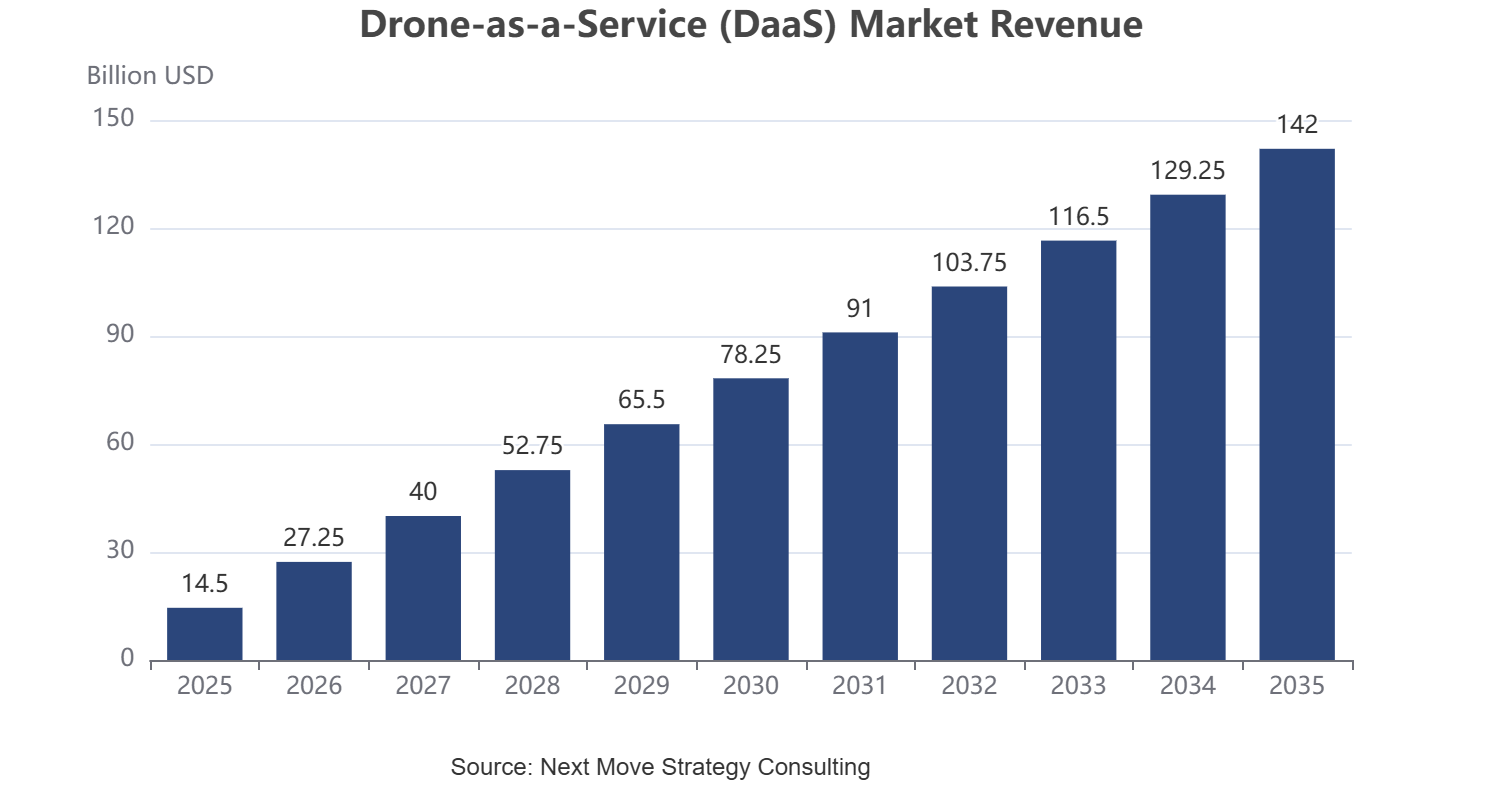
The global Drone-as-a-Service (DaaS) Market size was valued at USD 14.5 Billion in 2025 and is estimated at USD 18.6 Billion in 2026, forecast to reach USD 142 Billion by 2035, expanding at a 25.3% CAGR between 2026 and 2035. North America leads with approximately 40% share, while under service type, Data Acquisition and Aerial Imaging Services dominates with approximately 31% share.
We observed that growth is accelerating across every segmentation axis, with BVLOS regulatory progress, drone-in-a-box automation, and expanding delivery networks driving the dominant structural shifts through 2035. The 25.3% CAGR is calculated for the forecast period (2026–2035), while 2025 represents the historical base year for market sizing.
|
Key Takeaways |
|
By Service Type: Data Acquisition and Aerial Imaging Services held the largest share of approximately 31% (USD 4.5 Billion) in 2025; Security and Surveillance Services is the fastest-growing sub-segment at 29.1% CAGR from 2026–2035. |
|
By Drone Type: Rotary-Wing Drones held the largest share of approximately 59% (USD 8.5 Billion) in 2025; Hybrid VTOL Drones is the fastest-growing sub-segment at 30.7% CAGR from 2026–2035. |
|
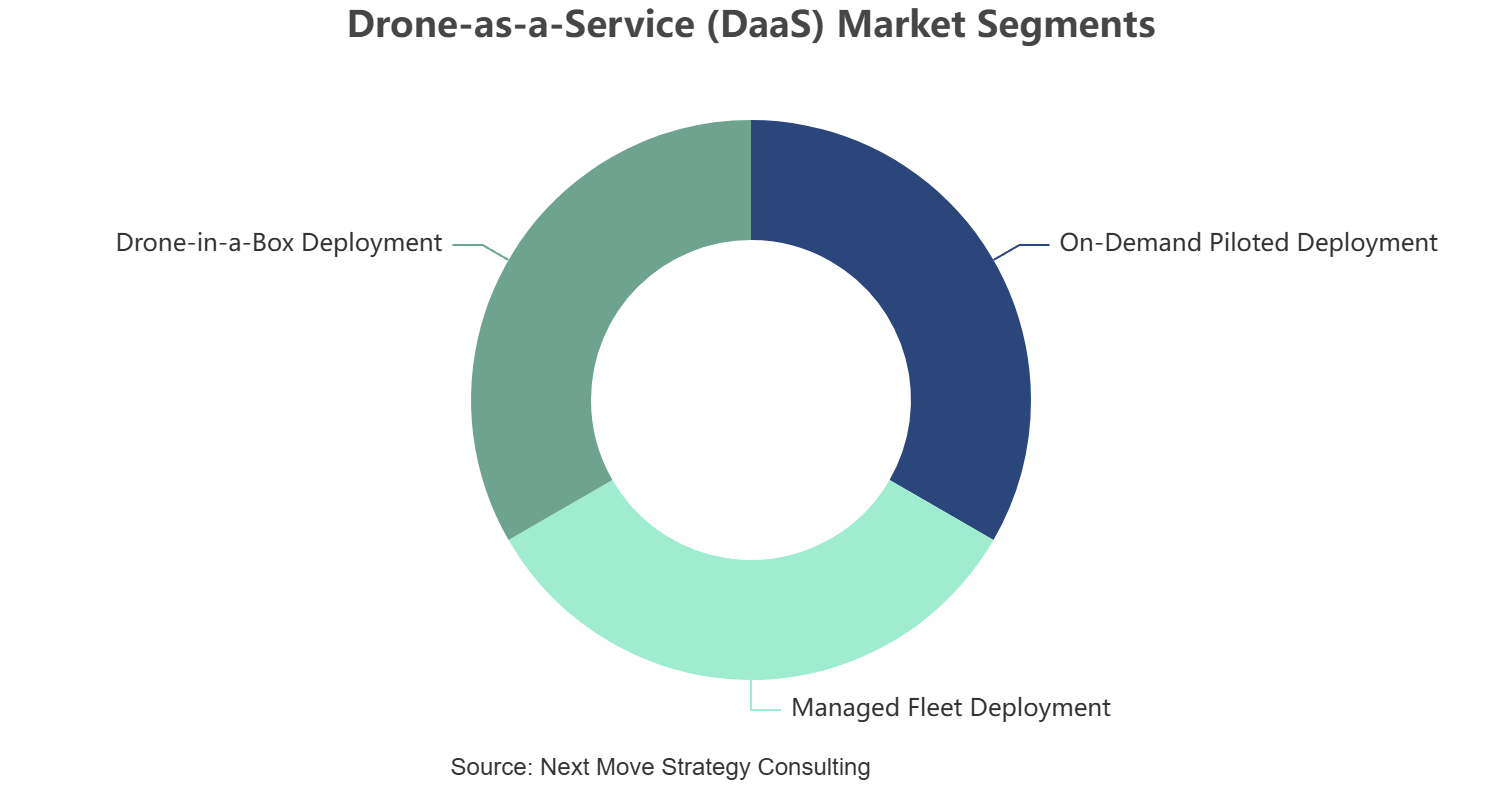
By Deployment Model: On-Demand Piloted Deployment held the largest share of approximately 50% (USD 7.2 Billion) in 2025; Drone-in-a-Box Deployment is the fastest-growing sub-segment at 31.4% CAGR from 2026–2035. |
|
By Range: VLOS held the largest share of approximately 70% (USD 10.2 Billion) in 2025; BVLOS is the fastest-growing sub-segment at 33.0% CAGR from 2026–2035. |
|
By End Use: Construction and Infrastructure held the largest share of approximately 22% (USD 3.15 Billion) in 2025; Healthcare is the fastest-growing sub-segment at 30.4% CAGR from 2026–2035. |
|
Dominant Region: North America dominated with approximately 40% revenue share (USD 5.8 Billion) in 2025. |
|
Fastest-Growing Region: Asia-Pacific is expected to register the highest CAGR of 29.2% during 2026–2035. |
|
Dominant Country: U.S. led with approximately USD 4.6 Billion in 2025. |
|
Fastest-Growing Country: India is the fastest-growing country at approximately 34.9% CAGR from 2026–2035. |
Between 2026 and 2035, the Drone-as-a-Service (DaaS) Market is set to generate an absolute dollar opportunity of USD 123.4 Billion, positioning autonomous delivery networks and drone-in-a-box inspection platforms as a compelling area for capital allocation.
According to NMSC analysis, the pending finalization of the FAA's Part 108 rule is compressing enterprise adoption timelines, as service providers increasingly structure contracts around scalable, permit-based BVLOS operations rather than one-off waiver approvals.
What Does the Drone-as-a-Service (DaaS) Market Encompass?
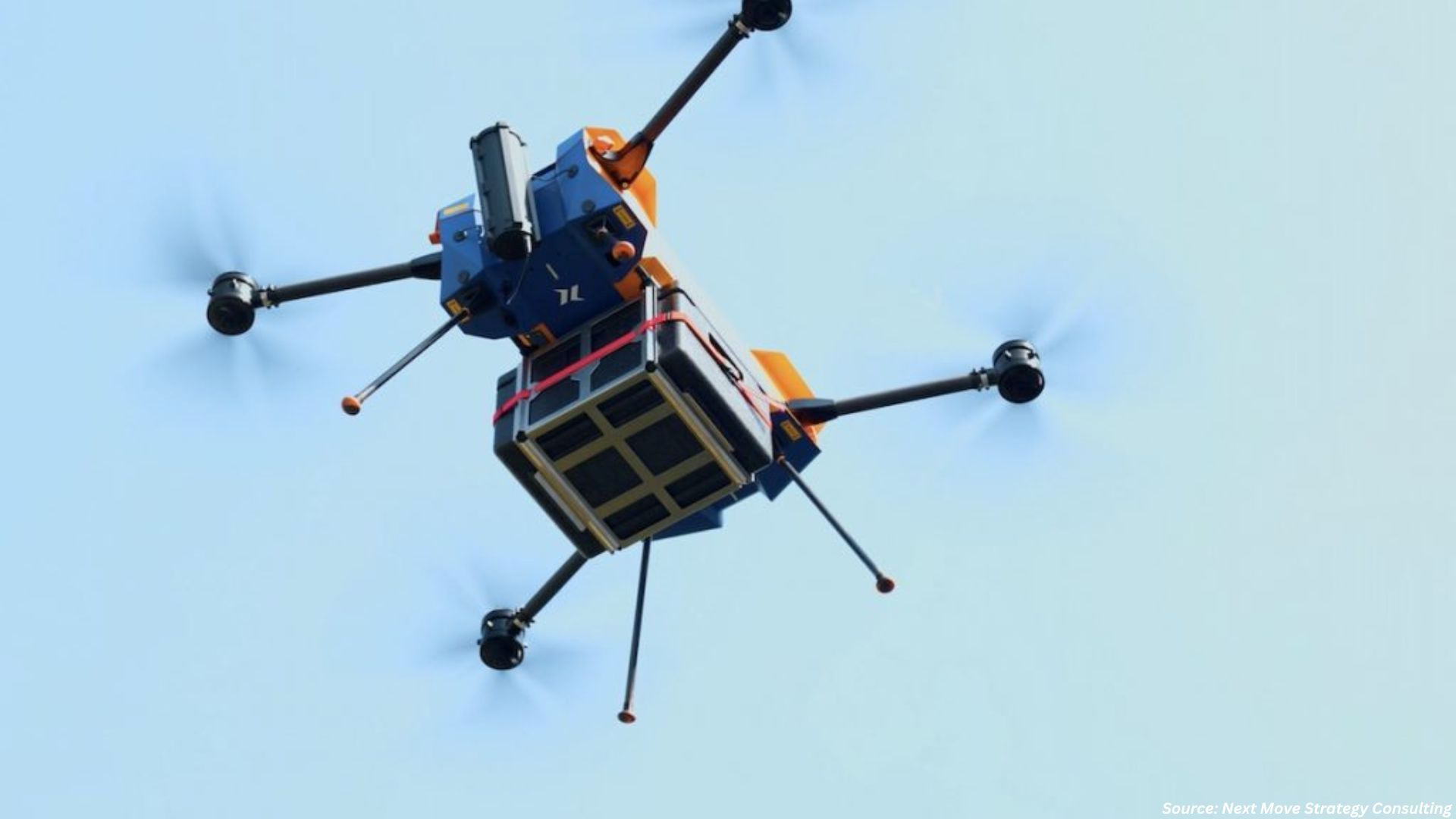
The Drone-as-a-Service (DaaS) Market encompasses data acquisition, inspection, delivery, analytics, agricultural, and security services delivered through drone fleets operated on behalf of enterprise and government customers rather than sold as standalone hardware. Our assessment indicates that the market's scope spans rotary-wing, fixed-wing, and hybrid VTOL platforms deployed under on-demand piloted, managed fleet, and autonomous drone-in-a-box models across construction, energy, agriculture, and public safety end uses. The category has evolved from ad hoc aerial photography contracts into recurring, subscription-based service agreements built around continuous data capture and analytics.
Regulatory frameworks such as the Federal Aviation Administration's proposed Part 108 rule for BVLOS drone operations and the European Union Aviation Safety Agency's harmonized drone regulations increasingly shape enterprise investment in scalable service contracts. We observed that technology adoption is shifting toward autonomous drone-in-a-box deployments that eliminate on-site pilot requirements. NMSC's analysis indicates that this shift, combined with regulatory progress toward routine beyond visual line of sight operations, is redefining commercial viability across the Drone-as-a-Service (DaaS) Market.
|
Parameter |
Details |
|
Market Size in 2025 |
USD 14.5 Billion |
|
Market Size in 2026 |
USD 18.6 Billion |
|
Revenue Forecast in 2035 |
USD 142 Billion |
|
Growth Rate |
CAGR of 25.3% from 2026 to 2035 |
|
Analysis Period |
2025–2035 |
|
Base Year Considered |
2025 |
|
Forecast Period |
2026–2035 |
|
Market Size Estimation |
Revenue (USD Billion) |
|
Companies Profiled |
20 |
|
Countries Covered |
33 |
|
Market Share |
Available for Top 10 Companies |
The CAGR of 25.3% is calculated for the forecast period (2026–2035), while 2025 represents the historical base year for this report's scope and estimation model.
Key Emerging Trends
Based on research conducted by NMSC, we found that four structural trends are reshaping product development, sourcing, and stakeholder engagement across the Drone-as-a-Service (DaaS) Market.
How Is Autonomous Drone-in-a-Box Technology Transforming Industrial Inspection?
Autonomous drone-in-a-box systems are replacing manual piloting for routine industrial inspection, enabling scheduled or on-demand flights without an on-site operator. We observed that Percepto Robotics Ltd. continues to expand its autonomous drone-in-a-box deployments across industrial sites globally, enabling continuous surveillance and asset digitization. Industrial customers are adopting these systems to reduce inspection costs and improve the frequency of asset monitoring compared to periodic manual inspection cycles.
Why Is Regulatory Progress on BVLOS Operations Accelerating Enterprise Adoption?
Regulatory clarity around Unmanned Aerial Vehicle (UAV) operations beyond visual line of sight is unlocking enterprise-scale deployment models previously limited by waiver-based approvals. Our findings suggest that the FAA published its Part 108 Notice of Proposed Rulemaking in August 2025, proposing a scalable, performance-based framework to replace the current waiver system for routine BVLOS operations. Enterprises across infrastructure inspection and logistics are restructuring procurement around the expectation of a finalized rule.
How Is Autonomous Delivery Reshaping Last-Mile Logistics?
Autonomous aerial delivery is scaling rapidly across U.S. metropolitan markets as service providers expand retail and healthcare delivery networks. We observed that Zipline International Inc. surpassed two million commercial deliveries and raised more than USD 600 Million in January 2026 to expand operations into additional U.S. states. Retailers and healthcare providers are increasingly integrating drone delivery directly into their fulfillment networks rather than treating it as a pilot program.
What Role Does AI-Driven Analytics Play in Expanding Service Value?
AI-driven analytics platforms are transforming raw aerial imagery into automated progress tracking, hazard detection, and predictive maintenance outputs. Our analysis shows that DroneDeploy, Inc. introduced three AI agents at its 2025 Horizons event covering progress tracking, safety hazard detection, and inspection automation for construction and energy customers. Service providers unable to offer comparable AI-based analytics risk losing enterprise accounts to platforms bundling data capture with automated insight generation.
Ecosystem Analysis of the Drone-as-a-Service (DaaS) Market
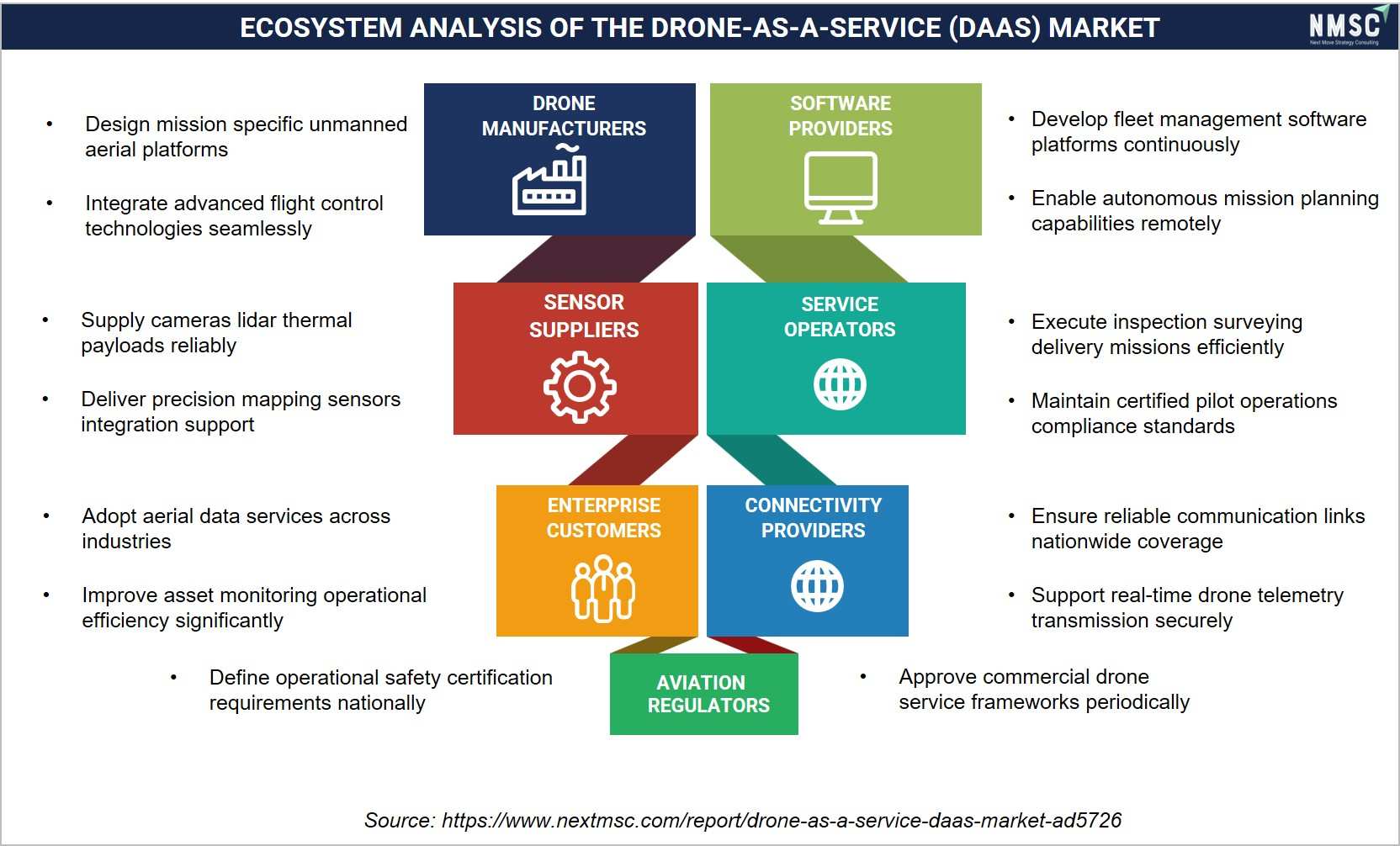
The Drone-as-a-Service (DaaS) market ecosystem is built on collaboration among drone manufacturers, sensor and software providers, service operators, connectivity providers, enterprise customers, and aviation regulators. Strategic coordination across these stakeholders supports scalable operations, regulatory compliance, data-driven decision-making, and the delivery of cost-effective aerial services across industries including infrastructure, agriculture, energy, and public safety.
Growth Drivers and Restraints
Growth Catalyst and Risk Assessment Matrix
|
Factors |
Type |
(+/-) % Impact on CAGR |
Geographic Relevance |
Impact Timeline |
|
Regulatory progress toward scalable BVLOS operations under FAA Part 108 |
Driver |
+3.2% |
North America |
2026–2033 |
|
Rising enterprise demand for continuous infrastructure and energy inspection |
Driver |
+2.8% |
Global |
2026–2035 |
|
Rapid scaling of autonomous last-mile aerial delivery networks |
Driver |
+2.5% |
North America, Asia-Pacific |
2026–2035 |
|
Expanding drone-in-a-box adoption reducing on-site pilot dependency |
Driver |
+2.1% |
Global |
2026–2035 |
|
Growing integration of AI-based analytics into aerial data services |
Driver |
+1.7% |
Global |
2026–2032 |
|
Government smart infrastructure and precision agriculture investment programs |
Driver |
+1.4% |
Asia-Pacific, Middle East & Africa |
2026–2035 |
|
Airspace deconfliction and detect-and-avoid technology gaps delaying BVLOS scale |
Restraint |
−1.6% |
Global |
2026–2032 |
|
High capital cost of autonomous docking infrastructure for smaller operators |
Restraint |
−1.2% |
Latin America, Middle East & Africa |
2026–2032 |
|
Fragmented national airspace regulations limiting cross-border service scaling |
Restraint |
−0.9% |
Europe, Asia-Pacific |
2026–2033 |
|
Public acceptance and noise concerns affecting urban delivery deployment |
Restraint |
−0.6% |
North America, Europe |
2026–2030 |
What Is the Primary Growth Driver of the Drone-as-a-Service (DaaS) Market?
Regulatory progress toward scalable beyond visual line of sight operations is the primary driver of the Drone-as-a-Service (DaaS) Market. The Federal Aviation Administration published its Part 108 Notice of Proposed Rulemaking in August 2025, proposing a framework to replace the current waiver-based system with standardized, performance-based BVLOS operations. We observed that this regulatory shift, combined with the U.S. Department of Transportation's continued support for autonomous logistics, continues to anchor enterprise investment in scalable service contracts.
How Is Autonomous Delivery Adoption Driving Market Growth?
Rapid scaling of autonomous last-mile aerial delivery networks is accelerating market growth toward recurring, subscription-based logistics contracts. Zipline International Inc.'s official disclosures confirm it surpassed two million commercial deliveries and raised over USD 600 Million in January 2026 to expand U.S. operations. Our assessment indicates that this expansion, combined with retail and healthcare partner integration, is compressing adoption timelines for autonomous delivery across North America.
What Is Restraining Drone-as-a-Service (DaaS) Market Expansion?
Airspace deconfliction and detect-and-avoid technology gaps restrain the pace of BVLOS scale-up across the market. The Federal Aviation Administration's continued review of technical requirements for detect-and-avoid systems and electronic conspicuity, following its reopened comment period in January 2026, reflects unresolved safety questions before routine BVLOS operations can scale nationally. We found that operators face continued reliance on case-by-case waivers until these technical requirements are finalized.
Segmentation Analysis
Segment Sizing: By Service Type
|
Segment |
2025 (USD) |
2035 (USD) |
CAGR% (2026–2035) |
|
Data Acquisition and Aerial Imaging Services |
USD 4.5 Billion |
USD 38 Billion |
23.8% |
|
Inspection Services |
USD 3.8 Billion |
USD 36 Billion |
25.2% |
|
Delivery and Logistics Services |
USD 2.6 Billion |
USD 32 Billion |
28.5% |
|
Data Processing and Analytics Services |
USD 1.9 Billion |
USD 17 Billion |
24.4% |
|
Agricultural Services |
USD 1.0 Billion |
USD 10 Billion |
25.9% |
|
Security and Surveillance Services |
USD 0.7 Billion |
USD 9 Billion |
29.1% |
|
Total |
USD 14.5 Billion |
USD 142 Billion |
25.3% |
Which Service Type Dominates the Drone-as-a-Service (DaaS) Market?
Data Acquisition and Aerial Imaging Services led the market with USD 4.5 Billion in 2025, supported by sustained enterprise demand for high-resolution mapping and surveying across construction and energy customers. We observed that Security and Surveillance Services is the fastest-growing service type, expanding at a 29.1% CAGR from 2026 to 2035, as industrial sites and public safety agencies increasingly deploy autonomous drones for continuous perimeter monitoring.
Segment Sizing: By End Use
|
Segment |
2025 (USD) |
2035 (USD) |
CAGR% (2026–2035) |
|
Construction and Infrastructure |
USD 3.15 Billion |
USD 26.5 Billion |
23.7% |
|
Energy and Utilities |
USD 2.55 Billion |
USD 23.5 Billion |
24.9% |
|
Agriculture |
USD 2.05 Billion |
USD 17.5 Billion |
23.9% |
|
Public Safety and Government |
USD 1.75 Billion |
USD 19.5 Billion |
27.3% |
|
Logistics and Retail |
USD 1.45 Billion |
USD 18.5 Billion |
29.0% |
|
Mining |
USD 0.95 Billion |
USD 8.7 Billion |
24.8% |
|
Oil and Gas |
USD 0.85 Billion |
USD 7.7 Billion |
24.7% |
|
Insurance |
USD 0.55 Billion |
USD 6.7 Billion |
28.4% |
|
Healthcare |
USD 0.40 Billion |
USD 5.7 Billion |
30.4% |
|
Media and Entertainment |
USD 0.22 Billion |
USD 2.3 Billion |
26.5% |
|
Real Estate |
USD 0.13 Billion |
USD 1.1 Billion |
23.8% |
|
Other End Uses |
USD 0.45 Billion |
USD 4.3 Billion |
25.3% |
|
Total |
USD 14.5 Billion |
USD 142 Billion |
25.3% |
Which End Use Segment Leads Drone-as-a-Service (DaaS) Market Demand?
Construction and Infrastructure remained the dominant end use, reaching USD 3.15 Billion in 2025 due to sustained demand for progress tracking and digital twin modeling across large-scale projects. Based on research conducted by NMSC, we found that Healthcare represents the fastest-growing end use at a 30.4% CAGR from 2026 to 2035, reflecting accelerating adoption of autonomous medical and pharmaceutical delivery networks.
Segment Sizing: By Region
|
Segment |
2025 (USD) |
2035 (USD) |
CAGR% (2026–2035) |
|
North America |
USD 5.8 Billion |
USD 52 Billion |
24.4% |
|
Europe |
USD 3.6 Billion |
USD 32 Billion |
24.3% |
|
Asia-Pacific |
USD 3.4 Billion |
USD 44 Billion |
29.2% |
|
Middle East & Africa |
USD 1.0 Billion |
USD 9.5 Billion |
24.9% |
|
Latin America |
USD 0.7 Billion |
USD 4.5 Billion |
20.2% |
|
Total |
USD 14.5 Billion |
USD 142 Billion |
25.3% |
Which Region Leads Drone-as-a-Service (DaaS) Market Demand?
North America remained the dominant region, reaching USD 5.8 Billion in 2025 supported by the highest concentration of autonomous delivery and inspection service providers globally. Our findings suggest that Asia-Pacific is the fastest-growing region, registering a 29.2% CAGR from 2026 to 2035, driven by rapid infrastructure investment and expanding manufacturing and agricultural sectors across China and India.
Growth Opportunities
Our analysis shows that three forward-looking opportunities stand out for stakeholders positioning within the Drone-as-a-Service (DaaS) Market over the 2026-2035 forecast period.
How Is Drone-in-a-Box Technology Creating Opportunities for Energy Infrastructure Operators?
Autonomous drone-in-a-box deployment presents a whitespace opportunity for energy infrastructure operators seeking continuous transmission line and substation monitoring without recurring pilot costs. Vendors that commercialize weatherproof, autonomous docking systems stand to capture recurring managed service revenue as utilities shift from periodic manual inspection cycles.
Why Is Healthcare Delivery Emerging as a Growth Opportunity for Autonomous Logistics Providers?
Healthcare systems present an underpenetrated opportunity for autonomous delivery providers seeking to serve time-sensitive pharmaceutical and diagnostic sample logistics. Providers that secure hospital and pharmacy network partnerships can establish durable, high-frequency delivery contracts as healthcare systems seek to reduce ground transport delays.
How Is BVLOS Regulatory Progress Unlocking Opportunities for Agricultural Service Providers?
Anticipated finalization of scalable BVLOS rules creates an opportunity for agricultural service providers seeking to expand precision spraying and crop monitoring across large farm operations. Early movers that secure operational certificates under the emerging framework can differentiate with agricultural customers pursuing continuous, large-area crop health monitoring.
Regional Outlook
Geographic Performance Snapshot
|
Region |
2025 (USD) |
2035 (USD) |
CAGR% (2026–2035) |
Key Driver |
|
North America |
USD 5.8 Billion |
USD 52 Billion |
24.4% |
FAA Part 108 BVLOS rulemaking and mature drone delivery networks |
|
Europe |
USD 3.6 Billion |
USD 32 Billion |
24.3% |
EASA regulatory harmonization and industrial inspection demand |
|
Asia-Pacific |
USD 3.4 Billion |
USD 44 Billion |
29.2% |
Rapid infrastructure investment and expanding manufacturing base |
|
Middle East & Africa |
USD 1.0 Billion |
USD 9.5 Billion |
24.9% |
National smart infrastructure programs and energy sector modernization |
|
Latin America |
USD 0.7 Billion |
USD 4.5 Billion |
20.2% |
Growing agricultural and construction sector adoption |
|
Total |
USD 14.5 Billion |
USD 142 Billion |
25.3% |
-- |
North America Drone-as-a-Service (DaaS) Market Outlook
North America leads the market with the highest concentration of autonomous delivery and inspection service providers headquartered domestically. We observed that the FAA's pending Part 108 rule sustains enterprise investment in scalable BVLOS-ready service contracts, while large infrastructure and retail customers increasingly specify autonomous drone delivery as a standard logistics option. Technology adoption remains advanced, with drone-in-a-box platforms rapidly displacing manual piloting across the region's mature enterprise base.
Europe Drone-as-a-Service (DaaS) Market Outlook
Europe's market reflects a regulation-intensive landscape shaped by the European Union Aviation Safety Agency's harmonized drone operation rules across member states. Our findings suggest that enterprises across Germany, France, and the UK are accelerating adoption of inspection and mapping services to meet infrastructure maintenance obligations. Technology adoption favors vendors demonstrating cross-border regulatory compliance, supported by regional integrators investing in certified BVLOS operations.
Asia-Pacific Drone-as-a-Service (DaaS) Market Outlook
Asia-Pacific is the fastest-growing region, propelled by rapid infrastructure investment and expanding agricultural drone adoption across China and India. We found that regulatory frameworks remain less harmonized than in Europe, giving service providers flexibility to scale rapidly across construction and agricultural end uses. Technology adoption is accelerating as regional integrators expand capacity to serve both domestic enterprises and multinational infrastructure operators.
Middle East & Africa Drone-as-a-Service (DaaS) Market Outlook
The Middle East & Africa market is expanding as Gulf Cooperation Council economies pursue national smart infrastructure programs tied to energy sector modernization. Our analysis shows that Saudi Arabia and the UAE are attracting significant investment in drone-based inspection tied to giga-project development. Regulatory influence remains moderate, while technology adoption is gradually shifting toward managed inspection services as regional enterprises address skilled operator shortages.
Latin America Drone-as-a-Service (DaaS) Market Outlook
Latin America's market is supported by growing agricultural and construction sector adoption in Brazil and Argentina navigating rising operational efficiency demands. We observed that regulatory frameworks are less stringent than in North America or Europe, though multinational enterprises operating locally are introducing drone-based inspection specifications. Technology adoption remains centered on service-based delivery models, with competitive intensity increasing as regional integrators partner with global technology vendors.
U.S. Drone-as-a-Service (DaaS) Market
Based on our estimates, the U.S. market was valued at approximately USD 4.6 Billion in 2025 and is projected to reach USD 39 Billion by 2035, growing at a 23.8% CAGR. Demand is anchored by the highest global concentration of autonomous delivery and inspection service providers headquartered domestically. Technology penetration favors drone-in-a-box and autonomous delivery platforms, and competitive intensity remains high among established providers serving retail, healthcare, and infrastructure accounts.
Canada Drone-as-a-Service (DaaS) Market
The market in Canada reached roughly USD 750 Million in 2025 and is forecast to hit USD 7.5 Billion by 2035 at a 25.9% CAGR. Demand structure mirrors U.S. enterprise adoption patterns, while federal aviation guidance shapes public sector procurement of inspection and surveillance services. Technology penetration is rising as national enterprises request managed drone service capability, with competitive intensity moderate given reliance on cross-border vendor supply.
UK Drone-as-a-Service (DaaS) Market
As per our estimate, the UK market stood at about USD 1.05 Billion in 2025, advancing toward USD 9 Billion by 2035 at a 24.0% CAGR. Demand is driven by infrastructure and energy sector enterprises navigating post-Brexit aviation regulatory obligations. Regulatory influence is significant, technology penetration favors cloud-connected inspection platforms, and competitive intensity remains steady among domestic and European integrators.
Germany Drone-as-a-Service (DaaS) Market
According to our analysis, Germany's market was valued near USD 1.0 Billion in 2025 and is set to reach USD 8.5 Billion by 2035, expanding at a 23.9% CAGR. Demand structure benefits from a strong industrial and manufacturing base pursuing continuous infrastructure inspection. Germany's aviation regulatory amendments drive regulatory influence, while technology penetration favors AI-based mapping and inspection services among leading integrators.
France Drone-as-a-Service (DaaS) Market
Based on our estimates, France's market reached approximately USD 750 Million in 2025, projected to climb to USD 6.5 Billion by 2035 at a 24.1% CAGR. Demand is supported by France's prominent energy and government sector modernization programs, which shape inspection and mapping service adoption. Regulatory influence from French aviation legislation is notable, and competitive intensity remains high given the concentration of domestic integrators.
China Drone-as-a-Service (DaaS) Market
The market in China stood at roughly USD 1.35 Billion in 2025 and is forecast to reach USD 18 Billion by 2035, registering a 29.4% CAGR. Demand is fueled by rapid infrastructure investment and a dense base of regional technology integrators serving domestic manufacturing and agricultural customers. Regulatory influence is increasing gradually, technology penetration is accelerating through large-scale platform deployments, and competitive intensity remains elevated among numerous domestic suppliers.
India Drone-as-a-Service (DaaS) Market
As per our estimate, India's market was valued at about USD 550 Million in 2025, projected to reach USD 11 Billion by 2035 at a 34.9% CAGR, the fastest among covered countries. Demand structure is driven by rapid infrastructure and agricultural sector digitalization and expanding drone service adoption among mid-sized enterprises. Regulatory influence remains developing, technology penetration is accelerating from a smaller installed base, and competitive intensity is rising as global vendors expand local delivery capability.
Japan Drone-as-a-Service (DaaS) Market
According to our analysis, Japan's market reached approximately USD 550 Million in 2025, forecast to reach USD 4.8 Billion by 2035 at a 24.2% CAGR. Demand structure reflects a mature enterprise base prioritizing infrastructure and agricultural inspection amid labor shortages. Regulatory influence is steady, technology penetration favors integrated hardware-software platforms, and competitive intensity remains high among established domestic technology groups.
South Korea Drone-as-a-Service (DaaS) Market
The market in South Korea stood at about USD 300 Million in 2025, projected to reach USD 2.8 Billion by 2035 at a 24.6% CAGR. Demand is supported by dense urban infrastructure and government-backed smart city pilots. Regulatory influence is moderate, technology penetration is advancing through cloud-native deployments, and competitive intensity remains concentrated among domestic conglomerates and global integrators.
Australia Drone-as-a-Service (DaaS) Market
Based on our estimates, Australia's market reached approximately USD 280 Million in 2025, projected to climb to USD 2.5 Billion by 2035 at a 24.3% CAGR. Demand structure is supported by mining and agricultural sector adoption of inspection and monitoring services. Regulatory influence is significant through national aviation authority requirements, and competitive intensity remains moderate among regional integrators serving multinational enterprises.
UAE Drone-as-a-Service (DaaS) Market
As per our estimate, the UAE's market was valued near USD 280 Million in 2025, projected to reach USD 2.7 Billion by 2035 at a 24.7% CAGR. Demand structure is anchored by giga-project development and smart infrastructure programs in Dubai and Abu Dhabi. Regulatory influence is increasing through national aviation mandates, technology penetration is advancing rapidly, and competitive intensity is rising as global vendors establish regional delivery hubs.
Saudi Arabia Drone-as-a-Service (DaaS) Market
According to our analysis, Saudi Arabia's market stood at about USD 300 Million in 2025, forecast to reach USD 2.9 Billion by 2035 at a 24.7% CAGR. Demand is driven by Vision 2030-linked infrastructure and energy sector modernization programs. Regulatory influence is expanding through national aviation authority requirements, technology penetration is accelerating from a limited installed base, and competitive intensity is rising among global and regional integrators.
South Africa Drone-as-a-Service (DaaS) Market
The market in South Africa reached roughly USD 120 Million in 2025, projected to reach USD 1.0 Billion by 2035 at a 24.0% CAGR. Demand structure is supported by mining and energy sector modernization amid ongoing infrastructure maintenance needs. Regulatory influence remains limited, technology penetration is modest, and competitive intensity is centered on a small number of regional integrators serving multinational occupiers.
Brazil Drone-as-a-Service (DaaS) Market
Based on our estimates, Brazil's market was valued at approximately USD 400 Million in 2025, projected to reach USD 2.6 Billion by 2035 at a 20.3% CAGR. Demand structure is supported by growing agricultural sector adoption of crop monitoring services despite macroeconomic volatility. Regulatory influence remains developing, technology penetration favors cloud-based platforms, and competitive intensity is centered on regional integrators serving domestic agricultural enterprises.
Argentina Drone-as-a-Service (DaaS) Market
As per our estimate, Argentina's market was valued near USD 100 Million in 2025, projected to reach USD 650 Million by 2035 at a 20.3% CAGR. Demand structure is supported by steady agricultural sector investment despite macroeconomic volatility. Regulatory influence remains limited, technology penetration is modest, and competitive intensity is centered on a small number of regional distributors serving domestic enterprises.
Competitive Landscape
We observed that the Drone-as-a-Service (DaaS) Market features a moderately fragmented competitive landscape, with diversified hardware manufacturers competing alongside specialized autonomous service providers on operational scale and regulatory certification.
|
Key Takeaways |
Details |
|
Market Structure |
Moderately fragmented; the top companies profiled in this report collectively account for a significant share of global market revenue, while numerous regional service providers compete for localized inspection and mapping demand. |
|
Innovation Focus |
Autonomous drone-in-a-box docking, AI-based analytics agents, and BVLOS-certified delivery networks dominate current innovation pipelines across leading vendors. |
|
M&A Activity |
Selective consolidation and capital raising, exemplified by Zipline International Inc.'s USD 600 Million funding round in January 2026 to expand U.S. autonomous delivery operations. |
How Do Companies Compete in the Drone-as-a-Service (DaaS) Market?
Companies compete primarily on operational scale, regulatory certification, and integrated hardware-software delivery across the drone logistics and transportation and inspection categories. Global providers such as Zipline International Inc. and Wing Aviation LLC leverage extensive BVLOS operating certificates to scale delivery networks, while specialized vendors such as Percepto Robotics Ltd. and Cyberhawk Innovations Limited compete on domain-specific autonomous inspection capability.
Which Competitive Archetypes Dominate the Drone-as-a-Service (DaaS) Market?
Two archetypes dominate the market: diversified hardware and service providers offering integrated drone platforms with data services, and specialized service-only vendors focused on autonomous delivery or inspection. SZ DJI Technology Co., Ltd. and Terra Drone Corporation exemplify the diversified archetype through combined hardware and industrial service delivery, while Zipline International Inc. and Matternet, Inc. exemplify the specialized archetype built purely around autonomous delivery service operations.
How Are Companies Differentiating Through Innovation in Drone-as-a-Service (DaaS)?
Innovation and differentiation strategy increasingly center on layering proprietary analytics atop commoditized aerial data capture rather than competing on hardware alone. Vendors that convert raw imagery into automated progress tracking, hazard detection, and predictive maintenance outputs command premium service pricing over providers offering capture without integrated analysis. Our analysis shows that vendors unable to demonstrate credible autonomous operation safety records risk exclusion from enterprise procurement shortlists.
What M&A and Expansion Activity Is Shaping the Drone-as-a-Service (DaaS) Market?
Capital raising and network expansion continue to consolidate scale advantages within the market. Zipline International Inc. raised more than USD 600 Million in January 2026, valuing the company at USD 7.6 Billion, to expand its autonomous delivery network into additional U.S. states including Houston and Phoenix. This move illustrates how leading providers are using fresh capital to extend first-mover advantages in regulatory-certified BVLOS delivery operations.
Key Market Players
Our assessment indicates that the following 20 companies represent the validated competitive set actively shaping product innovation, capacity expansion, and strategic positioning within the global Drone-as-a-Service (DaaS) Market.
-
SZ DJI Technology Co., Ltd.
-
Zipline International, Inc.
-
Wing Aviation LLC
-
Percepto Ltd.
-
Skydio, Inc.
-
Terra Drone Corporation
-
DroneDeploy, Inc.
-
AgEagle Aerial Systems, Inc.
-
Ondas Holdings Inc.
-
Cyberhawk Innovations Ltd.
-
Volatus Aerospace Corp.
-
Matternet, Inc.
-
Wingcopter GmbH & Co. KG
-
Flytrex Aviation Ltd.
-
Airobotics Ltd.
-
Aerodyne Group Sdn. Bhd.
-
Quantum-Systems GmbH
-
Wingtra AG
-
ZenaTech, Inc.
Latest Developments
We found that recent product launches, funding rounds, and regulatory milestones within the Drone-as-a-Service (DaaS) Market are concentrated on autonomous delivery scale-up and BVLOS regulatory progress.
|
Date |
Event |
|
April 2026 |
Skydio announced a US$3.5 billion investment to expand U.S. manufacturing, R&D, and domestic supply chains for autonomous drones. The expansion supports scaling enterprise drone services including Drone as First Responder (DFR), utility inspection, and critical infrastructure operations. |
|
June 2025 |
Terra Drone Arabia participated as the technical partner and drone operator in NUPCO's medical supply drone initiative during the Hajj season, delivering operational drone services rather than selling hardware. |
|
Feb 2025 |
Terra Drone was selected for a Japanese Ministry of Agriculture project in Indonesia to demonstrate drone spraying services for smart agriculture through local partnerships, supporting commercial agricultural Drone-as-a-Service operations. |
Expert Insights
 “Contribute our perspective on how thoughtful and timely rulemaking can accelerate innovation, improve safety and compliance, and strengthen the U.S. position as a global leader in drone technology.”
— Bill Irby, CEO, AgEagle Aerial Systems
Statement made following AgEagle's participation in a White House Office of Information and Regulatory Affairs (OIRA) meeting on the FAA's proposed Part 108 Beyond Visual Line of Sight (BVLOS) rulemaking for commercial drone operations.
Source: AgEagle Aerial Systems, Inc. Official Press Release (GlobeNewswire), "AgEagle Aerial Systems Invited for Follow-Up White House Engagement to Discuss Critical FAA Rulemaking for Beyond Visual Line of Sight (BVLOS) Drone Operations," June 10, 2025.
Market Interpretation
The statement underscores the critical role of regulatory modernization in advancing the Drone-as-a-Service (DaaS) market. Timely BVLOS regulations are expected to facilitate safer, more scalable commercial drone operations, accelerating adoption across sectors such as infrastructure inspection, utilities, agriculture, logistics, and public safety while fostering innovation and economic growth.
Strategic Framework of the Drone-as-a-Service (DaaS) Market
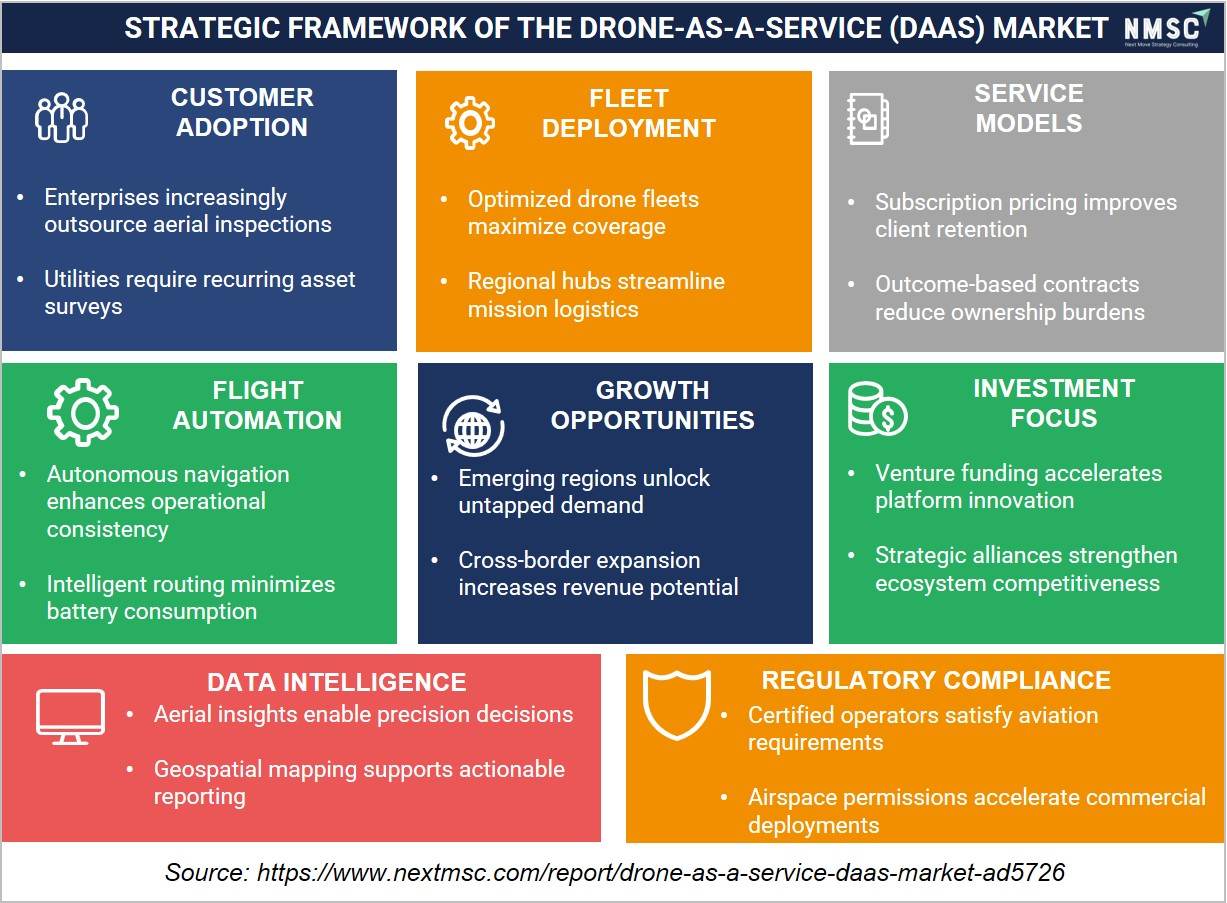
The Drone-as-a-Service (DaaS) market is shaped by enterprise adoption, autonomous flight technologies, subscription-based service models, and data intelligence capabilities. Growth is further supported by fleet optimization, strategic investments, and regulatory compliance, enabling providers to expand commercial drone operations while delivering scalable, efficient, and value-driven aerial solutions across diverse end-use industries.
Investment Opportunities
What Capital Inflows Are Targeting the Drone-as-a-Service (DaaS) Market?
Capital inflows into the market are increasingly directed toward autonomous delivery and drone-in-a-box inspection providers with demonstrated operational scale. Zipline International Inc.'s USD 600 Million funding round in January 2026, valuing the company at USD 7.6 Billion, reflects continued investor confidence in regulatory-certified autonomous logistics. We observed that investors favor providers demonstrating verified delivery volume growth, viewing operational scale as a proxy for long-term contract retention with retail and healthcare partners.
How Is Infrastructure Investment Supporting Drone-as-a-Service (DaaS) Deployment?
Infrastructure investment in autonomous docking stations and detect-and-avoid technology is expanding the operational foundation required for scaled BVLOS service delivery. Our findings suggest that Skydio, Inc.'s expansion past 1,000 autonomous docking station deployments reflects broader industry investment in the physical infrastructure needed to support continuous, pilot-free drone operations at enterprise scale.
What ESG Considerations Are Shaping Drone-as-a-Service (DaaS) Investment Decisions?
Environmental, social, and governance considerations increasingly intersect with Drone-as-a-Service (DaaS) investment decisions through emissions reduction and last-mile logistics efficiency. Electric drone delivery networks continue to displace ground vehicle trips for time-sensitive healthcare and retail logistics, reducing associated carbon emissions. We found that investors increasingly favor providers with transparent safety records and community engagement practices, treating operational trust as a proxy for durable market access.
Key Benefits for Stakeholders
How Does This Report Benefit Enterprise and Industry Leaders?
Enterprise and industry leaders gain access to validated segmentation, competitive benchmarking, and regional demand forecasts that support technology sourcing and logistics modernization decisions across the Drone-as-a-Service (DaaS) Market. Our analysis shows that detailed service type, end-use, and regional breakdowns help procurement teams align specifications with regulatory and operational requirements while identifying underserved service categories for portfolio expansion.
How Does This Report Benefit Investors and Financial Analysts?
Investors and financial analysts benefit from consistent, single-point market size and CAGR estimates that support valuation and capital-allocation decisions across the Drone-as-a-Service (DaaS) Market vendor landscape. We observed that the report's regional and segment-level growth differentials help identify which vendors are best positioned to capture above-market growth in delivery and inspection categories through 2035.
How Does This Report Benefit Technology Vendors and Product Teams?
Technology vendors and product teams gain insight into emerging design requirements, including autonomous docking infrastructure, AI-based analytics, and BVLOS certification pathways, that are reshaping the Drone-as-a-Service (DaaS) Market. Our findings suggest that this analysis helps R&D teams prioritize development roadmaps around operational safety and regulatory compliance increasingly required by enterprise and government procurement processes.
Key Market Segments
By Service Type
-
Data Acquisition and Aerial Imaging Services
-
Aerial Photography and Videography
-
Mapping and Surveying Services
-
LiDAR Data Acquisition Services
-
Thermal and Multispectral Imaging Services
-
-
Data Processing and Analytics Services
-
Photogrammetry and 3D Modeling Services
-
AI-Based Analytics and Insights Services
-
Geospatial Data Management Services
-
-
Inspection Services
-
Infrastructure and Asset Inspection Services
-
Energy and Utility Inspection Services
-
Industrial and Construction Inspection Services
-
-
Delivery and Logistics Services
-
Medical and Healthcare Delivery Services
-
Retail and Last-Mile Delivery Services
-
Cargo and Freight Delivery Services
-
-
Agricultural Services
-
Crop Monitoring and Health Assessment Services
-
Precision Spraying Services
-
-
Security and Surveillance Services
-
Perimeter Monitoring Services
-
Public Safety and Emergency Response Services
-
By Drone Type
-
Rotary-Wing Drones
-
Fixed-Wing Drones
-
Hybrid VTOL Drones
By Deployment Model
-
On-Demand Piloted Deployment
-
Managed Fleet Deployment
-
Drone-in-a-Box Deployment
By Range
-
Visual Line of Sight
-
Beyond Visual Line of Sight
By End Use
-
Construction and Infrastructure
-
Energy and Utilities
-
Agriculture
-
Public Safety and Government
-
Logistics and Retail
-
Mining
-
Oil and Gas
-
Insurance
-
Healthcare
-
Media and Entertainment
-
Real Estate
-
Other End Uses
By Region
-
North America: U.S., Canada, Mexico
-
Europe: UK, Germany, France, Italy, Spain, Sweden, Denmark, Finland, Netherlands, Rest of Europe
-
Asia-Pacific: China, India, Japan, South Korea, Taiwan, Indonesia, Vietnam, Australia,```html Philippines, Malaysia, Rest of APAC
-
Middle East & Africa: Saudi Arabia, UAE, Egypt, Israel, Turkey, Nigeria, South Africa, Rest of MEA
-
Latin America: Brazil, Argentina, Chile, Colombia, Rest of LATAM
Conclusion and Recommendations
What Is the Long-Term Outlook for the Drone-as-a-Service (DaaS) Market?
The long-term outlook for the Drone-as-a-Service (DaaS) Market remains strongly positive, with global revenue projected to expand nearly tenfold from USD 14.5 Billion in 2025 to USD 142 Billion by 2035 at a 25.3% CAGR. We observed that regulatory finalization of BVLOS operating rules, combined with expanding autonomous delivery networks, will continue underpinning demand across inspection, delivery, and analytics categories through the forecast period. This 25.3% CAGR applies specifically to the 2026–2035 forecast period, with 2025 serving as the base year against which subsequent growth is measured.
What Strategic Positioning Should Drone-as-a-Service (DaaS) Vendors Pursue?
Vendors should prioritize regulatory-certified BVLOS operating capability while pursuing verified autonomous safety records to secure long-term enterprise and government contracts. Our assessment indicates that companies investing early in drone-in-a-box infrastructure and AI-based analytics will be best positioned to capture premium pricing within the Drone-as-a-Service (DaaS) Market.
How Attractive Is the Drone-as-a-Service (DaaS) Market for New Investment?
The market presents a highly attractive investment case, supported by a USD 123.4 Billion absolute dollar opportunity between 2026 and 2035 and above-average growth in Asia-Pacific and healthcare delivery categories. We found that investment attractiveness is highest for vendors combining verified operational scale with regulatory-certified BVLOS capability, positioning them to serve both enterprise inspection and consumer delivery segments simultaneously.
What Market Shifts and Key Risks Should Stakeholders Monitor?
Stakeholders should monitor airspace deconfliction gaps, fragmented cross-border regulations, and public acceptance concerns as key risks to the Drone-as-a-Service (DaaS) Market. Our analysis shows that vendors unable to demonstrate credible detect-and-avoid technology and safety records risk delayed market entry as regulators finalize technical requirements for routine BVLOS operations.
What Are the Key Growth Pathways for the Drone-as-a-Service (DaaS) Market?
Key growth pathways include expanding autonomous delivery networks into additional metropolitan markets, scaling drone-in-a-box inspection infrastructure, and deepening penetration into healthcare and agricultural service channels. NMSC's analysis indicates that vendors pursuing these pathways while maintaining strong safety and regulatory compliance records will be best positioned to capture the market's projected growth through 2035.
About the Author
 Mihul Sharma
— Mihul Sharma is Research Associate at Next Move Strategy Consulting, where he has covered technology, industrial, and healthcare markets for 3 years. His work applies structured business research, market analysis, and secondary-source review to assess market trends, competitive developments, and growth opportunities. He supports report development by fully synthesizing industry data, company information, and market signals into concise findings for strategy and investment-focused research teams.
Mihul Sharma
— Mihul Sharma is Research Associate at Next Move Strategy Consulting, where he has covered technology, industrial, and healthcare markets for 3 years. His work applies structured business research, market analysis, and secondary-source review to assess market trends, competitive developments, and growth opportunities. He supports report development by fully synthesizing industry data, company information, and market signals into concise findings for strategy and investment-focused research teams.
About the Reviewer
 Supradip Baul
— Supradip Baul is an accomplished business consultant and strategist with over a decade of rich experience in market intelligence, strategy, technology, and business transformation. His work has included rigorous qualitative and quantitative analysis across multiple industries, helping clients shape investment decisions and long-term roadmaps. Earlier in his career, he was associated with Gartner, where he contributed to industry-leading reports and market share analyses. He has worked with leading global companies and holds an MBA with a dual specialization in Marketing and Finance.
Supradip Baul
— Supradip Baul is an accomplished business consultant and strategist with over a decade of rich experience in market intelligence, strategy, technology, and business transformation. His work has included rigorous qualitative and quantitative analysis across multiple industries, helping clients shape investment decisions and long-term roadmaps. Earlier in his career, he was associated with Gartner, where he contributed to industry-leading reports and market share analyses. He has worked with leading global companies and holds an MBA with a dual specialization in Marketing and Finance.
At Next Move Strategy Consulting, we understand that insightful market research is the cornerstone of successful business decisions. That's why we employ a robust and multifaceted approach, combining various methodologies to deliver the most accurate and actionable data for our clients.

Research Landscape
We navigate the world of research with two primary approaches:
Qualitative Approach
Our qualitative research methodologies involve immersive techniques such as in-depth interviews, focus groups, and observational studies. By engaging directly with individuals and stakeholders, we uncover valuable insights that quantitative data alone may overlook.

Quantitative Research
In tandem with qualitative methodologies, NMSC leverages the power of Quantitative Research to provide a robust foundation of numerical insights. Through systematic data collection and analysis, we quantify patterns, preferences, and market trends, offering a comprehensive view of the business landscape.
Our quantitative research approach employs diverse tools, including surveys, experiments, and statistical modelling. These methodologies enable us to gather data from a large and representative sample, ensuring the statistical significance of our findings. By employing structured questionnaires and standardized data collection methods, we guarantee the reliability and validity of the information we present to our clients.
Quantitative research is particularly effective in measuring the prevalence of trends, assessing market size, and gauging the impact of various factors on consumer behavior. The numerical precision attained through this approach equips our clients with actionable insights, facilitating data-driven decision-making and strategy formulation.


Our Specialized Toolbox for Industry-Specific Market Research
We deploy a specialized arsenal of techniques tailored to meet your unique requirements. Here's a glimpse into our comprehensive toolbox:

Information Procurement
The stage entails acquiring market data or relevant information through various sources and methodologies.


Market Research Approach
We utilize both top-down and bottom-up approaches in market research analysis to achieve a comprehensive understanding of the market dynamics, leveraging the broad perspective of industry trends and macroeconomic factors alongside detailed insights from specific segments and individual companies.

Porters Five Forces Analysis
We conduct Porter's Five Forces analysis to evaluate the competitive landscape of an industry, providing us with insights into factors that affect profitability and strategic positioning.

SWOT Analysis

Forecasting
We utilize a forecasting model to predict future consumption by considering parameters like population, economics, regulations, market competition, drivers, constraints, technology, and pricing. We also employ statistical techniques such as multilinear regression, exponential smoothing, moving average, ARIMA, and Monte Carlo simulations for accurate predictions. In econometric forecasting, we analyzed short-term and long-term event impacts, attributing values based on regulatory frameworks, economic factors, and market events.





 Speak to Our Analyst