Egypt Battery Market By Battery Type (Primary Batteries and Secondary Batteries), By Voltage Type (Low Voltage Batteries, Medium Voltage Batteries, and High Voltage Batteries), By Power Capacity (Low Capacity Batteries, Medium Capacity Batteries, High Capacity Batteries, and Ultra High Capacity Batteries), By Self-Discharge Rate (Low, Medium, and High Self-Discharge Rate Batteries), and By Application – Analysis & Forecast, 2025–2035
Industry: Energy & Power | Latest Edition: September 30, 2026 | No of Pages: 563 | No. of Tables: 148 | No. of Figures: 138 | Format: PDF | Report Code: EP5381
Egypt Battery Market Size & Forecast
|
Parameters |
Details |
|
Market Size in 2025 |
USD 727.96 Million |
|
Market Size in 2026 |
USD 949.56 Million |
|
Revenue Forecast in 2035 |
USD 4,341.34 Million |
|
Growth Rate |
CAGR of 18.40% from 2026 to 2035 |
|
Market Volume in 2025 |
10.36 Million Units |
|
Market Volume in 2026 |
15.33 Million Units |
|
Volume Forecast in 2035 |
108.18 Million Units |
|
Growth Rate (Volume) |
CAGR of 24.25% from 2026 to 2035 |
|
Analysis Period |
2025–2035 |
|
Base Year Considered |
2025 |
|
Forecast Period |
2026–2035 |
|
Market Size Estimation |
Million (USD) |
|
Companies Profiled |
10 |
|
Market Share |
Available for 10 Companies |
Industry Outlook
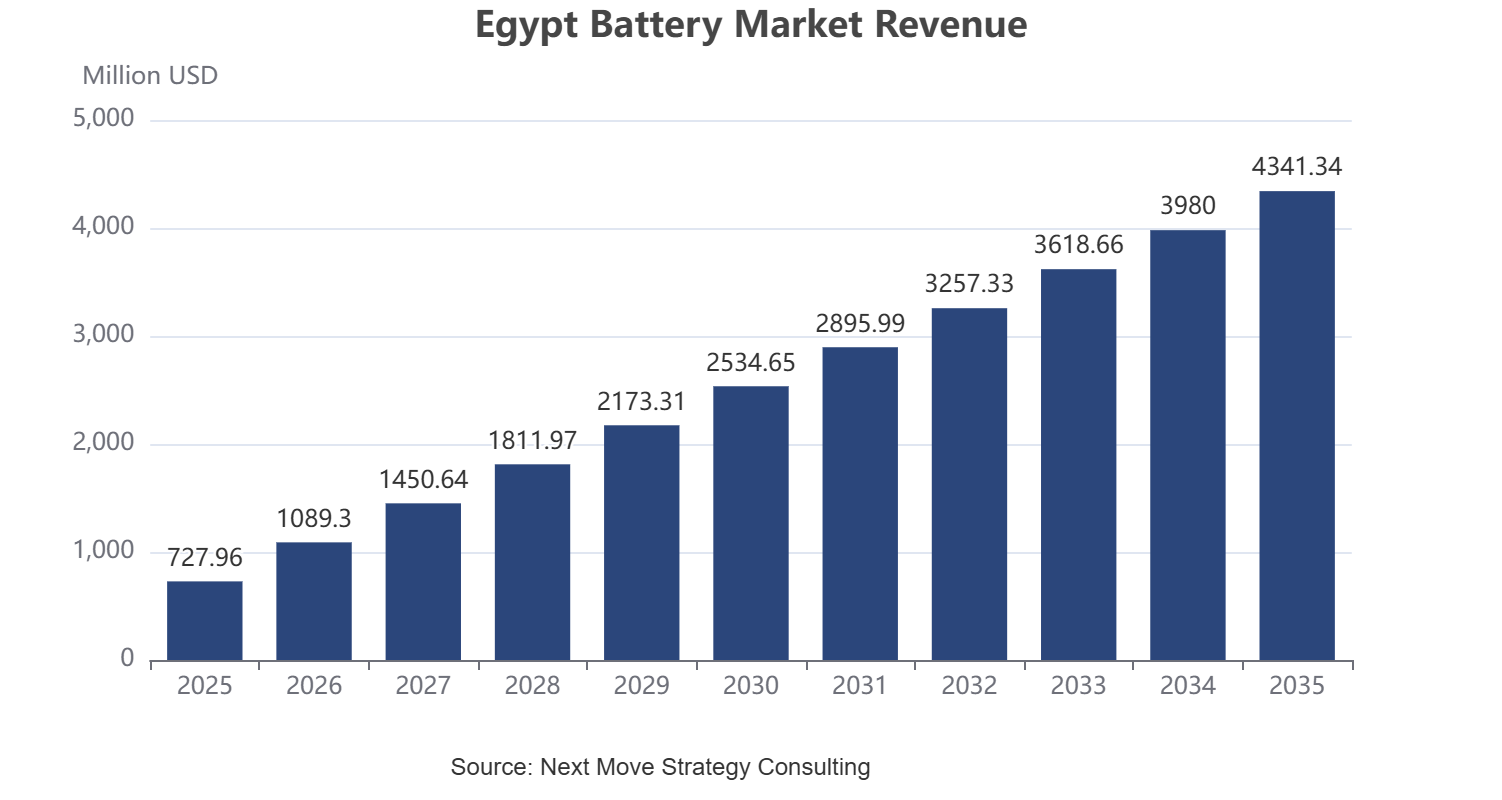
The Egypt Battery Market size was valued at USD 727.96 million in 2025 and reached USD 949.56 million by 2026. The industry is projected to expand significantly, reaching USD 4,341.34 million by 2035, registering a CAGR of 18.40% from 2026 to 2035. In terms of volume, the market recorded 10.36 million units in 2025, with forecasts indicating growth to 15.33 million units by 2026 and further to 108.18 million units by 2035, reflecting a CAGR of 24.25% over the same period.
What Are the Key Drivers, Restraints, and Opportunities Shaping the Egypt Battery Market Through 2035?
|
Drivers / Trends / Restraints |
(+/–) % Impact on CAGR Forecast |
Geographic Relevance |
Impact Timeline |
|
Expanding renewable energy capacity including solar and wind projects is accelerating battery procurement for energy storage applications across utility and commercial segments in Egypt |
+3.2% |
Egypt |
Short to medium term (1–4 years) |
|
Growing electricity demand and grid modernization efforts are creating sustained demand for large-capacity battery systems supporting stable power supply across urban and industrial zones |
+2.8% |
Egypt |
Short to medium term (1–4 years) |
|
Rising adoption of electric vehicles and government-led EV promotion initiatives are generating new demand streams for lithium-ion automotive batteries across Egypt’s expanding transportation sector |
+2.1% |
Egypt |
Medium term (2–5 years) |
|
Limited financing and investment in large-scale battery infrastructure constrain the pace of market expansion and delay deployment of advanced battery technologies across key application segments |
–1.8% |
Egypt |
Short to medium term (1–4 years) |
|
Growth in utility-scale battery storage to support national grid stability creates significant long-term opportunities for advanced battery technology providers and energy infrastructure investors in Egypt |
+2.5% |
Egypt |
Medium to long term (3–7 years) |
Through our market assessment, we observed that the Egypt Battery Market is witnessing strong growth driven by the country’s ambitious renewable energy capacity expansion under national energy plans, rising electricity demand fueled by population growth and industrial development, and accelerating interest in electric mobility. Growing grid modernization investments and government-backed energy infrastructure initiatives are further reinforcing battery demand across automotive, energy storage, and industrial segments, while limited financing and investment in large-scale battery infrastructure represent a meaningful near-term constraint on market development.
Growth Driver:
How Is Expanding Renewable Energy Capacity Including Solar and Wind Projects Driving the Egypt Battery Market?
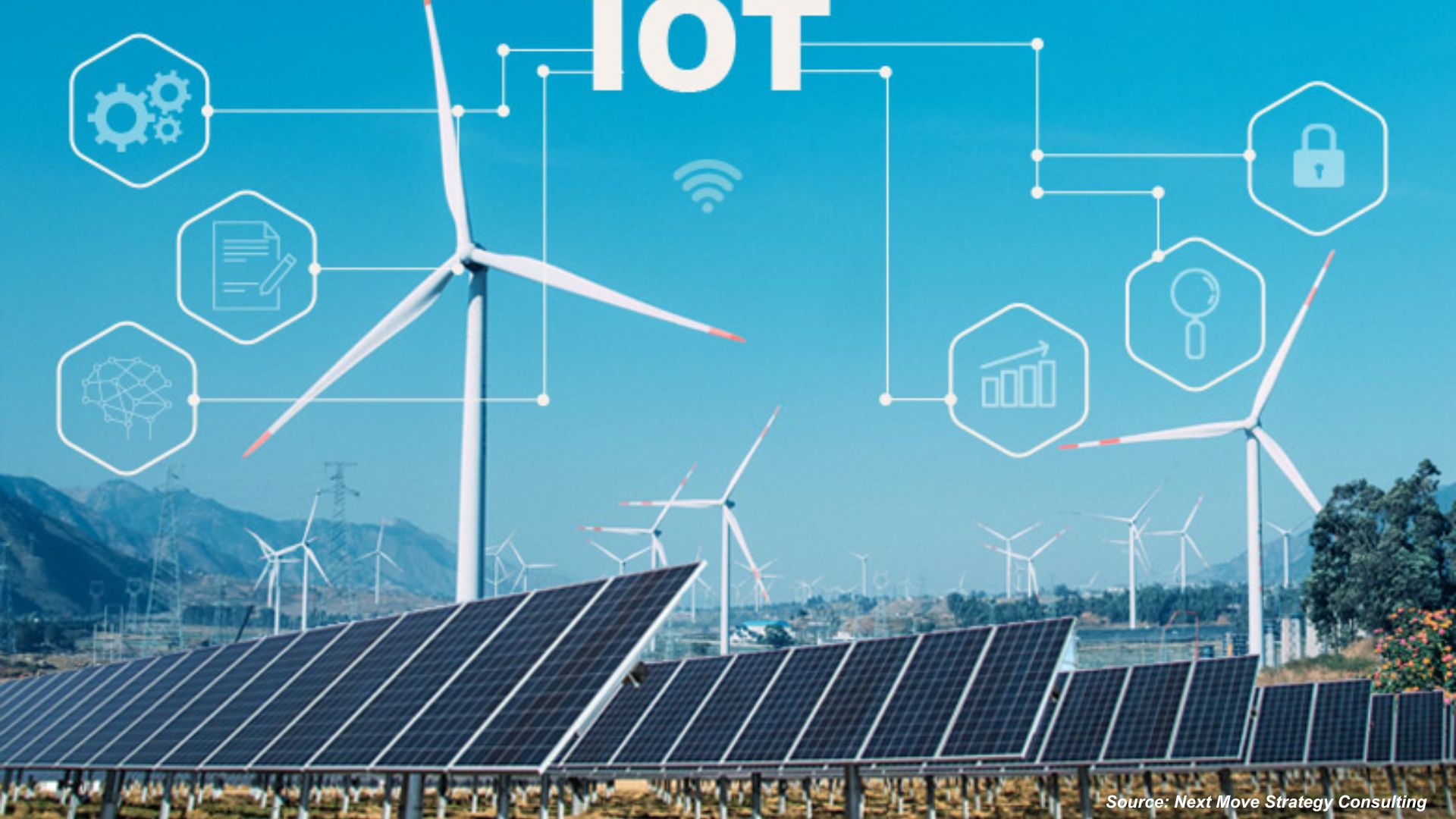
Through our market assessment, we observed that Egypt’s substantial expansion of renewable energy capacity, including large-scale solar parks such as the Benban Solar Park and growing wind energy installations along the Gulf of Suez and Red Sea coast, is creating significant and sustained demand for battery energy storage systems. These installations require reliable storage solutions to manage intermittency, support grid stability, and optimize energy dispatch. Battery procurement for renewable energy balancing across utility and commercial projects is expected to remain a primary growth driver throughout the forecast period.
How Are Growing Electricity Demand and Grid Modernization Efforts Fueling the Egypt Battery Market?
Based on our market evaluation, we observed that Egypt’s rapidly growing electricity demand, driven by population expansion, urbanization, and industrial growth, combined with the government’s ongoing investments in transmission and distribution infrastructure modernization, is generating consistent demand for battery systems across grid stabilization, backup power, and load management applications. National grid modernization programs are increasingly incorporating battery energy storage to enhance supply reliability, reduce outages, and accommodate growing renewable energy output, creating recurring procurement opportunities for advanced battery technology suppliers operating in Egypt.
How Is Rising Adoption of Electric Vehicles and Government EV Promotion Initiatives Shaping the Egypt Battery Market?
Based on research conducted by NMSC, we found that Egypt’s growing focus on electric vehicle adoption, supported by government incentive programs, reduced customs duties on EVs, and infrastructure investment in EV charging networks, is emerging as a meaningful incremental demand driver for lithium-ion automotive batteries. The country’s vision of increasing EV penetration across passenger and commercial segments aligns with broader energy transition goals and national sustainability commitments. Growing local and regional interest from automotive OEMs in establishing EV assembly or component sourcing in Egypt is expected to further accelerate battery demand across transportation segments over the forecast period.
Growth Inhibitor:
How Is Limited Financing and Investment in Large-Scale Battery Infrastructure Restraining the Egypt Battery Market?
Limited financing and investment in large-scale battery infrastructure continue acting as a meaningful restraint on the Egypt Battery Market by constraining the pace of utility-scale storage project development and slowing the rollout of advanced battery systems across grid and industrial applications. Through our market analysis, we observed that high upfront capital requirements, limited access to long-term project financing, and a relatively nascent local battery manufacturing ecosystem create barriers to scaling battery deployment. These challenges delay market maturation and limit the ability of project developers to pursue ambitious energy storage initiatives across the country.
Growth Opportunity:
How Is Growth in Utility-Scale Battery Storage Unlocking Opportunities in the Egypt Battery Market?
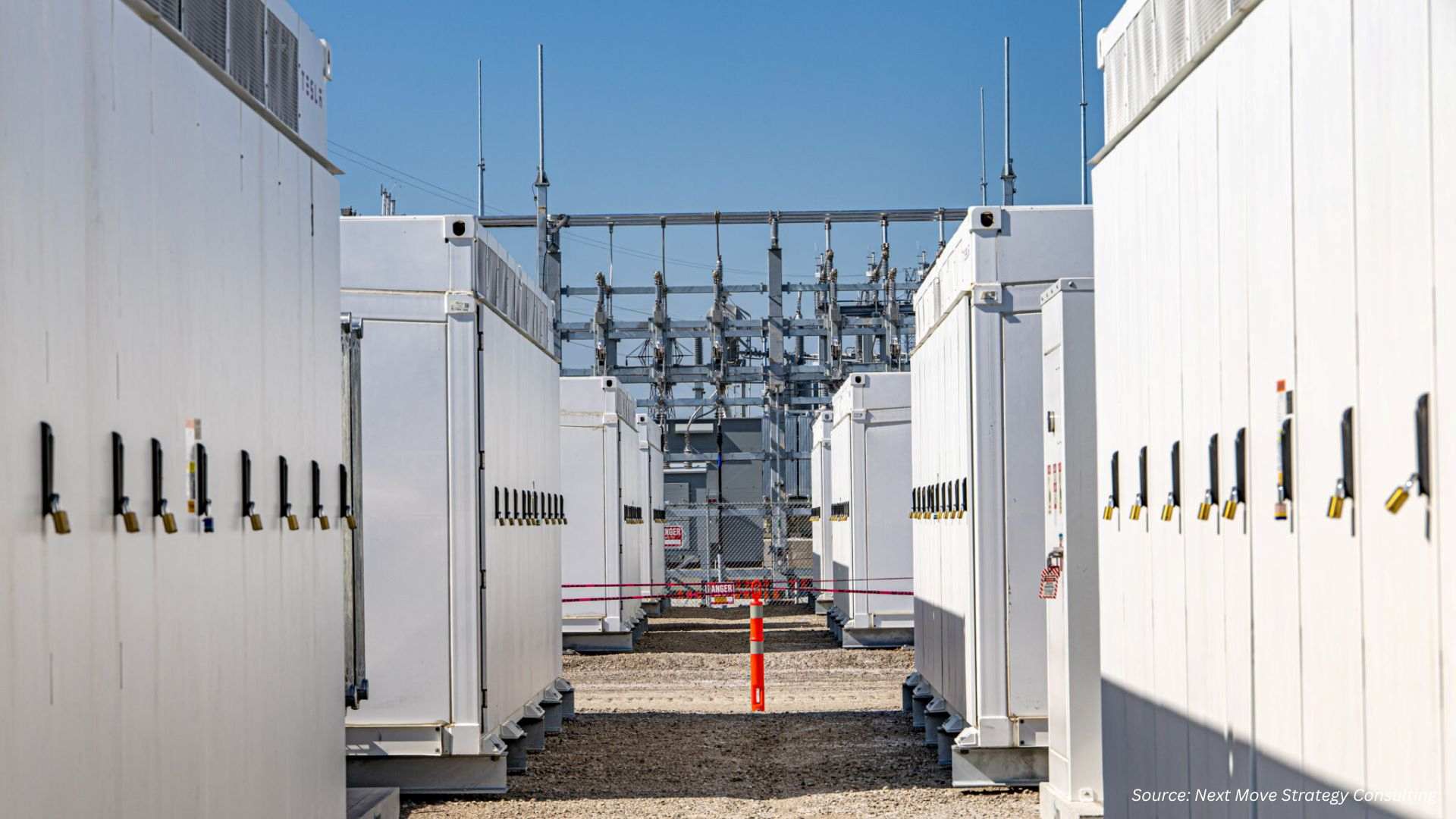
Through NMSC’s assessment, we found that growth in utility-scale battery storage to support national grid stability represents one of the most significant long-term opportunities for the Egypt Battery Market. Egypt’s national energy strategy targets substantial increases in renewable energy capacity, necessitating complementary storage infrastructure to manage generation intermittency and maintain reliable power delivery. International development finance institutions, multilateral lenders, and sovereign energy funds are increasingly expressing interest in co-financing grid-scale battery projects in Egypt, creating a favorable environment for market entrants and technology providers offering large-format lithium-ion and flow battery solutions.
Regulatory Framework Impacting the Egypt Battery Market
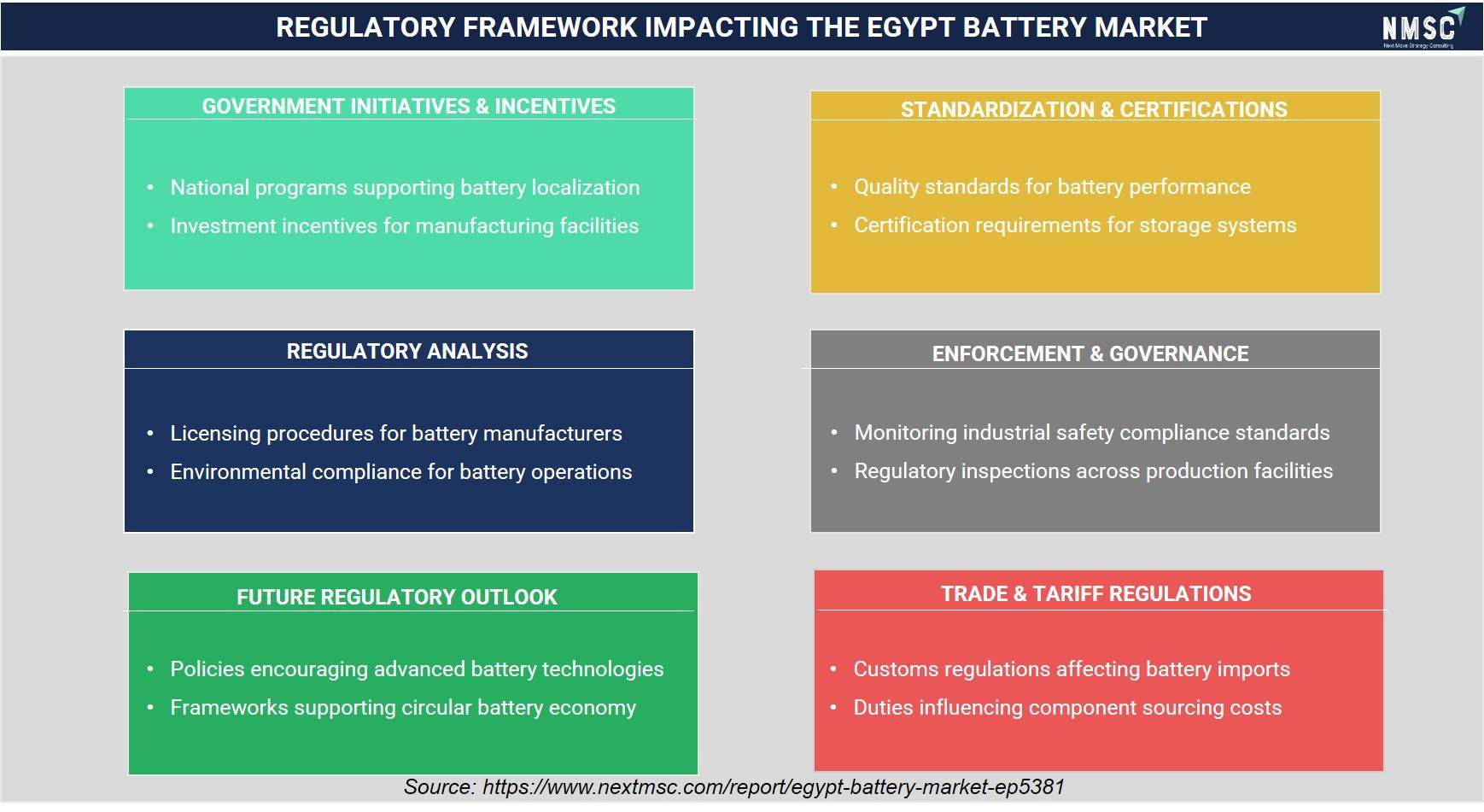
The regulatory framework impacting the Egypt battery market is focused on strengthening domestic manufacturing capabilities, ensuring product quality, and supporting industrial investment. Government incentives, licensing requirements, and battery performance standards are fostering market development, while regulatory oversight and environmental compliance measures enhance operational accountability. Looking ahead, policies promoting advanced battery technologies and circular economy practices are expected to support sustainable industry growth and supply chain resilience.
How Is the Egypt Battery Market Segmented in This Report, and What Are the Key Insights from the Segmentation Analysis?
By Battery Type
How Is Battery Type Segmentation Reflecting Demand Trends in the Egypt Battery Market?
Based on battery type, the Egypt Battery Market is segmented into Primary Batteries (Non-rechargeable), including Alkaline, Zinc-Carbon, Lithium Primary, and Other Primary Batteries, and Secondary Batteries (Rechargeable), including Lead-Acid Batteries, Nickel-Based Batteries, Lithium-ion Batteries, Sodium-Ion, Flow Batteries, and Other Secondary Batteries.
Based on our analysis, we observed that secondary batteries, particularly lithium-ion chemistries such as LFP and NMC, dominate demand across the Egypt Battery Market, supported by their widespread use in energy storage systems, electric vehicles, and consumer electronics. Lead-acid batteries continue holding a substantial share across automotive starter and industrial backup power applications. Primary batteries maintain consistent demand within the consumer electronics and low-power device segments. The transition toward advanced rechargeable chemistries is expected to intensify across the forecast period as Egypt expands its renewable energy and EV infrastructure programs.
By Application
How Is Application Segmentation Driving Battery Adoption Across the Egypt Battery Market?
Based on application, the Egypt Battery Market is segmented into Automotive (ICE Engines and Electric Vehicles), Consumer Electronics (Portable Computing, Mobile Communication, Wearables and Hearables, Power Tools and Garden Equipment, and Portable Power Banks), Energy Storage Systems (Grid-Scale Storage, Commercial and Industrial Storage, and Residential Storage), Industrial and Infrastructure (Telecom Infrastructure, Uninterruptible Power Supply, Aerospace and Defense, Marine, Medical Devices, and Oil and Gas), and Other Applications.
Based on our evaluation, we identified that the energy storage systems segment is emerging as the fastest-growing application category in Egypt, propelled by national grid modernization initiatives and renewable energy integration requirements. The automotive segment generates substantial baseline demand through lead-acid starter batteries for ICE vehicles, while electric vehicle battery adoption is beginning to gain traction amid government incentive programs. Telecom infrastructure and uninterruptible power supply applications generate consistent industrial battery demand due to Egypt’s extensive telecommunications expansion and continuous need for reliable backup power across commercial and government installations.
Key Segments
By Battery Type
-
Primary Batteries (Non-rechargeable)
-
Alkaline
-
Zinc-Carbon
-
Lithium Primary
-
Lithium Manganese Dioxide (Li-MnO2)
-
Lithium Thionyl Chloride (Li-SOCl2)
-
-
Other Primary Batteries
-
-
Secondary Batteries (Rechargeable)
-
Lead-Acid Batteries
-
Flooded
-
VRLA
-
-
Nickel-Based
-
Nickel-Cadmium (NiCd) Batteries
-
Nickel-Metal Hydride (NiMH) Batteries
-
-
Lithium-ion Batteries
-
Lithium Nickel Manganese Cobalt (LI-NMC)
-
Lithium Iron Phosphate (LFP)
-
Lithium Cobalt Oxide (LCO)
-
Lithium Titanate Oxide (LTO)
-
Lithium Manganese Oxide (LMO)
-
Lithium Nickel Cobalt Aluminum Oxide (NCA)
-
-
Sodium-Ion
-
Flow Batteries
-
Other Secondary Batteries
-
By Voltage Type
-
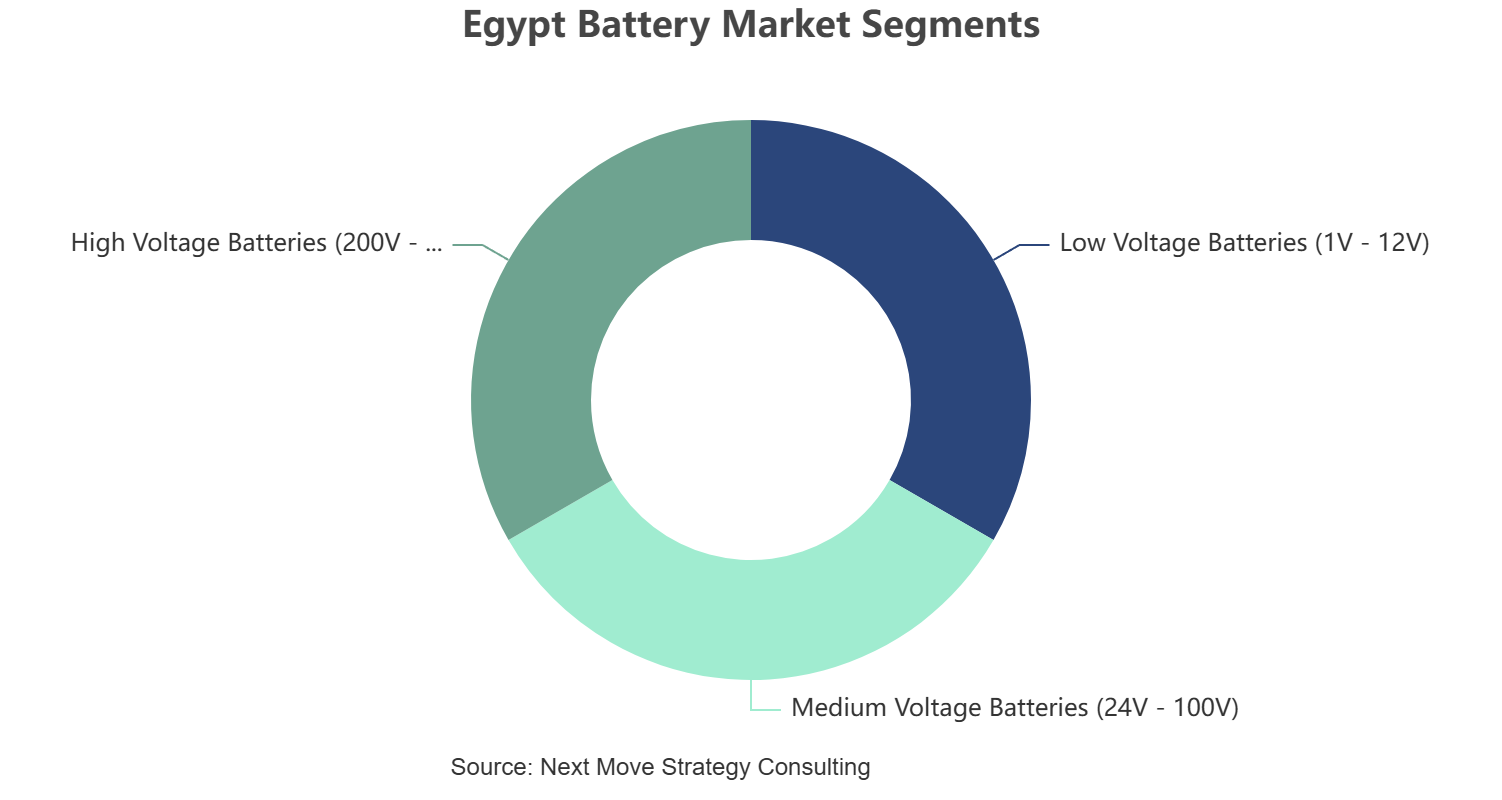
Low Voltage Batteries (1V - 12V)
-
Medium Voltage Batteries (24V - 100V)
-
High Voltage Batteries (200V - 1000V)
By Power Capacity
-
Low Capacity Batteries (Up to 1,000 mAh)
-
Medium Capacity Batteries (1,000 mAh to 10,000 mAh)
-
High Capacity Batteries (10,000 mAh to 100,000 mAh)
-
Ultra High Capacity Batteries (More than 100,000 mAh)
By Self-Discharge Rate
-
Low Self-Discharge Rate Batteries
-
Medium Self-Discharge Rate Batteries
-
High Self-Discharge Rate Batteries
By Application
-
Automotive
-
ICE Engines
-
Passenger Cars and Motorcycles
-
Commercial Trucks and Buses
-
-
Electric Vehicles
-
E-Bikes & 3-Wheelers
-
Passenger Electric Vehicles
-
Commercial Trucks and Buses
-
Off-Highway Electric Vehicles
-
-
-
Consumer Electronics
-
Portable Computing
-
Mobile Communication
-
Wearables and Hearables
-
Power Tools and Garden Equipment
-
Portable Power Banks
-
-
Energy Storage Systems
-
Grid-Scale Storage
-
Commercial and Industrial Storage
-
Residential Storage
-
-
Industrial and Infrastructure
-
Telecom Infrastructure
-
Uninterruptible Power Supply
-
Aerospace and Defense
-
Marine
-
Medical Devices
-
Oil and Gas
-
-
Other Applications
Competitive Landscape
The Egypt Battery Market is characterized by a moderately competitive structure comprising domestic manufacturers with established local distribution networks, regional players leveraging proximity and supply chain efficiencies, and international battery companies offering advanced cell chemistries and high-performance product portfolios. Competition is intensifying as demand for lithium-ion batteries expands across automotive, energy storage, and industrial segments, prompting both existing participants and new market entrants to differentiate through product technology, pricing strategies, after-sales service capabilities, and partnerships with project developers and government energy agencies.
Consumer Behavior Analysis of the Egypt Battery Market
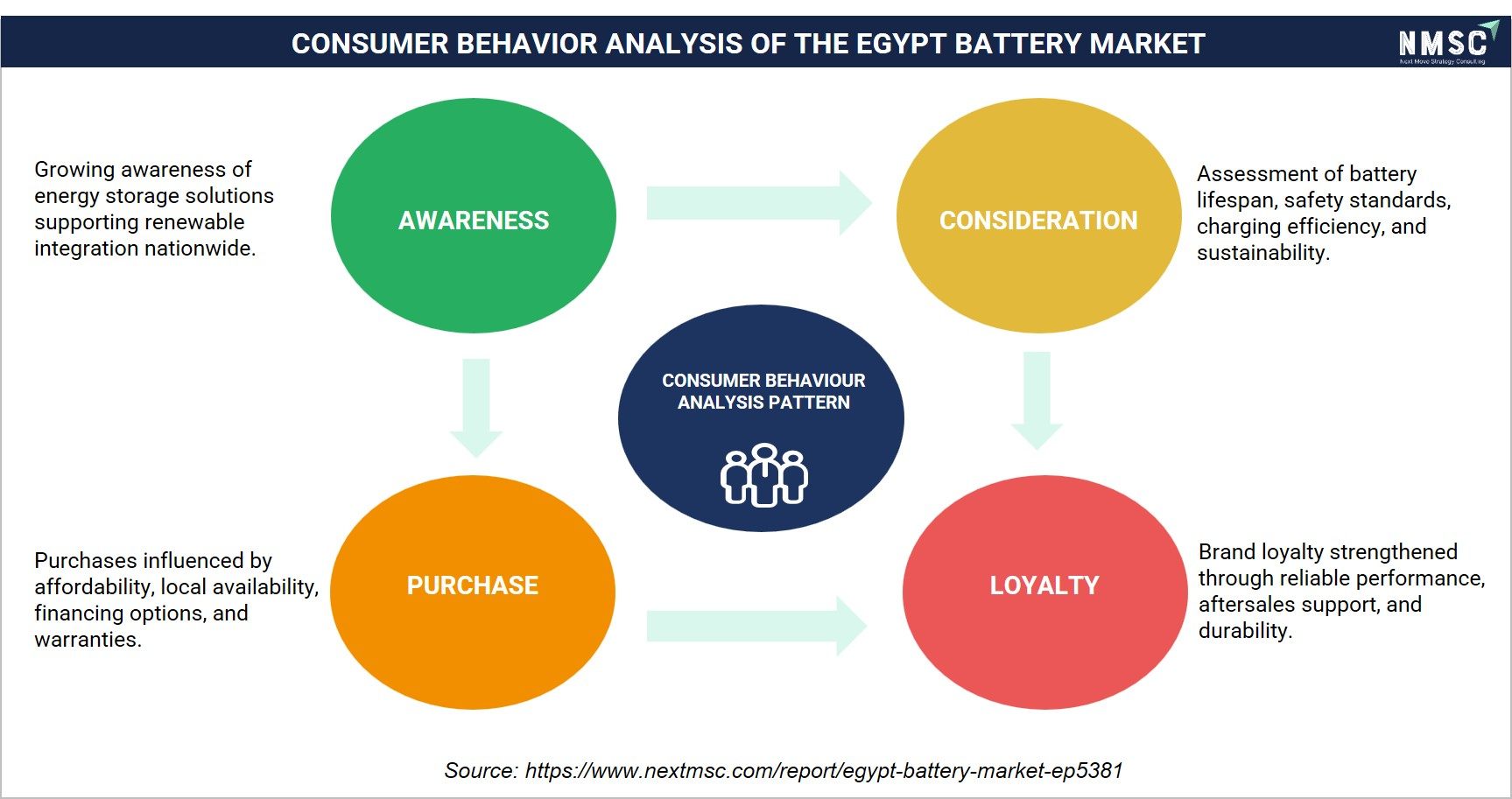
The consumer behavior analysis of the Egypt battery market indicates a purchasing journey shaped by increasing awareness of energy storage solutions and renewable energy integration. Consumers evaluate batteries based on lifespan, safety, charging efficiency, and sustainability, while affordability, product availability, financing options, and warranties influence purchase decisions. Long-term brand loyalty is strengthened through reliable performance, durability, and effective after-sales support.
Key Players of the Egypt Battery Market
-
Chloride Egypt S.A.E.
-
National Batteries Manufacturing Company Limited
-
Como Batteries
-
United Batteries Co.
-
German Company for Manufacturing Batteries
-
Leoch International Technology Ltd.
-
GS Yuasa International Ltd.
-
BYD Company Limited
-
Exide Industries Limited
-
Hoppecke Batterien GmbH & Co. KG
NMSC’s analysis indicates that competitive dynamics in the Egypt Battery Market are increasingly shaped by chemistry expertise, local manufacturing or distribution capabilities, and alignment with national energy storage and EV programs. Key companies including Chloride Egypt S.A.E., National Batteries Manufacturing Company Limited, Como Batteries, United Batteries Co., German Company for Manufacturing Batteries, Leoch International Technology Ltd., GS Yuasa International Ltd., BYD Company Limited, Exide Industries Limited, and Hoppecke Batterien GmbH & Co. KG are advancing their market positions through product portfolio diversification, technology investment, and strategic engagement with Egyptian energy project developers and government procurement programs.
Key Benefits for Stakeholders
Next Move Strategy Consulting (NMSC) presents a comprehensive analysis of the Egypt Battery Market, covering historical developments from 2020 to 2025 and providing detailed forecasts through 2035. Our study evaluates market performance across key battery types, voltage categories, power capacities, self-discharge rates, and application segments, delivering quantitative outlooks alongside qualitative insights into renewable energy integration trends, EV adoption dynamics, and grid modernization investments shaping the long-term competitive trajectory of Egypt’s evolving battery ecosystem.
Investors and strategic stakeholders benefit from granular insights into Egypt’s battery manufacturing landscape, energy sector investment programs, and technology adoption priorities. Automakers, energy storage developers, consumer electronics manufacturers, and industrial end-users gain access to detailed segmentation analysis spanning battery type, voltage, capacity, self-discharge rate, and application, supporting informed procurement, investment, and strategic planning across the rapidly growing Egypt battery value chain and its diverse downstream markets.
|
Parameters |
Details |
|
Customization Scope |
Free customization (equivalent to up to 80 analyst-working hours) after purchase. |
|
Pricing and Purchase Options |
Avail customized purchase options to meet your exact research needs. |
|
Approach |
In-depth primary and secondary research; proprietary databases; rigorous quality control and validation measures. |
|
Analytical Tools |
Porter’s Five Forces, SWOT, value chain, and Harvey ball analysis to assess competitive intensity, stakeholder roles, and relative impact of key factors. |
Conclusion
The Egypt Battery Market is positioned for strong and sustained growth over the 2025–2035 forecast period, supported by the country’s expanding renewable energy capacity, ongoing grid modernization investments, growing electric vehicle adoption, and rising industrial and consumer electronics battery demand. While limited financing for large-scale storage infrastructure presents near-term challenges, the emergence of utility-scale battery storage projects and increasing international investor interest in Egypt’s energy transition are expected to reinforce long-term market expansion. The competitive landscape is evolving toward greater technology differentiation and strategic alignment with national energy programs.
About the Author
 Mihul Sharma
— Mihul Sharma is Research Associate at Next Move Strategy Consulting, where he has covered technology, industrial, and healthcare markets for 3 years. His work applies structured business research, market analysis, and secondary-source review to assess market trends, competitive developments, and growth opportunities. He supports report development by fully synthesizing industry data, company information, and market signals into concise findings for strategy and investment-focused research teams.
Mihul Sharma
— Mihul Sharma is Research Associate at Next Move Strategy Consulting, where he has covered technology, industrial, and healthcare markets for 3 years. His work applies structured business research, market analysis, and secondary-source review to assess market trends, competitive developments, and growth opportunities. He supports report development by fully synthesizing industry data, company information, and market signals into concise findings for strategy and investment-focused research teams.
About the Reviewer
 Supradip Baul
— Supradip Baul is an accomplished business consultant and strategist with over a decade of rich experience in market intelligence, strategy, technology, and business transformation. His work has included rigorous qualitative and quantitative analysis across multiple industries, helping clients shape investment decisions and long-term roadmaps. Earlier in his career, he was associated with Gartner, where he contributed to industry-leading reports and market share analyses. He has worked with leading global companies and holds an MBA with a dual specialization in Marketing and Finance.
Supradip Baul
— Supradip Baul is an accomplished business consultant and strategist with over a decade of rich experience in market intelligence, strategy, technology, and business transformation. His work has included rigorous qualitative and quantitative analysis across multiple industries, helping clients shape investment decisions and long-term roadmaps. Earlier in his career, he was associated with Gartner, where he contributed to industry-leading reports and market share analyses. He has worked with leading global companies and holds an MBA with a dual specialization in Marketing and Finance.
At Next Move Strategy Consulting, we understand that insightful market research is the cornerstone of successful business decisions. That's why we employ a robust and multifaceted approach, combining various methodologies to deliver the most accurate and actionable data for our clients.

Research Landscape
We navigate the world of research with two primary approaches:
Qualitative Approach
Our qualitative research methodologies involve immersive techniques such as in-depth interviews, focus groups, and observational studies. By engaging directly with individuals and stakeholders, we uncover valuable insights that quantitative data alone may overlook.

Quantitative Research
In tandem with qualitative methodologies, NMSC leverages the power of Quantitative Research to provide a robust foundation of numerical insights. Through systematic data collection and analysis, we quantify patterns, preferences, and market trends, offering a comprehensive view of the business landscape.
Our quantitative research approach employs diverse tools, including surveys, experiments, and statistical modelling. These methodologies enable us to gather data from a large and representative sample, ensuring the statistical significance of our findings. By employing structured questionnaires and standardized data collection methods, we guarantee the reliability and validity of the information we present to our clients.
Quantitative research is particularly effective in measuring the prevalence of trends, assessing market size, and gauging the impact of various factors on consumer behavior. The numerical precision attained through this approach equips our clients with actionable insights, facilitating data-driven decision-making and strategy formulation.


Our Specialized Toolbox for Industry-Specific Market Research
We deploy a specialized arsenal of techniques tailored to meet your unique requirements. Here's a glimpse into our comprehensive toolbox:

Information Procurement
The stage entails acquiring market data or relevant information through various sources and methodologies.


Market Research Approach
We utilize both top-down and bottom-up approaches in market research analysis to achieve a comprehensive understanding of the market dynamics, leveraging the broad perspective of industry trends and macroeconomic factors alongside detailed insights from specific segments and individual companies.

Porters Five Forces Analysis
We conduct Porter's Five Forces analysis to evaluate the competitive landscape of an industry, providing us with insights into factors that affect profitability and strategic positioning.

SWOT Analysis

Forecasting
We utilize a forecasting model to predict future consumption by considering parameters like population, economics, regulations, market competition, drivers, constraints, technology, and pricing. We also employ statistical techniques such as multilinear regression, exponential smoothing, moving average, ARIMA, and Monte Carlo simulations for accurate predictions. In econometric forecasting, we analyzed short-term and long-term event impacts, attributing values based on regulatory frameworks, economic factors, and market events.





 Speak to Our Analyst