Renewable Energy Storage Market Size, Share, Trends and Growth Analysis, By Storage Medium (Electrochemical Battery Storage, Mechanical Energy Storage, Thermal Energy Storage, Chemical Energy Storage, and Other Storage Medium), By Deployment Scale (Residential, Commercial and Industrial & Others), By Connection Point, By Co-location Type, By Product Configuration, By Revenue Stream, By Buyer Type, By Distribution Channel, By Use Case, and Region — Global Industry Report and Forecast, 2026-2035
What Is the Renewable Energy Storage Market Size?
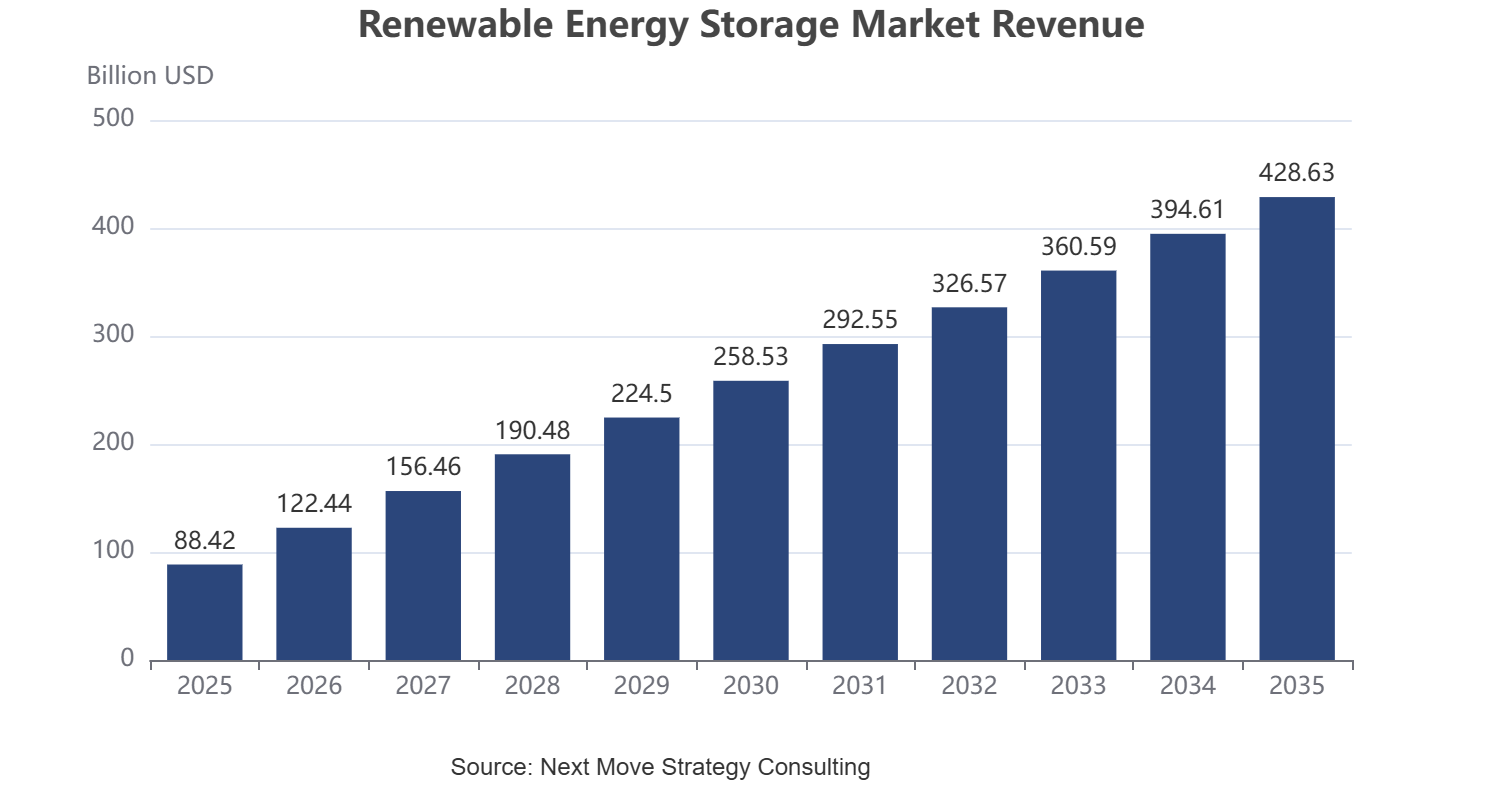
The global Renewable Energy Storage Market size was valued at USD 88.42 billion in 2025 and is estimated at USD 104.87 billion in 2026, forecast to reach USD 428.63 billion by 2035, expanding at a 16.9% CAGR between 2026 and 2035. Asia-Pacific leads with approximately 44% share, while electrochemical battery storage dominates all other storage mediums with approximately 82% share.
We observed that the growth is broad-based across every segmentation axis, with utility-scale deployment and lithium-ion battery adoption driving the dominant structural shifts through 2035.
|
Key Takeaways |
|
By Storage Medium: Electrochemical Battery Storage held the largest share of approximately 82% (USD 68.97 billion) in 2025; Chemical Energy Storage is the fastest-growing sub-segment at 20.8% CAGR from 2026-2035. |
|
By Deployment Scale: Utility Scale held the largest share of approximately 55% (USD 48.63 billion) in 2025; Commercial and Industrial is the fastest-growing sub-segment at 19.0% CAGR from 2026-2035. |
|
By Connection Point: Front of the Meter held the largest share of approximately 68% (USD 60.13 billion) in 2025; Off Grid is the fastest-growing sub-segment at 19.5% CAGR from 2026-2035. |
|
By Co-location Type: Hybrid with Solar held the largest share of approximately 46% (USD 40.67 billion) in 2025; Hybrid with Solar and Wind is the fastest-growing sub-segment at 20.3% CAGR from 2026-2035. |
|
By Product Configuration: Containerised AC Block held the largest share of approximately 52% (USD 45.98 billion) in 2025; Rack Mounted Indoor is the fastest-growing sub-segment at 18.7% CAGR from 2026-2035. |
|
By Revenue Stream: Hardware Only held the largest share of approximately 58% (USD 51.28 billion) in 2025; Software and Controls is the fastest-growing sub-segment at 21.4% CAGR from 2026-2035. |
|
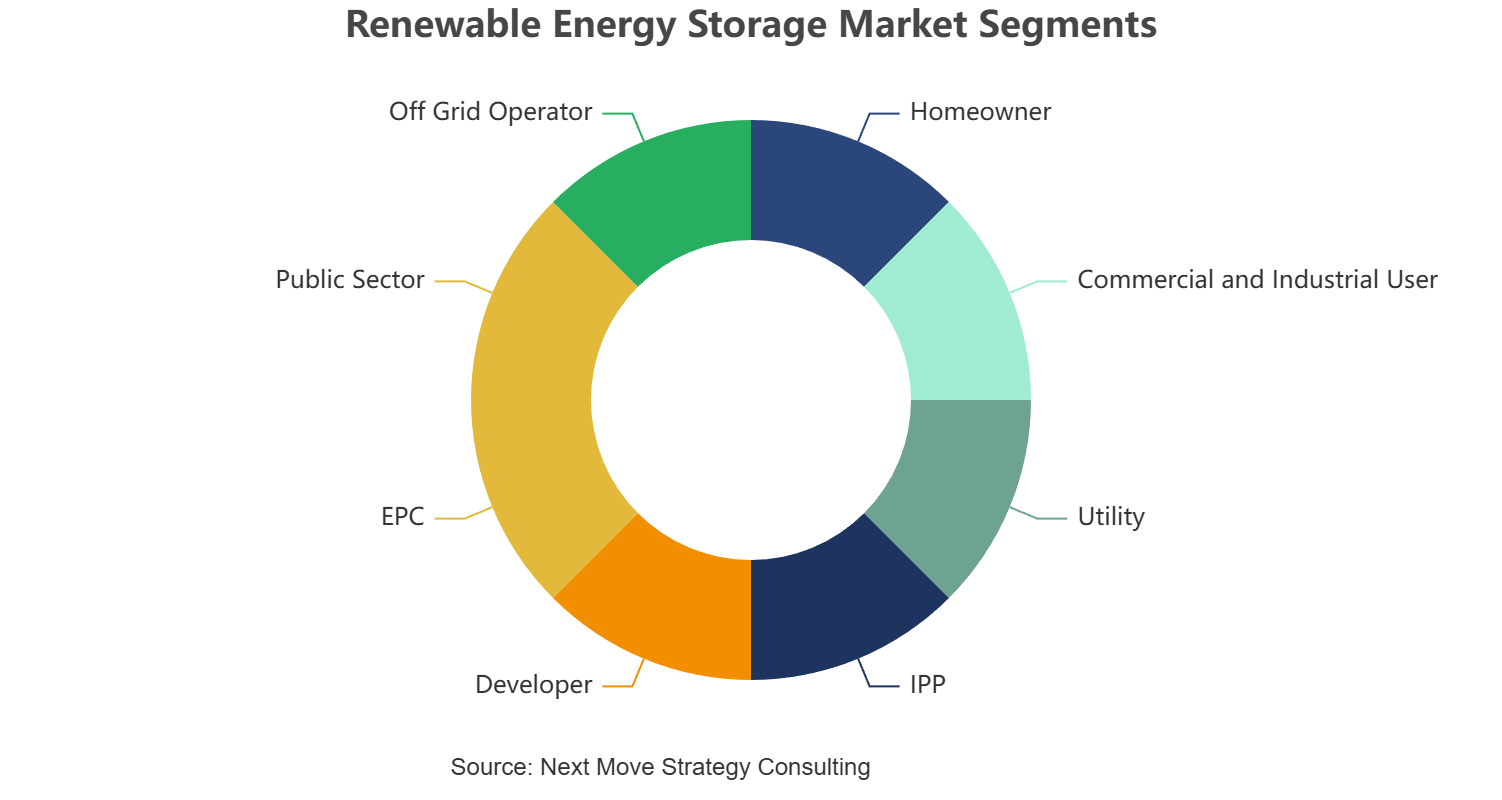
By Buyer Type: Utility held the largest share of approximately 34% (USD 30.06 billion) in 2025; IPP is the fastest-growing sub-segment at 19.8% CAGR from 2026-2035. |
|
By Distribution Channel: Direct B2B Sales held the largest share of approximately 64% (USD 56.59 billion) in 2025; Certified Installer Network is the fastest-growing sub-segment at 17.9% CAGR from 2026-2035. |
|
By Use Case: Renewable Firming and Smoothing held the largest share of approximately 30% (USD 26.53 billion) in 2025; Energy Arbitrage is the fastest-growing sub-segment at 18.6% CAGR from 2026-2035. |
|
Dominant Region: Asia-Pacific dominated with approximately 38% revenue share (USD 33.60 billion) in 2025. |
|
Fastest-Growing Region: Middle East & Africa is expected to register the highest CAGR of 20.3% during 2026-2035. |
|
Dominant Country: U.S. led with approximately USD 19.10 billion in 2025. |
|
Fastest-Growing Country: India is the fastest-growing country at approximately 24.3% CAGR from 2026-2035. |
Market Opportunity: The renewable energy storage market is expected to create an absolute dollar opportunity of USD 323.76 billion between 2026 and 2035, presenting significant investment potential across the utility-scale and hybrid renewable-plus-storage value chain.
According to Next Move Strategy Consulting analysis, utilities and independent power producers are increasingly co-locating storage with new solar and wind capacity to qualify for firm-power contracts, a shift that favors integrated technology providers over standalone hardware suppliers as grid operators tighten dispatchability requirements through 2035.
What Does the Renewable Energy Storage Market Encompass?
The renewable energy storage market encompasses equipment, systems, and services that capture and dispatch energy generated from renewable sources to balance supply and demand across the grid. Our assessment indicates that the scope spans electrochemical, mechanical, thermal, and chemical storage technologies deployed as new equipment, retrofits, and turnkey plants for utilities, commercial and industrial buyers, and residential customers. The category has evolved from a niche grid-balancing accessory into a mainstream infrastructure asset, driven by rising renewable capacity additions and the growing need to firm intermittent solar and wind output, closely tied to the broader battery energy storage system value chain worldwide.
Regulatory frameworks such as the U.S. Inflation Reduction Act's investment tax credit for standalone storage and the European Union's REPowerEU plan shape deployment economics, while grid-code requirements from transmission operators increasingly mandate frequency-response capability from new storage assets. We observed that technology adoption is shifting toward lithium iron phosphate chemistries and containerized AC block configurations that simplify installation. Next Move Strategy Consulting's analysis indicates that this structural shift, combined with rising data-center electricity demand, is redefining sourcing criteria across the market.
|
Parameters |
Details |
|
Market Size in 2025 |
USD 88.42 Billion |
|
Market Size in 2026 |
USD 104.87 Billion |
|
Revenue Forecast in 2035 |
USD 428.63 Billion |
|
Growth Rate |
CAGR of 16.9% from 2026 to 2035 |
|
Analysis Period |
2025-2035 |
|
Base Year Considered |
2025 |
|
Forecast Period |
2026-2035 |
|
Market Size Estimation |
USD Billion |
|
Companies Profiled |
20 |
|
Countries Covered |
33 |
|
Market Share |
Available for Top 10 Companies |
Key Emerging Trends
Based on research conducted by Next Move Strategy Consulting, we found that four structural trends are reshaping product development, sourcing, and stakeholder engagement across the industry.
How Is AI-Driven Demand Reshaping Grid-Scale Storage Deployment?
Rising electricity demand from AI data centers is accelerating utility-scale storage procurement as grid operators seek flexible, dispatchable capacity. We observed that Fluence Energy's expanding grid-critical project pipeline reflects this shift, with hyperscale customers increasingly specifying storage to secure speed-to-power. Utilities are adopting larger containerized systems to meet interconnection queue requirements, while developers retool project pipelines to prioritize sites near data-center load pockets.
Why Is Chemical Storage Gaining Traction as a Long-Duration Solution?
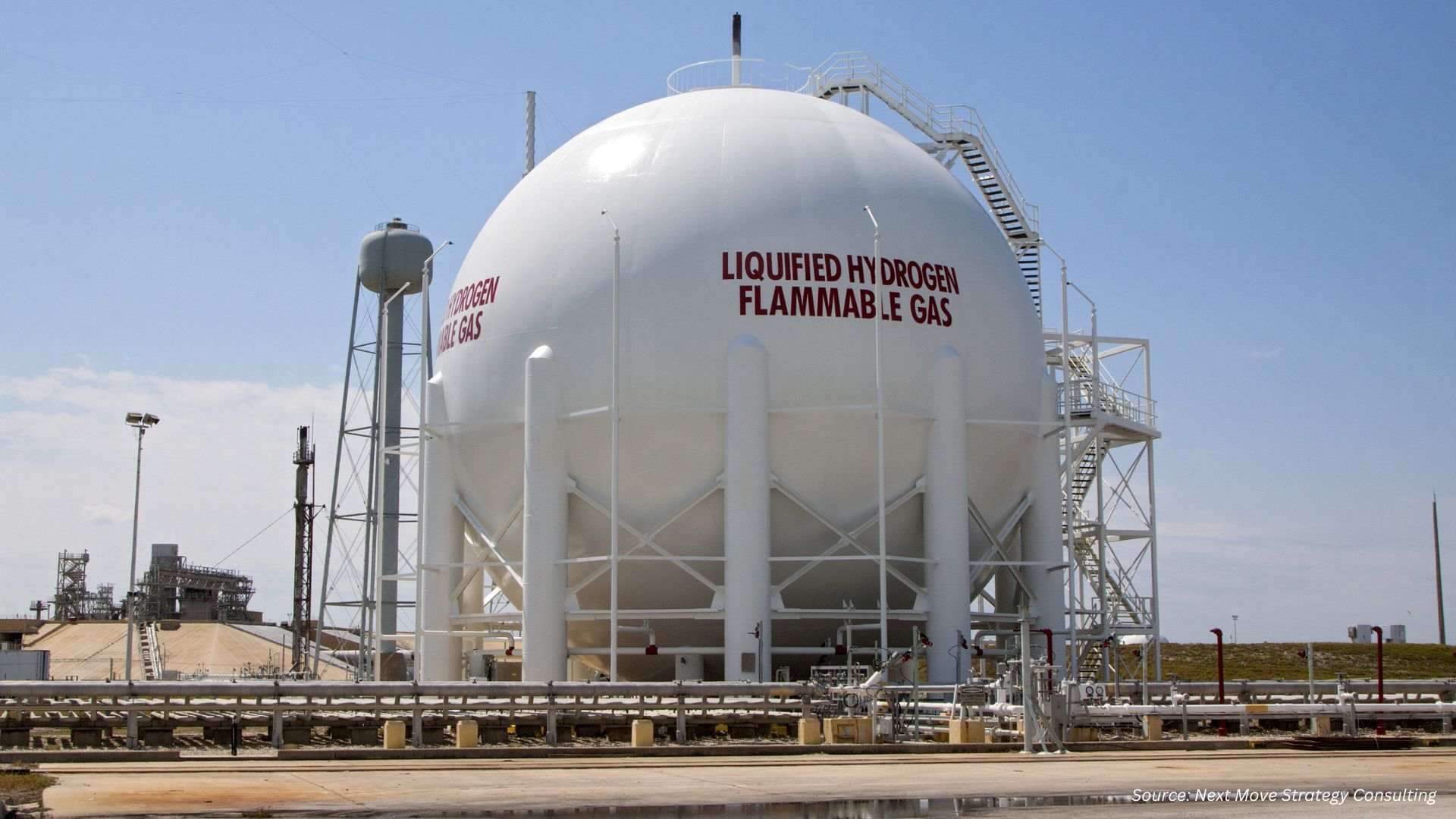
Hydrogen-based chemical storage is gaining share as grid operators seek multi-day duration beyond lithium-ion economics. Our findings suggest that green hydrogen production paired with power-to-gas storage is being piloted by utilities and industrial buyers seeking seasonal balancing. Manufacturers are expanding chemical storage portfolios, positioning these formats as a complementary, longer-duration category within the broader market segmentation structure.
How Is Sodium-Based Chemistry Reshaping Battery Storage Sourcing?
Sodium-ion and sodium-sulfur battery chemistries are emerging as a lower-cost alternative to lithium-ion for stationary applications. We observed that Chinese manufacturers, including CATL, are scaling sodium-ion production lines for grid-scale projects to reduce exposure to lithium and cobalt price volatility. This trend is elevating demand for sodium-based systems among utility buyers, while EPC contractors redesign containerized platforms to accommodate the differing thermal and voltage characteristics of sodium cells.
What Role Does Software and Controls Play in Storage Innovation?
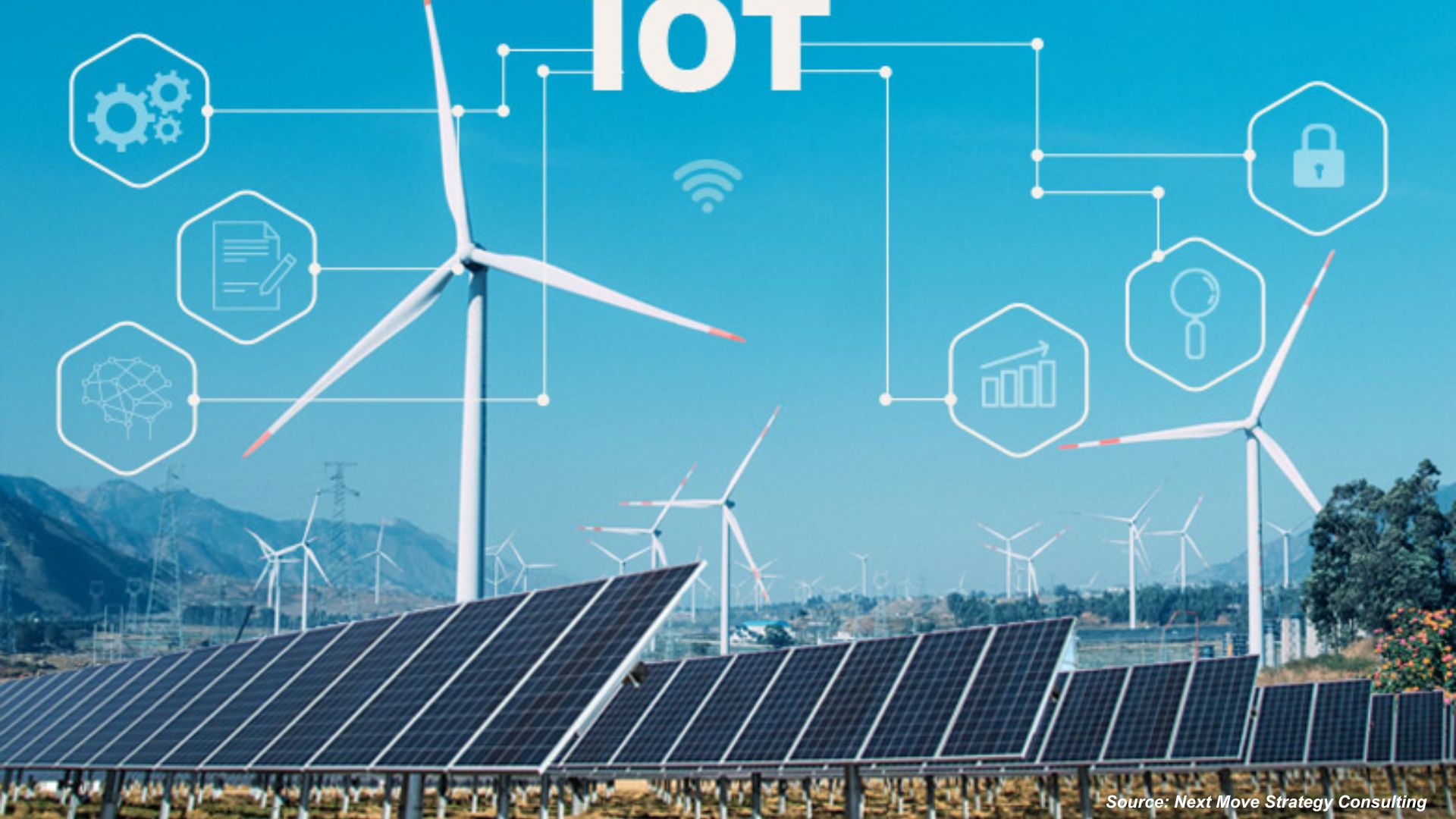
Software-defined asset optimization is emerging as a differentiator as storage operators seek to monetize multiple revenue streams from a single asset. Our analysis shows that developers increasingly pair hardware with bidding and dispatch software to capture energy arbitrage and frequency regulation revenue simultaneously. Fluence's Mosaic platform, expanded through 2025, exemplifies this direction with digital applications engineered to optimize renewable and storage assets across use cases.
Supply Chain Structure Of The Renewable Energy Storage Market
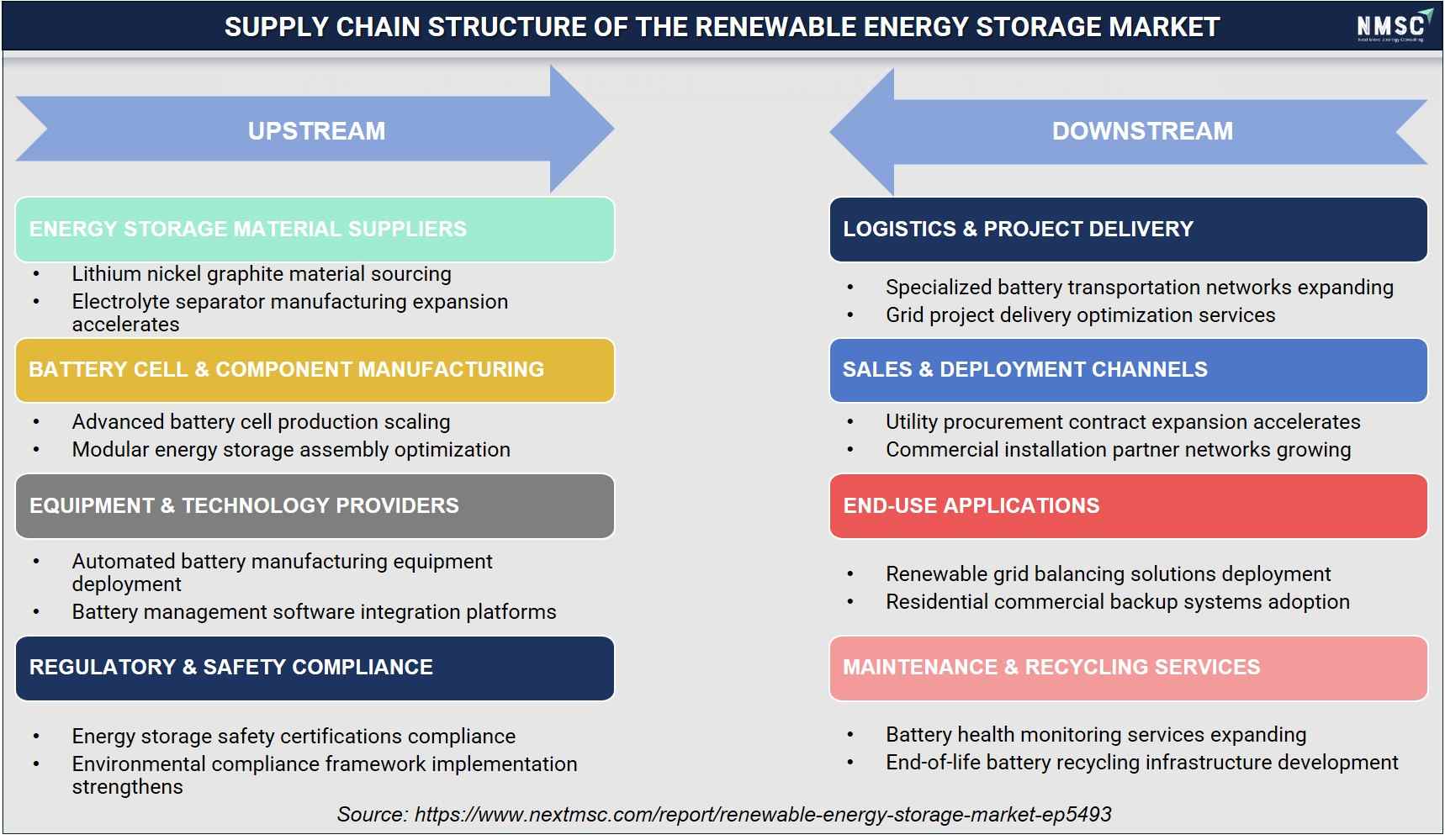
The market supply chain begins upstream with the sourcing of critical battery materials such as lithium, nickel, graphite, electrolytes, and separators, followed by battery cell manufacturing and energy storage system component production. Equipment providers supply advanced manufacturing technologies, battery management systems (BMS), and power conversion systems (PCS), while regulatory compliance ensures product safety and environmental standards. Downstream activities include logistics and project delivery, utility and commercial deployment, grid-scale and residential energy storage applications, and lifecycle services such as battery monitoring, maintenance, refurbishment, and end-of-life recycling, supporting a sustainable circular energy storage ecosystem.
Growth Drivers and Restraints
Growth Catalyst and Risk Assessment Matrix
|
Factors |
Type |
(+/-) % Impact on CAGR |
Geographic Relevance |
Impact Timeline |
|
Accelerating utility-scale renewable capacity additions |
Driver |
+3.4% |
Global |
2026-2035 |
|
U.S. Inflation Reduction Act storage investment tax credit |
Driver |
+2.1% |
North America |
2026-2032 |
|
Rising data center and AI-linked electricity demand |
Driver |
+2.6% |
Global |
2026-2035 |
|
Falling lithium-ion battery pack cost curves |
Driver |
+1.9% |
Global |
2026-2035 |
|
Grid-code mandates for frequency and dispatchability services |
Driver |
+1.3% |
Europe, Asia-Pacific |
2026-2035 |
|
Expansion of hybrid solar-plus-storage project pipelines |
Driver |
+1.5% |
Asia-Pacific, North America |
2026-2035 |
|
Critical mineral supply-chain constraints for battery materials |
Restraint |
-1.4% |
Global |
2026-2032 |
|
Interconnection queue delays and permitting bottlenecks |
Restraint |
-1.1% |
North America, Europe |
2026-2030 |
|
Fire-safety and siting regulation for large-format installations |
Restraint |
-0.7% |
North America, Europe |
2028-2035 |
What Is the Primary Growth Driver of the Renewable Energy Storage Market?
Accelerating utility-scale renewable capacity additions are the primary driver of the market. The U.S. Energy Information Administration continues to report record annual battery storage capacity additions, sustaining utility demand for firming assets paired with new solar photovoltaic (PV) and wind installations. We observed that this capacity build-out, reinforced by grid-operator dispatchability requirements, continues to anchor baseline consumption of utility-scale and hybrid storage systems across developed and emerging economies alike.
How Is the Inflation Reduction Act Driving Market Growth?
The U.S. Inflation Reduction Act's standalone investment tax credit for storage is accelerating market growth toward domestically manufactured battery systems. The U.S. Department of Energy continues to track rising storage interconnection filings tied to the credit's technology-neutral structure. Our assessment indicates that this policy support, combined with state-level procurement mandates, is compressing adoption timelines for utility-scale battery storage across North America.
What Is Restraining Renewable Energy Storage Market Expansion?
Constrained supply of critical battery minerals, including lithium and cobalt, restrains cost stability across the electrochemical storage supply chain. The U.S. Geological Survey tracks concentrated global production of these minerals, which compresses manufacturer margins and delays capacity expansion. We found that smaller regional integrators face particular exposure, as limited scale reduces their ability to hedge raw-material procurement compared with larger, vertically integrated battery manufacturers.
Segmentation Analysis
Segment Sizing: By Storage Medium
|
Segment |
2025 (USD) |
2035 (USD) |
CAGR% (2026-2035) |
|
Electrochemical Battery Storage |
USD 68.97 Billion |
USD 351.48 Billion |
17.6% |
|
Mechanical Energy Storage |
USD 10.61 Billion |
USD 34.29 Billion |
11.8% |
|
Thermal Energy Storage |
USD 5.31 Billion |
USD 21.43 Billion |
14.6% |
|
Chemical Energy Storage |
USD 2.65 Billion |
USD 17.15 Billion |
20.8% |
|
Other Storage Medium |
USD 0.88 Billion |
USD 4.29 Billion |
17.1% |
|
Total |
USD 88.42 Billion |
USD 428.63 Billion |
16.9% |
Which Storage Medium Segment Dominates the Renewable Energy Storage Market?
Electrochemical Battery Storage, encompassing lithium-ion battery, sodium-based, and flow battery formats, led the market with USD 68.97 billion in 2025, supported by falling cell costs and near-universal compatibility with utility and commercial projects. We observed that Chemical Energy Storage is the fastest-growing storage medium, expanding at a 20.8% CAGR from 2026 to 2035, as hydrogen and power-to-gas systems scale for long-duration applications.
Segment Sizing: By Deployment Scale
|
Segment |
2025 (USD) |
2035 (USD) |
CAGR% (2026-2035) |
|
Residential |
USD 15.03 Billion |
USD 55.72 Billion |
13.5% |
|
Commercial and Industrial |
USD 21.22 Billion |
USD 120.02 Billion |
19.0% |
|
Utility Scale |
USD 48.63 Billion |
USD 240.03 Billion |
17.2% |
|
Off Grid and Remote |
USD 3.54 Billion |
USD 12.86 Billion |
13.2% |
|
Total |
USD 88.42 Billion |
USD 428.63 Billion |
16.9% |
Which Deployment Scale Segment Leads Renewable Energy Storage Demand?
Utility Scale remained the leading deployment scale within the market, valued at USD 48.63 billion in 2025 on sustained grid-balancing and renewable-firming project awards. Our findings suggest that Commercial and Industrial is the fastest-growing deployment scale, registering a 19.0% CAGR from 2026 to 2035, as corporate buyers increasingly specify on-site storage to manage demand charges and support sustainability commitments.
Segment Sizing: By Use Case
|
Segment |
2025 (USD) |
2035 (USD) |
CAGR% (2026-2035) |
|
Renewable Firming and Smoothing |
USD 26.53 Billion |
USD 141.45 Billion |
18.2% |
|
Peak Shaving |
USD 15.92 Billion |
USD 68.58 Billion |
15.4% |
|
Energy Arbitrage |
USD 13.26 Billion |
USD 72.87 Billion |
18.6% |
|
Frequency Regulation |
USD 10.61 Billion |
USD 47.15 Billion |
15.8% |
|
Backup Power |
USD 8.84 Billion |
USD 34.29 Billion |
14.1% |
|
Congestion Relief |
USD 5.31 Billion |
USD 25.72 Billion |
16.9% |
|
Capacity Deferral |
USD 4.42 Billion |
USD 21.43 Billion |
16.9% |
|
Black Start |
USD 1.77 Billion |
USD 8.57 Billion |
16.9% |
|
Other Use Case |
USD 1.77 Billion |
USD 8.57 Billion |
16.9% |
|
Total |
USD 88.42 Billion |
USD 428.63 Billion |
16.9% |
Which Use Case Generates the Most Renewable Energy Storage Revenue?
Renewable Firming and Smoothing remained the leading use case, valued at USD 26.53 billion in 2025 as grid operators prioritize smoothing intermittent solar and wind output. Based on research conducted by Next Move Strategy Consulting, we found that Energy Arbitrage is the fastest-growing use case at an 18.6% CAGR from 2026 to 2035, reflecting wider day-ahead and real-time price spreads that reward flexible dispatch across deregulated power markets.
Growth Opportunities
Our analysis shows that three forward-looking opportunities stand out for stakeholders positioning within the renewable energy storage market over the 2026-2035 forecast period.
How Can Long-Duration Chemical Storage Unlock Value for Utilities?
Long-duration chemical storage presents a whitespace opportunity for utilities seeking multi-day balancing beyond lithium-ion economics. Suppliers that commercialize hydrogen and power-to-gas systems stand to capture recurring capacity-deferral contracts as grid operators shift toward seasonal renewable balancing, particularly among utility buyers facing tightening dispatchability mandates.
Where Do Software and Controls Create New Demand?
Asset optimization software represents an underpenetrated opportunity for developers seeking to monetize multiple revenue streams from a single storage asset. Providers that integrate bidding, dispatch, and smart grid interoperability can secure long-term service contracts with utility and IPP buyers, benefiting from recurring software-subscription revenue tied to energy-arbitrage optimization.
How Can Off-Grid Hybrid Systems Benefit Emerging Market Buyers?
Off-grid and remote buyers in emerging markets create an opportunity for suppliers offering modular skid and hybrid solar-plus-storage systems. Early movers that secure distributor and certified installer networks can differentiate with off-grid operators pursuing electrification in Sub-Saharan Africa and Southeast Asia, benefiting from underserved rural electrification demand.
Pestel Analysis Of The Renewable Energy Storage Market
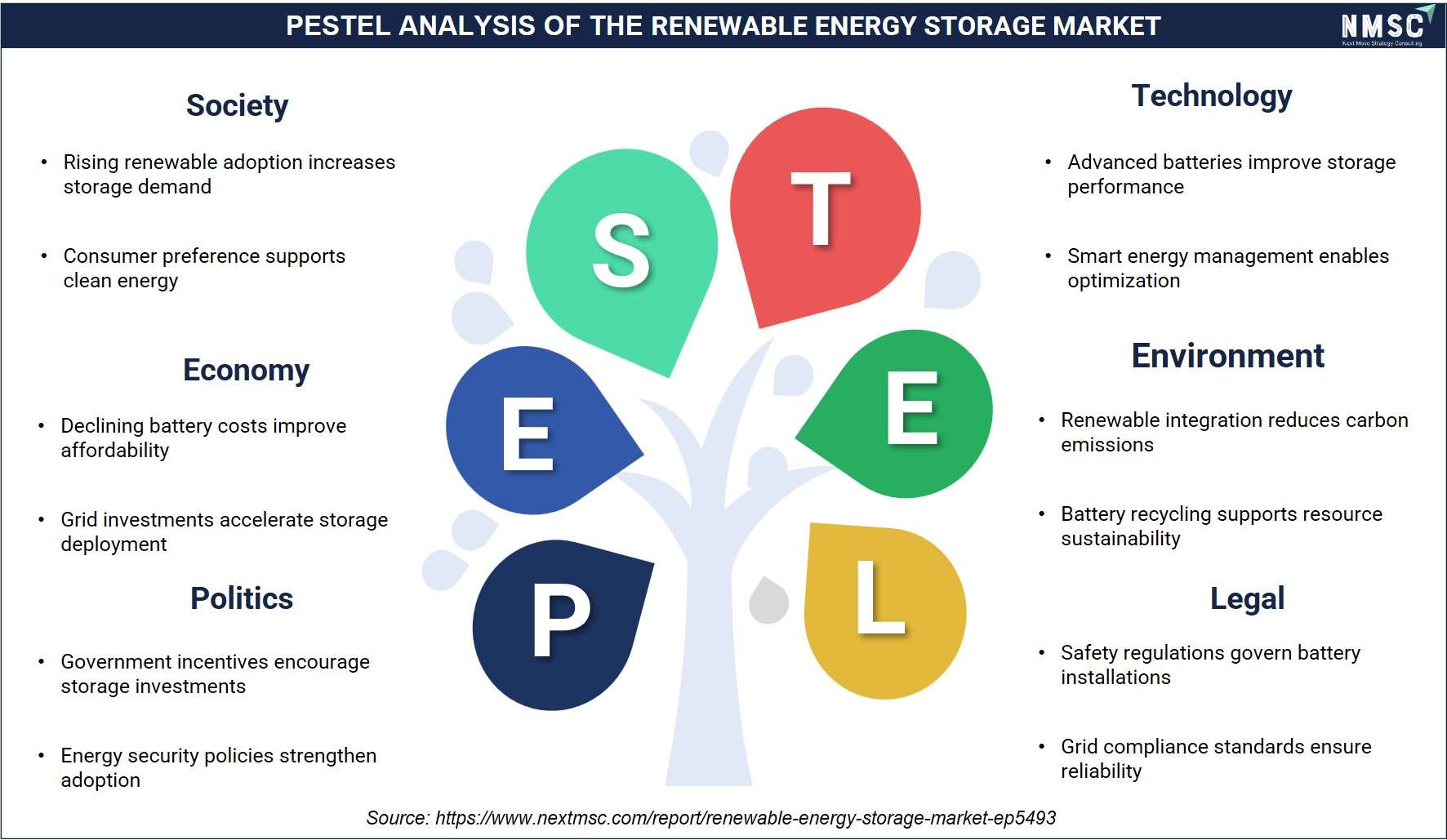
The PESTEL analysis of the market highlights the external factors shaping industry growth and investment. Political support through clean energy policies and incentives, strong economic investments in grid modernization, rising social demand for sustainable energy, continuous technological advancements in battery storage and energy management, environmental goals for carbon reduction, and evolving legal frameworks governing battery safety, recycling, and grid integration collectively drive market expansion. These factors encourage innovation, accelerate renewable energy adoption, and strengthen the deployment of utility-scale, commercial, and residential energy storage systems worldwide.
Regional Outlook
Geographic Performance Snapshot
|
Region |
2025 (USD) |
2035 (USD) |
CAGR% (2026-2035) |
Key Driver |
|
North America |
USD 26.53 Billion |
USD 102.87 Billion |
14.1% |
IRA-linked storage tax credits and grid modernization |
|
Europe |
USD 17.68 Billion |
USD 72.87 Billion |
14.8% |
REPowerEU and grid-flexibility mandates |
|
Asia-Pacific |
USD 33.60 Billion |
USD 188.60 Billion |
18.9% |
Renewable capacity build-out in China and India |
|
Middle East & Africa |
USD 6.19 Billion |
USD 38.58 Billion |
20.3% |
Vision 2030-linked renewable diversification |
|
Latin America |
USD 4.42 Billion |
USD 25.72 Billion |
19.3% |
Solar-plus-storage hybrid deployment growth |
|
Total |
USD 88.42 Billion |
USD 428.63 Billion |
16.9% |
-- |
North America Renewable Energy Storage Market Outlook
North America leads the market with an established utility-scale procurement pipeline and mature grid-interconnection framework. We observed that Inflation Reduction Act tax credits sustain demand for standalone battery projects, while utilities increasingly specify domestic-content systems to maximize credit eligibility. Technology adoption remains concentrated in containerized lithium-ion platforms, with regulatory attention shifting toward fire-safety siting standards as installations scale toward 2035.
Europe Renewable Energy Storage Market Outlook
Europe's storage market is shaped by REPowerEU's push to accelerate renewable integration and reduce reliance on imported gas. We observed that grid operators are tightening frequency-response procurement rules, favoring fast-response battery systems over legacy mechanical assets. Technology adoption is shifting toward hybrid solar-plus-storage co-location, while regulatory scrutiny of end-of-life battery handling under EU battery regulation shapes recycling and sourcing decisions across the region.
Asia-Pacific Renewable Energy Storage Market Outlook
Asia-Pacific dominates the market on the strength of China's manufacturing scale and India's expanding renewable energy capacity additions. We observed that regional battery manufacturers are vertically integrating cell production with system assembly to reduce costs. Technology adoption favors utility-scale and hybrid deployment, with government auctions increasingly requiring storage co-location alongside new solar and wind capacity across the region.
Middle East & Africa Renewable Energy Storage Market Outlook
Middle East & Africa is the fastest-growing region, propelled by Saudi Arabia's Vision 2030 renewable diversification program and UAE grid-modernization investment. We observed that utilities are procuring large-scale battery systems to firm new solar capacity in desert environments. Technology adoption is concentrated in utility-scale containerized systems, with regulatory frameworks increasingly requiring storage integration for new renewable power purchase agreements.
Latin America Renewable Energy Storage Market Outlook
Latin America's market is advancing on the back of Brazil's expanding distributed solar base and Chile's grid-stability requirements. We observed that regulators are introducing ancillary-service markets that reward fast-response storage assets. Technology adoption favors hybrid solar-plus-storage systems, with regional utilities increasingly issuing storage-specific tenders to address curtailment challenges tied to rapid renewable capacity growth.
U.S. Renewable Energy Storage Market Outlook
The market in the U.S. market benefits from Inflation Reduction Act tax credits and record annual utility-scale battery capacity additions tracked by the U.S. Energy Information Administration. Demand structure is concentrated in utility-scale and commercial and industrial deployment, with technology adoption favoring domestically assembled lithium-ion systems. Regulatory influence from state renewable portfolio standards and competitive intensity among integrators continue to shape strategic sourcing decisions. The country's renewable energy storage market was valued at approximately USD 19.10 billion in 2025 and is projected to reach approximately USD 74.07 billion by 2035, expanding at a 14.0% CAGR from 2026 to 2035.
Canada Renewable Energy Storage Market Outlook
Based on our estimates, Canada's market is supported by provincial clean-electricity mandates and expanding hydro-complementary battery deployment. Demand structure favors utility-scale projects paired with wind capacity, while technology penetration of lithium-ion systems continues to rise. Regulatory influence from federal clean-electricity regulations and moderate competitive intensity shape a steady strategic outlook through 2035. The country's market was valued at approximately USD 5.31 billion in 2025 and is projected to reach approximately USD 20.57 billion by 2035, expanding at a 14.5% CAGR from 2026 to 2035.
UK Renewable Energy Storage Market Outlook
As per our estimate, the UK market is advancing on the back of National Grid ESO's frequency-response procurement reforms and expanding offshore wind capacity. Demand structure is concentrated in front-of-the-meter utility-scale systems, with technology adoption favoring fast-response battery platforms. Regulatory influence from capacity-market reforms and rising competitive intensity among developers support a favorable strategic outlook. The country's market was valued at approximately USD 3.89 billion in 2025 and is projected to reach approximately USD 16.03 billion by 2035, expanding at a 15.2% CAGR from 2026 to 2035.
Germany Renewable Energy Storage Market Outlook
According to our analysis, Germany's market benefits from accelerated solar and wind capacity additions under national energy-transition targets. Demand structure spans residential and utility-scale segments, with technology adoption favoring hybrid solar-plus-storage co-location. Regulatory influence from Bundesnetzagentur grid-code requirements and high competitive intensity among European integrators shape a technology-forward strategic outlook. The country's market was valued at approximately USD 4.60 billion in 2025 and is projected to reach approximately USD 18.95 billion by 2035, expanding at a 15.2% CAGR from 2026 to 2035.
France Renewable Energy Storage Market Outlook
The market in France's market is expanding alongside RTE's grid-flexibility tenders and growing nuclear-renewable balancing requirements. Demand structure favors utility-scale frequency-regulation projects, with technology penetration of containerized battery systems rising steadily. Regulatory influence from EU packaging of energy-transition law and moderate competitive intensity support continued strategic expansion. The country's renewable energy storage market was valued at approximately USD 2.83 billion in 2025 and is projected to reach approximately USD 11.66 billion by 2035, expanding at a 15.3% CAGR from 2026 to 2035.
China Renewable Energy Storage Market Outlook
Based on our estimates, China's market leads Asia-Pacific on the strength of vertically integrated battery manufacturing and mandatory storage-attachment policies for new solar and wind projects. Demand structure is dominated by utility-scale deployment, with technology penetration of lithium iron phosphate systems near-universal. Regulatory influence from provincial storage mandates and intense domestic competitive pressure define the strategic outlook. The country's market was valued at approximately USD 17.47 billion in 2025 and is projected to reach approximately USD 98.07 billion by 2035, expanding at a 18.8% CAGR from 2026 to 2035.
India Renewable Energy Storage Market Outlook
As per our estimate, India's market is the fastest-growing country market, propelled by the national Battery Energy Storage System mission and expanding round-the-clock renewable tenders. Demand structure favors utility-scale and hybrid deployment tied to solar auctions, with technology penetration rising rapidly from a smaller base. Regulatory influence from central procurement targets and growing competitive intensity underpin an aggressive strategic outlook. The country's market was valued at approximately USD 6.05 billion in 2025 and is projected to reach approximately USD 33.95 billion by 2035, expanding at a 24.3% CAGR from 2026 to 2035.
Japan Renewable Energy Storage Market Outlook
According to our analysis, Japan's market benefits from post-Fukushima grid-resilience priorities and expanding offshore wind procurement. Demand structure spans utility-scale and commercial and industrial segments, with technology adoption favoring high-safety lithium-ion chemistries. Regulatory influence from METI's capacity-market design and moderate competitive intensity support a stable strategic outlook through 2035. The country's market was valued at approximately USD 3.36 billion in 2025 and is projected to reach approximately USD 18.86 billion by 2035, expanding at a 18.8% CAGR from 2026 to 2035.
South Korea Renewable Energy Storage Market Outlook
The market in South Korea benefits from Korea Electric Power Corporation's grid-modernization investment and renewable portfolio standard expansion. Demand structure favors utility-scale frequency-regulation systems, with technology penetration of domestically manufactured battery cells rising. Regulatory influence from national carbon-neutrality targets and high competitive intensity among domestic cell makers shape continued strategic growth. The country's renewable energy storage market was valued at approximately USD 2.69 billion in 2025 and is projected to reach approximately USD 15.09 billion by 2035, expanding at a 18.9% CAGR from 2026 to 2035.
Australia Renewable Energy Storage Market Outlook
Based on our estimates, Australia's renewable energy storage market is advancing on the back of AEMO's grid-stability requirements and rapid rooftop solar penetration. Demand structure spans residential and utility-scale segments, with technology adoption favoring hybrid solar-plus-storage systems. Regulatory influence from state-based storage rebate schemes and rising competitive intensity among integrators support sustained strategic expansion. The country's market was valued at approximately USD 2.02 billion in 2025 and is projected to reach approximately USD 11.32 billion by 2035, expanding at a 18.8% CAGR from 2026 to 2035.
UAE Renewable Energy Storage Market Outlook
As per our estimate, the UAE renewable energy storage market benefits from Dubai Electricity and Water Authority's clean-energy strategy and expanding utility-scale solar capacity. Demand structure favors utility-scale firming projects, with technology penetration of containerized battery systems rising. Regulatory influence from national energy-strategy targets and moderate competitive intensity support a favorable strategic outlook. The country's market was valued at approximately USD 1.24 billion in 2025 and is projected to reach approximately USD 7.72 billion by 2035, expanding at a 20.0% CAGR from 2026 to 2035.
Saudi Arabia Renewable Energy Storage Market Outlook
According to our analysis, Saudi Arabia's renewable energy storage market is propelled by Vision 2030's renewable diversification targets and large-scale solar procurement rounds. Demand structure is concentrated in utility-scale deployment paired with new solar capacity, with technology penetration of battery systems accelerating from a small base. Regulatory influence from Public Investment Fund renewable initiatives underpins an aggressive strategic outlook. The country's market was valued at approximately USD 1.86 billion in 2025 and is projected to reach approximately USD 11.57 billion by 2035, expanding at a 20.1% CAGR from 2026 to 2035.
South Africa Renewable Energy Storage Market Outlook
The market in South Africa benefits from Eskom's grid-stability procurement and expanding independent power producer renewable auctions. Demand structure favors utility-scale battery projects addressing load-shedding challenges, with technology penetration rising steadily. Regulatory influence from the national Integrated Resource Plan and growing competitive intensity among IPPs support continued strategic expansion. The country's renewable energy storage market was valued at approximately USD 0.74 billion in 2025 and is projected to reach approximately USD 4.63 billion by 2035, expanding at a 20.2% CAGR from 2026 to 2035.
Brazil Renewable Energy Storage Market Outlook
Based on our estimates, Brazil's market is advancing on the back of ANEEL's ancillary-service market reforms and expanding distributed solar capacity. Demand structure spans commercial and industrial and utility-scale segments, with technology adoption of hybrid solar-plus-storage systems rising. Regulatory influence from renewable-auction requirements and moderate competitive intensity support a positive strategic outlook. The country's renewable energy storage market was valued at approximately USD 1.99 billion in 2025 and is projected to reach approximately USD 11.57 billion by 2035, expanding at a 19.3% CAGR from 2026 to 2035.
Argentina Renewable Energy Storage Market Outlook
As per our estimate, Argentina's market benefits from CAMMESA's grid-stability tenders and growing wind capacity in Patagonia. Demand structure favors utility-scale frequency-regulation projects, with technology penetration of battery systems rising from a modest base. Regulatory influence from national renewable-energy law targets and moderate competitive intensity shape continued strategic development. The country's renewable energy storage market was valued at approximately USD 0.66 billion in 2025 and is projected to reach approximately USD 3.86 billion by 2035, expanding at a 19.4% CAGR from 2026 to 2035.
Competitive Landscape
We observed that the renewable energy storage market remains moderately consolidated, with battery cell manufacturers, system integrators, and inverter specialists competing across overlapping segments of the value chain.
|
Market Structure |
Details |
|
Market Structure |
Moderately consolidated among top 10 battery cell and system integrators, with a long tail of regional EPC-focused competitors |
|
Innovation Focus |
Lithium iron phosphate chemistry, sodium-ion cells, and software-defined asset optimization platforms |
|
M&A Activity |
Vertical integration between cell manufacturers and system integrators, and software-platform acquisitions |
How Do Companies Compete in the Renewable Energy Storage Market?
Companies compete primarily on cell cost, safety certification, and speed of project delivery within the renewable energy storage market. We observed that vertically integrated players combining cell manufacturing with system assembly can offer more competitive turnkey pricing than hardware-only suppliers. Warranty duration and cycle-life guarantees increasingly differentiate bids in utility-scale procurement, alongside domestic-content compliance for buyers seeking incentive eligibility.
Which Competitive Archetypes Dominate the Renewable Energy Storage Industry?
Two archetypes dominate the renewable energy storage industry: large Asian battery cell manufacturers with integrated manufacturing scale, and specialized system integrators offering software-enabled asset optimization. We found that the first group competes primarily on cost and manufacturing capacity, while the second differentiates through digital dispatch platforms and long-term service agreements that lock in recurring software revenue across the project lifecycle.
What Innovation and Differentiation Strategies Define Market Leaders?
Market leaders differentiate through chemistry innovation, safety engineering, and battery recycling partnerships that address end-of-life regulatory requirements. Our analysis shows that companies investing in sodium-ion and long-duration chemical storage capability are positioning to capture segments beyond conventional lithium-ion economics, while digital asset-optimization software increasingly forms a core part of competitive bids across utility-scale tenders.
How Active Is M&A in the Renewable Energy Storage Market?
M&A activity remains active as integrators pursue vertical consolidation between cell supply and system assembly to secure margin and delivery control. We found that software and controls providers are increasingly acquired by hardware manufacturers seeking to bundle digital optimization capability, while regional EPC firms pursue geographic-expansion partnerships to enter new utility-scale procurement markets across Asia-Pacific and the Middle East.
Key Market Players
We observed that the following companies represent the leading participants shaping the competitive structure of the renewable energy storage market.
-
Tesla, Inc.
-
Contemporary Amperex Technology Co., Limited
-
Sungrow Power Supply Co., Ltd.
-
BYD Company Limited
-
LG Energy Solution, Ltd.
-
Samsung SDI Co., Ltd.
-
Fluence Energy, Inc.
-
Xiamen HiTHIUM Energy Storage Technology Co., Ltd.
-
Beijing HyperStrong Technology Co., Ltd.
-
Wärtsilä Corporation
-
GoodWe Technologies Co., Ltd.
-
EVE Energy Co., Ltd.
-
REPT BATTERO Energy Co., Ltd.
-
Alpha ESS Co., Ltd.
-
Saft Groupe SAS
-
Schneider Electric SE
-
Energy Vault Holdings, Inc.
-
Eos Energy Enterprises, Inc.
Latest Developments
Our assessment indicates that recent corporate activity reflects continued capacity expansion and platform innovation across the renewable energy storage market.
|
Date |
Event |
|
April 2025 |
Tesla announced that it deployed more than 31 GWh of energy storage (Megapack and Powerwall) during 2024, marking a record year for its energy storage business and supporting increased renewable energy integration worldwide. |
|
April 2024 |
CATL unveiled TENER, the world's first mass-producible energy storage system with zero degradation in the first five years and 6.25 MWh capacity, designed for utility-scale renewable energy storage projects. |
Investment Opportunities
Where Are Capital Inflows Concentrated in the Renewable Energy Storage Market?
Capital inflows are concentrated in utility-scale battery manufacturing capacity and hybrid solar-plus-storage project development. We observed that private equity and infrastructure funds are increasingly co-investing alongside utilities in standalone storage projects to capture tax-credit transferability under the Inflation Reduction Act, reflecting growing investor confidence in storage as a distinct, bankable asset class.
How Significant Is Infrastructure Investment in Grid-Scale Storage?
Infrastructure investment in grid-scale storage is accelerating as transmission operators fund interconnection upgrades to accommodate new capacity. Our findings suggest that vehicle-to-grid integration is emerging as an adjacent infrastructure investment theme, with utilities piloting bidirectional charging to supplement stationary storage capacity during peak demand periods.
What ESG Considerations Shape Renewable Energy Storage Investment?
Environmental, social, and governance considerations increasingly shape investment decisions, with lenders requiring responsible sourcing disclosures for battery raw materials. We observed that investors are prioritizing manufacturers with transparent supply-chain traceability and established recycling partnerships, reflecting growing scrutiny of end-of-life battery handling under evolving EU and U.S. extended producer responsibility frameworks.
Key Benefits for Stakeholders
How Does This Report Benefit Utility and Industry Leaders?
Utility and industry leaders gain access to segment-level revenue forecasts and technology-adoption trends that inform procurement strategy and capacity planning. Our analysis shows that the report's regional breakdowns support site-selection and interconnection-priority decisions, helping stakeholders align capital deployment with the fastest-growing deployment scales and use cases through 2035.
How Does This Report Benefit Investors and Financial Analysts?
Investors and financial analysts benefit from consolidated market-sizing data, competitive-landscape mapping, and CAGR-level growth drivers that support valuation and due-diligence work. We found that the report's country-level forecasts help identify markets with the strongest risk-adjusted return profiles, particularly across the fastest-growing Middle East & Africa and Asia-Pacific regions.
How Does This Report Benefit Technology Vendors and Product Teams?
Technology vendors and product teams gain segmentation-level insight into product configuration, revenue-stream, and buyer-type preferences that inform roadmap prioritization. Our assessment indicates that the report's trend analysis highlights software and controls as a high-growth adjacency, helping product teams align development resources with the fastest-growing revenue streams identified in this market report.
Key Market Segments
By Storage Medium
-
Electrochemical Battery Storage
-
Lithium-Ion Battery
-
Lithium Iron Phosphate
-
Nickel Manganese Cobalt
-
Lithium Titanate
-
Other Lithium-Ion
-
-
Sodium-Based Battery
-
Sodium-Ion
-
Sodium-Sulfur
-
Other Sodium-Based
-
-
Flow Battery
-
Vanadium Redox
-
Zinc-Bromine
-
Iron-Chromium
-
Other Flow Battery
-
-
Lead-Acid Battery
-
Other Electrochemical Battery
-
-
Mechanical Energy Storage
-
Pumped Hydro Storage
-
Compressed Air
-
Flywheel Storage
-
Gravity Storage
-
Liquid Air Storage
-
Other Mechanical
-
-
Thermal Energy Storage
-
Molten Salt Storage
-
Sensible Heat Storage
-
Latent Heat Storage
-
Ice Storage
-
Other Thermal
-
-
Chemical Energy Storage
-
Hydrogen Storage
-
Power-to-Gas Storage
-
Other Chemical
-
-
Other Storage Medium
By Deployment Scale
-
Residential
-
Commercial and Industrial
-
Utility Scale
-
Off Grid and Remote
By Connection Point
-
Front of the Meter
-
Behind the Meter
-
Off Grid
By Co-location Type
-
Stand Alone
-
Hybrid with Solar
-
Hybrid with Wind
-
Hybrid with Solar and Wind
-
Other Hybrid
By Product Configuration
-
Containerised AC Block
-
Containerised DC Block
-
Rack Mounted Indoor
-
Wall Mounted AC
-
Modular Stack
-
Other Configuration
By Revenue Stream
-
Hardware Only
-
Turnkey EPC
-
Software and Controls
-
Operations and Maintenance
-
Other Service
By Buyer Type
-
Homeowner
-
Commercial and Industrial User
-
Utility
-
IPP
-
Developer
-
EPC
-
Public Sector
-
Off Grid Operator
By Distribution Channel
-
Direct B2B Sales
-
Distribution and Wholesale
-
Certified Installer Network
-
Online Direct to Consumer
By Use Case
-
Renewable Firming and Smoothing
-
Peak Shaving
-
Energy Arbitrage
-
Frequency Regulation
-
Backup Power
-
Black Start
-
Congestion Relief
-
Capacity Deferral
-
Other Use Case
By Region
-
North America: U.S., Canada, Mexico
-
Europe: UK, Germany, France, Italy, Spain, Sweden, Denmark, Finland, Netherlands, Rest of Europe
-
Asia-Pacific: China, India, Japan, South Korea, Taiwan, Indonesia, Vietnam,, Australia, Philippines, Malaysia, Rest of APAC
-
Middle East & Africa: Saudi Arabia, UAE, Egypt, Israel, Turkey, Nigeria, South Africa, Rest of MEA
-
Latin America: Brazil, Argentina, Chile, Colombia, Rest of LATAM
Conclusion and Recommendations
What Is the Long-Term Outlook for the Renewable Energy Storage Market?
The long-term outlook remains strongly positive, with the market projected to grow more than fourfold from USD 104.87 billion in 2026 to USD 428.63 billion by 2035. We observed that this trajectory is underpinned by structural renewable capacity build-out rather than short-term policy incentives alone, positioning storage as a permanent grid-infrastructure category through 2035 and beyond.
What Strategic Positioning Should Stakeholders Pursue?
Stakeholders should pursue vertically integrated positioning that combines cell manufacturing, system assembly, and software-enabled dispatch capability. Our analysis shows that suppliers investing early in domestic-content manufacturing and multi-chemistry portfolios, spanning lithium-ion, sodium-ion, and chemical storage, will be best positioned to capture premium utility-scale and hybrid project awards within the renewable energy storage market.
How Attractive Is the Renewable Energy Storage Market for New Investment?
The renewable energy storage industry presents a highly attractive investment case, supported by a USD 323.76 billion absolute dollar opportunity between 2026 and 2035 and above-average growth in Middle East & Africa and Asia-Pacific. We found that investment attractiveness is highest for integrators combining manufacturing scale with software differentiation, positioning them to serve both cost-sensitive and premium buyer segments simultaneously.
What Market Shifts and Key Risks Should Stakeholders Monitor?
Stakeholders should monitor critical-mineral supply-chain constraints, interconnection queue delays, and competitive pressure from emerging sodium-ion chemistries as key risks to the renewable energy storage market. Our analysis shows that suppliers unable to diversify raw-material sourcing risk losing project awards to competitors with secured battery-grade mineral supply agreements, particularly as demand accelerates through 2035.
What Are the Key Growth Pathways for the Renewable Energy Storage Market?
Key growth pathways include expanding chemical and long-duration storage portfolios, scaling domestic battery-cell manufacturing capacity, and deepening penetration into commercial and industrial and off-grid buyer segments. Next Move Strategy Consulting's analysis indicates that suppliers pursuing these pathways while maintaining cost competitiveness in utility-scale categories will be best positioned to capture the renewable energy storage market's projected growth through 2035.
About the Author
 Liza Phukan is Research Associate at Next Move Strategy Consulting, where she has covered emerging industries and market research across sectors for 3.5 years. Her work includes analyzing industry developments, validating market data, and developing structured business content from research findings. She uses secondary research and data-validation practices to turn complex market information into clear decision-useful market analysis for business audiences and support report development and B2B.
About the Reviewer
 Supradip Baul is an accomplished business consultant and strategist with over a decade of rich experience in market intelligence, strategy, technology, and business transformation. His work has included rigorous qualitative and quantitative analysis across multiple industries, helping clients shape investment decisions and long-term roadmaps. Earlier in his career, he was associated with Gartner, where he contributed to industry-leading reports and market share analyses. He has worked with leading global companies and holds an MBA with a dual specialization in Marketing and Finance.
At Next Move Strategy Consulting, we understand that insightful market research is the cornerstone of successful business decisions. That's why we employ a robust and multifaceted approach, combining various methodologies to deliver the most accurate and actionable data for our clients.

Research Landscape
We navigate the world of research with two primary approaches:
Qualitative Approach
Our qualitative research methodologies involve immersive techniques such as in-depth interviews, focus groups, and observational studies. By engaging directly with individuals and stakeholders, we uncover valuable insights that quantitative data alone may overlook.

Quantitative Research
In tandem with qualitative methodologies, NMSC leverages the power of Quantitative Research to provide a robust foundation of numerical insights. Through systematic data collection and analysis, we quantify patterns, preferences, and market trends, offering a comprehensive view of the business landscape.
Our quantitative research approach employs diverse tools, including surveys, experiments, and statistical modelling. These methodologies enable us to gather data from a large and representative sample, ensuring the statistical significance of our findings. By employing structured questionnaires and standardized data collection methods, we guarantee the reliability and validity of the information we present to our clients.
Quantitative research is particularly effective in measuring the prevalence of trends, assessing market size, and gauging the impact of various factors on consumer behavior. The numerical precision attained through this approach equips our clients with actionable insights, facilitating data-driven decision-making and strategy formulation.


Our Specialized Toolbox for Industry-Specific Market Research
We deploy a specialized arsenal of techniques tailored to meet your unique requirements. Here's a glimpse into our comprehensive toolbox:

Information Procurement
The stage entails acquiring market data or relevant information through various sources and methodologies.


Market Research Approach
We utilize both top-down and bottom-up approaches in market research analysis to achieve a comprehensive understanding of the market dynamics, leveraging the broad perspective of industry trends and macroeconomic factors alongside detailed insights from specific segments and individual companies.

Porters Five Forces Analysis
We conduct Porter's Five Forces analysis to evaluate the competitive landscape of an industry, providing us with insights into factors that affect profitability and strategic positioning.

SWOT Analysis

Forecasting
We utilize a forecasting model to predict future consumption by considering parameters like population, economics, regulations, market competition, drivers, constraints, technology, and pricing. We also employ statistical techniques such as multilinear regression, exponential smoothing, moving average, ARIMA, and Monte Carlo simulations for accurate predictions. In econometric forecasting, we analyzed short-term and long-term event impacts, attributing values based on regulatory frameworks, economic factors, and market events.





 Speak to Our Analyst