Energy Drinks Market By Product Form {Energy Drinks RTD (Carbonated, Non-Carbonated), Energy Shots (Standard, Large)}, By Formulation (Full Sugar, Low Sugar, Zero Sugar), By Packaging {Cans (Standard, Large Format), Bottles (PET, Glass), Shot Containers (Plastic, Glass)}, By Price Tier (Mass, Mid, Premium), and By Consumption Occasion (General Use, Fitness, Lifestyle, Occupational) – Global Analysis & Forecast, 2025–2035
Industry: Retail and Consumer | Publishing Date: June 6, 2026 | Last Updated: September 30, 2026 | No of Pages: N/A | No. of Tables: N/A | No. of Figures: N/A | Format: PDF | Report Code: RC4610
Industry Outlook
The global Energy Drinks Market size was valued at USD 104.93 billion in 2025 and is expected to be valued at USD 113.81 billion by the end of 2026. The industry is projected to grow, hitting USD 236.58 billion by 2035, with a CAGR of 8.47% between 2026 and 2035.
Energy Drinks Market Size & Forecast
|
Parameters |
Details |
|
Market Size in 2026 |
USD 113.81 Billion |
|
Revenue Forecast in 2035 |
USD 236.58 Billion |
|
Growth Rate |
CAGR of 8.47% from 2026 to 2035 |
|
Analysis Period |
2025–2035 |
|
Base Year Considered |
2025 |
|
Forecast Period |
2026–2035 |
|
Market Size Estimation |
Billion (USD) |
|
Companies Profiled |
20 |
|
Countries Covered |
33 |
|
Market Share |
Available for 10 companies |
Based on our primary research, we observed that the global energy drinks market is witnessing sustained growth, driven by evolving consumer lifestyles, rising demand for functional beverages, and increasing consumption across on-the-go and performance-oriented occasions. Consumers are actively shifting toward products that deliver instant energy, mental alertness, and enhanced physical endurance, accelerating the adoption of formulations enriched with caffeine, taurine, B-vitamins, and natural stimulants. Further, product innovation is increasingly centered on low-sugar, zero-calorie, and clean-label variants, as manufacturers respond to growing health awareness while maintaining functional benefits. At the same time, strong brand positioning and lifestyle-driven marketing by players such as Red Bull GmbH and Monster Beverage Corporation continue to shape consumer perception and category expansion. In parallel, retail channels including convenience stores, supermarkets, and e-commerce platforms are driving impulse purchases and ensuring widespread product accessibility, while Asia-Pacific leads volume growth supported by urbanisation, a young consumer base, and expanding retail infrastructure.
Through our interactions with distributors and retailers, we found that market dynamics are increasingly influenced by regulatory developments, competitive intensity, and evolving consumption behaviour. North America reflects a mature market structure with strong brand loyalty and diversified product portfolios, whereas Europe is transitioning toward health-oriented formulations aligned with sugar reduction policies and labelling standards set by bodies such as the European Food Safety Authority. Meanwhile, emerging markets including India and Southeast Asia are witnessing accelerated adoption driven by rising disposable incomes, expanding modern trade networks, and a growing youth demographic. We observed that leading companies such as PepsiCo, Inc. and The Coca-Cola Company are intensifying competition through portfolio diversification, strategic partnerships, and localized product innovation. Furthermore, advancements in plant-based ingredients, natural caffeine sources, and sustainable packaging are redefining product differentiation, while digital marketing, sports sponsorships, and influencer-led campaigns continue to strengthen consumer engagement and long-term brand positioning.
What Are the Key Trends in the Energy Drinks Market?
How is “Cognitive Energy” Redefining Product Positioning?
Based on our market analysis, we identified that the energy drinks market is undergoing a structural shift from traditional stimulation toward cognitive performance enhancement. Interactions with product developers and nutrition experts indicate that consumers are increasingly prioritizing mental clarity, sustained focus, and mood stabilization over short-term energy spikes. This shift is reflected in the growing integration of nootropic ingredients such as L-theanine, alpha-GPC, and citicoline, particularly in formulations targeting gamers, students, and working professionals. As a result, products positioned around cognitive benefits are achieving stronger differentiation in saturated markets and deeper engagement among performance-driven consumer segments. Going forward, cognitive functionality is set to become a core positioning pillar, with brands increasingly competing on measurable mental performance outcomes rather than caffeine intensity alone.
How Is the Clean-Label, Plant-Based Transition Transforming Formulation Strategies?
Our assessment of ingredient sourcing and formulation trends highlights a rapid transition toward clean-label and plant-based energy solutions. Engagements with ingredient suppliers and beverage manufacturers reveal a decisive move away from synthetic stimulants toward natural sources such as yerba mate, guayusa, and botanical extracts. Consumer preference is increasingly aligned with formulations perceived as delivering sustained energy with fewer side effects, directly influencing purchasing decisions. At the same time, the removal of artificial colorants and preservatives is no longer a differentiator but a baseline expectation. Major players, including PepsiCo and The Coca-Cola Company, are actively reformulating portfolios to remain competitive. Looking ahead, clean-label credibility will evolve from a marketing advantage into a minimum entry requirement, with plant-based and naturally sourced formulations defining long-term category standards.
How Is Form-Factor Diversification Enabling Hyper-Personalized Consumption Occasions?
Our market evaluation indicates that form-factor diversification is redefining consumption behaviour across the energy drinks category. This is evident in the rising demand for compact micro-shots designed for immediate alertness, alongside sparkling adaptogen-based beverages positioned for sustained, low-intensity energy throughout the day. Packaging innovations, including resealable aluminium formats and multi-serve options, are enhancing convenience and enabling flexible consumption patterns, particularly among urban consumers. Companies such as Red Bull GmbH and Monster Beverage Corporation are expanding portfolios to capture these varied occasions and increase consumption frequency. As the market evolves, occasion-based consumption is driving product design, with brands increasingly building portfolios around specific use-cases rather than relying on a single flagship format.
Ecosystem Analysis of the Energy Drinks Industry
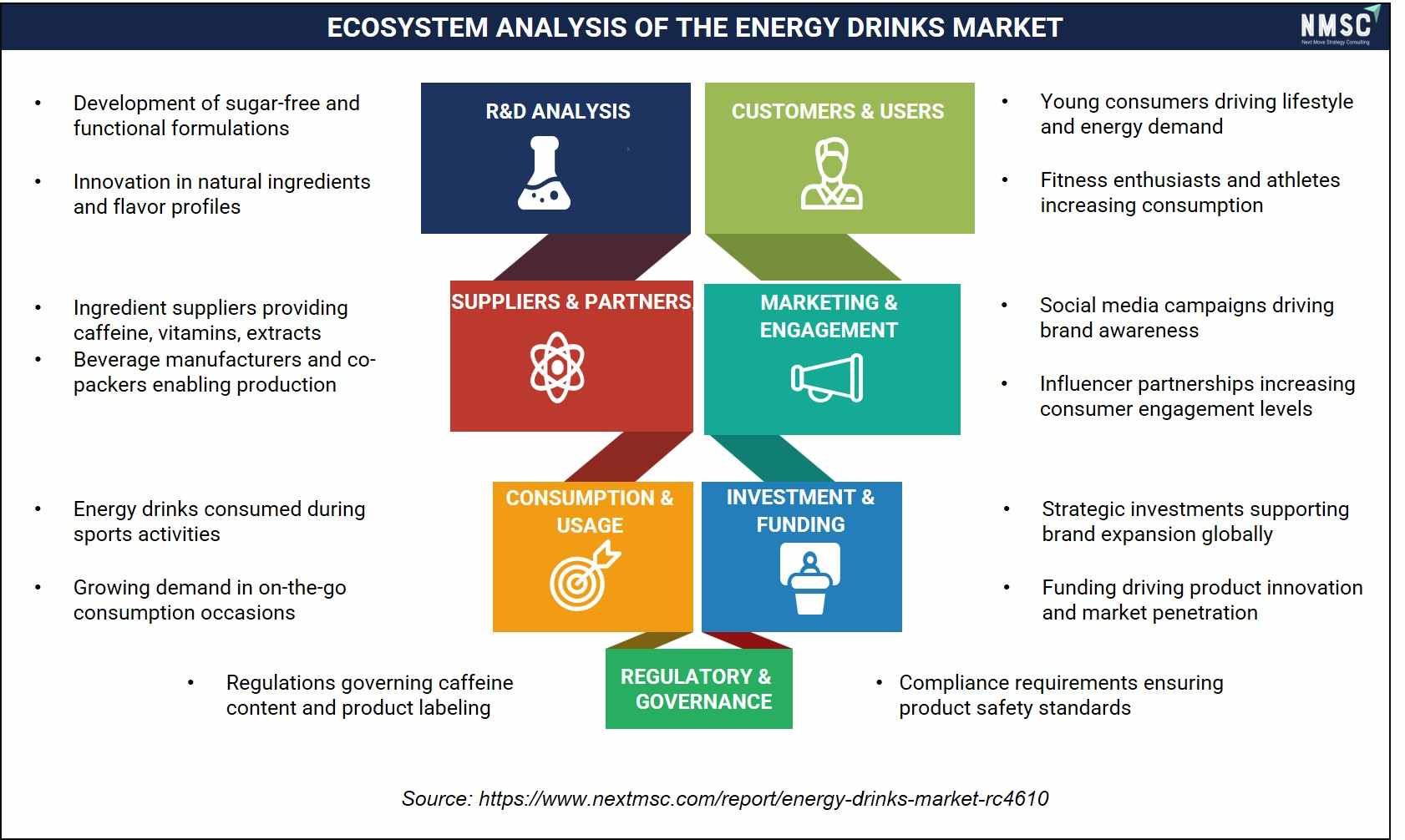
Our evaluation indicates that the energy drinks ecosystem is shaped by strong linkages between product innovation, consumer demand, and brand-driven engagement. R&D and supplier networks support continuous formulation advancements, while a growing base of young and active consumers drives market expansion. At the same time, marketing strategies and digital engagement play a critical role in influencing purchasing behaviour, supported by rising investments and expanding consumption occasions. As a result, regulatory frameworks around ingredients and labelling ensure product standardization, collectively strengthening the market’s structured growth and competitive dynamics.
What Are the Key Market Drivers, Breakthroughs, and Investment Opportunities That Will Shape the Energy Drinks Industry in the Next Decade?
Growth Catalyst & Risk Assessment Matrix
|
DRIVERS / TRENDS / RESTRAINTS |
(+/–) % IMPACT ON CAGR FORECAST |
GEOGRAPHIC RELEVANCE |
IMPACT TIMELINE |
|
Rising fitness culture and performance-oriented consumption driving energy drinks as pre-workout and functional beverages |
+1.3% |
North America, Europe, Asia-Pacific (India, Australia) |
Medium term (2–5 years) |
|
Expansion of quick-commerce and e-commerce platforms increasing impulse purchases and consumption frequency |
+1.1% |
Asia-Pacific (India, Southeast Asia), North America, Europe |
Short to medium term (1–4 years) |
|
Shift toward cognitive energy formulations with nootropic ingredients enhancing product differentiation and premiumization |
+1.2% |
North America, Europe, Asia-Pacific (Japan, South Korea) |
Medium to long term (3–6 years) |
|
Transition toward clean-label, plant-based, and natural ingredient formulations reshaping product development strategies |
+1.0% |
Europe, North America, Asia-Pacific |
Medium term (2–5 years) |
|
Increasing regulatory scrutiny on caffeine content, sugar levels, and labelling requirements constraining product innovation and market expansion |
–1.2% |
Europe, North America, Asia-Pacific (India) |
Short to medium term (1–4 years) |
Based on our evaluation of global beverage consumption patterns and functional drink innovation, we observed that the energy drinks market is experiencing sustained growth, driven by shifting consumer lifestyles, rising demand for functional wellness, and increasing preference for on-the-go energy solutions. Our interactions with beverage manufacturers and retail participants revealed that energy drinks are increasingly positioned as daily functional beverages rather than occasional stimulants, particularly among urban consumers, gamers, and working professionals seeking sustained focus and productivity. The integration of nootropic ingredients and natural stimulants is further expanding product capabilities, enabling brands to move beyond instant energy toward cognitive performance and balanced energy delivery. At the same time, our assessment indicated that tightening regulations on caffeine content and sugar levels, along with growing health concerns about energy crashes, are constraining formulation flexibility and influencing consumer perceptions. However, the emergence of clean-label, plant-based formulations and the expansion of consumption into new segments such as active ageing and zero-alcohol social occasions are creating strong forward-looking growth opportunities, supporting continued market evolution and diversification.
Growth Drivers:
How is Rising Fitness and Performance Culture Accelerating Energy Drink Consumption?
Based on our market assessment, we found that the expansion of global fitness culture and performance-oriented lifestyles is significantly accelerating demand for energy drinks. Interactions with gym operators and retail distributors indicate that energy drinks are increasingly positioned as pre-workout and performance-enhancing beverages rather than occasional stimulants. According to the Centers for Disease Control and Prevention, 47.2% of U.S. adults met federal aerobic physical activity guidelines in 2024, based on the latest April 2026 National Health Interview Survey data. This indicates that nearly half of adults are actively engaged in exercise routines that create recurring consumption occasions for pre-workout and performance beverages, including energy drinks. This shift is particularly evident among urban consumers and younger demographics who actively associate energy drinks with endurance, focus, and physical output. In parallel, brand collaborations with sports ecosystems and fitness communities are reinforcing this positioning, with companies such as Red Bull GmbH continuing to anchor their identity around high-performance lifestyles. From now on, the integration of energy drinks into daily fitness routines is sustaining high-frequency consumption and strengthening category relevance beyond traditional usage occasions.
How Is Quick-Commerce and Digital Retail Expanding Consumption Frequency?
Our evaluation of distribution trends highlights that the rapid expansion of quick-commerce and digital retail platforms is removing traditional purchase barriers and increasing consumption frequency. Engagements with e-commerce operators and convenience retailers reveal that on-demand delivery models are transforming energy drinks into impulse-driven, high-frequency purchases, particularly among students, gamers, and remote workers. In addition, the ability to access products within minutes is reshaping buying behaviour and reducing dependency on physical store visits. According to the U.S. Census Bureau’s report released in March 2026, total e-commerce sales for 2025 were estimated at USD 1,233.7 billion, representing a 5.4% increase from 2024. Moreover, companies such as Amazon and regional quick-commerce platforms are enabling wider product visibility and accessibility across both mainstream and niche variants. Looking ahead, frictionless digital access is set to play a central role in driving repeat purchases and expanding consumption across previously underpenetrated consumer segments.
Growth Inhibitor:
How Are Regulatory Pressures and Health Concerns Impacting Energy Drinks Market Expansion?
Increasing regulatory scrutiny around caffeine content, sugar levels, and associated health risks is emerging as a structural constraint on market expansion. Our discussions with compliance teams and beverage manufacturers revealed that authorities such as the Food Safety and Standards Authority of India are tightening labelling norms and enforcing stricter consumption guidelines, particularly for younger demographics. In parallel, heightened public awareness around energy crashes and long-term cardiovascular concerns is reshaping consumer perception, especially across mature markets. According to the U.S. Food and Drug Administration (FDA), the recommended safe caffeine intake for healthy adults is up to 400 mg per day, beyond which risks such as increased heart rate, anxiety, and sleep disturbances may occur, reinforcing regulatory caution around high-caffeine products. These developments are forcing manufacturers to invest in reformulation, adjust product positioning, and navigate more complex approval processes. With regulatory tightening gaining momentum, the category is facing reduced formulation flexibility, higher compliance costs, and slower expansion in tightly governed markets.
Growth Opportunity:
How Is the “Active Ageing” Segment Unlocking New Growth Opportunities in the Energy Drinks Market?
Our analysis of demographic trends reveals a significant untapped opportunity within the active ageing population. Engagements with nutrition experts and healthcare-focused retailers indicate that consumers aged 50 and above are increasingly seeking functional beverages that support sustained energy, physical vitality, and overall well-being. However, current market offerings remain heavily skewed toward younger demographics, leaving a clear gap in tailored formulations that align with the needs of older consumers. This is driving interest in low-acid, low-caffeine, heart-conscious, and vitamin-enriched sports and energy drinks industry designed to deliver balanced energy without overstimulation. According to the World Economic Forum, by 2030, 1.4 billion people will be aged over 60, with low- and middle-income countries hosting 80% of older populations, highlighting urgent disparities in health, care and social support. From our market evaluation, we found that this segment prioritises ingredient transparency, reduced sugar content, and alignment with long-term health goals, influencing purchase decisions. As a result, energy drinks are gradually being repositioned as daily wellness-support beverages. Therefore, brands that develop targeted, age-specific formulations and align with healthy ageing narratives are unlocking new demand pools and diversifying revenue streams.
Porter’s Five Forces Analysis Impacting the Energy Drinks Industry
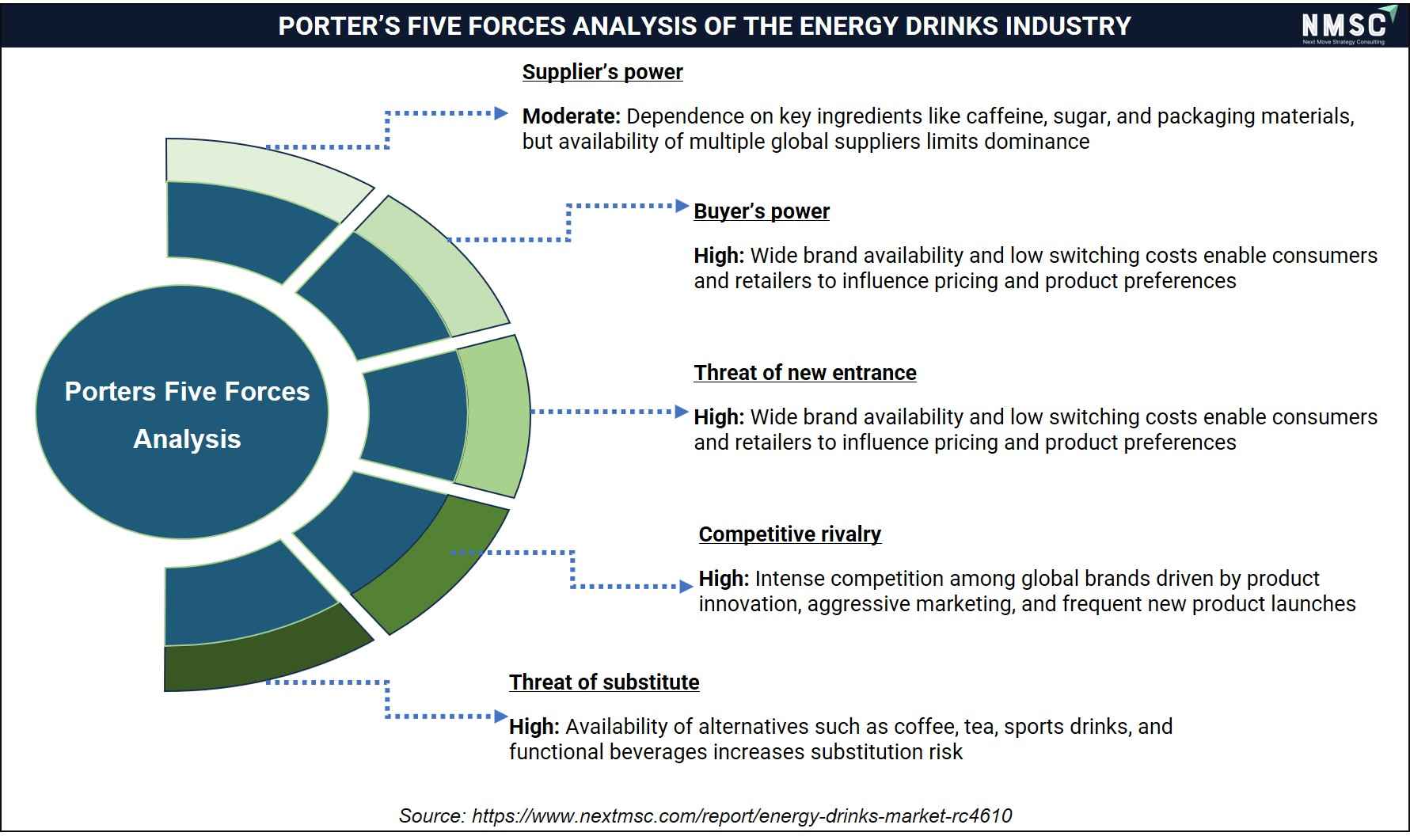
Our analysis indicates that the energy drinks market share is characterized by highly competitive rivalry and strong buyer power due to brand-driven competition and low switching costs. Supplier power remains moderate with diversified sourcing, while the threat of new entrants is controlled by high marketing and distribution barriers. At the same time, the presence of substitutes such as coffee and functional beverages intensifies market competition, shaping a dynamic and highly competitive industry landscape.
How Is the Energy Drinks Market Segmented in This Report, And What Are the Key Insights from the Segmentation Analysis?
Market Highlights & Strategic Insights – Energy Drinks Market:
|
Segments |
Key Takeaways |
|
Product Form |
Energy Drinks RTD dominate the market, driven by widespread consumer preference for convenient, ready-to-consume formats and strong retail penetration, while Energy Shots are gaining traction in performance-focused and on-the-go consumption occasions, although they remain comparatively niche. |
|
Formulation |
Zero Sugar variants lead market momentum, reflecting growing health consciousness and demand for low-calorie beverages, while Low Sugar products continue to expand steadily. Full Sugar formulations maintain stable demand, particularly in price-sensitive markets. |
|
Packaging |
Cans dominate the market due to portability, branding visibility, and suitability for convenience retail, while bottles maintain steady demand in larger consumption formats. Shot containers remain niche, primarily aligned with energy shot products. |
|
Price Tier |
Mass segment leads the market, supported by high-volume consumption and affordability in emerging economies, while Premium segment is gaining traction driven by functional ingredients and brand positioning. Mid-tier products maintain balanced demand across regions. |
|
Distribution Channel |
Convenience retail dominates the market, driven by impulse purchases and high product visibility, while Modern Trade remains significant for bulk purchases. Online channels are expanding rapidly, supported by direct-to-consumer strategies, while foodservice and institutional channels show steady but moderate growth. |
By Product Form Insights
Which Product Forms Drive Growth in the Energy Drinks Market in 2025?
Based on our analysis of product-level consumption patterns, we observed that the market is segmented into energy drinks RTD and Energy Shots.
From our evaluation of retail and consumption trends, we noticed that the energy drinks RTD dominate the market due to their convenience, wider flavour availability, and strong presence across retail channels. Meanwhile, energy shots gain traction in performance-driven and on-the-go consumption scenarios, particularly among fitness-focused consumers. Additionally, carbonated RTDs remain the dominant sub-segment due to established consumer preference, while non-carbonated variants are expanding steadily in health-oriented segments. Looking ahead, product innovation is focusing on functional differentiation and format diversification, thereby expanding consumption occasions beyond traditional energy use cases.
By Formulation Insights
How Do Formulation Trends Influence Demand in the Energy Drinks Market in 2025?
Based on our assessment of product formulations, we observed that the market is segmented into full sugar, low sugar, and zero sugar energy drinks.
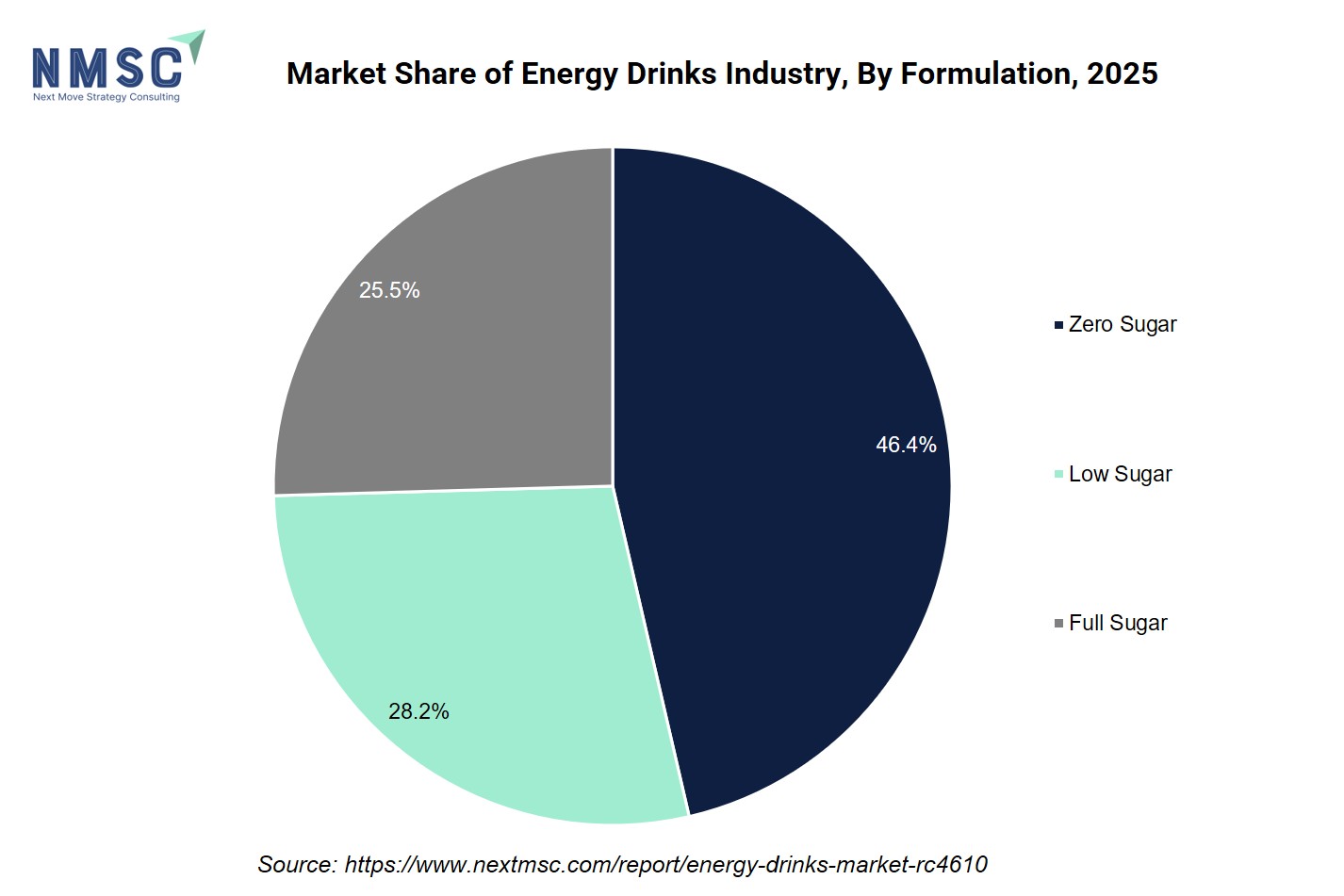
From our evaluation of consumer preferences, we found that zero-sugar variants lead market momentum due to increasing health awareness and demand for low-calorie beverages. Subsequently, low sugar products expand steadily as consumers seek balanced alternatives, particularly in developed markets. In contrast, full sugar formulations maintain stable demand in price-sensitive and high-consumption regions. Furthermore, our interactions with industry stakeholders indicate that formulation strategies increasingly focus on natural sweeteners and clean-label positioning. Furthermore, formulation innovation is accelerating toward functional and better-for-you ingredients, thereby reinforcing long-term demand across health-conscious consumer segments.
By Distribution Channel Insights
Which Distribution Channels Drive Sales in the Energy Drinks Market in 2025?
Based on our analysis of sales channels, we observed that the market is segmented into modern trade, convenience retail, specialty retail, online channels, foodservice, and institutional sales.
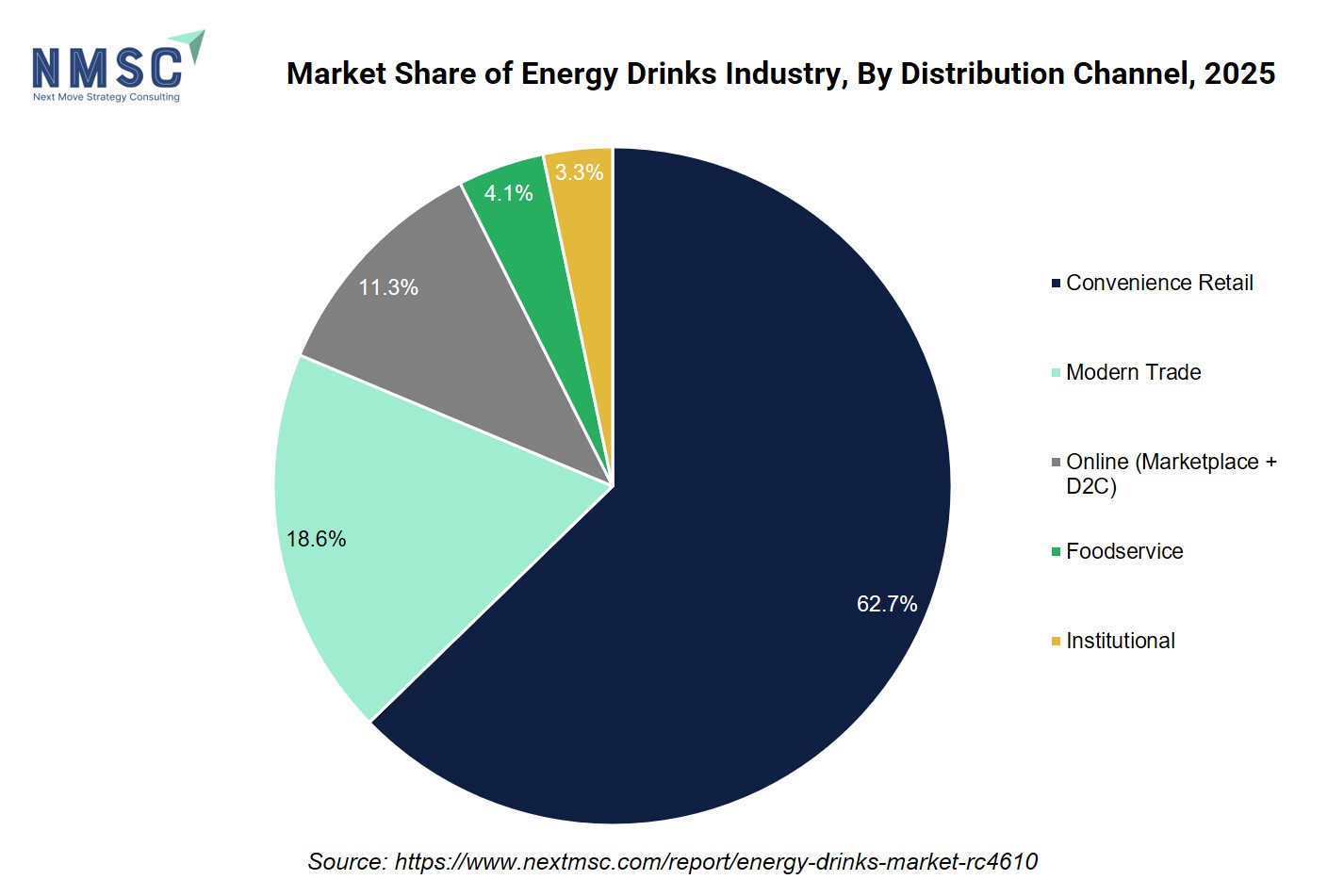
From our evaluation of market dynamics, we noticed that convenience retail dominates the market due to high product visibility and impulse purchasing behavior. Meanwhile, modern trade maintains significant share through bulk purchasing and promotional strategies. Additionally, online channels expand rapidly, supported by direct-to-consumer models and growing digital adoption. Our interactions with distributors indicate that foodservice and institutional channels maintain steady demand, particularly in controlled consumption environments. Therefore, market participants are increasingly focused on integrating omnichannel distribution and digital engagement, thereby strengthening market reach and consumer accessibility.
Regional Outlook:
Geographic Performance Snapshot:
|
Regions |
Key Takeaways |
|
North America |
North America represents a leading energy drinks market, supported by high per capita consumption, strong brand presence, and extensive retail distribution networks. We observed that demand was driven by fitness-oriented lifestyles, gaming culture, and convenience-based consumption, while innovation in low-sugar and functional beverages strengthened growth. |
|
Europe |
Europe represents a mature energy drinks market, shaped by stringent regulations and rising health consciousness. We identified that demand shifted toward low-sugar, clean-label, and natural formulations, while regulatory pressure on sugar content supported product reformulation and premium segment expansion. |
|
Asia-Pacific |
Asia-Pacific represents the fastest-growing energy drinks market, supported by rapid urbanisation, a large youth population, and expanding retail infrastructure. We observed that rising disposable incomes and increasing adoption of convenience beverages accelerated demand across emerging economies. |
|
Latin America |
Latin America represents a growing energy drinks market, driven by urban consumption and expanding retail access. We found that affordability and strong demand among younger demographics supported market penetration, particularly in Brazil and Mexico. |
|
Middle East & Africa |
The Middle East & Africa represents an emerging energy drinks market, supported by rising urbanisation and improving retail infrastructure. We observed that demand was driven by younger populations and lifestyle shifts, while premium products gained traction in higher-income segments. |
The energy drinks market is geographically studied across North America, Europe, Asia Pacific, Latin America and the Middle East & Africa and each region is further studied across countries.
Energy Drinks Market in North America
North America represents a mature, brand-driven energy drinks market, characterised by high per capita consumption, strong retail penetration, and a deeply embedded lifestyle positioning. From our regional assessment, we identified that demand is sustained by a combination of fitness-oriented consumption, gaming culture, and on-the-go lifestyles, particularly across urban centres. The United States continues to anchor regional growth through large-scale retail distribution and aggressive brand marketing, while Canada demonstrates stable expansion supported by health-conscious consumption trends and premium product adoption. Market activity is further reinforced by the widespread availability of products across convenience stores, supermarkets, and digital retail platforms, which continue to drive high-frequency purchases. At the same time, evolving consumer preferences toward low-sugar and functional formulations are reshaping product portfolios across the region. These dynamics are increasing product innovation cycles and strengthening competition around differentiation, particularly in cognitive energy and clean-label segments.
Energy Drinks Market in the United States
Based on our engagements with distributors and category managers, we found that the United States continues to lead the North American energy drinks market, supported by high consumption across fitness, gaming, and on-the-go usage occasions. Demand is strongly influenced by consumers seeking both physical energy and cognitive performance, which has accelerated the adoption of nootropic-infused and zero-sugar variants. Moreover, widespread availability across convenience-led retail and on-demand delivery platforms sustains high purchase frequency and reinforces brand visibility. Leading players such as Red Bull GmbH and Monster Beverage Corporation continue to leverage sports sponsorships, influencer-led campaigns, and digital engagement to strengthen consumer loyalty and category penetration. At the same time, regulatory focus on sugar reduction and labelling transparency is influencing formulation strategies and portfolio expansion. Consequently, the market is progressing toward higher-value offerings, where functional benefits, brand positioning, and multi-occasion consumption are defining competitive advantage.
Energy Drinks Market in Canada
The energy drinks market in Canada is characterized by steady expansion supported by a pronounced shift toward health-oriented consumption and premium product preferences. Interactions across retail channels and product portfolios indicate that consumers increasingly prioritize clean-label formulations, natural ingredients, and reduced sugar content, directly influencing product selection and brand positioning. In addition, regulatory oversight around caffeine limits and ingredient transparency continues to shape formulation strategies and limit aggressive product positioning. Compared with the United States, consumption patterns reflect lower volume intensity but a stronger inclination toward niche and functionally differentiated offerings. This is shifting purchasing behaviour toward higher-value products, where perceived health benefits and ingredient credibility play a decisive role. Meanwhile, the growing presence of plant-based and wellness-positioned caffeinated beverage market is expanding category appeal among a broader consumer base. As these trends continue, the market is advancing through premiumization, targeted innovation, and deeper alignment with health-driven consumption priorities.
Energy Drinks Market in Europe
From our regional assessment and interactions with beverage manufacturers and retail buyers, we identified that the European energy drinks market is increasingly shaped by a combination of regulatory oversight and health-driven consumer behaviour. This indicates a clear shift toward low-sugar, clean-label, and functionally differentiated beverages, as consumers place greater emphasis on ingredient transparency and long-term health impact. At the same time, evolving policy frameworks across key markets are influencing formulation strategies, particularly around sugar reduction and labelling compliance. Our evaluation of retail dynamics shows that Western Europe is transitioning toward premium, wellness-oriented products, while other parts of the region are witnessing gradual adoption supported by expanding retail access and changing consumption habits. As these dynamics continue to evolve, the market is advancing toward a more compliance-driven and functionally differentiated structure, where regulatory alignment and product credibility will increasingly determine competitive positioning.
Energy Drinks Market in the United Kingdom
Based on our interactions with distributors and category managers, we found that the United Kingdom energy drinks market is shaped by strong regulatory oversight and evolving consumer preferences toward healthier alternatives. Demand continues to be supported by high consumption among young adults and working professionals; however, purchasing behaviour is increasingly influenced by sugar reduction initiatives and labelling transparency. Moreover, retailers are actively prioritizing shelf space for low-sugar and zero-calorie variants, reflecting a clear shift in category dynamics. Brand activity remains high, with companies such as Red Bull GmbH and Monster Beverage Corporation maintaining visibility through sports and lifestyle marketing. At the same time, private-label and value-oriented alternatives are gaining traction amid price sensitivity. As a result, the market is transitioning toward a more regulated and health-aligned structure, where compliant formulations and targeted positioning are sustaining growth.
Energy Drinks Market in Germany
Germany exhibits a disciplined and quality-focused energy drinks market, driven by strong consumer preference for product reliability, ingredient transparency, and functional value. Through our assessment of manufacturer and retail interactions, we noticed that buyers place significant emphasis on clean-label formulations, reduced sugar content, and compliance with stringent regulatory standards. In addition, demand is supported by consistent consumption across working professionals and fitness-oriented consumers seeking both energy and focus. Compared with other European markets, purchasing decisions are more closely aligned with product quality and brand trust rather than impulse-driven consumption. Meanwhile, manufacturers are increasingly aligning portfolios with natural ingredients and functional benefits to meet evolving expectations. These dynamics are reinforcing a premium-oriented market structure, where long-term growth is driven by high-quality, compliant, and functionally differentiated offerings.
Energy Drinks Market in France
The France energy drinks market is characterized by a gradual and regulated expansion, influenced by strong public health awareness and controlled consumption patterns. Our engagement with distributors and retail participants indicates that demand is concentrated in urban areas and younger demographics, while overall consumption remains moderated compared with other Western European markets. Furthermore, strict regulatory frameworks around caffeine content and marketing practices continue to shape product availability and brand communication strategies. Consumers show increasing preference for products perceived as healthier, including low-sugar and naturally derived formulations. In parallel, manufacturers are adapting portfolios to align with compliance requirements and shifting consumer sentiment. As these trends continue, market growth is remaining steady, supported by selective adoption, health-oriented innovation, and alignment with regulatory expectations.
Energy Drinks Market in Italy
Through our assessment of regional consumption patterns, we found that Italy’s energy drinks market is evolving steadily, supported by changing urban lifestyles and increasing exposure to functional beverages. Demand is primarily concentrated among younger consumers and working professionals seeking convenient energy solutions, particularly in metropolitan areas. At the same time, the dominance of traditional retail channels continues to shape product accessibility and slows uniform category penetration compared with more consolidated European markets. In addition, affordability remains an important factor influencing purchasing decisions, with consumers showing a preference for competitively priced yet functionally positioned products. While adoption remains selective, expanding modern trade formats and improving brand visibility are gradually strengthening category presence. As these trends progress, the market is advancing through broader retail integration and increasing alignment with health-oriented and functional consumption patterns.
Energy Drinks Market in Spain
Spain is witnessing an accelerating energy drinks market driven by evolving consumption habits and increasing demand across urban distribution channels. Our engagements with logistics partners and category managers indicate that rising on-the-go consumption and expanding retail accessibility are supporting category growth. Moreover, increasing cost sensitivity among consumers is shaping purchasing decisions, with strong traction for competitively priced products alongside established brands. Demand is particularly concentrated in high-volume urban centres, where convenience stores and supermarkets play a critical role in driving impulse purchases. As a result, the market is moving toward scalable, price-accessible offerings supported by efficient distribution and high-frequency consumption patterns.
Energy Drinks Market in the Nordics
The Nordic energy drinks market, comprising Sweden, Norway, and Finland, demonstrates a mature and quality-driven consumption environment shaped by high health awareness and strong regulatory discipline. Our assessment indicates that consumers across these countries consistently prioritise low-sugar, clean-label, and functionally enhanced beverages, aligning demand with broader wellness and lifestyle trends. At the same time, strict regulatory frameworks and elevated expectations around ingredient transparency are influencing both product formulation and brand positioning. Compared with more impulse-driven markets, consumption patterns in the Nordics are more deliberate, with purchasing decisions guided by product credibility and long-term value. In addition, sustainability considerations, particularly around packaging and sourcing, are increasingly playing a decisive role in brand selection. As a result, the region is reinforcing its premium positioning, where growth is closely linked to health credibility, regulatory alignment, and sustainability-led innovation.
Energy Drinks Market in Asia-Pacific
Rapid urban expansion, a large youth demographic, and widening retail access continue to shape demand across the Asia-Pacific energy drinks market. Consumption patterns vary significantly across the region, with developed economies emphasising product quality and functional benefits, while emerging markets are driven by affordability and rising consumption frequency. The expansion of modern trade and quick-commerce platforms is further accelerating product accessibility and reinforcing impulse-driven purchases across key urban centres. Our regional assessment indicates that increasing exposure to global brands, combined with evolving lifestyle patterns, is strengthening category adoption, particularly among younger consumers. This is driving a dual-market dynamic, where volume growth in price-sensitive segments coexists with gradual premiumization in urban, higher-income populations. Alongside this, rising awareness around health and performance is influencing demand toward low-sugar and functionally positioned products. As these dynamics continue to evolve, the region is sustaining growth through a balance of scale-driven expansion, improving accessibility, and increasing product differentiation.
Energy Drinks Market in China
Through our evaluation of market dynamics and consumption patterns, we found that China continues to anchor energy drinks demand in Asia-Pacific through scale-driven consumption and strong domestic brand presence. Demand is widely supported by working professionals and younger consumers operating within high-intensity urban environments, where convenience and accessibility remain key purchase drivers. Moreover, extensive retail networks and deep distribution capabilities enable consistent product availability across both primary and secondary cities. Meanwhile, purchasing behaviour remains largely volume-oriented, with competitive pricing playing a central role in driving consumption. At the same time, gradual exposure to functional and premium variants is beginning to influence urban consumer segments. As these shifts continue, the market is evolving toward a dual structure, balancing high-volume consumption with emerging premium and functionally differentiated offerings.
Energy Drinks Market in Japan
From our assessment of consumption behaviour and product positioning, we observed that Japan maintains a mature and stability-driven energy drinks market, where demand is closely aligned with product quality, reliability, and functional performance. Consumption is primarily concentrated among working professionals and ageing populations seeking sustained energy and focus, rather than short-term stimulation. In addition, consumers demonstrate strong sensitivity toward formulation quality, ingredient transparency, and brand credibility, which directly shape purchasing decisions. Compared with high-volume markets, consumption remains controlled and value-oriented, supported by highly organized retail systems and consistent product availability. At the same time, continuous innovation in formulation and packaging plays a critical role in maintaining consumer engagement. As the market evolves, growth remains steady, driven by premiumization, functional refinement, and alignment with demographic needs.
Energy Drinks Market in India
India is emerging as a fast-expanding energy drinks market, supported by increasing urban consumption, a growing young population, and improving retail accessibility. Demand is primarily driven by students, young professionals, and fitness-oriented consumers who are gradually incorporating energy drinks into their daily routines. In addition, the rapid expansion of modern trade and quick-commerce platforms is enhancing product availability and supporting impulse purchases in urban areas. Through our interactions across distribution channels and market participants, we found that affordability remains a key factor influencing purchasing decisions, with a strong preference for smaller pack sizes and competitively priced offerings. At the same time, increasing exposure to fitness and performance trends is supporting the gradual adoption of functionally positioned products. As these trends progress, the market is expanding through deeper urban penetration, localized product strategies, and rising consumption frequency across emerging consumption hubs.
Energy Drinks Market in South Korea
South Korea reflects an advanced and trend-responsive energy drinks market, shaped by high digital engagement, fast-paced urban lifestyles, and strong alignment with performance-oriented consumption. Demand is closely linked to younger consumers, including gamers and working professionals, who increasingly seek both physical energy and cognitive focus. In addition, well-developed retail and e-commerce ecosystems support rapid product availability and high consumption frequency. Our assessment of consumption trends indicates that functionally positioned products, including low-sugar and focus-enhancing variants, are gaining stronger traction across urban segments. At the same time, brand differentiation is increasingly influenced by digital marketing, influencer engagement, and lifestyle positioning. As these dynamics evolve, the market is advancing through continued innovation in functional formulations and deeper integration with digitally driven consumption patterns.
Energy Drinks Market in Taiwan
Through our evaluation of market activity and consumption patterns, we found that Taiwan demonstrates a structurally stable energy drinks market, supported by strong retail organization and high consumer awareness around product quality. Demand reflects a balanced mix of convenience-led purchases and functionally driven consumption, particularly among working professionals. Moreover, consumers show increasing sensitivity toward ingredient transparency and product reliability, which is shaping brand preference and influencing purchase decisions. In addition, well-integrated convenience store networks and organised retail systems ensure consistent product visibility and accessibility across urban areas. Compared with more volume-driven markets, purchasing behaviour in Taiwan is more quality-oriented and selective. As these dynamics continue to evolve, the market is advancing through functional refinement, consistent product positioning, and sustained alignment with quality-focused consumer expectations.
Energy Drinks Market in Indonesia
Indonesia is emerging as a high-potential energy drinks market, driven by rapid urbanisation, expanding retail infrastructure, and increasing consumption among younger demographics. Demand is largely supported by affordability and accessibility, with consumers showing a strong preference for widely available and competitively priced products. In parallel, the expansion of modern trade and convenience retail formats is improving product reach across major urban centres. Through our interactions with market participants, we observed that consumption is primarily volume-driven, with high reliance on impulse purchases and frequent consumption occasions. At the same time, awareness around functional and health-oriented products is gradually increasing, particularly in metropolitan areas. As these trends continue, the market is expanding through deeper retail penetration, improved distribution efficiency, and a gradual transition toward more functionally differentiated offerings.
Energy Drinks Market in Australia
Australia demonstrates a developed and performance-oriented energy drinks market, supported by high urban consumption and strong alignment with fitness-driven lifestyles. Demand is closely linked to working professionals and fitness-focused consumers who increasingly incorporate energy drinks into daily routines for both physical and cognitive performance. In addition, widespread availability across supermarkets, convenience stores, and on-demand retail platforms sustains consistent consumption frequency and reinforces brand visibility. Our assessment of consumption trends indicates that growing health awareness is accelerating the shift toward low-sugar, clean-label, and functionally positioned products, influencing both formulation strategies and product positioning. This is driving a transition from volume-led consumption toward value-driven purchasing, where consumers show greater preference for differentiated and premium offerings. At the same time, brand competition is intensifying around functional benefits and lifestyle positioning. As these dynamics continue, the market is evolving through premiumization, functional innovation, and stronger integration with performance-oriented consumption patterns.
Energy Drinks Market in Latin America
Through our regional evaluation of consumption patterns and retail expansion, we found that the Latin America energy drinks market is experiencing progressive growth, supported by urbanization and rising consumption among younger demographics. Demand is largely concentrated in major urban centers, where convenience stores and supermarkets play a critical role in driving product visibility and impulse purchases. In addition, affordability continues to shape purchasing behaviour, with a strong preference for accessible and competitively priced offerings. Consumption patterns remain primarily volume-driven, with frequent usage across daily routines and social occasions. At the same time, expanding distribution networks and increasing exposure to global brands are strengthening category penetration across emerging markets. As these dynamics continue, the region is advancing through deeper retail reach, higher consumption frequency, and a gradual transition toward functionally differentiated products.
Energy Drinks Market in the Middle East & Africa
The Middle East & Africa energy drinks market reflects a dual-structured landscape, where developed Gulf economies and emerging African markets demonstrate distinct consumption patterns and growth drivers. In the Middle East, demand is supported by high urbanisation, strong retail infrastructure, and increasing adoption of lifestyle-oriented beverages, particularly among younger consumers. Meanwhile, in Africa, market expansion is driven by improving distribution networks, urban growth, and rising exposure to packaged beverages. Our analysis indicates that affordability and accessibility remain critical factors across much of the region, while premium and functionally positioned products are gaining traction in higher-income markets. In addition, increasing investment in retail and logistics infrastructure is improving product availability and supporting category expansion. As these trends progress, the market is growing through a combination of volume-driven expansion in emerging economies and premium-led growth in more developed markets.
Price Point Analysis of the Energy Drinks Industry
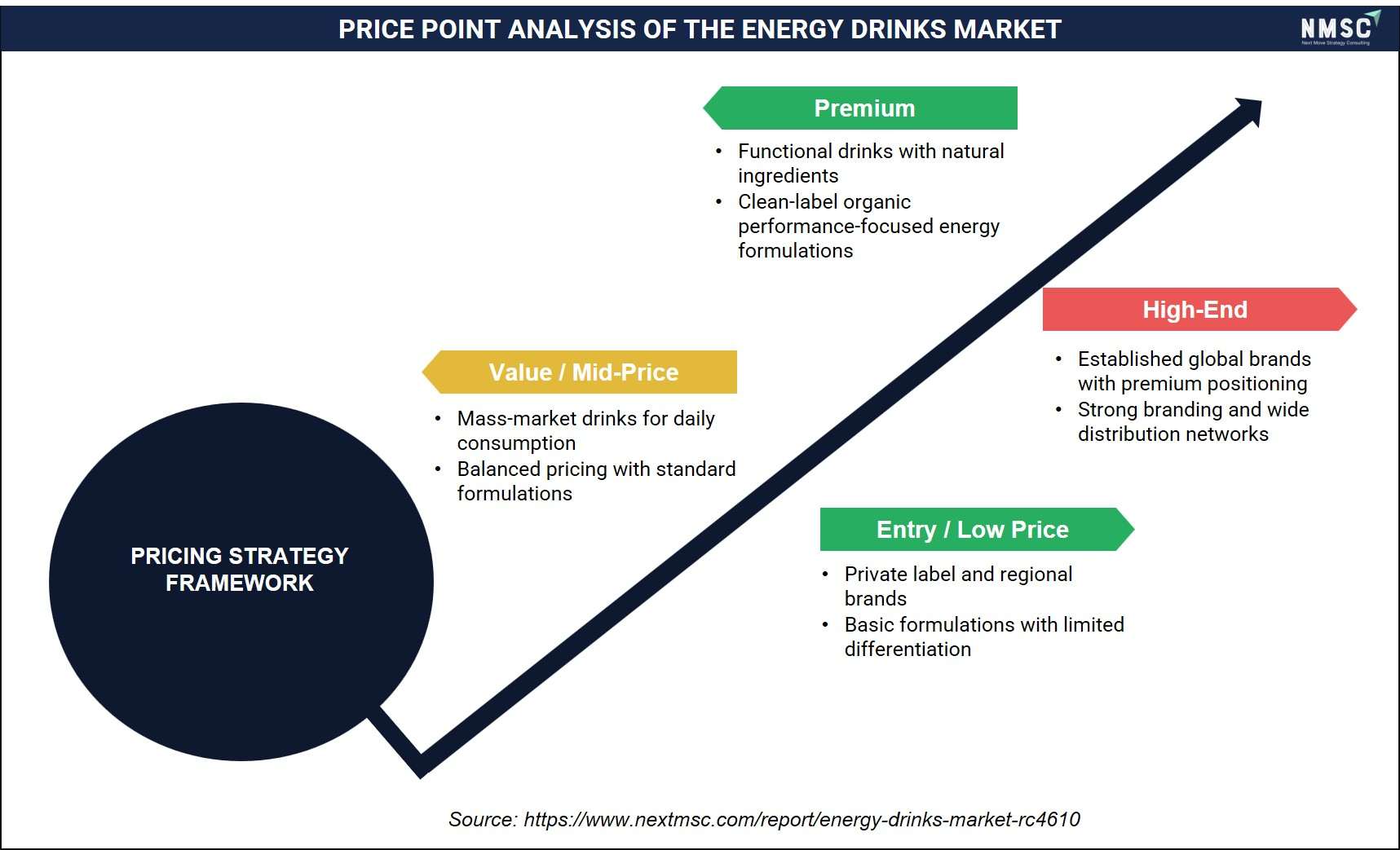
Based on our analysis, we noticed that the energy drinks market follows a tiered pricing structure, ranging from low-cost, basic formulations to premium functional and clean-label products. Mass-market offerings dominate the mid-price segment, while established global brands compete in the high-end through strong branding and distribution. As a result, premium segments are gaining traction with differentiated, health-focused formulations, reflecting evolving consumer preferences and value perception.
Competitive Landscape
Competitive Dynamics & M&A Landscape:
|
Key Takeaways |
|
The global energy drinks industry is shaped by dominant multinational beverage corporations alongside emerging performance-focused and regional brands. Major players such as PepsiCo, Monster Beverage Corporation, Red Bull GmbH, Keurig Dr Pepper, and Suntory Holdings leverage extensive distribution networks, strong retail penetration, and diversified portfolios to sustain market leadership. Meanwhile, growth-oriented brands including Celsius Holdings, Carabao Group, Osotspa, AJE Group, Amway (XS Energy), and HELL ENERGY strengthen competitive intensity through targeted positioning across fitness, affordability, and regional consumption preferences. |
|
From our analysis of competitive strategies, we observed that companies are increasingly prioritising functional positioning, clean-label formulations, and performance-oriented branding to align with evolving consumer preferences. The shift toward sugar-free, natural caffeine-based, and fitness-aligned energy drinks continues to drive product innovation and premiumization across developed markets, while price-accessible formats and localised flavours support volume expansion in emerging economies. |
|
Distribution partnerships and strategic investments remain central to competitive positioning, with large beverage companies strengthening market access through bottling alliances, retail expansion, and equity stakes in high-growth brands. Additionally, ready-to-drink (RTD) innovation, energy shots, and hybrid beverage formats are expanding category boundaries and enhancing consumer engagement across convenience and on-the-go consumption channels. |
Which Companies Dominate the Energy Drinks Industry and How Do They Compete?
Based on our market analysis, we observed that the energy drinks market is dominated by large multinational beverage companies alongside high-growth performance-oriented brands. Red Bull GmbH, Monster Beverage Corporation, PepsiCo, Keurig Dr Pepper, and Suntory Holdings consistently lead high-volume global markets where brand equity, distribution depth, and shelf visibility are critical decision factors. From our channel assessments, we found that these companies are strongly positioned across modern retail, convenience stores, and foodservice networks, supported by bottling partnerships and extensive last-mile distribution capabilities. Celsius Holdings, Carabao Group, Osotspa, and AJE Group strengthened their market positions through targeted consumer positioning across fitness, affordability, and regional consumption patterns. Competition at this level is primarily driven by brand strength, distribution control, and portfolio diversification.
Market Dominated by Energy Drinks Giants and Specialists
In our observation, the competitive landscape is further shaped by emerging and niche players such as Amway (XS Energy), HELL ENERGY, Living Essentials (5-hour Energy), and regional brands, including Gorilla Energy. Our interaction with distributors and retail stakeholders indicates that these companies are gaining traction by focusing on functional differentiation, including energy shots, sugar-free variants, and performance-enhancing formulations. Celsius Holdings and XS Energy were frequently highlighted for their strong positioning in fitness and wellness-oriented segments, while Carabao and AJE Group demonstrated strong adoption in price-sensitive, high-volume markets. In addition, multinational leaders drive scale and global penetration, while emerging brands accelerate category expansion through targeted positioning and consumer-specific innovation.
Innovation and Adaptability Drive Market Success
From our assessment of product development strategies, we observed that innovation remains a core determinant of competitive advantage in the energy drinks market. Leading players such as Red Bull, Monster, PepsiCo, and Celsius are advancing capabilities in functional ingredients, clean-label formulations, and hybrid beverage formats, enabling brands to align with evolving consumer preferences around health, performance, and convenience. Based on our review of product launches and retail trends, companies investing in natural caffeine sources, zero-sugar variants, and fitness-oriented branding are better positioned to expand across both developed and emerging markets. These developments reflect strong expertise in formulation science, branding, and consumer behaviour analytics, allowing companies to sustain engagement and drive repeat consumption.
Market Players to Opt for Merger & Acquisition Strategies to Expand Their Presence
Our primary research suggests that strategic partnerships and investments have emerged as key growth levers in the energy drinks market. Leading companies are increasingly leveraging distribution alliances, equity investments, and brand acquisitions to strengthen market access and expand their portfolios. For instance, large beverage players continue to invest in high-growth brands to accelerate category penetration and diversify offerings. Our evaluation indicates that these strategies help companies enhance supply chain efficiency, improve retail penetration, and scale rapidly across new geographies. As competition intensifies, such strategic moves are reshaping the competitive landscape by reinforcing distribution dominance, portfolio depth, and long-term market positioning.
List of Key Energy Drinks Companies
-
Monster Beverage Corporation
-
PepsiCo, Inc.
-
Celsius Holdings, Inc.
-
Woodbolt Distribution, LLC
-
Living Essentials Marketing, LLC
-
Carabao Group Public Company Limited
-
Osotspa Public Company Limited
-
AJE Group S.A.
-
Suntory Holdings Limited
-
Keurig Dr Pepper Inc.
-
National Beverage Corp.
-
HELL ENERGY Hungary Kft.
-
Otsuka Pharmaceutical Co., Ltd.
-
Amway Corp.
-
AriZona Beverages USA LLC
-
Asahi Group Holdings, Ltd.
-
Gorilla Energy GmbH
-
Rauch Fruchtsäfte GmbH & Co OG
What Are Thethe Latest Key Industry Developments?
-
March 2026 – Amway Corp. reported global sales of USD 7.3 billion for the 2025 fiscal year. The company highlighted strong growth in its XS Energy brand and announced the launch of AmCell, a new health and wellbeing solution, in three major Asian markets to build momentum heading into 2026.
-
February 2026 – Otsuka Pharmaceutical Co., Ltd. opened Egypt’s first ORONAMIN C DRINK factory. This facility is designed to meet growing regional demand in the Middle East and Africa, representing a major step in the company's global supply chain expansion for 2026.
-
August 2025 – Celsius Holdings, Inc. and PepsiCo, Inc. signed a definitive agreement to expand their strategic partnership. Celsius will acquire the Rockstar Energy brand in the U.S. and Canada, while PepsiCo increases its ownership stake in Celsius to 11% via a USD 585 million investment in convertible preferred shares.
-
January 2025 – Living Essentials Marketing, LLC expanded its 5-hour ENERGY lineup with three new flavors Cotton Candy, Fruity Rainbow, and Confetti Craze following the successful nationwide rollout of its 5-hour ENERGY SPORT pre-workout shot.
Expert Insights
 “We're seeing people that weren't energy drinkers in the morning become energy drinkers in the morning with our Refresher platform.”
- Cathy Smith, CFO, Starbucks Corporation
Statement highlighting Starbucks’ early success in converting traditional coffee consumers into morning energy beverage users following the launch of its Energy Refreshers platform during its Q2 FY2026 earnings discussion.
Market Interpretation
The statement reflects a significant shift in the energy drinks market, where energy beverages are increasingly moving beyond their traditional consumer base of athletes, gamers, and performance-focused users into mainstream morning consumption occasions. It indicates that customizable, functional energy beverages are successfully attracting consumers who previously relied on coffee or other caffeinated beverages, thereby expanding category penetration. As a result, the market is witnessing growing innovation around personalized caffeine levels, flavour-driven formulations, and occasion-based consumption, positioning energy drinks as an increasingly versatile lifestyle beverage across multiple dayparts. Starbucks’ observation also reinforces the broader industry trend toward functional, customizable, and experience-driven energy products, particularly among younger consumers seeking both convenience and wellness-oriented beverage choices.
What Are Thethe Key Factors Influencing Investment Analysis & Opportunities In in Thethe Energy Drinks Market?
Investment activity in the energy drinks market reflects a clear shift toward brands and platforms that sustain high consumption frequency while adapting to evolving consumer preferences. Our review of recent product launches, brand expansions, and strategic collaborations indicates that capital is increasingly directed toward companies with strong lifestyle positioning, differentiated formulations, and the ability to scale across multiple consumption occasions. Investors are showing a preference for brands that combine functional innovation with consistent retail visibility, as these factors directly influence repeat purchases and revenue stability. Companies with an established presence across convenience retail, supermarkets, and digital channels are better positioned to capture sustained demand and attract higher valuation interest.
At the same time, capital allocation is concentrating around functional differentiation, particularly in low-sugar variants, clean-label formulations, and cognitive energy positioning. This is closely linked to shifting consumer behaviour, where demand is moving away from high-sugar stimulation toward sustained energy and perceived health benefits. Strategic participation from large beverage companies such as PepsiCo and The Coca-Cola Company highlights a focus on portfolio diversification and faster access to emerging segments. In parallel, distribution strength and brand recall remain critical investment filters, as companies with stronger retail penetration and marketing alignment demonstrate more predictable scaling. Investment interest, therefore, remains concentrated on players that balance product differentiation with wide-reaching distribution and consistent consumer engagement.
Key Benefits for Stakeholders:
Next Move Strategy Consulting (NMSC) presents a comprehensive analysis of the energy drinks market trends, covering historical developments from 2020 to 2025 and providing forward-looking forecasts through 2035.
Our study evaluates the energy drinks market at global, regional, and country levels, providing quantitative outlooks alongside qualitative insights into key growth drivers, consumption patterns, product innovation trends, and competitive dynamics across major segments.
The energy drinks market delivers distinct value across a wide range of stakeholders through its combination of high consumption frequency, strong brand influence, and expanding product differentiation. Investors benefit from consistent revenue generation supported by repeat purchases, premium product positioning, and brand-led scalability. Beverage manufacturers and brand owners capitalize on evolving consumer preferences through continuous innovation in low-sugar, clean-label, and functional formulations, strengthening portfolio resilience and market relevance. Retailers and distribution partners gain from high product turnover, impulse-driven purchasing behaviour, and expanding shelf presence across convenience and digital channels. At the same time, ingredient suppliers and packaging providers benefit from increasing demand for specialised inputs, including natural stimulants and sustainable materials. This interconnected ecosystem reinforces value creation across the supply chain, driven by product innovation, distribution strength, and sustained consumer engagement.
|
Parameters |
Details |
|
Customization Scope |
Free customization (equivalent to up to 80 analyst-working hours) after purchase. Addition or alteration to country, regional & segment scope. |
|
Pricing and Purchase Options |
Avail customized purchase options to meet your exact research needs. |
|
Approach |
In-depth primary and secondary research; proprietary databases; rigorous quality control and validation measures. |
|
Analytical Tools |
Porter's Five Forces, SWOT, value chain, and Harvey ball analysis to assess competitive intensity, stakeholder roles, and relative impact of key factors. |
Energy Drinks Market Key Segments
By Product Form
-
Energy Drinks RTD
-
Carbonated
-
Non-Carbonated
-
-
Energy Shots
-
Standard Shot (≤60 ml)
-
Large Shot (>60 ml)
-
By Formulation
-
Full Sugar
-
Low Sugar
-
Zero Sugar
By Packaging
-
Cans
-
Standard (250–355 ml)
-
Large Format (>355 ml)
-
-
Bottles
-
PET Bottles
-
Glass Bottles
-
-
Shot Containers
-
Plastic Vials
-
Glass Vials
-
By Price Tier
-
Mass
-
Mid
-
Premium
By Distribution Channel
-
Modern Trade
-
Convenience Retail
-
Speciality Retail
-
Online
-
Marketplace
-
Direct to Consumer
-
-
Foodservice
-
Institutional
By Consumption Occasion
-
General Use
-
Fitness
-
Lifestyle
-
Occupational
Geographical Breakdown
-
North America: U.S., Canada, and Mexico.
-
Europe: UK, Germany, France, Italy, Spain, Sweden, Denmark, Finland, the Netherlands, and the Rest of Europe.
-
Asia Pacific: China, India, Japan, South Korea, Taiwan, Indonesia, Vietnam, Australia, Philippines, Malaysia and the rest of APAC.
-
Middle East & Africa (MEA): Saudi Arabia, UAE, Egypt, Israel, Turkey, Nigeria, South Africa, and the rest of MEA.
-
Latin America: Brazil, Argentina, Chile, Colombia, and the rest of LATAM.
Conclusion & Recommendations
This report provides stakeholders, service providers, investors, and consultants with actionable insights to capitalise on the structural transformation underway in the energy drinks market.
By combining data-driven analysis with proven strategic frameworks, NMSC’s energy drinks market report serves as a critical decision-support resource for navigating an increasingly competitive and evolving beverage landscape. The market continues to expand on the back of shifting consumer preferences toward functional beverages, rising demand for on-the-go consumption, and increasing emphasis on health-conscious product innovation. Key strategic insights highlight the growing importance of clean-label formulations, low-sugar variants, and cognitive energy positioning, as these factors strengthen brand differentiation and consumer retention. Companies that focus on diversified product portfolios, strong brand identity, and consistent retail visibility are better positioned to sustain growth and maintain competitive relevance.
For executives and investors, value creation is closely tied to capturing high-frequency consumption segments, strengthening presence across convenience-led and digital retail channels, and investing in product innovation aligned with evolving consumer expectations. Expanding into emerging markets, particularly across Asia-Pacific and urban consumption hubs, provides access to new demand pools and scalable growth opportunities. At the same time, the ability to balance affordability with premium positioning, alongside effective brand engagement strategies, continues to influence long-term market success and competitive positioning across the global energy drinks ecosystem.


About the Author
 Saista Faiyaz
— Saista Faiyaz is Research Associate at Next Move Strategy Consulting, where she has covered consumer markets and healthcare technologies for 3 years. Her work includes primary interview review, secondary-source validation, market sizing, and structured analysis of company and industry data. She supports research by comparing evidence across sources, organizing findings into market narratives, and documenting assumptions used in analysis. Her scope includes cross-market benchmarking, and reports.
Saista Faiyaz
— Saista Faiyaz is Research Associate at Next Move Strategy Consulting, where she has covered consumer markets and healthcare technologies for 3 years. Her work includes primary interview review, secondary-source validation, market sizing, and structured analysis of company and industry data. She supports research by comparing evidence across sources, organizing findings into market narratives, and documenting assumptions used in analysis. Her scope includes cross-market benchmarking, and reports.
About the Reviewer
 Supradip Baul
— Supradip Baul is an accomplished business consultant and strategist with over a decade of rich experience in market intelligence, strategy, technology, and business transformation. His work has included rigorous qualitative and quantitative analysis across multiple industries, helping clients shape investment decisions and long-term roadmaps. Earlier in his career, he was associated with Gartner, where he contributed to industry-leading reports and market share analyses. He has worked with leading global companies and holds an MBA with a dual specialization in Marketing and Finance.
Supradip Baul
— Supradip Baul is an accomplished business consultant and strategist with over a decade of rich experience in market intelligence, strategy, technology, and business transformation. His work has included rigorous qualitative and quantitative analysis across multiple industries, helping clients shape investment decisions and long-term roadmaps. Earlier in his career, he was associated with Gartner, where he contributed to industry-leading reports and market share analyses. He has worked with leading global companies and holds an MBA with a dual specialization in Marketing and Finance.
At Next Move Strategy Consulting, we understand that insightful market research is the cornerstone of successful business decisions. That's why we employ a robust and multifaceted approach, combining various methodologies to deliver the most accurate and actionable data for our clients.

Research Landscape
We navigate the world of research with two primary approaches:
Qualitative Approach
Our qualitative research methodologies involve immersive techniques such as in-depth interviews, focus groups, and observational studies. By engaging directly with individuals and stakeholders, we uncover valuable insights that quantitative data alone may overlook.

Quantitative Research
In tandem with qualitative methodologies, NMSC leverages the power of Quantitative Research to provide a robust foundation of numerical insights. Through systematic data collection and analysis, we quantify patterns, preferences, and market trends, offering a comprehensive view of the business landscape.
Our quantitative research approach employs diverse tools, including surveys, experiments, and statistical modelling. These methodologies enable us to gather data from a large and representative sample, ensuring the statistical significance of our findings. By employing structured questionnaires and standardized data collection methods, we guarantee the reliability and validity of the information we present to our clients.
Quantitative research is particularly effective in measuring the prevalence of trends, assessing market size, and gauging the impact of various factors on consumer behavior. The numerical precision attained through this approach equips our clients with actionable insights, facilitating data-driven decision-making and strategy formulation.


Our Specialized Toolbox for Industry-Specific Market Research
We deploy a specialized arsenal of techniques tailored to meet your unique requirements. Here's a glimpse into our comprehensive toolbox:

Information Procurement
The stage entails acquiring market data or relevant information through various sources and methodologies.


Market Research Approach
We utilize both top-down and bottom-up approaches in market research analysis to achieve a comprehensive understanding of the market dynamics, leveraging the broad perspective of industry trends and macroeconomic factors alongside detailed insights from specific segments and individual companies.

Porters Five Forces Analysis
We conduct Porter's Five Forces analysis to evaluate the competitive landscape of an industry, providing us with insights into factors that affect profitability and strategic positioning.

SWOT Analysis

Forecasting
We utilize a forecasting model to predict future consumption by considering parameters like population, economics, regulations, market competition, drivers, constraints, technology, and pricing. We also employ statistical techniques such as multilinear regression, exponential smoothing, moving average, ARIMA, and Monte Carlo simulations for accurate predictions. In econometric forecasting, we analyzed short-term and long-term event impacts, attributing values based on regulatory frameworks, economic factors, and market events.





 Speak to Our Analyst