Indonesia Skin Care Products Market, By Product Type (Face Care, Body Care, Hand and Foot Care, and Others), By Form (Cream and Lotion, Serum, Gel, Oil, Balm and Stick,, and Others), By Function (Cleanse, Hydrate, Treat, Protect, Exfoliate, Soothe, Brighten, and Others), By Price Tier (Mass, Masstige, Premium, and Luxury), By Distribution Channel (Offline and Online), By Consumer Gender (Women, Men, and Unisex), By Consumer Age Group (Baby & Child and Adult) – Analysis & Forecast, 2025–2035
Industry: Retail and Consumer | Latest Edition: September 30, 2026 | No of Pages: 221 | No. of Tables: 100 | No. of Figures: 93 | Format: PDF | Report Code: RC5847
Indonesia Skin Care Products Market Size & Forecast
|
Parameters |
Details |
|
Market Size in 2025 |
USD 5.54 Billion |
|
Market Size in 2026 |
USD 6.41 Billion |
|
Revenue Forecast in 2035 |
USD 9.98 Billion |
|
Growth Rate |
CAGR of 5.04% from 2026 to 2035 |
|
Analysis Period |
2025–2035 |
|
Base Year Considered |
2025 |
|
Forecast Period |
2026–2035 |
|
Companies Profiled |
15 |
|
Market Share |
Available for 10 companies |
Industry Outlook
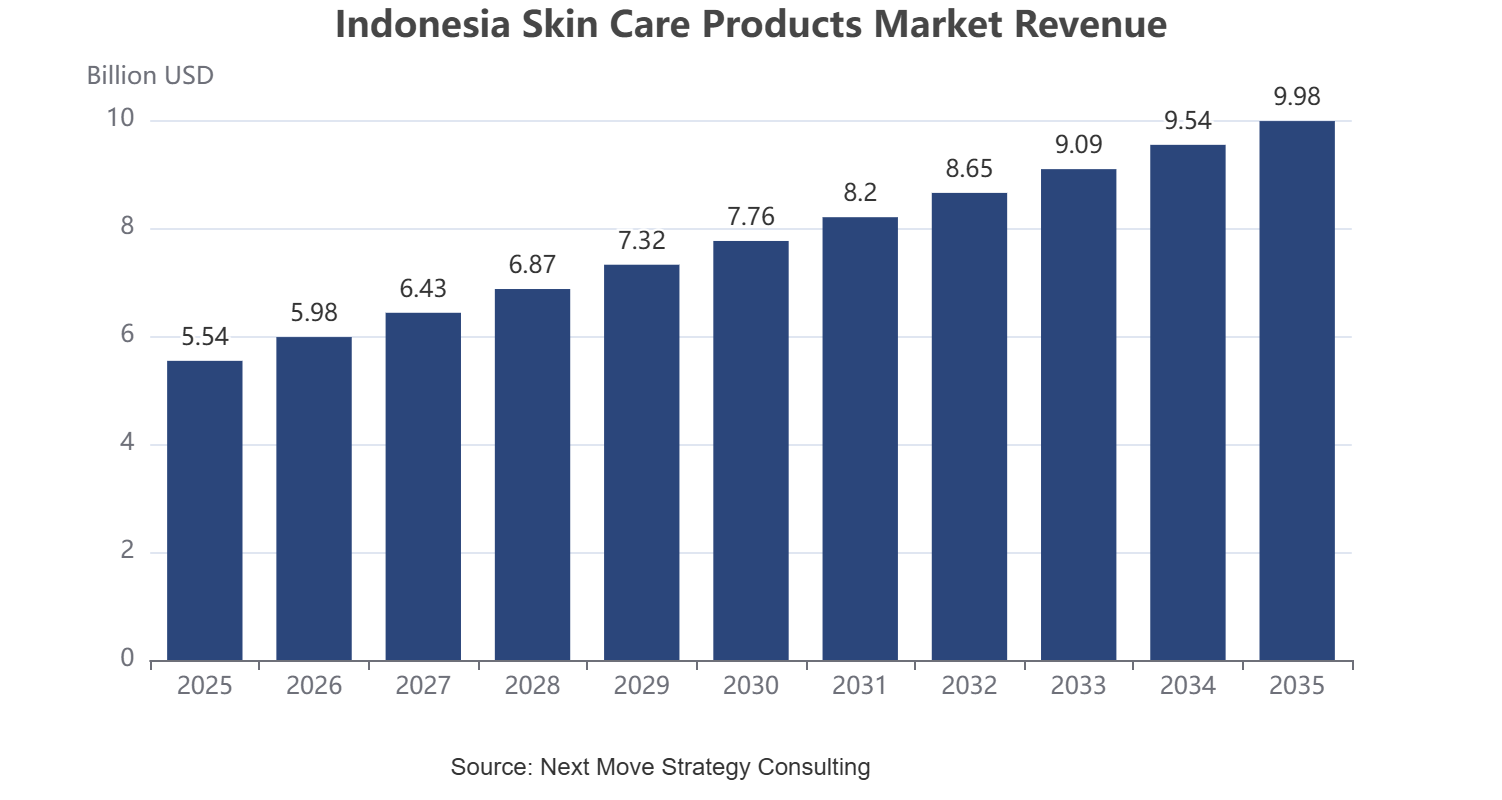
The Indonesia skin care products market was valued at USD 5.54 billion in 2025 and is estimated at USD 6.41 billion in 2026, projected to reach USD 9.98 billion by 2035 at a CAGR of 5.04% over the forecast period. As Southeast Asia's largest economy and the world's most populous Muslim-majority nation, Indonesia presents a uniquely dynamic skin care landscape shaped by a rapidly expanding middle class, year-round tropical UV exposure driving sun care demand, surging e-commerce penetration, and the global ascent of halal-certified beauty formulations as both a domestic priority and international export advantage. The Indonesia skin care products market also benefits from accelerating urbanisation that is expanding the addressable consumer base beyond Java into Sumatra, Kalimantan, and Eastern Indonesian provinces.
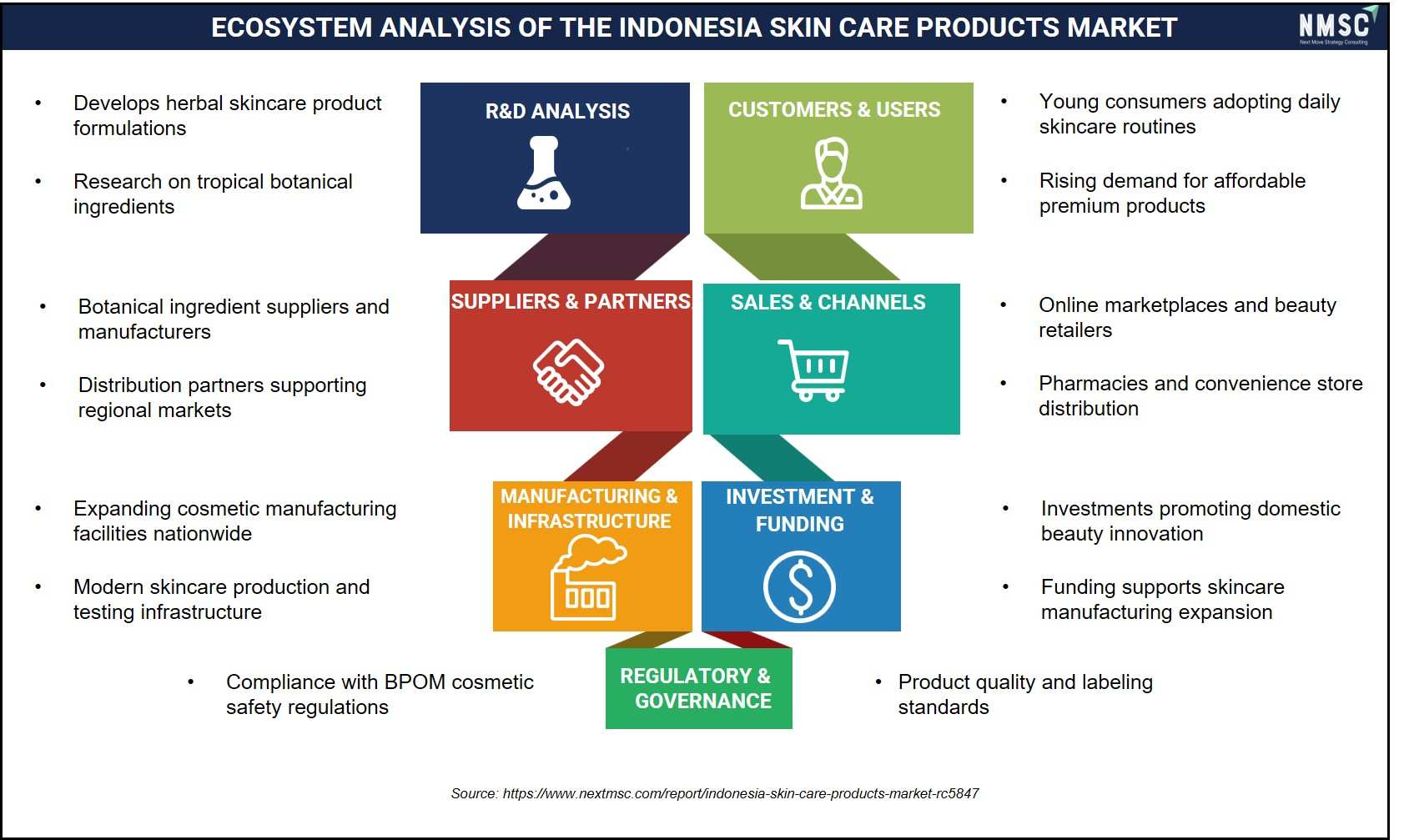
Ecosystem Analysis of the Indonesia Skin Care Products Industry:
What Are the Key Drivers, Inhibitors, and Opportunities Shaping the Indonesia Skin Care Products Industry?
Growth Catalyst & Risk Assessment Matrix
|
DRIVERS / TRENDS / RESTRAINTS |
(+/-) % Impact on CAGR Forecast |
Geographic Relevance |
Impact Timeline |
|
Expanding middle class and rising premiumization driving demand for multi-step skincare routines |
+2.27% |
Major metropolitan areas including Jakarta, Surabaya, and Bandung; growing middle-income households |
Medium to Long term (2–7 years) |
|
Tropical climate sustaining demand for sun care, oil-control, and acne treatment products |
+2.08% |
High-UV and humid regions across the archipelago; strongest among outdoor and young consumers |
Long term (3–8 years) |
|
Growing adoption of halal-certified skincare strengthening consumer trust and brand competitiveness |
+1.92% |
Muslim-majority consumer markets; modern retail and beauty specialty channels |
Medium to Long term (2–6 years) |
|
BPOM regulatory complexity and counterfeit products increasing compliance costs and limiting branded market growth |
-1.63% |
Informal retail channels and emerging secondary cities with higher counterfeit exposure |
Short to Medium term (1–4 years) |
|
Expanding halal skincare manufacturing creating export opportunities to global Muslim-majority markets |
+1.81% |
Export-oriented manufacturing hubs serving the Middle East, Central Asia, and Africa |
Long term (3–8 years) |
The Indonesia skin care products market operates within a structurally expansionary environment driven by demographic scale, a young and beauty-engaged consumer base, and the growing global relevance of halal-certified personal care. Indonesia's 280 million population, with a median age below 30, creates sustained organic demand for skin care across cleansing, brightening, and sun protection categories. Simultaneously, regulatory complexity, counterfeit risk in online channels, and persistent mass-market price sensitivity represent headwinds that brands must navigate to fully capture the market's long-term growth opportunity.
Growth Drivers:
How Is Indonesia's Expanding Middle Class Driving Premiumization in the Skin Care Products Market?
Indonesia's middle class, estimated at over 52 million households and growing at a structurally above-average pace relative to other ASEAN economies, is transitioning from basic cleansing and moisturising routines toward multi-step skin care regimens incorporating serums, treatments, and SPF moisturizers. This premiumization trajectory is most pronounced among urban consumers in Jakarta, Surabaya, and Bandung, where disposable income growth, heightened social media beauty awareness, and expanded access to premium and masstige brands through specialty beauty retail and online marketplaces are collectively elevating average transaction values.
Why Does Indonesia's Tropical Climate Create a Structurally Resilient Skin Care Demand Environment?
Indonesia's equatorial location delivers year-round ultraviolet radiation at intensities that mandate consistent broad-spectrum sun protection, driving non-discretionary demand for sunscreen and UV-shielding moisturizers across all consumer income levels. Beyond UV protection, the country's high ambient humidity and heat accelerate sebum production, creating sustained demand for oil-control cleansers, lightweight gel moisturizers, and acne care treatments. These climatic realities ensure that the Protect, Cleanse, and Acne Care functional sub-segments maintain structurally elevated demand irrespective of broader economic conditions throughout the forecast period.
How Is Halal-Certified Skin Care Reshaping Brand Strategy and Market Share in Indonesia?
As the world's most populous Muslim-majority nation, Indonesia has institutionalised halal certification as a key consumer purchasing criterion for personal care products, administered through the MUI halal certification process and increasingly mandated under the Government Regulation on Halal Product Guarantee. PT Paragon Technology and Innovation's Wardah brand pioneered this positioning domestically and demonstrated that halal-certified skin care can command mass to premium price points while sustaining brand loyalty. International brands entering or expanding within Indonesia are now systematically pursuing MUI certification as a prerequisite for credible mainstream market participation.
Growth Inhibitor:
How Does BPOM Regulatory Complexity and Counterfeit Product Risk Constrain Indonesia Skin Care Market Development?
Indonesia's National Agency of Drug and Food Control, known as BPOM, requires pre-market registration and ongoing compliance monitoring for all cosmetic products sold domestically, a process that adds lead time and incremental cost for both international brands and domestic manufacturers introducing new SKUs. Simultaneously, the proliferation of unregistered and counterfeit skin care products, particularly through informal online channels and unregulated resellers, erodes consumer trust and suppresses willingness to pay in affected categories. These dual regulatory and counterfeit headwinds disproportionately affect smaller domestic brands and new international market entrants.
Growth Opportunity:
How Does Indonesia's Position as the World's Largest Muslim-Majority Nation Create a Global Halal Skin Care Export Opportunity?
Indonesia's domestic halal beauty ecosystem, anchored by brands such as PT Paragon Technology and Innovation and PT Martina Berto Tbk with their certified product portfolios, provides an established manufacturing, formulation, and certification infrastructure that positions Indonesian brands for export into Muslim-majority markets across the Middle East, Central Asia, and sub-Saharan Africa. International buyers seeking MUI-certified supply chains increasingly look to Indonesian manufacturers as credible halal beauty production partners, creating an outbound export growth opportunity that complements the domestic market's own structural expansion through 2035.
How Is the Indonesia Skin Care Products Market Segmented in This Report, and What Are the Key Insights from the Segmentation Analysis?
By Price Tier Insights
How Do Different Price Tiers Shape Consumer Purchasing Preferences in the Indonesia Skin Care Products Market?
Based on price tier, the Indonesia market is segmented into mass, masstige, premium, and luxury.
The market caters to consumers across a wide range of income levels and skincare preferences through distinct pricing segments. Through our assessment, we observed that increasing awareness of skincare ingredients, product efficacy, and brand value is encouraging consumers to explore offerings across multiple price tiers. Mass-tier products provide affordable solutions for everyday skincare routines, while masstige brands combine accessibility with enhanced product quality and appeal. Premium and luxury segments emphasize advanced formulations, specialized skincare benefits, and elevated consumer experiences, supporting the market's ongoing shift toward value-driven and personalized skincare choices.
By Distribution Channels Insights
How Are Distribution Channels Influencing Consumer Access in the Indonesia Skin Care Products Market?
Based on distribution channel, the Indonesia market is segmented into offline and online channels.
The market is supported by a rapidly evolving retail ecosystem that enables consumers to access skincare products through both traditional and digital channels. According to our analysis, we found that consumers increasingly combine in-store shopping with online purchasing to enhance convenience, product discovery, and brand engagement. Offline channels continue to provide trusted access through pharmacies, supermarkets, convenience stores, and beauty retailers, while online platforms offer broader product availability, competitive pricing, and personalized shopping experiences. The continued expansion of e-commerce and social commerce is further strengthening consumer accessibility across the Indonesian skincare market.
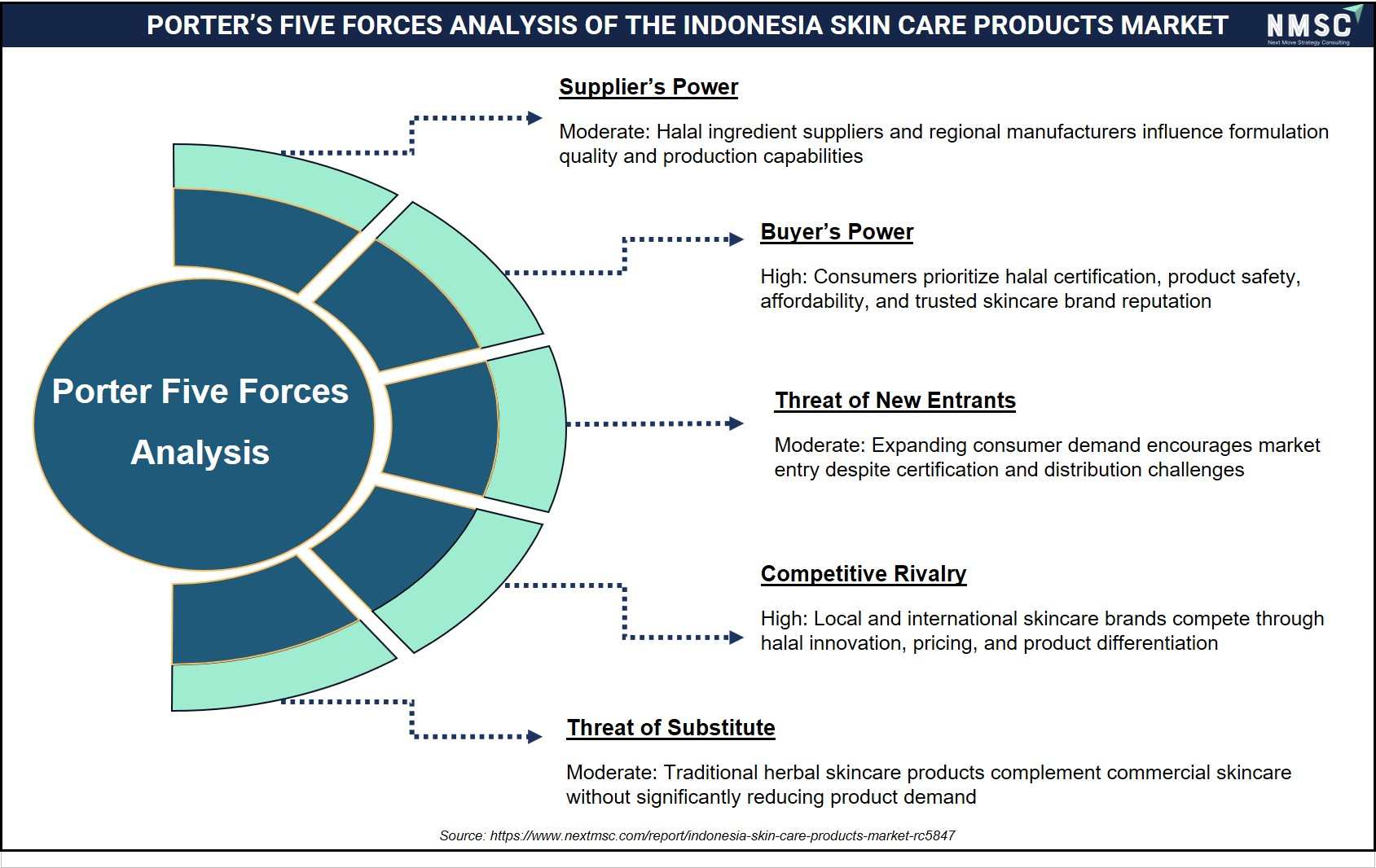
Porter’s Five Forces Analysis of the Indonesia Skin Care Products Industry
Key Segments
By Product Type
-
Face Care
-
Cleansers
-
Foaming Cleansers
-
Oil and Balm Cleansers
-
Micellar Waters and Wipes
-
-
Moisturizers
-
Day Creams
-
Night Creams
-
Gel Moisturizers
-
Facial Oils
-
-
Treatments
-
Serums
-
Ampoules and Boosters
-
Peels and Exfoliants
-
Spot Treatments
-
-
Masks
-
Sheet Masks
-
Wash-Off Masks
-
Sleeping Masks
-
-
Eye Care
-
Lip Care
-
Toners and Mists
-
-
Body Care
-
Body Moisturizers
-
Body Treatments
-
Body Exfoliants
-
-
Hand and Foot Care
-
Hand Care
-
Foot Care
-
-
Sun Care
-
Sunscreen
-
After Sun
-
Self-Tanning
-
-
Other Skin Care
-
Sets and Bundles
-
Residual and Bundled Products
-
By Form
-
Cream and Lotion
-
Serum
-
Gel
-
Oil
-
Balm and Stick
-
Mask
-
Foam and Mousse
-
Spray and Mist
-
Wipe and Pad
-
Powder
-
Other
By Function
-
Cleanse
-
Hydrate
-
Treat
-
Protect
-
Exfoliate
-
Soothe
-
Brighten
-
Anti-Aging
-
Acne Care
-
Firming
-
Other
By Price Tier
-
Mass
-
Masstige
-
Premium
-
Luxury
By Distribution Channel
-
Offline
-
Mass Retail
-
Specialty Beauty
-
Pharmacy and Drugstore
-
Department Store
-
Professional and Clinic
-
Direct Selling
-
Travel Retail
-
Other Offline
-
-
Online
-
Brand Site
-
Marketplace
-
Retailer Site
-
By Consumer Gender
-
Women
-
Men
-
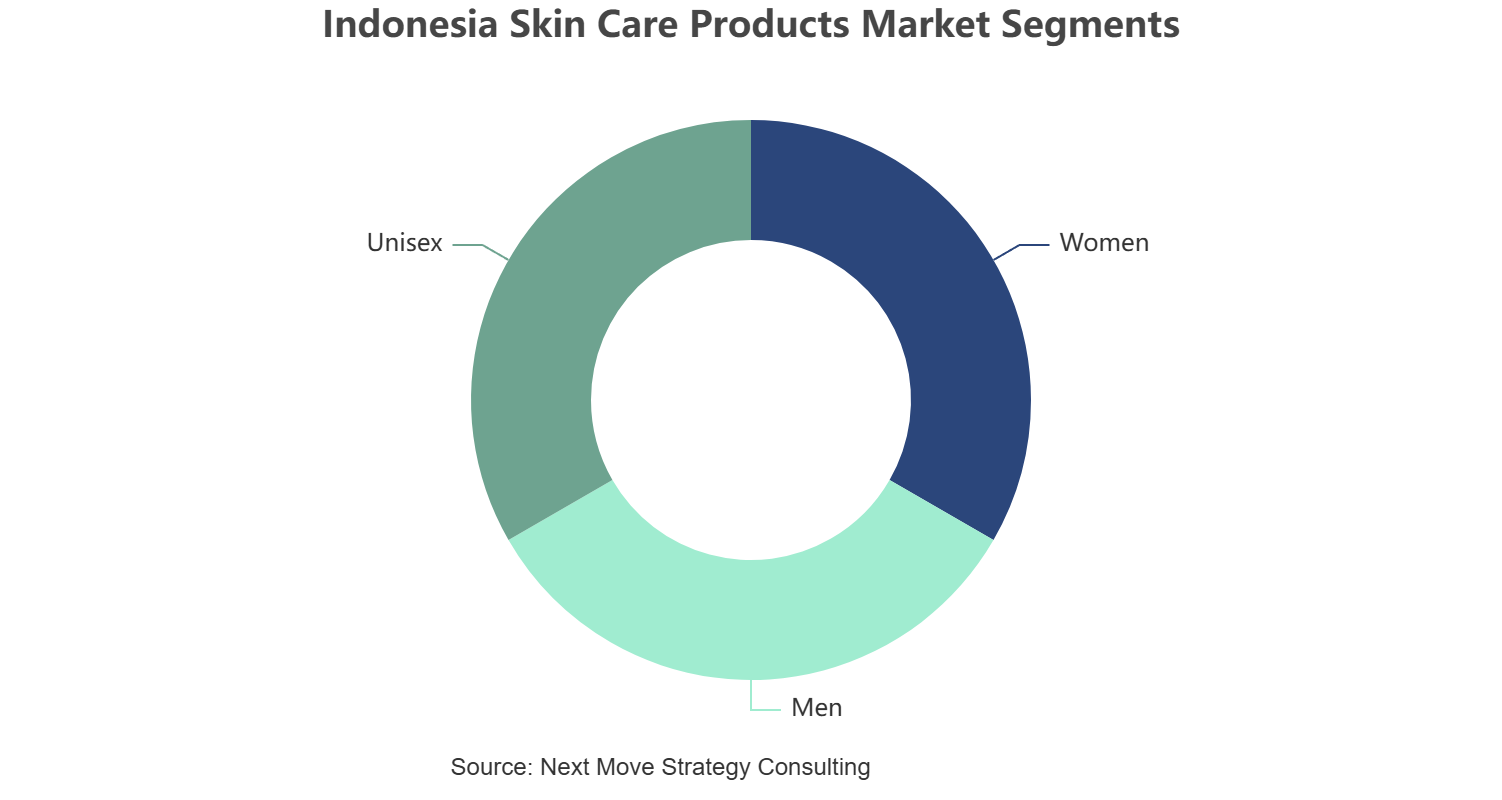
Unisex
By Consumer Age Group
-
Baby and Child
-
Adult
Competitive Landscape
The Indonesia skin care products market is characterised by a dual competitive structure combining large multinational consumer goods conglomerates with a well-developed domestic industry comprising locally founded brands, halal-certified producers, and heritage Jamu-influenced beauty companies. Competition centres on halal certification credentials, mass retail shelf penetration, social commerce influencer partnerships, marketplace platform visibility, and the ability to offer efficacious brightening and UV protection formulations at price points accessible to Indonesia's broad consumer income spectrum. The domestic segment is notable for producing globally recognised halal beauty brands with credible export track records.
Strategic Developments:
-
November 2025 – Paragon Technology & Innovation strengthened its Indonesian skincare dominance by expanding halal-certified skincare lines under Wardah and Emina brands. The company focused on Gen Z-oriented product innovation and dermatology-inspired formulations, reinforcing its leadership in Indonesia’s fast-growing local skincare market.
-
February 2025 – Kao Corporation expanded its premium skincare presence in Indonesia through the SENSAI brand launch at SOGO Plaza Senayan, Jakarta. The move strengthens Kao’s luxury dermocosmetics strategy in Southeast Asia and enhances its positioning in Indonesia’s high-end skincare segment, targeting affluent consumers with Japanese skincare rituals.
Key Players of the Indonesia Skin Care Products Market:
-
PT Nu Skin Distribution Indonesia
-
PT Asia Bandar Alam
-
PT Clarindotama Perdana
-
PT L'Oréal Indonesia
-
PT Unilever Indonesia Tbk
-
PT Kao Indonesia
-
PT Orindo Alam Ayu
-
PT Luxasia Indonesia
-
PT Paragon Technology and Innovation
-
PT Amindoway Jaya
-
PT Tempo Scan Pacific Tbk
-
PT Kino Indonesia Tbk
-
PT Martina Berto Tbk
-
PT Mustika Ratu Tbk
The Indonesia skin care products market is anchored by multinational portfolio leaders PT L'Oréal Indonesia and PT Unilever Indonesia Tbk, which maintain extensive mass-to-premium brand coverage across modern trade and online channels. PT Procter & Gamble Home Products Indonesia and PT Kao Indonesia compete across mass and masstige segments with strong pharmacy and mass retail distribution. The domestic tier is defined by PT Paragon Technology and Innovation, whose halal-certified Wardah brand leads indigenous market share, complemented by heritage brands from PT Martina Berto Tbk and PT Mustika Ratu Tbk. PT Kino Indonesia Tbk and PT Tempo Scan Pacific Tbk compete across functional skin care and pharmacy-distributed dermocosmetic lines, while PT Luxasia Indonesia and PT Orindo Alam Ayu serve the premium and luxury distribution tier.
Key Benefits for Stakeholders
This Indonesia skin care products market report equips brand managers, commercial directors, and product innovation teams with granular revenue data across seven segmentation dimensions covering all key product sub-categories. The segmentation framework supports channel investment prioritisation, halal product roadmap decisions, and price-tier positioning strategies grounded in evidence-based market size and CAGR projections from 2026 through 2035. The distribution channel analysis is particularly actionable for brand teams evaluating the trade-off between mass retail shelf investment and accelerating marketplace platform activation in Indonesia's rapidly evolving beauty retail landscape.
For investors, private equity practitioners, and corporate development professionals, the competitive landscape analysis and five-year channel evolution projections provide a structured foundation for target identification, due diligence, and portfolio growth thesis development within the Indonesian and broader Southeast Asian beauty and personal care sector. Retail buyers, marketplace category managers, and direct selling network operators will find the distribution channel segmentation and consumer gender and age group analysis directly applicable to product ranging, promotional planning, and seller ecosystem development within the Indonesian market.
|
Parameters |
Details |
|
Customization Scope |
Free customization (equivalent to up to 80 analyst-working hours) after purchase. |
|
Pricing and Purchase Options |
Avail customized purchase options to meet your exact research needs. |
|
Approach |
In-depth primary and secondary research; proprietary databases; rigorous quality control and validation measures. |
|
Analytical Tools |
Porter's Five Forces, SWOT, value chain, and Harvey ball analysis to assess competitive intensity, stakeholder roles, and relative impact of key factors. |
Conclusion
The Indonesia skin care products market is positioned for steady growth from USD 5.54 billion in 2025 to USD 9.98 billion by 2035 at a CAGR of 5.04%, underpinned by demographic scale, tropical climate-driven functional demand, and the global ascent of halal-certified beauty formulations. Key future opportunities lie in clinic-grade skin care channel expansion, AI-powered personalisation, and Indonesia's emergence as a halal beauty export platform. Competitive dynamics will intensify as domestic halal-native brands challenge multinational incumbents for shelf and digital presence, particularly within the fast-growing mass-to-masstige premiumization corridor through 2035. Sustained investment in digital infrastructure and halal innovation will be the two defining competitive capabilities within Indonesia through 2035. Investors and brand strategists who engage early with the Indonesian skin care products market's structural growth catalysts will be best positioned to capture long-term value creation.
About the Author
 Mayurima Roy
— Mayurima Roy is Research Analyst at Next Move Strategy Consulting, where she has spent 4 years working across the firm's full industry coverage rather than a single fixed vertical. Her work centers on structured research, ongoing trend tracking, competitive assessment, and insight-led content development, translating complex market data into clear, decision-ready narratives that support informed client decision-making across diverse global industries, market sectors, and world regions every day.
Mayurima Roy
— Mayurima Roy is Research Analyst at Next Move Strategy Consulting, where she has spent 4 years working across the firm's full industry coverage rather than a single fixed vertical. Her work centers on structured research, ongoing trend tracking, competitive assessment, and insight-led content development, translating complex market data into clear, decision-ready narratives that support informed client decision-making across diverse global industries, market sectors, and world regions every day.
About the Reviewer
 Supradip Baul
— Supradip Baul is an accomplished business consultant and strategist with over a decade of rich experience in market intelligence, strategy, technology, and business transformation. His work has included rigorous qualitative and quantitative analysis across multiple industries, helping clients shape investment decisions and long-term roadmaps. Earlier in his career, he was associated with Gartner, where he contributed to industry-leading reports and market share analyses. He has worked with leading global companies and holds an MBA with a dual specialization in Marketing and Finance.
Supradip Baul
— Supradip Baul is an accomplished business consultant and strategist with over a decade of rich experience in market intelligence, strategy, technology, and business transformation. His work has included rigorous qualitative and quantitative analysis across multiple industries, helping clients shape investment decisions and long-term roadmaps. Earlier in his career, he was associated with Gartner, where he contributed to industry-leading reports and market share analyses. He has worked with leading global companies and holds an MBA with a dual specialization in Marketing and Finance.
At Next Move Strategy Consulting, we understand that insightful market research is the cornerstone of successful business decisions. That's why we employ a robust and multifaceted approach, combining various methodologies to deliver the most accurate and actionable data for our clients.

Research Landscape
We navigate the world of research with two primary approaches:
Qualitative Approach
Our qualitative research methodologies involve immersive techniques such as in-depth interviews, focus groups, and observational studies. By engaging directly with individuals and stakeholders, we uncover valuable insights that quantitative data alone may overlook.

Quantitative Research
In tandem with qualitative methodologies, NMSC leverages the power of Quantitative Research to provide a robust foundation of numerical insights. Through systematic data collection and analysis, we quantify patterns, preferences, and market trends, offering a comprehensive view of the business landscape.
Our quantitative research approach employs diverse tools, including surveys, experiments, and statistical modelling. These methodologies enable us to gather data from a large and representative sample, ensuring the statistical significance of our findings. By employing structured questionnaires and standardized data collection methods, we guarantee the reliability and validity of the information we present to our clients.
Quantitative research is particularly effective in measuring the prevalence of trends, assessing market size, and gauging the impact of various factors on consumer behavior. The numerical precision attained through this approach equips our clients with actionable insights, facilitating data-driven decision-making and strategy formulation.


Our Specialized Toolbox for Industry-Specific Market Research
We deploy a specialized arsenal of techniques tailored to meet your unique requirements. Here's a glimpse into our comprehensive toolbox:

Information Procurement
The stage entails acquiring market data or relevant information through various sources and methodologies.


Market Research Approach
We utilize both top-down and bottom-up approaches in market research analysis to achieve a comprehensive understanding of the market dynamics, leveraging the broad perspective of industry trends and macroeconomic factors alongside detailed insights from specific segments and individual companies.

Porters Five Forces Analysis
We conduct Porter's Five Forces analysis to evaluate the competitive landscape of an industry, providing us with insights into factors that affect profitability and strategic positioning.

SWOT Analysis

Forecasting
We utilize a forecasting model to predict future consumption by considering parameters like population, economics, regulations, market competition, drivers, constraints, technology, and pricing. We also employ statistical techniques such as multilinear regression, exponential smoothing, moving average, ARIMA, and Monte Carlo simulations for accurate predictions. In econometric forecasting, we analyzed short-term and long-term event impacts, attributing values based on regulatory frameworks, economic factors, and market events.





 Speak to Our Analyst