Magnetic Resonance Imaging (MRI) Contrast Agent Market Size, Share, Trends and Growth Analysis, By Product Type (Gadolinium-Based Agents, Iron-Based Agents, Oral Enteric Agents, and Other and Emerging Agents), By Route of Administration (Intravenous, and Oral Enteric), By Pack Format (Vial, Prefilled Syringe, and Multi-Dose Container), By Sales Channel, By Clinical Application, By End User, and Region — Global Industry Report and Forecast, 2026–2035
Industry: Healthcare | Publishing Date: July 20, 2026 | Last Updated: September 30, 2026 | No of Pages: N/A | No. of Tables: N/A | No. of Figures: N/A | Format: PDF | Report Code: HC5240
What Is the Magnetic Resonance Imaging (MRI) Contrast Agent Market Size?
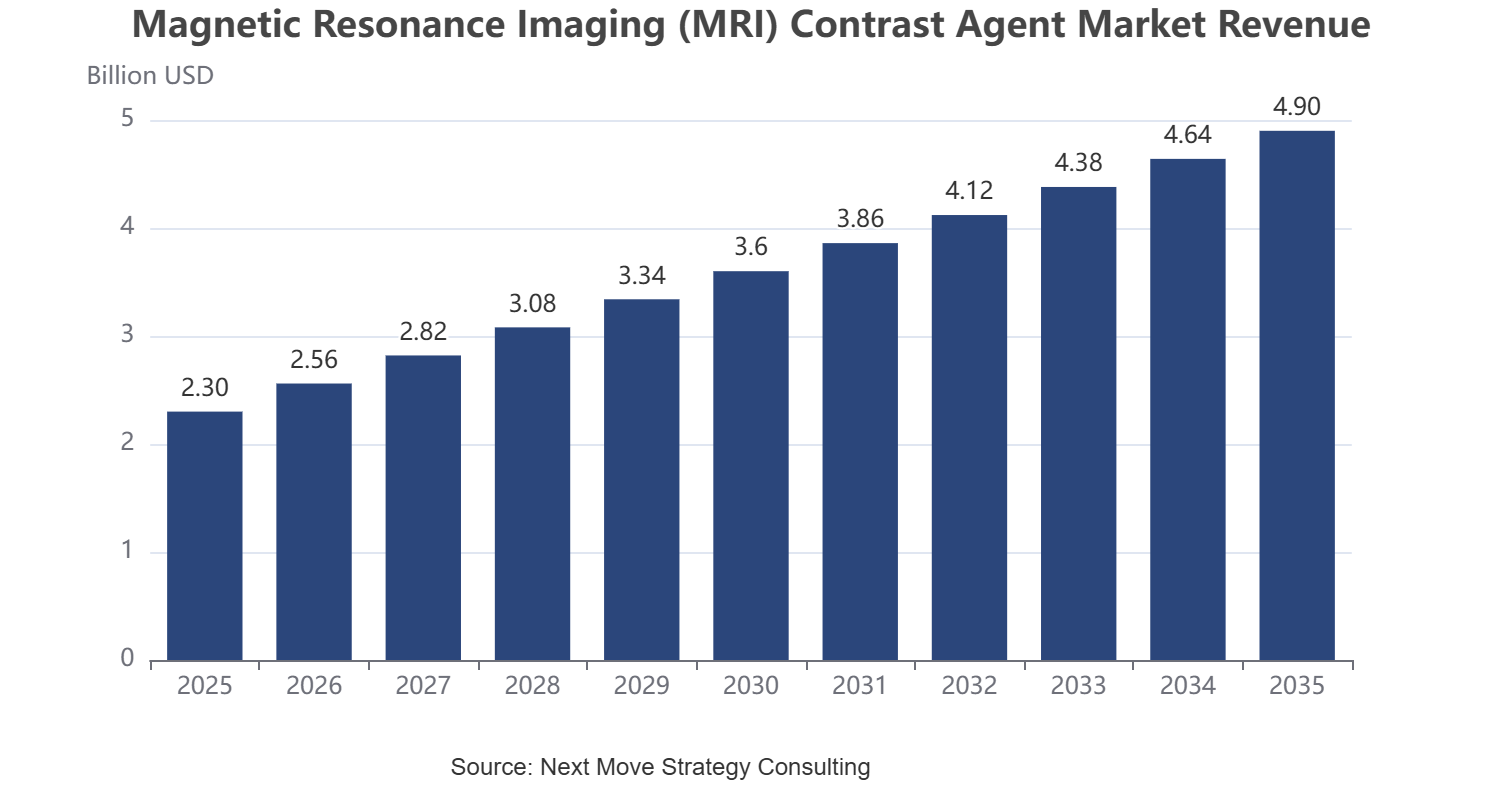
The global Magnetic Resonance Imaging (MRI) Contrast Agent Market size was valued at USD 2.30 billion in 2025 and is estimated at USD 2.48 billion in 2026, forecast to reach USD 4.90 billion by 2035, expanding at a 7.9% CAGR between 2026 and 2035. North America leads with approximately 34% share, while Gadolinium-Based Agents dominate all other product types with approximately 90% share.
We observed that growth is broad-based across every segmentation axis, with macrocyclic gadolinium adoption and pediatric imaging protocols driving the dominant structural shifts through 2035.
|
Key Takeaways |
|
By Product Type: Gadolinium-Based Agents held the largest share of approximately 90% (USD 2.07 billion) in 2025; Other and Emerging Agents is the fastest-growing sub-segment at 13.0% CAGR from 2026–2035. |
|
By Route of Administration: Intravenous held the largest share of approximately 88% (USD 2.02 billion) in 2025; Oral Enteric is the fastest-growing sub-segment at 9.5% CAGR from 2026–2035. |
|
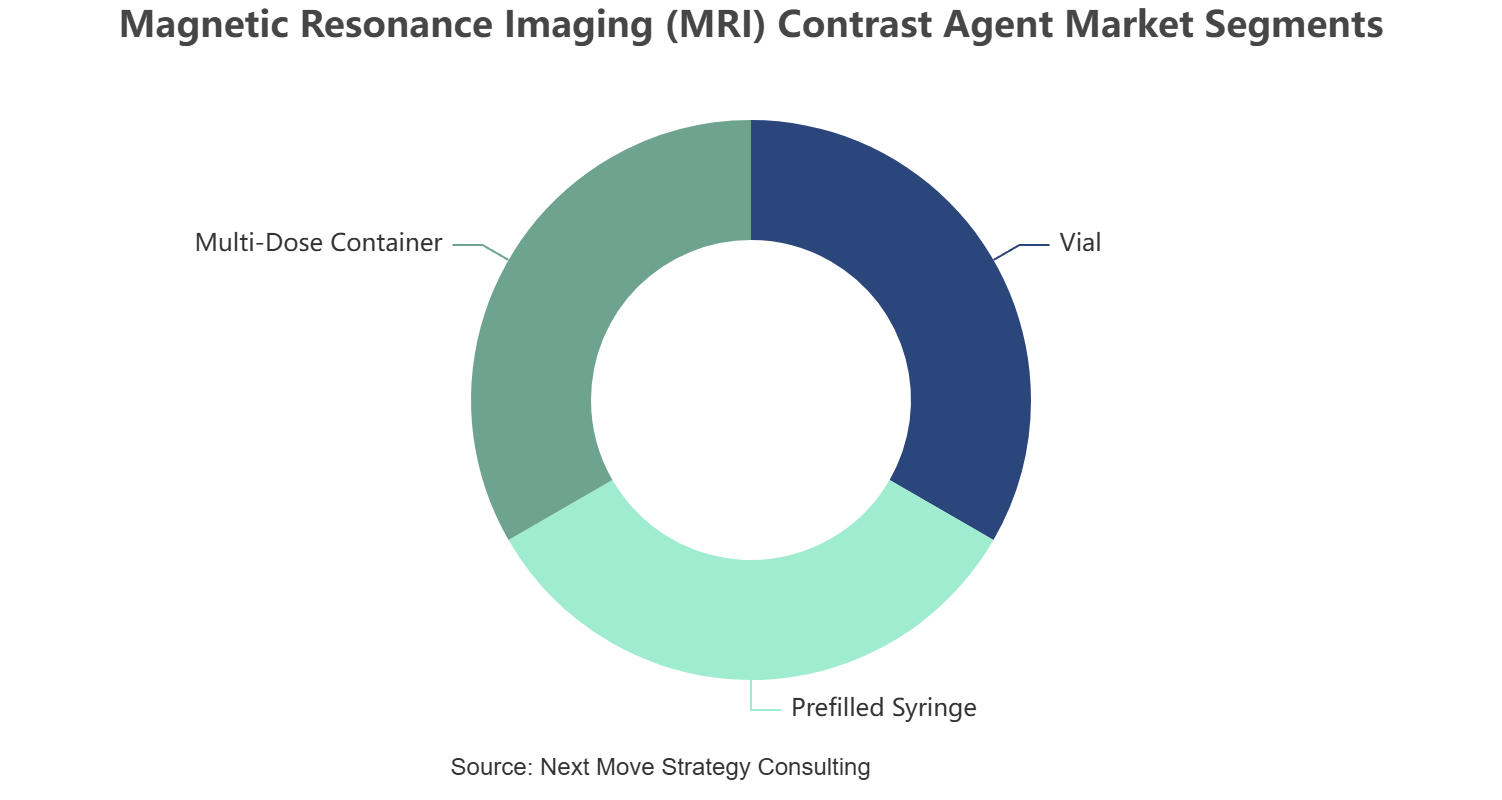
By Pack Format: Vial held the largest share of approximately 55% (USD 1.27 billion) in 2025; Prefilled Syringe is the fastest-growing sub-segment at 10.2% CAGR from 2026–2035. |
|
By Sales Channel: Originator Direct Sales held the largest share of approximately 40% (USD 0.92 billion) in 2025; Private Label is the fastest-growing sub-segment at 11.5% CAGR from 2026–2035. |
|
By Clinical Application: Central Nervous System held the largest share of approximately 34% (USD 0.78 billion) in 2025; Pediatric Imaging is the fastest-growing sub-segment at 10.4% CAGR from 2026–2035. |
|
By End User: Hospitals held the largest share of approximately 54% (USD 1.24 billion) in 2025; Imaging Centers is the fastest-growing sub-segment at 9.5% CAGR from 2026–2035. |
|
Dominant Region: North America dominated with approximately 34% revenue share (USD 782 million) in 2025. |
|
Fastest-Growing Region: Asia-Pacific is expected to register the highest CAGR of 11.6% during 2026–2035. |
|
Dominant Country: U.S. led with approximately USD 563 million in 2025. |
|
Fastest-Growing Country: India is the fastest-growing country at approximately 16.0% CAGR from 2026–2035. |
Market Opportunity: The Magnetic Resonance Imaging (MRI) Contrast Agent Market is expected to create an absolute dollar opportunity of USD 2.42 billion between 2026 and 2035, presenting significant investment potential across the macrocyclic gadolinium and prefilled syringe value chain.
According to NMSC analysis, originator manufacturers are increasingly prioritizing macrocyclic and dose-optimized reformulation pipelines to address gadolinium retention concerns, a shift that favors diversified, regulation-ready suppliers over single-agent specialists as safety scrutiny intensifies through 2035.
What Does the Magnetic Resonance Imaging (MRI) Contrast Agent Industry Encompass?
The Magnetic Resonance Imaging (MRI) Contrast Agent Market encompasses gadolinium-based, iron-based, oral enteric, and emerging manganese-based and cell-specific formulations administered to enhance tissue visualization during MRI procedures. Our assessment indicates that the scope spans extracellular, hepatobiliary, and blood-pool gadolinium chemistries supplied to hospitals, imaging centers, ambulatory centers, and academic institutions across central nervous system, body, liver, angiography, gastrointestinal, and pediatric imaging applications. The category has evolved from linear ionic formulations toward macrocyclic chemistries as safety and retention considerations reshape prescribing patterns worldwide.
Regulatory frameworks such as the U.S. Food and Drug Administration's gadolinium retention labeling requirements and the European Medicines Agency's 2017 restrictions on select linear agents shape formulary decisions toward macrocyclic ionic and nonionic chemistries. We observed that technology adoption is shifting toward prefilled syringe formats and lower-dose macrocyclic agents that improve dosing precision. NMSC's analysis indicates that this structural shift, combined with expanding MRI installed-base capacity, is redefining procurement criteria across the Magnetic Resonance Imaging (MRI) Contrast Agent Market.
|
Parameters |
Details |
|
Market Size in 2025 |
USD 2.30 Billion |
|
Market Size in 2026 |
USD 2.48 Billion |
|
Revenue Forecast in 2035 |
USD 4.90 Billion |
|
Growth Rate |
CAGR of 7.9% from 2026 to 2035 |
|
Analysis Period |
2025–2035 |
|
Base Year Considered |
2025 |
|
Forecast Period |
2026–2035 |
|
Market Size Estimation |
Revenue (USD Billion) |
|
Companies Profiled |
20 |
|
Countries Covered |
38 |
|
Market Share |
Available for Top 10 Companies |
Key Emerging Trends
Based on research conducted by NMSC, we found that four structural trends are reshaping product development, prescribing behavior, and stakeholder engagement across the industry.
How Is the Shift Toward Macrocyclic Agents Transforming Prescribing Patterns?
Macrocyclic gadolinium chemistries are displacing linear formulations as radiologists prioritize reduced gadolinium retention risk. We observed that Bayer's gadoquatrane, submitted to the FDA in June 2025 as a low-dose macrocyclic candidate, exemplifies this transition toward next-generation chemistries. Hospitals and imaging centers are updating formulary protocols to favor macrocyclic ionic and nonionic agents, while originator manufacturers accelerate lifecycle management of legacy linear portfolios across central nervous system and body imaging applications.
Why Are Prefilled Syringe Formats Gaining Adoption Over Vials?
Prefilled syringe formats are gaining share as hospitals and imaging centers seek dosing precision and reduced preparation time during high-throughput MRI scheduling. Our findings suggest that radiology departments increasingly specify prefilled syringe delivery to minimize contamination risk and administration variability. Manufacturers such as Bracco Imaging and Guerbet are expanding prefilled syringe portfolios, positioning these formats as a premium, higher-margin category within the broader market structure.
How Is AI-Enabled Imaging Reshaping Contrast Agent Utilization?
Artificial intelligence-enabled MRI reconstruction and dose-optimization software are reshaping contrast agent utilization by enabling diagnostic-quality imaging at reduced gadolinium doses. We observed that radiology practices are piloting AI-assisted protocols that pair lower-dose macrocyclic agents with enhanced image reconstruction. This trend is elevating demand for dose-optimized formulations among academic and research institutions evaluating reduced-dose clinical protocols across neurological and oncological imaging.
What Role Does Pediatric-Specific Formulation Play in Market Innovation?
Pediatric-specific contrast agent formulations are emerging as a response to growing scrutiny of weight-based dosing accuracy in younger patients. Our analysis shows that manufacturers are pursuing pediatric labeling expansions, with Bayer's gadoquatrane development program explicitly including term neonates and pediatric patients. This trend is driving specialized dosing guidance and packaging formats tailored to pediatric imaging protocols across hospitals and academic medical centers.
Growth Drivers and Restraints
|
Factors |
Type |
(+/−) % Impact on CAGR |
Geographic Relevance |
Impact Timeline |
|
Rising global cancer and neurological disease burden |
Driver |
+2.0% |
Global |
2026–2035 |
|
Expanding MRI installed base and imaging volumes |
Driver |
+1.7% |
Global |
2026–2035 |
|
Regulatory shift toward macrocyclic gadolinium agents |
Driver |
+1.3% |
North America, Europe |
2026–2035 |
|
Rising adoption of prefilled syringe formats |
Driver |
+1.0% |
Global |
2026–2032 |
|
Expansion of imaging infrastructure in Asia-Pacific |
Driver |
+1.5% |
Asia-Pacific |
2026–2035 |
|
Growing pediatric and oncology imaging protocols |
Driver |
+0.8% |
Global |
2026–2035 |
|
Gadolinium retention and NSF-related safety concerns |
Restraint |
-1.1% |
Global |
2026–2035 |
|
High cost of macrocyclic agents in price-sensitive markets |
Restraint |
-0.7% |
Asia-Pacific, Latin America |
2026–2032 |
|
Stringent regulatory review timelines for new approvals |
Restraint |
-0.5% |
Europe, North America |
2028–2035 |
What Is the Primary Growth Driver of the Magnetic Resonance Imaging (MRI) Contrast Agent Market?
Rising global cancer and neurological disease burden is the primary driver of the market. The World Health Organization reports cancer accounts for nearly 10 million deaths annually, sustaining demand for contrast-enhanced oncological imaging. We observed that this disease burden, reinforced by an aging population requiring recurring neurological and musculoskeletal imaging, continues to anchor baseline consumption of gadolinium-based agents across developed and emerging economies alike.
How Is Regulatory Reform Driving Growth in the Magnetic Resonance Imaging (MRI) Contrast Agent Market?
Regulatory guidance favoring macrocyclic gadolinium chemistries over linear formulations is accelerating market growth toward reformulated, lower-retention agents. The European Medicines Agency's 2017 restrictions on select linear gadolinium agents continue to shape prescribing patterns across Europe. Our assessment indicates that this regulatory pressure, combined with FDA labeling requirements on gadolinium retention, is compressing adoption timelines for macrocyclic ionic and nonionic agents across North America and Europe.
What Is Restraining Magnetic Resonance Imaging (MRI) Contrast Agent Industry’s Expansion?
Persistent concerns over gadolinium retention in brain and body tissue, alongside nephrogenic systemic fibrosis risk in patients with impaired renal function, restrain broader market expansion. The U.S. Food and Drug Administration continues to require class-wide labeling addressing gadolinium retention across approved agents. We found that this safety scrutiny disproportionately affects legacy linear formulations, prompting originator manufacturers to accelerate macrocyclic reformulation at meaningful development cost.
Segmentation Analysis
Segment Sizing: By Product Type
|
Segment |
2025 (USD) |
2035 (USD) |
CAGR% (2026–2035) |
|
Gadolinium-Based Agents |
USD 2.07 Billion |
USD 4.38 Billion |
8.7% |
|
Iron-Based Agents |
USD 0.14 Billion |
USD 0.31 Billion |
9.5% |
|
Oral Enteric Agents |
USD 0.06 Billion |
USD 0.11 Billion |
7.0% |
|
Other and Emerging Agents |
USD 0.03 Billion |
USD 0.10 Billion |
13.0% |
|
Total |
USD 2.30 Billion |
USD 4.90 Billion |
7.9% |
Which Product Type Segment Dominates the Magnetic Resonance Imaging (MRI) Contrast Agent Market?
Gadolinium-Based Agents, encompassing macrocyclic and linear extracellular chemistries, led the market with USD 2.07 billion in 2025, supported by decades of clinical validation and broad formulary presence across central nervous system and body imaging protocols. We observed that Other and Emerging Agents are the fastest-growing product type, expanding at a 13.0% CAGR from 2026 to 2035, as manganese-based and experimental cell-specific agents advance through early clinical development as gadolinium alternatives.
Segment Sizing: By Clinical Application
|
Segment |
2025 (USD) |
2035 (USD) |
CAGR% (2026–2035) |
|
Central Nervous System |
USD 0.78 Billion |
USD 1.60 Billion |
8.3% |
|
Body Imaging |
USD 0.46 Billion |
USD 0.96 Billion |
8.6% |
|
Liver Imaging |
USD 0.37 Billion |
USD 0.81 Billion |
9.2% |
|
Angiography |
USD 0.28 Billion |
USD 0.55 Billion |
8.0% |
|
Gastrointestinal and Enteric |
USD 0.23 Billion |
USD 0.53 Billion |
9.7% |
|
Pediatric Imaging |
USD 0.18 Billion |
USD 0.45 Billion |
10.4% |
|
Total |
USD 2.30 Billion |
USD 4.90 Billion |
7.9% |
Which Clinical Application Leads Magnetic Resonance Imaging (MRI) Contrast Agent Demand?
Central Nervous System imaging remained the leading clinical application within the market, valued at USD 780 million in 2025 on sustained demand for brain tumor, multiple sclerosis, and neurodegenerative disease imaging. Our findings suggest that Pediatric Imaging is the fastest-growing application, registering a 10.4% CAGR from 2026 to 2035, as weight-based dosing protocols and pediatric-specific formulations gain traction across hospitals and academic medical centers.
Segment Sizing: By End User
|
Segment |
2025 (USD) |
2035 (USD) |
CAGR% (2026–2035) |
|
Hospitals |
USD 1.24 Billion |
USD 2.55 Billion |
8.3% |
|
Imaging Centers |
USD 0.69 Billion |
USD 1.56 Billion |
9.5% |
|
Ambulatory Centers |
USD 0.23 Billion |
USD 0.50 Billion |
8.9% |
|
Academic and Research Institutions |
USD 0.14 Billion |
USD 0.30 Billion |
8.8% |
|
Total |
USD 2.30 Billion |
USD 4.90 Billion |
7.9% |
Which End User Segment Leads the Magnetic Resonance Imaging (MRI) Contrast Agent Market?
Hospitals remained the dominant end user within the market, reaching USD 1.24 billion in 2025 due to their integrated MRI infrastructure and multidisciplinary specialist access. Based on research conducted by NMSC, we found that Imaging Centers represent the fastest-growing end user category at a 9.5% CAGR from 2026 to 2035, reflecting rising outpatient MRI volumes and expanding standalone diagnostic imaging investment across developed and emerging markets.
Growth Opportunities
Our analysis shows that three forward-looking opportunities stand out for stakeholders positioning within the Magnetic Resonance Imaging (MRI) Contrast Agent Market over the 2026–2035 forecast period.
How Can Dose-Optimized Macrocyclic Agents Unlock Value for Hospital Radiology Departments?
Dose-optimized macrocyclic agents present a whitespace opportunity for hospital radiology departments seeking to reduce cumulative gadolinium exposure while preserving diagnostic image quality. Suppliers that commercialize lower-dose macrocyclic formulations stand to capture formulary share as institutions update prescribing protocols, particularly within academic and research institutions evaluating reduced-dose clinical pathways.
Where Do Emerging Markets Create New Demand for Cost-Efficient Contrast Agents?
Asia-Pacific and Latin American imaging centers represent an underpenetrated opportunity for cost-efficient gadolinium and iron-based agents engineered for expanding MRI installed bases. Manufacturers that develop scaled, regulation-compliant production for these regions can secure long-term distributor and tender contracts, benefiting from rising diagnostic imaging volumes tied to healthcare infrastructure expansion.
How Can Manganese-Based Alternatives Benefit Renally Impaired Patient Populations?
Manganese-based and experimental cell-specific agents create an opportunity for suppliers targeting renally impaired patients who face elevated nephrogenic systemic fibrosis risk with traditional gadolinium chemistries. Early movers advancing manganese-based candidates through clinical development can differentiate with academic and research institutions pursuing gadolinium-free imaging pathways for vulnerable patient populations.
Regional Outlook
Geographic Performance Snapshot
|
Region |
2025 (USD) |
2035 (USD) |
CAGR% (2026–2035) |
Key Driver |
|
North America |
USD 0.78 Billion |
USD 1.46 Billion |
7.2% |
Mature imaging infrastructure and FDA labeling-driven macrocyclic adoption |
|
Europe |
USD 0.62 Billion |
USD 1.17 Billion |
7.3% |
EMA regulatory guidance and REACH-aligned reformulation mandates |
|
Asia-Pacific |
USD 0.60 Billion |
USD 1.61 Billion |
11.6% |
Expanding MRI installed base and rising diagnostic imaging spending |
|
Middle East & Africa |
USD 0.16 Billion |
USD 0.36 Billion |
9.4% |
Vision 2030-linked healthcare diversification and hospital investment |
|
Latin America |
USD 0.14 Billion |
USD 0.29 Billion |
8.7% |
Growing diagnostic imaging consumption and expanding hospital networks |
|
Total |
USD 2.30 Billion |
USD 4.90 Billion |
7.9% |
— |
North America Magnetic Resonance Imaging (MRI) Contrast Agent Industry Outlook
North America leads the Magnetic Resonance Imaging (MRI) Contrast Agent Market with an established MRI installed base and mature reimbursement infrastructure. We observed that FDA gadolinium retention labeling requirements sustain demand for macrocyclic reformulations, while hospitals increasingly specify prefilled syringe formats to reduce administration variability. Technology adoption remains advanced, with academic institutions piloting AI-assisted dose-optimization protocols across the region's oncology and neurology imaging volumes.
Europe Magnetic Resonance Imaging (MRI) Contrast Agent Industry Outlook
Europe's Magnetic Resonance Imaging (MRI) Contrast Agent Market reflects a mature but regulation-intensive landscape shaped by the European Medicines Agency's restrictions on select linear gadolinium agents. Our findings suggest that hospitals across Germany, France, and the UK are accelerating adoption of macrocyclic ionic and nonionic formulations to satisfy updated prescribing guidance. Technology adoption favors prefilled syringe delivery, supported by regional distributors investing in dose-optimized packaging lines.
Asia-Pacific Magnetic Resonance Imaging (MRI) Contrast Agent Industry Outlook
Asia-Pacific is the fastest-growing Magnetic Resonance Imaging (MRI) Contrast Agent Market region, propelled by expanding MRI installed capacity in China and India and rising diagnostic imaging spending. We found that regulatory frameworks remain less harmonized than in Europe, giving manufacturers flexibility to scale gadolinium-based agent supply rapidly. Technology adoption is accelerating as regional distributors, including several China-based suppliers, expand capacity to serve growing hospital and imaging center demand.
Middle East & Africa Magnetic Resonance Imaging (MRI) Contrast Agent Industry Outlook
The Magnetic Resonance Imaging (MRI) Contrast Agent Market in Middle East & Africa is expanding as Gulf Cooperation Council economies diversify into advanced healthcare infrastructure and hospital-driven imaging demand rises. Our analysis shows that Saudi Arabia and the UAE are attracting diagnostic imaging investment tied to Vision 2030-linked healthcare expansion. Regulatory influence remains moderate, while technology penetration is gradually shifting toward imported macrocyclic agents as regional distributors align with global safety expectations.
Latin America Magnetic Resonance Imaging (MRI) Contrast Agent Industry Outlook
Latin America's Magnetic Resonance Imaging (MRI) Contrast Agent Market is supported by growing diagnostic imaging consumption in Brazil and Argentina and expanding hospital network infrastructure. We observed that regulatory frameworks are less stringent than in North America or Europe, though multinational originators operating locally are introducing macrocyclic specifications. Technology adoption remains centered on established gadolinium agents, with competitive intensity increasing as regional distributors partner with global originators to expand product breadth.
U.S. Magnetic Resonance Imaging (MRI) Contrast Agent Market
Based on our estimates, the U.S. market was valued at approximately USD 563 million in 2025 and is projected to reach USD 1.04 billion by 2035, growing at a 7.0% CAGR. Demand is anchored by mature hospital imaging infrastructure, high MRI installed-base penetration, and FDA gadolinium retention labeling requirements. Technology penetration favors macrocyclic and prefilled syringe formats, and competitive intensity remains high among established originators serving national hospital networks.
Canada Magnetic Resonance Imaging (MRI) Contrast Agent Market
The market in Canada reached roughly USD 117 million in 2025 and is forecast to hit USD 234 million by 2035 at an 8.0% CAGR. Demand structure mirrors U.S. hospital imaging consumption patterns, while Health Canada guidance shapes macrocyclic prescribing specifications. Technology penetration is rising as national hospital networks request dose-optimized formats, with competitive intensity moderate given the market's reliance on cross-border supply from originator manufacturers.
UK Magnetic Resonance Imaging (MRI) Contrast Agent Market
As per our estimate, the UK market stood at about USD 124 million in 2025, advancing toward USD 224 million by 2035 at a 6.8% CAGR. Demand is driven by established National Health Service imaging protocols navigating post-Brexit regulatory alignment with EMA guidance. Regulatory influence is significant, technology penetration favors macrocyclic adoption, and competitive intensity remains steady among originator and distributor suppliers serving UK hospital networks.
Germany Magnetic Resonance Imaging (MRI) Contrast Agent Market
According to our analysis, Germany's market was valued near USD 149 million in 2025 and is set to reach USD 274 million by 2035, expanding at a 7.0% CAGR. Demand structure benefits from a strong domestic hospital imaging infrastructure and high MRI scanner density. Germany's alignment with EMA gadolinium guidance drives regulatory influence, while technology penetration favors macrocyclic and prefilled syringe formats among leading distributors.
France Magnetic Resonance Imaging (MRI) Contrast Agent Market
Based on our estimates, France's market reached approximately USD 99 million in 2025, projected to climb to USD 184 million by 2035 at a 7.1% CAGR. Demand is supported by France's established academic radiology network, which shapes macrocyclic and pediatric imaging adoption. Regulatory influence from EMA guidance is notable, and competitive intensity remains high given the concentration of originator distribution headquartered regionally.
China Magnetic Resonance Imaging (MRI) Contrast Agent Market
The market in China stood at roughly USD 209 million in 2025 and is forecast to reach USD 653 million by 2035, registering a 13.5% CAGR. Demand is fueled by expanding domestic MRI installed capacity and a dense base of regional contrast agent manufacturers, including Jiangsu Hengrui Pharmaceuticals and Beijing Beilu Pharmaceutical. Regulatory influence is increasing gradually, technology penetration is accelerating through domestic production upgrades, and competitive intensity remains elevated among numerous China-based suppliers.
India Magnetic Resonance Imaging (MRI) Contrast Agent Market
As per our estimate, India's market was valued at about USD 84 million in 2025, projected to reach USD 319 million by 2035 at a 16.0% CAGR, the fastest among covered countries. Demand structure reflects rising diagnostic imaging installed base and expanding organized hospital chains. Regulatory influence remains developing, while technology penetration is rising quickly as domestic suppliers such as Zydus Lifesciences localize contrast agent sourcing to serve India's growing patient base.
Japan Magnetic Resonance Imaging (MRI) Contrast Agent Market
According to our analysis, Japan's market reached close to USD 108 million in 2025 and is expected to hit USD 207 million by 2035, growing at a 7.5% CAGR. Demand is supported by Japan's dense MRI installed base and precision-oriented diagnostic imaging heritage, led by domestic suppliers such as Daiichi Sankyo and Eisai. Regulatory influence is well established, technology penetration is advanced, and competitive intensity remains high among long-standing domestic manufacturers.
South Korea Magnetic Resonance Imaging (MRI) Contrast Agent Market
Based on our estimates, South Korea's market stood at approximately USD 54 million in 2025, forecast to reach USD 125 million by 2035 at a 9.8% CAGR. Demand structure benefits from the country's advanced hospital imaging infrastructure and domestic supplier presence including Taejoon Pharm. Technology penetration is high, and competitive intensity remains pronounced amid rapid formulation innovation cycles among regional manufacturers.
Australia Magnetic Resonance Imaging (MRI) Contrast Agent Market
The Magnetic Resonance Imaging (MRI) Contrast Agent Market in Australia reached about USD 30 million in 2025 and is projected to reach USD 60 million by 2035, expanding at an 8.0% CAGR. Demand is supported by a well-established hospital imaging sector and growing preference for macrocyclic agents. Regulatory influence stems from the Therapeutic Goods Administration, while technology penetration favors imported macrocyclic formulations amid moderate competitive intensity.
UAE Magnetic Resonance Imaging (MRI) Contrast Agent Market
As per our estimate, the UAE market was valued near USD 24 million in 2025, projected to reach USD 57 million by 2035 at a 10.0% CAGR. Demand structure is shaped by the UAE's role as a regional healthcare and diagnostic imaging distribution hub. Regulatory influence remains moderate, technology penetration is improving through imported macrocyclic formats, and competitive intensity is rising as distributors expand product portfolios to serve Gulf hospital networks.
Saudi Arabia Magnetic Resonance Imaging (MRI) Contrast Agent Market
According to our analysis, Saudi Arabia's market reached roughly USD 32 million in 2025 and is expected to hit USD 79 million by 2035, growing at a 10.5% CAGR. Demand is driven by Vision 2030-linked healthcare infrastructure diversification and rising hospital imaging capacity. Regulatory influence is developing under Saudi Food and Drug Authority guidelines, and technology penetration is advancing as domestic distributors scale supply.
South Africa Magnetic Resonance Imaging (MRI) Contrast Agent Market
Based on our estimates, South Africa's market stood at about USD 13 million in 2025, forecast to reach USD 26 million by 2035 at an 8.0% CAGR. Demand structure reflects a developing hospital imaging base serving regional Southern African markets. Regulatory influence remains moderate, technology penetration is gradually improving, and competitive intensity is limited given reliance on imported contrast agents from Europe and Asia.
Brazil Magnetic Resonance Imaging (MRI) Contrast Agent Market
The market in Brazil reached approximately USD 69 million in 2025 and is projected to reach USD 144 million by 2035, registering an 8.5% CAGR. Demand is underpinned by Brazil's large hospital network and expanding private diagnostic imaging chains. Regulatory influence stems from ANVISA oversight, technology penetration favors established gadolinium agents, and competitive intensity remains moderate among regional distributors.
Argentina Magnetic Resonance Imaging (MRI) Contrast Agent Market
As per our estimate, Argentina's market was valued near USD 21 million in 2025, projected to reach USD 42 million by 2035 at an 8.0% CAGR. Demand structure is supported by steady hospital imaging consumption despite macroeconomic volatility. Regulatory influence remains limited, technology penetration is modest, and competitive intensity is centered on a small number of regional distributors serving domestic hospital networks.
Competitive Landscape
We observed that the Magnetic Resonance Imaging (MRI) Contrast Agent Market features a moderately consolidated competitive landscape, with global originator manufacturers competing alongside regional Asian producers on regulatory credentials, formulation innovation, and manufacturing scale.
|
Key Takeaways |
Description |
|
Market Structure |
Moderately consolidated; the top companies profiled in this report collectively account for a majority of global Magnetic Resonance Imaging (MRI) Contrast Agent Market revenue, while numerous regional Asia-Pacific producers serve cost-sensitive gadolinium demand. |
|
Innovation Focus |
Macrocyclic reformulation, prefilled syringe delivery, and manganese-based alternative development dominate current innovation pipelines across leading suppliers. |
|
M&A Activity |
Selective licensing and supply partnerships, exemplified by Zydus Lifesciences' agreement with Viwit Pharmaceuticals to broaden its gadolinium-based contrast agent portfolio in the United States. |
How Do Companies Compete in the Magnetic Resonance Imaging (MRI) Contrast Agent Market?
Companies compete primarily on regulatory credentials, formulation safety profile, and manufacturing scale across the industry. Global originators such as Bayer AG and Bracco Imaging leverage broad macrocyclic portfolios to serve multinational hospital networks, while regional Chinese and Indian manufacturers compete on cost efficiency and rapid regulatory filing turnaround for gadolinium-based agents supplied to smaller distributors and tender programs.
Which Competitive Archetypes Dominate the Magnetic Resonance Imaging (MRI) Contrast Agent Market?
Two archetypes dominate the market: diversified global originators offering full-service regulatory and clinical support, and specialized regional manufacturers focused on high-volume, cost-competitive gadolinium agents. Bayer AG and GE HealthCare exemplify the diversified archetype through integrated development-to-distribution capability, while Jiangsu Hengrui Pharmaceuticals and Beijing Beilu Pharmaceutical exemplify the regional cost-leadership archetype serving Asia-Pacific tender demand.
How Are Companies Differentiating Through Innovation in Magnetic Resonance Imaging (MRI) Contrast Agents?
Innovation and differentiation strategy increasingly center on macrocyclic reformulation and dose-optimization engineering. Bayer's gadoquatrane and GE HealthCare's manganese-based candidate both target reduced retention risk to secure formulary preference. Our analysis shows that suppliers unable to demonstrate credible safety differentiation risk exclusion from hospital request-for-proposal shortlists in North America and Europe.
What M&A and Expansion Activity Is Shaping the Magnetic Resonance Imaging (MRI) Contrast Agent Market?
Licensing agreements, supply partnerships, and geographic expansion continue to consolidate distribution capabilities within the industry. Zydus Lifesciences' exclusive licensing and supply agreement with Viwit Pharmaceuticals broadened its gadolinium-based agent portfolio in the United States, while GE HealthCare's 14-year Care Alliance illustrates how diversified originators pursue long-term geographic expansion across hospital imaging networks.
Regulatory Framework Impacting the Magnetic Resonance Imaging (MRI) Contrast Agent Market
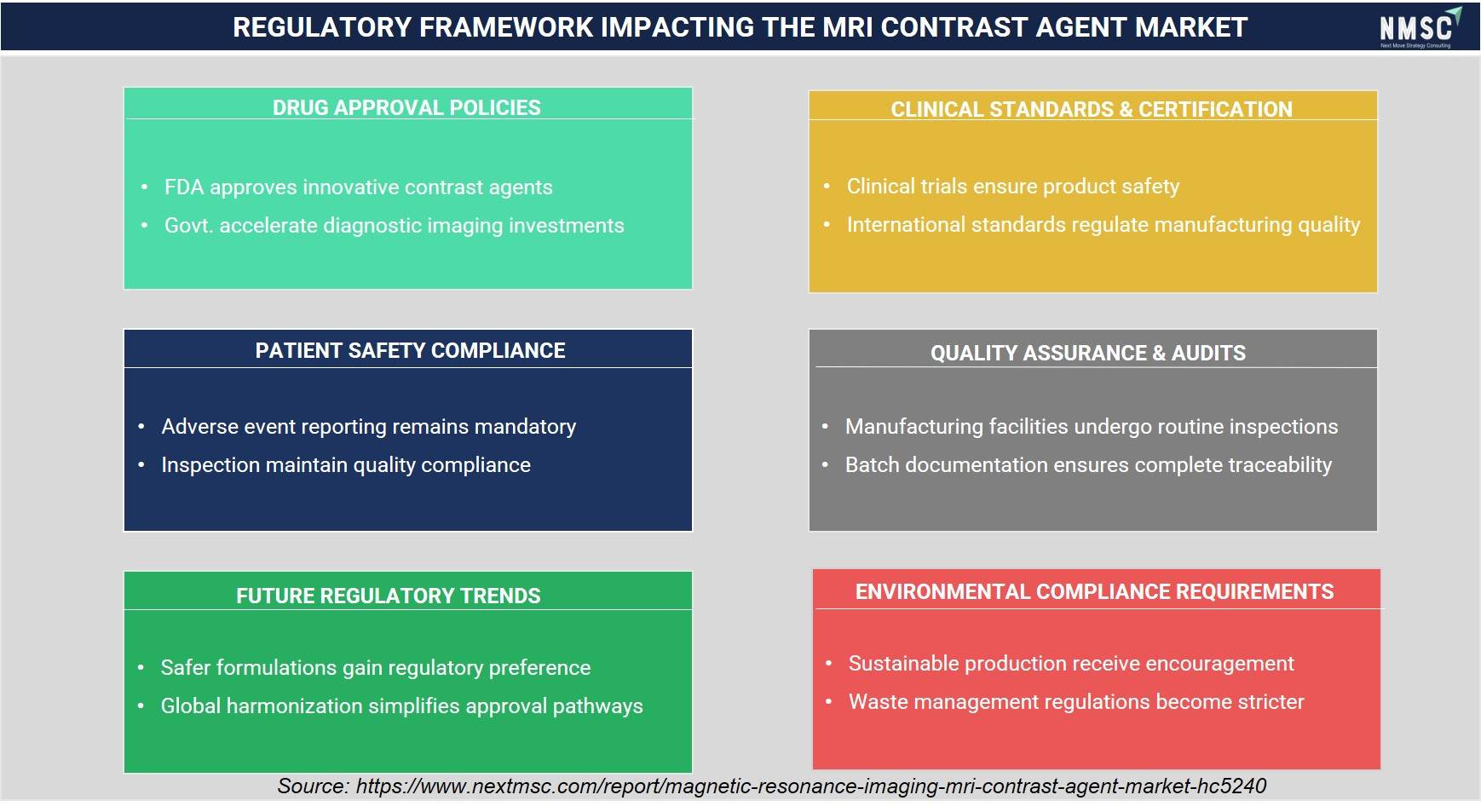
The regulatory framework for the MRI Contrast Agent Market is shaped by stringent drug approval pathways, clinical safety standards, quality assurance requirements, and patient safety regulations. Evolving global compliance frameworks encourage the development of safer contrast formulations, improve manufacturing quality, strengthen post-market surveillance, and support sustainable production practices while ensuring regulatory consistency across international markets.
Key Market Players
Our assessment indicates that the following 20 companies are actively shaping product innovation, capacity expansion, and regulatory strategy within the global Magnetic Resonance Imaging (MRI) Contrast Agent Market.
-
Bayer AG
-
GE HealthCare Technologies Inc.
-
Bracco Imaging S.p.A.
-
Guerbet SA
-
Jiangsu Hengrui Pharmaceuticals Co., Ltd.
-
Beijing Beilu Pharmaceutical Co., Ltd.
-
Hikma Pharmaceuticals PLC
-
Zydus Lifesciences Limited
-
Sanochemia Pharmazeutika GmbH
-
Vivere Imaging Private Limited
-
Nano Therapeutics Private Limited
-
Lantheus Holdings, Inc.
-
Spago Nanomedical AB
-
Nanobiotix S.A.
-
HOYA Corporation
-
Daiichi Sankyo Company, Limited
-
Eisai Co., Ltd.
-
Taizhou Hongda Fine Chemical Co., Ltd.
-
Taejoon Pharm Co., Ltd.
-
Jodas Expoim Private Limited
Latest Developments
We found that recent activity within the Magnetic Resonance Imaging (MRI) Contrast Agent Market is concentrated on macrocyclic reformulation and regulatory filings, reflecting the industry's broader safety-driven transition.
|
Date |
Event |
|
April 2026 |
GE HealthCare Technologies Inc. announced the first patient dosed in the global Phase 2/3 LUMINA trial evaluating mangaciclanol, an investigational manganese-based MRI contrast agent under FDA Fast Track designation. The program aims to provide a non-gadolinium alternative for contrast-enhanced MRI. |
Investment Opportunities
What Capital Inflows Are Targeting the Magnetic Resonance Imaging (MRI) Contrast Agent Market?
Capital inflows into the Magnetic Resonance Imaging (MRI) Contrast Agent Market are increasingly directed toward macrocyclic reformulation and manganese-based alternative development. Strategic originators continue to fund clinical development, as seen in Bayer's gadoquatrane program and GE HealthCare's manganese-based candidate. We observed that investors favor suppliers demonstrating validated safety credentials, viewing regulatory alignment as a proxy for long-term formulary retention with hospital networks.
How Is Infrastructure Investment Supporting Magnetic Resonance Imaging (MRI) Contrast Agent Manufacturing?
Infrastructure investment is expanding fill-finish and prefilled syringe assembly capacity across Asia-Pacific, particularly in China and India, to serve rising domestic hospital demand. Our findings suggest that regional manufacturers are investing in automated fill lines to improve dosing consistency for prefilled syringe formats, supporting the precision required for pediatric and dose-optimized imaging protocols.
What ESG Considerations Are Shaping Magnetic Resonance Imaging (MRI) Contrast Agent Investment Decisions?
Environmental, social, and governance considerations are central to investment decisions across the industry, with gadolinium environmental persistence and patient-safety governance as key criteria. The U.S. Environmental Protection Agency continues to monitor trace gadolinium presence in wastewater linked to contrast agent excretion. We found that investors increasingly favor manufacturers with transparent retention-risk disclosure, treating it as a governance indicator alongside clinical safety compliance.
SWOT Analysis of the Magnetic Resonance Imaging (MRI) Contrast Agent Market
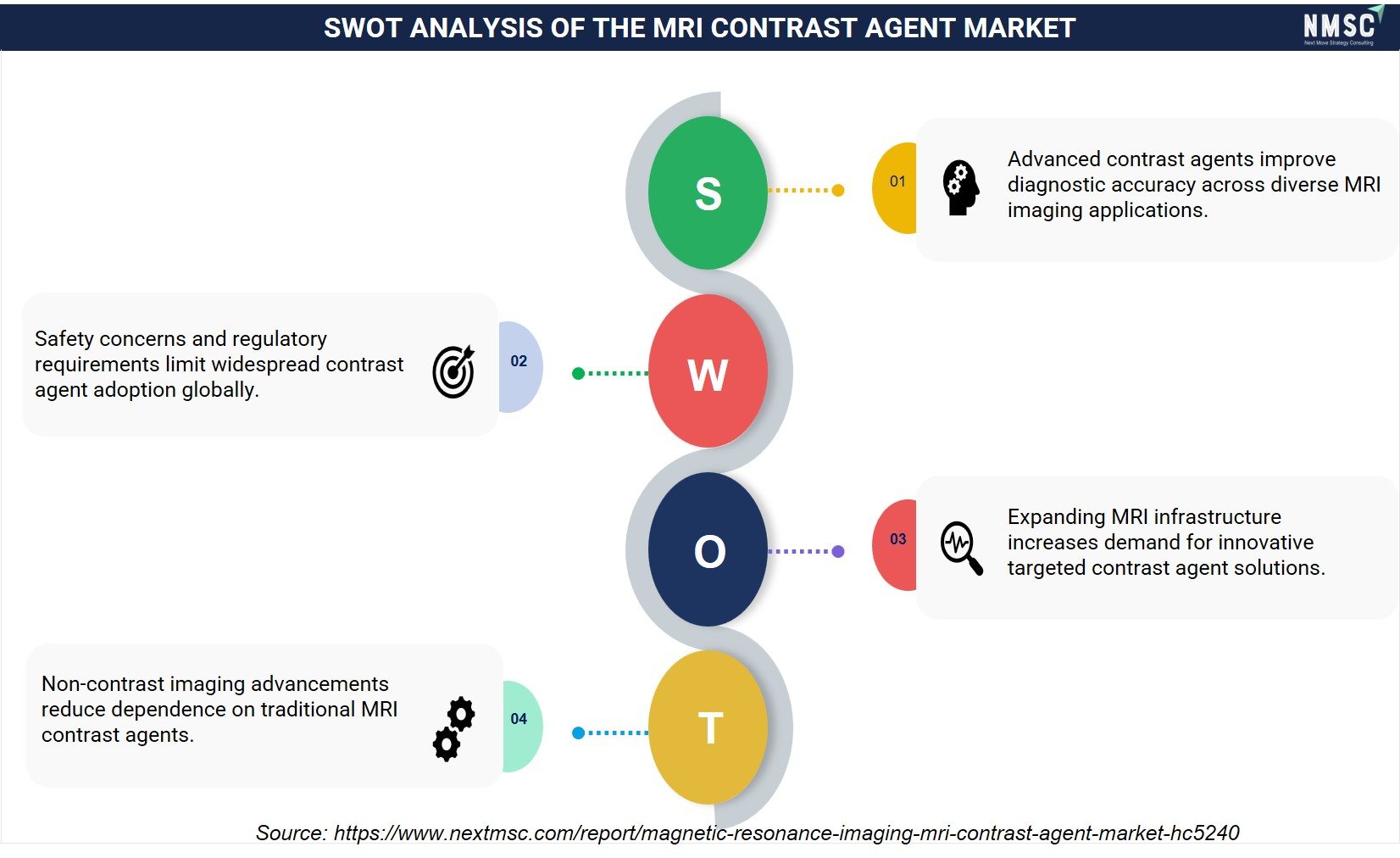
The SWOT analysis of the MRI Contrast Agent Market highlights the balance between technological innovation and regulatory challenges. Advanced contrast agents improve diagnostic precision, while safety concerns and stringent approvals remain key constraints. Expanding MRI infrastructure and targeted agent development create growth opportunities, whereas non-contrast imaging advancements and competitive pricing continue to influence market dynamics.
Key Benefits for Stakeholders
How Does This Report Benefit Enterprise and Industry Leaders?
Enterprise and industry leaders gain access to validated segmentation, competitive benchmarking, and regional demand forecasts that support formulary and product-portfolio decisions across the Magnetic Resonance Imaging (MRI) Contrast Agent industry. Our analysis shows that detailed clinical application, pack format, and sales channel breakdowns help procurement teams align specifications with regulatory and safety requirements while identifying underserved end-user segments for portfolio expansion.
How Does This Report Benefit Investors and Financial Analysts?
Investors and financial analysts benefit from consistent, single-point market size and CAGR estimates that support valuation and capital-allocation decisions across the Magnetic Resonance Imaging (MRI) Contrast Agent Market supply chain. We observed that the report's regional and segment-level growth differentials help identify which originators and regional manufacturers are best positioned to capture above-market growth in macrocyclic and prefilled syringe categories through 2035.
How Does This Report Benefit Technology Vendors and Product Teams?
Technology vendors and product teams gain insight into emerging formulation requirements, including macrocyclic reformulation, dose-optimization software, and pediatric-specific protocols, that are reshaping the industry. Our findings suggest that this analysis helps R&D teams prioritize development roadmaps around retention-risk reduction and regulatory-ready chemistries increasingly required by hospital request-for-proposal processes.
Key Market Segments
By Product Type
-
Gadolinium-Based Agents
-
Extracellular Agents
-
Macrocyclic Ionic
-
Gadoteric Acid
-
Gadoterate Meglumine
-
-
Macrocyclic Nonionic
-
Gadobutrol
-
Gadoteridol
-
Gadopiclenol
-
-
Linear Ionic
-
Gadopentetate Dimeglumine
-
Gadobenate Dimeglumine
-
-
Linear Nonionic
-
Gadodiamide
-
-
-
Hepatobiliary Agents
-
Gadoxetate Disodium
-
-
Other Gadolinium-Based Agents
-
Blood-Pool Agents
-
Niche Branded Agents
-
-
-
Iron-Based Agents
-
Superparamagnetic Iron Oxide
-
Ultrasmall Superparamagnetic Iron Oxide
-
-
Oral Enteric Agents
-
Ferric Ammonium Citrate
-
Other Oral MRI Agents
-
-
Other and Emerging Agents
-
Manganese-Based Agents
-
Experimental Cell-Specific Agents
-
By Route of Administration
-
Intravenous
-
Oral Enteric
By Pack Format
-
Vial
-
Prefilled Syringe
-
Multi-Dose Container
By Sales Channel
-
Originator Direct Sales
-
Distributor
-
Tender
-
Private Label
-
Contract Manufacture
By Clinical Application
-
Central Nervous System
-
Body Imaging
-
Liver Imaging
-
Angiography
-
Gastrointestinal and Enteric
-
Pediatric Imaging
By End User
-
Hospitals
-
Imaging Centers
-
Ambulatory Centers
-
Academic and Research Institutions
By Region
-
North America: U.S., Canada, Mexico.
-
Europe: UK, Germany, France, Italy, Spain, Sweden, Denmark, Finland, Netherlands, Rest of Europe.
-
Asia-Pacific: China, India, Japan, South Korea, Taiwan, Indonesia, Vietnam, Australia
-
Middle East & Africa: Saudi Arabia, UAE, Egypt, Israel, Turkey, Nigeria, South Africa, Rest of MEA.
-
Latin America: Brazil, Argentina, Chile, Colombia, Rest of LATAM.Conclusion and Recommendations
What Is the Long-Term Outlook for the Magnetic Resonance Imaging (MRI) Contrast Agent Market?
The long-term outlook for the Magnetic Resonance Imaging (MRI) Contrast Agent Market remains positive, supported by expanding MRI installed capacity and sustained oncology and neurology imaging demand through 2035. Our analysis shows that macrocyclic reformulation and pediatric-specific development will define competitive positioning over the coming decade, with the market projected to nearly double from USD 2.48 billion in 2026 to USD 4.90 billion by 2035.
What Strategic Positioning Recommendations Apply to Market Participants?
Market participants should prioritize macrocyclic reformulation and dose-optimized packaging investments to align with tightening regulatory expectations across North America and Europe. NMSC's analysis indicates that suppliers combining regulatory credentials with scaled prefilled syringe manufacturing will be best positioned to capture premium formulary placement within the Magnetic Resonance Imaging (MRI) Contrast Agent Market.
How Attractive Is the Magnetic Resonance Imaging (MRI) Contrast Agent Market for New Investment?
The Magnetic Resonance Imaging (MRI) Contrast Agent industry presents an attractive investment case, supported by a USD 2.42 billion absolute dollar opportunity between 2026 and 2035 and above-average growth in Asia-Pacific and emerging agent categories. We found that investment attractiveness is highest for manufacturers combining safety-differentiated chemistries with scaled manufacturing capacity, positioning them to serve both cost-sensitive and premium hospital segments simultaneously.
What Market Shifts and Key Risks Should Stakeholders Monitor?
Stakeholders should monitor gadolinium retention litigation exposure, tightening regulatory review timelines, and competitive pressure from non-gadolinium imaging alternatives as key risks to the Magnetic Resonance Imaging (MRI) Contrast Agent Market. Our analysis shows that suppliers unable to adapt to macrocyclic specifications risk losing formulary share to competitors with validated safety platforms, particularly within Europe's increasingly regulated prescribing environment.
What Are the Key Growth Pathways for the Magnetic Resonance Imaging (MRI) Contrast Agent Market?
Key growth pathways include expanding pediatric-specific and dose-optimized portfolios, scaling manganese-based alternative development, and deepening penetration into Asia-Pacific hospital and tender channels. NMSC's analysis indicates that suppliers pursuing these pathways while maintaining cost competitiveness in standard gadolinium categories will be best positioned to capture the Magnetic Resonance Imaging (MRI) Contrast Agent Market's projected growth through 2035.
About the Author
 Mihul Sharma
— Mihul Sharma is Research Associate at Next Move Strategy Consulting, where he has covered technology, industrial, and healthcare markets for 3 years. His work applies structured business research, market analysis, and secondary-source review to assess market trends, competitive developments, and growth opportunities. He supports report development by fully synthesizing industry data, company information, and market signals into concise findings for strategy and investment-focused research teams.
Mihul Sharma
— Mihul Sharma is Research Associate at Next Move Strategy Consulting, where he has covered technology, industrial, and healthcare markets for 3 years. His work applies structured business research, market analysis, and secondary-source review to assess market trends, competitive developments, and growth opportunities. He supports report development by fully synthesizing industry data, company information, and market signals into concise findings for strategy and investment-focused research teams.
About the Reviewer
 Supradip Baul
— Supradip Baul is an accomplished business consultant and strategist with over a decade of rich experience in market intelligence, strategy, technology, and business transformation. His work has included rigorous qualitative and quantitative analysis across multiple industries, helping clients shape investment decisions and long-term roadmaps. Earlier in his career, he was associated with Gartner, where he contributed to industry-leading reports and market share analyses. He has worked with leading global companies and holds an MBA with a dual specialization in Marketing and Finance.
Supradip Baul
— Supradip Baul is an accomplished business consultant and strategist with over a decade of rich experience in market intelligence, strategy, technology, and business transformation. His work has included rigorous qualitative and quantitative analysis across multiple industries, helping clients shape investment decisions and long-term roadmaps. Earlier in his career, he was associated with Gartner, where he contributed to industry-leading reports and market share analyses. He has worked with leading global companies and holds an MBA with a dual specialization in Marketing and Finance.
At Next Move Strategy Consulting, we understand that insightful market research is the cornerstone of successful business decisions. That's why we employ a robust and multifaceted approach, combining various methodologies to deliver the most accurate and actionable data for our clients.

Research Landscape
We navigate the world of research with two primary approaches:
Qualitative Approach
Our qualitative research methodologies involve immersive techniques such as in-depth interviews, focus groups, and observational studies. By engaging directly with individuals and stakeholders, we uncover valuable insights that quantitative data alone may overlook.

Quantitative Research
In tandem with qualitative methodologies, NMSC leverages the power of Quantitative Research to provide a robust foundation of numerical insights. Through systematic data collection and analysis, we quantify patterns, preferences, and market trends, offering a comprehensive view of the business landscape.
Our quantitative research approach employs diverse tools, including surveys, experiments, and statistical modelling. These methodologies enable us to gather data from a large and representative sample, ensuring the statistical significance of our findings. By employing structured questionnaires and standardized data collection methods, we guarantee the reliability and validity of the information we present to our clients.
Quantitative research is particularly effective in measuring the prevalence of trends, assessing market size, and gauging the impact of various factors on consumer behavior. The numerical precision attained through this approach equips our clients with actionable insights, facilitating data-driven decision-making and strategy formulation.


Our Specialized Toolbox for Industry-Specific Market Research
We deploy a specialized arsenal of techniques tailored to meet your unique requirements. Here's a glimpse into our comprehensive toolbox:

Information Procurement
The stage entails acquiring market data or relevant information through various sources and methodologies.


Market Research Approach
We utilize both top-down and bottom-up approaches in market research analysis to achieve a comprehensive understanding of the market dynamics, leveraging the broad perspective of industry trends and macroeconomic factors alongside detailed insights from specific segments and individual companies.

Porters Five Forces Analysis
We conduct Porter's Five Forces analysis to evaluate the competitive landscape of an industry, providing us with insights into factors that affect profitability and strategic positioning.

SWOT Analysis

Forecasting
We utilize a forecasting model to predict future consumption by considering parameters like population, economics, regulations, market competition, drivers, constraints, technology, and pricing. We also employ statistical techniques such as multilinear regression, exponential smoothing, moving average, ARIMA, and Monte Carlo simulations for accurate predictions. In econometric forecasting, we analyzed short-term and long-term event impacts, attributing values based on regulatory frameworks, economic factors, and market events.





 Speak to Our Analyst