Malted Food Drink Market By Product Form {Powder (Instant, Regular), Ready-to-Drink, and Others}, By Pack Size (Single Serve, Multi Serve, Bulk), By Packaging Format (Sachet, Pouch, Carton, Bottle, Can, Jar, Others), By Sugar Profile (Full Sugar, Reduced Sugar, No Added Sugar, Sugar-Free), By Flavor (Original Malt, Chocolate, and Others), and By Distribution Channel {Retail (Modern Trade, Traditional Trade, and Others), Food Service, and Others}– Global Analysis & Forecast, 2025–2035
Industry: Retail and Consumer | Publishing Date: June 5, 2026 | Last Updated: September 30, 2026 | No of Pages: N/A | No. of Tables: N/A | No. of Figures: N/A | Format: PDF | Report Code: RC4603
Industry Outlook
The global Malted Food Drink Market size was valued at USD 5.86 billion in 2025 and is expected to be valued at USD 6.21 billion by the end of 2026. The industry is projected to grow, hitting USD 10.94 billion by 2035, with a CAGR of 6.48% between 2026 and 2035.
Malted Food Drink Market Size & Forecast
|
Parameters |
Details |
|
Market Size in 2026 |
USD 6.21 Billion |
|
Revenue Forecast in 2035 |
USD 10.94 Billion |
|
Growth Rate |
CAGR of 6.48% from 2026 to 2035 |
|
Analysis Period |
2025–2035 |
|
Base Year Considered |
2025 |
|
Forecast Period |
2026–2035 |
|
Market Size Estimation |
Billion (USD) |
|
Companies Profiled |
10 |
|
Countries Covered |
33 |
|
Market Share |
Available for 10 companies |
Based on NMSC’s primary research, we observed that the global malted food drink market is witnessing steady growth, driven by rising health awareness, increasing demand for fortified nutrition, and the need for convenient daily beverages. In this context, malt-based drinks enriched with vitamins, minerals, and proteins are widely consumed to support growth, immunity, and overall wellness, particularly among children and elderly populations. Moreover, legacy brands such as Horlicks, Bournvita, and Milo continue to anchor strong household penetration, supported by long-standing brand trust. At the same time, shifting consumer preferences toward low-sugar, high-protein, and functional formulations are influencing product innovation, with manufacturers focusing on clean-label ingredients and targeted health benefits.
Furthermore, distribution strength, pricing strategies, and marketing campaigns play a key role in shaping adoption. While traditional retail channels remain dominant, e-commerce is expanding due to improved accessibility and product variety. Regionally, Asia-Pacific leads the market, supported by high consumption and strong brand loyalty, whereas North America and Europe show stable demand driven by health-conscious consumers and premium variants. Emerging markets drive volume growth, while developed regions focus on differentiation. Overall, the market reflects steady expansion, supported by strong brand presence, evolving consumer preferences, and continued innovation in formulation and distribution.

The steady growth of the global wellness economy highlights rising consumer focus on health and nutrition. This directly supports demand for fortified and functional beverages such as malted food drink, reinforcing long-term market growth driven by wellness-oriented consumption.
What Are the Key Trends in the Malted Food Drink Industry?
How Is Demographic Micro-Segmentation Redefining Product Development in Malted Food Drinks?
Based on our analysis, we observed that demographic micro-segmentation is fundamentally transforming how manufacturers design and position malted food drinks. Specifically, a clear shift toward age-specific formulations is emerging, tailored to distinct physiological needs. Our evaluation indicates that brands increasingly differentiate offerings for children, adolescents, adults, and elderly populations, focusing on targeted benefits such as growth support, cognitive development, and bone health. Furthermore, formulations addressing calcium absorption for aging consumers and protein-enriched blends for teenagers are gaining traction. This targeted approach enhances product relevance and strengthens consumer trust, positioning malted food drinks as personalized nutrition solutions aligned with lifecycle-specific health needs.
How Are Ancestral Grains Influencing Ingredient Innovation in Malted Food Drinks?
The integration of ancestral grains is reshaping the nutritional positioning of malted food drinks. Our interactions with formulation experts indicate that manufacturers are increasingly incorporating grains such as millets and sorghum to replace refined fillers and enhance the overall nutrient profile. This shift is further supported by rising consumer preference for natural and minimally processed ingredients. Our analysis shows that products featuring traditional grains resonate strongly in regions with cultural familiarity, particularly in Asia-Pacific markets. In addition, these ingredients contribute to improved fiber content and sustained energy release, reinforcing functional benefits. This transition toward heritage-based nutrition strengthens clean-label positioning and supports long-term product differentiation in an increasingly ingredient-conscious market.
How Is Cognitive “Focus” Positioning Expanding the Role of Malted Food Drinks?
From our assessment of evolving marketing strategies, we observed that malted food drinks are increasingly positioned beyond physical energy toward cognitive performance and mental clarity. In this context, brands are incorporating ingredients linked to brain health, including micronutrients and functional additives that support focus and memory. This repositioning is particularly evident among students and working professionals seeking daily cognitive support. Our analysis indicates that positioning malt-based beverages as “focus-enhancing” solutions expands their relevance into new consumption occasions beyond traditional usage. Moreover, messaging around productivity, alertness, and mental wellness is gaining prominence across marketing campaigns. This evolution broadens the category’s appeal and reinforces its transition into a functional beverage segment aligned with modern lifestyle demands.
Supply Chain Structure of the Malted Food Drink Market
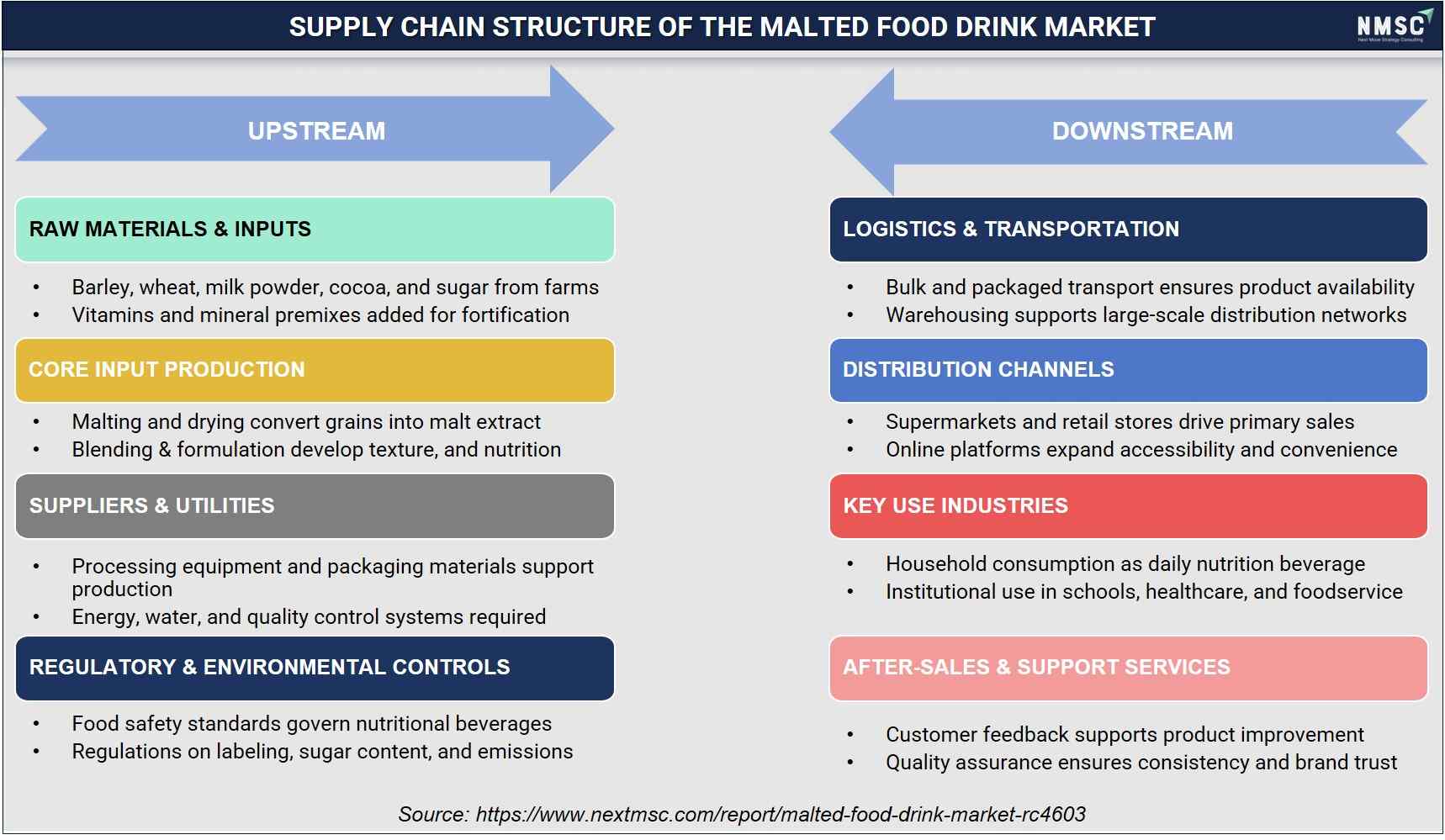
NMSC’s analysis indicates that the malted food drink supply chain integrates agricultural sourcing, controlled processing, and efficient distribution networks to ensure consistent product availability. Upstream activities focus on raw material procurement and malt extraction, while downstream operations emphasize logistics, retail distribution, and end-use consumption. Moreover, regulatory compliance and quality assurance play a critical role in maintaining product standards. This structured value chain enables manufacturers to optimize costs, enhance scalability, and ensure reliable delivery across both developed and emerging markets.
What Are the Key Market Drivers, Breakthroughs, and Investment Opportunities That Will Shape the Malted Food Drink Industry in the Next Decade?
Growth Catalyst & Risk Assessment Matrix
|
DRIVERS / TRENDS / RESTRAINTS |
(+/–) % IMPACT ON CAGR FORECAST |
GEOGRAPHIC RELEVANCE |
IMPACT TIMELINE |
|
Scientific advancements in nutrient absorption technologies enhancing product efficacy and functional value |
+1.2% |
North America, Europe, Japan |
Medium to long term (3–6 years) |
|
Rising urban demand for convenient ready-to-drink and on-the-go nutritional beverages |
+1.4% |
Asia-Pacific, North America, Latin America |
Short to medium term (2–5 years) |
|
Increasing adoption of clean-label, low-sugar, and functional formulations driving product innovation |
+1.1% |
Europe, North America, Australia |
Medium term (2–4 years) |
|
Integration of traditional and ancestral grains improving nutritional positioning and regional appeal |
+0.8% |
Asia-Pacific, Africa |
Medium to long term (3–6 years) |
|
Growing demand for plant-based and dairy-free malt alternatives expanding consumer base |
+1.0% |
North America, Europe, Asia-Pacific |
Medium term (2–5 years) |
|
Rising consumer concerns regarding high sugar, calorie, and glycemic content limiting consumption |
-1.2% |
Global (strong in North America, Europe) |
Short to medium term (1–4 years) |
Based on our assessment of global nutrition and beverage trends, we identified that the malted food drink market is experiencing steady growth, driven by rising health awareness and increasing demand for convenient, fortified nutrition. Malted beverages are increasingly positioned as daily nutrition solutions supporting growth, immunity, and overall wellness, particularly among children, working adults, and ageing populations. Advancements in formulation, including improved bioavailability and targeted fortification, are further enhancing product effectiveness and consumer confidence. At the same time, growing demand for clean-label, low-sugar, and functional beverages is reshaping product development strategies. However, concerns around high calorie and glycemic content continue to limit adoption among health-conscious consumers. In parallel, the expansion of ready-to-drink formats and plant-based alternatives is creating new growth avenues. Overall, innovation, convenience, and nutritional positioning continue to drive sustained market growth.
Growth Drivers:
How Are Scientific Advancements in Nutrient Absorption Technologies Driving Malted Food Drinks Market Growth?
NMSC’s analysis indicates advancements in nutrient absorption technologies are significantly enhancing the functional value of malted food drinks. Manufacturers are increasingly focusing on improving bioavailability through optimized delivery systems and ingredient matrices. This is particularly critical in fortified beverages, where the effectiveness of nutrients depends not only on content but on absorption efficiency. According to the 2025 National Institutes of Health Office of Dietary Supplements, iron bioavailability among Americans consuming mixed diets is estimated at approximately 14%–18%, depending on dietary composition and nutrient interactions. This has accelerated industry focus on scientifically advanced nutrient absorption technologies, including fortified and bio-enhanced formulations in malted food drinks, to improve nutritional efficacy and consumer health outcomes. In response, brands are incorporating encapsulation techniques, synergistic nutrient blends, and scientifically validated formulations to enhance efficacy. This evolution strengthens product credibility and reinforces the role of malted food drinks as reliable, science-backed nutrition solutions supporting long-term market growth.
How Is Rising Urban Demand for Convenient Ready-to-Drink Formats Boosting Malted Food Drinks Market Demand?
From our assessment of consumption patterns, we observed that rising urbanization and fast-paced lifestyles are accelerating demand for convenient ready-to-drink (RTD) malt-based beverages. Consumers increasingly prioritize on-the-go nutrition solutions that combine convenience with functional benefits. Our analysis indicates that manufacturers are expanding RTD portfolios to cater to busy professionals, students, and urban households seeking quick nutritional intake without preparation time. According to the Press Information Bureau 2026, the share of processed food exports in India’s agri-food exports reached 20.4% in 2024–25, with government initiatives such as World Food India 2025 focusing on scaling Ready-to-Eat and Ready-to-Cook segments to meet rising urban demand for convenience-oriented consumption. In parallel, improved packaging formats and shelf-stable technologies are enhancing accessibility and product appeal. This shift toward convenience-driven consumption continues to expand usage occasions and supports sustained demand growth across urban markets.
Our analysis further indicates that rising food demand, driven by both population growth and increasing per capita consumption across emerging regions, continues to strengthen the need for convenient and accessible nutritional products.

This trend is particularly pronounced in regions such as Asia and Sub-Saharan Africa, supporting long-term consumption growth for malted food drinks.
Growth Inhibitor:
How Are Increasing Concerns Around High Calorie and Glycemic Content Limiting Market Growth?
Our evaluation indicates that growing consumer awareness regarding sugar intake and metabolic health is emerging as a key restraint for the malted food drink market. Increasing scrutiny around high-calorie formulations and glycemic impact is influencing purchasing decisions, particularly among health-conscious consumers. According to the Centers for Disease Control and Prevention, 2026, sugar-sweetened beverages are a leading source of added sugars, and frequent consumption is associated with obesity, type 2 diabetes, heart disease, and metabolic disorders, reinforcing growing consumer concerns around high-calorie beverage intake. As a result, consumers are increasingly shifting toward low-sugar or alternative nutritional beverages. Consequently, traditional malted drink formulations face declining preference in certain consumer segments, particularly among urban and health-aware populations. This trend continues to exert downward pressure on conventional product demand, limiting market expansion for high-sugar variants.
Growth Opportunity:
How Is the Development of Dairy-Free Malt Products Creating New Growth Opportunities?
Based on our analysis, we identified that the development of dairy-free malted products is unlocking new growth avenues by aligning with the rising demand for plant-based nutrition. Consumers increasingly seek alternatives that cater to lactose intolerance, vegan lifestyles, and sustainability preferences. According to the OECD–FAO Agricultural Outlook in 2025, plant-based dairy alternatives such as soy, almond, and oat drinks are increasing in popularity across North America, Europe, and Asia, driven by lactose intolerance, health concerns, and environmental awareness. In response, manufacturers are introducing non-dairy malt formulations that retain nutritional value while expanding accessibility to a broader consumer base. Additionally, this trend is gaining traction among younger and health-conscious demographics seeking cleaner and more inclusive dietary options. This expansion into plant-based offerings strengthens market diversification and supports long-term growth potential.
Consumer Behaviour Analysis of the Malted Food Drink Market
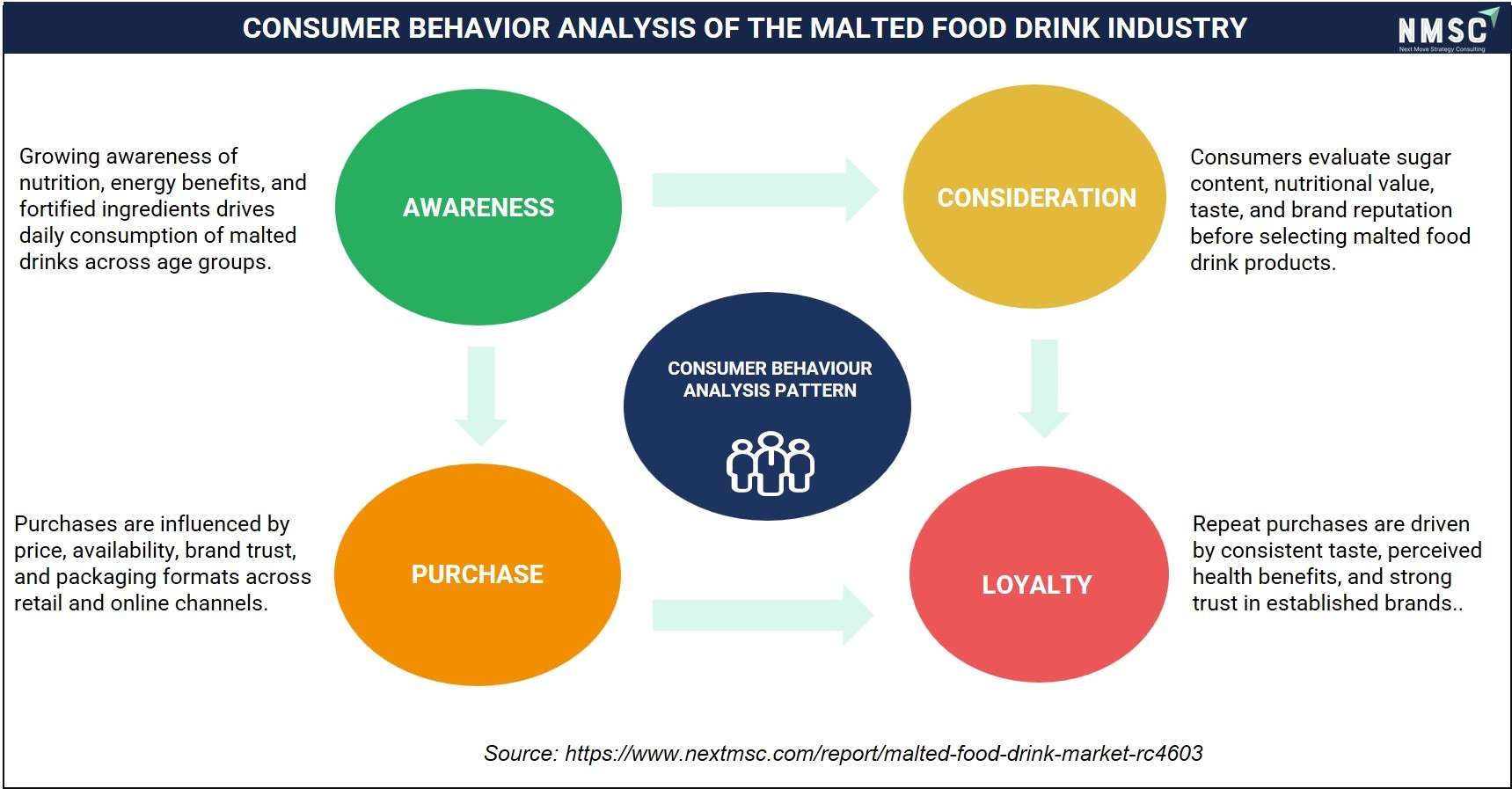
Our evaluation indicates that consumer behavior in the malted food drink market is driven by growing awareness of nutrition, energy benefits, and fortified ingredients. Consumers carefully evaluate sugar content, taste, and brand credibility during product selection. Furthermore, purchasing decisions are influenced by price, accessibility, and packaging formats across channels. Over time, consistent product quality and perceived health benefits strengthen brand loyalty. This evolving behavior highlights the importance of trust, convenience, and nutrition in shaping long-term consumption patterns.
How Is the Malted Food Drink Market Segmented in This Report, and What Are the Key Insights from the Segmentation Analysis?
Market Highlights & Strategic Insights – Malted Food Drink Market:
|
Segments |
Key Takeaways |
|
Product Form |
Powder remains the dominant format, driven by affordability, long shelf life, and widespread household consumption. Ready-to-drink variants are gaining traction with increasing demand for convenience and on-the-go nutrition. Concentrates are used in foodservice and bulk applications, while other forms remain niche. |
|
Pack Size |
Multi-serve packs dominate due to family consumption patterns and cost efficiency. Single-serve formats are expanding with urbanization and convenience-driven consumption. Bulk packs are primarily used in institutional and foodservice channels. |
|
Packaging Format |
Sachets and pouches are widely used for affordability and portion control, especially in emerging markets. Bottles and cartons are gaining traction in premium and RTD segments, while cans and jars cater to specific product positioning and storage needs. |
|
Sugar Profile |
Full sugar variants dominate due to established taste preferences. Reduced sugar and no added sugar products are gaining traction with rising health awareness, while sugar-free variants remain niche but growing among health-conscious consumers. |
|
Flavor |
Original malt and chocolate flavors lead due to strong consumer familiarity and broad appeal. Vanilla and coffee are gaining traction in premium segments, while fruit and caramel flavors support product diversification and appeal to younger consumers. |
|
Distribution Channel |
Retail dominates, supported by strong presence across modern and traditional trade. Online channels are expanding with e-commerce growth. Foodservice and institutional channels are gaining traction with increasing out-of-home consumption, while vending remains a niche but convenient distribution mode. |
By Product Form Insights
Which Product Forms Are Driving Consumption in the Malted Food Drink Market?
Based on our analysis of product formats, we observed that the malted food drink market is segmented into powder, ready to drink, concentrate, and other finished forms, where powder includes instant and regular variants, ready to drink includes shelf-stable and chilled formats, and concentrate includes liquid and syrup-based offerings.
From our evaluation of consumption behavior across households and retail channels, we found that powder continues to anchor the market due to its affordability, longer shelf life, and deep-rooted familiarity among consumers, particularly in developing regions. However, ready-to-drink formats are steadily gaining momentum in urban markets, where convenience, portability, and time-saving benefits influence purchasing decisions. In parallel, concentrates are increasingly utilized in foodservice settings for efficient bulk preparation and cost control. Notably, manufacturers are expanding RTD portfolios and introducing innovative formats to cater to younger consumers and on-the-go lifestyles. Taken together, this indicates that while traditional formats remain resilient, convenience-oriented offerings are shaping the next phase of category evolution.

By Sugar Profile Insights
How Is Sugar Profile Influencing Product Innovation and Demand?
Based on our assessment of nutritional positioning, we found that the malted food drink market is segmented into full sugar, reduced sugar, no added sugar, and sugar free variants.
From our observation of product development trends and regulatory influences, we found that full sugar variants continue to dominate, supported by strong consumer preference for taste and established brand formulations. At the same time, reduced sugar and no added sugar products are gaining traction as awareness around health and wellness increases across age groups. In addition, manufacturers are actively reformulating products using alternative sweeteners and functional ingredients to maintain flavor while improving nutritional profiles. Importantly, sugar-free variants are gradually expanding beyond niche segments, particularly among fitness-conscious and medically restricted consumers. As a result, sugar profile is no longer just a formulation parameter but a key differentiator influencing brand positioning and long-term competitiveness.

By Distribution Channel Insights
How Do Distribution Channels Shape Market Reach and Consumption Patterns?
Based on our analysis of go-to-market strategies, we observed that the malted food drink market is segmented into retail, food service, institutional, and vending, where retail includes modern trade, traditional trade, pharmacy and drugstores, and online channels, food service includes cafes, restaurants and hotels, and quick-service restaurants, and institutional includes schools, healthcare facilities, corporate offices, and government settings.
From our evaluation of sales dynamics across regions, we found that retail continues to dominate due to its extensive reach and strong consumer accessibility across both urban and rural markets. Meanwhile, online platforms are expanding at a notable pace, supported by increasing digital adoption and preference for home delivery. In addition, foodservice channels are integrating energy drinks into menus, particularly in cafes and quick-service environments where value-added beverages are gaining popularity. Furthermore, institutional demand is strengthening through structured procurement in schools and healthcare facilities. This pattern suggests that growth is increasingly tied to channel diversification, with brands leveraging multiple touchpoints to capture evolving consumption occasions.
Regional Outlook:
Geographic Performance Snapshot:
|
Region |
Key Takeaways |
|
North America |
North America represents a mature and health-driven Malted Food Drink Market, where consumption is influenced by rising demand for functional beverages and protein-enriched nutrition. The region benefits from strong retail infrastructure and high consumer awareness regarding low-sugar and clean-label products. At the same time, competition from ready-to-drink supplements and alternative nutrition products continues to shape product positioning. These dynamics support a stable but value-driven market, where innovation is centered on wellness and convenience. |
|
Europe |
Europe reflects a quality-focused and regulation-driven market, characterized by strong preference for clean-label formulations and reduced sugar content. Demand is supported by health-conscious consumers and stringent food safety standards. In parallel, premiumization trends and transparency requirements influence product development strategies. The region demonstrates steady demand, where compliance, product quality, and nutritional positioning remain key differentiators. |
|
Asia-Pacific |
Asia-Pacific represents the largest and most dynamic market, driven by strong cultural integration, high household penetration, and daily consumption patterns. Countries such as India and China lead demand, supported by large populations and increasing nutritional awareness. Meanwhile, affordability, distribution reach, and brand trust significantly influence consumption. The region continues to exhibit high-volume growth, with emerging premiumization trends in developed markets. |
|
Latin America |
Latin America represents a developing and price-sensitive market, where demand is shaped by urbanization and growing awareness of nutritional beverages. Key markets such as Brazil and Mexico drive regional consumption through expanding retail access and improving consumer exposure. However, affordability remains a critical factor influencing purchasing decisions. The region shows gradual expansion, supported by demographic growth and increasing market penetration. |
|
Middle East & Africa |
The Middle East & Africa reflects a diverse and emerging Malted Food Drink Market, characterized by uneven adoption across regions. The Middle East demonstrates stronger demand supported by higher disposable incomes and organized retail, while African markets continue to evolve with rising urbanization and awareness. Alongside this, distribution challenges and price sensitivity influence penetration. The region presents long-term growth potential, driven by expanding infrastructure and improving accessibility. |
The malted food drink market is geographically studied across North America, Europe, Asia Pacific, Latin America and Middle East & Africa and each region is further studied across countries.
Malted Food Drink Market in North America
The malted food drink market in North America represents a mature and health-oriented landscape, where consumption is influenced by rising nutritional awareness and preference for functional beverages. Our evaluation indicates that the region maintains a moderate but stable share of global demand, supported by increasing interest in protein-enriched and low-sugar formulations among adult consumers. This is particularly evident in urban markets, where convenience nutrition and wellness positioning drive product uptake. While traditional malt-based drinks face competition from protein supplements and ready-to-drink alternatives, brands such as Milo sustain niche relevance through targeted positioning. In parallel, diversified retail channels, including supermarkets and e-commerce, enhance accessibility. This reinforces North America as a value-driven market where differentiation through health positioning remains critical for sustained relevance.
Malted Food Drink Market in the United States
Based on NMSC’s assessment of consumption patterns, we found that the United States represents the largest contributor within North America, characterized by innovation-led and selective adoption. Demand is increasingly aligned with functional benefits such as protein fortification, reduced sugar, and added micronutrients. This shift is more pronounced among fitness-oriented and working populations, where convenience and performance nutrition drive purchasing decisions. Competition from protein powders and ready-to-drink supplements continues to reshape product positioning. Alongside this, well-developed retail infrastructure and digital channels ensure strong product visibility. Marketing strategies emphasize energy, lifestyle, and wellness benefits rather than traditional growth-focused messaging. This positions the U.S. as a niche yet innovation-driven market, where repositioning and product differentiation define competitive advantage.
Malted Food Drink Market in Canada
Canada reflects a steadily developing market for malted food drink, supported by rising health consciousness and demand for convenient nutritional products. Our evaluation shows consumers show growing interest in fortified beverages that align with balanced diets and active lifestyles. While overall consumption remains moderate, urban populations drive adoption through increased exposure to global brands and health trends. Retail channels, particularly large-format stores and e-commerce platforms, play a key role in improving product reach. Additionally, preference for clean-label and reduced-sugar products influences purchasing decisions, encouraging gradual product innovation. Compared to the United States, the Canadian market evolves at a measured pace, with consistent demand supported by quality-focused consumption and stable distribution networks.
Malted Food Drink Market in Europe
The malted food drink market in Europe reflects a quality-driven and regulation-oriented landscape, where demand is shaped by clean-label preferences, reduced sugar formulations, and functional nutrition trends. Based on our regional analysis, we identified that consumption remains moderate but stable, supported by health-conscious consumers and growing interest in fortified beverages. While traditional malted drinks maintain limited penetration compared to protein-based alternatives, brands such as Horlicks continue to retain niche positioning. In addition, strict food safety standards and labelling requirements influence product reformulation and transparency. At a regional level, Western Europe emphasizes premium and organic variants, whereas Southern Europe shows gradual adoption through evolving dietary habits. Taken together, compliance, product quality, and targeted innovation collectively sustain long-term market stability.
Malted Food Drink Market in the United Kingdom
NMSC’s research indicates that the United Kingdom represents a relatively mature yet evolving market for malted food drink, driven by legacy brand presence and shifting consumer preferences toward healthier formulations. We observed that established products maintain household recognition, while demand increasingly moves toward low-sugar and fortified variants. At the same time, strong retail infrastructure, including supermarkets and online platforms, supports consistent product availability. Furthermore, marketing strategies increasingly focus on adult nutrition and wellness positioning rather than traditional child-centric messaging. Regulatory emphasis on sugar reduction and transparent labeling further shapes product development. As a result, the malted food drink market continues to adapt through reformulation and repositioning, sustaining relevance within a competitive functional beverage landscape.
Malted Food Drink Market in Germany
Germany exhibits a structured and health-conscious market environment, where demand for malted food drink is influenced by nutritional awareness and preference for high-quality ingredients. Our assessment shows that consumers prioritize clean-label, organic, and protein-enriched products, aligning with broader wellness trends. However, traditional malted beverages face competition from dairy alternatives and nutritional supplements, limiting widespread adoption. Even so, selective consumption persists among niche consumer groups. Retail chains and specialty health stores play a key role in distribution, ensuring accessibility and product credibility. Moreover, stringent regulatory standards reinforce product quality and safety expectations. Consequently, trust, formulation quality, and targeted positioning continue to underpin steady market performance.
Malted Food Drink Market in France
France demonstrates a gradually expanding malted food drink market, shaped by evolving dietary preferences and increasing awareness of functional nutrition. We found that consumers show rising interest in fortified beverages that support energy and overall wellness, particularly among urban populations. Nevertheless, strong preference for natural and minimally processed foods influences product perception, encouraging brands to emphasize clean-label credentials. Retail distribution through supermarkets and specialty stores enhances product visibility, while premium positioning supports value-driven sales. In parallel, regulatory focus on nutritional transparency guides product development strategies. Therefore, the market evolves steadily, balancing traditional consumption habits with emerging health-oriented demand.
Malted Food Drink Market in Italy
The malted food drink market in Italy reflects a transitioning landscape, where traditional dietary habits intersect with growing demand for convenient nutrition products. Based on our analysis, we identified that adoption remains moderate, with increasing interest among younger consumers and working populations seeking quick nutritional solutions. At the same time, conventional malted drinks face competition from dairy-based and plant-based beverages. Despite this, innovation in flavour and fortification supports gradual uptake. Government initiatives promoting balanced diets and nutritional awareness further influence consumption patterns. Additionally, expanding retail and online distribution improves accessibility. Overall, the market progresses steadily, supported by evolving lifestyles and incremental product diversification.
Malted Food Drink Market in Spain
Our assessment indicate that Spain’s malted food drink market is gaining gradual traction, driven by increasing awareness of convenient nutrition and changing consumption habits. Demand is supported by urban consumers seeking quick and fortified beverage options, particularly among younger demographics. Meanwhile, price sensitivity continues to influence purchasing decisions, making affordable variants more competitive. Retail expansion and improved shelf visibility contribute to wider accessibility across major cities. In addition, brands focus on flavour innovation and targeted health benefits to enhance consumer appeal. Collectively, these factors enable steady market development, where accessibility, affordability, and evolving awareness support sustained growth.
Malted Food Drink Market in the Nordics
The Nordic region malted food drink market, comprising Sweden, Norway, Denmark, and Finland, represents a premium and quality-intensive market, where consumption is influenced by strong preference for clean-label, organic, and nutritionally transparent products. Our analysis shows that demand remains niche but consistent, supported by high consumer awareness and stringent dietary preferences. This trend is particularly evident in urban populations, where functional and fortified beverages align with wellness-focused lifestyles. High disposable income further supports premium product positioning. Meanwhile, strict regulatory frameworks reinforce product quality and safety standards. This underpins the Nordics as a high-value market, where product credibility and ingredient transparency are central to sustained demand.
Malted Food Drink Market in Asia-Pacific
From our observations, we noticed that Asia-Pacific represents the largest and most dynamic malted food drink market, driven by strong cultural integration, high household penetration, and rising nutritional awareness. Demand is particularly strong in countries such as India and Southeast Asia, where malt-based beverages are consumed as daily nutrition supplements. In addition, products like Horlicks and Bournvita benefit from long-standing brand trust and widespread distribution networks. At a structural level, affordability, taste preferences, and aggressive marketing campaigns significantly influence consumption patterns. While emerging markets drive volume growth, developed Asia-Pacific economies show gradual premiumization through high-protein and functional variants. Overall, the region sustains balanced expansion, where both mass consumption and product innovation contribute to long-term growth.
Malted Food Drink Market in China
The malted food drink market in China reflects a rapidly evolving landscape, supported by rising disposable incomes, urbanization, and increasing focus on child nutrition and wellness. Based on our analysis, we identified that demand is driven by growing awareness of fortified beverages and expanding middle-class consumption. At the same time, domestic brands and international players compete through product localization, flavour innovation, and targeted health positioning. Distribution continues to expand through supermarkets, convenience stores, and e-commerce platforms, improving product reach across urban centers. Furthermore, parents increasingly prioritize nutritional value and safety standards, influencing purchasing behaviour. Consequently, the market continues to scale, where affordability, brand trust, and localized offerings drive sustained adoption.
Malted Food Drink Market in Japan
Japan demonstrates a mature and quality-driven malted food drink market, where consumption is influenced by an aging population and strong emphasis on health and wellness. We observed that demand is centered around functional beverages offering nutritional benefits such as energy support and dietary supplementation. However, traditional malted drinks face competition from ready-to-drink nutrition products and supplements. Even so, selective adoption persists among consumers seeking familiar and trusted formulations. Retail channels, including convenience stores and supermarkets, ensure product availability, while premium positioning supports value-based sales. Additionally, consumers prioritize product safety, formulation quality, and brand reliability. Thus, the market remains stable, where innovation and targeted health positioning sustain long-term relevance.
Malted Food Drink Market in India
India represents a high-volume, consumption-led malted food drink market, where strong cultural familiarity and daily usage patterns sustain demand. Based on our primary research, we observed that products such as Horlicks and Bournvita maintain deep household penetration, particularly among children and family-oriented consumers. At the same time, affordability, extensive rural distribution, and aggressive marketing campaigns significantly influence purchasing behavior. Moreover, rising awareness of immunity, growth, and nutrition supports continued consumption across urban and semi-urban populations. While premium and low-sugar variants are gradually emerging, mass-market products continue to dominate volumes. Overall, the market demonstrates strong and sustained growth, driven by scale, brand trust, and evolving nutritional positioning.
Malted Food Drink Market in South Korea
South Korea represents an advanced and innovation-driven market, where demand for malted food drink is shaped by health awareness and preference for functional nutrition products. From our engagements, we observed that consumers increasingly favor beverages offering protein enrichment, energy support, and convenience. In addition, strong competition from ready-to-drink health beverages and supplements influences product positioning. Retail distribution through modern trade and online platforms supports accessibility and product visibility. Furthermore, domestic players and global brands focus on formulation innovation and premium packaging to enhance appeal. As a result, the market evolves steadily, where innovation, convenience, and lifestyle alignment drive selective adoption.
Malted Food Drink Market in Taiwan
Taiwan represents a precision-driven and quality-focused malted food drink market, where demand is shaped by high consumer expectations around product safety, formulation transparency, and nutritional value. Our analysis shows that consumption is concentrated among urban populations seeking convenient and fortified beverage options aligned with balanced lifestyles. Meanwhile, strong competition from functional drinks, dairy alternatives, and nutraceutical beverages limits widespread penetration of traditional malted products. Retail distribution through supermarkets and convenience stores ensures consistent accessibility across metropolitan areas. Notably, consumers prioritize trusted brands, ingredient clarity, and consistent product performance over price-led decisions. These dynamics position Taiwan as a niche but quality-intensive market, where selective adoption and premium-oriented consumption define long-term demand.
Malted Food Drink Market in Indonesia
Indonesia reflects a fast-growing and opportunity-rich malted food drink market, driven by rising urbanization, expanding middle-class population, and increasing awareness of nutritional products. We found that demand is particularly strong among children and young consumers, supported by affordability and strong brand presence of products like Milo. Meanwhile, widespread retail penetration, including traditional stores and modern trade, enhances product accessibility across regions. In addition, marketing campaigns focusing on energy and growth benefits significantly influence consumer adoption. While price sensitivity remains a key factor, affordable product variants achieve higher penetration. Overall, the market continues to expand, supported by demographic advantages and improving consumer awareness.
Malted Food Drink Market in Australia
Australia represents a high-value and premium-oriented malted food drink market, where demand is influenced by strong health awareness and preference for clean-label, nutritionally enhanced products. Our evaluation indicates that consumers increasingly prefer beverages with reduced sugar, added protein, and transparent ingredient profiles, aligning with broader wellness trends. Concurrently, competition from ready-to-drink supplements, plant-based beverages, and protein formulations reshapes product positioning within the category. Well-established retail infrastructure, including supermarkets and digital channels, supports product visibility and accessibility. In parallel, premiumization trends encourage brands to focus on differentiated formulations and targeted health benefits. This establishes Australia as a value-driven market with stable demand, where premium positioning and product quality outweigh volume expansion.
Malted Food Drink Market in Latin America
Latin America reflects a developing and price-sensitive malted food drink market, where demand is supported by rising urbanization, expanding middle-class populations, and increasing awareness of nutritional beverages. Based on our regional assessment, we identified that countries such as Brazil drive consumption through strong retail penetration and growing household adoption. In addition, products like Milo benefit from brand familiarity and targeted marketing strategies. However, affordability remains a key purchasing factor, influencing demand for cost-effective product variants. Distribution through supermarkets, local stores, and emerging e-commerce platforms enhances accessibility. Overall, the region shows gradual expansion, where improving economic conditions and increasing nutritional awareness support market growth.
Malted Food Drink Market in the Middle East & Africa
From our analysis, we found that the Middle East & Africa represents a dual-structured malted food drink market, characterized by contrasting adoption patterns across sub-regions. In the Middle East, demand is supported by higher disposable incomes, strong retail infrastructure, and preference for branded, fortified nutritional products. Meanwhile, African markets remain at an earlier stage of development, where growth is driven by urbanization, expanding retail access, and increasing awareness of nutritional supplementation. Alongside this, affordability constraints and distribution limitations continue to influence product penetration in several countries. Brands focus on localized pricing strategies, adaptable pack sizes, and regional flavor preferences to strengthen reach. These dynamics collectively define MEA as a long-term growth region, where scalability depends on balancing premium demand in the Middle East with volume-driven expansion in Africa.
SWOT Analysis of the Malted Food Drink Market
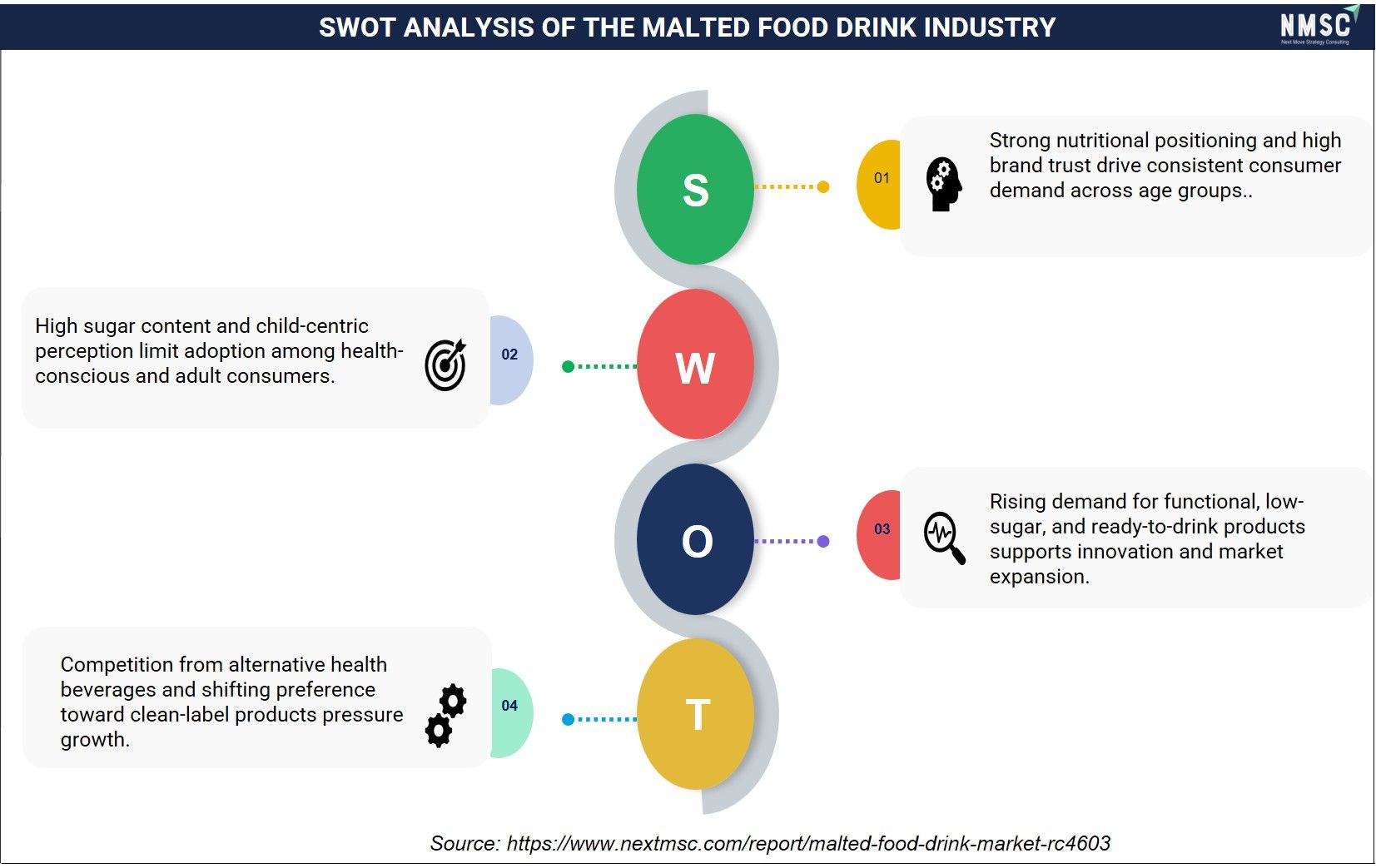
Our analysis indicates that the malted food drink market demonstrates strong brand trust and nutritional positioning, which consistently support consumer demand. However, high sugar content and limited adult appeal act as key constraints. At the same time, increasing demand for functional and low-sugar products creates significant growth opportunities. Additionally, rising competition from alternative health beverages and evolving clean-label preferences intensify market pressure. Overall, the industry balances established strengths with emerging risks, requiring continuous innovation and strategic adaptation.
Competitive Landscape
Competitive Dynamics & M&A Landscape:
|
Key Takeaways |
|
The global malted food drink market is characterized by the presence of large multinational FMCG companies alongside strong regional nutrition-focused players. Major companies such as Nestlé S.A., Hindustan Unilever Limited, Mondelez International, Inc., Associated British Foods plc, and Royal FrieslandCampina N.V. leverage extensive distribution networks, strong brand portfolios, and established consumer trust to maintain leadership, particularly across Asia-Pacific and emerging markets. Meanwhile, regional players including PT Mayora Indah Tbk, Promasidor Holdings Limited, Fraser and Neave, Limited, Zydus Wellness Limited, and Continental Milkose (India) Limited strengthen market competition through localized product offerings and strong regional distribution capabilities. |
|
Based on our assessment, we observed that companies increasingly prioritize product fortification, functional nutrition positioning, and portfolio diversification to cater to evolving consumer preferences across children, adults, and elderly segments. Additionally, the market is witnessing a gradual shift toward low-sugar formulations, clean-label ingredients, and the introduction of ready-to-drink variants, reflecting changing health awareness and convenience-driven consumption patterns. |
|
Furthermore, strategic initiatives such as product innovation, regional expansion, and distribution network strengthening remain central to competitive positioning. Companies are also focusing on affordability and accessibility in price-sensitive markets while simultaneously introducing premium variants to capture higher-value segments. Overall, the competitive landscape reflects a balance between global scale advantages and regional adaptability, with sustained growth driven by nutrition awareness and expanding consumption across emerging economies. |
Which Companies Dominate the Malted Food Drink Industry and How Do They Compete?
Based on our analysis, we observed that the malted food drink market share is dominated by established multinational FMCG companies alongside strong regional manufacturers that collectively shape global consumption patterns. Nestlé S.A., Hindustan Unilever Limited, Mondelez International, Inc., Associated British Foods plc, and Royal FrieslandCampina N.V. consistently lead high-volume markets where brand trust, nutritional credibility, and extensive distribution networks are critical decision factors. From our assessment, we identified that these companies maintain strong household penetration, supported by legacy brands, continuous product upgrades, and deep retail integration across urban and rural channels. Their ability to scale production, optimize pricing, and sustain marketing visibility allows them to defend market share while expanding into adjacent nutrition categories.
Market Dominated by Malted Food Drink Giants and Specialists
From our observation, we found that the competitive landscape is further shaped by regional players such as PT Mayora Indah Tbk, Promasidor Holdings Limited, Fraser and Neave, Limited, Zydus Wellness Limited, and Continental Milkose (India) Limited, which strengthen market penetration through localized strategies. Our analysis shows that these companies focus on adapting taste profiles, nutritional formulations, and pricing structures to suit regional preferences and income levels. They leverage strong distributor networks, local sourcing advantages, and targeted marketing campaigns to build brand loyalty. In practice, these players play a critical role in expanding category reach, particularly in semi-urban and rural markets where affordability, availability, and cultural alignment significantly influence consumption patterns.
Innovation and Adaptability Drive Market Success
Innovation remains a key determinant of competitive advantage in the malted food drink market, as identified through our evaluation of product portfolios and recent market developments. Based on our assessment, we observed that companies actively invest in nutritional fortification, incorporating vitamins, minerals, and functional ingredients to enhance product value across different age groups. Additionally, manufacturers are introducing low-sugar and sugar-free variants to address rising health concerns, while clean-label positioning is gaining importance among urban consumers. Expansion into ready-to-drink formats and convenient packaging further supports on-the-go consumption trends. These innovations reflect a shift toward functional nutrition and lifestyle-oriented products, enabling companies to differentiate their offerings and strengthen long-term consumer engagement across diverse demographic segments.
Market Players to Opt for Merger & Acquisition Strategies to Expand Their Presence
Based on our research, we identified that companies prioritize strategic expansion and portfolio diversification to strengthen competitive positioning and capture growth opportunities. Market players expand geographic presence through distribution networks, particularly in Asia-Pacific and Africa, while balancing affordability-driven offerings with premium product launches. Investments in branding, digital marketing, and retail partnerships further enhance visibility and accessibility. In line with this, in August 2025, Zydus Wellness Limited acquired UK-based Comfort Click Ltd for approximately USD 321 million, entering the UK and EU vitamins, minerals, and supplements market This reflects a broader shift toward adjacent nutrition categories, enabling companies to strengthen portfolios, expand reach, and sustain long-term growth.
List of Key Malted Food Drink Companies
-
Nestlé S.A.
-
Hindustan Unilever Limited
-
Mondelez International, Inc.
-
Associated British Foods plc
-
Royal Friesland Campina N.V.
-
PT Mayora Indah Tbk
-
Promasidor Holdings Limited
-
Fraser and Neave, Limited
-
Zydus Wellness Limited
-
Continental Milkose (India) Limited
What Are the Latest Key Industry Developments?
-
February 2026 – Fraser and Neave, Limited (F&N) submitted a USD 3.76 million bid to acquire a soft drink plant from Chuong Duong Beverage JSC in Vietnam. This follows F&N’s late-2025 move where it spent USD 228 million to increase its stake in the Vietnamese dairy giant Vinamilk to approximately 4.6%.
-
February 2026 – Zydus Wellness Limited initiated a major strategic "reframing" of the Complan brand. This includes a series of new product introductions (NPIs) aimed at contemporary nutritional needs and a new high-profile celebrity partnership with 14-year-old cricket prodigy Vaibhav Suryavanshi to capture the younger demographic.
What Are the Key Factors Influencing Investment Analysis & Opportunities in the Malted Food Drink Market?
Investment analysis in the malted food drink market is increasingly shaped by a shift toward nutrition-focused product innovation, brand expansion, and distribution-led growth strategies rather than purely volume-driven expansion. Based on our evaluation of recent investments, partnerships, and portfolio developments, we observed that companies prioritize capital allocation toward product fortification, low-sugar formulations, and functional nutrition positioning to align with evolving consumer preferences. Nestlé S.A., Hindustan Unilever Limited, and Mondelez International, Inc. demonstrate continued investments in expanding their nutrition portfolios and strengthening brand equity across high-growth markets. Investments are also directed toward improving manufacturing efficiency, optimizing supply chains, and enhancing packaging innovations to support scalability and cost competitiveness.
Moreover, investment concentration is observed around expanding presence in emerging markets such as Asia-Pacific and Africa, where demand for affordable and fortified nutrition remains strong. Regional players such as PT Mayora Indah Tbk and Promasidor Holdings Limited increasingly attract strategic investments aimed at strengthening local distribution networks and product accessibility. Strategic partnerships with distributors, retailers, and healthcare-focused channels further support market penetration and brand visibility. For investors, the most compelling opportunities emerge in companies that combine strong brand recognition, localized product strategies, and scalable distribution capabilities, supported by continuous innovation in functional and convenience-driven malted beverage offerings.
Key Benefits for Stakeholders:
Next Move Strategy Consulting (NMSC) presents a comprehensive analysis of the market, covering historical developments from 2020 to 2025 and providing forward-looking forecasts through 2035. Our study evaluates the malted food drink market trends at global, regional, and country levels, delivering quantitative outlooks alongside qualitative insights into key growth drivers, consumption patterns, product innovation, and investment trends across all major segments. Based on our assessment, we identified that demand is influenced by rising nutrition awareness, evolving dietary preferences, and increasing adoption of fortified beverages across diverse consumer groups, including children, adults, and the elderly. The analysis further highlights the role of product diversification, distribution expansion, and pricing strategies in shaping market dynamics across developed and emerging economies.
From our observation, we found that the malted food drink industry delivers measurable value to a wide range of stakeholders. Investors benefit from stable demand patterns, strong brand-driven revenue streams, and expansion opportunities in high-growth regions. Manufacturers such as Nestlé S.A., Hindustan Unilever Limited, and Mondelez International, Inc. leverage scale, brand equity, and continuous product innovation to sustain competitive advantage. Distributors and retailers benefit from high product turnover and strong consumer loyalty, while regional players enhance accessibility through localized offerings. By aligning nutritional innovation with affordability and convenience, the market supports sustained value creation and long-term growth across global and emerging markets.
|
Parameters |
Details |
|
Customization Scope |
Free customization (equivalent to up to 80 analyst-working hours) after purchase. Addition or alteration to country, regional & segment scope. |
|
Pricing and Purchase Options |
Avail customized purchase options to meet your exact research needs. |
|
Approach |
In-depth primary and secondary research; proprietary databases; rigorous quality control and validation measures. |
|
Analytical Tools |
Porter's Five Forces, SWOT, value chain, and Harvey ball analysis to assess competitive intensity, stakeholder roles, and relative impact of key factors. |
Malted Food Drink Market Key Segments
By Product Form
-
Powder
-
Instant Powder
-
Regular Powder
-
-
Ready to Drink
-
Shelf-Stable RTD
-
Chilled RTD
-
-
Concentrate
-
Liquid Concentrate
-
Syrup Concentrate
-
-
Other Finished Forms
By Pack Size
-
Single Serve
-
Multi Serve
-
Bulk
By Packaging Format
-
Sachet
-
Pouch
-
Carton
-
Bottle
-
Can
-
Jar
-
Other Format
By Sugar Profile
-
Full Sugar
-
Reduced Sugar
-
No Added Sugar
-
Sugar Free
By Flavor
-
Original Malt
-
Chocolate
-
Vanilla
-
Coffee
-
Caramel
-
Fruit
-
Other Flavors
By Distribution Channel
-
Retail
-
Modern Trade
-
Traditional Trade
-
Pharmacy and Drugstores
-
Online
-
-
Food Service
-
Cafes
-
Restaurants and Hotels
-
Quick-Service Restaurants
-
-
Institutional
-
Schools and Education
-
Healthcare Facilities
-
Corporate Offices
-
Government and Defense
-
-
Vending
Geographical Breakdown
-
North America: U.S., Canada, and Mexico.
-
Europe: UK, Germany, France, Italy, Spain, Sweden, Denmark, Finland, the Netherlands, and the Rest of Europe.
-
Asia Pacific: China, India, Japan, South Korea, Taiwan, Indonesia, Vietnam, Australia, Philippines, Malaysia and the rest of APAC.
-
Middle East & Africa (MEA): Saudi Arabia, UAE, Egypt, Israel, Turkey, Nigeria, South Africa, and the rest of MEA.
-
Latin America: Brazil, Argentina, Chile, Colombia, and the rest of LATAM.
Conclusion & Recommendations
This report provides stakeholders, service providers, investors, and consultants with actionable insights to capitalise on the structural transformation underway in the market. By combining rigorous data-driven analysis with proven strategic frameworks, NMSC’s Malted Food Drink Market Report serves as a critical decision-support resource for navigating an evolving nutrition and beverage landscape. The market is positioned for steady expansion, supported by rising health awareness, increasing demand for fortified and functional beverages, and growing consumption across emerging economies. Key strategic insights highlight the importance of product innovation, including low-sugar formulations, clean-label ingredients, and ready-to-drink formats, as these capabilities enhance consumer appeal and long-term brand loyalty. Leading companies such as Nestlé S.A., Hindustan Unilever Limited, and Mondelez International, Inc. consistently strengthen market positioning through diversified portfolios, strong distribution networks, and continuous investment in nutritional enhancement.
For executives and investors, capturing value requires focusing on high-growth segments such as adult nutrition, premium fortified drinks, and convenient on-the-go formats, while continuing investments in product development, supply chain efficiency, and regional expansion. Expanding presence in high-growth regions, particularly Asia-Pacific and Africa, unlocks new demand pools driven by population growth and increasing disposable income. Strong brand equity, affordability strategies, and localized product offerings further enhance market penetration and consumer engagement, enabling companies to sustain competitive advantage and drive long-term growth across the global malted food drink market.


About the Author
 Saista Faiyaz
— Saista Faiyaz is Research Associate at Next Move Strategy Consulting, where she has covered consumer markets and healthcare technologies for 3 years. Her work includes primary interview review, secondary-source validation, market sizing, and structured analysis of company and industry data. She supports research by comparing evidence across sources, organizing findings into market narratives, and documenting assumptions used in analysis. Her scope includes cross-market benchmarking, and reports.
Saista Faiyaz
— Saista Faiyaz is Research Associate at Next Move Strategy Consulting, where she has covered consumer markets and healthcare technologies for 3 years. Her work includes primary interview review, secondary-source validation, market sizing, and structured analysis of company and industry data. She supports research by comparing evidence across sources, organizing findings into market narratives, and documenting assumptions used in analysis. Her scope includes cross-market benchmarking, and reports.
About the Reviewer
 Supradip Baul
— Supradip Baul is an accomplished business consultant and strategist with over a decade of rich experience in market intelligence, strategy, technology, and business transformation. His work has included rigorous qualitative and quantitative analysis across multiple industries, helping clients shape investment decisions and long-term roadmaps. Earlier in his career, he was associated with Gartner, where he contributed to industry-leading reports and market share analyses. He has worked with leading global companies and holds an MBA with a dual specialization in Marketing and Finance.
Supradip Baul
— Supradip Baul is an accomplished business consultant and strategist with over a decade of rich experience in market intelligence, strategy, technology, and business transformation. His work has included rigorous qualitative and quantitative analysis across multiple industries, helping clients shape investment decisions and long-term roadmaps. Earlier in his career, he was associated with Gartner, where he contributed to industry-leading reports and market share analyses. He has worked with leading global companies and holds an MBA with a dual specialization in Marketing and Finance.
At Next Move Strategy Consulting, we understand that insightful market research is the cornerstone of successful business decisions. That's why we employ a robust and multifaceted approach, combining various methodologies to deliver the most accurate and actionable data for our clients.

Research Landscape
We navigate the world of research with two primary approaches:
Qualitative Approach
Our qualitative research methodologies involve immersive techniques such as in-depth interviews, focus groups, and observational studies. By engaging directly with individuals and stakeholders, we uncover valuable insights that quantitative data alone may overlook.

Quantitative Research
In tandem with qualitative methodologies, NMSC leverages the power of Quantitative Research to provide a robust foundation of numerical insights. Through systematic data collection and analysis, we quantify patterns, preferences, and market trends, offering a comprehensive view of the business landscape.
Our quantitative research approach employs diverse tools, including surveys, experiments, and statistical modelling. These methodologies enable us to gather data from a large and representative sample, ensuring the statistical significance of our findings. By employing structured questionnaires and standardized data collection methods, we guarantee the reliability and validity of the information we present to our clients.
Quantitative research is particularly effective in measuring the prevalence of trends, assessing market size, and gauging the impact of various factors on consumer behavior. The numerical precision attained through this approach equips our clients with actionable insights, facilitating data-driven decision-making and strategy formulation.


Our Specialized Toolbox for Industry-Specific Market Research
We deploy a specialized arsenal of techniques tailored to meet your unique requirements. Here's a glimpse into our comprehensive toolbox:

Information Procurement
The stage entails acquiring market data or relevant information through various sources and methodologies.


Market Research Approach
We utilize both top-down and bottom-up approaches in market research analysis to achieve a comprehensive understanding of the market dynamics, leveraging the broad perspective of industry trends and macroeconomic factors alongside detailed insights from specific segments and individual companies.

Porters Five Forces Analysis
We conduct Porter's Five Forces analysis to evaluate the competitive landscape of an industry, providing us with insights into factors that affect profitability and strategic positioning.

SWOT Analysis

Forecasting
We utilize a forecasting model to predict future consumption by considering parameters like population, economics, regulations, market competition, drivers, constraints, technology, and pricing. We also employ statistical techniques such as multilinear regression, exponential smoothing, moving average, ARIMA, and Monte Carlo simulations for accurate predictions. In econometric forecasting, we analyzed short-term and long-term event impacts, attributing values based on regulatory frameworks, economic factors, and market events.





 Speak to Our Analyst