Medical Tourism Market By Procedure (Cardiovascular Treatment, Orthopedic Treatment, and Others), By Provider Type (Multispecialty Hospitals, Specialty Hospitals, Ambulatory Surgical Centers, Specialty Clinics, Diagnostic Imaging Centers, Rehabilitation Facilities, Wellness & Alternative Medicine Centers, and Other Providers), By Payer, By Channel, By Patient Age Group, By Patient Gender, By Patient Flow, and By Length of Stay – Global Market Analysis and Industry Forecast, 2025–2035
Industry: Healthcare | Publishing Date: March 21, 2026 | Last Updated: September 15, 2026 | No of Pages: N/A | No. of Tables: N/A | No. of Figures: N/A | Format: PDF | Report Code: HC4312
Industry Outlook
The global Medical Tourism Market size was valued at USD 82.11 billion in 2025, and is expected to be valued at USD 98.24 billion by the end of 2026. The industry is projected to grow, hitting USD 493.36 billion by 2035, with a CAGR of 19.64% between 2026 and 2035.
Medical Tourism Market Size & Forecast
|
Parameters |
Details |
|
Market Size in 2026 |
USD 98.24 Billion |
|
Revenue Forecast in 2035 |
USD 493.36 Billion |
|
Growth Rate |
CAGR of 19.64% from 2026 to 2035 |
|
Analysis Period |
2025–2035 |
|
Base Year Considered |
2025 |
|
Forecast Period |
2026–2035 |
|
Market Size Estimation |
Billion (USD) |
|
Companies Profiled |
20 |
|
Countries Covered |
33 |
|
Market Share |
Available for 10 companies |
Based on NMSC’s primary research and structured interactions with international hospital administrators and medical travel facilitators, we observed that the global medical tourism market is witnessing steady expansion, driven by widening cost differentials, long domestic waiting times, and improved international accreditation standards. High-demand procedures such as cardiac surgery, oncology treatment, orthopedics, fertility services, and cosmetic interventions continue to anchor patient inflows. Our field-level assessments indicate that internationally accredited hospitals with integrated concierge services, multilingual care teams, and bundled treatment packages are capturing higher referral volumes. While complex surgical procedures dominate revenue contribution, wellness and elective treatments are emerging as high-margin segments.
Moreover, through direct evaluation of cross-border care corridors across Asia-Pacific, the Middle East, Europe, and Latin America, we observed that adoption patterns are shaped by regulatory transparency, insurance portability, physician reputation, and post-treatment continuity mechanisms. Destination countries such as India, Thailand, Turkey, and Mexico compete through accreditation strength, specialist-led centres of excellence, and strategic partnerships with facilitators and hospitality providers. Private hospital groups increasingly invest in digital pre-consultation platforms and tele-follow-up services to enhance patient confidence and outcome visibility. At the same time, bundled pricing models and international payer collaborations are reducing financial uncertainty, strengthening long-term trust and reinforcing the market’s credibility among global patients.
What Are the Key Trends in the Medical Tourism Market?
How Is Digital Pre-Treatment Evaluation Reshaping Cross-Border Patient Acquisition?
Based on our primary research and interviews with healthcare travel facilitators, we observed that digital pre-treatment evaluation has significantly reshaped patient acquisition models within the medical tourism market. In particular, leading destination hospitals are deploying teleconsultation platforms, AI-assisted diagnostic reviews, and secure medical record transfer systems before travel decisions are finalised. From our assessment of cross-border care pathways, we noticed that early-stage virtual triage not only reduces unnecessary travel but also improves procedural suitability for complex interventions such as oncology and cardiac surgery. Moreover, digital transparency around surgeon credentials and outcome benchmarks has further strengthened patient confidence. As interoperability frameworks mature and cross-border documentation becomes more standardized, institutions investing in integrated pre-admission ecosystems are accelerating conversion velocity and reinforcing long-term corridor durability.
How Are Bundled Pricing Models And Outcome Transparency Redefining Competitive Positioning?
Through our evaluation of treatment corridors, we found that bundled pricing structures and outcome transparency are redefining competitive differentiation across the medical tourism market. During discussions with private hospital executives and international patient coordinators, we noticed a decisive shift toward comprehensive care packages covering surgery, hospitalisation, rehabilitation, and accommodation. Notably, institutions publishing clinical performance metrics and surgeon specialisation data are capturing stronger referral momentum. At the same time, structured tele-follow-up programs are enhancing post-discharge continuity and payer alignment. Consequently, providers offering end-to-end procedural visibility are not only improving patient retention but also strengthening repeat referral defensibility across high-volume corridors.
How Is Insurance Portability Influencing Long-Term Scalability?
From our interactions with global insurers and employer-sponsored health programs, we determined that insurance portability is evolving into a structural growth catalyst within the medical tourism market. The market is now progressively integrating into international reimbursement ecosystems. Furthermore, destinations aligned with global payers are demonstrating greater revenue predictability and inflow stability. In parallel, standardised reporting protocols and measurable outcome documentation are improving eligibility for value-based cross-border reimbursement structures. As payer confidence deepens and institutional alignment strengthens, scalable cross-border treatment corridors are becoming more structured, financially resilient, and investment-attractive over the long term.
Ecosystem Analysis of Medical Tourism Market
The image illustrates the key components and workflow of the medical tourism market ecosystem, highlighting their interconnections and operational roles.
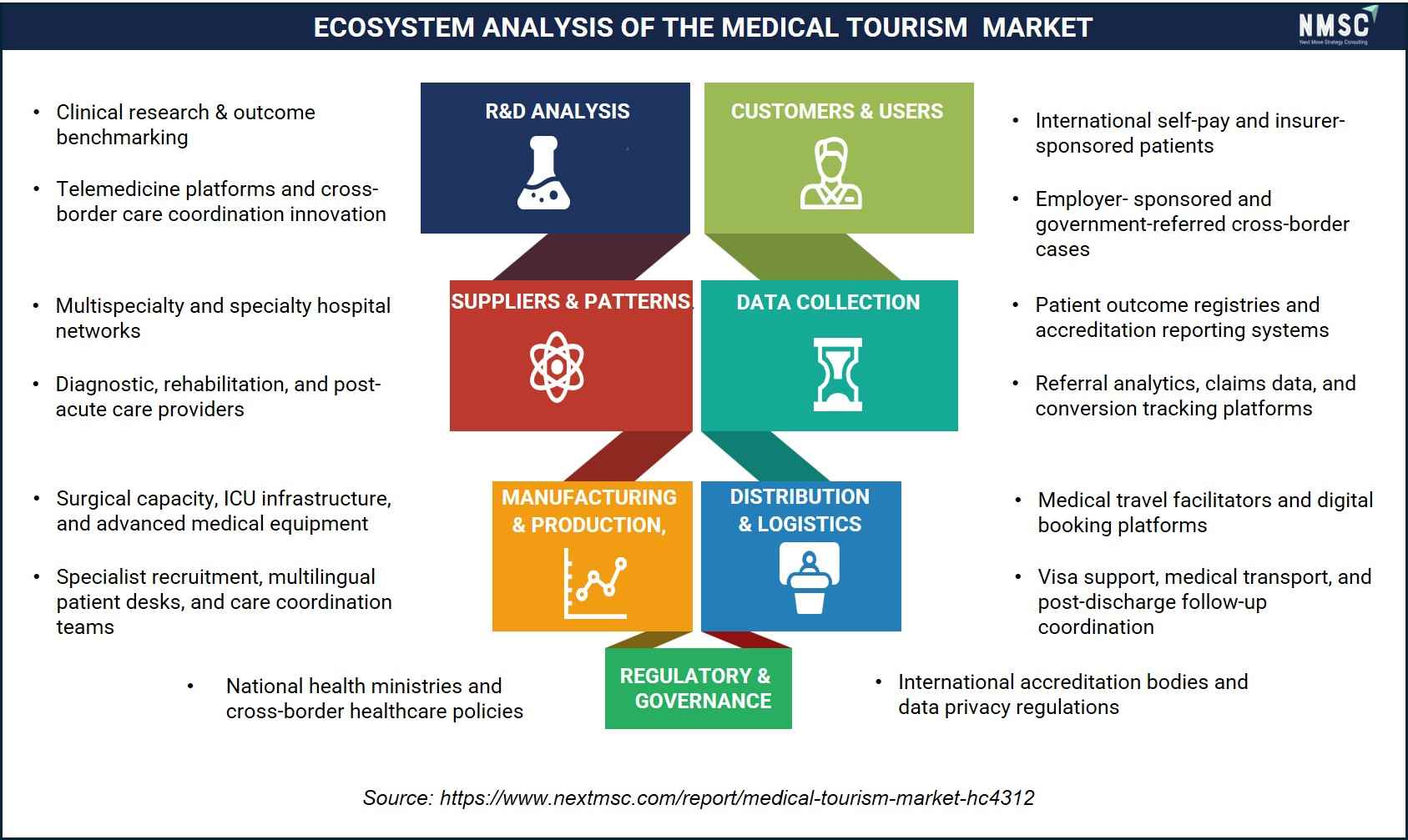
Based on our observations of the medical tourism market ecosystem, we found that the industry functions through a closely connected network of healthcare providers, facilitators, and regulatory bodies enabling seamless cross-border treatment. Our analysis indicates that clinical research, hospital networks, and advanced medical infrastructure strengthen treatment capabilities, while international self-pay, insurer-sponsored, and employer-referred patients drive demand. We also observed that medical travel facilitators, digital booking platforms, and logistics providers coordinate patient mobility and care delivery. At the same time, government health ministries, accreditation bodies, and data governance frameworks ensure quality, transparency, and trust across the ecosystem, supporting the sustainable growth of global cross-border healthcare .
What Are the Key Market Drivers, Breakthroughs, and Investment that Will Shape the Medical Tourism Market Opportunities in the Next Decade?
Growth Catalyst & Risk Assessment Matrix
|
Drivers / Trends / Restraints |
(+/–) % Impact on CAGR Forecast |
Geographic Relevance |
Impact Timeline |
|
Expansion of internationally accredited multi-speciality hospitals offering cost-competitive complex procedures |
+1.1% |
Asia-Pacific (India, Thailand, Malaysia), Turkey, Mexico; growing in Middle East |
Medium term (2–4 years) |
|
Growth of digital pre-treatment consultations, AI-assisted case evaluation, and cross-border telehealth integration |
+0.7% |
North America outbound; Asia-Pacific & Middle East destination hubs |
Short to medium term (1–3 years) |
|
Increasing insurance portability and employer-sponsored cross-border treatment programs |
+0.6% |
North America, Europe outbound corridors; selective Asia-Pacific |
Medium term (2–4 years) |
|
Regulatory fragmentation, medical liability uncertainty, and post-treatment continuity gaps limiting institutional payer confidence |
-0.8% |
Global; strongest in Europe–Asia and US outbound corridors |
Medium term (2–4 years) |
Based on our evaluation of global cross-border healthcare dynamics, we noticed that the medical tourism market is expanding steadily, driven by widening cost differentials, prolonged domestic waiting times, and improving international hospital accreditation standards. Our interactions with private hospital executives indicate that cross-border treatment is increasingly positioned as a structured healthcare alternative rather than an opportunistic cost-saving option. Advancements in digital pre-treatment consultations and bundled pricing transparency further enhanced patient confidence. However, our assessment also revealed that regulatory fragmentation and post-treatment continuity gaps constrain institutional payer participation. At the same time, expanding insurance portability frameworks and value-based cross-border partnerships are creating scalable growth pathways.
Growth Drivers:
How Are Cost Differentials and Long Domestic Waiting Times Accelerating Cross-Border Treatment Adoption?
Based on our interviews with outbound care coordinators, we assessed that significant treatment cost differentials remain the most decisive driver of growth in the medical tourism market. At the same time, prolonged surgical waiting times in public healthcare pathways continue to accelerate outbound movement. From our evaluation of referral corridors across North America, Europe, and Asia-Pacific, we found that patients increasingly prioritise procedural timeliness alongside affordability. Moreover, as cost asymmetries persist and access bottlenecks remain structurally embedded within several high-income systems, outbound mobility continues to demonstrate durable and recurring momentum.
How Is International Accreditation Strengthening Institutional Trust and Referral Flows?
Through our assessment of internationally accredited hospitals and discussions with accreditation consultants, we determined that formal quality certifications materially influence cross-border referral decisions within the medical tourism market. Our field research shows that facilities holding internationally recognised accreditations demonstrated stronger insurer engagement and higher inbound volumes. Structured clinical documentation, standardised infection-control reporting, and transparent surgeon credential disclosure further enhanced institutional trust. Furthermore, as compliance alignment deepens across leading destinations, accredited institutions are strengthening referral defensibility and consolidating their position within high-value treatment corridors. In turn, this institutional reinforcement is enhancing payer confidence and stabilising long-term inflow dynamics.
Growth Inhibitor:
How Are Regulatory Fragmentation and Post-Treatment Continuity Gaps Limiting Market Scalability?
Based on our evaluation, we assessed that regulatory fragmentation remains a structural constraint in the medical tourism market. Variations in malpractice frameworks, reimbursement documentation standards, and liability recognition complicate payer integration. Moreover, inconsistent post-treatment follow-up coordination between destination providers and home-country physicians weakens long-term continuity. These limitations temper insurance portability and institutional payer confidence. Nevertheless, providers investing in tele-follow-up systems, interoperable documentation protocols, and bilateral provider partnerships are gradually mitigating these barriers and strengthening long-term scalability.
Growth Opportunity:
How Is Insurance Portability and Value-Based Cross-Border Collaboration Creating New Medical Tourism Market Growth Avenues?
From our direct engagement with global insurers and TPAs, we identified insurance portability as a major structural opportunity for the medical tourism market. Historically dominated by self-pay patients, the market is progressively integrating into international reimbursement ecosystems. Our analysis shows that destinations aligned with global payers demonstrated more stable patient inflows and predictable revenue streams. Additionally, outcome-linked reimbursement models are gaining strategic consideration across select corridors, reinforcing alignment between clinical performance and financial sustainability. As payer collaboration deepens and reporting standardisation improves, scalable insurance-integrated corridors are emerging as structurally resilient growth pillars. Ultimately, this evolution strengthens revenue predictability and enhances long-term investment confidence across the medical tourism market.
Regulatory Framework Impacting the Medical Tourism Industry
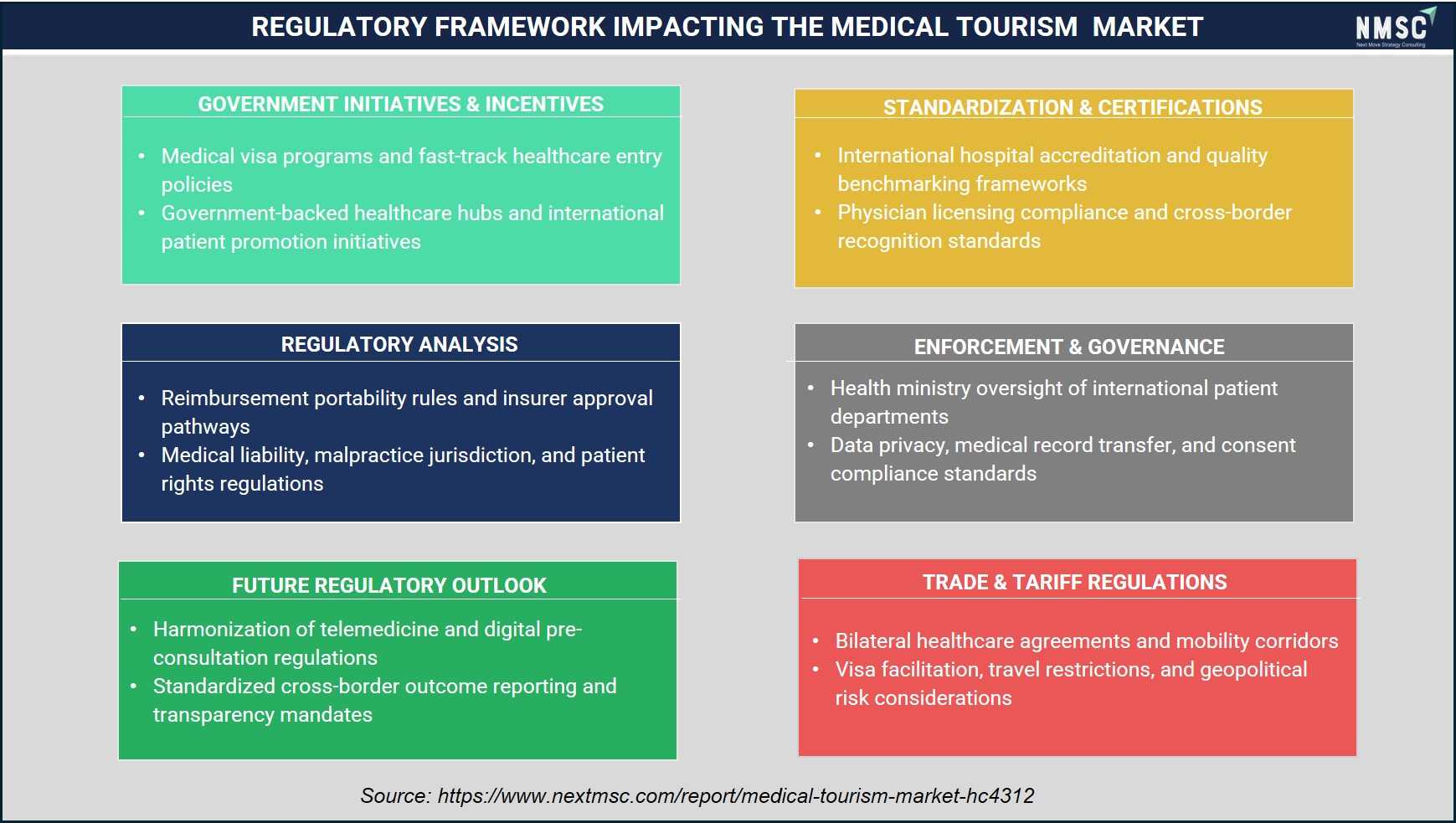
Based on our observations, we found that the medical tourism market is strongly influenced by interconnected regulatory frameworks involving governments, healthcare providers, insurers, and accreditation bodies. Our analysis indicates that medical visa policies, healthcare promotion initiatives, and bilateral health agreements support patient mobility, while hospital accreditation, physician licensing, and compliance standards ensure treatment quality and safety. Additionally, health ministry oversight, reimbursement rules, and data privacy regulations strengthen governance and build trust across the global healthcare servicesecosystem.
How Is the Medical Tourism Industry Segmented in This Report, And What Are the Key Insights from the Segmentation Analysis?
Market Highlights & Strategic Insights – Medical Tourism Market:
|
Segment |
Key Takeaways |
|
Medical Treatment Category |
Cardiovascular and orthopedic procedures lead the medical tourism market, supported by strong surgical expertise and substantial cost differentials in destination countries. Oncology, organ transplantation, and fertility treatments demonstrate sustained high-value demand, while dental, cosmetic, and wellness services continue to generate significant elective volumes. |
|
Patient Age Group |
Adults (18–64) dominate due to mobility and elective demand. Geriatric patients are growing, particularly in cardiac and orthopedic care. Pediatric volumes remain specialised. |
|
Patient Gender |
Female patients hold a slightly higher share, driven by fertility and cosmetic demand. Male patients remain strong in cardiac and orthopedic treatments. |
|
Length of Stay |
Medium stays (4–7 nights) dominate for major procedures. Short stays and outpatient cases are increasing with minimally invasive techniques. Extended stays are linked to complex treatments. |
|
Patient Flow |
International medical tourism leads revenue, driven by cross-border cost arbitrage. Domestic medical tourism is steadily expanding. |
|
Payer Type |
Self-pay patients represent the dominant payer segment, supported by cost arbitrage, while insurance networks and employer-sponsored programs are expanding through structured cross-border treatment agreements. |
|
Healthcare Facility Type |
Multispecialty hospitals lead the medical tourism market due to comprehensive care capabilities, tertiary infrastructure, and international accreditation. Specialty centers and ambulatory surgical facilities are progressively gaining traction in focused treatment corridors. |
|
Intermediary Channel |
Direct hospital booking remains the most common pathway, while medical travel facilitators and online platforms support international patient coordination, referral management, and treatment discovery. |
By Medical Treatment Category Insights
Which Treatment Categories Drive Revenue Concentration in the Medical Tourism Market?
Based on our procedure-level revenue mapping across cross-border corridors, we found that the medical tourism market is segmented into cardiovascular, orthopedic, neurological, oncological, organ transplantation, reproductive medicine, dental, bariatric, plastic & reconstructive, cosmetic & aesthetic, dermatological, gastrointestinal, urology, nephrology, pulmonology, endocrinology, hematology, mental health, rehabilitation, diagnostic, preventive, alternative medicine, and other specialized services.
From our analysis, we found that cardiovascular and orthopedic procedures account for a substantial share of high-value cross-border flows due to cost differentials and surgical waiting-time disparities. Oncology and organ transplantation follow in select corridors where specialist concentration and advanced infrastructure drive inbound mobility. Meanwhile, dental, cosmetic, bariatric, and fertility services demonstrate strong volume intensity due to bundled pricing transparency and faster scheduling cycles. Diagnostic and preventive packages are expanding steadily as short-stay, lower-risk offerings. We found that treatment category selection increasingly correlates with corridor-specific specialization depth rather than generic affordability, reinforcing destination-level competitive clustering.
By Payer Type Insights
How Do Payment Models Influence Corridor Stability in Medical Tourism?
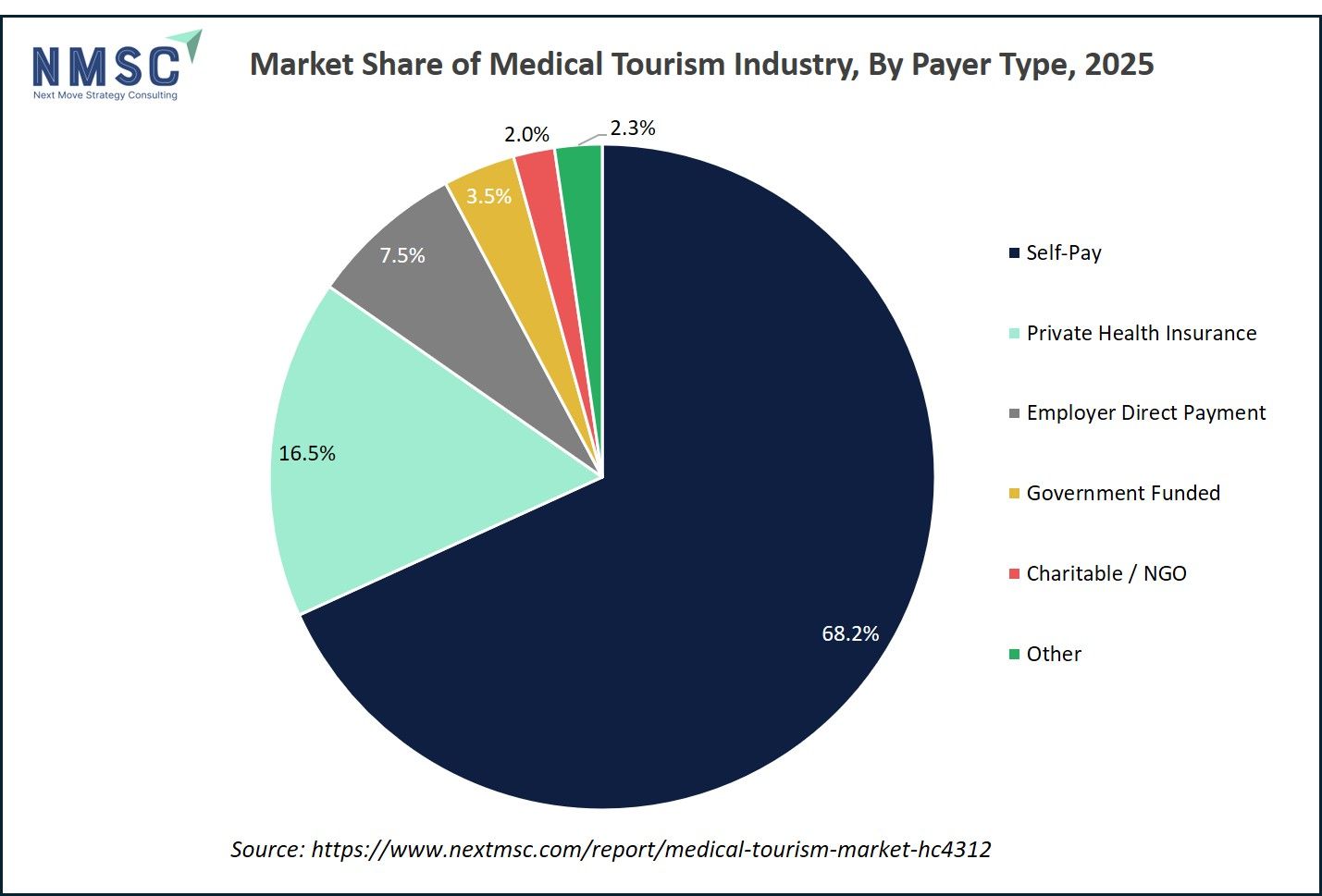
Based on our payer-structure evaluation across inbound and outbound treatment flows, we noticed that the medical tourism market is segmented into self-pay, private insurance, employer direct payment, government-funded, charitable/NGO, and other hybrid models.
Based on our evaluation, we observed that self-pay continues to dominate elective categories within the medical tourism market, including cosmetic, dental, and bariatric services. However, employer direct-payment programs and private insurance-backed cross-border arrangements are expanding in high-cost surgical corridors, particularly cardiac and orthopedic care. Government-funded flows remain selective and typically linked to bilateral agreements or specialized capacity gaps. Payer-backed corridors demonstrate greater referral predictability and longer-term stability compared to discretionary self-funded travel. Consequently, destinations aligning documentation protocols, outcome reporting, and reimbursement coding with insurer standards are strengthening revenue visibility and long-term sustainability.
By Healthcare Facility Type Insights
Which Facility Types Capture the Largest Share of Cross-Border Treatment Demand?
Based on our facility-level deployment assessment across leading medical tourism destinations, we observed that the market is segmented into multispecialty hospitals, specialty hospitals, ambulatory surgical centers, specialty clinics, diagnostic imaging centers, rehabilitation facilities, long-term care facilities, wellness centers, and other healthcare settings.
Our analysis shows that multispecialty tertiary hospitals capture the largest share of complex cross-border interventions in the medical tourism market, particularly across cardiovascular, oncology, and transplant procedures, supported by integrated infrastructure and accreditation depth. Specialty hospitals and focused clinics dominate fertility, cosmetic, dental, and bariatric segments, where procedural concentration enhances efficiency and conversion speed. Ambulatory surgical centers are gaining traction for outpatient and short-stay interventions due to cost optimization and reduced inpatient burden. Facility selection is increasingly shaped by accreditation transparency, complication management capacity, and documented outcomes rather than infrastructure scale alone.
By Intermediary Channel Insights
How Do Referral Channels Shape Patient Conversion in Medical Tourism?
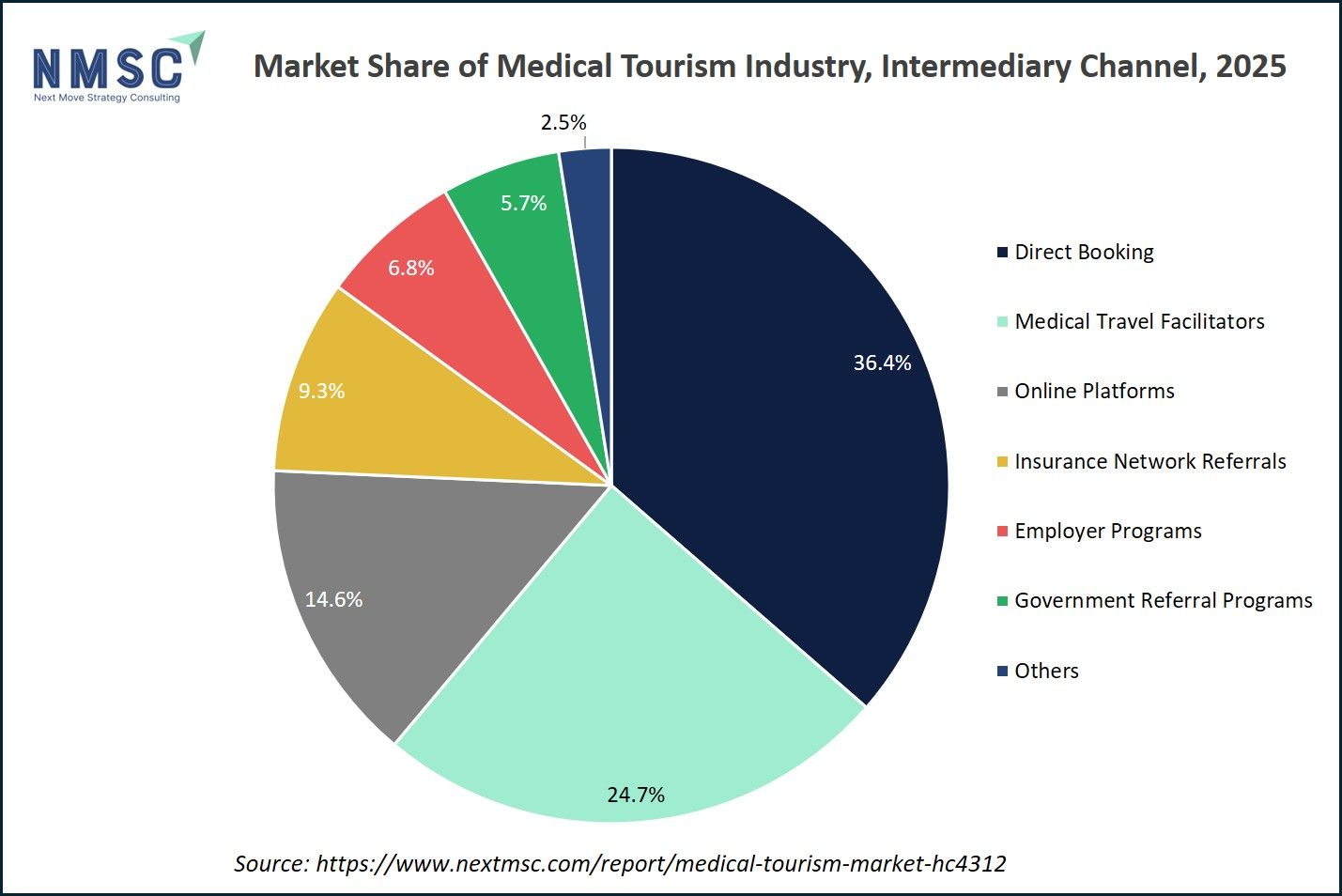
Based on our channel-level mobility tracking across major outbound markets, we assessed that the intermediary channel is segmented into direct booking, medical travel facilitators, online platforms/marketplaces, insurance network referrals, employer programs, government referral programs, and others.
Our assessment indicates that direct booking remains the leading channel in the medical tourism market, particularly for elective procedures such as cosmetic and dental treatments where patients engage directly with hospitals. We analysed that medical travel facilitators play an important coordination role in complex cross-border cases, supporting visa processes and care navigation. Additionally, insurance and employer referrals provide stable conversion through pre-approved treatment pathways, while online platforms mainly support patient discovery, with final decisions relying on hospital credibility and treatment outcomes.
Regional Outlook:
Geographic Performance Snapshot:
|
Geography |
Key Takeaways |
|
North America |
North America represents a major outbound source market, driven by high domestic healthcare costs, elective surgery backlogs, and growing employer-sponsored cross-border treatment programs within the medical tourism market. Patients increasingly seek cardiac, orthopedic, bariatric, and dental procedures in cost-competitive destinations. Rising awareness of internationally accredited hospitals and bundled pricing transparency continues to support outbound treatment flows. |
|
Europe |
Europe demonstrates steady cross-border mobility, supported by intra-EU patient movement and outbound demand from countries experiencing prolonged public healthcare waiting times. Fertility, orthopedic, and dental procedures dominate outbound flows. Regulatory coordination within parts of the EU supports structured reimbursement mechanisms, although variations in coverage policies influence patient decision cycles. |
|
Asia Pacific |
Asia Pacific serves as the primary global destination hub, led by India, Thailand, Malaysia, and South Korea. Competitive procedure pricing, internationally accredited hospital networks, and specialist-driven centers of excellence drive strong inbound volumes. Government-backed medical visa policies and integrated hospitality ecosystems further strengthen the region’s leadership position. |
|
Latin America |
Latin America is emerging as a competitive nearshore destination, particularly for North American patients seeking cosmetic, dental, and bariatric procedures. Geographic proximity, reduced travel costs, and expanding private hospital infrastructure contribute to steady inbound growth, particularly in Mexico, Brazil, and Costa Rica. |
|
Middle East & Africa |
The Middle East, particularly the UAE and Turkey, is positioning itself as a premium medical tourism destination supported by advanced private healthcare infrastructure and government-backed healthcare investment strategies. Select African nations show gradual participation, primarily driven by regional mobility and improving private hospital capabilities. |
The medical tourism market is geographically studied across North America, Europe, Asia Pacific, and the Rest of the World, and each region is further studied across countries.
Medical Tourism Market in North America
We noticed that North America’s market is structurally anchored in cost asymmetry and access friction within domestic healthcare systems. Sustained procedure inflation, specialist bottlenecks, and deductible escalation continue to redirect patients toward overseas treatment pathways. The United States drives the majority of outbound expenditure, while Canada contributes system-delay-driven mobility rooted in public healthcare scheduling constraints. Over time, growing familiarity with internationally accredited hospitals and bundled pricing frameworks has reduced perceived risk in cross-border decision-making. Although reimbursement portability remains fragmented, employer-backed referral channels are steadily converting discretionary travel into structured mobility corridors, reinforcing predictable outbound volume flows and strengthening institutional alignment within the global medical tourism ecosystem.
Medical Tourism Market in the United States
Based on our observations of outbound treatment trends, the United States remains the largest source market for medical tourism in North America, primarily driven by high domestic costs for cardiac, orthopedic, bariatric, and complex dental procedures. We analysed that patients considering treatment abroad increasingly review hospital accreditations, clinical outcomes, physician credentials, and post-treatment follow-up arrangements before making decisions. Employer participation is also gradually increasing, with several self-funded companies partnering with selected international hospitals to manage long-term healthcare expenses. However, legal liability frameworks and regulatory requirements continue to make insurer participation more complex. As a result, international providers offering transparent pricing, credible clinical outcomes, and structured virtual follow-up care are attracting more consistent referral flows from the U.S. market.
Medical Tourism Market in Canada
Canada’s medical tourism outbound flow is driven mainly by long wait times in the public healthcare system rather than treatment costs. Based on our discussions with hospital administrators, we found that delays in orthopedic surgeries, advanced diagnostics, and specialized procedures are pushing patients to seek faster care abroad, especially when waiting affects daily life and mobility. Compared to U.S. patients, Canadians are less price-sensitive and more focused on timely access and clear communication with physicians. International hospitals that provide strong clinical credentials, coordinated discharge planning, and direct doctor-to-doctor communication are seeing more stable and consistent referral flows from Canada.
Medical Tourism Market in Europe
Europe’s positioning within the medical tourism market is defined by a more intricate mobility architecture, functioning simultaneously as a structured outbound source and an intra-regional treatment network. Our evaluation of EU cross-border healthcare directives indicates that patient movement is shaped less by dramatic price differentials and more by procedural access disparities and specialist concentration. Regulatory harmonisation within parts of the EU has formalised mobility channels for planned surgeries; however, authorisation protocols and reimbursement documentation remain uneven across member states, influencing corridor velocity. As a result, destinations that align closely with EU compliance standards and standardized clinical reporting frameworks are better positioned to capture institutional referrals at scale, strengthening payer confidence and reinforcing long-term corridor defensibility across the region.
Medical Tourism Market in the United Kingdom
Outbound medical travel from the United Kingdom is largely driven by long specialist waiting lists rather than elective or price-driven decisions. Based on our interviews with private insurers and cross-border care coordinators, we assessed that ongoing backlogs in orthopedics, bariatrics, fertility treatments, and advanced dental services are encouraging patients to seek care abroad. However, UK patients typically do not choose destinations based on cost alone; they carefully assess hospital accreditation, published clinical outcomes, and clear post-treatment follow-up plans. Despite added paperwork and regulatory steps after Brexit, outbound demand remains steady. International providers that simplify documentation and demonstrate transparent treatment results are securing more consistent referral flows from the UK.
Medical Tourism Market in Germany
Germany’s medical tourism dynamic reflects calibrated selectivity shaped by regulatory discipline and clinical scrutiny. Our discussions with insurance-linked facilitators reveal that outbound mobility remains procedure-specific, concentrated in dental reconstruction, cosmetic surgery, and fertility interventions. German patients apply elevated due diligence standards, placing emphasis on accreditation validity, surgeon specialisation, and longitudinal outcome documentation. Simultaneously, Germany continues to attract inbound cases for complex intra-European treatments, reinforcing its dual-function role within the region. Regulatory rigour and documentation transparency materially influence corridor viability. As a result, providers engaging German outbound segments must compete on measurable quality assurance and structured continuity frameworks, thereby building durable referral insulation rather than transactional volume flows.
Medical Tourism Market in France
France’s medical tourism pattern is influenced both by administrative processes and clinical need. Based on our discussions with cross-border care coordinators and reimbursement advisors, we noticed that patients typically consider treatment abroad when elective procedure wait times combine with limited domestic options for specific services. Fertility treatments, dental rehabilitation, and orthopedic procedures remain the most active categories, although decision timelines are longer due to documentation reviews and reimbursement approvals. French patients place strong emphasis on physician recommendations, visible safety certifications, and structured recovery planning rather than price differences alone. International providers that simplify paperwork and clearly align with reimbursement requirements are achieving more consistent and sustainable referral flows.
Medical Tourism Market in Italy
We noticed that Italy’s cross-border medical travel varies by region due to its decentralised healthcare system and differences in local administration. Our further discussions with regional facilitators reveal that outbound demand increases where appointment delays are longer or where bundled treatment packages abroad offer clear advantages, particularly in dental rehabilitation, fertility care, and elective cosmetic procedures. Northern regions tend to have more organised referral networks compared to other parts of the country. At the same time, Italy continues to attract inbound patients for orthopedic rehabilitation and recovery-focused treatments. International providers that ensure easy access, clear treatment plans, and direct doctor-to-doctor communication are better positioned to maintain steady referral flows.
Medical Tourism Market in Spain
Spain’s outbound medical tourism pattern is shaped less by structural system strain and more by structured cross-border comparison within accessible EU corridors. Bariatric surgery, dental implants, and fertility services consistently anchor evaluation cycles. Spanish patients typically balance administrative clarity and cultural proximity with bundled cost transparency before committing to travel. Furthermore, intra-European accessibility reduces logistical friction, compressing decision timelines when elective scheduling delays extend domestically. While domestic healthcare standards remain robust, conversion patterns show that clearly sequenced documentation pathways and transparent post-treatment planning determine final destination selection. Providers that simplify administrative onboarding and demonstrate recovery continuity are therefore achieving stronger corridor conversion stability and repeat referral efficiency within the Spanish outbound segment.
Medical Tourism Market in the Nordics
The medical tourism market in the Nordic region reflects calibrated clinical necessity rather than discretionary treatment migration. Our engagements with hospital international units across Sweden, Finland, and Norway indicate that cross-border travel typically intensifies when access thresholds for specialised procedures are exceeded. Pricing plays a marginal role in comparison to accreditation depth, digital medical record interoperability, and structured post-operative follow-up assurance. Moreover, public reimbursement eligibility frameworks introduce disciplined evaluation cycles, extending decision horizons but increasing due diligence rigour. Referral sustainability in this region is, therefore, highly contingent on compliance, transparency and longitudinal outcome documentation. Destinations capable of demonstrating data security alignment and institutional reporting credibility are strengthening durable corridor positioning rather than competing for short-term outbound volume spikes.
Medical Tourism Market in the Asia-Pacific
Based on our observations of regional treatment flows, we found that Asia-Pacific remains a leading region in the medical tourism market, supported by competitive pricing, a strong healthcare ecosystem, and a high concentration of medical specialists. We analysed that several destinations in the region combine healthcare services with hospitality support and relatively streamlined visa processes, making travel easier for international patients. The use of bundled treatment packages and multilingual case management has also helped simplify the patient journey and improve conversion rates. Although development levels vary across countries, the region benefits from established specialist networks and expanding healthcare infrastructure. Hospitals continuing to invest in international accreditation, digital pre-admission systems, and outcome transparency are gradually strengthening their global competitivenes.
Medical Tourism Market in China
China holds a unique position within the Asia-Pacific medical tourism landscape, balancing selective inbound demand with notable outbound travel. Based on our discussions with oncology centres and diagnostics providers, we found that inbound patients, primarily from within Asia, are attracted by China’s advanced hospital infrastructure and growing specialist expertise. At the same time, Chinese patients travel abroad for certain fertility and highly specialised treatments where regulatory access or international brand reputation offers advantages. Strict regulatory oversight and data governance rules significantly affect cross-border case processing and documentation timelines. International providers seeking to engage Chinese patients must prioritize regulatory compliance, digital platform compatibility, and strong local patient support to ensure steady and sustainable referral flows.
Medical Tourism Market in Japan
Japan’s medical tourism market grows through careful specialization rather than high patient volumes. Based on our insights from hospital international departments and advanced diagnostics centers, inbound demand is focused on complex treatments such as regenerative medicine and precision diagnostics, where clinical reputation and quality standards matter more than cost. Japanese hospitals emphasize strict certification standards, detailed treatment protocols, and long-term outcome tracking, reinforcing a premium healthcare image. Outbound travel from Japan remains limited and typically relates to highly specialized or niche procedures. Cultural alignment and language support play a major role in patient decisions. International providers seeking stable engagement with Japan must focus on structured coordination, transparent documentation, and strong institutional partnerships rather than short-term case acquisition.
Medical Tourism Market in India
India’s position in global medical tourism is driven by its large treatment capacity, strong specialist base, and competitive pricing. Based on our discussions with major tertiary hospital groups and international patient departments, we noticed that cardiac surgery, oncology, orthopedics, and transplant procedures continue to attract steady inflows from Africa, the Middle East, and South Asia. Government-backed medical visa support and established recovery infrastructure further ease patient travel. However, differences in hospital quality and tier positioning affect international payer confidence and repeat referrals. Hospitals that prioritize strong accreditation, transparent pre-arrival case evaluation, and structured tele-follow-up care are building greater trust, making quality assurance not just affordability the key to long-term competitiveness.
Medical Tourism Market in South Korea
Based on our observations of inbound patient flows and provider strategies, we identified that South Korea’s medical tourism growth reflects a structured institutional approach rather than purely organic volume expansion. We evaluated that the country differentiates itself through procedural precision and organized international patient management systems, supported by digital pre-admission screening and multilingual coordination that improve conversion efficiency. At the same time, geopolitical shifts and regulatory adjustments introduce periodic volatility across certain referral corridors. Institutions diversifying referral partnerships and continuing clinical innovation are better positioned to stabilize inbound demand, reinforcing South Korea’s competitiveness through technological capability and structured care delivery frameworks.
Medical Tourism Market in Taiwan
Based on our assessment of regional treatment patterns, we found that Taiwan’s position in the Asia-Pacific medical tourism market is supported by strong healthcare system reliability and rigorous documentation standards. We assessed that inbound medical travel is concentrated in oncology diagnostics and precision surgical procedures, supported by integrated digital medical records that improve treatment continuity. Outbound travel remains relatively limited and specialist-focused, reflecting the strength of domestic healthcare infrastructure. Patient decision-making also shows high scrutiny toward accreditation transparency and institutional credibility, making structured data exchange and coordinated case management important for destinations seeking stable referral relationships.
Medical Tourism Market in Indonesia
Indonesia’s medical travel is largely driven by the need for specialized care rather than lifestyle preference. Based on our discussions with insurance-affiliated facilitators and regional hospital representatives, we observed that patients commonly travel abroad for advanced cardiac treatment, oncology care, and complex orthopedic procedures where domestic expertise is still developing. Although private hospital investment within Indonesia is increasing, confidence gaps in highly specialised treatments continue to sustain outbound flows. Patient decisions are influenced more by trusted referrals, regional familiarity, and established hospital partnerships than by price alone. International providers that offer structured pre-admission reviews, clear procedural documentation, and organised tele-follow-up care are building stronger repeat referral pipelines from Indonesia.
Medical Tourism Market in Australia
Based on our observations of outbound treatment patterns and discussions with healthcare coordinators, we noticed that Australia’s medical tourism activity remains relatively selective, reflecting the strength of its domestic healthcare system. We identified that patients typically consider overseas treatment when elective procedure delays coincide with limited availability of highly specialised services, rather than primarily for cost savings., Due to Australia’s geographic distance, patients tend to carefully evaluate travel logistics and prefer destinations within the Asia-Pacific region. In addition, our discussions with insurers and care coordinators indicate that international hospitals demonstrating recognised accreditation standards and maintaining direct doctor-to-doctor communication tend to receive more consistent referral support.
Medical Tourism Market in Latin America
Latin America’s medical tourism landscape operates on two fronts, which are nearshore inbound demand and targeted outbound travel. Based on our discussions with regional hospital networks and patient facilitators, we observed that Mexico and Brazil attract North American patients for dental, bariatric, and cosmetic procedures, while smaller markets experience outbound flows due to gaps in local specialist availability and infrastructure. Currency fluctuations and regulatory differences affect referral confidence and the speed of patient conversion. However, structured financing options and phased treatment packages are helping to reduce adoption barriers. Hospitals that combine cost-effectiveness with standardised compliance, clear documentation, and coordinated logistics are converting geographic proximity into sustainable referral networks and long-term corridor stability.
Medical Tourism Market in the Middle East & Africa
The Middle East and Africa operate under a two-tiered medical tourism framework. Based on our discussions with regional hospital networks and patient facilitators, we noticed that Gulf states focus on premium inbound demand, supported by advanced hospital infrastructure, specialist recruitment, and government-backed healthcare diversification. In contrast, many African markets are primarily outbound, with patients travelling abroad for oncology, cardiac, and transplant procedures due to domestic capacity gaps. Corridor stability in both regions depends on trusted referrals, endorsement credibility, and efficient visa facilitation. Providers that combine integrated healthcare-hospitality models in the Gulf and structured evaluation with follow-up coordination for African outbound patients are building sustainable and resilient referral networks rather than pursuing short-term volume.
Competitive Landscape
Competitive Dynamics & M&A Landscape:
|
Key Takeaways |
|
The global medical tourism industry is characterized by a combination of large hospital networks and internationally recognized specialty institutions, including IHH Healthcare Berhad, Apollo Hospitals Enterprise Ltd., Aster DM Healthcare, Bangkok Dusit Medical Services, KPJ Healthcare Berhad, Raffles Medical Group, Cleveland Clinic, Mayo Clinic, Bumrungrad International Hospital, and Anadolu Medical Center. These providers leverage specialist depth, internationally recognized accreditations, and dedicated international patient departments to attract cross-border patients seeking complex procedures such as cardiac, orthopedic, oncology, and transplant treatments. |
|
From our assessment of provider strategies, hospitals increasingly prioritize coordinated international patient services, digital pre-treatment consultations, multilingual case management, and bundled treatment packages to improve patient experience and conversion efficiency. Strong clinical outcomes, accreditation transparency, and integrated care pathways have emerged as key differentiators, particularly for patients evaluating treatment options across multiple destinations. |
|
Recent expansion strategies in the medical tourism market reflect growing hospital network consolidation, cross-border partnerships, and collaborations with medical travel facilitators, insurers, and employer healthcare programs. These initiatives improve referral coordination, enhance treatment accessibility, and strengthen long-term patient inflows across major medical tourism corridors. |
Which Companies Dominate the Medical Tourism Industry and How Do They Compete?
Based on our analysis of international patient flows and hospital referral networks, we analysed that the medical tourism market is led by large hospital groups and globally recognized healthcare institutions such as IHH Healthcare Berhad, Apollo Hospitals Enterprise Ltd., Aster DM Healthcare, Bangkok Dusit Medical Services, KPJ Healthcare Berhad, and Raffles Medical Group. We found that these providers attract consistent international patient volumes because they combine multispecialty clinical capabilities with internationally recognized accreditation and dedicated international patient departments. As a result, these networks are frequently selected for complex procedures such as cardiac surgery, oncology care, orthopedic treatment, and organ transplantation, where specialist expertise and structured treatment coordination remain critical decision factors.
Market Dominated by Medical Tourism Giants and Specialists
Based on our observation of cross-border treatment corridors, we identified that the competitive landscape is also shaped by specialized tertiary hospitals such as Bumrungrad International Hospital, Anadolu Medical Center, Seoul National University Hospital, Asan Medical Center, and VM Medical Park. We observed that these institutions differentiate themselves through specialized treatment programs, advanced diagnostics, and coordinated international patient services. In practice, hospitals offering multilingual coordination, bundled treatment packages, and streamlined scheduling processes tend to convert international inquiries more effectively. Alongside these providers, Medanta The Medicity, Narayana Health, and Sunway Healthcare Group have strengthened their market positions through high-volume specialty procedures and cost-efficient surgical programs, supporting demand from both self-pay and referral-driven patients.
Innovation and Adaptability Drive Market Success
Based on our evaluation of facilitator referrals and insurer engagement patterns, we observed that clinical credibility and accreditation standards strongly influence destination selection in medical tourism. Institutions such as Cleveland Clinic, Mayo Clinic, and Mediclinic International are frequently considered for complex treatment due to their recognized clinical outcomes, specialist expertise, and research capabilities. At the same time, we identified that hospitals investing in digital pre-treatment consultations and structured care coordination improve patient confidence during treatment planning. Consequently, providers maintaining transparent outcome reporting and internationally recognized accreditation standards tend to receive stronger consideration from facilitators, insurers, and employer-sponsored healthcare programs.
Market Players to Opt for Merger & Acquisition Strategies to Expand Their Presence
Based on our research into international referral ecosystems, we found that strategic partnerships are increasingly shaping competitive positioning in the medical tourism market. Hospitals are forming collaborations with medical travel facilitators, insurance networks, and employer healthcare programs to strengthen international patient inflows. At the same time, we identified that several providers are expanding their reach through clinical collaborations, specialist exchange programs, and cross-border hospital partnerships. Through these initiatives, hospitals improve referral coordination, treatment planning efficiency, and international patient management, supporting more stable patient flows across key medical tourism corridors.
Pricing Point Analysis of the Medical Tourism Market
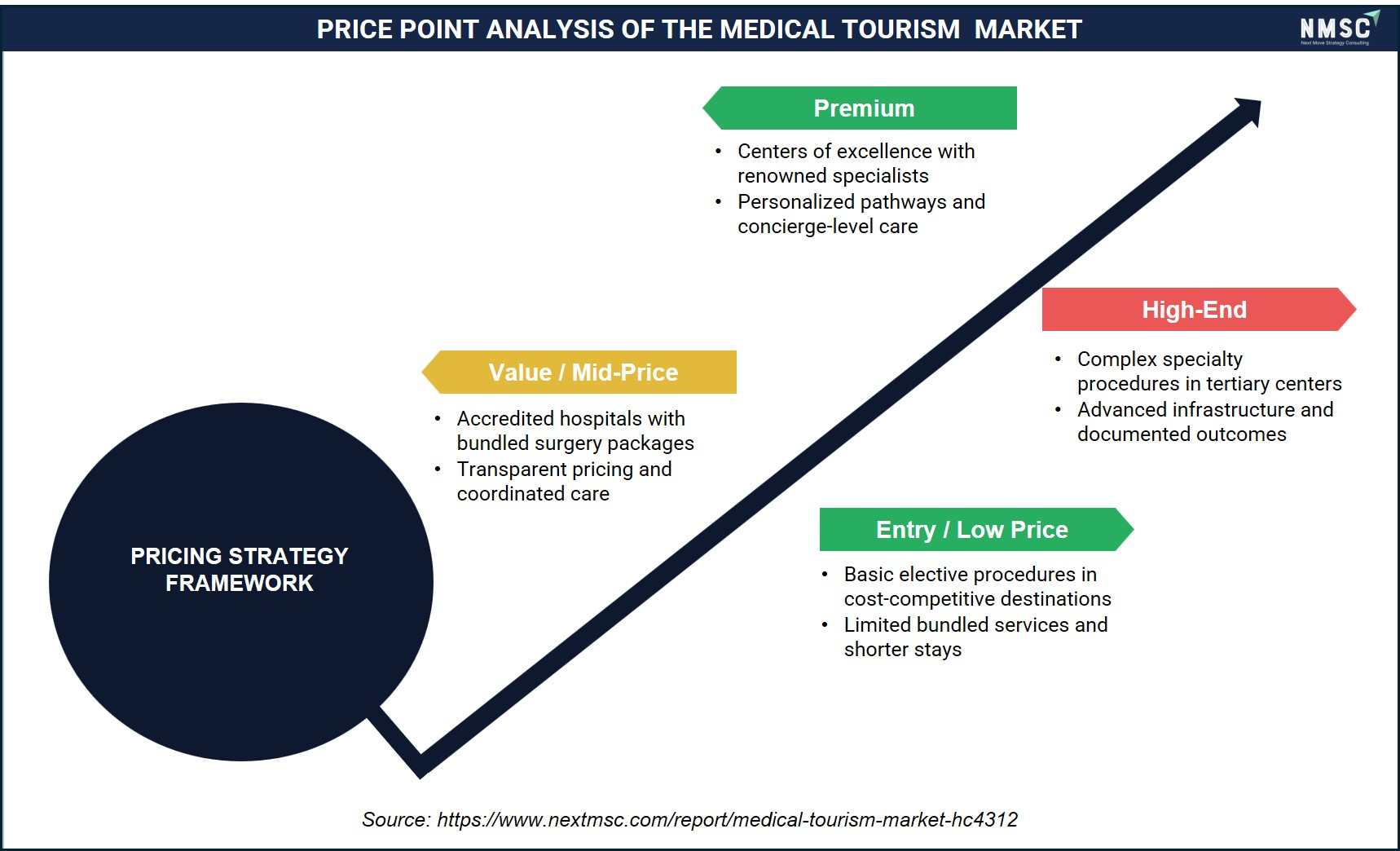
Based on our observation of treatment pricing patterns across medical tourism destinations, we identified that the medical tourism market follows a tiered pricing structure linked to procedure complexity and service quality. Entry-level offerings focus on basic elective procedures in cost-competitive locations, while the mid-price segment includes accredited hospitals providing bundled surgery packages and coordinated care. Higher tiers are associated with advanced specialty procedures, strong clinical infrastructure, and personalized patient management, reflecting the role of expertise, accreditation, and service integration in shaping pricing within the medical tourism market.
List of Key Medical Tourism Companies
-
IHH Healthcare Berhad
-
Bangkok Dusit Medical Services (BDMS)
-
Bumrungrad International Hospital
-
Fresenius SE & Co. KGaA
-
Mayo Clinic
-
Cleveland Clinic
-
Mediclinic International
-
Apollo Hospitals Enterprise Ltd.
-
Max Healthcare Institute Ltd.
-
Aster DM Healthcare
-
MLP Care (VM Medical Park)
-
Raffles Medical Group
-
Asan Medical Center
-
Seoul National University Hospital
-
KPJ Healthcare Berhad
-
Saudi German Health
-
Medanta (Global Health Ltd)
-
NMC Health
-
Sunway Healthcare Group
-
Narayana Health
What Are The Latest Key Industry Developments?
-
February 2026 – IHH Healthcare Malaysia entered into a strategic partnership with the Libyan Government to establish a structured medical referral system. This agreement facilitates the transfer of complex medical cases from Libya to IHH’s specialized facilities in Malaysia, streamlining the journey for international patients requiring advanced care
-
December 2025 – KPJ Healthcare Berhad launched its first Centre of Excellence at Johor Specialist Hospital in collaboration with Mayo Clinic Global Consulting. This development is part of the KPJ Health System initiative, designed to provide world-class clinical expertise and attract high-end medical travelers to the Southern Malaysian corridor.
What Are The Key Factors Influencing Investment Analysis & Opportunities In The Medical Tourism Industry?
Investment activity in the medical tourism market has progressively shifted from infrastructure-heavy expansion toward ecosystem-driven and digitally coordinated care models. Based on our review of cross-border capital flows, partnership announcements, and strategic healthcare alliances, we observed that investors increasingly favour hospital networks and platforms capable of generating recurring inbound referral streams rather than relying solely on episodic self-pay case volumes. Institutions demonstrating structured insurer partnerships, employer-sponsored corridor integration, and digital pre-admission triage capabilities are attracting stronger capital confidence.
We further identified capital concentration around digital coordination platforms, patient navigation technologies, tele-follow-up systems, and interoperability solutions that enhance conversion efficiency across mobility corridors. Strategic investors, including insurer networks, employer benefit managers, and regional healthcare conglomerates, are prioritising ecosystem control and referral stabilisation over standalone facility expansion. From an investment viewpoint, the most compelling opportunities lie in providers that combine clinical specialization with structured referral architecture, measurable reporting standards, and scalable multi-corridor deployment capability, reinforcing long-term revenue durability within the evolving medical mobility landscape.
Key Benefits for Stakeholders:
Next Move Strategy Consulting (NMSC) presents a comprehensive analysis of the medical tourism industry, covering historical developments from 2020 to 2025 and providing forward-looking forecasts through 2035.
The study evaluates the global medical tourism market trends at global, regional, and country levels, delivering quantitative outlooks alongside qualitative intelligence on corridor expansion, payer evolution, regulatory complexity, specialization clustering, and investment direction across major treatment categories.
Our assessment integrates procedure-level demand mapping, referral channel benchmarking, and facility-type differentiation to provide structured insight into mobility flows. In addition to revenue forecasts, the analysis examines adoption barriers, including reimbursement portability constraints, documentation complexity, accreditation variability, and geopolitical sensitivity that influence cross-border case stability across key outbound and inbound corridors.
From our observations, the medical tourism industry generates measurable value across a broad stakeholder base. Investors benefit from scalable referral architectures, recurring payer-aligned inflows, and digital coordination platforms that enhance conversion predictability. Hospital networks capture revenue diversification and international brand positioning through structured international patient departments and high-value speciality corridors. Facilitators, insurers, and employer-sponsored programs gain cost optimisation and patient retention leverage through coordinated cross-border treatment models. By aligning clinical specialisation with structured referral integration and digital care continuity, the market reinforces corridor resilience while supporting long-term revenue durability and institutional competitiveness.
|
Parameters |
Details |
|
Customization Scope |
Free customization (equivalent to up to 80 analyst-working hours) after purchase. Addition or alteration to country, regional & segment scope. |
|
Pricing and Purchase Options |
Avail customized purchase options to meet your exact research needs. |
|
Approach |
In-depth primary and secondary research; proprietary databases; rigorous quality control and validation measures. |
|
Analytical Tools |
Porter's Five Forces, SWOT, value chain, and Harvey ball analysis to assess competitive intensity, stakeholder roles, and relative impact of key factors. |
Medical Tourism Market Key Segments
By Procedure
-
Cardiovascular Procedures
-
Orthopedic Procedures
-
Oncological Procedures
-
Organ Transplantation
-
Bariatric Surgery
-
Cosmetic & Reconstructive Surgery
-
Dental Treatment
-
Infertility & Reproductive Medicine
-
Ophthalmic Procedures
-
Neurology & Neurosurgery
-
Gastroenterology
-
Urology
-
Nephrology
-
Pulmonology
-
Endocrinology & Diabetes Care
-
Hematology
-
Dermatology
-
Mental Health & Substance Use Disorder
-
Diagnostic & Health Checkup
-
Rehabilitation & Post‑Operative Care
-
Other Procedure
By Provider Type
-
Multispecialty Hospital
-
Specialty Hospital
-
Ambulatory Surgical Center
-
Specialty Clinic
-
Diagnostic Imaging Center
-
Rehabilitation Facility
-
Wellness & Alternative Medicine Center
-
Other Provider
By Payer
-
Self-Pay (Out-of-Pocket)
-
Private Health Insurance
-
Employer Direct Payment
-
Government Funded
-
Charitable (NGO)
-
Other Payer
By Channel
-
Direct Booking
-
Physician Referral
-
Medical Travel Facilitator
-
Online Platform
-
Insurance Network Referral
-
Employer Program
-
Government Referral Program
-
Other Channel
By Patient Age Group
-
Pediatric (0–17)
-
Adult (18–64)
-
Senior (65+)
By Patient Gender
-
Male
-
Female
-
Undisclosed
By Patient Flow
-
Domestic Medical Tourism
-
International Medical Tourism
By Length of Stay
-
Day Case (No overnight)
-
Short Stay (1–3 nights)
-
Medium Stay (4–7 nights)
-
Extended Stay (8+ nights)
-
North America: U.S., Canada, and Mexico.
-
Europe: UK, Germany, France, Italy, Spain, Sweden, Denmark, Finland, the Netherlands, and the Rest of Europe.
-
Asia Pacific: China, India, Japan, South Korea, Taiwan, Indonesia, Vietnam, Australia, Philippines, Malaysia and the rest of APAC.
-
Middle East & Africa (MEA): Saudi Arabia, UAE, Egypt, Israel, Turkey, Nigeria, South Africa, and the rest of MEA.
-
Latin America: Brazil, Argentina, Chile, Colombia, and the rest of LATAM.
Conclusion & Recommendations
This report equips stakeholders, industry participants, investors, and consultants with actionable intelligence to capitalize on the structural transformation underway in the medical tourism market. By combining structured corridor-level forecasting with referral benchmarking and payer-aligned analysis, NMSC’s medical tourism industry Report serves as a strategic decision-support resource for navigating an increasingly complex cross-border healthcare environment.
The medical tourism market is positioned for sustained expansion, driven by healthcare cost disparities, specialist wait times, and increasing insurer and employer acceptance of structured cross-border treatment models. Our evaluation indicates a clear shift toward specialisation-led positioning, integrated international patient departments, and outcome transparency frameworks, strengthening payer trust and referral consistency. Institutions prioritising digital triage, accreditation depth, and post-discharge continuity demonstrate superior repeat referral performance and revenue predictability.
For executives and investors, value creation increasingly centres on high-complexity corridors, cardiac, orthopedic, oncology, and transplant services supported by structured insurer and employer partnerships. Investment in multilingual coordination, interoperable medical records, and measurable outcome reporting enhances institutional credibility. Expansion across high-demand hubs in Asia-Pacific, the Middle East, and selective European destinations unlocks incremental growth from both outbound and insurer-backed mobility segments. Ultimately, scalability, clinical differentiation, and disciplined referral architecture define long-term competitiveness within the evolving global medical tourism ecosystem.


About the Author
 Saista Faiyaz
— Saista Faiyaz is Research Associate at Next Move Strategy Consulting, where she has covered consumer markets and healthcare technologies for 3 years. Her work includes primary interview review, secondary-source validation, market sizing, and structured analysis of company and industry data. She supports research by comparing evidence across sources, organizing findings into market narratives, and documenting assumptions used in analysis. Her scope includes cross-market benchmarking, and reports.
Saista Faiyaz
— Saista Faiyaz is Research Associate at Next Move Strategy Consulting, where she has covered consumer markets and healthcare technologies for 3 years. Her work includes primary interview review, secondary-source validation, market sizing, and structured analysis of company and industry data. She supports research by comparing evidence across sources, organizing findings into market narratives, and documenting assumptions used in analysis. Her scope includes cross-market benchmarking, and reports.
About the Reviewer
 Supradip Baul
— Supradip Baul is an accomplished business consultant and strategist with over a decade of rich experience in market intelligence, strategy, technology, and business transformation. His work has included rigorous qualitative and quantitative analysis across multiple industries, helping clients shape investment decisions and long-term roadmaps. Earlier in his career, he was associated with Gartner, where he contributed to industry-leading reports and market share analyses. He has worked with leading global companies and holds an MBA with a dual specialization in Marketing and Finance.
Supradip Baul
— Supradip Baul is an accomplished business consultant and strategist with over a decade of rich experience in market intelligence, strategy, technology, and business transformation. His work has included rigorous qualitative and quantitative analysis across multiple industries, helping clients shape investment decisions and long-term roadmaps. Earlier in his career, he was associated with Gartner, where he contributed to industry-leading reports and market share analyses. He has worked with leading global companies and holds an MBA with a dual specialization in Marketing and Finance.
At Next Move Strategy Consulting, we understand that insightful market research is the cornerstone of successful business decisions. That's why we employ a robust and multifaceted approach, combining various methodologies to deliver the most accurate and actionable data for our clients.

Research Landscape
We navigate the world of research with two primary approaches:
Qualitative Approach
Our qualitative research methodologies involve immersive techniques such as in-depth interviews, focus groups, and observational studies. By engaging directly with individuals and stakeholders, we uncover valuable insights that quantitative data alone may overlook.

Quantitative Research
In tandem with qualitative methodologies, NMSC leverages the power of Quantitative Research to provide a robust foundation of numerical insights. Through systematic data collection and analysis, we quantify patterns, preferences, and market trends, offering a comprehensive view of the business landscape.
Our quantitative research approach employs diverse tools, including surveys, experiments, and statistical modelling. These methodologies enable us to gather data from a large and representative sample, ensuring the statistical significance of our findings. By employing structured questionnaires and standardized data collection methods, we guarantee the reliability and validity of the information we present to our clients.
Quantitative research is particularly effective in measuring the prevalence of trends, assessing market size, and gauging the impact of various factors on consumer behavior. The numerical precision attained through this approach equips our clients with actionable insights, facilitating data-driven decision-making and strategy formulation.


Our Specialized Toolbox for Industry-Specific Market Research
We deploy a specialized arsenal of techniques tailored to meet your unique requirements. Here's a glimpse into our comprehensive toolbox:

Information Procurement
The stage entails acquiring market data or relevant information through various sources and methodologies.


Market Research Approach
We utilize both top-down and bottom-up approaches in market research analysis to achieve a comprehensive understanding of the market dynamics, leveraging the broad perspective of industry trends and macroeconomic factors alongside detailed insights from specific segments and individual companies.

Porters Five Forces Analysis
We conduct Porter's Five Forces analysis to evaluate the competitive landscape of an industry, providing us with insights into factors that affect profitability and strategic positioning.

SWOT Analysis

Forecasting
We utilize a forecasting model to predict future consumption by considering parameters like population, economics, regulations, market competition, drivers, constraints, technology, and pricing. We also employ statistical techniques such as multilinear regression, exponential smoothing, moving average, ARIMA, and Monte Carlo simulations for accurate predictions. In econometric forecasting, we analyzed short-term and long-term event impacts, attributing values based on regulatory frameworks, economic factors, and market events.





 Speak to Our Analyst