Minimally Invasive Surgical Instruments Market by Product Type {Access Instruments (Trocars, Cannulas, and Others), Handheld Instruments (Graspers, Forceps, and Others), By Usage Type (Disposable, Reusable), By Surgical Approach (Laparoscopic, Endoscopic, and Others), By Clinical Application (Gastrointestinal, Cardiovascular, and Others), and By Sales Channel (Direct Sales, Distributors, Group Purchasing Organizations)– Global Analysis & Forecast, 2025–2035
Industry: Healthcare | Publishing Date: June 1, 2026 | Last Updated: June 2, 2026 | No of Pages: N/A | No. of Tables: N/A | No. of Figures: N/A | Format: PDF | Report Code: HC391
Industry Outlook
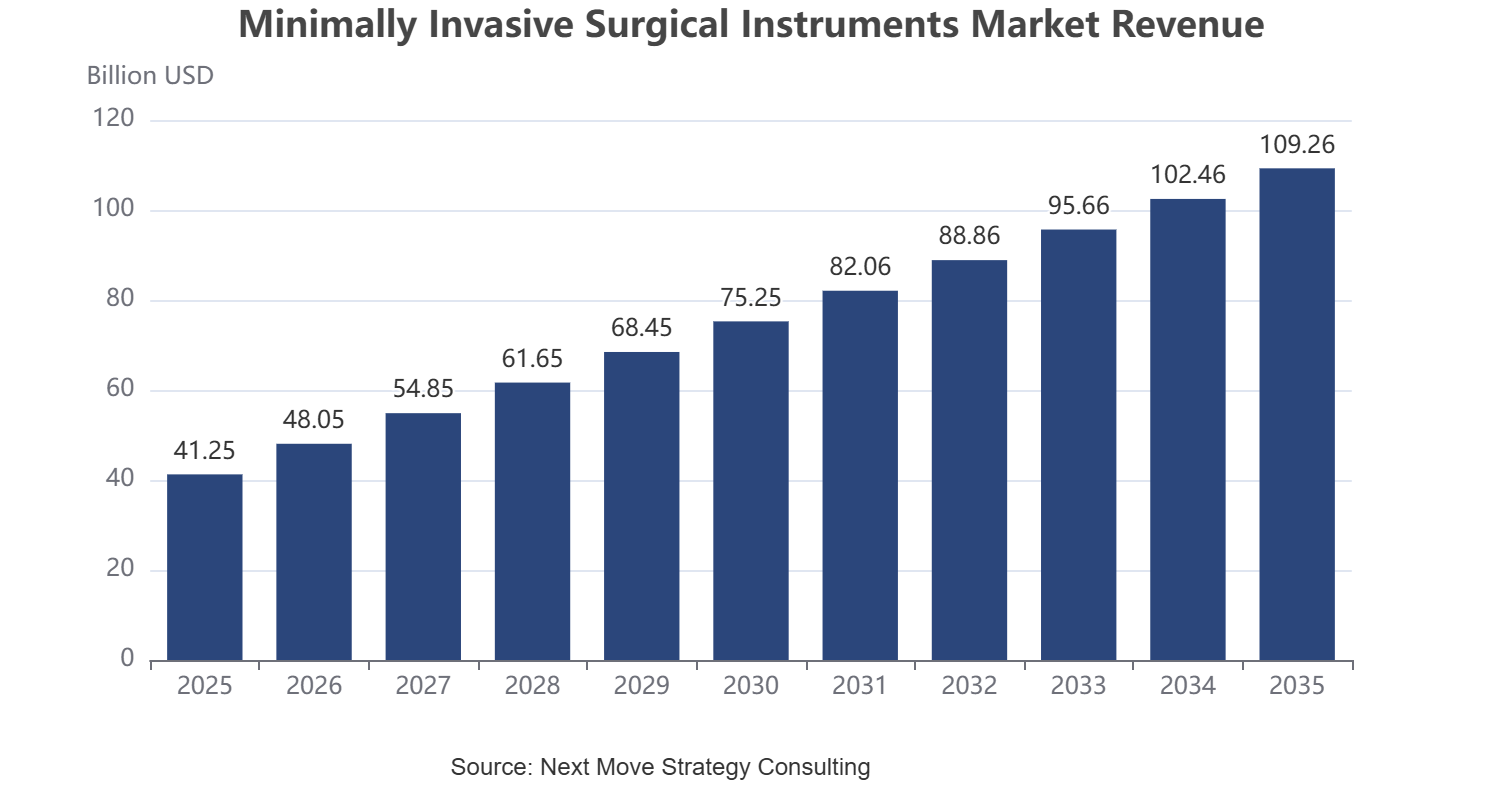
The global Minimally Invasive Surgical Instruments Market size was valued at USD 41.25 billion in 2025 and is expected to be valued at USD 45.47 billion by the end of 2026. The industry is projected to grow, hitting USD 109.26 billion by 2035, with a CAGR of 10.23% between 2026 and 2035.
Minimally Invasive Surgical Instruments Market Size & Forecast
|
Parameters |
Details |
|
Market Size in 2026 |
USD 45.47 Billion |
|
Revenue Forecast in 2035 |
USD 109.26 Billion |
|
Growth Rate |
CAGR of 10.23% from 2026 to 2035 |
|
Analysis Period |
2025–2035 |
|
Base Year Considered |
2025 |
|
Forecast Period |
2026–2035 |
|
Market Size Estimation |
Billion (USD) |
|
Companies Profiled |
20 |
|
Countries Covered |
33 |
|
Market Share |
Available for 10 companies |
Based on NMSC’s market analysis, we observed that the global minimally invasive surgical instruments market is witnessing strong growth, driven by the rising volume of surgical procedures, increasing preference for faster recovery pathways, and continuous advancements in precision-based surgical technologies. Surgeons and healthcare providers increasingly adopt laparoscopic, endoscopic, and robotic-assisted instruments to enhance procedural accuracy, reduce tissue trauma, and improve patient outcomes across specialties such as general surgery, gynecology, urology, and orthopedics. In addition, advancements in energy-based instruments and imaging-integrated surgical technologies are further improving procedural efficiency and supporting greater precision in complex surgical interventions.
Moreover, the growing shift toward outpatient care and cost optimization across healthcare systems continues to strengthen growth in the minimally invasive surgical instruments market. North America accounts for a significant share of the market, supported by advanced healthcare infrastructure and high adoption of robotic-assisted surgical technologies, while Europe demonstrates strong integration of precision-driven surgical procedures. Meanwhile, Asia-Pacific is expected to witness the fastest growth due to expanding healthcare access, rising surgical volumes, and increasing investments in hospital infrastructure. Furthermore, leading companies such as Medtronic, Johnson & Johnson, Stryker Corporation, and Olympus Corporation continue to strengthen their market position through innovation in ergonomic instrument design, energy efficiency, and integration with advanced surgical technologies. At the same time, the market is witnessing a growing shift toward multifunctional and reusable instruments that support both cost optimization and sustainability objectives. In parallel, increasing investments in surgeon training programs and simulation-based learning initiatives are enhancing procedural proficiency and supporting wider adoption of minimally invasive surgical approaches globally.
What Are the Key Trends in the Minimally Invasive Surgical Instruments Market?
How Is Haptic-Integrated Instrumentation Transforming Surgical Precision and Control?
NMSC’s analysis indicates that haptic-integrated instrumentation is redefining how surgeons interact with minimally invasive systems by restoring tactile feedback during procedures. Surgeons and medical device manufacturers increasingly integrate advanced tactile sensors within robotic-assisted and handheld instruments to provide real-time feedback on tissue resistance and texture, directly enhancing intraoperative decision-making. In addition, this sensory augmentation improves depth perception and instrument control, particularly during complex procedures where visual cues alone may limit precision. Our findings suggest that haptic-enabled systems strengthen surgeon confidence, reduce unintended tissue damage, and improve procedural consistency across minimally invasive interventions. As a result, these advancements continue to narrow the gap between open and minimally invasive surgery while supporting wider adoption across precision-driven surgical specialties.
How Is Sustainability Driving the Shift Toward Circular and Modular Surgical Instruments?
Based on our market evaluation, we noticed that sustainability is emerging as a central focus in the design of minimally invasive surgical instruments. Medical device manufacturers and healthcare providers increasingly adopt modular instrument architectures in which reusable handles integrate with precision-engineered and recyclable working ends, significantly reducing single-use medical waste. Moreover, hospitals and ambulatory surgical centers prioritize such systems to align with environmental targets while maintaining procedural efficiency and sterility standards. Our assessment indicates that circular instrument models help optimize cost structures by lowering disposal expenses and extending product lifecycles. Consequently, the transition toward eco-efficient instrument design is supporting sustainability initiatives, improving operational efficiency, and strengthening long-term market competitiveness.
How Is Spectral Imaging Compatibility Enhancing Real-Time Surgical Visualization in the Minimally Invasive Surgical Instruments Market?
Our analysis shows that spectral imaging-compatible instruments are enhancing intraoperative visualization and procedural precision in minimally invasive surgery. Surgeons and healthcare providers increasingly utilize instruments designed with specialized coatings and materials that improve compatibility with fluorescence-guided and multispectral imaging technologies, enabling clearer differentiation of anatomical structures such as blood vessels, lymph nodes, and nerves during procedures. Furthermore, integration with imaging techniques such as indocyanine green (ICG) fluorescence supports improved surgical accuracy and safer tissue dissection in complex interventions. Based on our research, we found that these capabilities help reduce intraoperative uncertainty and improve procedural outcomes across advanced surgical procedures. As a result, the convergence of advanced imaging compatibility and precision instrument design continues to support ongoing innovation in minimally invasive surgical procedures.
Ecosystem Analysis of the Minimally Invasive Surgical Instruments Market
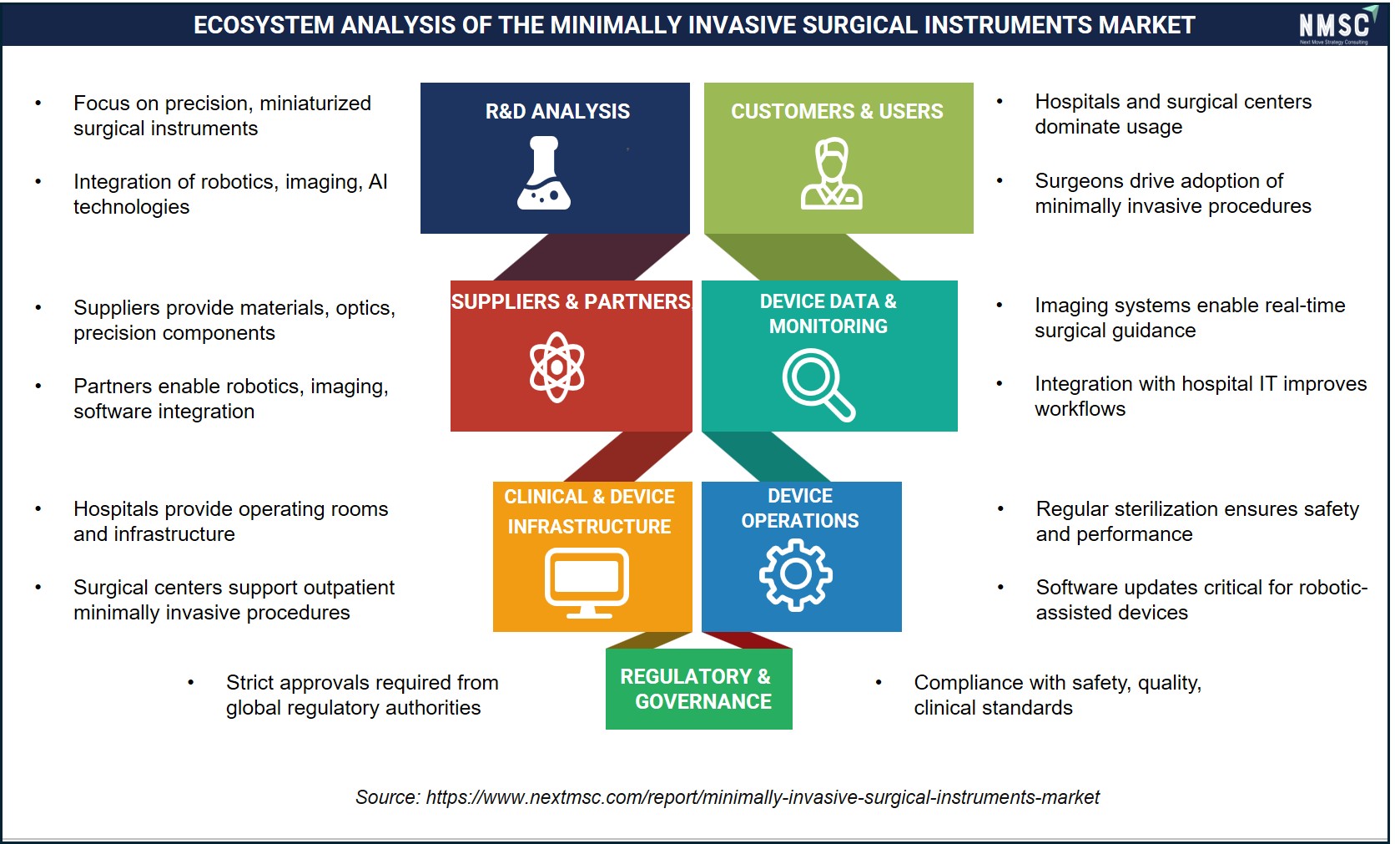
Based on our evaluation of the minimally invasive surgical instruments market ecosystem, we noticed strong interdependence across R&D, clinical infrastructure, and device operations, enabling continuous innovation and efficient deployment. Manufacturers and technology partners drive advancements in precision instruments, while surgeons and healthcare providers ensure clinical adoption and performance validation. Moreover, integrated data monitoring and regulatory frameworks strengthen safety, compliance, and outcome tracking. This coordinated ecosystem enhances operational efficiency, accelerates innovation, and supports scalable, high-quality surgical care delivery.
What Are the Key Market Drivers, Breakthroughs, and Investment Opportunities That Will Shape the Minimally Invasive Surgical Instruments Market in the Next Decade?
Growth Catalyst & Risk Assessment Matrix
|
Drivers / Trends / Restraints |
(+/–) % Impact on CAGR Forecast |
Geographic Relevance |
Impact Timeline |
|
Shift toward ambulatory surgical centers (ASCs) driving demand for portable, cost-efficient minimally invasive instrument kits and high-throughput outpatient procedures |
+1.4% |
North America, Europe, India, Southeast Asia |
Medium term (2–5 years) |
|
Expansion of endo-luminal and natural orifice procedures increasing adoption of ultra-flexible and precision-guided instruments |
+1.2% |
North America, Europe, Japan, South Korea |
Medium to long term (3–7 years) |
|
Advancements in robotic-assisted surgery, high-definition visualization, and energy-based devices enhancing procedural precision and clinical outcomes |
+1.1% |
North America, Europe, China |
Medium term (2–5 years) |
|
Integration of reusable and modular instrument designs improving cost efficiency and supporting sustainability initiatives in healthcare systems |
+0.9% |
Europe, North America, Japan |
Medium to long term (3–6 years) |
|
Surgical skill gap and limited availability of highly trained specialists constraining utilization of advanced minimally invasive and robotic-assisted systems |
–1.1% |
North America, Europe, Emerging Asia |
Short to medium term (1–4 years) |
Based on our evaluation of global surgical practices and technology adoption trends, we observed that the minimally invasive surgical instruments market is experiencing strong growth, driven by rising surgical volumes, increasing preference for faster recovery pathways, and continuous advancements in precision-based surgical technologies. In addition, minimally invasive instruments are increasingly adopted as a standard approach to enhance procedural accuracy, reduce tissue trauma, and improve patient outcomes across multiple specialties. Advancements in high-definition visualization systems, energy-based devices, and robotic-assisted platforms expand instrument capabilities, enabling precise and controlled interventions in complex surgical environments.
We identified that the integration of these technologies strengthens intraoperative efficiency and supports consistent surgical performance across diverse clinical settings. Additionally, the shift toward outpatient care and ambulatory surgical centres reinforces demand for instruments that enable shorter procedures and faster patient turnover. From our evaluation of procurement strategies and clinical usage patterns, we observe that cost pressures and sterilization requirements influence instrument selection, particularly across mid-sized healthcare facilities. At the same time, manufacturers and healthcare providers adopt reusable and modular instrument designs to optimize cost efficiency and reduce medical waste. This evolution in product design and care delivery models strengthens long-term adoption and supports scalable, high-efficiency surgical ecosystems.
Growth Drivers:
How is the Shift Toward Ambulatory Surgical Centres (ASCs) Driving Minimally Invasive Surgical Instruments Market Expansion?
Based on our analysis of healthcare delivery models, we observed that the shift toward ambulatory surgical centres (ASCs) is significantly driving demand in the minimally invasive surgical instruments market. Surgeons and healthcare providers increasingly perform procedures in ASCs to improve patient throughput, reduce hospitalization time, and optimize operational efficiency. According to OECD, 2025, the share of same-day surgeries has increased significantly across developed healthcare systems, with procedures such as cataract surgeries being performed as ambulatory cases in more than 90% of instances in many OECD countries. Moreover, these facilities prioritize compact, portable, and cost-effective instrument sets that function efficiently without the infrastructure of large hospital operating theatres. Through our interactions with ASC administrators and medical device manufacturers, we identified that streamlined instrument kits enhance workflow efficiency and support high-volume surgical environments. This transition toward decentralized care delivery strengthens instrument utilization rates and accelerates market expansion across outpatient surgical settings.
How Is the Expansion of Endo-Luminal Surgery Accelerating Instrument Innovation?
Through our evaluation of evolving surgical techniques, we identified that the expansion of endo-luminal and natural orifice procedures is driving significant innovation in minimally invasive surgical instruments. Surgeons and medical device developers advance the use of ultra-flexible, steerable, and snake-like instruments that navigate through natural anatomical pathways, eliminating the need for external incisions. In January 2026, the FDA approved the initiation of the final stage of the clinical trial (PARADIGM Trial) for the EndoQuest Robotics Endoluminal Surgical (ELS) System. This system is the world’s first designed specifically for robotic-assisted ESD in the rectum and colon, marking a critical transition toward fully robotic natural orifice surgery. Moreover, increasing patient preference for scarless procedures and faster recovery directly influences adoption across gastrointestinal, urological, and pulmonary interventions. Further, these advanced instruments enhance access to hard-to-reach anatomical regions while maintaining procedural precision. This shift toward incision-free surgery strengthens clinical outcomes and drives the next phase of minimally invasive innovation.
Growth Inhibitor:
How Is the Surgical Skill Gap Limiting Adoption of Advanced Minimally Invasive Technologies?
Based on our assessment of clinical adoption patterns, we observed that the growing complexity of advanced minimally invasive and robotic-assisted instruments constrains the pace of market adoption. According to the World Health Organization, there is a projected global shortfall of approximately 11 million health workers by 2030, with significant gaps in surgical workforce capacity and training infrastructure. Moreover, surgeons and healthcare institutions face increasing challenges in acquiring the specialized training, certification, and procedural expertise required to operate next-generation systems effectively. Further, the limited availability of highly skilled surgeons directly impacts utilization rates, particularly for advanced robotic and AI-assisted procedures. Through our interactions with hospitals and surgical training centers, we identified that the gap between technology advancement and workforce readiness creates operational bottlenecks, where installed systems remain underutilised. This constraint increases the dependency on structured training programs and simulation-based learning to align surgical capabilities with technological sophistication. As a result, focused investments in training infrastructure and skill development accelerate adoption readiness and support the effective utilization of advanced surgical systems.
Growth Opportunity:
How Is 3D-Printed Patient-Specific Instrumentation Creating New Minimally Invasive Surgical Instruments Market Growth Opportunities?
From our market evaluations, we determined that 3D-printed, patient-specific surgical instruments are emerging as a transformative opportunity in the minimally invasive surgical instruments market. Medical device manufacturers and healthcare providers utilize advanced imaging data, including CT and MRI scans, to design and produce customized surgical guides and instruments tailored to individual patient anatomy. According to a 2025 peer-reviewed study published in the National Library of Medicine, 3D-printed patient-specific instruments improve surgical precision, reduce operative time, and support better functional outcomes, contributing to increasing adoption across modern surgical procedures. Moreover, this approach enhances surgical precision, reduces intraoperative variability, and improves outcomes in complex procedures such as orthopedic and spinal interventions. Through our interactions with surgeons and additive manufacturing specialists, we found that on-demand production models streamline surgical planning and reduce dependency on standardized instruments. Consequently, the convergence of personalized medicine and advanced manufacturing strengthens procedural accuracy and positions patient-specific instrumentation as a key driver of future market growth.
Porter’s Five Forces Analysis of the Minimally Invasive Surgical Instruments Market
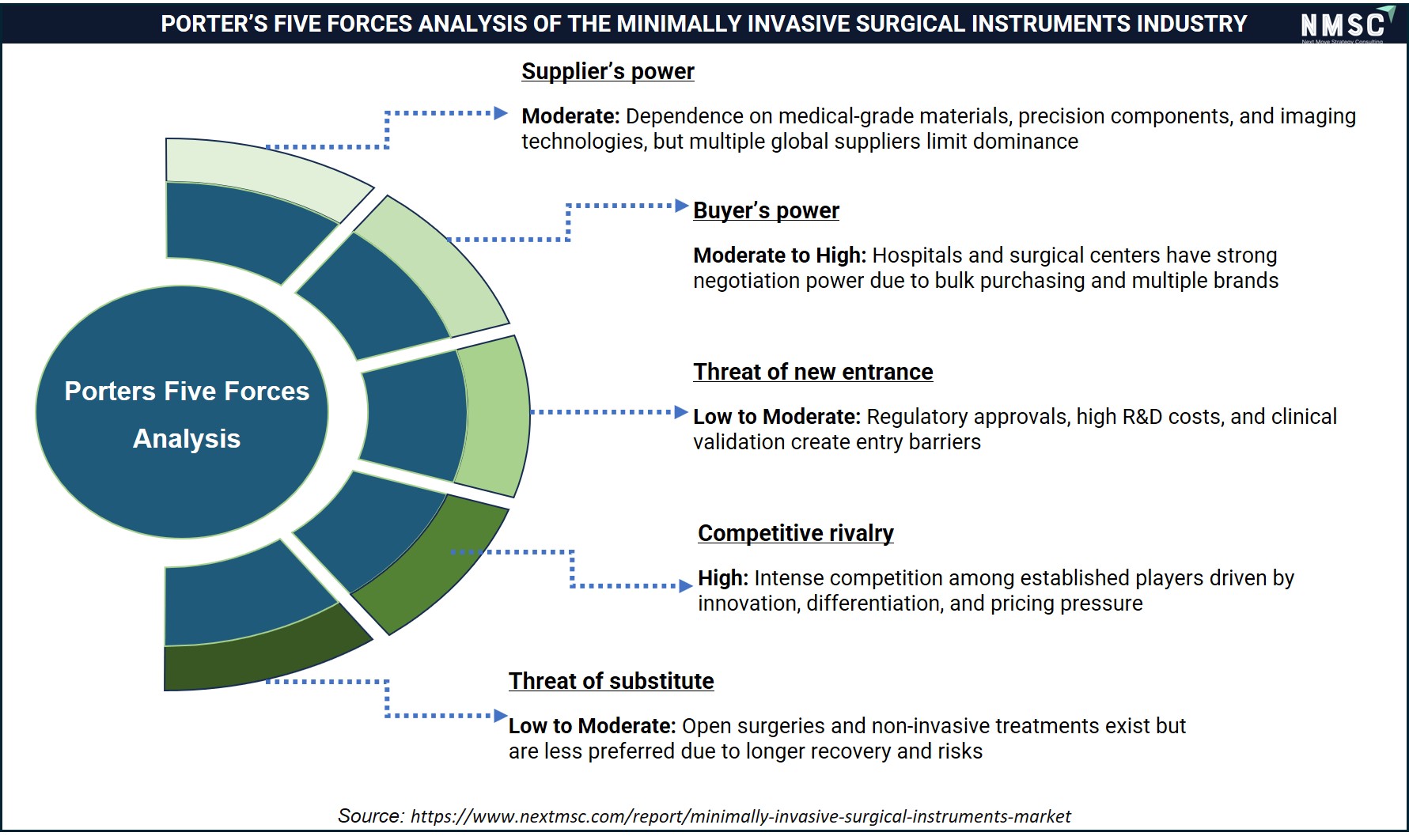
Based on our evaluation of the minimally invasive surgical instruments market, we noticed that competitive intensity remains high due to the strong presence of established medical device manufacturers and continuous innovation in surgical technologies. Buyer power is significant as hospitals and surgical centers prioritize cost efficiency and clinical outcomes, while supplier power remains moderate due to specialized component requirements. Moreover, barriers to entry are high due to regulatory complexity and capital intensity. At the same time, limited substitution risk strengthens long-term market stability and growth.
How Is the Minimally Invasive Surgical Instruments Market Segmented in This Report, And What Are the Key Insights from the Segmentation Analysis?
Market Highlights & Strategic Insights – Minimally Invasive Surgical Instruments Market:
|
Segments |
Key Takeaways |
|
By Product Type |
Handheld instruments dominate the minimally invasive surgical instruments market, driven by their extensive use across all minimally invasive procedures for grasping, cutting, and tissue manipulation. Visualization systems hold a significant share due to their critical role in enabling real-time imaging and procedural accuracy. Energy-based instruments are gaining strong traction with increasing adoption of advanced energy platforms for precision cutting and coagulation, while access instruments remain essential for safe entry and procedural setup. |
|
By Usage Type |
Reusable instruments account for the largest share, supported by cost efficiency and high utilization across hospitals and surgical centers. However, disposable instruments are gaining momentum due to increasing focus on infection control, sterility assurance, and reduced cross-contamination risks in high-volume surgical environments. |
|
By Surgical Approach |
Laparoscopic procedures dominate the market, driven by widespread adoption across general and specialized surgeries. Endoscopic and robotic-assisted approaches are expanding rapidly, supported by advancements in imaging, precision control, and minimally invasive techniques, while arthroscopic and thoracoscopic procedures maintain strong demand in orthopedic and thoracic interventions. |
|
By Clinical Application |
Gastrointestinal applications lead the minimally invasive surgical instruments market, supported by high procedural volumes and broad adoption of minimally invasive techniques. Orthopedic, gynecology, and urology segments also account for significant share due to increasing preference for precision-based procedures, while cardiovascular and neurology applications are gaining traction with advancements in complex minimally invasive interventions. |
|
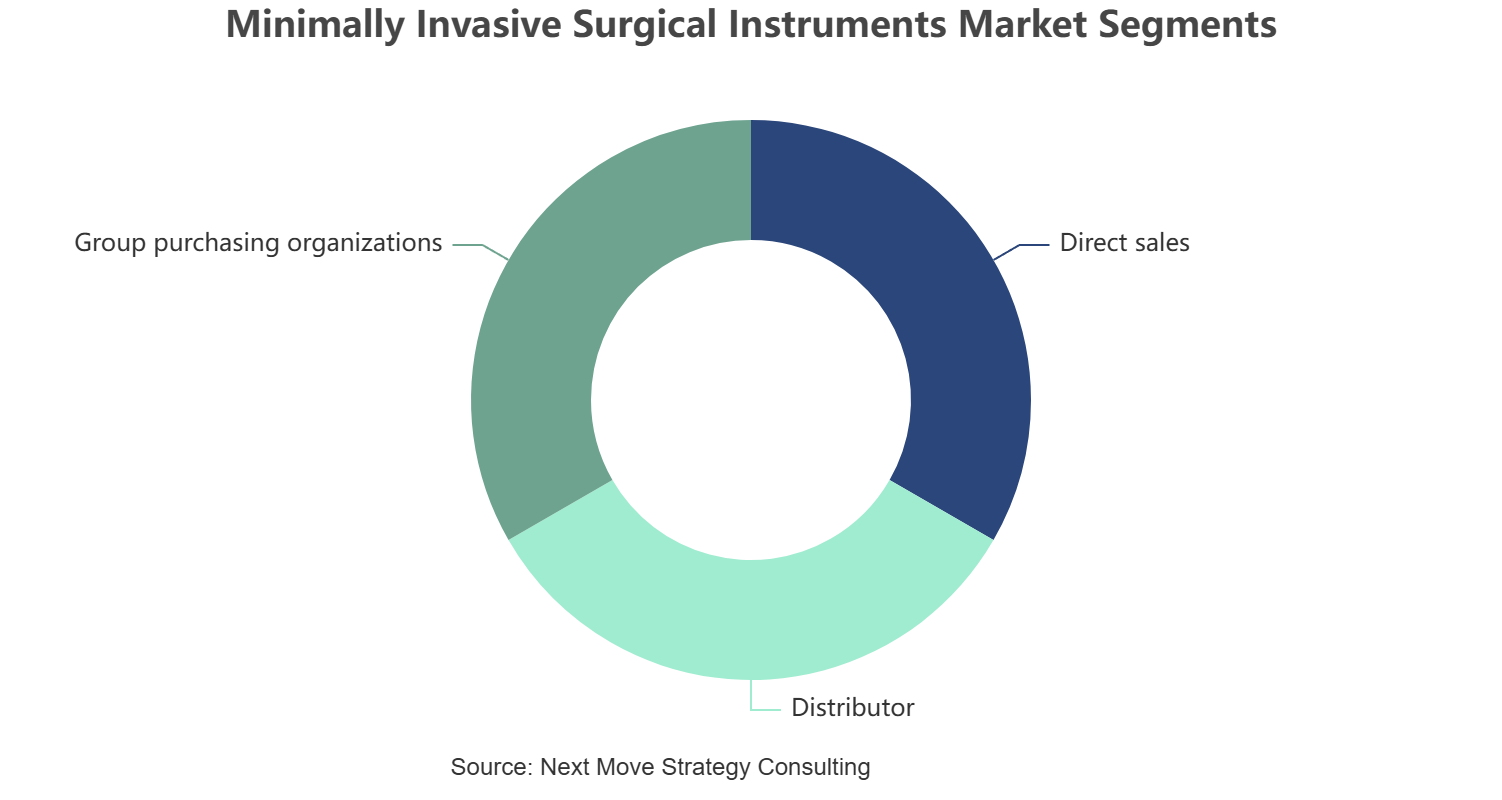
By Sales Channel |
Direct sales dominate the market, driven by strong relationships between manufacturers and large healthcare providers. Distributors play a key role in expanding reach across mid-sized facilities, while group purchasing organizations (GPOs) influence procurement decisions through cost optimization and bulk purchasing strategies. |
By Product Type Insights
Which Product Categories Drive Growth in the Minimally Invasive Surgical Instruments Market?
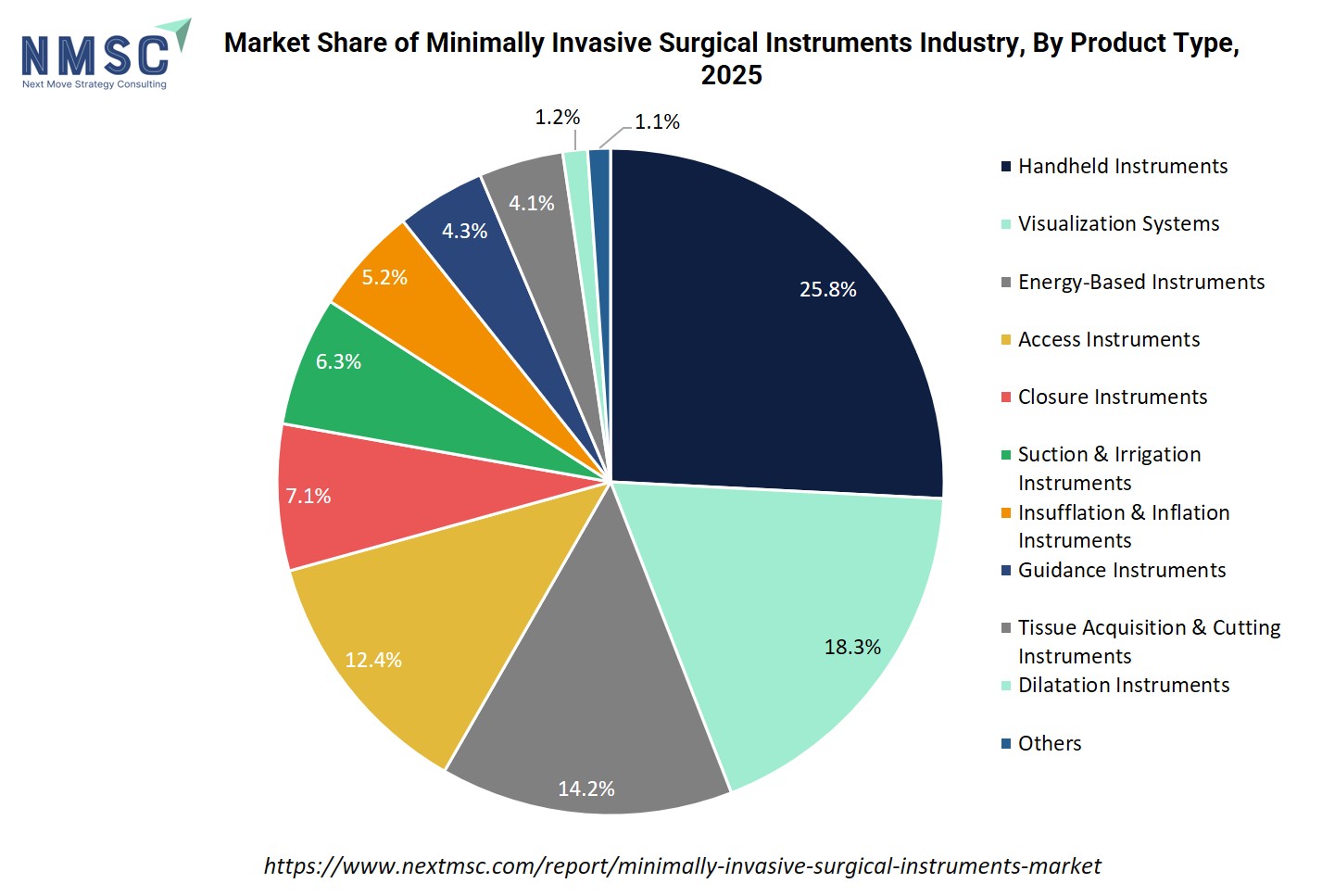
Based on our product-level analysis of minimally invasive surgical instrument utilization, we observed that the minimally invasive surgical instruments market is segmented into access instruments, handheld instruments, closure instruments, energy-based instruments, visualization systems, suction and irrigation instruments, insufflation instruments, dilatation instruments, guidance instruments, tissue acquisition tools, and others.
From our evaluation, we noticed that handheld instruments lead demand due to their essential role across all minimally invasive procedures. Moreover, visualization systems support real-time imaging and enhance procedural accuracy, while energy-based instruments are emerging as a key growth driver due to improved precision and effective bleeding control. In addition, access and insufflation instruments ensure safe entry, cavity creation, and intraoperative stability. Meanwhile, guidance and tissue acquisition tools expand with increasing procedural complexity and specialization. Consequently, the market reflects a strong shift toward integrated, performance-driven instrument ecosystems that improve surgical efficiency and overall clinical outcomes.
By Surgical Approach Insights
How Do Different Surgical Approaches Influence Demand in the Minimally Invasive Surgical Instruments Market?
Based on our analysis of clinical procedure trends, we observed that the minimally invasive surgical instruments market is segmented into laparoscopic, endoscopic, arthroscopic, thoracoscopic, natural orifice, robotic-assisted, and other approaches.
From our assessment of procedural volumes, we found that laparoscopic surgery dominates the market due to its widespread adoption across general, gynecological, and urological procedures. In addition, endoscopic approaches follow, supported by increasing demand for diagnostic and therapeutic interventions with minimal recovery time. Through our interactions with clinical specialists, we identified that robotic-assisted surgery is the fastest-evolving segment, driven by enhanced precision, control, and integration with advanced imaging systems. At the same time, arthroscopic and thoracoscopic procedures maintain consistent demand in orthopedic and thoracic applications, while natural orifice techniques gain traction with increasing preference for scarless outcomes. Consequently, the market is evolving toward advanced, technology-integrated surgical approaches that improve accuracy, reduce invasiveness, and enhance patient recovery.
By End-User Insights
Which End Users Drive Demand in the Minimally Invasive Surgical Instruments Market?
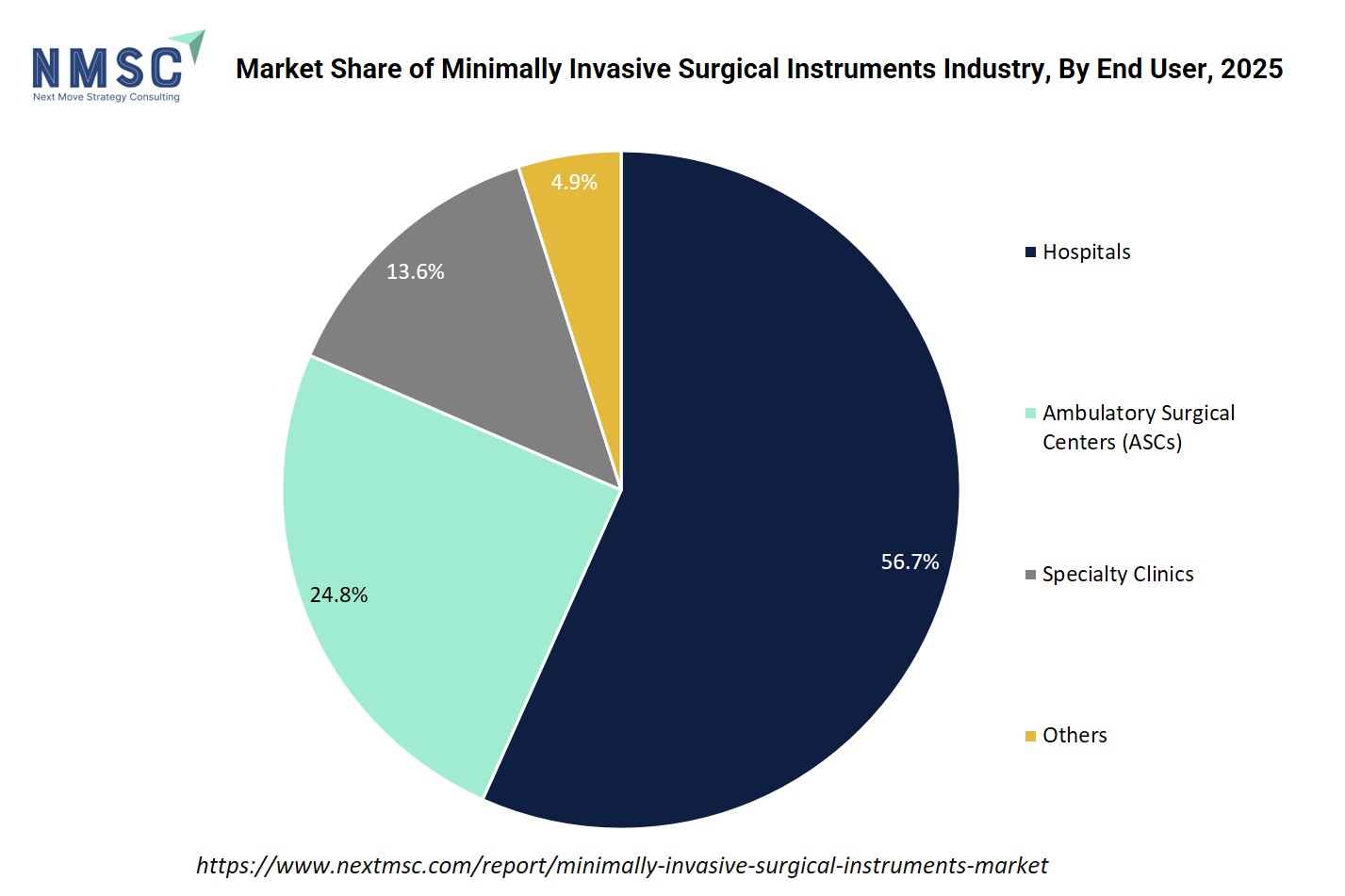
Based on our evaluation of healthcare infrastructure and surgical volumes, we observed that the minimally invasive surgical instruments market is segmented into hospitals, ambulatory surgical centers, specialty clinics, and others.
From our analysis of utilization patterns, we found that hospitals account for the largest share, driven by high procedural volumes, access to advanced surgical technologies, and availability of skilled surgical teams. However, our interactions with healthcare providers indicated that ambulatory surgical centers are witnessing the fastest growth, supported by the shift toward outpatient procedures and cost-efficient care delivery. In addition, specialty clinics contribute significantly in focused areas such as orthopedics and cosmetic surgery, where precision instruments are critical. Furthermore, increasing emphasis on patient throughput and shorter care cycles strengthens adoption across all settings. As a result, the market reflects a clear transition toward decentralized, high-efficiency surgical environments that optimize both clinical and operational performance.
Regional Outlook:
Geographic Performance Snapshot:
|
Geography |
Key Takeaways |
|
North America |
North America represents a technologically advanced minimally invasive surgical instruments market, supported by advanced healthcare infrastructure, high adoption of robotic-assisted surgery, and the strong presence of leading medical device manufacturers. Continuous investments in precision surgical technologies and increasing preference for outpatient procedures continue to support market expansion across the region. |
|
Europe |
Europe demonstrates strong adoption of minimally invasive surgical instruments, driven by stringent regulatory standards, strong emphasis on patient safety, and increasing utilization of minimally invasive procedures across major healthcare systems. Integration of advanced imaging technologies and growing demand for sustainable and reusable surgical instruments further support regional market development. |
|
Asia Pacific |
Asia Pacific represents a rapidly expanding minimally invasive surgical instruments market, supported by rising surgical volumes, expanding healthcare infrastructure, and increasing adoption of advanced surgical technologies across China, Japan, and India. Growing investments in hospital development and demand for cost-efficient surgical solutions continue to accelerate regional market growth. |
|
Latin America |
Latin America demonstrates steady development in minimally invasive surgical instrument adoption, supported by improving healthcare infrastructure, rising awareness regarding minimally invasive procedures, and expansion of private healthcare facilities. Increasing utilization of advanced laparoscopic and endoscopic instruments continues to strengthen regional demand. |
|
Middle East & Africa |
The Middle East & Africa region is witnessing gradual adoption of minimally invasive surgical instruments, driven by improving healthcare access, rising investments in hospital infrastructure, and growing focus on advanced surgical care delivery. Expanding private sector participation and increasing integration of modern surgical technologies continue to support market growth across the region. |
The minimally invasive surgical instruments market is geographically studied across North America, Europe, Asia Pacific, Latin America and Middle East & Africa and each region is further studied across countries.
Minimally Invasive Surgical Instruments Market in North America
North America represents a technologically advanced market for minimally invasive surgery devices, supported by strong clinical adoption, robust healthcare infrastructure, and continuous technological advancement. Through our market assessment, we observed that widespread integration of robotic-assisted surgical technologies and precision-driven instruments across hospitals and ambulatory surgical centres continues to support market expansion across the region. In addition, surgeons and healthcare providers increasingly adopt advanced laparoscopic, endoscopic, and imaging-compatible instruments to enhance procedural accuracy and patient outcomes. Moreover, the growing shift toward outpatient care models and high-volume surgical settings is increasing demand for efficient, reusable, and ergonomically designed instruments. Furthermore, continuous investments in R&D and clinical training programs are supporting technology adoption and long-term market development across North America.
Minimally Invasive Surgical Instruments Market in the United States
The minimally invasive surgical instruments market in the United States demonstrates strong adoption, reflecting high surgical volumes and rapid integration of advanced surgical technologies. Based on our research, we found that demand is supported by increasing utilization of robotic-assisted procedures and growing emphasis on procedural precision and operational efficiency. Additionally, advanced imaging-compatible instruments, energy-based devices, and next-generation laparoscopic tools are widely utilized across multiple surgical specialties, supporting improved clinical outcomes. Moreover, the presence of leading medical device manufacturers and established surgeon training ecosystems continues to strengthen innovation and technology adoption. At the same time, the market is evolving through increasing integration of minimally invasive instruments with robotic-assisted and imaging-guided surgical technologies.
Minimally Invasive Surgical Instruments Market in Canada
Based on our evaluation of clinical practices and healthcare infrastructure, we observed that the minimally invasive surgical instruments market in Canada demonstrates steady and structurally strong growth. Healthcare providers and surgical centers prioritize precision-driven procedures and efficient care delivery, supported by increasing adoption of laparoscopic and endoscopic instruments. We identified that demand is particularly strong across outpatient and specialized surgical facilities, where cost-effective and high-reliability solutions enhance procedural efficiency. Furthermore, ongoing investments in healthcare modernization and surgeon training programs strengthen adoption of advanced surgical technologies. This focus on quality, consistency, and long-term value supports stable utilization and sustained market expansion across Canada.
Minimally Invasive Surgical Instruments Market in Europe
Europe represents a technologically advanced and quality-focused market for robotic-assisted surgery tools, supported by increasing adoption of laparoscopic and robotic-assisted procedures across major healthcare systems. Our analysis indicates that rising surgical volumes, growing preference for minimally invasive interventions, and integration of advanced imaging-compatible instruments continue to support market expansion across the region. Furthermore, healthcare systems across Europe emphasize patient safety, procedural reliability, and clinically validated technologies, influencing procurement strategies and instrument selection. In addition, increasing demand for reusable and sustainable surgical instruments is encouraging adoption of cost-efficient and environmentally focused solutions. Meanwhile, countries across Northern and Western Europe demonstrate strong integration of advanced minimally invasive technologies, while Southern Europe continues to witness rising demand for cost-effective surgical instruments.
Minimally Invasive Surgical Instruments Market in the United Kingdom
The minimally invasive surgical instruments market in the United Kingdom is driven by increasing preference for minimally invasive procedures and growing focus on improving surgical efficiency across healthcare facilities. Through our market assessment, we observed that hospitals and surgical centres are increasingly adopting laparoscopic and robotic-assisted surgical techniques to reduce patient recovery time and improve procedural outcomes. In addition, rising utilization of outpatient surgical procedures is supporting demand for advanced minimally invasive instruments that enhance precision and operational efficiency. Moreover, growing investments in surgical modernization and clinician training programs continue to strengthen adoption of advanced surgical technologies across the country.
Minimally Invasive Surgical Instruments Market in Germany
Based on our analysis, we identified that Germany represents a technologically advanced market for minimally invasive surgical instruments, driven by increasing adoption of precision-based surgical procedures and growing utilization of advanced surgical technologies across healthcare facilities. Moreover, hospitals and surgical centres are increasingly integrating laparoscopic, endoscopic, and robotic-assisted instruments to improve procedural accuracy and surgical efficiency. In addition, rising demand for minimally invasive procedures across specialties such as general surgery, orthopedics, and urology continues to support utilization of advanced surgical instruments. Moreover, healthcare providers increasingly prioritize high-performance and durable instruments that support long-term clinical usage and operational efficiency. Furthermore, ongoing technological advancements and increasing focus on surgical workflow optimization continue to strengthen adoption of minimally invasive surgical technologies across Germany.
Minimally Invasive Surgical Instruments Market in France
France represents an evolving market for minimally invasive surgical instruments, supported by increasing preference for minimally invasive procedures and growing focus on improving procedural efficiency across healthcare facilities. Our analysis indicates that hospitals are increasingly adopting advanced laparoscopic and imaging-compatible instruments to improve surgical precision and patient outcomes across multiple specialties. Moreover, rising utilization of energy-based surgical devices and minimally invasive techniques continues to support demand for advanced surgical instruments in the country. In addition, increasing investments in healthcare modernization and surgical infrastructure development are contributing to broader adoption of minimally invasive surgical technologies. Furthermore, growing emphasis on reducing patient recovery time and improving surgical efficiency continues to support market expansion across France.
Minimally Invasive Surgical Instruments Market in Italy
Based on our evaluation of healthcare delivery dynamics, we assessed that Italy’s market is defined by a strong mix of modernization efforts and mid-tier hospital adoption patterns. Surgical centers increasingly integrate minimally invasive instruments to improve throughput and reduce procedural complexity, particularly in regional and secondary care facilities. Unlike larger European markets, demand is shaped by the need to balance cost efficiency with clinical performance. Furthermore, hospitals prioritize adaptable and modular instrument solutions that align with varying infrastructure capabilities. Surgeons focus on practical usability and reliability, particularly in high-frequency procedures. This balance between accessibility and performance creates a distinct adoption model, supporting gradual but widespread penetration of minimally invasive technologies across Italy.
Minimally Invasive Surgical Instruments Market in Spain
The minimally invasive surgical instruments market in Spain is driven by increasing adoption of minimally invasive procedures and growing focus on improving surgical throughput across healthcare facilities. Based on research conducted by NMSC, we found that hospitals and surgical centres are increasingly utilizing laparoscopic and endoscopic instruments to enhance procedural efficiency and reduce patient recovery duration. In addition, rising surgical volumes and increasing demand for cost-efficient surgical solutions continue to support adoption of advanced minimally invasive instruments across the country. Moreover, healthcare providers are increasingly prioritizing scalable and easy-to-integrate surgical technologies that improve workflow efficiency and procedural consistency. Consequently, growing utilization of minimally invasive surgical techniques continues to support market development across Spain.
Minimally Invasive Surgical Instruments Market in the Nordics
In the Nordic region, including Sweden, Finland, and Norway, minimally invasive surgical instruments adoption reflects a highly advanced, quality-focused healthcare environment. Surgeons and healthcare providers emphasize precision, patient safety, and long-term clinical outcomes, driving demand for high-performance laparoscopic and robotic-assisted instruments. From our observations across regional healthcare systems, we found that strong digital maturity and early adoption of advanced surgical technologies support integration of imaging-enabled and data-driven surgical tools. Moreover, hospitals prioritize sustainable and reusable instrument designs, aligning with strict environmental standards and healthcare policies. Procurement decisions strongly favor reliability, ergonomic design, and long-term lifecycle performance. This focus on quality, innovation, and sustainability enables manufacturers offering advanced, compliant, and energy-efficient solutions to secure high-value contracts and long-term partnerships across Nordic healthcare systems.
Minimally Invasive Surgical Instruments Market in Asia-Pacific
Based on our regional evaluation, we observed that Asia-Pacific represents a rapidly expanding market for minimally invasive surgical instruments, driven by rising surgical volumes, expanding healthcare infrastructure, and increasing adoption of advanced surgical procedures across major economies. Through our market assessment, we observed that hospitals and surgical centres across countries such as China, Japan, India, and South Korea are increasingly integrating laparoscopic, endoscopic, and robotic-assisted surgical instruments to improve procedural efficiency and patient outcomes. In addition, growing healthcare investments and increasing focus on expanding access to minimally invasive procedures are supporting utilization of advanced surgical technologies across the region. Moreover, rising preference for shorter hospital stays and faster recovery procedures continues to strengthen demand for minimally invasive surgical instruments. Furthermore, increasing adoption of cost-efficient and reusable surgical instruments is contributing to broader market development across Asia-Pacific.
Minimally Invasive Surgical Instruments Market in China
The minimally invasive surgical instruments market in China is driven by rapidly increasing surgical volumes, expanding hospital infrastructure, and growing adoption of advanced surgical technologies across healthcare facilities. Based on our research, we found that hospitals are increasingly utilizing laparoscopic and endoscopic instruments to improve procedural efficiency and reduce patient recovery time across multiple surgical specialties. In addition, strong domestic manufacturing capabilities and increasing availability of cost-efficient surgical instruments continue to support broader adoption of minimally invasive procedures across the country. Moreover, growing integration of robotic-assisted and imaging-compatible surgical technologies is strengthening utilization of advanced minimally invasive instruments across major hospitals. Furthermore, rising healthcare investments and ongoing modernization of surgical facilities continue to support long-term market development in China.
Minimally Invasive Surgical Instruments Market in Japan
Based on our assessment of clinical practices and healthcare infrastructure, we assessed that Japan demonstrates steady and precision-driven adoption of minimally invasive surgical instruments. Surgeons and healthcare institutions prioritize high-reliability instruments, advanced robotic-assisted systems, and imaging-integrated technologies to ensure consistent surgical outcomes. Aging population dynamics and increasing demand for low-trauma procedures further strengthen adoption across multiple specialties. From our field insights, we identified that hospitals emphasize system performance, safety standards, and long-term service support over cost considerations. Strong clinical training programs and technological integration enable effective utilization of advanced surgical systems. Therefore, Japan demonstrates a highly structured market that prioritizes consistency, safety, and long-term clinical excellence.
Minimally Invasive Surgical Instruments Market in India
India presents a uniquely dual-structured market where cost sensitivity and rising demand for advanced surgical care evolve simultaneously. Based on our interactions with surgeons and hospital operators, we observed that adoption is concentrated in urban centers where private hospitals lead the integration of minimally invasive techniques. Laparoscopic and endoscopic instruments dominate due to their cost-effectiveness, while robotic-assisted systems expand selectively in premium healthcare facilities. Moreover, increasing patient awareness and preference for faster recovery procedures strengthen demand across specialties. Hospitals actively seek solutions that balance affordability with clinical performance, creating strong demand for modular and scalable instruments. This interplay between accessibility and technological advancement positions India as a high-growth, structurally evolving market.
Minimally Invasive Surgical Instruments Market in South Korea
The minimally invasive surgical instruments market in South Korea reflects a highly advanced and technology-driven healthcare environment, characterized by rapid adoption of precision surgical solutions. Through our engagements with surgeons and healthcare institutions, we found that demand is driven by strong integration of robotic-assisted systems, imaging technologies, and digitally enabled surgical platforms. Hospitals actively deploy advanced laparoscopic and endoscopic instruments to enhance procedural accuracy and clinical outcomes. Furthermore, the presence of leading medical technology companies and strong digital infrastructure accelerates innovation and adoption. High procedural volumes in specialized surgical centers support continuous utilization of advanced instruments. Vendors that align with local technology ecosystems and deliver high-performance, integrated solutions achieve strong positioning. This focus on innovation, speed, and precision strengthens South Korea’s role as a leading adopter in the region.
Minimally Invasive Surgical Instruments Market in Taiwan
Based on our assessment of healthcare systems and surgical practices, we evaluated that Taiwan demonstrates strong adoption of minimally invasive surgical instruments, supported by advanced medical infrastructure and high technology affinity. Surgeons and healthcare providers emphasize precision, reliability, and seamless integration of surgical tools within clinical workflows. Demand is particularly strong in high-value procedures across specialties such as orthopedics, gastroenterology, and urology. Moreover, hospitals prioritize instruments that integrate effectively with imaging systems and digital platforms, enhancing procedural efficiency. Pilot programs and phased adoption strategies support validation of clinical outcomes and operational performance. Vendors offering interoperable solutions, localized technical support, and high-reliability instruments achieve stronger market acceptance. This focus on performance, integration, and clinical precision supports steady and sustainable market expansion in Taiwan.
Minimally Invasive Surgical Instruments Market in Indonesia
Indonesia’s market evolution is closely tied to urban healthcare expansion and the increasing need for scalable surgical solutions in high-density population centres. From our regional assessment, we evaluated that adoption is primarily driven by large hospitals seeking to improve surgical efficiency and patient outcomes. Laparoscopic instruments are widely utilized due to their adaptability and ease of deployment across varying facility capabilities. Moreover, healthcare providers prioritize solutions that simplify surgical workflows and reduce operational complexity. Infrastructure variability across regions influences procurement strategies, encouraging demand for flexible and easy-to-integrate instruments. As a result, Indonesia demonstrates steady market expansion supported by urban growth and improving healthcare capabilities
Minimally Invasive Surgical Instruments Market in Australia
In Australia, the minimally invasive surgical instruments market reflects a mature and efficiency-focused healthcare system with strong emphasis on clinical outcomes and operational performance. Through our market engagements with surgeons and hospital systems, we found that demand is driven by high adoption of advanced surgical technologies and increasing preference for minimally invasive procedures. Laparoscopic, endoscopic, and robotic-assisted instruments are widely utilized across major healthcare facilities, supporting precision and consistency in surgical outcomes. Furthermore, high healthcare spending and focus on quality care encourage investment in reliable and high-performance instruments. Buyers prioritize long-term value, system integration, and lifecycle support. Vendors that combine advanced technology with service-driven models achieve strong adoption. This focus on precision, reliability, and efficiency supports sustained market growth across Australia.
Minimally Invasive Surgical Instruments Market in Latin America
The minimally invasive surgical instruments market in Latin America is driven by increasing adoption of minimally invasive procedures and expanding private healthcare infrastructure across major countries in the region. Through our market assessment, we observed that hospitals and surgical centres are increasingly utilizing laparoscopic and endoscopic instruments to improve procedural outcomes and reduce patient recovery duration. In addition, rising awareness regarding the benefits of minimally invasive surgery, including shorter hospital stays and reduced surgical trauma, continues to support demand for advanced surgical instruments. Moreover, growing utilization of minimally invasive techniques across bariatric, gynecological, and general surgical procedures is contributing to broader market adoption. Furthermore, increasing focus on cost-efficient surgical solutions and improving healthcare accessibility continues to support market development across Latin America.
Minimally Invasive Surgical Instruments Market in the Middle East & Africa
The Middle East & Africa represents a developing market for minimally invasive surgical instruments, driven by increasing investments in healthcare infrastructure and growing adoption of advanced surgical procedures across healthcare facilities. Our analysis indicates that hospitals in Gulf countries are increasingly integrating laparoscopic, robotic-assisted, and imaging-compatible surgical instruments to improve procedural precision and patient outcomes. In addition, rising focus on expanding access to minimally invasive procedures and improving surgical care delivery continues to support demand for advanced surgical technologies across the region. Moreover, healthcare providers are increasingly adopting cost-efficient and scalable minimally invasive surgical instruments to support procedural efficiency and operational performance. Furthermore, ongoing hospital expansion projects and increasing private sector participation continue to strengthen market development across the Middle East & Africa.
Pain Point Analysis of the Minimally Invasive Surgical Instruments Market
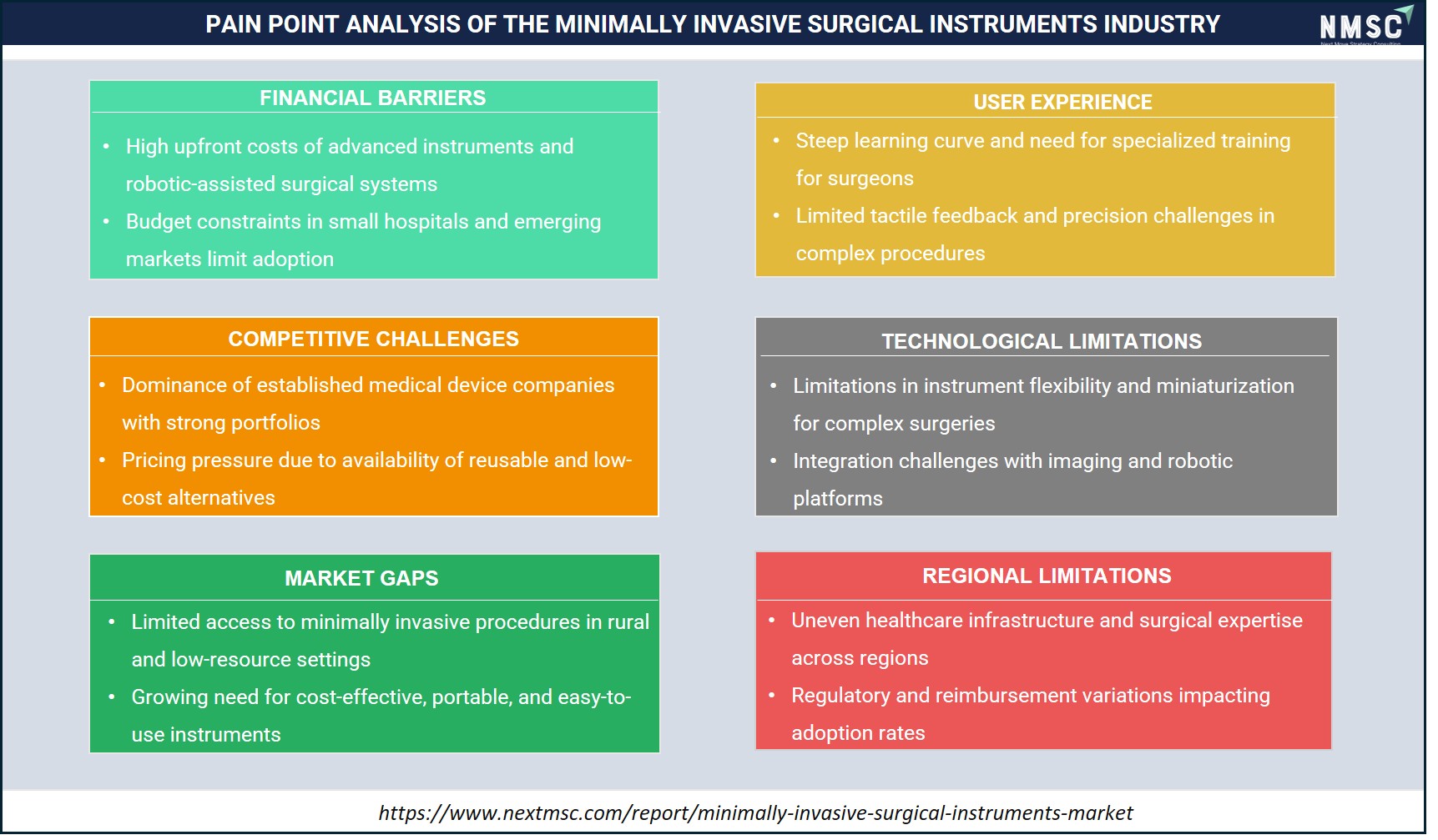
Based on our evaluation of the minimally invasive surgical instruments market, we noticed that adoption is shaped by a combination of financial, technological, and operational constraints. High upfront costs and skill-intensive usage create barriers, while integration challenges and limited tactile feedback impact procedural efficiency. Moreover, uneven healthcare infrastructure and regulatory variability influence adoption across regions. At the same time, growing demand for cost-effective, portable instruments highlights clear opportunities, strengthening the market’s shift toward accessible and precision-driven surgical solutions.
Competitive Landscape
Competitive Dynamics & M&A Landscape:
|
Key Takeaways |
|
The global minimally invasive surgical instruments industry is led by major players such as Medtronic, Johnson & Johnson, Intuitive Surgical, Stryker, Olympus, and Boston Scientific. Based on our analysis, we observed that these companies maintain strong positioning through advanced product portfolios, robotic-assisted technologies, and global distribution networks. Meanwhile, companies such as Arthrex, CONMED, Richard Wolf, Cook Medical, and Teleflex strengthen their presence through niche innovation and targeted surgical solutions. |
|
Based on our evaluation, we identified that competition is driven by technological innovation, clinical validation, and seamless integration with robotic and imaging systems. Manufacturers focus on improving instrument precision, ergonomic design, and workflow efficiency. In addition, investments in digital integration and surgeon training programs strengthen adoption and long-term utilization. |
|
Recent developments indicate a shift toward integrated surgical ecosystems and precision-driven care. Based on our assessment, we found that companies focusing on robotic platforms, advanced visualization, and modular instrument designs secure stronger long-term positioning and sustained market growth. |
Which Companies Dominate the Minimally Invasive Surgical Instruments Market and How Do They Compete?
Based on our market analysis, we noticed that the minimally invasive surgical instruments market is dominated by leading medical technology companies alongside specialized surgical innovators. Medtronic, Johnson & Johnson, Intuitive Surgical, Stryker Corporation, Olympus Corporation, and Boston Scientific consistently lead high-volume surgical applications where precision, clinical reliability, and regulatory compliance are critical decision factors. From our evaluation of hospital adoption patterns, we found that these companies are frequently selected for complex procedures requiring integration with robotic-assisted platforms and advanced imaging systems. Zimmer Biomet, Smith+Nephew, and B. Braun further strengthen their positions through strong clinical portfolios and global service networks. Competition at this level is driven by product performance, surgeon trust, and long-term clinical validation.
Market Dominated by Minimally Invasive Surgical Instruments Giants and Specialists
From our observation, we found that the competitive landscape is further shaped by specialized players such as Arthrex, CONMED Corporation, Richard Wolf GmbH, Cook Medical, and Teleflex Incorporated. Our interactions with surgeons and surgical centers show that these companies gain traction through procedure-specific instruments, strong surgeon engagement, and targeted innovation across niche surgical segments. Arthrex demonstrates strength in sports medicine and orthopedic procedures, while Richard Wolf and KARL STORZ are recognized for advanced endoscopic systems. Applied Medical and STERIS differentiate through efficiency-focused instrument design and sterilization support. In practice, global leaders define clinical standards, while specialized players accelerate innovation through focused, application-driven solutions, together strengthening market depth and adoption.
Innovation and Adaptability Drive Market Success
Innovation remains a core determinant of competitive positioning in the minimally invasive surgical instruments market. Based on our assessment of product development trends, we evaluated that leading companies advance capabilities in robotic-assisted surgery, high-definition visualization, and energy-based instruments to enhance surgical precision and workflow efficiency. From clinical feedback, we identified that manufacturers investing in ergonomic design, digital integration, and imaging compatibility achieve stronger adoption across surgical specialties. Continuous advancements in haptic systems, spectral imaging compatibility, and modular instrument platforms further strengthen differentiation. These innovations reflect deep expertise in surgical engineering and clinical integration, enabling companies to support evolving surgical practices and sustain long-term engagement with healthcare providers.
Market Players to Opt for Merger & Acquisition Strategies to Expand Their Presence
Based on our primary research, we identified that strategic collaborations, partnerships, and targeted acquisitions play a key role in expanding capabilities and strengthening market presence. Leading companies increasingly invest in robotic platforms, imaging technologies, and digital surgical ecosystems to enhance end-to-end solutions. Rather than focusing solely on product expansion, strategies emphasize integration, clinical value creation, and long-term surgeon engagement. Our analysis indicates that these initiatives improve system interoperability, enhance procedural efficiency, and support value-based healthcare delivery. As competition intensifies, these strategic moves strengthen innovation pipelines, expand solution portfolios, and reinforce global market leadership.
List of Key Minimally Invasive Surgical Instruments Companies
-
Medtronic plc
-
Johnson & Johnson
-
Intuitive Surgical, Inc.
-
Stryker Corporation
-
Olympus Corporation
-
Zimmer Biomet Holdings, Inc.
-
Smith & Nephew plc
-
KARL STORZ SE & Co. KG
-
B. Braun Melsungen AG
-
CONMED Corporation
-
FUJIFILM Holdings Corporation
-
Cook Medical LLC
-
Teleflex Incorporated
-
Arthrex, Inc.
-
Richard Wolf GmbH
-
Applied Medical Resources Corporation
-
STERIS plc
-
Hologic, Inc.
-
MicroPort Scientific Corporation
What Are the Latest Key Industry Developments?
-
March 2026 – Cook Medical launched two major urology products, the Syfonix Suction Ureteral Access Sheath and the 7.5 Fr Ascend Single-Use Flexible Ureteroscope, expanding its footprint in single-use and suction-assisted MIS technologies in the U.S. and Canada.
-
February 2026 – Arthrex, Inc., a global provider of minimally invasive surgical technologies, launched the TightRope SB implant, the first commercially available device designed for anterior cruciate ligament (ACL) reconstruction using all-suture soft-button fixation technology. The company stated that nearly 2,000 implants have already been utilized in surgical procedures across the United States.
-
October 2025 – Fujifilm Healthcare launched the next-generation ELUXEO Endoscopic Imaging System, featuring enhanced LED multi-light technology to improve visualization during minimally invasive diagnostic and therapeutic procedures.
Expert Insights
 “Today marks an important step in our commitment to expanding access to proven, safe and effective minimally invasive care to more patients across Europe.”
- David J. Rosa, CEO, Intuitive Surgical, Inc.
Statement made during the company’s investor conference / earnings discussion highlighting the global opportunity in robotic-assisted minimally invasive surgery.
Market Interpretation
The statement highlights that minimally invasive surgery (MIS) adoption remains in a growth phase, particularly across emerging and underserved markets. The focus on robotic-assisted surgery reflects a broader industry transition toward precision-driven, technology-enabled procedures. Increasing investments in surgical robotics, AI integration, and surgeon training are accelerating this shift. As a result, the under penetration of MIS indicates strong long-term growth potential for minimally invasive surgical instruments worldwide.
What Are the Key Factors Influencing Investment Analysis & Opportunities in the Minimally Invasive Surgical Instruments Market?
Investment analysis in the minimally invasive surgical instruments market is increasingly shaped by a shift toward precision-driven technologies, integrated surgical platforms, and value-based healthcare delivery models, rather than standalone instrument offerings. Based on our evaluation of recent investments, strategic collaborations, and product innovation trends, we noticed that investors favour companies with strong portfolios in robotic-assisted systems, advanced visualization technologies, and digitally integrated surgical instruments. Manufacturers demonstrating continuous innovation, scalable product platforms, and seamless integration with robotic and imaging ecosystems attract premium valuations and sustained capital inflows.
We also identified investment concentration around robotic-assisted surgery, AI-enabled imaging and navigation systems, and next-generation instrument design, particularly in solutions that enhance surgical precision, reduce procedure time, and improve clinical outcomes. Strategic investments increasingly outweigh purely financial funding, as healthcare providers, medical device companies, and technology partners focus on long-term ecosystem development and clinical value creation. For investors, the most compelling opportunities emerge in companies combining technological differentiation with strong clinical validation, surgeon adoption, and scalable integration across diverse surgical environments, reinforcing long-term growth and market leadership.
Key Benefits for Stakeholders:
Next Move Strategy Consulting (NMSC) presents a comprehensive analysis of the minimally invasive surgical instruments market, covering historical developments from 2020 to 2025 and providing forward-looking forecasts through 2035. Our study evaluates the market at global, regional, and country levels, delivering quantitative outlooks alongside qualitative insights into key growth drivers, adoption constraints, technology advancements, and investment trends across all major minimally invasive surgical instrument categories.
In our observation, the minimally invasive surgical instruments market delivers measurable value to a broad stakeholder base. Investors benefit from sustained revenue generation driven by continuous surgical demand, technological innovation, and expanding outpatient care models. Surgeons and healthcare providers achieve improved procedural precision, reduced patient trauma, and enhanced clinical outcomes through the adoption of advanced laparoscopic, endoscopic, and robotic-assisted instruments.
Medical device manufacturers, component suppliers, and technology developers benefit from ongoing product innovation, integration of digital and imaging capabilities, and long-term partnerships with healthcare institutions. By aligning surgical innovation with clinical efficiency and patient-centric outcomes, the minimally invasive surgical instruments market creates sustained value across the healthcare ecosystem while supporting long-term growth, improved care delivery, and technological advancement in modern surgical practices.
|
Parameters |
Details |
|
Customization Scope |
Free customization (equivalent to up to 80 analyst-working hours) after purchase. Addition or alteration to country, regional & segment scope. |
|
Pricing and Purchase Options |
Avail customized purchase options to meet your exact research needs. |
|
Approach |
In-depth primary and secondary research; proprietary databases; rigorous quality control and validation measures. |
|
Analytical Tools |
Porter's Five Forces, SWOT, value chain, and Harvey ball analysis to assess competitive intensity, stakeholder roles, and relative impact of key factors. |
Minimally Invasive Surgical Instruments Market Key Segments
By Product Type
-
Access Instruments
-
Trocars
-
Bladed
-
Bladeless
-
Optical
-
-
Cannulas
-
Veress needles
-
Access ports
-
Single-incision
-
Multi-port
-
-
Wound retractors
-
Access guide instruments
-
-
Handheld Instruments
-
Graspers
-
Forceps
-
Dissectors
-
Scissors
-
Needle holders
-
Retractors
-
Handheld suction irrigation
-
-
Closure Instruments
-
Fascial closure devices
-
Port site closure devices
-
Internal closure tools
-
-
Energy-Based Instruments
-
Electrosurgical instruments
-
Monopolar
-
Bipolar
-
-
Advanced energy instruments
-
Ultrasonic
-
Hybrid
-
-
Energy generators
-
-
Visualization Systems
-
Rigid endoscopes
-
Flexible endoscopes
-
Camera systems
-
Light sources
-
Video processors
-
Others
-
-
Suction and Irrigation Instruments
-
Suction devices
-
Irrigation devices
-
Combined suction-irrigation instruments
-
-
Insufflation and Inflation Instruments
-
Insufflation devices
-
Insufflation tubing
-
Balloon inflation devices
-
-
Dilatation Instruments
-
Dilators
-
Balloon dilators
-
-
Guidance Instruments
-
Guidewires
-
Introducers
-
Guiding catheters
-
-
Tissue Acquisition and Cutting Instruments
-
Biopsy instruments
-
Endoscopic cutters
-
Specialty cutting tools
-
-
Others
By Usage Type
-
Disposable instruments
-
Reusable instruments
By Surgical Approach
-
Laparoscopic
-
Endoscopic
-
Arthroscopic
-
Thoracoscopic
-
Natural orifice surgery
-
Robotic-assisted
-
Others
By Clinical Application
-
Gastrointestinal Surgery
-
Cardiovascular Surgery
-
Orthopedic Surgery
-
Gynecological Surgery
-
Urological Surgery
-
Neurological Surgery
-
ENT Surgery
-
Cosmetic & Bariatric Surgery
-
General Surgery
-
Thoracic Surgery
-
Colorectal Surgery
-
Pulmonary Surgery
-
Oncology Surgery
-
Hepatobiliary Surgery
-
Pediatric Surgery
-
Spine Surgery
-
Dental & Maxillofacial Surgery
-
Others
By Sales Channel
-
Direct sales
-
Distributor
-
Group purchasing organizations
By End User
-
Hospitals
-
Ambulatory surgical centers
-
Specialty clinics
-
Others
Geographical Breakdown
-
North America: U.S., Canada, and Mexico.
-
Europe: UK, Germany, France, Italy, Spain, Sweden, Denmark, Finland, the Netherlands, and the Rest of Europe.
-
Asia Pacific: China, India, Japan, South Korea, Taiwan, Indonesia, Vietnam, Australia, Philippines, Malaysia and the rest of APAC.
-
Middle East & Africa (MEA): Saudi Arabia, UAE, Egypt, Israel, Turkey, Nigeria, South Africa, and the rest of MEA.
-
Latin America: Brazil, Argentina, Chile, Colombia, and the rest of LATAM.
Conclusion & Recommendations
This report provides stakeholders, service providers, investors, and consultants with actionable insights to capitalise on the structural transformation underway in the minimally invasive surgical instruments market.
By combining rigorous data-driven analysis with proven strategic frameworks, NMSC’s Minimally Invasive Surgical Instruments Market Report serves as a critical decision-support resource for navigating an increasingly precision-driven and technology-intensive surgical landscape.
The MIS instruments market is positioned for sustained expansion, supported by rising surgical volumes, increasing preference for faster recovery pathways, and continuous advancements in robotic-assisted and imaging-integrated surgical technologies. Key strategic insights highlight the growing importance of precision-engineered instruments, advanced visualization systems, and seamless integration with robotic platforms, as these capabilities strengthen clinical outcomes and procedural efficiency. Manufacturers that prioritize ergonomic design, modular architectures, and digital integration consistently achieve stronger clinical adoption and long-term value creation.
For executives and investors, capturing value requires focusing on high-growth applications such as robotic-assisted procedures, endo-luminal interventions, and outpatient surgical settings, while continuing investments in R&D, surgeon training programs, and technology integration. Expanding presence across high-growth healthcare systems and outpatient care models unlocks new demand pools and strengthens market penetration. Precision, reliability, and measurable clinical outcomes further enhance provider confidence and accelerate adoption, creating durable value across the global minimally invasive surgical instruments ecosystem.
About the Author
 Saista Faiyaz
— Saista Faiyaz is Research Associate at Next Move Strategy Consulting, where she has covered consumer markets and healthcare technologies for 3 years. Her work includes primary interview review, secondary-source validation, market sizing, and structured analysis of company and industry data. She supports research by comparing evidence across sources, organizing findings into market narratives, and documenting assumptions used in analysis. Her scope includes cross-market benchmarking, and reports.
Saista Faiyaz
— Saista Faiyaz is Research Associate at Next Move Strategy Consulting, where she has covered consumer markets and healthcare technologies for 3 years. Her work includes primary interview review, secondary-source validation, market sizing, and structured analysis of company and industry data. She supports research by comparing evidence across sources, organizing findings into market narratives, and documenting assumptions used in analysis. Her scope includes cross-market benchmarking, and reports.
About the Reviewer
 Supradip Baul
— Supradip Baul is an accomplished business consultant and strategist with over a decade of rich experience in market intelligence, strategy, technology, and business transformation. His work has included rigorous qualitative and quantitative analysis across multiple industries, helping clients shape investment decisions and long-term roadmaps. Earlier in his career, he was associated with Gartner, where he contributed to industry-leading reports and market share analyses. He has worked with leading global companies and holds an MBA with a dual specialization in Marketing and Finance.
Supradip Baul
— Supradip Baul is an accomplished business consultant and strategist with over a decade of rich experience in market intelligence, strategy, technology, and business transformation. His work has included rigorous qualitative and quantitative analysis across multiple industries, helping clients shape investment decisions and long-term roadmaps. Earlier in his career, he was associated with Gartner, where he contributed to industry-leading reports and market share analyses. He has worked with leading global companies and holds an MBA with a dual specialization in Marketing and Finance.
At Next Move Strategy Consulting, we understand that insightful market research is the cornerstone of successful business decisions. That's why we employ a robust and multifaceted approach, combining various methodologies to deliver the most accurate and actionable data for our clients.

Research Landscape
We navigate the world of research with two primary approaches:
Qualitative Approach
Our qualitative research methodologies involve immersive techniques such as in-depth interviews, focus groups, and observational studies. By engaging directly with individuals and stakeholders, we uncover valuable insights that quantitative data alone may overlook.

Quantitative Research
In tandem with qualitative methodologies, NMSC leverages the power of Quantitative Research to provide a robust foundation of numerical insights. Through systematic data collection and analysis, we quantify patterns, preferences, and market trends, offering a comprehensive view of the business landscape.
Our quantitative research approach employs diverse tools, including surveys, experiments, and statistical modelling. These methodologies enable us to gather data from a large and representative sample, ensuring the statistical significance of our findings. By employing structured questionnaires and standardized data collection methods, we guarantee the reliability and validity of the information we present to our clients.
Quantitative research is particularly effective in measuring the prevalence of trends, assessing market size, and gauging the impact of various factors on consumer behavior. The numerical precision attained through this approach equips our clients with actionable insights, facilitating data-driven decision-making and strategy formulation.


Our Specialized Toolbox for Industry-Specific Market Research
We deploy a specialized arsenal of techniques tailored to meet your unique requirements. Here's a glimpse into our comprehensive toolbox:

Information Procurement
The stage entails acquiring market data or relevant information through various sources and methodologies.


Market Research Approach
We utilize both top-down and bottom-up approaches in market research analysis to achieve a comprehensive understanding of the market dynamics, leveraging the broad perspective of industry trends and macroeconomic factors alongside detailed insights from specific segments and individual companies.

Porters Five Forces Analysis
We conduct Porter's Five Forces analysis to evaluate the competitive landscape of an industry, providing us with insights into factors that affect profitability and strategic positioning.

SWOT Analysis

Forecasting
We utilize a forecasting model to predict future consumption by considering parameters like population, economics, regulations, market competition, drivers, constraints, technology, and pricing. We also employ statistical techniques such as multilinear regression, exponential smoothing, moving average, ARIMA, and Monte Carlo simulations for accurate predictions. In econometric forecasting, we analyzed short-term and long-term event impacts, attributing values based on regulatory frameworks, economic factors, and market events.





 Speak to Our Analyst